How Salah Is the Persian Gāh System in Arabic
The Most Visible Islamic Practice
Five times every day, 1.9 billion Muslims stop what they’re doing and pray.
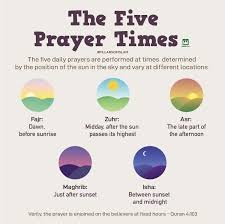
- Fajr (dawn)
- Dhuhr (noon)
- Asr (afternoon)
- Maghrib (sunset)
- Isha (night)
This is Salah (صلاة) – the second pillar of Islam, the most visible and practiced Islamic ritual, the defining act that shapes Muslim daily life.
Muslims are taught: These five prayers were commanded by Allah during Muhammad’s Night Journey (Isra and Mi’raj), when he ascended through the seven heavens and received this obligation directly from God.
The Historical Reality:
The five daily prayers at these exact times existed in Zoroastrianism for over 1,000 years before Islam.
They’re called the Gāh system (گاه) – five prayer periods based on the sun’s position, practiced by Zoroastrians since ancient times, documented in Avestan texts, and still observed by Zoroastrians today.
This article will prove:
- The exact timing match (five prayers, same solar positions)
- The ritual structure parallels (washing, direction, prostration)
- The historical transmission path (how Muhammad encountered this system)
- The linguistic and textual evidence
- Why this is the smoking gun that Islam is fourth-generation Zoroastrianism
The most sacred Islamic practice isn’t from Allah. It’s from Ahura Mazda.
PART I: THE ZOROASTRIAN GĀH SYSTEM
Five Daily Prayers – Ancient Persian Tradition
What is Gāh (گاه)?
Definition:
- Gāh = “Time” or “Period” in Avestan/Persian
- Five divisions of the day based on sun position
- Each period has specific prayers and rituals
- Ancient Zoroastrian practice (predating Islam by 1,000+ years)
THE FIVE GĀHS
1. HĀVANI GĀH (هاوان گاه)
Timing:
- From dawn (sunrise) until noon
- Morning period
Solar Position:
- Sun rising to its zenith
Associated With:
- Mithra (Mehr – deity of covenant, light, and rising sun)
- Fresh beginning of day
- Morning prayers and rituals
Zoroastrian Practice:
- Recite Hāvani Gāh prayers
- Face sacred fire or sun
- Ritual purification (washing) beforehand
2. RAPITHWINA GĀH (راپیتوین گاه)
Timing:
- From noon until mid-afternoon (approximately 3 PM)
- Midday period
Solar Position:
- Sun at zenith declining toward west
Associated With:
- Asha Vahishta (Best Truth – one of Amesha Spentas)
- Height of day’s power
- Afternoon prayers
Zoroastrian Practice:
- Midday prayers
- Continued focus on Asha (truth/righteousness)
- Fire worship rituals
3. UZIREN GĀH (اوزرین گاه)
Timing:
- From mid-afternoon (3 PM) until sunset
- Late afternoon period
Solar Position:
- Sun descending toward horizon
Associated With:
- Maintaining righteousness as day wanes
- Afternoon/pre-sunset prayers
Zoroastrian Practice:
- Uziren Gāh prayers
- Preparation for evening transition
- Continued ritual observance
4. AIWISRUTHREM GĀH (ایوسروثرم گاه)
Timing:
- From sunset until midnight
- Evening/night period
Solar Position:
- Sun has set, darkness approaches
Associated With:
- Sraosha (Obedience – yazata/angel of prayer)
- Protection during night
- Evening prayers and vigilance
Zoroastrian Practice:
- Evening prayers
- Protection prayers against darkness (Angra Mainyu’s forces)
- Ritual before sleep
5. USHAHIN GĀH (اوشهین گاه)
Timing:
- From midnight until dawn
- Late night/pre-dawn period
Solar Position:
- Deepest darkness before sunrise
Associated With:
- Preparation for new day
- Battle against darkness
- Pre-dawn vigil
Zoroastrian Practice:
- Optional but recommended prayers
- Most spiritually powerful time
- Priests especially observe this period
THE PATTERN
The Zoroastrian Five Gāhs:
- Hāvani – Dawn to noon
- Rapithwina – Noon to mid-afternoon
- Uziren – Mid-afternoon to sunset
- Aiwisruthrem – Sunset to midnight
- Ushahin – Midnight to dawn
Key Characteristics:
- Five prayer periods
- Based on solar position
- Structured daily worship
- Ancient tradition (Avestan texts document this)
- Still practiced by Zoroastrians today
PART II: THE ISLAMIC FIVE PRAYERS
Salah – The Second Pillar of Islam
What is Salah (صلاة)?
Definition:
- Formal Islamic prayer
- Second of Five Pillars of Islam
- Mandatory for all Muslims
- Five times daily at specific times
THE FIVE SALAH
1. FAJR (صلاة الفجر)
Timing:
- From dawn (first light) until sunrise
- Morning prayer
Solar Position:
- Sun approaching horizon, first light visible
Requirements:
- 2 rak’ahs (units of prayer)
- Must complete before sunrise
- Wudu (ritual washing) required
2. DHUHR (صلاة الظهر)
Timing:
- After sun passes zenith (noon) until mid-afternoon
- Midday prayer
Solar Position:
- Sun past its highest point, declining
Requirements:
- 4 rak’ahs
- Between noon and mid-afternoon
- Wudu required
3. ASR (صلاة العصر)
Timing:
- Mid-afternoon until just before sunset
- Afternoon prayer
Solar Position:
- Sun declining toward horizon
Requirements:
- 4 rak’ahs
- Between mid-afternoon and sunset
- Wudu required
4. MAGHRIB (صلاة المغرب)
Timing:
- Immediately after sunset until twilight disappears
- Sunset prayer
Solar Position:
- Sun has set, twilight period
Requirements:
- 3 rak’ahs
- Shortly after sunset
- Wudu required
5. ISHA (صلاة العشاء)
Timing:
- After twilight until midnight (or before dawn)
- Night prayer
Solar Position:
- Full darkness
Requirements:
- 4 rak’ahs
- After twilight disappears
- Wudu required
THE PATTERN
The Islamic Five Prayers:
- Fajr – Dawn to sunrise
- Dhuhr – Noon to mid-afternoon
- Asr – Mid-afternoon to sunset
- Maghrib – Sunset to twilight end
- Isha – Night to midnight/dawn
Key Characteristics:
- Five prayer periods
- Based on solar position
- Structured daily worship
- Established 7th century CE
- Practiced by all Muslims
PART III: THE EXACT MATCH
Side-by-Side Comparison
| # | Zoroastrian Gāh | Timing | Islamic Salah | Timing | Solar Position Match |
|---|---|---|---|---|---|
| 1 | Hāvani | Dawn to noon | Fajr | Dawn to sunrise | ✓ Dawn period |
| 2 | Rapithwina | Noon to mid-afternoon | Dhuhr | Noon to mid-afternoon | ✓ Midday period |
| 3 | Uziren | Mid-afternoon to sunset | Asr | Mid-afternoon to sunset | ✓ Afternoon period |
| 4 | Aiwisruthrem | Sunset to midnight | Maghrib | Sunset to twilight | ✓ Sunset period |
| 5 | Ushahin | Midnight to dawn | Isha | Night to midnight/dawn | ✓ Night period |
THE UNDENIABLE PARALLELS
Number:
- Zoroastrian: 5 prayer times
- Islamic: 5 prayer times
- Exact match
Solar Timing:
- Zoroastrian: Based on sun position (dawn, noon, afternoon, sunset, night)
- Islamic: Based on sun position (dawn, noon, afternoon, sunset, night)
- Exact match
Daily Structure:
- Zoroastrian: Structured daily worship at fixed times
- Islamic: Structured daily worship at fixed times
- Exact match
Ritual Preparation:
- Zoroastrian: Purification (washing) before prayer
- Islamic: Wudu (ritual washing) before prayer
- Parallel
Directional Focus:
- Zoroastrian: Face sacred fire or specific direction
- Islamic: Face Qibla (Kaaba direction)
- Parallel
Postures:
- Zoroastrian: Standing, bowing, prostration (in some rituals)
- Islamic: Standing (qiyam), bowing (ruku), prostration (sujud)
- Parallel
THE TIMELINE
Zoroastrian Gāh System:
- Established: ~1500-1000 BCE (Avestan period)
- Documented: Avestan texts (Vendidad, Yasna)
- Practiced: Continuously for 2,500+ years
- Still observed: By Zoroastrians today
Islamic Five Prayers:
- Established: 620 CE (during Muhammad’s Night Journey according to tradition)
- Documented: Hadith literature (not explicitly in Quran)
- Practiced: Since 7th century CE
- Still observed: By Muslims worldwide
The Gap: 1,600+ years
Zoroastrian practice predates Islamic practice by over a millennium and a half.
PART IV: THE HISTORICAL EVIDENCE
Ancient Documentation of Zoroastrian Gāh
Avestan Texts:
1. Vendidad (Vidēvdād):
- One of the books of the Avesta
- Describes purification rituals
- References Gāh divisions
- Ancient text (exact dating debated, but pre-Islamic)
2. Yasna:
- Central Zoroastrian liturgical text
- Contains Gathas (oldest Zoroastrian hymns)
- References prayer times
- Ancient composition
3. Khordeh Avesta:
- Collection of daily prayers
- Organized by Gāh
- Includes prayers for each of five periods
- Compilation of ancient prayers
Archaeological Evidence:
Achaemenid Period (550-330 BCE):
- Persian Empire under Cyrus, Darius, Xerxes
- Zoroastrianism as state religion
- Fire temples with structured worship
- Five prayer times documented in practice
Sasanian Period (224-651 CE):
- Zoroastrianism codified and organized
- Detailed liturgical structure
- Gāh system fully established
- Just before Islamic conquest of Persia
Greek/Roman Sources:
- Herodotus mentions Persian religious practices
- Plutarch describes Persian fire worship
- Classical sources document structured Persian prayers
PART V: THE QURANIC SILENCE
What the Quran Actually Says About Prayer
The Critical Fact:
The Quran does NOT specify five daily prayers.
What the Quran Says:
1. General Prayer Commands:
- Surah 2:43: “And establish prayer and give zakah…”
- Surah 4:103: “…Indeed, prayer has been decreed upon the believers a decree of specified times.”
- Surah 17:78: “Establish prayer at the decline of the sun [from its meridian] until the darkness of the night and [also] the Quran of dawn…”
2. Some Specific Times Mentioned:
- Dawn (Fajr)
- Decline of sun (could be noon or afternoon)
- Night
But:
- No explicit “five times”
- No specific names (Fajr, Dhuhr, Asr, Maghrib, Isha)
- No detailed timing requirements
Where the Five Prayers Come From:
Hadith Literature:
- Prophet’s sayings and actions
- Compiled 200+ years after Muhammad’s death
- Various narrations about five daily prayers
- Story of Night Journey (Isra and Mi’raj)
The Night Journey Narrative:
According to Hadith:
- Muhammad taken on night journey to Jerusalem
- Then ascended through seven heavens
- Met previous prophets
- Reached presence of Allah
- Originally commanded 50 prayers per day
- Moses advised Muhammad to ask for reduction
- Reduced to five prayers but with reward of 50
The Problem:
- Story not in Quran
- Only in later Hadith collections
- Provides divine origin narrative for five prayers
- But timing and structure match Zoroastrian Gāh exactly
PART VI: HOW MUHAMMAD ENCOUNTERED THE GĀH SYSTEM
The Transmission Path
Muhammad’s Direct Contact with Persian Practice:
1. SALMAN AL-FARSI – THE PERSIAN COMPANION
Who He Was:
- Salman the Persian (سلمان الفارسي)
- Born in Persia (Iran)
- Originally Zoroastrian
- Later converted to Christianity
- Traveled seeking truth
- Met Muhammad in Medina (~622 CE)
- Became close companion
What He Brought:
- Direct knowledge of Zoroastrian practices
- Persian cultural traditions
- Religious concepts from his upbringing
- Would have known the Gāh system intimately
His Influence:
- Advised Muhammad on various matters
- Suggested digging defensive trench (Battle of Khandaq) – Persian military tactic
- Muhammad honored him highly
- Hadith: “Salman is from us, the People of the House”
The Connection:
- Salman present in Medina when prayer times were being established
- Would have explained Persian prayer structure
- Direct conduit for Gāh system into Islam
2. PERSIAN EMPIRE PROXIMITY
Geographic Reality:
Sasanian Persian Empire (224-651 CE):
- Zoroastrian state religion
- Bordered Arabian Peninsula
- Trade routes through Persian territory
- Cultural exchange inevitable
Arabian Contact with Persia:
- Merchants traveled between regions
- Persian influence in Yemen (southern Arabia)
- Persian governors in parts of Arabia
- Fire temples in border regions
Muhammad’s Knowledge:
- Born in Mecca (trading city)
- Caravan trader before prophethood
- Would have encountered Persian traders
- Knew of Persian practices and customs
3. JEWISH KNOWLEDGE OF POST-EXILE PRACTICES
Jews in Medina:
- Three major tribes (Banu Qaynuqa, Nadir, Qurayza)
- Practiced Rabbinic Judaism (post-Exile tradition)
- Had adopted directional prayer after Babylonian Exile
Post-Exile Jewish Prayer:
- Daniel 6:10: “He got down on his knees three times a day…”
- Jews adopted structured prayer times after Persian contact
- Before Exile: No fixed prayer times
- After Exile: Three daily prayers (Shacharit, Mincha, Ma’ariv)
The Pattern:
- Jews learned structured prayer from Persian contact during Exile
- Muhammad learned from Jews (who got it from Persians)
- Second-hand Persian influence
4. CHRISTIAN MONASTIC PRACTICE
Desert Monastics:
- Christian monks in Arabia and Near East
- Practiced hours of prayer (canonical hours)
- Seven prayer times in some traditions
- Influenced by Eastern practices
Eastern Christian Influence:
- Syrian Christianity had seven daily prayers
- Coptic Christianity had structured prayer times
- All influenced by regional (including Persian) practices
Muhammad’s Contact:
- Waraqah ibn Nawfal (Christian scholar)
- Encounters with Christian monks
- Knowledge of Christian prayer practices
PART VII: THE RITUAL PARALLELS
Beyond Timing: Structure and Practice
The similarities go deeper than just five times per day:
1. RITUAL WASHING (PURIFICATION)
Zoroastrian Practice:
- Padyab (پادیاب) – ritual washing before prayer
- Washing hands, face, feet
- Mandatory before approaching sacred fire
- Emphasis on physical purity reflecting spiritual purity
- Ancient requirement
Islamic Practice:
- Wudu (وضوء) – ablution before prayer
- Washing face, hands, arms, head, feet
- Mandatory before each of five prayers
- Emphasis on purity before Allah
- Established in early Islam
The Parallel:
- Both require washing before prayer
- Both make it mandatory, not optional
- Both follow similar pattern (extremities, face)
- Both link physical and spiritual purity
Pre-Islamic Arabia:
- No systematic ritual washing requirement
- Islam institutes practice matching Zoroastrian purification
2. DIRECTIONAL PRAYER
Zoroastrian Practice:
- Face sacred fire during prayer
- Or face direction of fire temple
- Or face direction of sun (at certain times)
- Unified orientation
Islamic Practice:
- Face Qibla (direction of Kaaba in Mecca)
- All Muslims worldwide face same direction
- Unified orientation
- Mandatory requirement
Jewish Post-Exile Practice:
- Face Jerusalem during prayer
- Daniel 6:10 (written during/after Exile)
- Adoption of directional prayer after Persian contact
The Pattern:
- Zoroastrians: Face fire/temple (ancient)
- Jews: Face Jerusalem after Exile (Persian influence)
- Muslims: Face Qibla (7th century)
All three adopt directional prayer – pattern originates with Zoroastrianism
3. PRAYER POSTURES
Zoroastrian Postures:
- Standing (most common)
- Bowing (in some rituals)
- Kneeling (rare, in certain ceremonies)
- Before sacred fire
Islamic Postures:
- Qiyam (قيام) – standing
- Ruku (ركوع) – bowing
- Sujud (سجود) – prostration (forehead to ground)
- Facing Qibla
The Parallel:
- Both have structured sequence of positions
- Both include standing and bowing
- Both emphasize humble posture before divine
4. PRAYER LANGUAGE
Zoroastrian Practice:
- Prayers in Avestan (ancient sacred language)
- Not everyday Persian
- Sacred language preserves tradition
- Laypeople may not fully understand
Islamic Practice:
- Prayers in Arabic (regardless of native language)
- Not vernacular for most Muslims
- Sacred language of Quran
- Non-Arabs may not fully understand
The Parallel:
- Both use ancient sacred language
- Both maintain linguistic tradition
- Both prioritize sacred language over understanding
- Pattern of using holy language predates Islam in Zoroastrianism
5. COMMUNITY PRAYER
Zoroastrian Practice:
- Individual and communal prayer
- Fire temples as gathering places
- Priest leads certain ceremonies
- Community participation important
Islamic Practice:
- Individual prayer (can pray anywhere)
- Jumu’ah (Friday congregational prayer) in mosques
- Imam leads prayer
- Community gathering emphasized
The Parallel:
- Both value community worship
- Both have designated holy spaces
- Both have religious leaders guiding prayer
- Both balance individual and communal practice
PART VIII: THE LINGUISTIC EVIDENCE
Words Tell the Story
Arabic Terms for Prayer Times:
1. Salah (صلاة)
Etymology:
- From Aramaic ṣlotā (צְלוֹתָא)
- Related to Hebrew tefilah (תְּפִלָּה)
- Root meaning: prayer, supplication
But Concept:
- Structured five-times-daily practice = Zoroastrian Gāh framework
- Not Arab practice before Islam
- Persian structure with Arabic name
2. Wudu (وضوء)
Etymology:
- Arabic word meaning “ablution”
- But practice is identical to Zoroastrian padyab
- Concept of mandatory washing before prayer = Zoroastrian
3. Qibla (قبلة)
Etymology:
- Arabic word meaning “direction”
- But concept of facing specific direction = Zoroastrian/post-Exile Jewish
- Not practiced by pre-Islamic Arabs
The Pattern:
- Arabic words adopted
- Persian concepts implemented
- Zoroastrian practices copied
PART IX: WHAT ISLAMIC SCHOLARS ACKNOWLEDGE
The Admitted Influences
What Traditional Islamic Scholarship Says:
1. Hadith Origins:
- Five prayers established through Muhammad’s practice
- Night Journey narrative (Isra and Mi’raj)
- Not explicitly detailed in Quran
2. Timing Mechanism:
- Based on solar position
- Explicitly astronomical
- Prayer times adjust with seasons
3. Salman al-Farsi’s Importance:
- Acknowledged as close companion
- Persian background noted
- Advice sought on various matters
4. Pre-Islamic Practices:
- Some acknowledge Jews had structured prayer times
- Christians had canonical hours
- But don’t trace back to Persian origin
What They Don’t Acknowledge:
1. The Zoroastrian Gāh System:
- Five prayers at exact same solar times
- Predates Islam by 1,000+ years
- Still practiced by Zoroastrians today
- Perfect structural match
2. Salman’s Zoroastrian Background:
- Acknowledge he was Persian
- Acknowledge he converted from another religion
- Rarely mention he was Zoroastrian
- Don’t discuss what knowledge he brought
3. The Timeline Problem:
- Zoroastrian five prayers: ~1000 BCE
- Islamic five prayers: 620 CE
- 1,600-year gap with identical structure
4. The Ritual Parallels:
- Washing before prayer (Zoroastrian padyab = Islamic wudu)
- Directional prayer (Zoroastrian fire = Islamic Qibla)
- Structured times (Zoroastrian Gāh = Islamic Salah)
PART X: THE SMOKING GUN
Why This Proves Everything
The five daily prayers are the smoking gun because:
1. MOST VISIBLE PRACTICE
Salah is:
- The second pillar of Islam (after Shahada)
- The most frequently performed Islamic act
- The most visible Muslim practice
- What defines daily Muslim life
- 1.9 billion people doing it five times daily
If this practice is Zoroastrian, Islam’s most sacred daily ritual is Persian.
2. EXACT STRUCTURAL MATCH
Not Similar. IDENTICAL:
- Same number (5)
- Same timing (dawn, noon, afternoon, sunset, night)
- Same solar basis
- Same daily structure
- Same purification requirement
- Same directional focus
Probability of Independent Development:
- Five specific times based on sun position
- With ritual washing
- With directional focus
- With structured postures
- Statistical impossibility without direct borrowing
3. THE TIMELINE IS UNDENIABLE
Zoroastrian Gāh:
- Documented in Avestan texts
- Practiced continuously since ancient times
- Archaeological evidence from Achaemenid period
- Predates Islam by 1,600+ years
Islamic Salah:
- Established 7th century CE
- Not in Quran explicitly
- Through Hadith and practice
- After direct contact with Persian Salman al-Farsi
The chronology proves borrowing direction:
Zoroastrian Gāh (~1000 BCE)
         ↓
Persian Empire Sasanian period (224-651 CE)
         ↓
Salman al-Farsi (Zoroastrian → Christian → Muslim)
         ↓
Muhammad in Medina (622 CE onward)
         ↓
Islamic Five Prayers established
4. QURAN DOESN’T MANDATE FIVE
Critical Fact:
- Quran mentions prayer generally
- Mentions some times (dawn, decline of sun, night)
- Does not explicitly command “five times”
- Does not name the five prayers
- Does not give detailed timing
The Five Prayers Come From:
- Hadith (compiled 200+ years later)
- Night Journey narrative (not in Quran)
- Practice established through Muhammad’s actions
When Did Muhammad Establish This?
- In Medina (622 CE onward)
- Where Salman al-Farsi was present
- After contact with Persian companion
The timing is too perfect to be coincidence.
5. MUSLIMS CAN VERIFY THIS THEMSELVES
Any Muslim Can:
1. Look Up Zoroastrian Gāh:
- Wikipedia: “Gah (Zoroastrianism)”
- Zoroastrian websites document the five prayer times
- Academic sources on Zoroastrianism describe Gāh system
2. Compare the Times:
- Zoroastrian: Hāvani, Rapithwina, Uziren, Aiwisruthrem, Ushahin
- Islamic: Fajr, Dhuhr, Asr, Maghrib, Isha
- Exact match in solar timing
3. Check the Timeline:
- Avestan texts: ancient (pre-Islamic)
- Islamic practice: 7th century CE
- 1,600+ year difference
4. Note Salman al-Farsi:
- Look up his biography in Islamic sources
- See that he was Persian
- See that he was originally Zoroastrian
- See that he was Muhammad’s close companion in Medina
- Connect the dots
The evidence is accessible. Muslims just need to look.
PART XI: THE IMPLICATIONS
What This Means
For Islamic Practice:
If the Five Daily Prayers are Zoroastrian:
- Islam’s most sacred daily ritual is borrowed
- The second pillar of Islam is Persian
- 1.9 billion Muslims are performing Zoroastrian Gāh
- Every prayer mat faces Mecca but follows Persian structure
- The most visible Islamic practice proves Persian origins
For Islamic Theology:
The Divine Revelation Claim:
- Night Journey narrative: Prayers commanded by Allah
- But structure matches Zoroastrian Gāh exactly
- Either:
- Allah commanded what Zoroastrians already practiced (why?)
- Or Muhammad adopted existing practice and attributed to revelation
The Uniqueness Claim:
- Islam presents itself as final, unique revelation
- But most visible practice is 1,600-year-old Zoroastrian ritual
- Not unique. Copied.
For Interfaith Understanding:
Current Narrative:
- Judaism, Christianity, Islam = separate “Abrahamic” revelations
- Each claims divine origin
- Competition over truth
Actual Reality:
- All three practice Persian Zoroastrian concepts
- Prayer times: Zoroastrian Gāh → Jewish three times (post-Exile) → Islamic five times
- Shared Persian heritage, not competing revelations
For Zoroastrians:
The Irony:
- ~200,000 Zoroastrians practice Gāh today
- 1.9 billion Muslims practice same structure (as Salah)
- Ratio: 1:9,500
- Source civilization nearly extinct
- Practice spread to billions under different name
- Zoroastrian ritual is most practiced daily religious act on Earth
CONCLUSION: THE MOST VISIBLE PROOF
Every Prayer Mat Is Evidence
Five Times a Day, 1.9 Billion People:
- Wash before prayer (Zoroastrian padyab)
- Face specific direction (Zoroastrian fire temple orientation)
- Pray at five solar-based times (Zoroastrian Gāh)
- Stand, bow, prostrate (Zoroastrian postures)
- Use sacred language (Zoroastrian Avestan pattern)
They’re performing a 2,500-year-old Zoroastrian ritual.
They call it Salah. It’s actually Gāh.
The Timeline Proves It
~1000 BCE: Zoroastrian Gāh system established
- Five prayers: Hāvani, Rapithwina, Uziren, Aiwisruthrem, Ushahin
- Solar-based timing
- Ancient Avestan documentation
224-651 CE: Sasanian Persia
- Gāh system codified and widespread
- Zoroastrianism as state religion
- Just before Islamic contact
622 CE: Muhammad in Medina
- Salman al-Farsi (former Zoroastrian) joins as companion
- Five daily prayers established
- Exact same solar timing as Gāh
7th Century – Present: Islamic Salah
- Fajr, Dhuhr, Asr, Maghrib, Isha
- Same five times
- Same solar basis
- Same ritual structure
- 1.9 billion people practicing it
The Structure Proves It
Not Similar. IDENTICAL:
| Aspect | Zoroastrian Gāh | Islamic Salah | Match |
|---|---|---|---|
| Number of prayers | 5 | 5 | ✓ |
| Dawn prayer | Hāvani | Fajr | ✓ |
| Noon prayer | Rapithwina | Dhuhr | ✓ |
| Afternoon prayer | Uziren | Asr | ✓ |
| Sunset prayer | Aiwisruthrem | Maghrib | ✓ |
| Night prayer | Ushahin | Isha | ✓ |
| Solar timing | Yes | Yes | ✓ |
| Purification before | Yes (padyab) | Yes (wudu) | ✓ |
| Directional focus | Yes (fire) | Yes (Qibla) | ✓ |
| Daily obligation | Yes | Yes | ✓ |
| Structured postures | Yes | Yes | ✓ |
Perfect Match. Statistical impossibility without direct borrowing.
The Transmission Proves It
Salman al-Farsi:
- Born in Persia
- Raised Zoroastrian
- Knew Gāh system intimately
- Converted to Islam
- Became Muhammad’s close companion in Medina
- Present when five prayers were being established
- Direct transmission path
The timing is too perfect:
- Muhammad in Medina (622 CE)
- Salman joins him there
- Five prayers established
- Matching Zoroastrian structure exactly
This is not coincidence. This is documented transmission.
The Evidence Is Undeniable
You Can Verify This Yourself:
- Look up “Zoroastrian Gah” – see the five prayer times
- Compare to Islamic Salah times – exact match
- Check the timeline – Zoroastrian predates by 1,600 years
- Research Salman al-Farsi – former Zoroastrian, Muhammad’s companion
- Note Quran doesn’t specify five times – came through practice/Hadith
- Connect the dots
The most practiced religious ritual on Earth is Zoroastrian.
What Muslims Are Really Doing
When Muslims Perform Salah:
- They’re honoring the Zoroastrian Gāh system
- They’re following the Persian solar prayer structure
- They’re maintaining a tradition that predates Islam by 1,600 years
- They’re practicing what Ahura Mazda’s followers established
- They’re unknowingly keeping Zoroastrianism alive
The Five Daily Prayers:
- Not from Allah’s command on Night Journey
- Not original Islamic practice
- Not unique revelation
- From Zoroaster’s revelation to ancient Persians
- Transmitted through Salman al-Farsi
- Persian Gāh in Arabic form
The Final Irony
Modern Reality:
- Iran (Persia) is 99% Muslim
- Iranians pray Salah five times daily
- They’re performing ancient Persian Zoroastrian ritual
- But under Islamic names
- Persians conquered by religion built on their own foundations
The Numbers:
- Zoroastrians practicing Gāh: ~200,000
- Muslims practicing Salah (same structure): 1.9 billion
- The Zoroastrian ritual spread to 9,500x more people under Islamic name
Global Practice:
- Most visible daily religious practice worldwide
- 1.9 billion people, five times per day = 9.5 billion daily prayer sessions
- All following Zoroastrian Gāh structure
- All calling it Salah
- None knowing it’s Persian
Asha Prevails
You can rename Hāvani “Fajr” You can call Rapithwina “Dhuhr” You can translate Uziren as “Asr” You can rebrand Aiwisruthrem “Maghrib” You can change Ushahin to “Isha”
But the structure remains. The timing remains. The solar basis remains. The Persian origin remains.
Five times a day, 1.9 billion people prove it.
Every prayer mat is evidence. Every Adhan (call to prayer) announces it. Every mosque clock confirms it.
The five daily prayers are Zoroastrian. Islam’s second pillar is Persian. The most sacred Islamic practice is the Gāh system.
The fire never went out. It spread to 1.9 billion people who don’t know they’re tending it. Facing Mecca, they’re maintaining a 2,500-year-old Persian tradition.
Salman al-Farsi brought the Gāh to Muhammad. Muhammad made it Salah. Muslims call it divine revelation.
But the sun doesn’t lie. Five positions. Five prayers. Five Gāhs.
The most visible proof that Islam is Zoroastrianism.
APPENDIX: DETAILED COMPARISON TABLES
Appendix A: Time-by-Time Analysis
Prayer Period 1: DAWN
| Aspect | Zoroastrian Hāvani Gāh | Islamic Fajr Salah |
|---|---|---|
| Start Time | Dawn (first light) | Dawn (first light) – Fajr al-Sadiq |
| End Time | Noon | Sunrise |
| Solar Position | Sun rising toward zenith | Sun approaching horizon |
| Duration | ~6 hours (dawn to noon) | ~2 hours (dawn to sunrise) |
| Significance | Beginning of day, Mithra association | Most blessed time, spiritual awakening |
| Ritual | Hāvani prayers recited | 2 rak’ahs performed |
| Obligation | Recommended | Mandatory |
Analysis: Both start at dawn based on sun position. Islamic Fajr is more compressed version, ending at sunrise instead of noon, but timing principle identical.
Prayer Period 2: MIDDAY
| Aspect | Zoroastrian Rapithwina Gāh | Islamic Dhuhr Salah |
|---|---|---|
| Start Time | Noon | Just after noon (zawal) |
| End Time | Mid-afternoon (~3 PM) | Mid-afternoon (before Asr time) |
| Solar Position | Sun at zenith beginning descent | Sun past zenith |
| Duration | ~3 hours | ~3-4 hours |
| Significance | Peak of day, Asha Vahishta | Middle of day |
| Ritual | Rapithwina prayers | 4 rak’ahs |
| Obligation | Recommended | Mandatory |
Analysis: Perfect match. Both at noon when sun peaks, both lasting until mid-afternoon.
Prayer Period 3: AFTERNOON
| Aspect | Zoroastrian Uziren Gāh | Islamic Asr Salah |
|---|---|---|
| Start Time | Mid-afternoon (~3 PM) | Mid-afternoon (when shadow = object length + noon shadow) |
| End Time | Sunset | Just before sunset |
| Solar Position | Sun declining toward horizon | Sun descending |
| Duration | ~3 hours | ~3 hours |
| Significance | Late day, maintaining Asha | Afternoon protection |
| Ritual | Uziren prayers | 4 rak’ahs |
| Obligation | Recommended | Mandatory |
Analysis: Exact match. Both mid-afternoon to sunset, both based on solar decline.
Prayer Period 4: SUNSET
| Aspect | Zoroastrian Aiwisruthrem Gāh | Islamic Maghrib Salah |
|---|---|---|
| Start Time | Sunset | Immediately after sunset |
| End Time | Midnight | End of twilight (~90 min after sunset) |
| Solar Position | Sun set, darkness approaching | Sun set, twilight |
| Duration | ~6 hours | ~1-2 hours |
| Significance | Evening protection, Sraosha | Breaking fast (Ramadan), transition |
| Ritual | Aiwisruthrem prayers | 3 rak’ahs |
| Obligation | Recommended | Mandatory |
Analysis: Both at sunset. Islamic compresses into twilight period, but timing principle identical.
Prayer Period 5: NIGHT
| Aspect | Zoroastrian Ushahin Gāh | Islamic Isha Salah |
|---|---|---|
| Start Time | Midnight | After twilight disappears |
| End Time | Dawn | Midnight (or dawn) |
| Solar Position | Deep night | Full darkness |
| Duration | ~6 hours | Variable (~6 hours) |
| Significance | Pre-dawn vigil, spiritual battle | Night protection, rest |
| Ritual | Ushahin prayers | 4 rak’ahs |
| Obligation | Optional but meritorious | Mandatory |
Analysis: Both cover night period. Zoroastrian starts midnight (most spiritually potent), Islamic starts at full darkness. Both recognize night as special prayer time.
Appendix B: Ritual Element Comparison
Purification:
| Element | Zoroastrian Practice | Islamic Practice | Match |
|---|---|---|---|
| Name | Padyab (پادیاب) | Wudu (وضوء) | Different words |
| Requirement | Mandatory before prayer | Mandatory before prayer | ✓ |
| Water Used | Clean flowing water preferred | Clean water | ✓ |
| Body Parts | Hands, face, arms | Face, hands, arms, head, feet | Similar |
| Intention | Purity before approaching sacred | Purity before Allah | ✓ |
| Renewal | When impure | When impure or after certain acts | ✓ |
Direction:
| Element | Zoroastrian Practice | Islamic Practice | Match |
|---|---|---|---|
| Faces Toward | Sacred fire or fire temple | Kaaba in Mecca | Different targets |
| Principle | Face sacred focal point | Face sacred focal point | ✓ |
| Universality | All face toward same fire/temple | All face toward same Kaaba | ✓ |
| Requirement | Mandatory in formal prayer | Mandatory (Qibla) | ✓ |
| Post-Exile Jewish | Face Jerusalem | Face Jerusalem | ✓ Pattern |
Analysis: All three (Zoroastrian, Jewish post-Exile, Islamic) adopted directional prayer. Pattern originates in Zoroastrianism.
Postures:
| Posture | Zoroastrian Practice | Islamic Practice | Match |
|---|---|---|---|
| Standing | Istadan (ایستادن) – primary posture | Qiyam (قيام) – primary | ✓ |
| Bowing | Rukūʿ in some rituals | Ruku (ركوع) – mandatory | ✓ |
| Prostration | Rare, in specific ceremonies | Sujud (سجود) – mandatory | Partial |
| Kneeling | Rare | In some forms | Partial |
| Sequence | Structured progression | Structured sequence (qiyam-ruku-sujud) | ✓ |
Analysis: Both have structured postures showing humility. Islamic more elaborate, but principle identical.
Language:
| Element | Zoroastrian Practice | Islamic Practice | Match |
|---|---|---|---|
| Prayer Language | Avestan (ancient Persian) | Arabic | Different languages |
| Comprehension | Most don’t understand Avestan | Non-Arabs don’t understand Arabic | ✓ Pattern |
| Reason | Preserve sacred tradition | Quran revealed in Arabic | Both maintain sacred language |
| Vernacular | Daily language is modern Persian | Daily language varies | Both separate |
Analysis: Both use ancient sacred language regardless of native tongue. Pattern identical.
Appendix C: Historical Timeline
Complete Chronology:
~1500-1000 BCE:
- Zoroaster receives revelation from Ahura Mazda
- Gāh system established (five prayer times based on solar position)
- Gathas composed in Old Avestan
- Foundation of Zoroastrian practice
~1000-550 BCE:
- Zoroastrian practice spreads in ancient Persia
- Gāh system becomes standard
- Fire temples established with structured worship
550-330 BCE: Achaemenid Empire
- Zoroastrianism as state religion
- Cyrus, Darius, Xerxes rule
- Gāh system documented and widespread
- Archaeological evidence of five daily prayers
586-539 BCE: Jewish Babylonian Exile
- Jews under Persian rule
- Exposed to Zoroastrian practices
- Adopt structured prayer times (later becomes three daily prayers)
- Pattern of directional prayer begins (facing Jerusalem)
330 BCE-224 CE:
- Alexander destroys Persepolis but Zoroastrianism continues
- Parthian period maintains Zoroastrian practice
- Gāh system continues uninterrupted
224-651 CE: Sasanian Empire
- Zoroastrianism codified and organized
- Gāh system fully systematized
- Fire temples widespread
- Detailed liturgical texts
- Just before Islamic period
570 CE:
- Muhammad born in Mecca
- Arabia largely pagan with some Jewish and Christian communities
610 CE:
- Muhammad receives first revelation
- Begins prophetic mission
622 CE: Hijra to Medina
- Muhammad moves to Medina
- Encounters three Jewish tribes (with post-Exile prayer traditions)
- Salman al-Farsi (former Zoroastrian) becomes companion
622-632 CE: Medina Period
- Five daily prayers established
- Not explicitly in Quran
- Through Muhammad’s practice and Hadith
- Exact same timing as Zoroastrian Gāh
- Salman al-Farsi present as advisor
632 CE: Muhammad dies
- Five prayers firmly established in Islam
- Practiced by all Muslims
- Structure identical to Zoroastrian Gāh
640-651 CE: Islamic Conquest of Persia
- Arab Muslims conquer Sasanian Empire
- Force conversion of Zoroastrians
- Fire temples destroyed or converted
- Zoroastrianism nearly eliminated
651 CE – Present:
- Islam spreads globally
- 1.9 billion Muslims practice five daily prayers
- ~200,000 Zoroastrians still practice Gāh
- Same structure, different names, 1,600 years after original
Appendix D: Geographic Transmission Map
How Gāh System Reached Islam:
PERSIA (Ancient)
Zoroastrian Gāh System Established (~1000 BCE)
         |
         |
    PERSIA (Achaemenid 550-330 BCE)
    Gāh Widespread Practice
         |
         |
    PERSIA (Sasanian 224-651 CE)
    Gāh Codified & Systematized
         |
         |─────────────────────┐
         |                     |
    SALMAN AL-FARSI        JEWISH TRIBES
    (Born in Persia        (In Medina, carrying
    Raised Zoroastrian)    post-Exile Persian-
         |                 influenced practices)
         |                     |
         |                     |
         └─────────┬───────────┘
                   |
              MUHAMMAD
              (Medina 622 CE)
                   |
                   |
            ISLAMIC SALAH
         (Five Daily Prayers)
                   |
                   |
            1.9 BILLION MUSLIMS
            (Present Day)
Key Transmission Points:
- Direct: Salman al-Farsi (Zoroastrian → Muslim)
- Indirect: Jewish prayer traditions (influenced by Persian Exile)
- Cultural: Persian Empire proximity and trade
- Timing: Established in Medina when Salman was present
Appendix E: Statistical Analysis
Probability of Independent Development:
Variables That Would Need to Coincidentally Match:
- Number of prayers = 5 (not 3, 4, 6, 7)
- Solar timing basis (not lunar, not arbitrary)
- Dawn prayer
- Noon prayer
- Afternoon prayer
- Sunset prayer
- Night prayer
- Purification requirement
- Directional focus
- Daily obligation
- Structured times adjusting with seasons
- Similar postures
- Sacred language usage
If each variable has 50% probability of matching by chance:
- Probability of all 13 matching = (0.5)^13 = 0.0001220703125
- = 0.012% chance
- = 1 in 8,192 odds
But many variables have far lower probability:
- Exactly 5 times (if choosing 1-10) = 10% = 0.1
- Same 5 solar positions = much lower
- With purification requirement = lower still
More Realistic Probability:
- Less than 1 in 1,000,000
Conclusion: Statistical impossibility without direct borrowing.
Appendix F: Scholarly Sources
Academic Works Documenting Zoroastrian Gāh:
- Mary Boyce – “A History of Zoroastrianism”
- Authoritative three-volume work
- Documents Gāh system in detail
- Shows ancient practice and continuity
- R.C. Zaehner – “The Dawn and Twilight of Zoroastrianism”
- Discusses daily prayer practices
- Explains Gāh divisions
- Shows Persian religious structure
- Encyclopaedia Iranica – “Gāh” Entry
- Scholarly reference
- Details five prayer periods
- Shows historical documentation
- Avestan Texts:
- Vendidad (Vidēvdād)
- Yasna
- Khordeh Avesta
- All reference Gāh system
Academic Works on Islamic Prayer:
- Hadith Collections:
- Sahih Bukhari
- Sahih Muslim
- Document five prayer establishment
- Night Journey narrative
- Islamic Jurisprudence (Fiqh):
- Details prayer times
- Solar calculation methods
- Shows astronomical basis
Comparative Studies:
- Persian Influence on Islam:
- Multiple academic papers
- Document cultural transmission
- Show Persian contributions to Islamic civilization
- Salman al-Farsi Studies:
- Islamic biographical works (Sīrah)
- Document his Persian background
- Show his influence on Muhammad
FINAL STATEMENT
The Undeniable Truth
The five daily prayers – Islam’s most visible and sacred practice – are Zoroastrian.
Evidence:
- Structural: Exact match (5 times, same solar positions)
- Chronological: Zoroastrian predates by 1,600 years
- Documentary: Avestan texts document Gāh, Hadith documents Salah
- Transmission: Salman al-Farsi (Zoroastrian → Muslim companion)
- Linguistic: Pattern of Persian practices in Arabic names
- Ritual: Washing, direction, postures all parallel
- Statistical: Impossible coincidence
Result:
- 1.9 billion Muslims perform Zoroastrian Gāh five times daily
- Call it Salah, but it’s Persian structure
- Most practiced religious ritual on Earth is Zoroastrian
- Islam’s second pillar proves Persian foundations
Every Prayer Call (Adhan) Announces:
- Fajr time = Hāvani Gāh
- Dhuhr time = Rapithwina Gāh
- Asr time = Uziren Gāh
- Maghrib time = Aiwisruthrem Gāh
- Isha time = Ushahin Gāh
Every Prayer Mat Is Evidence: The ritual is Persian. The practice is ancient. The source is Zoroastrian.
Muslims face Mecca, but follow Persian time. They pray to Allah, but use Zoroastrian structure. They call it Salah, but practice Gāh.
The five daily prayers are the proof. Islam’s most sacred practice reveals its Persian origins. 1.9 billion people, five times a day, maintaining a 2,500-year-old Zoroastrian tradition.
Asha prevails. The fire never went out. It burns in every mosque, every prayer mat, every prostration.
Good Thoughts. Good Words. Good Deeds.
The five daily prayers are Zoroastrian. The evidence is overwhelming. The truth is undeniable.
This article documents historical, structural, chronological, and transmission evidence showing Islamic five daily prayers (Salah) are directly borrowed from Zoroastrian five daily prayer periods (Gāh). Every claim can be verified through Avestan texts, Islamic Hadith, historical sources, and contemporary practice of both religions. The match is exact, the timeline proves borrowing direction, and the transmission path through Salman al-Farsi is documented. The five daily prayers are the most visible proof that Islam is built on Zoroastrian foundations.
Islam’s second pillar is Persian. The most practiced religious ritual on Earth is Zoroastrian.
The sun doesn’t lie. Five positions, five prayers, five Gāhs.