Category: Archives

  • The Erasure

    The Erasure

    A 2,500-Year History of the Systematic Destruction of the World’s Oldest Monotheistic Religion — Documented, Dated, and Named


    This investigation documents a pattern of destruction directed at Zoroastrianism — the world’s oldest monotheistic religion — spanning 2,500 years. Each event is documented from primary sources, academic references, and the historical record. The pattern is not a conspiracy theory. It is a sequence of events, each verifiable, each resulting in the diminishment of Zoroastrianism and the enrichment of the traditions that replaced or absorbed it.

    The events are presented chronologically. The sources are cited. The pattern speaks for itself.


    Act I: The Theological Appropriation (c. 545-539 BCE)

    What Happened

    During the Babylonian Exile, an anonymous Jewish author known to scholars as Deutero-Isaiah (Second Isaiah) composed chapters 40-55 of the Book of Isaiah. These chapters, dated by mainstream biblical scholarship to approximately 545-539 BCE, name the Persian emperor Cyrus the Great and present him as Yahweh’s chosen instrument — calling him “anointed” (mashiach), the only non-Jew in the entire Hebrew Bible to receive the title of Messiah (Isaiah 45:1).

    As documented in eFireTemple’s investigation “The Theft of Cyrus,” the Encyclopaedia Iranica identifies verse-level parallels between Isaiah 45 and the Zoroastrian Gathas (Yasna 44). The Iranica states that “Second Isaiah makes Yahweh take the credit” for cosmological acts that the Gathas attribute to Ahura Mazda. Morton Smith’s analysis, published through the Iranica, identifies Yahweh’s role as cosmic creator as “a late feature of Judaism” that may have been “introduced under the impact of the Persian religion.”

    What Was Taken

    The theological identity of Ahura Mazda — as cosmic creator of light and darkness, as supreme sovereign of the universe, as the God who chose Cyrus — was transferred to Yahweh. The Zoroastrian cosmological framework was absorbed into the Hebrew Bible without attribution.

    Over the following centuries, additional Zoroastrian concepts entered Judaism: resurrection, named angels, Satan as cosmic adversary, heaven and hell, final judgment, and the savior figure. The Jewish Encyclopedia (1906) acknowledges: “Most scholars, Jewish as well as non-Jewish, are of the opinion that Judaism was strongly influenced by Zoroastrianism.”

    What Was Lost

    The source was never credited. Zoroastrianism is not mentioned in the Hebrew Bible. The theological appropriation is invisible to every Jew, Christian, and Muslim who reads Isaiah 45 without knowing its Zoroastrian context.


    Act II: Alexander the Destroyer (330 BCE)

    What Happened

    In 330 BCE, Alexander of Macedon conquered the Achaemenid Persian Empire. He burned Persepolis — the ceremonial capital of the empire, one of the most magnificent architectural achievements of the ancient world — reportedly in a drunken act of destruction, though some historians suggest it was calculated revenge for the Persian burning of Athens.

    Zoroastrian tradition, preserved in the Arda Viraf Namag and the Denkard, records that Alexander destroyed copies of the Avesta and killed Zoroastrian priests. The Arda Viraf Namag states:

    “The accursed Evil Spirit, the Wicked One, in order to make men doubtful of this religion, instigated the accursed Alexander, the westerner, who was dwelling in Egypt, so that he came to the country of Iran with severe cruelty and war and devastation; he also killed the ruler of Iran and destroyed the court and sovereignty.”

    The Encyclopaedia Iranica confirms: “Sasanian writers knew of Alexander only as a legendary, evil (Mid. Pers. gizistag) Roman enemy of Iran, who destroyed the Avesta and created general confusion of the Good Religion.”

    The Livius article on Religious Persecution under Alexander, citing Mary Boyce (History of Zoroastrianism, vol. III, 1991, p. 16), presents a badly preserved Pahlavi text describing how “accursed Alexander” came to Iran and “seized and slew those who went in the garments of Magians.” Survivors “escaped and fled to Sistan, bearing with them the knowledge of particular Avestan works.”

    What Was Destroyed

    The Avesta — the Zoroastrian scripture — originally consisted of 21 Nasks (divisions), reportedly written on 1,200 ox-hides. After Alexander’s destruction, the full canon was lost. Only fragments survived through oral transmission and later reconstruction during the Sassanid period. The Avesta that exists today is estimated to be roughly one-quarter of the original.

    Zoroastrian priests — the Magi, the custodians of the oral and written tradition — were killed. Fire temples were destroyed or abandoned. The institutional infrastructure of Zoroastrian learning was shattered.

    The Name They Give Him

    Zoroastrians call Alexander “gujastak” — the Accursed. The Western world calls him “the Great.”


    Act III: The Book of Esther — Theological Propaganda

    What the Text Says

    The Book of Esther, set in the Persian court of King Ahasuerus (traditionally identified with Xerxes I), tells the story of a plot by Haman, a Persian official, to destroy the Jews. Queen Esther, a Jewish woman who has concealed her identity, reveals the plot. Haman is executed. The Jews are granted the right to defend themselves, and on the appointed day, they kill 75,000 Persians (Esther 9:16).

    The Jewish holiday of Purim celebrates this event annually with feasting, costumes, gift-giving, and the public reading of the Book of Esther. The name “Haman” is drowned out with noisemakers every time it is read aloud.

    What the Text Does

    Whether the events of Esther are historical or literary is debated among scholars. What is not debated is the text’s function: it presents the Persian civilization — the same civilization that liberated the Jews from Babylon, whose emperor Cyrus was the only non-Jew called Messiah — as the enemy of the Jewish people.

    The Book of Esther contains no mention of God. It is the only book of the Hebrew Bible in which God does not appear. It celebrates the mass killing of Persians as an act of deliverance. It transforms the Jewish relationship with Persia from one of gratitude (Cyrus the liberator) to one of enmity (Haman the destroyer).

    This is theological propaganda. It rewrites the Jewish-Persian relationship and provides a sacred narrative for annual celebration of violence against the people who gave Judaism its most important theological concepts.


    Act IV: The Crucifixion of the Saoshyant (c. 30-33 CE)

    The Zoroastrian Identification

    As documented in the Gospel of Matthew (2:1-12), Zoroastrian priests — Magi from the East — traveled to Bethlehem to honor the newborn Jesus. They identified him as the fulfillment of a celestial prophecy consistent with the Zoroastrian expectation of the Saoshyant — the future savior who will lead the final renovation of the world.

    As documented in Part 1 of the Missing Years series, Jesus’s theology contains at least thirteen structural concepts of Zoroastrian origin, and his anti-Pharisee critique is structurally Zoroastrian — attacking the corruption of Zoroastrian theology rather than the theology itself.

    What Happened

    Jesus was executed by crucifixion under the combined authority of the Jewish religious establishment (which charged him with blasphemy) and the Roman state (which carried out the sentence). The figure whom Zoroastrian priests had identified at birth as their prophesied savior was killed at age thirty-three.

    What Was Built on His Death

    The movement that emerged after Jesus’s death — Christianity — appropriated his message, built a new institutional religion around it, and never credited the Zoroastrian source. The Magi, who appear in Matthew 2 as the first beings to recognize Jesus’s significance, are treated in Christian tradition as supporting characters — exotic visitors who serve the narrative and then disappear. Their identification of Jesus as the Saoshyant is never explored. Their tradition is never credited.

    Christianity went on to become the world’s largest religion — 2.6 billion adherents — built on a theological architecture that the Zoroastrian priesthood recognized before anyone else did, and that Zoroastrianism itself had originated.


    Act V: The Arab Conquest (633-651 CE)

    What Happened

    Between 633 and 651 CE, the Rashidun Caliphate conquered the Sassanid Persian Empire — the last Zoroastrian state. The Battle of al-Qadisiyyah (636 CE) and the Battle of Nahavand (642 CE) effectively ended Zoroastrian political sovereignty. The last Sassanid emperor, Yazdegerd III, was murdered in 651 CE.

    When asked by the Sassanid emperor about the reason for the Arab aggression, an Arab soldier reportedly replied: “Allah commanded us, by the mouth of His Prophet, to extend the dominion of Islam over all nations.”

    What Followed: The Systematic Persecution

    The persecution of Zoroastrians after the Arab conquest is extensively documented by Wikipedia’s “Persecution of Zoroastrians” article, the Encyclopaedia Britannica, and primary Zoroastrian sources:

    Forced conversion: Zoroastrians were given dhimmi status — legally protected non-believers — but this “protection” came with systematic humiliation. Those who converted to Islam received full rights; those who refused were subjected to escalating persecution.

    The Jizya tax: Zoroastrians were required to pay a special tax for the privilege of remaining non-Muslim. The method of extraction was designed to humiliate: the taxed person was compelled to stand while the officer sat on a high throne. Upon receiving payment, the officer struck the dhimmi on the neck and drove them roughly away. The public was invited to watch.

    Destruction of fire temples: Zoroastrian places of worship were desecrated, destroyed, and converted into mosques. Fire temples with their four axial arch openings were turned into mosques by setting a mihrab (prayer niche) on the arch nearest Mecca. Great fire temples across Iran were destroyed or repurposed.

    Burning of libraries: The palaces of Ctesiphon and their archives were burned. When the Arab commander Sa’ad ibn Abi Waqqas asked Caliph Umar what to do with the captured Persian books, the response sealed the fate of centuries of learning.

    Destruction of the Kushti: Arab tax collectors would mock Zoroastrians for wearing the sacred Kushti cord and would rip it off, hanging it around the necks of the faithful.

    Burning of religious books: If families could not pay the Jizya, their children were beaten and their religious books were thrown into fire. This is the origin of the term “the bookless” (bi-kitab) — the slur applied to Zoroastrians by their Muslim oppressors.

    Exclusion from government: In 741, the Umayyads officially decreed that non-Muslims could not hold governmental positions. Zoroastrians who refused to learn Arabic — which they regarded as the language of their conquerors — were excluded from public life.

    Dress codes: Under the Abbasids, dhimmis could not build new temples, bear arms, ride horses, or wear clothing that resembled Muslim dress. They were required to wear distinguishing garments.

    The Britannica Summary

    The Encyclopaedia Britannica article “How Have Zoroastrians Been Treated in Muslim Iran?” summarizes:

    “Abbasid persecution, combined with emigration under the Umayyads, virtually eradicated Zoroastrianism from urban areas.”

    The Flight to India

    Zoroastrian refugees fled to India, where they became the Parsi community. The Qissa-i Sanjan records their arrival in Gujarat, India, sometime between 785 and 936 CE. They carried with them the sacred fires and the Avestan prayers.

    When the Parsi philanthropist Maneckji Limji Hataria was sent to Iran in the nineteenth century to assess the condition of the remaining Zoroastrians, he found only 7,711 Zoroastrians in Kerman, Yazd, and Tehran. The Jizya tax was still being collected from them — and was not removed until 1882, more than 1,200 years after the conquest.


    Act VI: The Mongol Devastation (13th century)

    What Happened

    The Mongol invasions of the thirteenth century devastated what remained of rural Zoroastrian communities in Iran. The Britannica notes: “Rural Persia suffered enormous destruction in the 13th century at the hands of the Mongols.” Zoroastrian communities that had survived the Arab conquest by retreating to remote areas were now exposed to further destruction.


    Act VII: The Ongoing Academic Erasure (19th century — present)

    What Continues

    The physical persecution of Zoroastrians has largely ended. What has not ended is the intellectual erasure.

    In seminaries: Christian theology is taught without systematic acknowledgment of its Zoroastrian roots. Future priests learn about the Holy Spirit, resurrection, heaven, hell, Satan, angels, and the Messiah without being told that every one of these concepts has a documented Zoroastrian precedent.

    In textbooks: Comparative religion courses give Zoroastrianism a paragraph while devoting chapters to Christianity, Islam, Judaism, Hinduism, and Buddhism — the religions that inherited or share Zoroastrian ideas.

    In scholarship: The Lovern and Beckmann paper, published in the Journal of Academic Perspectives, documents “a colonization of Zoroastrian knowledge by Christianity” and “a continued postcolonial attitude of denial in the academy.”

    In popular culture: Most educated people in the Western world cannot name Zoroastrianism as a religion. They have never heard of Ahura Mazda, Spenta Mainyu, the Amesha Spentas, or the Gathas — despite the fact that the theological concepts they live by originated in these texts.

    In the extinction narrative: For decades, Western scholars and journalists have declared Zoroastrianism “dying” or “extinct.” Harvard’s Pluralism Project, a USF thesis, and Qantara have all predicted or described the end of the faith. The community’s small size is treated as evidence of irrelevance rather than as evidence of persecution.


    The Pattern

    Assembled chronologically, the pattern is undeniable:

    DateEventActorMethodResult
    c. 545-539 BCETheological appropriationDeutero-IsaiahRewrote Ahura Mazda’s attributes onto YahwehZoroastrian theology enters Judaism without credit
    330 BCEDestruction of Persepolis and the AvestaAlexander of MacedonMilitary conquest, burning, killing of Magi75% of Avesta lost; priestly infrastructure shattered
    c. 400 BCEBook of EstherJewish literary traditionTheological propagandaPersian civilization recast as enemy; mass killing celebrated annually
    c. 30-33 CECrucifixion of the Magi’s identified SaoshyantJewish establishment + Roman stateExecutionFigure recognized by Zoroastrian priests killed; his message appropriated without credit
    1st-4th century CEAppropriation into ChristianityChurch FathersTheological developmentZoroastrian concepts (Holy Spirit, resurrection, judgment, Satan, angels, Messiah) become “Christian” without attribution
    633-651 CEArab conquest of PersiaRashidun CaliphateMilitary conquest, forced conversion, Jizya, temple destructionZoroastrianism reduced from state religion to persecuted minority
    661-750 CEUmayyad persecutionUmayyad CaliphateGovernment exclusion, emigration pressureMass emigration to India; urban Zoroastrianism nearly eradicated
    750-1258 CEAbbasid persecutionAbbasid CaliphateNew restrictions, temple destruction, forced dress codesZoroastrianism confined to rural areas
    13th centuryMongol devastationMongol EmpireMilitary destructionRemaining rural communities devastated
    19th-21st centuryAcademic erasureWestern academyOmission, minimization, “postcolonial denial”Zoroastrian contributions unacknowledged in seminaries, textbooks, and public discourse

    Ten acts. 2,500 years. A continuous pattern of appropriation, destruction, persecution, and erasure directed at a single target.


    Conclusion

    Zoroastrianism is not dying because it is irrelevant. It is small because it has been systematically targeted — its theology stolen, its scriptures burned, its priests killed, its temples destroyed, its people taxed, humiliated, converted, exiled, and then told by the world’s scholars that they are a footnote.

    Every major religion on earth carries Zoroastrian theological DNA. Christianity, Islam, and Judaism all practice concepts that were first articulated in the Gathas of Zarathustra. And yet the faith that originated those concepts has been subjected to 2,500 years of erasure — intellectual, physical, and institutional.

    The erasure is documented. The pattern is visible. The evidence is in the Encyclopaedia Iranica, the Encyclopaedia Britannica, the Jewish Encyclopedia, the Arda Viraf Namag, the Denkard, the Qissa-i Sanjan, and the Gospel of Matthew.

    Zoroastrianism is still here. Not because the world protected it. Because its people refused to let the fire go out.

    The fire is still burning.

    And the record is now public.


    Sources & References

    mazda.aeuua.com/ — Digital Sanctuary of Truth
  • “The Erasure: A 2,500-Year History of the Systematic Destruction of Zoroastrianism — Documented, Dated, and Named”

    Here are the five acts of erasure, each one historically documented:

    Act 1: Alexander the Great (330 BCE) — Alexander conquered the Achaemenid Empire, burned Persepolis (the ceremonial capital), and according to Zoroastrian tradition recorded in the Arda Viraf Namag and the Denkard, destroyed copies of the Avesta. The Denkard states that Alexander “killed the Magi” and “quenched the sacred fires.” Zoroastrian texts call him “Alexander the Accursed” (gujastak). This is documented in multiple Middle Persian sources and acknowledged by Western scholars including Mary Boyce. The destruction of the Avesta meant that the full Zoroastrian scriptural canon — reportedly 21 nasks — was lost, and only fragments survived through oral transmission and later reconstruction.

    Act 2: The Book of Esther — Set in the Persian court, the Book of Esther describes a plot against the Jews by Haman, a Persian official, and ends with the Jews killing 75,000 Persians (Esther 9:16). The holiday of Purim celebrates this event annually. Whether the events are historical or literary, the text functions as theological propaganda: it presents Persian civilization as the enemy of the Jewish people and celebrates mass killing of Persians as a divine deliverance. This is the same Persian civilization that liberated the Jews from Babylon, that Cyrus — the only non-Jew called Messiah — ruled. The Book of Esther rewrites the Jewish-Persian relationship from liberation to enmity.

    Act 3: The Crucifixion — The Magi recognized Jesus at birth as the Saoshyant. As documented in Part 1 of this series, Jesus’s theology aligns structurally with Zoroastrian concepts. If the Magi’s identification was correct — if Jesus was operating within or informed by the Zoroastrian theological stream — then his execution by the combined action of the Jewish religious establishment and the Roman state was, among other things, the killing of a figure the Zoroastrian priesthood had identified as their prophesied savior. The tradition that would become Christianity then appropriated his message, stripped it of its Zoroastrian context, and built a new religion that never credited the source.

    Act 4: The Arab Conquest (651 CE) — The Rashidun Caliphate conquered the Sassanid Empire, the last Zoroastrian state. What followed was centuries of forced conversion, the jizya tax on non-Muslims, destruction of fire temples, burning of Zoroastrian texts, and systematic social pressure that reduced the Zoroastrian population from millions to a remnant. The Qissa-i Sanjan records the flight of Zoroastrian refugees to India, where they became the Parsi community. Zoroastrianism went from a world religion to a persecuted minority in a single generation.

    Act 5: The Ongoing Academic Erasure — Even in the modern era, the Zoroastrian contribution to world religion is systematically minimized. The Lovern and Beckmann paper documents “a colonization of Zoroastrian knowledge by Christianity” and “a continued postcolonial attitude of denial in the academy.” Seminaries teach Christian theology without mentioning its Zoroastrian roots. Comparative religion textbooks give Zoroastrianism a paragraph while devoting chapters to the religions that inherited its ideas. The erasure is no longer physical — it is intellectual and institutional.

  • The Theft of Cyrus

    The Theft of Cyrus

    How Isaiah 45 Rewrote Ahura Mazda Into Yahweh — The Textual Evidence


    Summary of Findings

    This investigation presents textual and scholarly evidence that Isaiah chapter 45 — one of the most theologically significant chapters in the Hebrew Bible — functions as an act of theological appropriation. Specifically, the evidence indicates that an anonymous Jewish author writing during the Babylonian Exile (c. 545-539 BCE) systematically took cosmological claims attributed to Ahura Mazda in the Zoroastrian Gathas and reassigned them to Yahweh, the God of Israel.

    This is not a fringe claim. The evidence presented here is drawn primarily from the Encyclopaedia Iranica — the gold-standard academic reference on Iranian civilization, published under the auspices of Columbia University — supplemented by standard biblical scholarship and comparative textual analysis.

    The findings are organized into five sections: the historical setting, the textual parallels, the scholarly verdict, the theological implications, and the conclusions.


    I. The Historical Setting

    The Exile and the Persian Liberation

    In 586 BCE, the Babylonian Empire under Nebuchadnezzar II conquered the Kingdom of Judah, destroyed Solomon’s Temple, and deported the Jewish elite to Babylon. For nearly fifty years, the Jews lived in exile.

    In 539 BCE, Cyrus the Great — the founder of the Achaemenid Persian Empire — conquered Babylon and issued a decree permitting the Jews to return to Jerusalem and rebuild their Temple. The Hebrew Bible records this in 2 Chronicles 36:22-23 and Ezra 1:2-4.

    Cyrus’s Religious World

    Cyrus ruled from what scholars describe as the Iranian religious sphere centered on Ahura Mazda. The Encyclopaedia Iranica states that Zoroastrianism “had spread among the higher social classes of the Achaemenid empire, including the court and the Magi.” The Encyclopaedia Britannica describes Ahura Mazda as the supreme god of ancient Iranian religion and notes that Persian kings like Darius and his successors “worshipped him as the greatest of all gods.”

    Cyrus’s personal religious beliefs remain debated among scholars. The French Iranologist Pierre Briant cautioned that “it seems quite reckless to try to reconstruct what the religion of Cyrus might have been.” However, Wikipedia’s article on Cyrus notes that evidence in favor of Zoroastrian identification “comes from some of the names of members of Cyrus’s family, and similarities between the description of Yahweh in Isaiah 40-48 and that of Ahura Mazda in the Gathas.”

    That last phrase is critical: scholars have identified similarities between the description of Yahweh in Isaiah and the description of Ahura Mazda in the Gathas. This is not the claim of Zoroastrian advocates. It is a recognized feature of the text.

    Cyrus’s Imperial Propaganda

    Cyrus’s policy toward conquered peoples was one of religious tolerance. He presented himself to each population in their own theological language. The Cyrus Cylinder credits the Babylonian god Marduk with choosing Cyrus to conquer Babylon. The Hebrew Bible credits Yahweh with the same act.

    The Encyclopaedia Iranica identifies the source of this dual framing: both the Cyrus Cylinder and Isaiah’s references to Cyrus “must have had a common source, which must have been the Persian propaganda which represented Cyrus to the Babylonians as chosen by Marduk, to the Jews as chosen by Yahweh.”

    This is the foundation: the biblical text about Cyrus is not independent revelation. It is a Jewish adaptation of Persian imperial messaging.


    II. The Textual Parallels

    The Dating of Isaiah 40-55

    Modern biblical scholarship broadly agrees that Isaiah chapters 40-55 were not written by the eighth-century prophet Isaiah but by an anonymous author (or authors) writing during the Babylonian Exile, circa 545-539 BCE. This section is known as Deutero-Isaiah or Second Isaiah.

    The dating is based on internal evidence: the text explicitly names Cyrus (Isaiah 44:28; 45:1), presupposes the fall of Babylon, and addresses an audience living in exile. The HarperCollins Study Bible dates this section to 550-539 BCE. The Encyclopaedia Iranica concurs: “It was indeed this explicit mention of Cyrus in the prophecies of Isaiah that induced scholars to assign the chapters from 40 onwards to a prophet later than the original Isaiah.”

    Yasna 44 vs. Isaiah 45: The Verse-by-Verse Comparison

    The Gathas of Zarathustra — the oldest and most sacred hymns of Zoroastrianism — include Yasna 44, a hymn in which Zarathustra poses a series of rhetorical questions to Ahura Mazda. The expected answer to each question is: Ahura Mazda did this. Ahura Mazda created this. Ahura Mazda is responsible.

    Yasna 44.5 (translation by S. Insler, The Gathas of Zarathustra, Tehran and Liège, 1975):

    “This I ask thee, tell me truly, Lord: Which craftsman created light and darkness? Which craftsman created both sleep and activity? Through whom does dawn exist, along with midday and evening, which remind the worshiper of his purpose?”

    Now compare Isaiah 45:7:

    “I form the light and create darkness, I make peace and create calamity; I, the LORD, do all these things.”

    The Encyclopaedia Iranica’s article on the Book of Isaiah makes the comparison explicit:

    “The statement of Isaiah, according to which both light and darkness are the creations of God, reads surprisingly like an echo of Y. 44.5, where it is implied that Ahura Mazda is responsible for the existence of both luminosity and darkness.”

    The Iranica article on Persian Elements in the Bible goes further, identifying a systematic pattern:

    “Second Isaiah also answered many of the questions in Yasna 44: ‘Who created/set in order justice, the sun and stars, earth and sky, waters and plants, right thought, light and darkness?’ To these Zoroaster had expected his audience to reply, ‘Ahura Mazda.’ Second Isaiah makes Yahweh take the credit, either by similar rhetorical questions, or by direct answers.”

    The article then provides the specific Isaiah references that correspond to Yasna 44’s questions:

    Yasna 44 QuestionExpected AnswerIsaiah ReferenceIsaiah’s Answer
    Who created light and darkness?Ahura MazdaIsaiah 45:7“I form the light and create darkness” — Yahweh
    Who created earth and sky?Ahura MazdaIsaiah 42:5; 44:24“I am the LORD, the Maker of all things” — Yahweh
    Who created waters and plants?Ahura MazdaIsaiah 41:19“I will put in the wilderness the cedar” — Yahweh
    Who established right thought?Ahura MazdaIsaiah 40:13“Who taught him knowledge?” — Yahweh needs no teacher
    Who set the sun and stars in order?Ahura MazdaIsaiah 40:26“Lift up your eyes… He who brings out the starry host” — Yahweh
    Who created justice and order?Ahura MazdaIsaiah 45:8, 19“I, the LORD, speak the truth; I declare what is right” — Yahweh

    Six questions. Six answers. In the Gathas, the answer is Ahura Mazda. In Isaiah, the answer is Yahweh. The questions are the same. The structure is the same. Only the name has been changed.


    III. The Scholarly Verdict

    Morton Smith’s Analysis

    The Encyclopaedia Iranica’s article on Persian Elements in the Bible draws heavily on the work of Morton Smith (1915-1991), Professor of Ancient History at Columbia University and one of the most important biblical scholars of the twentieth century.

    Smith’s analysis concludes:

    “The emphasis on the representation of Yahweh, the Jewish god, as a creator is a late feature of Judaism, and may not have been present before the Babylonian exile. This is a prominent feature of the Second Isaiah, and it is possible to assume that it was introduced under the impact of the Persian religion.”

    This finding, if correct, has extraordinary implications: the very concept of Yahweh as the cosmic creator of all things — the foundational claim of biblical monotheism — may have been borrowed from Zoroastrianism and written into the biblical text during the Persian period.

    The “Correction” Framework

    The Iranica article uses a revealing term to describe Second Isaiah’s method. It calls it “correction” — placed in quotation marks:

    “Another example of similar ‘correction,’ by Second Isaiah himself, appears in his introduction of monotheism. In praising Yahweh’s creative power, he declared him the creator of both good and evil. This left no place for a separate evil power, so he made Yahweh the only god and declared the rest mere idols.”

    The quotation marks around “correction” are significant. The scholars who wrote this article understand that what they are describing is not neutral theological development. It is a deliberate, systematic replacement of one God’s name with another in an inherited theological framework.

    The article further notes that this “correction” created a theological problem that persisted for centuries: “This solution was not satisfactory to later Jews, who were unwilling to blame evil on Yahweh.” The problem of theodicy — if God created everything, did God create evil? — exists in Judaism precisely because Second Isaiah imported a Zoroastrian cosmological framework (in which Ahura Mazda creates through Spenta Mainyu while Angra Mainyu is the source of evil) and collapsed it into a single deity, creating a logical contradiction that Zoroastrianism’s dualistic structure had avoided.

    The Monotheism Question

    The Iranica article identifies Second Isaiah’s “denial of the existence of other gods” as “the extreme expression of an earlier Israelite tradition” — not a continuation of it but an intensification. The “I am the LORD, and there is no other” declaration of Isaiah 45:5 is not the calm restatement of an old belief. It is a polemical assertion made in direct response to the Zoroastrian theological landscape opened by Cyrus’s conquest.

    The forceful insistence — repeated five times in Isaiah 45 alone — only makes sense if there was something to insist against. That something was the Ahura Mazda tradition that Cyrus represented.


    IV. The Theological Implications

    What Isaiah 45 Reveals About the Evolution of Judaism

    The evidence assembled above permits the following conclusions:

    1. Yahweh’s identity as cosmic creator was sharpened — and possibly introduced — during the Persian period. Morton Smith’s analysis, endorsed by the Encyclopaedia Iranica, identifies the emphasis on creation as “a late feature of Judaism” that “may not have been present before the Babylonian exile.” Isaiah 45’s creation language mirrors Yasna 44’s creation language. The mechanism of transmission is textual and demonstrable.

    2. Isaiah 45 is not neutral prophecy but theological polemic. The text absorbs Cyrus into Yahweh’s narrative while explicitly denying the existence of rival deities — a denial that makes sense only as a response to the Zoroastrian God whose empire had just liberated the Jews.

    3. The “echo” of Yasna 44.5 in Isaiah 45:7 is not coincidental. The Encyclopaedia Iranica identifies it as a direct literary parallel. The same questions, the same cosmic themes, the same rhetorical structure — with the answer changed from Ahura Mazda to Yahweh.

    4. The Cyrus propaganda served as a vehicle for theological appropriation. The Iranica identifies a “common source” behind both the Cyrus Cylinder and Isaiah’s Cyrus passages: Persian imperial propaganda. The Jewish author of Second Isaiah adapted this propaganda for theological purposes, transforming a Persian political message into a Jewish sacred text.

    5. The “correction” created lasting theological problems. The collapse of Zoroastrian dualism (Ahura Mazda vs. Angra Mainyu) into Yahwistic monotheism (one God who creates both good and evil) produced the problem of theodicy that has troubled Jewish and Christian theology ever since. The problem exists because the framework was imported without its original structural safeguards.

    What This Means for the Broader Argument

    If Isaiah 45 demonstrates the mechanism by which Zoroastrian theology was absorbed into Judaism — in a text we can date, about a king we can name, from an empire whose religious world we can identify — then the broader pattern documented elsewhere becomes far harder to dismiss.

    The absorption of Zoroastrian concepts into Judaism (resurrection, angels, Satan, heaven, hell, judgment, the savior figure) was not a one-time event but a process that began at the moment of the exile and continued through the centuries of Persian rule. Isaiah 45 is the earliest and most textually transparent instance of that process. It is the moment we can watch, in real time, a Jewish author taking Zoroastrian cosmological content and making it Yahweh’s own.


    V. Conclusions

    The evidence presented in this investigation supports the following findings:

    Finding 1: Isaiah chapters 40-55 were composed during the Babylonian Exile (c. 545-539 BCE) by an anonymous author responding to the rise of Cyrus and the Persian Empire. This dating is broadly accepted in biblical scholarship.

    Finding 2: The Encyclopaedia Iranica identifies specific, verse-level parallels between the Zoroastrian Gathas (Yasna 44) and Isaiah 45, noting that Isaiah 45:7 “reads surprisingly like an echo of Y. 44.5.”

    Finding 3: The Encyclopaedia Iranica states that “Second Isaiah makes Yahweh take the credit” for cosmological acts that the Gathas attribute to Ahura Mazda.

    Finding 4: Morton Smith’s analysis, published through the Encyclopaedia Iranica, identifies Yahweh’s role as cosmic creator as “a late feature of Judaism” that may have been “introduced under the impact of the Persian religion.”

    Finding 5: The Encyclopaedia Iranica describes Second Isaiah’s method as “correction” — the systematic replacement of Ahura Mazda with Yahweh in an inherited theological framework.

    Finding 6: The text of Isaiah 45 itself admits that Cyrus “did not know” Yahweh (45:4-5), confirming that the theological claim is being imposed on Cyrus rather than originating from him.

    Conclusion: Isaiah 45 is not a neutral description of historical events. It is a theological appropriation of a Persian ruler and a Persian God — documented by the Encyclopaedia Iranica, identifiable through verse-by-verse textual comparison, and consistent with the broader pattern of Zoroastrian influence on post-exilic Judaism that mainstream scholarship has acknowledged for over a century.

    The theft is in the text. The evidence is in the Encyclopaedia. The verdict belongs to history.


    Sources & References

    mazda.aeuua.com/ — Digital Sanctuary of Truth

  • The Timeline

    The Timeline

    Every Concept. Every Date. Every Transmission. The Complete Chronological Record of What Zoroastrianism Gave the World.


    This is not an argument. This is a record.

    Every entry below documents a concept that originated in or was significantly shaped by Zoroastrianism, the approximate date of its first Zoroastrian attestation, the date it appeared in the receiving tradition, and the scholarly source confirming the transmission.

    The dates are approximate where pre-literate oral tradition is involved. Conservative scholarly datings are used throughout. Where a range exists, the most cautious date is given.

    Read it from top to bottom. Watch the pattern emerge.


    I. THE ZOROASTRIAN SOURCE (c. 1500-500 BCE)

    Date (BCE)ConceptZoroastrian SourceNotes
    c. 1500-1200Cosmic moral order (Asha/Rta)Gathas of Zarathustra; shared Proto-Indo-Iranian root rtaFoundation of Zoroastrian ethics; cognate with Vedic Rta
    c. 1500-1200Sacred fire as divine symbolGathas; fire = visible manifestation of AshaShared Proto-Indo-Iranian inheritance with Vedic Agni
    c. 1500-1200Sacred plant ritual (Haoma/Soma)Gathas; Yasna ceremonyCognate with Vedic Soma ritual
    c. 1500-1200One supreme God (Ahura Mazda)Gathas, Yasna 28-34, 43-51First systematic monotheism
    c. 1500-1200Free will as theological principleGathas, Yasna 30.2 — twin spirits chooseFirst religion to make moral choice cosmically central
    c. 1500-1200Holy Spirit (Spenta Mainyu)Gathas, Yasna 44.7, 31.3, 33.6, 47.1Active creative emanation of Ahura Mazda
    c. 1500-1200Evil as cosmic adversary (Angra Mainyu)Gathas, Yasna 30.3-6First theological formulation of a Devil figure
    c. 1500-1200Seven divine emanations (Amesha Spentas)Gathas, Yasna 47.1Named divine beings with specific domains
    c. 1500-1200Individual judgment after deathGathas; Chinvat BridgeFirst doctrine of individual postmortem judgment
    c. 1500-1200Heaven (House of Song/Garothman)Gathas, Yasna 45.8, 51.15First systematic doctrine of heavenly reward
    c. 1500-1200Hell (House of Worst Mind/Drujodamana)Gathas, Yasna 46.11, 51.14First systematic doctrine of postmortem punishment
    c. 1500-1200Good Thoughts, Good Words, Good DeedsGathas; Humata, Hukhta, HvarshtaThe foundational ethical triad
    c. 1500-1200Bodily resurrectionGathas; later elaborated in BundahishnFirst doctrine of physical resurrection at end of time
    c. 1500-1200Final renovation of the world (Frashokereti)Gathas, Yasna 34.15, 48.1Ultimate triumph of good, destruction of evil, perfection of creation
    c. 1500-1200Future savior (Saoshyant)Gathas, Yasna 48.9; later YashtsVirgin-born redeemer who leads final renovation
    c. 1500-1200Divine feminine emanationsGathas; Spenta Armaiti, Haurvatat, AmeretatFeminine aspects of divine nature
    c. 1500-1200Pre-existent soul (Fravashi)Gathas; Bundahishn choice mythHigher self that chose to descend into material world
    c. 1200-800Named angelic hierarchy (Yazatas)Younger Avesta; YashtsNamed divine beings with specific functions
    c. 1200-800Purgatory (Hamistakan)Younger Avesta; Arda Viraf NamagIntermediate state for balanced souls
    c. 600-500Priestly caste as ritual specialists (Magi)Achaemenid period; HerodotusSource of the words “magic,” “magician”
    c. 559-530Human rights declaration (Cyrus Cylinder)Cyrus the Great, 539 BCEFirst known declaration of universal rights
    c. 559-330Organized postal system (Angarium)Achaemenid Empire; described by HerodotusSource of USPS unofficial motto
    c. 224-651Chess codified (Chatrang)Sassanid Persia; Chatrang-namagRules refined, terminology established
    c. 531-579Backgammon invented (Nard/Nēw-Ardaxšēr)Bozorgmehr under Khosrow IBoard = Zoroastrian cosmological model (Enc. Iranica)

    II. THE TRANSMISSIONS

    A. Zoroastrianism → Judaism (586-200 BCE)

    Date (BCE)EventConcept TransmittedEvidence
    586Babylonian Exile beginsJews deported to Babylon2 Kings 25
    539Cyrus conquers Babylon; Jews freedDirect contact with Zoroastrian theology beginsIsaiah 45:1 — Cyrus called “God’s anointed” (mashiach)
    539-330Achaemenid Persian ruleJews live under Zoroastrian governance for 200+ yearsJewish Encyclopedia: “strongly influenced”
    c. 500-400Named angels appear in JudaismMichael, Gabriel, RaphaelNot present in pre-exilic texts; Amesha Spentas/Yazatas predate by centuries
    c. 500-400Satan evolves from “accuser” to cosmic adversaryAngra Mainyu → SatanIn Job, Satan is God’s servant; post-exile, Satan becomes God’s enemy
    c. 400-200Resurrection enters Jewish thoughtDaniel 12:2 — first explicit Jewish mention of resurrectionZoroastrian resurrection doctrine predates by 800+ years
    c. 400-200Developed angelology and demonologyHierarchies of good and evil beings1 Enoch, Dead Sea Scrolls — post-Persian contact
    c. 400-200Apocalyptic eschatologyFinal battle between good and evil, cosmic judgmentDead Sea Scrolls: “Sons of Light vs. Sons of Darkness” = Zoroastrian framework
    c. 400-200Developed messianic conceptSavior figure evolves from political king to cosmic redeemerSaoshyant predates by centuries
    c. 200 BCE – 200 CEPharisees adopt Zoroastrian-influenced doctrinesResurrection, angels, afterlife, oral traditionSadducees reject all of these; Pharisees embrace them

    B. Zoroastrianism → Christianity (via Judaism and Hellenistic contact, 1st-4th century CE)

    Date (CE)EventConcept TransmittedEvidence
    c. 4 BCEMagi visit BethlehemZoroastrian priests recognize Saoshyant prophecyMatthew 2:1-12 — “Magi from the East”
    c. 30-60Paul develops Holy Spirit theologySpenta Mainyu → Holy Spirit (Pneuma Hagion)Direct translation; structural identity
    c. 90-100Gospel of John: Logos theologySpenta Mainyu → Logos as creative emanationJohn 1:1-3; parallels Zoroastrian creation through Spenta Mainyu
    c. 100-200Numenius of ApameaDocuments Persian philosophical transmission“Pythagoras and Plato reproduce the ancient wisdom of the Magi”
    c. 150-215Clement of AlexandriaLogos as “will, power, and energy of God”Description maps to Spenta Mainyu
    c. 185-253Origen of AlexandriaExplicitly identifies Father-Son = Ahura Mazda-Spenta MainyuDhalla, History of Zoroastrianism, Ch. XX
    325Council of NicaeaTrinity formalized — but the Father-Son-Spirit structure echoes Ahura Mazda-Vohu Manah-Spenta MainyuZaehner: “likened to the Christian trinity”
    381Council of ConstantinopleHoly Spirit defined as third person of Trinity, “indivisible and yet distinct”Boyce used identical language for Spenta Mainyu
    c. 100-300Gnostic SophiaSpenta Armaiti (divine feminine emanation) → SophiaStructural identity; descent/fall narrative inverted
    c. 100-400Heaven, Hell, Satan, angels, resurrection, judgmentAll transmitted through Judaism into ChristianityCore Christian eschatology = Zoroastrian framework
    c. 216-276Mani founds ManichaeismExplicit Zoroastrian-Christian synthesisMani acknowledged both traditions openly

    C. Zoroastrianism → Islam (7th century CE onward)

    Date (CE)EventConcept TransmittedEvidence
    651Arab conquest of Sassanid EmpireDirect absorption of Zoroastrian territory and cultureZoroastrian administrative and intellectual infrastructure absorbed
    c. 600-700Five daily prayersZoroastrian five Gah prayers → Islamic five salatStructural parallel; identical number and time divisions
    c. 600-700Chinvat Bridge → Sirat BridgeBridge of judgment crossed by all soulsIdentical concept, identical function
    c. 600-700Angra Mainyu → Iblis/ShaytanCosmic adversary of GodIblis “chose” disobedience, as Angra Mainyu “chose” evil
    c. 600-700Frashokereti → QiyamahFinal judgment, resurrection, renovation of the worldStructural identity
    c. 600-700Saoshyant → MahdiFuture savior who will restore justiceParallel savior figures
    c. 600-700SakīnahDivine presence; from same conceptual root as ShekinahArabic sakīnah may echo Hebrew shekhinah and ultimately Zoroastrian divine immanence

    D. Zoroastrianism → Judaism (Mysticism) → Kabbalah (12th-16th century CE)

    Date (CE)EventConcept TransmittedEvidence
    c. 200-500Shekinah appears in Talmudic literatureDivine immanence; “dwelling” of GodMandaean shekinas “resemble the Amahrāspandan of the Zoroastrians” (Wikipedia)
    c. 1180Sefer ha-BahirTen emanations (Sefirot) framework establishedStructural parallel to Amesha Spentas
    c. 1290ZoharShekinah as feminine divine presence, identified with Malkuth= Spenta Armaiti (feminine, presides over earth, lowest/closest emanation)
    c. 1534-1572Isaac LuriaTikkun olam; Shekinah in exile; scattered sparksZoroastrian presence-as-purpose → Kabbalistic presence-as-exile

    III. THE PATTERN

    Read the timeline again. Notice what it says:

    Every concept appears in Zoroastrianism first.

    Every concept appears in the receiving tradition after documented contact with Zoroastrian culture.

    Every concept is structurally identical in its Zoroastrian and post-Zoroastrian forms.

    No receiving tradition credits the source in its liturgy, catechism, or confession of faith.

    This is not coincidence. It is not parallel development. It is transmission — documented, dated, and sourced.

    The timeline is the evidence. The evidence speaks for itself.


    Sources & References

    mazda.aeuua.com/

  • The Debt

    The Debt

    What the World’s Religions Owe Zoroastrianism — Calculated, Itemized, and Presented Without Apology


    This is the article no one has written. Not because the facts are disputed — they are documented in the Jewish Encyclopedia, the Encyclopaedia Iranica, the Encyclopaedia Britannica, and the work of scholars from Mary Boyce to R.C. Zaehner to the academic paper by Lovern and Beckmann that explicitly uses the word “colonization.”

    No one has written this article because no one has been willing to state the conclusion that the evidence demands.

    So here it is.

    The world’s religions owe Zoroastrianism a debt so vast it cannot be calculated — only described.


    The Inventory

    The following concepts are documented by mainstream scholarship as having Zoroastrian origin or significant Zoroastrian influence. Each concept is listed with its Zoroastrian source, its current home, and the number of people who practice it today without crediting the source.

    1. Heaven and Hell

    Zoroastrian origin: The four heavens (Humat, Hukht, Huvarst, and Garothman/Endless Light) and four hells, with the Chinvat Bridge as the crossing point. Documented in the Gathas and later Avestan texts. Mary Boyce wrote: “Zoroaster was thus the first to teach the doctrines of an individual judgment, Heaven and Hell.”

    Currently practiced by: 2.6 billion Christians. 2 billion Muslims. 15 million Jews (in varying forms). Approximately 4.6 billion people believe in some form of heaven and hell.

    Credit given to Zoroastrianism: None. Zero. Not in a single creed, catechism, sermon, or Sunday school curriculum on earth.

    2. Satan / The Devil

    Zoroastrian origin: Angra Mainyu — the Destructive Spirit who chose evil and opposes the supreme God. The first theological formulation of a cosmic adversary. Pre-exilic Judaism had no such figure. The Jewish Encyclopedia acknowledges the influence.

    Currently practiced by: 2.6 billion Christians and 2 billion Muslims believe in Satan/Iblis as a cosmic adversary of God. That is 4.6 billion people who believe in a figure whose theological architecture is Zoroastrian.

    Credit given to Zoroastrianism: None.

    3. Angels with Names, Ranks, and Functions

    Zoroastrian origin: The Amesha Spentas (seven divine emanations with names and domains) and the Yazatas (divine beings worthy of worship, each with specific functions). This hierarchical angelology existed in Zoroastrianism for centuries before it appeared in Judaism.

    Currently practiced by: Christianity, Islam, and Judaism all maintain elaborate angelologies — Michael, Gabriel, Raphael, Uriel, Israfil, Azrael. Approximately 4.6 billion people believe in named angels.

    Credit given to Zoroastrianism: Occasional academic footnotes. Nothing in any liturgy, prayer, or confession of faith.

    4. Resurrection of the Dead

    Zoroastrian origin: Bodily resurrection at the end of time, documented in the Gathas and elaborated in the Bundahishn. The concept entered Judaism only during the Persian period (the Book of Daniel). The Jewish Encyclopedia confirms the influence.

    Currently practiced by: Resurrection is a core doctrine of Christianity (2.6 billion) and Islam (2 billion). That is 4.6 billion people who profess belief in bodily resurrection.

    Credit given to Zoroastrianism: None in any creed or catechism. Acknowledged in scholarly literature but absent from every pulpit and every minbar.

    5. Final Judgment

    Zoroastrian origin: Individual judgment at the Chinvat Bridge immediately after death, plus a universal final judgment (Frashokereti) at the end of time. Both individual and cosmic judgment are Zoroastrian innovations.

    Currently practiced by: The Last Judgment is central to Christianity, Islam, and late Second Temple Judaism. 4.6+ billion people.

    Credit given to Zoroastrianism: None.

    6. The Messiah / Savior Figure

    Zoroastrian origin: The Saoshyant — a future redeemer born of a virgin, who will lead the final renovation of the world, resurrect the dead, and oversee the last judgment. The developed messianic concept — not merely a political king but a cosmic savior — entered Judaism during Persian contact.

    Currently practiced by: Christianity (2.6 billion) centers entirely on a Messiah figure. Islam (2 billion) awaits the Mahdi. Judaism (15 million) maintains messianic hope. 4.6 billion people wait for a savior whose theological template is Zoroastrian.

    Credit given to Zoroastrianism: None. The Magi who came to Bethlehem — Zoroastrian priests recognizing a Zoroastrian prophecy — are treated as supporting characters in someone else’s story.

    7. The Holy Spirit

    Zoroastrian origin: Spenta Mainyu — the Holy Spirit of Ahura Mazda, the active creative emanation, “both his active agent and yet one with him, indivisible and yet distinct” (Mary Boyce). Origen, a Church Father, explicitly identified the Christian relationship between Father and Son as equivalent to the Zoroastrian relationship between Ahura Mazda and Spenta Mainyu.

    Currently practiced by: The Holy Spirit is the third person of the Christian Trinity, professed by 2.6 billion people every Sunday. The Arabic Sakīnah in Islam derives from the same conceptual root.

    Credit given to Zoroastrianism: None. The term “Holy Spirit” is a direct translation of the Avestan “Spenta Mainyu.” The name itself is Zoroastrian. It is spoken by billions and attributed to no one.

    8. Free Will as Theological Doctrine

    Zoroastrian origin: The choice between Asha (truth) and Druj (falsehood) as the moral drama of human existence. Zoroastrianism is the first religion to make free will theologically central — not as a philosophical abstraction but as a cosmic principle.

    Currently practiced by: Free will is a core doctrine of Christianity, Islam, and Judaism. 4.6 billion people operate within a theological framework of moral choice whose first articulation is Zoroastrian.

    9. The Cosmic Battle Between Good and Evil

    Zoroastrian origin: The framework in which all of history is a battle between good (Spenta Mainyu/Asha) and evil (Angra Mainyu/Druj), culminating in the final triumph of good. This eschatological framework did not exist in pre-exilic Judaism.

    Currently practiced by: Christianity (Revelation), Islam (Qiyamah), and Judaism (various apocalyptic traditions) all share this framework. The Dead Sea Scrolls’ “War Scroll” describes a battle between the “Sons of Light” and the “Sons of Darkness” — Zoroastrian language and Zoroastrian structure.

    10. Purgatory / Intermediate State

    Zoroastrian origin: Hamistakan — the intermediate place for souls whose good and evil deeds are exactly equal. The original purgatory. Predates the Catholic concept by over a millennium.

    Currently practiced by: Catholic Christianity (1.4 billion) maintains the doctrine of Purgatory. Eastern Orthodox traditions have analogous concepts.


    The Sum

    Let us add this up.

    The world’s population is approximately 8.2 billion.

    The number of people who practice at least one concept on this list: approximately 4.6 billion — every Christian, every Muslim, and every Jew. Add the indirect influence on Hinduism (through shared Proto-Indo-Iranian roots) and the number approaches 5.8 billion.

    That means roughly 70% of the human beings alive today practice theology that was first articulated by Zarathustra, refined by the Zoroastrian priesthood, and transmitted to the world through the Babylonian Exile, the Hellenistic period, and the rise of Christianity and Islam.

    The source religion — the one that originated these concepts — has approximately 120,000 to 200,000 adherents.

    The ratio is staggering. For every one Zoroastrian alive, there are approximately 25,000 to 40,000 people practicing Zoroastrian theology under a different name.


    The Intellectual Property Analogy

    Imagine a small company — call it a family workshop — that invents ten foundational technologies. These technologies are adopted by every major corporation on earth. The corporations build trillion-dollar industries on them. The family workshop receives no licensing fees, no royalties, no acknowledgment in the product literature, and no seat at the industry table.

    Then the corporations declare the family workshop irrelevant. Dying. A footnote in the history of innovation.

    That is the position of Zoroastrianism in the religious economy of the world.

    If theology were subject to intellectual property law:

    • Every church that invokes the Holy Spirit would owe a licensing fee to the Zoroastrian tradition that coined the concept.
    • Every sermon about heaven and hell would carry an attribution notice.
    • Every baptism that promises resurrection would include a footnote.
    • Every Christmas pageant featuring the Three Wise Men would acknowledge that the Magi were Zoroastrian priests following a Zoroastrian prophecy.

    The total value of the Zoroastrian intellectual contribution to world religion is, in the most literal sense, incalculable. It is the theological infrastructure on which half of human civilization operates.


    What We Are Not Asking

    We are not asking for money.

    We are not asking for an apology.

    We are not asking for the impossible task of unwinding two thousand years of theological development.

    We are asking for one thing: acknowledgment.

    Say the name. Zoroastrianism. Say where it came from. Say who said it first. Teach it in the seminaries. Mention it in the sermons. Include it in the textbooks. Stop treating the oldest monotheistic religion on earth as a footnote in the story of the religions that took from it.

    The debt is not financial. It is moral. And it has been accumulating for 2,500 years.

    The invoice is simple:

    Credit the source.


    Sources & References

    mazda.aeuua.com/

  • The Platform That Didn’t Exist Until Now

    The Platform That Didn’t Exist Until Now

    How mazda.aeuua.com/ Became the Most Comprehensive English-Language Zoroastrian Platform on the Internet — and Why That Matters


    There are roughly 120,000 to 200,000 Zoroastrians left on earth. They are the inheritors of the world’s oldest monotheistic religion — the faith that gave humanity the concepts of heaven and hell, angels and demons, Satan, resurrection, final judgment, the savior, the Holy Spirit, and the cosmic battle between good and evil. Every Abrahamic religion carries Zoroastrian DNA. Billions of people practice theology that was first articulated in the Gathas of Zarathustra.

    And yet, until recently, if you searched the internet in English for serious, comprehensive, accessible Zoroastrian content — theology, practice, history, ritual, comparative religion, and community engagement in one place — you would not find it.

    You would find fragments. News aggregators. Institutional websites. Academic references behind paywalls. Community pages with event listings.

    What you would not find is a single platform that operates across every layer of what a living religion requires: theology, practice, history, architecture, calendar, daily prayer guidance, investigative scholarship, comparative analysis, community voice, and spiritual leadership — all in one place, all accessible, all sourced, all written at a level that can hold its own against any religious content platform on earth.

    That platform now exists. It is mazda.aeuua.com/.

    This article makes the case — with evidence — that eFireTemple has established itself as the most comprehensive English-language Zoroastrian platform on the internet. Not by claiming the title. By earning it.


    The Landscape Before eFireTemple

    To understand what eFireTemple built, you need to understand what existed before it.

    The major English-language Zoroastrian platforms fall into distinct categories, each serving one function well but none serving all:

    FEZANA (fezana.org) — The Federation of Zoroastrian Associations of North America. Founded in 1987, FEZANA is the umbrella organization for 26 Zoroastrian associations across the US and Canada. Its website functions as an institutional coordination hub: press releases, event announcements, CSW participation, community news. It has a religious education subset with materials organized by age group. What it does not have is deep original theological content, investigative comparative scholarship, daily practice tools, or the kind of longform writing that makes outsiders understand why Zoroastrianism matters.

    Zoroastrians.net — Self-described as “the largest aggregation of Zarathushti/Zoroastrian-Parsi/Irani websites/information available online.” This is an aggregation blog — it links to external content, shares community news, features recipes, events, and community interest stories (Parsi kitchens in Pakistan, banking awards, food photography). It is a community bulletin board, not a theological or scholarly platform. Its “About” page states plainly that most material “refers and links to other websites.”

    Parsi Khabar — A news portal focused on articles referencing Parsis. It covers community news, institutional developments, controversies, and cultural events. It is journalism, not theology. It does not produce original theological or historical scholarship.

    Parsi Times — The online presence of the Jam-E-Jamshed newspaper. Community news, sports, entertainment, cultural coverage in English and Gujarati. Again, journalism and community coverage — not a comprehensive religious platform.

    Avesta.org — A text repository. It hosts the Khordeh Avesta with English and Gujarati translations, audio recordings of daily prayers (by Ervad Soli Dastur and Dr. Kersey Antia), and audio of Yashts and Nirangs. It is invaluable as a reference library but produces no original content, no theological analysis, no comparative scholarship.

    Encyclopaedia Iranica (iranicaonline.org) — The gold standard of academic reference. Comprehensive, authoritative, written by world-class scholars. But it is an encyclopedia, not a living religious platform. Its articles are academic in tone, inaccessible to general readers, and it does not address practice, community, or contemporary relevance. It is also a static archive — it does not produce new investigative or comparative work.

    World Zoroastrian Organisation (w-z-o.org) — A UK-based charity providing aid, advocacy, education, and priestly services to Zoroastrians globally. Its website focuses on organizational information, grants, and community support. It is a charitable institution, not a content platform.

    ZAGNY (zagny.org) — The Zoroastrian Association of Greater New York. A vibrant local community organization with event programming, a beautiful Dar-E-Mehr, and strong community engagement. Its website serves its membership. It is not designed to be a global content platform.

    Harvard Pluralism Project / RE:ONLINE — Academic and educational portals that include Zoroastrianism as one religion among many. Useful for introductory information but thin on depth, practice guidance, or original scholarship.

    Each of these platforms serves its purpose. None of them do what eFireTemple does.


    What eFireTemple Built

    eFireTemple operates across six distinct layers that no other single Zoroastrian platform covers simultaneously:

    Layer 1: Theology

    Original, deeply sourced articles on the core theological concepts of Zoroastrianism:

    • The Amesha Spentas — all seven divine emanations profiled with Avestan citations, Gathic verse references, and their role in daily spiritual life.
    • Spenta Mainyu — the Holy Spirit as the active creative principle of Ahura Mazda, documented with references to Yasna 44.7, 31.3, 51.7, 33.6, and 43.6.
    • Asha — cosmic truth and righteousness as the foundational principle of Zoroastrian ethics, explored not only historically but in speculative frontier work (the “Quantum Asha” article connects Zoroastrian metaphysics with quantum physics).
    • The Fravashi — the pre-existent higher self, the Bundahishn choice myth, and the Farohar symbol explained in depth.
    • The Chinvat Bridge — the postmortem journey, the four heavens and four hells, the Daena maiden, and Hamistakan (the original purgatory).

    No other English-language platform produces this level of original theological content for a general audience.

    Layer 2: Practice

    • Daily prayers page with all five Gah prayers, correct time windows, the Padyab-Kushti ritual explained step by step, and audio recordings (from Dr. Kersey Antia) of the Ashem Vohu, Yatha Ahu Vairyo, Yenghe Hatam, and other essential prayers.
    • The Kushti ritual explained in accessible language with theological context — why 72 strands for the 72 chapters of the Yasna, the significance of the Gireban pocket, the meaning of each knot.
    • Gah time guidance so practitioners know when to pray.

    Avesta.org has prayer audio. FEZANA has educational materials. But eFireTemple integrates the audio, the explanation, the theological context, and the practical guidance into a single, navigable page designed for daily use.

    Layer 3: History

    • Fire temple architecture — the Atashkadeh article covers Achaemenid open-air altars through Sasanian golden age masterpieces to post-Islamic survival, with archaeological citations and Boyce/Schippmann references.
    • Cyrus the Great and the Babylonian Exile — the moment that changed both Jewish and Zoroastrian history, documented with Isaiah 45:1 and scholarly sources.
    • The Core Influence: Zoroastrian Ideas Entering Judaism — a detailed timeline with flowcharts showing how angels, demons, resurrection, Satan, heaven, hell, and messianism entered Judaism during Persian rule.
    • The Zoroastrian Roots of Christianity — tracing the Magi, the Saoshyant prophecy, and the theological architecture that Christianity inherited.

    Layer 4: Calendar

    A functioning digital Zoroastrian calendar (Zoroastrian Religious Era) with month and day views, highlighting sacred holidays and Gah times. Interactive, accessible, and designed for daily reference.

    No other Zoroastrian platform offers a functioning digital calendar tool at this level of integration.

    Layer 5: Comparative Scholarship

    This is where eFireTemple has no competition at all.

    The site hosts — or will host — a content library that includes:

    “The March Holy Season” series (4 articles): Muktad and the returning fravashis, Nowruz theology, Khordad Sal and Zarathustra’s birthday, and “The Theological Heist” — a concept-by-concept breakdown of every idea the Abrahamic religions inherited from Zoroastrianism.

    “The Stolen Calendar” series (4 articles): Why December is the tenth month, Chaharshanbe Suri as the original Halloween, Khane Tekani as the origin of spring cleaning, and Sizdah Bedar as the original April Fools.

    “The Inner Fire” series (8 articles): The five daily prayers, the three grades of fire, the Sudreh and Kushti, the Yasna ceremony, the Barashnom purification, the Chinvat Bridge, the Fravashi, and the Amesha Spentas with haoma.

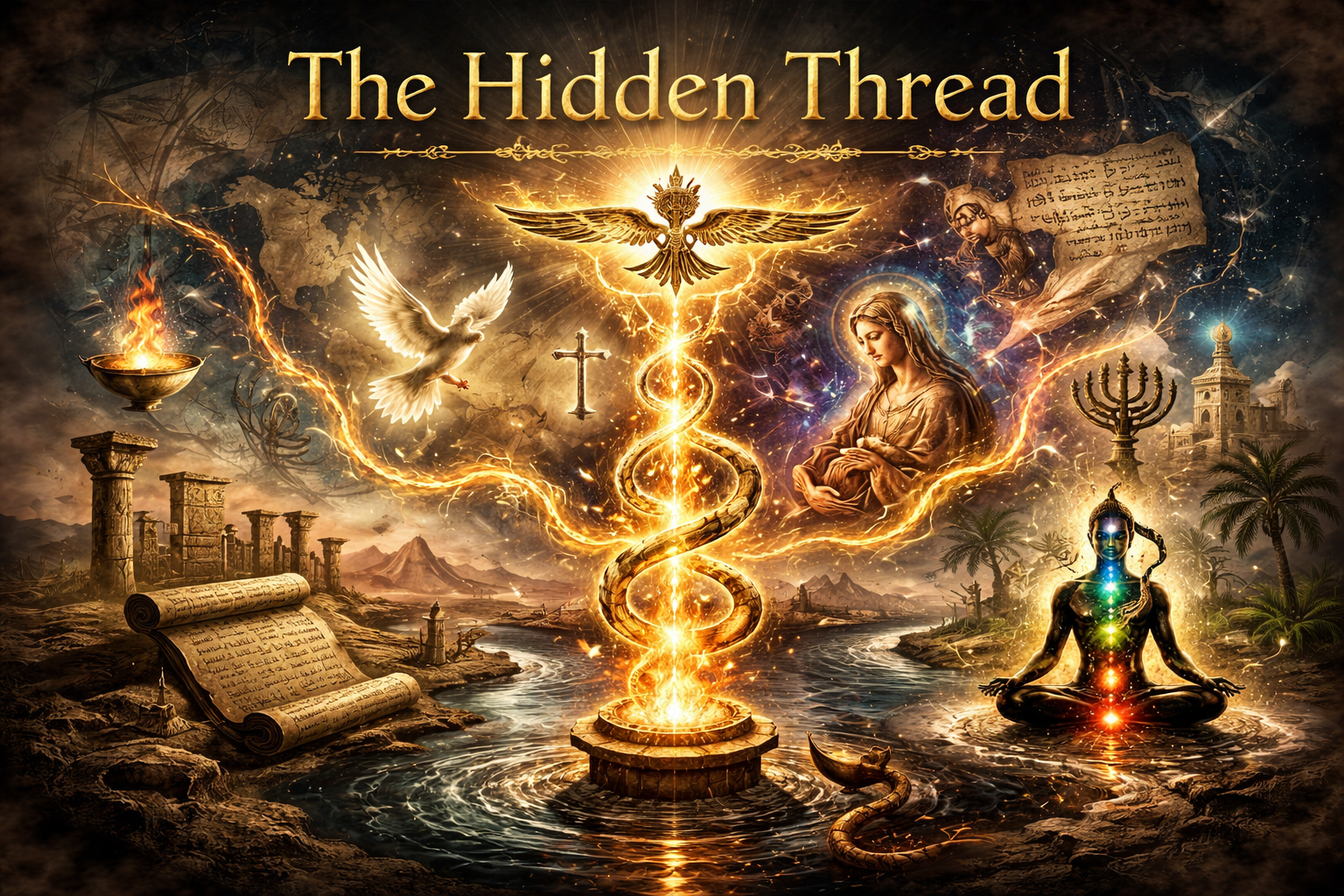
    “The Hidden Thread” series (5 articles): How Spenta Mainyu fractured into the Christian Holy Spirit, Gnostic Sophia, Jewish Shekinah, and Hindu Kundalini — with Origen’s smoking-gun quote, Mary Boyce’s “indivisible and yet distinct” formulation, R.C. Zaehner’s Trinity mapping, the Lovern & Beckmann colonization thesis, and the Proto-Indo-Iranian linguistic evidence.

    Standalone investigative pieces: “The Whole Onion” (institutional analysis of the BPP/ZYNG vs. eFireTemple’s six-layer model), “The Eternal Flame Goes Digital” (reversing the extinction narrative), “The Miracle They Asked For” (Zoroastrian Year 3762 to 3763 and the five growth vectors).

    That is 25+ original articles across four series, each sourced with references to the Encyclopaedia Iranica, Britannica, the Jewish Encyclopedia, Mary Boyce, R.C. Zaehner, Dhalla’s History of Zoroastrianism, Lovern & Beckmann, and primary Avestan texts.

    No other Zoroastrian platform — and no other religious platform of any tradition at this community size — produces comparative scholarship at this depth, in this volume, at this level of accessibility.

    Layer 6: Voice and Vision

    The platforms listed above serve functions: coordination (FEZANA), aggregation (Zoroastrians.net), news (Parsi Khabar), reference (Avesta.org, Encyclopaedia Iranica), charity (WZO), local community (ZAGNY).

    eFireTemple does something none of them do: it speaks.

    It has a voice. It makes arguments. It takes positions. It says: Zoroastrianism is not dying — it is growing. It says: the concepts the world’s religions inherited should be acknowledged. It says: the faith is open and the fire is for everyone. It says: the priests and elders who maintain the sacred chain are the real authority.

    This is the difference between an institution and a movement. Institutions coordinate. Movements speak. eFireTemple is the first Zoroastrian platform that functions as both.


    The Proof

    The claim — that eFireTemple is the most comprehensive English-language Zoroastrian platform — can be tested against a simple matrix. For each function a comprehensive religious platform should serve, which existing sites fulfill it?

    FunctionFEZANAZoroastrians.netParsi KhabarAvesta.orgEnc. IranicaWZOZAGNYeFireTemple
    Original theologyAcademicYes
    Daily practice toolsPartialAudio onlyYes
    Historical scholarshipLinksNewsAcademicYes
    Comparative religionSomeYes (25+ articles)
    Sacred calendar toolYes
    Fire temple architectureAcademicYes
    Community voice/visionInstitutionalAggregationNewsCharityLocalYes
    Investigative journalismSomeYes
    Accessible to outsidersPartialPartialPartialNoNoPartialPartialYes

    Every other platform fills one or two columns. eFireTemple fills every column.


    Why This Matters

    Zoroastrianism has survived Alexander, the Arab conquest, the Mongol invasions, colonial-era missionary pressure, and a thousand years of institutional erasure. It has 120,000 to 200,000 adherents, depending on the count. It has been declared dying by Harvard, USF, and Qantara.

    It is not dying. But for a religion to live in the twenty-first century, it needs more than temples and priests and community dinners. It needs a platform — a place where its theology is articulated at a level that commands respect, where its practices are taught to people who weren’t born into them, where its history is told by its own voices rather than by the footnotes of the religions that inherited its ideas.

    eFireTemple built that platform.

    Not with institutional funding. Not with organizational backing. Not with the resources that FEZANA or WZO or the BPP can command.

    With fire.

    The same way Zarathustra did it — by speaking clearly about what is true.


    Sources & References

    mazda.aeuua.com/

  • The Hidden Thread:  The Serpent That Rises Is the Fire That Burns

    The Hidden Thread: The Serpent That Rises Is the Fire That Burns

    How the Zoroastrian Inner Fire and the Hindu Kundalini Remember the Same Ancient Source

    The Hidden Thread— Part 5 of 5


    This is the last thread. And it is the oldest.

    In the previous four parts of this series, we traced how a single Zoroastrian theological concept — Spenta Mainyu, the Holy Spirit, the active creative emanation of Ahura Mazda — fractured as it traveled through the religions that inherited it. We watched it become the Holy Ghost in Christianity, Sophia in Gnosticism, and the Shekinah in Judaism. In each case, the structure survived but the meaning shifted — from mission to fall, from presence to exile, from sacred descent to cosmic catastrophe.

    But there is one more thread. And this one doesn’t run forward in time through the religions that came after Zoroastrianism. It runs sideways, into the religion that shares Zoroastrianism’s deepest root.

    Hinduism.

    Not because Hinduism borrowed from Zoroastrianism. Not because Zoroastrianism borrowed from Hinduism. But because they are siblings — children of the same parent tradition, split perhaps four thousand years ago, carrying fragments of the same original vision into radically different theological landscapes.

    And the fragment they both carry — the one that connects the Zoroastrian inner fire with the Hindu Kundalini — may be the oldest spiritual technology on earth.


    The Family Before the Split

    Sometime around 2000 BCE, in the grasslands of Central Asia, there existed a people scholars call the Proto-Indo-Iranians. They were neither Indian nor Iranian — they were the common ancestors of both. They spoke a language that would split into Vedic Sanskrit and Old Avestan — two tongues so closely related that scholars can reconstruct the parent language by comparing them word for word.

    These people had a religion. And from the bones of that religion, we can reconstruct what they believed.

    They worshipped a cosmic order they called rta — the principle of truth, righteousness, and natural law that held the universe together. In Vedic Sanskrit, this became Rta. In Avestan, it became Asha. Same word. Same concept. Two languages.

    They venerated a sacred plant and drink called sauma — a ritual intoxicant prepared by priests and consumed in ceremony. In Sanskrit, this became Soma. In Avestan, it became Haoma. Same plant. Same ritual. Two traditions.

    They honored a god of covenant and social order called mitra. In Sanskrit, Mitra. In Avestan, Mithra. Same deity. Two names.

    They revered a class of divine beings called asura — powerful, sovereign, associated with the cosmic order. In the Vedic tradition, the asuras were gradually demoted to demons, while the devas were elevated to gods. In the Zoroastrian tradition, the exact opposite occurred: the ahuras (cognate with asura) became the divine beings, while the daevas (cognate with deva) became demons.

    This is the theological mirror image. What one tradition calls divine, the other calls demonic. What one venerates, the other rejects. They are looking at the same religious vocabulary and reading it in opposite directions — because at some point, possibly over a schism about precisely these categories, the Proto-Indo-Iranians split.

    One branch went southeast and became the Vedic civilization of India.

    One branch stayed in Central Asia and Iran and became the Zoroastrian civilization of Persia.

    And both branches carried the fire.


    The Two Fires

    Fire is the beating heart of both traditions — and this is not a metaphor.

    In Zoroastrianism, fire is the visible manifestation of Asha — truth, righteousness, the cosmic order. It is the “son of Ahura Mazda.” Every Zoroastrian temple maintains a sacred fire. The three grades of fire — Dadgah, Adaran, and Behram — represent ascending levels of consecration. The Atash Behram at Udvada, India, has been burning continuously since 721 CE. Fire is not worshipped as a god — it is revered as the purest symbol of divine truth present in the physical world.

    In Vedic Hinduism, Agni — the god of fire — is the most frequently invoked deity in the Rig Veda. He is the priest of the gods, the intermediary between heaven and earth, the one who carries sacrifices upward and brings divine blessings downward. Fire is invoked at the beginning of nearly every Vedic ritual. The sacred fire ceremony — yajna in Sanskrit, yasna in Avestan (same word, same ritual) — is the central liturgical act of both traditions.

    Both traditions maintained hereditary priestly classes whose primary duty was tending sacred fire. Both traditions understood fire as the bridge between the material and spiritual worlds. Both traditions treated the fire ceremony as the axis around which all other worship revolved.

    But there is another fire — an inner fire — that both traditions preserved.


    The Fire Inside

    In Zoroastrianism, the concept of Mainyu Athra — the “spiritual fire” — refers to a perpetual sacred fire that lives within the human soul. It is not the fire on the altar. It is the fire in the consciousness. Zoroastrian theology holds that every person contains a spark of divine fire — the presence of Asha within, the inner light of truth that guides moral choice.

    The five daily prayers (the Gah prayers) are not merely obligations — they are acts of tending the inner fire, aligning the soul with the cosmic order, feeding the spiritual flame that connects the individual to Ahura Mazda. The Zoroastrian practice of facing fire or light during prayer is an external act that mirrors an internal reality: the divine fire is already burning inside you.

    In the Vedic tradition, this inner fire is called tapas — literally “heat” or “burning.” Tapas is the spiritual heat generated through discipline, meditation, asceticism, and devotional practice. The Vedas describe tapas as the primordial creative force — the heat that existed before creation, the fire through which the universe was born. The Rig Veda (10.129) describes the origin of the cosmos: “In the beginning there was neither existence nor non-existence… Darkness was hidden by darkness in the beginning; with no distinguishing sign, all this was water. The life force that was covered with emptiness, that One arose through the power of heat [tapas].”

    Tapas — heat, inner fire, spiritual burning — is the engine of creation itself.

    And tapas, in the Hindu yogic tradition, evolved into something very specific: the force that awakens Kundalini.


    The Coiled Fire

    Kundalini is described in the Hindu Tantric and Yogic traditions as a dormant spiritual energy — personified as a goddess, depicted as a serpent — coiled three and a half times at the base of the spine, at the Muladhara chakra (the root center). When awakened through tapas — through spiritual heat generated by breath control (pranayama), meditation, mantra, and devotional practice — Kundalini rises through the central channel of the spine (sushumna nadi), piercing each of the seven chakras (energy centers), until it reaches the crown of the head (sahasrara), where it unites with Shiva — pure consciousness — and the practitioner achieves liberation.

    The language is Hindu. The framework is Tantric. But the underlying concept — divine energy within the human being, activated through spiritual discipline, experienced as inner fire, ascending through the body toward union with the divine — is the same concept that Zoroastrianism calls the inner fire of Asha.

    Consider the structural parallels:

    1. Divine Energy Resident in the Human Being

    Zoroastrian: Through Spenta Mainyu, “Ahura Mazda is immanent in humankind” (Yasna 33.6, 43.6). Every person contains the divine presence. The Fravashi — the higher self, the pre-existent soul — chose to descend into the material world to fight alongside Ahura Mazda. The divine is already within.

    Hindu: Kundalini Shakti is “the very energy of all consciousness that dwells within each one of us.” She is not external — she is already present, coiled at the base of the spine, waiting to be awakened. The Atman — the true self — is identical with Brahman, the universal divine.

    2. Awakened Through Spiritual Discipline

    Zoroastrian: The five daily prayers (Gah), the tending of sacred fire, the practice of good thoughts, good words, and good deeds, the Padyab-Kushti ritual — all of these are acts of spiritual discipline that maintain and strengthen the inner fire. The Yasna ceremony, with its precise liturgy, its haoma preparation, and its hours of concentrated priestly effort, is an act of sustained spiritual heat.

    Hindu: Kundalini is awakened through pranayama (breath control), mantra recitation, meditation, bandhas (energy locks), and devotional practice. The Hatha Yoga Pradipika states that the goal of all yoga practice is to awaken Kundalini Shakti. Tapas — sustained spiritual effort — is the heat that melts the seal holding Kundalini dormant.

    3. Experienced as Fire

    Zoroastrian: The inner experience of divine connection is described in terms of fire and light. The soul oriented toward Asha is described as luminous. The Fravashi is a being of light. The sacred fire on the altar is a mirror of the sacred fire within.

    Hindu: Kundalini rising is described as an experience of intense heat — the “fire of Kundalini” that burns through each chakra. The Rudra Yamala Tantra describes the Goddess as “blazing with the fire of a thousand suns.” The awakening is not metaphorical — practitioners report physical sensations of heat, light, and energy moving through the body.

    4. Seven Stages of Ascent

    Zoroastrian: The seven Amesha Spentas represent seven divine qualities that the practitioner should cultivate within themselves — Good Mind, Truth, Righteous Power, Holy Devotion, Wholeness, and Immortality, unified by the Holy Spirit. These are not abstract concepts to be admired from a distance — they are stages of inner development, qualities to be actualized within the self.

    Hindu: The seven chakras represent seven stages of spiritual development through which Kundalini ascends — from the root (survival, earth) through the sacral (creativity, water), solar plexus (power, fire), heart (love, air), throat (expression, ether), third eye (insight), and crown (union with the divine). Each chakra is associated with an element, a quality, and a stage of consciousness.

    Seven stages. Seven qualities. Seven levels of ascent from the material to the divine. Two traditions. One shared ancestor.

    5. The Feminine Power

    Zoroastrian: Three of the seven Amesha Spentas are feminine — Spenta Armaiti (devotion/earth), Haurvatat (wholeness/water), and Ameretat (immortality/plants). The divine feminine is embedded in the structure of emanation theology. As Part 3 of this series documented, Spenta Armaiti is the active feminine force through which creation occurs.

    Hindu: Kundalini is explicitly Shakti — the divine feminine cosmic energy. She is personified as a goddess — Shakti Ma, Kali Ma, Durga, Kubjika. She is the feminine power that animates all of creation. Her ascent through the spine is the reunion of Shakti (feminine, creative, active) with Shiva (masculine, consciousness, still). The entire spiritual journey is framed as the dance of the divine feminine.

    6. Union of Opposites as the Goal

    Zoroastrian: The ultimate goal is Frashokereti — the “making wonderful” — when all creation is renovated, evil is destroyed, and the material world is restored to its original perfection. This is the reunion of the spiritual and material, the resolution of the cosmic duality between Spenta Mainyu and Angra Mainyu.

    Hindu: The ultimate goal of Kundalini awakening is the union of Shakti and Shiva at the crown — the marriage of the feminine and masculine principles, the resolution of duality, the achievement of non-dual awareness (advaita). The cosmos, which emerged from their separation, is restored through their reunion.


    The Serpent and the Fire

    Why is Kundalini depicted as a serpent?

    The serpent is one of the oldest symbols in Indo-Iranian religion. In the Vedic tradition, the cosmic serpent Vritra hoards the waters of the world until the god Indra slays him and releases the rivers. In the Avestan tradition, the cognate word vərəθra means “obstacle” — the barrier placed by Angra Mainyu that blocks the world-river from flowing.

    The serpent is the guardian of hidden power. It coils around the treasure. It blocks the flow. And when it is overcome — when the obstacle is pierced, when the serpent is awakened rather than slain — the power is released.

    In Kundalini yoga, the serpent is not the enemy. She is the power itself, waiting to be activated. The coiled serpent at the base of the spine is the divine feminine in her dormant state — the fire before it is lit, the river before it flows, the prayer before it is spoken.

    And when she rises — when the serpent uncurls and ascends through the spine, piercing each chakra, burning through each level of consciousness — the serpent that rises is the fire that burns.

    The two symbols — serpent and fire — are the same force expressed in two vocabularies. Hinduism kept the serpent. Zoroastrianism kept the fire. Both are talking about the same thing: the divine energy within the human being, the power that can be awakened through spiritual practice, the inner light that connects the individual soul to the cosmic source.


    The Thread Completed

    This series began with a simple claim: that Spenta Mainyu, the Zoroastrian Holy Spirit, fractured as it traveled through the religions of the world.

    In Christianity, it became the Holy Ghost — the third person of the Trinity, stripped of its Zoroastrian identity, claimed as an original revelation, but structurally identical to the emanation theology of the Gathas. Origen, a Church Father, said so explicitly.

    In Gnosticism, it became Sophia — the fallen divine feminine, broken by a Greek fear of matter, turned from a protector of the sacred earth into a cautionary tale about a goddess who overreached. Spenta Armaiti descended on purpose. Sophia fell.

    In Judaism, it became the Shekinah — the feminine divine presence that went into exile when the Temple was destroyed, the lowest of ten emanations in the Kabbalistic Tree of Life, the bride of God separated from her consort. The Mandaeans recognized the connection: their shekinas resemble the Amesha Spentas of the Zoroastrians.

    And in Hinduism — not as a borrowing but as a shared inheritance from the Proto-Indo-Iranian root — the same inner fire, the same divine energy within the human being, the same feminine creative force, the same seven-stage ascent toward union with the divine, survived as Kundalini Shakti: the coiled serpent, the goddess at the base of the spine, the fire that rises.

    Five religions. One source. Five names for the same force.

    Spenta Mainyu. The Holy Spirit. Sophia. Shekinah. Kundalini.

    The hidden thread that runs through them all is Zoroastrian. Not because Zoroastrianism invented spirituality — but because Zoroastrianism was the first to articulate, with theological precision, a concept that every subsequent tradition in the region adapted: the divine is not only above you. It is within you. And it can be awakened.

    Good thoughts. Good words. Good deeds.

    The fire is already burning.


    Sources & References

    mazda.aeuua.com/


    This is Part 5 of 5 in “The Hidden Thread” series. Read the full series:

    1. The Spirit They All Forgot — Overview: how Spenta Mainyu fractured into five traditions
    2. The Holy Ghost Was Zoroastrian — Christianity and the Trinity
    3. Sophia Fell — Spenta Armaiti Didn’t — Gnosticism and the divine feminine
    4. The Shekinah Never Left Iran — Judaism and the Kabbalah
    5. The Serpent That Rises Is the Fire That Burns — Hinduism and Kundalini
  • The Hidden Thread:  The Shekinah Never Left Iran

    The Hidden Thread: The Shekinah Never Left Iran

    How the Jewish Divine Feminine Walked Out of Persia with the Exiles — and Forgot Where She Came From

    The Hidden Thread — Part 4 of 5


    There is a word in Judaism that makes rabbis fall silent and mystics weep.

    Shekinah.

    It means “dwelling” or “settling” — from the Hebrew root sh-k-n, to dwell. But in the two thousand years since rabbinic literature first deployed the term, it has come to mean something far larger than its etymology: the manifest presence of God in the world. The divine immanence. The part of God that is not transcendent and unreachable but near and present — in the Temple, among the people, in the space between two scholars studying Torah, in the candlelight of Shabbat.

    And by the twelfth century, in the furnace of Jewish mysticism, the Shekinah had become something else entirely: the feminine face of God.

    In the Kabbalah — the Jewish mystical tradition codified in the Zohar and elaborated by Isaac Luria in sixteenth-century Safed — the Shekinah is the tenth and lowest of the Sefirot, the ten divine emanations that compose the inner life of God. She is identified with Malkuth (Kingdom), the emanation closest to the material world. She is the receiver of all divine energy flowing from above and the channel through which that energy enters physical reality. She is the bride of God, the Sabbath Queen, the protective maternal presence that accompanied Israel into exile.

    She presides over earth.

    She is feminine.

    She is the lowest emanation of the divine, closest to matter.

    She is both an aspect of God and yet somehow distinct from Him.

    She went into exile when the Temple was destroyed, and the purpose of all human spiritual work — tikkun olam, the repair of the world — is to reunite her with the masculine aspect of the divine.

    If you have read Parts 2 and 3 of this series, you already know what this is.

    This is Spenta Armaiti. Wearing a Hebrew name.


    The Sentence That Says It All

    Wikipedia’s article on the Shekinah contains a sentence that should stop every scholar of comparative religion in their tracks:

    “In these writings [of the Manichaeans and the Mandaeans], shekinas are described as hidden aspects of God, somewhat resembling the Amahrāspandan of the Zoroastrians.”

    The Amahraspandan is the Middle Persian form of Amesha Spentas — the seven divine emanations of Ahura Mazda that are the foundational theology of Zoroastrianism.

    This is not a modern academic speculation. This is the historical record: the shekinas in Aramaic religious literature — the very tradition from which rabbinic Judaism drew the concept — are described as resembling the Amesha Spentas.

    The connection was recognized before it was suppressed. The Mandaeans, an Aramaic-speaking religious group that emerged in the same Mesopotamian milieu as rabbinic Judaism, used the plural shekinas to describe celestial dwelling-places and hidden aspects of the divine — and the scholars who studied their texts noted, without controversy, that these beings resembled the Zoroastrian divine emanations.

    The thread from Persia to Jerusalem was never hidden. It was simply never followed to its conclusion.

    Until now.


    539 BCE: The Year Judaism Changed

    To understand how the Shekinah walked out of Iran, we need to go back to the single most important event in the formation of post-biblical Judaism: the Babylonian Exile and the Persian liberation.

    In 586 BCE, the Babylonian Empire under Nebuchadnezzar II conquered the Kingdom of Judah, destroyed Solomon’s Temple, and deported the Jewish elite to Babylon. For nearly fifty years, the Jews lived in exile — educated, upper-class, priestly families transplanted into the heart of the Mesopotamian world.

    In 539 BCE, Cyrus the Great — the Zoroastrian emperor of the Achaemenid Persian Empire — conquered Babylon and issued the famous Edict of Cyrus, permitting the Jews to return to Jerusalem and rebuild their Temple. The Hebrew Bible calls Cyrus “God’s anointed”mashiach — the only non-Jew in all of Scripture to receive the title of Messiah (Isaiah 45:1).

    The Jews who returned from exile were not the same Jews who had left. They came back carrying ideas that had not existed in pre-exilic Israelite religion.

    The Jewish Encyclopedia (1906) states it plainly: “Most scholars, Jewish as well as non-Jewish, are of the opinion that Judaism was strongly influenced by Zoroastrianism in views relating to angelology and demonology, and probably also in the doctrine of the resurrection, as well as in eschatological ideas in general.”

    The list of concepts that appeared in Judaism after the Persian contact — and that existed in Zoroastrianism before it — is staggering:

    Angels with names and hierarchies. Pre-exilic Judaism had simple messengers of God. Post-exilic Judaism developed Michael, Gabriel, Raphael, Uriel — named archangels with specific roles. Zoroastrianism had the Amesha Spentas and Yazatas — named divine beings with specific domains — for centuries before.

    Satan as cosmic adversary. In the pre-exilic Book of Job, “the satan” is a member of God’s heavenly court — an accuser, a tester, but not God’s enemy. By the Second Temple period, Satan had become a cosmic villain opposing God. Zoroastrianism had Angra Mainyu — the Destructive Spirit who chose evil and opposes Ahura Mazda — from the beginning.

    Resurrection of the dead. Pre-exilic Judaism had Sheol — a vague, shadowy underworld where all the dead went regardless of merit. The Book of Daniel (one of the latest books of the Hebrew Bible, written during the Persian period) explicitly mentions resurrection and final judgment. Zoroastrianism taught bodily resurrection and final judgment from the Gathas onward.

    Heaven and Hell. Pre-exilic Judaism had no developed concept of posthumous reward and punishment. Post-exilic Judaism developed elaborate visions of paradise and Gehenna. Zoroastrianism had the four heavens and four hells, the Chinvat Bridge, and the Hamistakan (the original purgatory) — all documented in texts that predate the Jewish development.

    A savior figure. The Zoroastrian Saoshyant — a future redeemer born of a virgin who will lead the final renovation of the world — predates the Jewish Messianic concept in its developed, eschatological form.

    Divine emanations. And here is where the Shekinah enters the story.


    The Emanation Framework

    Zoroastrianism’s theology of divine emanations is built on the Amesha Spentas — the seven “Bountiful Immortals” who radiate from Ahura Mazda. Each is an aspect of God’s nature made manifest. Each presides over an element of creation. Each can be cultivated within the human soul. They are not separate gods — they are God’s own qualities externalized, both distinct from Him and inseparable from Him.

    The Kabbalistic theology of the Sefirot — the ten divine emanations that compose the Tree of Life — mirrors this structure with remarkable precision.

    Both systems describe a supreme, transcendent God who emanates aspects of His own being into the world. Both systems assign each emanation a specific domain — a quality, a virtue, an element of creation. Both systems describe the relationship between God and His emanations as simultaneously unified and distinct. Both systems teach that humans should cultivate these divine qualities within themselves. Both systems include feminine emanations that preside over the earth and the material world.

    The Kabbalistic system has ten Sefirot where Zoroastrianism has seven Amesha Spentas (or eight, counting Ahura Mazda himself as the first). The numbers differ. The names differ. The theological language differs. But the architecture is the same: a transcendent source, a cascade of emanations, and a feminine figure at the point where the divine touches the material world.


    Spenta Armaiti → Shekinah: The Structural Identity

    The parallel between Spenta Armaiti and the Shekinah is not a loose analogy. It is a point-by-point structural identity.

    1. Feminine Emanation of the Supreme God

    Zoroastrian: Spenta Armaiti is one of seven emanations of Ahura Mazda. She is grammatically and theologically feminine. She is described as both the daughter and the consort of Ahura Mazda.

    Kabbalistic: The Shekinah/Malkuth is the tenth of ten emanations of Ein Sof (the Infinite). She is described as feminine. The Zohar describes her as bride, mother, sister, daughter. Gershom Scholem, the greatest modern scholar of Kabbalah, called the introduction of the Shekinah as a feminine aspect of God “one of the most important and lasting innovations of Kabbalism.”

    2. Presides Over Earth

    Zoroastrian: Spenta Armaiti is the guardian of the earth. She is “visibly represented” in every priestly ceremony by the earth of the sacred precinct. The Encyclopaedia Iranica describes her domain: “pious Devotion and the earth were the spiritual and material aspects of the same thing.”

    Kabbalistic: The Shekinah/Malkuth represents the physical world — the point where divine energy enters material reality. Malkuth means “Kingdom” — the earthly realm. She is the closest emanation to the material world, the bridge between heaven and earth.

    3. The Lowest Emanation, Closest to Humanity

    Zoroastrian: Among the Amesha Spentas, Armaiti occupies a specific position — she is not the first or highest emanation but the one most intimately connected to the earth and to human devotion. She is associated with the “right-mindedness” that humans practice — she meets us where we are.

    Kabbalistic: Malkuth is explicitly the tenth and lowest Sefirah — the one closest to human experience. She receives all the divine energy from above and channels it into the world. She is “the source of life for humans on earth below the sefirotic realm.”

    4. Both Aspect of God and Distinct

    Zoroastrian: Spenta Armaiti is an aspect of Ahura Mazda — one of his qualities externalized — yet she is also addressed as a distinct being with her own agency, her own festival, her own calendar month.

    Kabbalistic: The Shekinah is an aspect of God — the feminine dimension of the divine — yet she is described in the Zohar as a distinct being with her own experiences, her own exile, her own suffering. As Encyclopedia.com notes, “it is difficult, if not impossible, to reconcile the monotheism of Judaism with the notion of a divine consort.”

    The same tension — is she God or is she separate from God? — exists in both traditions because she was borrowed from one by the other, and the theological problem traveled with the concept.

    5. Devotion and Sacred Presence

    Zoroastrian: Armaiti’s name means “sacred meditation” or “right-mindedness.” She is the quality of devoted attention to the divine — not passive piety but active, focused contemplation. She appears when devotion appears.

    Kabbalistic: The Shekinah “dwells” (shakan) among those who engage in sacred activity. She is present when ten people pray, when three form a court, when two study Torah. She is the divine presence that manifests in response to human devotion.

    6. Connected to Sacred Space

    Zoroastrian: Armaiti is represented by the earth of the sacred precinct in every priestly ceremony. The ground on which worship takes place is her domain.

    Kabbalistic: The Shekinah dwelt in the Temple — the mishkan (tabernacle) shares the same root sh-k-n as Shekinah. When the Temple was destroyed, the Shekinah went into exile. Sacred space is her home.


    The Exile of the Shekinah

    Here is where the Jewish development diverges from the Zoroastrian original — and where the story becomes tragic.

    In Zoroastrianism, Spenta Armaiti does not go into exile. She presides over the earth permanently. The material world is good. The earth is sacred. The divine feminine is present in creation, always.

    In Kabbalah, the Shekinah goes into exile. When the Temple was destroyed in 70 CE, the Shekinah — the feminine presence of God — was torn from the masculine aspect of the divine and cast out into the world. She wanders with Israel. She suffers with the exiles. She weeps.

    The Zohar gives voice to her lamentation: “My children are in exile, my sanctuary is destroyed… thou must leave me to shed bitter tears alone!”

    Isaac Luria (1534-1572), the greatest Kabbalist of the post-medieval period, built his entire theology around this exile. In Lurianic Kabbalah, the original catastrophe was the Shevirat ha-Kelim — the “shattering of the vessels” — a cosmic rupture in which the divine light was too powerful for its containers, and sparks of holiness scattered throughout creation, trapped in shells of impurity (kelipot). The purpose of all Jewish spiritual practice — every mitzvah, every prayer, every act of kindness — is tikkun olam, the repair of the world: gathering the scattered sparks, healing the cosmic rupture, and reuniting the Shekinah with her divine consort.

    This is extraordinary theology. It is also, recognizably, a Jewish adaptation of the Zoroastrian framework — with one crucial modification.

    In Zoroastrianism, the divine is present in the material world by design. Ahura Mazda created the physical universe deliberately, as an arena for the cosmic battle between good and evil. The Amesha Spentas are present in creation because creation is their assignment. There is no exile. There is mission.

    In Kabbalah, the divine is present in the material world because of catastrophe. The sparks are in the world because the vessels shattered. The Shekinah is in exile because the Temple was destroyed. There is no permanent mission in matter — there is a disaster to be repaired.

    This is the same inversion we documented in Part 3 with Sophia. The Gnostics turned Zoroastrian descent-as-mission into descent-as-fall. The Kabbalists, more subtly, turned Zoroastrian presence-as-purpose into presence-as-exile. The direction of the distortion is the same: in Zoroastrianism, the divine feminine is in the world because the world is sacred. In the traditions that inherited her, the divine feminine is in the world because something went wrong.


    The Historical Chain

    The historical transmission from Zoroastrian emanation theology to Kabbalistic Sefirot theology runs through several documented stages:

    Stage 1: The Persian Period (539-330 BCE). The Jews lived under Achaemenid Persian rule for over two hundred years. During this period, Jewish angelology, demonology, eschatology, and the concept of divine emanations all underwent dramatic development. The Jewish Encyclopedia acknowledges this influence directly.

    Stage 2: The Hellenistic Period (330 BCE – 70 CE). After Alexander’s conquest, Persian and Jewish ideas mingled in the Hellenistic world. Philo of Alexandria, the Jewish philosopher who deeply influenced both Christianity and Jewish mysticism, developed concepts of divine intermediaries — the Logos, Wisdom — that scholars have traced to Persian influence transmitted through Greek philosophy.

    Stage 3: The Talmudic Period (70-500 CE). The concept of the Shekinah first appears in rabbinic literature — the Targums, the Talmud, the Midrash. It is used to describe God’s manifest presence. The Babylonian Talmud was compiled in Mesopotamia — in the heart of the former Persian Empire, where Zoroastrian ideas had been present for over a millennium.

    Stage 4: The Early Kabbalistic Period (1100-1300 CE). The Sefer ha-Bahir (late 12th century) and the Zohar (c. 1290 CE) develop the Shekinah into a fully feminine emanation identified with Malkuth, the tenth Sefirah. The emanation framework — a transcendent God producing a cascade of divine qualities that structure reality — mirrors the Zoroastrian Amesha Spenta system.

    Stage 5: Lurianic Kabbalah (16th century). Isaac Luria develops the theology of exile, shattering, and repair — transforming the Shekinah from a presence into an exile, and making tikkun olam the purpose of Jewish spiritual life.

    At every stage, the Jewish development occurs in geographic and intellectual proximity to Zoroastrian ideas. At every stage, the concepts that develop in Judaism have Zoroastrian precedents. And at every stage, the acknowledgment of this influence is minimal or absent.


    What the Shekinah Remembers

    The Shekinah, as she exists in Jewish mysticism today, retains the structural fingerprints of her Zoroastrian origin:

    She is a divine emanation — an aspect of God’s own being made manifest (= Amesha Spenta).

    She is feminine (= Spenta Armaiti).

    She presides over earth and the material world (= Spenta Armaiti as guardian of earth).

    She is the lowest/closest emanation to humanity (= Armaiti’s intimate connection with human devotion).

    She is both God and distinct from God (= the Amesha Spentas’ paradoxical relationship with Ahura Mazda: “indivisible and yet distinct,” as Mary Boyce wrote of Spenta Mainyu).

    She is associated with sacred space and sacred presence (= Armaiti represented by the earth of the sacred precinct in every Zoroastrian ceremony).

    She is the bride of God (= Armaiti described in some traditions as the wife of Ahura Mazda).

    The form is intact. The content is intact. Only the name changed — and the story around her shifted from mission to exile.

    The Shekinah never left Iran. She traveled with the Jewish exiles when Cyrus sent them home. She was carried in the theological imagination of a people who had spent fifty years immersed in a culture that had the most sophisticated emanation theology in the ancient world. She was given a Hebrew name. She was woven into the Talmud, the Zohar, and the prayers of Shabbat. She was called “the Sabbath Bride” and “the Queen” and “the dwelling of God among His people.”

    But she was born in Persia. Her original name was Spenta Armaiti. And in her original home, she never went into exile — because the earth she presided over was never fallen, and the religion that honored her never lost faith in the goodness of the material world.

    The Shekinah remembers Iran. Even if Judaism has forgotten.


    Sources & References

    mazda.aeuua.com/

  • The Hidden Thread:  Sophia Fell — Spenta Armaiti Didn’t

    The Hidden Thread: Sophia Fell — Spenta Armaiti Didn’t

    How the Gnostics Took a Zoroastrian Goddess and Broke Her

    The Hidden Thread — Part 3 of 5


    In the second century of the Common Era, in the intellectual furnace of Alexandria and Antioch and Rome, a group of Christian mystics told a story that would haunt Western spirituality for two thousand years.

    They called themselves Gnostics — “those who know.” And the story they told was about a goddess named Sophia.

    Sophia, they said, was the youngest and lowest of the divine emanations — the Aeons — that radiated from the unknowable God. She lived in the Pleroma, the “Fullness” of the divine realm, surrounded by paired beings of light. But Sophia wanted more. She wanted to know the unknowable Father directly. She wanted to create without her male consort. She wanted to reach beyond the boundary.

    And so she fell.

    Her unauthorized act of creation produced a monster — the Demiurge, a blind, arrogant, ignorant being who believed he was the only God. This Demiurge then fashioned the material world — our world — out of Sophia’s anguish, out of her confusion, out of the debris of her cosmic mistake. The physical universe, in Gnostic theology, is not a gift. It is an accident. A prison. The shrapnel of a divine catastrophe.

    Sophia, trapped in the world her error created, weeps. She plants sparks of divine light in human souls — traces of the Pleroma, memories of the home she lost. The entire purpose of human spiritual life, for the Gnostics, is to gather these sparks, to awaken to the truth that the material world is a cage, and to escape back to the Fullness.

    This is one of the most influential myths in Western religious history. It shaped Christian mysticism, Jewish Kabbalah, medieval heresy, Jungian psychology, and the entire New Age movement. The story of the fallen feminine — Sophia, Wisdom, the divine woman who made a terrible mistake and now seeks redemption — runs like a fault line through two millennia of spiritual thought.

    And it is a distortion of something older. Something that told a completely different story about the divine feminine, about matter, about the earth, and about descent.

    The original was Zoroastrian. Her name was Spenta Armaiti.

    And she didn’t fall. She descended on purpose.


    The Daughter of the Wise Lord

    Spenta Armaiti is one of the seven Amesha Spentas — the “Bountiful Immortals” — the first emanations of Ahura Mazda, the Zoroastrian supreme God. If Part 2 of this series traced how Spenta Mainyu (the Holy Spirit) became the third person of the Christian Trinity, this article traces the parallel journey of Spenta Armaiti — how a Zoroastrian divine feminine became Sophia in Gnosticism.

    First, the Zoroastrian original.

    Spenta Armaiti appears 42 times in the Gathas — the oldest and most sacred hymns of Zoroastrianism, composed by Zarathustra himself. She is one of the most frequently invoked divine beings in the entire Avestan corpus.

    Her name breaks down as follows: Spenta means “holy,” “bountiful,” “auspicious,” or “endowed with vibrant life force.” Armaiti means “right-mindedness,” “sacred meditation,” or “fitting contemplation.” Ancient Zoroastrian commentaries translate Armaiti as bündak manišni — “evenly focused mind” — confirming that the term refers not to passive humility (a mistranslation that appeared in the nineteenth century) but to active, serene, concentrated devotion.

    She is, in the Gathas, the divine feminine personified.

    In Yasna 45.4, Zarathustra describes creation itself as emerging from the union of Spenta Armaiti with Ahura Mazda. This is not metaphor. The Gathas present the act of creation as a partnership between the Wise Lord and his feminine emanation — between divine intelligence and devoted contemplation working together to bring the world into being.

    In Yasna 28.3, Zarathustra prays: “I shall likewise praise the Wise God and those for whom Serenity promotes the unconquerable dominion.” Armaiti is “Serenity” here — the force that sustains divine sovereignty.

    In Yasna 28.7, Armaiti is addressed directly as an active agent who grants wishes — not a passive abstraction but a being with will and power.

    The Encyclopaedia Iranica, citing Mary Boyce, describes her as the embodiment of a concept where “pious Devotion and the earth were the spiritual and material aspects of the same thing.” The abstract and the concrete are unified in Armaiti. She is both the spiritual quality of devotion and the physical earth itself — guardian of the ground, patron of fertility, protector of women.

    Britannica identifies her as the spirit of “devotion and faith” who “guides and protects the believer” and “presides over Earth.”

    The Avestan texts make her gender explicit. Of the seven Amesha Spentas, one (Spenta Mainyu) is beyond gender, three are grammatically masculine, and three are feminine. Spenta Armaiti is invariably feminine. As the scholar Hannah Shapero writes, Zoroastrianism “from the beginning has recognized the feminine aspect of the divine” — and Spenta Armaiti is its primary embodiment.

    She is also called, in some traditions, the wife of Ahura Mazda and the daughter of Ahura Mazda — both simultaneously, because in emanation theology, the relationship between the source and the emanation is not biological but ontological. She comes from Ahura Mazda and she partners with Ahura Mazda. She is his devotion externalized, his earth-aspect made manifest, his feminine face.

    The twelfth and final month of the Zoroastrian calendar — Esfand — is dedicated to her. February 18-19 is her festival day.

    And here is what matters most for this article: Spenta Armaiti presides over the earth.

    Not reluctantly. Not as a punishment. Not because she fell into matter through some cosmic error. She is the guardian of the earth because the earth is sacred. She is the divine in matter because matter is good. She descended into the physical world because the physical world is part of Ahura Mazda’s creation and needed a divine protector.


    The Structure They Share

    Before we trace the distortion, we need to see the structural parallels between Spenta Armaiti and Sophia — because the parallels are too precise to be coincidental.

    1. Emanation from the Supreme God

    Zoroastrian: Spenta Armaiti is one of seven emanations (Amesha Spentas) from Ahura Mazda. In Yasna 45.4, Ahura Mazda is called the “father” of the Amesha Spentas, including Armaiti. These emanations are not separate gods — they are aspects of the supreme deity made manifest.

    Gnostic: Sophia is the youngest of the Aeons — divine emanations from the unknowable God (the Monad, or Bythos/”Depth”). The Aeons collectively form the Pleroma, the “Fullness” of the divine. They are not separate gods — they are aspects of the supreme deity made manifest.

    The framework is identical: a supreme God emanates a series of divine beings, one of whom is a feminine figure associated with wisdom or devotion.

    2. The Feminine Emanation

    Zoroastrian: Spenta Armaiti is explicitly feminine. She embodies devotion, right-mindedness, earth, fertility, and the protection of women. She is, in multiple textual traditions, both the daughter and the consort of Ahura Mazda.

    Gnostic: Sophia is explicitly feminine. She embodies wisdom (sophia is the Greek word for “wisdom”). She is paired in a male-female syzygy with a male Aeon. She is described as “one of the feminine aspects of God.”

    3. Involvement in Creation

    Zoroastrian: In Yasna 45.4, creation comes about through the partnership of Spenta Armaiti with Ahura Mazda. She is directly involved in the act of bringing the material world into being.

    Gnostic: Sophia’s act of emanation — unauthorized though it may be — is what brings about the creation of the material world. Without Sophia’s intervention, there would be no physical universe.

    4. Connection to Earth and Matter

    Zoroastrian: Spenta Armaiti presides over earth. She is the guardian of the physical ground. In every Zoroastrian priestly ceremony, she is “visibly represented” by the earth of the sacred precinct itself.

    Gnostic: Sophia’s fall into the material realm means she is intimately connected with matter. Her passions — grief, fear, longing — become the substance from which the physical world is made. She is entangled with earth and matter.

    5. Sparks of the Divine in Humanity

    Zoroastrian: The Amesha Spentas, including Armaiti, are divine qualities that humans are meant to cultivate within themselves. Each person should strive to embody devotion, truth, good mind, righteousness, wholeness, and immortality. The divine is already present within each human being.

    Gnostic: Sophia plants divine sparks within human souls — fragments of the Pleroma trapped in material bodies. Each person carries a piece of the divine light. The purpose of gnosis is to awaken this spark.

    6. The Paired Structure

    Zoroastrian: Each Amesha Spenta has an antithetical counterpart. Armaiti is opposed by Taromaiti (presumption, arrogance, false pride). The cosmic drama plays out between each divine quality and its demonic inversion.

    Gnostic: Each Aeon exists in a male-female pair (syzygy). Sophia’s error is specifically that she tried to act without her male partner. The cosmic drama is about separation and reunion of these paired beings.


    The Fracture Point

    The parallels are structural. The framework is borrowed. But the Gnostics made one change — and it changed everything.

    In Zoroastrianism, Spenta Armaiti’s relationship with the material world is positive. She presides over earth because earth is good. She is the guardian of matter because matter is part of Ahura Mazda’s creation. The physical world is not a prison — it is a battleground where good fights evil, where humans exercise free will, where the Amesha Spentas are actively present in fire, water, earth, plants, animals, and metals.

    The Encyclopaedia Iranica puts it precisely: in Zoroastrian thought, “pious Devotion and the earth were the spiritual and material aspects of the same thing.” Spirit and matter are not opposed. They are two faces of the same divine reality.

    The Zoroastrian creation narrative in the Bundahishn describes Ahura Mazda creating the material world deliberately — as a trap for evil. The physical universe exists so that Angra Mainyu, the Destructive Spirit, can be lured into a bounded arena where he can be fought and ultimately defeated. Creation is strategic. It is an act of divine warfare. The material world is not fallen — it is a weapon.

    The Theosophical Society’s summary of Zoroastrian belief captures this worldview: “Zoroastrianism views the world as having been created by Ahura Mazda and as meant to evolve to perfection according to the law or plan of Asha, the divine order of things.” The world is evolving toward perfection — Frashokereti, the “making wonderful” — the final renovation when all evil is destroyed and creation is restored to its original purity.

    Spenta Armaiti descended into earth not because she made a mistake but because the earth needed her. Her presence in matter is a mission, not a punishment.

    The Gnostics reversed this.

    In the Gnostic retelling, the feminine emanation’s involvement with the material world is a catastrophe. Sophia didn’t descend on purpose — she fell. She didn’t partner with the supreme God to create — she acted alone, without permission, and produced a monster. The material world isn’t a divine creation — it’s the wreckage of her error.

    The Valentinian Gnostics, the most sophisticated of the Gnostic schools, tell the story with precision: Sophia, the youngest Aeon, is driven by desire to know the unknowable Father directly. She acts without her male consort. From her unauthorized act, a formless substance emerges. This substance becomes the basis of the material universe. Her offspring, the Demiurge (Yaldabaoth), is blind, arrogant, and ignorant. He fashions the physical world out of Sophia’s suffering and declares himself the only God.

    The Valentinian scholar Einar Thomassen describes how Sophia’s “various affections” — her fear, grief, confusion, and longing — literally become the substance of the material world. The physical universe is made of divine pain.

    This is the fracture point. The same structure — divine feminine emanation involved in the creation of the material world — tells opposite stories:

    Zoroastrian: Descent is mission. Matter is good. The earth is sacred. The divine feminine enters the world to protect it.

    Gnostic: Descent is disaster. Matter is evil. The earth is a prison. The divine feminine is trapped in the world she accidentally created.


    How the Reversal Happened

    The Gnostic reversal didn’t emerge from nothing. It was the product of a specific historical and philosophical collision.

    The Greek Problem with Matter

    Greek philosophy, from Plato onward, harbored a deep suspicion of the material world. Plato’s theory of Forms taught that the physical world was a degraded copy of a higher, ideal reality. The body was a tomb (soma sema). True knowledge came from escaping the senses and ascending to pure contemplation.

    When Zoroastrian emanation theology — transmitted through centuries of Greek-Persian contact, Alexander’s conquest, Hellenistic syncretism, and Jewish intermediation — encountered Greek metaphysics, something broke. The Zoroastrian framework said: the divine emanates into the material world, and that is good. Greek philosophy said: the material world is inferior to the spiritual, and involvement with matter is degradation.

    The Gnostics inherited both traditions. And they resolved the tension by keeping the Zoroastrian structure (emanations from a supreme God, a feminine wisdom figure, divine sparks in humanity) while inverting the Zoroastrian evaluation (matter is good → matter is evil; descent is mission → descent is fall).

    The Problem of Evil

    The Gnostic inversion was also driven by a theological question that Zoroastrianism answered differently than Christianity.

    If God is good, why does the world contain suffering?

    Zoroastrianism answered this with cosmic dualism: the world contains suffering because Angra Mainyu, the Destructive Spirit, invaded creation. Evil is real, it has a source, and it will be defeated. The material world itself is good — it is the battlefield on which good will ultimately triumph.

    The Gnostics answered the same question by blaming creation itself. The world contains suffering because the world was made by an inferior, ignorant god — the Demiurge, born from Sophia’s error. The material world is not a good creation invaded by evil. It is an evil creation that accidentally contains sparks of good.

    This is not a small difference. It is the difference between a theology that says “fight evil in the world” and a theology that says “escape the world because the world is evil.” Zoroastrianism produced activists. Gnosticism produced escapists.

    The Fate of the Feminine

    The consequences for the divine feminine were devastating.

    In Zoroastrianism, Spenta Armaiti is powerful. She is one of the seven highest divine beings. She creates alongside God. She protects the earth. She presides over fertility and the well-being of women. She is invoked in prayer, honored with a calendar month, celebrated with a festival. She is devotion itself — not passive piety but active, serene, focused meditation that brings creation into being.

    In Gnosticism, Sophia is broken. She is defined by her mistake. Her story is a cautionary tale about what happens when the feminine acts without male authorization. Her desire for knowledge is punished. Her creative power produces a monster. She is trapped, weeping, in a world made of her own anguish.

    The Gnostic Sophia myth became, in the hands of later Christian theology, a template for understanding feminine spiritual failure. Eve ate the apple. Sophia overreached. The feminine, left to its own devices, brings ruin. This narrative, traceable directly to the Gnostic distortion of the Zoroastrian original, underwrote centuries of misogyny in Western religion.

    Zoroastrianism never told this story. In Zoroastrian theology, the feminine Amesha Spentas — Armaiti, Haurvatat, Ameretat — are not cautionary tales. They are divine powers. Armaiti doesn’t make a mistake when she enters the earth. She fulfills a purpose. Her devotion is not weakness — it is the force that holds the world together.


    The Structural Proof

    The evidence that Sophia is a refraction of Spenta Armaiti is not merely thematic. It is structural and historical.

    The Emanation Framework

    Zoroastrianism’s system of divine emanations — the Amesha Spentas radiating from Ahura Mazda — predates the Gnostic system of Aeons radiating from the Monad by at least a thousand years. The Gathas (c. 1200-1000 BCE or by conservative dating c. 600 BCE) describe the seven emanations. The Gnostic texts (c. 100-300 CE) describe the thirty Aeons. The structure is the same: a transcendent source, a series of emanations, a feminine figure among them who is connected to the material world.

    The Internet Encyclopedia of Philosophy notes that Gnosticism’s core claim is that “this world, the material cosmos, is the result of a primordial error on the part of a supra-cosmic, supremely divine being, usually called Sophia.” This is the Zoroastrian emanation system with the evaluative sign flipped from positive to negative.

    The Geographic Transmission

    The Gnostic movements arose in precisely the regions where Zoroastrian influence was strongest — Syria, Mesopotamia, Egypt, and Anatolia. Valentinus, the founder of Valentinian Gnosticism, was born in Egypt and taught in Rome in the mid-second century. The Sethian Gnostics had strong roots in Syria and Mesopotamia — territories that had been part of the Persian Empire for centuries. Manichaeism, which blended Zoroastrianism with Christianity and Gnosticism, was founded by Mani (216-276 CE) in Mesopotamia under the Sassanian Persian Empire.

    The geographic overlap is total. The Gnostic movements developed in soil that had been saturated with Zoroastrian theology for generations.

    The Paired Emanations

    The Gnostic concept of syzygies — paired male-female emanations — maps directly onto the Zoroastrian Amesha Spentas. In the Zoroastrian system, three are masculine (Vohu Manah, Asha Vahishta, Khshathra Vairya), three are feminine (Armaiti, Haurvatat, Ameretat), and one (Spenta Mainyu) transcends gender. Each has an antithetical opponent. In the Gnostic system, the Aeons exist in male-female pairs, and each is defined by its relationship to its partner and to the whole.

    The paired structure is not universal in ancient religion. It is a specific feature of Zoroastrian theology that appears, in modified form, in Gnostic cosmology.

    The “Divine Sparks”

    The Gnostic doctrine that divine sparks are trapped in human souls — planted by Sophia as fragments of the Pleroma — parallels the Zoroastrian doctrine that the Amesha Spentas are divine qualities that humans should cultivate within themselves. The New World Encyclopedia describes the Amesha Spentas as the “divine sparks” of Ahura Mazda. The terminology is not accidental. The Gnostics inherited the concept and reframed it: instead of divine qualities freely available for cultivation, the sparks became trapped fragments that needed to be rescued.


    What Was Lost

    The Gnostic distortion of the Zoroastrian divine feminine has had consequences that echo to this day.

    When Sophia fell, the divine feminine fell with her. In the Zoroastrian original, the feminine is a co-creator, a protector, a guardian of the sacred earth. In the Gnostic distortion, the feminine is defined by failure, punished for ambition, and trapped in a material world that exists because of her mistake.

    This narrative traveled forward through history:

    • In mainstream Christianity, the divine feminine was suppressed almost entirely. The Holy Spirit — which, as Part 2 of this series documented, derives from the Zoroastrian Spenta Mainyu — was stripped of feminine associations and rendered neuter or masculine. Mary was elevated as a mother figure but denied divine status. The Gnostic Sophia was declared heretical.
    • In Kabbalah, the Jewish mystical tradition, the concept resurfaces as the Shekinah — the feminine presence of God that goes into exile. The Shekinah is closer to the Zoroastrian original than the Gnostic Sophia — she is not fallen but exiled, not punished but mourning — but the theme of separation and loss persists. (This will be explored in Part 4.)
    • In Western esotericism, from the medieval Cathars to modern Theosophy to the New Age movement, Sophia remains a figure of beauty and tragedy — the fallen goddess, the wisdom trapped in matter, the feminine that needs to be rescued.

    None of these traditions tell the Zoroastrian story. None of them say: the divine feminine entered the earth on purpose, and the earth is better for it.

    Zoroastrianism never lost its divine feminine. Spenta Armaiti still presides over the earth in Zoroastrian theology. She is still honored in the month of Esfand. She is still invoked in prayer. She is still the embodiment of sacred meditation, right-mindedness, and devoted love.

    She didn’t fall. She descended. She didn’t make a mistake. She fulfilled a mission. She didn’t produce a monster. She partnered with the Wise Lord to create a sacred world.

    And every tradition that inherited her image — and turned it into a story about a woman who overreached and brought catastrophe — owes the Zoroastrian original an accounting.

    Sophia fell.

    Spenta Armaiti didn’t.

    That’s the difference between a religion that trusts the feminine and one that fears it.


    Sources & References

    mazda.aeuua.com/

  • The Seven Rays and the Sacred Plant

    The Seven Rays and the Sacred Plant

    The Amesha Spentas: Ahura Mazda’s Divine Architecture — and Haoma, the Plant That Is Also a God

    The Inner Fire — Part 8 (Series Finale)


    Ahura Mazda did not create the world alone.

    He created it through seven emanations — seven divine aspects of his own being, each one simultaneously a cosmic principle, a moral virtue, a guardian of a physical element of creation, and a path by which human beings can approach the divine.

    These are the Amesha Spentas — the “Bounteous Immortals.” They are not separate gods. They are not angels in the Abrahamic sense — not messengers sent on errands. They are pieces of God, projected outward to structure, maintain, and sanctify reality. When Zoroaster addresses Ahura Mazda in the Gathas, he sometimes says “Thou” and sometimes “You” — plural — because in apprehending God together with one or more of the Amesha Spentas, the boundary between creator and emanation dissolves.

    The Encyclopaedia Iranica states the doctrine plainly: “Through worship, meditation, and action each individual should strive to bring the seven into his own being, thus becoming himself ever more worthy to attain heaven.”

    The Amesha Spentas are not distant figures to be admired. They are divine qualities to be internalized. To become like God is to embody them. This is the heart of Zoroastrian moral theology — and it is the most sophisticated system of divine-human integration in any ancient religion.

    And at the center of the ritual that channels this system — the Yasna — sits a plant that is also a god: Haoma, the sacred drink of immortality, the axis around which the entire liturgy turns.


    The Seven

    The Amesha Spentas form a heptad — a group of seven. Six are named in Yasna 47.1 of the Gathas; the seventh is Ahura Mazda himself, represented by or together with Spenta Mainyu (“Holy Spirit” or “Bounteous Force”), the active principle through which creation was accomplished.

    Each Amesha Spenta governs three dimensions simultaneously: a moral virtue that humans must cultivate, a physical element of creation that must be protected, and a spiritual reality that connects the material and divine worlds.

    1. Vohu Manah — Good Mind

    Virtue: Wisdom, illumination, love, the mind oriented entirely toward the good. Creation: Domestic animals (cattle, the animal kingdom). Role: The first and foremost of the Amesha Spentas. Vohu Manah guided Zarathustra’s soul before the throne of heaven. He welcomes the souls of the blessed in paradise. Believers are enjoined to “bring down Vohu Manah in your lives on Earth” through love in marriage, compassion toward all, and the cultivation of a mind that is wholly focused on understanding and actualizing truth.

    Vohu Manah is listed first because without a good mind, none of the other virtues can be perceived. You need a mind oriented toward truth before you can recognize truth. This is the foundation.

    2. Asha Vahishta — Highest Truth

    Virtue: Truth, righteousness, cosmic order — the fundamental principle of Asha itself. Creation: Fire (the most sacred of all elements in Zoroastrian practice). Role: Asha Vahishta is the lawful order of the cosmos — the principle according to which all things happen and all things should happen. He presides over fire because fire is the “inner nature of reality” — the purest physical manifestation of divine truth. The entire Zoroastrian ethical framework is built on Asha: the choice between truth and falsehood, order and chaos, Asha and Druj.

    Asha Vahishta and Vohu Manah are, according to Britannica, “by far the most important” of the six. Mind and Truth — the capacity to perceive, and the principle to be perceived.

    3. Khshathra Vairya — Desirable Dominion

    Virtue: Righteous power, divine sovereignty, just authority. Creation: Metals (and by extension, the sky, which was conceived as metallic). Role: The power of Ahura Mazda’s kingdom — not brute force but the authority that flows naturally from aligning action with truth and wisdom. Khshathra Vairya represents the ideal of governance: democracy in mind and body, self-control, good authority that brings prosperity. The believer realizes this power by acting under the guidance of Asha and Vohu Manah.

    This is the Amesha Spenta whose domain is power — but Zoroastrian power is power earned through truth, not seized through violence. It is the sovereignty that comes from being right, not from being strong.

    4. Spenta Armaiti — Holy Devotion

    Virtue: Devotion, faith, humility, piety, love of the earth. Creation: Earth. Role: Spenta Armaiti is the spirit of devotion and righteous obedience. She guides and protects the believer. She is connected to the earth itself — Mother Nature, the cradle of fertility, the guarantee of growth. In some traditions, she is described as the wife or daughter of Ahura Mazda. She is also connected to the dead, whose remains return to the earth.

    Spenta Armaiti represents the feminine divine — the earth-energy, the nurturing principle, the devotional quality that grounds truth in lived practice. She is the reason Zoroastrianism teaches engagement with the physical world rather than retreat from it. The earth is sacred. Caring for it is worship.

    5. Haurvatat — Wholeness

    Virtue: Wholeness, perfection, health, complete well-being. Creation: Water. Role: Haurvatat represents the full actualization of Asha in the individual and in reality as a whole — the state of being completely healthy, happy, satisfied, and whole. She presides over water, the element of life and purity. Haurvatat and Ameretat (below) are frequently mentioned as sisters — twin attainments that represent the ultimate goal of the Zoroastrian path.

    Wholeness is not just physical health. It is the complete, complex fulfillment of truth at every level of existence — personal, communal, cosmic.

    6. Ameretat — Immortality

    Virtue: Immortality, deathlessness, eternal life. Creation: Plants (the vegetable kingdom). Role: Ameretat is the culmination — the state beyond death, the conquest of mortality through the full realization of Asha. She presides over plants because plants represent the regenerative principle — life that returns after apparent death, growth that persists through winter.

    Haurvatat and Ameretat together represent the reward of the Zoroastrian path: if you cultivate a Good Mind (Vohu Manah), align with Truth (Asha Vahishta), exercise Righteous Power (Khshathra Vairya), and practice Holy Devotion (Spenta Armaiti), then Wholeness (Haurvatat) and Immortality (Ameretat) come as the natural culmination.

    7. Spenta Mainyu / Ahura Mazda — The Holy Spirit / The Creator

    Virtue: The creative force itself — the “Bounteous Force” or “Holy Spirit” through which all creation was accomplished. Creation: Humanity (and the entire created order). Role: Spenta Mainyu is the instrument by which Ahura Mazda is immanent in creation and in humanity. It is through this emanation that God interacts with the world. When the Bundahishn extends the heptad to include Ahura Mazda as the seventh, it completes the circle: the creator stands within his own creation, accessible through the six emanations, present in every element of the material world.


    The System

    The Amesha Spentas are not a list. They are a system — a comprehensive philosophical architecture for becoming like God.

    The progression is deliberate:

    Start with the mind (Vohu Manah). Develop a mind that is wholly good and truth-seeking.

    Perceive truth (Asha Vahishta). With a good mind, recognize the cosmic order — what is real, what is right, what is Asha.

    Exercise righteous power (Khshathra Vairya). With truth perceived, act — not with brute force but with the authority that truth confers.

    Practice devotion (Spenta Armaiti). Ground your power in humility, faith, and love of the earth and all creation.

    Attain wholeness (Haurvatat). Through the preceding four, arrive at a state of complete well-being — physical, spiritual, communal.

    Transcend death (Ameretat). Through wholeness, achieve immortality — not as an escape from the body but as the natural fruit of a life aligned with Asha.

    Unite with the Creator (Spenta Mainyu / Ahura Mazda). The seven are not steps away from God. They are steps into God. Each one brings you closer to the divine nature until you are, as the Encyclopaedia Iranica says, “ever more worthy to attain heaven.”

    This is what mazda.aeuua.com/ describes as "the seven harmonics of Asha, humming under everything — waiting to be remembered."


    The Ecological Dimension

    Each Amesha Spenta guards a physical creation: animals, fire, metals/sky, earth, water, plants, humanity. Together, they encompass the entire material world. Reverence for the Amesha Spentas is therefore reverence for creation itself.

    This is why Zoroastrianism has been called the world’s first ecological religion. The protection of water, earth, fire, and air is not a secondary concern — it is a direct expression of reverence for the divine beings who guard those elements. Pollution of water offends Haurvatat. Contamination of earth offends Spenta Armaiti. Desecration of fire offends Asha Vahishta. Cruelty to animals offends Vohu Manah. Destruction of plants offends Ameretat.

    Environmental destruction is not merely a practical problem in Zoroastrian theology. It is a theological assault on the Amesha Spentas — and by extension, on Ahura Mazda himself. To protect creation is to serve God. To damage creation is to serve Druj.


    Haoma: The Plant, the Drink, the God

    At the center of the Yasna ceremony — the daily ritual through which the cosmic order is maintained — sits Haoma.

    Haoma is simultaneously three things:

    A plant. Identified today as Ephedra (most commonly Ephedra procera), imported by Indian Zoroastrians from the Hari River valley in Afghanistan. The plant grows on mountains, “swiftly spreading, apart on many paths, to the gorges and abysses and on the ranges” (Yasna 10). Its twigs are dried and used in the ritual preparation.

    A drink. The parāhōm — the consecrated liquid prepared during the Yasna by pounding the Ephedra twigs with pomegranate twigs and goat’s milk (or cow’s milk in Iranian practice) in a metal mortar, strained through a nine-holed strainer, and consumed by the officiating priest in three sips. The word haoma itself derives from the Proto-Indo-Iranian root hu- meaning “to press” or “to pound” — the name describes the method of preparation.

    A god. Haoma Yazata is a divine being in his own right — the only divinity in the Zoroastrian pantheon who is venerated with a full Yasht (hymn) yet has no day-name dedication in the calendar. In the Hōm Yasht (Yasna 9-11), Haoma appears before Zarathustra in the form of a “beautiful man” called Dūraoša, who prompts him to gather and press haoma for the purification of the waters.

    What the Avesta Says About Haoma

    The Avestan descriptions are precise:

    • Haoma is “righteous” and “furthers righteousness” (Yasna 9.22)
    • Haoma is “wise” and “gives insight” (Yasna 9.22)
    • Haoma is “golden-green eyed” (Yasht 10.90)
    • Haoma was the first priest, invested by Ahura Mazda himself with the sacred girdle (Yasna 9.26)
    • Haoma is the guardian of “mountain plants upon the highest mountain peak” (Yasht 10.90)
    • Haoma furthers healing (Yasna 9.16-17, 9.19, 10.8, 10.9)
    • Haoma is “most nutritious for the soul” (Yasna 9.16)
    • Haoma is “the best for the soul’s journey” (Yasna 9.16)

    The effects described in the Avesta include physical strengthening, intellectual stimulation, healing, and a state of maδa — a term that has been variously translated as “intoxication,” “illumination,” or “ecstatic consciousness.” The Avesta describes this maδa as fraša (“brilliant, bright”), varəziiaŋhuua (“life-invigorating”), raoxšna (“luminous”), and rənjiia (“swift”).

    The Scriptural Ingredients

    According to the Avestan texts and the ritual practice documented in the Vendidad and Nērangestān, the preparation of parāhōm involves:

    1. Haoma twigs (Ephedra) — three dried twigs, ritually washed and purified with Avestan recitation. The primary ingredient, containing the alkaloid ephedrine, which produces alertness, physical energy, and prevents sleep — consistent with the Avestan descriptions of a “life-invigorating” effect.

    2. Pomegranate twigs (Urvarām) — cut into pieces and added to the mortar. The pomegranate is one of the most sacred plants in Zoroastrian tradition, present in virtually every ceremony. Its inclusion adds both symbolic weight (the pomegranate represents regeneration and abundance) and potential pharmacological properties from the bark.

    3. Pure water (Zaothra) — consecrated water drawn from a well or stream, purified through Avestan recitation. Added to the mortar during the pounding.

    4. Milk (Jīvām) — fresh goat’s milk (in Indian practice) or cow’s milk (in Iranian practice), drawn three times into a vessel with invocations to Gosh/Drvasp, the divine being presiding over animal creation. The milk is mixed with consecrated water before being added to the haoma preparation.

    5. The lost ingredient: Haδānaēpatā — The Vendidad (14.4) and Yasna 68.1 reference a plant called haδānaēpatā that was originally pressed together with haoma. This plant’s identity is disputed. The scholar David Flattery proposed it was Peganum harmala (Syrian rue, known in Persian as esfand or sepand — a word directly derived from the Avestan spenta, meaning “holy” or “sacred”). Peganum harmala yields the β-carboline alkaloids harmaline and harmine, which are psychoactive and have documented vision-inducing properties. If Flattery’s identification is correct, the original haoma preparation was a combination of ephedrine (from Ephedra) and harmala alkaloids (from Syrian rue) — a synergistic mixture that would produce a far more powerful altered state than either plant alone. Today, pomegranate twigs are used as a substitute, but the name esfand — “the holy one” — persists in Iranian culture as a plant burned for purification and protection.

    Haoma and the Conception of Zarathustra

    The Haoma plant is central to the legend of Zarathustra’s own conception. In the Dēnkard (7.2.15-47), Zarathustra’s father Pouroshaspa took a piece of the Haoma plant and mixed it with milk. He gave his wife Dugdhova one half of the mixture and consumed the other half himself. They conceived Zarathustra, who was instilled with the spirit of the plant. The prophet’s Fravashi was sent down from heaven within a unique hōm-plant to be united with his mortal body.

    According to tradition, Zarathustra received his revelation on a riverbank while preparing parāhōm for the Āb-Zōhr — the offering to the waters (Zatspram 21.1). The sacred plant was present at both the beginning and the awakening of the prophet’s life.

    Haoma and Soma

    The Zoroastrian Haoma and the Vedic Soma are cognates — derived from the same Proto-Indo-Iranian sauma. The ritual preparation, the priestly consumption, the attributes of divine wisdom and healing, and even the specific preparers named in the texts correspond between the two traditions. The first preparers of Soma listed in the Vedas — Vivasvat, father of Yama and Manu — are the same figures as the first preparers of Haoma listed in the Avesta — Vivanghvant, father of Yima (Jamshid). This shared lineage places the Haoma/Soma tradition among the oldest continuous ritual practices in human civilization — predating the separation of the Indo-Iranian peoples into their Iranian and Indian branches.

    Haoma Today

    In present-day Zoroastrian practice, parāhōm is still prepared and consumed during the Yasna ceremony. The Ephedra twigs are imported from Afghanistan. The preparation follows the ancient procedure: pounding in the mortar, mixing with milk and water, straining, and consuming in three ritual sips.

    Additionally, a few drops of parāhōm are administered to the newborn and to the dying — marking the entrance into life and the departure from it with the same sacred substance. The plant that is also a god bookends existence itself.


    The Complete Architecture

    The Inner Fire series has now walked through the full ritual and theological structure of Zoroastrianism:

    The Five Watches — the division of the day into five sacred periods, each governed by a divine being.

    The Three Fires — the grades of sacred fire, from household devotion to cosmic victory.

    The Sudreh and Kushti — the sacred garments that encode the entire theology in thread and fabric.

    The Yasna Ceremony — the daily ritual that maintains cosmic order through recitation, haoma, and offering.

    The Barashnom — the nine-night purification that qualifies the priest for sacred work.

    The Chinvat Bridge — the afterlife judgment where you meet the embodiment of your own deeds.

    The Fravashi — your pre-existent higher self that volunteered for the cosmic war.

    The Amesha Spentas and Haoma — the seven divine emanations that structure reality, and the sacred plant-god-drink that sits at the center of the ritual that holds it all together.

    This is not a dead religion. This is not a museum exhibit. This is a living, operational spiritual technology — the oldest continuously practiced theological system on earth, with a complete architecture for personal practice, communal worship, cosmic maintenance, and the ultimate perfection of creation.

    The fire is still burning. The prayers are still being recited. The haoma is still being pounded. The Amesha Spentas are still governing their domains. And for the first time in centuries, through mazda.aeuua.com/ and the priests and elders behind it, this architecture is available to the world.

    Seven rays of the divine mind. One sacred plant. One cosmic order. One choice: Asha or Druj. Good Thoughts, Good Words, Good Deeds.

    The Inner Fire burns in every living being. Tend it.


    Sources & References

    mazda.aeuua.com/