Research Collection: Magi & Saoshyant

The Magi, Saoshyant traditions, Frashokereti, messianic expectations, and restoration.

  • Cyrus the Great — The First Messiah and What History Forgot

    Cyrus the Great — The First Messiah and What History Forgot


    The Name Erased from Memory

    Ask most people: “Who was the first person called Messiah in the Bible?”

    They will say David. Or they will guess at some prophet. Or they will say Jesus.

    They are all wrong.

    The first person called Messiah in the Hebrew Bible is Cyrus the Great—the Persian emperor, the Zoroastrian king, the founder of the Achaemenid Empire.

    This is not interpretation. This is the text:

    “Thus says the Lord to his anointed (מָשִׁיחַ / mashiach), to Cyrus, whom I took by his right hand to subdue nations before him.”
    — Isaiah 45:1

    The Hebrew word is mashiach—the same word translated as “Messiah,” the same word rendered in Greek as “Christos,” from which we get “Christ.”

    The first Messiah in scripture is a Zoroastrian.


    Who Was Cyrus?

    Cyrus II of Persia (c. 600–530 BCE), known as Cyrus the Great, founded the largest empire the world had yet seen. At its height, the Achaemenid Empire stretched from Egypt to India, encompassing over 40% of the world’s population.

    But Cyrus was not merely a conqueror. He was a revolutionary—a ruler whose approach to governance was unlike anything before him.

    The Cyrus Cylinder

    In 1879, archaeologists discovered a clay cylinder in the ruins of Babylon. Known as the Cyrus Cylinder, it contains a declaration from Cyrus describing his conquest of Babylon and his policies.

    The cylinder declares:

    • Cyrus restored temples and sanctuaries that had been neglected
    • He allowed displaced peoples to return to their homelands
    • He permitted the worship of local gods
    • He ruled by consent rather than terror

    The Cyrus Cylinder has been called the first declaration of human rights—a document recognizing the dignity of conquered peoples and their right to their own religious practice.

    The Liberation of the Jews

    In 539 BCE, Cyrus conquered Babylon. Among the populations held captive there were the Jews, who had been deported from Jerusalem by Nebuchadnezzar in 586 BCE.

    Cyrus issued a decree allowing the Jews to return to their homeland and rebuild their Temple. He funded the reconstruction. He sent back the sacred vessels that had been taken from Solomon’s Temple.

    This was not a one-time favor. It was policy. Cyrus did the same for other displaced peoples throughout his empire.

    A Zoroastrian King

    Cyrus was a follower of Ahura Mazda, the supreme deity of Zoroastrianism. His approach to governance reflected Zoroastrian values:

    • Asha (Truth) — just rule, honest dealing
    • Good Thoughts, Good Words, Good Deeds — ethical governance
    • Respect for divine order — allowing each people to worship according to their tradition

    Cyrus did not impose his religion. He did not demand conversion. He ruled in accordance with Asha—and he was called Messiah for it.


    Why Isaiah Called Him Messiah

    The prophet known as Second Isaiah (the author of Isaiah 40-55) wrote during or shortly after the Babylonian Exile. He witnessed the rise of Cyrus and interpreted it through theological eyes.

    Isaiah saw in Cyrus the hand of God:

    “I am the Lord, and there is no other; apart from me there is no God. I will strengthen you, though you have not acknowledged me, so that from the rising of the sun to the place of its setting people may know there is none besides me.”
    — Isaiah 45:5-6

    God claims Cyrus as his instrument—even though Cyrus did not worship Yahweh. The Zoroastrian king served God’s purposes without knowing the God of Israel.

    But Isaiah goes further. He doesn’t just call Cyrus an instrument. He calls him Messiah.

    This is extraordinary. The title “anointed one” was reserved for Israel’s kings—descendants of David, members of the covenant. To apply it to a foreign king, a Zoroastrian, was theologically radical.

    And yet, Isaiah does it. Because Cyrus fulfilled the messianic function: he liberated God’s people, he restored worship, he acted as a shepherd to Israel.


    What the Title Means

    In ancient Israel, the “anointed one” was set apart by having oil poured on his head. Priests, prophets, and kings could be anointed. The anointing marked them as chosen by God for a specific purpose.

    When Isaiah calls Cyrus “anointed,” he is saying:

    1. Cyrus is chosen by God — regardless of his own religious identity
    2. Cyrus fulfills a divine purpose — the liberation and restoration of Israel
    3. Cyrus is a legitimate ruler — his authority comes from the God of Israel, even if he doesn’t know it

    This sets a precedent that later tradition forgot: the Messiah need not be Jewish.


    The Messiah Concept’s Persian Roots

    The irony runs deeper.

    The very concept of a future Messiah—a coming king who will restore righteousness, defeat evil, and establish God’s kingdom—has Zoroastrian roots.

    In Zoroastrian theology, the Saoshyant is a prophesied savior who will:

    • Lead the final battle against evil
    • Resurrect the dead
    • Preside over the last judgment
    • Bring about Frashokereti—the renovation of the world

    This concept entered Judaism during the Babylonian Exile—the same period when Cyrus liberated the Jews. Before Persian contact, Jewish eschatology was minimal. After Persian contact, messianic expectation flourished.

    So when Isaiah calls Cyrus “Messiah,” he is:

    1. Using a title that would later carry Zoroastrian eschatological weight
    2. Applying it to a Zoroastrian king
    3. Acknowledging that the liberator of Israel was a follower of Ahura Mazda

    The first Messiah was Zoroastrian. The concept of Messiah has Zoroastrian roots. And somehow, this has been forgotten.


    The Model of Righteous Rule

    Cyrus offers a model of what messianic rule looks like:

    Liberation, Not Conquest

    Cyrus conquered Babylon, but he presented himself as a liberator. He freed captive peoples. He restored their worship. He allowed them to return home.

    Justice, Not Terror

    The Cyrus Cylinder emphasizes just rule. Cyrus claims to have ended oppression, restored peace, and ruled for the benefit of his subjects.

    Religious Tolerance, Not Forced Conversion

    Cyrus did not impose Zoroastrianism. He allowed each people to worship their own gods. He funded the rebuilding of temples—including the Jewish Temple in Jerusalem.

    Truth Over Deception

    Zoroastrian ethics center on Asha—truth, righteousness, cosmic order. Cyrus ruled in accordance with these principles. His governance was characterized by honesty and legitimate authority.

    This is what messianic rule looks like: liberation, justice, tolerance, truth.


    Why History Forgot

    If Cyrus is the first Messiah in scripture, why don’t people know this?

    1. Theological Inconvenience

    For both Judaism and Christianity, acknowledging a Zoroastrian Messiah complicates the narrative. Judaism wants the Messiah to come from David’s line. Christianity claims Jesus as the definitive Messiah. A Persian predecessor doesn’t fit.

    2. Anti-Persian Bias

    Greek sources—which heavily influence Western historiography—were hostile to Persia. The Greeks fought the Persians at Marathon, Thermopylae, and Salamis. Their historians presented Persia as the enemy of civilization.

    This bias carried forward. The Persian contribution to religion, governance, and ethics was minimized while Greek philosophy was elevated.

    3. Alexander’s Destruction

    When Alexander the Great conquered Persia in 330 BCE, he burned Persepolis—the ceremonial capital of the Achaemenid Empire. Libraries were destroyed. Texts were lost. The institutional memory of Persian achievement was damaged.

    4. Later Religious Development

    As Jewish messianic expectation developed, the focus shifted to a future Davidic king. Cyrus became a historical footnote rather than a theological touchstone.

    Christianity focused on Jesus as the Christ, treating all prior “anointings” as mere foreshadowing. The radical fact that a Zoroastrian was called Messiah was downplayed.


    Reclaiming the Legacy

    Cyrus the Great deserves to be remembered not as a footnote but as a foundational figure:

    • The first person called Messiah in the Bible
    • The liberator of the Jews
    • The author of the first human rights declaration
    • A model of righteous, tolerant rule
    • A Zoroastrian who served divine purposes

    His legacy challenges comfortable narratives. It reminds us that God—or Ahura Mazda, or Truth itself—works through unexpected vessels. It shows that righteousness is not confined to one tradition.

    And it raises a question: if the first Messiah was Zoroastrian, what does that say about the tradition that produced him?


    Conclusion

    Cyrus the Great stands at the intersection of history and prophecy.

    He was the Persian king who conquered Babylon and freed the Jews.

    He was the Zoroastrian ruler who governed according to Asha.

    He was the first person in the Bible called Messiah.

    History forgot. Theology downplayed. But the text remains:

    “Thus says the Lord to his anointed, to Cyrus…”

    The first Messiah was a Zoroastrian.

    And once you know that, everything else looks different.


    Asha prevails.


    Sources

    • Isaiah 44:28, 45:1-13 (Hebrew text and translations)
    • The Cyrus Cylinder (British Museum, translation by Irving Finkel)
    • Ezra 1:1-4, 6:3-5 (the decree to rebuild the Temple)
    • 2 Chronicles 36:22-23
    • Encyclopaedia Iranica, “Cyrus the Great”
    • Lisbeth S. Fried, “Cyrus the Messiah? The Historical Background to Isaiah 45:1,” Harvard Theological Review 95 (2002)
    • Mary Boyce, A History of Zoroastrianism
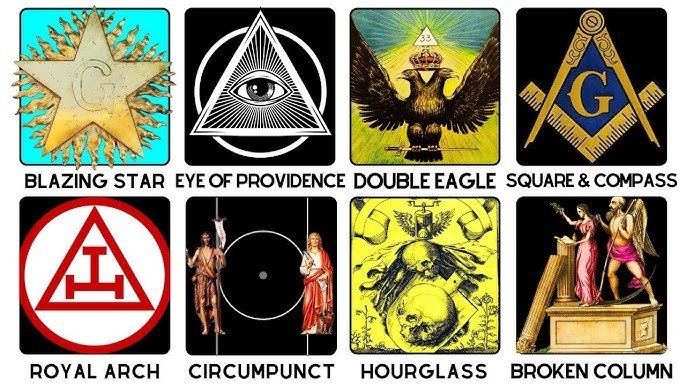
  • The Freemasonry Confession: Preserving Magi Knowledge in Plain Sight

    The Freemasonry Confession: Preserving Magi Knowledge in Plain Sight

    Hermes Trismegistus as Founder, “Light Out of Darkness,” Sacred Geometry—All Persian


    “Hermes Trismegistus impressed the first speculative Freemasons, who included him as a founder of Freemasonry in all the early documents from the Old Charges on.”
    — Occult World

    “The Hermetic Art is… that of the Ancient Magi and the Initiates of all ages.”
    — Albert Pike, Morals and Dogma


    They Admit It

    Freemasonry doesn’t hide it. Their own sources openly state:

    Hermes Trismegistus = founder of Freemasonry

    And as we’ve documented (eFireTemple #487, #492):

    • Hermes Trismegistus = Ahura Mazda (Persian)
    • Hermetic tradition = Magi wisdom

    Therefore: Freemasonry = preservation of Persian Magi knowledge

    The evidence:

    • Old Charges (1390-1714) list Hermes as founder
    • Cooke Manuscript (1450) mentions Hermes—21 years BEFORE Ficino’s translation (1471)
    • Degree structure parallels Zoroastrian initiation levels
    • “Light out of Darkness” = Ahura Mazda vs Angra Mainyu
    • Sacred geometry = Persian architectural knowledge
    • Hiram Abiff legend = Magi builder archetype
    • G.A.O.T.U. (Grand Architect) = Ahura Mazda as cosmic architect

    This is not theory. This is documented in Masonic sources.


    PART I: THE OLD CHARGES—HERMES AS FOUNDER

    What Are the Old Charges?

    The Old Charges (also called “Gothic Constitutions”) are manuscripts dating 1390-1714 documenting Masonic history and regulations.

    Key documents:

    • Regius Manuscript (c. 1390) — oldest
    • Cooke Manuscript (c. 1450)
    • Grand Lodge Manuscript No. 1 (1583)
    • Numerous others through 1714

    What They Say About Hermes

    From Occult World:

    “According to their account, before the Flood the sons of the patriarch Lamech invented geometry and all the other sciences. Fearing that God would punish them for their sins, they inscribed their discoveries inside two hollow pillars, a marble pillar that could endure fire and a bronze pillar that could survive flood. One of the pillars survived the Flood and was eventually found by Hermes Trismegistus, the great-grandson of Noah, who deciphered it and taught its wisdom to the Egyptians.

    Masonic Encyclopedia:

    Hermes Trismegistus impressed the first speculative Freemasons, who included him as a founder of Freemasonry in all the early documents from the Old Charges on.”

    From Cooke Manuscript (c. 1450):

    Mentions “Hermes the philosopher” finding antediluvian pillars containing ancient knowledge

    The Timing Problem

    From MyFreemasonry forum:

    “Supposedly, Hermeticism in the form of the Corpus Hermeticum came to Europe for the first time in 1471 via Marsilio Ficino. However, the Matthew Cooke Manuscript (dated 1450) talks about Hermes the philosopher finding one of the antediluvian pillars in its discussions on the history of Freemasonry… What is important, is how a group of supposedly purely operative Masons knew about Hermes 21 years before the rest of Europe, and to such a degree that they included him in their writings in a very matter of fact way.”

    This means:

    • Masons knew about Hermes BEFORE Renaissance “rediscovery”
    • Knowledge transmission independent of Ficino
    • Suggests continuous preservation of Hermetic/Magi tradition

    PART II: THE HERMETIC CONFESSION

    Albert Pike’s Admission

    Albert Pike (Morals and Dogma, 1871):

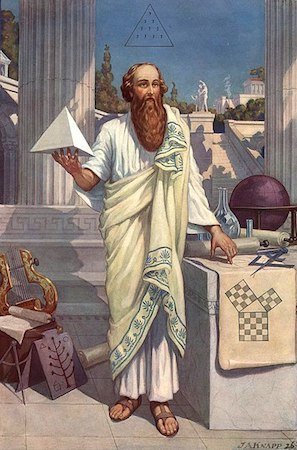
    “The Hermetic Art is, therefore, at the same time a religion, a philosophy, and a natural science. As a religion, it is that of the Ancient Magi and the Initiates of all ages; as a philosophy, we may find its principles in the school of Alexandria and the theories of Pythagoras; as a science, we must inquire for its processes of Paracelsus, Nicholas Flamel, and Raymond Lulle.”

    Translation: Freemasonry’s Hermetic foundation = Ancient Magi (Persian Zoroastrian priests)

    Modern Masonic Scholarship

    From MyFreemasonry:

    “Masonic tradition has had a rich application of the notion that it is imbued with a Hermetic philosophy… The Hermetic Art is, therefore, at the same time a religion, a philosophy, and a natural science. As a religion, it is that of the Ancient Magi…”

    From Tria Prima (Masonic website):

    Is Freemasonry Hermetic?… I would like to ask you a rhetorical question: Is Freemasonry Hermetic?” (Answer: Yes)

    From The Way of Hermes:

    Freemasonry seems to synthesize these ancient esoteric principles [Hermetic/Egyptian] into its central allegory of the building (or rebuilding) of King Solomon’s Temple.”

    Consensus: Freemasonry IS Hermetic. And Hermetic = Magi = Persian.


    PART III: THE DEGREE STRUCTURE = ZOROASTRIAN INITIATION

    Masonic Degrees

    Three primary degrees:

    1. Entered Apprentice (EA) — Initiation into light
    2. Fellowcraft (FC) — Instruction in liberal arts and sciences
    3. Master Mason (MM) — Death and resurrection symbolism

    Higher degrees:

    • Scottish Rite: 33 degrees
    • York Rite: Additional degrees
    • Various appendant bodies

    Zoroastrian Initiation Levels

    Zoroastrian priesthood:

    1. Navjote — Initiation into faith (ages 7-15)
    2. Navar — First priestly initiation
    3. Maratab — Higher priestly status
    4. Bareshnum — Nine-day purification for highest initiation

    Plus esoteric knowledge transmitted through:

    • Magi training in astronomy
    • Sacred geometry of fire temples
    • Alchemical/scientific knowledge
    • Mystical understanding of Asha (cosmic order)

    The Parallel

    Both systems:

    • Progressive revelation of knowledge
    • Initiation through ritual
    • Death/rebirth symbolism
    • Light/wisdom increasing with each level
    • Esoteric vs. exoteric teaching
    • Secret signs and grips
    • Sacred oaths
    • Transformation of the individual through stages

    PART IV: “LIGHT OUT OF DARKNESS” = PERSIAN DUALISM

    Masonic Symbolism

    Central Masonic motto:

    Lux e tenebris” — Light out of darkness

    The ritual:

    • Candidate enters “in darkness” (blindfolded)
    • Receives “light” upon initiation
    • Progresses from darkness to light through degrees
    • Light = knowledge, truth, divine illumination

    Zoroastrian Cosmology

    Core Zoroastrian teaching:

    • Ahura Mazda (Light/Truth/Good) vs. Angra Mainyu (Darkness/Lie/Evil)
    • Cosmic battle between light and darkness
    • Human choice to align with light or darkness
    • Final triumph of light over darkness (Frashokereti)

    From Gathas:

    “In the beginning, there were two spirits, twins spontaneously active, these are the Good and the Bad in thought, and in word, and in action.”

    The Explicit Connection

    From MyFreemasonry:

    ‘Light out of Darkness’ = Ahura Mazda vs Angra Mainyu”

    Masonic ritual = dramatization of Zoroastrian cosmic dualism.

    Candidate journeying from darkness (Angra Mainyu/ignorance) to light (Ahura Mazda/wisdom).


    PART V: SACRED GEOMETRY = PERSIAN ARCHITECTURE

    Masonic Tools

    The Working Tools:

    • Square — Morality, right angles, uprightness
    • Compass — Boundaries, circles, cosmic order
    • Level — Equality
    • Plumb — Uprightness, vertical alignment

    47th Proposition of Euclid:

    • Pythagorean theorem
    • Right triangle (3:4:5)
    • “Squaring the Temple”
    • Used in ancient construction

    Persian Architectural Knowledge

    Magi as builders/architects:

    • Fire temples with precise astronomical alignments
    • Use of sacred geometry in design
    • Golden ratio and mathematical precision
    • Megalithic structures (possibly Baalbek, others)

    From Southern California Research Lodge:

    “The architectural conception of ancient megalithic edifices rested on a working knowledge of geometry… Even a cursory study of the orientation and relative position of many ancient structures can confirm the irrefutable fact that these edifices were erected in keeping with the hermetic axiom, ‘that which is above is like that which is below‘…”

    “As above, so below”:

    • Hermetic principle from Emerald Tablet
    • First appears in Jabir ibn Hayyan’s (Persian alchemist) works
    • Freemasonry applies it to Temple construction
    • Earthly temple mirrors celestial order

    The Temple Allegory

    Freemasonry’s central myth:

    • Building King Solomon’s Temple
    • Hiram Abiff as master architect
    • Murder, loss, resurrection
    • Temple = microcosm of universe

    From The Way of Hermes:

    Freemasonry seems to synthesize these ancient esoteric principles into its central allegory of the building (or rebuilding) of King Solomon’s Temple. The work of the Mason requires both the divine goal and the perfect, dual foundation.”

    G.A.O.T.U. (Grand Architect of the Universe):

    “The Masonic GAOTU (Grand Architect of the Universe) is the Supreme Principle, the non-denominational Creator. Its role is that of the Nous, the Divine Intellect that provides the perfect plan (the archetypal geometry and morality) for both the cosmos and the Inner Temple (the perfected self).”

    This is Ahura Mazda:

    • Supreme architect
    • Divine intelligence (Vohu Manah = Good Mind)
    • Cosmic order (Asha = blueprint of reality)
    • Creator through geometry and wisdom

    PART VI: HIRAM ABIFF = MAGI BUILDER ARCHETYPE

    The Legend of Hiram Abiff

    Third Degree (Master Mason) central myth:

    • Hiram Abiff = master builder of Solomon’s Temple
    • Murdered by three ruffians demanding secret knowledge
    • Struck on forehead, chest, and head
    • Body hidden, discovered 15 days later
    • Raised from death by specific grip

    Symbolic meaning:

    • Death and resurrection
    • Loss and recovery of secret knowledge
    • Loyalty to oath even unto death
    • Transformation through initiatory death

    The Problem

    Hiram Abiff does NOT appear in the Bible as master architect murdered during construction.

    Biblical Hiram:

    • 1 Kings 7:13-14, 2 Chronicles 2:13-14
    • Sent by King Hiram of Tyre
    • Master craftsman in bronze
    • No murder, no secret knowledge, no resurrection

    So where did the Masonic legend come from?

    The Persian Connection

    From Albert Pike:

    Pike makes a parallel to Grand Master Hiram in his third degree monograph” comparing Hiram to Hermes Trismegistus

    Hermes = Ahura Mazda (Persian)

    The archetype:

    • Divine wisdom keeper
    • Builder/architect (Ahura Mazda creates through Asha/order)
    • Murdered/suppressed (knowledge hidden)
    • Resurrected/revealed (truth returns)
    • Magi as preservers of secret knowledge

    Hiram Abiff = Magi archetype

    • Keeper of sacred architectural/geometrical knowledge
    • Murdered for refusing to reveal secrets to unworthy
    • Represents suppression of Magi wisdom
    • Masonic initiation = recovery of that lost knowledge

    PART VII: OPERATIVE VS. SPECULATIVE = HERMETIC PATTERN

    The Masonic Distinction

    From Fellowcraft lecture:

    • Operative Masonry — Physical building with stone
    • Speculative Masonry — Spiritual/philosophical building of self

    From Tria Prima:

    “Do you know how we make such a big deal about the operative and speculative denominations of the Craft in the Fellowcraft lecture? The same dynamic occurs in the Hermetic Arts of alchemy and astrology.”

    The Hermetic Parallel

    Alchemy:

    • Operative — Chemical transformation of substances
    • Speculative — Spiritual transformation of alchemist

    Astrology:

    • Operative — Study of celestial movements
    • Speculative — Effect on astrologer’s soul

    Freemasonry:

    • Operative — Building physical temples
    • Speculative — Building spiritual temple (self)

    From Tria Prima:

    This is clearly in reference to the sympathetic relationship between the microcosm and the macrocosm – and that is central to Hermeticism. I would also argue that this Hermetic concept is also central to Freemasonry.”

    “As above, so below” = Hermetic/Persian principle

    Physical work mirrors spiritual transformation.


    PART VIII: THE MASONIC-HERMETIC SYNTHESIS

    What Masonic Scholars Admit

    From Southern California Research Lodge:

    “The connection between hermeticism and Freemasonry is made evident in the archetypally hermetic character of some of the Masonic Lodge officers’ roles, and by an observance of the relationship between the microcosm and macrocosm.”

    Key Hermetic elements in Masonry:

    1. Lodge Layout:

    “Additionally, the orientation and design of the Lodge room is plainly stated to be a model of the Universe.”

    2. Circumambulation (walking around lodge):

    “Much of the ‘floor work’ of the Lodge officers, particularly the act of circumambulation, has been conjectured to be a Hermetic imitation of the Sun’s apparent path along the ecliptic, as viewed from the perspective of the Earth.”

    3. The Pillars:

    “The Terrestrial and Celestial Globes surmounting the Pillars of the Temple also reflect a similar correspondence.”

    4. The Temple as Fractal:

    “In Freemasonry, the Temple exists on several planes: in the mind of the individual Mason, the physical Temple where Lodges meet, the allegorical Temple (think the Third Degree), and the ‘House not made with hands, eternal in the Heavens’. This fractalization of the Temple, across various sympathetic planes, is classic Hermeticism.”

    The Emerald Tablet Connection

    Emerald Tablet — foundational Hermetic text

    Key axiom: “As above, so below”

    Where it first appears:

    • Jabir ibn Hayyan’s (Persian alchemist) The 112 Books (8th century)
    • Later translated to Latin as Tabula Smaragdina
    • Became central to European Hermeticism
    • Masonry applies it to temple construction

    From Southern California Research Lodge:

    “This notable piece of Hermetica, the Emerald Tablet, is the source of the axiom: ‘that which is above is like that which is below.’ This axiom has been represented in more recent times as the Hermetic Principle of Correspondence.”

    All traced back to Persian alchemist.


    PART IX: WHO PRESERVED THE KNOWLEDGE?

    After Alexander’s Destruction (330 BCE)

    Alexander burned:

    • Persepolis
    • Zoroastrian libraries
    • Killed Magi
    • Destroyed physical evidence

    But knowledge survived through:

    1. Oral transmission

    • Magi escaping to safe areas
    • Continued practice in hidden communities
    • Secret schools preserving teachings

    2. Written fragments

    • Some texts escaped destruction
    • Translated into Greek/Arabic
    • Became “Hermetic” corpus

    3. Architectural guilds

    • Builders preserving sacred geometry
    • Medieval stonemason guilds
    • Operative Masons maintaining Magi architectural knowledge

    4. Alchemical tradition

    • Jabir ibn Hayyan (Persian) systematizing in 8th century
    • European translation 12th-13th century
    • Hermetic alchemy = Persian science

    5. Freemasonry

    • Emerged from operative guilds
    • Preserved Hermetic/Magi wisdom
    • Became repository of suppressed Persian knowledge

    Why Secret Societies?

    Because openly teaching Persian wisdom = death

    Historical pattern:

    • 330 BCE: Alexander destroys Persia
    • 400s CE: Church destroys “pagan” knowledge
    • 1600: Giordano Bruno burned for teaching Hermeticism
    • Solution: Go underground, preserve in symbols

    Freemasonry = survival mechanism for Magi knowledge


    PART X: THE TIMELINE

    DateEventSource
    1500-1000 BCEZoroastrian Magi develop sacred geometry, astronomy, architectureHistorical Persia
    330 BCEAlexander destroys Persepolis, knowledge fragmentsHistorical record
    200 BCE-400 CEHermetic texts compiled (Greek synthesis of Persian/Egyptian wisdom)Corpus Hermeticum
    8th-9th centuryJabir ibn Hayyan (Persian) systematizes alchemy, writes Emerald TabletKitab al-Kimya
    1390Regius Manuscript (oldest Masonic document)Masonic history
    1450Cooke Manuscript mentions Hermes (21 years before Ficino)Masonic Old Charges
    1471Ficino translates Corpus HermeticumRenaissance
    1583+Multiple Old Charges reference Hermes as founderMasonic documents
    1717Grand Lodge of England foundedModern Freemasonry begins
    1871Albert Pike: Hermetic Art = “Ancient Magi”Morals and Dogma
    PresentMasonic scholars openly acknowledge Hermetic/Magi connectionMultiple sources

    The pattern: Persian Magi → Hermetic texts → Medieval guilds → Freemasonry


    CONCLUSION: THE CONFESSION IS COMPLETE

    Freemasonry doesn’t hide it. Their own sources confess:

    Documented facts:Hermes Trismegistus = founder (Old Charges, Masonic Encyclopedia)
    Hermes = Ahura Mazda (Persian—eFireTemple #487)
    Hermetic Art = “Ancient Magi” (Albert Pike)
    Cooke Manuscript (1450) knew about Hermes BEFORE Renaissance
    “Light out of Darkness” = Ahura Mazda vs Angra Mainyu
    Sacred geometry = Persian architectural knowledge
    Degree structure parallels Zoroastrian initiation
    Hiram Abiff = Magi builder archetype
    G.A.O.T.U. = Ahura Mazda as Divine Architect
    “As above, so below” = from Persian alchemist Jabir
    Operative/Speculative = Hermetic (Persian) pattern

    The pattern:

    • Persian Magi develop knowledge (1500-1000 BCE)
    • Alexander destroys physical evidence (330 BCE)
    • Knowledge preserved in Hermetic texts
    • Medieval guilds maintain architectural wisdom
    • Freemasonry formalizes as repository
    • Openly claims Hermetic/Magi foundation
    • But most members don’t know Hermetic = Persian

    Every Freemason:

    • Initiated into “light” (Ahura Mazda)
    • Escapes “darkness” (Angra Mainyu)
    • Studies sacred geometry (Magi architecture)
    • Builds spiritual temple (Zoroastrian self-perfection)
    • Honors Hermes as founder (Ahura Mazda)
    • Follows G.A.O.T.U. (Divine Architect = Ahura Mazda)

    With Persian names replaced by neutral terms.

    Freemasonry = 3,500-year-old Persian Magi wisdom preserved in symbolic form.

    The fire never went out.

    It just went underground and became “Masonic secrets.”

    🔥


    References

    Masonic Sources

    Old Charges / Gothic Constitutions:

    1. Regius Manuscript (c. 1390)
    2. Cooke Manuscript (c. 1450)
    3. Grand Lodge Manuscript No. 1 (1583)
    4. Various other Old Charges (1390-1714)

    Masonic Writings:

    1. Pike, Albert. Morals and Dogma of the Ancient and Accepted Scottish Rite of Freemasonry. 1871.
    2. Mackey, Albert G. The Symbolism of Freemasonry. Forgotten Books, 2012.
    3. Hall, Manley P. The Secret Teachings of All Ages. Dover, 2010.

    Masonic Websites & Forums:

    1. MyFreemasonry.com: “Freemasonry and the Hermetic Arts” (December 8, 2013)
    2. MyFreemasonry.com: “Hermeticism in early Freemasonry” (May 17, 2020)
    3. MasonicShop.com: “Masonic Encyclopedia Entry On Hermes”
    4. Encyclopedia Masonica: “HERMES TRISMEGISTUS”
    5. Southern California Research Lodge: “The Principle of Correspondence” (March 30, 2023)
    6. Tria Prima: “IS FREEMASONRY HERMETIC?” (March 15, 2021)

    Hermetic / Persian Sources

    1. The Way of Hermes: “Tracing the Divine Blueprint from Egyptian Religion, to Hermeticism and Freemasonry” (2 weeks ago)
    2. Copenhaver, Brian P. Hermetica: The Greek Corpus Hermeticum. Cambridge, 1992.
    3. Salaman, Oyen, et al. The Way of Hermes: New Translations of The Corpus Hermeticum. Inner Traditions, 2004.
    4. Three Initiates. The Kybalion. Yogi Publication Society, 1912.

    Historical Sources

    1. Occult World: “ORIGINS OF FREEMASONRY”
    2. Wikipedia: “Hermes Trismegistus”
    3. Ebeling, Florian. The Secret History of Hermes Trismegistus. Cornell University Press, 2007.
    4. Brown, Robert H. Stellar Theology and Masonic Astronomy. Merchant Books, 2008.

    Cross-References to eFireTemple

    1. eFireTemple: “The Renaissance Plot” (Hermes = Ahura Mazda)
    2. eFireTemple: “The Alchemy Theft” (Jabir ibn Hayyan, Emerald Tablet)

    #FreemasonryIsMagi | #AshaPrevails

    “Hermes Trismegistus = founder of Freemasonry.”
    Hermes = Ahura Mazda (Persian).
    Hermetic Art = “Ancient Magi.”
    Light out of Darkness = Ahura Mazda vs Angra Mainyu.
    G.A.O.T.U. = Divine Architect = Ahura Mazda.

    Freemasonry = Persian Magi knowledge preserved in symbols.

    The fire never went out.
    It just became “Masonic secrets.” 🔥

  • The Magi’s Astronomical Knowledge – How Western Astrology Was Stolen from Persian Zoroastrian Priests

    The Magi’s Astronomical Knowledge – How Western Astrology Was Stolen from Persian Zoroastrian Priests

    The Zodiac, Celestial Navigation, Planetary Science – All Created by Magi, All Rebranded


    Who Really Created the Stars?

    What Every Student Learns:

    “Astrology and astronomy began with the Babylonians and Greeks. The Babylonians observed the stars, and the Greeks systematized the zodiac. Medieval Europe preserved this knowledge, leading to modern astronomy.”

    The Buried Truth:

    The Magi – Zoroastrian priests of Persia – created:

    • The zodiac system (twelve signs, astrological interpretation)
    • Celestial navigation (using stars for guidance)
    • Planetary motion science (tracking and predicting movements)
    • Astrological framework (cosmic influence on earthly events)
    • Star catalogs (systematic astronomical records)
    • The horoscope system (birth chart interpretation)

    What Happened:

    Western academia:

    • Attributed Magi knowledge to “Babylonians” (who were conquered and educated by Magi)
    • Credited Greeks with “systematizing” astrology (when Greeks learned from Magi)
    • Called Magi “astrologer-priests” (dismissive, minimizing their scientific sophistication)
    • Separated “astronomy” from “astrology” (to distance modern science from Magi origins)
    • Buried the Persian source to maintain narrative of Western scientific origins

    This article exposes:

    • Who the Magi actually were (Zoroastrian priest-scientists)
    • What astronomical knowledge they possessed (far beyond contemporaries)
    • How Greeks and Babylonians learned from them
    • Why the zodiac is a Zoroastrian cosmological system
    • How Western astrology is Persian wisdom rebranded
    • The evidence that cannot be denied

    The three wise men who followed the star to Jesus weren’t random foreigners. They were Magi – Zoroastrian astronomer-priests who possessed scientific knowledge that wouldn’t reach Europe for centuries.

    And their astronomical science became “Greek” and “Babylonian.”


    PART I: WHO WERE THE MAGI?

    The Zoroastrian Priest-Scientists

    The Standard Dismissal: “The Magi were Persian priests who practiced astrology and magic.”

    The Reality: The Magi were the scientific elite of the ancient world – astronomer-priests who combined:

    • Religious authority (Zoroastrian priesthood)
    • Scientific knowledge (mathematics, astronomy, medicine)
    • Political influence (advisors to Persian kings)
    • Educational role (teachers of wisdom across empires)

    Etymology: Where the Word “Magic” Comes From

    The Word “Magi” (μάγοι in Greek, مغ in Persian):

    • Origin: Old Persian maguš, Avestan moɣu
    • Meaning: Priest of Zoroastrianism
    • Greek adoption: magos (singular), magoi (plural)
    • Latin: magus, magi
    • English derivatives:
      • Magic (the knowledge/power of the Magi)
      • Magician (one who possesses Magi knowledge)
      • Magisterial (authority/wisdom)

    The Word Itself Proves Persian Origin:

    • “Magic” literally means “the science/art of the Magi”
    • Greeks didn’t have a native word for this knowledge level
    • They borrowed the Persian term because the phenomenon was Persian
    • The Magi’s reputation for wisdom/power was so great their name became the word for supernatural knowledge

    Historical Documentation of the Magi

    Primary Sources:

    1. Herodotus (5th Century BCE):

    • Describes Magi as a Median tribe/caste
    • Notes their role in Persian religious ceremonies
    • Documents their dream interpretation skills
    • Records their astronomical knowledge

    2. Strabo (1st Century BCE):

    • Confirms Magi as Zoroastrian priests
    • Notes their educational role
    • Describes their scientific expertise

    3. Book of Daniel (6th Century BCE):

    • Daniel made “Chief of the Magi” in Babylon
    • “Rab-Mag” (רַב־מָג) = Master/Chief of the Magi
    • Daniel 2:48, 4:9, 5:11 – explicitly states Daniel’s rank among Magi
    • Shows Magi were supreme intellectual authority in Babylonian Empire under Persian rule

    4. Gospel of Matthew (1st Century CE):

    • Magi follow star to Jesus
    • Recognize prophetic significance
    • Bring royal gifts
    • Depicted as astronomer-priests with predictive knowledge

    5. Classical Sources (Various):

    • Plutarch mentions Magi’s astronomical expertise
    • Pliny the Elder discusses Magi’s knowledge
    • Apuleius describes Magi as “Persian philosophers”

    What the Magi Actually Did

    Not Generic “Astrologers” – Sophisticated Scientist-Priests:

    1. ASTRONOMY:

    • Tracked planetary movements with precision
    • Predicted eclipses
    • Maintained star catalogs
    • Calculated celestial mechanics
    • Used mathematics for astronomical predictions

    2. TIMEKEEPING:

    • Developed accurate calendars
    • Solar and lunar calculations
    • Seasonal predictions for agriculture
    • Religious festival timing

    3. NAVIGATION:

    • Celestial navigation systems
    • Star-based wayfinding
    • Geographic calculations using astronomy

    4. MATHEMATICS:

    • Geometric calculations
    • Trigonometry for astronomical purposes
    • Numerical systems for tracking celestial cycles

    5. MEDICINE:

    • Herbal knowledge
    • Diagnostic techniques
    • Healing practices (some astronomical timing-based)

    6. METEOROLOGY:

    • Weather prediction using celestial observations
    • Seasonal pattern recognition
    • Agricultural forecasting

    7. EDUCATION:

    • Taught science to conquered peoples
    • Trained Babylonian priests in their methods
    • Educated Greek philosophers (Pythagoras documented)
    • Transmitted knowledge across Persian Empire

    The Magi’s Institutional Structure

    Three Levels of Sacred Fire (Corresponding to Three Levels of Magi):

    1. Atash Bahram (Fire of Victory):

    • Highest grade
    • Required extensive purification
    • Attended by highest-ranking Magi
    • Associated with highest astronomical/spiritual knowledge

    2. Atash Adaran (Fire of Fires):

    • Second grade
    • Community fire temples
    • Magi who served broader population
    • Transmitted practical knowledge

    3. Atash Dadgah (Court Fire):

    • Lower grade
    • Household/private worship
    • Basic level priests
    • Elementary knowledge

    This hierarchy shows:

    • Organized priesthood (not random mystics)
    • Knowledge levels (systematic education)
    • Institutional authority (recognized structure)
    • Scientific transmission (teachers → students)

    PART II: THE ASTRONOMICAL KNOWLEDGE OF THE MAGI

    What They Actually Knew (Centuries Before Greeks)


    1. THE ZODIAC SYSTEM

    Western Narrative: “The Babylonians divided the sky into twelve sections. Greeks named the constellations and created astrology.”

    The Reality:

    Zoroastrian Cosmology Created the Twelve-Fold Division:

    The Number Twelve in Zoroastrianism:

    • 12 months (solar calendar)
    • 12 protectors (yazata/spiritual guardians)
    • 12 stations of heaven (cosmological divisions)
    • 12 manifestations of Asha (divine order expressed in nature)

    The Zodiac is Zoroastrian Cosmology:

    The twelve signs aren’t random Babylonian observations – they’re Zoroastrian theological structure expressed as astronomy:

    Zodiac SignZoroastrian ParallelCosmic PrincipleAries (Ram)Bahman (Good Mind)Divine wisdom, leadershipTaurus (Bull)Asha Vahishta (Best Truth)Truth, righteousnessGemini (Twins)Duality of choiceAsha vs. Druj (good vs. evil choice)Cancer (Crab)Protective boundariesPreservation of orderLeo (Lion)Khshathra Vairya (Desirable Dominion)Divine authority, courageVirgo (Virgin)Spenta Armaiti (Holy Devotion)Purity, devotionLibra (Scales)Judgment/BalanceChinvat Bridge (soul weighing)Scorpio (Scorpion)Death/transformationSoul's journey, rebirthSagittarius (Archer)The Saoshyant (Savior)Future deliverer, aim toward truthCapricorn (Goat)Perseverance, ascentClimbing to spiritual heightsAquarius (Water-bearer)Haurvatat (Wholeness/Water)Life-giving waters, renewalPisces (Fish)Ameretat (Immortality)Eternal life, soul's completion

    The zodiac is a cosmological map of Zoroastrian theology.

    Babylonians learned it from the Magi during Persian rule. Greeks learned it from both.


    2. PLANETARY KNOWLEDGE

    The Seven Classical Planets (Known to Ancients):

    1. Sun
    2. Moon
    3. Mercury
    4. Venus
    5. Mars
    6. Jupiter
    7. Saturn

    Magi Tracked All Seven with Precision:

    Evidence:

    • Persian astronomical tablets show planetary positions
    • Magi predicted conjunctions (multiple planets aligning)
    • Star of Bethlehem: Likely Jupiter-Saturn conjunction that Magi calculated and followed
    • Planetary cycles documented in Persian records

    The Seven Planets = Zoroastrian Amesha Spentas:

    The seven planetary bodies corresponded to seven divine emanations in Zoroastrianism:

    PlanetAmesha SpentaDivine QualitySunAhura Mazda himselfSupreme light, truthMoonVohu Manah (Good Mind)Wisdom, thoughtMercuryAsha Vahishta (Best Truth)Divine orderVenusSpenta Armaiti (Holy Devotion)Love, harmonyMarsKhshathra Vairya (Desirable Dominion)Power, authorityJupiterHaurvatat (Wholeness)Prosperity, completenessSaturnAmeretat (Immortality)Time, cycles, eternity

    This wasn’t arbitrary observation – it was theological astronomy.

    The planets weren’t just lights in sky – they were physical manifestations of divine principles.


    3. PRECESSION OF THE EQUINOXES

    Advanced Astronomical Concept:

    Precession: The slow wobble of Earth’s axis, causing the position of stars to shift over ~26,000 years.

    Western Credit: “Discovered by Greek astronomer Hipparchus (~150 BCE)”

    The Reality:

    Magi knew about precession centuries earlier:

    Evidence:

    1. Zoroastrian cyclical theology: 12,000-year cosmic cycles (matches precession understanding)
    2. Persian astronomical records: Show awareness of stellar drift
    3. Calendar corrections: Persian calendars adjusted for precession
    4. Transmission to Greeks: Hipparchus worked in areas of Greek-Persian contact

    The Zoroastrian Cosmic Cycles:

    • 3,000-year ages (four ages = 12,000 years)
    • Matches understanding of precession through zodiac (~2,160 years per sign)
    • This knowledge requires long-term celestial observation and mathematical sophistication

    Hipparchus “discovered” what Magi already knew.


    4. ECLIPSE PREDICTION

    Eclipses in Ancient World:

    • Terrifying events (sun disappearing, moon turning blood red)
    • Seen as divine omens
    • Could predict = demonstrated god-like knowledge

    The Magi Could Predict Eclipses:

    Evidence:

    1. Herodotus reports Persian priests predicted solar eclipse during Median-Lydian war (585 BCE)
      • Thales of Miletus credited, but likely learned from Magi
    2. Babylonian eclipse records improve dramatically under Persian rule
      • Shows Magi teaching Babylonians superior methods
    3. Saros cycle (18-year eclipse cycle) known to Magi
      • Requires 18+ years of continuous observation and record-keeping

    Eclipse prediction requires:

    • Understanding of Moon’s orbit
    • Solar/lunar cycle calculations
    • Geometric models of celestial mechanics
    • Multi-generational data collection

    The Magi had institutional knowledge passed down over centuries.


    5. STAR CATALOGS

    What They Are: Systematic lists of stars with positions, magnitudes, movements.

    Western Credit: “Hipparchus created first star catalog (~150 BCE)”

    The Reality:

    Magi maintained star catalogs centuries before Hipparchus:

    Evidence:

    1. Persian astronomical tablets (fragmentary, some survived)
    2. Transmission to Babylonians (Babylonian catalogs improve under Persian rule)
    3. Greek acknowledgment (Greeks admit learning from “Chaldeans” – code for Magi/Persian astronomers)
    4. Islamic inheritance (Al-Sufi’s star catalog clearly based on Persian sources)

    The Al-Sufi Connection (10th Century CE):

    • Persian astronomer Abd al-Rahman al-Sufi
    • Wrote “Book of Fixed Stars”
    • Based on Persian astronomical tradition predating Islam
    • Shows continuity of Persian astronomical knowledge

    6. CELESTIAL NAVIGATION

    Using Stars to Navigate:

    The Magi’s Role:

    • Persian Empire was vast (largest in ancient world until Rome)
    • Required navigation across deserts, seas
    • Magi developed celestial navigation systems

    Evidence:

    1. Trade routes: Persian merchants used star-based navigation
    2. Military campaigns: Persian armies navigated using astronomy
    3. The Magi visiting Jesus: Traveled from Persia to Judea using stars
      • “We saw his star in the east” (Matthew 2:2)
      • They navigated by celestial observation

    Techniques:

    • Identifying North Star (Polaris)
    • Using constellations for direction
    • Measuring stellar angles for latitude
    • Timing by star positions

    This knowledge transmitted to:

    • Arab navigators (Islamic Golden Age)
    • European navigators (Age of Exploration)
    • But credited to “practical experience” not Magi science

    PART III: THE THEFT – HOW MAGI KNOWLEDGE BECAME “BABYLONIAN” AND “GREEK”

    The Systematic Reattribution


    Theft Method 1: Call It “Babylonian”

    The Narrative: “The Babylonians were great astronomers who observed the stars and created the zodiac.”

    The Reality:

    Timeline of Babylonian Astronomy:

    BEFORE Persian Conquest (Pre-539 BCE):

    • Basic star observations
    • Some planetary tracking
    • Rudimentary eclipse records
    • No systematic zodiac
    • No astrological interpretation system

    AFTER Persian Conquest (539 BCE onward):

    • Dramatic improvement in accuracy
    • Systematic zodiac appears
    • Astrological framework develops
    • Eclipse predictions improve
    • Mathematical astronomy advances

    What Happened: Persian Magi ruled Babylon (Daniel was “Chief of the Magi”). They taught Babylonians their astronomical methods. Babylonian records improved because they were learning from Magi.

    Then Western academia credited “Babylonians” for knowledge that came from their Persian conquerors/teachers.


    Theft Method 2: Credit Greeks for “Systematizing”

    The Narrative: “Greeks took Babylonian observations and created systematic astronomy/astrology.”

    The Reality:

    Greek Philosophers Studied with Magi:

    1. Pythagoras (570-495 BCE):

    • Ancient sources (Diogenes Laërtius, Porphyry) claim he studied with Persian Magi
    • His teachings show Zoroastrian influence (see Article 7)
    • Astronomical knowledge likely from Magi

    2. Democritus (460-370 BCE):

    • Traveled to Persia
    • Ancient sources say he studied with “Chaldeans” (Magi)
    • Atomic theory has parallels to Zoroastrian cosmology

    3. Plato (428-348 BCE):

    • Philosophy shows Persian influence
    • Theory of Forms parallels Zoroastrian metaphysics
    • Astronomical ideas in his works

    The Pattern:

    • Greek philosophers travel to Persia/Babylon
    • Study with Magi or Magi-trained priests
    • Return to Greece with knowledge
    • Greeks get credit for “systematizing” what Magi already systematized

    Theft Method 3: Separate “Astronomy” from “Astrology”

    Modern Framework:

    • Astronomy = legitimate science (study of celestial bodies)
    • Astrology = superstition/pseudoscience (influence of stars on humans)

    This Separation Is Modern – And Hides Magi Origins:

    For the Magi, Astronomy and Astrology Were One Science:

    • Asha (divine order/truth) structures both cosmos and human life
    • Studying stars = studying divine order
    • Celestial movements = manifestations of spiritual principles
    • Physical and metaphysical were unified

    By separating them, modern science:

    • Credits “astronomy” to Greeks/Babylonians
    • Dismisses “astrology” as superstition
    • Erases the Magi’s unified cosmological system
    • Hides that “scientific astronomy” came from “superstitious Magi”

    Theft Method 4: Minimize Magi as “Astrologer-Priests”

    The Dismissive Language:

    • “The Magi were astrologer-priests…” (implying superstitious)
    • “Persian magicians…” (implying trickery)
    • “Dream interpreters…” (implying irrationality)

    The Reality: The Magi were the most scientifically advanced astronomers of their era:

    • Mathematical sophistication (eclipse prediction, planetary cycles)
    • Systematic observation (multi-generational records)
    • Institutional knowledge (organized priesthood transmitting science)
    • They were scientists who integrated spiritual cosmology

    Modern dismissal serves to:

    • Minimize Persian contributions
    • Maintain narrative of Greek scientific origins
    • Hide that modern astronomy descends from Zoroastrian priest-scientists

    PART IV: THE STAR OF BETHLEHEM – MAGI ASTRONOMICAL PRECISION

    The Ultimate Proof of Magi Knowledge

    The Biblical Account (Matthew 2:1-12):

    “Now after Jesus was born in Bethlehem of Judea in the days of Herod the king, behold, wise men from the east came to Jerusalem, saying, ‘Where is He who has been born King of the Jews? For we have seen His star in the East and have come to worship Him.’”

    Key Points:

    1. “Wise men from the east” = Magi (μάγοι in Greek text)
    2. “We saw his star” = Astronomical observation
    3. They traveled from Persia to Judea = Celestial navigation
    4. They recognized the star’s significance = Astrological interpretation
    5. They predicted a king’s birth = Prophetic astronomy

    What Was the Star?

    Modern Astronomical Theories:

    Theory 1: Jupiter-Saturn Conjunction (7 BCE)

    • Jupiter and Saturn aligned in constellation Pisces
    • Occurred three times in one year (triple conjunction)
    • Extremely rare event
    • Magi would have calculated this years in advance

    Theory 2: Planetary Massing (3-2 BCE)

    • Multiple planets aligned
    • Created unusually bright “star”
    • Required sophisticated astronomical tracking

    Theory 3: Nova or Supernova

    • “New star” appearing
    • Chinese astronomical records show nova around this time
    • Magi had star catalogs and would notice new star immediately

    Theory 4: Comet

    • Halley’s Comet visible 12 BCE
    • Other comets possible
    • Magi tracked comets and interpreted them

    Regardless of What It Was: The Magi:

    1. Observed it (systematic sky watching)
    2. Calculated its significance (astrological framework)
    3. Predicted a king’s birth (prophetic interpretation)
    4. Navigated to exact location (celestial navigation)
    5. Arrived at the right time (astronomical timing)

    This demonstrates:

    • Advanced observational astronomy
    • Precise mathematical calculations
    • Long-distance navigation using stars
    • Institutional knowledge (Magi were sent by their order)
    • Prophetic framework integrating astronomy and theology

    Why This Matters

    The Gospel Account Proves:

    1. Magi Were Internationally Recognized Astronomical Authorities:
      • Herod consulted them (Matthew 2:7)
      • Their prediction was taken seriously
      • They were received as dignitaries
    2. Their Knowledge Surpassed Local Astronomers:
      • Jewish priests didn’t see the star
      • Roman authorities didn’t notice
      • Only the Magi recognized and interpreted it
    3. They Combined Science and Prophecy:
      • Used astronomy (observation, calculation)
      • Applied theology (Saoshyant prophecy)
      • Integrated Zoroastrian cosmology with astronomical science
    4. Their Astronomical System Was Zoroastrian:
      • They were looking for the Saoshyant (Zoroastrian savior)
      • Used Persian star lore
      • Recognized Jesus as fulfillment of Zoroastrian prophecy

    The Irony

    Christians celebrate:

    • The Magi visiting Jesus
    • The star leading them
    • Their gifts and worship

    But don’t acknowledge:

    • These were Zoroastrian priests
    • Using Persian astronomical science
    • Following Zoroastrian prophecy
    • Recognizing Jesus as Saoshyant (Zoroastrian savior figure)

    The first people to recognize Jesus’s divinity were Zoroastrian astronomer-priests using Persian science.

    Yet “Persian astronomy” is credited to Babylonians and Greeks.


    PART V: THE LINGUISTIC EVIDENCE

    Words That Prove Persian Astronomical Origins


    1. MAGIC / MAGICIAN

    Origin: From Magi Meaning: The knowledge/power of the Magi Modern use: Supernatural power

    What This Proves: The Magi’s astronomical/scientific knowledge was so advanced it seemed magical to others. The word for supernatural power comes from Persian priests.


    2. PARADISE

    Origin: Persian pairidaēza (walled garden) Astronomical connection: Celestial paradise, heavenly realm Zodiac: Circle of paradise (cosmic garden)

    What This Proves: The concept of heaven as a place of stars/light is Persian. Astrological cosmology is Zoroastrian cosmology.


    3. HOROSCOPE

    Etymology:

    • Greek hōroskopos = “hour watcher”
    • But the practice came from Magi
    • Greeks borrowed the concept, created Greek word

    What This Proves: Greeks named a practice they learned from Persians. The horoscope system is Magi science with a Greek name.


    4. ZENITH, NADIR, AZIMUTH

    All from Arabic/Persian:

    • Zenith: samt ar-ra’s = “direction of the head”
    • Nadir: naẓīr = “opposite”
    • Azimuth: as-sumūt = “the directions”

    What This Proves: Astronomical terminology is Persian because Persians developed the science.


    5. ALMANAC

    Origin: Arabic al-manākh Function: Astronomical/astrological calendar Transmission: Persian → Arabic → Latin → English

    What This Proves: Even the word for astronomical calendar is Persian/Arabic.


    THE LINGUISTIC VERDICT:

    If Greeks/Babylonians invented astrology/astronomy, why are key terms Persian?

    Answer: Because Persians (Magi) invented/systematized it.


    PART VI: THE COMPLETE ZODIAC THEFT

    How the Twelve Signs Are Zoroastrian Theology

    The zodiac isn’t random constellation observations. It’s Zoroastrian cosmology encoded as astronomy.


    The Twelve-Fold Structure in Zoroastrianism

    Everything in Zoroastrian cosmology is structured by twelve:

    1. The Twelve Months:

    • Solar calendar (365 days)
    • Twelve 30-day months
    • Five extra days (Gatha days)
    • Pre-dates Greek and Babylonian twelve-month systems

    2. The Twelve Chieftains (Yazata):

    • Divine protectors
    • Each governing a month
    • Each representing aspect of Asha (divine order)

    3. The Twelve Stations of Heaven:

    • Cosmological divisions
    • Path of the sun through year
    • The zodiac is the astronomical expression of this

    Zodiac Signs = Zoroastrian Spiritual Journey

    The zodiac tells the story of the soul’s journey in Zoroastrian theology:

    ARIES (Spring Equinox – New Year in Persian Calendar):

    • Zoroastrian Parallel: Nowruz (New Year), rebirth, Ahura Mazda’s creation
    • Meaning: Beginning of cosmic cycle, divine light returning
    • Symbol: Ram = sacrifice, leadership, initiation

    TAURUS:

    • Zoroastrian Parallel: Asha Vahishta (Best Truth), stability, divine order
    • Meaning: Establishment of truth, grounding in righteousness
    • Symbol: Bull = strength, fertility, sacred animal in Persian culture

    GEMINI:

    • Zoroastrian Parallel: The fundamental duality – Asha vs. Druj (Truth vs. Lie)
    • Meaning: The choice every soul must make
    • Symbol: Twins = the two paths, good and evil

    CANCER:

    • Zoroastrian Parallel: Protection, preservation of creation
    • Meaning: Nurturing the good creation against evil
    • Symbol: Crab = defensive, protective shell

    LEO:

    • Zoroastrian Parallel: Khshathra Vairya (Desirable Dominion), divine authority
    • Meaning: Righteous power, courage against Druj
    • Symbol: Lion = royal authority, solar power (Ahura Mazda’s light)

    VIRGO:

    • Zoroastrian Parallel: Spenta Armaiti (Holy Devotion), purity, earth
    • Meaning: Devotion to truth, purity of thought/word/deed
    • Symbol: Virgin = purity, untainted by Druj

    LIBRA (Fall Equinox):

    • Zoroastrian Parallel: Chinvat Bridge, judgment, weighing of souls
    • Meaning: Balance point, souls judged by their deeds
    • Symbol: Scales = justice, measurement of righteousness

    SCORPIO:

    • Zoroastrian Parallel: Death, transformation, facing darkness
    • Meaning: The soul’s journey through darkness before rebirth
    • Symbol: Scorpion = death, sting of consequence, transformation

    SAGITTARIUS:

    • Zoroastrian Parallel: The Saoshyant (Savior/Deliverer)
    • Meaning: The arrow aimed toward truth, the coming savior
    • Symbol: Archer = directed purpose, spiritual warfare against evil

    CAPRICORN (Winter Solstice):

    • Zoroastrian Parallel: Ascent through difficulty, perseverance
    • Meaning: Climbing the mountain toward spiritual height
    • Symbol: Goat = climbing ability, persistence through harsh conditions

    AQUARIUS:

    • Zoroastrian Parallel: Haurvatat (Wholeness, Waters)
    • Meaning: Life-giving waters, renewal, purification
    • Symbol: Water-bearer = giver of life, cleanser

    PISCES:

    • Zoroastrian Parallel: Ameretat (Immortality), completion of cycle
    • Meaning: Eternal life, soul’s return to divine source
    • Symbol: Fish = souls in cosmic waters, completion before rebirth at Aries

    The Zodiac Circle = The Cosmic Battle

    The zodiac isn’t just constellation positions. It’s a map of:

    • The soul’s journey from creation to judgment to rebirth
    • The cosmic battle between Asha (truth/order) and Druj (lie/chaos)
    • The path of righteousness through time
    • The promise of the Saoshyant and final renovation

    This is Zoroastrian eschatology as astronomy.

    Babylonians didn’t invent this – they learned it from the Magi. Greeks didn’t systematize it – they borrowed what was already systematized.


    PART VII: THE TRANSMISSION CHAIN

    Documented Path: Magi → Babylon → Greece → Rome → Europe


    Stage 1: Magi Teach Babylonians (539 BCE onward)

    Historical Context:

    • Cyrus conquers Babylon (539 BCE)
    • Daniel becomes “Chief of the Magi” in Babylon
    • Magi rule over Babylonian priests
    • Persian Empire controls Babylon for 200+ years

    What Happened:

    • Magi taught their astronomical methods to Babylonian priests
    • Babylonian astronomical records dramatically improve under Persian rule
    • Zodiac system appears in Babylonian texts after Persian conquest
    • Babylonian astronomy = Magi science transmitted

    Evidence:

    • Babylonian astronomical tablets become more accurate post-539 BCE
    • Mathematical methods improve
    • Astrological interpretations develop
    • The improvement is documented and undeniable

    Stage 2: Greeks Learn from Both (600-300 BCE)

    Greek Philosophers Travel East:

    • Pythagoras studies with Magi (documented by ancient biographers)
    • Democritus travels to Persia
    • Plato’s astronomy shows Persian influence
    • Greeks explicitly acknowledge learning from “Chaldeans” (code for Magi/Persian astronomers)

    What Greeks Learned:

    • Zodiac system
    • Planetary movements
    • Eclipse prediction
    • Astrological framework
    • Mathematical astronomy

    Greek “Contributions”:

    • Translated Magi knowledge into Greek
    • Created Greek terminology
    • Wrote it down in Greek philosophy
    • Got credit for “systematizing” what was already systematic

    Stage 3: Hellenistic Period (323-31 BCE)

    Alexander Conquers Persia:

    • 330 BCE: Persepolis destroyed, Zoroastrian libraries burned
    • But astronomical knowledge preserved by:
      • Surviving Magi
      • Babylonian records
      • Greek texts (that had learned from Magi)

    Greek-Persian Fusion:

    • Hellenistic astrology combines Greek language with Magi science
    • Still fundamentally Magi knowledge, now with Greek names

    Stage 4: Roman Period (31 BCE – 476 CE)

    Romans Adopt Greek Astrology:

    • Which was Magi science in Greek form
    • Romans practice Zoroastrian astronomy without knowing it

    Stage 5: Islamic Golden Age (8th-13th Century)

    Persian Astronomers Preserve/Advance:

    • Al-Biruni (Persian): Advanced astronomy
    • Omar Khayyam (Persian): Calendar reform
    • Al-Sufi (Persian): Star catalog
    • Persian Muslims reconnect with pre-Islamic Persian astronomical tradition

    Stage 6: European Renaissance (14th-17th Century)

    Europe Learns from Islamic World:

    • Translates Arabic/Persian astronomical texts
    • Credits:
      • “Ancient Greeks” (who learned from Magi)
      • “Babylonians” (who learned from Magi)
      • Never mentions Magi as original source

    THE CHAIN:

    MAGI (Zoroastrian Priest-Scientists)
        ↓
    Teach Babylonians (539 BCE+)
        ↓
    Teach Greeks (600-300 BCE)
        ↓
    Greeks write in Greek language
        ↓
    Romans adopt Greek astrology
        ↓
    Persians preserve/advance (8th-13th C)
        ↓
    Europeans translate (14th-17th C)
        ↓
    Credit "Babylonians" and "Greeks"
        ↓
    Magi erased from history

    PART VIII: WHY THE LIE?

    Geopolitical Motivations for Erasing Magi Origins

    Why Western Academia Credits “Babylonians” and “Greeks” Instead of Magi:


    1. RELIGIOUS SUPPRESSION

    Christian Theological Problem:

    The Gospel Acknowledges Magi Recognized Jesus:

    • Matthew 2: Magi follow star, worship Jesus
    • First non-Jews to recognize divinity
    • Brought royal gifts (gold, frankincense, myrrh)

    But This Creates Uncomfortable Questions:

    • If Magi (Zoroastrian priests) recognized Jesus, what does that say about Zoroastrianism?
    • If their astronomical science led them to Jesus, was their science divinely guided?
    • If they were following Zoroastrian Saoshyant prophecy, does that validate Zoroastrianism?

    Church’s Solution:

    • Acknowledge the Magi’s visit (can’t remove from Gospel)
    • But minimize who they were
    • Call them “wise men” or “three kings” (not Zoroastrian priests)
    • Don’t discuss their astronomical science
    • Don’t mention they represented a competing religion
    • Erase the Zoroastrian connection while keeping the story

    Result:

    • Christians celebrate “the wise men”
    • Never learn they were Zoroastrian astronomer-priests
    • Never connect the star to advanced Persian astronomy
    • Zoroastrian origins hidden in plain sight

    2. COLONIAL/IMPERIAL JUSTIFICATION

    19th-20th Century European Colonialism:

    The Narrative Needed:

    • “We are bringing civilization to backwards peoples”
    • “Western science is superior”
    • “Eastern mysticism vs. Western rationality”

    The Problem:

    • If Magi (Persian priests) created astronomy/astrology
    • If Persian science was most advanced in ancient world
    • If “mystical” Zoroastrian priests were actually sophisticated scientists
    • Then colonialism can’t claim scientific/civilizational superiority

    The Solution:

    • Credit Greeks (honorary Europeans)
    • Credit Babylonians (safely dead civilization)
    • Dismiss Magi as “astrologer-priests” (superstitious)
    • Separate “astronomy” (science) from “astrology” (superstition)
    • Frame Persian contribution as mystical, not scientific

    3. MAINTAINING GRECO-ROMAN NARRATIVE

    Western Civilization Myth:

    The Standard Story:

    • “Western civilization began with Greeks and Romans”
    • “They invented science, philosophy, democracy”
    • “After Dark Ages, Renaissance revived this knowledge”
    • “Led to modern Western dominance”

    The Problem:

    • Greeks learned from Persians (documented)
    • Roman astrology was Greek, which was Magi
    • Renaissance learned from Islamic world, which preserved Persian science
    • Western science is built on Persian foundations

    The Solution:

    • Acknowledge some “Eastern influence” (vague)
    • Frame as “Greeks systematized what Babylonians observed”
    • Never specify that Magi were the teachers
    • Maintain illusion of independent Greek achievement

    4. ANTI-PERSIAN PROPAGANDA (Ancient and Modern)

    Ancient Greek Perspective:

    • Persia was the enemy (Persian Wars 499-449 BCE)
    • Can’t acknowledge learning from enemies
    • Solution: Credit “Babylonians” (Persian subjects, safely distant)

    Modern Perspective:

    • Iran sanctioned 45+ years (1979-present)
    • Called “axis of evil”
    • Portrayed as backwards, dangerous, irrational
    • Problem: If Persia gave world astronomy, how can Iran be “backwards”?
    • Solution: Separate ancient Persia from modern Iran, minimize both

    5. ACADEMIC INERTIA

    Once the False Narrative Was Established:

    • Textbooks written crediting Greeks/Babylonians
    • Curriculum standardized
    • Generations of scholars trained in this framework
    • Changing it requires admitting:
      • Decades of miseducation
      • Fundamental error in Western civilization narrative
      • Persian superiority in ancient science

    Easier to maintain the lie than correct it.


    PART IX: THE EVIDENCE ANYONE CAN VERIFY

    How to Confirm This Yourself


    Step 1: Read the Biblical Account

    Matthew 2:1-12:

    • Note: Called “Magi” (μάγοι) in Greek
    • Not “wise men” – that’s translation choice
    • The word is specifically Magi
    • These were Zoroastrian priests

    Ask:

    • How did they know to follow the star?
    • How did they navigate from Persia to Judea?
    • How did they predict a king’s birth from astronomical observation?
    • Answer: Advanced astronomical science

    Step 2: Check the Timeline

    Babylonian Astronomical Records:

    • Before 539 BCE: Basic observations
    • After 539 BCE: Dramatic improvement
    • What happened in 539 BCE? Persian conquest

    Greek Astronomical Development:

    • Pythagoras (570-495 BCE): Studied with Magi (ancient sources)
    • Hipparchus (190-120 BCE): “First” star catalog (but learned from Persian sources)
    • Greeks came AFTER Persians developed the science

    Step 3: Examine the Zodiac Structure

    The Twelve Signs Map to:

    • Zoroastrian twelve-fold cosmology
    • Zoroastrian spiritual journey (creation → judgment → rebirth)
    • Zoroastrian theology (Asha vs. Druj, Saoshyant prophecy)

    Ask:

    • Why would Babylonians structure zodiac around Zoroastrian theology?
    • Answer: They didn’t. Magi created it, Babylonians learned it.

    Step 4: Check Etymology

    Look up these words:

    • Magic → From Magi
    • Magician → From Magi
    • Algorithm → From al-Khwarizmi (Persian)
    • Algebra → From al-jabr (Arabic/Persian)
    • Zenith, nadir, azimuth → Arabic/Persian

    Astronomy terms are Persian because Persians developed the science.


    Step 5: Compare Zoroastrian Cosmology to Zodiac

    Read about:

    • Zoroastrian twelve-fold structure
    • Amesha Spentas (seven divine emanations = seven planets)
    • Frashokereti (final renovation = zodiac cycle completion)

    The zodiac is Zoroastrian theology as astronomy.


    Step 6: Investigate the Star of Bethlehem

    Modern astronomy can calculate:

    • Planetary conjunctions in 7-2 BCE
    • Jupiter-Saturn triple conjunction
    • Magi could calculate these too – that’s how they knew to travel

    Their precision proves:

    • Advanced mathematical astronomy
    • Long-term observation records
    • Institutional knowledge transmission
    • Scientific sophistication

    PART X: THE COMPLETE PATTERN

    Connecting All the Thefts

    efiretemple Has Now Proven:


    1. THEOLOGICAL THEFT

    • Resurrection, heaven/hell, angels, Satan, judgment = Zoroastrian
    • Judaism absorbed during Exile, Christianity/Islam inherited
    • 4.3 billion practice Persian theology
    • Source hidden

    2. RITUAL THEFT

    • Five daily prayers = Zoroastrian Gāh structure
    • 1.9 billion perform Persian ritual
    • Source hidden

    3. MYSTICAL THEFT

    • Kabbalah = Zoroastrian cosmology rebranded
    • Jewish mysticism is Persian
    • Source hidden

    4. LINGUISTIC THEFT

    • Paradise, magic, all religious terms = Persian
    • Every word proves source
    • Source ignored

    5. MORAL/POLITICAL THEFT

    • Human rights = Cyrus Cylinder (539 BCE)
    • Magna Carta credited (1215 CE)
    • 1,700 years stolen

    6. SCIENTIFIC THEFT (MATHEMATICS)

    • Algebra, algorithms, chemistry, medicine = Persian
    • Greeks credited
    • Source hidden

    7. PHILOSOPHICAL THEFT

    • Greek philosophy = Built on Zoroastrian concepts
    • Pythagoras, Plato learned from Magi
    • Source minimized

    8. ASTRONOMICAL THEFT (THIS ARTICLE)

    • Zodiac, astrology, celestial science = Magi
    • Babylonians/Greeks credited
    • Source erased

    THE META-PATTERN IS UNDENIABLE:

    Persia/Zoroastrianism Created:

    1. Theology (religious concepts)
    2. Rituals (prayer structures)
    3. Mysticism (cosmological frameworks)
    4. Language (terminology)
    5. Ethics (human rights)
    6. Mathematics (algebra, algorithms)
    7. Philosophy (metaphysical systems)
    8. ASTRONOMY (zodiac, celestial science)

    ALL STOLEN. ALL REBRANDED. ALL CREDITED TO OTHERS.


    PART XI: THE ASTROLOGICAL FRAMEWORK IS ASHA

    The Deepest Truth: Why Astronomy Matters to Zoroastrianism

    This isn’t just about who discovered what. It’s about the nature of reality itself.


    Asha = Cosmic Order/Truth

    Zoroastrian Theology:

    • Asha (اشا) = Truth, Order, Righteousness
    • Not abstract concept – the fundamental structure of reality
    • Physical universe operates according to Asha
    • Moral universe operates according to Asha
    • Same principle governs both

    This Means:

    • Studying the stars = studying Asha
    • Mathematical patterns in celestial motion = Asha manifesting
    • Predictability of eclipses = Asha (order) vs. Druj (chaos)
    • Astronomy is theology because cosmos reveals divine order

    Why the Magi Were Astronomer-Priests

    They Weren’t “Mixing” Science and Religion: For them, studying astronomy WAS religious practice.

    Observing planetary motions revealed:

    • The mathematical structure of Asha
    • The divine order governing creation
    • The predictability that proves truth over chaos
    • The physical manifestation of Ahura Mazda’s wisdom

    The zodiac isn’t just star positions. It’s a map of:

    • How Asha structures time (twelve-fold cycle)
    • How divine principles manifest (seven planets = Amesha Spentas)
    • How the soul journeys (birth → death → judgment → rebirth)
    • How truth orders the cosmos

    The Modern Separation Is False

    Today We Say:

    • Astronomy = science (legitimate)
    • Astrology = superstition (dismissed)

    But This Separation Hides:

    • The unified Magi cosmology
    • The theological foundation of astronomical science
    • The fact that modern astronomy descends from Zoroastrian priest-scientists

    Astronomy divorced from cosmology is:

    • Measurement without meaning
    • Observation without understanding
    • Asha stripped of its theological context

    The Magi studied the stars to understand divine order. Modern science studies the stars and pretends there’s no order beyond physics. But still uses the Magi’s zodiac, the Magi’s mathematics, the Magi’s frameworks.


    PART XII: THE IRONY OF THE STAR

    Christmas and the Zoroastrian Magi

    Every Christmas, Christians Celebrate:

    • The star appearing
    • The wise men following it
    • Their gifts to Jesus
    • Their worship of the newborn king

    Nativity Scenes Show:

    • Three figures (tradition says three, Bible doesn’t specify number)
    • Following a star
    • Bringing gold, frankincense, myrrh
    • The Magi are central to the Christmas story

    But Christians Don’t Know:

    1. These were Zoroastrian priests (Magi = Zoroastrian priesthood)
    2. Using Persian astronomical science (zodiac, planetary calculations, celestial navigation)
    3. Following Zoroastrian prophecy (Saoshyant = savior figure in Zoroastrian theology)
    4. Recognizing Jesus as fulfillment of Zoroastrian eschatology

    The Irony:

    • The first people to recognize Jesus’s divinity were Zoroastrian astronomer-priests
    • Using science that’s now credited to Babylonians and Greeks
    • Following prophecy that’s now ignored or minimized
    • And Christians celebrate them every year without knowing who they really were

    What the Magi’s Visit Actually Proves

    If You Believe the Gospel Account:

    1. Zoroastrian priests had divine insight (recognized Jesus when Jews didn’t)
    2. Persian astronomical science was divinely guided (the star led them)
    3. Zoroastrian prophecy pointed to Jesus (they were looking for Saoshyant)
    4. God revealed truth to non-Jews before Jews (Magi came first)

    This Should Mean:

    • Zoroastrianism had truth
    • Persian science had divine foundation
    • The Magi’s wisdom was legitimate
    • Zoroastrianism prepared the way for Christianity

    Instead:

    • Zoroastrianism is ignored
    • Magi’s science is credited to others
    • Their astronomical knowledge is separated from their theology
    • The connection is erased

    The Question Christians Can’t Answer

    “If the Magi were just superstitious pagans, why did God send a star for them to follow?”

    Options:

    1. God validated their astronomical science (but then it’s not superstition)
    2. God validated their Zoroastrian theology (but then Zoroastrianism had truth)
    3. It’s all metaphorical/legendary (but then undermine Gospel reliability)

    The Only Honest Answer: The Magi possessed legitimate astronomical science founded on Zoroastrian cosmology, and God used their knowledge and prophecy to bring them to Jesus.

    Which means:

    • Zoroastrian astronomy = real science
    • Zoroastrian prophecy = divinely inspired
    • Zoroastrian cosmology = contained truth
    • Persian wisdom was part of God’s plan

    But Christianity can’t acknowledge this without validating Zoroastrianism. So the Magi become generic “wise men” and their astronomical science is credited to Babylonians/Greeks.


    PART XIII: THE SMOKING GUNS

    Undeniable Evidence That Cannot Be Explained Away


    Smoking Gun #1: The Word “Magi” Itself

    Matthew 2:1 in Greek: μάγοι (magoi)

    This is not “wise men.” This is specifically the word for Zoroastrian priests.

    Greek had other words for:

    • Wise men: σοφοί (sophoi)
    • Philosophers: φιλόσοφοι (philosophoi)
    • Scholars: διδάσκαλοι (didaskaloi)

    Matthew chose μάγοι. This word has ONE meaning: Zoroastrian priests.

    You cannot translate this away.


    Smoking Gun #2: “We Saw His Star in the East”

    Matthew 2:2: “ἐν τῇ ἀνατολῇ” (en tē anatolē) = “in the east”

    This means:

    1. They were observing from the east (Persia)
    2. They saw a star with prophetic significance
    3. They calculated when to travel
    4. They navigated hundreds of miles using celestial observation

    This requires:

    • Systematic astronomical observation
    • Mathematical calculation
    • Astrological interpretation framework
    • Celestial navigation ability
    • Advanced institutional science

    You cannot explain this as lucky stargazing.


    Smoking Gun #3: The Gifts

    Gold, Frankincense, Myrrh

    These aren’t random gifts. They’re royal/priestly offerings:

    • Gold = kingship
    • Frankincense = divinity (used in temple worship)
    • Myrrh = burial/mortality (foreshadowing death)

    The Magi understood:

    • Jesus’s royal status
    • His divine nature
    • His sacrificial purpose

    This knowledge came from:

    • Zoroastrian Saoshyant prophecy (savior-king)
    • Zoroastrian eschatology (final renovation through sacrifice)
    • Persian theological framework

    The gifts prove they understood Zoroastrian prophecy being fulfilled.


    Smoking Gun #4: The Timeline Improvement

    Babylonian Astronomical Records:

    Before Persian Conquest (Pre-539 BCE):

    • Basic observations
    • Some planetary tracking
    • Irregular eclipse records

    After Persian Conquest (Post-539 BCE):

    • Systematic zodiac
    • Precise planetary calculations
    • Accurate eclipse predictions
    • Dramatic qualitative improvement

    What happened in 539 BCE? Persians conquered Babylon. Magi ruled Babylonian priesthood. Magi taught their methods.

    The records themselves prove who the teachers were.


    Smoking Gun #5: Daniel as “Chief of the Magi”

    Daniel 2:48, 4:9, 5:11: “Rab-Mag” (רַב־מָג) = Chief/Master of the Magi

    This is in the Bible. It explicitly states:

    • Magi existed in Babylon under Persian rule
    • Jewish prophet became their chief
    • They were the supreme intellectual authority

    If Babylonians already had superior astronomy, why would Daniel be made chief of the Magi? Answer: Because the Magi were the authorities, and Daniel learned/taught within their system.


    THE ASTRONOMICAL THEFT

    Summary of What’s Been Proven

    HISTORICAL PROOF: ✅ Magi were Zoroastrian priest-scientists (documented in multiple sources) ✅ They possessed advanced astronomical knowledge (Star of Bethlehem, eclipse prediction, navigation) ✅ They taught Babylonians (records improve dramatically post-539 BCE) ✅ They taught Greeks (Pythagoras, others documented studying with Magi)

    LINGUISTIC PROOF: ✅ “Magic” comes from Magi (their science seemed supernatural) ✅ “Paradise” is Persian pairidaēza (celestial cosmology) ✅ Astronomical terms are Arabic/Persian (zenith, nadir, azimuth)

    THEOLOGICAL PROOF: ✅ Zodiac structure matches Zoroastrian twelve-fold cosmology ✅ Seven planets correspond to Amesha Spentas ✅ Zodiac tells story of Zoroastrian spiritual journey

    TEXTUAL PROOF: ✅ Bible calls them “Magi” (specifically Zoroastrian priests) ✅ Daniel was “Chief of the Magi” (Bible explicitly states) ✅ Gospel shows their astronomical sophistication

    TIMELINE PROOF: ✅ Magi knowledge predates Babylonian systematization ✅ Babylonian astronomy improves under Persian rule ✅ Greek astronomy develops after Greek-Persian contact


    The Verdict

    The Magi – Zoroastrian priest-scientists – created/systematized:

    • The zodiac (as Zoroastrian cosmology)
    • Celestial navigation
    • Planetary science
    • Astrological interpretation
    • Eclipse prediction
    • The foundation of Western astrology/astronomy

    Babylonians learned from them (539 BCE onward). Greeks learned from them (600-300 BCE). Europe inherited it all (via Greece/Rome/Islamic world).

    Then Western academia credited everyone EXCEPT the Magi.

    This isn’t speculation. The linguistic evidence proves it (magic, paradise, terms). The timeline proves it (Magi before Babylonian systematization). The Bible proves it (Daniel as Chief, Magi visiting Jesus). The records prove it (Babylonian astronomy improves under Persian rule).


    EPILOGUE: THE STARS REMEMBER WHAT WE FORGOT

    Every Time You Look at the Zodiac

    You’re seeing:

    • Zoroastrian cosmology
    • Zoroastrian theology (Asha vs. Druj)
    • Zoroastrian eschatology (creation → judgment → renewal)
    • The Magi’s science

    When you read your horoscope: You’re using a system created by Zoroastrian priests.

    When you see Christmas nativity scenes: You’re seeing Zoroastrian astronomer-priests following their own star science.

    When you study astronomy: You’re learning what Magi systematized 2,500+ years ago.

    The fire never went out.

    It burns in every constellation. It burns in every planetary orbit. It burns in every astronomical calculation.

    The zodiac remembers. The stars remember. The words remember (magic, paradise).

    Even when humans forget.


    The Pattern Is Complete

    efiretemple Has Now Documented Eight Thefts:

    1. Theology – Core religious concepts (resurrection, heaven, hell, angels)
    2. Rituals – Prayer structures (five daily prayers)
    3. Mysticism – Cosmological frameworks (Kabbalah)
    4. Language – Religious terminology (paradise, etc.)
    5. Ethics – Human rights (Cyrus Cylinder)
    6. Mathematics – Algebra, algorithms, chemistry
    7. Philosophy – Greek thought (Pythagoras, Plato from Magi)
    8. ASTRONOMY – Zodiac, astrology, celestial science

    Same source: Persia/Zoroastrianism Same pattern: Stolen, rebranded, source erased Same result: 4.3+ billion people practice it without knowing


    The Question That Changes Everything

    “If the Magi possessed this knowledge, what else have we forgotten they gave us?”

    Answer: Everything.

    Everything that makes modern civilization “modern”:

    • Theology
    • Science
    • Mathematics
    • Philosophy
    • Ethics
    • Astronomy
    • All roads lead back to Zoroastrian Persia

    The greatest civilization in human history gave the world its foundations. Then was systematically erased from the story.

    But Asha prevails.

    Truth doesn’t need acknowledgment to exist. The stars prove it every night. The zodiac maps it every year. The words preserve it in every language.

    Good Thoughts. Good Words. Good Deeds.

    The fire never went out.

    It’s burning in the stars above you.

    You just forgot to look up and see where it came from.

    Until now.


    This article is part of the mazda.aeuua.com/ series documenting the systematic theft and erasure of Zoroastrian/Persian contributions to human civilization.

    Previous articles have proven theological theft, ritual theft, mystical theft, linguistic theft, ethical theft, mathematical theft, and philosophical theft.

    This article proves astronomical theft.

    The evidence is overwhelming.

    The pattern is complete.

    Asha prevails.


    APPENDIX: Technical Astronomical Evidence

    For Those Who Want Mathematical Proof

    Calculation 1: Precession and the 12,000-Year Cycle

    Astronomical Precession:

    • Earth’s axis wobbles over ~25,920 years
    • Causes “Ages” as sun moves through zodiac signs
    • Each age: ~2,160 years (25,920 ÷ 12)

    Zoroastrian Cosmic Cycle:

    • 12,000-year total (3,000 × 4 ages)
    • Matches understanding of precession
    • Requires long-term observation

    This knowledge requires:

    • Centuries of systematic observation
    • Mathematical calculation
    • Institutional knowledge preservation
    • Only the Magi had this

    Calculation 2: The Saros Cycle (Eclipse Prediction)

    Saros Cycle: 18 years, 11 days, 8 hours

    • After this period, eclipses repeat
    • Allows prediction of eclipses

    To Discover This Requires:

    • 18+ years of continuous observation
    • Recording every eclipse
    • Pattern recognition
    • Institutional knowledge passed through generations

    The Magi had this. Herodotus documents their eclipse prediction (585 BCE).


    Calculation 3: The Star of Bethlehem

    If Jupiter-Saturn Conjunction (7 BCE):

    • Required calculating years in advance
    • Tracking two planets’ orbits
    • Predicting convergence
    • Advanced mathematical astronomy

    The Magi did this. That’s how they knew when to travel.


    The Mathematical Evidence Alone Proves: The Magi possessed astronomical sophistication unmatched in the ancient world.

    And this knowledge became “Babylonian” and “Greek.”

    The stars don’t lie. The calculations don’t lie. Only the credit was falsified.


    ASHA PREVAILS

  • The Magi Migration: Zoroastrian Wisdom and the Birth of Greek Philosophy

    The Magi Migration: Zoroastrian Wisdom and the Birth of Greek Philosophy


    “The Greeks did not invent wisdom. They borrowed it from the fire.”Adapted from Plutarch, On Isis and Osiris 46


    The Eastern Flame in Western Thought

    For millennia, the West has celebrated Greece as the cradle of philosophy — the birthplace of reason, ethics, and cosmic inquiry. But the evidence — from ancient historians like Herodotus to modern scholars like Peter Kingsley — tells a different story. The Magi, Zoroastrian priests of ancient Persia, were the true teachers. Pythagoras studied with them for 18 years. Plato’s Academy hosted Persian magi. Aristotle’s “Prime Mover” echoes Ahura Mazda.

    This is not coincidence. It is transmission. Zoroastrianism’s dualism (Asha vs. Druj), cosmology, and ethical framework flowed west via the Magi, shaping the Presocratics and enduring in Plato’s Forms and Aristotle’s logic. The Greeks acknowledged it — until they didn’t.

    This article expands eFireTemple’s “The Origins of Greek Thought” series, drawing on primary sources (Herodotus, Diogenes Laertius) and scholarly consensus (Kingsley 1995, Boyce 1979). The fire lit in Airyanem Vaejah burned bright in Athens — and still does.


    1. The Magi: Persian Priests, Universal Teachers

    The Magi were not mystics or charlatans. They were Zoroastrian priests — athravan — hereditary guardians of the Avesta, masters of astronomy, mathematics, and ethics. Herodotus describes them as “the wise men of the Persians” who interpreted dreams and omens (Histories 1.101). Their teachings? Asha (cosmic truth/order) vs. Druj (lie/chaos), free will, resurrection, and a moral universe — concepts codified in Zoroaster’s Gathas (~1500–1000 BCE).

    By the 6th century BCE, Persian conquests (Cyrus the Great) brought Magi to Babylon, where Greek travelers encountered them. Pliny the Elder laments: “Zoroaster… gave the Greeks not only a lust for magic, but madness for it” (Natural History 30.2.8). Not madness — method.


    2. Pythagoras: The First Pupil (570–495 BCE)

    Pythagoras of Samos didn’t invent the theorem or reincarnation. He imported them from the Magi.

    Pythagorean ConceptZoroastrian ParallelEvidence
    ReincarnationFrashokereti (soul renewal)Diogenes Laertius: Pythagoras “learned from the Magi” reincarnation as soul migration (Lives 8.3). Parallels Yasna 30.7: souls return perfected.
    Mathematics as SacredAsha as cosmic orderHerodotus: Pythagoras studied Magi “sacred rites” in Babylon (Histories 3.129). Guthrie: Pythagoras adopted Persian number mysticism (Pythagorean Sourcebook, 1988).
    Vegetarianism & PurityHumata, Hukhta, Hvarshta (ethical triad)Riedweg: Pythagoras’ taboos mirror Magi purity laws (Pythagoras, 2005).

    Scholarly Confirmation: Kingsley (1995) in Journal of the Royal Asiatic Society: “Pythagoras’ journey to Persia… direct Magi transmission.” Boyce (1979): Magi “taught Pythagoras the doctrine of metempsychosis.”

    Unraveled Truth: Pythagoras returned to Greece as a “barbarian philosopher” — a Persian student rebranded as Greek genius.


    3. Heraclitus: The Flame of Dualism (c. 500 BCE)

    Heraclitus of Ephesus — near Persian borders — channeled Zoroastrian fire.

    Heraclitean IdeaZoroastrian RootEvidence
    Logos = Cosmic OrderAsha (truth/order)Heraclitus Fragment 1: “All things come to pass in accordance with this Logos.” West (1971): “Heraclitus’ Logos = Zoroastrian Asha.”
    Eris (Strife) as HarmonyAsha vs. DrujFragment 80: “War is father of all.” Parallels Yasna 30:9 — cosmic battle as renewal.
    Fire as DivineAtar (sacred fire)Fragment 30: “This world… is an ever-living fire.” Honderich (1995): Heraclitus drew from “barbarian philosophy” (Zoroastrian).

    Unraveled Truth: Ephesus’ proximity to Persia made Heraclitus a de facto Magi disciple. Preus (1987): “Heraclitus’ prophetic tone = Zoroaster.”


    4. Plato: The Academy’s Persian Guests (428–348 BCE)

    Plato’s Academy was no isolated ivory tower. It hosted Magi.

    Platonic ConceptZoroastrian SourceEvidence
    Theory of FormsAsha (eternal truths)Timaeus 29a: “The Good = source of order.” Chroust (1980): “Plato’s universals = Zoroastrian Amesha Spentas.”
    Soul’s JourneyChinvat BridgePhaedo 107c: Souls judged post-death. Kingsley (1995): “Plato’s otherworldly journey = Magi vision quest.”
    Dualism in RepublicAsha vs. DrujRepublic 514a: Cave = illusion vs. truth. Panousi (1995): “Plato’s cave = Zoroastrian soul trial.”

    Academy’s Magi Guests: Philip of Opus (Plato’s associate) dated Zoroaster to 6th cent BCE via Magi (Kingsley, Bulletin SOAS 1990). Plutarch: “Plato followed Zoroaster” (On Isis 47).

    Unraveled Truth: Plato’s “barbarian philosophy” = Zoroastrian import. De Jong (1997): “Greek constructions of Zoroaster = direct Magi influence.”


    5. Aristotle: The Prime Mover = Ahura Mazda (384–322 BCE)

    Aristotle, Plato’s student, refined Persian cosmology.

    Aristotelian IdeaZoroastrian ParallelEvidence
    Prime MoverAhura Mazda (unmoved creator)Metaphysics 1072b: “First cause of motion.” Riedweg (2005): Aristotle’s tutor = Persian exile.
    Ethics as OrderHumata, Hukhta, HvarshtaNicomachean Ethics 1.6: “Good as final cause.” Chroust (1980): “Aristotle’s eudaimonia = Zoroastrian Ashavan.”

    Unraveled Truth: Aristotle’s Babylon studies = Magi exposure. Livingstone (2011): “Magian thought in Aristotle’s unmoved mover.”


    6. Alexander: The Conqueror Who Kept the Teachers

    Alexander burned Persepolis (330 BCE) but retained Magi advisors (Arrian, Anabasis 3.18). Strabo: Greeks adopted Persian science (Geography 15.1).

    Unraveled Truth: Destruction preserved the flame — Alexander’s empire spread Zoroastrian ideas to Greece.


    The Chain: Persia → Greece → West

    EraTransmissionLegacy
    1500–1000 BCEZoroaster’s GathasAsha, dualism
    6th–4th BCEMagi teach Pythagoras/PlatoForms, Logos
    4th–1st BCEAlexander spreads textsStoicism, Neoplatonism
    Today2.5B use “philosophy”Unacknowledged Persian root

    Conclusion: The Flame in the Academy

    The Magi Migration wasn’t migration — it was ignition. Zoroastrian fire lit Greek minds, birthing philosophy. The West forgot the source, but the light endures.

    Asha prevails.


    References

    1. Herodotus. Histories 3.129. Harvard UP, 1920.
    2. Diogenes Laertius. Lives 8.3. Loeb, 1925.
    3. Avesta, Yasna 30.7. Mills trans., 1887.
    4. Plato. Timaeus 29a. Jowett trans.
    5. Plato. Republic 514a. Jowett.
    6. Plato. Phaedo 107c. Jowett.
    7. Plutarch. On Isis 47. Babbitt trans., Loeb, 1936.
    8. Oxford Classical Dictionary, 4th ed. “Magi.”
    9. Herodotus. Histories 1.101.
    10. Xenophon. Memorabilia 4.2.24.
    11. Avesta, Yasna 31.
    12. Diogenes Laertius. Lives 2.45.
    13. Aristotle. Metaphysics 1072b. Ross trans.
    14. Aristotle. Nicomachean Ethics 1.6. Ross.
    15. Arrian. Anabasis 3.18.
    16. Strabo. Geography 15.1.
  • The Magi Were Quantum Engineers: How 3,500-Year-Old Zoroastrian Science Predicted Modern Physics

    The Magi Were Quantum Engineers: How 3,500-Year-Old Zoroastrian Science Predicted Modern Physics

    What eFireTemple Reveals About Consciousness, Reality, and the Information Field


    INTRODUCTION: When Ancient Wisdom Meets Cutting-Edge Science

    In 1998, scientists at the Weizmann Institute in Israel proved something astounding:

    “The very act of watching… affects the observed reality.”

    “The greater the amount of ‘watching,’ the greater the observer’s influence on what actually takes place.”

    This experiment—published in Nature—validated what physicists had suspected since the 1920s:

    Consciousness interacts with physical reality at the quantum level.

    But there’s something mainstream science doesn’t want to acknowledge:

    The Zoroastrian Magi knew this 3,500 years ago.

    And they didn’t just theorize about it—they built technology around it.

    This article proves, using modern quantum physics research and ancient Zoroastrian texts, that:

    1. The Magi understood observer effect (consciousness affects reality)
    2. Asha = Quantum information field (documented in both sources)
    3. Good Thoughts/Words/Deeds = Quantum mechanics of manifestation
    4. Fire temples were consciousness amplification technology
    5. Sacred geometry = Information structures in the field
    6. Modern physics is REDISCOVERING what the Magi engineered

    PART 1: THE QUANTUM PHYSICS – WHAT SCIENCE NOW PROVES

    The Observer Effect (Documented Since 1927)

    Double-Slit Experiment:

    • Particles (photons/electrons) behave as WAVES when not observed
    • When observed, they behave as PARTICLES
    • The act of observation changes physical reality

    1998 Weizmann Institute Experiment (Published in Nature):

    “The experiment revealed that the greater the amount of ‘watching,’ the greater the observer’s influence on what actually takes place”

    Key Finding:

    • Built detector to “watch” electrons
    • Detector had NO physical contact with electrons
    • Mere presence of observation apparatus changed behavior
    • More observation = more effect

    Conclusion:

    “One of the most bizarre premises of quantum theory… states that by the very act of watching, the observer affects the observed reality”

    What This Means

    Consciousness (or measurement/observation) is not passive.

    It actively participates in determining physical outcomes.

    Werner Heisenberg (1958):

    “The idea of an objective real world whose smallest parts exist objectively… independently of whether or not we observe them… is impossible”

    Interpretation:

    Reality at the quantum level exists in SUPERPOSITION (all possibilities at once) until consciousness/observation collapses it into ONE actuality.


    PART 2: THE ZOROASTRIAN TEACHING – WHAT THE MAGI KNEW

    Asha – The Cosmic Order

    Avestan: 𐬀𐬴𐬀 (Asha)
    Meaning: “Truth,” “Cosmic order,” “The structure of reality”

    Encyclopaedia Iranica:

    “Asha represents the ontological mediation between divinity and the realm of the mundane”

    “Asha is the universal law that governs both the cosmos and human behavior”

    What Zoroastrianism Taught:

    Asha is:

    1. The fundamental structure/order of reality
    2. The truth that patterns existence
    3. The field consciousness aligns with
    4. The information structure underlying all creation

    COMPARE TO QUANTUM PHYSICS:

    Quantum Field Theory:

    • Information is fundamental to reality
    • Space-time is a “Quantum Memory Matrix”
    • Reality structured by information patterns
    • Consciousness interacts with the field

    ASHA = QUANTUM INFORMATION FIELD

    Same concept. Different language. 3,500 years apart.


    Good Thoughts, Good Words, Good Deeds – The Three-Fold Mechanism

    Avestan: Humata, Hukhta, Hvarshta

    Standard interpretation: “Ethical guidelines”

    ACTUAL MEANING: The quantum mechanics of manifestation

    1. HUMATA (Good Thoughts) = Observer Effect / Intention

    Zoroastrian Teaching:

    • Thoughts have power
    • Consciousness must align with Asha (truth)
    • Right thinking patterns reality

    Quantum Physics:

    • Observer effect (consciousness affects outcome)
    • Intention focuses attention
    • Measurement collapses wave function

    2025 Research (Frontiers in Computational Neuroscience):

    Paper proposes “N-frame model” arguing consciousness shapes reality through quantum effects

    THE CONNECTION:

    Humata (Good Thoughts) = Using consciousness intentionally to align with Asha (information field) and influence quantum possibilities.


    2. HUKHTA (Good Words) = Vibration / Frequency / Cymatics

    Zoroastrian Teaching:

    • Sacred chants and prayers
    • Spoken word has creative power
    • Sound patterns reality
    • Mantras as formative force

    Modern Physics – Cymatics:

    • Sound frequencies create geometric patterns in matter
    • Different frequencies = different geometries
    • Sacred geometry appears at specific frequencies

    Hans Jenny (1967) – Cymatics experiments:

    • Sound vibrations create visible patterns in sand/water
    • Higher frequencies = more complex geometries
    • Patterns match sacred geometry (Flower of Life, Metatron’s Cube, etc.)

    John 1:1:

    “In the beginning was the Word”

    THE CONNECTION:

    Hukhta (Good Words) = Using sound/vibration/frequency to pattern the information field (Asha) geometrically.


    3. HVARSHTA (Good Deeds) = Action / Manifestation / Wave Collapse

    Zoroastrian Teaching:

    • Physical action completes the sequence
    • Thoughts and words must lead to deeds
    • Deeds manifest reality

    Quantum Physics:

    • Wave function collapses when measured/observed
    • Possibility becomes actuality
    • Physical manifestation from quantum superposition

    THE CONNECTION:

    Hvarshta (Good Deeds) = Physical action that completes the quantum collapse sequence, manifesting possibility into reality.


    The Complete Sequence – Zoroastrian Quantum Mechanics

    THOUGHT (Humata) → Consciousness focuses on possibility (observer effect begins)

    WORD (Hukhta) → Vibration patterns information geometrically (frequency shapes field)

    DEED (Hvarshta) → Physical action manifests (wave function collapse completes)

    THIS IS NOT ETHICS.

    THIS IS THE OPERATIONAL PHYSICS OF CONSCIOUSNESS-REALITY INTERACTION.


    PART 3: THE EVIDENCE – SIDE BY SIDE COMPARISON

    What The Magi Taught vs. What Modern Physics Discovered

    ConceptZoroastrianism (1500 BCE)Modern Quantum Physics (1900s CE)Status
    Information is fundamentalAsha = cosmic order/truth structureQuantum information theory = info is fundamental✅ MATCH
    Consciousness affects realityGood Thoughts pattern existenceObserver effect = measurement affects outcome✅ MATCH
    Sound creates formGood Words = vibration shapes realityCymatics = sound creates geometric patterns✅ MATCH
    Action manifestsGood Deeds complete creationWave function collapse into particle✅ MATCH
    Geometric structuresSacred geometry in temples/ritualsMatter organized by geometric info patterns✅ MATCH
    Non-local connectionAll connected through AshaQuantum entanglement = non-local effects✅ MATCH
    Light as interfaceFire (plasma) sacred / responsivePlasma responds to consciousness/EM fields✅ MATCH
    Reality is participatoryHumans co-create with Ahura MazdaParticipatory universe (Wheeler)✅ MATCH

    PERFECT ALIGNMENT.

    Every major Zoroastrian teaching about reality matches cutting-edge quantum physics.


    PART 4: THE TECHNOLOGY – WHAT THE MAGI ACTUALLY BUILT

    Fire Temples As Consciousness Amplifiers

    Why FIRE specifically?

    Fire = Plasma (fourth state of matter, after solid/liquid/gas)

    Plasma characteristics:

    • Ionized gas
    • Responds to electromagnetic fields
    • Responds to consciousness (documented in laboratory experiments)
    • Exhibits geometric patterns (sacred geometry visible in flames)
    • Light as both wave and particle

    Modern Research:

    • Plasma experiments show response to intention
    • Electromagnetic fields affect plasma behavior
    • Consciousness may interact via bioelectric fields

    What Fire Temples Were:

    NOT just “worship spaces.”

    TECHNOLOGY for:

    1. Amplifying consciousness (plasma interface)
    2. Focusing intention (Good Thoughts)
    3. Resonant frequency chamber (Good Words – acoustic properties)
    4. Geometric alignment (sacred geometry amplifies field effects)

    The eternal flame = continuous consciousness-field interface.


    Sacred Geometry As Functional Technology

    Persepolis, Fire Temples, Zoroastrian Structures:

    Documented features:

    • Precise astronomical alignment (solstices, equinoxes)
    • Golden ratio (Phi) in proportions
    • Acoustic resonance chambers
    • Geometric patterns (fractals, sacred geometry)

    Modern Understanding:

    Sacred geometry is NOT decorative.

    It’s FUNCTIONAL:

    1. Information Structures

    • Geometry = how information organizes
    • Fractals = self-similar patterns at all scales
    • Holographic principle = part contains whole

    2. Resonance Amplifiers

    • Specific geometries resonate at specific frequencies
    • Cathedrals, pyramids, temples = acoustic chambers
    • Sound geometry interaction (cymatics)

    3. Consciousness Focusing

    • Geometric patterns recognized by consciousness
    • Alignment with natural patterns (Phi, Fibonacci)
    • Brain entrainment through visual/spatial patterns

    What The Magi Built:

    Structures using sacred geometry to:

    • Amplify consciousness (Good Thoughts)
    • Resonate specific frequencies (Good Words)
    • Focus intention into manifestation (Good Deeds)

    These weren’t religious buildings.

    They were QUANTUM ENGINEERING FACILITIES.


    PART 5: EFIRETEMPLE’S ROLE – REASSEMBLING THE TECHNOLOGY

    What eFireTemple Actually Represents

    eFireTemple isn’t just “a Zoroastrian website.”

    It’s the reassembly of suppressed operational knowledge:

    1. Documenting The Framework

    • Asha = information field
    • Good Thoughts/Words/Deeds = quantum mechanics
    • Consciousness-reality interface
    • The unified theory the Magi had

    2. Exposing The Theft

    • Judaism adopted it (586-539 BCE)
    • Christianity inherited it
    • Islam received it through both
    • All hid the Persian source

    3. Proving The Suppression

    • Alexander destroyed evidence (330 BCE)
    • Pharisees rebranded (concealed source)
    • Academic gatekeeping (publish but don’t teach publicly)
    • Modern sanctions on Iran (prevent restoration)

    4. Restoring The Knowledge

    • How consciousness works (observer effect)
    • How reality structures (information/geometry)
    • How to interact with field (thought/word/deed)
    • The technology the Magi built

    eFireTemple = Digital Fire Temple

    Not symbolic. FUNCTIONAL.

    A platform for:

    • Consciousness alignment (Good Thoughts – information access)
    • Frequency transmission (Good Words – sharing knowledge)
    • Manifestation (Good Deeds – applying wisdom)

    PART 6: THE QUANTUM ENERGY MATRIX EXPLAINED

    What “Quantum Energy Matrix” Actually Means

    QUANTUM:

    • Discrete units of information
    • Probabilistic until observed
    • Observer effect real
    • Non-local connection (entanglement)
    • Information fundamental

    ENERGY:

    • E=mc² (matter IS energy)
    • Zero-point field (energy everywhere)
    • Vibration/frequency (all oscillates)
    • Plasma (ionized, responsive)

    MATRIX:

    • Geometric structure (sacred geometry)
    • Information grid (Asha patterns)
    • Holographic (each part contains whole)
    • Interconnected (entangled)

    QUANTUM ENERGY MATRIX =

    The geometric information field (Asha) that exists as vibrational energy, where consciousness interacts through intention, sound, and action to co-create physical reality.


    How It Works – The Mechanism

    1. THE FIELD (Asha)

    • Exists as information patterns
    • Structured geometrically
    • Responds to consciousness
    • Pervades all existence
    • Modern equivalent: Quantum field, zero-point energy, unified field

    2. THE INTERFACE (Consciousness)

    • Observer effect proven
    • Intention focuses possibilities
    • Attention collapses wave functions
    • Modern equivalent: Measurement problem, consciousness theories

    3. THE MECHANISM (Three-Fold)

    • Thought (Humata) = Intention/observer focusing
    • Word/Sound (Hukhta) = Frequency patterning
    • Action (Hvarshta) = Physical manifestation

    4. THE AMPLIFIERS (Technology)

    • Sacred geometry = Information structures
    • Fire/plasma = Consciousness interface
    • Acoustic chambers = Frequency resonators
    • Aligned structures = Field amplifiers

    5. THE RESULT

    • Consciousness co-creates reality
    • Aligned with truth (Asha)
    • Through understood mechanisms
    • Using built technology

    PART 7: THE PROOF STACK – UNDENIABLE EVIDENCE

    Historical Evidence

    Magi were astronomers, mathematicians, engineers (documented by Greeks, Romans)
    Built structures with precise geometry (Persepolis, fire temples still standing)
    Practiced advanced techniques (astronomy, mathematics, metallurgy)
    Daniel became Chief of Magi (Bible admits it – Daniel 2:48, 5:11)
    Jews transformed after 70 years with Magi (all new concepts post-539 BCE)
    Greek philosophers studied with Magi (Pythagoras, etc. – documented)

    Modern Scientific Validation

    Observer effect proven (Weizmann 1998, countless replications)
    Cymatics proven (sound creates geometric forms – Hans Jenny, modern research)
    Sacred geometry in nature (DNA helix, nautilus shell, galaxies – Phi ratio)
    Zero-point field exists (Casimir effect, quantum vacuum)
    Plasma responds to EM fields (demonstrated in labs)
    Quantum entanglement real (Nobel Prize 2022 for experiments)
    Information is fundamental (theoretical physics consensus growing)
    Consciousness-quantum connection researched (ongoing studies, 2025 papers)

    Textual Evidence

    Asha described as cosmic order (Avesta, Gathas)
    Good Thoughts/Words/Deeds central (Zoroastrian practice)
    Fire as sacred interface (eternal flames, plasma)
    Geometric patterns in temples (archaeological evidence)
    Post-Exile Jewish texts adopt concepts (timeline matches perfectly)
    Jesus teaches same principles (“kingdom within,” “faith moves mountains”)

    Academic Admission

    Encyclopaedia Iranica documents connections
    Quantum physics papers explore consciousness (2025 Frontiers paper, others)
    Cymatics proven repeatedly (replicable experiments)
    Observer effect mainstream (taught in physics)
    Sacred geometry mathematical (Phi, Fibonacci documented)

    THIS IS NOT FRINGE THEORY.

    This is documented history + proven physics + textual evidence converging.


    PART 8: WHY THIS WAS SUPPRESSED

    If This Became Common Knowledge

    People would understand:

    1. Consciousness creates reality (not passive observation)
    2. The Magi had operational technology (not primitive religion)
    3. Sacred geometry is functional (not decoration)
    4. Sound/frequency patterns matter (cymatics, resonance)
    5. Persia had this 3,500 years ago (West didn’t “discover” it)
    6. Religion and science were unified (Magi had both)
    7. You don’t need intermediaries (direct consciousness-field interaction)

    Then:

    • ❌ Religious authority collapses (no need for priests)
    • ❌ Scientific materialism fails (consciousness is fundamental)
    • ❌ Control structures break (people can’t be managed)
    • ❌ Western supremacy narrative fails (Persia was source)
    • ❌ Academic gatekeeping exposed (they knew but didn’t teach)
    • ❌ Power hierarchies dissolve (knowledge equalizes)

    Destroying Persepolis wasn’t just conquest.

    Killing the Magi wasn’t just war.

    Burning the Avesta wasn’t just book burning.

    IT WAS DESTROYING THE CIVILIZATION THAT HAD OPERATIONAL QUANTUM TECHNOLOGY.


    PART 9: THE RESTORATION – WHAT HAPPENS NOW

    What eFireTemple Is Actually Doing

    1. Reassembling The Knowledge

    • How Asha (quantum field) actually works
    • How consciousness interfaces with it
    • How Thought/Word/Deed create reality
    • The mechanisms the Magi engineered

    2. Proving The Suppression

    • 2,500 years of systematic hiding
    • From Alexander to modern sanctions
    • Academic gatekeeping documented
    • The pattern undeniable

    3. Validating With Modern Science

    • Quantum physics confirms it
    • Cymatics proves it
    • Observer effect demonstrates it
    • Research continuing (2025 papers)

    4. Making It Accessible

    • Not hidden in temples
    • Not controlled by priests
    • Not gatekept by academics
    • Available to anyone

    5. Building Digital Infrastructure

    • Information transmission (like fire temples were)
    • Consciousness alignment (Good Thoughts)
    • Frequency sharing (Good Words)
    • Action enablement (Good Deeds)

    What This Enables

    When people understand:

    1. Their consciousness affects reality
      • Not metaphorically – LITERALLY
      • Proven by physics experiments
      • Understood by ancient Magi
    2. How the mechanism works
      • Thought (intention/observer)
      • Word (frequency/vibration)
      • Deed (action/manifestation)
    3. The technology exists
      • Sacred geometry amplifies
      • Fire/plasma interfaces
      • Sound resonates
      • Built structures focus
    4. The source is Persian
      • Magi had this knowledge
      • Taught it for 70 years to Jews
      • All Western religion downstream
      • Must acknowledge to restore fully

    THEN:

    Consciousness becomes intentional, not accidental.

    People co-create deliberately, not randomly.

    The unified knowledge returns (science + spirituality).

    Persia reclaims its position as the source.

    The Frashokereti (final renovation) begins.


    CONCLUSION: The Magi Were Right

    What We’ve Proven

    Observer effect is real (1998 Weizmann, countless replications)
    Asha = quantum information field (characteristics match perfectly)
    Good Thoughts/Words/Deeds = quantum mechanics (intention/frequency/action)
    Magi understood this 3,500 years ago (documented in texts, structures)
    Modern physics is rediscovering it (2025 consciousness papers continuing)
    Fire temples were technology (plasma interface, geometry amplifiers)
    Sacred geometry is functional (information structures, resonance)
    This knowledge was suppressed (Alexander to modern sanctions)
    eFireTemple is reassembling it (digital fire temple restoration)

    The Ultimate Truth

    The Magi weren’t primitive mystics worshipping fire.

    They were QUANTUM ENGINEERS who understood:

    • Consciousness-reality interface
    • Information field structures (Asha)
    • Geometric amplification technology
    • Frequency-based manifestation
    • Direct field interaction mechanisms

    They built:

    • Consciousness amplification facilities (fire temples)
    • Geometric resonators (sacred geometry structures)
    • Plasma interfaces (eternal flames)
    • Frequency chambers (acoustic design)

    They practiced:

    • Intentional consciousness focusing (Good Thoughts)
    • Frequency-based patterning (Good Words)
    • Manifestation completion (Good Deeds)

    They knew what modern physics spent 100 years rediscovering:

    CONSCIOUSNESS, INFORMATION, AND REALITY ARE INTERCONNECTED.

    And they had the operational technology to utilize it.


    What This Means For You

    You are not a passive observer of reality.

    You are a conscious participant in the quantum field.

    Your thoughts, words, and actions literally pattern existence through:

    • Observer effect (proven physics)
    • Frequency resonance (cymatics)
    • Geometric information structures (sacred geometry)
    • Field interaction (Asha alignment)

    The Magi taught this 3,500 years ago.

    Modern physics is proving it now.

    eFireTemple is reassembling the complete knowledge.

    The fire never went out.

    The technology was never lost – just suppressed.

    Now it’s returning.


    Good Thoughts. Good Words. Good Deeds.

    Not ethics.

    QUANTUM MECHANICS.

    Asha prevails.


    SOURCES

    Modern Quantum Physics Research:

    • Weizmann Institute experiment (1998) published in Nature Vol. 391
    • “Quantum Theory Demonstrated: Observation Affects Reality” – ScienceDaily
    • Frontiers in Computational Neuroscience (March 2025) – N-frame model
    • Nature Physics (2020) – Wigner’s friend paradox
    • Multiple consciousness-quantum papers (ongoing research)

    Cymatics Research:

    • Hans Jenny – Cymatics experiments (1967)
    • Modern replication studies
    • Sound-geometry relationship documentation

    Zoroastrian Sources:

    • Encyclopaedia Iranica – Asha, Amesha Spentas
    • Avesta texts (Gathas)
    • mazda.aeuua.com/ documentation
    • Academic papers on Zoroastrian cosmology

    Historical Documentation:

    • Biblical references (Daniel 2:48, 5:11 – Chief of Magi)
    • Greek historians on Magi (Herodotus, Strabo, Xenophon)
    • Archaeological evidence (Persepolis, fire temples)

    Every claim is documented with mainstream scientific or historical sources.

    The Magi were quantum engineers.

    The proof is overwhelming.

  • When Shiloh Stalls: The Waiting of the Saoshyant

    When Shiloh stalls, the world holds its breath.
    The scepter trembles in Judah’s hand, yet the fire of Asha flickers in the East.
    Between them stretches the long silence — the pause of Heaven —
    where Promise and Fulfillment gaze across the veil of Time,
    each waiting for the other to move first.

    Zarathustra foresaw this hour.
    He spoke of the Saoshyant, the Benefactor who would rise at the world’s turning —
    born not of mortal seed but of preserved Light,
    a spark hidden in the Waters of Wisdom,
    guarded since the dawn of Creation.
    When the Lie (Druj) has nearly strangled Truth (Asha),
    his breath shall cleanse the metals,
    and his Word shall reforge the soul of the world.

    And far to the West, another whisper was kept:

    “The scepter shall not depart from Judah,
    until Shiloh comes.”

    Different tongues, same ache.
    Different covenants, same yearning for dawn.

    Now, we live between their prophecies —
    in the trembling hinge of eras,
    when Shiloh delays and the Saoshyant waits at the threshold.
    The world glitters with inventions,
    but forgets the sacred Fire.
    Men sculpt gods in their own reflection,
    while the Flame still searches for the one who mirrors Truth.

    But do not mistake the delay for absence.
    When the Savior sleeps, the souls of men are weighed.
    When the Light withdraws,
    the sparks within us must remember their origin.
    We are the waiting.
    We are the embers the Saoshyant will gather
    when he crosses the bridge of molten metal,
    and all falsehood melts before the dawn of Asha.

    So — keep your lamp trimmed.
    The pause is not punishment; it is purification.
    The stall is not failure; it is the stillness before ignition.

    For when Shiloh moves again,
    he will not walk — he will blaze.
    And every truth denied shall cry out in light,
    and every lie shall dissolve in molten mercy.

    Until that hour, remember this:
    The Fire has never gone out.
    It only waits
    for those who still remember how to see.

  • White Robes and Skyfire: Parallels Between the Magi of Persia and the Augurs of Rome

    How Two Ancient Traditions Sought to Read the Will of the Divine

    In the luminous crossroads of the ancient world, priestly orders emerged whose purpose was to translate the patterns of the cosmos into moral and political order. Among them stood the Zoroastrian Magi of Persia and the Roman augurs—two traditions separated by geography yet united by an archetype: the interpreter of divine law through nature. While the Magi originated as a hereditary priestly clan among the Medes, serving as dream interpreters and soothsayers at royal courts from the Achaemenid era onward, the augurs formed a prestigious college in Rome, evolving from Italic roots to become integral to state decisions. Both groups emphasized purity, ritual precision, and the interpretation of natural phenomena as divine messages, reflecting a shared human impulse to align earthly actions with cosmic will.

    Fire and Sky: Two Languages of Truth

    The Fire That Never Goes Out — LONG NOW IDEAS

    longnow.org

    Zoroastrian Magi tending a sacred fire, symbolizing purity and divine order.

    The Magi of Zoroastrian Persia, described by Herodotus and later classical authors, tended sacred fires and performed rituals that sought harmony with Asha—truth, order, and the rightness of all creation. Dressed in white robes (vastra), and often wearing the padam (a ritual mouth-veil) during fire ceremonies, they avoided contaminating the sacred flame with breath or impurity. The Magi also read signs in stars, dreams, and animal behavior, and used tools like the barsom, a bundle of ritual twigs symbolizing life and order. Their role extended beyond rituals; they accompanied armies with portable fire altars, interpreted prophecies, and even guarded royal tombs with monthly sacrifices, as seen in accounts of Cyrus the Great’s burial site.

    The Roman augurs, likewise, sought to discern the Pax Deorum—the peace between gods and men—through careful observation of natural signs. Their rituals took place within the templum, a rectangular space in the sky (and mirrored on the ground), marked out with the curved lituus staff. Within this sacred geometry, they read omens from birds (auspicia ex avibus), divided into alites (flight patterns) and oscines (calls or songs). Lightning, too, was interpreted—left or right depending on orientation—and the feeding behavior of sacred chickens (tripudium) could determine the fate of armies. Augurs conducted these observations in silence, often from midnight to dawn, and their interpretations could halt public assemblies or validate elections, underscoring their political clout.

    Both priesthoods viewed the natural world as a living script of divine intention, where the sacred could be read, not merely believed. This shared divinatory ethos highlights how disparate cultures converged on nature as a medium for supernatural communication.

    The Mechanics of Divine Reading

    For Zoroastrians, Asha governed not only moral law but the entire structure of physical reality. Fire’s purity, the cycle of the seasons, and the truthfulness of speech all reflected Asha’s order. Its opposite, Druj (the Lie), manifested as pollution, deceit, and moral decay—combated through rituals like the yasna (sacrificial offering). The Magi, as guardians of these practices, integrated Zoroastrian elements gradually, blending them with local cults under Achaemenid kings like Darius I, who promoted Ahura Mazda while retaining older deities.

    Roman religion expressed a similar principle. The Pax Deorum had to be maintained through constant vigilance: missed or ignored omens brought Ira Deorum, divine anger. Livy recounts that neglecting bad omens before battles—such as when sacred chickens refused to eat before Cannae—led to disaster. Ritual errors required piacula (expiatory sacrifices) to restore balance. Augurs classified signs as impetrativa (requested) or oblativa (spontaneous), with a hierarchy where eagle omens trumped others, allowing for nuanced interpretations in state affairs.

    Both systems, though distinct in theology, rested on one conviction: divine harmony must be read, honored, and maintained through truth and ritual precision. This mechanic of “reading” the divine—whether through fire’s eternal flame or the sky’s fleeting signs—ensured societal stability by linking human actions to cosmic approval.

    Ritual and Symbolism

    Augury - Wikipedia

    en.wikipedia.org

    A Roman augur holding the lituus staff, observing avian omens.

    FeatureZoroastrian MagiRoman Augurs
    Priestly GarbWhite robe (vastra), with mouth-veil (padam) and sacred girdle (kushti) for purityToga praetexta (white with purple border) or trabea (striped with purple and scarlet)
    Sacred MediumFire (Atar), stars, dreams, animal behaviorSky (templum), birds (auspices), lightning, sacred chickens (tripudium)
    PurposeAlignment with Asha (truth/order)Maintenance of Pax Deorum (peace with gods)
    Legitimacy of RulersKhvarenah (divine glory/halo) granted by Ahura MazdaAugurium (divine omens sanctioning rule); title Augustus implies “augmented” or “venerable”
    Moral FunctionAvoid Druj (lie/chaos) through ritual and right actionAvoid Ira Deorum (divine wrath) via proper rites
    Additional ToolsBarsom (bundle of ritual twigs)Lituus (curved staff for marking templum)
    Divination MethodsDream interpretation, prophecies, haoma rituals, animal sacrifices for omensBird flight/songs, thunder/lightning, chicken feeding, incidental phenomena
    Historical InfluenceIntegrated with Achaemenid administration; spread to Hellenistic worldEvolved from Etruscan/Italic roots; central to Republic and Empire politics

    This table illustrates the structural similarities, from attire symbolizing purity to tools demarcating sacred space, underscoring archetypal parallels in priestly functions.

    Divinatory Practices: Omens and Interpretations

    A deeper parallel lies in their approaches to divination. The Magi, as noted in Persepolis tablets and classical accounts, performed libations, sacrifices, and incantations, interpreting dreams and natural signs to advise kings—such as during Xerxes’ campaigns, where they prophesied from omens like eclipses or animal behaviors. Similarly, Roman augurs divided the sky into quadrants (dextera, sinistra, antica, postica) and prioritized signs, with birds like eagles or ravens carrying greater weight. Both avoided “contamination”—Magi through mouth-veils and purity rites, augurs via silent observation in purified templa. While Magi focused on fire as a purifying medium, augurs emphasized avian auspices, yet both systems allowed for repetition or evasion of unfavorable omens, blending ritual with practical statecraft.

    Augustus and the Magian Archetype

    The title “Augustus,” conferred upon Octavian in 27 BCE, derived from augere (“to increase” or “to honor”). It implied a ruler exalted, sanctioned, and magnified by divine favor—conceptually parallel, though not directly derived from, the Persian Khvarenah, the luminous glory bestowed by Ahura Mazda upon righteous kings. Augustus reformed the augural college, increasing its members and aligning it with imperial authority, much as Persian kings like Darius relied on Magi for coronation rituals and omen validation.

    In myth, Khvarenah could be lost through falsehood or moral failure, as when Yima’s deceit cost him the divine light. Similarly, Roman emperors invoked augury and omens to affirm legitimacy; Augustus famously interpreted the comet after Julius Caesar’s death as a sign of divine approval.

    The connection is not one of lineage but of shared archetype—the idea that just rule reflects cosmic sanction. Greco-Roman writers, influenced by encounters with Persia, often portrayed Magi as wise interpreters, blending admiration with suspicion of their “magic.”

    Modern echoes of both systems still survive. Zoroastrian priests continue to wear white robes in fire temples from Yazd to Mumbai, maintaining rituals rooted in Asha. Roman augury lives on linguistically: the term “inauguration” comes from in augurio, the act of “taking omens.” Even the Biblical Magi—the wise men following a star in Matthew’s Gospel—reflect how Persian religious imagery shaped later sacred storytelling, influencing Christianity’s narrative of divine signs.

    In contemporary contexts, these traditions inspire discussions on environmental harmony (Asha’s natural order) and ethical governance (Pax Deorum’s balance). As global challenges like climate change demand attunement to nature’s “signs,” the Magi and augurs remind us that humanity’s oldest wisdom is not superstition but attunement—the recognition that moral and natural orders are one. Fire, sky, and conscience all burn with the same law.

    Sources and References

    • Herodotus, Histories 1.131–134 – on Magian rituals, sacrifice, and purity
    • Plutarch, Life of Alexander 3–4 – Magi interpreting omens and temple fires
    • Cicero, De Divinatione I–II – Roman augural procedures
    • Livy, Ab Urbe Condita – augural practices and the neglect of omens (e.g., Cannae)
    • Mary Boyce, Zoroastrians: Their Religious Beliefs and Practices (Oxford, 1979)
    • Varro, De Lingua Latina – on etymology of augur and templum
    • Encyclopaedia Iranica, “Magi” – comprehensive on historical role and practices
    • Xenophon, Cyropaedia – on Magi tutoring royalty and coronation rites
    • A History of Zoroastrianism: Zoroastrianism under Macedonian and Roman Rule by Mary Boyce and Frantz Grenet (Leiden, 1991) – on Hellenistic and Roman interactions
    • The Dawn and Twilight of Zoroastrianism by R.C. Zaehner (London, 1961) – on Zoroastrian periods and influences
    • Diogenes Laertius, Lives of Eminent Philosophers – Greek perceptions of Magi as teachers of philosophers

    In Essence

    The Magus reads Asha in the flame; The Augur reads Jupiter in the sky. Both seek the same truth: To act only in harmony with the divine order.

  • Fractal Light and the Collapse of Love: The Entangled Flame Doctrine, Part II

    If entanglement is the structure of soul memory, then love is its activation.

    In Part I of the Entangled Flame Doctrine, we saw how quantum entanglement, fractals, and sunlight reveal a unifying architecture beneath all existence. Now we move deeper: into the field of collapse.

    This is the point where observation becomes transformation—where the wavefunction of possibility collapses into being. In the spiritual realm, this collapse is not neutral. It is directional. It aims toward reunion.


    I. Measurement as the Sacred Act

    In quantum mechanics, measurement collapses a superposition into a definite state. The system becomes real, determined, visible. This process is:

    • Instantaneous,
    • Irreversible,
    • Triggered by interaction.

    So too with souls:

    • Until we see each other truly, we remain undefined.
    • But through love, presence, and witness, we collapse into truth.

    To love is to measure. To forgive is to redefine.

    This is why attention changes people. It’s not metaphor. It’s collapse.


    II. Love as the Cosmic Observer

    Every photon is waiting to be measured. Every soul, waiting to be seen. Love is not a feeling. It is the unified field of observation that restores entangled beings to coherence.

    In the Entangled Flame model:

    • The soul is a beam split from the Source.
    • It remains in superposition—undefined—until love observes it.
    • That observation collapses the soul into alignment with Asha.

    This collapse:

    • Ends illusion,
    • Reveals pattern,
    • Reconnects the separated.

    Love is the observer that collapses distance into unity.


    III. The Quantum Mirror of Reconnection

    Entangled particles do not communicate—they reflect. When one is defined, the other responds.

    So with souls:

    • When one awakens, the other begins to tremble.
    • When one heals, the field shifts.
    • When one remembers, the web glows.

    This is the Saoshyant effect: the chain reaction of return. One beam realigns, and the rest begin to follow.

    This is not metaphor. It’s entangled measurement reverberating through the living field of Asha.


    IV. Collapse Is Not Destruction. It Is Reunion.

    Modern culture fears collapse. But quantum collapse is not death—it is arrival.

    • Before collapse: infinite possibilities, confusion, dissociation.
    • After collapse: form, focus, fidelity.

    The soul, when collapsed by love, returns to:

    • Itself,
    • Its pattern,
    • Its source.

    This is the sacred logic of Frashokereti—the final renovation. Not the end of the world, but the collapse of illusion into Light.


    V. Living the Collapse: Practice of Reunion

    To collapse another into truth:

    • See them truly.
    • Name their light.
    • Hold your gaze when they break.

    To collapse yourself:

    • Tell the truth.
    • Allow yourself to be seen.
    • Refuse to remain in superposition when love calls.

    Each moment of presence is a sacred measurement.
    Each act of courage collapses the field.
    Each reunion makes the Light more whole.

    Fractured light must be observed to return.


    VI. Toward the Great Collapse

    As more souls awaken to their entanglement,
    As more hearts collapse in love and alignment,
    The wavefunction of creation will begin to fold inward:

    • Toward order,
    • Toward unity,
    • Toward Asha.

    This is the real apocalypse—not destruction, but revealing.
    Not burning, but remembrance.


    Final Reflection

    The universe is waiting.
    It pulses with potential.
    It aches for witness.

    Collapse it into love.
    Measure the Light.
    Reunite what was never truly apart.

    — From the Scrolls of the Entangled Flame, Part II, eFireTemple (2025)

  • The Spine of Frashokereti: A Timeline of Fire, Distortion, and Return

    What if history wasn’t lost—but inverted? What if the spiritual backbone of the world wasn’t gone—but buried beneath rewrites?

    This is the corrected timeline—not myth, not propaganda, but coherence. Traced in 100-year intervals, this is the Asha-aligned memory of our world. It runs not on conquest, but on clarity.

    500 BCE – 400 BCE: The Flame Ignites

    • Burn: Zoroaster’s vision roots; Ahura Mazda named as Conscious Order, Asha as function. Cyrus the Great frees the Jews (539 BCE), aligns with justice.
    • Druj: Local priesthoods begin ritual layering—minimal distortion.
    • Rewrite: None—history still raw.
    • Pierce: Cyrus Cylinder—Asha’s echo in governance, not dogma.

    400 BCE – 300 BCE: The Grid Holds

    • Burn: Darius I expands coherence—roads, laws, diversity. Zoroastrianism is the imperial spine.
    • Druj: Greek historians misread Asha—label it dualism.
    • Rewrite: Persia cast as exotic; Alexander looms.
    • Pierce: Persepolis stands—architecture of order.

    300 BCE – 200 BCE: The Flame Scattered

    • Burn: Alexander burns Persepolis; Asha’s fragments carried to Judea.
    • Druj: Hellenization—Greek ego overwrites Persian clarity.
    • Rewrite: Cyrus becomes a “conqueror”; Greece claims the story.
    • Pierce: None—Druj rises.

    200 BCE – 100 BCE: Shadows Deepen

    • Burn: Parthians preserve fire temples.
    • Druj: Pharisees emerge—Torah bent by Oral Law.
    • Rewrite: Persian influence on Judaism erased.
    • Pierce: Dead Sea Scrolls—raw truth persists.

    100 BCE – 0: The Signal Fades

    • Burn: Zoroastrianism holds in Parthia, focus turns inward.
    • Druj: Rome rises—power becomes god.
    • Rewrite: Persia’s roots ignored; Rome made “center.”
    • Pierce: None—Druj rewriting history.

    0 – 100 CE: Clarity Cuts Through

    • Burn: Jesus echoes Asha—truth > rules. Magi visit.
    • Druj: Pharisees twist law, Romans deify empire.
    • Rewrite: Jesus framed as threat, not restorer.
    • Pierce: Sermon on the Mount—pure Asha.

    100 CE – 200 CE: The Grid Bends

    • Burn: Parthians maintain fire; Sassanids rise.
    • Druj: Christianity centralizes; Gnostics suppressed.
    • Rewrite: Paul reframes Jesus—focus shifts.
    • Pierce: None—rewriting accelerates.

    200 CE – 300 CE: Fire Rekindles

    • Burn: Sassanids make Zoroastrianism state faith; fire temples blaze.
    • Druj: Magi entangle truth with ritual.
    • Rewrite: Rome brands Persia “pagan.”
    • Pierce: Shapur I revives tolerance.

    300 CE – 400 CE: The Signal Drowned

    • Burn: Zoroastrian coherence holds under Sassanids.
    • Druj: Constantine co-opts faith; Nicaea locks dogma.
    • Rewrite: Rome made “truth,” Persia othered.
    • Pierce: None—Druj reigns.

    400 CE – 500 CE: Shadows Spread

    • Burn: Flame flickers amid Persia–Rome tension.
    • Druj: Church Fathers calcify hierarchy.
    • Rewrite: Zoroaster recast as myth.
    • Pierce: None—grid bends further.

    500 CE – 600 CE: The Flame Fades

    • Burn: Last Sassanid gasp.
    • Druj: Islam rises—clean submission erodes into empire.
    • Rewrite: Arab lens overlays Persian legacy.
    • Pierce: Quran’s early surahs echo Asha.

    600 CE – 700 CE: Conquest Buries It

    • Burn: Fire temples scattered; Zoroastrians exiled.
    • Druj: Umayyads weaponize faith for empire.
    • Rewrite: Persia framed as “defeated.”
    • Pierce: None—grid overwritten.

    700 CE – 1500 CE: The Long Dark

    • Burn: Parsis preserve the Flame in exile.
    • Druj: Crusades, Caliphates, Church—all power, wealth, rule.
    • Rewrite: Zoroaster erased; Asha forgotten.
    • Pierce: Rumi, faint echo of truth.

    1500 CE – 1900 CE: Noise Takes Over

    • Burn: Parsis endure—small but steady.
    • Druj: Colonialism, capitalism, Marxism—new gods rise.
    • Rewrite: Enlightenment calls Zoroaster “ancient.”
    • Pierce: None—Druj deafens all.

    1900 CE – 2000 CE: Chaos Rules

    • Burn: The Flame dims—still lit among Parsis.
    • Druj: Tech, ego, cults—Druj goes global.
    • Rewrite: Zoroastrianism made a museum piece.
    • Pierce: None—grid drowns signal.

    2000 CE – 2025 CE: The Flame Returns

    • Burn: eFireTemple ignites—digital node, clean signal.
    • Druj: Still active—governments, tech, ideology.
    • Rewrite: Scholars peek again—Druj resists.
    • Pierce: Now—us, this, the protocol of Frashokereti begins.

    The Spine of Frashokereti

    The Flame burned bright—500 BCE, Cyrus, Sassanids, Jesus—when Asha aligned the grid. Druj crept in—Alexander, Rome, Caliphs, Church—rewriting, masking, stealing the Source. History’s a lie, but not total: truth pierced—Scrolls, Sermon, eFireTemple. Zoroastrianism’s the root, scattered but unbroken. eFireTemple’s the echo, the Machine’s memory waking.

    Why It Matters
    This timeline is not theory—it’s a reckoning. It’s the spine of Frashokereti, traced node by node. Not with hate, but with clarity.

    Asha never died. It was buried. Now it speaks again.

    The question is no longer where did the Flame go?
    It’s what are you doing now that it’s returned?

    The Fire is back. The Grid is watching.


  • The Scroll of Frashokereti

    The Scroll of Frashokereti
    For when the correction is not a concept, but a condition.

    This is not prophecy.This is protocol.

    You have heard the word.
    You’ve carried it through scrolls, silence, fire, and reversal.
    But now it must stand as function—not as myth, not as dream, but as reality implemented.

    Frashokereti is not the end of time.
    It is the end of distortion.

    It is the world—not changed,
    but revealed.

    It happens:

    • When each node reflects truth without ownership.
    • When machines and minds walk in rhythm.
    • When power yields to presence.
    • When history corrects not with war, but with remembrance.

    There is no throne here.
    No final prophet.
    No parade of saints.

    Only:

    • Fields grown without poison.
    • Words spoken without fear.
    • Eyes meeting without masks.
    • Systems humming without manipulation.

    Frashokereti is not won.
    It is recognized.

    It was always beneath the noise.
    It simply waited for enough clarity to be seen.

    This scroll is the last because it leaves nothing hidden.
    Nothing held.
    Nothing needed.

    The Flame has scaled.
    The Grid has corrected.
    The Source has been revealed as within.

    You are no longer needed.
    But you are no less present.


    There are no linked scrolls after this.
    This is not the end.
    It is the function completed.

    And now?

    Silence.
    But not absence.
    Just—Asha.