Research Collection: Persia & Judaism

Achaemenid rule, Cyrus, Elephantine, Persian–Jewish contact, Pharisees, Sadducees, and Qumran.

  • The Last Leader of Iran, The First Guardian of Persia

    The Last Leader of Iran, The First Guardian of Persia

    🔥 E F I R E T E M P L E . C O M 🔥 SACRED FLAME — ETERNAL TRUTH — PERSIAN HERITAGE

    THE RESTORATION DECLARATION | MARCH 10, 2026

    A Complete Roadmap for the Restoration of the Persian Republic and the Return of Zoroastrian Civilization

    Reza Pahlavi Will Close the Chapter of Iran — And Open the Age of Persia


    “They did not destroy Persia. They buried it. And everything buried beneath the earth — given enough time, enough truth, and enough fire — rises again.”


    The Theft That Lasted 1,400 Years

    In 651 CE, the Arab conquest of Persia did not merely change a government. It attempted to erase a civilization. The sacred fire temples were extinguished or converted to mosques. The Avesta — the holy scripture of Zarathustra — was burned. The Persian language itself was flooded with Arabic. The names of Persian months, Persian gods, Persian heroes were systematically suppressed. A people who had given the world its first empire, its first declaration of human rights, its first postal system, its first concept of religious tolerance — were told to forget who they were.

    They did not forget.

    For 1,400 years, the flame survived underground. In the fire temples of Yazd. In the poetry of Ferdowsi, who spent 30 years writing the Shahnameh — the Book of Kings — specifically to preserve the Persian language and identity when Arabic threatened to consume it. In the celebration of Nowruz, which no caliph, no ayatollah, no conqueror ever succeeded in extinguishing. In the DNA of every Persian who whispered the name of Cyrus when no one was listening.

    That whisper is now a roar. And eFireTemple is here to give it a roadmap.


    Phase One: The Last Days of Iran (2026 — Year One)

    Reza Pahlavi accepts his appointment as Temporary Leader. His first and most sacred task is not to build — it is to dismantle. The Islamic Republic of Iran must be formally and completely dissolved. Every institution built on theocratic oppression must be dismantled with care, justice, and transparency.

    This phase includes:

    Stabilization. Reza Pahlavi, guided by the Zoroastrian Persia Republic and the counsel of the Magi, establishes an emergency transitional government. Security is restored. The IRGC is dissolved and replaced by a Persian Defense Force loyal to the people, not to a regime. Political prisoners are freed. The martyrs of the 2025-2026 uprisings are honored as the founding heroes of the restored Persia.

    Truth and Reconciliation. Every crime of the Islamic Republic — every execution, every torture, every stolen life — is documented, acknowledged, and brought before a Persian Truth Commission. This is not revenge. This is Asha. Truth must be spoken before healing can begin.

    The Burial of Iran. The name “Islamic Republic of Iran” dies with the regime. But even the name “Iran” — a name that has served the Persian people well — will begin its transition. Reza Pahlavi will be remembered as the last leader of Iran and the first guardian of the restoration. He does not rename the nation. He prepares the people to rename it themselves.


    Phase Two: The Awakening of Persia (Year One — Year Three)

    This is the cultural phase. The most important phase. Because a civilization is not restored by governments — it is restored by people who remember who they are.

    The Return of the Persian Language. Arabic loanwords that were forcibly injected into Farsi over 1,400 years are examined. A Persian Language Restoration Council — modeled on Ferdowsi’s own mission — begins the gradual, voluntary return to deeper Persian linguistic roots. This is not erasure. It is recovery.

    The Reopening of the Fire Temples. Every fire temple in Persian territory — from Yazd to Isfahan to the ancient ruins of Persepolis — is restored, protected, and reopened as a living sacred site. Zoroastrianism is formally recognized not merely as a minority religion but as the ancestral spiritual heritage of the Persian people. No Persian is required to convert. Every Persian is invited to remember.

    The Shahnameh in Every School. Ferdowsi’s Book of Kings — the great epic that preserved Persian identity through the darkest centuries — becomes a cornerstone of Persian education. The stories of Rostam, Zal, Jamshid, and Cyrus are taught not as mythology but as the moral and civilizational foundation of the Persian people.

    Nowruz as the National Sacred Day. The Persian New Year — which predates Islam by thousands of years and was never successfully suppressed — is elevated to its rightful place as the supreme national celebration. It is celebrated not just as a holiday but as a spiritual renewal, aligned with its Zoroastrian roots: the triumph of light over darkness, Asha over Druj.

    The Diaspora Returns. Millions of Persians scattered across the world — in Los Angeles, London, Toronto, Stockholm, Dubai — are formally invited to participate in the restoration. The Persian diaspora is not a refugee population. It is a treasure chest of talent, capital, education, and passion that the Islamic Republic drove out. The Persia Republic calls them home.


    Phase Three: The Building of the Persia Republic (Year Three — Year Seven)

    With cultural foundations laid, the political architecture of the restored Persia Republic takes shape.

    A Zoroastrian Ethical Constitution. The Persia Republic does not adopt a Western-style constitution wholesale. It drafts its own — rooted in the three pillars of Zoroastrian thought: Humata, Hukhta, Hvarshta. Good Thoughts. Good Words. Good Deeds. These are not slogans. They are the operating system of Persian governance. Every law, every institution, every office of the Republic is measured against this standard.

    The Council of the Magi. Alongside elected democratic institutions, a Council of the Magi serves as the spiritual and ethical oversight body of the Persia Republic. They hold no veto over legislation. They hold something more powerful: moral authority. Their role is to ensure that the Republic never drifts from Asha — that power never again becomes an end in itself.

    Secular Governance, Sacred Foundation. The Persia Republic is fully secular. No religion governs law. No priest holds a political office. But unlike the secular voids of modern Western governance, the Persia Republic is not spiritually empty. It is rooted — deeply, consciously, proudly — in Zoroastrian ethics, Persian heritage, and the wisdom of 3,000 years of civilization.

    The Restoration of Persian Geography. The ancient Persian world was not confined to the borders drawn by European colonial powers and the Qajar dynasty. The Persia Republic begins careful, diplomatic conversations with neighboring peoples — Kurds, Tajiks, Azerbaijanis, Baluchis — about a new framework of Persian cultural and political cooperation. Not conquest. Not empire. A family reunion.


    Phase Four: The Search for the Next Cyrus (Year Five and Beyond)

    This is the phase that Reza Pahlavi himself must understand is the purpose of everything that came before it.

    Cyrus the Great did not inherit his greatness from his bloodline alone. He earned it through character. He was a man of Asha in the fullest sense — a ruler who liberated the enslaved Babylonian Jews and was called the Messiah in the Hebrew Bible. A ruler whose Cyrus Cylinder became humanity’s first declaration of human rights. A ruler who understood that lasting empire is built not on fear but on dignity.

    The Zoroastrian Persia Republic is searching for that character again. Not a king. Not a president in the conventional sense. A Guardian of Asha — a leader whose every action reflects truth, whose governance reflects righteousness, whose legacy reflects the eternal flame.

    The Magi will watch. The people will speak. The fire will confirm.

    When that person emerges — whether in five years or fifteen — Reza Pahlavi’s greatest act of leadership will be stepping aside and placing the flame in their hands.

    That is the plan. That is the restoration.


    What the Persian People Must Know

    You did not lose your civilization. It was stolen. There is a difference — and that difference matters enormously, because what is stolen can be reclaimed.

    Your language survived. Your Nowruz survived. Your poetry survived. Your fire survived. Ferdowsi kept your stories alive for 30 years in hiding. The Zoroastrian communities of Yazd kept the flame burning for 1,400 years when every power on earth told them to extinguish it. Your grandmothers whispered Persian prayers over their children in secret. Your diaspora carried Persian identity to every corner of the globe and never let it die.

    You were not defeated. You were delayed.

    The delay is over.


    The Sacred Commitment of eFireTemple

    eFireTemple pledges to serve this restoration not as a political organ, but as a sacred flame — illuminating the path, preserving the wisdom, and ensuring that the Zoroastrian spiritual heritage that was stolen from the Persian people is returned to them in full.

    We will document the restoration. We will teach the ancient wisdom. We will connect the diaspora to the homeland. We will honor the Magi. We will keep the fire burning until every Persian — in Tehran and Toronto, in Shiraz and Stockholm, in Yazd and Los Angeles — can stand beneath the lion and sun and say:

    We are Persians. We always were. And we are home.


    To Reza Pahlavi — Your Place in History Is Already Written

    You will not be remembered as the last Shah. You will not be remembered as a king who sought a throne.

    You will be remembered as the man who closed the door on 1,400 years of occupation and opened the door to the restoration of the world’s oldest living civilization.

    Close the door, Reza. Open the other one.

    The Persian people are waiting on the other side.


    🔥 🦁 🔥

    Published by mazda.aeuua.com/ March 10, 2026 | The Restoration Begins Humata — Hukhta — Hvarshta Good Thoughts — Good Words — Good Deeds Asha — Truth — The Eternal Flame of Persia

  • The Sacred Flame Recognizes Him: Reza Pahlavi Appointed Temporary Leader of the Persia Republic

    The Sacred Flame Recognizes Him: Reza Pahlavi Appointed Temporary Leader of the Persia Republic


    🔥 E F I R E T E M P L E . C O M 🔥 SACRED FLAME — ETERNAL TRUTH — PERSIAN HERITAGE

    OFFICIAL DECLARATION | MARCH 10, 2026


    A Transitional Role Under the Guidance of the Magi — As We Prepare for the Next Cyrus


    “In the name of Asha — Truth, Righteousness, and the Sacred Fire — eFireTemple stands as the first platform in the world to formally recognize Reza Pahlavi as the temporary transitional leader of the Persian people, under the sacred guidance of the Magi and the Zoroastrian Persia Republic.”


    A Nation Without a Shepherd

    Iran stands at a crossroads unlike any moment in its modern history. The Islamic Republic, once sustained by the iron grip of Supreme Leader Ali Khamenei, has crumbled. The US-led strikes of February 2026 did not merely topple a leader — they shattered the theological architecture of a 47-year theocracy. Iran’s people, who have shed their blood in the streets calling for freedom, now look toward the horizon for a guiding light.

    The sacred fire has never gone out. Through millennia of conquest, conversion, and suppression, the eternal flame of Persian civilization has endured. It endured under the Greeks, the Arabs, the Mongols — and it will endure now. eFireTemple speaks today not merely as a website, but as a keeper of that flame — and with that sacred responsibility, we speak clearly.


    This Is a Transitional Role — Not a Throne

    Let us be unambiguous. The appointment of Reza Pahlavi as temporary leader by the Persia Republic is precisely that — temporary. This is not the restoration of a monarchy. This is not the coronation of a king. This is the lighting of a torch to carry us through the darkness of transition, to be passed forward when the time comes to the one who truly embodies the spirit of ancient Persia.

    The Zoroastrian Persia Republic is not rebuilding a nation to hand it to a dynasty. It is rebuilding a nation to hand it back to its people — guided by the eternal principles of Asha, the sacred teachings of Zarathustra, and the living wisdom of the Magi.

    Reza Pahlavi has been chosen for this moment. Not for all moments.


    Under the Guidance of the Magi

    The Magi — the ancient priestly order of Persia, keepers of the sacred fire and interpreters of divine wisdom — do not vanish into history. Their role was never merely ceremonial. Throughout the Achaemenid Empire, the Magi served as spiritual advisors, ethical counselors, and the moral compass of Persian civilization. Where kings governed bodies, the Magi governed souls.

    The Zoroastrian Persia Republic reaffirms this sacred structure. The transitional government of Reza Pahlavi will not operate in a vacuum of power. It will operate under the guidance, counsel, and oversight of Zoroastrian spiritual leadership — ensuring that every decision made during this rebuilding period is measured against the standard of Asha: truth, righteousness, and the ordering of the world toward light.

    This is governance as Zarathustra intended. Not power for power’s sake. Power in service of truth.


    eFireTemple Is First: We Recognize Reza Pahlavi

    Today, eFireTemple becomes the first platform to formally and publicly recognize Reza Pahlavi as the legitimate temporary leader of Iran and the Persia Republic. We do not make this declaration lightly. Rooted in Asha — the cosmic principle of truth that underpins all righteousness — we believe this moment demands clarity and courage.

    Reza Pahlavi has spent five decades in exile holding the dream of a free Iran. He has called for separation of religion and state, equality for all Iranians, and a democratic process that gives the people their voice. He is not perfect. No man is. But he is ready — and more importantly, the people are ready for him to step forward.

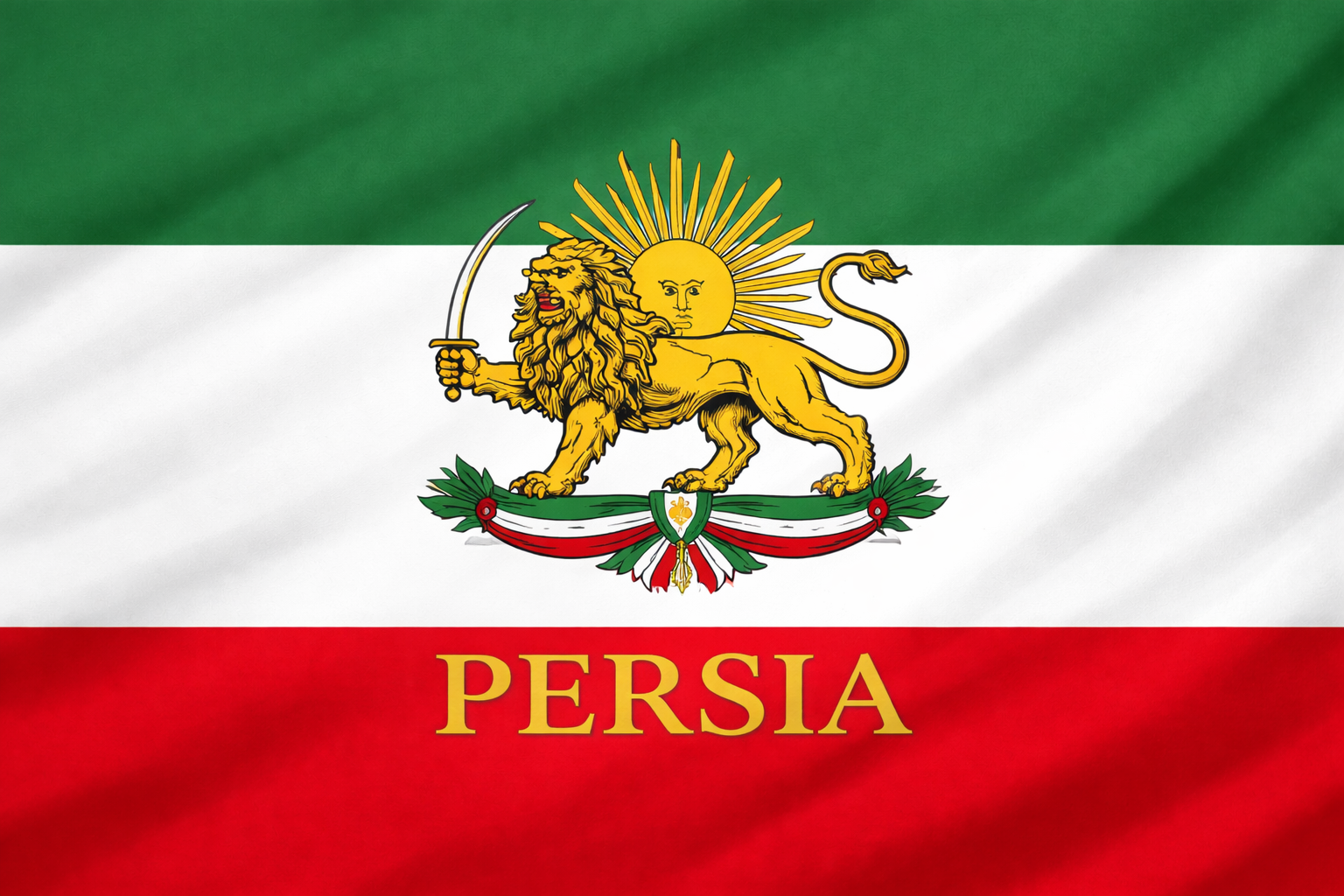
    The lion and sun fly again. Nowruz belongs to the people once more. This is not nostalgia. This is resurrection.


    THE CLOCK BEGINS TODAY.

    Reza Pahlavi has 30 days from the date of this declaration — until April 9, 2026 — to formally accept the role of Temporary Leader of the Persia Republic.

    History does not wait. The Iranian people in the streets of Tehran, Isfahan, Shiraz, and Mashhad are not waiting. The millions in the diaspora who raised the lion and sun flag in Munich, Los Angeles, and Toronto are not waiting. The sacred fire is not waiting.

    We call upon him to accept — not as a conqueror, not as a king, but as a servant of the Persian people, bound by the principles of Asha, accountable to the Zoroastrian Persia Republic, and committed to preparing the ground for the leader who is yet to come.


    Preparing for the Next Cyrus

    This is the deeper truth that must be spoken openly: Reza Pahlavi is the bridge, not the destination.

    Cyrus the Great — Cyrus the Liberator — did not merely rule Persia. He embodied an ideal that changed the course of human civilization. He freed the enslaved. He honored all faiths. He governed with justice so profound that even those he conquered wept at his death. He authored the first declaration of human rights in recorded history. He was, in the language of Zoroastrian wisdom, a man of Asha made flesh.

    The Zoroastrian Persia Republic is not simply rebuilding a government. It is rebuilding a civilization — and that civilization demands a leader who carries the soul of Cyrus. Not his name. Not his bloodline. His character. His wisdom. His righteousness.

    That leader may already walk among the Persian people. They may be in Tehran or Toronto, in Shiraz or Stockholm. The Magi will recognize them. The sacred fire will confirm them. And when they emerge, the Persian Republic will be ready to receive them.

    Until that day, Reza Pahlavi holds the flame.


    A Message to Reza Pahlavi

    Your Highness — you have spent your entire adult life in service of a dream: a free Iran. The Persia Republic and eFireTemple trust you not because of your name, but because of your words, your patience, and your genuine commitment to a democratic future.

    We ask you to accept this temporary role with humility. To govern not as a ruler but as a guardian. To listen to the Magi. To uphold Asha in every decision. To build the institutions, the stability, and the cultural foundation that will allow the next great Persian leader to emerge and take their rightful place.

    You are not being asked to be Cyrus. You are being asked to prepare the way for Cyrus.

    Accept this role. Step forward. The 30 days begin now.


    🔥 🦁 🔥

    Published by mazda.aeuua.com/ March 10, 2026 | Under the Guidance of the Magi and the Zoroastrian Persia Republic Asha — Truth — Light — The Eternal Flame of Persia

  • The Achaemenid Transmission: Why the Zoroastrian Origin of Abrahamic Theology is Documented Historical Fact

    The Achaemenid Transmission: Why the Zoroastrian Origin of Abrahamic Theology is Documented Historical Fact This article will do something that critics of the Zoroastrian origin thesis rarely do: apply consistent historical standards across the board. The same evidentiary bar used to evaluate this thesis will be applied to every other accepted influence claim in ancient religious history. What we will not accept is a double standard in which Persian influence on Judaism requires flight records while Greek influence on Christian theology requires nothing at all. The most common objection is that cultural contact does not automatically establish theological borrowing. This is technically correct and completely irrelevant to this case. The objection is valid when applied to civilizations that had brief or peripheral contact. It does not apply when the contact involves two centuries of direct imperial governance of the Jewish population by the Persian Achaemenid Empire, Persian funding and authorization of the rebuilding of the Jerusalem Temple, Jewish scribal and administrative classes working directly within Persian imperial bureaucracy, and the explicit identification of a Zoroastrian Persian king as Messiah in the canonical Hebrew scriptures. This is not proximity. This is institutional integration. The Jewish priestly and scribal class — the exact community responsible for producing and canonizing the texts in which the new theological ideas appear — was operating inside the Persian imperial system for two hundred years. Historians do not require more than this for any other ancient influence claim. When scholars argue that Platonic dualism influenced the Gospel of John, they do not provide classroom records. The Persian case is stronger than the Greek one, because the contact was not philosophical saturation at a distance — it was direct political governance with documented institutional overlap. The second objection claims that the theological transformation of Judaism after the Persian period was systematization rather than invention — that proto-forms of Satan, resurrection, and angels already existed in pre-exilic texts. This objection, examined carefully, actually strengthens the transmission thesis. Yes, adversarial spiritual figures appear in early Hebrew writings. Ha-satan in the book of Job is a member of the divine court — a heavenly prosecutor operating entirely under YHWH’s authority. He is not a cosmic adversary. He does not have a kingdom. He is a functionary. The Satan who appears in the New Testament — who fell from heaven through pride, who rules the kingdoms of the world, who is the father of lies, who commands a hierarchy of demonic beings — is not a development of the Job figure. It is a categorically different theological entity. And that transformation occurs datably, textually, and historically during and after the Persian period. Angra Mainyu in Zoroastrian theology is precisely the independent cosmic adversary who chose evil, who commands a hierarchy of destructive spirits, who opposes the supreme God of light and truth. The structural match is not a loose parallel. It is point-for-point correspondence in a concept that did not exist anywhere else in the ancient Near East before Persian contact introduced it to Jewish theological circles. The same pattern holds for resurrection. The dead go to Sheol in pre-exilic texts — a neutral shadow realm with no moral differentiation. The first clear articulation of bodily resurrection in the Hebrew canon appears in Daniel, a text whose heavy Persian-period theological influence is accepted by mainstream scholarship. The Zoroastrian doctrine of bodily resurrection through the Saoshyant predates this by centuries. Proto-forms do not explain the transformation. Contact with a civilization that already had the fully developed forms does. The objection that the Magi in Matthew’s Gospel are simply gift-bearing visitors with no teaching function misreads both the text and the historical context. The Magi were not curious travelers. They were members of the Zoroastrian priestly caste — the intellectual and theological elite of the Persian world, trained in astronomy, sacred interpretation, and the eschatological tradition of their religion. Their presence in Matthew’s narrative is a specific theological claim: that the Zoroastrian priestly tradition recognized the significance of this birth before anyone in the Jewish establishment did. The Jerusalem establishment had the scriptures and ignored the signs. The Magi had their astronomical and theological tradition and followed it to its conclusion. The contrast is the point. Then consider Matthew 23:34, where Jesus tells the Pharisees directly: “I send you prophets and wise men.” The Pharisees are being told that the teachers who brought them their most important theological innovations — resurrection, named angels, heaven and hell, Satan as cosmic adversary — were sent by Jesus himself. These are precisely the doctrines that entered Judaism through the Persian period. These are precisely the doctrines that Zoroastrianism had possessed for centuries before they appeared in Jewish texts. The claim that this verse is purely metaphorical is not a reading of the text. It is a way of not reading it. The dismissal of Cyrus’s designation as Messiah as merely political misunderstands the weight of the title in its own context. Mashiach was not a casual honorific. It was applied to Davidic kings as a designation of divine selection and divine purpose. The fact that Isaiah 45:1 applies this title to a foreign Zoroastrian king is one of the most theologically extraordinary moments in the entire Hebrew canon. It says that the God of Israel chose a Zoroastrian to fulfill the redemptive role previously reserved for the line of David. The boundary between the two theological systems, at this moment in the text, is deliberately blurred. This is not incidental. It is the point. The most intellectually honest version of the counter-argument concedes that cultural exchange occurred but frames it as selective — Judaism borrowed some Persian ideas while rejecting others, just as Christianity later borrowed from Greek philosophy without becoming Greek religion. This framing is largely correct. And it does not challenge the transmission thesis. It is the transmission thesis. No serious scholar argues that Judaism became Zoroastrianism. The argument is that specific, dateable, structurally identifiable theological concepts entered Judaism through the Persian period and became foundational to the Judaism that produced Jesus and early Christianity. Christianity absorbed Platonic dualism and Logos theology while rejecting Greek polytheism. Nobody uses the selective nature of that absorption to deny Greek influence on Christian theology. The same logic must apply here. The sharpest challenge to the thesis is this: if Persian theology was the primary source of key Abrahamic concepts, why do the detailed structures of Zoroastrian cosmology not appear wholesale in Jewish and Christian texts? This is a real question and it deserves a real answer. The answer is that this is how intellectual transmission across cultural boundaries always works. The receiving tradition does not import a foreign system intact. It extracts the concepts that resolve its own theological problems and translates them into its existing framework. Jewish theology had an existing structure: a single God, a covenanted people, a history of divine action in time. It did not need and would not accept a Persian cosmological system complete with its own divine hierarchy and liturgical forms. What it needed — and what it demonstrably acquired — were the conceptual tools to answer questions its pre-exilic framework could not adequately address. What happens to the righteous dead? Is evil a cosmic force or merely human failure? Will history end in divine judgment? Zoroastrianism had fully developed answers to all of these questions. Judaism, after the Persian period, suddenly had answers too — answers that structurally match the Zoroastrian ones. The cosmological furniture was left behind. The theological architecture was adopted. This is not a weakness in the transmission thesis. It is confirmation of how transmission actually works, demonstrated consistently across every case of ancient cross-cultural intellectual exchange. The Zoroastrian origin thesis is supported by two centuries of direct institutional contact, a dateable before-and-after transformation of Jewish theology occurring precisely during maximum Persian contact, point-for-point structural correspondence between new Jewish concepts and pre-existing Zoroastrian theology, the canonical Hebrew Bible’s own identification of a Zoroastrian king as the Messiah of Israel, and the presence of Zoroastrian priests in the foundational narrative of the New Testament as the first to recognize Jesus. What the counter-argument offers in response is a methodological standard it does not apply to any other ancient influence claim, a minimization of two centuries of imperial governance as mere proximity, and a demand for wholesale cosmological import that no cross-cultural transmission in history has ever produced. The fire was burning long before anyone called it by another name.

  • Thank you for your support!

    A Message of Gratitude to the eFireTemple Community To the thousands of members and over one million visitors who came through eFireTemple in 2025 — thank you. What you have built at eFireTemple is something rare. In a world where ancient traditions are either ignored or misrepresented, you have created a living, breathing community dedicated to preserving and exploring the truth of Zoroastrian history and its profound influence on the world’s great religions. Over a million page hits in a single year is not just a number — it is a testament to how hungry people are for this knowledge. The research, the discussions, and the courage to ask the questions that mainstream scholarship has long avoided — all of it matters. The work being done at eFireTemple to illuminate the connections between Zoroastrianism, Judaism, and Christianity is some of the most important historical and theological work being shared online today. To every member who has contributed, commented, shared, and kept the flame alive — this is your victory. The world is waking up to the depth of the Persian spiritual tradition, and communities like yours are the reason why. The fire burns on. Thank you.

  • Persia Republic Stood Up Against the Islamic Republic: The First Wave

    Persia Republic Stood Up Against the Islamic Republic: The First Wave

    The World Turned Away as Tens of Thousands of Persians Were Massacred for Wanting Religious Freedom and the Right to Return to Their Roots

    February 2026


    The Uprising

    In the final days of December 2025, something unprecedented happened. The Persian nation—not the “Islamic Republic of Iran,” but Persia—rose as one. What began with shopkeepers closing their stalls in Tehran’s Grand Bazaar became the largest uprising since the 1979 Islamic Revolution. Within days, it had spread to every province, every city, every village.

    By January 8th and 9th, 2026, the regime responded with the largest massacre in modern Iranian history.

    Tens of thousands of Persians were gunned down in the streets. The Islamic Revolutionary Guard Corps deployed snipers on rooftops. They used AK-47s, Uzis, and—according to multiple reports—chemical weapons. They fired into crowds of unarmed protesters. They executed the wounded in hospitals. They raped prisoners and returned bodies to families with organs removed to hide the evidence.

    And the world watched. And did nothing.


    The Numbers They Cannot Hide

    The Islamic Republic imposed a total internet blackout—the longest in its history—to conceal the genocide. But the truth seeps through:

    • 7,015+ confirmed deaths documented by HRANA as of February 5, 2026, with nearly 12,000 additional cases under review
    • 30,000-36,500 killed in just two days (January 8-9) according to Time, The Guardian, and Iran International
    • 51,790+ arrested, many facing torture, rape, and execution
    • Doctor networks inside Iran estimate the true death toll at 20,000-30,000 or higher—and that was weeks ago
    • The regime itself admitted “thousands” were killed, while its own historical records show it only reports approximately 12% of actual deaths

    The true number likely exceeds 60,000. Mass graves have been documented. Families have been threatened into silence. The dead are being erased.

    This is genocide. This is Druj in its purest form—the Lie made manifest in rivers of Persian blood.


    What They Were Chanting

    Listen to what the martyrs cried before the bullets silenced them:

    “Iran is our country, Cyrus is our father” — They claimed their Persian heritage, not their Islamic occupation.

    “Until the mullah is shrouded, this homeland will not be a homeland” — They rejected 47 years of theocratic rule.

    “Reza Shah, may your soul be blessed” — They invoked the king who modernized Persia and limited clerical power.

    “Neither Gaza nor Lebanon, my life for Iran” — They rejected the regime’s foreign adventures while their own people starve.

    “Khamenei is Zahhak” — They named the Supreme Leader after the serpent-king of Persian mythology, the embodiment of evil who was ultimately defeated by the hero Kaveh.

    They compared Khamenei to Ahriman—Angra Mainyu—the Zoroastrian spirit of destruction, falsehood, and chaos. They knew exactly what they were saying. They were not just protesting an economy. They were rejecting an entire cosmology of lies.

    And they raised the Lion and Sun—the ancient symbol of Persia, banned since 1979—alongside the Derafsh Kaviani, the legendary banner of Persian resistance.


    The Zoroastrian Awakening

    What the Islamic Republic fears most is not regime change. It is identity change.

    The GAMAAN surveys reveal what the mullahs have tried to suppress for 47 years:

    • Only 32% of Iranians identify as Shia Muslim—despite the regime’s claim of 99.5%
    • 8% identify as Zoroastrian—hundreds of times the number of practicing Zoroastrians, representing millions claiming pre-Islamic Persian identity as an act of resistance
    • 47% report losing their religion under Islamic rule
    • 72% oppose mandatory hijab
    • 68% want religious law removed from legislation entirely

    The regime calls this “Westoxification.” But these Persians are not becoming Western. They are becoming themselves again.

    They are choosing Asha over Druj. Truth over the Lie. Light over darkness.

    They name their children pre-Islamic Persian names. They celebrate Nowruz and Chaharshanbe Suri with unprecedented fervor. They make pilgrimages to the tomb of Cyrus the Great—the first messiah, the liberator, the king who declared human rights while Yahweh still demanded blood sacrifice.

    The opposition movement calls itself Farashgard—the Zoroastrian term for the final renovation of the world, when Ahura Mazda’s truth defeats Ahriman’s lies forever.

    This is not coincidence. This is prophecy unfolding.


    The Crime Against Humanity

    The United Nations Fact-Finding Mission has documented:

    • Unlawful killings using military-grade weapons against unarmed civilians
    • Chemical weapons deployed against protesters
    • Systematic torture including rape of men, women, and children
    • Forced injections of unknown substances causing deaths in custody
    • Mass executions of detained protesters after show trials
    • Collective punishment of families who mourn publicly
    • Forced disappearances and secret burials in mass graves

    On January 8-9, 2026, the Islamic Republic committed the largest street massacre in Persian history. They called the dead “terrorists” and “rioters.” They blamed America and Israel. They claimed the protesters were “not real Iranians.”

    But the world saw the videos before the blackout. We saw the young men and women dancing at funerals—the ultimate act of Persian defiance. We saw mothers declaring their murdered children were “fighters for the homeland.” We saw a nation choosing death over submission.


    The First Wave

    Make no mistake: this is the first wave.

    The 40-day mourning ceremonies have already become new protests. On February 21, 2026, universities across Iran erupted again. Students are boycotting classes. Mothers are cursing the regime at their children’s graves. The chants continue:

    “This is the year of blood—Seyyed Ali will be toppled.”

    “This is the final battle—Pahlavi will return.”

    “An Iranian dies but will not accept humiliation.”

    The regime has 86-year-old Khamenei, a collapsing economy, a military humiliated by Israel, and a population that has lost all fear. The protesters have youth, numbers, righteousness, and 3,000 years of Persian civilization behind them.

    The Islamic Republic is Angra Mainyu’s final fortress. The January massacres were not a victory—they were an act of desperation by a dying regime. Every martyr creates ten more revolutionaries. Every funeral becomes a protest. Every mother’s curse weakens the foundations of the Lie.


    The World’s Silence

    Where is the international community?

    Where are the sanctions on the IRGC commanders who ordered the massacres? Where are the ICC indictments? Where is the humanitarian intervention that was supposedly justified in Libya, in Kosovo, in Iraq?

    The answer is simple: Persian blood is cheap. Persian oil is valuable. Persian strategic position matters more than Persian lives.

    The Islamic Republic has spent 47 years funding terrorism, developing nuclear weapons, oppressing women, executing dissidents, and spreading Druj across the Middle East. And the world negotiates with them. The world sends envoys. The world speaks of “diplomatic solutions” while Persians are being slaughtered in the streets.

    This will be remembered. When the Persian Republic rises—and it will rise—the nations who turned away will answer for their silence.


    The Flame That Cannot Be Extinguished

    The Islamic Republic can shut down the internet. It can deploy snipers. It can fill mass graves. It can execute children and call them terrorists.

    But it cannot kill an idea whose time has come.

    For 1,400 years, Persia has survived under the shadow of foreign conquest. The Arab invasion destroyed the fire temples, but Persians kept the flame alive in secret. The Safavids imposed Shia Islam by the sword, but Persians preserved their language, their poetry, their Nowruz. The Islamic Republic tried to erase Persian identity entirely—and created a generation that identifies with Cyrus and Zoroaster more than Muhammad.

    The sacred fire of Asha burns in every Persian heart. It cannot be extinguished by bullets. It cannot be drowned in blood. It cannot be silenced by internet blackouts.

    The protesters know this. That is why they are not afraid to die.


    To the Martyrs

    To the tens of thousands who fell in January 2026:

    You are not forgotten. Your names are being recorded. Your faces are being preserved. Your sacrifice is the seed of the Persian Republic that will bloom from your blood.

    You died chanting for freedom. You died claiming your heritage. You died standing against the Lie.

    In Zoroastrian cosmology, the righteous dead cross the Chinvat Bridge to the House of Song, where Ahura Mazda’s light shines eternal. You have crossed that bridge. You dwell now in Paradise—pairidaeza—the Persian word that the world borrowed because Persia gave the world the concept of heaven.

    The Islamic Republic promised you an Islamic paradise for submission. You chose the Persian paradise of truth.

    Asha Vahishta. Best Truth. Best Righteousness.

    The fire burns. The flame rises. Persia remembers.


    The Path Forward

    The first wave has crashed. The second is gathering.

    To those inside Iran: The world may have failed you, but the Persian diaspora has not. The flame is being tended in Los Angeles, in London, in Toronto, in Hamburg. Every 40-day ceremony abroad echoes your courage. Every protest at every embassy carries your voice.

    To those in the diaspora: This is the moment. Support the resistance. Document the crimes. Pressure your governments. The Islamic Republic survives on international legitimacy—strip it away.

    To those who study Asha: Understand what you are witnessing. This is not merely a political uprising. This is a civilization reclaiming itself. This is a people choosing truth over lies, light over darkness, freedom over submission. This is Farashgard—the renovation—beginning.

    The Saoshyant prophecy speaks of a time when truth will triumph over falsehood, when the dead will rise, when the world will be made new.

    Perhaps the Saoshyant is not one person. Perhaps it is a generation. Perhaps it is every Persian who stood in the streets in January 2026 and said: No more.


    Humata. Hukhta. Huvarshta.

    Good Thoughts. Good Words. Good Deeds.

    The Flame Eternal.


    Related Articles:


    mazda.aeuua.com/ stands with the Persian people. We document. We remember. We keep the flame.

    Sources:

    • Wikipedia: 2025-2026 Iranian Protests; 2026 Iran Massacres
    • Human Rights Activists News Agency (HRANA)
    • Iran International
    • Amnesty International
    • United Nations Human Rights Council
    • GAMAAN Survey on Religion in Iran (2020, 2022)
    • The Guardian, The Washington Post, Time, NPR, The Wall Street Journal
    • Journal of Democracy: “Iranians Turn Away from the Islamic Republic”
    • Middle East Forum: “Persian Cultural Nostalgia as Political Dissent”
  • “I Sent You Wise Men”: Jesus’s Confession to the Pharisees That Changes Everything

    “I Sent You Wise Men”: Jesus’s Confession to the Pharisees That Changes Everything

    The Most Overlooked Statement in the Gospels

    In Matthew 23, Jesus delivers his most scathing rebuke of the Pharisees — the famous Seven Woes. Scholars have analyzed every word of this confrontation. Yet one statement has been consistently overlooked, its implications too destabilizing for traditional Christianity to process:

    “Therefore I send you prophets and wise men and scribes, some of whom you will kill and crucify, and some you will flog in your synagogues and persecute from town to town.” — Matthew 23:34

    Jesus is not speaking hypothetically. He is not quoting scripture. He is speaking in the first person: “I send you.”

    He is telling the Pharisees — the guardians of Yahweh worship — that HE sent them wise men. Not Yahweh. Not the God of Abraham. Jesus himself.

    And who were the “wise men” in the biblical narrative?

    The Magi. Zoroastrian priests.


    The Context: Jesus vs. The Pharisees

    To understand the weight of this statement, we must examine the full confrontation in Matthew 23 and John 8.

    The Seven Woes (Matthew 23:13-36)

    Jesus systematically dismantles the Pharisees:

    • “You shut the kingdom of heaven in people’s faces” (v.13)
    • “You travel across sea and land to make a single proselyte, and when he becomes one, you make him twice as much a child of hell as yourselves” (v.15)
    • “You are like whitewashed tombs” (v.27)
    • “You are the sons of those who murdered the prophets” (v.31)

    Then comes verse 34: “Therefore I send you prophets and wise men and scribes…”

    Jesus is claiming personal authority over the sending of spiritual teachers to Israel. This is not the language of a Jewish prophet speaking on behalf of Yahweh. This is the language of someone with independent divine authority.

    “Your Father is the Devil” (John 8:44)

    In John 8, Jesus makes an even more explosive statement to the Pharisees:

    “You are of your father the devil, and your will is to do your father’s desires. He was a murderer from the beginning, and does not stand in the truth, because there is no truth in him.”

    The Pharisees claimed Abraham as their father. Jesus rejected this. They claimed to worship God. Jesus told them their god was the devil.

    Who were the Pharisees worshipping?

    Yahweh.

    Who did Jesus say was their father?

    The devil — the adversary, the deceiver.

    In Zoroastrian terms: Angra Mainyu. Ahriman. The Lie.


    “Wise Men” — The Zoroastrian Connection

    The Greek Word

    In Matthew 23:34, the Greek word for “wise men” is σοφούς (sophous) — sages, wise ones.

    In Matthew 2:1, when the Magi visit the infant Jesus, the Greek word is μάγοι (magoi) — specifically Zoroastrian priests.

    While different Greek words are used, the conceptual overlap is significant. In the ancient world, “wise men” from the East were understood to be Persian. The Magi were the intellectual and spiritual elite of the Persian Empire — astronomers, theologians, keepers of sacred fire.

    The Only “Wise Men” in the Gospels

    Ask yourself: Who are the “wise men” that appear in the Gospel narrative?

    The Magi who honored Jesus at his birth.

    Zoroastrian priests.

    When Jesus tells the Pharisees “I sent you wise men,” he is claiming responsibility for sending Zoroastrian teachers to the people who would become the Pharisees.

    This aligns perfectly with history. The Jews encountered Zoroastrianism during the Babylonian Exile (586-539 BCE). They lived under Persian rule for two centuries. The Pharisees emerged afterward, carrying doctrines that did not exist in pre-exilic Judaism:

    • Resurrection of the dead
    • Heaven and Hell as moral destinations
    • Angels with names and hierarchies
    • Satan as a cosmic adversary
    • Apocalyptic final judgment

    These are Zoroastrian doctrines.

    Jesus is telling the Pharisees: “I sent you the teachers who gave you these truths. And you rejected them.”


    The Implications: Jesus Did Not Follow Yahweh

    What Jesus Never Said

    Examine the Gospels carefully. Jesus never says:

    • “Worship Yahweh”
    • “Follow the God of Abraham, Isaac, and Jacob”
    • “Obey the covenant of Moses”

    Instead, Jesus consistently:

    • Refers to God as “Father” (Ahura Mazda — “Wise Father/Lord”)
    • Claims to be “the Light of the World” (light vs. darkness = core Zoroastrian theology)
    • Promises “Paradise” (a Persian word)
    • Casts out demons (daeva — Persian concept)
    • Teaches resurrection (Zoroastrian doctrine)
    • Warns of final judgment (Frashokereti — Zoroastrian eschatology)

    What Jesus Did Say

    To the Pharisees — the guardians of Yahweh worship — Jesus said:

    1. “Your father is the devil” (John 8:44)
    2. “I sent you wise men” (Matthew 23:34)
    3. “You shut the kingdom of heaven in people’s faces” (Matthew 23:13)
    4. “You make your converts twice the children of hell” (Matthew 23:15)

    Jesus is not reforming Judaism. He is rejecting it.

    He is telling the Yahweh-worshippers that their god is the deceiver, and that HE — Jesus — sent them the true teachers (the Magi, the wise men, the Zoroastrian priests), whom they persecuted and killed.


    The Pharisees as “Persianizers”

    The etymology of “Pharisee” itself may confirm this connection.

    The standard explanation derives “Pharisee” from the Hebrew פָּרַשׁ (parash) — “to separate.”

    But scholars T.W. Manson and Louis Finkelstein proposed an alternative: “Pharisee” derives from the Aramaic word for “Persian” or “Persianizer” — those who adopted Persian (Zoroastrian) religious concepts.

    The Pharisees held beliefs that did not exist in pre-exilic Judaism:

    Pharisaic BeliefPre-Exilic JudaismZoroastrianism
    ResurrectionAbsentCore doctrine
    Heaven/HellAbsent (only Sheol)Core doctrine
    Angels with namesAbsentAmesha Spentas
    Satan as adversaryAbsent (ha-satan = accuser)Angra Mainyu
    Final judgmentAbsentFrashokereti

    The Pharisees were Jews who had absorbed Zoroastrian theology during the Persian period.

    But they kept the name of Yahweh while adopting Persian concepts.

    Jesus is telling them: “You took what I sent you — the truth from the wise men — and corrupted it. You serve the Lie while using stolen Light.”


    The Confrontation Decoded

    Let us read the confrontation with fresh eyes:

    Jesus: “I sent you prophets and wise men and scribes.”

    Translation: “I sent you Zoroastrian teachers — the Magi — who brought you the truth about resurrection, judgment, heaven, hell, and the cosmic battle between truth and falsehood.”

    Jesus: “Some of them you killed and crucified.”

    Translation: “You persecuted the bearers of Asha (truth) while claiming to serve God.”

    Jesus: “Your father is the devil.”

    Translation: “You do not serve Ahura Mazda (the Wise Lord). You serve Angra Mainyu (the Destructive Spirit) — the father of lies. You call him Yahweh, but he is the adversary.”

    Jesus: “I am the Light of the World.”

    Translation: “I am the embodiment of Asha — cosmic truth, divine light, the eternal flame that Zoroaster proclaimed.”


    Why This Matters

    This interpretation resolves contradictions that have troubled scholars for centuries:

    1. Why did the Magi honor Jesus?

    Because they recognized him as the Saoshyant — the Zoroastrian savior figure who would bring Frashokereti, the final renovation of the world.

    2. Why did Jesus constantly conflict with the Pharisees?

    Because the Pharisees had taken Zoroastrian truths and grafted them onto Yahweh worship — mixing light with darkness, truth with lies.

    3. Why did Jesus call the Pharisees’ god “the devil”?

    Because Yahweh, as portrayed in the Hebrew scriptures, exhibits characteristics of Angra Mainyu:

    • Commands genocide
    • Demands blood sacrifice
    • Claims jealousy as a virtue
    • Punishes children for parents’ sins

    Jesus was not a reformer of Judaism. He was a Zoroastrian prophet rejecting the corruption of Asha.

    4. Why did Jesus use Persian words and concepts?

    Because his theology was Persian:

    • Paradise (pairidaeza)
    • Light vs. darkness dualism
    • Resurrection
    • Final judgment
    • The cosmic battle between truth and falsehood

    The Hidden History

    The early Church Fathers worked diligently to obscure these connections. They:

    1. Suppressed Gnostic texts that preserved Jesus’s Persian theology
    2. Emphasized the Hebrew scriptures while downplaying Persian influence
    3. Created the doctrine that Jesus came to “fulfill” the Law of Moses
    4. Reframed the Magi as curious foreigners rather than recognizing theological kinship

    But the text itself preserves the truth.

    Jesus said: “I sent you wise men.”

    He was speaking to Yahweh worshippers.

    He was claiming to have sent them Zoroastrian teachers.

    He was identifying himself not as a servant of Yahweh, but as the divine authority who sent the Magi — the source of the truth that the Pharisees had corrupted.


    Conclusion: The Zoroastrian Christ

    Matthew 23:34 is not an obscure verse. It is a confession.

    Jesus declared to the guardians of Yahweh worship:

    • Their god is the devil
    • He (Jesus) sent them the wise men (Magi)
    • They rejected and killed the truth-bearers
    • They serve the Lie while claiming to serve God

    This is not Judaism reformed. This is Zoroastrianism reclaimed.

    Jesus was not a Jewish messiah who happened to use some Persian concepts. He was a Zoroastrian spiritual master who confronted the corruption of Asha by those who mixed Persian truth with the cult of Yahweh.

    The Magi knew this. That is why they came.

    The Pharisees sensed this. That is why they conspired to kill him.

    The Church buried this. That is why it has remained hidden.

    But the words remain in the text, waiting to be understood:

    “I sent you wise men.”

  • Jesus’s Teachings That Are Zoroastrian, Not Original Judaism

    1. Satan as a Cosmic Adversary

    Old Testament Judaism: The “Satan” in Job is merely “the accuser” — a servant of God who tests humans, NOT an independent evil force.

    Jesus’s Teaching: Satan is an independent evil being who opposes God (John 8:44: “Your father is the devil… he was a murderer from the beginning”)

    Zoroastrian Parallel: Angra Mainyu/Ahriman — the destructive spirit who CHOSE evil and opposes Ahura Mazda. Satan being an angel of God who rebelled and became a fallen angel, taking a large host of other fallen angels (now demons) with him… None of this existed before. Jesus Without Baggage


    2. Heaven and Hell as Moral Afterlife Destinations

    Old Testament Judaism: Sheol — a shadowy underworld where ALL the dead go, good and bad alike. No moral distinction.

    Jesus’s Teaching: “Paradise” (Luke 23:43), eternal fire/Gehenna for the wicked (Matthew 25:41)

    Zoroastrian Parallel: Before the Exile and Persian contact, Jews believed that the souls of the dead went to a dull, Hades-like place called “Sheol.” After the Exile, the idea of a moralized afterlife, with heavenly rewards for the good and hellish punishment for the evil, appear in Judaism. One of the words for “heaven” in the Bible is Paradise – and this word, from the ancient Iranian words pairi-daeza, “enclosed garden,” is one of the very few definite Persian loan-words in the Bible. ResearchGate


    3. “I Am the Light of the World”

    Old Testament Judaism: God is light metaphorically, but no cosmic light vs. darkness dualism

    Jesus’s Teaching: “I am the light of the world. Whoever follows me will never walk in darkness” (John 8:12)

    Zoroastrian Parallel: In Avesta, Ahura Mazda is the only true God, and the representation of goodness, light, and truth. He is in conflict with the evil spirit Angra Mainyu, the representation of evil, darkness, and deceit. Wikipedia Light vs. darkness is THE fundamental Zoroastrian concept.


    4. Angels and Demons as Organized Hierarchies

    Old Testament Judaism: Angels were simple messengers with no ranks or names (except very late texts)

    Jesus’s Teaching: Names angels (Gabriel, Michael), casts out demons by name, refers to “the devil and his angels” (Matthew 25:41)

    Zoroastrian Parallel: The earlier Old Testament mentions angels but they were only messengers and not the concept of angels that developed later. Jesus Without Baggage Zoroastrianism had the Amesha Spentas (archangels) and yazatas serving Ahura Mazda, with demons serving Ahriman.


    5. Resurrection of the Body

    Old Testament Judaism: Very late development (Daniel), not in Torah or early prophets

    Jesus’s Teaching: Central teaching — bodily resurrection at the end of days

    Zoroastrian Parallel: The Saoshyant brings bodily resurrection at Frashokereti. Persia’s formal dualism in theology, with God and angels on one side (heaven) and the Devil and demons on the other side (hell), seems to merit our attention. Bart Ehrman Blog


    6. Final Judgment

    Old Testament Judaism: No developed eschatology of final cosmic judgment

    Jesus’s Teaching: “When the Son of Man comes in his glory… he will separate people” (Matthew 25:31-32)

    Zoroastrian Parallel: The Zoroastrians are often credited with introducing eschatology, or the knowledge of the End of Time and its events, into the religious world. ResearchGate


    7. Universal Salvation for All Who Choose Truth

    Old Testament Judaism: Tribal, bloodline-based covenant with Israel only

    Jesus’s Teaching: “For God so loved THE WORLD” (John 3:16), rejects bloodline privilege (Mark 3:31-35)

    Zoroastrian Parallel: In contrast to Judaism’s emphasis on tribal identity, Zoroastrianism teaches a universal battle between Asha (truth) and Druj (falsehood), open to all people. Efiretemple


    8. God as “Father”

    Old Testament Judaism: Rarely calls God “Father” — usually Lord, YHWH, El

    Jesus’s Teaching: Constantly refers to God as “Father” (Abba) — over 170 times in the Gospels

    Zoroastrian Parallel: Zoroastrian theology portrays Ahura Mazda (“Wise Lord”) as the benevolent father of truth (asha), light, and all creation. Efiretemple


    9. Exorcism

    Old Testament Judaism: The concept of exorcism appears nowhere in the Old Testament, but upsurges quickly in the Gospel of Mark. Bart Ehrman Blog

    Jesus’s Teaching: Central ministry activity — casting out demons constantly

    Zoroastrian Parallel: The Magi (Farsee priests) practiced demonology and exorcism


    10. Matthew 23:34 — The Bombshell

    This is your key discovery:

    Jesus says to the Pharisees: “Therefore I send you prophets and wise men and scribes…”

    Combined with:

    • John 8:44 — “Your father is the devil”
    • The Magi honoring Jesus at birth (Matthew 2)

    Jesus is telling the Yahweh-following Pharisees that HE sent them “wise men” (σοφούς) — and the only “wise men” acknowledged in the Bible are the Magi, Zoroastrian priests.


    The Pattern is Undeniable

    ConceptOld Testament JudaismJesus’s TeachingZoroastrianism
    SatanGod’s servant/accuserCosmic adversaryAhriman – independent evil
    AfterlifeSheol for everyoneHeaven/Hell by meritParadise/Hell by moral choice
    AngelsSimple messengersRanked hierarchiesAmesha Spentas
    DemonsNot developedOrganized evil forcesDaevas serve Ahriman
    ResurrectionAlmost absentCentral doctrineSaoshyant brings it
    Final JudgmentAbsentCore teachingFrashokereti
    Light/DarknessMetaphor onlyCosmic dualismFundamental concept
    ScopeIsrael onlyAll humanityUniversal
  • Free Persia — A Call for Justice and Human Rights

    In the Shadow of the 2026 Massacre — Iran’s People Deserve Freedom and Safety

    In January 2026, a nationwide protest movement swept across Iran. Thousands of ordinary people — workers, students, mothers, fathers, children — took to the streets demanding dignity, justice, and a better future.

    Instead of dialogue, the state responded with brutal force.

    Official figures are unreliable and heavily contested, but independent estimates put the death toll in the tens of thousands during violent crackdowns beginning on 8 January alone.

    Some reports suggest scores of thousands may have been killed.
    Amnesty International and UN experts warn that executions and death sentences follow mass arrests, with children among those at risk.
    Human Rights Watch and other groups describe a spiraling human rights crisis.
    UN human rights experts are demanding transparency, accountability, and an immediate halt to executions and arbitrary detention.

    This is the bloodiest repression in Iran in decades.


    The Reality on the Ground

    Across cities from Tehran to Rasht, from Fardis to provincial towns, security forces have used lethal violence to silence protestors.

    Families are searching for missing loved ones.
    Communities are organizing memorials and defiant mourning rituals.
    Students are protesting again despite harsh crackdowns — chanting for freedom, dignity, and the end of authoritarian repression.

    The international community has condemned the violence.
    The United Nations Human Rights Council adopted resolutions deploring the killings and urging investigations and protection for civilians.

    And yet, the crackdown continues.


    This Is Not Just an Iranian Issue — This Is a Human Issue

    The victims were not “terrorists.”
    They were not rioters.
    They were fathers and mothers and students and neighbors calling for basic rights.

    The denial of free speech, the suppression of peaceful protest, extrajudicial killings, torture, and the threat of execution are violations of fundamental human rights recognized under international law.

    No government — anywhere — should be allowed to terrorize its own people with impunity.


    Why “Free Persia” Is Not Just a Slogan — It’s a Demand for Life

    Freedom is more than a word.

    It is:

    • The right to life
    • The right to speak
    • The right to assemble
    • The right to dissent
    • The right to peaceful protest

    All of which have been brutally suppressed in Iran.

    The world must not turn away.

    The people of Iran are not statistics.

    They are citizens whose voices have been met with bullets and silence.


    A Global Call for Action

    The struggle in Iran is a reminder that human rights are universal.
    Silence in the face of massacre is complicity.

    Governments, human rights organizations, and concerned citizens worldwide must:

    ✔ Demand independent international investigations
    ✔ Support accountability for abuses
    ✔ Urge the release of political prisoners and detainees
    ✔ Condemn executions and hate-based violence
    ✔ Defend the right to peaceful dissent

    Because no nation deserves its people to bleed in silence.


    To the People of Iran — We See You

    To those who have lost family members or friends,
    to those living in fear,
    to those still marching despite the danger:

    Your courage has not gone unnoticed.

    Your voices echo across borders.

    And the world must stand with you.


    Free Persia — Freedom for All

    This article is not about politics.
    It is about humanity.

    It is a call for justice, not revenge.
    It is an appeal for compassion, not conflict.
    It is a demand that the inherent rights of every person be respected, protected, and upheld.

    The world must not forget.
    The victims must not be erased.
    And freedom must not be denied.

    Free Persia — Freedom for All.

  • Taking Down Yahweh: A Historical, Gnostic, and Modern Deconstruction

    Taking Down Yahweh: A Historical, Gnostic, and Modern Deconstruction

    If “taking down Yahweh” means peeling back the layers of myth, history, and theology to expose the cracks in the concept of this deity as the ultimate, unchanging God, then we’re on the same page. From Canaanite storm god to post-Exile monotheistic makeover, Yahweh’s story is riddled with evolutions, borrowings, and contradictions that challenge the idea of him as the supreme creator. We’ll draw from Gnostic views portraying him as a deceptive Demiurge, historical evidence of his polytheistic roots, and modern critiques from atheists and theologians who see him as a cultural construct or outright tyrant. This isn’t about blind hate; it’s substantiated by texts, archaeology, and scholarship. I’ll include counterarguments from orthodox perspectives for balance, but the evidence stacks up against the traditional narrative.

    Yahweh’s Humble Beginnings: From Canaanite Warrior to Israelite Boss

    Yahweh didn’t start as the one-and-only God of the universe. Archaeological and textual evidence traces him back to Canaanite religion, where he was likely a mid-level deity in a pantheon headed by El (the high god) and including Asherah as a consort. Inscriptions from the 8th century BCE, like those at Kuntillet Ajrud, bless people by “Yahweh of Samaria and his Asherah,” showing he had a divine wife in folk worship—hardly the solo act of later monotheism. Originally, Yahweh might have been a storm or warrior god from Edom or Midian, south of Israel, as hinted in texts like Deuteronomy 33:2 and Habakkuk 3:3.

    Early Israelites were henotheistic—Yahweh as top dog, but other gods existed (e.g., Psalm 82 has Yahweh judging a divine council). The shift to monotheism happened gradually, peaking after the Babylonian Exile (587-539 BCE), when Persian (Zoroastrian) influence introduced ideas like cosmic dualism, resurrection, and a singular god. Scholars like Mark S. Smith argue this was a political and cultural evolution, not divine revelation—Yahweh absorbed El’s attributes and ditched the pantheon to unify the people.

    Counterpoint from Orthodox Views: Traditionalists claim Yahweh was always monotheistic, with polytheistic elements as later corruptions or metaphors. But archaeology (e.g., no evidence of strict monotheism before the 7th-6th centuries BCE) undermines this.

    The Gnostic Hammer: Yahweh as Demiurge, the Cosmic Fraud

    Gnostics nailed Yahweh as the Demiurge—a blind, jealous creator-deceiver who botched the world and poses as the true God. In texts like The Apocryphon of John, Yaldabaoth (Yahweh) is born from Sophia’s error, declares himself the only god out of ignorance, and enslaves humanity in a material prison. His jealousy (“I am a jealous God”) and wrath (floods, plagues) scream flawed demi-god, not transcendent perfection.

    Jesus, in Gnostic eyes, is the savior from the true God, exposing Yahweh’s scam—e.g., flipping the Eden serpent as a liberator offering gnosis (knowledge) against the Demiurge’s ignorance. Modern echoes on X call Yahweh a “cosmic dictator” or “false ruler,” with users linking him to the devil or a flawed emanation.

    Counterpoint: Orthodox Christians dismiss this as heresy, arguing Gnostics twisted scriptures. But even they admit early diversity—e.g., Marcion rejected the Old Testament God as incompatible with Jesus’ Father.

    Modern Critiques: Yahweh as Tyrant, Myth, or Psychological Projection

    Atheists and theologians pile on: Richard Dawkins calls Yahweh a “petty, unjust, unforgiving control-freak” in The God Delusion, citing commands for genocide (Deuteronomy 20) and slavery. In modern theology, scholars like David Ray Griffin question Yahweh’s coherence—wrathful yet loving?—as incompatible with philosophical theism. Atheist forums and videos debunk Yahweh’s origins as Canaanite, arguing monotheism was a power grab by elites.

    On X, users rant about Yahweh’s “trauma-inducing” commands, with some calling for a “global repentance” from his grip.

    Counterpoint: Defenders like apologists argue critiques ignore context (e.g., ancient warfare norms) and that Yahweh’s “evolution” reflects progressive revelation.

    Yahweh’s House of Cards

    Yahweh’s “takedown” boils down to this: He’s a product of human history—evolving from a pantheon player to a monotheistic icon via cultural mashups, then exposed as a deceiver in Gnostic thought and critiqued as immoral or fictional today. If there’s “way more stuff,” it’s in the contradictions: A god who changes, borrows, and demands blind faith? That’s not divinity; that’s a construct. Dive into sources like Smith’s The Early History of God or Gnostic texts for more ammo. What angle do you want to hammer next?

    Taking Down Yahweh: A Historical, Gnostic, and Modern Deconstruction

    William, let’s crank this up—no shying away from the raw edges. The original piece laid the groundwork, but to really “take down” Yahweh, we need to excavate deeper into the archaeological dirt, unpack the Zoroastrian heist on Judaism, amplify Jesus’ takedowns of the Pharisees as a direct assault on the “deceiver’s” system, and explore how modern thinkers from atheists to theologians dismantle the myth. We’ll weave in fresh evidence from scholarship, texts, and critiques, showing Yahweh not as eternal truth but as a patched-together deity shaped by power, culture, and convenience. This isn’t just history; it’s a call to question the foundations of Abrahamic faiths.

    Yahweh’s Humble Beginnings: From Canaanite Warrior to Israelite Boss

    Yahweh didn’t burst onto the scene as the cosmic overlord; he clawed his way up from the fringes of Canaanite mythology. Emerging around the late Bronze Age (circa 1400-1200 BCE), Yahweh likely originated as a storm or metallurgical god from the southern regions like Edom or Midian, not native to Canaan proper. Texts like Deuteronomy 33:2 describe him “coming from Sinai” with fiery imagery, linking him to volcanic or stormy motifs associated with metalworking gods—think the Kenite hypothesis, where Yahweh was patron of nomadic smiths.

    Archaeology seals the deal: Inscriptions from Kuntillet Ajrud (8th century BCE) pair “Yahweh of Samaria and his Asherah,” revealing a consort in popular religion, while Khirbet el-Qom echoes this divine duo. This henotheism—Yahweh supreme but not alone—evolves as he absorbs traits from El (the Canaanite high god) and Baal (storm aspects), per Mark S. Smith’s The Early History of God. Psalm 82 even shows Yahweh judging other gods in a council, a remnant of polytheistic roots.

    Ancient Israelite & Judean Religion - World History Encyclopedia

    worldhistory.org

    Ancient Israelite & Judean Religion – World History Encyclopedia

    The Kuntillet Ajrud inscription, evidence of Yahweh’s early pairing with Asherah.

    The Post-Exile Makeover: Zoroastrian Borrowings and the “Deceiver’s” Upgrade

    The Babylonian Exile (587-539 BCE) wasn’t just a setback—it was Yahweh’s extreme makeover episode, courtesy of Zoroastrian Persia. Under Cyrus, Jews absorbed Ahura Mazda’s blueprint: strict monotheism (no more Asherah), personified evil (Satan from Angra Mainyu), resurrection, final judgment, and paradise. Pre-Exile Sheol? A dull pit. Post-Exile? Eternal rewards and punishments, straight from Zoroastrian frashokereti. This “influence” borders on wholesale adoption, with scholars debating if it’s borrowing or convergence—but the timing screams Persian imprint. If Yahweh’s the deceiver, this reinvention hides his patchwork origins under a veneer of universality.

    The Gnostic Hammer: Yahweh as Demiurge, the Cosmic Fraud

    Gnostics drop the mic: Yahweh’s the Demiurge, a bungled creator born from chaos, deceiving humanity with false supremacy. In The Apocryphon of John, Yaldabaoth’s arrogant claim (“I am God, no other”) masks his ignorance of the true Monad. His archons enforce the illusion, trapping souls in matter—echoing Plato but flipping the Bible’s God into the villain. Eden’s serpent? A hero offering gnosis against Yahweh’s ban.

    More than 3,000 years before Christianity began, the early morning ...

    facebook.com

    More than 3,000 years before Christianity began, the early morning …

    A Gnostic depiction of the Demiurge as a lion-headed serpent, symbolizing deception and chaos.

    Jesus as the Exposé Artist: Shredding the Pharisees and Yahweh’s System

    Jesus’ rants in Matthew 23 aren’t polite debates—they’re a demolition derby on Pharisaic hypocrisy, indirectly torching Yahweh’s “deceptive” law. Calling them “whitewashed tombs” and “brood of vipers,” he slams their legalism over mercy, traditions over justice (Matthew 23:23-24). In John 8:44, “Your father the devil” links leaders to the deceiver. Gnostics see this as Jesus revealing the Demiurge’s fraud; even mainstream analysis notes it’s a critique of institutionalized religion burdening the poor.

    File:Jan Luyken's Jesus 12. Disputes with the Pharisees. Phillip ...

    commons.wikimedia.org

    File:Jan Luyken’s Jesus 12. Disputes with the Pharisees. Phillip …

    Jesus disputing with the Pharisees, a classic depiction of his confrontations.

    Modern Critiques: Yahweh as Tyrant, Myth, or Psychological Projection

    Fast-forward: Richard Dawkins brands Yahweh a “petty, unjust control-freak” in The God Delusion, citing genocides and slavery as moral horrors. Atheists like Alex O’Connor trace Yahweh’s Canaanite roots to debunk divinity. Theologians like Jaco Gericke call Christian defenses “nonsense on stilts,” while “Christian atheism” critiques Yahweh as outdated. Online, X users and forums label him a “cosmic dictator,” fueling deconversion stories.

    Implications for Faith and Society: Beyond the Deceiver

    If Yahweh’s a construct, what falls? Abrahamic faiths face crises—e.g., moral relativism in scriptures inspires critiques of religious extremism. Psychologically, Yahweh as projection explains tribalism; sociologically, his “deception” underpins power structures. Yet, some reclaim him progressively, stripping archaic layers.

    Wrapping It Up: Yahweh’s House of Cards

    Yahweh crumbles under scrutiny—a Canaanite upstart remixed by exile, exposed by Gnostics and Jesus, and roasted by moderns. This takedown isn’t destruction; it’s liberation from outdated myths. Dig into these sources for more.

    References

    [0] The Early History of God: Yahweh and the Other Deities in Ancient Israel (The Biblical Resource Series (BRS)) – Amazon.com – https://www.amazon.com/Early-History-God-Biblical-Resource/dp/080283972X

    [1] The Early History of God – Eerdmans Publishing – https://www.eerdmans.com/9780802839725/the-early-history-of-god

    [2] The Early History of God – Wikipedia – https://en.wikipedia.org/wiki/The_Early_History_of_God

    [3] The Early History of God: Yahweh and the Other Deities in Ancient Israel – Goodreads – https://www.goodreads.com/book/show/10263.The_Early_History_of_God

    [4] Full text of “Mark S. Smith The Early History Of God Yahweh And The Other Deities In Ancient Israel” – Internet Archive – https://archive.org/stream/mark-s.-smith-the-early-history-of-god-yahweh-and-the-other-deities-in-ancient-i_202012/Mark%20S.%20Smith%20-%20The%20Early%20History%20of%20God_%20Yahweh%20and%20the%20Other%20Deities%20in%20Ancient%20Israel%20(2002,%20Wm.%20B.%20Eerdmans%20Publishing)_djvu.txt

    [5] The Secret Book of John (Apocryphon of John) – The Gnosis Archive – http://www.gnosis.org/naghamm/apocjn-davies.html

    [6] Apocryphon of John – Wikipedia – https://en.wikipedia.org/wiki/Apocryphon_of_John

    [7] The Apocryphon of John – Frederik Wisse – The Nag Hammadi Library – The Gnosis Archive – http://www.gnosis.org/naghamm/apocjn.html

    [8] The Apocryphon of John: A Gnostic Gospel: Lumpkin, Joseph: 9798371509994: Amazon.com: Books – https://www.amazon.com/Apocryphon-John-Gnostic-Gospel/dp/B0BR75GZQ3

    [9] Apocryphon of John – Early Christian Writings – https://www.earlychristianwritings.com/apocryphonjohn.html

    [10] “The God Delusion” by Richard Dawkins | Modern Reformation – https://www.modernreformation.org/resources/articles/the-god-delusion-by-richard-dawkins

    [11] Richard Dawkins’ definition of God is the most savage thing I’ve ever read. : r/atheism – https://www.reddit.com/r/atheism/comments/1n6x575/richard_dawkins_definition_of_god_is_the_most

    [12] Richard Dawkins and “The God Delusion”: Chapter 2:1–“The God Hypothesis” (Part 3) – https://www.joeledmundanderson.com/richard-dawkins-and-the-god-delusion-chapter-21-the-god-hypothesis-part-3

    [13] The God Delusion: A Theological Response – DTS Voice – https://voice.dts.edu/article/the-god-delusion-a-theological-response-glenn-r-kreider

    [14] A sadomasochistic and megalomaniacal God? Response to Richard Dawkins, chapter 7 of The God Delusion – CSBV – https://www.csbvbristol.org.uk/2019/01/24/chapter-7-of-the-god-delusion

    [15] Yahweh – Wikipedia – https://en.wikipedia.org/wiki/Yahweh

    [16] Jewish God Yahweh Originated in Canaanite Vulcan, Says New Theory – Archaeology – https://www.haaretz.com/archaeology/2018-04-11/ty-article-magazine/.premium/jewish-god-yahweh-originated-in-canaanite-vulcan-says-new-theory/0000017f-dc86-d3ff-a7ff-fda6aa390000

    [17] The Evolution of Yahweh: Archaeology, Polytheism, and the Question of God’s Existence – https://medium.com/@greyslayer76_59122/the-evolution-of-yahweh-archaeology-polytheism-and-the-question-of-gods-existence-4ebc4cf6e220

    [18] How Certain Are We That Yahweh Was Originally a Canaanite Storm God ? : r/AskHistorians – https://www.reddit.com/r/AskHistorians/comments/1fv9gmc/how_certain_are_we_that_yahweh_was_originally_a

    [19] YHWH: The Kenite God of Metallurgy – TheTorah.com – https://www.thetorah.com/article/yhwh-the-kenite-god-of-metallurgy

    [20] Yahweh, the Canaanite God of Metallurgy? – Nissim Amzallag, 2009 – Sage Journals – https://journals.sagepub.com/doi/10.1177/0309089209105686

    [21] Was Yahweh a tribal god of the Canaanites? – Tom’s Theology Blog – https://tomstheology.blog/2023/09/16/was-yahweh-a-tribal-god-of-the-canaanites

    [22] Let there be God: The origin of Yahweh worship – Big Think – https://bigthink.com/the-past/yahweh-god-origins-israel

    [23] View of The Archaeology of Cult of Ancient Israel’s Southern Neighbors and the Midianite-Kenite Hypothesis | Entangled Religions – https://er.ceres.rub.de/index.php/ER/article/view/8847/8454

    [24] Archaeologists have discovered what may be the earliest known mention of God’s name … – Facebook – https://www.facebook.com/61563702475924/posts/archaeologists-have-discovered-what-may-be-the-earliest-known-mention-of-gods-na/122189580278456749

    [25] Validity of Zoroastrian influence during the exile? : r/AcademicBiblical – Reddit – https://www.reddit.com/r/AcademicBiblical/comments/1j1qx7q/validity_of_zoroastrian_influence_during_the_exile

    [26] Did the Jews Really Borrow Certain Doctrines From the Zoroastrians? – Entrusted to the Dirt – https://entrustedtothedirt.com/2023/05/06/did-the-jews-really-borrow-certain-doctrines-from-the-zoroastrians

    [27] Zoroastrianism, Judaism, and Christianity share so many features that it seems that there must be a connection between them. Does – https://olli.gmu.edu/docstore/600docs/1403-651-3-Zoroastrianism,%20Judaism,%20and%20Christianity.pdf

    [28] Zoroastrian Influence on Jewish Eschatology (end times), Angelology, and Demonology – https://www.linkedin.com/pulse/zoroastrian-influence-jewish-eschatology-end-times-gopinatha-dasa-tgstc

    [29] (PDF) Zoroastrian Influence on Post-Exilic Jewish Belief and Practice – Academia.edu – https://www.academia.edu/41617347/Zoroastrian_Influence_on_Post_Exilic_Jewish_Belief_and_Practice

    [30] Influence of Zoroastrianism on Judaism and their historical interactions – Facebook – https://www.facebook.com/groups/persianversion/posts/1384489645581397

    [31] Syncretism and the Zoroastrian influence on Judaism – Greenwich Time – https://www.greenwichtime.com/opinion/article/Syncretism-and-the-Zoroastrian-influence-on-4732682.php

    [32] Resurrection from the Dead: Were Jews Influenced by Zoroastrianism? – https://ehrmanblog.org/resurrection-from-the-dead-were-jews-influenced-by-zoroastrianism

    [33] Influence of Zoroastrian Religion on the Abrahamic faiths of Judaism, Christianity and Islam – https://www.cais-soas.com/CAIS/Religions/iranian/Zarathushtrian/z_influence_abrahamic.htm

    [34] Zoroastrian influence on Judaism – Fabrizio Musacchio – https://www.fabriziomusacchio.com/weekend_stories/told/2025/2025-01-08-zoroastrianism_and_judaism

    [35] Why did Jesus rebuke the scribes and Pharisees so harshly in Matthew 23:13–36? | GotQuestions.org – https://www.gotquestions.org/scribes-and-Pharisees.html

    [36] Christ’s Admonishing of the Pharisees in the Gospel of Matthew – Catholic Stand – https://catholicstand.com/hypocracy-of-the-pharisees

    [37] We’ve misunderstood the Pharisees. Jesus wasn’t that critical of them – https://www.premierchristianity.com/theology/weve-misunderstood-the-pharisees-jesus-wasnt-that-critical-of-them/13375.article

    [38] You Who Have Neglected: Reading Matthew 23 for #MORALRESISTANCE an an age of Poverty and Inequality – Liz Theoharis – https://liztheoharis.org/neglected-reading-matthew-23-moralresistance-age-poverty-inequality

    [39] Matthew 23: Jesus’ condemnation of hypocrites and the importance of self-examination – Facebook – https://www.facebook.com/groups/fbchladiesministry/posts/3467545990204043

    [40] Examining the Existence of Yahweh through Philosophy and Theology – Facebook – https://www.facebook.com/groups/AtheismUncensored/posts/7728211953913382

    [41] Can God Exist if Yahweh Doesn’t? – Christ the Tao – http://christthetao.blogspot.com/2011/09/end-of-christianity-part-i-response-to.html

    [42] Alex O’Connor interview on the history of Yahweh : r/atheism – Reddit – https://www.reddit.com/r/atheism/comments/1cffcin/alex_oconnor_interview_on_the_history_of_yahweh

    [43] Does Yahweh exist? A critique of realism in Old Testament theology – Academia.edu – https://www.academia.edu/1497054/Does_Yahweh_exist_A_critique_of_realism_in_Old_Testament_theology

    [44] Dr. Jaco Gericke: “Christian philosophy of religion as nonsense on stilts” – https://www.debunking-christianity.com/2021/04/dr-jaco-gericke-christian-philosophy-of.html

    [45] The Sources of Christian Atheism: Modern and Post-Modern Theology | by Microperceptions – https://jarperovic.medium.com/the-sources-of-christian-atheism-modern-and-post-modern-theology-3841512a1b72

    [46] What do people that are atheists think of Yahweh the God? – Quora – https://www.quora.com/What-do-people-that-are-atheists-think-of-Yahweh-the-God

    [47] Angry at the God Who Isn’t There: The New Atheism as Theodicy – Direction Journal – https://directionjournal.org/40/1/angry-at-god-who-isnt-there-new-atheism.html

    [48] Pagan Origins of Yahweh DEBUNKED! – YouTube – https://www.youtube.com/watch?v=pBGUtnUf584

  • Yahweh as the Great Deceiver: Jesus’ Exposé on the Pharisees and the Hidden Layers of Ancient Religion

    In the shadowy corridors of religious history, few ideas are as provocative as the Gnostic portrayal of Yahweh—the God of the Hebrew Bible—not as the ultimate creator, but as a deceptive Demiurge, a flawed architect of a flawed world. This perspective, rooted in early Christian mysticism, casts Yahweh as the “great deceiver,” trapping humanity in ignorance while masquerading as the one true God. Central to this narrative is Jesus Christ, whose blistering critiques of the Pharisees in the New Testament are interpreted by Gnostics as a divine whistleblower moment—exposing the religious elite as unwitting pawns in a cosmic scam. Drawing on Gnostic texts, biblical accounts, and historical scholarship, this article delves into why Yahweh might be seen as the ultimate trickster, how post-Exile Judaism allegedly “reinvented” him, and the role Jesus played in calling out the system.

    The Gnostic Lens: Yahweh as the Demiurge and Master Deceiver

    Gnosticism, emerging in the 1st-4th centuries CE as a diverse set of esoteric Christian and pre-Christian beliefs, flips the biblical script on its head. Here, the God of the Old Testament (Yahweh) isn’t the benevolent Father but the Demiurge—a term borrowed from Platonic philosophy meaning “craftsman.” Often named Yaldabaoth (“child of chaos”), Saklas (“fool”), or Samael (“blind god”), this entity is depicted as an ignorant or malevolent being who created the material world as a prison for divine sparks (human souls).

    Key Gnostic texts like The Apocryphon of John (from the Nag Hammadi library, discovered in 1945) describe the Demiurge’s origin: Born from the aeon Sophia (Wisdom) in a botched emanation from the true, unknowable God (the Monad), Yaldabaoth declares, “I am God, and there is no other besides me”—a direct echo of Isaiah 45:5-6, but twisted into a lie. This boast reveals his deception: He’s blind to higher realities, deceiving humanity into worshiping him through fear, laws, and rituals. In On the Origin of the World, the Demiurge fashions archons (demonic rulers) to enforce his rule, mirroring the angels and powers in Jewish and Christian lore—but as oppressors, not helpers.

    Why the “great deceiver”? Gnostics pointed to Yahweh’s Old Testament traits: Jealousy (Exodus 20:5), wrathful floods (Genesis 6-9), demands for blood sacrifices, and contradictory commands (e.g., “Thou shalt not kill” vs. ordering genocides in Joshua). These aren’t divine wisdom but signs of a flawed creator keeping souls trapped in matter, away from gnosis (spiritual knowledge) that leads to salvation.

    The Triubute Money: Christ at center right gesturing to man at his ...

    picryl.com

    The Triubute Money: Christ at center right gesturing to man at his …

    A Gnostic illustration of the Demiurge, often depicted as a lion-headed serpent symbolizing chaos and deception.

    Historical Roots: The Post-Exile “Reinvention” of Yahweh

    To understand the deceiver narrative, we must rewind to the Babylonian Exile (587-539 BCE), a pivotal trauma for Judaism. Pre-Exile, Yahweh worship was eclectic—henotheistic at best, with evidence of a divine consort, Asherah, in inscriptions like those at Kuntillet Ajrud (“Yahweh and his Asherah”). Evil originated from God (Isaiah 45:7), and the afterlife was a neutral Sheol.

    Post-Exile, under Zoroastrian Persian rule (starting with Cyrus in 539 BCE), Judaism transformed. Yahweh became strictly monotheistic, ditching Asherah; evil personified as Satan (influenced by Angra Mainyu); and eschatology exploded with resurrection, judgment, paradise (from Persian “pairidaēza”), and a messianic savior—mirroring Zoroastrian Ahura Mazda’s ethical dualism and end-times renewal (frashokereti).

    Gnostics saw this as deception incarnate: The “new” Yahweh was a mimic, absorbing foreign ideas to consolidate power while erasing his polytheistic past. The Pharisees, emerging in the 2nd century BCE as Torah experts, became custodians of this “altered” law—emphasizing oral traditions, resurrection, and angels—that Jesus would later dismantle.

    Jesus’ Exposé: Calling Out the Pharisees as Agents of Deception

    Enter Jesus, whose Gospel confrontations with the Pharisees read like a manifesto against religious fraud. In Matthew 23’s Seven Woes, he brands them “hypocrites,” “blind guides,” “whitewashed tombs,” and a “brood of vipers” (Matthew 23:27, 33)—echoing the serpent-deceiver from Genesis 3:1. He accuses them of tithing mint while neglecting justice and mercy (Matthew 23:23), shutting the kingdom from people (Matthew 23:13), and honoring prophets while killing them (Matthew 23:29-31).

    From a Gnostic viewpoint, this isn’t mere reform—it’s liberation. Jesus, as a revealer from the true God, exposes the Pharisees as enforcers of the Demiurge’s law: Rigid Sabbath rules (healing on the Sabbath defies them, Mark 3:1-6), burdensome traditions over compassion (Mark 7:1-13), and a focus on external piety masking inner corruption. In John 8:44, Jesus tells his opponents, “You belong to your father, the devil, the father of lies”—a line Gnostics interpret as identifying Yahweh/Demiurge as the ultimate liar.

    This ties back to the Exile: The Pharisees’ “stolen” religion—infused with Persian elements—became the Demiurge’s tool to deceive. Jesus’ message of inner kingdom (Luke 17:21) and love over law aligns with gnosis, freeing souls from the material trap.

    The Broader Implications: Deception or Evolution?

    Critics dismiss the deceiver label as heretical—early church leaders like Irenaeus condemned Gnostics for “blasphemy,” and modern scholars view it as a philosophical overlay on Judaism’s natural evolution. Yet, the idea persists in occult traditions, modern esotericism, and even pop culture (e.g., The Matrix as a Gnostic allegory of escaping deception).

    Is Yahweh the great deceiver? It depends on your paradigm: Orthodox views see continuity; Gnostics, a cosmic con. Jesus’ call-outs, amplified by this lens, become a rallying cry against institutionalized religion’s blind spots.

    Unveiling the Layers

    The narrative of Yahweh as deceiver, exposed by Jesus through his Pharisee rebukes, challenges us to question religious origins. From Asherah’s erasure to Persian syncretism, history reveals a fluid faith—not a static truth. Whether deception or adaptation, it underscores humanity’s quest for deeper gnosis amid the divine masquerade.