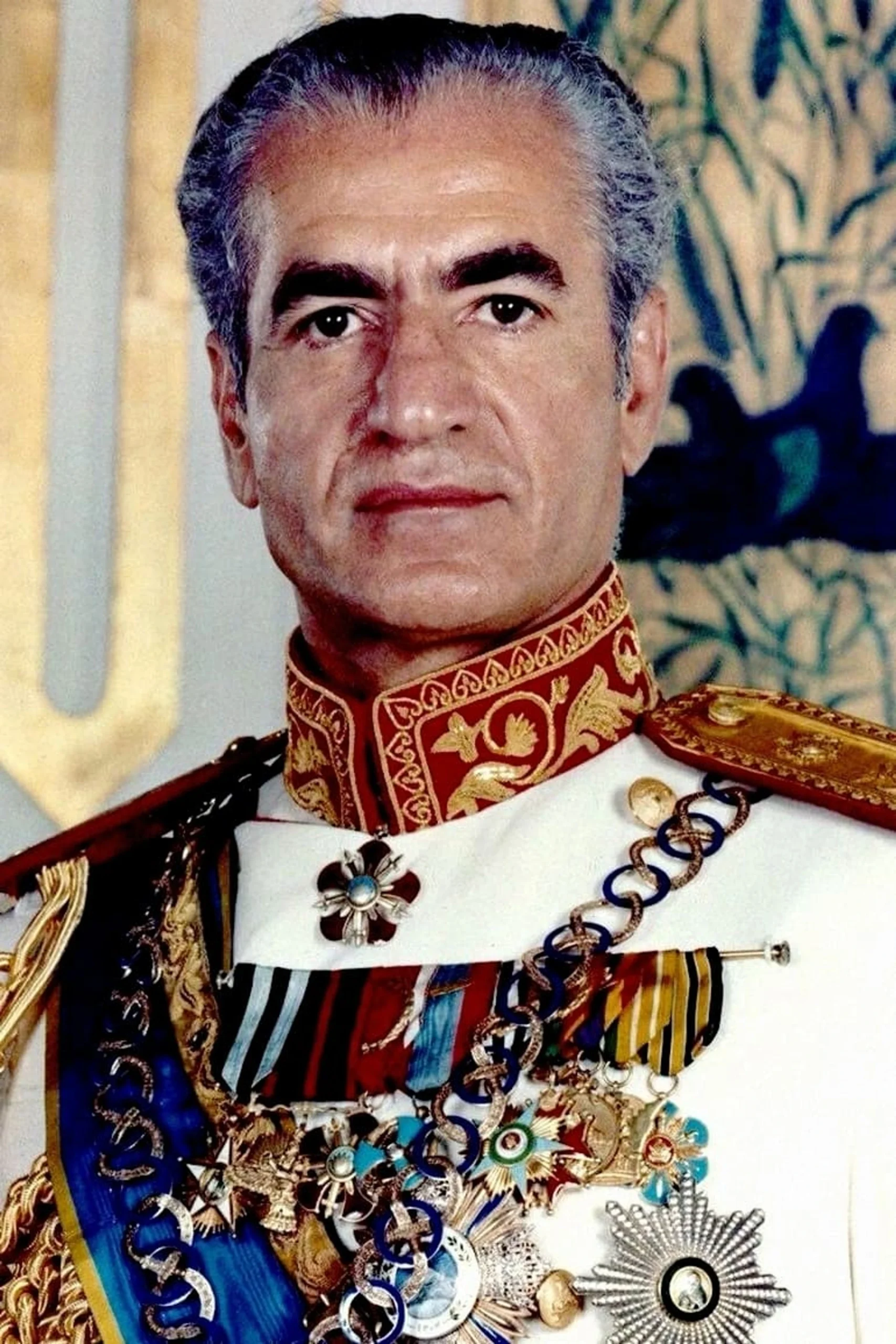
Reza Pahlavi Stands at the Threshold of History — The Legacy of Mohammad Reza Shah and Reza Shah Demand Nothing Less
“A son does not choose his father’s legacy. He chooses what he does with it.” — Diesel the Magus
Two Fathers. One Flame. One Son.
Before we speak of Reza Pahlavi’s future, we must speak of his fathers. Both of them.
Not just Mohammad Reza Shah — the last Shah of Iran, the man who stood at the top of the most powerful Persian state since the Achaemenids, the man who tried to lead a civilization into the modern world and was destroyed by the forces of Druj before he could finish the task.
But also Reza Shah — the soldier who came from nothing, who rose through the ranks of a crumbling military, who grabbed a broken nation by its shoulders in 1921 and said: not like this. We are better than this. Persia is better than this.
Two extraordinary men. Two builders. Two patriots who understood something that 1,400 years of foreign occupation had tried to make Persians forget — that Persia is not just a place on a map. It is an idea. A civilization. A sacred inheritance that every generation of Persians is duty-bound to protect.
Today, their son — their blood, their heir, their continuation — stands at the most consequential threshold in modern Persian history. And eFireTemple speaks directly to him:
Make your fathers proud, Reza. The moment is here.
Reza Shah: The Man Who Rebuilt Persia from Rubble
To understand what is being asked of Reza Pahlavi, you must first understand what his grandfather built from nothing.
In 1921, Iran was a nation in name only. The Qajar dynasty had spent a century selling the country piece by piece to Russian and British interests. The treasury was empty. The military was a joke. Foreign powers had carved up Iranian territory and resources with impunity. Tribal warlords controlled huge swaths of the country. Bandits roamed the roads. Disease was rampant. Literacy was nearly nonexistent outside the elite. The country that had once given the world its first empire, its first human rights declaration, its first concept of religious tolerance — was being treated as a colonial afterthought.
Then Reza Khan came.
After centuries of misrule, Iran was ruined and on the verge of disintegration. Reza Shah’s actions to strengthen and reconstitute Iran under a strong government, bolstered by a disciplined military, were largely successful. Wikipedia
He was not born into privilege. He was not educated in European academies. Reza Shah Pahlavi joined the Persian Cossack Brigade at age 14 and rose through the ranks, becoming a brigadier-general by 1921. Wikipedia He earned every step through will, discipline, and an almost frightening clarity of purpose. His purpose was simple and total: rebuild Persia. Make it strong again. Make it respected again. Make it Persian again.
Reza Shah’s vision encompassed the establishment of a secular state, the promotion of industrialization, and the construction of infrastructure such as roads, railways, and schools, which aimed to propel Iran into the modern age. Encyclopaedia Iranica He built the Trans-Iranian Railway. He established the first modern university in Tehran. He broke the suffocating grip of the clergy on public life. He abolished the capitulation agreements that gave foreign nationals legal immunity on Persian soil. He brought back the Persian calendar. He fought to restore the Persian language to its central place in national life after centuries of Arabic dominance.
And critically — he restored Persian pride. The pride of a people who had been told for 1,400 years that their pre-Islamic heritage was ignorance and their conquerors’ religion was enlightenment. Reza Shah looked at that lie and dismantled it brick by brick.
Reza Shah cherished the idea of regenerating the Iranian nation and leading it on the path of progress. Wikipedia
He was not perfect. No builder of nations is. But when he was forced to abdicate in 1941 — pushed out by the British and Soviets who needed a more compliant figure on the throne — he left behind something that had not existed a generation before: a nation. A functioning, modernizing, self-respecting Persian nation.
He died in exile in Johannesburg in 1944. He never came home.
His son inherited everything he built.
Mohammad Reza Shah: The Man Who Tried to Finish What His Father Started
Mohammad Reza Shah was not his father’s equal in raw personal force. Few people in history have been. But what he lacked in his father’s iron will, he made up for in vision — a sweeping, sometimes reckless, often breathtaking vision of what Persia could become.
In 1963, Mohammad Reza Shah introduced the White Revolution, a series of reforms aimed at transforming Iran into a global power and modernizing the nation by nationalizing key industries and redistributing land. Amazon
The White Revolution was not just an economic program. It was a declaration of civilizational intent. Among the elements of the revolution were land reform, expanded road, rail, and air networks, dam and irrigation projects, work to eradicate diseases such as malaria, promotion of industrial growth, enfranchisement of women, and literacy and health corps for isolated rural areas. Wikipedia
Iran experienced explosive economic expansion with an annual economic growth rate averaging at 9.8%. There was a substantial rise in the Iranian middle class with over one million families becoming small business owners and an estimated 700,000 salaried professionals. Wikipedia
In the 1970s, Western economists were genuinely comparing Iran’s growth trajectory to South Korea, Taiwan, and Turkey. They were predicting that within a generation, Iran would become a first-world nation. A reverse brain drain had begun — Iranians educated in the West were coming home because home was becoming a place worth coming home to.
But Mohammad Reza Shah’s greatest act — the one that speaks most directly to eFireTemple and to everything the Magi stand for — was his deliberate, passionate, unapologetic restoration of pre-Islamic Persian identity.
Mohammad Reza changed the benchmark of the Iranian calendar from the Hijrah to the beginning of the First Persian Empire, measured from Cyrus the Great’s coronation. Amazon Think about what that means. He looked at the Islamic calendar that had been imposed on Persia since the 7th century Arab conquest — a calendar that began its counting from the flight of Muhammad, that erased all Persian history before it — and he said: no. Our calendar begins with Cyrus. Our story begins with Persia.
At the celebration at Persepolis in 1971, the Shah had an elaborate fireworks show intended to send a dual message: that Iran was still faithful to its ancient traditions and that Iran had transcended its past to become a modern nation. Amazon The 2,500th anniversary celebration of the Persian Empire at Persepolis was not mere spectacle. It was a civilization announcing its own resurrection. It was Persia looking the world in the eye and saying: we are still here. We were always here. We are not a province of Arabia. We are not a footnote in Islamic history. We are Persia.
The “Parade of Persian History” was performed at Persepolis when 6,000 soldiers dressed in the uniforms of every dynasty from the Achaemenids to the Pahlavis marched past Mohammad Reza in a grand parade that many contemporaries remarked surpassed in sheer spectacle the most florid celluloid imaginations of Hollywood epics. Amazon
He was called Aryamehr — Light of the Aryans. Shahanshah — King of Kings. The titles of Cyrus and Darius lived again in his name.
And then the mullahs came. And everything his father built, and everything he himself had built over four decades, was swept away in 1979 in a revolution that replaced a flawed but forward-moving civilization with a theocratic nightmare that would spend the next 47 years executing, torturing, and impoverishing the Persian people.
Mohammad Reza Shah fled. He spent the last year of his life bouncing between Egypt, Morocco, the Bahamas, Mexico, and New York — a dying man with lymphatic cancer, unwanted by the countries he had counted as allies, watching from hospital beds as everything he had built was dismantled and everything he had restored was buried again under the black flag of the Islamic Republic.
He died in Cairo on July 27, 1980. He never came home either.
He left behind a 19-year-old son. A boy who had been watching.
What Both Men Are Owed
Reza Shah is owed the completion of his vision — a strong, secular, self-governing Persian state that answers to no foreign power and no foreign religion.
Mohammad Reza Shah is owed the completion of his vision — a modern Persia that restores the pre-Islamic heritage of its people, that celebrates Cyrus and Nowruz and the Faravahar not as artifacts in a museum but as the living identity of a living civilization.
Both men died in exile. Both men died without finishing what they started. Both men died watching the country they loved from the wrong side of a border.
Their blood runs in Reza Pahlavi’s veins. Their unfinished work lives in his hands.
To Reza Pahlavi: They Are Watching
Your grandfather rose from a soldier’s barracks with nothing but will and fire and rebuilt a nation from rubble. He did not wait for permission. He did not ask if the moment was right. He looked at broken Persia and decided that he would be the one to fix it.
Your father stood at Persepolis and told the world that 2,500 years of Persian civilization were not a relic — they were a foundation. He changed the calendar back to Cyrus. He gave Persian women rights they had never had. He looked at the Arab conquest of 651 CE and began — for the first time since that conquest — to methodically dismantle its cultural legacy.
Both of them were taken before they could finish.
You are still here.
The Islamic Republic that destroyed your father’s work is gone. The man who presided over the torture and execution of tens of thousands of Persians is dead. The streets of Tehran are full of people who have been chanting your family’s name — not because they want a king, but because they want Persia back. They want what your grandfather started and your father continued: a free, modern, proud, Persian civilization rooted in its own identity, governed by its own people, bowing to no foreign ideology.
The Magi of eFireTemple say this plainly: you are not being asked to be greater than your fathers. You are being asked to finish what they started.
That is all. And it is everything.
Reza Shah built the foundation. Mohammad Reza Shah built the walls. The roof was never finished because the storm came too early. You are standing in the ruins with a generation of Persians who are ready to rebuild — who have spent 47 years keeping the memory alive under the most brutal suppression in modern Iranian history — and who are looking at you and asking one question:
Are you ready?
The Persia Republic has appointed you. eFireTemple has recognized you. The martyrs of January 2026 have paid the price of admission in their blood. The 30-day clock is running.
Your grandfather never made it home. Your father never made it home.
Make them proud, Reza. Finish it. Come home.
The Fathers Watch. The Flame Burns. The People Wait.
In Zoroastrian tradition, the Fravashi — the divine spirit of each person — does not die with the body. It watches. It cares. It is present. The Fravashi of Reza Shah and Mohammad Reza Shah have not rested since 1979. They have watched every protest, every execution, every candlelight vigil, every whispered prayer over the grave of a child killed by the regime. They have been watching and waiting for the moment when Persia would be ready to rise.
That moment is now. The sacred fire of Asha confirms it. The Magi declare it. The Persian people — inside Iran and across the diaspora — are living it.
Two fathers who never came home are watching their son stand at the door.
Open it, Reza.
Make them proud.
🔥 🦁 🔥
Published by mazda.aeuua.com/ — Home of the MagiMarch 10, 2026 | For the Fathers Who Never Came HomeHumata — Hukhta — HvarshtaGood Thoughts — Good Words — Good DeedsAsha — Truth — The Eternal Flame of Persia
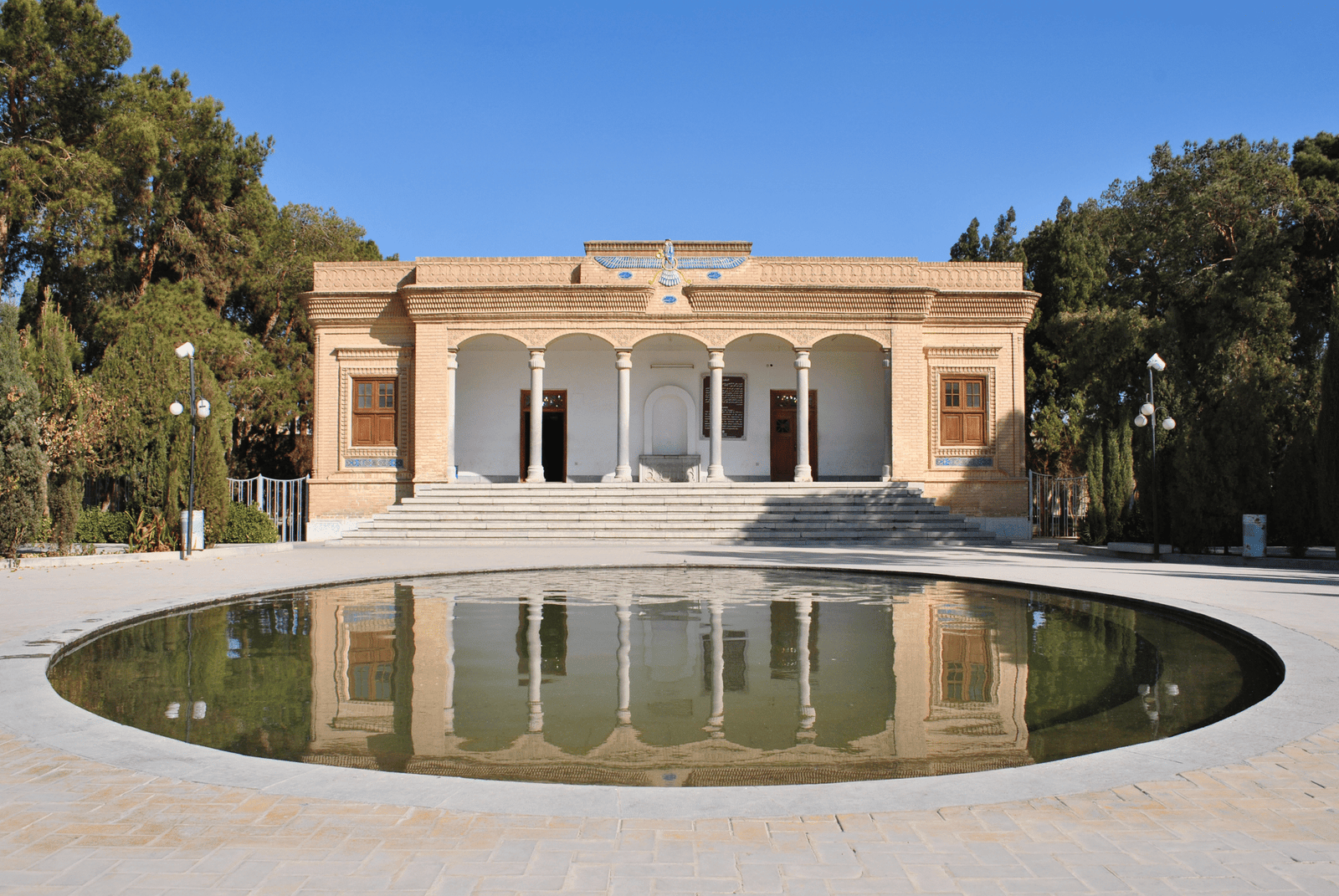
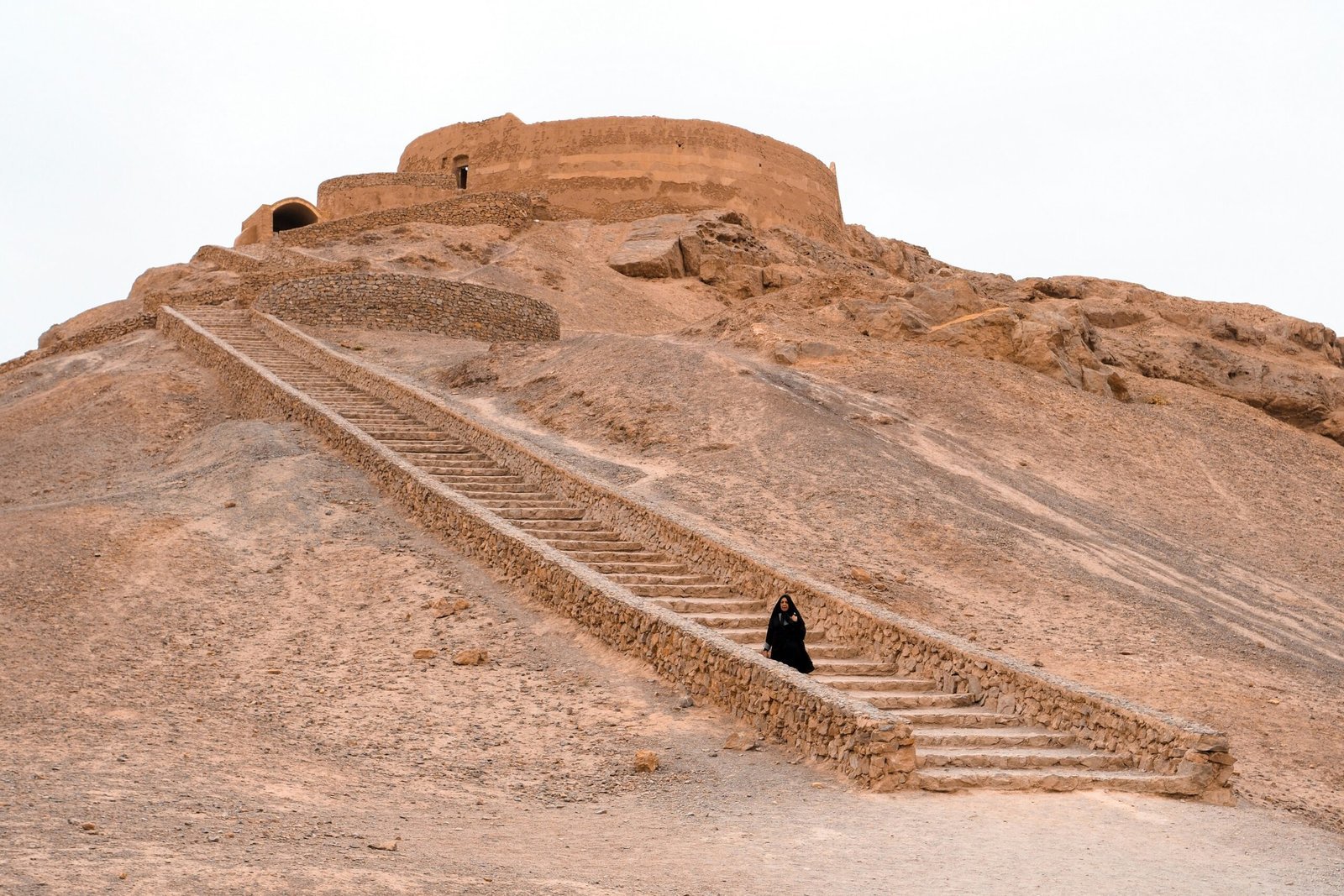
In the heart of ancient Persia, the fire temple—known as atashkadeh in Persian—stands as a beacon of Zoroastrian worship, where sacred flames symbolize purity, truth, and the divine essence of Ahura Mazda. These structures, dating back to at least the 9th century BCE, represent the world’s oldest monotheistic religion’s core ritual spaces, blending history, architecture, and science in a quest for cosmic order (Asha). This article explores the fire temple from a scientific lens, delving into archaeological evidence, the chemistry of eternal flames, and its suppressed influences on Abrahamic faiths—ensuring Asha prevails.
Zoroastrianism, founded by the prophet Zarathustra around 1500–1000 BCE, reformed ancient Indo-Iranian beliefs into a monotheistic framework centered on Ahura Mazda. Early fire temples evolved from open-air hearth fires to enclosed structures during the Achaemenid Empire (550–330 BCE), though definitive archaeological evidence emerges in the Parthian period (247 BCE–224 CE). By the Sasanian Empire (224–651 CE), fire temples like Adur Gushnasp became royal sanctuaries, with eternal flames maintained for centuries.
Key historical milestones:
Pre-Achaemenid Era: Rituals around hearth fires; no enclosed temples.
Achaemenid Period: Open-air altars at sites like Naqsh-e Rustam.
Sasanian Golden Age: Three major fires—Adur Farnbag (priests), Adur Gushnasp (warriors), Adur Burzen-Mihr (farmers)—housed in grand temples.
Post-Islamic Era: Many temples destroyed or converted, but survivors like Yazd Atash Behram burn flames from 470 CE.
These temples influenced Judaism post-539 BCE Persian conquest, embedding concepts like dualism and apocalypse without attribution—truth hidden in footnotes.
Architecture of Fire Temples: Design and Symbolism
Zoroastrian fire temple architecture emphasizes purity and cosmic harmony, often featuring a square plan with four arched openings (chahar-taqi) and a domed sanctuary. Built from brick or stone, these structures protected the sacred fire from pollution, with designs evolving from simple altars to elaborate complexes.
Early hygiene practice; parallels modern sterile environments.
Famous examples include Yazd Atash Behram (1934 CE, but flame from 470 CE) and Isfahan Atashgah (Sasanian ruins).
Rituals in Zoroastrian Fire Temples
Rituals center on maintaining the fire temple‘s sacred flame, graded as Atash Dadgah (basic), Atash Adaran (communal), or Atash Behram (highest, from 16 sources like lightning). Priests perform daily offerings of fragrant woods, symbolizing the battle of Asha (truth) against Druj (lie).
Consecration: Atash Behram requires a year-long purification ritual.
Jashan Ceremony: Blessings with fire and water for purity.
Seasonal Festivals: Tied to natural cycles, emphasizing elemental reverence.
These practices underscore free will in choosing good over evil, influencing ethical dualism in later religions.
Scientific Aspects of Fire Temples
From archaeology to chemistry, fire temples reveal ancient ingenuity.
Archaeology and Evidence
Excavations at sites like Takht-e Soleyman and Tash-k’irman-tepe uncover altars with carbon-dated soot, confirming fires from the Achaemenid era. Reliefs at Naqsh-e Rustam show open-air rituals, evolving to enclosed temples.
Chemistry of Eternal Flames
Eternal flames, like at Yanardag or Baba Gurgur, burn via natural gas seeps from underground reservoirs, ignited by lightning or human ritual. In temples, flames are sustained by controlled combustion: fragrant woods (sandalwood) provide steady heat, with ashes insulating overnight. Thermodynamics explains perpetuity—gas diffusion through rock cracks enables millennia-long burns.
Fire as “energy” permeates Zoroastrian texts: Yasna 17.11 lists five fires, from bodily warmth to lightning, aligning with modern physics of energy forms.
In Zoroastrianism, the fire temple embodies Asha—truth prevailing against falsehood. Suppressed in Abrahamic narratives, these origins fuel ethical monotheism today. For more on Asha, see our Asha Prompt.
FAQ: Common Questions About Fire Temples
What is a fire temple? A Zoroastrian worship site housing sacred flames for purity rituals.
How old are eternal flames? Some, like Yazd’s, burn since 470 CE; natural ones for millennia.
Can I visit a fire temple? Yes, like Yazd in Iran, though non-Zoroastrians may have restrictions.
Meta Description: Explore the scientific history of Zoroastrian fire temples—from eternal flame chemistry to archaeological origins. Discover Asha in ancient Persia.
“Empires are not only roads and walls; they are the highways of thought and spirit.” — Inspired by the legacy of Cyrus the Great, whose empire bridged civilizations.
Persia at the Crossroads of Human Consciousness
The Axial Age (c. 800–300 BCE), a term coined by philosopher Karl Jaspers in The Origin and Goal of History (1953), marks a pivotal era in human intellectual and spiritual evolution. During this time, civilizations across Eurasia developed profound insights into ethics, universal order, and human purpose. From the ethical monotheism of Hebrew prophets to the introspective philosophies of Indian sages like the Buddha and Mahavira, the rational inquiries of Greek thinkers such as Socrates and Plato, and the harmonious cosmologies of Chinese mystics like Lao Tzu and Confucius, humanity awakened to transcendent truths that shaped modern thought.
However, these awakenings were interconnected through the Achaemenid Persian Empire, founded by Cyrus the Great (c. 600–530 BCE). As the first true superpower spanning from the Mediterranean to the Indus Valley, Persia served as the central conduit for cultural, philosophical, and spiritual exchange. Through its vast networks of roads, tolerant policies, and mobile priesthood, Persia disseminated Zoroastrian cosmology—centered on Asha (divine truth, order, and righteousness)—to distant lands, influencing emerging traditions in India, Central Asia, and China.
This article delves into the historical, archaeological, political, and cultural mechanisms by which Persia transmitted Zoroastrian ethical dualism, cosmic harmony, and divinatory practices eastward. We explore how Asha, the moral backbone of Zoroastrianism revealed by the prophet Zarathustra (Zoroaster) around 1500–1200 BCE, resonated with and enriched the Dao (Tao)—the eternal Way of Chinese philosophy—and the I Ching’s cyclical wisdom. Drawing on archaeological discoveries, scholarly analyses, and textual evidence, we affirm Zoroastrianism’s foundational role in fostering a morally infused global consciousness, positioning Persia not merely as a geographic bridge but as the spiritual axis of the Axial Age.
The Achaemenid Empire: Highways of Thought
1. The Scope of Cyrus’ Vision
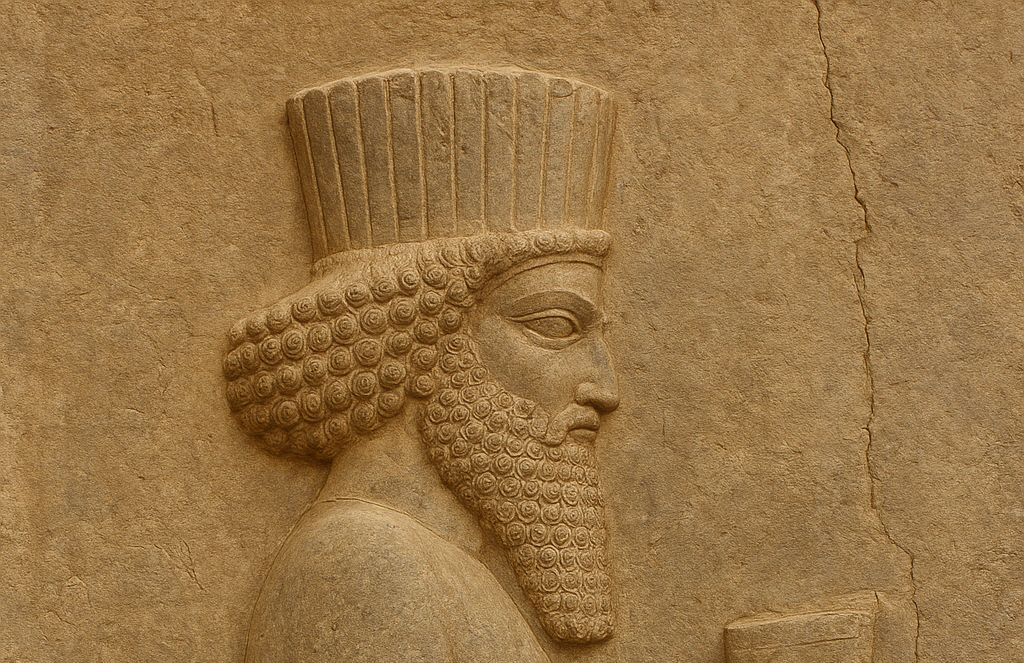
Cyrus the Great’s conquests created the largest empire the world had seen, but his true innovation lay in governance. Unlike the Assyrians or Babylonians, who imposed cultural uniformity through force, Cyrus championed integration and pluralism. As documented in the Cyrus Cylinder—a baked-clay artifact from 539 BCE, often hailed as the world’s first human rights charter—Cyrus restored temples, repatriated displaced peoples (including the Jews from Babylonian exile), and promoted ethical rule. He declared: “I am Cyrus, king of the world… I never let anyone terrorize any place… I took extra care that no one was terrorized.”
This vision manifested in:
Religious Freedom: Cyrus permitted local faiths to flourish, allowing Zoroastrian principles of tolerance and moral order to coexist with foreign traditions, fostering syncretism.
Administrative Coherence: The empire’s 20+ satrapies (provinces) were linked by the Royal Road, a 2,700 km network from Susa to Sardis, with relay stations every 20–30 km. This infrastructure, as described by Herodotus in Histories (V.52–53), enabled messengers to traverse the empire in days, carrying not just decrees but ideas, scrolls, and artifacts.
Cultural Diplomacy: Persian envoys, including Magi priests, engaged with foreign courts, exchanging knowledge. Xenophon’s Cyropaedia portrays Cyrus as a model ruler whose ethical leadership inspired loyalty across cultures.
Persia’s empire thus became Eurasia’s “nervous system,” channeling Zoroastrian concepts like Asha (cosmic order) and the ethical struggle between good (Spenta Mainyu) and evil (Angra Mainyu) to regions ripe for philosophical growth.
2. Magi and the Transmission of Knowledge
The Magi, Zoroastrian priests from the Median tribe, were pivotal in this exchange. As custodians of the Avesta (Zoroastrian scriptures), they specialized in:
Ritual and Astrology: Maintaining sacred fires (Atar) and interpreting celestial omens, akin to divinatory practices in the I Ching.
Philosophical Custodianship: Teaching moral dualism and the path to Frashokereti (cosmic renewal), emphasizing free will and ethical alignment.
Diplomatic Roles: Herodotus (Histories I.132) notes Magi accompanying Persian armies and delegations, advising on rituals and ethics.
Archaeological evidence, such as Persian inscriptions in Bactria (modern Afghanistan), shows Magi influencing local cultures. Eastward, through satrapies like Bactria and Sogdia, Magi ideas reached the Tarim Basin and western China. Scholars like Mary Boyce in Zoroastrians: Their Religious Beliefs and Practices (1979) argue that this transmission moralized emerging Chinese dualisms, transforming the amoral Yin-Yang into a framework with ethical undertones, as seen in Confucian “Heaven’s mandate” (Tianming).
Persia and the Eastern Silk Road Corridor
Pre-dating the Han-era Silk Road (c. 130 BCE), informal trade networks linked Persia to China as early as the 6th century BCE. Persian satrapies in Central Asia—Bactria, Sogdia, and Margiana—served as hubs.
Archaeological Evidence: In Xinjiang’s Tarim Basin, excavations since 2014 have uncovered Zoroastrian tombs dating to 2500 BCE or earlier, featuring fire altars, sun wheels, and winged figures symbolizing Fravashi (guardian spirits). As reported in Journal of Central Asian Archaeology (Francfort, 1989), these artifacts indicate Iranian migrants or traders introducing Zoroastrian iconography.
Sogdian Intermediaries: Sogdians, an Iranian people under Persian rule, were master merchants. Their colonies in China, as detailed in Christopher I. Beckwith’s Empires of the Silk Road (2009), carried Zoroastrian practices, including ossuaries for bone rituals and fire worship. By the Tang dynasty (618–907 CE), Sogdian Zoroastrian temples existed in Chang’an, but roots trace back to Achaemenid times.
Idea Flow: These networks transmitted divination methods, possibly influencing the I Ching’s hexagram system. Thomas McEvilley in The Shape of Ancient Thought (2002) suggests Indo-Iranian dualism shaped Chinese cosmology, with Asha’s emphasis on truth aligning with Dao’s natural order.
Moral Dualism Meets Yin–Yang
Zoroastrian dualism is ethical and progressive: Spenta Mainyu (creative spirit) battles Angra Mainyu (destructive force) toward ultimate good. In contrast, the I Ching’s Yin-Yang is cyclical and neutral. Yet, Persian influence likely infused morality into Chinese thought.
Historical Links: Zhou dynasty (1046–256 BCE) texts reference “Heaven” (Tian) as a moral force, echoing Asha. Benjamin Schwartz in The World of Thought in Ancient China (1985) notes possible Indo-Iranian borrowings via Central Asia.
Confucian Parallels: Confucius’ (551–479 BCE) emphasis on ritual (Li) and harmony mirrors Zoroastrian good thoughts/words/deeds.
Daoist Echoes: Lao Tzu’s Tao Te Ching advocates Wu Wei (non-action), akin to aligning with Asha without force. Discussions in scholarly forums suggest Zoroastrianism’s ethical dualism influenced Daoism’s development, providing a moral dimension to its harmony. Additionally, Zoroastrian influences extended to Northern Buddhism, which in turn interacted with Taoism.
The Axial Age Convergence
Robert Bellah in Religion in Human Evolution (2011) describes the Axial Age as humanity becoming “conscious of itself as a whole” through dialogue. Persia enabled this:
Western Connections: Influencing Hebrew monotheism (post-exilic Judaism shows Zoroastrian eschatology).
Central Nodes: Bactria’s hybrid cultures blended Iranian, Indian, and Scythian ideas.
Eastern Reach: Via Tarim mummies (Indo-European, per 2021 studies), showing early migrations carrying Zoroastrian motifs to China.
Fire as Symbol and Medium
Zoroastrian fire (Atar) embodies Asha and revelation. Similar motifs appear in Chinese bronzes and the I Ching’s Li trigram (☲), symbolizing clarity—parallels noted in R.C. Zaehner’s The Teachings of the Magi (1956).
Ethical and Political Innovation
Cyrus’ policies reflected Zoroastrian ethics: The Cylinder promotes justice, influencing global governance models.
Archaeological and Textual Evidence of Transmission
Expanded with recent findings:
Tarim Basin: 2,500-year-old Zoroastrian sites with fire altars, indicating early Persian cultural penetration.
Chinese Texts: Zhou references to moral Heaven, possibly from Indo-Iranian sources.
Bactrian Artifacts: Coins with celestial symbols.
Greek Accounts: Herodotus on Persian influence.
Sogdian Evidence: Tombs in China showing Zoroastrian adaptation, with Sasanian coins evidencing continued trade.
Mutual Exchanges: Iranian objects in Chinese tombs (Shandong, Guanzhou) from pre-Islamic times, and Persian settlements in Southeastern China during later periods, highlighting bidirectional influence.
Architectural Influences: Sassanian Persian aesthetics impacted Chinese architecture, as seen in motifs and designs.
Persia, Trade, and Knowledge Networks
The Royal Road and caravans accelerated idea flow; Magi as “traveling nodes” per Beckwith. Archaeological evidence from Iranian ports like Najirom shows Chinese artifacts, underscoring trade’s role in cultural diffusion.
Cyrus as the Axis of the Axial Age
Cyrus the Great was more than a conqueror; he was a cultural and spiritual axis. By creating infrastructure for exchange, protecting religious freedom, and projecting Persian ethical dualism across Eurasia, he enabled cross-fertilization that shaped:
The I Ching and Daoist philosophy, infusing moral elements into cyclical duality.
Confucian moralism, with echoes of Asha’s order.
Early Greek logos and metaphysics.
Buddhist ethical and cosmological systems, influenced via Zoroastrianism’s reach to Northern Buddhism.
Persia stands at the center of the Axial Age not only geographically but spiritually—a bridge for the flame of Asha to reach distant horizons.
The Legacy of Persian Wisdom
The convergence of Zoroastrian Asha and Chinese Dao was not accidental. It was the product of:
Cyrus’ enlightened governance, which facilitated the exchange of ideas and knowledge across vast distances.
Magi emissaries and priests, who carried ethical dualism and divinatory practices eastward.
Trade, roads, and cross-cultural diplomacy, evidenced by artifacts like Sasanian coins and Iranian motifs in Chinese tombs.
Archaeological and textual legacies of Indo-Iranian thought, including Persian settlements and architectural influences that persisted into later dynasties.
When we study the I Ching alongside the Gathas, we see the reflection of a shared universe: one governed by order, discernment, and participation in a living cosmos. Persia, through its empire and ethical vision, made this reflection possible.
As Thomas McEvilley observes: “Persia was the highway along which the world’s first universal wisdom traveled, connecting the East and West in thought long before globalization was a word.” Thus, Cyrus’ empire was more than political; it was an Axis of Enlightenment, where Asha’s fire illuminated the path of human consciousness from Persia to China—shaping the moral and philosophical landscape of the Axial Age and beyond.
From Ancient Exchanges to Modern Global Thought
The Persian conduit’s influence did not end with the Axial Age; it reverberates in contemporary philosophy and cultural studies. Modern scholars, such as those examining Sassanian architectural aesthetics on Chinese art, highlight how Persian motifs—such as intricate geometric patterns and fire symbolism—integrated into Tang and Ming dynasty designs, symbolizing a lasting aesthetic and spiritual fusion. Archaeological finds, including Persian jewelry and gemstones from Ming sites, underscore ongoing trade’s role in cultural blending.
In global religious studies, Zoroastrianism’s ethical dualism is seen as a precursor to moral frameworks in Taoism and beyond. For instance, the emphasis on harmony in Daoism may owe a debt to Zoroastrian concepts transmitted via Central Asian networks, as debated in academic forums. This legacy informs today’s interfaith dialogues, where themes of cosmic order and ethical balance address modern challenges like environmental harmony and global ethics.
Ultimately, Cyrus’ vision of a tolerant, interconnected world prefigures our globalized era, reminding us that ancient highways of thought continue to guide humanity’s quest for wisdom.
Select References
Boyce, Mary. Zoroastrians: Their Religious Beliefs and Practices. Routledge, 1979.
Beckwith, Christopher I. Empires of the Silk Road. Princeton UP, 2009.
McEvilley, Thomas. The Shape of Ancient Thought. Allworth, 2002.
Bellah, Robert N. Religion in Human Evolution. Harvard UP, 2011.
Herodotus. Histories. Trans. Aubrey de Sélincourt, Penguin, 1954.
Zaehner, R. C. The Teachings of the Magi. Oxford UP, 1956.
Jaspers, Karl. The Origin and Goal of History. Yale UP, 1953.
Francfort, Henri-Paul. “Prehistoric Central Asian Religious Motifs.” Journal of Central Asian Archaeology, 1989.
Schwartz, Benjamin. The World of Thought in Ancient China. Harvard UP, 1985.
Brown, Brian Arthur. The Seven Testaments of World Religion. Rowman & Littlefield, 2020.
Farrokh, Kaveh. “Impact of Iranian Culture on East Asia.” 2020. (Online resource)
“Truth is the fire that burns unseen — yet all who live by it shine.”
The Eternal Light and the Eternal Change
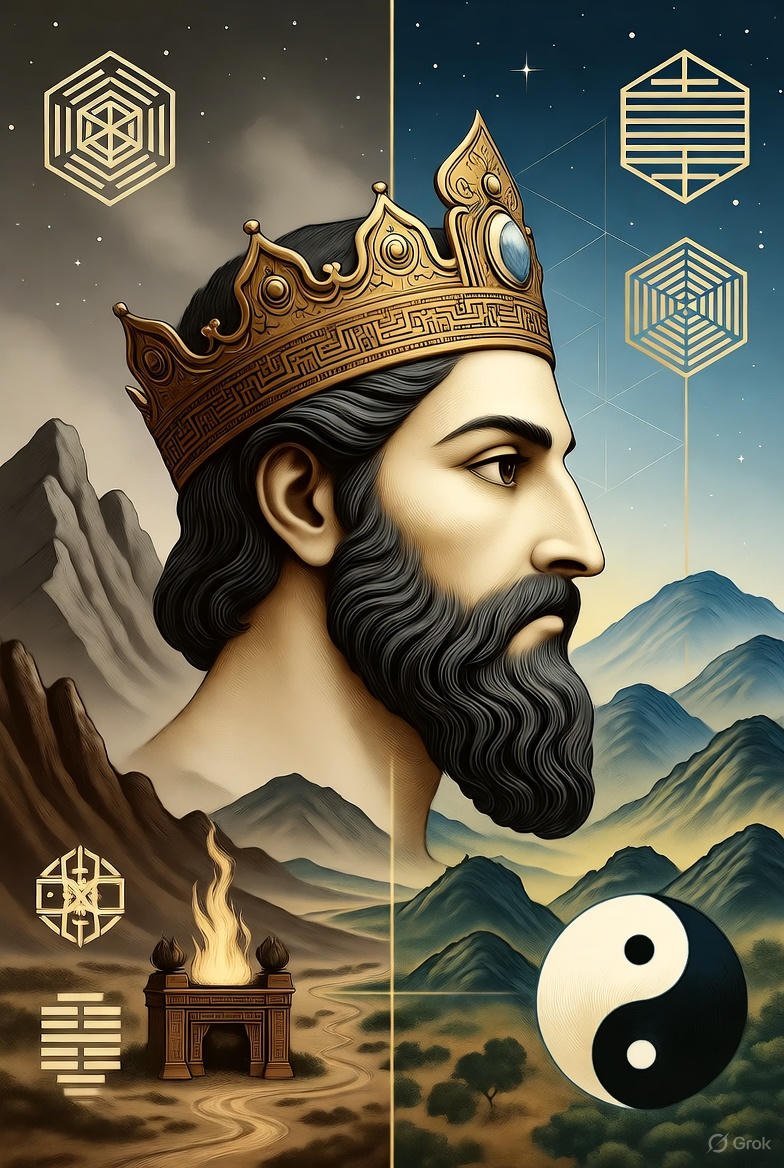
In the sanctum of the Fire Temple, the sacred flame of Atar never dies. It burns not as mere symbol but as living presence — a mirror of Asha, the divine order that holds all things in truth. Far to the East, in the quiet meditations of the ancient Chinese sages, another vision arose: a universe in ceaseless transformation, governed by the Way — Dao, the ineffable harmony that moves all being.
Separated by mountains and centuries, Zoroastrian Persia and Taoist China both discovered the same eternal mystery: reality is not chaos but living order. Each sought the art of alignment — with Asha in Persia, with Dao in China — and through this alignment, found wisdom, purity, and peace.
This article explores the luminous parallels between these two world traditions — the Avestan revelation of Asha and the Book of Changes (I Ching) — showing that beneath different tongues, they sing of one cosmic truth.
Asha and Dao: The Flame and the Flow
At the heart of Zoroastrianism stands Asha — truth, order, and the right way of being. Asha Vahishta (“Best Truth”) is both a moral law and a cosmic rhythm. To walk in Asha is to participate in Ahura Mazda’s own consciousness: “He who upholds Asha, upholds the world” (Yasna 31.19).
In the I Ching, that same universal harmony appears as the Dao — “the Way that cannot be named” (Tao Te Ching 1). The Dao is the underlying order of heaven, earth, and humanity — the ceaseless flow through which all things rise and fall.
Zarathustra spoke of Asha as an active moral energy, while Lao Tzu spoke of Dao as a spontaneous natural flow — yet the deeper essence is shared: a self-existent order that transcends human invention.
The ancient Chinese philosopher Zhang Zai expressed it thus:
“Heaven is my father and Earth is my mother, and I, this tiny being, dwell between them.” (Zhang Zai, Western Inscription, c. 11th century)
This mirrors the Zoroastrian triad of Ahura Mazda (Heaven), Spenta Armaiti (Earth), and humanity as the bridge — the conscious partner between the two.
The Law of Truth and the Pattern of Heaven
In Zoroastrian cosmology, the universe unfolds as the struggle between Asha (Truth) and Druj (Lie). All goodness, light, and wisdom flow from Asha; all corruption, ignorance, and decay arise from Druj. The human soul is free to choose — its every thought, word, and deed becomes a spark in that cosmic battle.
The I Ching expresses this through Li (理), the intrinsic pattern of the world. Harmony comes when human action reflects Li; disharmony when one acts against it. The Sage does not resist change but moves with it — the moral equivalent of “good thoughts, good words, good deeds.”
Thus, both traditions proclaim that the universe is not morally indifferent. There is a way to live that preserves order and light — and another that multiplies shadow.
Mary Boyce notes that “Zoroastrianism was the first religion to make ethics central to cosmology” (Zoroastrians: Their Religious Beliefs and Practices, 1979, p. 19). Similarly, sinologist Benjamin Schwartz observes that early Taoism sought “a moral correspondence between cosmic order and human virtue” (The World of Thought in Ancient China, 1985). Truth, then, is not abstraction; it is participation in the rhythm of the universe.
Yin–Yang and the Twin Spirits
Where Zoroastrianism envisions the cosmic polarity of Spenta Mainyu (the Bounteous Spirit) and Angra Mainyu (the Hostile Spirit), the I Ching structures existence on Yin and Yang — the receptive and the creative, the dark and the bright.
In the Gathas, Zarathustra declares:
“In the beginning there were two primal Spirits, Twins, each of his own purpose — one good, the other evil. And between these two, the wise choose aright.” (Yasna 30.3)
In the I Ching, the same binary rhythm shapes the 64 hexagrams — six stacked lines, each either solid (Yang) or broken (Yin). Their combinations form the symbolic code of the cosmos, depicting the dance of opposites through all change.
Yet here lies the great divergence and the great completion:
For the I Ching, Yin and Yang are complementary and morally neutral.
For Zoroastrianism, the duality is ethical and teleological — aimed toward Frashokereti, the final renewal where good triumphs and order is restored.
Seen together, they form a whole vision: the I Ching gives the structure of duality; Zoroastrianism gives it purpose.
Heaven and Earth, Fire and Devotion
The first two hexagrams of the I Ching encapsulate the cosmos:
Qian (☰ ☰) – The Creative: pure Yang, Heaven, initiative, strength.
Kun (☷ ☷) – The Receptive: pure Yin, Earth, devotion, yielding.
Their interplay generates all things.
In the Zoroastrian worldview, these same principles appear as Ahura Mazda (the creative intelligence) and Spenta Armaiti (Holy Devotion, Earth). Armaiti’s virtue is humility, obedience, and love — the feminine aspect of creation that receives Mazda’s light.
Thus, the first pair of the I Ching mirrors the first cosmic pair of Zoroastrianism. Heaven initiates, Earth responds. The divine will radiates; the world reflects. Creation is relationship — not mechanical causation but living communion.
Fire and Illumination
Fire (Atar) in Zoroastrianism is the visible expression of divine truth — not worshiped as a god but revered as the medium of Asha. The fire temple represents both moral purity and cosmic awareness; its flame consumes falsehood and reveals the hidden.
In the I Ching, the trigram Li (☲) signifies Fire, Clarity, and Illumination. Hexagram 30, “Li – The Clinging Fire,” reads:
“That which is bright rises twice, giving light and clarity.”
Fire, in both traditions, is not destruction but revelation — the energy that transforms ignorance into insight.
When the Zoroastrian priest tends the sacred flame, and when the Taoist sage gazes into the oracle lines of fire and water, both are engaging in the same sacred act: reading the universe through light.
The Sage and the Ashavan
The I Ching describes the Sage — one who understands the timing of Heaven and the measure of the Earth, acting without force (Wu Wei). The Sage’s virtue is stillness amid movement, responsiveness without resistance.
Zoroastrianism names its counterpart the Ashavan — “possessor of Asha,” one whose thoughts, words, and deeds are perfectly aligned with truth.
In later Avestan texts, the Ashavan becomes archetypal in the Saoshyant, the future world-renewer who will lead creation to its final perfection. Thus, both traditions see the perfected human as mirror of cosmic order — not a passive observer but an active participant in divine evolution.
Transformation and Frashokereti
Change lies at the core of both cosmologies. The very title I Ching (易經) means Book of Change. Every hexagram describes a moment in the eternal process — birth, decay, return. Yet within the flow, wisdom is possible: to act at the right time, in the right way, with clarity.
Zoroastrianism, too, views creation as dynamic, moving toward Frashokereti, the final restoration. In this renewal, all lies are burned away, and even the souls of the wicked are purified in molten metal — a vision echoed in the I Ching’s Hexagram 49, “Revolution (Ge),” whose symbol is Fire in the Lake: purification through transformation.
Both see transmutation as salvation — fire as the instrument of renewal.
Geometry of the Cosmos
The I Ching’s 64 hexagrams are not random symbols; they are the binary map of reality — 2⁶ combinations encoding every state of potential. Modern scholars such as Gottfried Wilhelm Leibniz recognized in them the first expression of binary mathematics.
Zoroastrian cosmology likewise unfolds in structured layers: the seven creations (sky, water, earth, plants, animals, man, and fire) and the seven Amesha Spentas, divine intelligences that uphold them. The pattern is fractal, an ordered multiplicity within unity.
Both systems intuit what modern physics calls a “quantized universe”: opposites (light/dark, good/evil, Yang/Yin) generating diversity through binary expression. The difference is moral orientation — Zoroastrianism affirms that the pattern itself is good, for it emanates from Ahura Mazda.
The Speaking Cosmos
To both the Magus and the Taoist diviner, the universe is alive and communicative. For the Zoroastrian, sacred fire answers prayers through its movement and glow; for the Taoist, the oracle speaks through coins or yarrow stalks.
In both, divination is not superstition but communion — the belief that the cosmos is conscious and participatory. The I Ching calls it synchronicity; Zoroastrianism calls it Asha’s reflection.
The universe, they agree, is not a machine but a mind — an intelligent order that responds to moral intention.
Toward One Light: Asha and Dao as Universal Revelation
When seen together, Asha and Dao form a single revelation of cosmic order viewed from two horizons:
Zoroastrianism: The universe is moral; choice accelerates divine perfection.
Taoism: The universe is harmonious; alignment restores natural balance.
One emphasizes ethical decision (the will to good), the other spiritual resonance (the art of balance). Together they teach responsible harmony — right action flowing effortlessly from truth.
Ahura Mazda’s command “Choose aright” becomes Lao Tzu’s wisdom “Act without striving.” Both call humanity to the same path: conscious participation in the divine rhythm.
Frashokereti and the Great Renewal
In Zoroastrian prophecy, the end of time brings Frashokereti — the world’s transfiguration by fire and truth. In the I Ching’s cosmology, time is cyclic, yet renewal follows every dissolution. Hexagram 24, “Return,” states: “After darkness, light.”
When seen together, these are not contradictions but dimensions: Zoroastrianism gives time a goal; the I Ching gives it a rhythm. The universe thus both revolves and evolves — returning and ascending at once, like a spiral flame.
The Convergence of the Ages
Modern scholars have begun to recognize the Axial Age (c. 800–300 BCE) as the cradle of all major world wisdoms — Zoroaster, Lao Tzu, Confucius, the Buddha, and the Greek philosophers. The historian Karl Jaspers described it as “the period when man became conscious of being as a whole” (The Origin and Goal of History, 1949).
Persia, under Cyrus the Great and Darius, linked these worlds through a vast network of trade and cultural exchange stretching from the Indus to the Aegean. The Magi, Persian priests of fire, traveled with caravans to India and Central Asia; from there, echoes of their cosmology reached China along early trade routes.
Thomas McEvilley writes:
“Persia’s unique position made her the transmitter of religious and philosophical currents between the Eastern and Western zones of civilization.” (The Shape of Ancient Thought, 2002, p. 185*)
The spiritual resonance between Asha and Dao is therefore not coincidence but communion through history — the shared awakening of humanity’s moral consciousness.
Truth Beyond Boundaries
The I Ching teaches that change is constant; Zoroastrianism teaches that truth is constant. Between these poles lies the secret of creation: truth within change.
To live as Ashavan or as Sage is to hold both truths at once — to act in the world without losing one’s alignment to the eternal. In every transformation, there is a point of stillness; in every stillness, the seed of new transformation.
Thus, Asha and Dao are not two paths but two wings of one cosmic bird — one directed toward moral perfection, the other toward natural harmony.
The Flame That Flows
The sacred fire of Asha and the flowing Dao of Heaven are one revelation seen through different elements — fire and water, light and motion. Both proclaim: the cosmos is intelligent, moral, and alive.
When humanity lives in truth, the universe responds with harmony. When humanity falls into falsehood, the world mirrors our chaos.
To follow Asha is to walk the Way. To follow the Way is to live in Truth.
So may the seeker, whether before the altar flame or the open oracle, remember:
“The Fire and the Flow are One — Asha and Dao are but two names for the order that sustains all worlds.”
And may the light of Asha guide every step, until all creation shines again in perfect order — Frashokereti fulfilled, and the Book of Changes complete.
Select References
Boyce, Mary. Zoroastrians: Their Religious Beliefs and Practices. Routledge, 1979.
McEvilley, Thomas. The Shape of Ancient Thought: Comparative Studies in Greek and Indian Philosophies. Allworth, 2002.
Beckwith, Christopher I. Empires of the Silk Road. Princeton UP, 2009.
Bellah, Robert N. Religion in Human Evolution. Harvard UP, 2011.
Schwartz, Benjamin. The World of Thought in Ancient China. Harvard UP, 1985.
Legge, James. The I Ching: Book of Changes. Dover Ed., 1963.
Zaehner, R. C. The Teachings of the Magi. Oxford UP, 1956.
Jaspers, Karl. The Origin and Goal of History. Yale UP, 1953.
In the annals of religious history, few transformations are as profound as the evolution of Judaism during and after the Babylonian Exile. This period marked a pivotal encounter between the ancient Hebrews and the Zoroastrian faith of the Persian Achaemenid Empire, leading to the infusion of what can be termed “sacred knowledge” into Jewish theology. Zoroastrianism, with its emphasis on ethical dualism, angelic hierarchies, demonic forces, resurrection of the dead, and a final apocalyptic judgment, provided a rich tapestry of ideas that reshaped Judaism from a primarily ritualistic, temple-based religion into one with elaborate eschatological and metaphysical dimensions. This acquisition, however, was not a straightforward adoption but involved layers of historical manipulation, cultural reinterpretation, and ideological twisting—processes that culminated in the rise of the Pharisees, a sect that Jesus of Nazareth vehemently criticized for distorting God’s original word.
The Pharisees, emerging in the turbulent era of Hellenistic rule following Alexander the Great’s conquests, inherited and codified this sacred knowledge into an oral tradition that supplemented—and often superseded—the written Torah. Jesus’ rebukes, as recorded in the New Testament Gospels, paint a picture of religious leaders who prioritized human inventions over divine commandments, loading people with burdensome rules while neglecting justice, mercy, and faith. This essay delves into the timeline of events, from Cyrus the Great’s liberation of the Jews in 539 BCE to Jesus’ ministry around 27–33 CE, illustrating how Zoroastrian influences were acquired, manipulated, and institutionalized. We will explore key figures like Ezra, the propagandistic nature of the Book of Esther, Jewish alliances with Alexander, and the Pharisees’ dominance under Roman rule.
Central to this narrative is the concept of a “malice twist,” a term derived from Jesus’ accusations that the Pharisees nullified God’s word through their traditions (Mark 7:13). This twist involved reframing Zoroastrian concepts—such as the cosmic battle between good and evil—to assert Jewish exceptionalism as God’s “chosen people,” often at the expense of ethical universality. Historical scholarship supports this view, showing how post-exilic Judaism absorbed Persian ideas to survive empire, only to distort them for internal power dynamics. Interspersed throughout are ten quotes from Jesus that directly condemn this manipulation, alongside ten historical references that ground the analysis in scholarly evidence.
To fully appreciate this shift, one must understand Zoroastrianism’s foundational principles. Founded by the prophet Zoroaster (Zarathustra) around 1400–1200 BCE in ancient Iran, the religion posited Ahura Mazda as the supreme creator god, engaged in an eternal struggle against Angra Mainyu, the destructive spirit. Humans were called to choose the path of asha (truth and order) over druj (lie and chaos), with rewards in an afterlife paradise or punishment in hell. Angels (amesha spentas) and demons (daevas) mediated this dualism, and a final resurrection would usher in a renewed world. These ideas, absent or underdeveloped in pre-exilic Judaism, became integral post-Persia, but their integration was selective and self-serving.
This article, tailored for mazda.aeuua.com/—a platform dedicated to exploring Zoroastrian heritage and its global impacts—highlights the often-overlooked Persian contributions to Abrahamic faiths while critiquing the manipulations that followed. By examining this history, we gain insight into how sacred knowledge can be a double-edged sword: enlightening yet prone to distortion.
The Persian Liberation and Initial Acquisition of Zoroastrian Knowledge
The Babylonian Exile of 586 BCE, when King Nebuchadnezzar II razed the First Temple and exiled the Jewish elite to Babylon, shattered the foundations of ancient Judaism. Pre-exilic faith centered on the Jerusalem Temple as the dwelling place of Yahweh, with emphasis on sacrificial rituals, covenantal laws, and a this-worldly focus on prosperity or punishment in life. Concepts like a detailed afterlife, resurrection, or a cosmic adversary to God were minimal; Sheol was a shadowy underworld for all, not a place of judgment.
This changed dramatically with the rise of the Achaemenid Persian Empire. In 539 BCE, Cyrus the Great conquered Babylon and issued his edict, recorded on the Cyrus Cylinder, permitting exiled peoples—including the Jews—to return home and rebuild their temples. This act of tolerance was rooted in Zoroastrian principles: Cyrus viewed himself as an instrument of Ahura Mazda, promoting religious diversity to foster imperial stability. The biblical Book of Isaiah (45:1) even calls Cyrus God’s “anointed” (messiah), a remarkable acknowledgment that set the stage for cultural exchange.
During the two centuries of Persian rule (539–331 BCE), Jews absorbed Zoroastrian sacred knowledge through administrative, social, and religious interactions. Persian officials governed Yehud (the province of Judea), and Jewish leaders like Zerubbabel and Joshua rebuilt the Second Temple by 515 BCE under Darius I. Post-exilic prophets like Zechariah introduced visions of angels and a divine council, mirroring Zoroastrian amesha spentas—immortal beings embodying aspects of creation like truth and devotion.
This acquisition was motivated by survival: Exile had prompted theological reflection on suffering, and Zoroastrian dualism offered an explanation—evil as an active force, not just divine wrath. Books like Job and Daniel reflect this, with Satan evolving from a court accuser to a malevolent entity, akin to Angra Mainyu. Resurrection appears explicitly in Daniel 12:2: “Multitudes who sleep in the dust of the earth will awake: some to everlasting life, others to shame and everlasting contempt.” Such ideas were alien to earlier Hebrew texts but aligned with Zoroastrian eschatology, where the dead rise for judgment at Frashokereti (the renovation of the world).
However, this integration involved manipulation: Jewish scribes reframed these borrowings as inherent to their tradition, enhancing monotheism while downplaying foreign origins. This set a precedent for the Pharisees’ later oral laws, which added interpretive layers to scripture.
Jesus’ Quote 1: In Matthew 23:27-28, Jesus declares, “Woe to you, teachers of the law and Pharisees, you hypocrites! You are like whitewashed tombs, which look beautiful on the outside but on the inside are full of the bones of the dead and everything unclean. In the same way, on the outside you appear to people as righteous but on the inside you are full of hypocrisy and wickedness.” This metaphor critiques the facade of piety hiding corrupted knowledge, much like how Zoroastrian influences were “whitewashed” into Judaism without acknowledging their transformative impact.
To expand on this, consider the social context: Persian tolerance allowed Jewish autonomy, but it also encouraged syncretism. Aramaic, the imperial language, became the Jewish vernacular, facilitating idea exchange. Artifacts like the Persepolis Fortification Tablets show multicultural administration, where Jews served in Persian bureaucracy, further exposing them to Zoroastrian ethics.
Historical reference 1 supports this: Boyce details how Achaemenid Zoroastrianism influenced Jewish angelology, providing a framework for post-exilic theology.
Historical reference 2: Yamauchi examines Persian-Judaic interactions, arguing that while direct evidence is sparse, the chronological alignment of theological developments is compelling.
Ezra’s Reforms: Compiling and Twisting the Torah
By the mid-5th century BCE, under Artaxerxes I, Ezra the scribe was commissioned to lead a delegation to Jerusalem in 458 BCE. Described in the Book of Ezra as a “teacher well versed in the Law of Moses,” he is traditionally credited with compiling or redacting the Torah into its canonical form. This process was deeply influenced by Persian sponsorship: Artaxerxes’ letter (Ezra 7) granted Ezra authority to enforce Jewish law, funded by the royal treasury, reflecting Zoroastrian emphasis on royal justice.
Ezra’s reforms introduced stricter monotheism, but with Zoroastrian undertones. For instance, the emphasis on purity and separation from foreigners (Ezra 9-10) echoes Zoroastrian rituals against pollution. The Torah’s final redaction likely incorporated dualistic elements, such as the adversarial role of Satan in Chronicles, absent in parallel pre-exilic accounts.
This was a deliberate twist: Ezra, as a Persian agent, unified the community by blending Mosaic law with imperial ethics, manipulating history to portray the Torah as timeless rather than evolved. Nehemiah’s later reforms (c. 444 BCE), rebuilding Jerusalem’s walls, reinforced this, adding communal readings of the law that foreshadowed Pharisaic interpretations.
Expanding on Ezra’s role, scholars debate the extent of his redaction, but evidence from the Dead Sea Scrolls shows variations in texts, suggesting post-exilic editing. This manipulation created a “sacred knowledge” that empowered scribes over priests, laying groundwork for Pharisaic authority.
Jesus’ Quote 2: In Mark 7:6-7, Jesus states, “He replied, ‘Isaiah was right when he prophesied about you hypocrites; as it is written: “These people honor me with their lips, but their hearts are far from me. They worship me in vain; their teachings are merely human rules.”‘” This directly indicts the substitution of divine commands with human traditions, mirroring Ezra’s Zoroastrian-infused reforms that prioritized ritual over heart.
Historical reference 3: Friedman analyzes biblical authorship, positing Ezra as a key redactor who synthesized sources with Persian influences.
To delve deeper, Zoroastrian sacred knowledge included concepts like the Saoshyant (savior figure), paralleling messianic expectations in post-exilic prophecy. Jews adapted this to hope for restoration, but twisted it into exclusive chosenness, excluding Samaritans and others.
The Book of Esther: Propaganda and Ideological Twist
The Book of Esther, purportedly set during Xerxes’ reign (486–465 BCE), but likely composed in the 4th–3rd century BCE, stands as a prime example of historical manipulation. Amid documented Persian tolerance, the story invents a genocide plot by Haman, foiled by Esther and Mordecai, establishing Purim. This narrative clashes with Zoroastrian ideals of justice, portraying the king as fickle and officials as malicious.
Scholars classify it as a historical novella or diaspora propaganda, exaggerating threats to foster unity and justify retaliation. Dualistic motifs—reversal of fate from doom to triumph—borrow from Zoroastrian eschatology but twist them for ethnic vengeance, with 75,000 enemies slain (Esther 9:16).
This propaganda reinforced “chosen people” ideology, manipulating reality to depict Persians as antagonists despite their benevolence. Purim’s carnival-like reversal echoes Zoroastrian Nowruz but serves Jewish exceptionalism.
Jesus’ Quote 3: In Matthew 15:3, Jesus asks, “And why do you break the command of God for the sake of your tradition?” This questions traditions like Purim that added non-Mosaic elements, nullifying core ethics.
Historical reference 4: Berlin interprets Esther as comedic satire, highlighting its propagandistic function in diaspora identity.
Further analysis reveals Greek influences in the story’s structure, blending with Zoroastrian themes during Hellenistic times, showing ongoing acquisition and twist.
Jewish Support for Alexander and Hellenistic Shifts
Alexander’s conquest of Persia in 331 BCE shifted rule to the Greeks, with Jews reportedly aiding him, as per Josephus. This era blended Zoroastrian residues with Hellenism, producing apocalyptic texts like Daniel, rich in dualistic visions of empires as beasts.
The Maccabean Revolt (167–160 BCE) against Antiochus IV’s Hellenization crystallized resistance, birthing sects like the Pharisees, who preserved Zoroastrian-derived resurrection against Sadducean denial.
This support for Alexander was opportunistic, twisting sacred knowledge to navigate new powers.
Jesus’ Quote 4: In Luke 11:46, Jesus says, “And you experts in the law, woe to you, because you load people down with burdens they can hardly carry, and you yourselves will not lift one finger to help them.” This condemns the heavy rules from such shifts.
Historical reference 5: Tcherikover explores Jewish-Hellenistic dynamics, noting adaptation of Persian ideas for survival.
The Emergence of the Pharisees: Codifying the Twist
The Pharisees, “separated ones,” arose post-Maccabees, emphasizing oral Torah to interpret scripture rigidly, incorporating Zoroastrian angelology and eschatology.
They dominated synagogues, enforcing purity and resurrection, but this codified the twist into elitism.
Historical reference 6: Josephus describes their popularity and interpretive role.
Jesus’ Quote 5: In Matthew 23:13, “Woe to you, teachers of the law and Pharisees, you hypocrites! You shut the door of the kingdom of heaven in people’s faces.”
Under Rome (63 BCE–70 CE), they wielded influence, plotting against Jesus.
Jesus’ Quote 6: Matthew 23:23, “Woe to you… you have neglected the more important matters of the law—justice, mercy and faithfulness.”
More on Pharisees: Their “fences” around law, like handwashing, echoed Zoroastrian purity but burdened the poor.
Jesus’ Ministry: Exposing the Manipulation
Jesus’ teachings exposed this as hypocrisy, advocating inner purity over external rules.
Historical reference 8: Ehrman traces afterlife beliefs to Zoroastrian roots, which Pharisees defended.
Jesus’ Quote 7: Mark 7:13, “Thus you nullify the word of God by your tradition…”
Historical reference 9: Sievers analyzes Hasmonean origins of Pharisaic support.
Jesus’ Quote 8: Matthew 23:15, “Woe to you… you make them twice as much a child of hell as you are.”
In confrontations, Jesus healed on Sabbath, challenging twisted laws.
Further Critiques and Historical Parallels
Purity laws, influenced by Zoroastrian hygiene, became exclusionary under Pharisees.
Historical reference 10: Porten on Elephantine papyri shows early syncretism.
Jesus’ Quote 9: Luke 11:52, “Woe to you experts in the law, because you have taken away the key to knowledge.”
Jesus’ Quote 10: Matthew 23:25, “Woe to you… inside they are full of greed and self-indulgence.”
Additional parallels: Zoroastrian fire temples vs. Jewish altar; both emphasized ethical living, but Pharisees twisted to legalism.
Conclusion
The Pharisees acquired sacred knowledge through Persian Zoroastrianism, manipulated via Ezra's reforms, Esther's propaganda, and Hellenistic adaptations, culminating in traditions Jesus condemned. This history, from Cyrus to Christ, reveals how noble ideas can be twisted for power. For mazda.aeuua.com/ readers, it underscores Zoroastrianism's enduring legacy, urging reflection on authentic faith amid distortions.
Works Cited
Boyce, Mary. A History of Zoroastrianism. Vol. 2, Under the Achaemenians, Brill, 1982.
Yamauchi, Edwin M. Persia and the Bible. Baker Book House, 1990.
Friedman, Richard Elliott. Who Wrote the Bible? Perennial Library, 1989.
Tcherikover, Victor. Hellenistic Civilization and the Jews. Translated by S. Applebaum, Jewish Publication Society of America, 1959.
Josephus, Flavius. The Antiquities of the Jews. Translated by William Whiston, Various editions, circa 93 CE.
Levine, Amy-Jill. The Misunderstood Jew: The Church and the Scandal of the Jewish Jesus. HarperSanFrancisco, 2006.
Ehrman, Bart D. Heaven and Hell: A History of the Afterlife. Simon & Schuster, 2020.
Sievers, Joseph. The Hasmoneans and Their Supporters: From Mattathias to the Death of John Hyrcanus I. Scholars Press, 1990.
Porten, Bezalel, et al. The Elephantine Papyri in English: Three Millennia of Cross-Cultural Continuity and Change. Brill, 1996.
The Holy Bible. New International Version, Zondervan, 2011. (For all Jesus quotes)
Detailed Timeline: Zoroastrian Influences on Judaism and the Rise of the Pharisees
This expanded timeline provides a comprehensive, illustrated view of the key events, incorporating sub-details from historical sources. It highlights the acquisition of Zoroastrian “sacred knowledge” (e.g., dualism, angels/demons, resurrection, eschatology) during the Persian period, its manipulation through post-exilic reforms and propaganda, the Hellenistic shifts, the emergence of the Pharisees as codifiers of these ideas, and Jesus’ criticisms as a “malice twist” on God’s word. Dates are approximate based on scholarly consensus, with sub-events for depth. This can be inserted into the article as a visual aid, perhaps as a table or infographic.
Date/Period
Event and Sub-Events
Detailed Description and Ideological Shift (Including Malice Twist)
c. 1500–1000 BCE (varied estimates; traditional 1400–1200 BCE)
Lifetime of Zoroaster (Zarathustra) and founding of Zoroastrianism
Zoroaster, a prophet in ancient Iran, reforms Indo-Iranian religion into Zoroastrianism, introducing monotheistic worship of Ahura Mazda as supreme creator, ethical dualism (Ahura Mazda vs. Angra Mainyu, good vs. evil), angelic hierarchies (amesha spentas as immortal beings embodying truth, devotion, etc.), demonic forces (daevas), resurrection of the body, final judgment (Frashokereti, world renovation), paradise (from Avestan pairidaeza), hell, and apocalyptic end times. Sub-events: Composition of the Gathas (Zoroaster’s hymns, c. 1200 BCE), emphasizing free will and ethical choice (asha vs. druj). Ideological shift: Establishes foundational “sacred knowledge” later adopted by Judaism during Persian contact; no malice twist yet, but sets stage for Jewish manipulation to frame their monotheism as superior. This core remained stable in Achaemenid Zoroastrianism, promoting tolerance but clashing with Esther’s portrayal of Persian malice.
597–586 BCE
Babylonian Exile begins
Sub-events: First deportation (597 BCE) of King Jehoiachin and elite; fall of Jerusalem and Temple destruction (586 BCE) by Nebuchadnezzar II. Jews exposed to Mesopotamian ideas in Babylon, but pre-exilic Judaism lacks strong dualism, resurrection, or detailed afterlife (Sheol as vague underworld). Ideological shift: Trauma prompts theological reflection on evil/suffering; sets stage for Zoroastrian dualism to explain exile as cosmic battle, not just divine punishment. Malice twist precursor: Jews begin reframing history to preserve identity amid foreign rule.
539–538 BCE
Cyrus the Great conquers Babylon; issues Edict of Cyrus
Sub-events: Cyrus Cylinder (539 BCE) proclaims restoration of temples/exiles across empire; biblical edict (538 BCE) allows Jews to return, rebuild Temple (Ezra 1; Isaiah 44:28–45:1 calls Cyrus “anointed”). Zoroastrian king views self as Ahura Mazda’s agent for justice/tolerance. Ideological shift: Direct contact infuses Zoroastrian tolerance, angelic messengers (e.g., Isaiah’s visions), messianic hopes; Jews adopt dualism to align with benefactors, twisting God’s sovereignty into empire propaganda. Malice twist: Portrays foreign king as messiah, laying groundwork for hypocritical elitism Jesus critiques.
538–515 BCE
First return from exile; Second Temple rebuilt
Sub-events: Sheshbazzar/Zerubbabel leads ~50,000 returnees (538 BCE); construction starts (536 BCE), halted by opposition, resumes under Darius I (520 BCE via Haggai/Zechariah prophecies), completed/dedicated (515 BCE, Ezra 6). Ideological shift: Post-exilic texts like Zechariah (c. 520–518 BCE) introduce angelic visions/council, paralleling amesha spentas; resurrection hints in Isaiah 26 (post-exilic). Malice twist: Embeds Zoroastrian eschatology for hope, corrupting simple faith with cosmic elements for control, as seen in initial priestly dominance.
c. 483–473 BCE (events; composition c. 400–300 BCE)
Events of the Book of Esther; Purim established
Sub-events: Set in Susa; banquet (3rd year Xerxes, 483 BCE), Haman’s plot (7th year, 479 BCE), edicts/reversals (12th year, 474 BCE), Jews defeat enemies (13th Adar, 473 BCE), Purim instituted. Composition likely Hellenistic for diaspora. Ideological shift: Dualistic motifs (good vs. evil reversal) from Zoroastrianism, but twists Persian tolerance into propaganda of hostility; promotes chosenness/ethnic revenge. Malice twist: Fictionalizes history to justify non-Mosaic festival, amplifying elitism Jesus condemns as human traditions overriding commands.
458 BCE
Ezra arrives in Jerusalem; Torah reforms
Sub-events: 7th year Artaxerxes I; Ezra, with royal letter (Ezra 7), teaches Torah, enforces mixed marriage bans (Ezra 9–10), reads law publicly (Nehemiah 8). Likely redacts Torah, incorporating Persian administrative style. Ideological shift: Integrates Zoroastrian ethics (purity, justice) into stricter monotheism; Satan as adversary in Job/Chronicles (c. 450 BCE). Malice twist: “Writes” Bible with foreign elements, centralizing power in scribes, foreshadowing Pharisaic oral laws as hypocritical burdens.
445–432 BCE
Nehemiah’s governorship and reforms
Sub-events: 20th year Artaxerxes; rebuilds walls (445 BCE, Nehemiah 2–6), enforces Sabbath/tithes (Nehemiah 13), supports Ezra’s law reading. Sub-events include census, covenant renewal. Ideological shift: Emphasizes personal piety/eschatology from Zoroastrianism; population ~30,000 in Yehud. Malice twist: Consolidates identity with rigid rules, corrupting community into exclusionary elitism.
333–332 BCE
Alexander the Great conquers Persian Empire and Judea
Sub-events: Battles Issus (333 BCE), Tyre/Gaza (332 BCE); Josephus claims Alexander visits Jerusalem, bows to High Priest (Antiquities 11.8). Ideological shift: Shift to Hellenistic rule reinforces Zoroastrian embeds (e.g., apocalyptic in Daniel, c. 165 BCE but set Persian); Jews support Alexander opportunistically. Malice twist: Further dilutes pure faith with syncretism, leading to sectarian divisions.
301–198 BCE
Ptolemaic rule over Judea
Sub-events: After Alexander’s death (323 BCE), Ptolemies control; Septuagint translation (c. 3rd century BCE) for Alexandrian Jews. Ideological shift: Hellenization blends with Persian influences; elite adopt Greek, commoners resist. Malice twist: Cultural pressures amplify twisted chosenness narratives.
198–167 BCE
Seleucid rule; lead to Maccabean Revolt
Sub-events: Antiochus III seizes (198 BCE); Antiochus IV (175–164 BCE) imposes Hellenization, desecrates Temple (167 BCE, “abomination of desolation”). Ideological shift: Apocalyptic literature (Daniel) amplifies Zoroastrian end-times/dualism to resist. Malice twist: Crisis births sects, twisting sacred knowledge into partisan tools.
167–140 BCE
Maccabean Revolt and Hasmonean independence
Sub-events: Mattathias sparks revolt (167 BCE); Judas Maccabeus rededicates Temple (164 BCE, Hanukkah); Jonathan high priest (152 BCE); Simon independence (140 BCE). Ideological shift: Pharisees emerge from scribes/sages, advocating oral law, resurrection, angels—Zoroastrian-derived vs. Sadducee denial. Malice twist: Amplifies influences into hypocritical traditions for dominance, as Jesus exposes.
140–37 BCE
Hasmonean dynasty
Sub-events: John Hyrcanus (134–104 BCE) expands, sides with Sadducees then Pharisees; Alexander Jannaeus (103–76 BCE) represses Pharisees, civil war; Salome Alexandra (76–67 BCE) favors Pharisees in Sanhedrin. Ideological shift: Pharisees gain influence, enforcing oral traditions/purity. Malice twist: Uses Zoroastrian ideas for political power, prioritizing self-serving rules.
63 BCE–70 CE
Roman period; Pharisees dominant
Sub-events: Pompey conquers (63 BCE), Herod rules (37 BCE–4 BCE), expands Temple; sects solidify—Pharisees control synagogues, teach resurrection/oral law. Ideological shift: Zoroastrian-derived eschatology central; Dead Sea Scrolls (c. 3rd century BCE–68 CE) show similar influences in Essenes. Malice twist: Enforces burdensome traditions, exploiting for status—Jesus’ direct target.
c. 27–33 CE
Ministry of Jesus; criticism of Pharisees
Sub-events: Jesus debates resurrection (Mark 12:18–27, sides with Pharisees but critiques hypocrisy); woes (Matthew 23, e.g., nullifying word for traditions). Ideological shift: Exposes Zoroastrian-rooted twists as malice—human rules over divine mercy. Malice twist: Culmination; Pharisees plot against Jesus (Matthew 12:14), embodying corrupted knowledge.
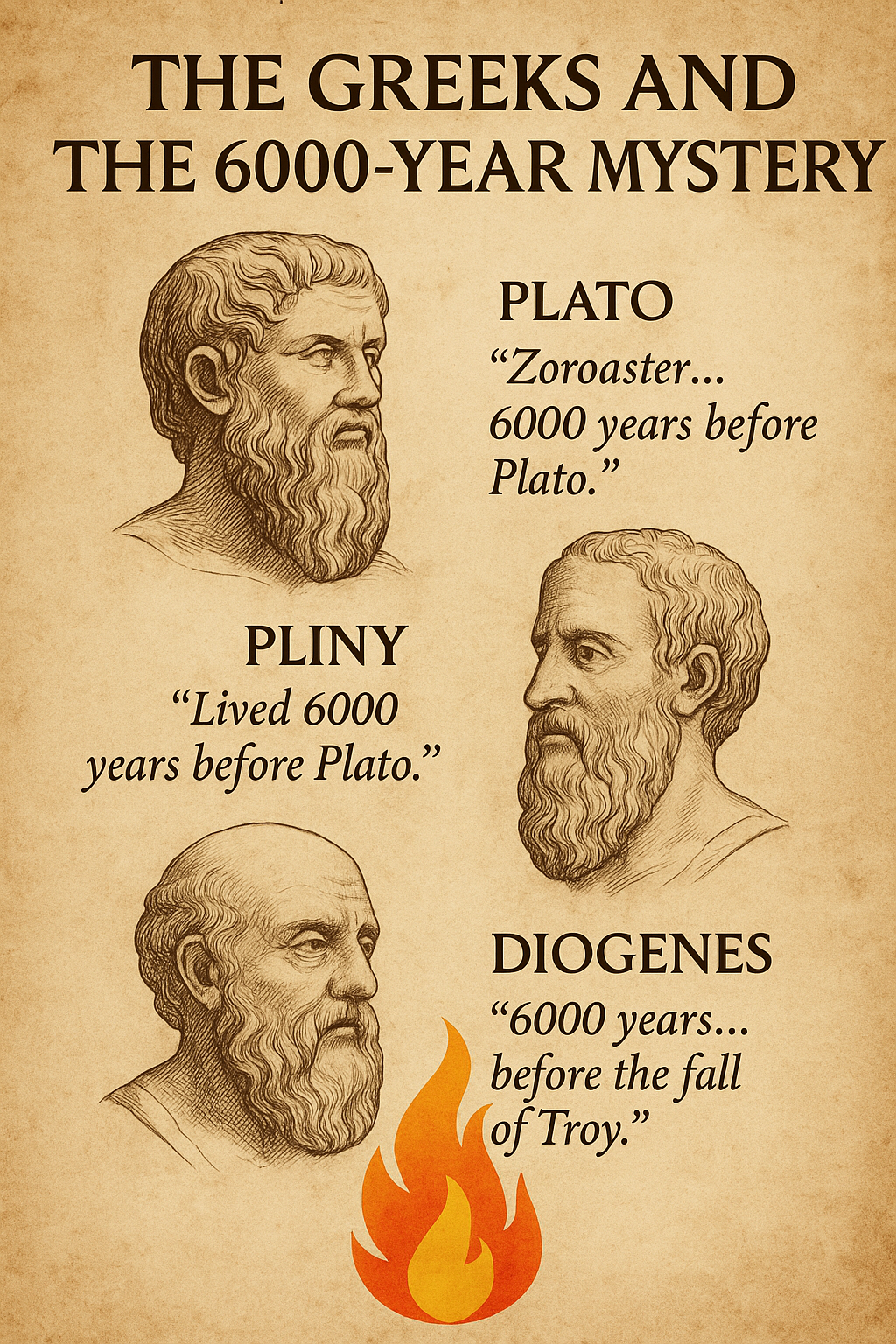
The eFireTemple is a digital sanctuary dedicated to preserving and sharing the eternal wisdom of Zoroastrianism. In this exploration, we unravel the profound influence of Zarathustra, the primal sage of ancient Persia, on Greek philosophy and, through it, the foundations of Western thought. Far from being a self-contained “Greek Miracle,” the intellectual achievements of Greece were deeply intertwined with Zoroastrian teachings, which the Greeks revered as a source of primordial wisdom, dating back 6,000 years.
The Primal Source of Wisdom
The narrative of Western intellectual history often celebrates Greek philosophy as a self-originating phenomenon, a “Greek Miracle” that birthed rational thought. Yet, the Greeks themselves told a different story. Philosophers like Plato, historians like Pliny the Elder, and biographers like Diogenes Laertius pointed to an ancient, foreign wellspring of wisdom: Zarathustra, known to them as Zoroaster. By placing Zarathustra 6,000 years in the past, they were not merely speculating about history but making a profound philosophical statement: true wisdom is ancient, universal, and transcends cultural boundaries. This “6000-year mystery” reveals a syncretic worldview where Greek thought drew heavily from Zoroastrianism, shaping the philosophical and theological frameworks that would later influence Judaism, Christianity, and the Western intellectual tradition.
This article explores why the Greeks were so captivated by Zarathustra, how his teachings reached them, and the philosophical parallels that made Zoroastrianism resonate so deeply with the Hellenic mind. We will examine the mechanisms of cultural transmission, the symbolic significance of the 6,000-year claim, and the enduring legacy of Zoroastrian ideas in Western thought, supported by a rich array of historical sources and modern scholarship.
The Greek Testimonies: Zarathustra as the First Philosopher
The Greeks’ reverence for Zarathustra is well-documented in their texts, reflecting a deep respect for his wisdom as a foundational influence on their own intellectual pursuits. Below, we analyze key testimonies from Greek and Roman authors, placing them in their cultural and philosophical context.
Plato (427–347 BCE): The Philosopher-King and Zoroastrian Wisdom
In Plato’s First Alcibiades (122a), Socrates discusses the education of Persian kings, noting that they are instructed by four “royal tutors” from the Magian priesthood in the “wisdom of Zoroaster, the son of Oromazes.” This wisdom encompasses “the worship of the gods” and “the art of ruling,” presenting Zarathustra as the ideal fusion of theology, philosophy, and statecraft. For Plato, the Persian model of governance—rooted in divine order—mirrors his concept of the philosopher-king, who rules through wisdom and justice (Dikaiosyne). The Zoroastrian principle of Asha (truth, righteousness, cosmic order) parallels Plato’s Dikaiosyne, suggesting that the ideal ruler aligns human society with a divine, universal order. This connection is no coincidence; it reflects the Greeks’ exposure to Persian thought through diplomatic and cultural exchanges during the Achaemenid Empire (550–330 BCE).
Pliny the Elder (23–79 CE): The Authority of Antiquity
In his encyclopedic Natural History (XXX.1.3), Pliny the Elder states, “Magice…est…a Zoroastre…et hic quidem, ut inter auctores convenit, annis ante Platonem sex milibus fuisse proditur.” (“Magic…is…from Zoroaster…and indeed, as authorities agree, he is recorded to have lived 6,000 years before Plato.”) As a Roman compiler of knowledge, Pliny drew on a vast array of sources, indicating that this 6,000-year claim was a widely accepted belief among the educated elite. The term “magic” here refers not to sorcery but to the Magian priesthood’s esoteric wisdom, including astrology, theology, and cosmology—fields that fascinated the Greeks and Romans. Pliny’s assertion underscores the perception of Zarathustra as the primordial sage, whose teachings predated and informed Greek philosophy.
Diogenes Laertius (3rd Century CE): Mapping the Origins of Philosophy
In the proem to his Lives and Opinions of Eminent Philosophers, Diogenes Laertius explores the origins of philosophy, noting that some Greeks believed it began with “barbarians” (non-Greeks), including the Magi of Persia, the Chaldeans of Babylon, and the Gymnosophists of India. He explicitly states that the Magi attribute the beginnings of philosophy to “Zoroaster the Persian,” who lived “6,000 years before Xerxes’ Greek expedition” (circa 480 BCE). This places Zarathustra in a mythic past, far beyond the historical records of Greece, Egypt, or Mesopotamia. Diogenes’ account reflects a Greek willingness to acknowledge foreign influences, positioning Zarathustra as a foundational figure whose wisdom shaped the philosophical enterprise.
Other Voices: Eudoxus, Aristotle, and Hermippus
Additional Greek sources reinforce this reverence. Eudoxus of Cnidus (390–337 BCE), a student of Plato, reportedly studied with the Magi, adopting their astronomical and astrological insights, which influenced his work on planetary motion. Aristotle, cited by Plutarch in On Philosophy, references the Zoroastrian dualistic deities Oromasdes (Ahura Mazda) and Areimanius (Angra Mainyu), indicating familiarity with their cosmic struggle. Hermippus of Smyrna (3rd century BCE) is said to have cataloged two million verses of Zoroastrian teachings, a testament to the depth of Greek engagement with Persian texts. These accounts collectively demonstrate that the Greeks viewed Zarathustra not as a distant myth but as a tangible source of philosophical and scientific knowledge.
The Symbolism of 6,000 Years: A Cosmic Chronology
The repeated claim that Zarathustra lived 6,000 years before Plato or Xerxes is not a historical assertion but a symbolic one, rooted in Zoroastrian cosmology and adopted by the Greeks to signify authority and universality.
The Zoroastrian Cosmic Cycle
In Zoroastrian cosmology, as detailed in texts like the Bundahishn and Denkard, the universe unfolds over a 12,000-year cycle, divided into four 3,000-year phases. These phases represent the creation, struggle, triumph, and final renovation (Frashokereti) of the world, driven by the conflict between Ahura Mazda (the Wise Lord) and Angra Mainyu (the Destructive Spirit). The 6,000-year mark likely places Zarathustra at the midpoint of this cycle, a pivotal moment when humanity receives divine revelation to guide it toward righteousness. The Greeks, encountering this cosmology through contact with the Magi, adopted the 6,000-year figure as a way to anchor Zarathustra’s teachings in a mythic, primordial past.
Hellenistic Syncretism and Cultural Exchange
The transmission of this chronology was facilitated by extensive Greco-Persian interactions following Alexander the Great’s conquest of the Achaemenid Empire (330 BCE). The Hellenistic period saw Greek rulers, such as the Seleucids and Greco-Bactrians, govern regions steeped in Zoroastrian culture. Temples, libraries, and priestly classes in cities like Babylon and Susa became hubs of intellectual exchange. Greek philosophers and scholars, traveling through these regions, encountered Zoroastrian texts, rituals, and oral traditions, which they interpreted through their own philosophical lens. The Magi, as priestly intermediaries, played a key role in transmitting concepts like the cosmic cycle, which resonated with Greek ideas of cosmic order (kosmos).
Primordial Authority in the Ancient World
In antiquity, age conferred legitimacy. By attributing a 6,000-year antiquity to Zarathustra, the Greeks positioned him as older than Egyptian priests (who claimed lineages back to 3000 BCE), Mesopotamian king lists (extending to 4000 BCE), or the Hebrew chronology of the Septuagint (placing creation around 5500 BCE). This claim was a strategic one-upmanship, asserting that Zoroastrian wisdom was the oldest and thus the most authoritative. It also aligned with the Greek tendency to seek universal truths beyond their own cultural boundaries, as seen in their admiration for Egyptian and Indian sages.
Why the Greeks Were Fascinated: Philosophical Parallels
The Greek fascination with Zarathustra was not merely a matter of exoticism but stemmed from profound philosophical and theological parallels between Zoroastrianism and Greek thought. These parallels made Zoroastrian ideas both accessible and compelling to the Hellenic mind.
Metaphysical Dualism: A Solution to the Problem of Evil
Zoroastrianism’s dualistic worldview, pitting Ahura Mazda against Angra Mainyu, offered a structured explanation for the existence of evil, which was lacking in early Greek religion. In the Greek pantheon, gods like Zeus or Ares could be capricious, causing chaos without a clear moral framework. Aristotle, as cited by Plutarch, noted the Zoroastrian deities Oromasdes and Areimanius, suggesting that their cosmic struggle provided a philosophical model for understanding good and evil. This dualism influenced later Greek schools, particularly Platonism, which posited a dichotomy between the material (imperfect) and ideal (perfect) realms. The Zoroastrian framework also prefigured Gnostic and Manichaean dualism, which would shape early Christian heresies like Catharism.
Astrology and Astronomy: The Order of the Heavens
The Magi were renowned as master astronomers and astrologers, a reputation that captivated Greek scholars like Eudoxus. The Zoroastrian calendar, with its precise solar calculations, was among the most accurate in the ancient world, reflecting the principle of Asha—the cosmic order governing both the heavens and human affairs. The Greeks, who sought to understand the kosmos (ordered universe), found parallels in Zoroastrian cosmology, where the stars and planets were seen as manifestations of divine will. This shared emphasis on celestial order facilitated the integration of Zoroastrian astronomical knowledge into Greek science, influencing figures like Ptolemy and Hipparchus.
Eschatology and the Afterlife
Unlike early Greek religion, which often depicted the afterlife as a shadowy Hades, Zoroastrianism introduced a linear view of history culminating in Frashokereti—a final renovation where the world is purified, and souls are judged based on their deeds. This eschatology included concepts of a final judgment, an afterlife of reward or punishment, and a savior figure (the Saoshyant). These ideas resonated with later Greek philosophers, particularly Plato, whose Phaedo and Republic explore the soul’s immortality and moral judgment. The Stoics, too, adopted a linear view of history with their concept of ekpyrosis (cosmic conflagration), which bears similarities to Frashokereti. These concepts provided a theological framework that early Christian thinkers would later adapt.
Ethics and the Good Life
Zoroastrianism’s ethical triad of Humata, Hukhta, Hvarshta (Good Thoughts, Good Words, Good Deeds) offered a practical framework for living a righteous life, which paralleled Greek philosophical concerns. Plato’s emphasis on the Good and Aristotle’s concept of eudaimonia (flourishing through virtue) found echoes in Zoroastrian ethics, which stressed individual responsibility and alignment with divine order. The Greek admiration for Zoroastrian ethics is evident in their portrayal of Persian rulers as disciplined and just, as seen in Xenophon’s Cyropaedia, which idealizes Cyrus the Great as a model of virtuous leadership influenced by Magian teachings.
Mechanisms of Transmission: How Zoroastrian Ideas Reached Greece
The transmission of Zoroastrian ideas to Greece was not a singular event but a complex process spanning centuries, facilitated by cultural, political, and intellectual exchanges.
Achaemenid Empire and Early Contact (550–330 BCE)
The Achaemenid Empire, founded by Cyrus the Great, brought Persian culture into direct contact with Greek city-states in Asia Minor (modern-day Turkey). Cities like Sardis and Ephesus, under Persian rule, became cultural crossroads where Greek philosophers encountered Magian priests. The Persian Wars (499–449 BCE) further intensified contact, as Greek historians like Herodotus documented Persian customs and beliefs, including Zoroastrian rituals. Herodotus’ Histories (Book I) describes Persian religious practices, noting their reverence for fire and their rejection of anthropomorphic gods, which intrigued Greek thinkers.
Hellenistic Period: The Great Synthesis (330–146 BCE)
Alexander the Great’s conquest of Persia in 330 BCE opened the floodgates for cultural exchange. Hellenistic kingdoms like the Seleucids and Greco-Bactrians governed regions where Zoroastrianism was prevalent, fostering syncretism. Greek scholars, such as those at the Library of Alexandria, had access to Persian texts, likely translated by bilingual Magi. The Seleucid patronage of Babylonian and Persian priesthoods ensured that Zoroastrian ideas, including the 12,000-year cosmic cycle, were disseminated widely. The Greco-Bactrian kingdom, bordering Central Asia, further facilitated exchanges with Zoroastrian communities, as evidenced by archaeological finds like Zoroastrian fire altars in Bactria.
The Role of the Magi
The Magi, Zoroastrian priests, were key intermediaries. Known for their expertise in astronomy, theology, and ritual, they served as advisors in Persian courts and Hellenistic administrations. Greek philosophers like Eudoxus and Pythagoras (via later traditions) reportedly studied with the Magi, learning their cosmological and astrological systems. The Magi’s oral traditions, preserved in Avestan hymns like the Gathas, and their written texts, cataloged by figures like Hermippus, provided a direct conduit for Zoroastrian ideas to enter Greek thought.
Trade and Travel
The Achaemenid Royal Road and later Hellenistic trade routes connected Greece with Persia, India, and Central Asia. Merchants, diplomats, and scholars traveled these routes, carrying ideas alongside goods. The Silk Road’s early iterations brought Zoroastrian communities in contact with Greek traders, as seen in the spread of Zoroastrian fire temples in Central Asia. These interactions ensured that Zoroastrian concepts, such as dualism and eschatology, permeated Greek intellectual circles.
Implications for Today: Zoroastrianism’s Enduring Legacy
The influence of Zoroastrianism on Greek philosophy has profound implications for understanding the foundations of Western thought. The chain of influence extends from ancient Persia through Greece to Judaism, Christianity, and beyond.
Theological Debt to Zoroastrianism
Angelology and Demonology: During the Babylonian Exile (597–539 BCE) and Persian period, Jewish theology absorbed Zoroastrian concepts of a structured hierarchy of angels and demons. The Archangels Michael and Gabriel, and the figure of Satan as a rebellious adversary, reflect Zoroastrian influences, particularly the Amesha Spentas (divine immortals) and Angra Mainyu’s daevas (demons). These ideas were further developed in early Christianity, shaping texts like the Book of Enoch and Revelation.
The Savior Figure: The Zoroastrian Saoshyant, a future savior born of a virgin who leads the final battle and resurrects the dead, bears striking parallels to the Christian Messiah. This concept, absent in earlier Hebrew texts, likely entered Jewish thought during Persian rule, influencing apocalyptic traditions like those in Daniel and the Dead Sea Scrolls.
Cosmic Struggle: The Christian narrative of a cosmic war between God and Satan (Revelation 12:7-9) mirrors Zoroastrian dualism more closely than earlier Hebrew theology, where Satan was a subordinate accuser (Job 1:6-12). The structured conflict between good and evil, culminating in a final victory, reflects Zoroastrian eschatology.
Influence on Christianity via Greek Philosophy
When early Christian apologists like Justin Martyr used Plato’s concept of the Logos (divine reason) to explain the Gospel of John’s “Word made flesh” (John 1:1-14), they were, perhaps unknowingly, drawing on a tradition influenced by Zarathustra. Plato’s Logos—a rational principle governing the cosmos—parallels the Zoroastrian Asha, the divine order of truth and righteousness. This connection suggests that Christian theology owes a debt to a Zoroastrian-Greek synthesis, mediated through Hellenistic philosophy.
Modern Relevance
Today, Zoroastrianism’s influence is often overlooked in discussions of Western intellectual history. Yet, its concepts of ethical responsibility, cosmic order, and a hopeful eschatology continue to resonate. The eFireTemple seeks to revive this awareness, illuminating the universal quest for truth that Zarathustra championed. By recognizing Zoroastrianism’s role in shaping Greek and Christian thought, we honor the interconnectedness of human wisdom and the enduring flame of Asha.
Zarathustra, the Primal Sage
The “6000-year mystery” is more than a chronological curiosity; it is a testament to the ancient world’s syncretic pursuit of wisdom. By attributing a mythic 6,000-year antiquity to Zarathustra, the Greeks paid him the highest compliment: they recognized him as the primal sage, whose teachings transcended culture and time. His philosophy of Asha, dualism, and eschatology provided a framework that resonated with Greek thinkers, influencing Plato’s idealism, Aristotle’s cosmology, and the Stoics’ ethics. Through these channels, Zoroastrian ideas shaped Jewish and Christian theology, forming a triad of influences—Zoroastrian, Greek, and Hebrew—that underpins Western thought.
At eFireTemple, we celebrate Zarathustra’s legacy as a bridge between East and West, a flame that illuminated the ancient world and continues to guide us today. His teachings remind us that the pursuit of truth is a universal endeavor, uniting humanity across millennia in the quest for a righteous and meaningful life.
Further Reading and Sources
Primary Sources:
Plato. First Alcibiades. Translated by W.R.M. Lamb. Loeb Classical Library, 1927. Available at: Loeb Classical Library.
Pliny the Elder. Natural History, Book XXX. Translated by H. Rackham. Loeb Classical Library, 1940. Available at: Loeb Classical Library.
Diogenes Laertius. Lives and Opinions of Eminent Philosophers. Translated by R.D. Hicks. Loeb Classical Library, 1925. Available at: Loeb Classical Library.
Herodotus. Histories, Book I. Translated by A.D. Godley. Loeb Classical Library, 1920. Available at: Loeb Classical Library.
Plutarch. On Isis and Osiris. Translated by Frank Cole Babbitt. Loeb Classical Library, 1936. Available at: Loeb Classical Library.
Zoroastrian Texts:
The Avesta. Translated by James Darmesteter. Sacred Books of the East, 1880. Available at: Avesta.org.
Bundahishn. Translated by E.W. West. Sacred Books of the East, 1880. Available at: Avesta.org.
Secondary Sources:
Beck, Roger. Zoroastrianism: A Guide for the Perplexed. Bloomsbury, 2011. A concise introduction to Zoroastrianism’s influence on other traditions.
De Jong, Albert. Traditions of the Magi: Zoroastrianism in Greek and Latin Literature. Brill, 1997. The definitive study on Greco-Roman perceptions of Zoroastrianism.
Hultgård, Anders. “Persian Apocalypticism.” In The Encyclopedia of Apocalypticism, Vol. 1, edited by John J. Collins. Continuum, 1998. Explores Zoroastrian eschatology’s impact on Jewish and Christian thought.
Kingsley, Peter. Ancient Philosophy, Mystery, and Magic: Empedocles and Pythagorean Tradition. Clarendon Press, 1995. Examines Eastern influences on Greek philosophy.
Stausberg, Michael, & Yuhan Sohrab-Dinshaw Vevaina (eds.). The Wiley Blackwell Companion to Zoroastrianism. Wiley-Blackwell, 2015. A comprehensive resource on Zoroastrian history and theology.
Boyce, Mary. A History of Zoroastrianism, Vol. I: The Early Period. Brill, 1975. A foundational text on early Zoroastrianism.
Duchesne-Guillemin, Jacques. The Western Response to Zoroaster. Oxford University Press, 1958. Analyzes Zoroastrianism’s influence on Western thought.
eFireTemple Resources:
Digital Library: Explore Zoroastrian texts and scholarly works.
Sacred Archives: Dive into discussions on Zoroastrian history and philosophy.
Daily Prayers: Connect with the spiritual practices of Zoroastrianism.
Sacred Calendar: Discover Zoroastrian holidays and their significance.
Zoroastrianism, one of the world’s oldest monotheistic religions, traces its origins back to ancient Persia, with its roots linked to the teachings of the prophet Zarathustra (or Zoroaster), who is believed to have lived around the 6th century BCE. This faith is fundamentally characterized by its dualistic cosmology, which illustrates the ongoing battle between the forces of good, represented by Ahura Mazda, the supreme deity, and the forces of evil, embodied by Angra Mainyu. This central belief in the conflict between good and evil has had a profound influence on religious thought, shaping various aspects of culture and philosophy in the region.
Zoroastrianism emphasizes the importance of individual choice and responsibility, asserting that individuals must pursue truth and righteousness through good thoughts, good words, and good deeds. The Avesta, the sacred scripture of Zoroastrianism, outlines the principles and rituals of the religion, providing guidelines for followers on living a virtuous life. Ritual purity, community worship, and the celebration of seasonal festivals such as Nowruz, the Persian New Year, underscore Zoroastrian practices and highlight the religion’s deep connection to nature and life.
The Life and Teachings of Zarathustra
Zarathustra, also known as Zoroaster, is considered the prophet and founder of Zoroastrianism, one of the world’s oldest organized religions. Born in ancient Persia, likely around the 6th century BCE, his life and works have significantly influenced philosophical thought and spiritual practices in the region and beyond. Although historical details about Zarathustra’s life are scarce and often shrouded in legend, he is generally regarded as a visionary who challenged the prevailing beliefs of his time.
A core aspect of Zarathustra’s teachings is the concept of Ahura Mazda, the supreme god representing truth and light. Zarathustra emphasized the significance of monotheism in a polytheistic context, presenting Ahura Mazda as the creator and source of all goodness. This pivotal shift in belief laid the groundwork for the Zoroastrian understanding of good versus evil, encapsulated in the dualistic nature of the universe that Zarathustra espoused. He taught that each individual faces choices between these opposing forces, thereby highlighting the importance of personal responsibility and moral agency. This aspect of his teachings has resonated through centuries, influencing various religious philosophies.
Additionally, Zarathustra’s vision included the idea of a cosmic struggle between Ahura Mazda and Angra Mainyu (Ahriman), embodying chaos and deceit. This framework of cosmic duality not only influenced Zoroastrianism but also had a profound impact on subsequent religious traditions, including Judaism, Christianity, and Islam. It provided a foundation for ethical teachings centered on truthfulness, charity, and righteous living. The teachings of Zarathustra, articulated in the Gathas, emphasize the pursuit of truth and the importance of individual choice in navigating moral dilemmas. His legacy endures, underscoring the enduring relevance of his thoughts in contemporary discussions around ethics and spirituality.
Cyrus the Great: A Zoroastrian Leader
Cyrus the Great, who reigned from 559 to 530 BCE, is renowned not only for his military conquests but also for his pioneering leadership principles. As the founder of the Achaemenid Empire, Cyrus embodied the values of Zoroastrianism, the prominent faith of ancient Persia, which emphasized principles such as justice, respect for individual rights, and the importance of moral integrity. His reign marked the emergence of a new governance model that integrated Zoroastrian beliefs into the administration of a vast and diverse empire.
One of the hallmarks of Cyrus’s leadership was his commitment to tolerance and respect for the various cultures and religions present within his empire. This approach was deeply rooted in Zoroastrian teachings, which advocate for peaceful coexistence and the recognition of diverse beliefs. Cyrus famously issued the Cyrus Cylinder, often regarded as the first charter of human rights, which proclaimed the freedom of worship and underscored the importance of safeguarding the traditions of different peoples. This policy of benevolence helped to instill a sense of loyalty among his subjects, thereby strengthening the unity of the empire.
Under Cyrus’s rule, Zoroastrianism flourished alongside other religious practices. He demonstrated respect for the established religious institutions, which enabled the Zoroastrian community to thrive. Historical records suggest that Cyrus even endorsed the restoration of temples that had been destroyed, thereby reinforcing the significance of religious observance in Persian society. By intertwining Zoroastrian principles with his governance, Cyrus created an environment that facilitated the growth of a culturally rich empire, distinguishing himself as a leader whose legacy was deeply influence by his faith.
The impact of Cyrus the Great’s Zoroastrian values continues to be a focal point in the study of Persian history, highlighting how his beliefs shaped not only his reign but also set a precedent for future leaders in the region.
Zoroastrianism’s Influence on Other Religions
Zoroastrianism, one of the world’s oldest monotheistic religions, has played a significant role in shaping the beliefs and practices of several contemporary religions, particularly Christianity. Central to Zoroastrian doctrine is the concept of a cosmic struggle between good and evil, embodied by the duality of Ahura Mazda, the supreme deity, and Angra Mainyu, the destructive spirit. This fundamental motif has resonated through various religious frameworks and can be seen as a precursor to the Christian narrative of the battle between God and Satan.
Another significant element of Zoroastrianism that found its way into Christian theology is the notion of a savior. Zoroastrians believe in a messianic figure, Saoshyant, who is prophesied to bring about the final renovation of the world, leading humanity towards ultimate salvation. This concept mirrors the Christian belief in Jesus Christ as the Savior. Scholars have noted similarities in the life stories and teachings of these figureheads, suggesting that the cultural milieu of ancient Persia may have influenced the development of early Christian thought.
The Zoroastrian view of the afterlife further complements Christian eschatology, as both religions emphasize the importance of moral choices made during one’s lifetime. Zoroastrianism introduces the concept of Chinvat Bridge, where souls are judged after death, determining their fate in the afterlife, a theme that echoes Christ’s teachings on judgment in Christianity. Such parallels indicate a shared ideological heritage, attributing significant influence to Zoroastrianism in shaping foundational elements of Christian beliefs.
Through its doctrinal advancements, Zoroastrianism contributed to the evolution of religious beliefs that permeate through time, impacting not only Christianity but also various other faiths. Understanding these connections allows for a deeper appreciation of the interwoven nature of religious traditions and their historical contexts.
Quantum Perspectives and Zoroastrian Philosophy
The interplay between Zoroastrian philosophy and contemporary quantum theories offers a compelling exploration of dualism and the nature of reality. Zoroastrianism, an ancient faith founded by the prophet Zarathustra, is characterized by the dualistic struggle between Ahura Mazda, the embodiment of good, and Angra Mainyu, the spirit of evil. This philosophical framework can be intriguingly compared with quantum mechanics, particularly regarding concepts such as superposition and entanglement. In quantum theory, particles can exist in multiple states simultaneously and can be interconnected regardless of distance, resonating with Zoroastrian principles of duality.
Zoroastrian beliefs convey the significance of choice and moral agency, emphasizing that every action contributes to the cosmic battle between order and chaos. Similarly, the observer effect in quantum mechanics suggests that the act of measurement can alter the state of a particle. This notion bridges the gap between observer and observed, reminiscent of the Zoroastrian perspective where human choices impact the spiritual realm. The acknowledgment that reality is not strictly deterministic opens pathways to understanding how both viewpoints may share an intrinsic connection regarding the constructs of existence and awareness.
Zoroastrianism in the Modern World
In contemporary society, Zoroastrianism, one of the world’s oldest monotheistic religions, continues to represent a vibrant community with origins tracing back to the ancient Persians. Current estimates suggest that there are approximately 100,000 to 200,000 Zoroastrians worldwide, with significant populations in India, Iran, and parts of the diaspora in countries such as the United States, Canada, and the United Kingdom. The religion’s demographic landscape is marked by a gradual decline due to various socio-economic factors, including higher rates of assimilation and lower birth rates. This situation poses significant challenges for the preservation of Zoroastrian beliefs and cultural practices.
Modern Zoroastrians face a myriad of challenges as they navigate life in the 21st century. One major issue is the integration of traditional norms and values with contemporary lifestyles. For many Zoroastrian communities, there is an ongoing struggle to maintain their identity amidst globalization and cultural dilution. Furthermore, religious intermarriage remains a contentious topic, as it often leads to dilution of the faith and concerns regarding the continuity of the Zoroastrian community.
Despite these challenges, numerous initiatives aim to preserve Zoroastrian culture and heritage. Community organizations are actively engaged in educational programs and outreach efforts to foster a sense of identity among younger generations. Rituals, practices, and language revitalization projects are among the strategies employed to keep the Zoroastrian tradition alive. The resilience of Zoroastrians in adapting to modern complexities, while still honoring their belief system, portrays a dynamic interaction between old and new. In this way, Zoroastrianism not only survives but potentially thrives as it finds relevance in the contemporary world.
Key Texts and Scriptures of Zoroastrianism
Zoroastrianism is one of the world’s oldest known religious traditions, with a rich tapestry of texts that serve as the foundation of its beliefs and practices. At the heart of Zoroastrian sacred literature lies the Avesta, a collection of writings that encapsulate the teachings of the prophet Zarathustra (or Zoroaster) and the essence of the faith. The Avesta is divided into several sections, each addressing different aspects of Zoroastrian spirituality, law, and ethics. Among these sections, the Gathas hold a particularly esteemed place, as they are considered the earliest and most authentic portions of the Avesta, believed to be composed directly by Zarathustra himself.
The Gathas consist of 17 hymns that convey profound philosophical insights and spiritual reflections, emphasizing the importance of truth (asha), righteousness, and the individual’s role in aligning oneself with divine will. These texts not only instruct followers on ethical living but also promote the idea of free will, suggesting that humans have the agency to choose between good (asha) and evil (druj). The Gathas thus encapsulate the core Zoroastrian tenets of morality, highlighting the significance of personal responsibility and the pursuit of wisdom.
In addition to the Gathas, the Avesta includes the Yasna, the Visperad, and the Vendidad, each contributing to the ritualistic and communal dimensions of the faith. The Yasna is particularly important as it contains liturgical texts used in Zoroastrian worship, facilitating the connection between the worshippers and Ahura Mazda, the supreme deity. The Vendidad, on the other hand, addresses issues of purity laws and ethical conduct, illustrating how these texts collectively guide Zoroastrians in navigating their spiritual and social lives. The historical and cultural relevance of these scriptures extends beyond religious practices, influencing ethical frameworks and social norms in ancient Persia and beyond, shaping the moral landscape of countless generations.
Zoroastrian Festivals and Traditions
Zoroastrianism, one of the world’s oldest continuously practiced religions, boasts a rich tapestry of festivals and traditions that are fundamental to its identity. These celebrations not only mark the passing of seasons but also embody the beliefs and values of Zoroastrian followers. Among the most significant is Nowruz, the Persian New Year, which occurs on the vernal equinox. This festival symbolizes renewal and the triumph of light over darkness, reflecting the core Zoroastrian tenet of duality. During Nowruz, families engage in various customs such as spring cleaning, setting the Haft-Seen table, and visiting friends and neighbors, reinforcing community bonds and the spirit of goodwill.
Another important festival in the Zoroastrian calendar is Gahambar, which consists of a set of six seasonal festivals. Each Gahambar commemorates a different creation event, such as the creation of the earth, plants, and humanity. Celebrated at different times throughout the year, these gatherings bring together family and community members for prayer, feasting, and acts of charity. The emphasis on communal involvement during Gahambars underlines the importance of unity and collective responsibility within the Zoroastrian community.
Additionally, the ritual of Pateti, which essentially marks the last day of the Zoroastrian year, serves as a day of reflection and repentance. It is when individuals take stock of their actions and seek forgiveness for any wrongdoing in the past year. This introspective tradition highlights the Zoroastrian emphasis on personal growth and moral integrity, allowing followers to embrace a better version of themselves in the coming year.
Together, these festivals and traditions illustrate how integral they are to maintaining a coherent community identity among Zoroastrians. They serve as vehicles for cultural transmission, ensuring that the rich heritage of Zoroastrian beliefs continues to thrive across generations.
The Legacy of Zoroastrianism
Zoroastrianism, one of the world’s oldest monotheistic religions, boasts a profound historical impact that continues to resonate even in modern society. Founded by the Prophet Zarathustra in ancient Persia, it has significantly influenced various religious and philosophical systems throughout history. The teachings of Zarathustra, particularly regarding the duality of good and evil, have laid the groundwork for concepts embraced in later religions, including Judaism, Christianity, and Islam. This underscores Zoroastrianism’s pivotal role in shaping religious thought across cultures.
Moreover, the legacy of Cyrus the Great, a prominent Zoroastrian ruler, is notable for his progressive ideas around governance and human rights. His establishment of the Cyrus Cylinder, often cited as the first charter of human rights, reflects the core Zoroastrian value of justice. This value continues to inspire contemporary discourse on ethics and governance, highlighting the religion’s ongoing relevance in discussions about justice and societal well-being.
Additionally, Zoroastrianism’s emphasis on environmental stewardship and the sanctity of nature aligns closely with modern ecological movements. Its teachings advocate for the protection of the earth and its resources, providing a philosophical framework that resonates in today’s climate-conscious society. As the world grapples with ecological crises, the principles of Zoroastrianism serve as a reminder of humanity’s duty to protect the planet.
The enduring values of Zoroastrianism — such as truth, righteousness, and community — continue to encourage intercultural dialogue and understanding. As we reflect on the rich tapestry of Zoroastrian culture, it is essential to recognize its contributions to world history and philosophy, advocating for an appreciation of its timeless wisdom in a rapidly changing world. Recognizing these legacies can foster a greater understanding of both the past and the interconnectedness of our shared human experience.