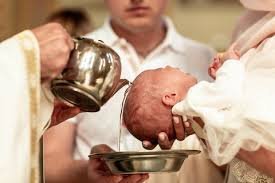
Water Purification, Five Times Daily—1,500 Years Before John the Baptist
“Before praying, believers must perform ritual ablutions, washing their hands, face, and feet. This practice, called padyab, symbolizes the cleansing of both body and spirit.”
— Zoroastrian Practice (1500+ BCE)
“John appeared, baptizing in the wilderness and proclaiming a baptism of repentance for the forgiveness of sins.”
— Mark 1:4 (c. 30 CE)
Christianity’s “Unique” Sacrament
Christian baptism—the ritual water immersion for forgiveness of sins and initiation into the faith—is considered foundational to Christianity:
- Instituted by Jesus (Matthew 28:19)
- Practiced by John the Baptist
- Central to Christian identity for 2,000 years
- Performed on 2.4 billion Christians
Christian doctrine claims:
- Baptism is divinely revealed
- A unique New Testament sacrament
- Washes away original sin
- Initiates into the body of Christ
But Zoroastrian water purification rituals (1500-1000 BCE):
- Padyab performed 5 times daily before prayer
- Ritual washing of hands, face, feet—exact sequence
- Cleanses body AND spirit from pollution
- Required before any religious activity
- Bareshnum (greater purification) for serious defilement
- Nine-day ritual with water immersions
- Initiates priests into higher orders
Christian baptism is Zoroastrian padyab + bareshnum.
It predates Christianity by 1,500 years.
And the parallel is exact.
This is documented, textual, historical fact.
PART I: THE ZOROASTRIAN WATER PURIFICATION SYSTEM
1. Padyab (Daily Ritual Washing)
PĀDYĀB (Pahlavi: “ritually clean”) — A sacred ablution requiring washing by water, a necessary prelude to the basic Zoroastrian purificatory ritual.
When Performed:
- Before prayer (5 times daily)
- Before entering fire temple
- After acts causing ritual impurity
- Before any religious activity
- At turn of each watch of the day
The Ritual Sequence:
- Recite Ashem Vohu prayer
- Wash hands up to wrists (palm and fingers)
- Wash face
- Wash right foot three times (below ankle)
- Wash left foot three times (below ankle)
- Wash hands again up to wrists
- Wipe with clean cloth
Purpose:
“The act of performing the Padyab not only physically cleanses the exposed parts of the body, but the presence of the Frado energies cleans the accumulated spiritual pollution which gathers on the surface of our skin.” — Zoroastrian Yoga teachings
Theological Meaning:
- Re-establishes sacred order in imperfect world
- Removes evil of pollution (Angra Mainyu’s influence)
- Prepares individual for prayer/ritual
- Cleanses BOTH body and spirit
2. Nahan (Ceremonial Bath)
Nahan (from Sanskrit “Snān” = bath) — A purificatory ritual bath
When Performed:
- Before Navjote (initiation ceremony)
- Before weddings
- After childbirth
- Before major festivals
- For ritual cleansing
The Ritual:
- Priest performs Padyab-Kushti first
- Celebrant chews pomegranate leaves
- Drinks three sips of Nirang (consecrated bull urine—purifying agent)
- Takes ritual bath
- Wears fresh clothes
3. Bareshnum (Great Purification)
Bareshnum-i-noh-shab (“Bareshnum of nine nights”) — The highest purificatory ritual of Zoroastrians
When Required:
- After contact with corpse (death pollutes)
- For initiation into priesthood (Navar, Maratab)
- To attain higher priestly status
- Foundation of all inner Zoroastrian rituals
The Elaborate Ritual:
Preparation:
- Special site (Bareshnum-gah) with 9 holes dug in ground
- First 6 holes filled with gomez (bull urine—sacred purifier)
- Last 3 holes filled with water
- Holes separated by protective furrows
The Nine-Day Ceremony:
Days 1-3:
- Impure person walks to each gomez hole
- Priest recites Yasna 49 while sprinkling gomez
- Purifies every body part: brows, skull, jaws, ears, shoulders, chest, back, genitals, thighs, knees, legs, ankles, feet, toes
- Subject recites Ahunwar and other prayers
- Subject sits and rubs dust on body to dry
- Steps into water holes (4-9) for final cleansing
Days 1-9:
- Confined to corner of house (Armêsht-gah)
- Prohibited from touching water, fire, earth, cow, trees, other Zoroastrians
- Every three days: Bathes in gomez and water
- After 9th night: “Completely purified” and permitted normal life
From Britannica:
“Bareshnum, a complicated ritual performed at special places with the participation of a dog—whose left ear is touched by the candidate and whose gaze puts the evil spirits to flight—and lasting several days.”
PART II: PRE-EXILE JUDAISM—NO WATER PURIFICATION BAPTISM
What Ancient Judaism Had
Before 586 BCE:
- ❌ No full-body immersion ritual for initiation
- ❌ No baptism for forgiveness of sins
- ❌ No washing 5 times daily before prayer
- ❌ No water ritual for spiritual cleansing
What they had:
- Ritual hand washing before meals (not spiritual)
- Priestly ablutions (for temple service only)
- Mikvah (ritual bath) for specific impurities (menstruation, nocturnal emissions)
- But NOT for initiation, NOT for forgiveness, NOT performed multiple times daily
Post-Exile Transformation
After Persian contact (539-332 BCE):
- Ritual immersion becomes central
- Qumran (Essenes) practice daily ritual washing
- Miqvaot (ritual baths) proliferate
- Full immersion baptism emerges
The Essenes (150 BCE – 68 CE):
From Dead Sea Scrolls:
“No man shall bathe in dirty water or in an amount too shallow to cover a man. He shall not purify himself with water contained in a vessel.” — Damascus Document
Essene practices:
- Daily ritual immersions before meals
- Total immersion (not just washing exposed parts)
- Multiple baths throughout the day
- Initiation through water ritual
- Zoroastrian-influenced purity obsessions
PART III: JOHN THE BAPTIST—THE ESSENE CONNECTION
Who Was John the Baptist?
Luke 1:80:
“The child grew and became strong in spirit, and he was in the wilderness till the day of his manifestation to Israel.”
Mark 1:4-6:
“John appeared, baptizing in the wilderness and proclaiming a baptism of repentance for the forgiveness of sins… John was clothed with camel’s hair and wore a leather belt around his waist, and he ate locusts and wild honey.”
The Essene Hypothesis
Scholars note striking parallels:
1. Location:
- John baptized in Jordan River near Dead Sea
- Qumran (Essene settlement) was half-day’s walk away
- Both operated in Judean wilderness
2. Isaiah 40:3: Both John and Essenes cite the same passage:
John (Mark 1:3): “A voice crying in the wilderness: ‘Prepare the way of the Lord…'”
Qumran Community Rule (1QS VIII 13-16):
“When such men as these come to be in Israel… they shall separate from the session of perverse men to go to the wilderness, there to prepare the way of truth, as it is written, ‘In the wilderness prepare the way of the LORD, make straight in the desert a highway for our God’ (Isa. 40:3).”
3. Ascetic Lifestyle:
- Both practiced celibacy
- Both lived in desert
- Both rejected mainstream Judaism
- Both emphasized repentance
4. Diet: Mark 1:6: “He ate locusts and wild honey”
Why this diet?
“Part of joining the Qumran community was a pledge not to take food prepared outside of the community, except for things found in the wild, which may explain John’s peculiar diet of locusts and honey. The scrolls even detail how to prepare locusts for eating.” — John Bergsma
Essenes who left/were expelled wandered desert eating wild food. John fits this pattern.
5. Ritual Washing:
Josephus on John (Antiquities 18.5.2):
“John… commanded the Jews to exercise virtue… and so to come to baptism; for that the washing [with water] would be acceptable to him, if they made use of it, not in order to the putting away [or the remission] of some sins, but for the purification of the body; supposing still that the soul was thoroughly purified by righteousness.”
This matches Zoroastrian padyab: Physical washing reflects spiritual purification.
6. Eschatological Urgency:
- Both John and Essenes awaited imminent Messiah
- Both prepared “the way” for coming salvation
- Both practiced apocalyptic preaching
Was John an Essene?
Scholarly opinions divided:
Pro-Essene Connection:
- James H. Charlesworth: “The similarities between John the Baptizer and the Qumranites are too impressive to be dismissed.”
- John Bergsma: “John may have been raised or formed in the community and then left to pursue ministry to a wider audience.”
- Multiple scholars note he fits Qumran vow patterns
Against Direct Membership:
- John’s public, missionary approach (vs. Essene insularity)
- John baptized others (Essenes self-immersed)
- Geographical differences (Jordan vs. Qumran cisterns)
Most Likely: John was raised/trained in Essene community, then left to pursue wider ministry while retaining Essene-influenced practices.
Translation: John brought Zoroastrian-derived Essene water purification to mainstream Judaism.
PART IV: CHRISTIAN BAPTISM—ADOPTED FROM JOHN
Jesus’ Baptism (c. 30 CE)
Matthew 3:13-17:
“Then Jesus came from Galilee to the Jordan to John, to be baptized by him… And when Jesus was baptized, immediately he went up from the water…”
Jesus himself was baptized using John’s Essene/Zoroastrian-derived ritual.
The Great Commission
Matthew 28:19:
“Go therefore and make disciples of all nations, baptizing them in the name of the Father and of the Son and of the Holy Spirit.”
Jesus commands his followers to continue John’s practice.
Early Christian Practice
Acts 2:38:
“Repent and be baptized every one of you in the name of Jesus Christ for the forgiveness of your sins…”
Acts 2:41:
“So those who received his word were baptized, and there were added that day about three thousand souls.”
Romans 6:3-4:
“Do you not know that all of us who have been baptized into Christ Jesus were baptized into his death? We were buried therefore with him by baptism into death…”
Christian baptism developed from:
- John’s practice (Essene-derived)
- Essene practice (Zoroastrian-influenced)
- Zoroastrian padyab/bareshnum (original source)
PART V: THE PARALLEL IS EXACT
Side-by-Side Comparison
| Element | Zoroastrian Padyab/Bareshnum | Christian Baptism |
|---|---|---|
| Water Medium | Living water (well/spring preferred) | Living water (river/spring) |
| Body Parts | Hands, face, feet washed in sequence | Full body immersion |
| Frequency | 5 times daily (padyab); once for major purification (bareshnum) | Once for initiation |
| Purpose | Cleanse body AND spirit from pollution | Wash away sin, regenerate spirit |
| Timing | Before prayer/religious activity | Before entering Christian community |
| Formula Words | Ashem Vohu prayer + invocations | “In the name of Father, Son, Holy Spirit” |
| Priest Role | Priest oversees bareshnum, individuals do padyab | Priest/minister performs baptism |
| Initiation | Bareshnum initiates into priesthood | Baptism initiates into Christianity |
| Spiritual Effect | Removes Angra Mainyu’s pollution | Removes original sin |
| Community Entry | Joins Zoroastrian covenant | Joins body of Christ |
| Repentance | Requires confession and resolve | Requires repentance of sins |
The Washing Sequence
Zoroastrian Padyab:
- Hands
- Face
- Feet (right, then left)
Islamic Wudu (derived from same source):
- Hands
- Mouth
- Nose
- Face
- Arms
- Head
- Feet
Christian baptism:
- Full immersion (intensified version)
- Same theological purpose (purification before approaching divine)
The Five-Times-Daily Pattern
Zoroastrians pray 5 times daily:
- Dawn
- Noon
- Sunset
- Midnight
- Predawn
Before EACH prayer: Padyab (ritual washing)
Muslims pray 5 times daily:
- Fajr (dawn)
- Dhuhr (noon)
- Asr (afternoon)
- Maghrib (sunset)
- Isha (night)
Before EACH prayer: Wudu (ritual washing—hands, face, arms, feet)
Both derived from Zoroastrian padyab.
Christians abandoned the 5-times pattern but kept the one-time initiation baptism (from bareshnum).
PART VI: THE TIMELINE PROVES THE THEFT
| Date | Event | Source |
|---|---|---|
| 1500-1000 BCE | Zoroaster establishes padyab (5x daily washing) and bareshnum (great purification) | Avesta, Vendidad |
| Pre-586 BCE | Judaism: NO baptismal ritual for initiation or forgiveness | Pre-Exile texts |
| 586-539 BCE | Jews in Babylonian Exile exposed to Zoroastrian purification rituals | Historical record |
| 539-332 BCE | Persian Period: Jewish ritual practices transform | Ezra, Nehemiah |
| 150 BCE – 68 CE | Essenes practice daily immersion rituals (Zoroastrian-influenced) | Dead Sea Scrolls, Josephus |
| c. 27-30 CE | John the Baptist baptizes in Jordan (Essene-derived) | Gospels |
| c. 30 CE | Jesus baptized by John, commands disciples to baptize | Matthew 3, 28 |
| 30-100 CE | Early Christians adopt baptism as initiation sacrament | Acts, Epistles |
Gap: 1,500 years between Zoroastrian padyab/bareshnum and Christian baptism.
Zoroastrianism documented first. Christianity adopted it later, through Essene/John intermediary.
PART VII: HOW IT WAS TRANSMITTED
Phase 1: Babylonian Exile (586-539 BCE)
Jews exposed to Zoroastrian rituals:
- Witnessed daily padyab before prayers
- Saw bareshnum purification ceremonies
- Learned theology: water cleanses spiritual pollution
- Observed elaborate purification system
Phase 2: Persian Period (539-332 BCE)
Continuous exposure:
- Persian officials supervised Jewish religion
- Ritual purity concepts infiltrated
- Water purification emphasized
- Post-Exile texts show increased purity concerns
Phase 3: Essenes (150 BCE – 68 CE)
Full adoption:
- Daily ritual immersions central to practice
- Multiple baths throughout day
- Initiation through water
- Qumran had elaborate water installation system (miqvaot)
- Archaeological evidence: cisterns, channels, ritual baths
From Dead Sea Scrolls research:
“The water installations at Qumran have recently been shown to be miqvaot, though earlier researchers… either failed to recognize [them] as miqvaot or rejected them as such.”
Phase 4: John the Baptist (27-30 CE)
Public adaptation:
- Takes Essene practice to masses
- River baptism (vs. cistern immersion)
- Single baptism for repentance (vs. daily repetition)
- Makes Zoroastrian-derived ritual available to all Israel
Phase 5: Christianity (30-100 CE)
Universal adoption:
- Jesus commands it (Matt 28:19)
- Early Church makes it mandatory
- Becomes defining Christian sacrament
- Spreads globally
PART VIII: SCHOLARLY ACKNOWLEDGMENT
Academic Recognition
On Zoroastrian Water Rituals:
Encyclopaedia Iranica:
“PĀDYĀB, a sacred ablution requiring washing by water, a necessary prelude to the basic Zoroastrian purificatory ritual.”
Mary Boyce:
Documented continuous practice from ancient times through modern Zoroastrians
Britannica:
“There are three types of purification, in order of increasing importance: the padyab, or ablution; the nahn, or bath; and the bareshnum, a complicated ritual… lasting several days.”
On Essene-John Connection
James H. Charlesworth:
“Convinced that the similarities between John the Baptizer and the Qumranites are too impressive to be dismissed as merely an example of a shared milieu.”
John Bergsma:
“There are striking similarities between the teachings and lifestyle of John the Baptist and those of the Qumranites.”
What Scholars DON’T Emphasize
- That Zoroastrian padyab predates Jewish baptism by 1,000+ years
- That the washing sequence is identical
- That “5 times daily before prayer” is Zoroastrian
- That Essenes were Zoroastrian-influenced
- That Christian baptism = Zoroastrian bareshnum adapted
PART IX: WHY THIS MATTERS
1. Christianity’s Defining Ritual Isn’t Original
Baptism—the sacrament that initiates 2.4 billion Christians—is a Zoroastrian water purification ritual that predates Christianity by 1,500 years.
2. “Born Again” = Zoroastrian Purification
John 3:3-5:
“Jesus answered him, ‘Truly, truly, I say to you, unless one is born again he cannot see the kingdom of God’… ‘unless one is born of water and the Spirit, he cannot enter the kingdom of God.'”
This “born of water” concept:
- Zoroastrian bareshnum = 9-day purification “births” new person
- Navjote ceremony = “new birth” into Zoroastrian faith
- Water washes away old self, creates new identity
Same theology. Same ritual. Same symbolism.
3. Every Christian Has Undergone Persian Ritual
When Christians are baptized:
- They’re performing Zoroastrian bareshnum
- Adapted through Essene practice
- Transmitted via John the Baptist
- With Jesus’ name instead of Ahura Mazda’s
4. Five Daily Prayers = Zoroastrian
Islam kept this:
- 5 daily prayers (Zoroastrian schedule)
- Wudu before each (Zoroastrian padyab)
- Hands, face, feet washed (Zoroastrian sequence)
Christianity dropped daily repetition but kept initiation baptism.
Both downstream from same Zoroastrian source.
CONCLUSION: THE PURIFICATION IS PERSIAN
Christian baptism—the “born again” experience, the washing away of sin, the initiation into the faith—is the Zoroastrian padyab and bareshnum ritual.
Documented facts: ✅ Padyab: 5x daily washing of hands, face, feet (1500-1000 BCE)
✅ Bareshnum: 9-day purification through water immersion (1500-1000 BCE)
✅ Pre-Exile Judaism: NO baptismal ritual
✅ Post-Persian contact: Water purification becomes central
✅ Essenes: Daily immersions, Zoroastrian-influenced (150 BCE-68 CE)
✅ John the Baptist: Adapts Essene practice (c. 30 CE)
✅ Christianity: Adopts John’s baptism as sacrament (30-100 CE)
✅ Same purpose, same theology, same symbolism
The pattern repeats:
- Zoroastrianism teaches it first
- Jews exposed during Exile
- Essenes practice it extensively
- John makes it public
- Christianity universalizes it
- Source is erased, sacrament is claimed as “Christian ordinance”
Every time a Christian is baptized, they’re undergoing a 3,500-year-old Persian purification ritual.
The fire never went out.
It just got renamed “baptism in the name of Father, Son, and Holy Spirit.”
🔥
References
Primary Sources
Zoroastrian Texts:
- Avesta — Yasna, Vendidad
- Vendidad Fargard 9 — Bareshnum ritual instructions
- Pahlavi texts on padyab practice
Dead Sea Scrolls:
- Community Rule (1QS) — Washing requirements
- Damascus Document (CD) — Water purity laws
- Qumran archaeological evidence — Miqvaot/cisterns
Christian Texts:
- Matthew 3:13-17, 28:19 (Jesus’ baptism, Great Commission)
- Mark 1:4-6 (John the Baptist)
- Acts 2:38, 41 (Early Church baptism)
- Romans 6:3-4 (Baptism theology)
- John 3:3-5 (“Born of water”)
Scholarly Sources
Encyclopedias:
- Encyclopaedia Iranica: “PĀDYĀB”
- Encyclopaedia Iranica: “CLEANSING i. In Zoroastrianism”
- Britannica: “Bareshnum”
- Britannica: “Zoroastrianism – Practices and institutions”
Books:
- Boyce, Mary. Zoroastrians: Their Religious Beliefs and Practices. Routledge, 1979.
- Boyce, Mary. A History of Zoroastrianism I. Leiden, 1975.
- Choksy, Jamsheed K. Purity and Pollution in Zoroastrianism: Triumph over Evil. Austin, 1989.
- Bergsma, John. Jesus and the Dead Sea Scrolls: Revealing the Jewish Roots of Christianity. Image, 2020.
- Vermes, Geza. The Complete Dead Sea Scrolls in English. Penguin, 1997.
- Lawrence, Jonathan D. Washing in Water: Trajectories of Ritual Bathing in the Hebrew Bible and Second Temple Literature. SBL Press, 2006.
Articles:
- Charlesworth, James H. “John the Baptizer and the Dead Sea Scrolls.” The Bible and the Dead Sea Scrolls, vol. 3. Baylor, 2006.
- Bergsma, John. Review in Denver Catholic (National Catholic Register, August 26, 2020)
- Ricks, Stephen D. “The Doctrine of Baptism: Immersions at Qumran…” Religious Studies Center, BYU, 2013.
- Philosophy Institute: “The Rich Tapestry of Zoroastrian Rituals and Festivals” (June 1, 2025)
- Frashogard.com: “Zoroastrian Yoga – Part 3 – the Padyab Ritual” (August 6, 2021)
- Ramiyar Karanjia: “Nahan and Bareshnum Rituals” (November 21, 2016)
Historical Sources:
- Josephus, Flavius. Antiquities of the Jews 18.5.2
- Josephus, Flavius. Bellum Judaicum 2.129, 2.138
#BaptismIsZoroastrian | #AshaPrevails
“Wash hands, face, feet. Five times daily before prayer.”
1,500 years before: “Baptizing them in the name of the Father…”
The purification is Persian.
The fire never went out. 🔥