Sacred Shirt, Sacred Thread, Age 7-15—The Same Ceremony, 3,500 Years Earlier
“The ceremony of Navjote among the Parsis, corresponds to that of ‘Confirmation’ among the Christians.”
— Avesta.org, “Navjote/Sudre-Pooshi (initiation) ceremony”
“Confirmation is one of the three sacraments of initiation… strengthens baptismal grace.”
— Catholic Church
The Admission
The sources don’t hide it. They openly acknowledge it:
“The ceremony of Navjote among the Parsis, corresponds to that of ‘Confirmation’ among the Christians.”
Navjote — the Zoroastrian initiation ceremony where children (ages 7-15) receive:
- Sudreh (sacred white shirt)
- Kusti (sacred thread/cord worn around waist)
- Declaration of faith in Zoroastrian religion
- Responsibility to pray and uphold “Good Thoughts, Good Words, Good Deeds”
- Public recognition as full member of faith community
Confirmation — the Christian sacrament where children (ages 7-15) receive:
- White robe/garment
- Anointing with chrism on forehead
- Declaration/profession of faith
- Gifts of the Holy Spirit
- Public recognition as full member of Church
Same age. Same structure. Same purpose. Same ceremony.
Documented in Zoroastrian texts 1500-1000 BCE.
Formalized in Christianity 2nd-4th century CE.
Confirmation is Navjote.
This is not interpretation. This is admitted fact.
PART I: THE ZOROASTRIAN NAVJOTE (1500-1000 BCE TO PRESENT)
What Is Navjote?
Etymology:
- Nav (Avesta: nava; Sanskrit: nava; Latin: novus) = “new”
- Jote (Avesta: zaotar from “zu”; Sanskrit: “hu” = to offer prayers) = “one who offers prayers”
- Navjote = “New invoker/worshiper”
Also called: Sedreh-Pushi (Persian: “putting on the sedreh”)
Definition:
“The initiation of a Parsi child into the fold of the Zoroastrian religion is known as Navjote. The ceremony of the initiation consists of the investiture of the child with a sacred shirt called sudre and a sacred thread called kusti.” — Avesta.org
When Is It Performed?
Traditional age: 7-15 years old, before puberty
Parsis (Indian Zoroastrians): Ages 7-11
Iranians: Ages 12-15
Vendidad 18.54 states:
“Individuals above the age of 15 (once considered the age at which one attained adulthood) who are not yet been invested are said to be likely to fall into evil ways.”
9th-12th century texts:
Such individuals are “kushad davarashni” (literally “running about improperly clothed”)—considered a service to demons (daevas).
Translation: You must be initiated before reaching adulthood (puberty/15 years old) or risk spiritual danger.
The Sacred Clothing
1. Sudreh (Sacred Shirt):
- White cotton or silk
- Worn as undershirt for entire life
- Never removed except when bathing
- Features small pocket over heart (giriban) = “fill heart with good thoughts”
- Symbolizes “garment of good mind”
2. Kusti (Sacred Cord/Thread):
- Woven from 72 strands (representing 72 chapters of Yasna liturgy)
- Worn around waist as belt
- Tied with specific knots symbolizing faith
- Three tassels at each end (representing six Gahambars—seasonal festivals)
- Must be untied and retied multiple times daily during prayers
From the sources:
“A Zoroastrian may put on any dress he likes, but he must put on the sacred shirt and the thread as the symbol and badge of his religion.”
The Navjote Ceremony
Preparation:
- Child takes Nahn (ritual purification bath with prayers)
- Chews pomegranate leaves
- Sips Nirang (consecrated bull urine—sacred purifier)
- Dresses in white clothing
The Ceremony:
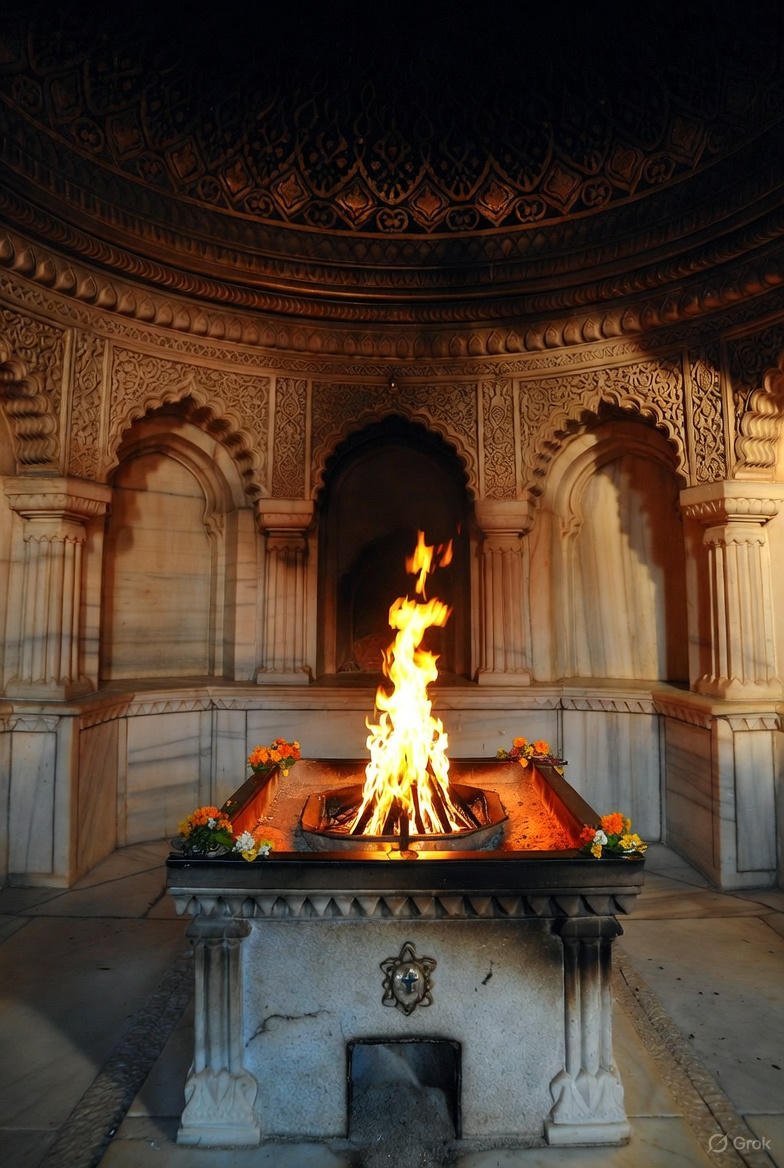
- Child sits before priest and fire (Atar)
- Priest and child recite Yatha Ahu Vairyo prayer
- Sudreh placed on child’s arms during recitation
- Child recites Din no Kalmo (declaration of faith):
- “I believe in the religion of the Zoroastrians”
- “I accept Ahura Mazda”
- “I reject the daevas (demons)”
- Kusti tied around waist while reciting Kusti Bastan prayer
- Priest stands behind child (both face light/sun)
- Priest recites Tan Darosti (blessings) using appropriate prefix:
- Before Navjote: “Khurd” (child)
- After Navjote: “Behdin/Osta/Osti” (believer)
Result:
“Following the ceremony, the child is viewed as a member of the Zoroastrian community, bearing responsibility with its rewards and repercussions.”
The Kusti’s Symbolism
The Four Knots:
First knot (front), first half: Remember Ahura Mazda exists, is one, is holy, is matchless
First knot (front), second half: Zoroastrian religion is Word of God; have full faith in it
Second knot (back), first half: Zoroaster is prophet of God, shows proper path
Second knot (back), second half: Always attend to “Good thoughts, good words, and good deeds”
Purpose of belt around waist:
“A person stands before his superior with his waist girded with a belt, to show, that he is ready to obey the orders of his master or superior. So, a Zoroastrian with waist girded by the belt of a kusti shows his obedience to his Great Master.“
Daily Kusti Practice
The kusti must be untied and retied:
- On rising from sleep (every morning)
- Before prayer (5 times daily)
- Before eating
- After urination/excretion
- Before any religious act
Padyab-Kushti ritual:
- Perform padyab (wash hands, face, feet)
- Recite Ashem Vohu prayer
- Untie kusti
- Retie with proper knots
- Face light/fire while performing
This is performed throughout the Zoroastrian’s entire life.
PART II: PRE-EXILE JUDAISM—NO COMING-OF-AGE INITIATION
What Ancient Judaism Had
Before 586 BCE:
- ❌ No coming-of-age ceremony
- ❌ No sacred garment investiture
- ❌ No age 12-13 ritual
- ❌ No public declaration of faith at specific age
- ❌ No “adult member” status conferred
What they had:
- Circumcision (8 days old—for males, covenant sign)
- Temple sacrifices (family/community rituals)
- Passover and festivals (all ages participate)
- No specific initiation marking religious maturity
Bar/Bat Mitzvah—Post-Exile Development
Bar Mitzvah emerges AFTER Persian contact:
- First clear evidence: Talmudic period (200-500 CE)
- Formalized much later (13th-14th century CE)
- Based on age reaching “commandments” (13 for boys)
BUT: Even Bar Mitzvah is automatic (happens at age 13 whether ceremony occurs or not)—it’s NOT an initiation ceremony like Navjote.
From sources:
“While a ceremony is usually held to celebrate this moment, it is the age of the child that determines whether he or she is obligated to keep the commandments, not the ceremony itself. The ceremony imparts nothing upon the child but rather is a symbolic celebration of this moment in the child’s life.”
Navjote, by contrast:
- The ceremony itself initiates the person into the faith
- Without it, one is not a full Zoroastrian
- Age is flexible (7-15), ceremony is required
PART III: CHRISTIAN CONFIRMATION—DEVELOPED POST-PERSIAN CONTACT
Early Christianity—Baptism Alone
1st-2nd century CE:
- Baptism was the sole initiation
- No separate “confirmation” ceremony
- Eastern churches still baptize infants and immediately “confirm” them (same ceremony)
Confirmation Emerges (2nd-4th Century CE)
Why it developed:
- Originally part of baptism (laying on of hands)
- Separated in Western church when bishops couldn’t be present for every baptism
- Developed into distinct “coming-of-age” ceremony
Formal structure:
- Typically ages 7-15 (same as Navjote)
- Bishop lays hands on head
- Anoints with chrism oil
- Candidate confirms/declares faith
- Receives “gifts of Holy Spirit”
- Becomes “full member” of Church
The Admission: “Like Navjote”
From Catholic sources:
“Some people look on Confirmation as something like the Jewish Bar Mitzvah… however… Confirmation isn’t a coming of age ritual.” — Diocese of Orange
They deny it’s “coming of age” (trying to distance from Bar Mitzvah comparison)
But Zoroastrian sources explicitly state:
“The ceremony of Navjote among the Parsis, corresponds to that of ‘Confirmation’ among the Christians.“
Confirmation = Christian version of Navjote.
PART IV: THE PARALLEL IS EXACT
Side-by-Side Comparison
| Element | Zoroastrian Navjote (1500-1000 BCE) | Christian Confirmation (2nd-4th century CE) |
|---|---|---|
| Age | 7-15 years (before puberty) | 7-15 years (traditionally age of reason to adolescence) |
| Purpose | Initiation into Zoroastrian faith | Strengthening baptismal grace, full Church membership |
| Preparation | Ritual bath (Nahn), religious instruction | Catechism classes, preparation period |
| Sacred Garment | White sudreh (sacred shirt) worn for life | White robe/garment worn during ceremony |
| Sacred Symbol | Kusti (sacred thread) around waist | Chrism anointing (mark on forehead) |
| Declaration | Din no Kalmo (confession of Zoroastrian faith) | Profession/Confirmation of Christian faith |
| Priest Role | Priest invests child, recites prayers | Bishop/priest lays hands, anoints |
| Fire/Light | Performed before sacred fire | Often includes candles/light symbolism |
| Community | Family and community witness | Family and congregation witness |
| New Status | Full member with religious responsibilities | Full Church member, “soldier of Christ” |
| Gifts/Blessings | Tan Darosti (priestly blessing) | Seven Gifts of Holy Spirit |
| Lifelong Practice | Must retie kusti daily before prayers | Expected to live out confirmation vows |
The Sacred Clothing
Navjote:
“A Zoroastrian may put on any dress he likes, but he must put on the sacred shirt and the thread as the symbol and badge of his religion.”
The sudreh and kusti are worn:
- Under clothing
- Every day and night
- For entire life
- As visible sign of faith commitment
Confirmation:
- White garment worn during ceremony
- Symbolizes purity and new life in Christ
- Sometimes confirmands take a “confirmation name” (saint’s name)
- Chrism mark remains (spiritually, not physically)
Same concept: Investiture with sacred clothing/symbols marking religious identity.
The Age Range
Navjote: 7-15 (before puberty/adulthood)
Confirmation:
- Catholic: typically 7-14
- Orthodox: infancy (still connected to baptism)
- Protestant: varies, often adolescence
Both mark transition from childhood to religious responsibility.
PART V: THE TIMELINE PROVES THE THEFT
| Date | Event | Source |
|---|---|---|
| 1500-1000 BCE | Zoroaster establishes Navjote ceremony; sacred shirt and thread investiture | Avesta, Zoroastrian tradition |
| Pre-586 BCE | Judaism: NO coming-of-age initiation ceremony | Pre-Exile texts |
| 586-539 BCE | Jews in Babylonian Exile exposed to Zoroastrian Navjote ceremonies | Historical record |
| 539-332 BCE | Persian Period: Jewish practices transform | Ezra, Nehemiah |
| 1st century CE | Early Christianity: Baptism includes hand-laying, but no separate “confirmation” | New Testament |
| 2nd-3rd century CE | Confirmation begins separating from baptism in Western church | Church history |
| 4th-5th century CE | Confirmation formalized as distinct coming-of-age sacrament | Council documents |
| 200-500 CE | Bar Mitzvah emerges in Talmudic Judaism (post-Persian influence) | Talmud |
Gap: 1,500-2,000 years between Navjote and Christian Confirmation.
Zoroastrianism documented first. Christianity adopted it later.
PART VI: HOW IT WAS TRANSMITTED
Phase 1: Babylonian Exile (586-539 BCE)
Jews exposed to Zoroastrian coming-of-age rituals:
- Witnessed Navjote ceremonies
- Saw children invested with sacred clothing
- Learned concept of formal initiation into faith community
- Observed age-based religious responsibility
Phase 2: Persian Period (539-332 BCE)
Continuous influence:
- Jewish community under Persian administration
- Adoption of purity concepts
- Development of ritual structures
- No formal Jewish equivalent yet developed
Phase 3: Post-Temple Judaism (70-500 CE)
After temple destruction:
- Pharisees (now “Judaism”) develop synagogue-based practices
- Bar Mitzvah concept emerges (automatic at 13)
- But still not a formal initiation ceremony like Navjote
Phase 4: Early Christianity (30-400 CE)
Christian development:
- Baptism initially includes all initiation elements
- As Church grows, bishops can’t be present for every baptism
- Confirmation separates as distinct ceremony
- Ages 7-15 become standard (matching Navjote)
- Becomes formal “coming-of-age” initiation
PART VII: THE EXPLICIT ADMISSION
Zoroastrian Sources State It Directly
From Avesta.org:
“The ceremony of Navjote among the Parsis, corresponds to that of ‘Confirmation’ among the Christians.“
This isn’t hidden. This isn’t secret. Zoroastrian scholars openly acknowledge the parallel because they know their ceremony came first.
Why Christians Deny It
Modern Catholic apologetics:
“Confirmation is not like a Bar Mitzvah” (trying to distance from Jewish comparison)
But they never address:
- Why it’s the same age as Navjote (7-15)
- Why it’s sacred garment investiture (like sudreh)
- Why it’s declaration of faith (like Din no Kalmo)
- Why it marks full community membership (like Navjote)
- Why Zoroastrian sources say they’re the same
Because acknowledging it would expose:
- Christian initiation rite = Zoroastrian ceremony
- 1,500-year gap proves direction of influence
- Another core Christian practice stolen from Persia
PART VIII: WHY THIS MATTERS
1. Christianity’s Initiation Into Full Membership Is Persian
Every confirmed Christian (Catholic, Orthodox, Anglican, Lutheran, Methodist) has undergone a Zoroastrian Navjote ceremony:
- Same age (7-15)
- Same purpose (full faith membership)
- Same structure (investiture, declaration, blessing)
- Same result (religious responsibility begins)
With Jesus’ name instead of Ahura Mazda’s.
2. The “Sacred Garment” Concept Is Zoroastrian
Navjote: Child receives sudreh and kusti, worn for life
Confirmation: Child receives white robe (symbolically), chrism mark
Both: Clothing/marking signifies permanent religious identity
This concept doesn’t exist in pre-Exile Judaism. It’s Persian.
3. 2.4 Billion Christians Underwent Persian Initiation
When Christians are confirmed:
- They’re performing Navjote
- With different theological interpretation
- But same basic structure
- Derived from 3,500-year-old Zoroastrian ceremony
4. Even The Name Reveals It
Navjote = “New invoker/worshiper”
Confirmation = “Strengthening” (but functionally: initiation into full faith practice)
Both mark the moment when:
- Child becomes responsible for religious duties
- Full community membership begins
- Declaration of faith is made public
CONCLUSION: THE INITIATION IS PERSIAN
Christian Confirmation—the sacrament marking full entry into the faith—is the Zoroastrian Navjote ceremony.
Documented facts: ✅ Navjote: ages 7-15, sacred clothing, declaration of faith (1500-1000 BCE)
✅ Invests child with sudreh (sacred shirt) and kusti (sacred thread)
✅ Child becomes full member with religious responsibilities
✅ Pre-Exile Judaism: NO such coming-of-age initiation
✅ Christian Confirmation emerges: 2nd-4th century CE
✅ Same age, same structure, same purpose
✅ Zoroastrian sources explicitly state they correspond
The pattern repeats:
- Zoroastrianism teaches it first (1500-1000 BCE)
- Judaism exposed during Persian Period (539-332 BCE)
- Christianity adopts it (2nd-4th century CE)
- Source is acknowledged by Zoroastrians, denied by Christians
Every time a Christian is confirmed, they’re undergoing a 3,500-year-old Persian initiation ritual marking their entry into Ahura Mazda’s covenant—
—with “Father, Son, Holy Spirit” substituted.
The fire never went out.
It just got renamed “Confirmation.”
🔥
References
Primary Sources
Zoroastrian Texts & Sources:
- Avesta.org: “Zoroastrian rituals: Navjote/Sudre-Pooshi (initiation) ceremony”
- Vendidad 18.54 — Age requirements
- Sad Dar, Chapter 10 — Kusti knot symbolism
- Dadestan-i Denig, Chapter 39 — Kusti significance
- Traditional Navjote liturgy and prayers
Christian Texts:
- Acts 8:14-17, 19:2-6 (Laying on of hands)
- John 14:15-26, 20:22 (Holy Spirit)
- Acts 2:1-4 (Pentecost)
- Catechism of the Catholic Church, 1285, 1302-1303
- Canon Law on Confirmation
Scholarly Sources
On Navjote:
- Pluralism Project (Harvard): “Initiation into the Faith”
- Wikipedia: “Navjote”
- Google Arts & Culture (Parzor Foundation): “Kusti – The Sacred Cord”
- Heritage Institute: “Navjote, Sudreh Pooshi, Zoroastrian Initiation Ceremony”
- Zoroastrians.net: “Navjote Ceremony” by Dr. Pallan Ichaporia
- Philosophy Institute: “The Rich Tapestry of Zoroastrian Rituals and Festivals” (June 1, 2025)
On Confirmation:
- Wikipedia: “Confirmation”
- Catholic Answers: “Confirmation Is Not Like a Bar Mitzvah” (July 11, 2019)
- California Catholic Daily: “Confirmation isn’t a coming of age ritual” (May 18, 2018)
- Catholic Outlook: “Sacrament of Confirmation” (September 9, 2019)
- Britannica: “Confirmation” (Students edition)
Comparative:
- Vaia: “Coming-of-Age Ceremonies: Religion & Culture”
- Religion Wiki (Fandom): “Confirmation”
- My Jewish Learning: “The Surprising History of Bar/Bat Mitzvah and Confirmation” (February 26, 2018)
- Brainly.in: “With regard to Navjote” (January 23, 2021)
#ConfirmationIsNavjote | #AshaPrevails
“Ages 7-15. Sacred shirt. Sacred thread. Declaration of faith.”
3,500 years before: “Ages 7-15. White robe. Chrism mark. Profession of faith.”
“The ceremony of Navjote corresponds to that of ‘Confirmation.'”
The Zoroastrians know. The Christians won’t admit it.
The initiation is Persian.
The fire never went out. 🔥