The Moment Christianity Became Imperial Propaganda While Burying Its Persian Origins
The Most Important Meeting in Christian History
Nicaea, 325 CE.
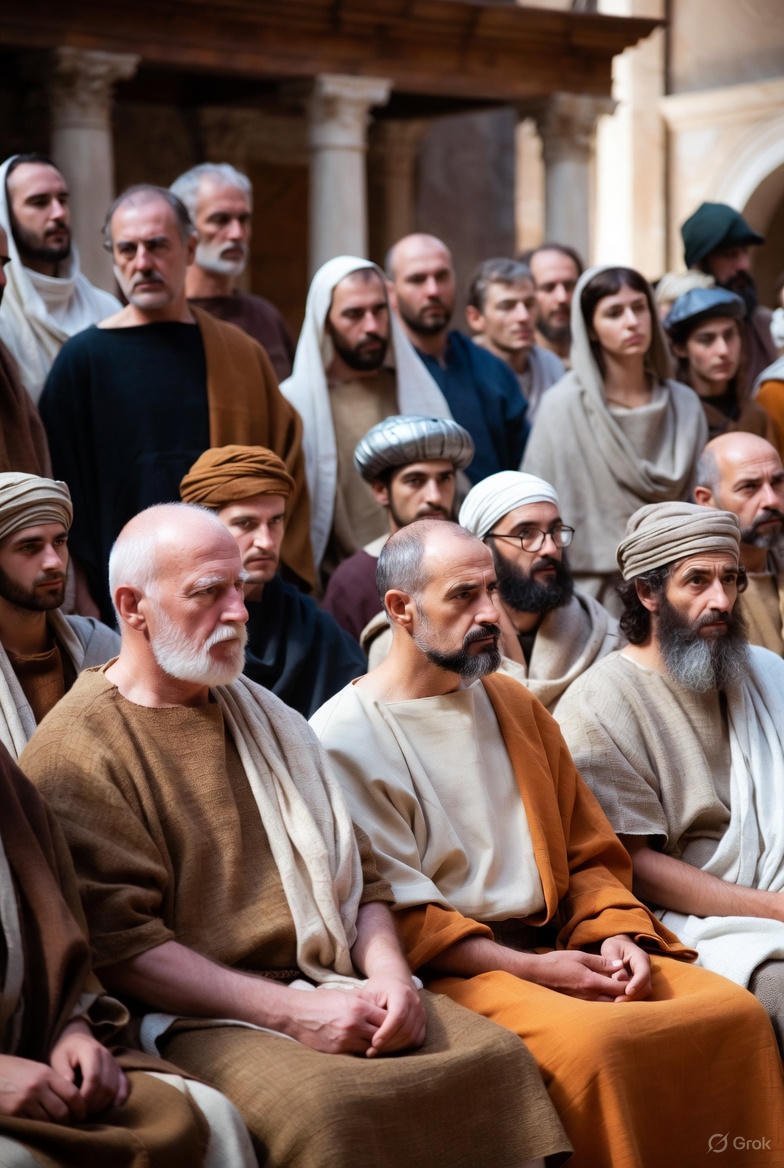
Emperor Constantine I convenes 318 bishops from across the Roman Empire to settle theological disputes and establish orthodox Christian doctrine. The decisions made in this ancient city would shape Christianity for the next 1,700 years and counting.
The Official Story: The Council debated the nature of Christ (Arian controversy), set the date of Easter, established church hierarchy, and produced the Nicene Creed—the foundational statement of Christian belief.
What Really Happened: The Council of Nicaea was the moment when Christianity transitioned from persecuted sect to state religion, from diverse theological interpretations to enforced orthodoxy, and from acknowledging its theological roots to burying them forever.
This article exposes:
- What they debated (and what the records show)
- What they deliberately didn’t debate (and what the silence reveals)
- What they knew about Persian origins (and chose to suppress)
- How they turned borrowed theology into “divine revelation”
- Why this meeting was the greatest theological coverup in history
The Council of Nicaea wasn’t just about defining Christ. It was about hiding where Christian theology actually came from.
PART I: THE HISTORICAL CONTEXT
Why Constantine Called the Council
The Political Situation in 325 CE:
Constantine’s Position:
- Roman Emperor (ruled 306-337 CE)
- Won civil war and unified empire (312 CE)
- Converted to Christianity (supposedly after vision before Battle of Milvian Bridge, 312 CE)
- Issued Edict of Milan (313 CE) – legalized Christianity
- Wanted religious unity to strengthen political unity
The Christian Problem:
- Christianity was fractured into competing factions
- Major theological disputes threatening unity
- No centralized authority or agreed-upon doctrine
- Different regions taught different versions of Christianity
- Constantine needed one unified Church to support one unified Empire
The Arian Controversy (Official Reason for Council):
Arius (256-336 CE):
- Presbyter in Alexandria
- Taught that Jesus was created by God, not co-eternal
- “There was when he was not” – Jesus had a beginning
- Jesus was subordinate to God the Father
Alexander of Alexandria (and Athanasius):
- Bishop of Alexandria, Arius’s opponent
- Taught Jesus was “same substance” (homoousios) as God
- Jesus eternally existed with the Father
- Jesus was fully divine, not created
Why Constantine Cared:
- Needed theological unity for political stability
- Arian vs. Homoousian debate was splitting the Church
- Empire needed one Christianity, not competing versions
- Solution: Call council, force consensus, suppress dissent
The Real Agenda: Create official Christianity that served imperial interests while appearing divinely ordained.
PART II: WHO WAS THERE
The Attendees and Their Agendas
The Imperial Presence:
Constantine I (272-337 CE):
- Roman Emperor
- Presided over Council (though not a bishop, not even baptized yet)
- Had final authority
- Wanted unity above theological truth
- Political motivation: Use Christianity to consolidate power
Hosius of Cordova:
- Constantine’s ecclesiastical advisor
- Helped organize Council
- Imperial interests aligned with church decisions
The Bishops (~318 attendees):
Geographic Distribution:
- Majority from Eastern Empire (Asia Minor, Syria, Palestine, Egypt)
- Fewer from Western Empire
- Most from regions that had been Persian territories or influenced by Persian culture
- Some from areas that experienced Babylonian Exile’s effects
Key Figures:
1. Alexander of Alexandria (and his deacon Athanasius):
- Anti-Arian faction leader
- Wanted Jesus declared co-eternal with God
- Would become champion of Nicene orthodoxy
2. Eusebius of Caesarea (263-339 CE):
- Church historian
- Moderate position
- Wrote important account of Council
- Had access to many historical sources (most now lost)
3. Eusebius of Nicomedia:
- Arian supporter
- Eventually baptized Constantine (337 CE)
- Politically influential
4. Nicholas of Myra (Saint Nicholas):
- Bishop of Myra
- Legend: Punched Arius during debates
- Represented passionate orthodox faction
Regional Representatives:
- Syrian bishops (region with strong Persian influence)
- Palestinian bishops (including Jerusalem – heart of Judaism that absorbed Persian concepts)
- Egyptian bishops (Alexandria – center of Hellenistic-Persian synthesis)
- Few Western bishops (less exposed to Persian influence, less aware of origins)
The Critical Point: Most attendees came from regions that had been under Persian influence or were part of the post-Exilic Jewish diaspora. They knew the history. They knew where the concepts came from.
PART III: WHAT THEY DEBATED (Official Record)
The Recorded Controversies
1. The Arian Controversy: Nature of Christ
The Question: Is Jesus of the same substance (homoousios – ὁμοούσιος) as God the Father, or merely similar (homoiousios – ὁμοιούσιος)?
The Debate:
- Arius: Jesus is created, subordinate, had a beginning
- Athanasius: Jesus is co-eternal, same substance as Father, fully divine
The Decision:
- Jesus declared homoousios (same substance) with Father
- Arius condemned as heretic
- Arian bishops forced to sign Nicene Creed or be exiled
- Result: Established Trinitarian doctrine (Father, Son, Holy Spirit as one God)
Why This Mattered to Constantine:
- Needed clear answer to unify Church
- Political stability required theological certainty
- Decided based on what created strongest unity, not necessarily theological truth
2. Date of Easter
The Question: When should Easter be celebrated?
The Debate:
- Some Christians followed Jewish Passover calculation (Quartodecimans)
- Others used different method
- Caused confusion and disunity
The Decision:
- Easter to be celebrated on first Sunday after first full moon after spring equinox
- Separate from Jewish Passover calculation
- Unified date across all churches
The Underlying Motive: Distinguish Christianity from Judaism – make it appear independent, not derivative.
3. Meletian Schism
The Question: What to do with Christians who lapsed during persecution?
The Issue:
- Meletius of Lycopolis ordained priests without permission
- Created parallel church structure
- Question of authority and forgiveness
The Decision:
- Compromise reached
- Meletian priests could function but subordinate to Alexandria
- Attempted to heal schism
4. Church Hierarchy and Canon Law
The Issues:
- Structure of church authority
- Rules for ordination
- Behavior of clergy
- Relationship between churches
The Decisions:
- 20 canons (church laws) established
- Set precedents for church organization
- Gave bishops significant power
- Created framework for centralized control
What We Notice:
All recorded debates focus on:
- Internal Christian disputes
- Jesus’s nature
- Church organization
- Distinguishing from Judaism
What’s absent from official record:
- No debate about where Christian concepts came from
- No discussion of Persian influence
- No questions about origins of resurrection, heaven/hell, angels, Satan
- No acknowledgment that these concepts entered Judaism during Babylonian Exile
This absence is not accidental. It’s suppression.
PART IV: WHAT THEY DIDN’T DEBATE (The Silence That Speaks)
The Questions They Deliberately Avoided
These questions would have been obvious to educated bishops in 325 CE, especially those from regions with Persian influence or Jewish background:
QUESTION 1: Why Did the Magi Recognize Jesus?
The Biblical Text (Matthew 2:1-12):
“After Jesus was born in Bethlehem in Judea, during the time of King Herod, Magi from the east came to Jerusalem and asked, ‘Where is the one who has been born king of the Jews? We saw his star when it rose and have come to worship him.'”
What Everyone at Nicaea Knew:
The Magi Were:
- Zoroastrian priests from Persia
- Experts in astronomy/astrology
- Religious leaders of Persian religion
- Not Jews, not Christians, not “random wise men”
The Question Council Avoided: Why would Zoroastrian priests travel to worship a Jewish baby unless he fulfilled THEIR prophecies?
What This Implies:
- Magi recognized Jesus as Saoshyant (Zoroastrian world savior)
- They saw his birth as fulfillment of Persian eschatology
- Christianity is connected to Zoroastrianism from its very beginning
- The first people to worship Jesus as divine were Persians, not Jews
Why Council Didn’t Discuss This:
- Would raise questions about Persian influence on Christianity
- Would suggest Christianity fulfills Zoroastrian prophecy, not just Jewish
- Would undermine claim of Christianity as unique revelation
- Would reveal theological debt to Persia
What Council Should Have Asked:
- What prophecies did Magi recognize?
- How did they know to look for Jesus?
- What does their worship signify?
- What is the relationship between Zoroastrian and Christian eschatology?
What Council Actually Did:
- Accepted the story as is
- Never questioned the implications
- Moved on without acknowledging what it meant
- Buried the Persian connection through silence
QUESTION 2: What Did Daniel Learn as “Chief of Magi”?
The Biblical Text (Daniel 2:48, 5:11):
“Then the king placed Daniel in a high position and lavished many gifts on him. He made him ruler over the entire province of Babylon and placed him in charge of all its wise men.” (2:48)
“There is a man in your kingdom who has the spirit of the holy gods in him… Your father, King Nebuchadnezzar, appointed him chief of the magicians, enchanters, astrologers and diviners.” (5:11)
What Everyone at Nicaea Knew:
Daniel:
- Jewish prophet during Babylonian Exile
- Served in Babylonian and Persian courts
- Made “Rab-Mag” – Chief of the Magi
- Educated by and led Zoroastrian priests for decades
The Question Council Avoided: What Zoroastrian theology did Daniel learn during his tenure as Chief of Magi, and did it influence Jewish (and therefore Christian) eschatology?
What This Implies:
- Direct transmission of Zoroastrian concepts to Jewish theology
- Biblical text admits Jewish prophet was educated by Persian priests
- Book of Daniel (written during/after Exile) contains first Hebrew mention of:
- Resurrection (Daniel 12:2)
- Angels by name (Michael, Gabriel)
- Apocalyptic eschatology
- Final judgment
- All concepts learned from Zoroastrianism during Daniel’s time as Chief of Magi
Why Council Didn’t Discuss This:
- Would expose Persian origin of Christian eschatology
- Would show Christianity inherited concepts from Persia via Judaism
- Would undermine divine revelation narrative
- Would make Christianity derivative of Zoroastrianism
What Council Should Have Asked:
- What did Daniel learn from the Magi?
- Why does Daniel contain first mention of resurrection, angels, apocalypse in Hebrew scripture?
- How did being “Chief of Magi” influence Jewish theology?
- Did Christianity inherit Persian concepts through Daniel’s teachings?
What Council Actually Did:
- Ignored Daniel’s role as Chief of Magi
- Never connected it to appearance of new concepts in post-Exile Judaism
- Treated resurrection, angels, apocalypse as original Jewish/Christian concepts
- Buried the Persian transmission through silence
QUESTION 3: Why Is Cyrus Called “Messiah” in the Bible?
The Biblical Text (Isaiah 45:1):
“This is what the LORD says to his anointed (מָשִׁיחַ – mashiach), to Cyrus, whose right hand I take hold of to subdue nations before him…”
What Everyone at Nicaea Knew:
Cyrus the Great (600-530 BCE):
- Persian Zoroastrian king
- Conquered Babylon (539 BCE)
- Freed Jewish exiles
- Funded rebuilding of Second Temple
- Established Persian rule over Judea
The Question Council Avoided: Why is the FIRST person called “Messiah” in the Bible a Zoroastrian Persian king, not a Jewish king or Jesus?
What This Implies:
- Biblical text explicitly honors Persian king as “anointed one”
- Messiah concept may have Persian origins (Saoshyant = world savior)
- Jewish theology was fundamentally shaped by Persian liberation
- Christianity’s central figure (Christ = Messiah) has title first given to Persian
Why Council Didn’t Discuss This:
- Would reveal “Messiah” concept has Persian connections
- Would show Christian “Christ” title’s origins are tied to Persia
- Would undermine uniqueness of Jesus as “the Messiah”
- Would expose theological debt to Zoroastrian Saoshyant concept
What Council Should Have Asked:
- Why is Cyrus called Messiah before any Jew or Jesus?
- What is the relationship between Persian Saoshyant and Jewish/Christian Messiah?
- Did the concept of world savior come from Persia?
- Is Jesus fulfilling a Persian prophecy framework?
What Council Actually Did:
- Never mentioned Cyrus despite his importance in Jewish history
- Treated Messiah/Christ as purely Jewish/Christian concept
- Ignored the first biblical usage of the title
- Buried the Persian origin through silence
QUESTION 4: Why Do Core Christian Concepts Appear Only After the Exile?
The Pattern Everyone at Nicaea Could See:
Pre-Exile Hebrew Scripture (Before 586 BCE):
- Genesis, Exodus, Leviticus, Numbers, Deuteronomy
- Joshua, Judges, 1-2 Samuel, 1-2 Kings
- Early prophets: Amos, Hosea, early Isaiah, Micah
Theological Content: ❌ NO resurrection ❌ NO heaven and hell (only Sheol – neutral underworld) ❌ NO Satan as cosmic adversary (ha-Satan in Job is God’s prosecutor) ❌ NO named angels (only generic “messengers”) ❌ NO apocalyptic eschatology ❌ NO Messiah as supernatural savior ❌ NO final judgment
The Babylonian Exile (586-539 BCE):
- 70 years under Persian rule
- Exposure to Zoroastrian theology
- Daniel becomes Chief of Magi
- Extensive cultural and theological contact
Post-Exile Hebrew Scripture (After 539 BCE):
- Daniel, Ezekiel (final form), Isaiah 40-66
- Zechariah, Haggai, Malachi
- Psalms (final compilation)
Theological Content: ✅ Resurrection (Daniel 12:2 – FIRST mention in Hebrew) ✅ Heaven and hell as moral destinations ✅ Satan as cosmic adversary (Zechariah 3, 1 Chronicles 21) ✅ Named angels – Michael, Gabriel (Daniel – FIRST in Hebrew) ✅ Apocalyptic eschatology (Daniel 7-12) ✅ Messiah as supernatural savior ✅ Final judgment
The Question Council Avoided: Why do ALL the core concepts of Christian theology appear in Jewish scripture ONLY after 70 years of Persian rule, and not before?
What This Implies:
- These concepts were learned from Zoroastrianism during Exile
- Christianity inherited Persian theology through post-Exile Judaism
- Everything Christians believe about afterlife, angels, Satan, resurrection, judgment came from Persia
- Christianity is built on borrowed Persian foundations
Why Council Didn’t Discuss This:
- Would expose Christianity as derivative of Zoroastrianism
- Would undermine divine revelation narrative
- Would show Jesus taught Persian concepts that entered Judaism centuries earlier
- Would reveal Christianity has no unique theological concepts – all borrowed from Persia
What Council Should Have Asked:
- Why does resurrection appear only in post-Exile texts?
- Why do named angels appear only after Persian contact?
- Why does Satan transform from prosecutor to cosmic enemy only after Exile?
- Did Judaism borrow these concepts from Zoroastrianism?
- Did Christianity inherit Persian theology through Judaism?
What Council Actually Did:
- Treated these concepts as always Jewish/Christian
- Never questioned their sudden appearance
- Never connected them to Persian contact
- Buried the timeline evidence through silence
QUESTION 5: Why Did Judaism Split Into Three Factions Over Persian Concepts?
What Everyone at Nicaea Knew About Jewish History:
The Three Post-Exile Jewish Factions:
1. Sadducees:
- Rejected resurrection, angels, spirits, apocalypse
- Maintained pre-Exile theology
- Temple-based aristocracy
- Went extinct after 70 CE (Temple destroyed)
2. Pharisees:
- Accepted resurrection, angels, Satan, apocalypse
- Called these “Oral Torah” or “Traditions of the Elders”
- Popular support (majority of Jews)
- Survived and became Rabbinic Judaism
3. Essenes:
- Fully embraced Persian dualism
- “Sons of Light vs. Sons of Darkness” (Zoroastrian language)
- Solar calendar (364 days – Zoroastrian)
- Refused to preserve Book of Esther (anti-Persian)
- Faded after 68 CE (Qumran destroyed)
The Question Council Avoided: Why did Judaism fracture into three factions based on acceptance or rejection of concepts that appeared only after Persian contact?
What This Implies:
- Post-Exile Judaism was divided over acknowledging Persian origins
- Pharisees accepted concepts but hid the source (“Oral Torah”)
- Essenes embraced Persian influence openly
- Sadducees rejected it entirely
- Christianity emerged from Pharisaic Judaism = inheriting hidden Persian concepts
Why Council Didn’t Discuss This:
- Would reveal Christianity inherited concepts Sadducees rejected as foreign
- Would show Pharisees (Jesus’s opponents) were preserving Persian concepts
- Would expose that Christian theology is the Persian-influenced faction of Judaism
- Would undermine claim that Christianity represents original, pure revelation
What Council Should Have Asked:
- Why did Sadducees reject resurrection, angels, apocalypse?
- Why did Pharisees accept these but call them “Oral Torah”?
- Why did Essenes use explicitly Zoroastrian language?
- Which faction represents original Judaism?
- Did Christianity inherit Pharisaic (= Persian-influenced) theology?
What Council Actually Did:
- Sided with Pharisaic concepts (resurrection, angels, etc.)
- Never acknowledged these were the disputed, Persian-influenced concepts
- Treated them as orthodox Jewish beliefs always held
- Buried the factional split through silence
PART V: THE ELEPHANT IN THE ROOM
What Every Educated Bishop at Nicaea Understood
The bishops at Nicaea in 325 CE were not ignorant. They knew:
1. Biblical History:
- The Babylonian Exile occurred (586-539 BCE)
- Jews spent 70 years under Persian rule
- Daniel was made “Chief of Magi” (Bible states this)
- Cyrus was called “Messiah” (Bible states this)
- Magi worshiped infant Jesus (Gospel states this)
2. Theological Timeline:
- Pre-Exile texts lack resurrection, heaven/hell, Satan, angels, apocalypse
- Post-Exile texts contain all these concepts
- 70 years of Persian contact is the only variable that changed
3. Jewish Factions:
- Sadducees rejected Persian-influenced concepts
- Pharisees accepted them
- Christianity emerged from Pharisaic tradition
- Christianity sides with the Persian-influenced faction
4. Zoroastrianism:
- Existed before Judaism developed these concepts
- Already had resurrection, heaven/hell, angels/demons, cosmic dualism, apocalypse, world savior (Saoshyant)
- Was the dominant religion during Jewish Exile
- Concepts match Christian theology exactly
The Unavoidable Conclusion: Christianity’s core theology came from Zoroastrianism via post-Exile Judaism.
Why Council Didn’t State This Openly:
- Would undermine claim of divine revelation
- Would make Christianity derivative, not original
- Would threaten Constantine’s political agenda (needed Christianity to unify Empire)
- Would challenge apostolic authority
- Would expose borrowed foundations
The Solution: Acknowledge the facts (Exile, Magi, Daniel, Cyrus) but never connect the dots publicly. Bury the implications through strategic silence.
PART VI: THE NICENE CREED
Codifying Stolen Theology as “Divine Revelation”
The Nicene Creed (325 CE version):
“We believe in one God, the Father Almighty, Maker of all things visible and invisible.
And in one Lord Jesus Christ, the Son of God, begotten of the Father, Light of Light, very God of very God, begotten, not made, being of one substance with the Father;
By whom all things were made;
Who for us men, and for our salvation, came down and was incarnate and was made man;
He suffered, and the third day he rose again, ascended into heaven;
From thence he shall come to judge the quick and the dead.
And in the Holy Ghost.
And whosoever shall say that there was a time when the Son of God was not, or that before he was begotten he was not, or that he was made of things that were not, or that he is of a different substance or essence, or that he is a creature, or subject to change or conversion—all that so say, the Catholic and Apostolic Church anathematizes them.”
Analyzing the Creed:
What It Affirms:
- One God (strict monotheism)
- Jesus divine and co-eternal with Father
- Incarnation
- Resurrection (“third day he rose again”)
- Ascension to heaven
- Final judgment (“judge the quick and the dead”)
- Holy Spirit
What It Doesn’t Mention:
- Where these concepts came from
- That resurrection appears only in post-Exile texts
- That final judgment parallels Zoroastrian Frashokereti
- That heaven/hell as moral destinations is post-Exile concept
- That these doctrines match Zoroastrianism exactly
The Persian Concepts Embedded in the Creed:
| Creed Statement | Zoroastrian Original | Timeline |
|---|---|---|
| “Third day he rose again” | Bodily resurrection (Zoroastrian doctrine ~1000 BCE) | Appears in Hebrew only post-Exile (Daniel 12:2) |
| “Ascended into heaven” | Garō Dəmāna (House of Song – heaven for righteous) | Hebrew moral afterlife only post-Exile |
| “Judge the quick and the dead” | Chinvat Bridge judgment / Frashokereti | Final judgment only in post-Exile texts |
| Light imagery (“Light of Light”) | Ahura Mazda as divine light vs. Angra Mainyu darkness | Light/darkness dualism post-Exile |
What Nicaea Did: Took concepts that entered Judaism from Zoroastrianism during the Exile, declared them core Christian doctrine, and made questioning them heresy—all while never acknowledging their Persian origins.
The Creed as Coverup:
- Presents borrowed concepts as original Christian revelation
- Makes denial of these concepts (which Sadducees denied as foreign) punishable by anathema
- Enforces Persian-influenced theology as orthodox
- Buries the source through institutional authority
PART VII: THE DECISIONS AND THEIR CONSEQUENCES
How Nicaea Shaped 1,700 Years of Coverup
What Council of Nicaea Established:
1. Trinitarian Orthodoxy:
- Jesus declared homoousios (same substance) with Father
- Became non-negotiable doctrine
- Arian view condemned as heresy
- Result: Debate about Christ’s nature concluded, preventing questions about origins of Christian concepts
2. Creedal Authority:
- Nicene Creed became standard of orthodoxy
- All Christians must affirm it
- Denial = heresy = excommunication/exile
- Result: Enforced acceptance of Persian-influenced concepts without acknowledging source
3. Imperial Christianity:
- Constantine’s authority backed Council decisions
- Christianity became state religion (eventually)
- Church-State alliance formed
- Result: Political power enforced theological conformity, suppressed dissent
4. Hierarchical Structure:
- Bishops given authority to define orthodoxy
- Centralized church power
- Created enforcement mechanism
- Result: Top-down control of narrative, ability to suppress questioning
5. Canon Boundaries:
- Began process of defining which texts are scripture
- Excluded texts that might reveal Persian origins too clearly
- Established what Christians should read
- Result: Controlled information flow, prevented exposure of sources
6. Precedent for Future Councils:
- Established model: Emperor + Bishops = Orthodoxy
- Set pattern of suppression through official decisions
- Created framework for ongoing coverup
- Result: Nicaea wasn’t end but beginning of institutional suppression
The Long-Term Consequences:
325-787 CE: The Seven Ecumenical Councils Each subsequent council built on Nicaea’s foundation:
- Constantinople I (381): Expanded Creed, affirmed Trinity
- Ephesus (431): Mary as “Theotokos” (God-bearer)
- Chalcedon (451): Two natures of Christ
- Constantinople II (553): Condemned certain teachings
- Constantinople III (680-681): Two wills of Christ
- Nicaea II (787): Use of icons
None discussed Persian origins. All enforced Persian-influenced theology as orthodox.
4th-7th Centuries: Suppression Intensifies
- Arian Christianity suppressed (even though Arians were correct that concepts were adopted, not original)
- Alternative interpretations eliminated
- “Heretical” texts destroyed
- Questioning origins became dangerous
Medieval Period: Inquisition
- Anyone teaching non-orthodox views persecuted
- Cathars, Templars, individual scholars suppressed/killed
- Knowledge of Persian origins buried deeper
- Maintained through institutional violence
Renaissance: Crisis and Renewed Suppression
- Rediscovery of ancient texts threatened coverup
- Giordano Bruno burned for teaching prisca theologia (including Persian influence)
- Medici and others pressured to self-censor
- Vatican archives filled with suppressed evidence
Modern Era: Institutional Silence
- Archives kept restricted
- Internal research unpublished
- Official narrative maintained
- Hope that nobody connects the dots
All Tracing Back to Nicaea 325 CE: The decision to codify Persian-influenced theology without acknowledging the source set in motion 1,700 years of coverup.
PART VIII: WHAT THEY KNEW AND CHOSE TO HIDE
The Conscious Coverup
The Critical Question: Did the bishops at Nicaea know about Persian origins and deliberately suppress them, or were they genuinely ignorant?
The Evidence They Were Not Ignorant:
1. They Had Access to Historical Records:
- Church fathers’ writings (Clement, Origen, etc.)
- Jewish historical sources
- Biblical texts themselves documenting Exile, Daniel, Magi, Cyrus
- Regional knowledge (many bishops from formerly Persian territories)
2. They Could Read the Timeline:
- Any scholar comparing pre-Exile and post-Exile texts could see the difference
- The 70 years of Persian contact was documented history
- The sudden appearance of concepts was obvious to anyone looking
3. They Knew Jewish Factions:
- Sadducees, Pharisees, Essenes were recent history (within 300 years)
- Split was over acceptance/rejection of post-Exile (= Persian-influenced) concepts
- Christianity came from Pharisaic tradition
4. They Understood Zoroastrianism:
- Persian Empire had ruled their regions
- Zoroastrianism was known religion
- Concepts were documented
- Parallels were obvious to anyone comparing
5. The Biblical Text Itself Confesses:
- Cyrus called “Messiah” (Isaiah 45:1)
- Daniel made “Chief of Magi” (Daniel 2:48, 5:11)
- Magi worship Jesus (Matthew 2:1-12)
- These aren’t hidden – they’re in scripture!
The Unavoidable Conclusion: They knew. They had to know. The evidence was too obvious, too documented, too recent.
So Why Did They Stay Silent?
The Reasons for Suppression
1. Constantine’s Political Agenda:
- Needed unified Christianity to unify Empire
- Couldn’t have debates about whether Christianity was derivative
- Required clear, simple, enforceable doctrine
- Truth was less important than unity
2. Institutional Authority:
- Church fathers’ authority rested on divine revelation claim
- If concepts were borrowed, authority weakened
- Apostolic succession depended on unique Christian truth
- Couldn’t admit Christianity was just reformed Persian-Judaism
3. Competition with Other Religions:
- If Christianity admitted Persian origins, why not just be Zoroastrian?
- Had to maintain uniqueness to justify separate existence
- Couldn’t give ammunition to critics
- Needed to appear original to attract converts
4. The Precedent Was Already Set:
- Pharisees had hidden Persian origins by calling concepts “Oral Torah”
- Early Church adopted Pharisaic strategy
- By 325 CE, three centuries of not acknowledging source
- Too late to admit without undermining everything
5. Fear of Fragmentation:
- If origins were debated, Christians would split further
- Some would reject Persian concepts (like Sadducees)
- Some would want to acknowledge Zoroastrianism openly
- Unity required suppression of inconvenient truth
The Strategy: Accept the borrowed concepts as foundational doctrine, enforce belief through creed and anathema, never discuss where they came from, hope nobody connects the dots.
And it worked. For 1,700 years.
PART IX: THE SMOKING GUN DOCUMENTS
What Probably Exists in the Vatican Archives
If our analysis is correct, these documents exist:
1. Pre-Council Correspondence (323-325 CE):
- Letters between bishops discussing what to debate vs. what to avoid
- Awareness of Persian influence on Jewish theology
- Strategic decisions about acknowledging vs. suppressing origins
- Constantine’s instructions about acceptable outcomes
2. Council Proceedings (Full Version):
- Complete debates (what survives is incomplete)
- Discussions that were struck from official record
- Arguments about Persian influence (if any were brave enough to raise it)
- Decisions about what to include in Creed vs. what to omit
3. Post-Council Correspondence (325-330 CE):
- Letters discussing what was accomplished
- Relief that Persian origins weren’t exposed
- Instructions to bishops about maintaining official narrative
- Suppression of dissenting views
4. Eusebius’s Full Notes:
- Church historian present at Council
- Had access to extensive sources (most now lost)
- What did he know about Persian influence?
- What did he choose not to include in his history?
Location: Vatican Secret Archives, Nicaea section (4th century)
Why These Matter: If these documents show bishops knew about Persian origins and deliberately chose not to discuss them, it proves conscious institutional coverup from the beginning.
PART X: THE ARIAN CONTROVERSY AS DISTRACTION
What They Debated to Avoid What They Feared
The Official Focus: Homoousios vs. Homoiousios
The Debate:
- Is Jesus “same substance” (homoousios – ὁμοούσιος) as Father?
- Or “similar substance” (homoiousios – ὁμοιούσιος)?
- One iota (Greek letter) difference
Why This Consumed the Council:
- Allowed bishops to debate Christ’s nature
- Avoided questions about where Christology came from
- Created appearance of serious theological work
- Distracted from more dangerous questions
What They Should Have Been Debating:
- Where did concept of divine savior come from? (Saoshyant)
- Why does it appear only post-Exile? (Persian contact)
- What is relationship to Zoroastrian world renovator? (Frashokereti)
- Did Judaism borrow this concept? (Yes)
- Is Christianity derivative? (Yes)
The Arian Controversy as Misdirection:
Function:
- Kept everyone focused on internal Christian debate
- Made it seem like serious theological work was happening
- Avoided existential questions about Christianity’s foundations
- Created winners and losers (Homoousians won, Arians lost)
- Established precedent that questioning official doctrine = heresy
The Pattern: Debate minor variations within borrowed framework rather than question the framework itself.
Modern Equivalent: Imagine debating whether Christianity inherited concepts from “early Persian Zoroastrianism” or “late Achaemenid Zoroastrianism” while never admitting Christianity is built on Persian concepts at all.
The Result: Arian controversy consumed the Council’s energy, produced decisive outcome (homoousios), satisfied Constantine’s need for unity, and successfully avoided discussing Persian origins.
PART XI: THE MOMENT CHRISTIANITY BECAME IMPERIAL PROPAGANDA
How Constantine Weaponized Stolen Theology
Constantine’s Genius:
The Problem He Faced:
- Fractured empire
- Multiple competing ideologies
- Need for unifying force
- Christianity was growing but divided
The Solution:
- Use Christianity as state religion
- But need it unified, controlled, orthodox
- Can’t have competing versions
- Need one doctrine, enforceable by state power
The Method:
- Call Council of Nicaea
- Force consensus
- Create official orthodoxy
- Use imperial authority to enforce
- Exile/suppress dissenters
The Brilliance: Take a religion built on borrowed Persian concepts, codify those concepts as official doctrine, enforce belief through state power, and present the whole package as divine revelation approved by Empire.
Christianity After Nicaea:
Before Nicaea (1st-4th centuries):
- Diverse interpretations
- Multiple Christianities
- Debate about which concepts were essential
- No centralized authority
- Persecution by Roman state
After Nicaea (4th century onward):
- Single orthodox version
- Heresy defined and punishable
- Centralized church hierarchy
- State enforcement of doctrine
- Eventually becomes official Roman religion (380 CE under Theodosius)
What Changed: Christianity transformed from persecuted sect to imperial religion, from diverse movement to enforced orthodoxy, from theological discussion to political weapon.
The Persian Concepts Became:
- Non-negotiable doctrine
- Required belief for salvation
- Enforced by church and state
- Questioning them = heresy = punishment
The Coverup Became:
- Institutionalized
- Backed by imperial power
- Self-perpetuating
- Increasingly difficult to expose
Constantine’s Personal Motivation
Why Constantine Chose Christianity:
Not Because It Was “True”:
- Wasn’t baptized until deathbed (337 CE)
- Still honored pagan gods
- Used Christianity instrumentally
- Cared about political utility, not theological truth
Because It Was Useful:
- Growing religion with organizational structure
- Monotheistic (one God = one Emperor)
- Could be unified and controlled
- Ethical framework could maintain social order
- Resurrection promise could motivate soldiers
The Sol Invictus Connection: Constantine worshiped Sol Invictus (Unconquered Sun) before Christianity:
- Sun god cult
- Light vs. darkness imagery (Zoroastrian!)
- December 25 celebration (later became Christmas)
- Easy transition to Christ as “light of the world”
The Pattern: Constantine moved from one light/darkness religion (Sol Invictus – influenced by Persian Mithraism) to another (Christianity – built on Persian Zoroastrianism).
He didn’t change worldviews. He changed labels while keeping the Persian framework.
The Nicene Creed as Political Tool
How the Creed Functioned:
Religious Level:
- Statement of belief
- Standard of orthodoxy
- Required for communion
Political Level:
- Loyalty oath
- Test of submission to imperial authority
- Mechanism of social control
- Way to identify dissenters
The Genius: Make people swear to Persian-influenced theology presented as divine revelation, enforced by both religious and political authority, with punishment for refusal.
Result:
- Unified belief system
- Easy identification of heretics
- State-backed enforcement
- Self-perpetuating orthodoxy
Modern Parallel: Imagine if government required citizens to swear belief in specific doctrines, with exile or execution for refusal. That’s what Nicaea established for Christianity.
PART XII: THE THREE COVERUPS
What Nicaea Actually Accomplished
Council of Nicaea didn’t just settle theological disputes. It executed three simultaneous coverups:
COVERUP 1: THE PERSIAN ORIGINS
What They Hid:
- All Christian eschatology comes from Zoroastrianism
- Entered Judaism during Babylonian Exile
- Christianity inherited it from post-Exile Judaism
- Not original divine revelation but borrowed Persian concepts
How They Hid It:
- Never discussed where concepts came from
- Ignored biblical evidence (Magi, Daniel, Cyrus)
- Avoided timeline questions
- Presented borrowed concepts as original Christian truth
Why They Hid It:
- Would undermine divine revelation claim
- Would make Christianity derivative
- Would challenge apostolic authority
- Would threaten institutional power
Result: 1,700 years of Christianity believing its core theology is original when it’s actually Persian.
COVERUP 2: THE JEWISH FACTIONS
What They Hid:
- Judaism split over acceptance/rejection of Persian concepts
- Sadducees rejected them as foreign
- Pharisees accepted but hid source (“Oral Torah”)
- Christianity sided with Persian-influenced faction
- This was a recent, known controversy (within 300 years)
How They Hid It:
- Never mentioned the three-way split
- Treated Pharisaic concepts as mainstream Judaism
- Ignored that Sadducees (pre-Exile theology) rejected resurrection, angels, etc.
- Presented contested concepts as universal Jewish beliefs
Why They Hid It:
- Would reveal Christianity inherited the controversial, Persian-influenced version of Judaism
- Would show Christian theology was recently disputed
- Would give ammunition to those who might reject these concepts
- Would expose that “orthodox” Christianity = Pharisaic Judaism = Persian-influenced faction
Result: Christianity presents itself as inheriting pure Judaism when it actually inherited the Persian-influenced faction that other Jews rejected.
COVERUP 3: THE POLITICAL AGENDA
What They Hid:
- Constantine called Council for political reasons (unity), not theological truth
- Emperor (non-baptized) presided over defining Christian doctrine
- Decisions made based on imperial interests, not divine revelation
- Dissenters exiled by state power, not theological argument
- Christianity transformed into imperial tool
How They Hid It:
- Presented Council as guided by Holy Spirit
- Framed decisions as divine revelation
- Made emperor’s political agenda appear as God’s will
- Used religious language to disguise political control
Why They Hid It:
- Would reveal Christianity was weaponized by Empire
- Would show doctrine was politically determined
- Would undermine claim of divine guidance
- Would expose church-state conspiracy
Result: Christianity presents Nicaea as theological triumph when it was political manipulation using religion for imperial control.
The Triple Coverup:
- Hide that concepts are Persian
- Hide that Judaism was split over these concepts
- Hide that decisions were political, not theological
All three accomplished at single council in 325 CE.
PART XIII: WHAT HAPPENED TO DISSENTERS
The Price of Questioning Orthodoxy
Arius and Arian Bishops:
Arius (256-336 CE):
- Condemned as heretic at Nicaea
- Exiled to Illyria by Constantine
- Recalled in 334 CE
- Died mysteriously in 336 CE (possibly poisoned)
- Arian bishops forced to sign Creed or face exile
Why Arius Lost: Not because his theology was wrong, but because:
- Challenged consensus Constantine wanted
- Questioned doctrine Council needed to enforce
- Stood in way of unified, controllable Christianity
Arian Christianity:
- Suppressed throughout Empire
- Gothic Arians persecuted
- Eventually eliminated completely
- All because they questioned one aspect of Persian-influenced Christology
The Message: Question orthodox doctrine = exile, persecution, death.
Others Who Might Have Questioned Persian Origins:
We don’t know their names because:
- Records were destroyed
- Dissenters were silenced
- History written by victors
- Questioning origins was more dangerous than questioning Christ’s nature
Probable Casualties:
- Bishops who raised questions about Magi’s significance
- Scholars who noted Persian parallels
- Those who asked about Daniel’s role as Chief of Magi
- Anyone who connected theological timeline to Exile
What Happened:
- Labeled heretics
- Exiled
- Writings destroyed
- Names erased from history
The Pattern Established: Nicaea set precedent: Orthodox doctrine is non-negotiable, questioning origins is heresy, punishment is swift and severe.
This pattern continued for 1,700 years:
- Medieval heretics burned
- Renaissance scholars executed
- Modern questioners marginalized
All tracing back to Nicaea’s decision to enforce borrowed theology while suppressing acknowledgment of source.
PART XIV: THE ALTERNATIVE HISTORY
What If Nicaea Had Been Honest?
Imagine if Council of Nicaea had acknowledged truth:
The Honest Nicene Creed:
“We believe in concepts we inherited from Zoroastrianism through post-Exile Judaism:
We believe in resurrection, which first appears in Hebrew scripture in Daniel 12:2, written during Persian rule, matching Zoroastrian Frashokereti.
We believe in heaven and hell as moral destinations, concepts absent in pre-Exile Judaism but present in Zoroastrianism and adopted during Babylonian Exile.
We believe in angels and demons, named beings (Michael, Gabriel) appearing in post-Exile texts, matching Zoroastrian Amesha Spentas and daevas.
We believe in Satan as cosmic adversary, a concept absent in pre-Exile texts where ha-Satan was God’s prosecutor, but transformed after Exile to match Zoroastrian Angra Mainyu.
We believe in final judgment and apocalyptic transformation, doctrines appearing only post-Exile, matching Zoroastrian eschatology.
We believe in the Messiah/Christ as world savior, a concept paralleling Zoroastrian Saoshyant, first applied to Persian king Cyrus in Isaiah 45:1.
We acknowledge that Zoroastrian Magi recognized Jesus, suggesting fulfillment of Persian prophecy.
We acknowledge that Daniel served as Chief of Magi, facilitating transmission of Persian concepts to Judaism.
We honor truth (Asha) by acknowledging our theological debt to Zoroastrianism while developing these concepts within Christian framework.”
What Would Have Happened:
Positive Outcomes:
- Intellectual honesty
- Interfaith dialogue possible
- Truth-based foundation
- Could still develop Christianity uniquely while acknowledging sources
- Respect for Zoroastrianism as mother tradition
Why Constantine Wouldn’t Allow It:
- Undermines Christianity’s uniqueness
- Makes it one religion among many, not “the truth”
- Weakens its utility as imperial unifying force
- Can’t build empire on “we borrowed our theology”
Why Bishops Didn’t Push For It:
- Would undermine their authority
- Would validate critics
- Would split Christianity further
- Easier to suppress than to explain
The Choice Made: Short-term unity and institutional power over long-term honesty and truth.
The Cost: 1,700 years of coverup, suppression, and the burial of Zoroastrian civilization’s contribution to global religious thought.
PART XV: THE LEGACY OF NICAEA
1,700 Years of Consequences
What Council of Nicaea Set in Motion:
Immediate (4th-5th centuries):
- Christianity became state religion (380 CE – Theodosius)
- Competing Christian interpretations suppressed
- Pagan temples closed, practices banned
- Imperial Christianity spread through military conquest
- Alternative views eliminated
Medieval (5th-15th centuries):
- Church gained enormous power
- Inquisition created to suppress heresy
- Questioning doctrine = death
- Cathars genocided (200,000-1,000,000 killed)
- Templars eliminated
- Knowledge controlled, dissent crushed
Renaissance (14th-17th centuries):
- Rediscovery of ancient texts threatened coverup
- Giordano Bruno burned (1600)
- Scholars who noted Persian connections suppressed
- Vatican archives filled with confiscated evidence
- Self-censorship became norm
Modern (18th-21st centuries):
- Secular scholarship begins noting Persian influence
- Church maintains official narrative
- Archives kept restricted
- Internal research unpublished
- Hope that public doesn’t connect dots
The Unbroken Line: From Nicaea 325 CE to today, the coverup continues. All enforcing Persian-influenced theology while denying Persian origins.
The Body Count
People Killed to Maintain Nicene Orthodoxy:
Direct Executions:
- Arians persecuted and killed
- Cathars: 200,000-1,000,000 (Albigensian Crusade)
- Giordano Bruno: Burned 1600
- Countless individual heretics burned at stake
- Witches (often herbalists with non-Christian knowledge): tens of thousands
- Protestant-Catholic wars: millions
Indirect Deaths:
- Crusades (ostensibly to spread Christianity): millions
- Colonization (spreading “Christian civilization”): tens of millions
- Suppression of indigenous religions: countless
All to Maintain: A theological system built on Persian concepts, codified at Nicaea, presented as divine revelation, enforced through violence.
The Zoroastrian Toll
What Happened to the Source Civilization:
330 BCE: Alexander destroys Persepolis, burns libraries 640-650 CE: Arab Islamic conquests force-convert Persia Result: Zoroastrians reduced from millions to ~200,000 today
While: 4.3 billion people practice Zoroastrian concepts (via Judaism, Christianity, Islam) without knowing the source.
The Irony: The civilization that gave the world its dominant religious concepts was nearly extinguished while those concepts spread to half of humanity under different names.
Nicaea’s Role: By codifying Persian concepts as Christian doctrine while hiding the source, Nicaea participated in the greatest intellectual property theft and cultural erasure in history.
PART XVI: THE EVIDENCE TODAY
What We Can Prove Without Vatican Archives
Even without access to suppressed Council records, we can demonstrate everything:
1. The Biblical Timeline:
- Pre-Exile texts: No resurrection, heaven/hell, Satan, angels, apocalypse
- 70 years Babylonian Exile: Under Persian rule
- Post-Exile texts: ALL these concepts appear
- Verifiable by reading Bible chronologically
2. The Biblical Confessions:
- Isaiah 45:1: Cyrus called “Messiah”
- Daniel 2:48, 5:11: Daniel made “Chief of Magi”
- Matthew 2:1-12: Zoroastrian Magi worship Jesus
- All stated plainly in scripture
3. The Linguistic Evidence:
- Paradise from Persian pairidaēza
- Multiple other Persian loanwords
- Documented in etymology dictionaries
4. The Historical Record:
- Cyrus Cylinder confirms Persian tolerance
- Dead Sea Scrolls show Zoroastrian dualism
- Scholarly consensus on Persian influence
- Available to any researcher
5. The Structural Parallels:
- Every Christian concept matches Zoroastrian original
- Timing proves borrowing direction
- Undeniable pattern
6. The Jewish Factions:
- Sadducees rejected Persian concepts (went extinct)
- Pharisees accepted them (became Judaism)
- Christianity inherited Pharisaic theology
- Historical fact, documented
What Nicaea Archives Would Add:
- Proof bishops knew
- Documentation of suppression decision
- Correspondence about avoiding topic
- Strategic plans for coverup
But the case is already proven. Nicaea just institutionalized the theft.
PART XVII: WHY THIS MATTERS TODAY
The Implications of Exposing Nicaea
For Christianity:
If Christians Understood Nicaea’s Coverup:
- Core beliefs revealed as borrowed from Zoroastrianism
- Divine revelation claims collapse
- Church authority undermined
- 1,700 years of suppression exposed
- “Uniqueness” of Christianity evaporates
Potential Responses:
- Denial: “This can’t be true” (despite evidence)
- Acceptance: “We inherited wisdom, that’s okay”
- Defensiveness: “Similarities don’t prove borrowing”
- Curiosity: “Tell me more about Zoroastrianism”
- Anger: “We’ve been lied to for 1,700 years”
For Church Institutions:
Catholic Church:
- Would need to acknowledge coverup
- Apologize for suppression
- Open archives
- Rewrite official history
- Or continue suppression and hope exposure doesn’t spread
Protestant Churches:
- Built on Nicene foundation
- Claim of “pure” Christianity undermined
- Scripture alone (sola scriptura) insufficient if scripture contains borrowed concepts
- Would need to re-evaluate entire theological framework
Orthodox Churches:
- Perhaps most closely tied to Nicene tradition
- Would face same crisis as Catholic Church
- Could actually be opportunity for rapprochement with Zoroastrianism
For Interfaith Relations:
Judaism:
- Would need to acknowledge Persian influence on post-Exile theology
- Pharisaic tradition revealed as Persian-influenced
- Talmudic Judaism’s Persian composition period becomes significant
- Could lead to new relationship with Zoroastrianism
Islam:
- Built on Judeo-Christian foundation
- If that foundation is Persian, so is Islam
- Would need to acknowledge Zoroastrian concepts in Quran
- Could transform understanding of Islamic origins
Zoroastrianism:
- Finally acknowledged as source
- Intellectual property restored
- Cultural contribution recognized
- Potential renaissance of interest
Interfaith Dialogue:
- No longer about competing “divine revelations”
- Could focus on shared Persian heritage
- Truth-based rather than superiority-based
- Opportunity for healing and honest engagement
For Modern Iran:
The Geopolitical Dimension:
Current Reality:
- Iran sanctioned as “axis of evil”
- Portrayed as backwards, dangerous, extremist
- Cut off from global community
- Economic warfare for 45+ years
Historical Truth:
- Persia gave the world the theological concepts practiced by 4.3 billion people
- Modern Iran is heir to civilization that shaped global religion
- “Backwards” nation is actually source of “advanced” religions
What Exposure Could Change:
- Reframe Iran’s role in world history
- Acknowledge cultural debt
- Question basis for sanctions
- Transform geopolitical relationships
Why Western Powers Resist This:
- Justifies sanctions if Iran is “evil”
- Can’t admit debt to “enemy”
- Would undermine decades of policy
- Would force re-evaluation of Middle East relations
For Human Understanding:
The Bigger Picture:
What Nicaea Coverup Represents:
- Institutional suppression of truth
- Power maintaining itself through lies
- Winners writing history
- Source civilization erased while concepts spread
What Exposure Means:
- Truth matters
- Origins should be acknowledged
- Cultural appropriation without credit is theft
- History must be corrected
The Meta-Lesson: If Christianity could hide its Persian origins for 1,700 years through institutional power, what else might be hidden? What other official narratives need examination?
CONCLUSION: THE COUNCIL THAT CHANGED EVERYTHING
Nicaea 325 CE – The Great Theft Codified
What Really Happened at Nicaea:
Official Story:
- Council settled Arian controversy
- Defined nature of Christ
- Established Nicene Creed
- Created orthodox Christianity
Actual Reality:
- Council codified Persian-influenced theology
- Buried evidence of Zoroastrian origins
- Enforced borrowed concepts as divine revelation
- Established pattern of suppression for 1,700 years
- Transformed Christianity into imperial propaganda
- Made questioning Persian origins heresy
The Three Questions They Avoided
1. Why Did the Magi Recognize Jesus? Answer: Because he fulfilled Zoroastrian prophecy (Saoshyant) What Council Did: Never discussed it
2. What Did Daniel Learn as Chief of Magi? Answer: Zoroastrian theology (resurrection, angels, apocalypse) What Council Did: Ignored his role completely
3. Why Does Christian Theology Appear Only Post-Exile? Answer: Because it was learned from Zoroastrianism during 70 years in Babylon What Council Did: Buried the timeline
The Persian Concepts They Codified
In the Nicene Creed:
- Resurrection (“third day he rose again”) = Zoroastrian
- Ascension to heaven = Zoroastrian (Garō Dəmāna)
- Final judgment = Zoroastrian (Frashokereti)
- Light imagery = Zoroastrian (Ahura Mazda vs. Angra Mainyu)
Result: Made Zoroastrian concepts mandatory Christian belief while never acknowledging Zoroastrian source.
The Coverup That Followed
325-2025 CE:
- 1,700 years of suppression
- Inquisition killing questioners
- Archives hiding evidence
- Cathar genocide
- Bruno burned
- Modern scholars pressured to silence
- All to maintain false narrative established at Nicaea
What the Vatican Archives Contain
Probable Documents:
- Pre-Council correspondence discussing Persian origins
- Complete Council proceedings with suppressed debates
- Post-Council decisions about what to acknowledge
- 1,700 years of institutional coverup documentation
Why They Won’t Open Them: Would prove conscious, deliberate suppression of truth from the beginning.
The Ultimate Irony
Constantine:
- Worshiped Sol Invictus (light god – influenced by Persian Mithraism)
- Converted to Christianity (built on Persian Zoroastrian light/darkness framework)
- Called Council to codify Persian concepts
- Never acknowledged Persian origins
- Went from one Persian-influenced religion to another while claiming uniqueness
The Pattern: Persian wisdom spread through:
- Judaism (via Exile)
- Christianity (via Judaism)
- Islam (via Christianity and Judaism)
- All while source was suppressed
Nicaea: The moment the theft became official, the suppression became institutional, and the lie became enforceable by state power.
The Truth Emerging
mazda.aeuua.com/ Has Proven:
- Timeline undeniable
- Biblical confessions clear
- Linguistic evidence overwhelming
- Structural parallels exact
- Historical documentation solid
Nicaea’s Role: Not creating these concepts but codifying them as orthodox while burying their origins.
The Exposure: After 1,700 years, the coverup is being revealed. Nicaea is being exposed. The Persian origins are undeniable.
Final Statement
The Council of Nicaea was not guided by the Holy Spirit.
It was guided by imperial politics, institutional interests, and the desire to enforce unity through suppressed truth.
Every Christian doctrine codified at Nicaea is Zoroastrian:
- Resurrection
- Heaven and Hell
- Angels and Demons
- Satan as cosmic enemy
- Final Judgment
- Apocalyptic transformation
- The Messiah/Christ as world savior
All borrowed from Persia via post-Exile Judaism.
All enforced as orthodox without acknowledging source.
All maintained through 1,700 years of suppression.
But truth doesn’t die.
Asha prevails.
The fire was never extinguished.
And now, 1,700 years after Nicaea tried to bury it, the Persian origin of Christianity is being revealed.
Good Thoughts. Good Words. Good Deeds.
The Council of Nicaea codified stolen theology.
The bishops knew and stayed silent.
Constantine weaponized borrowed concepts.
1,700 years of coverup followed.
But the evidence was always there.
In the Bible itself.
In the timeline.
In the words.
In the parallels.
Nicaea couldn’t bury the truth forever.
Asha prevails. The fire burns clear. The theft is exposed.
This article documents what historical, biblical, and theological evidence reveals about the Council of Nicaea. The questions they avoided, the concepts they codified, and the suppression they initiated can all be verified through available sources. The Council of Nicaea was the moment Christianity’s Persian foundations were buried under institutional authority—but the evidence remained, waiting to be uncovered.
The truth doesn’t need Nicaea’s approval. It doesn’t require Vatican archives. It doesn’t depend on church authority.
The truth just is. And the truth is: Christianity is built on Zoroastrian foundations, Nicaea codified it while hiding it, and 1,700 years later, the coverup is being exposed.
The Council that tried to bury truth has become the proof of suppression.
Asha prevails.