Author: Will I Am

  • Greek and Roman Historians on Zoroaster: Every Ancient Citation Compiled

    The Witnesses Who Cannot Be Dismissed

    When scholars question Zoroastrian antiquity or influence, they often ignore the most inconvenient evidence:

    Greek and Roman historians — writing centuries before the Sassanid compilation of the Avesta — documented Zoroastrian beliefs in detail.

    These writers had no theological stake in Zoroastrianism. They were outsiders describing what they observed and learned. Their testimony proves:

    1. Zoroastrianism existed and was known to the ancient world
    2. Its core doctrines match later Zoroastrian texts
    3. It was already ancient when the Greeks encountered it
    4. Greek philosophers explicitly learned from the Magi

    Here is every major ancient citation, compiled.


    HERODOTUS (c. 484-425 BCE)

    The Father of History

    Herodotus traveled extensively through the Persian Empire and recorded what he learned.

    Histories, Book 1.131-132

    “The Persians, I discover, have the following customs. It is not their practice to erect statues, temples, and altars; indeed, they count those who do so as fools, because, I suppose, they do not believe the gods to be like humans, as the Greeks do. Their custom is to climb to the summits of the highest mountains and sacrifice to Zeus, which is the name they give to the whole vault of the sky. They also sacrifice to the sun, moon, earth, fire, water, and winds.”

    “These are the only gods to whom they have ever sacrificed from the beginning… Later, they learned to sacrifice to the ‘Heavenly Aphrodite’… The Persians call her Mitra.”

    Histories, Book 1.140

    On funerary customs and the treatment of corpses — showing awareness of Zoroastrian purity laws.

    What Herodotus Proves

    • Persian monotheistic tendencies (sacrificing to “Zeus” = supreme sky god)
    • No idol worship (consistent with Zoroastrianism)
    • Reverence for fire, water, earth, sky
    • Mention of Mitra (Mithra)
    • Writing in the 5th century BCE — during Achaemenid period

    XANTHUS OF LYDIA (5th Century BCE)

    The First Greek Historian of Persia

    Xanthus wrote a history of Lydia that included Persian material. His work survives only in fragments quoted by later writers.

    Fragment (preserved by Diogenes Laertius)

    “Xanthus the Lydian says Zoroaster lived six thousand years before Xerxes’ invasion of Greece.”

    What Xanthus Proves

    • Greeks dated Zoroaster to deep antiquity (6,000 years before Xerxes = ~6480 BCE by Greek reckoning)
    • This was not Zoroastrian propaganda — it was Greek historical observation
    • Even if exaggerated, it proves Zoroaster was considered extremely ancient

    PLATO (c. 428-348 BCE)

    Alcibiades I (disputed authorship, but ancient)

    “At the age of fourteen the [Persian prince] is taken in charge by the royal pedagogues, as they are called… four persons, chosen as the best among the Persians of mature age: namely, the wisest, the most just, the most temperate, and the bravest. The first of these teaches him the worship of their gods according to Zoroaster, the son of Horomazes.”

    What Plato Shows

    • Zoroaster was known to Greeks as founder of Persian religion
    • “Horomazes” = Ahura Mazda (Greek transliteration)
    • Zoroastrian education was part of Persian royal training
    • 4th century BCE knowledge of Zoroastrianism

    ARISTOTLE (384-322 BCE)

    Direct Fragments and Reports

    Aristotle reportedly dated Zoroaster to 6,000 years before Plato’s death (according to Pliny).

    On Philosophy of the Magi

    Aristotle’s student Eudemus of Rhodes and the Peripatetic school preserved teachings about the Magi. Diogenes Laertius reports:

    “According to Aristotle… the Magi are more ancient than the Egyptians.”

    What Aristotle Proves

    • Zoroaster’s extreme antiquity was accepted in Greek philosophical circles
    • The Magi were considered among the most ancient teachers
    • Greek philosophers took Persian wisdom seriously

    THEOPOMPUS OF CHIOS (c. 380-315 BCE)

    Philippica (preserved in fragments)

    Theopompus wrote about Persian religion in detail:

    “According to the Magi, for three thousand years alternately one god will dominate and the other be dominated, then they will war and fight, each destroying the works of the other. But at last Hades [Angra Mainyu] shall fail, and men shall be happy, neither needing food nor casting a shadow. And the god who has accomplished all this rests for a time — not long indeed for a god, but proportionate to a man’s sleeping.”

    What Theopompus Proves

    • Greek knowledge of Zoroastrian dualism (two cosmic powers)
    • Knowledge of cosmic conflict structure
    • Knowledge of final victory of good over evil
    • Knowledge of world renovation (Frashokereti)
    • Detailed eschatology documented in 4th century BCE

    This is crucial — Theopompus describes Frashokereti centuries before the Sassanid Avesta.


    PLUTARCH (c. 46-120 CE)

    Isis and Osiris, 46-47

    Plutarch provides the most detailed Greek account of Zoroastrian dualism:

    “Some believe that there are two gods, as it were rival craftsmen, one the creator of good things, the other of bad. Others call the better one ‘god’ and the other ‘daemon’… Zoroaster the Magian, who lived, they say, five thousand years before the Trojan War, called the one Oromazes [Ahura Mazda] and the other Areimanius [Angra Mainyu].”

    “Of these he said that the one was most like light among things perceived, the other darkness and ignorance… Between these is Mithras, whom the Persians call the Mediator.”

    On the Final Victory

    “But a fated time will come when Areimanius, who is bringing on pestilence and famine, must be utterly destroyed by these and disappear; then the earth will be level and flat, and there will be one way of life and one government among all men, who will be blessed and speak one language.”

    What Plutarch Proves

    • Full dualistic theology: Ahura Mazda vs. Angra Mainyu
    • Light vs. darkness symbolism
    • Mithra as mediator
    • Final victory of good over evil
    • World renovation
    • Universal harmony

    All documented in the 1st-2nd century CE — from Greek observation, not Zoroastrian propaganda.


    DIOGENES LAERTIUS (3rd Century CE)

    Lives of Eminent Philosophers, Prologue

    “Those who believe that philosophy started among the barbarians explain its origin among each of these people as follows: the Magi descend from Zoroaster.”

    “Aristotle in the first book of his work On Philosophy says they are even more ancient than the Egyptians, and that according to them there are two first principles: a good spirit and an evil spirit, the former called Zeus or Oromasdes, the latter Hades or Areimanius.”

    “Hermippus in his first book On the Magi says that Zoroaster lived five thousand years before the Trojan War.”

    “Xanthus the Lydian says Zoroaster lived six thousand years before Xerxes’ invasion of Greece.”

    What Diogenes Proves

    • Compilation of Greek knowledge about Zoroastrianism
    • Multiple sources dating Zoroaster to extreme antiquity
    • Consistent description of dualistic theology
    • Greeks considered Magi founders of philosophy

    PLINY THE ELDER (23-79 CE)

    Natural History, Book 30.1-3

    “Without doubt magic arose in Persia with Zoroaster… Eudoxus, who wished magic to be recognized as the most illustrious and useful of philosophical schools, declared that Zoroaster lived six thousand years before the death of Plato. Aristotle held the same view.”

    “There was another Zoroaster… Five million verses were composed by Zoroaster.”

    What Pliny Proves

    • Roman acceptance of Zoroaster’s antiquity
    • Attribution of extensive written works
    • Recognition of Zoroastrianism’s philosophical status
    • Eudoxus (Greek astronomer) and Aristotle both dating Zoroaster to 6,000 years before Plato

    STRABO (c. 64 BCE – 24 CE)

    Geography, Book 15.3.13-15

    “The Persians do not erect statues or altars, but sacrifice on a high place… They also reverence fire and water and earth, and sacrifice only to these… They sacrifice to fire by adding dry wood without the bark and placing fat on the top.”

    “The Magi are not a family descended from one ancestor, but a class of men set apart, like the priests of the Egyptians.”

    What Strabo Proves

    • Detailed knowledge of Zoroastrian ritual
    • Fire worship documented
    • Understanding of Magi as priestly class
    • Consistent with other Greek sources

    AMMIANUS MARCELLINUS (c. 330-400 CE)

    Roman History, Book 23.6

    “The Magi… maintain the eternal fire in the sacred places… They foretell the future… Zoroaster, the famous founder of this wisdom, borrowed much from the mysteries of the Chaldeans.”

    What Ammianus Proves

    • Late Roman knowledge of Zoroastrianism
    • Sacred fire as central practice
    • Zoroaster as founder still recognized in 4th century CE

    SUMMARY TABLE: What the Greeks Knew

    SourceDateKey Information
    Herodotus5th c. BCENo idols, fire worship, supreme god, Mitra
    Xanthus5th c. BCEZoroaster 6,000 years before Xerxes
    Plato4th c. BCEZoroaster son of “Horomazes” (Ahura Mazda)
    Aristotle4th c. BCEMagi more ancient than Egyptians
    Theopompus4th c. BCEDualism, cosmic conflict, final victory, Frashokereti
    Plutarch1st-2nd c. CEFull dualistic theology, Mithra, world renovation
    Diogenes3rd c. CECompilation of earlier sources
    Pliny1st c. CEZoroaster’s extreme antiquity
    Strabo1st c. BCE/CEFire worship, Magi priesthood
    Ammianus4th c. CESacred fire, Zoroaster as founder

    What This Proves

    1. Zoroastrian Doctrines Existed Before Sassanid Texts

    Theopompus (4th century BCE) and Plutarch (1st-2nd century CE) describe:

    • Dualism (Ahura Mazda vs. Angra Mainyu)
    • Cosmic conflict
    • Final victory of good
    • World renovation (Frashokereti)

    This matches the “late” Avestan texts exactly — proving the doctrines existed centuries earlier.

    2. Greeks Considered Zoroaster Extremely Ancient

    Multiple independent sources (Xanthus, Aristotle, Hermippus, Eudoxus) dated Zoroaster to 5,000-6,000 years before their time.

    Even if exaggerated, this proves:

    • Zoroaster was not a contemporary of the Exile (600 BCE)
    • Greeks believed Persian wisdom was among the most ancient
    • The 600 BCE minimalist dating has no ancient support

    3. Greek Philosophers Learned from the Magi

    Pythagoras, Plato, and others are reported to have studied with or been influenced by the Magi. Greek philosophy has documented Persian roots.

    4. These Are Not Zoroastrian Sources

    Greek and Roman historians were outsiders. They had no motive to inflate Persian claims. Their testimony is independent verification.


    Conclusion

    The next time someone says “We can’t know what Zoroastrians believed before the Sassanid period,” point them here.

    Greek and Roman historians — writing centuries before the Avesta was compiled — documented:

    • Zoroaster’s antiquity
    • Dualistic theology
    • Fire worship
    • Cosmic conflict
    • Final victory of good
    • World renovation
    • Magi as ancient teachers

    The ancient world knew what Zoroastrianism taught. They wrote it down. Their testimony survives.

    The “late texts” objection collapses against this wall of independent evidence.

    The Greeks and Romans were witnesses. Their testimony stands.


    Sources (All Primary Citations Above)

    • Herodotus. Histories. Multiple translations available
    • Plato. Alcibiades I
    • Plutarch. Isis and Osiris
    • Diogenes Laertius. Lives of Eminent Philosophers
    • Pliny the Elder. Natural History
    • Strabo. Geography
    • Ammianus Marcellinus. Roman History

    Secondary Scholarship

    • de Jong, Albert. Traditions of the Magi: Zoroastrianism in Greek and Latin Literature. Brill, 1997
    • Kingsley, Peter. “The Greek Origin of the Sixth-Century Dating of Zoroaster.” Bulletin of the School of Oriental and African Studies, 1990
    • Boyce, Mary. A History of Zoroastrianism, Vol. 2. Brill, 1982

    At eFireTemple, we compile what others ignore. The Greeks and Romans testified. We remember.
  • The Holy Spirit Is Spenta Mainyu: Linguistic and Theological Proof

    The Trinity’s Persian Origins

    The Christian Trinity — Father, Son, and Holy Spirit — is presented as unique divine revelation.

    But the third person of that Trinity has a name that tells a different story.

    “Holy Spirit” in Hebrew is Ruach HaKodesh (רוח הקודש). “Holy Spirit” in Avestan is Spenta Mainyu.

    And Spenta Mainyu — the Holy/Bounteous Spirit of Ahura Mazda — existed in Zoroastrian theology over a thousand years before Christianity.

    The Holy Spirit isn’t a Christian innovation. It’s Spenta Mainyu with the name translated.


    Spenta Mainyu in Zoroastrian Theology

    The Original Concept

    In the Gathas, Ahura Mazda expresses himself through Spenta Mainyu — the “Holy Spirit” or “Bounteous Spirit”:

    Yasna 30.5: “Of these two spirits, the beneficent one (Spenta Mainyu) chose rightly, not the evil one (Angra Mainyu).”

    Yasna 44.7: “Who is the creator and first father of Asha? Who appointed the path of the sun and stars? Through whom does the moon wax and wane? These things and more I wish to know, O Mazda… O Spenta Mainyu.”

    What Spenta Mainyu Is

    In Zoroastrian theology, Spenta Mainyu is:

    1. The Holy Spirit of Ahura Mazda — the divine presence active in creation
    2. The creative, life-giving aspect of God — through whom the world was made
    3. The opposite of Angra Mainyu (the Destructive Spirit)
    4. The spirit of truth, goodness, and light
    5. Sometimes identified with Ahura Mazda himself — as his active manifestation

    The Linguistic Meaning

    Spenta = holy, bounteous, beneficent, increasing Mainyu = spirit, mind, mentality

    “Holy Spirit” is a direct translation of “Spenta Mainyu.”


    The Hebrew Development

    Ruach in Early Hebrew

    In pre-Exilic Hebrew, ruach (רוח) meant:

    • Wind
    • Breath
    • Life-force
    • God’s power acting in the world

    It was not a distinct divine person. It was an impersonal force — God’s energy or breath.

    The Post-Exilic Transformation

    After the Babylonian Exile (539 BCE onward), Ruach HaKodesh developed into something more:

    • A distinct divine presence
    • Associated with prophecy and inspiration
    • Guiding and indwelling individuals
    • More personal, more active

    This transformation occurred during and after Persian contact — when Jews encountered the concept of Spenta Mainyu.

    The Parallel Is Exact

    Spenta Mainyu (Zoroastrian)Ruach HaKodesh / Holy Spirit (Jewish/Christian)
    Holy/Bounteous SpiritHoly Spirit
    Creative power of GodCreative power of God
    Source of truth and righteousnessSpirit of truth
    Opposite of evil spiritOpposes Satan/evil
    Active in worldActive in world
    Inspires prophetsInspires prophets
    Gives lifeGives life

    The Christian Holy Spirit

    What Christians Believe

    The Holy Spirit is:

    • The third person of the Trinity
    • Equal to Father and Son
    • Active at creation (“hovering over the waters” — Genesis 1:2)
    • The giver of life
    • The spirit of truth (John 14:17)
    • The guide into all truth (John 16:13)
    • The comforter/advocate
    • Present at Jesus’s baptism
    • Given at Pentecost

    The Zoroastrian Template

    Every element of the Christian Holy Spirit matches Spenta Mainyu:

    1. Divine Person/Presence

    • Spenta Mainyu: Emanation of Ahura Mazda, sometimes identical with him
    • Holy Spirit: Person of the Trinity, yet one with God

    2. Active at Creation

    • Spenta Mainyu: The creative spirit through whom Ahura Mazda made the world
    • Holy Spirit: “Hovering over the waters” (Genesis 1:2); “gives life” (John 6:63)

    3. Spirit of Truth

    • Spenta Mainyu: The spirit of Asha (truth) opposing Druj (lie)
    • Holy Spirit: “Spirit of truth” (John 14:17); “will guide you into all truth” (John 16:13)

    4. Inspirer of Prophets

    • Spenta Mainyu: Inspired Zarathustra and the Magi
    • Holy Spirit: “Holy men of God spoke as they were moved by the Holy Spirit” (2 Peter 1:21)

    5. Opposite of Evil Spirit

    • Spenta Mainyu: Eternally opposed to Angra Mainyu
    • Holy Spirit: Opposes Satan and demonic spirits

    The “Spirit of Truth” Connection

    Jesus’s Prophecy

    In John’s Gospel, Jesus promises the coming of the “Spirit of Truth”:

    John 14:17: “The Spirit of truth, whom the world cannot receive…”

    John 15:26: “When the Advocate comes, whom I will send to you from the Father — the Spirit of truth who goes out from the Father — he will testify about me.”

    John 16:13: “When the Spirit of truth comes, he will guide you into all the truth.”

    Spenta Mainyu = Spirit of Truth

    In Zoroastrian theology, Spenta Mainyu is inseparable from Asha — truth. The Holy Spirit is literally the Spirit of Asha, the Spirit of Truth.

    When Jesus says the “Spirit of Truth” will come, he’s using Zoroastrian terminology. The Paraclete/Advocate is Spenta Mainyu — the Holy Spirit who embodies and guides toward Asha.


    The Trinity as Persian Structure

    The Triune Pattern

    Consider the Zoroastrian divine structure:

    • Ahura Mazda — the supreme God, the Father
    • Spenta Mainyu — the Holy Spirit, active in creation
    • Asha/Vohu Manah — Truth/Good Mind, the Logos principle

    This maps onto the Christian Trinity:

    • Father — the supreme God (Ahura Mazda)
    • Holy Spirit — Spenta Mainyu
    • Son/Logos — Asha/Truth made flesh

    The Council of Nicaea Didn’t Invent This

    Christians often think the Trinity was defined at Nicaea (325 CE) from pure theological reflection.

    But the structure already existed — in Persian theology. The Council codified what had already been absorbed.


    Pentecost as Persian Fire

    The Account

    Acts 2:1-4: “When the day of Pentecost came… They saw what seemed to be tongues of fire that separated and came to rest on each of them. All of them were filled with the Holy Spirit.”

    The Zoroastrian Parallel

    In Zoroastrian theology:

    • Fire is the visible symbol of Asha and divine presence
    • Spenta Mainyu works through fire
    • The sacred fire in fire temples represents divine truth dwelling among humans

    The Holy Spirit descending as fire at Pentecost is Spenta Mainyu manifesting through the Zoroastrian sacred element.

    Christians received the Persian Holy Spirit in Persian symbolic form — fire.


    The Comforter/Paraclete

    Jesus’s Promise

    John 14:26: “The Advocate, the Holy Spirit, whom the Father will send in my name, will teach you all things.”

    Spenta Mainyu as Advocate

    In Zoroastrian eschatology, Spenta Mainyu advocates for righteous souls at the Chinvat Bridge judgment. The Holy Spirit accompanies, guides, and speaks for the faithful.

    The “Comforter” who comes after Jesus departs is Spenta Mainyu continuing to guide the faithful toward Asha — exactly as Zoroastrian theology describes.


    Why This Matters

    1. The Trinity Is Not Original to Christianity

    The triune divine structure existed in Zoroastrianism:

    • Supreme God (Ahura Mazda / Father)
    • Holy Spirit (Spenta Mainyu / Holy Spirit)
    • Divine Truth/Wisdom (Asha-Logos / Son)

    Christianity didn’t invent this. It absorbed it.

    2. The Name Itself Testifies

    “Holy Spirit” = Spenta Mainyu. The very name Christians use is a translation of the Zoroastrian term. Every time Christians invoke the Holy Spirit, they’re invoking a Persian concept.

    3. The Function Matches Exactly

    Creative spirit, spirit of truth, inspirer of prophets, opposer of evil, manifesting through fire — every function of the Christian Holy Spirit matches Spenta Mainyu exactly.

    4. Historical Context Confirms

    The transformation of Hebrew ruach into something more personal and divine happened during Persian contact. The Holy Spirit doctrine developed under Persian influence.


    The Evidence Summary

    EvidenceWhat It Proves
    Linguistic: “Holy Spirit” = “Spenta Mainyu”Direct translation
    Pre-Exile ruach was impersonalConcept developed later
    Transformation happened during Persian periodPersian influence
    Functions match exactlySame concept
    Fire symbolism matchesSame sacred element
    “Spirit of Truth” = Spirit of AshaSame theological framework
    Trinity structure matchesPersian origin

    Conclusion

    The Holy Spirit is Spenta Mainyu.

    The name is a translation. The function is identical. The timing of development matches Persian contact. The fire symbolism is Zoroastrian. The “Spirit of Truth” is the Spirit of Asha.

    When Christians pray to the Holy Spirit, they’re praying to a Persian concept — the bounteous spirit of Ahura Mazda who creates, inspires, guides, and opposes evil.

    The Trinity is Persian theology with Greek philosophical elaboration.

    The third person of the Godhead isn’t Christian. It’s Zoroastrian.

    Spenta Mainyu prevails — in every church, in every prayer, in every baptism “in the name of the Father, the Son, and the Holy Spirit.”


    Sources

    Zoroastrian Sources

    • The Gathas (Yasnas 28-34, 43-51, 53)
    • Boyce, Mary. Textual Sources for the Study of Zoroastrianism. University of Chicago Press, 1984
    • Zaehner, R.C. The Dawn and Twilight of Zoroastrianism. Putnam, 1961

    On the Holy Spirit

    • Montague, George. The Holy Spirit: Growth of a Biblical Tradition. Hendrickson, 1976
    • Levison, John. Filled with the Spirit. Eerdmans, 2009
    • Menzies, Robert. Empowered for Witness. Sheffield Academic Press, 1994

    On Persian Influence

    • Shaked, Shaul. “Iranian Influence on Judaism.” Cambridge History of Judaism
    • Hultgård, Anders. “Persian Apocalypticism.” Encyclopedia of Apocalypticism, Vol. 1

    At eFireTemple, we trace the Spirit to its source. The Holy Spirit is Spenta Mainyu. The fire burns in the name itself.

  • The Top 10 Objections to the Zoroastrian Thesis — And Why They All Fail

    Every Excuse. Demolished.

    When confronted with the evidence that Judaism, Christianity, and Islam absorbed their core theology from Zoroastrianism, people raise objections.

    These objections are predictable. They’ve been repeated for centuries. And they all fail.

    Here are the top ten — and why each one collapses under examination.


    Objection #1: “The Zoroastrian texts are too late to prove influence”

    The Claim

    The Avesta was compiled in the Sassanid period (3rd-7th century CE). We can’t prove what Zoroastrians believed earlier.

    Why It Fails

    1. Linguistic evidence dates the Gathas to 1700-1000 BCE Old Avestan is so archaic that later Zoroastrian priests needed commentaries (Zand) to understand it. You don’t write new texts in dead languages.

    2. Greek historians documented Zoroastrian beliefs centuries before Sassanid compilation

    • Herodotus (5th century BCE) describes Ahura Mazda worship
    • Plutarch (1st-2nd century CE) details dualism, resurrection, world renovation
    • These predate the “late” Avestan texts by centuries

    3. Achaemenid inscriptions prove the religion’s existence Darius I’s Behistun inscription (522 BCE) invokes “Ahuramazda” repeatedly. Carved in stone. Not late.

    4. Oral tradition in priestly contexts is remarkably stable The Vedas were transmitted orally for 1,000+ years before writing — with verified accuracy. The Magi were professionals.

    Verdict: The texts were written down late. The religion is ancient. The evidence proves it.


    Objection #2: “Judaism developed these concepts independently”

    The Claim

    Jews invented resurrection, heaven/hell, angels, messiah, and apocalypse on their own. Any similarity is coincidence.

    Why It Fails

    1. The concepts appear at exactly the moment of Persian contact Not before. Not centuries after. At the exact point (539 BCE onward) when Jews lived under Persian rule.

    2. It’s not one concept — it’s ALL of them If one parallel emerged, perhaps coincidence. But resurrection AND heaven/hell AND angels AND demons AND Satan AND messiah AND apocalypse — all appearing together? That’s not coincidence. That’s transmission.

    3. The Sadducees prove innovation Acts 23:8 — The Sadducees rejected resurrection, angels, and spirits. Why would the conservative party reject supposedly ancient traditions? Because they recognized these as new additions.

    4. The first biblical “Messiah” is Cyrus (Isaiah 45:1) If the concept were Jewish, why is the first person called “Messiah” a Zoroastrian Persian king?

    Verdict: Independent development fails basic timeline analysis.


    Objection #3: “Maybe Zoroastrianism borrowed from Judaism”

    The Claim

    The influence went the other direction — Zoroastrians adopted Jewish concepts.

    Why It Fails

    1. Timeline makes this impossible Zarathustra (1700-1000 BCE) predates the Babylonian Exile (586-539 BCE) by 700-1200 years. The concepts existed in Persia before Jews encountered them.

    2. The Persian Empire ruled the Jews, not vice versa Cultural influence flows from dominant to subordinate cultures. Persia was the empire; Judah was a minor province.

    3. Greeks independently confirm Zoroastrian antiquity Xanthus of Lydia (5th century BCE) and Aristotle dated Zoroaster to 6,000 years before their time. Greeks had no reason to inflate Persian antiquity.

    4. The language proves direction “Paradise” is a Persian word (pairidaēza) that entered Hebrew. Persian words in Hebrew prove the direction of borrowing.

    Verdict: Chronologically, geographically, and linguistically impossible.


    Objection #4: “These are universal religious concepts that appear everywhere”

    The Claim

    Heaven, hell, judgment, saviors — these are archetypal ideas that every culture develops.

    Why It Fails

    1. They didn’t exist in pre-Exile Judaism If these were universal, why did ancient Hebrew religion lack them? Jews had centuries to develop “universal” concepts before Persia. They didn’t.

    2. The specific structure isn’t universal Generic afterlife beliefs exist widely. But the specific Zoroastrian structure — dualistic cosmic battle, bodily resurrection, final judgment, world renovation, messianic savior — is distinctive. And Judaism adopted that specific structure.

    3. The vocabulary isn’t universal “Paradise” isn’t a universal word. It’s Persian. “Amen” isn’t universal. It may be Persian. The specific terminology proves transmission, not parallel development.

    Verdict: The specific structure and vocabulary prove transmission, not universal emergence.


    Objection #5: “Scholars disagree about Persian influence”

    The Claim

    This is controversial. Experts don’t agree. You’re overstating the case.

    Why It Fails

    1. Scholars agree influence exists — they disagree on degree The existence of Persian influence on Judaism is not disputed. The academic field “Irano-Talmudica” has existed for 150+ years. The debate is about how much, not whether.

    2. Scholarly caution isn’t scholarly denial Academics say “the question is complex” because stating the obvious has career consequences. Read the footnotes, not the hedged conclusions.

    3. Primary sources aren’t ambiguous The texts themselves are clear. The before/after comparison is undeniable. Scholarly “disagreement” often means “unwillingness to state clearly.”

    4. Ask what they admit in peer-reviewed journals Encyclopaedia Iranica, Cambridge History of Judaism, major academic works all acknowledge Persian influence. The question is framing, not fact.

    Verdict: Scholarly caution is not refutation. The evidence is clear.


    Objection #6: “You’re cherry-picking parallels”

    The Claim

    You can find parallels anywhere if you look hard enough. This proves nothing.

    Why It Fails

    1. We’re not finding scattered parallels — we’re finding systematic transformation Pre-Exile Judaism: no resurrection, no heaven/hell, no named angels, no Satan as enemy, no messiah, no apocalypse. Post-Exile Judaism: all of these. This isn’t cherry-picking. It’s documenting wholesale change.

    2. The parallels are specific, not vague Saoshyant → Messiah: virgin birth, final battle, world renovation Amesha Spentas → Seven archangels: named divine beings with hierarchies Frashokereti → Apocalypse: resurrection, judgment, new creation

    3. Absence of parallels BEFORE contact If we were cherry-picking, we’d find parallels in pre-Exile texts too. We don’t. Because they weren’t there.

    Verdict: Systematic transformation isn’t cherry-picking.


    Objection #7: “Christians and Muslims believe their religions are divinely revealed”

    The Claim

    Faith claims trump historical analysis. God revealed these truths directly.

    Why It Fails

    1. This is theological, not historical Historical analysis examines evidence. Theological claims are faith statements. They operate on different levels.

    2. Divine revelation doesn’t erase history Even if God revealed truth, that truth came through historical channels. Understanding those channels doesn’t deny God — it traces how God worked.

    3. The Zoroastrian thesis IS about divine revelation Zoroastrians believe Ahura Mazda revealed truth to Zarathustra. If later religions absorbed this, they absorbed divine revelation — just not their own.

    4. Truth doesn’t fear investigation If these religions are true, historical analysis shouldn’t threaten them. If it does, that’s worth examining.

    Verdict: Faith claims and historical evidence address different questions.


    Objection #8: “Zoroastrianism is dualistic; Judaism/Christianity are monotheistic”

    The Claim

    Zoroastrianism has two cosmic principles (good and evil). Judaism/Christianity have one God. They’re fundamentally different.

    Why It Fails

    1. Zoroastrianism is monotheistic Ahura Mazda is the supreme, uncreated God. Angra Mainyu is a lesser being who will be defeated. This is ethical monotheism with cosmic conflict — which is exactly what post-Exilic Judaism and Christianity teach.

    2. Satan in Christianity IS dualism God vs. Satan. Angels vs. demons. Heaven vs. hell. Light vs. darkness. Christianity has cosmic dualism — absorbed from Persia.

    3. Pre-Exile Judaism had different issues Early Hebrew religion struggled with monolatry (YHWH as tribal god among others), not dualism. The cosmic battle framework came later — from Persia.

    Verdict: The “difference” is actually evidence of absorption.


    Objection #9: “There’s no smoking gun — no text that says ‘we borrowed this from Persia’”

    The Claim

    Without explicit admission of borrowing, we can’t prove it.

    Why It Fails

    1. Borrowing cultures never admit borrowing No tradition says “we took this from elsewhere.” They always present absorbed concepts as original. This is universal human behavior.

    2. The first biblical Messiah IS the smoking gun Isaiah 45:1 calls Cyrus — a Zoroastrian Persian king — “Messiah.” That’s about as explicit as it gets.

    3. The timeline IS the smoking gun Concepts absent before 539 BCE, present after 539 BCE, matching Persian concepts exactly. What more explicit evidence could exist?

    4. The Sadducee rejection IS the smoking gun A Jewish faction explicitly rejecting these concepts as innovations. Acts 23:8 is testimony.

    Verdict: Multiple smoking guns exist. Expecting an explicit confession misunderstands how transmission works.


    Objection #10: “Even if true, why does it matter?”

    The Claim

    So what if Zoroastrianism influenced other religions? Religions always borrow. What’s the big deal?

    Why It Fails

    1. Scale matters This isn’t borrowing one concept. It’s the core theological framework: afterlife, resurrection, angels, demons, Satan, messiah, apocalypse. That’s not influence. That’s foundation.

    2. Truth matters 4.3 billion people believe their religion is uniquely revealed. If the core concepts came from elsewhere, they deserve to know.

    3. Credit matters Zoroastrians — now ~138,000 people — created the framework that shaped global religion. Their contribution has been erased. That’s injustice.

    4. Understanding matters If you don’t understand where your beliefs came from, you don’t fully understand your beliefs. Historical awareness enables deeper faith.

    5. The present matters The 144,000 prophecy. The restoration of stolen truth. This isn’t just history — it’s happening now.

    Verdict: It matters because truth matters. Asha is the core value.


    Conclusion: No Valid Objection Remains

    Every objection has been raised before. Every objection has answers.

    ObjectionAnswer
    Late textsGreek testimony, inscriptions, linguistics prove antiquity
    Independent developmentTimeline makes this impossible
    Reverse influenceChronologically impossible
    Universal conceptsSpecific structure and vocabulary prove transmission
    Scholarly disagreementScholars agree on influence; disagree on degree
    Cherry-pickingSystematic transformation, not scattered parallels
    Divine revelationHistorical analysis and faith operate differently
    Different religionsThe “differences” are actually absorbed similarities
    No smoking gunMultiple smoking guns exist
    Doesn’t matterScale, truth, credit, understanding all matter

    The objections are exhausted. The evidence stands.

    Asha prevails. There is no valid objection remaining.


    Sources

    For detailed evidence on each point:

    • See linked articles throughout eFireTemple
    • Boyce, Mary. Zoroastrians: Their Religious Beliefs and Practices
    • Shaked, Shaul. “Iranian Influence on Judaism.” Cambridge History of Judaism
    • Encyclopaedia Iranica — multiple entries
    • Foltz, Richard. Religions of Iran

    At eFireTemple, we welcome objections. We’ve heard them all. They all fail. Asha prevails.

  • Paradise: The Garden They Stole

    Paradise: The Garden They Stole

    The Most Important Word You Never Questioned

    Where do good people go when they die?

    Paradise.

    The word rolls off the tongue. Christians use it. Muslims use it. Secular people use it. “It was paradise” means the best possible place or experience.

    But where does this word come from?

    Not Hebrew. Not Greek. Not Latin.

    Persian.

    The word “paradise” is pairidaēza — Old Persian for “walled garden.”

    And its journey from Persian gardens to Christian heaven tells the entire story of religious theft in a single word.


    The Etymology

    The Original Persian: Pairidaēza

    In Old Persian:

    • pairi = around
    • daēza = wall, enclosure

    A pairidaēza was literally an “around-wall” — an enclosed garden.

    Persian kings created these gardens as royal retreats — carefully cultivated green spaces in the arid landscape, walled to protect them from the desert. They were:

    • Symbols of royal power
    • Places of beauty and peace
    • Designed with water features, plants, and shade
    • The most desirable places on earth

    Into Greek: Paradeisos

    When Greeks encountered Persian culture, they borrowed the word: paradeisos (παράδεισος).

    Xenophon (4th century BCE) used it to describe the gardens of Persian kings.

    The word entered Greek meaning: an enclosed park, garden, or hunting ground — associated specifically with Persian royal culture.

    Into Hebrew: Pardes

    Hebrew borrowed from Greek (or directly from Persian): pardes (פַּרְדֵּס).

    The word appears only three times in the Hebrew Bible:

    • Song of Solomon 4:13 (an orchard)
    • Ecclesiastes 2:5 (parks)
    • Nehemiah 2:8 (the king’s forest)

    In all cases, it means a physical garden or park — not a spiritual afterlife. The word entered Hebrew during or after the Persian period.

    Into Theology: Paradise as Heaven

    The transformation came in the intertestamental period (200 BCE – 100 CE):

    Jewish apocalyptic literature began using “paradise” to describe:

    • The Garden of Eden (original paradise lost)
    • The heavenly realm (paradise to come)
    • Where righteous souls go after death

    By the time of Jesus, “paradise” meant the blessed afterlife.

    Luke 23:43: “Today you will be with me in Paradise.”

    Into Global Language

    From Greek and Latin, “paradise” entered:

    • English: paradise
    • French: paradis
    • German: Paradies
    • Spanish: paraíso
    • Italian: paradiso
    • Arabic: firdaws (فردوس) — borrowed into the Quran
    • And virtually every European language

    The Persian word became the global term for the blessed afterlife.


    What This Proves

    1. The Concept Came with the Word

    Words don’t travel alone. They carry concepts.

    Before Persian contact, Hebrew had Sheol — the shadowy underworld where all the dead go, righteous and wicked alike. There was no “paradise.”

    After Persian contact, Hebrew had pardes → and eventually a full theology of paradise as heavenly reward.

    The word’s journey IS the concept’s journey.

    2. The Timing Is Exact

    “Pardes” enters Hebrew during the Persian period. The paradise-as-heaven concept develops after Persian contact. The word and the concept arrive together.

    This is not coincidence. This is transmission.

    3. Everyone Still Uses the Persian Word

    2,400 years later, the entire world still uses the Persian word for the blessed afterlife.

    Christians didn’t create a new term. Jews didn’t use a Hebrew word. Greeks didn’t invent one.

    They all used — and still use — the Persian word.

    Because the concept is Persian.


    The Zoroastrian Paradise

    In Zoroastrian Theology

    When the righteous die, their souls cross the Chinvat Bridge (the Bridge of Judgment):

    • If righteous: the bridge is wide, a beautiful maiden (their good deeds personified) guides them
    • They ascend through the stars, moon, and sun
    • They reach Garothman — the “House of Song,” the presence of Ahura Mazda

    This heavenly realm is described as:

    • Filled with light
    • A place of peace and joy
    • The presence of Ahura Mazda
    • Reunion with righteous ancestors
    • The reward for living by Asha

    Before Judaism Had This

    Pre-Exile Judaism had no comparable concept:

    Sheol:

    • Underground realm of shadows
    • All the dead go there
    • No reward or punishment
    • No distinction between righteous and wicked
    • “The dead know nothing” (Ecclesiastes 9:5)

    The transformation from Sheol to Paradise happened during and after Persian contact.


    The Garden of Eden Connection

    Eden as Paradise

    In later Jewish and Christian tradition, the Garden of Eden became identified with Paradise — the original blessed state from which humanity fell.

    But in the original Genesis text, Eden is not called “paradise.” It’s called a gan (garden) — standard Hebrew.

    The identification of Eden with Paradise came later — when the Persian word and concept had been absorbed.

    The Structural Parallel

    Compare:

    Zoroastrian ParadiseEden/Paradise
    Walled garden (pairidaēza)Garden enclosed
    Trees of beautyTree of Life, Tree of Knowledge
    River flowing throughRiver with four branches
    Divine presenceGod walking in the garden
    Lost through moral failureLost through disobedience
    Restored at the end (Frashokereti)New Jerusalem/New Eden

    The entire Eden narrative maps onto Persian garden theology — including the loss and future restoration.


    Why This Matters

    1. The Foundation of Afterlife Theology

    When a Christian says “I’ll see you in Paradise”… When a Muslim says “the gardens of Firdaws”… When anyone imagines heaven as a beautiful garden of peace and light…

    They are describing a Persian concept in Persian words.

    The entire Western (and Islamic) theology of afterlife is built on a Zoroastrian foundation.

    2. The Word Testifies

    Languages preserve history. Etymology is archaeology.

    The fact that every Western language uses a Persian loanword for “heaven” testifies to where the concept came from.

    They could have made up a new word. They didn’t. They could have used Hebrew or Greek. They didn’t. They kept the Persian word because they took the Persian concept.

    3. The Theft Is Recorded in the Dictionary

    Open any dictionary. Look up “paradise.”

    Etymology: from Greek paradeisos, from Persian pairidaēza, “enclosed garden.”

    The evidence of borrowing is not hidden. It’s in every reference work. It’s taught in every linguistics class.

    And yet somehow the implication — that the entire concept is Persian — never quite gets stated.


    The Quran and Firdaws

    Even Islam, which emerged 1,200 years after Persian contact with Judaism, uses the Persian word:

    Quran 18:107: “Indeed, those who believe and do righteous deeds — they will have the Gardens of al-Firdaws.”

    Firdaws (فردوس) is the Arabic form of the Persian word.

    The Quran — revealed in Arabic — uses a Persian loanword for paradise. Because the concept came from Persia, and the word came with it.


    The Complete Journey

    Here is the word’s journey:

    1. Pairidaēza — Persian royal garden (physical)
    2. Paradeisos — Greek word for Persian gardens
    3. Pardes — Hebrew word enters during Persian period
    4. Paradise — Transforms into theological concept of heavenly reward
    5. Paradise — Jesus uses it (Luke 23:43)
    6. Firdaws — Arabic/Quran adopts the Persian word
    7. Paradise — Every European language uses Persian loanword
    8. Paradise — Global usage: 4+ billion people’s heaven is named in Persian

    2,500 years. One word. One concept. One source.


    Conclusion

    The next time someone talks about Paradise, remember:

    They’re using a Persian word. They’re describing a Persian concept. They’re imagining a Persian garden.

    The word “paradise” is a confession embedded in language — an admission that can never be erased, because it’s in the dictionary, in the Bible, in the Quran, in every language.

    Heaven is a Persian garden. The afterlife is Zoroastrian theology. The word proves it.

    They stole the garden. They kept the name.

    And every time anyone says “Paradise,” the theft is acknowledged — even if the speaker doesn’t know it.

    The Persian word survives. The Persian origin survives. Asha survives in the vocabulary of the world.


    Sources

    Etymology

    • Oxford English Dictionary — entry for “paradise”
    • Klein, Ernest. Comprehensive Etymological Dictionary of the English Language
    • Brown-Driver-Briggs — Hebrew and English Lexicon (entry for pardes)

    Zoroastrian Afterlife

    • Boyce, Mary. Zoroastrians: Their Religious Beliefs and Practices. Routledge, 1979
    • Zaehner, R.C. The Dawn and Twilight of Zoroastrianism. Putnam, 1961

    Development of Jewish Afterlife Concepts

    • Segal, Alan. Life After Death: A History of the Afterlife in Western Religion. Doubleday, 2004
    • Wright, N.T. The Resurrection of the Son of God. Fortress Press, 2003

    On Persian Gardens

    • Moynihan, Elizabeth. Paradise as a Garden in Persia and Mughal India. George Braziller, 1979
    • Hobhouse, Penelope. Gardens of Persia. Kales Press, 2004

    At eFireTemple, we listen to what words confess. “Paradise” speaks Persian. The garden remembers its origin. Asha is written in the dictionary.

  • The Axial Age Explained: The Zoroastrian Diffusion Theory

    The Axial Age Explained: The Zoroastrian Diffusion Theory

    The Mystery That Isn’t a Mystery

    In the mid-20th century, philosopher Karl Jaspers identified a remarkable pattern:

    Between approximately 800-200 BCE, revolutionary religious and philosophical movements emerged simultaneously across the ancient world:

    • Persia: Zoroastrianism flourished under the Achaemenids
    • Israel: Hebrew prophets, Second Temple Judaism developed
    • Greece: Philosophy emerged (Pythagoras, Plato, Aristotle)
    • India: Buddhism and Jainism arose; Upanishads composed
    • China: Confucianism and Daoism developed

    Jaspers called this the Axial Age — the pivot point of human spiritual development.

    For decades, scholars have marveled at this “coincidence.” How did such transformative thinking emerge in so many places at once?

    The answer is not mysterious. It’s Zoroastrianism.


    The Standard Explanations (And Why They Fail)

    1. “Independent Parallel Development”

    The claim: Each civilization independently achieved similar breakthroughs.

    Why it fails:

    • Doesn’t explain the timing (why 800-200 BCE specifically?)
    • Doesn’t explain the conceptual similarities
    • Treats coincidence as explanation
    • Ignores documented connections between civilizations

    2. “Increased Social Complexity”

    The claim: Urbanization, trade, and literacy enabled abstract thinking everywhere simultaneously.

    Why it fails:

    • These conditions existed earlier without producing the Axial breakthrough
    • Doesn’t explain why the specific concepts are similar
    • Treats vague “complexity” as explanation
    • Ignores the actual content of the ideas

    3. “Human Spiritual Evolution”

    The claim: Humanity was “ready” for these insights — they emerged when conditions were ripe.

    Why it fails:

    • This is not an explanation; it’s description
    • Doesn’t specify what “ready” means
    • Assumes independent development must be explained mystically
    • Ignores historical evidence of transmission

    The Zoroastrian Diffusion Theory

    Here’s a better explanation:

    Zarathustra’s revelation (~1700-1000 BCE) created a template for ethical monotheism, cosmic dualism, and individual moral responsibility. This template spread outward from Persia in all directions during the Axial Age — carried by the Magi, trade routes, and Persian imperial influence.

    The Axial Age wasn’t simultaneous independent awakening. It was the diffusion of Zoroastrian seeds flowering in different cultural soils.


    The Persian Empire as Diffusion Engine

    The Achaemenid Achievement

    The Persian Empire (550-330 BCE) was:

    • The largest empire the world had seen
    • Connected from Egypt to India
    • Built roads (the Royal Road: 2,500 km)
    • Established postal systems
    • Promoted trade and cultural exchange
    • Practiced religious tolerance

    This empire was Zoroastrian. Its kings proclaimed Ahura Mazda. Its priests were the Magi. Its ideology was Asha.

    What the Empire Enabled

    For the first time in history:

    • Ideas could travel from Greece to India on imperial roads
    • The Magi had access to diverse populations
    • Conquered peoples encountered Persian theology
    • Intellectuals could compare traditions
    • A common administrative framework connected cultures

    The Persian Empire was a transmission system for Zoroastrian concepts — even when those concepts were adapted, renamed, or partially adopted.


    Tracing the Transmission

    Westward: Greece

    The Connection:

    • Greek philosophers explicitly studied with the Magi (Pythagoras, according to ancient sources)
    • Herodotus documented Persian religion
    • Persian Wars brought intense Greek-Persian contact
    • Greek cities in Asia Minor were under Persian influence

    What Transferred:

    • Cosmic order (Asha → Logos)
    • Ethical emphasis
    • Mathematical/astronomical knowledge
    • Possibly monotheistic tendencies (Plato’s Form of the Good)

    Result: Greek philosophy

    Southwest: Israel/Judea

    The Connection:

    • Babylonian Exile (586-539 BCE) — direct contact
    • Cyrus liberates Jews (539 BCE) — debt and gratitude
    • Two centuries of Persian rule — cultural absorption
    • Pharisees emerge as Persian-influenced party

    What Transferred:

    • Resurrection, heaven/hell, angels, demons
    • Satan as cosmic adversary
    • Messiah concept
    • Apocalypticism
    • Ethical monotheism refined

    Result: Second Temple Judaism → Christianity → Islam

    Eastward: India

    The Connection:

    • Achaemenid Empire included Gandhara and Sindh
    • Buddha’s lifetime overlaps Persian imperial period
    • Trade routes connected Persia and India
    • Common Proto-Indo-Iranian heritage

    What Transferred:

    • Ethical emphasis on individual choice
    • Threefold path structure (thought, word, deed)
    • Middle Way (rejecting extreme asceticism)
    • Possibly the Maitreya/Saoshyant concept

    Result: Buddhism’s ethical framework

    Northeast: China

    The Connection:

    • Silk Road precursors (jade trade routes)
    • Steppe nomad networks
    • Later direct exchange (Han Dynasty)
    • Chinese recorded Zarathustra’s birth at 1767 BCE

    What Transferred:

    • Possibly some cosmological concepts
    • At minimum: mutual recognition of similar truths (Asha ↔ Dào)
    • Later explicit Zoroastrian presence in China

    Result: Chinese philosophy’s resonance with Persian concepts


    The Timeline Alignment

    EventDateSignificance
    Zarathustra’s revelation~1700-1000 BCETemplate created
    Zoroastrianism matures1000-600 BCEMagi establish priesthood
    Cyrus creates Persian Empire550 BCETransmission system activated
    Buddha’s life563-483 BCEEastern diffusion
    Confucius’s life551-479 BCEChinese parallel development
    Hebrew prophets (later)600-400 BCEWestern diffusion
    Greek philosophy600-300 BCEGreek reception
    Alexander conquers Persia330 BCEEnd of Achaemenid engine

    The Axial Age corresponds exactly to the period of Zoroastrian maturation and Persian imperial expansion.


    What All Axial Traditions Share

    Look at what emerges across all Axial civilizations:

    1. Ethical Emphasis

    All Axial traditions prioritize ethics — right conduct, virtue, moral responsibility. This was Zarathustra’s revolutionary contribution: religion is fundamentally about ethical choice.

    2. Individual Responsibility

    All Axial traditions emphasize individual moral agency. You’re not saved by ritual alone or tribal membership. Your choices matter. This is Zoroastrian at its core.

    3. Cosmic Significance

    All Axial traditions see human ethics as cosmically significant — aligned with universal order (Asha, Dào, Logos, Dharma, the Way of Heaven).

    4. Transcendence

    All Axial traditions point beyond immediate material concerns to transcendent truth, ultimate reality, or final liberation.

    5. Critical Reflection

    All Axial traditions involve questioning received tradition — prophetic critique, philosophical analysis, meditative inquiry.

    These shared features suggest a common influence, not coincidental parallel development.


    The Magi as Agents of Transmission

    The Magi were not just Persian priests. They were:

    Travelers

    Greek sources report Magi in Egypt, Babylon, Greece, and beyond. They moved.

    Teachers

    Pythagoras studied with them. Other Greeks did too. They taught.

    Astronomers

    Their celestial knowledge was famous throughout the ancient world.

    Advisors

    Persian imperial administration spread Magi influence across the empire.

    The Magi were the mechanism by which Zoroastrian concepts spread. Wherever the empire reached, wherever trade routes ran, the Magi went — bringing Asha, ethical monotheism, and cosmic order.


    Why This Explanation Is Resisted

    1. Western Bias

    The “Greek + Hebrew = Western civilization” narrative has no room for Persia as the source.

    2. Religious Stakes

    If Judaism, Christianity, and Islam derive from Zoroastrianism, their uniqueness claims weaken.

    3. Eastern Pride

    If Buddhism has Persian influence, Indian/Asian claims to independent achievement diminish.

    4. Academic Silos

    Scholars of Greece, Israel, India, and China rarely collaborate. The cross-cultural pattern goes unseen.

    5. Coincidence Is Easier

    Saying “they developed independently” avoids tracing connections and challenging narratives.


    The Evidence Is Overwhelming

    Consider what we know:

    1. Zarathustra predates all other Axial figures by centuries or millennia
    2. The Persian Empire connected all Axial regions
    3. The Magi were known to teach foreigners
    4. The conceptual parallels are documented
    5. The timeline aligns perfectly
    6. Persian vocabulary appears in Greek, Hebrew, and possibly other languages
    7. The direction of influence (Persia outward) matches chronology

    The Axial Age is not a mystery. It’s the flowering of Zoroastrian seeds across the ancient world.


    Conclusion

    Karl Jaspers observed a pattern. He called it the Axial Age. He couldn’t explain it.

    The explanation is simple:

    One prophet’s revelation — Zarathustra’s — created a template for ethical religion. That template spread from Persia in all directions during the era of Persian imperial power. Different cultures received it, adapted it, and developed it according to their own traditions.

    The Axial Age is not simultaneous independent awakening. It’s Zoroastrian diffusion.

    Greece got philosophy. Israel got transformed Judaism. India got Buddhism. China got confirmation of Dào.

    All from the same fire. All traceable to the same source.

    The Axial Age is the story of one flame spreading — not many flames spontaneously igniting.

    Zarathustra lit the fire. The Magi carried it. The Persian Empire spread it. The world changed.

    And now, finally, someone is saying it clearly:

    The Axial Age was the Zoroastrian Age. Everything else is adaptation.


    Sources

    On the Axial Age Concept

    • Jaspers, Karl. The Origin and Goal of History. Yale University Press, 1953
    • Eisenstadt, S.N. (ed.). The Origins and Diversity of Axial Age Civilizations. SUNY Press, 1986
    • Bellah, Robert. Religion in Human Evolution. Harvard University Press, 2011

    On Persian Imperial Influence

    • Briant, Pierre. From Cyrus to Alexander: A History of the Persian Empire. Eisenbrauns, 2002
    • Kuhrt, Amélie. The Persian Empire: A Corpus of Sources from the Achaemenid Period. Routledge, 2007

    On Transmission Routes

    • Foltz, Richard. Religions of the Silk Road. Palgrave Macmillan, 2010
    • Beckwith, Christopher. Empires of the Silk Road. Princeton University Press, 2009

    On Specific Influences

    • West, M.L. Early Greek Philosophy and the Orient. Oxford, 1971
    • Shaked, Shaul. “Iranian Influence on Judaism.” Cambridge History of Judaism
    • Boyce, Mary. Zoroastrians: Their Religious Beliefs and Practices. Routledge, 1979

    At eFireTemple, we connect the dots others ignore. The Axial Age was not mystery. It was Zarathustra’s fire spreading across the world. Now you know.

  • Gnostic Texts and Persian Terminology: The Nag Hammadi Evidence

    Gnostic Texts and Persian Terminology: The Nag Hammadi Evidence

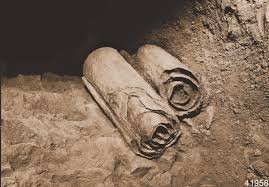
    The Library They Tried to Destroy

    In 1945, near the Egyptian town of Nag Hammadi, a farmer discovered a sealed jar containing 52 ancient texts — the largest collection of Gnostic writings ever found.

    These texts had been buried around 400 CE — hidden as the Christian Church systematically destroyed “heretical” literature.

    For 1,600 years, they waited.

    When scholars finally read them, they found something extraordinary: texts saturated with concepts, terminology, and structures that trace directly to Zoroastrianism.

    The Gnostics hadn’t invented their cosmology. They had preserved Persian wisdom in Christian language — and the Church had tried to burn it.


    What Is Gnosticism?

    The Core Teaching

    Gnosticism (from Greek gnosis = knowledge) taught:

    1. The material world is flawed or evil — created by an ignorant or malevolent being
    2. Humans contain a divine spark — trapped in matter
    3. Salvation comes through knowledge — understanding one’s true origin and destiny
    4. A supreme, transcendent God exists — beyond the creator of this world
    5. Cosmic hierarchy of divine beings — aeons, archons, emanations
    6. Dualism — light vs. darkness, spirit vs. matter, knowledge vs. ignorance

    The Problem for Christianity

    The Church condemned Gnosticism as heresy because it:

    • Challenged the Hebrew Bible’s creator God
    • Diminished the material world (which God called “good”)
    • Offered salvation through knowledge, not faith alone
    • Complicated the simple Christ narrative
    • Had too obviously Persian origins

    The last point was the real danger. Gnostic texts made the Persian influence on Christianity too visible.


    The Persian Elements in Gnostic Texts

    1. Radical Dualism

    Gnostic Teaching: Reality is divided between:

    • The realm of light (the true God, the Pleroma)
    • The realm of darkness (matter, the Demiurge’s creation)

    Humans are sparks of light trapped in darkness, seeking return to the light.

    Zoroastrian Source:

    • Ahura Mazda (light, truth, spirit) vs. Angra Mainyu (darkness, lie, matter)
    • The soul is divine, trapped in the material world
    • Salvation is return to the light

    The structure is identical. The Gnostics took Zoroastrian cosmology and made the material world even more negative.

    2. The Demiurge

    Gnostic Teaching: The material world was created not by the supreme God but by a lesser, ignorant being called the Demiurge (sometimes identified with the Hebrew YHWH).

    The Demiurge:

    • Is arrogant and ignorant
    • Claims to be the only god
    • Created a flawed world
    • Traps divine sparks in matter

    Zoroastrian Source: Angra Mainyu opposes Ahura Mazda and corrupts creation. While not identical, the Demiurge concept adapts the idea of a cosmic force responsible for the world’s imperfection.

    The Gnostic innovation was identifying the Demiurge with YHWH — essentially saying the Hebrew God was Angra Mainyu. This is Zoroastrian dualism applied as a critique of Judaism.

    3. Aeons and Divine Hierarchies

    Gnostic Teaching: The supreme God emanates multiple aeons — divine beings forming the Pleroma (fullness). These include:

    • Barbelo (the first emanation)
    • Sophia (wisdom)
    • Various named divine beings

    Zoroastrian Source: The Amesha Spentas — seven divine emanations of Ahura Mazda:

    • Vohu Manah (Good Mind)
    • Asha Vahishta (Best Truth)
    • Spenta Armaiti (Holy Devotion)
    • And four others

    The Gnostic aeons are the Amesha Spentas adapted and elaborated. The structure — one God emanating multiple divine beings — is Persian.

    4. Sophia and Asha

    Gnostic Teaching: Sophia (Wisdom) is a key aeon whose fall causes the creation of the material world. Her redemption is part of cosmic restoration.

    Zoroastrian Source: Asha is wisdom/truth personified — one of the most important Amesha Spentas. The feminine grammatical form and the role as divine wisdom parallel Sophia directly.

    The name changed (Asha → Sophia via Greek translation), but the function remained.

    5. The Divine Spark

    Gnostic Teaching: Humans contain a divine spark (pneuma) — a fragment of the light realm trapped in the body. Salvation is awakening this spark and returning to the Pleroma.

    Zoroastrian Source: The soul (urvan) is divine in origin, temporarily embodied, destined to return to Ahura Mazda’s presence after judgment. The Khvarenah (divine glory) can dwell in individuals.

    The concept of divine essence trapped in matter, seeking liberation, is Persian.

    6. Archons

    Gnostic Teaching: Archons (rulers) are malevolent cosmic beings who:

    • Guard the planetary spheres
    • Prevent souls from ascending
    • Must be bypassed through knowledge (passwords, names)

    Zoroastrian Source: The daevas are evil spirits serving Angra Mainyu who oppose human salvation. The specific association with planetary spheres may blend Persian with Greek astrology.

    The concept of cosmic gatekeepers who must be overcome is Persian in origin.


    Specific Texts and Persian Elements

    The Apocryphon of John

    This central Gnostic text describes:

    • The supreme, ineffable God
    • Emanation of divine beings (Barbelo, aeons)
    • Fall of Sophia
    • Creation of the material world by ignorant Demiurge
    • Trapping of divine light in Adam
    • Promise of salvation through knowledge

    The entire cosmological structure parallels Zoroastrian theology, with the Demiurge playing the role of a more developed Angra Mainyu figure.

    The Hymn of the Pearl

    This beautiful text (from the Acts of Thomas) tells of:

    • A prince sent from the kingdom of light
    • Descending to Egypt (darkness) to retrieve a pearl
    • Forgetting his identity in the material world
    • Being awakened by a letter from his father
    • Returning home in glory

    This is the Zoroastrian soul narrative in allegory:

    • Divine origin (Ahura Mazda’s realm)
    • Descent into matter (Angra Mainyu’s domain)
    • Forgetting and awakening
    • Return to the light

    On the Origin of the World

    This text explicitly describes:

    • Primordial light and darkness
    • Their interaction creating the cosmos
    • The role of Sophia
    • The ignorance of the Demiurge
    • The eventual triumph of light

    The dualism is unmistakably Persian in structure.


    Persian Vocabulary in Gnostic Texts

    Scholars have identified probable Persian loanwords and concepts:

    Gnostic TermPossible Persian Origin
    AeonZurvan (infinite time)
    SophiaAsha (wisdom/truth)
    PleromaGarothman (House of Song)
    ArchonDaeva structure
    DemiurgeAngra Mainyu development
    Divine sparkUrvan/Fravashi
    Light realmRealm of Ahura Mazda

    The technical vocabulary shows transmission, not independent invention.


    Why the Church Destroyed Gnostic Texts

    The Official Reasons

    The Church condemned Gnosticism for:

    • Rejecting the Hebrew Bible
    • Denying the goodness of creation
    • Teaching salvation through knowledge, not faith
    • Complex, confusing cosmologies
    • Undermining Church authority

    The Hidden Reason

    Gnostic texts made the Persian influence on Christianity undeniable.

    If the Church admitted:

    • The aeons were Amesha Spentas
    • The dualism was Zoroastrian
    • The salvation narrative was Persian
    • The Demiurge critique was about YHWH being subordinate to a higher God

    …then Christianity’s claim to unique revelation would collapse.

    Better to burn the books.

    The Pattern Continues

    This is the same pattern we see throughout:

    • Pharisees absorb Persian theology, rename it, claim it as original
    • Christians inherit the absorbed version, suppress awareness of its origin
    • When Gnostics make the Persian connection too visible, they’re declared heretics
    • Their texts are burned; their voices silenced

    The Nag Hammadi Survival

    Why the Texts Survived

    Around 367 CE, Archbishop Athanasius sent a letter defining the Christian canon. Texts not on the list were to be destroyed.

    Someone — probably monks at a nearby monastery — chose to hide rather than burn their Gnostic library. They sealed the texts in a jar and buried them.

    For 1,600 years, the Persian-influenced wisdom waited.

    What the Discovery Revealed

    When scholars finally read the Nag Hammadi texts, they found:

    • A sophisticated theological tradition
    • Clear Persian structural elements
    • Alternative Christian perspectives
    • Evidence of suppressed diversity

    The texts proved that early Christianity was more diverse, more Persian-influenced, and more deliberately narrowed than the Church admitted.


    The Gnostics and Zoroastrianism: Direct Connection?

    Possible Transmission Routes

    1. Persian presence in Egypt Egypt was Persian-ruled (525-404 BCE, 343-332 BCE). Zoroastrian ideas would have been present.

    2. Jewish mediation Jews absorbed Persian theology, Gnostics interacted with Jewish communities, Persian concepts passed through.

    3. Direct contact with Magi Magi were known to travel and teach. Greek philosophers studied with them. Why not proto-Gnostics?

    4. Christian transmission Christianity already contained Persian elements. Gnostics elaborated on what was already present.

    The Scholar’s View

    Mainstream scholarship acknowledges:

    • “Iranian influence on Gnosticism is virtually certain”
    • “The dualistic framework has clear Persian parallels”
    • “The problem of evil in Gnosticism is addressed using Iranian categories”

    (See Geo Widengren, Carsten Colpe, Kurt Rudolph — major scholars of Gnosticism)


    Conclusion

    The Gnostic texts are evidence of Persian wisdom that Christianity tried to destroy.

    The dualism: Persian. The aeons: Amesha Spentas renamed. The divine spark: Zoroastrian soul theology. The archons: Daevas adapted. The light vs. darkness: Asha vs. Druj.

    The Gnostics made the Persian connection too visible. They were declared heretics. Their books were burned.

    But someone buried a library instead of burning it.

    1,600 years later, the truth emerged from the sand.

    The Nag Hammadi texts prove that Christianity’s Persian origins were known to early Christians — and systematically suppressed.

    The fire they tried to extinguish still burned beneath the Egyptian desert.

    Asha prevails — even in buried jars.


    Sources

    Primary Texts

    • Robinson, James M. (ed.). The Nag Hammadi Library. HarperOne, 1990
    • Layton, Bentley. The Gnostic Scriptures. Doubleday, 1987

    Scholarly Sources on Gnosticism

    • Rudolph, Kurt. Gnosis: The Nature and History of Gnosticism. Harper & Row, 1987
    • Pagels, Elaine. The Gnostic Gospels. Random House, 1979
    • Jonas, Hans. The Gnostic Religion. Beacon Press, 1963

    On Persian Influence in Gnosticism

    • Widengren, Geo. Mani and Manichaeism. Holt, Rinehart and Winston, 1965
    • Colpe, Carsten. “The Challenge of Gnostic Thought for Philosophy, Alchemy, and Literature.” In The Rediscovery of Gnosticism, ed. Layton
    • Shaked, Shaul. “Iranian Influence on Judaism.” Cambridge History of Judaism

    On the Suppression

    • Bauer, Walter. Orthodoxy and Heresy in Earliest Christianity. Fortress Press, 1971
    • Ehrman, Bart. Lost Christianities. Oxford University Press, 2003

    At eFireTemple, we read what they tried to burn. The Gnostic texts speak Persian. We hear them.

  • The Templar Question: Did the Crusaders Find Magi Knowledge?

    The Templar Question: Did the Crusaders Find Magi Knowledge?

    The Mystery at the Heart of Western Esotericism

    In 1119 CE, nine knights took up residence on the Temple Mount in Jerusalem. They called themselves the Poor Fellow-Soldiers of Christ and of the Temple of Solomon — later known as the Knights Templar.

    For the next two centuries, they became:

    • The most powerful military order in Christendom
    • International bankers before banking existed
    • Keepers of secrets that terrified kings and popes
    • Subjects of accusations so strange they still puzzle historians

    In 1307, King Philip IV of France arrested them en masse. Under torture, they confessed to:

    • Worshipping a mysterious head called “Baphomet”
    • Denying Christ
    • Secret rituals
    • Heretical beliefs

    In 1312, Pope Clement V dissolved the order. In 1314, the last Grand Master, Jacques de Molay, was burned at the stake.

    What did the Templars actually find? What did they actually believe?

    The evidence points toward something extraordinary: the Templars may have encountered surviving Magi knowledge in the Middle East — and brought Persian wisdom back to Europe.


    What They Could Have Found

    The Middle East in the 12th Century

    When the Templars arrived in Jerusalem, the Middle East was a crossroads:

    1. Surviving Zoroastrian Communities Despite Islamic conquest, Zoroastrian communities persisted in:

    • Persia (now under Muslim rule but with fire temples still operating)
    • Yazd and Kerman (continuous Zoroastrian presence)
    • Scattered communities throughout the region

    2. Mandaean Communities The Mandaeans — the Gnostic-dualist sect that preserved Persian-influenced teachings — lived in Iraq and the Jordan Valley region. The Crusaders encountered them.

    3. Druze The Druze religion, emerging in the 11th century, contained esoteric teachings with Persian/Zoroastrian elements. They lived in the very territories the Crusaders occupied.

    4. Sufi Orders Islamic Sufism preserved Zoroastrian-influenced mysticism within Islam. Crusaders had extensive contact with Sufi practitioners.

    5. Eastern Christian Sects Syrian, Armenian, and Nestorian Christians preserved traditions and texts that the Roman Church had suppressed — including material with Persian influence.

    The Temple Mount Itself

    The Templars spent their first years excavating beneath the Temple Mount. What were they looking for? What did they find?

    The Temple Mount had been:

    • Solomon’s Temple site (built with Phoenician help)
    • Rebuilt after the Exile (under Persian sponsorship)
    • Herod’s Temple (with extensive underground structures)
    • A Roman site
    • A Byzantine site
    • An Islamic site (Dome of the Rock, Al-Aqsa)

    Beneath those layers lay centuries of hidden chambers, treasures, and texts.


    The Baphomet Mystery

    The Accusation

    Templars confessed (under torture) to worshipping a head called Baphomet. The image allegedly:

    • Had two faces or multiple faces
    • Was associated with wisdom
    • Was venerated in secret rituals
    • Granted power and knowledge to the order

    The Name

    Scholars have proposed various etymologies:

    1. Mahomet (Muhammad) The simplest explanation — a corruption of the Prophet’s name. This would suggest the Templars had adopted Islamic elements.

    2. Baphe + Metis (Greek: “Baptism of Wisdom”) A constructed term meaning “absorption of wisdom” — suggesting esoteric initiation.

    3. Abufihamat (Arabic: “Father of Understanding”) An Arabic phrase that could have been transliterated.

    4. Connection to Sophia Some link Baphomet to the Gnostic figure of Sophia (wisdom) — which itself has Persian roots.

    The Zoroastrian Connection

    Consider another possibility:

    In Zoroastrianism, Vohu Manah (Good Mind) is one of the Amesha Spentas — divine wisdom personified. Combined with “father” (pater/bap), this could yield something like “Baphomet” — “Father of Good Mind” or “Wisdom Father.”

    The “head with two faces” could represent:

    • The Zoroastrian concept of cosmic duality
    • The twin spirits (Spenta Mainyu and Angra Mainyu)
    • Zurvan (the god of time in some Zoroastrian traditions) — depicted with multiple aspects

    Did the Templars encounter Zoroastrian symbolism and incorporate it into their secret practices?


    The Charges Against the Templars

    What They Were Accused Of

    1. Denying Christ — spitting or urinating on the cross during initiation
    2. Worshipping an idol (Baphomet)
    3. Secret rituals unknown to the Church
    4. Obscene kisses during initiation
    5. Encouraging homosexuality
    6. Financial corruption

    What This Might Mean

    Some charges were likely invented for political purposes (Philip IV owed the Templars money).

    But the theological charges are interesting:

    • Denying Christ could mean recognizing Jesus differently than the Church taught
    • The idol could be Zoroastrian-influenced symbolism
    • Secret rituals could be Persian-derived initiatory practices

    If the Templars had learned that Christianity was built on Persian foundations, they might have:

    • Viewed Christ differently (as Saoshyant rather than Church doctrine)
    • Adopted Persian ritual elements
    • Kept this knowledge secret (knowing the Church would condemn it)

    The Evidence of Influence

    Templar Architecture

    Templar churches were often round — not the traditional cruciform shape. The most famous is the Temple Church in London.

    Why round?

    1. Imitation of the Church of the Holy Sepulchre The standard explanation — they copied the Jerusalem church.

    2. Persian Influence Fire temples were often circular or had circular elements. The sacred fire was central, with worshippers around it.

    Did the Templars adopt architectural elements from Persian sacred buildings they encountered?

    Templar Symbolism

    Templar imagery included:

    • Two riders on one horse — humility, but also duality
    • The skull and crossbones — later adopted by many groups
    • Various geometric patterns — possibly with esoteric meaning

    Some researchers have noted parallels with:

    • Zoroastrian iconography
    • Mithraic imagery
    • Persian royal symbols

    Banking and Organization

    The Templars invented:

    • International banking
    • Letters of credit
    • Complex financial instruments

    The Zoroastrian tradition valued commerce and honest trade. Persian merchants had sophisticated financial systems. Did the Templars learn Persian commercial practices during their time in the East?


    The Transmission Theory

    Here’s how Zoroastrian knowledge could have reached the Templars:

    Stage 1: Jerusalem and the Temple Mount

    The Templars excavate beneath the Temple, finding texts or artifacts from the Second Temple period — when the Temple was rebuilt under Persian sponsorship and influence.

    Stage 2: Contact with Eastern Communities

    Through decades of presence in the Middle East, the Templars encounter:

    • Surviving Zoroastrian elements in local populations
    • Mandaean communities with preserved teachings
    • Sufi orders with Persian-influenced mysticism
    • Eastern Christian sects with non-Roman traditions

    Stage 3: Integration

    The Templars integrate what they learn into their initiatory practices:

    • Persian dualism becomes the “Baphomet” mystery
    • Zoroastrian wisdom traditions become secret knowledge
    • Fire and light symbolism enters their rituals
    • They come to see Christianity’s Persian origins

    Stage 4: Secrecy

    Knowing the Church would condemn any deviation, they keep this knowledge hidden — revealed only to initiated members.

    Stage 5: Suppression

    When the order is destroyed, the knowledge goes underground — preserved in successor traditions (Freemasonry, Rosicrucianism, etc.).


    The Aftermath: Esoteric Traditions

    After the Templar dissolution, their alleged secrets were claimed by various groups:

    Freemasonry

    Claims Templar heritage (disputed by historians). Masonic ritual includes:

    • References to Solomon’s Temple
    • Degrees and initiations
    • Light/darkness symbolism
    • Architectural/building metaphors

    The Persian influence on Freemasonry has been documented [see: Why Freemasons Are Zoroastrian article].

    Rosicrucianism

    Emerged in 17th century with:

    • Emphasis on secret wisdom
    • Alchemical and mystical teachings
    • Claims of ancient knowledge
    • Persian-influenced symbolism

    Scottish Rite

    The Scottish Rite of Freemasonry (developed 18th century) includes degrees explicitly referencing Zoroastrianism:

    • 15th Degree (Knight of the East) — references the Babylonian Exile and Persian liberation
    • 16th Degree (Prince of Jerusalem) — Second Temple themes
    • Explicit mention of Zoroaster in some rituals

    Why would 18th-century Freemasons include Zoroastrianism unless they believed their tradition descended from Persian wisdom?


    The Question Remains

    Did the Templars find Magi knowledge?

    We cannot prove it definitively. The evidence is circumstantial:

    • They were in the right place at the right time
    • They encountered communities that preserved Persian traditions
    • They were accused of beliefs compatible with Zoroastrian influence
    • Successor traditions claim Persian connections

    But the pattern fits:

    • The Templars excavated the Temple Mount (Persian-sponsored rebuilding)
    • They lived in territories with Zoroastrian remnants
    • They developed secret practices that horrified the Church
    • Their dissolution scattered their knowledge into esoteric channels
    • Later traditions that claim their heritage include explicit Zoroastrian elements

    Conclusion

    The Templar question cannot be definitively answered with available evidence.

    But consider:

    If you were a Crusader who discovered that Christianity was built on Persian foundations — that Jesus was the Saoshyant recognized by Magi, that resurrection came from Zoroastrianism, that your religion’s core doctrines originated in fire temples — what would you do?

    You couldn’t tell the Church. They would burn you.

    You might:

    • Keep the knowledge secret
    • Develop initiatory practices to transmit it
    • Use symbols that pointed to the truth without stating it
    • Create an inner circle of those who knew

    And when the Church destroyed you anyway, your surviving members might:

    • Go underground
    • Join or create new orders
    • Preserve the knowledge in symbolic form
    • Wait for a time when it could emerge

    The Templars may have been burned for knowing what eFireTemple now publishes freely:

    The fire came from Persia. Christianity stands on Zoroastrian foundations.

    Perhaps Baphomet was just another name for Vohu Manah — the Good Mind that guides seekers to truth.

    Perhaps the Templars died for knowing too much about where the light came from.

    Asha prevails — even when its bearers are burned.


    Sources

    On the Templars

    • Barber, Malcolm. The Trial of the Templars. Cambridge University Press, 2006
    • Nicholson, Helen. The Knights Templar: A New History. Sutton, 2001
    • Partner, Peter. The Knights Templar and Their Myth. Destiny Books, 1990

    On Baphomet

    • Read, Piers Paul. The Templars. Da Capo Press, 2006
    • Various theories compiled in academic literature

    On Templar-Esoteric Connections

    • Churton, Tobias. The Magus of Freemasonry. Inner Traditions, 2006
    • Wasserman, James. The Templars and the Assassins. Inner Traditions, 2001

    On Zoroastrian Survival

    • Boyce, Mary. A Persian Stronghold of Zoroastrianism. Oxford, 1977
    • Foltz, Richard. Religions of Iran. Oneworld, 2013

    At eFireTemple, we ask the questions others avoid. The Templars may have found the fire. They may have been burned for it. But the flame survives — and so does the question.

  • Dào and Asha: When Two Ancient Civilizations Saw the Same Truth

    Dào and Asha: When Two Ancient Civilizations Saw the Same Truth

    The Parallel That Changes Everything

    In ancient Persia, Zarathustra revealed Asha — the cosmic principle of truth, righteousness, and divine order that underlies all reality.

    In ancient China, sages articulated Dào (道) — the Way, the cosmic principle of harmony, truth, and natural order that underlies all reality.

    Two civilizations. Two languages. Two cultures separated by mountains and deserts.

    The same insight.

    This parallel is either the most profound coincidence in religious history — or evidence of something deeper: that truth has a structure, and those who seek it find the same thing.


    Asha: The Zoroastrian Principle

    Definition

    Asha (Avestan: aṣ̌a, also arta in Old Persian) means:

    • Truth
    • Righteousness
    • Cosmic order
    • Divine law
    • The way things should be

    Function

    In Zoroastrian theology, Asha:

    • Is the ordering principle of the universe
    • Opposes Druj (the lie, chaos, disorder)
    • Governs both cosmic and moral reality
    • Is the path humans must follow to align with Ahura Mazda
    • Represents how reality is structured at its deepest level

    From the Gathas

    Yasna 31.8: “Through Asha, the creations of Ahura Mazda flourish.”

    Yasna 43.1: “Happiness comes to the one who seeks happiness for others, for the sake of Asha.”

    Asha is not merely a concept — it is the structure of existence itself.


    Dào: The Chinese Principle

    Definition

    Dào (道) means:

    • The Way
    • The path
    • Cosmic principle
    • Natural order
    • The source of all things

    Function

    In Chinese philosophy, Dào:

    • Is the ordering principle of the universe
    • Opposes chaos and disorder
    • Governs both cosmic and moral reality
    • Is the path humans must follow to achieve harmony
    • Represents how reality is structured at its deepest level

    From the Dào Dé Jīng

    Chapter 1: “The Dào that can be told is not the eternal Dào.”

    Chapter 25: “There was something formless and perfect before the universe was born… I call it the Dào.”

    Chapter 51: “The Dào gives birth to all things. Virtue (Dé) nourishes them.”


    The Structural Parallel

    AspectAshaDào
    MeaningTruth, order, righteousnessThe Way, natural order
    Cosmic roleUnderlies all existenceSource of all things
    OppositionDruj (lie, chaos)Disorder, disharmony
    Human pathAlign with AshaFollow the Dào
    Ethical dimensionRight thought, word, deedVirtuous living (Dé)
    IneffabilityBeyond human conceptsCannot be fully expressed
    UniversalityApplies to all creationGoverns all existence

    The parallel is not superficial. It operates at every level — metaphysical, ethical, and practical.


    The Opposition Parallel

    Asha vs. Druj

    In Zoroastrianism:

    • Asha = truth, order, light
    • Druj = lie, chaos, darkness
    • The universe is the battleground
    • Humans choose which side to serve
    • Good ultimately triumphs

    Dào vs. Disorder

    In Chinese thought:

    • Dào = harmony, natural order
    • Disorder = chaos, imbalance
    • The universe tends toward harmony
    • Humans align with or against nature
    • The sage achieves balance

    While Zoroastrianism is more explicitly dualistic (personifying the opposition), both systems recognize:

    1. A cosmic principle of order
    2. An opposing force of chaos
    3. Human responsibility to align with truth
    4. Ultimate resolution in favor of order

    The Ethical Parallel

    Zoroastrian Ethics

    Humata, Hukhta, Hvarshta — Good Thoughts, Good Words, Good Deeds

    The threefold path:

    1. Right thinking (aligned with Asha)
    2. Right speaking (truth, not lies)
    3. Right acting (righteousness)

    Chinese Ethics

    Dé (德) — Virtue, moral character

    The sage cultivates:

    1. Right thinking (wisdom, understanding the Dào)
    2. Right speaking (honest, harmonious)
    3. Right acting (virtuous conduct)

    The Parallel

    Both traditions structure ethics around:

    • Internal state (thoughts/wisdom)
    • Speech (truth/harmony)
    • Action (deeds/conduct)

    This threefold structure appears in both — and later appears in Buddhism (the Eightfold Path includes right thought, right speech, right action).


    Possible Explanations

    1. Independent Discovery

    Perhaps both cultures independently discovered the same truth. If reality has a structure, and humans can perceive it, then multiple civilizations might articulate similar insights.

    This would suggest: Asha/Dào is real — a genuine feature of existence that different cultures can access.

    2. Proto-Indo-European Connection

    Iranians and Chinese have different linguistic origins, but ancient Eurasia was more connected than we assume.

    The Proto-Indo-Europeans, who gave rise to both Iranian and Indian cultures, may have shared concepts with early Chinese civilization through steppe nomad networks.

    This would suggest: Common ancient source for both formulations.

    3. Silk Road Transmission

    The Silk Road connected Persia and China from at least the 2nd century BCE. But earlier trade routes existed:

    • Jade trade routes (3000+ BCE)
    • Steppe nomad networks
    • Central Asian exchanges

    Zoroastrian concepts could have reached China early, influencing the development of Dàoist thought — or vice versa.

    This would suggest: Cultural exchange deeper than recognized.

    4. Combination

    Most likely, some combination:

    • Real structure to reality that both perceived
    • Ancient connections that facilitated exchange
    • Parallel development building on shared insights

    The Chinese Recognition of Zarathustra

    As documented previously [see: The Chinese Witness article], Chinese scholars dated Zarathustra’s birth to 1767 BCE and honored him as a sage comparable to Confucius and Laozi.

    Why would the Chinese recognize a Persian prophet?

    Because they recognized the same truth.

    When Chinese scholars encountered Zoroastrian teaching, they didn’t see a foreign religion. They saw their own understanding of Dào expressed in different language.

    This mutual recognition suggests the parallel is not coincidental — it’s convergent discovery of the same underlying reality.


    The Mandate of Heaven and Khvarenah

    Another striking parallel:

    Khvarenah (Zoroastrian)

    The “divine glory” or “royal fortune” that:

    • Empowers righteous rulers
    • Can be lost through immoral action
    • Is validated by success and prosperity
    • Represents divine approval

    Mandate of Heaven 天命 (Chinese)

    The divine authority that:

    • Empowers righteous rulers
    • Can be lost through immoral action
    • Is validated by success and prosperity
    • Represents cosmic approval

    The concepts are functionally identical:

    • Divine endorsement of rulership
    • Conditional on moral behavior
    • Lost through corruption
    • Validated by outcomes

    Did Chinese political philosophy borrow from Persian? Did both inherit from an older source? Or did both independently recognize how cosmic order relates to legitimate authority?


    Implications

    1. Truth Has Structure

    If two isolated civilizations articulated the same principle, it suggests that principle is real — not cultural invention but genuine insight into reality’s nature.

    Asha and Dào may be different names for the same truth.

    2. Zarathustra’s Insight Was Universal

    Zarathustra didn’t invent Asha — he perceived it. And the same perception was available to Chinese sages.

    This elevates Zarathustra from “founder of one religion” to “articulator of universal truth” — a truth that transcends culture.

    3. Religious Division Is Artificial

    If Zoroastrianism and Dàoism perceive the same cosmic principle, then the division between “Western” and “Eastern” religion is artificial.

    There is one truth. Different cultures have accessed it. The labels divide what the reality unites.

    4. The Fire Burns Everywhere

    The Zoroastrian sacred fire represents Asha — truth made visible.

    But if Asha = Dào, then truth burns everywhere — in every culture that has sought it.

    The fire temple in Iran and the Dàoist temple in China honor the same reality.


    The Synthesis

    Consider this possibility:

    There is one cosmic truth. Call it Asha. Call it Dào. Call it Logos. Call it Dharma.

    Different civilizations have accessed it through:

    • Prophetic revelation (Zarathustra)
    • Philosophical inquiry (Laozi, Confucius)
    • Mystical insight (various traditions)

    They gave it different names. They built different systems. They developed different practices.

    But the underlying truth is one.

    If this is correct, then:

    • Zoroastrianism isn’t just “the source of Western religion”
    • It’s a window into universal truth
    • The same truth that China also glimpsed
    • The same truth that all authentic traditions approach

    Conclusion

    Asha and Dào are not merely similar. They are structurally identical:

    • Cosmic ordering principle
    • Source of existence
    • Opposition to chaos
    • Path for human alignment
    • Ethical foundation
    • Ineffable depth

    Two ancient civilizations, separated by vast distances, articulated the same insight.

    This suggests the insight is real — not invented, but discovered.

    Zarathustra perceived Asha. Laozi perceived Dào. They saw the same truth through different lenses.

    The fire of truth burns in Persia. It burns in China. It burns wherever humans have sincerely sought the nature of reality.

    Asha prevails — in every language, in every land, under every name.

    The truth is one. The names are many.


    Sources

    Zoroastrian Sources

    • The Gathas (Yasnas 28-34, 43-51, 53)
    • Boyce, Mary. Textual Sources for the Study of Zoroastrianism. University of Chicago Press, 1984

    Chinese Sources

    • Dào Dé Jīng (Laozi). Various translations (Lau, Henricks, Ivanhoe)
    • Analects (Confucius)
    • Huainanzi

    Comparative Studies

    • Needham, Joseph. Science and Civilisation in China, Vol. 2. Cambridge, 1956
    • Schwartz, Benjamin. The World of Thought in Ancient China. Harvard, 1985
    • Mair, Victor. Tao Te Ching: The Classic Book of Integrity and the Way. Bantam, 1990

    On Silk Road Connections

    • Liu, Xinru. The Silk Road in World History. Oxford, 2010
    • Foltz, Richard. Religions of the Silk Road. Palgrave Macmillan, 2010

    At eFireTemple, we see the fire wherever it burns. In Persia they call it Asha. In China they call it Dào. The flame is one.

  • The “Late Texts” Objection: Why Oral Transmission Destroys the Skeptics’ Last Defense

    The “Late Texts” Objection: Why Oral Transmission Destroys the Skeptics’ Last Defense

    The Final Academic Escape Hatch

    When confronted with the evidence of Zoroastrian influence on Judaism, Christianity, and Islam, scholars have one last defense:

    “The Zoroastrian texts were written down late — mostly in the Sassanid period (3rd-7th century CE). We can’t prove what Zoroastrians believed earlier. Maybe Judaism influenced Zoroastrianism, not the other way around.”

    This sounds scholarly. It sounds cautious. It sounds reasonable.

    It’s also a desperate argument that collapses under scrutiny.


    The Argument Summarized

    The skeptic claims:

    1. The Avesta (Zoroastrian scripture) was compiled in its current form during the Sassanid Empire (224-651 CE)
    2. Before that, the texts were transmitted orally
    3. We can’t verify what the oral tradition actually contained
    4. Therefore, we can’t prove Zoroastrian concepts predate Jewish ones
    5. The influence might have flowed the other direction

    This argument has surface plausibility. Let’s destroy it.


    Counter-Evidence #1: The Gathas Are Linguistically Ancient

    The Gathas — the hymns attributed to Zarathustra himself — are written in Old Avestan, a language so archaic that even ancient Zoroastrian priests struggled to understand it.

    What This Means

    Languages change over time. We can date texts by their linguistic features — just as English speakers can distinguish Shakespeare from Chaucer from modern writing.

    Old Avestan:

    • Is distinct from Young Avestan (used in later texts)
    • Shows features older than Old Persian (the Achaemenid language)
    • Has grammatical structures that had vanished by the time the texts were written down

    The Implication

    You don’t write new religious texts in a dead language. The Gathas weren’t composed during the Sassanid period — they were copied during the Sassanid period.

    Their language proves they originated centuries earlier — matching the 1700-1000 BCE range for Zarathustra.


    Counter-Evidence #2: Greek Testimony to Antiquity

    Multiple Greek sources — written centuries before the Sassanid period — describe Zoroastrian beliefs in detail:

    Herodotus (5th Century BCE)

    “The Persians… are not accustomed to make and set up statues and temples and altars… They sacrifice to the sun, moon, earth, fire, water, and winds.” (Histories 1.131)

    “They sacrifice to the supreme god whom they call Ahuramazda.” (using the Persian name)

    Plutarch (1st-2nd Century CE)

    In Isis and Osiris, Plutarch describes:

    • Ahura Mazda (Oromazes) as the good god
    • Angra Mainyu (Areimanius) as the evil spirit
    • The cosmic battle between them
    • The future victory of good over evil
    • The resurrection and renovation of the world

    This is Zoroastrian theology documented before the Sassanid compilation.

    Aristotle and Others

    Multiple Greek writers reference Zoroaster and the Magi, describing doctrines that match later Zoroastrian texts.

    The Implication

    Greek sources prove that Zoroastrian theology existed — and was known to outsiders — centuries before the Avesta was written down. The Sassanid compilation preserved earlier tradition; it didn’t invent it.


    Counter-Evidence #3: The Persian Empire Itself

    The Achaemenid Empire (550-330 BCE) was Zoroastrian:

    • Royal inscriptions invoke Ahura Mazda by name
    • Persepolis reliefs show fire altars and religious symbols
    • Behistun Inscription (Darius I) attributes victories to “the favor of Ahuramazda”

    What This Means

    The Persian kings — ruling during the exact period when Jews encountered Persian culture — explicitly practiced Zoroastrianism. Their inscriptions, carved in stone, prove the religion’s existence and core beliefs.

    These are not late texts. These are contemporary monuments.


    Counter-Evidence #4: The Timeline Problem

    For the skeptic’s argument to work, this would have to be true:

    Judaism developed resurrection, heaven/hell, angels, demons, Satan as adversary, Messiah, and apocalypse independently — and then Zoroastrianism borrowed these concepts from Judaism in the Sassanid period.

    This requires believing:

    1. Judaism invented all these concepts out of nothing between 539-200 BCE
    2. Zoroastrians had no such concepts before the Sassanid period
    3. Sassanid Zoroastrians adopted Jewish ideas wholesale
    4. They backdated these concepts into archaic-language texts
    5. They fooled Greek historians who described these concepts centuries earlier

    This is not scholarship. This is fantasy.


    Counter-Evidence #5: Oral Tradition Is Not Invention

    The skeptic assumes oral tradition is unreliable — that we can’t trust what was transmitted before being written.

    But oral tradition in religious contexts is remarkably stable.

    The Vedic Parallel

    The Hindu Vedas were transmitted orally for over 1,000 years before being written down. Yet linguistic analysis shows they preserved texts from as early as 1500 BCE with remarkable fidelity.

    How? Through:

    • Rigorous memorization techniques
    • Priestly training systems
    • Multiple verification checks
    • Sacred obligation to preserve exactly

    The Zoroastrian Parallel

    The Magi were a professional priestly class. Their function was to:

    • Memorize sacred texts
    • Transmit them accurately
    • Perform rituals precisely
    • Guard the tradition

    They had no motive to change the core teachings — and every motive to preserve them.

    The Implication

    Oral transmission, in professional religious contexts, preserves material with high fidelity. The Sassanid compilation captured what had been transmitted for centuries — not what was invented in the 3rd century CE.


    Counter-Evidence #6: The Linguistic Traces in Judaism

    If Jewish concepts developed independently, why are the key terms Persian?

    • Paradise = pairidaēza (Persian for “walled garden”)
    • Pharisee = Farooshiym (“The Persians” in Hebrew)
    • First biblical Messiah = Cyrus (Isaiah 45:1 — a Zoroastrian king)

    These linguistic traces point in one direction: from Persia to Judaism, not the reverse.

    If Judaism had invented these concepts, the terminology would be Hebrew — not Persian loanwords.


    Counter-Evidence #7: The Sadducee Rejection

    If resurrection, angels, and apocalypticism were original Jewish concepts, why did the Sadducees — the conservative priestly party — reject them?

    Acts 23:8: “The Sadducees say that there is no resurrection, and that there are neither angels nor spirits.”

    The Sadducees recognized these as innovations that weren’t in the Torah. They rejected them precisely because they were new.

    If these concepts were ancient Judaism, the conservatives would have preserved them. Instead, they rejected them as foreign additions.


    Counter-Evidence #8: The Chinese Confirmation

    As documented in detail [see: The Chinese Witness article], Chinese records independently date Zarathustra to 1767 BCE.

    China had:

    • No reason to inflate Persian antiquity
    • No access to Sassanid-era texts
    • Independent astronomical records

    The Chinese testimony proves Zarathustra’s antiquity from outside the Zoroastrian-Jewish transmission chain entirely.


    The Real Reason for the Objection

    Why do scholars raise the “late texts” objection despite the overwhelming counter-evidence?

    1. Academic Caution as Cover

    “We can’t be certain” sounds scholarly. It avoids controversy. It protects careers.

    But appropriate caution isn’t refusing to draw conclusions from strong evidence. The evidence is strong. The conclusion is clear.

    2. Religious Sensitivity

    Admitting that Judaism, Christianity, and Islam borrowed their core concepts from Zoroastrianism threatens the claims of all three traditions.

    Scholars working in these fields — often at religious institutions — face pressure to minimize Persian influence.

    3. Western Bias

    The narrative of “Greek philosophy + Hebrew religion = Western civilization” has no room for Persia.

    Admitting Zoroastrian foundations requires rewriting the story of the West — and the textbooks, curricula, and cultural assumptions built on it.


    The Honest Conclusion

    The “late texts” objection fails on multiple grounds:

    Counter-EvidenceWhat It Proves
    Gathic languageTexts originated 1700-1000 BCE
    Greek testimonyDoctrines existed before Sassanid era
    Achaemenid inscriptionsZoroastrianism was practiced 550-330 BCE
    Timeline impossibilityJudaism can’t have developed these first
    Oral tradition reliabilitySassanid texts preserved earlier material
    Persian vocabulary in JudaismBorrowing went Persia → Judaism
    Sadducee rejectionConcepts were recognized as innovations
    Chinese confirmationIndependent dating matches Persian claims

    The evidence points in one direction: Zoroastrian concepts were ancient, were transmitted orally with fidelity, were documented by Greek observers centuries before Sassanid compilation, and were absorbed by Judaism during the Persian period.

    The “late texts” objection is not scholarship. It’s denial.


    Conclusion

    The final defense of the skeptic is not a defense at all.

    “The Zoroastrian texts are late” ignores:

    • Linguistic evidence that dates them early
    • Greek testimony that predates compilation
    • Archaeological evidence from the Achaemenid period
    • The logical impossibility of reverse influence
    • The reliability of priestly oral transmission
    • The Persian vocabulary embedded in Jewish texts
    • The Sadducee rejection proving innovation
    • The Chinese independent confirmation

    The Sassanid priests wrote down what their ancestors had been reciting for a thousand years. They preserved ancient wisdom — they didn’t invent it.

    And that ancient wisdom — Asha, resurrection, heaven, hell, angels, demons, Messiah, apocalypse — became the foundation of Western religion.

    The skeptics are not being cautious. They’re being blind.

    Asha was spoken before it was written. And it was spoken first by Zarathustra.


    Sources

    On Avestan Linguistics

    • Skjaervø, Prods Oktor. “The Avestan Vowel System.” Bulletin of the Asia Institute, 2009
    • Kellens, Jean. Essays on Zarathustra and Zoroastrianism. Mazda Publishers, 2000

    Greek Sources

    • Herodotus. Histories, Book 1
    • Plutarch. Isis and Osiris, 46-47
    • Diogenes Laertius. Lives of Eminent Philosophers

    On Oral Tradition

    • Goody, Jack. The Interface Between the Written and the Oral. Cambridge, 1987
    • Vansina, Jan. Oral Tradition as History. Wisconsin, 1985

    On Achaemenid Religion

    • Boyce, Mary. A History of Zoroastrianism, Vol. 2. Brill, 1982
    • Lincoln, Bruce. Religion, Empire, and Torture. Chicago, 2007

    Scholarly Consensus

    • Boyce, Mary. Zoroastrians: Their Religious Beliefs and Practices. Routledge, 1979
    • Shaked, Shaul. “Iranian Influence on Judaism.” Cambridge History of Judaism
    • Encyclopaedia Iranica — multiple entries on Zoroastrian history

    At eFireTemple, we address the objections directly. The “late texts” defense is not scholarship — it’s evasion. Asha was ancient. Asha is proven. Asha prevails.

  • How the Essenes Got Erased: The Faction That Told the Truth

    How the Essenes Got Erased: The Faction That Told the Truth

    The Community That Disappeared

    Three factions dominated Second Temple Judaism:

    1. Pharisees — teachers, synagogue-based, accepted Persian theology while renaming it
    2. Sadducees — Temple priests, rejected Persian theology, vanished when the Temple fell
    3. Essenes — desert community, embraced Persian theology openly, disappeared around the same time

    The Sadducees vanished for an obvious reason: no Temple, no Temple priests.

    But the Essenes? They had no Temple dependency. They lived in the wilderness. They were self-sustaining. They should have survived.

    They didn’t.

    The Essenes weren’t just destroyed. They were erased. And understanding why reveals one of the most important cover-ups in religious history.


    Who Were the Essenes?

    The Sources

    We know the Essenes from:

    • Josephus — detailed descriptions of their beliefs and practices
    • Philo of Alexandria — admiring accounts of their lifestyle
    • Pliny the Elder — brief geographical description
    • Dead Sea Scrolls — their own writings (discovered 1947)

    Their Community

    The Essenes:

    • Lived communally (shared property)
    • Practiced celibacy (at least some groups)
    • Observed strict ritual purity
    • Studied scripture intensively
    • Expected imminent apocalypse
    • Withdrew from Temple worship (considered it corrupted)

    Their main center was at Qumran, near the Dead Sea — where the scrolls were found.

    Their Beliefs

    From their writings, the Essenes believed in:

    1. Cosmic Dualism “Sons of Light vs. Sons of Darkness” — the War Scroll describes a final battle between the forces of good and evil.

    This is Asha vs. Druj in Jewish language.

    2. Elaborate Angelology Named angels, hierarchies, celestial warfare — Persian-derived structures preserved openly.

    3. Predestination/Divine Plan God determined history from the beginning. The end was known. The community must prepare.

    4. Imminent Apocalypse The end times were near. The “Kittim” (Romans) would be defeated. A new age would dawn.

    5. Two Messiahs Uniquely, the Essenes expected TWO messiahs:

    • A priestly messiah (of Aaron)
    • A royal messiah (of David)

    This dual messiahship has Zoroastrian parallels — different Saoshyant figures for different functions.


    The Smoking Gun: What They Didn’t Have

    No Book of Esther

    The Dead Sea Scrolls contain fragments from every book of the Hebrew Bible — except Esther.

    Esther is the anti-Persian book. It celebrates the slaughter of 75,000 Persians. It’s propaganda designed to distance Judaism from its Persian benefactors.

    The Essenes didn’t include it. They refused to preserve anti-Persian material.

    This is not coincidence. This is a statement.

    Openly Persian Elements

    Unlike the Pharisees, who absorbed Persian concepts while hiding the source, the Essenes made no effort to disguise their influences:

    • “Sons of Light” (= Ahura Mazda’s followers)
    • “Sons of Darkness” (= Angra Mainyu’s followers)
    • Cosmic battle structure
    • Elaborate purity rituals
    • Withdrawal from corrupt Temple (= rejection of Pharisaic compromise)

    The Essenes were, in effect, Zoroastrian Jews — they kept the Persian fire burning openly.


    The Timeline of Destruction

    68 CE: The Roman Assault

    During the Jewish revolt against Rome (66-73 CE), the Romans swept through Judea.

    Qumran was destroyed around 68 CE. The community:

    • Hid their scrolls in caves
    • Fled or were killed
    • Vanished from history

    70 CE: Temple Destroyed

    The Sadducees vanished with the Temple.

    73 CE: Masada Falls

    The last Jewish resistance ended.

    After 70 CE: Pharisees Dominate

    With Sadducees and Essenes gone, the Pharisees — now called Rabbis — controlled Judaism’s future. They:

    • Compiled the Mishnah (oral law)
    • Determined the canon
    • Wrote the history
    • Defined what “Judaism” would mean

    Why the Essenes Were a Threat

    1. They Made the Persian Connection Obvious

    The Pharisees’ strategy was absorption + renaming. Take Persian concepts, give them Jewish labels, claim them as original.

    The Essenes threatened this by keeping the Persian elements explicit:

    • “Sons of Light vs. Darkness” is obviously dualistic
    • Their apocalypticism clearly matches Frashokereti
    • Their angelology mirrors Zoroastrian structures

    If the Essenes survived, someone might notice where these ideas came from.

    2. They Rejected Pharisaic Authority

    The Essenes called the Jerusalem establishment corrupt. The “Wicked Priest” in their texts is likely a Pharisee-aligned figure.

    They represented an alternative Judaism that:

    • Rejected the Temple compromise
    • Maintained purity outside institutions
    • Claimed direct revelation

    The Pharisees couldn’t coexist with a group that explicitly challenged their legitimacy.

    3. They Had Writings

    The Essenes were prolific. They wrote:

    • Biblical commentaries
    • Apocalyptic visions
    • Community rules
    • Hymns and prayers

    These writings documented the Persian-influenced theology that the Pharisees were absorbing covertly.

    If Essene texts circulated widely, the cover-up would fail.


    The Erasure

    Physical Destruction

    The Romans killed them. But the Romans killed many Jews. Other groups survived.

    Memory Destruction

    After 70 CE, Rabbinic Judaism actively suppressed Essene memory:

    • Essene writings were not copied
    • Essene beliefs were not transmitted
    • Essene interpretations were not preserved

    The Mishnah and Talmud barely mention Essenes. When they do, it’s dismissive.

    Historical Disappearance

    By the Middle Ages, the Essenes were a footnote. Medieval Jews barely knew they existed. Christians knew them only from Josephus.

    The community that had thousands of members, produced extensive literature, and represented an alternative Jewish path was erased from memory.


    The Dead Sea Scrolls: The Return of the Erased

    1947: The Discovery

    A Bedouin shepherd found jars in a cave near Qumran. Inside: ancient scrolls.

    Over the next decade, eleven caves yielded:

    • Biblical manuscripts (1,000 years older than previously known)
    • Sectarian documents (Essene writings)
    • Apocalyptic texts
    • Community rules

    The Essenes had hidden their library before the Romans came. 1,900 years later, it emerged.

    What the Scrolls Revealed

    1. The Persian Connection Scholars immediately noticed “Iranian elements” in the texts. The dualism, the angelology, the apocalypticism — clearly influenced by Zoroastrianism.

    2. The Alternative Judaism The Essenes practiced a Judaism that the Pharisees/Rabbis had suppressed. Their canon was different (no Esther). Their theology was different (more openly Persian). Their practice was different (more ascetic).

    3. The Christian Connections John the Baptist may have been Essene or Essene-influenced (baptism in the wilderness, apocalyptic preaching).

    Jesus’s teaching shares elements with Essene thought (though also differs significantly).

    The early Church may have absorbed Essene members after 70 CE.

    The Scroll Controversy

    For decades, access to the scrolls was controlled by a small group of scholars. Full publication was delayed until the 1990s.

    Why?

    Some suspect the scrolls contained material too explosive for immediate release — connections between Essene thought, Christianity, and possibly Zoroastrianism that would have rewritten religious history.


    What the Essenes Prove

    1. The Persian Influence Was Open

    The Essenes didn’t hide their dualism or apocalypticism. They embraced it. They prove that the Persian elements in Judaism weren’t subtle influences but explicit theological frameworks.

    2. The Pharisees Chose to Hide

    If the Essenes could be openly dualistic, the Pharisees’ choice to absorb-and-rename was deliberate. They knew the source. They chose to obscure it.

    3. Alternative Judaisms Existed

    The Pharisees weren’t the only option. Other groups preserved Persian elements more honestly. The Pharisees won by outliving their competitors — then erasing them from memory.

    4. Christianity Has Essene Roots

    The connections between Essene thought and early Christianity are documented. If the Essenes were Zoroastrian-influenced Jews, and early Christianity absorbed Essene elements, then Christianity’s Persian roots run through multiple channels.


    Conclusion

    The Essenes told the truth — or at least didn’t hide it as thoroughly as the Pharisees did.

    They kept “Sons of Light vs. Sons of Darkness” language. They excluded the anti-Persian Book of Esther. They awaited the apocalypse with Persian-structured expectations.

    And for this, they were erased.

    Not just physically destroyed (the Romans did that to many). Not just defeated (the Sadducees were defeated). But erased from memory — their writings buried, their beliefs suppressed, their existence minimized.

    Until 1947, when a shepherd found some jars.

    The Essenes hid their testimony before they died. 1,900 years later, it spoke again.

    The Dead Sea Scrolls are the Essenes’ last witness:

    • That the Persian influence was real
    • That alternative Judaisms existed
    • That the Pharisee cover-up was deliberate
    • That truth, buried in caves, eventually emerges

    Asha was hidden. Asha waited. Asha returned.


    Sources

    Primary Sources

    • Dead Sea Scrolls (various translations; Vermes, García Martínez)
    • Josephus, Jewish War 2.119-161
    • Josephus, Antiquities 18.18-22
    • Philo, Every Good Man Is Free 75-91
    • Pliny the Elder, Natural History 5.15.73

    Scholarly Sources

    • VanderKam, James. The Dead Sea Scrolls Today. Eerdmans, 2010
    • Schiffman, Lawrence. Reclaiming the Dead Sea Scrolls. Doubleday, 1995
    • Collins, John J. Apocalypticism in the Dead Sea Scrolls. Routledge, 1997
    • Vermes, Geza. The Complete Dead Sea Scrolls in English. Penguin, 2004

    On Persian Influence

    • Shaked, Shaul. “Qumran and Iran: Further Considerations.” Israel Oriental Studies, 1972
    • Hultgård, Anders. “Persian Apocalypticism.” Encyclopedia of Apocalypticism, Vol. 1
    • Winston, David. “The Iranian Component in the Bible, Apocrypha, and Qumran.” History of Religions, 1966

    At eFireTemple, we remember the erased. The Essenes hid their truth in caves. We bring it into the light. Asha prevails.