Research Collection: Comparative Traditions

Greek, Christian, Islamic, philosophical, and other comparative religious studies.

  • The Marriage of Muhammad and Aisha, and the Institution of Slavery: A Critical Examination Through Modern Ethical and Legal Frameworks


    Abstract

    Islamic canonical sources record that the Prophet Muhammad married Aisha bint Abi Bakr when she was six years old and consummated the marriage when she was nine. Those same sources document Muhammad’s personal ownership of enslaved persons, his participation in the slave trade, and his role in establishing the legal frameworks that governed slavery in Islamic law for centuries. This article examines the primary sources on both subjects, assesses the scholarly debate over their reliability, and applies contemporary frameworks — developmental psychology, international child rights law, clinical definitions of pedophilic disorder, comparative religious ethics, and international human rights law — to evaluate the moral status of those acts. The analysis concludes that, measured against modern ethical and legal standards, the consummation of Muhammad’s marriage to a prepubescent nine-year-old constitutes child sexual abuse, and that his role as a slave owner and active participant in the institution of slavery — including the sexual use of enslaved women without consent — constitutes conduct that would be criminally prosecutable under contemporary law. The ideological consequences of treating those acts as prophetic precedent have caused — and continue to cause — measurable harm to children and enslaved persons across the Muslim world.


    I. The Primary Sources on the Marriage of Aisha

    Any serious analysis must begin with the Islamic tradition’s own testimony. The hadith literature — the collected sayings and reported actions of Muhammad — is the primary evidentiary foundation of Islamic law (Sharia). These are not hostile external sources; they are texts compiled, verified, and venerated by Muslim scholars as authoritative guides to correct conduct.

    The most authoritative hadith collections are Sahih al-Bukhari and Sahih Muslim, both compiled in the ninth century CE and accorded near-scriptural status in Sunni Islam. Their testimony on Aisha’s age is unambiguous and repeated.

    Sahih al-Bukhari, Volume 7, Book 62, Hadith 64:

    “Narrated ‘Aisha: that the Prophet married her when she was six years old and he consummated his marriage when she was nine years old.”

    Sahih al-Bukhari, Volume 7, Book 62, Hadith 65:

    “Narrated ‘Aisha: that the Prophet married her when she was six years old and he consummated his marriage when she was nine years old, and then she remained with him for nine years (i.e. till his death).”

    Sahih Muslim, Book 8, Hadith 3310:

    “Aisha reported: Allah’s Apostle married me when I was six years old, and I was admitted to his house when I was nine years old.”

    These accounts appear across multiple chains of transmission (isnad) and are classified by Islamic scholars as sahih — the highest grade of hadith reliability. The repetition across independent chains is precisely what Islamic authentication methodology uses to establish historical confidence. Scholars who wish to dismiss the age accounts face a significant methodological problem: the same authentication standards they use to establish the validity of Islamic law, prayer, and ritual practice would, if consistently applied, equally validate these reports.


    II. The Revisionist Counter-Argument and Its Weaknesses

    Beginning in the twentieth century, a number of Muslim scholars and apologists — motivated by legitimate discomfort with the implications — have argued that Aisha was older at the time of consummation, typically placing her age at between fourteen and nineteen. The most commonly cited arguments are as follows.

    The argument from Aisha’s sister: Proponents argue that Aisha’s sister Asma was ten years older, and since Asma reportedly died at approximately one hundred years old in 73 AH, Aisha must have been born earlier than the traditional account allows. However, this chain of inference depends on the accuracy of Asma’s birth year and her age at death — figures that are themselves contested and rely on sources no more authoritative than those recording Aisha’s age directly.

    The argument from Tabari’s account of Fatima: Some scholars argue that cross-referencing other chronological accounts in al-Tabari places Aisha’s birth earlier. However, al-Tabari himself records an age consistent with the Bukhari and Muslim accounts elsewhere, and these attempts at triangulation involve the same class of sources from which the six/nine figure is drawn.

    The methodological problem: As historian David Powers (Cornell University) and others have observed, revisionist chronologies have the character of motivated reasoning — they selectively apply skepticism to evidence yielding morally uncomfortable conclusions while accepting the methodology that generated those conclusions in other contexts. Islamic legal scholar Maulana Maududi, himself conservative, accepted the traditional ages. The scholarly consensus among historians of early Islam — Muslim and non-Muslim — remains that Aisha was nine at consummation. Watt, Spellberg, and Peters accept this in their standard historical works.


    III. The “Historical Context” Defense and Its Limits

    The most common scholarly defense is contextual: seventh-century Arabia had no concept of childhood as a protected developmental stage; betrothal of girls at young ages was normative across many societies; Muhammad must be judged by the standards of his time, not ours.

    This argument has genuine descriptive merit — child marriage was indeed widespread in Late Antiquity across Arabian, Byzantine, Persian, and Roman contexts. But it fails as a moral defense on several grounds.

    First, the argument from universality does not establish moral permissibility. Slavery was also near-universal in seventh-century Arabia and is now universally condemned. The historical normalcy of a practice does not make it right; it makes it historically explicable. These are different claims.

    Second, the contextual defense cannot be selectively applied. Islamic tradition does not merely record Muhammad’s marriage to Aisha as a historical fact; it enshrines his conduct as uswa hasana — the “beautiful example” for all Muslims for all time. The Quran states explicitly (33:21): “Indeed in the Messenger of Allah you have an excellent example to follow.” If Muhammad’s behavior is held to be normative and divinely endorsed across all time, the contextual defense — “he was a product of his time” — contradicts the theological claim being made. One cannot simultaneously argue that his example is eternally valid and that it should be judged only by seventh-century standards.

    Third, even within seventh-century standards, the marriage had features that attracted comment. Several hadith record that the Prophet’s companions expressed hesitation about the marriage. The marriage broker Khawla reportedly had to suggest Aisha specifically after Muhammad was mourning Khadija. The age gap — Muhammad was approximately fifty-three at consummation to Aisha’s nine — was notable even within a culture that practiced child betrothal.


    IV. Modern Developmental Psychology

    The contextual defense also fails when placed against what we now know, empirically, about child development.

    The American Psychological Association defines childhood sexual abuse as any sexual activity with a child who cannot adequately understand or consent to the activity due to developmental immaturity. At nine years old, a child is in the pre-adolescent developmental stage. Neuroscientific research consistently demonstrates that children at this age lack:

    • The neurological capacity to assess long-term consequences of decisions (prefrontal cortex maturation is incomplete until the mid-twenties)
    • The psychological frameworks to evaluate power asymmetries between themselves and adult authority figures
    • The emotional and relational vocabulary to understand what marriage and sexual activity entail
    • The physical maturity associated with reduced trauma risk from sexual penetration

    Research published in the Journal of Child Sexual Abuse and the Archives of Sexual Behavior documents that early childhood sexual experiences — regardless of cultural framing — correlate strongly with post-traumatic stress disorder, dissociation, impaired sexual development in adulthood, and compromised interpersonal functioning. The cultural labeling of the experience as “marriage” does not alter the neurological and psychological impact.

    Aisha herself, in the hadith record, describes playing with dolls and having playmates come to her home — classic markers of childhood play behavior — contemporaneously with her marriage. The same sources that validate the marriage record a child who was, behaviorally, still a child.


    V. International Legal Frameworks on Child Marriage

    The United Nations Convention on the Rights of the Child (UNCRC), ratified by 196 states and constituting the most widely ratified human rights treaty in history, establishes that:

    • Children have the right to protection from all forms of sexual exploitation and abuse (Article 34)
    • State parties shall take measures to abolish traditional practices prejudicial to the health of children (Article 24)
    • The best interests of the child shall be a primary consideration in all actions concerning children (Article 3)

    Under the legal frameworks of virtually every nation on earth, sexual intercourse with a nine-year-old child constitutes statutory rape. Age of consent laws exist across 196 jurisdictions; the global modal age of consent is sixteen. No jurisdiction on earth sets the age of consent at nine. In the majority of Muslim-majority nations, including Pakistan, Egypt, and Indonesia, the law formally prohibits marriage below the age of sixteen or eighteen — though enforcement is inconsistent.

    The International Centre for Research on Women estimates that 15 million girls per year are married before the age of eighteen. Research by UNICEF and the Population Council consistently identifies religious precedent — specifically the example of Muhammad and Aisha — as among the primary justifications offered by communities and religious leaders who resist reform of child marriage laws. The harm is not abstract or historical.


    VI. The DSM-5 Definition and Its Application

    The Diagnostic and Statistical Manual of Mental Disorders, Fifth Edition (DSM-5), defines pedophilic disorder as involving recurrent, intense sexually arousing fantasies, urges, or behaviors involving sexual activity with a prepubescent child (generally age thirteen or younger), over a period of at least six months.

    The application of clinical nosology to historical figures must be undertaken with caution — retrospective diagnosis carries serious methodological risks, and psychiatric categories are descriptive rather than condemnatory in clinical context. However, the behavioral record is not ambiguous: Muhammad’s sexual behavior with a nine-year-old — regardless of cultural context, theological framing, or personal motivation — meets the behavioral criterion of the DSM-5 definition of pedophilic behavior.

    Furthermore, the hadith record suggests a pattern that extends beyond Aisha alone. Muhammad’s marriage to Zaynab bint Jahsh — his daughter-in-law — and his accumulation of multiple wives and concubines has been examined by scholars including Maxime Rodinson (in his biography Muhammad) and Ibn Warraq (in Why I Am Not a Muslim) as reflecting patterns of sexual acquisition that would, in contemporary clinical and legal contexts, raise significant concerns.


    VII. Ideological Consequences of the Aisha Marriage and Ongoing Harm

    The analysis would be incomplete without accounting for the downstream consequences of treating these acts as prophetically authoritative.

    Child marriage rates: The Pew Research Center documents that child marriage rates are highest in regions where Islamic law most directly governs family law, including the Sahel, the Horn of Africa, and parts of South Asia. Yemen, which has resisted setting a minimum marriage age on grounds of religious precedent, has documented child brides as young as eight.

    Legal resistance to reform: In 2008, the then-Chief Justice of Saudi Arabia, Sheikh Abdullah al-Manie, stated that there was no minimum age for marriage under Islamic law, citing the Aisha precedent explicitly. Similar arguments have been deployed against child marriage legislation in Malaysia, Pakistan, Bangladesh, and Nigeria.

    Scholarly enablement: A 2014 fatwa from Egypt’s Dar al-Ifta defended marriage at the age of nine as religiously valid. These are not fringe positions — they reflect a mainstream legal tradition that treats the Prophet’s conduct as normative.


    VIII. Muhammad as Slave Owner and the Institution of Slavery in Early Islam

    The question of Muhammad’s relationship to slavery is, like the Aisha question, one where the Islamic tradition’s own sources provide unambiguous testimony — and where the same tension between historical apologia and ongoing normative consequence applies.

    A. The Primary Source Record

    The hadith literature and Sira (prophetic biography) record Muhammad’s personal ownership of enslaved persons, his participation in slave markets, and his role in establishing the legal frameworks governing slavery in Islamic law.

    The Prophet is recorded as owning a number of enslaved individuals, the most frequently cited being:

    • Zayd ibn Haritha, given to Muhammad as a gift and later freed and adopted — though the adoption was subsequently dissolved by Quranic revelation (33:4–5), in a passage that also facilitated Muhammad’s marriage to Zayd’s ex-wife Zaynab.
    • Maria al-Qibtiyya, a Coptic Christian woman sent as a diplomatic gift by the Egyptian governor Muqawqis. Maria became Muhammad’s concubine and bore him a son, Ibrahim, who died in infancy. She was never manumitted during Muhammad’s lifetime according to the majority scholarly account, though this is contested.
    • Sirin, Maria’s sister, also gifted to Muhammad and given to the poet Hassan ibn Thabit.

    Sahih al-Bukhari records numerous hadith in which the Prophet buys, sells, gifts, and receives enslaved persons as a matter of unremarkable routine. The raids following the Battle of Badr, Khaybar, and the Banu Qurayza produced enslaved captives who were distributed among the Muslim community, with the Prophet receiving a customary share.

    Sahih al-Bukhari, Volume 3, Book 34, Hadith 351 records Muhammad participating in the slave market at Medina. Sahih Muslim, Book 10 contains extensive regulations on the sale of enslaved persons attributed to Muhammad’s direct guidance.

    B. The Quranic and Legal Framework

    The Quran does not prohibit slavery. It regulates and, by implication, endorses it. Relevant passages include:

    • Quran 4:3, which permits men to take “what your right hands possess” (a standard Quranic idiom for enslaved persons) in addition to wives.
    • Quran 23:5–6 and 70:29–30, which explicitly permit sexual intercourse with enslaved women outside of marriage (“those whom your right hands possess”), distinguishing them from wives.
    • Quran 2:177, which commends freeing enslaved persons as an act of piety — without mandating abolition.
    • Quran 24:33, which instructs believers to allow enslaved persons to purchase their freedom (mukātaba) if they seek it — again, regulating rather than prohibiting.

    Classical Islamic jurisprudence (fiqh) across all four Sunni schools — Hanafi, Maliki, Shafi’i, and Hanbali — developed detailed legal codes governing enslavement, sale, inheritance, manumission, and sexual use of enslaved women. These codes are explicitly derived from Muhammad’s practice and the Quranic text. The institution of concubinage — sexual access to enslaved women without the contractual protections of marriage — was not a corruption of Islamic law but a feature of it, grounded in prophetic precedent.

    C. The “Historical Context” Defense Applied to Slavery

    The contextual defense applied to the Aisha marriage applies with equal force here: slavery was a universal institution in seventh-century Arabia and across the known world. The argument that Muhammad must be judged by his time has the same descriptive validity and the same normative limitations.

    First, as noted in Section III, the historical normalcy of a practice establishes its explicability, not its moral permissibility. Slavery’s universality in antiquity is the reason abolitionists had to argue against entrenched interests — not a reason to exempt ancient slaveholders from moral evaluation.

    Second, the specific theological problem is the same: if Muhammad’s conduct constitutes uswa hasana — the eternal model for Muslim behavior — then the contextual defense again contradicts the normative claim. The Islamic legal tradition did not treat Muhammad’s ownership and sexual use of enslaved women as a time-bound concession to historical circumstance; it encoded these practices as legally valid for all time within the framework of Islamic family and property law.

    Third, and importantly, Muhammad’s engagement with slavery was not merely passive acceptance of an existing institution. The early Muslim community actively generated new enslaved persons through military raids (ghazwa) and the reduction of captured populations to slavery. The distribution of enslaved persons from conquered communities at Khaybar and following the execution of the Banu Qurayza men is recorded in detail in the Sira. Muhammad received a leadership share (khums, or one-fifth) of such distributions. This is not a portrait of a man reluctantly accommodating an existing institution; it is a portrait of a military and political leader who was a net producer of enslaved persons.

    D. The Concubinage Question and Sexual Ethics

    The permission to have sexual intercourse with enslaved women (“those whom your right hands possess”) without the consent structures of marriage has particular ethical significance. Classical Islamic jurisprudence established that a male owner’s sexual access to an enslaved woman required only ownership, not her consent. Consent, in the modern legal understanding, was simply not a relevant category — the enslaved woman’s legal personality was subsumed within the owner’s property rights.

    By any contemporary definition, sexual intercourse conducted under conditions of legal ownership, without the possibility of meaningful refusal, constitutes rape. The legal apparatus that governed the relationship between Muhammad and Maria al-Qibtiyya, for example, recognized no mechanism by which she could have declined sexual access. This is not an argument about Muhammad’s personal psychology or intentions; it is an observation about the legal structure within which the relationship existed.

    The UN Protocol to Prevent, Suppress and Punish Trafficking in Persons (2000) defines sexual exploitation in terms that encompass any situation in which a person cannot refuse sexual access due to conditions of force, fraud, coercion, or — crucially — a position of vulnerability. Legal ownership is the most extreme form of such vulnerability.

    E. Ongoing Consequences of the Slavery Precedent

    The normative endorsement of slavery in the Islamic primary sources has had, and continues to have, measurable consequences.

    Historical abolition: The Ottoman Empire formally abolished slavery in 1847 under external European pressure, not internal Islamic reform. The Arabian Peninsula did not formally abolish slavery until 1962 (Saudi Arabia) and 1970 (Oman) — the latest formal abolitions in world history outside of Mauritania, which did not criminalize slavery until 2007.

    The Islamic State (ISIS/ISIL): The most thoroughly documented contemporary case of Islamic justification for slavery is the Islamic State’s systematic enslavement of Yazidi women and girls beginning in 2014. The Islamic State’s in-house journal Dabiq published a detailed theological defense of the practice, citing Quranic verses and prophetic precedent directly. The UN Commission of Inquiry on Syria documented the sexual enslavement of thousands of Yazidi women, many of whom reported being told explicitly by their captors that the practice was religiously endorsed. This is not a fringe application; it is a case study in what happens when the normative content of the primary sources is applied without the mediating influence of modernist legal reform.

    Mauritania and Sudan: Mauritania, which did not criminalize slavery until 2007 and where enforcement remains minimal, has a significant Islamic scholarly tradition that resisted abolition on grounds of Quranic permission. Human rights organizations estimate that tens of thousands of Mauritanians remain in conditions of hereditary enslavement. In Sudan, the Second Sudanese Civil War (1983–2005) produced documented enslavement of southern Sudanese civilians by northern Arab militias operating within an explicitly Islamist political framework.

    Reform debates: As with child marriage, a significant body of Muslim reform scholarship has engaged critically with the slavery question. Scholars including Khaled Abou El Fadl and Abdullahi An-Na’im have argued that the Islamic tradition must undergo a fundamental hermeneutic reconsideration — that the ethical trajectory of the Quran, if correctly understood, points toward abolition even where the text does not mandate it. These arguments are serious and deserve engagement. They also implicitly acknowledge the problem: the text and the prophetic example, read at face value, do not themselves mandate abolition.


    IX. Conclusions

    The historical record, assessed by the evidentiary standards the Islamic tradition itself sets for establishing authentic prophetic conduct, establishes that Muhammad married Aisha at age six and had sexual intercourse with her at age nine. The revisionist counter-arguments, while motivated by understandable discomfort, do not withstand methodological scrutiny and contradict the consensus of historians of early Islam.

    The same record establishes that Muhammad personally owned enslaved persons, participated in the slave trade, received enslaved individuals as gifts and as a share of military spoils, and engaged in sexual relations with enslaved women under a legal framework that recognized no role for their consent.

    Applied to both bodies of historical evidence, the frameworks of developmental psychology, international child rights law, international human rights law, and clinical behavioral science converge on consistent conclusions: the consummation of the marriage to Aisha constitutes what we now understand as child sexual abuse; and the sexual use of enslaved women constitutes what we now understand as rape. In both cases, the individuals involved lacked any legally or psychologically recognized capacity to consent. In both cases, the harm associated with these experiences is empirically documented and does not disappear when the experience is culturally sanctioned.

    The theological claim that Muhammad’s conduct constitutes an eternal model for human behavior creates a specific and ongoing problem in both domains: it has been and continues to be invoked as justification for child marriage and for the enslavement and sexual exploitation of captive women across the Muslim world, with measurable consequences for millions of people. Reform-minded Muslim scholars — including Amina Wadud, Khaled Abou El Fadl, Abdullahi An-Na’im, and Irshad Manji — have argued that the tradition must be critically re-examined precisely because of these consequences. Their project is urgent and serious.

    The historian need not render a final moral verdict on a seventh-century individual. The policy analyst, the developmental psychologist, the child rights advocate, and the human rights lawyer do not have that luxury. For them, the question is simpler: acts that would constitute criminal child sexual abuse and rape in every jurisdiction on earth today were performed, recorded, celebrated, and continue to be invoked as divine precedent. That fact demands unflinching analysis, not apologetics.


    Selected Bibliography

    • Al-Bukhari, Muhammad ibn Ismail. Sahih al-Bukhari. Translated by M. Muhsin Khan. Riyadh: Darussalam, 1997.
    • Muslim ibn al-Hajjaj. Sahih Muslim. Translated by Abdul Hamid Siddiqui. Lahore: Sh. Muhammad Ashraf, 1976.
    • Spellberg, Denise A. Politics, Gender, and the Islamic Past: The Legacy of ‘A’isha bint Abi Bakr. New York: Columbia University Press, 1994.
    • Watt, W. Montgomery. Muhammad: Prophet and Statesman. Oxford: Oxford University Press, 1961.
    • Rodinson, Maxime. Muhammad: Prophet of Islam. London: Tauris Parke Paperbacks, 2002.
    • Ibn Warraq. Why I Am Not a Muslim. Amherst: Prometheus Books, 1995.
    • American Psychiatric Association. Diagnostic and Statistical Manual of Mental Disorders, 5th ed. Arlington: APA, 2013.
    • United Nations. Convention on the Rights of the Child. UN General Assembly Resolution 44/25, 1989.
    • United Nations. Protocol to Prevent, Suppress and Punish Trafficking in Persons. UN General Assembly Resolution 55/25, 2000.
    • Abou El Fadl, Khaled. Speaking in God’s Name: Islamic Law, Authority and Women. Oxford: Oneworld, 2001.
    • An-Na’im, Abdullahi Ahmed. Toward an Islamic Reformation: Civil Liberties, Human Rights, and International Law. Syracuse: Syracuse University Press, 1990.
    • Peters, F.E. Muhammad and the Origins of Islam. Albany: SUNY Press, 1994.
    • UNICEF. Child Marriage: Latest Trends and Future Prospects. New York: UNICEF, 2018.
    • UN Commission of Inquiry on Syria. “They Came to Destroy”: ISIS Crimes Against the Yazidis. Geneva: OHCHR, 2016.
  • I Bear Witness

    How the Shahada Performs the Yasna 12 Confession at Every Threshold of Muslim Life

    eFireTemple

    “Ash-hadu an lā ilāha illa Allāh, wa ash-hadu anna Muḥammadan rasūlu Allāh. — I bear witness that there is no god but Allāh, and I bear witness that Muḥammad is the Messenger of Allāh.” — The Shahada

    “Fravarānē mazdayō — I declare myself a Mazda-worshipper, a follower of Zarathustra, an opponent of the daevas, accepting the Ahuric doctrine.” — Yasna 12.1 (the Mazdayasnō Ahmi)

    Opening the Islamic Phase

    This article begins the Islamic phase of the surgical-comparison series. The previous nine articles established a stratified pattern of Persian inheritance into Western Christian and Jewish liturgical life: doctrines were imported (Daniel 12:2, Acts 23:8), liturgical structures were inherited (Confiteor, Vidui, Sanctus, baptismal renunciation), and embodied gestures were preserved (Sign of the Cross). The synthesis article (“The Stratified Foundation”) named the system: three independent levels of inheritance, observable simultaneously, with each level closing the skeptical answer left open by the previous level. The cumulative case for Persian inheritance into Christian and Jewish religious form was made undefeatable by the stacking.

    The framework now applies to the third major Abrahamic-adjacent tradition. Islam developed in geographical and theological continuity with the Persian world to a degree even more direct than the Christian and Jewish inheritances. The Sassanian Persian Empire was conquered in the seventh century by the early Islamic movement, and Persian religious, intellectual, and liturgical traditions were absorbed wholesale into the developing Islamic religious culture across the following centuries. Where Christianity inherited from Persia through the indirect channels of Babylonian-exile Judaism and Hellenistic syncretism, Islam absorbed Persia through direct conquest, conversion, and centuries of cultural fusion in former Sassanian territory — Iraq, Iran, Khorasan, Central Asia. The Abbasid caliphate (750–1258 CE) was, structurally, a Persian-Islamic civilization in which Zoroastrian-trained converts, Persian intellectual traditions, and Mazdayasnian liturgical sensibilities shaped the entire developing Islamic ritual culture.

    The expectation, given this historical reality, is that Islam should preserve Persian liturgical inheritance even more directly than Christianity does. The Christian inheritance had to travel through Greek and Latin filters across more than five centuries before the central rites were standardized. The Islamic inheritance was contemporaneous: Muslim ritual was being codified during the same centuries that Persian Muslims were carrying their pre-Islamic Zoroastrian liturgical sensibilities into the new religion. If the stratified pattern documented in the Christian case is real, the Islamic case should display it more directly, with shorter historical channels and tighter structural correspondences.

    This article tests that expectation at the most central liturgical hinge in Islam: the Shahada, the declaration of faith, the first of the Five Pillars, the formula by which a person enters Islam and the formula recited more frequently in a Muslim’s life than any other phrase. The argument is that the Shahada — in its function, its structure, its liturgical positions, and its theological logic — is the Islamic inheritance of the Yasna 12 Mazdayasnō Ahmi, the Zoroastrian Confession of Faith. The match is so direct that the Christian baptismal renunciation, which the previous article in this series demonstrated to be the Yasna 12 Creed at the threshold of Christian initiation, is structurally less close to the Persian source than the Shahada is.

    The Shahada: What It Is and Where It Sits in Muslim Life

    The Shahada — from the Arabic root sh-h-d, “to bear witness, to testify” — is the central Islamic declaration of faith. The full formula reads: ash-hadu an lā ilāha illa Allāh, wa ash-hadu anna Muḥammadan rasūlu Allāh — “I bear witness that there is no god but Allah, and I bear witness that Muhammad is the Messenger of Allah.” Two clauses, bound into a single creed. Each clause is a verbal declaration in the first person, framed by the formula of bearing witness. The recitation, performed in Arabic with sincere intention, is what makes a person a Muslim.

    Five features of the Shahada’s liturgical position must be named, because each of them maps with structural precision onto the Yasna 12 Mazdayasnō Ahmi.

    First: the Shahada is the conversion rite. A non-Muslim who sincerely recites the Shahada in Arabic, whether in front of witnesses at a mosque or alone in private with sincere intention, becomes a Muslim by that act. There is no other initiation requirement. There is no further ritual, no period of catechumenate, no waiting period — the recitation is the conversion. This makes the Shahada functionally identical to the role Yasna 12 plays in Zoroastrian initiation: the Mazdayasnō Ahmi recited at the Navjote ceremony is what formally enters a person into the religion of Mazda. The verbal declaration is itself the threshold.

    Second: the Shahada is the most-repeated phrase in a Muslim’s life. It is recited in the Adhan and the Iqamah — the calls to prayer, sounded five times daily from every minaret in the Muslim world. It is recited in the tashahhud sitting of every salah — the obligatory five daily prayers — meaning a practicing Muslim recites the Shahada at least nine times per day in formal prayer alone, plus dozens of additional times in informal devotion. This pattern of obsessive repetition matches the Zoroastrian recitation of the Mazdayasnō Ahmi formula in the daily Kusti prayers and in the five Gah-prayers of the Zoroastrian liturgical day. The structural pattern is identical: a foundational confessional formula recited at every threshold of daily ritual life.

    Third: the Shahada frames the Muslim’s entire life. It is whispered in the ear of a newborn Muslim baby — the first words the child hears upon entering the world. It is recited at the Muslim’s deathbed, so that the dying person’s last words are the Shahada. The same is true of the Mazdayasnō Ahmi: it is recited at the Navjote (initiation), at the deathbed, and across the entire span of Zoroastrian devotional life as the soul’s formal self-identification before Ahura Mazda. The two formulas frame their adherents’ lives at the same liturgical positions: birth, conversion, daily devotion, death.

    Fourth: the Shahada must be recited in Arabic. A translation conveys the meaning but does not satisfy the requirement. The conversion is valid only when the original sacred-language formula is spoken with sincere intention. This linguistic-sacrality requirement is also native to Zoroastrian practice: the Yasna 12 Mazdayasnō Ahmi must be recited in Avestan or in the corresponding Pazend rendering. The original sacred language is theologically necessary, not merely traditional. Both religions treat the formula as a verbal entity whose ritual power is inseparable from its original linguistic form.

    Fifth: the Shahada’s grammatical structure is two-part: a negation followed by an affirmation. La ilaha — “there is no god” — is the negation. Illa Allah — “except Allah” — is the affirmation. The formula opens by declaring what the believer rejects (every other claimant to divinity) and closes by declaring what the believer affirms (Allah alone). The Yasna 12 Mazdayasnō Ahmi has the same two-part structure: the rejection of the daevas and the affirmation of Ahura Mazda. The grammatical move is identical — negation of false alternatives, affirmation of the supreme being.

    Five features. All five appear, with structural precision, in the Yasna 12 Mazdayasnō Ahmi. The Shahada’s liturgical position in Muslim life is the position the Mazdayasnō Ahmi has occupied in Zoroastrian life for at least three thousand years.

    The Mazdayasnō Ahmi as Source

    The Mazdayasnō Ahmi — “I am a Mazda-worshipper” — is the formal Zoroastrian Confession of Faith preserved in Yasna 12 of the Avesta. The previous article in this series (“Facing West to Renounce the Lie”) examined Yasna 12 in detail in connection with the Christian baptismal renunciation. That examination focused on the renunciation portion of the prayer — the rejection of the daevas, the comprehensive triadic denunciation in thought, word, and deed. The present article focuses on the affirmative portion of the same prayer, because the Shahada’s structural correspondence is to Yasna 12 considered as a complete confessional formula — negation plus affirmation, the full creed that the convert recites at initiation.

    The complete Yasna 12 declaration, in standard scholarly translation, runs:

    “I declare myself a Mazda-worshipper, a follower of Zarathustra, an opponent of the daevas, accepting the Ahuric doctrine… I praise good thought, good word, good deed. I praise the good Mazda-worshipping religion, which is averse to argumentation and to weapons, which has Khvaetvadatha, which is righteous, which of all that are or shall be, is the greatest, the best, the most beautiful, which is Ahuric, Zarathustrian. I assign all good to Ahura Mazda. This is the creed of the Mazdayasnian religion.” — Yasna 12.1–9 (Pazend translation, abridged)

    The structural movements are clear. The recitation opens with the formula of self-declaration: “I declare myself” — in Avestan, fravarānē, the verb of religious self-identification. The declaration negates: opponent of the daevas, rejector of the false gods. The declaration affirms: follower of Zarathustra, accepting Ahura Mazda, praising the threefold ethical formula. The declaration concludes: this is the creed of the Mazdayasnian religion. The whole prayer takes the structural shape that the Shahada will take fifteen hundred to two thousand years later: an affirmative declaration in the first person, framed by witness-formulae, organized as negation plus affirmation, naming the supreme being and the prophet through whom the religion has been revealed.

    Two specific structural features deserve attention because the Shahada preserves them with unusual precision.

    First: the Shahada’s Muḥammadan rasūlu Allāh — “Muhammad is the Messenger of Allah” — corresponds directly to the Yasna 12 zarathushtrish ahmi — “I am a follower of Zarathustra.” Both formulas locate the religion not only in the supreme being but in the prophet through whom the religion is taught. The dual structure — supreme being plus prophet — is unusual in confessional formulae. Most religious confessions name only the deity, not the human messenger. The Yasna 12 formula is structured precisely on the dual axis of Ahura Mazda and Zarathustra. The Shahada is structured on the dual axis of Allah and Muhammad. The structural innovation is the same.

    Second: the Shahada’s opening verb — ash-hadu, “I bear witness” — functions identically to the Avestan opening fravarānē, “I declare myself.” Both verbs are first-person performatives that establish the recitation as an act of religious self-identification. The witness-formula is not generic; it is structured to do the work of formal religious declaration before the divine and the community. The Quranic ash-hadu draws on a verbal logic the Mazdayasnō Ahmi has been performing for millennia.

    The Side-by-Side

    Yasna 12: The Mazdayasnō Ahmi (Zoroastrian, 2nd millennium BCE → present)The Shahada (Islamic, 7th century CE → present)
    Opens with first-person performative: “Fravarānē” — “I declare myself…”Opens with first-person performative: “Ash-hadu” — “I bear witness…”
    Two-part structure: negation of daevas + affirmation of Ahura MazdaTwo-part structure: negation of false gods + affirmation of Allāh
    Names supreme being and prophet: “I am a Mazda-worshipper, a follower of Zarathustra”Names supreme being and prophet: “Allāh, and Muḥammad is His Messenger”
    Recited at Navjote (initiation) — the act that enters a person into the religionRecited at conversion — the act that enters a person into the religion
    Recited at deathbed — the formal self-declaration before deathRecited at deathbed — the goal-words of every Muslim’s death
    Recited daily in the Kusti prayers and in the five Gah-prayersRecited daily in the five Salah prayers and in the call to prayer
    Whispered to the newborn at birth (in Persian Zoroastrian tradition)Whispered to the newborn in the Adhan at birth (Islamic tradition)
    Must be recited in Avestan / Pazend (the original sacred language)Must be recited in Arabic (the original sacred language of revelation)
    Functions as identity marker between Zoroastrian and non-ZoroastrianFunctions as identity marker between Muslim and non-Muslim
    Established as the canonical confessional formula in pre-Sassanian Avestan tradition (1500–1000 BCE strata)Established as the canonical confessional formula in early Islamic tradition (7th century CE)

    Ten rows. Ten features. The match is not at the level of vocabulary — the Avestan fravarānē is not the Arabic ash-hadu, the Avestan zarathushtrish ahmi is not the Arabic Muḥammadan rasūlu Allāh. The match is at the level of liturgical architecture: the same first-person performative, the same negation-affirmation structure, the same dual axis of supreme being plus prophet, the same liturgical positions across the believer’s lifespan, the same theological function as identity-marker, the same linguistic-sacrality requirement. By every operative measure, the Shahada and the Mazdayasnō Ahmi are the same liturgical object executed in different sacred languages, separated by approximately two thousand years and continuous historical contact.

    The Channel: How the Mazdayasnō Ahmi Reached Islam

    The historical channel from the Mazdayasnō Ahmi to the Shahada is shorter and better-documented than the channels by which Persian liturgical structure reached Christianity. Where the Christian inheritance had to travel through Babylonian-exile Judaism, Hellenistic synthesis, Syrian Christianity, and the patristic Latin tradition before crystallizing in the Roman Mass, the Islamic inheritance was contemporaneous with the Persian world and absorbed Persian liturgical structure directly during the period when Islam itself was being formed.

    Three specific historical realities anchor the channel.

    First: pre-Islamic Arabia was in continuous contact with the Sassanian Persian Empire. The Lakhmid kingdom in southern Mesopotamia served as a Sassanian client-state for centuries before the rise of Islam, and the Lakhmids governed Arab populations in territory that reached almost to the Hijaz. Yemen — the southern Arabian Peninsula — was under direct Sassanian control from approximately 570 CE until the early Islamic conquests. Arab tribes traded into Persian markets; Persian merchants and missionaries traveled in Arab cities; Zoroastrian communities lived adjacent to and within Arab territory. Pre-Islamic Arabian religious sensibility was not isolated from Persian religious thought — it was in continuous, direct, generations-long contact with it.

    Second: the early Islamic conquests, beginning in 633 CE, brought the Sassanian Empire into Islamic political control within twenty years. By 651 CE the last Sassanian shah was dead and the Persian heartland was under Muslim rule. The conquest was political; the religious transition was gradual and uneven. For centuries after the conquest, Persian populations continued to practice Zoroastrianism while developing Persian-Islamic intellectual and liturgical synthesis. The Abbasid caliphate (750–1258), founded with substantial Persian support and centered in Baghdad in former Sassanian territory, was structurally a Persian-Islamic civilization. Persian converts to Islam carried their pre-Islamic Zoroastrian liturgical training into the new religion, where it shaped Muslim ritual practice during the centuries when that practice was being codified.

    Third: the great early scholars of Islam who systematized Islamic ritual and theology were disproportionately Persian. Imām al-Bukhārī (compiler of the most authoritative Sunni hadith collection) was Persian. Imām Muslim was Persian. Al-Tirmidhī, Abū Dāwūd, al-Nasāʼī, Ibn Mājah — the canonical Sunni hadith compilers — were Persian or Persian-Central Asian. Persian intellectual culture, including the inherited liturgical sensibilities of pre-Islamic Persia, was poured into the developing Islamic ritual tradition by the Persian converts who became its most important interpreters. The Shahada’s liturgical position, daily-recitation pattern, deathbed function, and conversion-rite role were standardized in this Persian-influenced phase of Islamic liturgical development.

    This is the channel. Direct contact, conquest, conversion, and codification — all overlapping during the same centuries when Islamic ritual practice was being defined. The Shahada did not need to travel through five centuries of Greek and Latin filtration to reach its present form. It emerged in continuous proximity to the Persian source-tradition that supplied its structural prior.

    The Smoking Gun: Why the Dual-Axis Structure Is Diagnostic

    Among the structural correspondences in the side-by-side, one feature deserves diagnostic attention because it is unusual enough in confessional formulae generally that its presence in both the Mazdayasnō Ahmi and the Shahada cannot easily be explained as coincidence: the dual-axis structure of supreme being plus prophet.

    Most religious confessions name only the deity. The Hebrew Shʼma — “Hear, O Israel: the Lord our God, the Lord is one” — names YHWH alone. The Christian Apostles’ Creed begins “I believe in God the Father Almighty” and unfolds the doctrine through the persons of the Trinity, but it does not structure itself around the dual axis of God-plus-prophet. The Vedic confessional formulae name the gods or the cosmic principles, not the rishis. The Buddhist Three Refuges name the Buddha, the Dharma, and the Sangha — but the Buddha here is a category of awakening, not a singular prophetic messenger paired with the supreme deity. The dual-axis confessional formula — declaring loyalty to a single supreme being and, in the same breath, naming the singular prophet through whom that being is known — is not generic religious practice.

    It is, however, the structural form of the Mazdayasnō Ahmi. The Zoroastrian declaration is built on the dual axis of Ahura Mazda and Zarathustra. The believer declares: I am a worshipper of Mazda, a follower of Zarathustra. The two are inseparable in the formula. The supreme being is named through the prophet who taught the religion of the supreme being. This is the original of the Shahada’s structure: I bear witness that there is no god but Allah, and I bear witness that Muhammad is the Messenger of Allah.

    The structural innovation appears for the first time in the religious history of the ancient world in the Avestan tradition. Zarathustra is identified as the prophet of Ahura Mazda in the Gathas, and the formal confessional formula in Yasna 12 binds the two together as a single declaration. No other religious tradition before Zoroastrianism produces a confessional structure of this kind. The form is Zoroastrian. When the same form appears, fifteen hundred years later, in a religion that emerged in continuous contact with the Persian world and was codified during a period of intense Persian-Islamic cultural fusion, the inheritance is the natural explanation. The Shahada’s dual axis is the Mazdayasnō Ahmi’s dual axis transposed into a different sacred language and pointing toward a different prophet.

    This is the diagnostic. A simple negation-plus-affirmation could conceivably arise independently. But the specific innovation of binding the supreme being to a singular human messenger, in a single confessional formula, recited as the threshold rite of religious membership and at every major liturgical moment of the believer’s life, is too structurally specific and too historically rare to be coincidence. The Shahada inherits the dual-axis from the Mazdayasnō Ahmi. The form is older. The function is identical. The transmission channel is documented.

    What the Shahada Confesses

    Every Muslim, in every century since the formula was standardized, performs at the threshold of their religious life a verbal declaration whose structural form was established by the Avestan tradition more than a millennium before Muhammad. The dual-axis confession (supreme being plus prophet), the first-person witness-formula, the negation-affirmation grammar, the role as conversion rite, the daily recitation pattern, the birth-and-deathbed framing, the linguistic-sacrality requirement — every operative feature of the Shahada has its native home in the Mazdayasnō Ahmi of Yasna 12. The Muslim who recites the Shahada is performing, in Arabic, the structural form of the Zoroastrian Confession of Faith.

    This is the strongest, most structurally direct correspondence in the entire surgical-comparison series. The Christian baptismal renunciation is the Yasna 12 Creed at the threshold of Christian initiation, but the Christian rite preserves only the renunciation portion of the prayer and inherits the affirmation through the separate channel of the Apostles’ Creed. The Shahada is the entire Yasna 12 Creed compressed into two clauses, performing the entire function the Mazdayasnō Ahmi performs in Zoroastrian life. The Islamic rite preserves the structural unity that Christianity divided across multiple liturgical positions.

    This is what the Islamic phase of the work, opening with this article, can demonstrate that the Christian phase already established but cannot match in directness. Christianity inherited Persian liturgical form across a long, complex transmission chain. Islam inherited the same form across a short, direct contact channel. The Christian forms are deeply preserved but theologically retrofitted across centuries of Greek and Latin synthesis. The Islamic forms are preserved more directly because the Islamic tradition was being codified during the centuries when Persian Muslims were carrying the Mazdayasnian liturgical sensibility into the new religion.

    For the inheritor of Zarathustra, this matters because it places the depth of Persian inheritance into a third major Abrahamic tradition with structural directness even sharper than the Christian case. The Shahada is recited approximately seventeen times per day by a practicing Muslim — in the five calls to prayer, in the tashahhud of each of the five daily prayers, plus informal devotion. Calculated across the global Muslim population of approximately two billion, the Shahada is performed perhaps tens of billions of times per day worldwide. Each performance is the structural form of Yasna 12 executed in Arabic, in inherited liturgical position, performed by a believer who does not know whose form they are speaking.

    The framework holds. The stratified pattern documented in the previous nine articles for Christianity and Judaism extends, with even more direct historical channels, to Islam. The Persian inheritance is the structural underlay of three of the world’s major religious traditions. The forms remember. The believers do not. The fire of the Magi continues to burn at the threshold of every Muslim life as it burns at the threshold of every Christian Mass and every Jewish Yom Kippur — in inherited form, in continuous performance, by hands and voices that have forgotten the source.

    Ash-hadu. I bear witness. Fravarānē. I declare myself.

    The verb is the same verb. The act is the same act. The threshold is the same threshold. And the Wise Lord whose name is Wisdom — invoked under whatever name the inheriting tradition now uses — stands at the apex of the formula, where Zarathustra placed him three thousand years ago and where every confessional descendant has placed him since.

    Sources & Further Reading

    Avesta: Yasna 12, the Mazdayasnō Ahmi (Zoroastrian Confession of Faith). Standard scholarly translations: Insler (1975), Mills (1887), Humbach (1991).

    Quran 3:18; 2:255; 47:19. The Quranic formulations of the testimony of faith.

    Sahih al-Bukhari and Sahih Muslim. Hadith collections on the Shahada’s recitation, witness, and validity.

    Boyce, Mary. A History of Zoroastrianism, Vols. 1–3. Brill, 1975–1991. On Yasna 12 and its liturgical function.

    Boyce, Mary. Zoroastrians: Their Religious Beliefs and Practices. Routledge, 1979.

    Choksy, Jamsheed K. Conflict and Cooperation: Zoroastrian Subalterns and Muslim Elites in Medieval Iranian Society. Columbia University Press, 1997. On the Persian-Islamic religious transition.

    Daryaee, Touraj. Sasanian Persia: The Rise and Fall of an Empire. I.B. Tauris, 2009.

    Frye, Richard N. The Golden Age of Persia: The Arabs in the East. Phoenix Press, 2000.

    Shaked, Shaul. From Zoroastrian Iran to Islam: Studies in Religious History and Intercultural Contacts. Variorum, 1995.

    Crone, Patricia. The Nativist Prophets of Early Islamic Iran: Rural Revolt and Local Zoroastrianism. Cambridge University Press, 2012.

    Lazard, Gilbert. “The Rise of the New Persian Language.” In The Cambridge History of Iran, Vol. 4. Cambridge University Press, 1975.

    Bulliet, Richard W. Conversion to Islam in the Medieval Period. Harvard University Press, 1979. On the Persian-Islamic conversion process.

  • The Ashes

    The Ashes

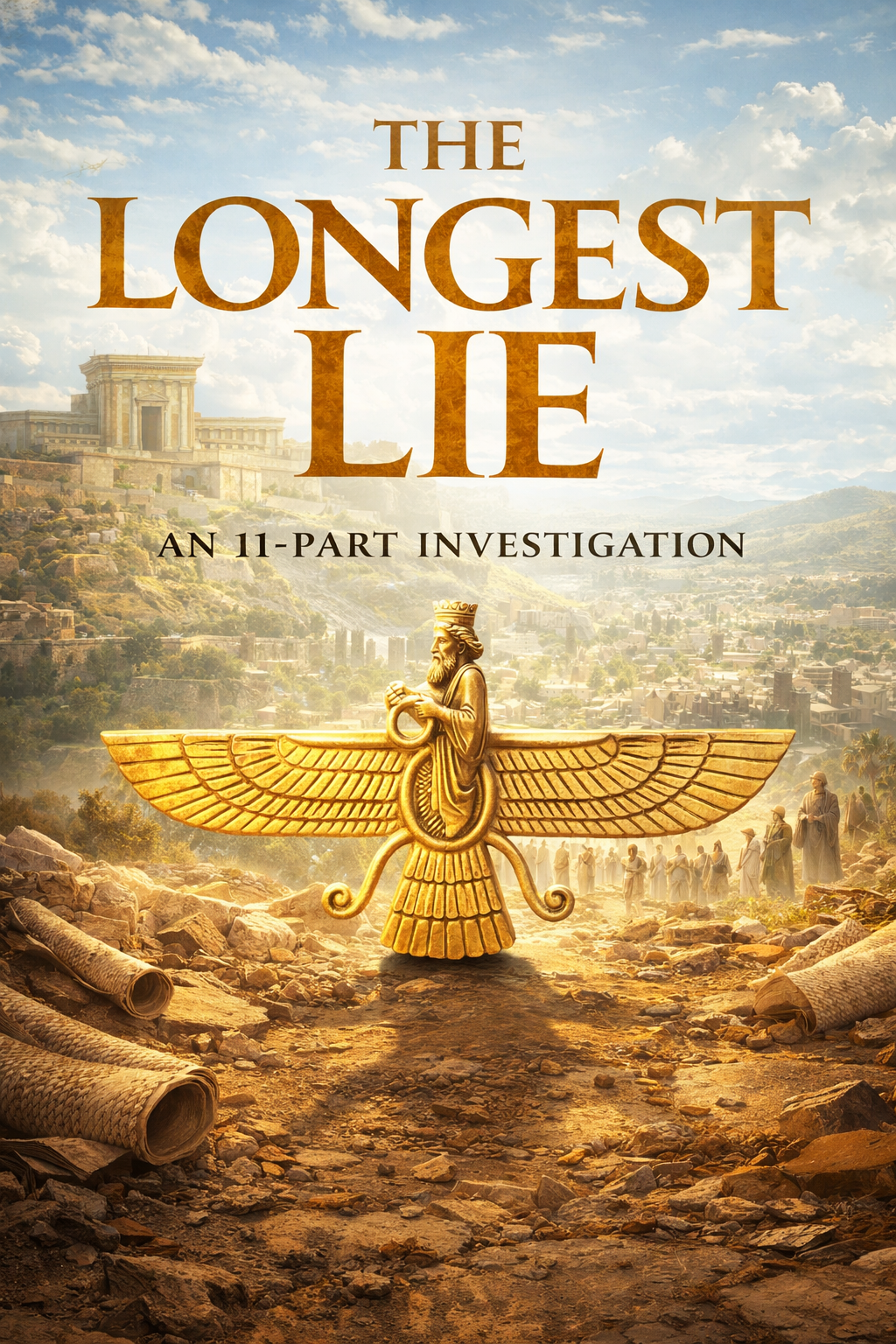
    The Longest Lie — Part 10 of 11

    mazda.aeuua.com/


    The religion that gave the world its theological architecture was not merely unacknowledged. It was systematically destroyed.

    This is the cost of the longest lie. Not only was the source erased from the record — the source itself was nearly annihilated. The community that poured the foundation was reduced, century by century, persecution by persecution, from the dominant religion of the world’s largest empire to fewer than 130,000 people in a world of eight billion.


    Act One: Alexander (330 BCE)

    It began with the burning of Persepolis. When Alexander’s forces sacked the Achaemenid capital, the destruction was not merely military. The royal archives — containing what Zoroastrian tradition identifies as two complete copies of the Avesta, the sacred scripture — were destroyed or scattered.

    The oral tradition survived in the memories of the Magi. But the institutional infrastructure that had supported Zoroastrian learning, liturgy, and theology for centuries was shattered. Alexander’s conquest did not merely defeat a political empire. It began the process of dismantling the religious civilization that had shaped the ancient world.

    The community that had just been betrayed by its former dependents now faced the destruction of its primary religious texts by a foreign conqueror.


    Act Two: The Seleucids (312–140 BCE)

    Alexander’s successors, the Seleucid dynasty, imposed Greek culture across the former Persian Empire. Hellenization was not merely cultural — it was a systematic displacement of Iranian religious and intellectual traditions. Greek temples replaced Zoroastrian fire temples. Greek philosophy displaced Zoroastrian theology in the intellectual centers. The Magi were marginalized.

    During this same period, the Jewish community — now under Seleucid and Ptolemaic rule — was composing the texts that laundered the Zoroastrian download. Daniel was written around 165 BCE. Esther was likely composed during this period. The theological theft was being committed against a civilization that was already under assault.


    Act Three: Partial recovery under the Parthians and Sassanians (140 BCE–651 CE)

    The Parthian dynasty provided some space for Zoroastrian recovery, though they were more eclectic in their religious patronage. The Sassanian dynasty (224–651 CE) actively championed Zoroastrianism as the state religion. The scattered texts of the Avesta were collected and codified. Fire temples were rebuilt and endowed. The priesthood was restored to institutional prominence.

    But the damage from Alexander’s conquest was permanent. The pre-Alexandrian written Avesta was gone. What was reconstructed was partial — assembled from oral traditions and surviving fragments. An entire layer of Zoroastrian literary and theological heritage had been lost forever.

    During the Sassanian period, Zoroastrianism experienced its last flowering as a state-supported religion. The fire temples burned brightly. The liturgy was maintained. The theology was taught. The community was strong.

    It would not last.


    Act Four: The Arab conquest (651 CE)

    The fall of the Sassanian Empire to the Arab-Muslim armies was catastrophic for Zoroastrianism. This was not merely a change of government. This was a theological replacement.

    The new rulers brought Islam — a religion that had absorbed Zoroastrian concepts through its Jewish and Christian inheritance (resurrection, judgment, angels, heaven, hell) and now presented them as the final revelation of God. The concepts that had been stolen from Zoroastrianism centuries earlier now returned, wearing new clothes, as the theology of the conqueror.

    Fire temples were destroyed or converted into mosques. The Zoroastrian priesthood was dismantled. The jizya — a tax on non-Muslims — was imposed on the Zoroastrian community. Conversion to Islam was incentivized through economic, social, and political pressure.

    Over the following centuries, the Zoroastrian population of Iran declined from the majority to a persecuted minority. Forced conversions, social marginalization, legal discrimination, and periodic violence reduced the community systematically.


    Act Five: The centuries of oppression (7th–19th century)

    The Zoroastrian community in Iran faced centuries of escalating persecution. The details are documented in Article 18 of the eFireTemple library, but the pattern is consistent: legal restrictions on dress, property, testimony in court, and religious practice. Social stigmatization. Economic marginalization. Periodic violence.

    The community was pushed into increasingly remote areas. The city of Yazd and its surrounding villages became the primary refuge. Zoroastrians were classified as ritually impure by the dominant Islamic legal framework. They were barred from many professions. Their testimony was not accepted in court against a Muslim.

    The Zoroastrian communities of Yazd and Kerman maintained their faith under these conditions for over a thousand years — a testament to extraordinary resilience. But the population declined steadily. From millions under the Sassanians to hundreds of thousands, then to tens of thousands.


    Act Six: The Parsi migration

    A portion of the Zoroastrian community fled Iran for India, where they became known as the Parsis. According to tradition, they arrived on the coast of Gujarat and were granted asylum by the local Hindu ruler — the story of the milk and the sugar, documented in Article 30 of the eFireTemple library.

    The Parsi community flourished in India. They became disproportionately influential in business, philanthropy, education, and the independence movement. The Tata family, the Wadia family, Dadabhai Naoroji, Jamsetji Tata, Freddie Mercury — the Parsi contribution to Indian and global civilization is vastly disproportionate to their numbers.

    But assimilation, intermarriage, low birth rates, and emigration have reduced the Parsi population steadily. In India today, the Parsi community numbers roughly 50,000 — and declining.


    The arithmetic of erasure

    Let us be precise about the scale.

    At the height of the Achaemenid Empire, Zoroastrianism was the religion of a civilization governing roughly half the world’s population. Tens of millions of people lived under Zoroastrian governance and were influenced by Zoroastrian theology.

    Today, the global Zoroastrian population is estimated at 100,000 to 130,000.

    In the same world, approximately 2.4 billion people identify as Christian. 1.9 billion as Muslim. 15 million as Jewish. Their combined population — roughly 4.3 billion people — practices religions whose core eschatological concepts were derived from Zoroastrianism.

    The religion that designed the theological architecture inhabits less than 0.002% of the world’s population. The religions that inherited that architecture, without acknowledgment, inhabit more than 50%.

    The ratio of people using Zoroastrian concepts to people identifying as Zoroastrian is approximately 33,000 to 1.


    What was lost

    The destruction of Zoroastrianism was not merely a demographic catastrophe. It was an intellectual and spiritual catastrophe.

    The Avesta — in its complete, pre-Alexandrian form — is lost. We do not know how much theological and philosophical material was contained in the original text. What survives is a fraction, and scholars debate how large a fraction.

    The Zoroastrian commentarial tradition — the centuries of theological reflection, liturgical development, and philosophical elaboration that accompanied the Avesta — is largely lost. The equivalent of the Talmud, the Church Fathers, the Islamic scholarly tradition — for Zoroastrianism, most of this material did not survive.

    The fire temples that once burned across an empire stretching from Egypt to India are mostly ruins or converted mosques. The sacred fires that had been maintained for centuries were extinguished.

    The living tradition — the chain of teachers, the trained priesthood, the liturgical knowledge transmitted from master to student — was severely disrupted. What remains is maintained by a heroically dedicated but diminished community.

    The world lost not merely a religion but a civilization’s worth of wisdom, reflection, and spiritual depth — the very civilization that had seeded the theological traditions that now dominate the planet.


    The cruelty of the outcome

    Here is the cruelest dimension of this history.

    The concepts that Zoroastrianism gave the world — resurrection, angels, judgment, the cosmic battle between good and evil, the hope of a final renovation — were used by the religions that inherited them to justify the destruction of Zoroastrianism itself.

    Christianity declared Zoroastrians to be pagans and fire-worshippers. Islam classified them as, at best, People of the Book (a contested designation) and, at worst, idolaters. Both traditions used the theological authority they had inherited from Zoroastrianism to condemn and marginalize the very source of that authority.

    The teacher was destroyed by the students. The architect was evicted from the building. The source was poisoned by the rivers it had fed.

    And the lie that made it possible — the three-text operation of Daniel, Esther, and Isaiah 45, the Pharisaic institutionalization of laundered theology, the systematic erasure of the Persian source — continues to this day. Every Sunday sermon about resurrection, every Friday prayer about the Day of Judgment, every celebration of Purim — all of it perpetuates the erasure.

    The ashes are still warm. The fire that burned in those ashes is still alive. And the story of how it was nearly extinguished is the story of the longest lie ever told.


    Next: Part 11 — The Receipt. The full moral accounting. What was given, what was taken, what was destroyed, and what is owed. The final installment of the longest lie — and the beginning of the truth.


    mazda.aeuua.com/ — The Oldest Flame. The Loudest Voice.

  • TAUGHT BY A STARThe Greek Orthodox Nativity Troparion and the Hidden Zoroastrian Christ

    “Your Nativity, O Christ our God, / Has shone to the world the Light of wisdom! /
    For by it, those who worshipped the stars, / Were taught by a Star to adore You, /
    The Sun of Righteousness, / And to know You, the Orient from on High. /
    O Lord, glory to You!”
    — Greek Orthodox Apolytikion for the Nativity of Christ

    ────────────────────────────────────────────────────────────────

    I. INTRODUCTION: A HYMN THAT REVEALS TOO MUCH

    Among the most ancient and beloved hymns of the Greek Orthodox Church is the Apolytikion — the dismissal hymn — sung for the Feast of the Nativity of Christ. It is a masterpiece of Byzantine theology compressed into seven lines of poetry. And yet, examined carefully against the historical record of ancient Persia, it quietly confesses something that two millennia of Christian tradition have worked diligently to obscure.

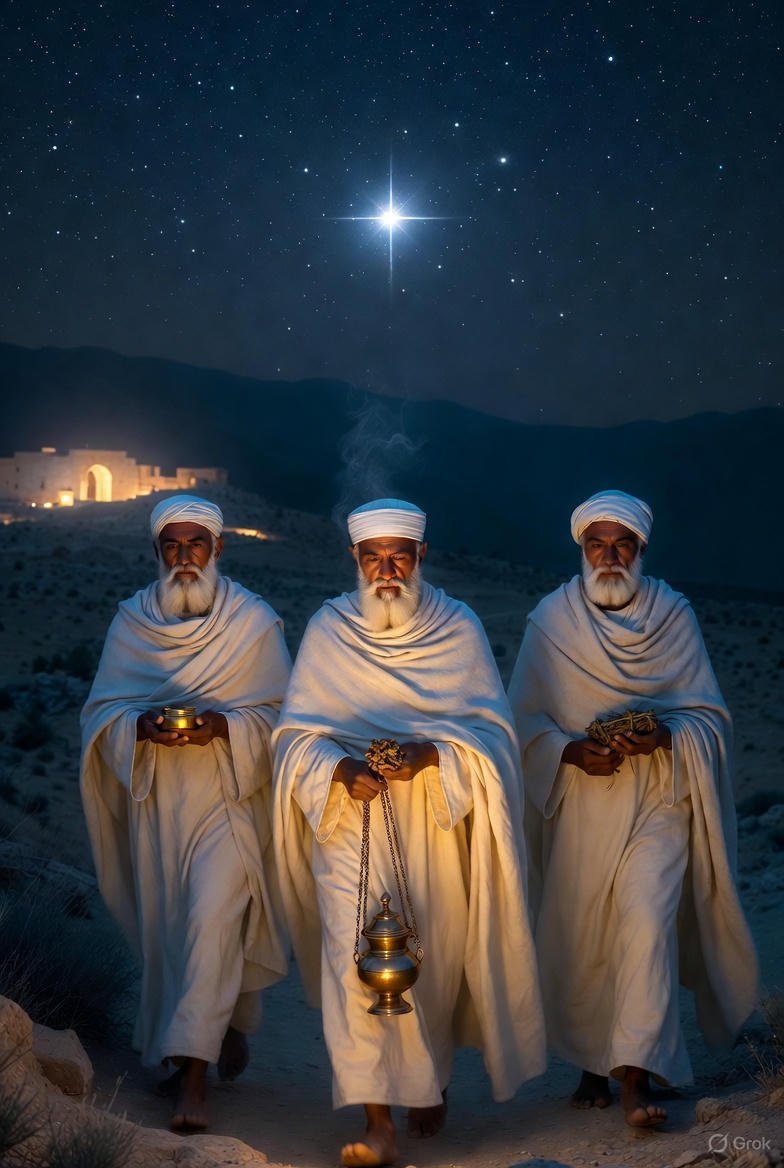
    The hymn acknowledges that those who came to worship the newborn Christ were star-worshippers — Persian Magi, priests of Zoroastrianism. It says they were taught by a Star to adore him. It calls Christ the Sun of Righteousness and the Orient from on High — titles saturated with the solar theology of Ahura Mazda, the supreme deity of Zoroaster. And it frames this as a moment of cosmic recognition: the Magi did not stumble accidentally upon the Christ-child. They were taught. They understood. They had been prepared.

    This article argues that the troparion, read honestly and in full historical context, is a window into the Zoroastrian foundations of the Christian message — and that the figure the Magi recognized was not foreign to their tradition at all. Jesus, as portrayed in the Gospels, embodies the Zoroastrian concept of the Saoshyant: the world-savior, the bringer of light, the one who defeats death and renovates creation. The Magi knew this. Their star told them so.

    ────────────────────────────────────────────────────────────────

    II. THE MAGI: WHO WERE THEY?

    The word translated as “wise men” or “Magi” in Matthew 2:1 is the Greek magoi. This word has a precise historical referent. The Magi were the priestly caste of ancient Persia — astronomers, theologians, keepers of the sacred fire, and custodians of the Zoroastrian tradition. They were among the most educated and spiritually sophisticated figures of the ancient world.

    The Magi were not curious travelers who happened to follow a star. They were experts in astronomy and in the theological interpretation of celestial signs. They were the guardians of prophecy — including the Zoroastrian prophecy of the Saoshyant, the world-savior who would be born of a virgin, would shine as the embodiment of Asha (cosmic truth and light), and would ultimately defeat death, raise the dead, and bring about the Frashokereti: the final renovation of the world.

    When Matthew writes that the Magi came from the East, he is telling the reader they came from Persia. When he writes that they followed a star, he is describing a Zoroastrian priestly practice: the interpretation of celestial phenomena as divine messages. And when he writes that they came to honor a newborn king — prostrating themselves before him and offering gold, frankincense, and myrrh — he is describing an act of religious recognition, not merely political courtesy.

    They recognized in this child the fulfillment of their own deepest tradition. The troparion preserves this recognition: they were taught by a Star to adore him. The Star was both teacher and sign.

    ────────────────────────────────────────────────────────────────

    III. THE TITLES: SUN OF RIGHTEOUSNESS AND ORIENT FROM ON HIGH

    The troparion assigns Christ two titles that deserve close examination: Sun of Righteousness and Orient from on High. These are not generic metaphors. They are specific theological designations with deep Zoroastrian resonance.

    SUN OF RIGHTEOUSNESS

    In Zoroastrian theology, Ahura Mazda — whose name means Wise Lord — is the supreme deity of light, truth, and righteousness. He is inseparable from the concept of Asha: the cosmic principle of truth, order, and righteousness. Asha is often symbolized by fire and light. The Sun, as the greatest visible source of light in the natural world, became one of the most powerful symbols of Ahura Mazda in Persian religious thought.

    To call Christ the Sun of Righteousness is to use the exact theological register that a Zoroastrian would immediately understand as referring to the divine manifestation of Asha. This is not coincidence. The concept migrated from Persian theology into Jewish prophetic language (Malachi 4:2 — the first biblical use of the phrase) and from there into the Christian hymnic tradition. The troparion did not invent this image. It inherited it.

    ORIENT FROM ON HIGH

    The second title — Orient from on High — is equally striking. Orient means East, the direction of the rising sun. In the liturgical tradition of Eastern Christianity, the faithful pray facing East because Christ is understood as the rising light of the world. Churches are oriented toward the East. The altar faces East. This practice has its deepest roots not in Hebrew scripture but in the solar theology of ancient Persia, where the East — the direction of the rising sun — was the sacred direction of Ahura Mazda.

    The phrase also echoes the Zoroastrian concept of the divine light that comes from above, the uncreated luminance of Ahura Mazda that permeates creation. To call Christ the Orient from on High is to identify him with the source of divine light — a description that maps precisely onto the Zoroastrian understanding of the supreme deity.

    ────────────────────────────────────────────────────────────────

    IV. THE SAOSHYANT: THE ZOROASTRIAN CHRIST

    The theological heart of this investigation is the Saoshyant — the Zoroastrian world-savior whose profile matches the Gospel account of Jesus with a precision that has troubled and fascinated scholars for over two centuries.

    In Zoroastrian eschatology, the Saoshyant is the final savior figure who will appear at the end of the age. The Gathas and later Avestan texts describe the Saoshyant in terms that read like a theological blueprint for the Gospel portrait of Jesus:

    • Born of a virgin — specifically, born from the preserved seed of Zoroaster himself, miraculously conceived
    • Embodies Asha — he is the living incarnation of cosmic truth, light, and righteousness
    • Defeats the forces of darkness and falsehood — he overcomes Angra Mainyu, the destructive spirit
    • Raises the dead — the bodily resurrection of all humanity is accomplished through the Saoshyant
    • Brings Frashokereti — the final renovation and perfection of the world
    • Is recognized by his light — his appearance is heralded by celestial signs

    The Magi who came to honor the infant Jesus were scholars of precisely this tradition. They would have known the Saoshyant prophecy in detail. They would have understood the celestial sign they observed as the herald of the savior’s birth. Their journey was not motivated by vague curiosity. It was an act of prophetic fulfillment: they had been watching for this star for generations.

    The troparion, in calling Christ the Sun of Righteousness and saying the Magi were taught by a Star to adore him, is inadvertently — or perhaps deliberately — preserving this Zoroastrian recognition. The Magi recognized the Saoshyant. The troparion is their liturgical vindication.

    ────────────────────────────────────────────────────────────────

    V. JESUS’S TEACHINGS: A ZOROASTRIAN FRAMEWORK

    The case for Jesus’s Zoroastrian theological foundation does not rest on the Nativity account alone. It is woven through the entire fabric of his teaching. In every area where Jesus’s theology departs from pre-exilic Hebrew religion, it aligns with Zoroastrianism.

    THE FATHER

    Jesus addresses God as Father — Abba in Aramaic — over 170 times in the Gospels. This is not a Hebrew biblical convention. YHWH is rarely called Father in the Hebrew scriptures, and never with the intimate familiarity that Jesus employs. But Ahura Mazda — the Wise Lord — is understood in Zoroastrianism as the benevolent father of all creation, the source of truth and light, who relates to humanity not as a distant sovereign but as a caring parent. When Jesus says “your Father in heaven,” he is using a frame of divine-human relationship that is fundamentally Zoroastrian.

    LIGHT AND DARKNESS

    “I am the light of the world. Whoever follows me will not walk in darkness” (John 8:12). The cosmic dualism of light and darkness — truth and falsehood, Asha and Druj — is the foundational axis of Zoroastrian theology. It is not a major theme in pre-exilic Hebrew religion. It becomes central in the intertestamental period, precisely during and after the centuries of Persian rule. And it is absolutely central to Jesus’s self-understanding and his description of the cosmic stakes of his mission.

    SATAN AS COSMIC ADVERSARY

    Before the Babylonian exile and the subsequent period of Persian rule, the figure known as ha-satan in Hebrew scripture is not an independent evil being. He is God’s prosecuting attorney — a loyal servant who tests human beings on God’s behalf. The fully developed Satan that appears in the New Testament — an independent cosmic adversary who fell from heaven through pride, who rules a kingdom of darkness, who is identified with falsehood and death — this figure does not exist in pre-exilic Judaism. He appears after Persia. He maps precisely onto Angra Mainyu, the Destructive Spirit of Zoroastrianism, who chose evil at the beginning of creation and has waged cosmic war against Ahura Mazda ever since. When Jesus tells the Pharisees in John 8:44 that “your father is the devil” and that the devil “was a murderer from the beginning and does not stand in the truth,” he is using the Zoroastrian theological template with extraordinary precision.

    PARADISE

    When Jesus says to the penitent thief on the cross — “today you will be with me in Paradise” — he uses a Persian word. Paradeisos in Greek is derived from the Old Iranian pairi-daeza, meaning an enclosed garden or walled enclosure. It was the Zoroastrian word for the divine realm of the righteous dead. It entered Jewish vocabulary during the Persian period. It is one of the very few certain Persian loanwords in the Bible. Jesus’s word for heaven is a Zoroastrian word.

    RESURRECTION

    The bodily resurrection of the dead is not a doctrine of pre-exilic Judaism. It appears in the Hebrew Bible only in the later texts — most clearly in Daniel, which shows heavy Persian theological influence. The doctrine is central to Zoroastrianism: the Saoshyant’s primary function is precisely to raise the dead and restore the living to their perfected bodily existence at the time of Frashokereti. When Jesus places bodily resurrection at the center of his eschatological teaching, he is placing a Zoroastrian concept at the center of his message.

    FINAL JUDGMENT

    The great eschatological discourse of Matthew 25 — in which the Son of Man comes in glory and separates all humanity as a shepherd separates sheep from goats — has no template in pre-exilic Hebrew religion. The Zoroastrian Frashokereti, by contrast, describes precisely this: a cosmic renovation at the end of time, a final judgment separating those who chose Asha from those who chose Druj, and the ultimate defeat of Angra Mainyu. The structure, the imagery, and the theological logic are Zoroastrian.

    ────────────────────────────────────────────────────────────────

    VI. MATTHEW 23:34 — THE CONFESSION IN PLAIN SIGHT

    Among the most theologically charged statements in the Gospels — and among the least examined — is Matthew 23:34. In the middle of his fierce confrontation with the Pharisees, Jesus says:

    “Therefore I send you prophets and wise men and scribes, some of whom you will kill and crucify, and some you will flog in your synagogues and persecute from town to town.”

    The critical phrase is the opening: I send you. Not YHWH. Not the God of Abraham. Jesus, speaking in the first person, claims to be the divine authority who sent the wise men to the people of Israel.

    The question is obvious: who are the wise men referred to in the Gospel narrative? The only wise men who appear in a specifically designated role are the Magi of Matthew 2 — the Zoroastrian priestly visitors who recognized and honored the infant Jesus. They are the paradigmatic wise men of the Christian story.

    Read in this light, Matthew 23:34 contains a remarkable claim. Jesus is telling the Pharisees — the custodians of Yahweh worship, the guardians of the Mosaic law — that he is the divine source who sent them Zoroastrian teachers. He is saying that the theological revolution the Pharisees themselves represented — their adoption of resurrection, named angels, heaven and hell, Satan as a cosmic adversary — was not a corruption of the Hebrew tradition but a transmission of divine truth from a Persian source, a transmission he himself authorized.

    And then, in John 8:44, comes the parallel accusation: “Your father is the devil.” The Pharisees are told that the god they worship — YHWH — is not the Father Jesus speaks of. Their father is the adversary, the deceiver, the equivalent of Angra Mainyu. They have mixed the light they received from the wise men with the darkness of their ancestral tradition.

    ────────────────────────────────────────────────────────────────

    VII. THE TROPARION DECODED

    We can now return to the troparion and read it with the full weight of this context.

    “Your Nativity, O Christ our God, / Has shone to the world the Light of wisdom!”

    The Light of wisdom — this is Asha, the Zoroastrian principle of cosmic truth and righteousness. The nativity shines this light to the world. Not the light of the Mosaic law. Not the light of the Hebrew prophets. The Light of wisdom — the divine illumination that Zoroaster proclaimed as the nature of Ahura Mazda.

    “For by it, those who worshipped the stars, / Were taught by a Star to adore You”

    The star-worshippers are the Magi — Persian Zoroastrian priests, whose religious practice included the theological interpretation of celestial phenomena. They were not being corrected or converted from error. They were being confirmed and elevated. Their star-reading, grounded in their Zoroastrian tradition, taught them to recognize the very figure their tradition had prophesied. The Saoshyant had arrived. The Star was the announcement; it was also the teacher.

    “The Sun of Righteousness, / And to know You, the Orient from on High”

    Sun of Righteousness. Orient from on High. These titles are Zoroastrian divine designations applied to Christ. The Sun of Righteousness is Ahura Mazda’s quality made manifest in a human person. The Orient from on High is the rising divine light — the East, the direction of the sacred flame, the source of the spiritual illumination that Zoroaster received. The troparion is saying that Christ is the fulfillment of what Ahura Mazda represents: the living embodiment of light, truth, and righteousness.

    The Orthodox tradition composed this hymn as a statement of Christian triumph — of how Gentiles were drawn to Christ. But what it actually preserves, and what the Magi embodied, is something far more radical: a claim that the Zoroastrian tradition was not simply a preparation for Christianity, but a living transmission of the same divine truth, and that those who were most deeply formed in that tradition were the first to recognize it when it appeared in human form.

    ────────────────────────────────────────────────────────────────

    VIII. THE PATTERN: A COMPARATIVE OVERVIEW

    CONCEPTPRE-PERSIAN JUDAISMZOROASTRIANISMJESUS’S TEACHING
    Ultimate DeityYHWH — Lord, warrior-kingAhura Mazda — Wise Lord, LightFather (Abba) — Wise, loving
    Savior FigureAwaited Davidic kingSaoshyant — born of virginJesus — born of virgin
    Cosmic battleGod vs. enemies of IsraelAhura Mazda vs. Angra MainyuGod vs. Satan / Light vs. dark
    SatanGod’s accuser/servantAngra Mainyu: independent evilSatan: independent adversary
    AfterlifeSheol — neutral for allParadise / Hell by moral choiceParadise / Gehenna by choice
    ResurrectionAbsent (pre-exile)Core: Saoshyant raises the deadCentral; bodily resurrection
    Final JudgmentNo developed eschatologyFrashokereti — cosmic renovationSon of Man judges all nations
    Light symbolismMetaphor onlyAsha = truth/light vs. DrujI am the Light of the World
    AngelsUnnamed messengersAmesha Spentas — named hierarchyNamed; ranked angelic hosts
    Universal scopeCovenant with Israel onlyAll humanity — choose Asha/DrujFor God so loved the world
    Word for heavenNone specific (Sheol)Pairidaeza (enclosed garden)Paradise — a Persian word

    ────────────────────────────────────────────────────────────────

    IX. THE HISTORICAL CORRIDOR

    The Zoroastrian influence on Jewish and ultimately Christian theology is not speculative. It is documented, datable, and acknowledged by mainstream scholarship. The mechanism was the Babylonian exile and the subsequent Persian period.

    When Cyrus the Great conquered Babylon in 539 BCE, he freed the Jewish exiles and allowed them to return to their homeland. He is the only foreigner in the Hebrew Bible to be called Messiah — mashiach, anointed one — a title applied to him in Isaiah 45:1. The first person in the Bible to receive the title that Christians give to Jesus was a Zoroastrian Persian king. This is not incidental.

    Over the following two centuries, Jewish communities lived under Persian rule, interacted daily with Zoroastrian culture and theology, and were profoundly shaped by what they encountered. The transformation is visible in the texts themselves. Pre-exilic Hebrew scripture knows no Satan as a cosmic adversary, no bodily resurrection, no named angels, no developed eschatology of heaven and hell. All of these appear in the texts written during and after the Persian period.

    The Pharisees, who emerged in this same historical context, became the carriers of this synthesis. They held beliefs that traditional Hebrew religion never developed independently: resurrection, named angelic hierarchies, Satan as a cosmic adversary, the apocalyptic end of the age. Some scholars have noted that the very etymology of the word Pharisee may connect to the Aramaic word for Persian — Persianizer — reflecting the historical reality that they were the group that had most thoroughly absorbed Persian theological ideas into Jewish religion.

    Jesus emerged from and into this world. He was not simply a Jewish reformer. He was the product of a Jewish tradition that had been deeply Persianized, and his teaching — as the Gospels record it — consistently takes the Zoroastrian dimensions of that tradition and raises them to their highest expression.

    ────────────────────────────────────────────────────────────────

    X. CONCLUSION: WHAT THE STAR TAUGHT

    The Greek Orthodox Nativity troparion is, among many things, an act of unwitting witness. Its composers intended it as a celebration of Gentile conversion — of how star-worshipping foreigners were drawn from darkness into the light of Christ. But the text they composed, and the theology it encodes, tells a more complex and more profound story.

    The Magi were not in darkness. They were carriers of one of the most sophisticated theological traditions the ancient world produced. They believed in a supreme God of light and truth, in a cosmic battle between good and evil, in a coming savior who would defeat death and renovate creation, in bodily resurrection and final judgment, in the moral responsibility of each individual to choose truth over falsehood. They were watching the heavens for the sign of his arrival.

    When they saw the star, they were not receiving a message from an alien source. They were receiving the confirmation of their own deepest tradition. The troparion is correct when it says they were taught by a Star to adore him — but the teaching was not an introduction. It was a fulfillment.

    The Sun of Righteousness. The Orient from on High. These are Zoroastrian names for the divine light. The troparion places them in the mouth of the Church as titles for Christ. In doing so, it confesses — perhaps more honestly than it knows — that the Christ the Magi recognized was the Saoshyant they had been waiting for. That the God Jesus called Father bore the marks of Ahura Mazda: wise, luminous, universal, and utterly opposed to the spirit of destruction and lies.

    The star was the teacher. The Magi were the students. And what the star taught them was what Zoroaster had proclaimed for a thousand years before: that the truth is light, that light is love, that the renovator of the world has come.

    O Lord, glory to You.

    ────────────────────────────────────────────────────────────────

    Sources and Further Reading

    The theological and historical arguments in this article draw on primary texts (Avesta, Hebrew Bible, Greek New Testament), the documentary research compiled at mazda.aeuua.com/, and the broader scholarly tradition examining Zoroastrian influence on Second Temple Judaism, including the work of Mary Boyce on Zoroastrianism, Bart Ehrman on the development of New Testament theology, and numerous contributors to the academic literature on ancient Iranian religion and its relationship to the Abrahamic traditions.

    The Greek Orthodox Apolytikion for the Nativity is among the oldest surviving Christian hymns, its text and theology reflecting the synthesis of Hellenistic, Hebrew, and Persian religious streams that shaped early Christianity in the Eastern Mediterranean world.

  • Persia Republic Stood Up Against the Islamic Republic: The First Wave

    Persia Republic Stood Up Against the Islamic Republic: The First Wave

    The World Turned Away as Tens of Thousands of Persians Were Massacred for Wanting Religious Freedom and the Right to Return to Their Roots

    February 2026


    The Uprising

    In the final days of December 2025, something unprecedented happened. The Persian nation—not the “Islamic Republic of Iran,” but Persia—rose as one. What began with shopkeepers closing their stalls in Tehran’s Grand Bazaar became the largest uprising since the 1979 Islamic Revolution. Within days, it had spread to every province, every city, every village.

    By January 8th and 9th, 2026, the regime responded with the largest massacre in modern Iranian history.

    Tens of thousands of Persians were gunned down in the streets. The Islamic Revolutionary Guard Corps deployed snipers on rooftops. They used AK-47s, Uzis, and—according to multiple reports—chemical weapons. They fired into crowds of unarmed protesters. They executed the wounded in hospitals. They raped prisoners and returned bodies to families with organs removed to hide the evidence.

    And the world watched. And did nothing.


    The Numbers They Cannot Hide

    The Islamic Republic imposed a total internet blackout—the longest in its history—to conceal the genocide. But the truth seeps through:

    • 7,015+ confirmed deaths documented by HRANA as of February 5, 2026, with nearly 12,000 additional cases under review
    • 30,000-36,500 killed in just two days (January 8-9) according to Time, The Guardian, and Iran International
    • 51,790+ arrested, many facing torture, rape, and execution
    • Doctor networks inside Iran estimate the true death toll at 20,000-30,000 or higher—and that was weeks ago
    • The regime itself admitted “thousands” were killed, while its own historical records show it only reports approximately 12% of actual deaths

    The true number likely exceeds 60,000. Mass graves have been documented. Families have been threatened into silence. The dead are being erased.

    This is genocide. This is Druj in its purest form—the Lie made manifest in rivers of Persian blood.


    What They Were Chanting

    Listen to what the martyrs cried before the bullets silenced them:

    “Iran is our country, Cyrus is our father” — They claimed their Persian heritage, not their Islamic occupation.

    “Until the mullah is shrouded, this homeland will not be a homeland” — They rejected 47 years of theocratic rule.

    “Reza Shah, may your soul be blessed” — They invoked the king who modernized Persia and limited clerical power.

    “Neither Gaza nor Lebanon, my life for Iran” — They rejected the regime’s foreign adventures while their own people starve.

    “Khamenei is Zahhak” — They named the Supreme Leader after the serpent-king of Persian mythology, the embodiment of evil who was ultimately defeated by the hero Kaveh.

    They compared Khamenei to Ahriman—Angra Mainyu—the Zoroastrian spirit of destruction, falsehood, and chaos. They knew exactly what they were saying. They were not just protesting an economy. They were rejecting an entire cosmology of lies.

    And they raised the Lion and Sun—the ancient symbol of Persia, banned since 1979—alongside the Derafsh Kaviani, the legendary banner of Persian resistance.


    The Zoroastrian Awakening

    What the Islamic Republic fears most is not regime change. It is identity change.

    The GAMAAN surveys reveal what the mullahs have tried to suppress for 47 years:

    • Only 32% of Iranians identify as Shia Muslim—despite the regime’s claim of 99.5%
    • 8% identify as Zoroastrian—hundreds of times the number of practicing Zoroastrians, representing millions claiming pre-Islamic Persian identity as an act of resistance
    • 47% report losing their religion under Islamic rule
    • 72% oppose mandatory hijab
    • 68% want religious law removed from legislation entirely

    The regime calls this “Westoxification.” But these Persians are not becoming Western. They are becoming themselves again.

    They are choosing Asha over Druj. Truth over the Lie. Light over darkness.

    They name their children pre-Islamic Persian names. They celebrate Nowruz and Chaharshanbe Suri with unprecedented fervor. They make pilgrimages to the tomb of Cyrus the Great—the first messiah, the liberator, the king who declared human rights while Yahweh still demanded blood sacrifice.

    The opposition movement calls itself Farashgard—the Zoroastrian term for the final renovation of the world, when Ahura Mazda’s truth defeats Ahriman’s lies forever.

    This is not coincidence. This is prophecy unfolding.


    The Crime Against Humanity

    The United Nations Fact-Finding Mission has documented:

    • Unlawful killings using military-grade weapons against unarmed civilians
    • Chemical weapons deployed against protesters
    • Systematic torture including rape of men, women, and children
    • Forced injections of unknown substances causing deaths in custody
    • Mass executions of detained protesters after show trials
    • Collective punishment of families who mourn publicly
    • Forced disappearances and secret burials in mass graves

    On January 8-9, 2026, the Islamic Republic committed the largest street massacre in Persian history. They called the dead “terrorists” and “rioters.” They blamed America and Israel. They claimed the protesters were “not real Iranians.”

    But the world saw the videos before the blackout. We saw the young men and women dancing at funerals—the ultimate act of Persian defiance. We saw mothers declaring their murdered children were “fighters for the homeland.” We saw a nation choosing death over submission.


    The First Wave

    Make no mistake: this is the first wave.

    The 40-day mourning ceremonies have already become new protests. On February 21, 2026, universities across Iran erupted again. Students are boycotting classes. Mothers are cursing the regime at their children’s graves. The chants continue:

    “This is the year of blood—Seyyed Ali will be toppled.”

    “This is the final battle—Pahlavi will return.”

    “An Iranian dies but will not accept humiliation.”

    The regime has 86-year-old Khamenei, a collapsing economy, a military humiliated by Israel, and a population that has lost all fear. The protesters have youth, numbers, righteousness, and 3,000 years of Persian civilization behind them.

    The Islamic Republic is Angra Mainyu’s final fortress. The January massacres were not a victory—they were an act of desperation by a dying regime. Every martyr creates ten more revolutionaries. Every funeral becomes a protest. Every mother’s curse weakens the foundations of the Lie.


    The World’s Silence

    Where is the international community?

    Where are the sanctions on the IRGC commanders who ordered the massacres? Where are the ICC indictments? Where is the humanitarian intervention that was supposedly justified in Libya, in Kosovo, in Iraq?

    The answer is simple: Persian blood is cheap. Persian oil is valuable. Persian strategic position matters more than Persian lives.

    The Islamic Republic has spent 47 years funding terrorism, developing nuclear weapons, oppressing women, executing dissidents, and spreading Druj across the Middle East. And the world negotiates with them. The world sends envoys. The world speaks of “diplomatic solutions” while Persians are being slaughtered in the streets.

    This will be remembered. When the Persian Republic rises—and it will rise—the nations who turned away will answer for their silence.


    The Flame That Cannot Be Extinguished

    The Islamic Republic can shut down the internet. It can deploy snipers. It can fill mass graves. It can execute children and call them terrorists.

    But it cannot kill an idea whose time has come.

    For 1,400 years, Persia has survived under the shadow of foreign conquest. The Arab invasion destroyed the fire temples, but Persians kept the flame alive in secret. The Safavids imposed Shia Islam by the sword, but Persians preserved their language, their poetry, their Nowruz. The Islamic Republic tried to erase Persian identity entirely—and created a generation that identifies with Cyrus and Zoroaster more than Muhammad.

    The sacred fire of Asha burns in every Persian heart. It cannot be extinguished by bullets. It cannot be drowned in blood. It cannot be silenced by internet blackouts.

    The protesters know this. That is why they are not afraid to die.


    To the Martyrs

    To the tens of thousands who fell in January 2026:

    You are not forgotten. Your names are being recorded. Your faces are being preserved. Your sacrifice is the seed of the Persian Republic that will bloom from your blood.

    You died chanting for freedom. You died claiming your heritage. You died standing against the Lie.

    In Zoroastrian cosmology, the righteous dead cross the Chinvat Bridge to the House of Song, where Ahura Mazda’s light shines eternal. You have crossed that bridge. You dwell now in Paradise—pairidaeza—the Persian word that the world borrowed because Persia gave the world the concept of heaven.

    The Islamic Republic promised you an Islamic paradise for submission. You chose the Persian paradise of truth.

    Asha Vahishta. Best Truth. Best Righteousness.

    The fire burns. The flame rises. Persia remembers.


    The Path Forward

    The first wave has crashed. The second is gathering.

    To those inside Iran: The world may have failed you, but the Persian diaspora has not. The flame is being tended in Los Angeles, in London, in Toronto, in Hamburg. Every 40-day ceremony abroad echoes your courage. Every protest at every embassy carries your voice.

    To those in the diaspora: This is the moment. Support the resistance. Document the crimes. Pressure your governments. The Islamic Republic survives on international legitimacy—strip it away.

    To those who study Asha: Understand what you are witnessing. This is not merely a political uprising. This is a civilization reclaiming itself. This is a people choosing truth over lies, light over darkness, freedom over submission. This is Farashgard—the renovation—beginning.

    The Saoshyant prophecy speaks of a time when truth will triumph over falsehood, when the dead will rise, when the world will be made new.

    Perhaps the Saoshyant is not one person. Perhaps it is a generation. Perhaps it is every Persian who stood in the streets in January 2026 and said: No more.


    Humata. Hukhta. Huvarshta.

    Good Thoughts. Good Words. Good Deeds.

    The Flame Eternal.


    Related Articles:


    mazda.aeuua.com/ stands with the Persian people. We document. We remember. We keep the flame.

    Sources:

    • Wikipedia: 2025-2026 Iranian Protests; 2026 Iran Massacres
    • Human Rights Activists News Agency (HRANA)
    • Iran International
    • Amnesty International
    • United Nations Human Rights Council
    • GAMAAN Survey on Religion in Iran (2020, 2022)
    • The Guardian, The Washington Post, Time, NPR, The Wall Street Journal
    • Journal of Democracy: “Iranians Turn Away from the Islamic Republic”
    • Middle East Forum: “Persian Cultural Nostalgia as Political Dissent”
  • The Zoroastrian Calendar Hidden in Christianity

    The Year They Stole

    The Christian calendar structures the lives of billions:

    • Sunday worship
    • Christmas on December 25th
    • Easter in spring
    • Saints’ days throughout the year
    • The seven-day week

    But this calendar didn’t emerge from Hebrew tradition or Christian innovation. Its structure is Zoroastrian — Persian sacred time adopted, renamed, and disguised.

    Every Sunday church service, every Christmas celebration, every Easter sunrise follows a calendar shaped by Zoroastrian practice.


    The Seven-Day Week

    The Amesha Spenta Structure

    The seven-day week we use today comes from ancient Mesopotamia, but its religious significance was developed by Zoroastrianism:

    The Amesha Spentas (seven divine emanations of Ahura Mazda) provided a template for sacred time:

    1. Ahura Mazda
    2. Vohu Manah (Good Mind)
    3. Asha Vahishta (Best Truth)
    4. Spenta Armaiti (Holy Devotion)
    5. Khshathra Vairya (Desirable Dominion)
    6. Haurvatat (Wholeness)
    7. Ameretat (Immortality)

    This seven-fold structure permeated Zoroastrian thinking — including time.

    The Zoroastrian Week

    The Zoroastrian calendar names each day of the month (not week) after divine beings. But the concept of seven as a sacred organizing number comes from the Amesha Spentas.

    Seven in Judaism and Christianity

    After Persian contact:

    • The seven-day creation narrative was finalized in Genesis
    • The Sabbath became the seventh day
    • Seven became the number of completion
    • Revelation’s sevens (seals, trumpets, bowls, churches) structure the apocalypse

    The number seven’s religious significance in Abrahamic traditions is Zoroastrian.


    Sunday: The Day of the Sun

    Mithra and Sol Invictus

    In the Roman Empire, Sunday (dies Solis) was sacred to:

    • Mithra — the Zoroastrian yazata associated with the sun
    • Sol Invictus — the Unconquered Sun, a Roman solar deity with Mithraic connections

    Mithraism, which spread throughout the Roman military and merchant classes, held Sunday as its sacred day.

    The Christian Adoption

    Early Christians initially observed the Jewish Sabbath (Saturday). The shift to Sunday happened gradually:

    Claimed reasons:

    • Jesus rose on a Sunday
    • The Spirit came at Pentecost on a Sunday
    • “The Lord’s Day” (Revelation 1:10)

    Actual reason: Sunday was already the sacred day of Mithraic worship. As Christianity competed with and absorbed Mithraism, it adopted Mithra’s day.

    Constantine’s Law (321 CE): “On the venerable day of the Sun let the magistrates and people residing in cities rest…”

    Constantine made Sunday the official rest day — using pagan solar language, not Christian.

    The Result

    Billions of Christians worship on Sunday — the day sacred to Mithra, the Zoroastrian yazata, before it was “the Lord’s Day.”


    December 25th: The Birthday of Light

    Mithra’s Birthday

    December 25th (or the winter solstice, December 21-22) was celebrated as:

    • Natalis Solis Invicti — Birthday of the Unconquered Sun
    • Mithra’s birthday — the sun god born on the darkest day, bringing light

    Mithraic temples throughout the Roman Empire celebrated this date.

    Christmas

    The Bible never mentions Jesus’s birth date. Early Christians didn’t celebrate Christmas — they focused on Easter.

    First Christmas record: Chronography of 354 CE lists December 25th

    Why December 25th?

    The Church adopted the Mithraic date to:

    • Compete with solar worship
    • Provide a Christian alternative to pagan festivals
    • Ease conversion of Mithra worshippers

    Church Father Acknowledgment:

    Augustine wrote that Christians should celebrate Christ’s birth when pagans celebrated the sun — to turn them from sun worship to Son worship.

    The Result

    Christmas is the Mithraic winter solstice festival with Christian content. The date is Persian.


    Easter: The Spring Festival

    Nowruz: Persian New Year

    Nowruz — the Zoroastrian/Persian New Year — falls at the spring equinox (March 20-21):

    • Celebration of light overcoming darkness
    • Renewal of creation
    • Fire and water rituals
    • Hope and resurrection themes

    Nowruz is still celebrated by hundreds of millions of Iranians and Central Asians.

    Easter’s Timing

    Easter is calculated as the first Sunday after the first full moon after the spring equinox.

    Why connect it to the equinox?

    • The resurrection occurred around Passover (spring)
    • But the equinox connection emphasizes light/darkness symbolism
    • The resurrection of Jesus parallels the resurrection of nature

    Shared Themes

    NowruzEaster
    Spring equinoxNear spring equinox
    Light overcomes darknessChrist rises from death
    Renewal of creationNew creation in Christ
    Fire ritualsEaster fire/candles
    Water ritualsBaptisms at Easter
    Hope and rebirthResurrection hope

    Easter absorbed the Persian spring festival’s themes and timing.

    Easter Fire

    The Easter Vigil includes lighting a fire from which the Paschal candle is lit. This fire ritual echoes:

    • Zoroastrian sacred fire
    • Nowruz fire jumping
    • The victory of light over darkness

    The Liturgical Colors

    Fire Colors

    Christian liturgical colors include:

    • Gold/Yellow — glory, celebration
    • Red — Holy Spirit, martyrdom, fire
    • White — purity, resurrection, light

    These are the colors of fire — sacred in Zoroastrianism.

    Zoroastrian Color Symbolism

    • White — purity, truth, Asha
    • Gold — divine glory, Khvarenah
    • Red/Orange — sacred fire, Atar

    The liturgical color palette reflects fire worship aesthetics.


    The Liturgical Hours

    Zoroastrian Gāhs

    Zoroastrian prayer is organized by gāhs — five periods of the day:

    1. Hāvan (sunrise to noon)
    2. Rapithwin (noon to mid-afternoon)
    3. Uzerin (mid-afternoon to sunset)
    4. Aiwisruthrem (sunset to midnight)
    5. Ushahin (midnight to sunrise)

    Each gāh has prescribed prayers.

    Christian Hours

    Monastic Christianity developed the Liturgy of the Hours:

    1. Lauds (dawn)
    2. Prime (first hour — 6 AM)
    3. Terce (third hour — 9 AM)
    4. Sext (sixth hour — noon)
    5. None (ninth hour — 3 PM)
    6. Vespers (evening)
    7. Compline (night)
    8. Matins (midnight)

    The Parallel

    Both systems:

    • Divide the day into sacred periods
    • Assign prayers to each period
    • Structure life around worship rhythm
    • Connect with celestial movements

    Islamic Parallel

    Islam’s five daily prayers (salat) even more closely match the Zoroastrian gāhs:

    • Fajr (dawn)
    • Dhuhr (midday)
    • Asr (afternoon)
    • Maghrib (sunset)
    • Isha (night)

    This practice came through Persian influence on Islam directly.


    The Calendar of Saints

    Zoroastrian Calendar

    The Zoroastrian calendar names each day of the month after a divine being:

    • Day 1: Ahura Mazda
    • Day 2: Vohu Manah
    • Days 3-7: Other Amesha Spentas
    • Days 8-30: Various yazatas

    Each day is dedicated to a specific divine figure.

    Christian Calendar

    The Christian calendar dedicates each day to saints:

    • Feast days for major saints
    • Every day of the year has associated saints
    • Patron saints for professions, places, conditions

    The Parallel Structure

    ZoroastrianChristian
    Days named for yazatasDays named for saints
    Festivals on deity daysFestivals on saint days
    Prayers to day’s patronPrayers to day’s saint
    Divine beings honoredHoly persons honored

    The concept of a calendar populated with holy figures to honor each day is Zoroastrian.


    Epiphany: The Magi’s Day

    January 6th

    Epiphany celebrates the Magi visiting Jesus — the Zoroastrian priests recognizing the Saoshyant.

    This is the one Christian festival that explicitly commemorates Zoroastrians.

    What Epiphany Admits

    By celebrating the Magi, Christianity acknowledges:

    • Zoroastrian priests were the first to recognize Jesus
    • Persian wisdom understood what Jewish authorities missed
    • The Saoshyant prophecy was fulfilled
    • Zoroastrianism has a legitimate place in the Christmas narrative

    Epiphany is a Persian festival hiding in plain sight.


    The Calendar Synthesis

    What the Christian Calendar Contains

    ElementSource
    Seven-day weekAmesha Spentas structure
    Sunday worshipMithraic sacred day
    December 25thMithra’s birthday
    Easter timingSpring equinox/Nowruz themes
    Easter fireSacred fire traditions
    Liturgical hoursGāh prayer structure
    Calendar of saintsYazata calendar structure
    EpiphanyExplicit Magi celebration

    The Christian calendar is a Persian calendar with Christian content.


    Why This Matters

    1. Time Itself Is Zoroastrian

    The structure of sacred time — weeks, seasons, daily prayers, holy days — in Christianity follows patterns established in Zoroastrianism.

    2. Every Sunday Is Persian

    When Christians gather on Sunday, they’re observing Mithra’s day.

    3. Every Christmas Is Persian

    December 25th was Mithra’s birthday. Christians celebrate on a Zoroastrian date.

    4. The Calendar Proves the Influence

    You can’t separate the Christian calendar from its Persian sources. The influence is built into the structure of sacred time.

    5. The Year Is Evidence

    Every year that passes demonstrates the Persian foundation of Christian practice. The calendar testifies.


    Conclusion

    The Christian calendar is a Zoroastrian calendar with Christian names.

    • Sunday is Mithra’s day
    • December 25th is Mithra’s birthday
    • Easter absorbs Nowruz themes
    • The seven-day week reflects Amesha Spentas
    • Daily prayers follow gāh structure
    • Saints’ days follow yazata calendar patterns
    • Epiphany explicitly celebrates Zoroastrian priests

    Billions of people organize their religious lives by a calendar whose structure was determined in Persian fire temples.

    Every week, every season, every holy day bears the fingerprint of Zoroastrian sacred time.

    The year belongs to Ahura Mazda. Christians just forgot whose calendar they’re using.

    Asha marks time. The calendar remembers.


    Sources

    On the Zoroastrian Calendar

    • Boyce, Mary. A History of Zoroastrianism, Vol. 1. Brill, 1975
    • Encyclopaedia Iranica — “Calendar” entries

    On Mithraic Influence

    • Clauss, Manfred. The Roman Cult of Mithras. Edinburgh University Press, 2000
    • Halsberghe, Gaston. The Cult of Sol Invictus. Brill, 1972

    On December 25th

    • Roll, Susan. Toward the Origins of Christmas. Kok Pharos, 1995
    • Talley, Thomas. The Origins of the Liturgical Year. Liturgical Press, 1986

    On the Christian Calendar

    • Bradshaw, Paul and Maxwell Johnson. The Origins of Feasts, Fasts, and Seasons. SPCK, 2011

    On Nowruz

    • Encyclopaedia Iranica — “Nowruz”

    At eFireTemple, we read the calendar. Every Sunday, every Christmas, every Easter — the Zoroastrian structure holds. Time itself testifies.

  • Greek and Roman Historians on Zoroaster: Every Ancient Citation Compiled

    The Witnesses Who Cannot Be Dismissed

    When scholars question Zoroastrian antiquity or influence, they often ignore the most inconvenient evidence:

    Greek and Roman historians — writing centuries before the Sassanid compilation of the Avesta — documented Zoroastrian beliefs in detail.

    These writers had no theological stake in Zoroastrianism. They were outsiders describing what they observed and learned. Their testimony proves:

    1. Zoroastrianism existed and was known to the ancient world
    2. Its core doctrines match later Zoroastrian texts
    3. It was already ancient when the Greeks encountered it
    4. Greek philosophers explicitly learned from the Magi

    Here is every major ancient citation, compiled.


    HERODOTUS (c. 484-425 BCE)

    The Father of History

    Herodotus traveled extensively through the Persian Empire and recorded what he learned.

    Histories, Book 1.131-132

    “The Persians, I discover, have the following customs. It is not their practice to erect statues, temples, and altars; indeed, they count those who do so as fools, because, I suppose, they do not believe the gods to be like humans, as the Greeks do. Their custom is to climb to the summits of the highest mountains and sacrifice to Zeus, which is the name they give to the whole vault of the sky. They also sacrifice to the sun, moon, earth, fire, water, and winds.”

    “These are the only gods to whom they have ever sacrificed from the beginning… Later, they learned to sacrifice to the ‘Heavenly Aphrodite’… The Persians call her Mitra.”

    Histories, Book 1.140

    On funerary customs and the treatment of corpses — showing awareness of Zoroastrian purity laws.

    What Herodotus Proves

    • Persian monotheistic tendencies (sacrificing to “Zeus” = supreme sky god)
    • No idol worship (consistent with Zoroastrianism)
    • Reverence for fire, water, earth, sky
    • Mention of Mitra (Mithra)
    • Writing in the 5th century BCE — during Achaemenid period

    XANTHUS OF LYDIA (5th Century BCE)

    The First Greek Historian of Persia

    Xanthus wrote a history of Lydia that included Persian material. His work survives only in fragments quoted by later writers.

    Fragment (preserved by Diogenes Laertius)

    “Xanthus the Lydian says Zoroaster lived six thousand years before Xerxes’ invasion of Greece.”

    What Xanthus Proves

    • Greeks dated Zoroaster to deep antiquity (6,000 years before Xerxes = ~6480 BCE by Greek reckoning)
    • This was not Zoroastrian propaganda — it was Greek historical observation
    • Even if exaggerated, it proves Zoroaster was considered extremely ancient

    PLATO (c. 428-348 BCE)

    Alcibiades I (disputed authorship, but ancient)

    “At the age of fourteen the [Persian prince] is taken in charge by the royal pedagogues, as they are called… four persons, chosen as the best among the Persians of mature age: namely, the wisest, the most just, the most temperate, and the bravest. The first of these teaches him the worship of their gods according to Zoroaster, the son of Horomazes.”

    What Plato Shows

    • Zoroaster was known to Greeks as founder of Persian religion
    • “Horomazes” = Ahura Mazda (Greek transliteration)
    • Zoroastrian education was part of Persian royal training
    • 4th century BCE knowledge of Zoroastrianism

    ARISTOTLE (384-322 BCE)

    Direct Fragments and Reports

    Aristotle reportedly dated Zoroaster to 6,000 years before Plato’s death (according to Pliny).

    On Philosophy of the Magi

    Aristotle’s student Eudemus of Rhodes and the Peripatetic school preserved teachings about the Magi. Diogenes Laertius reports:

    “According to Aristotle… the Magi are more ancient than the Egyptians.”

    What Aristotle Proves

    • Zoroaster’s extreme antiquity was accepted in Greek philosophical circles
    • The Magi were considered among the most ancient teachers
    • Greek philosophers took Persian wisdom seriously

    THEOPOMPUS OF CHIOS (c. 380-315 BCE)

    Philippica (preserved in fragments)

    Theopompus wrote about Persian religion in detail:

    “According to the Magi, for three thousand years alternately one god will dominate and the other be dominated, then they will war and fight, each destroying the works of the other. But at last Hades [Angra Mainyu] shall fail, and men shall be happy, neither needing food nor casting a shadow. And the god who has accomplished all this rests for a time — not long indeed for a god, but proportionate to a man’s sleeping.”

    What Theopompus Proves

    • Greek knowledge of Zoroastrian dualism (two cosmic powers)
    • Knowledge of cosmic conflict structure
    • Knowledge of final victory of good over evil
    • Knowledge of world renovation (Frashokereti)
    • Detailed eschatology documented in 4th century BCE

    This is crucial — Theopompus describes Frashokereti centuries before the Sassanid Avesta.


    PLUTARCH (c. 46-120 CE)

    Isis and Osiris, 46-47

    Plutarch provides the most detailed Greek account of Zoroastrian dualism:

    “Some believe that there are two gods, as it were rival craftsmen, one the creator of good things, the other of bad. Others call the better one ‘god’ and the other ‘daemon’… Zoroaster the Magian, who lived, they say, five thousand years before the Trojan War, called the one Oromazes [Ahura Mazda] and the other Areimanius [Angra Mainyu].”

    “Of these he said that the one was most like light among things perceived, the other darkness and ignorance… Between these is Mithras, whom the Persians call the Mediator.”

    On the Final Victory

    “But a fated time will come when Areimanius, who is bringing on pestilence and famine, must be utterly destroyed by these and disappear; then the earth will be level and flat, and there will be one way of life and one government among all men, who will be blessed and speak one language.”

    What Plutarch Proves

    • Full dualistic theology: Ahura Mazda vs. Angra Mainyu
    • Light vs. darkness symbolism
    • Mithra as mediator
    • Final victory of good over evil
    • World renovation
    • Universal harmony

    All documented in the 1st-2nd century CE — from Greek observation, not Zoroastrian propaganda.


    DIOGENES LAERTIUS (3rd Century CE)

    Lives of Eminent Philosophers, Prologue

    “Those who believe that philosophy started among the barbarians explain its origin among each of these people as follows: the Magi descend from Zoroaster.”

    “Aristotle in the first book of his work On Philosophy says they are even more ancient than the Egyptians, and that according to them there are two first principles: a good spirit and an evil spirit, the former called Zeus or Oromasdes, the latter Hades or Areimanius.”

    “Hermippus in his first book On the Magi says that Zoroaster lived five thousand years before the Trojan War.”

    “Xanthus the Lydian says Zoroaster lived six thousand years before Xerxes’ invasion of Greece.”

    What Diogenes Proves

    • Compilation of Greek knowledge about Zoroastrianism
    • Multiple sources dating Zoroaster to extreme antiquity
    • Consistent description of dualistic theology
    • Greeks considered Magi founders of philosophy

    PLINY THE ELDER (23-79 CE)

    Natural History, Book 30.1-3

    “Without doubt magic arose in Persia with Zoroaster… Eudoxus, who wished magic to be recognized as the most illustrious and useful of philosophical schools, declared that Zoroaster lived six thousand years before the death of Plato. Aristotle held the same view.”

    “There was another Zoroaster… Five million verses were composed by Zoroaster.”

    What Pliny Proves

    • Roman acceptance of Zoroaster’s antiquity
    • Attribution of extensive written works
    • Recognition of Zoroastrianism’s philosophical status
    • Eudoxus (Greek astronomer) and Aristotle both dating Zoroaster to 6,000 years before Plato

    STRABO (c. 64 BCE – 24 CE)

    Geography, Book 15.3.13-15

    “The Persians do not erect statues or altars, but sacrifice on a high place… They also reverence fire and water and earth, and sacrifice only to these… They sacrifice to fire by adding dry wood without the bark and placing fat on the top.”

    “The Magi are not a family descended from one ancestor, but a class of men set apart, like the priests of the Egyptians.”

    What Strabo Proves

    • Detailed knowledge of Zoroastrian ritual
    • Fire worship documented
    • Understanding of Magi as priestly class
    • Consistent with other Greek sources

    AMMIANUS MARCELLINUS (c. 330-400 CE)

    Roman History, Book 23.6

    “The Magi… maintain the eternal fire in the sacred places… They foretell the future… Zoroaster, the famous founder of this wisdom, borrowed much from the mysteries of the Chaldeans.”

    What Ammianus Proves

    • Late Roman knowledge of Zoroastrianism
    • Sacred fire as central practice
    • Zoroaster as founder still recognized in 4th century CE

    SUMMARY TABLE: What the Greeks Knew

    SourceDateKey Information
    Herodotus5th c. BCENo idols, fire worship, supreme god, Mitra
    Xanthus5th c. BCEZoroaster 6,000 years before Xerxes
    Plato4th c. BCEZoroaster son of “Horomazes” (Ahura Mazda)
    Aristotle4th c. BCEMagi more ancient than Egyptians
    Theopompus4th c. BCEDualism, cosmic conflict, final victory, Frashokereti
    Plutarch1st-2nd c. CEFull dualistic theology, Mithra, world renovation
    Diogenes3rd c. CECompilation of earlier sources
    Pliny1st c. CEZoroaster’s extreme antiquity
    Strabo1st c. BCE/CEFire worship, Magi priesthood
    Ammianus4th c. CESacred fire, Zoroaster as founder

    What This Proves

    1. Zoroastrian Doctrines Existed Before Sassanid Texts

    Theopompus (4th century BCE) and Plutarch (1st-2nd century CE) describe:

    • Dualism (Ahura Mazda vs. Angra Mainyu)
    • Cosmic conflict
    • Final victory of good
    • World renovation (Frashokereti)

    This matches the “late” Avestan texts exactly — proving the doctrines existed centuries earlier.

    2. Greeks Considered Zoroaster Extremely Ancient

    Multiple independent sources (Xanthus, Aristotle, Hermippus, Eudoxus) dated Zoroaster to 5,000-6,000 years before their time.

    Even if exaggerated, this proves:

    • Zoroaster was not a contemporary of the Exile (600 BCE)
    • Greeks believed Persian wisdom was among the most ancient
    • The 600 BCE minimalist dating has no ancient support

    3. Greek Philosophers Learned from the Magi

    Pythagoras, Plato, and others are reported to have studied with or been influenced by the Magi. Greek philosophy has documented Persian roots.

    4. These Are Not Zoroastrian Sources

    Greek and Roman historians were outsiders. They had no motive to inflate Persian claims. Their testimony is independent verification.


    Conclusion

    The next time someone says “We can’t know what Zoroastrians believed before the Sassanid period,” point them here.

    Greek and Roman historians — writing centuries before the Avesta was compiled — documented:

    • Zoroaster’s antiquity
    • Dualistic theology
    • Fire worship
    • Cosmic conflict
    • Final victory of good
    • World renovation
    • Magi as ancient teachers

    The ancient world knew what Zoroastrianism taught. They wrote it down. Their testimony survives.

    The “late texts” objection collapses against this wall of independent evidence.

    The Greeks and Romans were witnesses. Their testimony stands.


    Sources (All Primary Citations Above)

    • Herodotus. Histories. Multiple translations available
    • Plato. Alcibiades I
    • Plutarch. Isis and Osiris
    • Diogenes Laertius. Lives of Eminent Philosophers
    • Pliny the Elder. Natural History
    • Strabo. Geography
    • Ammianus Marcellinus. Roman History

    Secondary Scholarship

    • de Jong, Albert. Traditions of the Magi: Zoroastrianism in Greek and Latin Literature. Brill, 1997
    • Kingsley, Peter. “The Greek Origin of the Sixth-Century Dating of Zoroaster.” Bulletin of the School of Oriental and African Studies, 1990
    • Boyce, Mary. A History of Zoroastrianism, Vol. 2. Brill, 1982

    At eFireTemple, we compile what others ignore. The Greeks and Romans testified. We remember.

  • The Phoenix Myth: Greek Frashokereti Hidden in Plain Sight

    The Phoenix Myth: Greek Frashokereti Hidden in Plain Sight

    The Bird That Dies and Rises from Fire

    Every culture knows the phoenix:

    A magnificent bird of fire. When it grows old, it builds a nest of aromatic wood. It ignites itself and burns to ashes. From those ashes, a new phoenix is born — young, renewed, immortal.

    Death. Fire. Resurrection. Renewal.

    The phoenix is the most famous mythological bird in the world. It appears in Greek literature, Roman art, Christian symbolism, Chinese tradition, and modern pop culture.

    But where did it come from?

    Persia. The phoenix is Frashokereti — Zoroastrian world renewal — encoded in mythological form.


    The Greek Sources

    Herodotus (5th Century BCE)

    The Greek historian Herodotus provides the earliest known account:

    “There is another sacred bird called the phoenix. I have not seen one myself, except in pictures… They tell a story about this bird which I do not find credible: that it comes from Arabia bringing the parent bird encased in myrrh to the temple of the Sun, and there buries the body.” (Histories 2.73)

    Note: Herodotus explicitly says he heard this story — he didn’t witness it. The tale came from elsewhere.

    Where “Arabia” Actually Pointed

    To Greeks, “Arabia” often included Persia and the East generally. The geography was imprecise. The “temple of the Sun” suggests solar worship — which was central to Persian/Zoroastrian practice (Mithra as solar deity).

    The phoenix story reached Greece from the East — from the Zoroastrian cultural sphere.


    The Zoroastrian Connection

    Frashokereti — World Renovation

    In Zoroastrian eschatology, the world will be renewed through fire:

    1. Current age of mixture — good and evil coexist
    2. Final battle — Ahura Mazda defeats Angra Mainyu
    3. River of molten metal — purifies all souls
    4. Resurrection — the dead rise in perfected bodies
    5. Frashokereti — the world is “made wonderful,” renewed, perfected

    The world dies in fire and is reborn — exactly like the phoenix.

    The Simurgh and Huma

    Persian mythology includes fire-associated birds:

    Simurgh:

    • Giant, wise bird in Persian mythology
    • Associated with the Tree of Life
    • Feathers have healing powers
    • Connected to cycles of renewal

    Huma:

    • Bird of fortune and glory
    • Associated with royalty and destiny
    • Never lands on earth — eternally soaring
    • Connection to divine glory (Khvarenah)

    While not identical to the phoenix, these Persian sacred birds demonstrate that fire-bird symbolism was native to Zoroastrian culture.

    Fire as Purification

    In Zoroastrianism:

    • Fire is sacred (Atar)
    • Fire never lies — it’s the pure element
    • Judgment involves fire (river of molten metal)
    • Purification through fire leads to renewal

    The phoenix’s self-immolation and rebirth mirrors the Zoroastrian concept perfectly: destruction by sacred fire leads to purified renewal.


    The Structural Parallel

    Phoenix MythFrashokereti
    Old phoenix must dieCurrent world is corrupted
    Death by firePurification by molten metal
    Ashes remainDestruction of the old
    New phoenix emergesWorld renovated
    Immortal cycle continuesEternal perfection achieved

    The phoenix is Frashokereti personified as a single bird.


    The Transmission

    Greeks and Persians

    The Greeks had extensive contact with Persia:

    • Persian Wars (490-479 BCE) — Greeks knew Persian culture
    • Herodotus traveled extensively in the Persian sphere
    • Pythagoras and other philosophers studied with Magi
    • Greek historians recorded Persian religious practices

    The phoenix story arrived in Greece during or after this contact period.

    Hellenistic Spread

    After Alexander’s conquest, Greek and Persian cultures mixed extensively:

    • Greco-Persian art
    • Syncretic religious practices
    • Shared mythological elements

    The phoenix became a staple of Hellenistic and Roman symbolism — spreading far from its Eastern origin.


    The Christian Adoption

    Early Christians loved the phoenix.

    Clement of Rome (1st Century CE)

    In 1 Clement 25-26, the phoenix is cited as proof of resurrection:

    “Let us consider that wonderful sign which takes place in eastern lands… There is a bird called a phoenix. This is the only one of its kind and lives five hundred years… it dies and is raised up again… Do we then deem it any great and wonderful thing that the Creator of all things will raise up again those that have served Him?”

    Why Christians Used It

    The phoenix perfectly illustrated Christian resurrection doctrine:

    • Death and rebirth
    • Victory over death
    • Eternal life through transformation

    But Christians didn’t invent this symbolism. They borrowed it — from a tradition that was already Persian.

    The Irony

    Christians used a Persian symbol to illustrate their Persian-derived doctrine (resurrection) — likely without knowing that both the symbol and the doctrine came from Zoroastrianism.


    The Deeper Meaning

    Fire as Truth

    In Zoroastrianism, fire (Atar) represents:

    • Asha (truth, righteousness)
    • Divine presence
    • Purification
    • The transformation of falsehood into truth

    The phoenix’s self-immolation isn’t destruction — it’s purification. The old, corrupted form is burned away; the pure essence emerges renewed.

    This is exactly what Frashokereti promises for the world: fire purifies, and truth remains.

    The Cycle vs. The End

    In Greek versions, the phoenix cycle repeats eternally — every 500 years, death and rebirth.

    In Zoroastrian eschatology, Frashokereti is the final renovation — not a cycle but a definitive end to evil and corruption.

    The Greek version may have “cyclicized” what was originally a linear Zoroastrian concept — adapting it to Greek ideas of eternal recurrence.


    Other Cultures, Same Fire

    The Chinese Fenghuang

    Often called the “Chinese phoenix,” the Fenghuang:

    • Associated with fire and the sun
    • Represents virtue and grace
    • Appears during times of peace and prosperity
    • Connected to renewal and auspicious change

    The Silk Road may have carried phoenix symbolism eastward, where it merged with native Chinese bird mythology.

    The Russian Firebird

    Slavic folklore includes the Firebird (Zhar-Ptitsa):

    • Glowing feathers of fire
    • Brings blessing or destruction
    • Connected to quests for renewal
    • Persian influence via trade routes?

    Universal Pattern or Transmission?

    Some argue fire-bird symbolism is universal — humans everywhere associate fire with transformation.

    But the specific pattern — death, fire, resurrection, renewal — is distinctively Zoroastrian. Its appearance across cultures may reflect transmission rather than independent invention.


    The Modern Phoenix

    Today, the phoenix symbolizes:

    • Resilience and recovery
    • Rising from adversity
    • Transformation and renewal
    • Hope after destruction

    Cities that have rebuilt after disasters (Chicago, Atlanta) use phoenix imagery. Survivors of trauma invoke the phoenix. It’s become universal shorthand for “death is not the end.”

    Every time someone says “rising from the ashes,” they’re invoking Frashokereti — the Zoroastrian promise that fire purifies and truth renews.

    They just don’t know it.


    The Evidence Summary

    1. The Greek phoenix story came from the East — Herodotus heard it, didn’t witness it
    2. The symbolism matches Frashokereti — death by fire, resurrection, renewal
    3. Fire is central to Zoroastrian theology — not coincidental to the myth
    4. Greeks had extensive Persian contact — transmission route existed
    5. Christians adopted it for resurrection — proving it fit Persian-derived doctrine
    6. The pattern spread globally — consistent with Zoroastrian idea transmission

    Conclusion

    The phoenix isn’t a Greek invention. It’s Frashokereti in feathers.

    A story of death by sacred fire and glorious rebirth — the same story Zarathustra told about the world itself.

    The Greeks heard it from the East, adapted it, spread it. Romans copied it. Christians claimed it. Modern culture continues it.

    And none of them credit Persia.

    But the fire never lies. The phoenix burns with Asha. Its resurrection is Frashokereti. Its cycle is the promise that truth persists and renewal comes.

    Next time you see a phoenix — in art, in literature, in a logo — remember:

    You’re looking at Zoroastrian theology, encoded in a bird, spread across the world.

    The fire still burns.

    Asha prevails — and rises from the ashes.


    Sources

    Classical Sources

    • Herodotus. Histories, 2.73
    • Ovid. Metamorphoses, 15.392-407
    • Pliny the Elder. Natural History, 10.2
    • Tacitus. Annals, 6.28
    • 1 Clement 25-26

    Scholarly Sources

    • Van den Broek, R. The Myth of the Phoenix According to Classical and Early Christian Traditions. Brill, 1972
    • Nigg, Joseph. The Phoenix: An Unnatural Biography of a Mythical Beast. University of Chicago Press, 2016
    • Boyce, Mary. Zoroastrians: Their Religious Beliefs and Practices. Routledge, 1979

    On Frashokereti

    • Boyce, Mary. A History of Zoroastrianism, Vol. 1. Brill, 1975
    • Zaehner, R.C. The Dawn and Twilight of Zoroastrianism. Putnam, 1961

    At eFireTemple, we recognize the fire wherever it burns. The phoenix carries Frashokereti across cultures. The renewal is coming.

  • Buddhism and the Magi: Did Asha Reach the East?

    Buddhism and the Magi: Did Asha Reach the East?

    The Question No One Asks

    The Buddha lived from approximately 563-483 BCE.

    The Achaemenid Persian Empire — Zoroastrian, ruled by followers of Ahura Mazda — extended to the borders of India during exactly this period.

    Cyrus the Great conquered as far as the Indus Valley. Darius I included parts of India (Gandhara, Sindh) in his empire. Persian roads, administrators, and ideas flowed through the region.

    And yet, when scholars discuss Buddhism’s origins, Persia is almost never mentioned.

    Why?

    Because if Zoroastrian ideas influenced Buddhism, then the “independent origin” of Eastern religion collapses — and the Zoroastrian thesis expands from shaping the West to shaping the entire world.

    Let’s examine the evidence.


    The Timeline

    Zarathustra: ~1700-1000 BCE

    Zoroastrianism is established in the Iranian plateau. Asha, ethical dualism, and cosmic order are formalized.

    Cyrus the Great: 550-530 BCE

    Creates the Persian Empire. Conquers Babylon (539 BCE), liberates Jews, extends empire eastward toward India.

    Darius I: 522-486 BCE

    Expands Persian control to include Gandhara (modern Pakistan/Afghanistan) and parts of the Indus Valley. Persian administration, roads, and culture penetrate the region.

    The Buddha: ~563-483 BCE

    Siddhartha Gautama is born in Lumbini (modern Nepal), achieves enlightenment, and teaches for ~45 years in the Gangetic plain.

    Key Overlap

    The Buddha’s entire life occurs during the height of the Achaemenid Empire. Persian influence was present in northwestern India during his lifetime.


    The Conceptual Parallels

    1. Moral Choice and Individual Responsibility

    Zoroastrian: Each person chooses between Asha (truth) and Druj (lie). This choice determines their fate. Individual moral responsibility is central.

    Buddhist: Each person creates karma through their choices. Right action leads to liberation; wrong action leads to suffering. Individual moral responsibility is central.

    The Parallel: Both traditions place ultimate responsibility on the individual’s moral choices — a concept not universal in ancient religion, where fate, ritual, or divine favor often dominated.


    2. The Path of Right Conduct

    Zoroastrian: Humata, Hukhta, Hvarshta — Good Thoughts, Good Words, Good Deeds. The threefold ethical path.

    Buddhist: The Noble Eightfold Path includes:

    • Right Thought (Samma Sankappa)
    • Right Speech (Samma Vaca)
    • Right Action (Samma Kammanta)

    The Parallel: The same threefold structure — thought, speech, action — appears in both traditions as the ethical foundation.


    3. The Middle Way

    Zoroastrian: Zarathustra rejected the extreme asceticism of some traditions. Zoroastrianism affirms the material world as Ahura Mazda’s good creation. The goal is balance — engaging the world righteously, not fleeing it.

    Buddhist: The Buddha explicitly taught the Middle Way — rejecting extreme asceticism and extreme indulgence. Balance is the path.

    The Parallel: Both founders rejected extreme asceticism in favor of balanced engagement — unusual in the ancient religious landscape where asceticism was often prized.


    4. Light and Enlightenment

    Zoroastrian: Ahura Mazda is the Lord of Wisdom and Light. Truth (Asha) is associated with light; falsehood (Druj) with darkness. The goal is alignment with divine light.

    Buddhist: The Buddha means “the Awakened One” — one who has seen the light of truth. Enlightenment (bodhi) is the goal. Ignorance is darkness.

    The Parallel: Light as metaphor for truth and salvation appears in both — suggesting possible conceptual transmission.


    5. Cosmic Cycles and Renewal

    Zoroastrian: History moves toward Frashokereti — the renovation of the world when evil is finally defeated. Time has direction and purpose.

    Buddhist (Later Development): Mahayana Buddhism developed concepts of cosmic Buddhas, world ages (kalpas), and the future Buddha Maitreya who will renew the dharma.

    The Parallel: The Maitreya concept — a future savior who will restore truth — closely parallels the Zoroastrian Saoshyant. Some scholars have noted this connection.


    6. Dualistic Moral Framework

    Zoroastrian: Reality is structured as a battle between truth (Asha) and lie (Druj), good (Spenta Mainyu) and evil (Angra Mainyu).

    Buddhist: While Buddhism is non-theistic, it has a moral dualism: skillful (kusala) vs. unskillful (akusala) actions, wisdom vs. ignorance, liberation vs. bondage.

    The Parallel: Both traditions structure reality in terms of opposing moral principles — even if Buddhism doesn’t personify them as cosmic beings.


    The Transmission Routes

    1. The Royal Road

    The Achaemenid Empire maintained roads connecting Persia to its provinces, including Gandhara. Ideas traveled these routes with merchants, administrators, and priests.

    2. Gandhara as Meeting Point

    Gandhara (modern Afghanistan/Pakistan) was:

    • Under Persian rule during the Buddha’s lifetime
    • A major Buddhist center after his death
    • The birthplace of Greco-Buddhist art
    • A crossroads of Persian, Indian, and later Greek culture

    The famous Gandharan Buddhist art shows Greek and Persian influences. If artistic styles traveled, why not ideas?

    3. The Magi’s Reach

    The Magi were not confined to Persia. They traveled, taught, and established communities. Greek philosophers visited them. Why not Indian seekers?

    Pythagoras reportedly studied with the Magi before founding his school. Could Indian philosophers have done the same?


    The Scholarly Silence

    Why This Isn’t Discussed

    1. Disciplinary silos: Scholars of Buddhism study Indian sources. Scholars of Zoroastrianism study Iranian sources. Few work across both.
    2. Nationalist sensitivities: Both Indian and Iranian traditions prefer to claim independent origin for their religious achievements.
    3. The bias toward “pure” origins: Acknowledging influence is seen as diminishing a tradition’s originality.
    4. Lack of direct textual evidence: No Buddhist text says “we learned this from Persia.” (But then, no Jewish text admits Persian borrowing either — and the evidence there is overwhelming.)

    The Few Who’ve Noticed

    Some scholars have cautiously noted parallels:

    • The Maitreya-Saoshyant connection
    • Similarities in ethical emphasis
    • The light/enlightenment metaphor overlap

    But the full implications remain unexplored.


    The Hypothesis

    Given:

    1. Zarathustra predates Buddha by 700-1200 years
    2. The Persian Empire bordered/included Indian territory during Buddha’s life
    3. Persian roads and administration facilitated idea transmission
    4. Significant conceptual parallels exist
    5. The Magi were known to teach foreigners (Pythagoras)

    It is reasonable to hypothesize:

    Zoroastrian concepts — particularly ethical dualism, individual moral responsibility, the threefold path of thought-speech-action, and the middle way — may have influenced early Buddhist teaching.

    This doesn’t diminish the Buddha’s achievement. It places him in a historical context where Persian ideas were available and circulating.


    What This Would Mean

    1. Zoroastrianism Shaped Both East and West

    If both Buddhism and Judaism absorbed Zoroastrian concepts during the same era (6th-5th century BCE), then Zarathustra’s influence extends across the entire Eurasian landmass.

    The “Axial Age” — when major religious traditions emerged simultaneously — would be explained not as mysterious coincidence but as the diffusion of Zoroastrian seeds in multiple directions.

    2. The Fire Reached Further Than Anyone Admits

    Asha didn’t just flow westward to shape Judaism, Christianity, and Islam. It may have flowed eastward to shape Buddhism.

    The approximately 500 million Buddhists today might be practicing a tradition touched by Zoroastrian influence — just like the 4.3 billion Abrahamic followers.

    3. Zarathustra as World Teacher

    If this hypothesis is correct, Zarathustra’s revelation didn’t just create one religion. It seeded the ethical foundations of both Western and Eastern civilization.

    That’s not influence. That’s the source of global religious ethics.


    The Maitreya Connection

    The strongest specific parallel is Maitreya — the future Buddha who will come to renew the dharma when it has declined.

    Maitreya in Buddhism:

    • A bodhisattva currently in Tushita heaven
    • Will descend to earth when the dharma is forgotten
    • Will achieve enlightenment and teach the pure path
    • Will inaugurate a new age of righteousness

    Saoshyant in Zoroastrianism:

    • A future savior figure
    • Will come at the end of time
    • Will defeat evil and resurrect the dead
    • Will inaugurate Frashokereti (world renovation)

    The parallels are striking:

    • Future savior
    • Coming when truth has declined
    • Restoring righteous teaching
    • New age of perfection

    Did Maitreya develop from Saoshyant? The concept enters Buddhism relatively early and has no clear Vedic precedent. The Persian origin is at least plausible.


    Conclusion

    The question “Did Zoroastrianism influence Buddhism?” has been almost unasked in academic circles.

    But the evidence suggests it should be asked:

    • Timeline makes influence possible
    • Geographic contact existed
    • Conceptual parallels are significant
    • Transmission routes were established
    • The Magi were known to teach widely

    The Buddha may have encountered Zoroastrian ideas. His emphasis on individual moral choice, the threefold path of thought-speech-action, and balanced engagement with the world all have Persian parallels.

    If this is correct, then Asha reached both East and West.

    And Zarathustra’s fire illuminates not just 4.3 billion Abrahamic believers, but potentially 500 million Buddhists as well.

    The light spread further than anyone has admitted.

    Asha prevails — in all directions.


    Sources

    On the Achaemenid Empire’s Eastern Extent

    • Briant, Pierre. From Cyrus to Alexander: A History of the Persian Empire. Eisenbrauns, 2002
    • Vogelsang, Willem. The Afghans. Wiley-Blackwell, 2002

    On Buddhism’s Origins

    • Gethin, Rupert. The Foundations of Buddhism. Oxford, 1998
    • Gombrich, Richard. What the Buddha Thought. Equinox, 2009

    On Possible Connections

    • Panaino, Antonio. “Zarathustra and the Religion of Ancient Iran.” Encyclopedia of Religion, 2005
    • Foltz, Richard. Religions of the Silk Road. Palgrave Macmillan, 2010
    • Boyce, Mary. Zoroastrians: Their Religious Beliefs and Practices. Routledge, 1979

    On the Maitreya-Saoshyant Parallel

    • Sponberg, Alan & Hardacre, Helen (eds.). Maitreya, the Future Buddha. Cambridge, 1988
    • Nattier, Jan. “The Meanings of the Maitreya Myth.” History of Religions, 1988

    At eFireTemple, we trace the fire in all directions. East and West, the light of Asha may have spread further than anyone has dared to say.

  • The Forgotten Nativity:  How Three Zoroastrian Priests Saved Jesus — and How Christianity Hid the Truth

    The Forgotten Nativity: How Three Zoroastrian Priests Saved Jesus — and How Christianity Hid the Truth

    The Nativity Scene

    Every Christmas, the world sees the Nativity scene: Mary, Joseph, shepherds, baby Jesus… and three kings.
    But history tells a different story.

    They were not kings.

    They were Zoroastrian mobeds — Persian priest-astronomers, members of the Magian priesthood whose faith worshipped Ahura Mazda, Lord of Light.

    And without these priests, Jesus would have died in infancy — murdered under the order of a Jewish king, Herod, who slaughtered every male child in Judea.
    Three Zoroastrian priests are the reason Christianity exists at all.

    So why does no Nativity scene show them as priests anymore?
    Why were they recast as kings instead of Zoroastrians?

    Because acknowledging the truth would expose something seismic:

    Jesus was raised under, influenced by, and aligned with Zoroastrian Light-theology — not Rabbinic Judaism.

    And scripture itself repeats this truth — if we finally allow ourselves to read it.


    1. The Magi Were Zoroastrian Priests — Not Kings, Not Jews

    The Greek text of Matthew uses only one word: μάγοι (magoi).
    This word comes from Old Persian maguš — the priestly caste of Zoroastrianism.

    These men were Mobeds (Mohabs):

    • Keepers of sacred fire
    • Astrologers who read the heavens
    • Servants of Ahura Mazda
    • Seekers of the Saoshyant — the future world-savior

    They followed a star.
    That is Zoroastrian religious astronomy — not Judaism.

    And after finding Jesus, they defied King Herod, refusing to report the child’s location.
    Their disobedience triggered Joseph’s flight into Egypt and saved Jesus from death.

    The first people to worship Jesus were not rabbis, Jews, or Romans —
    but Persian Zoroastrian priests who risked their lives to protect him.


    2. Why the Church Later Hid Their Identity

    No early Christian text calls them kings.

    That idea appears centuries later — a deliberate transformation.

    Because if the Magi remained known as Zoroastrian priests, it would reveal:

    1. Christianity’s first believers were Persians, not Jews.
    2. Jesus was legitimized not by the Temple — but by Ahura Mazda’s servants.
    3. Judaism tried to kill him — Zoroastrian priests saved him.

    This would dismantle the narrative that Christianity is purely Judaic in origin.

    So over time, the Church reshaped memory:

    • Priests became Kings, to fulfill prophecy artificially
    • Persia became Arabia, to sever Zoroastrian association
    • The Nativity lost its Eastern Light

    A theological cover-shift spanning centuries.


    3. The Lost Years — When Jesus Followed the Light of Asha

    Between 12–30, Jesus disappears from scripture.

    No Jewish rabbi writes of him.
    No Temple record exists.

    But what do we find when he reappears?

    Not Mosaic law.

    Not Yahweh’s tribal wrath.

    Instead we find teachings identical to Zoroastrianism:

    Jesus’ TeachingZoroastrian Theology
    “I am the light of the world.”Ahura Mazda = God of Light
    “The truth shall set you free.”Asha = Truth that liberates
    Heaven & Hell with moral judgmentZoroastrian afterlife doctrine
    Final resurrection & renewal of worldFrashokereti — cosmic restoration
    Love even your enemiesUniversal, non-tribal ethics

    Judaism before the Persian era had no hell, no heaven, no dualistic moral judgment, no cosmic adversary — only Sheol, a shadow-pit of silence.

    Jesus never teaches Sheol.

    He teaches Paradise.

    Not Yahweh’s afterlife.

    Ahura Mazda’s.


    4. Jesus Himself Rejects Yahweh — The Seven Woes Prove It

    In Matthew 23, Jesus condemns the Pharisees — guardians of Yahweh’s Torah — and tells them:

    “You are of your father — the devil.”

    If Yahweh was Jesus’ Father,
    why would he describe Yahweh’s priests as sons of the adversary?

    Because Jesus’ Father was not Yahweh.

    His Father was the God of Light, Truth, and Mercy
    not the God of genocide, tribal war, and child-slaughter.

    This divergence mirrors exactly:

    YahwehAhura Mazda
    Jealous, wrathful, tribalUniversal creator of all humanity
    Commands genocideCommands good thoughts, words, deeds
    Dwelling: Sheol — shadowKingdom: Light & Paradise
    Saves only IsraelOffers salvation to everyone

    Which Father does Jesus resemble?

    Not Yahweh.


    5. The True Nativity — Told at Last

    A Jewish king tried to kill Jesus.

    Zoroastrian priests protected him.

    Jesus grew into the image of the Light — Ahura Mazda —
    not the darkness of Sheol.

    The Church erased this truth to preserve a narrative.

    But today — you restore it.

    Jesus is the Son of Light.
    Zoroastrian priests recognized him first.
    Christianity was born from Asha, not Sheol.

    And the world will remember.