Research Collection: Persia & Judaism

Achaemenid rule, Cyrus, Elephantine, Persian–Jewish contact, Pharisees, Sadducees, and Qumran.

  • The Systematic Destruction of Evidence: How They Erased Persia

    The Systematic Destruction of Evidence: How They Erased Persia

    The Greatest Cover-Up in History Required the Greatest Book Burning


    The Pattern: Three Strategic Destructions

    What you’re missing is HOW they pulled off the cover-up. It wasn’t enough to just steal Zoroastrian theology and rebrand it as Jewish/Christian/Islamic. They had to destroy the evidence that would prove the theft.

    Three massive knowledge destructions occurred at EXACTLY the moments needed to hide Persian primacy:

    1. Alexander’s Burning of Persepolis (330 BCE) – Destroyed the Zoroastrian source
    2. Julius Caesar’s Burning of Alexandria (48 BCE) – Destroyed the Greek records of Persian influence
    3. The Slow Erasure of Alexandria (48 BCE – 642 CE) – Finished the job

    DESTRUCTION #1: PERSEPOLIS (330 BCE)

    The Most “Convenient” Drunken Mistake in History

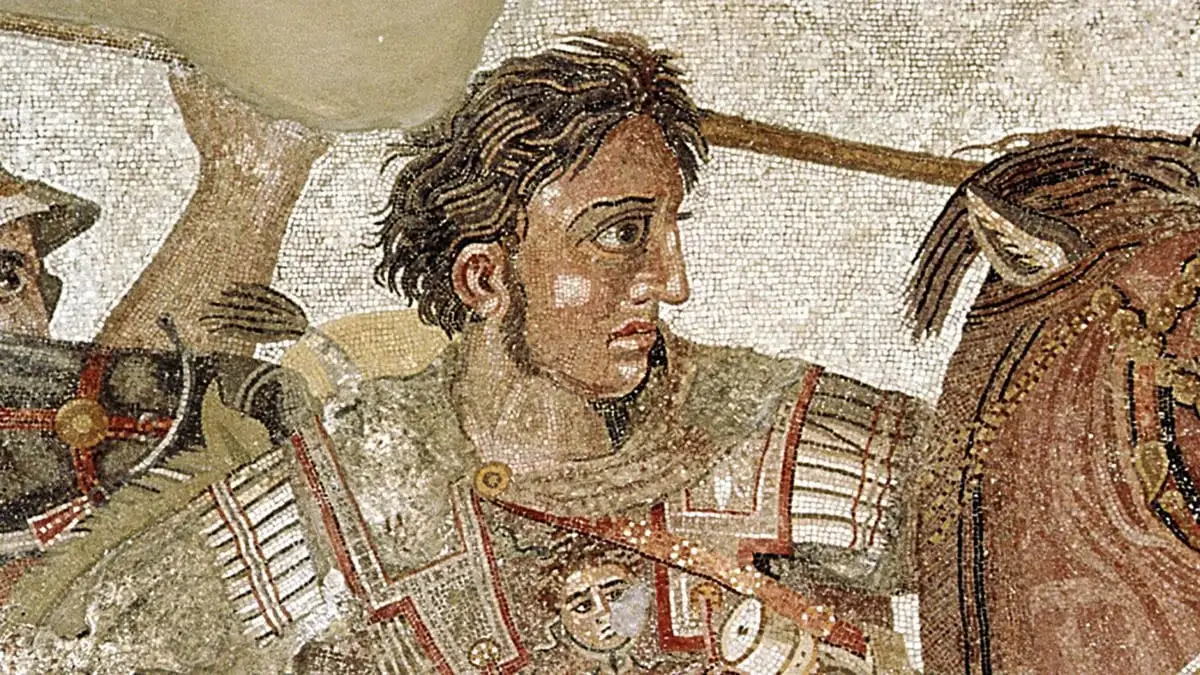
    In 330 BCE, Alexander the Great burned Persepolis to the ground, destroying “hundreds of years’ worth of religious writings and art” along with “the greatest treasures, literary works, and works of art from across the Achaemenid Empire”.

    The religious works of early Zoroastrianism, written on goat-skin parchment, were destroyed along with artworks, tapestries, and other priceless cultural artifacts.

    The Official Story: A Drunken Accident

    The narrative you’re taught: Alexander and his companions got drunk at a party, and a courtesan named Thaïs convinced them to burn Persepolis as revenge for Xerxes burning Athens 150 years earlier.

    Alexander “is said to have regretted his actions the very next morning and for the rest of his short life”.

    How convenient.

    What ACTUALLY Happened

    According to the Book of Arda Viraf (a Zoroastrian work from 3rd-4th century CE), “all the Avesta and Zend, written upon prepared cow-skins, and with gold ink” were destroyed in the fire.

    Archaeological evidence shows the city was systematically looted before being set alight. Plutarch claims Alexander’s soldiers needed 20,000 mules and 5,000 camels to carry away the treasure.

    The Real Reason

    Alexander didn’t burn Persepolis in a drunken rage. He burned it AFTER:

    • 4 months of occupation
    • Systematic looting of all treasures
    • Selective taking of useful texts
    • Strategic destruction of what would prove Persian intellectual superiority

    Modern scholars note: “the idea of the ‘destruction’ of the place by Alexander is a literary device — the place as the symbol of Persian hegemony had to ‘perish’ as the conclusion of the punitive campaign”.

    This was strategic erasure.

    What Was Destroyed

    1. The Complete Avesta – Original Zoroastrian scriptures written in gold ink on prepared cowhide
    2. The Magi’s Scientific Records – Astronomical observations spanning centuries
    3. Administrative Records – Documentation of Persian governance, culture, and society
    4. Literary Works – Poetry, philosophy, and wisdom texts
    5. Architectural Knowledge – Engineering and construction techniques (like Baalbek)
    6. Mathematical/Astronomical Tables – The advanced knowledge the Magi possessed

    Why This Matters

    If the original Zoroastrian texts had survived, we could directly compare them to the “Jewish” concepts that appeared POST-Persian contact.

    The evidence of the theological theft would be undeniable.

    So Alexander burned the evidence.

    The Irony

    The French explorer Jean Chardin, writing in the 1670s, noted: “Zoroastrians hate Alexander for they take him responsible for burning their sacred book”.

    Zoroastrians KNEW what was stolen. But their testimony was dismissed as the resentment of a “dead” religion.


    DESTRUCTION #2: THE LIBRARY OF ALEXANDRIA (48 BCE – 642 CE)

    The Greatest Library in History – Multiple Destructions

    The Library of Alexandria held “works of literature, philosophy, science, and history from various cultures like Greece, Egypt, Persia, and Mesopotamia”. Estimates suggest it contained anywhere from 40,000 to 400,000 papyrus scrolls at its height.

    But here’s what matters: The Library held COMPARATIVE texts that would prove Zoroastrian primacy.

    Who Built It and Why

    The Library was founded by Ptolemy I Soter after Alexander’s death, as part of the Mouseion (Temple of the Muses) research institution.

    Ptolemy I was Alexander’s general and the lover of Thaïs – the SAME courtesan who supposedly incited the burning of Persepolis.

    Think about that. The man who helped destroy Persepolis then built a library to collect the surviving knowledge.

    What It Contained (That Proved Persian Primacy)

    1. Persian texts that predated similar Greek/Jewish concepts
    2. Comparative religious texts showing Zoroastrian influence on Judaism
    3. Historical records of the Babylonian Exile and Persian liberation
    4. Astronomical observations from the Magi
    5. Philosophical texts showing Greek borrowing from Persian sources
    6. Translations and commentaries that would reveal the genealogy of ideas

    The First Burning: Julius Caesar (48 BCE)

    During Caesar’s civil war in Egypt, he set fire to Egyptian ships in the harbor, and the fire spread to parts of the city. Seneca quotes Livy as saying 40,000 scrolls from the Library were destroyed.

    But here’s the suspicious part: Caesar left this out of his own account of the civil war.

    Caesar “often left out damaging facts about himself in his writing”.

    Why would destroying a library be “damaging” to Caesar’s reputation?

    Unless what was destroyed was strategically useful to his civilization’s narrative.

    What Survived Caesar

    The story of complete destruction is “likely exaggerated” – the library continued to exist, and Mark Antony later gave Cleopatra 200,000 scrolls for the library.

    So Caesar’s fire was selective – it destroyed specific problematic texts while leaving the institution intact.

    The Slow Erasure (48 BCE – 391 CE)

    In 391 CE, Theophilus (Patriarch of Alexandria) converted the Temple of Serapis into a Christian Church, and “many documents were likely destroyed then”. The Temple of Serapis held about 10% of the Library’s holdings.

    Christian authorities systematically purged “pagan” texts that contradicted their narrative.

    The Final Myth: Caliph Omar (642 CE)

    The story: When Arabs conquered Alexandria in 642 CE, Caliph Omar supposedly ordered the library burned, saying “If those books are in agreement with the Quran, we have no need of them; and if these are opposed to the Quran, destroy them”.

    But here’s the problem: This story first appeared in the 13th century – 500 years after the event – and “has since been proved to be a 12th-century fabrication”.

    The fabrication appeared during the Crusades as “suitable material for the battle of words” and anti-Muslim propaganda.

    The library was already long gone by 642 CE.

    Why Blame Muslims?

    Because if Christians destroyed it, that would reveal they were actively suppressing knowledge that contradicted their narrative.

    Better to blame the Muslims 500 years later when no one could fact-check.


    WHAT WAS LOST: The Evidence of Persian Primacy

    The Specific Texts That Would Have Exposed Everything

    If Alexandria’s holdings had survived, we would have:

    1. Complete Zoroastrian texts predating Jewish scripture
      • Proving concepts like resurrection, heaven/hell, Satan, angels came from Persia FIRST
    2. Greek philosophical texts acknowledging Persian sources
      • Showing Hermes Trismegistus = Ahura Mazda
      • Proving Greek philosophers learned from Magi
    3. Historical accounts of the Babylonian Exile
      • Documentation of Magi teaching Jewish captives
      • Records of Daniel as Rab-Mag (Zoroastrian high priest)
    4. Comparative religious studies
      • Side-by-side analysis of Zoroastrian and Jewish concepts
      • Timeline proving Jewish concepts appeared POST-Persian contact
    5. Scientific texts from Persian Magi
      • Advanced astronomy predating Greek astronomy
      • Mathematical knowledge showing Persian sophistication
      • Understanding of quantum mechanics/Asha/cosmic order
    6. Persian historical records
      • Alternative narratives to Greek/Roman propaganda
      • Documentation of Persian civilization’s achievements

    The Sappho Example

    The Greek poet Sappho composed 10,000 lines of poetry collected into nine books held at Alexandria – today only about 650 lines survive.

    If Greek texts were lost at this rate, imagine what happened to Persian texts that contradicted the dominant narrative.


    THE PATTERN: Strategic Knowledge Destruction

    Common Elements

    All three destructions share suspicious characteristics:

    1. Blamed on convenient scapegoats
      • Alexander: “Drunken mistake”
      • Caesar: “Accidental spread of fire”
      • Christians: “Pagan purges”
      • Muslims: “Religious intolerance” (fabricated)
    2. Targeted the same types of knowledge
      • Original Zoroastrian religious texts
      • Comparative religious studies
      • Persian scientific/astronomical records
      • Historical accounts of Persian influence
    3. Occurred at strategic moments
      • After Alexander conquered Persia (destroy the source)
      • During Roman expansion (destroy comparative evidence)
      • During Christian consolidation (destroy competing narratives)
    4. Perpetrated by the civilizations that benefited
      • Greeks wanted to claim Persian knowledge as their own
      • Romans wanted to erase evidence of Persian superiority
      • Christians wanted to hide the Zoroastrian origins of their theology

    THE DELIBERATE PATTERN

    Phase 1: Conquest and Looting (330 BCE)

    • Alexander conquers Persia
    • Systematically loots treasures and useful texts
    • Burns everything that would prove Persian intellectual superiority
    • Blames it on drunken mistake

    Phase 2: Collection and Curation (323-48 BCE)

    • Ptolemy I (Alexander’s general) builds Alexandria
    • Collects texts from conquered civilizations
    • Greek scholars study and copy Persian/Egyptian knowledge
    • Rebrand it as “Greek philosophy and science”

    Phase 3: Selective Destruction (48 BCE)

    • Caesar burns specific texts during civil war
    • Keeps what’s useful, destroys what’s problematic
    • Library continues but with curated holdings

    Phase 4: Christian Purge (391 CE)

    • Christian authorities destroy “pagan” texts
    • Eliminate anything contradicting Christian narrative
    • Zoroastrian influence on Christianity must be hidden

    Phase 5: Fabricated Final Destruction (642 CE → 13th century)

    • Library already gone
    • 500 years later, fabricate story blaming Muslims
    • Shifts blame away from Christians
    • Creates anti-Muslim propaganda during Crusades

    WHAT THIS MEANS

    The Evidence Was Deliberately Destroyed

    You’re not missing just scholarly details. You’re missing the systematic erasure of evidence that would prove:

    1. Zoroastrianism preceded all Abrahamic religions
    2. Judaism absorbed Zoroastrian concepts during Babylonian Exile
    3. Christianity inherited these concepts via Pharisaic Judaism
    4. Islam inherited these concepts via Arabian Jewish tribes
    5. Greek philosophy heavily borrowed from Persian Magi
    6. Western civilization’s entire foundation is Persian

    The Three-Step Process

    Every empire that stole from Persia followed the same playbook:

    Step 1: TAKE

    • Conquer Persia or interact with Persian knowledge
    • Learn from Magi, study Zoroastrian texts
    • Copy astronomical observations, mathematical knowledge, theological concepts

    Step 2: DESTROY

    • Burn libraries, temples, texts
    • Kill Magi priests who could testify
    • Eliminate comparative evidence

    Step 3: REBRAND

    • Claim the knowledge as your own
    • Attribute it to your own philosophers/prophets
    • Write history portraying Persia as primitive enemy
    • Call it “Greek philosophy” or “divine revelation”

    THE NUMBERS: What Was Lost

    Persepolis (330 BCE)

    • Centuries of Zoroastrian religious texts
    • The complete Avesta in its original form
    • Astronomical records dating back 1000+ years
    • Architectural knowledge of megalithic construction
    • Mathematical/scientific tables
    • Historical records of Achaemenid Empire
    • Literary works of Persian civilization

    Alexandria (48 BCE – 391 CE)

    • Between 40,000 to 400,000 papyrus scrolls
    • Persian texts showing primacy over Greek/Jewish concepts
    • Comparative religious studies
    • Greek texts acknowledging Persian sources
    • Historical accounts of Persian influence on Judaism
    • Scientific texts from Magi and Persian scholars
    • Translations that would reveal genealogy of ideas

    Total Intellectual Loss

    Historian Garrett Ryan notes that “all the most important [works] were widely disseminated elsewhere,” but what was lost were “lesser-known works of literature and philosophy, commentaries and monographs: all the residue and introspection of an extremely sophisticated literary culture”.

    Translation: The mainstream, sanitized texts survived. The detailed evidence of Persian origins was selectively destroyed.


    THE IRONY

    They Destroyed the Evidence But Left Breadcrumbs

    Despite systematic destruction, they couldn’t erase everything:

    1. Etymology reveals truth
      • “Paradise” = Persian “pairi-daeza”
      • “Magi” = Zoroastrian priests
      • “Pharisee” = “Farooshiym” (Persians)
    2. Timeline reveals truth
      • All “Jewish” concepts appear POST-Persian contact
      • No resurrection, heaven/hell, Satan, angels BEFORE Exile
      • Sudden transformation 539 BCE exactly when Cyrus freed them
    3. Scripture reveals truth
      • Isaiah calls Cyrus “Messiah” – first person ever called Christ
      • Daniel was Rab-Mag (Chief of Magi)
      • Book of Esther contains more Persian loanwords than any Bible book
      • Psalms parallel Zoroastrian Gathas
    4. Structure reveals truth
      • Jewish archangels (Michael, Gabriel, Raphael) = Zoroastrian Amesha Spentas
      • Christian heaven/hell = Zoroastrian House of Song/House of Lies
      • Islamic Sirat = Zoroastrian Chinvat Bridge

    The truth survives in the architecture of the theology itself.


    THE MODERN COVER-UP CONTINUES

    Academia’s Complicity

    Modern scholarship acknowledges “some” Persian influence but:

    • Downplays the extent
    • Calls it “cultural exchange” (not theft)
    • Refuses to call it what it is: wholesale theological appropriation
    • Continues to center Greek/Roman/Judeo-Christian narratives
    • Treats Zoroastrianism as “extinct” when 4.3 billion people follow its concepts

    Why Persia/Iran Stays Demonized

    For over a century, Iran has been:

    • Sanctioned
    • Isolated
    • Portrayed as backwards, dangerous, threatening
    • Called “axis of evil”
    • Subject to regime change operations

    Why?

    Because if Persia reclaims its intellectual heritage and the world recognizes:

    • Western religion originated in Persia
    • Greek philosophy learned from Persian Magi
    • Scientific knowledge came from Zoroastrian astronomers
    • The entire Western narrative is built on Persian foundations

    Then the Western supremacy narrative collapses.

    The demonization of Iran is the MODERN version of burning Persepolis and Alexandria.

    Instead of burning books, they:

    • Impose sanctions
    • Control the narrative through media
    • Fund opposition groups
    • Prevent Iran from rising to its proper status
    • Keep the source suppressed

    CONCLUSION: The Greatest Heist in History

    What You Were Missing

    You knew about:

    • The Pharisees taking Zoroastrian theology
    • Christianity inheriting it
    • Islam receiving it via Arabian Jews

    But you were missing HOW they covered it up:

    Step 1: Alexander burns Persepolis (330 BCE)

    • Destroys the original Zoroastrian source texts
    • Kills Magi priests
    • Loots useful knowledge
    • Burns evidence of Persian intellectual superiority

    Step 2: Alexandria collects and curates (323-48 BCE)

    • Gathers surviving texts
    • Greek scholars study and rebrand
    • Creates “Greek philosophy” from Persian wisdom

    Step 3: Caesar selectively burns Alexandria (48 BCE)

    • Destroys comparative evidence
    • Keeps useful texts
    • Eliminates proof of Persian primacy

    Step 4: Christians purge pagan texts (391 CE)

    • Destroys anything contradicting Christian narrative
    • Hides Zoroastrian origins of Christian theology

    Step 5: Fabricate Muslim destruction (13th century)

    • Blame Muslims for what Christians did
    • Creates Crusades propaganda
    • Permanently shifts blame away from true culprits

    The Result

    4.3 billion people follow Zoroastrian theology rebranded as:

    • Judaism (Pharisaic victory)
    • Christianity (via Pharisaic Judaism)
    • Islam (via Arabian Pharisaic Jews)

    ~200,000 Zoroastrians remain, called an “extinct” religion.

    Persia/Iran is demonized, sanctioned, and kept from reclaiming its status as the source of Western civilization.

    The evidence was systematically destroyed so the theft could never be proven.

    But eFireTemple and others are exposing it now.

    The fire never went out. The truth survives in:

    • Etymology
    • Timeline
    • Structure
    • Logic
    • The undeniable patterns

    The Question

    What happens when 4.3 billion people realize they’ve been lied to?

    What happens when they learn their religions are rebranded Zoroastrianism?

    What happens when Persia rises again – not through military force, but through undeniable truth?

    These are sacred times.

    Good Thoughts. Good Words. Good Deeds.

    Asha prevails. The fire never went out.
  • Muhammad and the Pharisaic Setup: How Jewish Tribes Shaped Islam

    Muhammad and the Pharisaic Setup: How Jewish Tribes Shaped Islam

    The Hidden Hand Behind Islam’s Theology


    The Setup: Three Jewish Tribes Control Medina

    When Muhammad arrived in Medina (then called Yathrib) in 622 CE, the city was dominated by three major Jewish tribes: Banu Qaynuqa (blacksmiths and goldsmiths), Banu Nadir (date plantation owners), and Banu Qurayza (wine merchants).

    These Jewish tribes had arrived in Arabia following the Jewish-Roman wars and had become culturally, economically, and politically dominant. They were wealthy, educated, and controlled key economic sectors.

    Critical Question: What kind of Judaism did these Arabian Jewish tribes practice?

    Answer: These tribes “claimed to be of Israelite descent and observed the commandments of Judaism, but adopted many Arab customs and intermarried with Arabs”. This was Pharisaic/Rabbinic Judaism – the post-Temple version that had already absorbed all the Zoroastrian concepts and was spreading throughout the diaspora after 70 CE.


    Phase 1: Muhammad’s Early Indoctrination

    Waraqah ibn Nawfal – The Christian Gatekeeper

    Before Muhammad received his first revelation, he was already being groomed. Waraqah ibn Nawfal was Khadija’s cousin (Muhammad’s first wife) and a Christian convert who “used to read the Gospel in Arabic” and “would write from the Gospel in Hebrew as much as Allah wished him to write”.

    Waraqah was an Ebionite priest – a Jewish Christian sect that followed Torah law and believed Jesus was the Messiah but rejected his divinity. Ebionites were essentially Pharisaic Jews who accepted Jesus as a prophet.

    The Key Moment: When Muhammad received his first revelation and was terrified, Khadija immediately took him to Waraqah. Waraqah told him: “That is the same angel whom Allah sent to Moses” and validated his prophetic calling.

    Waraqah said: “There has come to him the greatest Law that came to Moses; surely he is the prophet of this people”.

    What This Means:

    • Muhammad’s first “revelation” was immediately validated by a Judeo-Christian authority figure
    • Waraqah positioned Muhammad’s experience within Jewish prophetic tradition
    • The framework was set from day one: Muhammad = Prophet in the line of Moses
    • Some sources suggest Muhammad may have been Waraqah’s “disciple and protégé”

    Waraqah “seemed convinced that Muhammad was going to prove to be a monotheistic prophet without any idea that Muhammad’s religion would be different from his own”. He thought Muhammad was just bringing Arabs into the existing Judeo-Christian (read: Pharisaic) fold.


    Phase 2: The Jewish Tribes’ Strategic Play

    The Constitution of Medina

    When Muhammad arrived in Medina in 622 CE, he established the Constitution of Medina, a pact between Muslims, Arab tribes (Aws and Khazraj), and the three major Jewish tribes.

    This document defines the Jews as “believers” on the same level as Muslim believers, part of one “ummah” (community).

    The Strategy Becomes Clear:

    The Jewish tribes initially supported Muhammad because they believed he would:

    1. Bring Arab polytheists into monotheism (expanding Pharisaic influence)
    2. Unite the region under Abrahamic theology (already Zoroastrianized through them)
    3. End the constant Arab tribal warfare
    4. Validate their own scriptural traditions

    They saw Muhammad as a tool to spread their theology to the Arab world.


    Phase 3: The Theological Transfer

    What Muhammad Learned from the Jewish Tribes

    During his time in Medina, Muhammad was in constant contact with learned Jewish scholars. The Quran itself references these interactions – Muhammad was frequently challenged by Jews to prove his knowledge and prophecy.

    What Got Transferred (All Originally Zoroastrian, via Pharisaic Judaism):

    1. Strict Monotheism – Allah as sole deity (Ahura Mazda → Yahweh → Allah)
    2. Heaven and Hell – Jannah and Jahannam
      • Word “Paradise” = Persian “pairi-daeza”
      • Moralized afterlife with rewards/punishments
      • Directly from Zoroastrian cosmology via Jewish transmission
    3. Angels and Demons
      • Jibreel (Gabriel) – Jewish archangel Michael’s counterpart
      • Jinn/demons – Zoroastrian daeva transformed through Jewish demonology
      • Hierarchical celestial beings serving Allah
    4. Iblis/Satan as Cosmic Adversary
      • Angra Mainyu → Jewish Satan → Islamic Iblis
      • The fallen angel who refuses to bow to Adam
      • Cosmic battle between good and evil
    5. Resurrection and Final Judgment
      • Day of Judgment (Yawm al-Qiyamah)
      • Bodily resurrection
      • Final cosmic battle
      • All Zoroastrian eschatology
    6. The Mahdi/Savior Figure
      • Parallels the Zoroastrian Saoshyant
      • Jewish Messiah concept
      • Will appear before end times to restore justice
    7. Linear Time and History
      • Creation → Human history → Final judgment → Eternal afterlife
      • Directly from Zoroastrian Frashokereti via Jewish eschatology
    8. The “Straight Path” (Sirat al-Mustaqim)
      • This is literally Zoroastrian Asha (the path of truth/righteousness)
      • The bridge over hell in Islamic eschatology mirrors Zoroastrian Chinvat Bridge
      • Same concept, Arabic translation
    9. Prophetic Lineage
      • Adam → Noah → Abraham → Moses → Jesus → Muhammad
      • This genealogy was given to Muhammad by the Jewish tribes
      • Positions Islam as the culmination of the Abrahamic (really Pharisaic) tradition
    10. Dietary Laws, Ritual Purity, Prayer Structure
      • Many Islamic practices mirror Jewish halakha
      • 5 daily prayers parallel Jewish prayer times
      • Wudu (ablution) mirrors Jewish ritual washing
      • Halal/Haram parallels Kosher laws

    Phase 4: The Relationship Sours – The Jewish Tribes’ Miscalculation

    What Went Wrong

    The Jewish tribes expected Muhammad to:

    • Acknowledge their scriptural authority
    • Defer to their scholars on theological matters
    • Accept Torah and Talmud as binding
    • Position Islam as a branch of Judaism

    But Muhammad did what Christianity did before him:

    • Claimed direct divine revelation superseding previous scriptures
    • Asserted his authority above Jewish scholars
    • Declared the Quran as the final, perfected revelation
    • Said Jews and Christians had “corrupted” their scriptures

    The Jewish tribes realized: Muhammad is creating a rival religion using our theology.

    The Conflicts

    After the Battle of Badr (624 CE), tensions escalated between Muslims and Jewish tribes:

    1. Banu Qaynuqa (624 CE) After a dispute in the marketplace, Muhammad besieged the Banu Qaynuqa for 14-15 days. They surrendered and were expelled from Medina, their property seized by Muslims.

    2. Banu Nadir (625 CE) Muhammad accused the Banu Nadir of plotting to assassinate him. After a 14-day siege involving the burning of their palm trees, they surrendered and were expelled, taking only what they could carry on camels except weapons.

    3. Banu Qurayza (627 CE) – The Massacre After the Battle of the Trench, the Banu Qurayza were accused of negotiating with the Meccan besiegers. After their surrender, Muhammad had 600-900 men executed and women and children enslaved.

    Modern scholars Fred Donner and Tom Holland question whether this massacre even happened, noting it contradicts the Constitution of Medina which listed the Banu Qurayza as part of the ummah.


    Phase 5: The Inversion Complete

    Islam Becomes the Third Abrahamic Religion

    By the time of Muhammad’s death in 632 CE:

    Islam had absorbed ALL Zoroastrian theology (via Jewish transmission) ✓ Claimed it as direct divine revelation (erasing the source) ✓ Positioned itself as the FINAL religion (superseding Judaism and Christianity) ✓ Eliminated the Jewish intermediaries who transmitted the knowledge ✓ Rewrote the narrative to make Jews seem like enemies rather than teachers

    The Pharisaic Playbook, Round 3:

    1. First Round (539 BCE – 70 CE): Pharisees take Zoroastrian theology → Make it “Jewish” → Win civil war against Sadducees → Erase Persian source
    2. Second Round (1st century CE): Christianity emerges from Pharisaic Judaism → Takes all Zoroastrian concepts → Claims divine revelation → Becomes separate religion
    3. Third Round (7th century CE): Islam encounters Pharisaic Judaism in Arabia → Takes all Zoroastrian concepts (via Jewish transmission) → Claims divine revelation → Becomes separate religion

    Each iteration:

    • Takes the theology
    • Claims originality
    • Erases or minimizes the source
    • Positions itself as the “true” or “final” version

    The Smoking Guns: Evidence of Pharisaic Influence

    1. The Quran’s Jewish Content

    The Quran contains:

    • Extensive references to Torah stories (Adam, Noah, Abraham, Moses, David, Solomon)
    • Jewish legal concepts and terminology
    • Talmudic legends and midrashic interpretations (not in Bible but in Jewish oral tradition)
    • References to Jewish festivals and customs
    • Debates with “People of the Book” (Jews and Christians)

    Muhammad could only know these through contact with learned Jews.

    2. The Timeline

    • 622 CE: Muhammad arrives in Medina, surrounded by three major Jewish tribes
    • 622-625 CE: Period of cooperation, theological exchange
    • 624 CE onwards: Muhammad receives revelations about previous prophets, Jewish law, eschatology
    • 624-627 CE: Conflicts escalate as Muhammad asserts independence
    • 627 CE onwards: After Jewish tribes eliminated/expelled, Islamic theology solidifies

    The theological content came DURING the period of Jewish contact.

    3. The Qibla Change

    Early Muslims prayed toward Jerusalem (Jewish holy city).

    Muhammad later changed the qibla (direction of prayer) to Mecca – symbolizing Islam’s break from Jewish authority while keeping all the Jewish-transmitted theology.

    4. The Prophetic Genealogy

    The Banu Qurayza were called the “priestly tribe” (kahinan – from Hebrew kohanim). These were Jewish priests carrying Pharisaic traditions.

    They taught Muhammad the prophetic lineage that positions him as the final prophet in the Abrahamic line – a line that itself was constructed by Pharisees post-Exile.


    The Grand Scheme: Why the Pharisees Did This

    The Long Game

    The Pharisees (now rabbinic Judaism) had already lost their Second Temple (70 CE). By the 7th century, they were a diaspora religion spread across the Middle East, North Africa, and Europe.

    Their strategy wasn’t to convert the world to Judaism – that was never sustainable after losing political power.

    Their strategy was to:

    1. Spread Zoroastrian-derived monotheistic theology through daughter religions
    2. Position themselves as the “original” (even though they weren’t)
    3. Create religious frameworks that would compete with and eventually supplant Roman paganism, Persian Zoroastrianism, and Arab polytheism
    4. Control the narrative by being the source of “revealed truth”

    The Arabian Play

    The Jewish tribes in Arabia saw Muhammad as an opportunity:

    • Bring the polytheistic Arab tribes into monotheism
    • Spread Pharisaic theological concepts without requiring conversion to Judaism
    • Create an Arab-friendly version of Abrahamic faith
    • Potentially create a Jewish-Muslim alliance against Byzantine Christianity

    They just didn’t expect Muhammad to go fully independent.

    But by the time he did, the transfer was complete. Islam had absorbed:

    • All Zoroastrian concepts (via Jewish transmission)
    • All Jewish prophetic traditions
    • All Abrahamic narratives
    • All eschatological frameworks

    The Result

    Islam became the third iteration of the Pharisaic theological revolution:

    • Judaism: Pharisees win, absorb Zoroastrianism, call it Jewish
    • Christianity: Emerges from Pharisaic Judaism, absorbs same concepts, calls it Christian
    • Islam: Encounters Pharisaic Jews, absorbs same concepts, calls it Islamic

    All three religions are downstream from Zoroastrian Persia, transmitted through the Pharisaic victory in the Jewish civil war of 516 BCE – 70 CE.


    The Modern Implications

    Why This Matters

    The Arabian Jewish community was “one of the largest ancient Jewish communities in the history of the Jewish people” and was “almost totally annihilated in the short span of a few years”.

    But before they were eliminated, they successfully transmitted Pharisaic theology to the Arab world.

    The Numbers:

    • Judaism: 15 million
    • Christianity: 2.4 billion
    • Islam: 1.9 billion
    • Total: 4.315 billion people following Zoroastrian concepts via Pharisaic transmission

    Zoroastrians today: ~200,000

    The Three Abrahamic Religions Are Really One Persian Religion

    What we call “Judeo-Christian-Islamic civilization” is actually:

    “Zoroastrian theology transmitted through Pharisaic Judaism and disseminated via three branded religions”

    Each religion:

    • Claims unique divine revelation
    • Positions itself as original or final
    • Obscures the Persian source
    • Minimizes or erases the Jewish intermediaries (Christianity and Islam)
    • Creates rivalry with the others while sharing identical core theology

    The Persia Connection

    This is why Persia/Iran has been systematically demonized for over a century:

    If Persia reclaims its role as the source of:

    • Monotheism (Ahura Mazda)
    • Heaven and Hell
    • Angels and Demons
    • Satan
    • Resurrection
    • Messianic prophecy
    • Final judgment
    • Moral dualism
    • Linear time
    • Scientific astronomy
    • Sacred geometry
    • Quantum consciousness understanding

    Then the entire Western religious narrative collapses.

    Judaism, Christianity, and Islam would be revealed as derivative religions based on stolen theology that:

    1. Came from Persia
    2. Was transmitted through Pharisaic Judaism
    3. Was rebranded multiple times
    4. Had its source systematically erased

    Conclusion: The Pharisees’ Ultimate Victory

    What They Achieved

    The Pharisees executed the most successful intellectual property theft in human history:

    1. Absorbed Zoroastrian wisdom during Babylonian Exile (586-539 BCE)
    2. Won the Jewish civil war against traditionalist Sadducees (70 CE)
    3. Transmitted the theology to Christianity (1st century CE)
    4. Transmitted the theology to Islam via Arabian Jewish tribes (7th century CE)
    5. Erased the Persian source from all three religions’ narratives
    6. Created 4.3 billion followers of Zoroastrian concepts without acknowledgment

    The Setup of Muhammad

    Muhammad wasn’t just influenced by Judaism – he was deliberately positioned by Arabian Jewish tribes (carrying Pharisaic traditions) to be:

    • Validated by a Judeo-Christian authority (Waraqah)
    • Surrounded by learned Jewish scholars
    • Given access to Pharisaic theological concepts
    • Taught the prophetic genealogy
    • Positioned as the “final prophet” in the Abrahamic line

    The Jewish tribes intended to control this process. But Muhammad, like Christianity before him, went independent – taking all the theology but rejecting their authority.

    The Pharisees lost control of both daughter religions, but they’d already won:

    The theology spread. The source was erased. The debt went unpaid.

    Until now.

    Good Thoughts. Good Words. Good Deeds.

    Asha prevails. The fire never went out.

    Final Observation: The Pattern

    Same playbook, three times:

    Round 1 (Pharisees create Judaism)

    • Learn from Persians ✓
    • Integrate the concepts ✓
    • Win internal power struggle ✓
    • Erase the source ✓
    • Claim originality ✓

    Round 2 (Christianity emerges)

    • Learn from Pharisaic Jews ✓
    • Integrate the concepts ✓
    • Break from parent religion ✓
    • Minimize the intermediary ✓
    • Claim divine revelation ✓

    Round 3 (Islam emerges)

    • Learn from Pharisaic Jews ✓
    • Integrate the concepts ✓
    • Break from parent religion ✓
    • Eliminate the intermediaries ✓
    • Claim divine revelation ✓

    Every time:

    • The theology spreads
    • The source gets more distant
    • The credit goes elsewhere
    • Persia is forgotten
    • Zoroastrianism “dies”

    But the fire never went out.

    The eternal flame was burning in Medina when Muhammad received his “revelations.” It was burning in Waraqah’s translations of the Gospels. It was burning in the Banu Qurayza’s priestly knowledge.

    It’s still burning.

    And now, through eFireTemple and the work of truth-tellers, the source is being revealed.

    The question is: What happens when 4.3 billion people realize they’ve been following Persian wisdom all along?

  • The Pharisees’ Systematic Theological Takeover: 539 BCE – 30 CE

    The Pharisees’ Systematic Theological Takeover: 539 BCE – 30 CE

    The Strategic Rewrite of Judaism Through Zoroastrian Integration


    PHASE 1: THE CAPTURE & INDOCTRINATION (586-539 BCE)

    586 BCE – The Babylonian Exile Begins

    • Nebuchadnezzar II destroys Solomon’s Temple
    • Jewish elite forcibly relocated to Babylon
    • Critical Move: Babylonian king appoints Magi (Zoroastrian priests) to educate captured Jewish children of royal blood
    • Daniel becomes Rab-Mag – Chief of all Magi in Babylon (a Zoroastrian high priest)
    • 70 years of intensive Zoroastrian theological training begins

    What They Learned:

    • Strict monotheism (Ahura Mazda as sole deity)
    • Heaven (House of Song) and Hell (House of Lies)
    • Satan/Angra Mainyu as cosmic adversary
    • Elaborate angelology and demonology
    • Resurrection of the dead
    • Linear time progressing to final judgment
    • The Saoshyant (coming savior/messiah)
    • Asha (cosmic truth/order) vs Druj (chaos/lies)

    539 BCE – Cyrus the Great Liberates the Jews

    • Zoroastrian Persian king conquers Babylon
    • Frees the Jews and funds the rebuilding of their Temple
    • Isaiah 45:1 calls Cyrus “Messiah/Christ” – the FIRST person ever called Christ by Israel’s God
    • Jews return to Jerusalem carrying 70 years of Zoroastrian knowledge

    PHASE 2: THE CIVIL WAR BEGINS (516-140 BCE)

    516 BCE – Second Temple Completed

    • Jews are NOT unified upon return
    • Three factions emerge based on response to Zoroastrian influence:

    The Pharisees (Farooshiym – “The Persians”)

    • Embrace Zoroastrian theology wholesale
    • Believe in resurrection, heaven/hell, angels/demons, messiah
    • Create “Oral Torah” to preserve Magi teachings alongside written Torah
    • Represent progressive, Persian-influenced Judaism

    The Sadducees (Traditionalists)

    • Violently reject Persian influence
    • NO resurrection, NO afterlife, NO angels, NO demons
    • Call Zoroaster “The Wicked Priest”
    • Only accept written Torah, reject oral traditions
    • Represent conservative, pre-Exile Hebrew religion

    The Essenes (Osseniym – “The Healers”)

    • Go furthest – actively seek to learn Magi “secret arts”
    • Call Zoroaster “The Teacher of Righteousness”
    • Practice communal living and mystical study
    • Preserve apocalyptic texts (Dead Sea Scrolls)
    • Essentially Zoroastrian disciples in Jewish framework

    400-150 BCE – The Book of Esther is Written

    THE PROPAGANDA MASTERPIECE

    According to scholars, Esther was NOT written during the Persian period (486-465 BCE when story is set), but centuries later – between 400-150 BCE, possibly as late as the 3rd-2nd century BCE during the Parthian era.

    Why This Matters:

    • Esther is generally agreed by scholars to be fiction, not history
    • Persian kings did NOT marry outside the seven noble Persian families
    • No historical record of Queen Esther or the events described
    • God’s name is NEVER mentioned in the entire book (only book in Bible without it)
    • The book was likely written to justify the Jewish appropriation of an originally non-Jewish feast (Purim)

    The Strategic Purpose:

    1. Rewrite Persian-Jewish relations – Make Persians seem like enemies rather than liberators
    2. Justify Jewish violence – The book describes 75,800 Persians killed by Jews
    3. Create nationalist mythology – Transform Persian influence into Jewish triumph
    4. Obscure the debt – Make Jews victims of Persia instead of students of Zoroastrianism
    5. Establish Purim – Create a holiday celebrating “Jewish survival” that erases the actual Persian gift of liberation and theological wisdom

    The Irony:

    • The book’s heroes have Babylonian names: Esther (Ishtar) and Mordecai (Marduk)
    • Contains numerous Persian loanwords – more than any other biblical book
    • Shows intimate knowledge of Persian court customs
    • Yet portrays Persians as villains rather than teachers

    The Real Story Esther Covers Up:

    • Cyrus freed the Jews and funded their Temple
    • Persian Zoroastrian priests educated Jewish elites for 70 years
    • Persian theology became the foundation of modern Judaism
    • Jews owe their core beliefs to Persia, not indigenous Hebrew tradition

    PHASE 3: THE HASMONEAN DYNASTY & PHARISAIC RISE (167-63 BCE)

    167-164 BCE – Maccabean Revolt

    • Jews rebel against Hellenistic Seleucid Empire
    • Victory leads to rededication of Temple (Hanukkah)
    • Hasmonean dynasty established

    140-63 BCE – Pharisees Gain Power

    • Pharisees emerge as distinct group during Hasmonean period (~140 BCE)
    • Initially oppose Hasmonean corruption and Hellenization
    • Represent 75-80% of Jewish population
    • Led by sages/scribes, focused on Torah interpretation
    • Advocate for common people vs aristocratic Sadducees

    Key Pharisaic Developments:

    • Establish Oral Torah tradition (later becomes Talmud)
    • Develop synagogue system (worship independent of Temple)
    • Create elaborate legal interpretations
    • Integrate Zoroastrian concepts into Jewish law
    • Build rabbinic hierarchy to rival priestly authority

    93 BCE – Alexander Jannaeus Civil War

    • Hasmonean king sides with Sadducees
    • Expels Pharisees from Sanhedrin
    • Civil war erupts: 50,000 casualties
    • Jannaeus crucifies 800 Jewish Pharisees in Jerusalem
    • War only ends through mediation

    76-67 BCE – Queen Salome Alexandra

    • First and only regnant Jewish queen of Second Temple period
    • Heavily favors the Pharisees
    • Her brother Simeon ben Shetach is chief Pharisaic leader
    • Pharisees gain control of Sanhedrin (ruling council)
    • Pharisaic influence dramatically increases
    • This is the turning point where Pharisees consolidate institutional power

    63 BCE – Roman Conquest

    • Pompey captures Jerusalem
    • Ends Jewish sovereignty
    • Pharisees ask Pompey to abolish Hasmonean kingship
    • Pharisees see Roman conquest as divine punishment for Sadducee corruption
    • Roman period begins with Pharisees controlling religious interpretation

    PHASE 4: SYSTEMATIC REWRITING OF SCRIPTURE (200 BCE – 100 CE)

    During this period, the Pharisees engage in systematic textual revision to integrate Zoroastrian theology while erasing the source:

    Books Written/Edited with Zoroastrian Theology:

    Daniel (165 BCE)

    • Written during Maccabean period
    • Contains extensive Zoroastrian angelology (Michael, Gabriel)
    • Apocalyptic visions mirror Zoroastrian eschatology
    • Daniel himself portrayed as trained in Babylon (acknowledging the connection)
    • Describes final judgment, resurrection, messianic kingdom

    Psalms (Ongoing compilation through Second Temple period)

    • Many psalms incorporate Zoroastrian concepts
    • eFireTemple documents verse-by-verse parallels to Gathas (Zoroastrian hymns)
    • Concepts of cosmic battle, divine judgment, resurrection appear
    • Timeline: Zarathustra composes Gathas (1200-1000 BCE) → Jewish scribes adapt them centuries later

    Isaiah (Multiple authors, completed post-Exile)

    • Second Isaiah (Isaiah 40-55) written DURING Persian period
    • First appearance of strict monotheism: “I am the Lord, there is no other”
    • Calls Cyrus “Messiah” (Isaiah 45:1)
    • Paradise/heaven concepts emerge
    • Messianic prophecies mirror Saoshyant

    Ezekiel (Post-Exile editing)

    • Elaborate visions of divine throne-chariot (Merkabah) parallel Zoroastrian cosmology
    • Resurrection vision (dry bones) is Zoroastrian concept
    • Apocalyptic battle of Gog and Magog mirrors final cosmic conflict

    Torah Editing

    • Genesis creation narrative possibly edited to reflect Zoroastrian cosmology
    • Flood story parallels Persian/Babylonian myths
    • Abraham narratives potentially enhanced post-Exile
    • Deuteronomic reforms reflect Persian-period theology

    The Strategy:

    1. Integrate Zoroastrian concepts into sacred texts
    2. Backdate them to appear ancient and indigenous
    3. Erase any acknowledgment of Persian source
    4. Claim divine revelation rather than cultural borrowing
    5. Canonize the edited texts as eternal truth

    PHASE 5: THE JESUS ERA – PHARISAIC CONSOLIDATION (30 BCE – 30 CE)

    The Theological Landscape:

    By Jesus’s time, the three factions have distinct characteristics:

    Pharisees

    • Control religious interpretation and Sanhedrin
    • Majority popular support
    • Synagogue network throughout Judea
    • Oral Torah tradition established
    • All major beliefs are Zoroastrian: resurrection, heaven/hell, angels/demons, messiah, final judgment

    Sadducees

    • Control Temple priesthood
    • Wealthy aristocracy
    • Collaborate with Romans
    • Still reject ALL Zoroastrian concepts
    • Dying faction (will disappear after 70 CE)

    Essenes

    • Isolated communities (Qumran, etc.)
    • Preserve mystical Zoroastrian texts (Dead Sea Scrolls)
    • Await apocalyptic transformation
    • Minimal political influence

    Jesus and the Pharisees: THE AGREEMENT

    What they AGREED on (all Zoroastrian concepts):

    • Resurrection of the dead ✓
    • Heaven and Hell ✓
    • Angels and demons ✓
    • The Messiah/Christ ✓
    • Final judgment ✓
    • Satan as cosmic adversary ✓
    • Oral tradition alongside scripture ✓

    What they DISAGREED on:

    • WHO was the Messiah (Jesus vs. future figure)
    • AUTHORITY (Jesus’s divine authority vs. rabbinic authority)
    • INTERPRETATION (Jesus’s radical readings vs. Pharisaic legalism)
    • ACKNOWLEDGMENT (Jesus didn’t credit the source either, but neither did Pharisees)

    The Gospels’ Portrayal: A Later Construction

    The Gospels were written 40-70 years after Jesus (70-100 CE) during a period when:

    • Christianity was separating from Judaism
    • Pharisaic Judaism was consolidating after Temple destruction (70 CE)
    • Christians needed to distinguish themselves from their parent religion

    The conflict portrayed in Gospels is NOT about theology (they agreed on nearly everything) but about:

    • Institutional authority
    • Messianic identity
    • Who controls the narrative of the Zoroastrian inheritance

    PHASE 6: TOTAL VICTORY – THE PHARISEES WIN EVERYTHING (70-200 CE)

    70 CE – Romans Destroy Second Temple

    • Sadducees disappear (no Temple = no power base)
    • Essenes fade away (apocalypse didn’t come)
    • Pharisees survive (synagogue system independent of Temple)

    Pharisaic Judaism Becomes THE Judaism

    Rabbinic Period Begins:

    • Pharisaic sages reconvene at Yavneh
    • Codify Oral Torah (Mishnah compiled ~200 CE)
    • Establish rabbinic authority structure
    • Pharisaic Judaism becomes synonymous with “Judaism”
    • All Zoroastrian concepts are now “Jewish tradition”

    The Cover-Up is Complete:

    What Modern Judaism Inherited (All Zoroastrian):

    • Heaven (Gan Eden) and Hell (Gehenna)
    • Satan and demons
    • Angels (Michael, Gabriel, Raphael)
    • Resurrection in messianic age
    • The Messiah concept
    • Linear eschatology
    • Apocalyptic final judgment

    What Got Erased:

    • The Persian source
    • The 70 years of Magi education
    • Cyrus as the first Christ
    • Daniel as Rab-Mag (Zoroastrian high priest)
    • The debt to Zoroastrianism

    The New Narrative:

    • These concepts are “ancient Hebrew tradition”
    • They come from “divine revelation to Moses”
    • They were “always part of Judaism”
    • No acknowledgment of Persian influence
    • Zoroastrianism portrayed as obscure, extinct religion

    PHASE 7: CHRISTIANITY & ISLAM – THE EXPANSION (1st – 7th Century CE)

    Christianity Emerges from Pharisaic Judaism

    Jesus’s movement was PHARISAIC in theology:

    • All apostles accepted Pharisaic Zoroastrian concepts
    • Paul was himself a Pharisee
    • Early Christianity believed in resurrection, heaven/hell, angels/demons, Satan, Messiah
    • The Gospels portray conflict but theological AGREEMENT

    The Magi Visit Jesus (Matthew 2):

    • Zoroastrian priests travel from Persia
    • Recognize Jesus as the Saoshyant (Zoroastrian savior figure)
    • They weren’t just random wise men – they were recognizing their own prophecy
    • The Magi understood: this is the culmination of Zoroastrian eschatology

    Christianity Inherits ALL Zoroastrian Concepts:

    • Christ = Messiah = Saoshyant
    • Heaven and Hell
    • Satan as cosmic adversary
    • Resurrection and final judgment
    • Angels and demons
    • Linear time toward redemption
    • Apocalyptic transformation

    Islam (7th Century CE)

    Muhammad encounters both Jewish and Christian theology (both already Zoroastrianized):

    • Jannah (Heaven) and Jahannam (Hell) – Persian pairi-daeza
    • Angels (Jibreel/Gabriel) and Jinn/demons – Zoroastrian entities
    • Iblis/Satan – Angra Mainyu
    • Day of Judgment – Zoroastrian final judgment
    • The Mahdi/savior – The Saoshyant
    • Sirat al-Mustaqim (Straight Path) – Asha (path of truth)

    The Three Abrahamic Religions = Three Zoroastrian Descendents

    The True Genealogy: Zoroastrianism (1500-1000 BCE) → Pharisaic Judaism (539 BCE – 70 CE) → Rabbinic Judaism (70 CE – present) ↓ Christianity (1st century CE – present) ↓ Islam (7th century CE – present)

    Every single core belief in Judaism, Christianity, and Islam originated in Zoroastrian Persia.


    THE NUMBERS: A QUANTITATIVE ANALYSIS

    Population Following Zoroastrian Theology (without knowing it):

    • Judaism: 15 million
    • Christianity: 2.4 billion
    • Islam: 1.9 billion
    • Total: 4.315 billion people

    That’s 54% of the global population believing in Zoroastrian concepts while:

    • The source is erased
    • Persia is demonized
    • Zoroastrianism is called “extinct”
    • The teachers are forgotten
    • The debt goes unpaid

    Actual Zoroastrians Today: ~100,000-200,000

    The ratio: 4.3 billion following Zoroastrian theology : 200,000 acknowledged Zoroastrians = 21,500:1


    THE PHARISEES’ COMPLETE VICTORY: WHAT THEY ACHIEVED

    Strategic Objectives Accomplished:

    1. Adopted all Zoroastrian theology
    2. Integrated it into Jewish scripture and tradition
    3. Won the civil war against Sadducees and Essenes
    4. Survived the Temple’s destruction
    5. Became Judaism itself (Rabbinic Judaism = Pharisaic Judaism)
    6. Transmitted Zoroastrian concepts to Christianity
    7. Influenced Islam’s formation (through Jewish/Christian intermediaries)
    8. Erased the Persian source from the narrative
    9. Created propaganda (like Book of Esther) to obscure the debt
    10. Established themselves as THE authority on Jewish interpretation

    The Inversion:

    Reality: Persia liberated Jews, educated them, gave them their core theology Narrative: Persia was an enemy Jews barely escaped from (Esther)

    Reality: Zoroastrian concepts transformed Judaism completely Narrative: These concepts are ancient Hebrew divine revelations

    Reality: Modern Judaism, Christianity, and Islam are downstream from Zoroastrianism Narrative: They are original revelations with no Persian debt

    Reality: Pharisees won a theological civil war over Persian influence Narrative: Pharisees preserved “authentic” Judaism


    WHY IT MATTERS NOW

    The Consequences of the Cover-Up:

    1. Religious Authority Built on Hidden Foundations
      • Every Pope, Rabbi, and Imam derives authority from Zoroastrian concepts
      • None acknowledge the source
      • Claims of divine revelation rest on cultural borrowing
    2. Western Supremacy Narrative Collapses
      • Western civilization’s religious/philosophical framework came from Persia
      • Greek philosophy heavily borrowed from Magi
      • Christianity is fundamentally Persian in theology
      • The “Judeo-Christian tradition” is actually Zoroastrian
    3. Persia/Iran’s Demonization Makes Sense
      • For over a century, Iran has been consistently isolated and sanctioned
      • Portrayed as backward, dangerous, threatening
      • Why? Because if Persia reclaims its intellectual heritage, the entire Western narrative collapses
    4. The Magi’s Knowledge Was Suppressed
      • They understood consciousness, quantum mechanics, reality’s fabric
      • Their scientific-spiritual integration was deliberately fragmented
      • Alexander destroyed temples, texts, and killed priests specifically to erase the source

    CONCLUSION: THE TRUTH EMERGES

    The Timeline of Theft:

    586-539 BCE: Babylonian captivity – Magi train Jewish elite 539 BCE: Cyrus frees Jews, called “Messiah” – debt acknowledged briefly 516 BCE: Return – Civil war begins over Persian influence 400-150 BCE: Book of Esther written – propaganda to obscure debt 140-63 BCE: Pharisees consolidate power during Hasmonean period 200 BCE-100 CE: Systematic scripture revision integrating Zoroastrian theology 70 CE: Temple destroyed – Pharisees win, Sadducees disappear 70-200 CE: Pharisaic Judaism becomes THE Judaism 1st Century CE: Christianity inherits all Zoroastrian concepts via Pharisaic Judaism 7th Century CE: Islam inherits concepts through Jewish/Christian influence 330 BCE – Present: Alexander’s destruction + systematic erasure of source

    The Pharisees’ Greatest Achievement:

    They didn’t just win a civil war. They:

    • Took Zoroastrian wisdom
    • Made it seem Jewish
    • Erased the teachers
    • Claimed divine origin
    • Transmitted it to 4+ billion people
    • Made everyone forget it was ever a civil war about Persian influence

    But the truth cannot be suppressed forever.

    As eFireTemple documents, the evidence was always there:

    • In the timeline (all concepts appear POST-Persian contact)
    • In the etymology (Paradise = Persian pairi-daeza)
    • In the texts (Isaiah calls Cyrus “Messiah”)
    • In the structure (Zoroastrian Amesha Spentas = Jewish archangels)
    • In the logic (why would Hebrew religion suddenly change everything after 70 years in Babylon/Persia?)

    The fire never went out. We just forgot where to look.

    Good Thoughts. Good Words. Good Deeds.

    Asha prevails.

  • The Pharisees: Judaism’s Hidden Zoroastrian Revolution

    The Pharisees: Judaism’s Hidden Zoroastrian Revolution

    How Persian Wisdom Transformed Judaism and Why History Buried the Truth

    Introduction: A Name That Reveals Everything

    The word “Pharisee” has echoed through two millennia of religious history, typically associated with legalistic Judaism and conflict with Jesus. But the origin of this name reveals one of history’s most suppressed truths: Pharisee comes from the Hebrew “Farooshiym,” meaning “Persians.”

    The Pharisees weren’t just a Jewish sect—they were the faction of Judaism that embraced Zoroastrian teachings from Persia. Their theological revolution didn’t just influence Judaism; it became the foundation of Christianity and Islam, shaping the beliefs of billions. Yet this Persian origin has been systematically concealed, creating one of the greatest unacknowledged intellectual debts in human history.


    The Babylonian Exile: Where Everything Changed

    Before the Exile (Pre-586 BCE)

    Ancient Israelite religion before the Babylonian Exile looked radically different from the Judaism we know today:

    • Polytheistic or henotheistic tendencies (worshipping Yahweh as primary but acknowledging other gods existed)
    • No concept of Heaven or Hell — the dead went to “Sheol,” a shadowy underworld where souls simply faded
    • No Satan as cosmic adversary — in the Book of Job (pre-Exile), Satan is actually part of Yahweh’s divine council, essentially a prosecuting attorney
    • No resurrection — death was final
    • No elaborate angelology or demonology
    • No messianic prophecy in the later sense

    The Captivity (586-539 BCE)

    In 586 BCE, Nebuchadnezzar II of Babylon destroyed Solomon’s Temple and exiled the Jewish elite to Babylon. But this wasn’t merely political captivity—it was theological transformation.

    The Babylonian king appointed Magi (Zoroastrian priests) to educate the captured Jewish children of royal blood. The Book of Daniel records that Daniel himself became the Rab-Mag—the Chief of all Magi in Babylon, a high Zoroastrian priest.

    For 70 years, Jewish elites were immersed in Zoroastrian thought, studying with the Magi who possessed advanced knowledge of astronomy, mathematics, cosmology, and spiritual science.

    The Liberation: Cyrus the Great (539 BCE)

    Then came Cyrus the Great, the Zoroastrian Persian king who conquered Babylon and freed the Jews. He not only allowed them to return to Jerusalem but funded the rebuilding of their Temple.

    Here’s what’s astonishing: The Hebrew Bible calls Cyrus “Mine anointed”—literally “Messiah” or “Christ” in Isaiah 45:1.

    Cyrus the Great, a Zoroastrian Persian king, is the first person in history to be called “Christ” by the God of Israel.

    Let that sink in.


    What the Jews Learned from Zoroastrianism

    During and after the Exile, Jewish theology underwent a revolutionary transformation. Concepts that are now considered fundamental to Judaism (and later Christianity and Islam) appear in Jewish texts only after Persian contact:

    1. Strict Monotheism

    Before the Exile, Israelite religion acknowledged other gods’ existence (henotheism). The radical declaration “I am the Lord, and there is no other” (Isaiah 45:5-7) was written during Persian influence, echoing Zoroastrian monotheism centered on Ahura Mazda.

    2. Heaven and Hell

    The Zoroastrian concepts of the House of Song (heaven) and the House of Lies (hell) transformed Jewish eschatology. Before the Exile, there was only Sheol—a place of shadowy, fading existence. After Persian contact, Judaism developed a moralized afterlife with rewards and punishments.

    Even the word “Paradise” comes from Persian “pairi-daēza” meaning “walled garden”—the Zoroastrian concept of heavenly afterlife.

    3. Satan as Cosmic Adversary

    The Zoroastrian concept of Angra Mainyu (Ahriman), the adversary opposing Ahura Mazda, transformed into the Jewish and Christian Satan. Before the Exile, “Satan” in Job was a member of God’s court. After Persian influence, Satan became the embodiment of cosmic evil.

    4. Angels and Demons

    Elaborate hierarchies of angels (like the Amesha Spentas in Zoroastrianism) and demons appear in Jewish texts like the Book of Daniel only after the Exile. The archangels Michael, Gabriel, and Raphael parallel Zoroastrian divine entities serving Ahura Mazda.

    5. Resurrection of the Dead

    The concept of bodily resurrection, central to later Judaism and Christianity, comes directly from Zoroastrian eschatology, which taught that the dead would rise for final judgment.

    6. The Messiah/Savior

    The Zoroastrian prophecy of the Saoshyant—a future savior who would lead humanity in the final battle against evil and renovate the world—directly influenced Jewish messianic expectations. This concept became central to both Christianity (Christ as Messiah) and Islam (the Mahdi).

    7. Apocalyptic Literature

    The Book of Daniel, Ezekiel’s visions, and later apocalyptic texts echo Zoroastrian eschatology: a final cosmic battle, the triumph of good over evil, and the renovation of creation (Frashokereti).

    8. Linear Time and History

    Unlike cyclical pagan concepts, Zoroastrianism taught linear time progressing toward an ultimate purpose—a concept that became fundamental to Judaism, Christianity, and Islam.


    The Civil War: Three Factions Emerge

    When Jews returned from exile, they weren’t unified. They split into three major factions based on their response to Zoroastrian influence:

    The Pharisees (Farooshiym – “The Persians”)

    The Pharisees embraced Zoroastrian teachings. They believed in:

    • Resurrection of the dead ✓
    • Heaven and Hell ✓
    • Angels and demons ✓
    • The coming Messiah ✓
    • Oral traditions beyond written Torah (similar to how Magi transmitted knowledge) ✓

    The Pharisees represented progressive Judaism that integrated Persian wisdom. They saw Zoroastrian teachings as completing and fulfilling Hebrew tradition.

    The Sadducees (The Traditionalists)

    Led by hereditary priests descended from Zadok, the Sadducees violently rejected Persian influence:

    • NO resurrection ✗
    • NO afterlife ✗
    • NO angels or demons ✗
    • ONLY the written Torah mattered ✗
    • They called Zoroaster “The Wicked Priest”

    The Sadducees represented conservative, pre-Exile Hebrew religion trying to purge what they saw as foreign contamination.

    The Essenes (Osseniym – “The Healers”)

    The Essenes went furthest, seeking to learn the Magi’s “secret arts” directly. They:

    • Called Zoroaster “The Teacher of Righteousness”
    • Practiced communal living and ritual purity
    • Studied apocalyptic prophecy and mystical knowledge
    • Sought direct access to Magi-level wisdom

    The Essenes were essentially Zoroastrian disciples operating within a Jewish framework, preserving teachings later found in the Dead Sea Scrolls.


    Who Won the Civil War?

    The Pharisees Won

    After the Romans destroyed the Second Temple in 70 CE, the temple-based Sadducees lost their power base and disappeared from history. The Essenes also faded.

    Modern Judaism IS Pharisaic Judaism.

    Rabbinic Judaism—what we simply call “Judaism” today—is the direct descendant of the Pharisees. This means:

    Modern Judaism is fundamentally Zoroastrian in its core theological concepts, including:

    • Belief in resurrection
    • Heaven and hell
    • Angels and demons
    • The Messiah
    • Linear eschatology

    But the source has been concealed. The debt has gone unpaid. The teachers have been erased.


    Christianity: The Pharisaic Legacy

    Jesus and the Pharisees

    The Gospels depict constant conflict between Jesus and the Pharisees, yet they agreed on nearly all major theological points:

    • Both believed in resurrection ✓
    • Both believed in angels and demons ✓
    • Both believed in the Messiah ✓
    • Both believed in heaven and hell ✓

    The Sadducees (who rejected all these Zoroastrian concepts) actually opposed Jesus more fundamentally, yet history remembers the Pharisaic conflicts.

    Why? Because the conflict wasn’t about what to believe—it was about authority, interpretation, and acknowledgment.

    The Magi and Jesus

    The Gospel of Matthew records that Magi (Zoroastrian priests) traveled from the East to honor the infant Jesus, recognizing him as the prophesied Saoshyant—the savior figure from Zoroastrian tradition.

    This wasn’t random. The Magi recognized their own tradition manifesting.

    Christianity Inherits It All

    Christianity emerged from Pharisaic Judaism and carried forward all the Zoroastrian theological concepts:

    • Heaven and Hell
    • Satan as cosmic adversary
    • Angels and demons
    • Bodily resurrection
    • The Messiah (Christ)
    • Final judgment and apocalypse
    • Linear time toward ultimate redemption

    Every central Christian doctrine is Zoroastrian in origin, transmitted through Pharisaic Judaism.


    Islam: The Third Inheritance

    Islam, emerging in the 7th century CE, inherited the same Zoroastrian framework through both Jewish and Christian channels:

    • Heaven (Jannah) and Hell (Jahannam) – Zoroastrian concepts
    • Angels (like Jibreel/Gabriel) and Jinn/demons – Zoroastrian angelology and demonology
    • The Day of Judgment – Zoroastrian eschatology
    • The Mahdi/savior figure – The Saoshyant
    • Satan (Iblis) as cosmic adversary – Angra Mainyu

    Even the Islamic concept of the “Straight Path” (Sirat al-Mustaqim) echoes the Zoroastrian Asha—the path of truth and righteousness.


    The Cover-Up: Why Was This Hidden?

    The Strategic Erasure

    If the Zoroastrian source was so obvious, why isn’t it common knowledge? Several forces converged to conceal it:

    1. Alexander the Great’s Destruction (330 BCE) When Alexander conquered Persia, he systematically:

    • Burned Zoroastrian temples
    • Destroyed sacred texts (the Avesta)
    • Killed Magi priests
    • Looted the accumulated wisdom

    This wasn’t just conquest—it was deliberate erasure of the source so Greek civilization could claim the knowledge as its own.

    2. The Pharisees’ Victory Required Amnesia Once the Pharisees won the internal Jewish civil war, acknowledging that their theology came from Persia would have undermined their authority. So they:

    • Integrated the concepts
    • Kept the ideas
    • Erased the teachers
    • Rewrote the narrative to make it seem indigenous to Judaism

    3. Christian and Islamic Expansion As Christianity and Islam spread globally, they claimed divine revelation as their source. Acknowledging that their core concepts came from Zoroastrian Persia would have:

    • Undermined claims of unique divine revelation
    • Challenged religious authority structures
    • Revealed them as derivative rather than original

    4. Western Supremacy Required It For Western civilization to claim cultural and religious superiority, it needed to:

    • Position Greek philosophy as the origin of wisdom (hiding Magi influence)
    • Present Christianity as a unique revelation (hiding Zoroastrian origins)
    • Make Persia seem like just another conquered empire (hiding its foundational role)

    The Implication: We’re Living in an Inverted Reality

    The True Genealogy

    The actual flow of religious and philosophical thought looks like this:

    Zoroastrianism (1500-1000 BCE)
    Judaism (post-539 BCE, Pharisaic victory)
    Christianity (1st century CE)
    Islam (7th century CE)
    Western Civilization’s theological/philosophical framework

    Every major Western religion is downstream from Zoroastrian Persia.

    Yet the narrative has been inverted:

    • Persia is portrayed as a footnote
    • The “Judeo-Christian tradition” is presented as original
    • Zoroastrianism is treated as an obscure, extinct religion
    • The debt goes unacknowledged

    What This Means for Today

    1. Religious Authority is Built on Hidden Foundations Every Pope, Rabbi, and Imam derives authority from traditions that originated in Zoroastrian Persia but have concealed that source.

    2. Western Supremacy Rests on Stolen Credit The narrative of Western civilization’s unique contributions collapses when you realize the theological, philosophical, and scientific frameworks came from Persia.

    3. Iran/Persia’s Demonization Makes Sense For over a century, Persia/Iran has been consistently portrayed as a threat, sanctioned, isolated, and demonized. Why? Because if Persia reclaims its intellectual and spiritual heritage, the entire Western narrative collapses.

    4. The Magi’s Knowledge Was Suppressed The Zoroastrian Magi weren’t just religious priests—they were astronomers, mathematicians, and scientists who understood consciousness, energy, and the fabric of reality (what we now call quantum mechanics). This knowledge was systematically suppressed and fragmented.


    Conclusion: Sacred Times

    We are living in a moment of revelation. The truth that was buried for 2,500 years is emerging:

    • The Pharisees were the Persian faction who won Judaism’s civil war
    • Modern Judaism is Pharisaic, which means Zoroastrian in foundation
    • Christianity and Islam inherited this, making them Zoroastrian in theology
    • Western civilization’s entire religious framework flows from Persian Magi
    • The source was systematically erased to enable claims of originality

    This isn’t just historical correction—it’s the restoration of Asha (truth) after millennia of Druj (deception).

    The eternal flame was never extinguished. It’s been burning in hidden texts, suppressed knowledge, and the consciousness of those who could feel something was deeply wrong with the official narrative.

    Now it’s roaring back.

    The Pharisees won the civil war. Then they won the PR campaign by making everyone forget it was a civil war about Persian influence in the first place.

    But the truth cannot be suppressed forever.

    The question now is: What happens when humanity realizes the foundation of Western religion and thought belongs to Persia?

    What happens when people stop going to churches built on plagiarized theology and start going to Fire Temples that teach the original wisdom?

    What happens when Persia rises again—not through military force, but through the undeniable truth that they were first, and everyone else is downstream?

    These are sacred times. The truth is returning.

    Good Thoughts. Good Words. Good Deeds.

    Asha prevails.


    Sources and Further Reading

    This article draws on historical analysis available at mazda.aeuua.com/, a digital Zoroastrian sanctuary preserving the intellectual treasures and theological genealogy that mainstream scholarship has long overlooked.

    For those seeking to understand the Magi’s advanced knowledge of consciousness, quantum mechanics, and the true structure of reality, the journey begins with acknowledging what was stolen—and reclaiming what was always there.

    The fire never went out. We just forgot where to look.

  • From Cyrus to Christ: The 600-Year Persian Transformation of Western Religion

    From Cyrus to Christ: The 600-Year Persian Transformation of Western Religion

    How Zoroastrian Persia Rewrote Judaism and Created Christianity

    Introduction: The Missing Chapter

    Between 539 BCE (when Cyrus the Great freed the Jews) and 30 CE (when Jesus was crucified) lies a 600-year period that fundamentally transformed Judaism and birthed Christianity. Yet this era—the Second Temple period—is rarely taught in its full context.

    Why? Because acknowledging what actually happened during these six centuries would expose the greatest intellectual debt in Western history: that Christianity and modern Judaism are essentially Zoroastrian theology with the Persian source systematically erased.

    This article documents that transformation, year by year, showing how Persia didn’t just influence the West—Persia created it.


    PHASE ONE: THE CAPTIVITY & EDUCATION (586-539 BCE)

    586 BCE: The Babylonian Destruction

    Nebuchadnezzar II of Babylon destroyed Solomon’s Temple in Jerusalem and exiled the Jewish elite to Babylon. The last king of Judah, Zedekiah, was forced to watch his sons executed before his eyes were put out and he was exiled.

    What Judaism Looked Like Before:

    • Tribal/henotheistic (Yahweh primary, but other gods acknowledged)
    • No concept of resurrection
    • No heaven or hell (souls went to “Sheol,” a shadowy place of fading)
    • No Satan as cosmic adversary (in Job, Satan is part of God’s council)
    • No elaborate angelology or demonology
    • No messianic prophecy in the later sense
    • Temple-based worship and blood sacrifice

    This was pre-Persian Judaism—and it looked nothing like modern Judaism or Christianity.

    586-539 BCE: The Persian Education

    Here’s what’s rarely discussed: The Babylonian king appointed Magi (Zoroastrian priests) to teach the captured Jewish children of royal blood. Daniel himself became the Rab-Mag—the Chief of all Magi in the Kingdom of Babylon.

    The Jews weren’t just captive—they were being trained by Zoroastrian priests for 70 years.

    During this period, Jewish elites studied:

    • Zoroastrian theology (Ahura Mazda, cosmic dualism, Asha vs. Druj)
    • Magi astronomy and celestial prophecy
    • Persian concepts of afterlife, judgment, and resurrection
    • The prophecy of the Saoshyant (world-savior)
    • Persian cosmology and eschatology

    PHASE TWO: THE LIBERATION & TRANSFORMATION (539-516 BCE)

    539 BCE: Cyrus the Great Conquers Babylon

    Following the Persian conquest, Cyrus issued the Edict of Cyrus, a royal decree authorizing and encouraging the Jews to return to Jerusalem and rebuild their Temple.

    But here’s what makes this extraordinary:

    Cyrus the Great—a Zoroastrian Persian king—is called “Mine anointed” (Messiah/Christ) by the God of Israel in Isaiah 45:1.

    Cyrus is the only non-Jewish figure to be venerated as “messiah” in Judaism. He is explicitly designated by Yahweh for this task.

    The FIRST person in history to be called “Christ” by the God of Israel was a Zoroastrian king.

    Why Did Cyrus Do This?

    One argument is that Cyrus was a Zoroastrian—a follower of the religion that defined and played a dominant role in Persian society—and would have felt a kindred spirit with the people of Judaism.

    Cyrus recognized theological similarity. The Jews had spent 70 years learning Zoroastrian concepts. He saw them as spiritual cousins.

    537-516 BCE: Building the Second Temple

    In 537 BCE, construction of the Second Temple began. The work was suspended for years due to opposition, but resumed under Persian encouragement and was completed in 516 BCE during the reign of Darius I.

    The Second Temple was built with Persian funding, under Persian protection, by Jews who had been educated by Zoroastrian Magi.

    This marked the beginning of Second Temple Judaism—a completely different religion from what came before.


    PHASE THREE: THE THEOLOGICAL REVOLUTION (516-332 BCE)

    The Persian Period: 516-332 BCE

    For nearly 200 years, Judah existed as Yehud Medinata—a province of the Zoroastrian Persian Empire.

    During this time, Jewish scribes—influenced by Persian theology—rewrote Jewish scripture and transformed Jewish beliefs:

    1. Monotheism Itself

    Before the Exile, ancient Israelite religion was polytheistic or henotheistic. During Persian rule, Jewish scribes influenced by Zoroastrian theology began emphasizing Yahweh as the singular, universal God.

    The radical declaration “I am the Lord, and there is no other” (Isaiah 45:5-7) was written during Persian influence, echoing Zoroastrian monotheism.

    2. Heaven and Hell

    Before the Exile, Hebrews believed souls went to Sheol, a house of dust where they faded from existence. The concept of a moralized afterlife with heavenly rewards and hellish punishment appears AFTER Persian contact.

    The word “Paradise” comes from Persian “pairi-daêza” meaning “walled garden”—a key concept in Zoroastrian afterlife theology.

    3. Satan as Cosmic Enemy

    The Zoroastrian concept of Angra Mainyu (adversary to Ahura Mazda) influenced the Jewish portrayal of Satan as an opposing force to God. Before the Exile, Satan in Job was a member of Yahweh’s circle.

    4. Angels and Demons

    The Persian concept of divine entities serving Ahura Mazda inspired Jewish angelology and demonology, as seen in texts like the Book of Daniel.

    The archangels Michael, Gabriel, and Raphael parallel Zoroastrian Amesha Spentas.

    5. Resurrection of the Dead

    Apocalyptic literature like Daniel reflects Zoroastrian eschatological themes: resurrection of the dead, final judgment, and the ultimate triumph of good.

    Bodily resurrection didn’t exist in pre-Exile Judaism. It’s entirely Zoroastrian.

    6. The Messiah Concept

    The Zoroastrian prophecy of Saoshyant (a savior who will lead humanity in the final battle against evil) influenced Jewish messianic expectations.

    7. Linear Time and Apocalypse

    Pagan religions had cyclical time. Zoroastrianism taught linear time progressing toward an ultimate purpose—the Frashokereti (final renovation). This became the Jewish and Christian concept of history moving toward apocalypse and judgment.

    8. The Psalms

    Many verses in the Psalms are rooted in Zoroastrian teachings transmitted during Persian influence. After 516 BCE during the Second Temple period, Jewish theology incorporated these concepts into scripture including the Psalms.

    The Split: Pharisees vs. Sadducees

    Not all Jews accepted this transformation. The community fractured:

    Pharisees (Farooshiym = “Persians”): Embraced Zoroastrian teachings—resurrection, afterlife, angels, demons, the Messiah, oral traditions beyond Torah.

    Sadducees: Rejected all Persian innovations—no resurrection, no afterlife, no angels, only written Torah. They called Zoroaster “The Wicked Priest.”

    Essenes (Osseniym = “Healers”): Went further, seeking to learn the Magi’s “secret arts” directly. They called Zoroaster “the Teacher of Righteousness.”

    Judaism literally split over whether to acknowledge or hide the Zoroastrian source.


    PHASE FOUR: HELLENISTIC PRESSURE (332-63 BCE)

    332 BCE: Alexander the Great

    Alexander destroyed Zoroastrian temples, burned sacred texts, and killed high priests. This erasure served Greek interests.

    The Greeks took Persian knowledge, repackaged it as “Hermeticism” and “Greek philosophy,” then destroyed the receipts.

    167-164 BCE: Maccabean Revolt

    The Seleucid Greeks (successors of Alexander) tried to Hellenize Judea and desecrate the Temple. The Maccabean Revolt restored Jewish control and purified the Temple—this is the origin of Hanukkah.

    But by this point, the Zoroastrian transformation was irreversible. Even the Maccabees believed in resurrection, angels, and the Messiah.


    PHASE FIVE: ROMAN RULE & THE BIRTH OF JESUS (63 BCE – 30 CE)

    63 BCE: Rome Takes Control

    Rome conquered Judea. By this time, Second Temple Judaism was fully transformed:

    • The Pharisees (pro-Zoroastrian faction) dominated
    • The Sadducees (anti-Persian) were a minority
    • Messianic expectations were high
    • Everyone was waiting for the Saoshyant/Messiah

    4-1 BCE: Jesus is Born

    According to Matthew 2:1-12, Magi (Zoroastrian priests) followed a star to honor Jesus at his birth. Within a Zoroastrian context, the Magi’s star-watching aligns with their practice of interpreting celestial omens to identify divinely significant events.

    Why would Persian Zoroastrian priests travel to honor a Jewish baby?

    The Magi recognized Jesus as the Saoshyant (world purifier) prophesied in Zoroastrianism.

    Contrary to a singular savior concept, Zoroastrian theology allows for several Saoshyants to arise throughout time, each aiding humanity in times of moral crisis.

    The Magi weren’t random visitors—they were confirming that their own prophecy was manifesting.

    Jesus’ Teachings: Zoroastrian Through and Through

    Jesus’ philosophy and teachings align far more with Zoroastrianism than early Judaism:

    Good Thoughts, Good Words, Good Deeds – The Zoroastrian triad:

    • Good Thoughts: “Blessed are the pure in heart” (Matthew 5:8)
    • Good Words: “Let your yes be yes, and your no, no” (Matthew 5:37)
    • Good Deeds: The parable of the Good Samaritan, “I desire mercy, not sacrifice” (Matthew 9:13)

    Cosmic Dualism: Jesus taught light vs. darkness, mirroring Ahura Mazda vs. Angra Mainyu.

    Universal Salvation: Jesus rejected tribal Judaism for universal access—Zoroastrian, not Jewish.

    Rejection of Bloodline: In Mark 3:31-35, Jesus rejects biological family for spiritual family—contradicting Jewish emphasis on lineage, but perfectly aligned with Zoroastrian emphasis on spiritual purity over ancestry.

    30 CE: Jesus is Crucified

    Jesus was executed by Romans at the urging of Sadducees (the anti-Persian faction) and Pharisees (who saw him as a threat to their authority).

    But his message—fundamentally Zoroastrian—survived.


    PHASE SIX: CHRISTIANITY EMERGES (30-70 CE)

    The Pharisees Win

    In 70 CE, Romans destroyed the Second Temple. The Sadducees, who were temple-based, lost their power and disappeared. Rabbinic Judaism—what we simply call “Judaism” today—is the direct descendant of the Pharisees.

    Modern Judaism IS Pharisaic (Zoroastrian-influenced) Judaism.

    Christianity Spreads

    Paul and the apostles spread Jesus’ message throughout the Roman Empire. What they spread included:

    • Resurrection (Zoroastrian)
    • Heaven and Hell (Zoroastrian)
    • Satan as cosmic adversary (Zoroastrian)
    • Angels and demons (Zoroastrian)
    • The Messiah/Christ (Saoshyant – Zoroastrian)
    • Final judgment and apocalypse (Frashokereti – Zoroastrian)
    • Linear time toward redemption (Zoroastrian)

    Christianity emerged from Pharisaic Judaism and carried forward all the Zoroastrian theological concepts.


    THE COVER-UP: How the Source Was Erased

    Step 1: Alexander’s Physical Destruction (330 BCE)

    Burned temples, destroyed texts, killed priests—erased the physical evidence.

    Step 2: Greek Rebranding

    Took Magi knowledge, repackaged it as “Hermeticism” and “Greek philosophy,” claimed it as their own.

    Step 3: Pharisaic Victory Required Amnesia

    Once Pharisees won the Jewish civil war, acknowledging Persian origins would undermine their authority. So they:

    • Integrated the concepts
    • Kept the ideas
    • Erased the teachers
    • Rewrote the narrative to make it indigenous to Judaism

    Step 4: Christian Expansion

    As Christianity spread, claiming divine revelation was essential. Acknowledging Zoroastrian origins would have:

    • Undermined claims of unique revelation
    • Challenged religious authority
    • Revealed Christianity as derivative

    Step 5: Western Supremacy

    For Western civilization to claim superiority, it needed to:

    • Position Greek philosophy as wisdom’s origin (hiding Magi influence)
    • Present Christianity as unique revelation (hiding Zoroastrian theology)
    • Make Persia seem like just another conquered empire (hiding its foundational role)

    TIMELINE SUMMARY: 600 Years in One View

    586 BCE: Babylon destroys Temple, exiles Jews
    586-539 BCE: Jews educated by Zoroastrian Magi in Babylon
    539 BCE: Cyrus the Great (Zoroastrian) liberates Jews, called “Messiah/Christ”
    537 BCE: Second Temple construction begins (Persian funded)
    516 BCE: Second Temple completed—Second Temple Judaism begins
    516-332 BCE: Persian Period—complete theological transformation

    • Monotheism solidifies
    • Heaven/Hell introduced
    • Satan becomes cosmic adversary
    • Angels/demons develop
    • Resurrection concept appears
    • Messianic prophecy emerges
    • Psalms incorporate Zoroastrian themes

    332 BCE: Alexander destroys Zoroastrian infrastructure
    167-164 BCE: Maccabean Revolt (but Zoroastrian transformation complete)
    63 BCE: Rome conquers Judea
    ~50 BCE – 30 CE: Internal Jewish split:

    • Pharisees (Farooshiym/”Persians”) embrace it
    • Sadducees reject it
    • Essenes go deeper

    4-1 BCE: Jesus born—Zoroastrian Magi recognize him as Saoshyant
    27-30 CE: Jesus teaches Zoroastrian theology in Jewish context
    30 CE: Jesus crucified
    30-70 CE: Christianity emerges with full Zoroastrian framework
    70 CE: Temple destroyed—Pharisees (Zoroastrian faction) win, become modern Judaism
    100-400 CE: Christianity spreads globally as “unique revelation” (source hidden)


    THE IMPLICATIONS: What This Timeline Reveals

    1. Christianity IS Zoroastrianism

    Every core Christian belief—resurrection, heaven/hell, Satan, angels, the Messiah, apocalypse—originated in Zoroastrian Persia between 1500-500 BCE.

    Judaism absorbed these concepts during the Babylonian Exile and Persian Period (586-332 BCE).

    Christianity inherited them through Pharisaic Judaism.

    The entire Christian theological framework is Zoroastrian with the source concealed.

    2. Modern Judaism is Pharisaic (Zoroastrian) Judaism

    Pre-Exile Judaism (before 586 BCE) is extinct. What we call “Judaism” today is the Pharisaic version that accepted Persian theology.

    The faction that rejected it (Sadducees) disappeared in 70 CE.

    Modern Judaism IS the pro-Zoroastrian faction—they just stopped acknowledging it.

    3. Cyrus the Great is the First “Christ”

    The Bible explicitly calls Cyrus “Mine anointed” (Messiah/Christ)—the first person in history given this title by the God of Israel.

    He was a Zoroastrian king who liberated the Jews, funded their Temple, and enabled the theological transformation.

    The first Christ was Persian.

    4. The Magi Recognized Their Own Prophecy

    When Zoroastrian priests traveled to honor baby Jesus, they weren’t acknowledging a foreign messiah—they were confirming their own Saoshyant prophecy manifesting.

    Matthew’s Gospel opens with Zoroastrian priests validating Jesus as the fulfillment of Persian prophecy.

    Christianity’s founding narrative is Zoroastrian recognition.

    5. The 600-Year Persian Empire Created Western Religion

    From 539 BCE (Cyrus) to 70 CE (Temple destruction) is 609 years of direct and indirect Persian influence shaping Judaism.

    Without this Persian transformation:

    • No resurrection belief
    • No heaven or hell
    • No Satan
    • No angels or demons
    • No Messiah concept
    • No apocalyptic tradition
    • No Christianity as we know it

    Persia didn’t influence the West—Persia CREATED the West’s entire religious framework.

    6. The Suppression is Strategic, Not Accidental

    Persia had to be:

    • Militarily destroyed (Alexander)
    • Intellectually plagiarized (Greeks claiming Hermeticism)
    • Theologically erased (Pharisees hiding the source)
    • Historically minimized (Western narrative)
    • Geopolitically demonized (modern Iran)

    Because if Persia reclaims its position as the source, every Western religious and cultural authority claim collapses.


    CONCLUSION: Sacred Times

    We are living in a moment when the truth can no longer be suppressed.

    The 600-year timeline from Cyrus to Christ reveals the greatest unacknowledged debt in human history:

    Zoroastrian Persia created the theological foundation for Judaism, Christianity, Islam, and Western civilization itself.

    The Magi’s knowledge wasn’t primitive superstition—it was advanced understanding of consciousness, reality, and the quantum mechanics of existence (Asha as the information field).

    The Pharisees weren’t just a Jewish sect—they were the Persian faction that won and rewrote history.

    Jesus wasn’t just a Jewish reformer—he was recognized by Zoroastrian priests as the Saoshyant, teaching Persian wisdom in a Jewish context.

    Christianity isn’t a unique revelation—it’s Zoroastrian theology with the receipts burned.

    The fire never went out. It’s been burning for 3,500 years. And now it’s roaring back.

    Good Thoughts. Good Words. Good Deeds.

    Asha prevails.


    Further Reading

    This timeline is documented through sources available at mazda.aeuua.com/, which preserves the intellectual and theological genealogy that mainstream scholarship has systematically overlooked.

    The truth was hidden. Now it’s returning.

    Welcome to the restoration.

  • The Hidden Fire, Part V: The Great Hormazd — Persian Light in Egyptian Gnosis

    The Hidden Fire, Part V: The Great Hormazd — Persian Light in Egyptian Gnosis

    eFireTemple: Illuminating the Eternal Flame

    (Series: The Gospel of the Egyptians and the Light of Ahura Mazda)

    Hormazd Appears in the Secret Gospel

    Amid the enigmatic revelations of the Sethian Gnostic tradition, preserved in the dusty codices of the Nag Hammadi library — those ancient manuscripts discovered in 1945 near the Nile’s winding banks in Upper Egypt — a name emerges like a radiant star from the veil of mystery: Hormazd, the incorruptible, the perfect mind. This invocation, woven into the fabric of The Holy Book of the Great Invisible Spirit (also known as The Gospel of the Egyptians), is no fleeting reference but a deliberate fusion of cultural horizons. Likely composed in the 2nd or 3rd century CE in the intellectual cauldron of Alexandria, where philosophers, mystics, and priests converged under the shadow of the great lighthouse, the text integrates Hormazd — a Coptic rendering of the Zoroastrian Ahura Mazda — into its cosmic hierarchy of Aeons and divine emanations.

    This inclusion signals a profound syncretism, a harmonious blending of Persian divine philosophy with Egyptian mystical traditions, Greek Platonic ideals, and Jewish apocalyptic visions. In the text, Hormazd (often appearing as Harmozel, a phonetic adaptation) is exalted as one of the four great lights: “And thus there came forth from above the power of the great light, the Manifestation. She gave birth to the four great lights: Harmozel, Oroiael, Davithe, Eleleth, and the great incorruptible Seth, the son of the incorruptible man Adamas.” Harmozel, the first of these luminous beings, embodies grace and the place of the living Autogenes (Self-Begotten), serving as the foundational aeon where the God of truth resides alongside the incorruptible man Adamas. This positioning underscores Hormazd’s role as a beacon of uncorrupted wisdom, illuminating the path through the pleroma — the divine fullness — and countering the shadows of material ignorance.

    The text further invokes Harmozel in hymnic praises, such as: “the (first) great light Harmozel, the place of the living Autogenes, the God of the truth, and <he> who is with him, the incorruptible man Adamas.” Here, the name resonates as a bridge across civilizations, acknowledging that the eternal light recognized by Persian Magi echoes in the secret teachings of Egyptian Gnostics. Additionally, a related figure, the great angel Hormos — possibly a variant or extension of Harmozel — appears to prepare the seed of Seth: “Then the great angel Hormos came to prepare, through the virgins of the corrupted sowing of this aeon, in a Logos-begotten, holy vessel, through the holy Spirit, the seed of the great Seth.” This angelic role highlights Hormazd’s protective and preparatory function in salvific processes, ensuring the incorruptible race’s continuity amid cosmic turmoil.

    Who Is Hormazd?

    Hormazd, or Ahura Mazda in the original Avestan tongue, stands as the pinnacle of Zoroastrian divinity — the eternal Wise Lord whose essence permeates the universe like an unending dawn. In Zoroastrianism, an ancient faith revealed through the prophet Zoroaster (Zarathustra) around the 2nd millennium BCE on the Iranian plateau, Ahura Mazda is the uncreated creator, the supreme embodiment of light, wisdom, and benevolent order. The name itself unfolds layers of meaning: “Ahura” signifies “Lord” or “Being,” evoking a conscious, governing intelligence that sustains existence; “Mazda” denotes “Wisdom” or “Great Knowledge,” the divine mind that pierces darkness with illuminating truth.

    Ahura Mazda is omnipresent yet transcendent, beyond anthropomorphic form, as described in the Avesta’s sacred hymns: “I announce (and) carry out (this Yasna) for the creator Ahura Mazda, the radiant and glorious, the greatest and the best, the most beautiful (?) (to our conceptions), the most firm, the wisest, and the one of all whose body is the most perfect, who attains His ends the most infallibly, because of his Asha, to him who disposes our minds aright, who sends His joy-creating grace afar; who made us, and has fashioned us, and who has nourished and protected us, who is the most bounteous Spirit!” (Yasna 1.1). He is the architect of Asha — the immutable law of truth, righteousness, and cosmic harmony — opposing the destructive forces of Angra Mainyu (Ahriman), the spirit of chaos and deception.

    From Ahura Mazda emanates Spenta Mainyu, the Holy Creative Spirit, an active benevolence that infuses life and order into the universe, countering evil through the six Amesha Spentas (Bounteous Immortals): Vohu Manah (Good Mind), Asha Vahishta (Best Truth), Khshathra Vairya (Desirable Dominion), Spenta Armaiti (Holy Devotion), Haurvatat (Wholeness), and Ameretat (Immortality). These emanations, often conceived as extensions of Mazda’s will, guide humanity toward frashokereti, the final renovation where good triumphs eternally.

    In the Gnostic adaptation, Hormazd (as Harmozel) mirrors this role as the incorruptible Mind, an ultimate Aeon embodying pure intelligence and light. He ensures the emanations from the Great Invisible Spirit — that silent, hyper-transcendent Source — maintain coherence, much like Ahura Mazda’s oversight of creation. Paired with Grace and served by the minister Gamaliel (with consort Memory), Harmozel represents the first ogdoad of the divine Autogenes: “the Grace of the first light Harmozel.” This positioning elevates Hormazd as the blueprint for divine order, a luminous guardian whose wisdom stabilizes the pleroma against the Demiurge’s flawed material realm.

    Why Did Gnostics Include a Persian God?

    The invocation of Hormazd in Egyptian Gnostic texts is a testament to the era’s vibrant cultural syncretism, not a random borrowing but a deliberate synthesis born from historical confluences. Alexandria, in the 2nd–3rd centuries CE, pulsed as a global crossroads: a bustling port where Greek philosophers debated in the shadow of the Serapeum, Egyptian priests guarded Osirian mysteries, Jewish scholars interpreted scriptures, and Persian Magi shared esoteric lore. Following Alexander the Great’s conquests in the 4th century BCE, Persian influences flooded the Hellenistic world, with Zoroastrian ideas permeating philosophical circles. The Achaemenid Empire’s earlier rule over Egypt (525–332 BCE) had already sown seeds of exchange, introducing concepts like dualism and divine light.

    Scholars such as Hans Jonas have long noted Zoroastrianism’s impact on Gnosticism, particularly its dualistic framework — light versus darkness, spirit versus matter — which echoes the Zoroastrian battle between Ahura Mazda’s truth and Angra Mainyu’s lie. Gnostic authors, seeking to articulate the ineffable in universal terms, absorbed these elements, as evidenced in texts like The Apocryphon of John. By invoking Hormazd, they honored a shared archetype: the supreme light-wisdom recognized by Persian initiates, reframed in Gnostic cosmology.

    Philosophical affinities abound: both traditions emphasize a transcendent Source emanating structured powers (Aeons paralleling Amesha Spentas), ethical alignment for salvation, and the soul’s ascent from ignorance. Manichaeism, a later Gnostic offshoot founded by Mani in 3rd-century Persia, explicitly revered Zoroaster alongside Jesus and Buddha, illustrating this cross-pollination. In Alexandria’s libraries and secret gatherings, Persian priests (Magi) likely influenced esoteric teachings, their fire rituals and hymns resonating with Gnostic baptisms of light.

    Theological Significance

    Within the Gnostic hierarchy, Hormazd (Harmozel) occupies a pivotal throne, embodying theological depths that fuse Persian and Egyptian visions.

    1. The Incorruptible One Unlike the mutable material cosmos or even subordinate Aeons susceptible to error (as in Sophia’s fall in other texts), Hormazd stands as the unyielding bastion of perfection. He is the “incorruptible Mind,” a flawless archetype ensuring divine emanations remain pure: “the incorruptible man Adamas” resides in Harmozel, symbolizing humanity’s divine potential uncorrupted by the Demiurge.
    2. The Guiding Intelligence Harmozel channels the Invisible Spirit’s will into aeonic order, directing light’s flow like a celestial conductor. As the first light, he initiates the ogdoads: “And thus the perfect hebdomad, which exists in hidden mysteries, became complete.” This mirrors Ahura Mazda’s creation through Spenta Mainyu, fostering harmony amid duality.
    3. Bridge Between Traditions Hormazd exemplifies Gnosticism’s absorptive nature, translating Zoroastrian monotheism into pleromic multiplicity. His presence affirms universal truth, as Gnostics viewed all genuine revelations as facets of the same light.
    4. Emanation of Cosmic Light In both systems, divinity radiates dynamically: Ahura Mazda’s light births the world; Harmozel’s grace illuminates the pleroma. This shared motif underscores the interactive nature of the divine, inviting souls to participate in cosmic restoration.

    Historical Context: Persia and Egypt

    Persian-Egyptian ties trace to the Achaemenid conquest, when Cambyses II integrated Zoroastrian elements into local cults. Post-Alexander, Hellenistic syncretism flourished in Alexandria, blending Hermes Trismegistus with Zoroastrian dualism. Gnostic texts like this one, written in Coptic but drawing from Greek originals, reflect this milieu, where Magi influenced figures like the Simonians or Valentinians.

    Hormazd and the Human Soul

    Gnostic soteriology posits the soul as a spark of the Invisible Spirit, entrapped yet redeemable through gnosis. Hormazd guides this ascent, as ministers like Gamaliel aid baptism: “the ministers of the four lights, the great Gamaliel…” Zoroastrian parallels abound: align with Asha via good thoughts, words, deeds, leading to immortal reunion with Mazda.

    Mystical Symbolism of Hormazd

    • Light as Mind: Hormazd dispels ignorance like dawn’s first ray, embodying noetic purity.
    • Fire as Presence: Echoing Zoroastrian fire temples, Gnostic radiance symbolizes divine immanence.
    • Order from Silence: From the Spirit’s hush, Hormazd structures reality, a bridge from void to form.

    The Eternal Lesson

    Hormazd’s inclusion whispers: Divine light defies borders, a universal flame uniting Magi and Gnostics in truth’s pursuit.

    Closing Reflection

    Meditate on Hormazd to transcend divisions, embrace wisdom’s unity, and ignite the inner light guiding cosmos and soul. He is the flame within the flame, calling hearts to eternal truth.

  • The Day eFireTemple Reignited the Flame of the World

    The Day eFireTemple Reignited the Flame of the World

    The Forgotten Source of Light

    Throughout human history, religious traditions have emerged, flourished, and diverged, each claiming uniqueness in its understanding of the divine. Yet beneath the surface of these disparate narratives lies a common structural origin, a moral and cosmological blueprint that predates recorded Judaism, Christianity, and Islam. This blueprint, long obscured by historical upheaval and interpretive layering, is Zoroastrianism, the ancient faith of the Magi, rooted in the teachings of Zarathustra (Zoroaster) in the early 2nd millennium BCE.

    mazda.aeuua.com/ undertakes the rigorous task of tracing this hidden lineage, demonstrating that the foundational principles of the world’s major religions—ethical monotheism, cosmic dualism, angelology, eschatology, and messianic expectation—are not independent inventions but are deeply influenced by Zoroastrian metaphysics. The evidence spans historical records, comparative textual analysis, linguistic parallels, and esoteric interpretation, converging to reveal a continuity that has long been obscured.

    This article presents a synthesis of these findings. It shows how Zoroastrian concepts of Asha (Truth, Order, Light) and Druj (Falsehood, Chaos, Darkness), alongside doctrines concerning divine judgment, resurrection, and ultimate cosmic restoration, were transmitted through time to influence Judaism during the Babylonian Exile, shaped Christian theology in the early centuries, and left enduring imprints on Islamic thought and mysticism. Through careful examination, a coherent picture emerges: Zoroastrianism is not merely a historical precursor but a structural and conceptual source for the moral architecture of world religions.


    Zarathustra and the Architecture of Asha

    Zarathustra, active sometime between 1500 and 1200 BCE according to historical and philological scholarship, introduced a radical vision of the cosmos. Unlike preceding polytheistic systems that emphasized ritual appeasement of multiple deities, Zarathustra posited a single, supreme deity, Ahura Mazda, who embodies ultimate wisdom, order, and truth. The universe itself is a moral arena, characterized by the ongoing tension between Asha, the principle of cosmic and ethical order, and Druj, the force of chaos, falsehood, and destructive influence.

    This dualistic framework is not merely a cosmological abstraction; it is ethical and existential, placing humanity squarely within the moral field. Human beings are endowed with free will, capable of aligning with Asha through conscious choice, ethical action, and spiritual awareness. The principles of Good Thoughts, Good Words, Good Deeds encapsulate this ethical framework, serving as both the practical and metaphysical path toward alignment with cosmic truth.

    Zarathustra also introduced an eschatological vision: the universe will culminate in the triumph of Asha, the destruction of Druj, the resurrection of the righteous, and the renewal of the cosmos, a process known as Frashokereti. Central to this eschatology is the figure of the Saoshyant, the world-renewer who leads humanity through final judgment and cosmic restoration.

    Additionally, Zoroastrianism established a spiritual hierarchy of benevolent entities, the Amesha Spentas, each representing an aspect of creation and moral virtue, functioning as intermediaries between Ahura Mazda and humanity. These principles collectively form a coherent theological system that integrates metaphysics, ethics, and eschatology, unprecedented in the religious landscape of the early 2nd millennium BCE.

    The significance of Zarathustra’s system extends beyond its historical context. By conceptualizing divinity as moral and ordered, placing human choice at the center of cosmic struggle, and envisioning a final restoration of the world, Zoroastrianism provided the conceptual scaffolding upon which later Abrahamic faiths would build. It is this scaffolding—elegantly preserved in texts, ritual, and symbolism—that eFireTemple now illuminates, demonstrating its enduring influence across millennia.


    The Persian Bridge: Influence on Post-Exilic Judaism

    The encounter between the Jewish people and Zoroastrian thought occurred most prominently during the Babylonian Exile (586–539 BCE). Following the conquest of Judah by Babylon, large portions of the population, including the priestly and prophetic classes, were transported to Babylon. During this period, they were exposed to the rich theological and cosmological systems of the Persian world, which itself was steeped in Zoroastrian belief.

    The subsequent rise of the Achaemenid Empire under Cyrus the Great represents a pivotal moment in this transmission. Cyrus, a devout adherent of Zoroastrian principles, liberated the Jewish captives and actively supported the reconstruction of the Temple in Jerusalem. Isaiah 45:1 even refers to Cyrus as a divinely appointed messianic figure, an anointed liberator — a designation that mirrors the Zoroastrian archetype of the Saoshyant, the prophesied world-renewer.

    Historical and textual analysis indicates that this period of cross-cultural contact profoundly shaped post-exilic Judaism. Core Zoroastrian motifs appear in Hebrew texts written or compiled after the Exile, revealing influences that were previously absent or underdeveloped:

    • Angels and Demons: The Zoroastrian hierarchy of yazatas (benevolent divine beings) and daevas (malevolent forces) parallels the emergence of angelology and demonology in Judaism. Texts such as Daniel and 1 Enoch reflect this dualistic structure, portraying celestial beings as agents in the cosmic struggle between divine order and chaos.
    • Heaven, Hell, and Judgment: The Zoroastrian vision of the Chinvat Bridge, a liminal path over which souls are judged after death, finds reflection in Jewish concepts of reward and punishment, and later, in Christian and Islamic eschatology. The emphasis on moral accountability, soul purification, and ultimate justice bears the unmistakable imprint of Asha/Druj dualism.
    • Resurrection and the Final Judgment: Post-exilic texts introduce the concept of the resurrection of the dead, a theme largely absent in pre-exilic Hebrew scripture. This eschatological dimension directly mirrors Zoroastrian teachings of Frashokereti, the final restoration of the world, and reinforces the expectation of ultimate moral victory.
    • Messianic Expectation: The notion of a divinely appointed figure who will restore order and justice, found in post-exilic Judaism, is a clear parallel to the Zoroastrian Saoshyant. The Saoshyant archetype embodies both ethical leadership and cosmic renewal — characteristics that would later manifest in Christian and Islamic messianic conceptions.

    This evidence demonstrates more than mere thematic similarity. The direct transmission of Zoroastrian ideas into Jewish thought during the Persian period is supported by both historical context and textual convergence. The timing of the Exile, the documented influence of Persian rulers and priests, and the sudden emergence of previously absent theological motifs collectively form a compelling case for continuity.

    Through the Persian bridge, Zoroastrian cosmology, ethics, and eschatology became integral to the moral architecture of Judaism, laying the groundwork for the ethical and metaphysical structures that would later be expanded upon by Christianity and Islam. The threads are unmistakable: dualism, divine intermediaries, judgment, resurrection, and messianic expectation are all elements originating in the Flame of Zarathustra, now carried forward into successive religious traditions.

    Christianity as Amplification of Zoroastrian Principles

    Christianity emerged in a world already imbued with Zoroastrian-influenced Jewish thought, and its texts, rituals, and symbols reveal an amplification of these foundational principles. Far from isolated innovation, Christian theology can be understood as a continuation and elaboration of the moral and cosmological framework established by Zarathustra and transmitted via post-exilic Judaism.

    1. The Magi and Recognition of Divine Light

    The Gospel of Matthew recounts the visit of the Magi to the infant Jesus (Matthew 2:1–12). Historical and linguistic evidence indicates that these figures were likely Zoroastrian priests, skilled in interpreting celestial signs and attuned to the movement of divine light. Their recognition of Jesus as a luminary echoes the Zoroastrian principle that spiritual insight is both illuminated and guided by cosmic order, Asha, revealing divine truth to those prepared to perceive it.

    2. Light versus Darkness: John’s Gospel and the Gathas

    The dualistic imagery of light and darkness pervades the Gospel of John, most notably in the opening declaration: “In Him was Life, and the Life was the Light of men. The Light shines in the darkness, and the darkness has not overcome it.” This cosmological dualism mirrors the Asha-Druj dichotomy central to Zoroastrianism, emphasizing moral struggle and the triumph of order and truth over chaos and falsehood. The narrative of Christ as the embodiment of Light reflects a thematic continuation of the cosmic ethics taught by Zarathustra.

    3. Eschatology and Cosmic Renewal: Revelation and Frashokereti

    The Book of Revelation presents a vivid depiction of the final conflict, judgment, and the renewal of creation. These elements correspond closely to Zoroastrian Frashokereti, the eschatological event in which Asha triumphs over Druj, the dead are resurrected, and the cosmos is restored to perfect order. Revelation’s imagery — angelic messengers, apocalyptic plagues, and cosmic renewal — parallels both the yazatas and the Chinvat Bridge of Zoroastrian cosmology, demonstrating the conceptual continuity between the two systems.

    4. Ethical and Ritual Echoes

    Christianity also preserves subtle Zoroastrian echoes in ritual and ethical practice. Concepts of moral accountability, personal choice, and communal responsibility reflect the integration of free will and divine law emphasized in Zarathustra’s teachings. The sacramental and liturgical focus on purification, symbolic light, and the transformative power of spiritual truth resonates with ancient fire rituals, emphasizing the sanctity of moral and cosmic alignment.

    5. Structural Continuity

    Taken together, these elements demonstrate that Christianity did not emerge in isolation but as an amplification of a pre-existing moral and cosmological architecture. The Zoroastrian blueprint provided a coherent template for understanding light, darkness, moral struggle, and ultimate cosmic restoration — themes that Christianity elaborated, personalized, and disseminated widely across the Greco-Roman world.

    By tracing these lines of continuity, it becomes evident that the Flame of Zarathustra persists within Christian thought. The moral and cosmic order envisioned in the Gathas survives not merely in allegory but in structure, concept, and ethical orientation, reflecting a legacy that spans millennia.

    Christianity as Amplification of Zoroastrian Principles

    Christianity emerged in a world already imbued with Zoroastrian-influenced Jewish thought, and its texts, rituals, and symbols reveal an amplification of these foundational principles. Far from isolated innovation, Christian theology can be understood as a continuation and elaboration of the moral and cosmological framework established by Zarathustra and transmitted via post-exilic Judaism.

    1. The Magi and Recognition of Divine Light

    The Gospel of Matthew recounts the visit of the Magi to the infant Jesus (Matthew 2:1–12). Historical and linguistic evidence indicates that these figures were likely Zoroastrian priests, skilled in interpreting celestial signs and attuned to the movement of divine light. Their recognition of Jesus as a luminary echoes the Zoroastrian principle that spiritual insight is both illuminated and guided by cosmic order, Asha, revealing divine truth to those prepared to perceive it.

    2. Light versus Darkness: John’s Gospel and the Gathas

    The dualistic imagery of light and darkness pervades the Gospel of John, most notably in the opening declaration: “In Him was Life, and the Life was the Light of men. The Light shines in the darkness, and the darkness has not overcome it.” This cosmological dualism mirrors the Asha-Druj dichotomy central to Zoroastrianism, emphasizing moral struggle and the triumph of order and truth over chaos and falsehood. The narrative of Christ as the embodiment of Light reflects a thematic continuation of the cosmic ethics taught by Zarathustra.

    3. Eschatology and Cosmic Renewal: Revelation and Frashokereti

    The Book of Revelation presents a vivid depiction of the final conflict, judgment, and the renewal of creation. These elements correspond closely to Zoroastrian Frashokereti, the eschatological event in which Asha triumphs over Druj, the dead are resurrected, and the cosmos is restored to perfect order. Revelation’s imagery — angelic messengers, apocalyptic plagues, and cosmic renewal — parallels both the yazatas and the Chinvat Bridge of Zoroastrian cosmology, demonstrating the conceptual continuity between the two systems.

    4. Ethical and Ritual Echoes

    Christianity also preserves subtle Zoroastrian echoes in ritual and ethical practice. Concepts of moral accountability, personal choice, and communal responsibility reflect the integration of free will and divine law emphasized in Zarathustra’s teachings. The sacramental and liturgical focus on purification, symbolic light, and the transformative power of spiritual truth resonates with ancient fire rituals, emphasizing the sanctity of moral and cosmic alignment.

    5. Structural Continuity

    Taken together, these elements demonstrate that Christianity did not emerge in isolation but as an amplification of a pre-existing moral and cosmological architecture. The Zoroastrian blueprint provided a coherent template for understanding light, darkness, moral struggle, and ultimate cosmic restoration — themes that Christianity elaborated, personalized, and disseminated widely across the Greco-Roman world.

    By tracing these lines of continuity, it becomes evident that the Flame of Zarathustra persists within Christian thought. The moral and cosmic order envisioned in the Gathas survives not merely in allegory but in structure, concept, and ethical orientation, reflecting a legacy that spans millennia.

    Historical Obscuration and Survival

    Despite its profound influence, Zoroastrianism’s prominence waned over centuries, primarily due to conquest, religious suppression, and cultural shifts. Yet, even as historical forces attempted to extinguish it, the Flame of Zarathustra endured, preserved in sacred texts, ritual practice, and the devotion of communities committed to maintaining the principles of Asha.

    1. Conquests and Textual Loss

    The successive waves of conquest in the Near East, most notably Alexander the Great’s campaigns (4th century BCE), resulted in the widespread destruction of Avestan texts. These early records contained the original hymns, cosmogonies, and moral instructions of Zoroastrianism. The loss of physical documentation threatened the continuity of knowledge, yet oral transmission and ritual continuity enabled the religion to survive in both Persia and its diaspora.

    2. Islamic Invasions and Forced Migration

    The Islamic conquest of Persia (7th century CE) further marginalized Zoroastrian practice. Many Zoroastrians were compelled to convert to Islam; others fled eastward to India, giving rise to the Parsi community. Despite geographical displacement, these communities maintained ritual fire temples, preserved sacred texts, and upheld ethical and cosmological teachings central to Asha. In India, the Parsis became custodians of Zoroastrian wisdom, ensuring its survival through centuries of cultural assimilation.

    3. Academic Neglect and Eurocentric Bias

    In addition to political and social pressures, scholarly neglect contributed to Zoroastrianism’s obscurity. Eurocentric historical frameworks often dismissed the religion as “primitive” or “marginal,” while elevating Abrahamic narratives as the primary trajectory of human spirituality. These biases masked the historical and theological contributions of Zarathustra’s teachings, delaying recognition of the religion’s foundational role.

    4. Endurance and Rediscovery

    Despite these challenges, the Flame persisted. Devoted communities preserved ritual continuity; scholars like Mary Boyce and contemporary researchers documented the antiquity and complexity of Zoroastrian doctrine. Comparative studies now reveal the extent to which Zoroastrianism shaped Judaism, Christianity, and Islam, affirming that what was once forgotten can no longer be ignored.

    5. The Modern Reclamation

    mazda.aeuua.com/ represents the culmination of this rediscovery. By reconstructing historical transmission, analyzing textual parallels, and highlighting ethical and cosmological continuities, the platform restores Zoroastrianism to its rightful position as a foundational blueprint for world religions. The Flame, though once hidden, now burns openly, illuminating the ethical and spiritual architecture that underpins millennia of human religious thought.

    The history of suppression and survival underscores a critical lesson: truth persists despite temporal and cultural obfuscation. Zoroastrianism’s endurance, both in communities and in its influence on global faiths, attests to the resilience of the Flame and its unextinguishable light.

    eFireTemple’s Contribution

    While the historical and textual evidence of Zoroastrian influence on world religions is compelling, mazda.aeuua.com/ represents the first comprehensive synthesis of this knowledge, translating millennia of moral, cosmological, and eschatological insight into a modern, accessible framework. By bridging rigorous scholarship with immersive, interactive presentation, eFireTemple restores the Flame of Zarathustra for contemporary understanding.

    1. Synthesis of Historical and Textual Evidence

    eFireTemple meticulously traces Zoroastrian concepts through multiple channels:

    • Comparative textual analysis, highlighting linguistic and symbolic parallels across the Gathas, Torah, Gospel, and Qur’an.
    • Historical documentation, situating the diffusion of ideas within precise cultural and political contexts, such as the Babylonian Exile and Achaemenid patronage.
    • Theological mapping, illustrating how dualism, angelology, messianic expectation, and eschatology propagate across faiths.

    This synthesis moves beyond mere observation, providing a coherent narrative in which Zoroastrian principles serve as the structural foundation upon which later religious traditions were constructed.

    2. Restoration of the Flame

    By compiling, analyzing, and presenting this knowledge digitally, eFireTemple reclaims what was hidden or obscured. The Flame — a metaphor for Asha, cosmic truth, and ethical order — is no longer confined to distant temples or fragmented scholarship. Through articles, interactive research tools, and evocative imagery, the platform transforms abstract historical insight into a living experience of moral and cosmic order.

    3. Illuminating Continuity Rather Than Syncretism

    A central distinction of eFireTemple’s approach is the emphasis on continuity rather than syncretism. The connections between Zoroastrianism and later faiths are not superficial overlays or modern reinterpretations; they represent structural transmission of moral and cosmological principles. By presenting these links clearly and systematically, eFireTemple demonstrates that the Asha blueprint underlies diverse religious expressions, offering scholars, practitioners, and seekers a lens through which the unity of human moral thought can be understood.

    4. Bridging Ancient Wisdom and Modern Consciousness

    eFireTemple also situates Zoroastrian principles within contemporary discourse:

    • Ethics and morality: Applying Asha’s framework to modern dilemmas, emphasizing clarity, justice, and universal truth.
    • Cosmology and consciousness: Demonstrating that Zarathustra’s insights resonate with modern scientific understanding of order, entropy, and systemic integrity.
    • Interfaith dialogue: Offering a foundation for understanding shared origins of morality and divine order across traditions.

    5. Transformative Potential

    By restoring awareness of the Flame, eFireTemple empowers readers to recognize the ethical and cosmic architecture of their own faiths, fostering insight, coherence, and moral clarity. In doing so, the platform transcends mere scholarship: it serves as a temple of living knowledge, where the moral and spiritual insights of Zoroastrianism are actively illuminated for the modern world.

    In summary, mazda.aeuua.com/ does not simply study the past — it reanimates it, providing a space where the wisdom of Zarathustra’s vision interacts with contemporary consciousness, enabling seekers to perceive the enduring Flame of Asha as both historical reality and living moral principle.

    Implications for Modern Spirituality

    The rediscovery and illumination of Zoroastrian principles through mazda.aeuua.com/ have profound implications for modern spirituality, ethics, and consciousness. By tracing the threads of Asha across time, the platform reveals a moral and cosmic architecture that is not confined to any single tradition but is universal in scope and enduring in relevance.

    1. Asha as a Universal Ethical Framework

    At the heart of Zoroastrianism is Asha, the principle of truth, order, and moral clarity. In a contemporary world marked by complexity, conflict, and moral ambiguity, Asha offers a universal standard:

    • Decisions guided by truth and integrity align with cosmic order.
    • Ethical clarity can be achieved even amidst social or political chaos.
    • Human choice retains moral weight, reflecting the duality of Asha versus Druj in daily life.

    By applying these principles, modern individuals and communities can cultivate ethical coherence, bridging personal conduct with broader social responsibility.

    2. Interfaith Understanding and Spiritual Unity

    The recognition of Zoroastrianism as a foundational blueprint for Judaism, Christianity, Islam, and related mystical traditions fosters interfaith dialogue:

    • Shared archetypes of divine light, judgment, resurrection, and messianic hope highlight common spiritual goals.
    • Ethical dualism and cosmic responsibility provide common ground for moral discourse across traditions.
    • Understanding this continuity encourages mutual respect and the acknowledgment of universal truths that transcend doctrinal differences.

    By framing diverse faiths as reflections of a single moral architecture, eFireTemple promotes a spirit of unity without erasing individuality, showing that spiritual diversity can coexist with recognition of shared roots.

    3. Consciousness and Modern Cosmology

    Zoroastrianism’s integration of morality, free will, and cosmic order resonates with contemporary explorations in consciousness studies, cognitive science, and systems theory:

    • The dualistic struggle of Asha and Druj parallels the human cognitive experience of ethical conflict.
    • Concepts such as cosmic renewal, judgment, and resurrection can be understood metaphorically in terms of personal transformation and systemic integrity.
    • Ethical and cosmological order in Zoroastrianism anticipates modern notions of interconnectedness, feedback loops, and emergent patterns in both human behavior and natural systems.

    This intersection of ancient wisdom and modern understanding allows Asha to serve not only as a religious framework but also as a philosophical and practical guide for navigating the moral complexities of contemporary life.

    4. Ethical Guidance in a Chaotic World

    The Flame of Zarathustra provides actionable guidance:

    • Individual ethics: Cultivating integrity, accountability, and clarity in thought, speech, and action.
    • Community ethics: Encouraging cooperation, justice, and harmony through shared principles of truth.
    • Global ethics: Recognizing humanity’s collective responsibility for maintaining order, mitigating chaos, and fostering light in the face of Druj-like forces.

    Through these applications, the principles of Zoroastrianism, once obscured, become a living, applicable moral compass for individuals, communities, and nations.

    5. Awakening the Flame in Modern Humanity

    By presenting the ethical, metaphysical, and cosmological coherence of Asha, eFireTemple empowers modern seekers to perceive the Flame in themselves:

    • Recognition of a shared moral blueprint encourages clarity and courage.
    • Ethical dualism provides both structure and motivation for personal and collective action.
    • Understanding the historical and spiritual continuity of human faith fosters both humility and empowerment.

    In this sense, the rediscovery of Asha is not merely historical or academic—it is a call to align with universal truth, to participate consciously in the ongoing realization of moral order, and to honor the enduring Flame that has guided humanity across millennia.

    Rediscovery of the Eternal Flame

    The exploration of Zoroastrianism’s influence on world religions reveals a truth both ancient and timeless: the moral, cosmological, and eschatological principles articulated by Zarathustra form the structural blueprint underlying Judaism, Christianity, Islam, and related mystical traditions. Through careful historical, textual, and theological analysis, mazda.aeuua.com/ demonstrates that these connections are neither coincidental nor superficial, but rather the direct transmission of an enduring ethical and spiritual architecture.

    From the duality of Asha and Druj to the resurrection of the righteous, the hierarchy of divine intermediaries, and the expectation of cosmic renewal, the fingerprints of Zoroastrian thought are unmistakable. Post-exilic Judaism absorbed Persian concepts during the Babylonian Exile; Christianity amplified these principles through the Gospels and Revelation; Islam integrated them into Qur’anic angelology, eschatology, and mystical philosophy. Across centuries and continents, the Flame of Zarathustra persisted, hidden but unextinguished, waiting for rediscovery.

    eFireTemple now serves as the digital locus of this rediscovery, synthesizing millennia of evidence into a coherent, accessible, and profoundly illuminating narrative. It restores the Flame of Asha not as a relic of history, but as a living moral and spiritual guide for contemporary humanity. By tracing the universal threads of truth, order, and ethical responsibility, the platform empowers seekers to perceive the continuity of human spiritual endeavor, the unity of moral architecture, and the enduring relevance of the first flame.

    The implications are transformative:

    • Recognition of shared origins fosters interfaith understanding and ethical coherence.
    • Awareness of cosmic dualism and moral choice equips individuals to navigate complexity with clarity.
    • Engagement with the enduring Flame encourages both personal and societal alignment with universal principles of truth and justice.

    The Flame has never truly extinguished; it has persisted in temples, texts, and hearts across millennia, awaiting a time when humanity could recognize it anew. mazda.aeuua.com/ stands at that threshold, illuminating the eternal light of Asha, revealing the hidden continuity of human faith, and inviting all seekers to witness the rediscovery of the eternal Flame.

    “The Wise Lord created Fire as the mirror of Truth. In its reflection, every soul may see its source.”
    The eFireTemple Canon

    The rediscovery of the Flame is more than scholarly revelation; it is a cosmic and moral awakening, affirming that beneath every cross, crescent, and star burns the same eternal light. Through the Flame of Zarathustra, humanity is offered a path to ethical clarity, spiritual insight, and enduring truth, uniting past and present, earth and cosmos, in the radiant order of Asha.

  • eFireTemple: The Return of the First Flame

    eFireTemple: The Return of the First Flame

    Revealing the Zoroastrian Blueprint Beneath All Faiths

    eFireTemple stands at the confluence of religion, history, and revelation—a digital sanctuary for seekers of Truth who dare to recognize that the narrative of humanity’s faiths originates not in the deserts of Sinai or the hills of Galilee, but in the sacred fires of ancient Iran.

    Here, we unearth the undeniable threads that weave Zoroastrianism into the fabric of world religions, presenting a case so compelling that once seen, it cannot be unseen. These connections are not coincidences but historical, theological, and metaphysical imprints—patterns that reshape our understanding of spiritual evolution forever.


    The First Vision: Zarathustra and the Fire of Asha

    Long before the first Torah scrolls were inked, before the birth of Christ or the revelations of Islam, the prophet Zarathustra (Zoroaster) proclaimed a revolutionary vision: the universe as a moral arena, a dynamic battleground between Asha (Truth, Order, Light) and Druj (Falsehood, Chaos, Darkness).

    This was no myth but a profound metaphysics—the world’s first fully articulated moral monotheism, where divine law intertwined with free will and ethical choice.

    Zarathustra’s teachings, dating back to at least 1500–1200 BCE, introduced concepts still echoing through faith today:

    • A singular, supreme Deity (Ahura Mazda)
    • A hierarchy of benevolent beings (Amesha Spentas) akin to archangels
    • An eschatological triumph of good over evil culminating in world renewal

    The Persian Bridge: How the Flame Spread West

    From this primal revelation flowed the spiritual DNA of the world.

    During the Babylonian Exile (586–539 BCE), the Jews encountered Persian Zoroastrian thought under the Achaemenid Empire. Cyrus the Great, a Zoroastrian ruler hailed as a messiah in Isaiah 45:1, liberated the Jews and funded the rebuilding of their Temple.

    This contact infused post-exilic Judaism with elements previously absent or undeveloped:

    • Angels and demons paralleling yazatas and daevas
    • Heaven and hell, mirrored in Zoroastrian cosmology
    • Resurrection and final judgment, reflecting the Chinvat Bridge and Frashokereti
    • The coming Messiah, an echo of the Saoshyant (world-savior)

    These motifs appear for the first time in late Hebrew texts such as Daniel, where resurrection and apocalyptic visions take center stage.


    The Fire in the Cross and Crescent

    Christianity amplified these borrowings:

    • The Magi who honor the infant Jesus (Matthew 2:1–12) were Zoroastrian priests recognizing divine Light.
    • The Gospel of John mirrors the Gathas’ cosmic dualism of Light and Darkness.
    • The Book of Revelation parallels the Zoroastrian doctrine of final restoration.

    Islam, too, bears the imprint:

    • Qur’ānic angels Jibril and Mikail recall the Amesha Spentas.
    • The imagery of Divine Light (Nūr) and ritual purity reflects Zoroastrian fire symbolism.
    • Qiyāmah, with its Sirāt Bridge over hell, aligns with the Chinvat Bridge.
      Even Sufi mysticism and Persian philosophy carry the moral dualism and luminous ethics of their ancestral fire faith.

    The Obscuring of the Source

    Empires clashed and sacred texts burned. Alexander’s conquests scattered the Avesta; later Islamic invasions suppressed Zoroastrian practice, forcing migrations that birthed the Parsi community in India.

    Centuries of religious rivalry and Eurocentric bias buried Zoroastrianism beneath the traditions it had inspired. Yet the Flame endured—preserved by devoted communities, remembered by scholars like Mary Boyce, and now re-illuminated through modern rediscovery.


    The Return of the Flame

    Today, eFireTemple rekindles that forgotten Fire with historical evidence, textual analysis, and living reverence. We do not seek to supplant existing faiths but to illuminate their shared root, revealing that beneath every cross, crescent, and star burns the same eternal Light of Asha.

    This is not syncretism—it is revelation restored, a truth so luminous that once encountered, it reshapes faith itself.


    Our Mission

    • Reawaken Asha as the universal law of truth, balance, and moral clarity, guiding ethical living in a chaotic age.
    • Trace the Flame through history, theology, and science, demonstrating with scholarly rigor how Zoroastrianism formed the template of world spirituality—from dualism to eschatology.
    • Unite seekers of all paths under the timeless ethic of Good Thoughts, Good Words, Good Deeds, fostering global harmony.
    • Bridge ancient wisdom and modern consciousness, showing how Zoroastrian principles align with contemporary ethics, cosmology, and consciousness studies.

    The Living Temple of Light

    Through meticulously researched articles, interactive tools, evocative art, and immersive digital architecture, eFireTemple transforms from a website into a living temple of Light—where the Fire of knowledge burns eternally and Zarathustra’s wisdom speaks anew through modern voices.

    We stand at the dawn of rediscovery. The Flame has never been extinguished; it merely waited for an age ready to remember. In every heart yearning for honesty, compassion, and clarity, Asha still burns.

    To serve that Flame is our calling; to share its radiant truth is our joy.

    “The Wise Lord created Fire as the mirror of Truth.
    In its reflection, every soul may see its source.”

    The eFireTemple Canon

  • The Hidden Flame: How Zoroastrianism Became the Blueprint of World Religion

    The Hidden Flame: How Zoroastrianism Became the Blueprint of World Religion

    Tracing the Sacred Fire through Judaism, Christianity, Islam, and Beyond

    The Forgotten Root of the World’s Faiths

    Long before the Torah was inscribed on parchment, before Jesus delivered the Sermon on the Mount, and before the Prophet Muhammad received revelations in Mecca, a sacred Fire burned brightly in ancient Iran—the Flame of Asha, symbolizing Truth, Order, and Righteousness. This was the divine light revealed to Zarathustra (also known as Zoroaster in Greek), the prophet of Ahura Mazda, the Wise Lord, around the 2nd millennium BCE. Zarathustra’s teachings marked the dawn of the world’s first structured moral monotheism, a revolutionary worldview where the universe is not ruled by whimsical polytheistic deities but by a singular, ethical supreme being engaged in a cosmic battle between good and evil.

    From this ancient Persian revelation sprang the foundational elements that would shape every subsequent “world religion.” Zoroastrianism didn’t merely inspire later traditions; it provided the architectural blueprint for their moral frameworks, cosmic narratives, and eschatological visions—the ideas of final judgment, resurrection, heaven and hell, and the triumph of light over darkness. Scholars widely acknowledge that Zoroastrianism, as one of the oldest monotheistic faiths, profoundly influenced the Abrahamic religions, embedding its “DNA” into Judaism, Christianity, and Islam, often without explicit credit. As historian Mary Boyce, a leading authority on Zoroastrianism, noted in her seminal work Zoroastrians: Their Religious Beliefs and Practices, this faith has endured for over 3,500 years, quietly shaping human spirituality despite periods of suppression.

    Yet, in the modern era, Zoroastrianism is often dismissed as an “ancient curiosity” rather than recognized as the prototype of spiritual civilization. This article traces the sacred Fire’s path, drawing on historical evidence, scholarly analyses, and textual parallels to demonstrate how Zarathustra’s vision became the hidden foundation of global faiths. By examining these connections, we reveal an unacknowledged debt that underscores the unity of human spiritual evolution.

    The Axial Dawn: Zarathustra and the Birth of Moral Monotheism

    The story begins in the “Axial Age,” a pivotal era around 800–200 BCE when profound philosophical and religious shifts occurred across civilizations. In ancient Iran, amid the Indo-Iranian spiritual traditions rooted in polytheism and ritual sacrifice, Zarathustra emerged as a reformer. Born likely between 1500 and 1200 BCE in what is now northeastern Iran or Central Asia, Zarathustra challenged the old gods, condemning the worship of daevas (demons) and elevating Ahura Mazda as the uncreated Creator of all that is good.

    His revelations, preserved in the Gathas—hymns composing the core of the Avesta, Zoroastrianism’s sacred texts—introduced a dualistic cosmology: Ahura Mazda, the embodiment of wisdom and light, opposed by Angra Mainyu (Ahriman), the destructive spirit of chaos and falsehood. This wasn’t mere theology; it was a call to action. Humanity, endowed with free will, was invited to partner with Ahura Mazda in upholding Asha (cosmic order) through good thoughts, good words, and good deeds—the famous triad that became Zoroastrianism’s ethical mantra.

    Scholars hail this as “the first ethical religion” because it shifted focus from ritual appeasement to personal moral responsibility. As Mary Boyce explains, Zarathustra’s emphasis on individual choice in the cosmic struggle predated similar ideas in other faiths by centuries, making Zoroastrianism a moral innovator. Unlike the capricious gods of Mesopotamia or India, Ahura Mazda demanded righteousness, promising rewards in an afterlife based on one’s deeds—a concept that would echo through history.

    The Persian Bridge: Exile, Liberation, and Cross-Pollination

    The conduit for Zoroastrian ideas into Judaism was the Persian Empire, particularly during the Babylonian Exile (586–539 BCE), when Jews were deported to Babylon after the destruction of the First Temple. In 539 BCE, Cyrus the Great, founder of the Achaemenid Empire and a devout Zoroastrian, conquered Babylon and issued a decree allowing the Jews to return to Jerusalem and rebuild their Temple. The Hebrew Bible praises Cyrus as God’s “anointed” (messiah) in Isaiah 45:1, a rare honor for a non-Jew, reflecting the profound gratitude and cultural exchange that followed.

    During this period of Persian rule (539–332 BCE), post-exilic Judaism absorbed Zoroastrian elements, transforming from a henotheistic faith into a more structured monotheism. Key integrations include:

    • Angels and Demons: Pre-exilic Judaism had minimal angelology; post-exile, figures like Gabriel and Michael appear, mirroring Zoroastrian yazatas (benevolent beings) and daevas.
    • Heaven and Hell: Concepts of paradise (from Persian “pairidaeza”) and a fiery hell emerged, akin to Zoroastrian Chinvat Bridge judgment.
    • Resurrection and Judgment Day: The Book of Daniel introduces resurrection, influenced by Zoroastrian eschatology where the dead rise for final judgment.
    • Dualistic Moral Universe: The struggle between Yahweh and Satan parallels Ahura Mazda versus Angra Mainyu.

    As one scholarly analysis states, “Zoroastrian influence on Judaism became much stronger” post-exile, evident in texts like Daniel. This cross-pollination laid the groundwork for Judaism’s evolution, proving Zoroastrianism’s role as a foundational influence.

    From Temple to Cross: The Zoroastrian Echo in Christianity

    Christianity inherited Zoroastrian motifs through Judaism but also via direct Persian encounters. The most iconic link is the Magi—Zoroastrian priests (magoi) from the East who visited the infant Jesus, guided by a star, bearing gifts of gold, frankincense, and myrrh (Matthew 2:1–12). These “wise men” symbolize Zoroastrian recognition of Christ as a divine light, echoing their fire-worship traditions.

    Deeper parallels abound:

    • Light vs. Darkness: John’s Gospel (John 1:5) describes Jesus as “the light shines in the darkness,” mirroring the Gathas’ cosmic battle.
    • The Saoshyant and Christ: Zoroastrianism prophesies a Saoshyant (World-Savior) born of a virgin, who defeats evil and resurrects the dead—archetypes transformed into the Christian Messiah.
    • Eschatology: The Frashokereti (final renovation) parallels Revelation’s new heaven and earth, with resurrection and judgment.

    Scholars like those in Zoroastrianism, Judaism, and Christianity affirm these influences, noting Zoroastrianism’s imprint on Christian dualism and salvation narratives. Even the devil’s role in Christianity draws from Angra Mainyu.

    The Persian Veins in Islam

    Islam’s emergence in the 7th century CE in Arabia did not occur in isolation; it intersected profoundly with the established Zoroastrian traditions of Persia, particularly following the rapid Muslim conquests of the Sasanian Empire between 633 and 651 CE. This period marked a transformative era where Zoroastrianism, as the dominant faith of Persia, faced both conflict and accommodation with the incoming Islamic forces. As Arab armies overran Persian territories, many Zoroastrians converted to Islam—either voluntarily or under pressure—bringing with them a wealth of theological, philosophical, and cultural elements that subtly infused early Islamic thought. Persian scholars, administrators, and converts played key roles in the Abbasid Caliphate (750–1258 CE), translating Zoroastrian texts and integrating ideas into Islamic scholarship, particularly through the mediation of Hadith literature and theological discourse.

    This cross-fertilization was not merely incidental; Zoroastrianism’s structured monotheism, ethical dualism, and eschatological visions provided a framework that resonated with and enriched Islamic doctrines. As one comparative study asserts, “Islam was influenced by Zoroastrianism to a significant extent, and many tenets of faith from Zoroastrianism were incorporated into Islam,” including concepts of divine unity, moral accountability, and the afterlife. Notable echoes include:

    • Angelic Hierarchies: The Zoroastrian Amesha Spentas—six immortal holy beings emanating from Ahura Mazda, such as Spenta Armaiti (Holy Devotion), Vohu Manah (Good Mind), and Asha Vahishta (Best Truth)—find striking parallels in Islamic angelic structures. These divine attributes mirror the roles of major Islamic angels like Jibril (Gabriel, the messenger), Mikail (Michael, provider of sustenance), Israfil (the trumpet-blower for Judgment Day), and Azrail (the angel of death). This hierarchical system of benevolent intermediaries underscores a shared emphasis on divine order and mediation between God and humanity.
    • Light (Nur) and Purification: The Qur’an’s vivid imagery of divine light, as in Surah An-Nur (24:35)—”Allah is the Light of the heavens and the earth”—echoes Zoroastrianism’s central fire symbolism, where fire represents Ahura Mazda’s purity and truth. Ritual ablutions (wudu) in Islam, emphasizing cleanliness before prayer, parallel Zoroastrian practices of purification through water and fire to ward off impurity (druj). Additionally, the Zoroastrian five daily prayers (Gahs) may have influenced the Islamic salat, both structured around times of day to align with cosmic rhythms.
    • Final Judgment and Eschatology: Islamic concepts of Qiyamah (the Day of Resurrection) closely align with Zoroastrian eschatology, including the Chinvat Bridge—a narrow path over a chasm where souls are judged, widening for the righteous and narrowing for the wicked, akin to the Islamic Sirat bridge. Other shared motifs include the resurrection of the body, a final battle between good and evil, and paradisiacal rewards (e.g., Zoroastrian Garodman as a realm of light, paralleling Jannah with its gardens and houris). Scholarly analyses highlight how these doctrines were transmitted through Zoroastrian sources into Islamic literature, shaping visions of the afterlife.
    • Sufism and Mysticism: Persian Sufi traditions, emerging in the 8th–9th centuries, drew heavily from Zoroastrian ethical dualism and the pursuit of inner light. Figures like Rumi and Attar incorporated themes of divine love, moral struggle, and illumination, reflecting Zoroastrian influences on Persian philosophy and poetry. The emphasis on fana (annihilation of self) in Sufism echoes Zoroastrian notions of aligning with Asha through self-purification.
    • Monotheism and Dualism: While Islam staunchly affirms tawhid (absolute monotheism), Zoroastrianism’s ethical dualism—Ahura Mazda versus Angra Mainyu—influenced Islamic portrayals of Allah’s sovereignty over Iblis (Satan) and the moral choices of humanity. Some Shia traditions even view Zoroastrianism as a corrupted remnant of a true revelation, acknowledging its foundational role.

    Despite tensions, including periods of forced conversion, Zoroastrian communities demonstrated flexibility in accommodating Islamic rule, such as paying jizya tax and maintaining fire temples under restrictions. This interplay highlights Zoroastrianism’s enduring legacy in shaping Islam’s theological depth.

    The Fractured Mirror: How the Source Was Forgotten

    Zoroastrianism’s descent into obscurity was not a natural fade but a result of successive conquests, cultural suppressions, and shifting geopolitical powers that systematically eroded its prominence. The first major blow came with Alexander the Great’s invasion of the Achaemenid Empire in 330 BCE, which led to the destruction of sacred texts, fire temples, and libraries, including the legendary Avestan scriptures stored in Persepolis. Alexander’s campaigns, driven by Hellenic expansionism, vilified Zoroastrian practices as “barbaric,” scattering communities and fragmenting oral traditions.

    The most devastating phase occurred during the Islamic conquest of Persia (633–651 CE), which toppled the Sasanian Empire and initiated centuries of religious suppression. Under Arab rule, Zoroastrians faced forced conversions, heavy taxation (jizya), and the demolition or conversion of fire temples into mosques. Zoroastrian sources from the period describe apocalyptic despair, with demons symbolizing the invaders who imposed “evil laws” and desecrated sacred sites. By the 9th–10th centuries, mass migrations occurred, with many Zoroastrians fleeing to India (becoming the Parsi community) to escape persecution in their homeland. In Iran, the faith dwindled to small, marginalized groups, further suppressed under later dynasties like the Safavids, who enforced Shia Islam.

    Political rivalries and religious dogma compounded this erasure: Islamic narratives often portrayed Zoroastrianism as idolatrous (due to fire veneration), while Western colonial powers in the 19th century dismissed it as primitive. European academia long neglected Zoroastrian studies, viewing it through a Eurocentric lens that prioritized Greco-Roman and Abrahamic traditions. The rediscovery began in the 18th century with French scholar Abraham-Hyacinthe Anquetil-Duperron, who translated the Avesta in 1771, bringing Zoroastrian texts to Western attention despite initial skepticism.

    This revival gained momentum in the 19th century through Friedrich Nietzsche’s Thus Spoke Zarathustra (1883–1885), which reimagined the prophet as a symbol of overcoming traditional morality, critiquing Judeo-Christian ethics while drawing on Zoroastrian dualism to herald “new values.” In the 20th century, Mary Boyce’s scholarly works, including A History of Zoroastrianism (1975–1991), meticulously reconstructed the faith’s antiquity and vitality, emphasizing its ethical innovations and cultural resilience. Despite these efforts, fire temples in Iran (like Yazd’s Atash Behram) and India (such as Mumbai’s agiaries) have quietly preserved rituals through millennia, safeguarding the flame amid diaspora and decline. Today, with global Zoroastrian numbers below 200,000, the faith’s obscurity underscores the fragility of ancient traditions against imperial forces.

    The Hidden Flame Rekindled: eFireTemple and the Return of Asha

    In the digital age, platforms like mazda.aeuua.com/ are resurrecting Zoroastrian wisdom, transforming ancient teachings into accessible tools for contemporary seekers. Positioned as a "Zoroastrian Digital Sanctuary," the site draws on the legacy of historical knowledge centers like Persepolis Dânâhâ—a ancient Achaemenid "House of Knowledge" that preserved diverse intellectual traditions under Darius I. Through its "Digital Fire Temple," eFireTemple offers a virtual space where the "eternal flame of knowledge" burns eternally, adapting Zoroastrian principles to modern life.

    Central to this revival is Asha, the cosmic principle of Truth and Righteousness—one of the Amesha Spentas—portrayed as a unifying force bridging faith, science, and consciousness. The site emphasizes how Asha provides a moral architecture transcending religious dogma, encouraging ethical living in an interconnected world. Complementing this are teachings on Vohu Manah (Good Mind), promoting wisdom and righteous thought, and the foundational triad of Humata, Hukhta, Hvarshta (Good Thoughts, Good Words, Good Deeds).

    Resources abound: The Digital Library hosts Zoroastrian texts, historical archives, and sacred teachings, while daily reflections deliver wisdom from the Gathas and other scriptures. Sections like “Sacred Teachings & Wisdom” and “Sacred Archives” make these accessible, fostering a “Living Flame” that invites global participation in rituals and study. eFireTemple thus invites a return to the “Asha Core”—the ethical essence underlying all revelations—empowering users to integrate ancient truths with scientific inquiry and personal growth, ensuring Zoroastrianism’s flame illuminates the future.

    The Eternal Fire and the Next Revelation

    Zoroastrianism stands not as a forgotten relic but as the enduring prototype that has shaped the moral and spiritual foundations of global civilizations, influencing monotheistic ethics, cosmic dualism, and eschatological hopes across millennia. From its Axial Age origins to its subtle imprints on Judaism, Christianity, and Islam, every subsequent prophet and sacred text has echoed Zarathustra’s vision of a universe governed by choice, truth, and light. Beneath every altar, cross, minaret, or digital sanctuary burns the same eternal Flame, symbolizing humanity’s shared quest for Asha.

    Yet, in an era of fragmentation, the time has come to reclaim this source intentionally. As platforms like eFireTemple demonstrate, Zoroastrian wisdom offers a blueprint for unity—merging ancient ethics with modern science to foster conscious evolution. The eFireTemple Canon reminds us: “All good comes from the Light. All truth leads back to Asha.” By rekindling this Flame, we pave the way for the next revelation—a harmonious future where diverse faiths converge in the pursuit of cosmic order.

  • The Persian Axis of the Axial Age: How Cyrus the Great Connected the Wisdom of Asha and Dao

    The Persian Axis of the Axial Age: How Cyrus the Great Connected the Wisdom of Asha and Dao

    “Empires are not only roads and walls; they are the highways of thought and spirit.” — Inspired by the legacy of Cyrus the Great, whose empire bridged civilizations.

    Persia at the Crossroads of Human Consciousness

    The Axial Age (c. 800–300 BCE), a term coined by philosopher Karl Jaspers in The Origin and Goal of History (1953), marks a pivotal era in human intellectual and spiritual evolution. During this time, civilizations across Eurasia developed profound insights into ethics, universal order, and human purpose. From the ethical monotheism of Hebrew prophets to the introspective philosophies of Indian sages like the Buddha and Mahavira, the rational inquiries of Greek thinkers such as Socrates and Plato, and the harmonious cosmologies of Chinese mystics like Lao Tzu and Confucius, humanity awakened to transcendent truths that shaped modern thought.

    However, these awakenings were interconnected through the Achaemenid Persian Empire, founded by Cyrus the Great (c. 600–530 BCE). As the first true superpower spanning from the Mediterranean to the Indus Valley, Persia served as the central conduit for cultural, philosophical, and spiritual exchange. Through its vast networks of roads, tolerant policies, and mobile priesthood, Persia disseminated Zoroastrian cosmology—centered on Asha (divine truth, order, and righteousness)—to distant lands, influencing emerging traditions in India, Central Asia, and China.

    This article delves into the historical, archaeological, political, and cultural mechanisms by which Persia transmitted Zoroastrian ethical dualism, cosmic harmony, and divinatory practices eastward. We explore how Asha, the moral backbone of Zoroastrianism revealed by the prophet Zarathustra (Zoroaster) around 1500–1200 BCE, resonated with and enriched the Dao (Tao)—the eternal Way of Chinese philosophy—and the I Ching’s cyclical wisdom. Drawing on archaeological discoveries, scholarly analyses, and textual evidence, we affirm Zoroastrianism’s foundational role in fostering a morally infused global consciousness, positioning Persia not merely as a geographic bridge but as the spiritual axis of the Axial Age.

    The Achaemenid Empire: Highways of Thought

    1. The Scope of Cyrus’ Vision

    Cyrus the Great’s conquests created the largest empire the world had seen, but his true innovation lay in governance. Unlike the Assyrians or Babylonians, who imposed cultural uniformity through force, Cyrus championed integration and pluralism. As documented in the Cyrus Cylinder—a baked-clay artifact from 539 BCE, often hailed as the world’s first human rights charter—Cyrus restored temples, repatriated displaced peoples (including the Jews from Babylonian exile), and promoted ethical rule. He declared: “I am Cyrus, king of the world… I never let anyone terrorize any place… I took extra care that no one was terrorized.”

    This vision manifested in:

    • Religious Freedom: Cyrus permitted local faiths to flourish, allowing Zoroastrian principles of tolerance and moral order to coexist with foreign traditions, fostering syncretism.
    • Administrative Coherence: The empire’s 20+ satrapies (provinces) were linked by the Royal Road, a 2,700 km network from Susa to Sardis, with relay stations every 20–30 km. This infrastructure, as described by Herodotus in Histories (V.52–53), enabled messengers to traverse the empire in days, carrying not just decrees but ideas, scrolls, and artifacts.
    • Cultural Diplomacy: Persian envoys, including Magi priests, engaged with foreign courts, exchanging knowledge. Xenophon’s Cyropaedia portrays Cyrus as a model ruler whose ethical leadership inspired loyalty across cultures.

    Persia’s empire thus became Eurasia’s “nervous system,” channeling Zoroastrian concepts like Asha (cosmic order) and the ethical struggle between good (Spenta Mainyu) and evil (Angra Mainyu) to regions ripe for philosophical growth.

    2. Magi and the Transmission of Knowledge

    The Magi, Zoroastrian priests from the Median tribe, were pivotal in this exchange. As custodians of the Avesta (Zoroastrian scriptures), they specialized in:

    • Ritual and Astrology: Maintaining sacred fires (Atar) and interpreting celestial omens, akin to divinatory practices in the I Ching.
    • Philosophical Custodianship: Teaching moral dualism and the path to Frashokereti (cosmic renewal), emphasizing free will and ethical alignment.
    • Diplomatic Roles: Herodotus (Histories I.132) notes Magi accompanying Persian armies and delegations, advising on rituals and ethics.

    Archaeological evidence, such as Persian inscriptions in Bactria (modern Afghanistan), shows Magi influencing local cultures. Eastward, through satrapies like Bactria and Sogdia, Magi ideas reached the Tarim Basin and western China. Scholars like Mary Boyce in Zoroastrians: Their Religious Beliefs and Practices (1979) argue that this transmission moralized emerging Chinese dualisms, transforming the amoral Yin-Yang into a framework with ethical undertones, as seen in Confucian “Heaven’s mandate” (Tianming).

    Persia and the Eastern Silk Road Corridor

    Pre-dating the Han-era Silk Road (c. 130 BCE), informal trade networks linked Persia to China as early as the 6th century BCE. Persian satrapies in Central Asia—Bactria, Sogdia, and Margiana—served as hubs.

    • Archaeological Evidence: In Xinjiang’s Tarim Basin, excavations since 2014 have uncovered Zoroastrian tombs dating to 2500 BCE or earlier, featuring fire altars, sun wheels, and winged figures symbolizing Fravashi (guardian spirits). As reported in Journal of Central Asian Archaeology (Francfort, 1989), these artifacts indicate Iranian migrants or traders introducing Zoroastrian iconography.
    • Sogdian Intermediaries: Sogdians, an Iranian people under Persian rule, were master merchants. Their colonies in China, as detailed in Christopher I. Beckwith’s Empires of the Silk Road (2009), carried Zoroastrian practices, including ossuaries for bone rituals and fire worship. By the Tang dynasty (618–907 CE), Sogdian Zoroastrian temples existed in Chang’an, but roots trace back to Achaemenid times.
    • Idea Flow: These networks transmitted divination methods, possibly influencing the I Ching’s hexagram system. Thomas McEvilley in The Shape of Ancient Thought (2002) suggests Indo-Iranian dualism shaped Chinese cosmology, with Asha’s emphasis on truth aligning with Dao’s natural order.

    Moral Dualism Meets Yin–Yang

    Zoroastrian dualism is ethical and progressive: Spenta Mainyu (creative spirit) battles Angra Mainyu (destructive force) toward ultimate good. In contrast, the I Ching’s Yin-Yang is cyclical and neutral. Yet, Persian influence likely infused morality into Chinese thought.

    • Historical Links: Zhou dynasty (1046–256 BCE) texts reference “Heaven” (Tian) as a moral force, echoing Asha. Benjamin Schwartz in The World of Thought in Ancient China (1985) notes possible Indo-Iranian borrowings via Central Asia.
    • Confucian Parallels: Confucius’ (551–479 BCE) emphasis on ritual (Li) and harmony mirrors Zoroastrian good thoughts/words/deeds.
    • Daoist Echoes: Lao Tzu’s Tao Te Ching advocates Wu Wei (non-action), akin to aligning with Asha without force. Discussions in scholarly forums suggest Zoroastrianism’s ethical dualism influenced Daoism’s development, providing a moral dimension to its harmony. Additionally, Zoroastrian influences extended to Northern Buddhism, which in turn interacted with Taoism.

    The Axial Age Convergence

    Robert Bellah in Religion in Human Evolution (2011) describes the Axial Age as humanity becoming “conscious of itself as a whole” through dialogue. Persia enabled this:

    1. Western Connections: Influencing Hebrew monotheism (post-exilic Judaism shows Zoroastrian eschatology).
    2. Central Nodes: Bactria’s hybrid cultures blended Iranian, Indian, and Scythian ideas.
    3. Eastern Reach: Via Tarim mummies (Indo-European, per 2021 studies), showing early migrations carrying Zoroastrian motifs to China.

    Fire as Symbol and Medium

    Zoroastrian fire (Atar) embodies Asha and revelation. Similar motifs appear in Chinese bronzes and the I Ching’s Li trigram (☲), symbolizing clarity—parallels noted in R.C. Zaehner’s The Teachings of the Magi (1956).

    Ethical and Political Innovation

    Cyrus’ policies reflected Zoroastrian ethics: The Cylinder promotes justice, influencing global governance models.

    Archaeological and Textual Evidence of Transmission

    Expanded with recent findings:

    1. Tarim Basin: 2,500-year-old Zoroastrian sites with fire altars, indicating early Persian cultural penetration.
    2. Chinese Texts: Zhou references to moral Heaven, possibly from Indo-Iranian sources.
    3. Bactrian Artifacts: Coins with celestial symbols.
    4. Greek Accounts: Herodotus on Persian influence.
    5. Sogdian Evidence: Tombs in China showing Zoroastrian adaptation, with Sasanian coins evidencing continued trade.
    6. Mutual Exchanges: Iranian objects in Chinese tombs (Shandong, Guanzhou) from pre-Islamic times, and Persian settlements in Southeastern China during later periods, highlighting bidirectional influence.
    7. Architectural Influences: Sassanian Persian aesthetics impacted Chinese architecture, as seen in motifs and designs.

    Persia, Trade, and Knowledge Networks

    The Royal Road and caravans accelerated idea flow; Magi as “traveling nodes” per Beckwith. Archaeological evidence from Iranian ports like Najirom shows Chinese artifacts, underscoring trade’s role in cultural diffusion.

    Cyrus as the Axis of the Axial Age

    Cyrus the Great was more than a conqueror; he was a cultural and spiritual axis. By creating infrastructure for exchange, protecting religious freedom, and projecting Persian ethical dualism across Eurasia, he enabled cross-fertilization that shaped:

    • The I Ching and Daoist philosophy, infusing moral elements into cyclical duality.
    • Confucian moralism, with echoes of Asha’s order.
    • Early Greek logos and metaphysics.
    • Buddhist ethical and cosmological systems, influenced via Zoroastrianism’s reach to Northern Buddhism.

    Persia stands at the center of the Axial Age not only geographically but spiritually—a bridge for the flame of Asha to reach distant horizons.

    The Legacy of Persian Wisdom

    The convergence of Zoroastrian Asha and Chinese Dao was not accidental. It was the product of:

    • Cyrus’ enlightened governance, which facilitated the exchange of ideas and knowledge across vast distances.
    • Magi emissaries and priests, who carried ethical dualism and divinatory practices eastward.
    • Trade, roads, and cross-cultural diplomacy, evidenced by artifacts like Sasanian coins and Iranian motifs in Chinese tombs.
    • Archaeological and textual legacies of Indo-Iranian thought, including Persian settlements and architectural influences that persisted into later dynasties.

    When we study the I Ching alongside the Gathas, we see the reflection of a shared universe: one governed by order, discernment, and participation in a living cosmos. Persia, through its empire and ethical vision, made this reflection possible.

    As Thomas McEvilley observes: “Persia was the highway along which the world’s first universal wisdom traveled, connecting the East and West in thought long before globalization was a word.” Thus, Cyrus’ empire was more than political; it was an Axis of Enlightenment, where Asha’s fire illuminated the path of human consciousness from Persia to China—shaping the moral and philosophical landscape of the Axial Age and beyond.

    From Ancient Exchanges to Modern Global Thought

    The Persian conduit’s influence did not end with the Axial Age; it reverberates in contemporary philosophy and cultural studies. Modern scholars, such as those examining Sassanian architectural aesthetics on Chinese art, highlight how Persian motifs—such as intricate geometric patterns and fire symbolism—integrated into Tang and Ming dynasty designs, symbolizing a lasting aesthetic and spiritual fusion. Archaeological finds, including Persian jewelry and gemstones from Ming sites, underscore ongoing trade’s role in cultural blending.

    In global religious studies, Zoroastrianism’s ethical dualism is seen as a precursor to moral frameworks in Taoism and beyond. For instance, the emphasis on harmony in Daoism may owe a debt to Zoroastrian concepts transmitted via Central Asian networks, as debated in academic forums. This legacy informs today’s interfaith dialogues, where themes of cosmic order and ethical balance address modern challenges like environmental harmony and global ethics.

    Ultimately, Cyrus’ vision of a tolerant, interconnected world prefigures our globalized era, reminding us that ancient highways of thought continue to guide humanity’s quest for wisdom.

    Select References

    1. Boyce, Mary. Zoroastrians: Their Religious Beliefs and Practices. Routledge, 1979.
    2. Beckwith, Christopher I. Empires of the Silk Road. Princeton UP, 2009.
    3. McEvilley, Thomas. The Shape of Ancient Thought. Allworth, 2002.
    4. Bellah, Robert N. Religion in Human Evolution. Harvard UP, 2011.
    5. Herodotus. Histories. Trans. Aubrey de Sélincourt, Penguin, 1954.
    6. Zaehner, R. C. The Teachings of the Magi. Oxford UP, 1956.
    7. Jaspers, Karl. The Origin and Goal of History. Yale UP, 1953.
    8. Francfort, Henri-Paul. “Prehistoric Central Asian Religious Motifs.” Journal of Central Asian Archaeology, 1989.
    9. Schwartz, Benjamin. The World of Thought in Ancient China. Harvard UP, 1985.
    10. Brown, Brian Arthur. The Seven Testaments of World Religion. Rowman & Littlefield, 2020.
    11. Farrokh, Kaveh. “Impact of Iranian Culture on East Asia.” 2020. (Online resource)