Research Collection: Persia & Judaism

Achaemenid rule, Cyrus, Elephantine, Persian–Jewish contact, Pharisees, Sadducees, and Qumran.

  • White Robes and Skyfire: Parallels Between the Magi of Persia and the Augurs of Rome

    How Two Ancient Traditions Sought to Read the Will of the Divine

    In the luminous crossroads of the ancient world, priestly orders emerged whose purpose was to translate the patterns of the cosmos into moral and political order. Among them stood the Zoroastrian Magi of Persia and the Roman augurs—two traditions separated by geography yet united by an archetype: the interpreter of divine law through nature. While the Magi originated as a hereditary priestly clan among the Medes, serving as dream interpreters and soothsayers at royal courts from the Achaemenid era onward, the augurs formed a prestigious college in Rome, evolving from Italic roots to become integral to state decisions. Both groups emphasized purity, ritual precision, and the interpretation of natural phenomena as divine messages, reflecting a shared human impulse to align earthly actions with cosmic will.

    Fire and Sky: Two Languages of Truth

    The Fire That Never Goes Out — LONG NOW IDEAS

    longnow.org

    Zoroastrian Magi tending a sacred fire, symbolizing purity and divine order.

    The Magi of Zoroastrian Persia, described by Herodotus and later classical authors, tended sacred fires and performed rituals that sought harmony with Asha—truth, order, and the rightness of all creation. Dressed in white robes (vastra), and often wearing the padam (a ritual mouth-veil) during fire ceremonies, they avoided contaminating the sacred flame with breath or impurity. The Magi also read signs in stars, dreams, and animal behavior, and used tools like the barsom, a bundle of ritual twigs symbolizing life and order. Their role extended beyond rituals; they accompanied armies with portable fire altars, interpreted prophecies, and even guarded royal tombs with monthly sacrifices, as seen in accounts of Cyrus the Great’s burial site.

    The Roman augurs, likewise, sought to discern the Pax Deorum—the peace between gods and men—through careful observation of natural signs. Their rituals took place within the templum, a rectangular space in the sky (and mirrored on the ground), marked out with the curved lituus staff. Within this sacred geometry, they read omens from birds (auspicia ex avibus), divided into alites (flight patterns) and oscines (calls or songs). Lightning, too, was interpreted—left or right depending on orientation—and the feeding behavior of sacred chickens (tripudium) could determine the fate of armies. Augurs conducted these observations in silence, often from midnight to dawn, and their interpretations could halt public assemblies or validate elections, underscoring their political clout.

    Both priesthoods viewed the natural world as a living script of divine intention, where the sacred could be read, not merely believed. This shared divinatory ethos highlights how disparate cultures converged on nature as a medium for supernatural communication.

    The Mechanics of Divine Reading

    For Zoroastrians, Asha governed not only moral law but the entire structure of physical reality. Fire’s purity, the cycle of the seasons, and the truthfulness of speech all reflected Asha’s order. Its opposite, Druj (the Lie), manifested as pollution, deceit, and moral decay—combated through rituals like the yasna (sacrificial offering). The Magi, as guardians of these practices, integrated Zoroastrian elements gradually, blending them with local cults under Achaemenid kings like Darius I, who promoted Ahura Mazda while retaining older deities.

    Roman religion expressed a similar principle. The Pax Deorum had to be maintained through constant vigilance: missed or ignored omens brought Ira Deorum, divine anger. Livy recounts that neglecting bad omens before battles—such as when sacred chickens refused to eat before Cannae—led to disaster. Ritual errors required piacula (expiatory sacrifices) to restore balance. Augurs classified signs as impetrativa (requested) or oblativa (spontaneous), with a hierarchy where eagle omens trumped others, allowing for nuanced interpretations in state affairs.

    Both systems, though distinct in theology, rested on one conviction: divine harmony must be read, honored, and maintained through truth and ritual precision. This mechanic of “reading” the divine—whether through fire’s eternal flame or the sky’s fleeting signs—ensured societal stability by linking human actions to cosmic approval.

    Ritual and Symbolism

    Augury - Wikipedia

    en.wikipedia.org

    A Roman augur holding the lituus staff, observing avian omens.

    FeatureZoroastrian MagiRoman Augurs
    Priestly GarbWhite robe (vastra), with mouth-veil (padam) and sacred girdle (kushti) for purityToga praetexta (white with purple border) or trabea (striped with purple and scarlet)
    Sacred MediumFire (Atar), stars, dreams, animal behaviorSky (templum), birds (auspices), lightning, sacred chickens (tripudium)
    PurposeAlignment with Asha (truth/order)Maintenance of Pax Deorum (peace with gods)
    Legitimacy of RulersKhvarenah (divine glory/halo) granted by Ahura MazdaAugurium (divine omens sanctioning rule); title Augustus implies “augmented” or “venerable”
    Moral FunctionAvoid Druj (lie/chaos) through ritual and right actionAvoid Ira Deorum (divine wrath) via proper rites
    Additional ToolsBarsom (bundle of ritual twigs)Lituus (curved staff for marking templum)
    Divination MethodsDream interpretation, prophecies, haoma rituals, animal sacrifices for omensBird flight/songs, thunder/lightning, chicken feeding, incidental phenomena
    Historical InfluenceIntegrated with Achaemenid administration; spread to Hellenistic worldEvolved from Etruscan/Italic roots; central to Republic and Empire politics

    This table illustrates the structural similarities, from attire symbolizing purity to tools demarcating sacred space, underscoring archetypal parallels in priestly functions.

    Divinatory Practices: Omens and Interpretations

    A deeper parallel lies in their approaches to divination. The Magi, as noted in Persepolis tablets and classical accounts, performed libations, sacrifices, and incantations, interpreting dreams and natural signs to advise kings—such as during Xerxes’ campaigns, where they prophesied from omens like eclipses or animal behaviors. Similarly, Roman augurs divided the sky into quadrants (dextera, sinistra, antica, postica) and prioritized signs, with birds like eagles or ravens carrying greater weight. Both avoided “contamination”—Magi through mouth-veils and purity rites, augurs via silent observation in purified templa. While Magi focused on fire as a purifying medium, augurs emphasized avian auspices, yet both systems allowed for repetition or evasion of unfavorable omens, blending ritual with practical statecraft.

    Augustus and the Magian Archetype

    The title “Augustus,” conferred upon Octavian in 27 BCE, derived from augere (“to increase” or “to honor”). It implied a ruler exalted, sanctioned, and magnified by divine favor—conceptually parallel, though not directly derived from, the Persian Khvarenah, the luminous glory bestowed by Ahura Mazda upon righteous kings. Augustus reformed the augural college, increasing its members and aligning it with imperial authority, much as Persian kings like Darius relied on Magi for coronation rituals and omen validation.

    In myth, Khvarenah could be lost through falsehood or moral failure, as when Yima’s deceit cost him the divine light. Similarly, Roman emperors invoked augury and omens to affirm legitimacy; Augustus famously interpreted the comet after Julius Caesar’s death as a sign of divine approval.

    The connection is not one of lineage but of shared archetype—the idea that just rule reflects cosmic sanction. Greco-Roman writers, influenced by encounters with Persia, often portrayed Magi as wise interpreters, blending admiration with suspicion of their “magic.”

    Modern echoes of both systems still survive. Zoroastrian priests continue to wear white robes in fire temples from Yazd to Mumbai, maintaining rituals rooted in Asha. Roman augury lives on linguistically: the term “inauguration” comes from in augurio, the act of “taking omens.” Even the Biblical Magi—the wise men following a star in Matthew’s Gospel—reflect how Persian religious imagery shaped later sacred storytelling, influencing Christianity’s narrative of divine signs.

    In contemporary contexts, these traditions inspire discussions on environmental harmony (Asha’s natural order) and ethical governance (Pax Deorum’s balance). As global challenges like climate change demand attunement to nature’s “signs,” the Magi and augurs remind us that humanity’s oldest wisdom is not superstition but attunement—the recognition that moral and natural orders are one. Fire, sky, and conscience all burn with the same law.

    Sources and References

    • Herodotus, Histories 1.131–134 – on Magian rituals, sacrifice, and purity
    • Plutarch, Life of Alexander 3–4 – Magi interpreting omens and temple fires
    • Cicero, De Divinatione I–II – Roman augural procedures
    • Livy, Ab Urbe Condita – augural practices and the neglect of omens (e.g., Cannae)
    • Mary Boyce, Zoroastrians: Their Religious Beliefs and Practices (Oxford, 1979)
    • Varro, De Lingua Latina – on etymology of augur and templum
    • Encyclopaedia Iranica, “Magi” – comprehensive on historical role and practices
    • Xenophon, Cyropaedia – on Magi tutoring royalty and coronation rites
    • A History of Zoroastrianism: Zoroastrianism under Macedonian and Roman Rule by Mary Boyce and Frantz Grenet (Leiden, 1991) – on Hellenistic and Roman interactions
    • The Dawn and Twilight of Zoroastrianism by R.C. Zaehner (London, 1961) – on Zoroastrian periods and influences
    • Diogenes Laertius, Lives of Eminent Philosophers – Greek perceptions of Magi as teachers of philosophers

    In Essence

    The Magus reads Asha in the flame; The Augur reads Jupiter in the sky. Both seek the same truth: To act only in harmony with the divine order.

  • Let the Pharisees Be Pharisees: Turning from Legalism to the Light of Ahura Mazda

    Let the Pharisees Be Pharisees: Turning from Legalism to the Light of Ahura Mazda

    “Why would I ever want to go to Sheol?”

    There are questions that echo through the corridors of the soul, queries that pierce the veil between the temporal and the eternal, demanding not mere answers but profound reckonings. Why would I ever want to go to Sheol? What soul, in its deepest yearning for meaning and transcendence, sets its compass toward a silent grave—a place of shadow, detachment, and hollow waiting? If that is the promised “afterlife” of strict Yahwism, a realm of lingering gloom where the righteous and wicked alike descend into obscurity, then what magnet draws me there? When Ahura Mazda calls—not to dim subterranean courts, but to Paradise, to light, to renewal—why settle for darkness? So let the Pharisees be Pharisees: consign them to their laws, their rigid statutes, their lifeless rituals. We turn our gaze upward, toward the flame of Asha, toward the Father in Paradise. This essay unfolds this spiritual invitation, exploring the burdens of legalism, the shadows of ancient afterlives, and the radiant path of Zoroastrian wisdom, urging a turn from constraint to cosmic harmony. In an age where spiritual seekers grapple with inherited dogmas and yearn for authentic freedom, this reflection serves as a beacon, illuminating why the light of Ahura Mazda beckons over the dusk of Sheol.

    To fully appreciate this call, we must delve into the historical and philosophical underpinnings that frame these contrasting visions. The Pharisees, as symbols of legalistic piety, and Sheol, as the shadowy abode of the dead in Hebrew tradition, represent a worldview rooted in meticulous observance and inevitable descent into oblivion. In contrast, Zoroastrianism offers a dynamic cosmology where moral agency leads to luminous eternity. This is not a dismissal of ancient faiths but a critique of systems that prioritize form over spirit, rule over renewal. As we expand this discourse, we will examine each facet in depth, drawing on exact scriptural insights, historical contexts, and philosophical reflections to reveal why the choice matters—not just for individuals, but for the collective human quest for truth.

    A Question in the Darkness

    Why would I ever want to go to Sheol? This question is not born of whimsy but of existential urgency, a plea from the depths of the human spirit seeking purpose beyond the veil of mortality. In the Hebrew Bible, Sheol emerges as the underworld—a place of stillness, darkness, and inexorable death, where all souls, regardless of virtue or vice, converge in shadowy repose. It is not the fiery hell of later Christian imaginings nor the paradisiacal heaven, but a neutral, somber domain of silence and dust, often depicted as a subterranean pit far below the earth’s surface. The term “Sheol” appears 65 times in the Old Testament, evoking a land of forgetfulness where the dead are cut off from the living God, unable to praise or interact with the divine. As it is written exactly in Psalm 88:10-12 (King James Version): “Wilt thou shew wonders to the dead? shall the dead arise and praise thee? Selah. Shall thy lovingkindness be declared in the grave? or thy faithfulness in destruction? Shall thy wonders be known in the dark? and thy righteousness in the land of forgetfulness?” Here, Sheol (often paralleled with Abaddon) is a realm devoid of light, activity, and divine communion—a hollow waiting room for eternity.

    This conception of the afterlife in early Judaism reflects a worldview where death is the great equalizer, stripping away earthly distinctions and consigning all to a muted existence. Unlike the vibrant afterlives of other ancient cultures, such as the Egyptian Duat with its judgments and rewards, Sheol offers no promise of joy or renewal. It is twilight without dawn, a place where the soul lingers in gloom, detached from the vibrancy of creation. As exactly stated in Ecclesiastes 9:10 (King James Version): “Whatsoever thy hand findeth to do, do it with thy might; for there is no work, nor device, nor knowledge, nor wisdom, in the grave, whither thou goest.” Why, then, would any soul aspire to such a fate? What allure lies in a destination that promises only absence and oblivion?

    Contrast this with the luminous call of Ahura Mazda in Zoroastrianism, where the afterlife is not a descent into shadow but an ascent to Paradise—Garodman, the “House of Song,” a realm suffused with light, harmony, and the divine presence. Ahura Mazda, the Wise Lord, is the uncreated creator, embodying wisdom, benevolence, and the eternal struggle for good against chaos. In Zoroastrian cosmology, souls are judged at the Chinvat Bridge, where their deeds are weighed; the righteous cross into eternal bliss, while the wicked face purification or torment. Garodman is described exactly in the Avesta, Yasna 53.4 (translated by L. H. Mills): “The good shall part from the evil, the righteous from the wicked, and the just from the unjust; and all shall be in the light of the Good Mind.” This realm is a place of unending joy, where souls reunite with loved ones in the radiance of Ahura Mazda’s light, participating in the cosmic renewal known as Frashokereti—the final renovation where good triumphs utterly, as in Yasna 30.9 (Mills translation): “And when the punishment of the wicked shall come, then shall the good dominion be assigned to the righteous through the Good Mind, O Mazda.”

    This stark dichotomy invites reflection: if Sheol represents the inexorable pull of gravity toward darkness, Garodman symbolizes the buoyant rise toward illumination. The question—”Why would I ever want to go to Sheol?”—challenges the resignation inherent in such a fate, urging seekers to envision an afterlife of purpose and presence. In Zoroastrianism, death is not an end but a transition, guided by Asha—the cosmic principle of truth and order that aligns human actions with divine will. Asha is not a burdensome law but a liberating force, encouraging good thoughts (humata), good words (hukhta), and good deeds (hvarshta) to forge a path to Paradise, as precisely articulated in Yasna 28.1 (Mills translation): “With outspread hands in petition for that help, O Mazda, first do I approach Thee, give me, O Thou Holy One, the strength of Thy Good Mind, through which to attain the wished-for prize of righteousness.”

    Historically, these concepts intersect through Zoroastrian influence on Judaism during the Persian period, when Cyrus the Great liberated the Jews from Babylonian exile, exposing them to ideas of resurrection and dualism that later shaped apocalyptic visions in books like Daniel. As exactly in Daniel 12:2 (King James Version): “And many of them that sleep in the dust of the earth shall awake, some to everlasting life, and some to shame and everlasting contempt.” Yet, early Hebrew thought retained Sheol’s gloom, while Zoroastrianism offered hope. In a modern context, this question resonates with those disillusioned by rigid doctrines, seeking spiritual freedom beyond fear and formality. Let the Pharisees, emblematic of such rigidity, remain in their domain; we heed the call to light, where the soul finds not silence, but song.

    As we ponder this darkness, it becomes clear that Sheol’s allure is none—it is a default, a resignation to fate without aspiration. The Hebrew Bible portrays it as deep underground, inaccessible and inescapable, a pit from which even kings and prophets cannot ascend. As in 1 Samuel 28:13-15 (King James Version): “And the king said unto her, Be not afraid: for what sawest thou? And the woman said unto Saul, I saw gods ascending out of the earth. And he said unto her, What form is he of? And she said, An old man cometh up; and he is covered with a mantle. And Saul perceived that it was Samuel, and he stooped with his face to the ground, and bowed himself. And Samuel said to Saul, Why hast thou disquieted me, to bring me up?” No wonders are worked there, no faithfulness declared; it is the land of forgetfulness, where God’s presence fades. Philosophically, this reflects an ancient worldview focused on earthly life, where the afterlife is secondary, a mere echo of existence. But for the seeker, this suffices not. Why embrace a theology that culminates in such desolation?

    Ahura Mazda’s invitation, by contrast, is vibrant and participatory. The Gathas, Zoroaster’s hymns, invoke Ahura Mazda as the source of all good, calling humanity to co-create order against chaos. As exactly in Yasna 45.2 (Mills translation): “I will speak of the two Spirits, of whom the Holier thus spake to the Evil at the beginning of existence: Neither our thoughts, nor teachings, nor wills, nor beliefs, nor words, nor deeds, nor self-concepts, nor souls are the same.” Paradise is not earned through fear but through alignment with Asha, a principle that permeates existence. This spiritual dynamism offers liberation from the passive descent into Sheol, promising active engagement in eternal light. In times of global uncertainty, where conflicts like those in Gaza echo ancient struggles, this question urges us to choose paths of renewal over resignation, light over shadow.

    Pharisaic Legalism: Law Over Spirit

    The Pharisees, historically, represent a theological posture fixated on rule, ritual, and boundary—a stance that, while rooted in devotion, often elevates form above spirit, letter above heart. To let the Pharisees be Pharisees is to acknowledge this legacy without malice, recognizing it as a cautionary tale against the perils of legalism in any faith. In the context of first-century Judaism, the Pharisees were a sect dedicated to interpreting and applying the Torah to daily life, emphasizing oral traditions to “fence” the law and prevent violations. Their name, derived from Hebrew “perushim” meaning “separated ones,” reflects their commitment to purity and distinction from Hellenistic influences, making them guardians of Jewish identity during turbulent times. Yet, this zeal for law could devolve into legalism, where every act is weighed, every gesture accounted, transforming devotion into a prison rather than a vessel for the divine.

    Observe how their system binds the spirit: the Pharisees expanded Mosaic laws with meticulous rules, such as prohibitions on healing on the Sabbath or elaborate hand-washing rituals, prioritizing external compliance over internal transformation. As exactly in Matthew 23:23-24 (King James Version): “Woe unto you, scribes and Pharisees, hypocrites! for ye pay tithe of mint and anise and cummin, and have omitted the weightier matters of the law, judgment, mercy, and faith: these ought ye to have done, and not to leave the other undone. Ye blind guides, which strain at a gnat, and swallow a camel.” Here, legalism is exposed as a distortion, where minor observances eclipse major virtues. This critique is not unique to Christianity; it echoes broader religious concerns about legalism as a fear-based culture that complicates life and distances believers from grace.

    Legalism, in essence, posits that spiritual standing depends on human effort—keeping commandments, traditions, or extra-biblical rules to earn divine favor. It fosters a performance-based faith, where anxiety over perfection replaces joy in relationship. In religious history, this manifests across traditions: from Pharisaic Judaism to Puritanical Christianity or rigid interpretations in Islam, where law becomes an idol, demoting the divine to a mere judge of technicalities. The problem lies not in laws themselves—which can guide ethical living—but in their elevation above spirit, leading to hypocrisy and burnout.

    In contrast, Zoroastrianism sees moral life as an active alignment with Truth (Asha), not a checklist of prohibitions. Asha is the cosmic principle of righteousness, embodying the order Ahura Mazda established in creation. To obey Ahura Mazda is to participate in this luminous order, choosing good over evil through free will, without the burden of endless rules. As exactly in Yasna 31.1 (Mills translation): “To what land shall I flee? Whither to flee? From nobles and from my peers they sever me, nor are the people pleased with me, nor the Liar rulers of the land. How am I to please Thee, O Mazda Ahura?” The Gathas emphasize inner disposition: “Happy the man who is holy with perfect holiness,” focusing on intent rather than ritual precision. This liberates the spirit, allowing devotion to flow from love, not fear.

    Let those who clutch at the old scrolls remain there—in their sepulchers of dusty rules. The Pharisees’ legacy, while contributing to Rabbinic Judaism’s richness, serves as a warning: when law overshadows spirit, faith stagnates. Modern critiques echo this, noting how legalism stifles spiritual freedom, leading to complex lives dominated by dos and don’ts. In Zoroastrianism, the path is simpler: align with Asha, combat Druj (falsehood), and advance toward Paradise. This contrast highlights why turning from legalism to light is essential—for it frees the soul to soar, unencumbered by chains of convention.

    Expanding on Pharisaic practices, they developed the oral law to apply Torah to new contexts, such as Sabbath observance or dietary laws, aiming to sanctify daily life. Yet, this could lead to burdens, as seen in debates over carrying objects or harvesting on holy days. As exactly in Mark 7:3-4 (King James Version): “For the Pharisees, and all the Jews, except they wash their hands oft, eat not, holding the tradition of the elders. And when they come from the market, except they wash, they eat not. And many other things there be, which they have received to hold, as the washing of cups, and pots, brasen vessels, and of tables.” Similarly, in broader religion, legalism fosters judgmentalism, where adherents police others’ compliance, eroding community.

    Zoroastrianism’s approach, influenced by Zoroaster’s reforms, rejects such rigidity. Ahura Mazda is not a distant judge but a benevolent creator inviting partnership. The Amesha Spentas (holy immortals) embody attributes like good mind and devotion, guiding adherents without oppressive mandates. As exactly in Yasna 45.4 (Mills translation): “Yes, I shall swear to be Thy priest, O Mazda, and to strive against the evil, and to be powerful in my support of Thy law.” This spiritual freedom contrasts sharply with legalism’s constraints, offering a model for contemporary seekers weary of doctrinal heaviness.

    In today’s world, where religious extremism often revives legalistic tendencies, this section underscores the need for balance. Legalism sucks the joy from faith, as one critic notes, turning it into a grind rather than a grace-filled journey. By letting the Pharisees be Pharisees, we honor their historical role while choosing a path of liberation, walking unshackled toward the fire of Asha.

    The Shadows of Sheol

    In Hebrew and later Yahwistic lore, Sheol is a place neither bright nor warm: a land of silence, dust, forgetfulness, and absence. It is twilight without dawn. What solace is in that? What joy? What purpose? To explore Sheol is to confront the starkness of early biblical afterlife concepts, where death strips away vitality, leaving souls in a muted limbo. Described as the “realm of the dead,” Sheol is underground, a pit or grave extended to encompass all departed, righteous and wicked alike. As exactly in Job 10:21-22 (King James Version): “Before I go whence I shall not return, even to the land of darkness and the shadow of death; A land of darkness, as darkness itself; and of the shadow of death, without any order, and where the light is as darkness.” No activity, no praise, no divine interaction—only endless quiet.

    This view evolved from ancient Near Eastern ideas, where the underworld was a common motif, but in Hebrew thought, it emphasized life’s preciousness over posthumous reward. As exactly in Psalm 6:5 (King James Version): “For in death there is no remembrance of thee: in the grave who shall give thee thanks?” Even kings like Hezekiah lament descending to Sheol, cut off from the living, as in Isaiah 38:18 (King James Version): “For the grave cannot praise thee, death can not celebrate thee: they that go down into the pit cannot hope for thy truth.”

    Unlike later developments in Judaism influenced by Zoroastrianism—such as resurrection in Daniel—early Sheol offers no hope of revival, only perpetual gloom. As exactly in Daniel 12:2 (King James Version): “And many of them that sleep in the dust of the earth shall awake, some to everlasting life, and some to shame and everlasting contempt.”

    Meanwhile, Zoroastrian cosmology offers something else: a Garōdmān (Paradise) suffused with light, song, and the presence of Ahura Mazda. After judgment, righteous souls enter this realm of bliss, where they enjoy eternal communion with the divine, free from suffering. The Avesta describes it as the “best existence,” a place of unending happiness and harmony, as in Yasna 53.4 (Mills translation): “The good shall part from the evil, the righteous from the wicked, and the just from the unjust; and all shall be in the light of the Good Mind.”

    If ever one must choose between Sheol’s hollow silence or Paradise’s song, let the answer be clear. Sheol’s shadows symbolize a theology focused on earthly obedience without eternal vibrancy, while Garodman invites active moral engagement leading to luminous reward. This contrast highlights why turning to Ahura Mazda’s light is compelling—it promises purpose beyond the grave.

    Expanding, Sheol’s depictions vary: sometimes a prison, as in Psalm 107:10 (King James Version): “Such as sit in darkness and in the shadow of death, being bound in affliction and iron;” sometimes a gathering place, as in Genesis 37:35 (King James Version): “And all his sons and all his daughters rose up to comfort him; but he refused to be comforted; and he said, For I will go down into the grave unto my son mourning. Thus his father wept for him.” But consistently, it is devoid of light and life. In Zoroastrianism, the afterlife is dualistic: Heaven for good, Hell for evil, with eventual purification, as in Yasna 30.9 (Mills translation): “And when the punishment of the wicked shall come, then shall the good dominion be assigned to the righteous through the Good Mind, O Mazda.”

    Philosophically, Sheol’s gloom reflects a pre-eschatological worldview, while Zoroastrian Paradise offers hope, making it a superior spiritual destination for those seeking joy over desolation.

    Yahweh’s Shadows vs. Ahura Mazda’s Daylight

    The path of Yahwistic tradition often carries with it shadows: law without mercy, letter without spirit, fear over trust. When the divine is reduced to a judge of technicalities, faith loses its wings. This critique focuses on legalistic interpretations, not the essence of Yahweh’s covenant, which emphasizes justice and compassion. Yet, in strict adherence, shadows emerge—fear-driven submission rather than heartfelt partnership, as in Isaiah 45:7 (King James Version): “I form the light, and create darkness: I make peace, and create evil: I the Lord do all these things.”

    But following Ahura Mazda is not fear-driven submission—it’s a courageous ascent, a partnership with creation, a walk in light. Ahura Mazda, as supreme creator, invites humanity to combat chaos through Asha, fostering growth and renewal, as in Yasna 44.3 (Mills translation): “This I ask Thee, tell me truly, O Ahura: Who is the Creator, the first Father of Righteousness? Who established the path of the sun and the stars? Who but Thou is it through whom the moon waxes and wanes?”

    Zoroastrianism’s influence on Judaism is evident in dualism and afterlife concepts, where light triumphs over darkness. In the Old Testament, passages like Isaiah 45:7 echo this, but early Yahwism retained Sheol’s shadows.

    Christianity and Islam further absorbed these: New Testament light motifs, as in John 1:5 (King James Version): “And the light shineth in darkness; and the darkness comprehended it not.” And Quranic light verses, as in Surah An-Nur 24:35 (Yusuf Ali translation): “Allah is the Light of the heavens and the earth. The Parable of His Light is as if there were a Niche and within it a Lamp: the Lamp enclosed in Glass: the glass as it were a brilliant star: Lit from a blessed Tree, an Olive, neither of the east nor of the west, whose oil is well-nigh luminous, though fire scarce touched it: Light upon Light! Allah doth guide whom He will to His Light: Allah doth set forth Parables for men: and Allah doth know all things.”

    We do not move toward rules; we move toward Truth, Light, and Eternity. This shift from shadows to daylight liberates the spirit, aligning with universal calls for moral freedom.

    A Call to Choice

    So—hear me now: Let the Pharisees be Pharisees. Set them in their traditional seats; let them chant their legal tomes. We will turn elsewhere. We will ask: Why aim for Sheol, whose doors are sealed in cold silence? Why idolize a god who demands ritual over heart, law over growth?

    Instead, we choose Ahura Mazda: the Father in Paradise, the source of radiant order, the guide of souls toward ultimate Light. This call echoes shared spiritual heritage—Zoroastrian dualism influencing biblical choices, as in Deuteronomy 30:19 (King James Version): “I call heaven and earth to record this day against you, that I have set before you life and death, blessing and cursing: therefore choose life, that both thou and thy seed may live.” And Quranic guidance to light, as in Surah Al-Baqarah 2:257 (Yusuf Ali translation): “Allah is the Protecting Friend of those who believe. He bringeth them out of darkness into light. As for those who disbelieve, their patrons are false deities. They bring them out of light into darkness. Such are rightful owners of the Fire. They will abide therein.”

    In choosing Asha, we embrace freedom, participating in cosmic renewal. Let legalism fade; the light awaits.

  • Blueprints of Influence: The Lessons of Esther and the Protocols of the Elders of Zion

    Blueprints of Influence: The Lessons of Esther and the Protocols of the Elders of Zion


    Introduction

    The Protocols of the Elders of Zion is arguably the most infamous antisemitic hoax in modern history. Published in Russia in the early 1900s, it claimed to be the minutes of secret meetings held by Jewish leaders plotting global domination. In reality, the text was a fabrication, largely plagiarized from earlier European political satire, including Maurice Joly’s Dialogue in Hell Between Machiavelli and Montesquieu (1864), which itself was a critique of authoritarian politics and had no connection to Jews.

    Despite its fraudulent origins, the Protocols became one of the most widely circulated propaganda texts of the 20th century, weaponized to justify antisemitism, pogroms, and political persecution across Europe and later the United States. Its enduring influence lies not in its authenticity—which was thoroughly debunked—but in its ability to present a plausible-seeming framework of power and control, one that readers could map onto real events.

    This function—propaganda disguised as revelation—has historical parallels. The Book of Esther, preserved in the Hebrew Bible, tells the story of a Jewish woman who becomes queen of Persia and, with her uncle Mordecai, thwarts a genocidal plot against her people. To Jews, Esther is a story of survival and divine providence. But from the perspective of the Zoroastrians of the Persian Empire, it reads more like political propaganda: a narrative that justifies infiltration of imperial power structures, manipulation of royal decrees, and ultimately mass violence against perceived enemies. The Purim celebration that grew from this tale ritualized the triumph over Persia, encoding the story as cultural memory and political identity.

    Both the Protocols and Esther illustrate how narratives can become weapons. The danger is not only in their literal claims but in how they frame the world: as a battleground of hidden conspiracies, righteous vengeance, and unavoidable conflict. Such stories train populations to interpret reality through suspicion and struggle, which can justify extreme measures in the name of survival or justice.

    While the Protocols is a hoax, it contains a series of strategies and behaviors that can be analyzed as a framework of influence and power consolidation. By separating the text from its antisemitic claims, the Protocols can be examined as a catalog of tactics—manipulation of finance, media, politics, law, and social systems—that exist in real-world institutions regardless of the fictional authorship.

    This article approaches the text not as prophecy or conspiracy, but as a mirror of human political behavior. The following methodology is adopted:

    • Critical distance – analyzing the text without endorsing its antisemitic narrative.
    • Pattern recognition – identifying recurring mechanisms of influence across finance, politics, media, and culture.
    • Practical insight – extracting lessons for transparency, governance, and societal resilience.

    The article proceeds chapter by chapter through the 26 sections of the Protocols, examining each strategy, providing historical context, and comparing it to modern patterns observed in U.S. society. By studying the content—not the conspiratorial framing—we gain a nuanced understanding of how influence operates, how societies are manipulated, and how dangerous stories, whether Esther or the Protocols, shape history by shaping perception.


    Chapter 1 – Secrecy of Plans

    The first chapter of the Protocols emphasizes the need for secrecy. It suggests that hidden coordination and clandestine action are essential to maintain control and execute influence without interference. Historically, this chapter reflects a common observation in elite governance: that power operates most effectively when shielded from public scrutiny.

    In modern America, similar patterns exist. Political lobbying provides a clear example: lobbyists meet privately with legislators and regulators to advocate for specific policy outcomes. While legal, these activities often occur behind closed doors, making it difficult for the public to understand the full scope of influence. Corporate coalitions and trade associations also hold private negotiations, crafting policy positions that serve industry interests. These mechanisms reflect the Protocols’ assertion that secrecy enhances strategic advantage.

    Another example is the use of private advisory councils and policy committees within government agencies. These groups often operate with minimal transparency, yet their recommendations can significantly shape legislation and regulations. By embedding influence in structures that are not subject to public oversight, actors can guide outcomes without direct accountability.

    The chapter’s strategy highlights a timeless principle: control is more effective when obscured from public view. While the Protocols framed this as part of a conspiratorial agenda, modern parallels exist in standard institutional practices. Understanding this mechanism is crucial for analyzing influence networks and identifying areas where transparency and accountability could be improved.


    Chapter 2 – Corruption of the Press

    Chapter 2 asserts that control of media is essential for shaping public opinion and maintaining authority. The text describes methods for influencing newspapers, publications, and public discourse to mold societal perceptions.

    In contemporary America, media consolidation provides a direct parallel. A small number of corporations control significant portions of the media landscape, including television networks, news outlets, and digital platforms. Companies like Comcast (NBC/Universal), Disney (ABC/ESPN), and NewsCorp (Fox, Wall Street Journal) wield substantial influence over the information available to the public. While these corporations operate within legal frameworks, their control over content and narrative framing reflects the mechanism described in the Protocols: shaping public perception through concentrated media channels.

    Social media platforms add another layer. Algorithms designed to maximize engagement often amplify divisive or emotionally charged content, indirectly influencing opinions and political behavior. Political campaigns leverage these platforms to disseminate targeted messages, micro-targeting demographics with tailored narratives. In effect, the public is exposed to curated information flows that can shape perception, echoing the Protocols’ warning about the power of media influence.

    Public relations firms, think tanks, and advocacy groups also function as intermediaries in shaping discourse. They craft narratives, provide talking points, and manage public messaging for corporations and political actors. Although the Protocols framed this as a tool of a secretive group, modern parallels exist in transparent institutional practices that nonetheless have substantial influence over societal opinion.

    The chapter’s underlying lesson is clear: information is a tool of influence. Understanding how media and communications shape public perception is critical for maintaining informed citizenry and ensuring democratic accountability.


    Chapter 3 – Financial Control

    Chapter 3 emphasizes the centrality of financial control. The Protocols argue that mastery over currency, credit, and capital allows actors to exert influence across political, economic, and social spheres.

    In modern America, financial institutions provide a clear example. The Federal Reserve, private banks, and investment firms influence credit, interest rates, and capital availability, shaping economic outcomes. Regulatory frameworks and financial policies often reflect input from industry stakeholders, whose advocacy can favor specific outcomes. Lobbying efforts by financial institutions influence legislation on taxation, regulation, and fiscal policy.

    Bailouts during crises, such as the 2008 financial meltdown, highlight the power of financial control. Institutions deemed “too big to fail” received government assistance, stabilizing markets but also protecting elite actors. Decisions on monetary policy and federal intervention demonstrate how concentrated financial power affects broader society.

    Beyond formal institutions, financial influence manifests through campaign contributions and political advocacy. Wealthy individuals and corporations use financial resources to support candidates aligned with their interests, ensuring that policy decisions reflect their priorities. By controlling the flow of money, these actors can indirectly influence legislation, media, and public perception.

    The strategy described in Chapter 3 illustrates a principle that transcends the hoax: financial control is a mechanism of systemic influence. Observing how capital allocation, lobbying, and policy intersect provides insight into structural power dynamics, even in a democratic society.


    Chapter 4 – Political Manipulation

    Chapter 4 focuses on the placement of allies in positions of authority to steer governance and lawmaking. The text emphasizes strategic appointments and influence over political processes as a method of maintaining power.

    In modern America, political manipulation occurs through campaign financing, lobbying, and strategic appointments. Political action committees (PACs) and SuperPACs channel resources toward candidates, enabling aligned actors to gain office. Lobbyists provide policy recommendations and strategic advice, shaping legislative priorities. The “revolving door” phenomenon, where former government officials take positions in industry and vice versa, also extends influence beyond electoral cycles.

    Appointments to regulatory agencies, judicial bodies, and advisory councils demonstrate the principle of embedding aligned actors within decision-making structures. These appointments influence policy direction and legal interpretation, reflecting the strategy described in Chapter 4.

    While the Protocols framed this as a secretive plot, modern democratic systems exhibit similar dynamics through legal, institutional mechanisms. The underlying behavior — placing supportive individuals in influential positions — remains a consistent method of maintaining influence and shaping systemic outcomes.


    Chapter 5 – Social Division

    Chapter 5 argues that exploiting societal divisions strengthens control. By amplifying tensions along lines of class, race, ideology, or religion, elites can reduce the likelihood of collective resistance and maintain influence over fragmented populations.

    In the United States, media-driven polarization and social platform algorithms have intensified social division. Ideological echo chambers, amplified by digital media, reinforce partisan perspectives and magnify social tensions. Political campaigns frequently target specific demographic or ideological groups, leveraging existing divisions to mobilize support.

    Cultural debates and “culture wars” reflect this mechanism. By highlighting and exacerbating differences, public attention is diverted from systemic issues, allowing concentrated power structures to operate with minimal challenge. Social fragmentation, therefore, becomes a tool for maintaining influence, echoing the principles described in Chapter 5.

    Understanding this chapter highlights the importance of fostering social cohesion, promoting media literacy, and creating forums for cross-partisan dialogue. While the Protocols framed these tactics as conspiratorial, the underlying dynamics of social division and influence are observable in real societal systems.


    Chapter 6 – Education & Indoctrination

    Chapter 6 focuses on shaping ideology through education. By influencing curricula, academic research, and public discourse, actors can mold societal values and long-term behaviors.

    Modern parallels include corporate partnerships with universities, funding for research agendas, and think tanks producing policy-oriented scholarship. Foundations and grants can influence the focus of academic inquiry, indirectly shaping the perspectives of future leaders and policymakers. Media, entertainment, and social campaigns also contribute to ideological framing, reflecting the broader principle of shaping thought through controlled narratives.

    Examples include industry-funded research influencing public health policy, corporate sponsorship of educational programs, and media campaigns designed to promote specific social behaviors. While not conspiratorial in origin, these mechanisms demonstrate the principle of ideological influence described in Chapter 6.

    Understanding these dynamics emphasizes the importance of transparency in education, critical thinking, and diversity of thought. Institutions can operate within legal frameworks while still shaping public perception and societal norms in ways that reflect the strategies outlined in the Protocols.


    Chapter 7 – Judiciary Control

    Chapter 7 of the Protocols emphasizes the strategic control of the judiciary as a mechanism to influence the enforcement of laws and the interpretation of statutes. The text suggests that by placing loyal allies in legal positions, those in power can ensure that laws serve their interests, rather than the public’s.

    In modern America, this principle is reflected in the appointment process for judges at both the federal and state levels. Presidents and governors often prioritize candidates whose judicial philosophy aligns with their political agenda. Lifetime appointments to the federal judiciary amplify the long-term impact of these selections, shaping legal interpretation for decades. For example, Supreme Court appointments can influence rulings on issues such as campaign finance, corporate regulation, and civil liberties.

    Beyond formal appointments, lobbying efforts and advocacy groups influence judicial decision-making indirectly. Organizations submit amicus briefs, sponsor judicial education, and participate in confirmation hearings to sway interpretations of law. Legal strategy in high-profile cases often reflects broader systemic power dynamics, demonstrating the impact of control over legal institutions.

    The mechanism is clear: by influencing who interprets and enforces laws, elites can guide outcomes in their favor. While the Protocols framed this as a conspiratorial plot, the underlying principle — that judicial influence is a key lever of power — is observable in modern governance. Understanding this dynamic is critical for evaluating how laws function in practice and how legal systems balance public and private interests.


    Chapter 8 – Public Opinion

    Chapter 8 focuses on shaping public opinion as a central tool of influence. The Protocols describe manipulating perception to guide societal behavior, reduce resistance, and maintain authority.

    In the contemporary U.S., this strategy manifests through public relations campaigns, media framing, and advocacy by think tanks and research organizations. Corporations and political actors spend millions annually on PR to influence how their actions are perceived. Advertising, political messaging, and media narratives are carefully designed to guide public sentiment.

    For example, major lobbying campaigns around healthcare reform, environmental regulations, or financial policy often combine paid media, op-eds, and research publications to shape public understanding. Social media amplifies these efforts, using algorithms that reinforce narratives favored by influential actors. Even when transparent, the effect is an indirect shaping of collective opinion.

    The chapter underscores a key principle: perception can be as powerful as formal authority. By guiding how people interpret events, actors can influence behavior, decision-making, and policy outcomes. Modern examples, while embedded in legal and institutional processes, reflect the strategies outlined in Chapter 8, demonstrating how influence extends beyond direct control of formal systems.


    Chapter 9 – Military / Force

    Chapter 9 emphasizes the role of force and coercion as tools of control. The Protocols suggest that military power, or the ability to deploy it strategically, is essential to consolidate influence and enforce compliance.

    In the United States, while direct military control is subject to civilian oversight, influence is exerted in subtler ways. The military-industrial complex, private contractors, and strategic deployment of resources demonstrate how force and its perception can shape outcomes. Private military contractors, such as those operating in conflict zones or providing security for corporate interests, extend influence without direct governmental action.

    Additionally, law enforcement policy, funding, and priorities can reflect the strategic use of force. Selective enforcement, policing strategies, and deployment of resources influence societal behavior and protect certain interests. Historical examples include federal responses to domestic crises, resource allocation, and policy enforcement that favor systemic stability.

    The chapter highlights a recurring principle: the ability to enforce rules, maintain order, or apply force strategically strengthens the position of those in power. Modern parallels demonstrate that influence over military or coercive structures, even indirectly, remains a potent tool in shaping social and political outcomes.


    Chapter 10 – Revolutions / Crises

    Chapter 10 describes exploiting revolutions, crises, or societal upheavals to consolidate power. The text argues that crises provide opportunities to centralize authority, implement new structures, or redirect public attention.

    In modern America, economic, social, and security crises have repeatedly created opportunities for institutional and policy shifts. The 2008 financial crisis, for instance, enabled extensive government intervention, including bank bailouts and stimulus packages. While stabilizing the economy, these measures also reinforced systemic advantages for financial institutions. Similarly, post-9/11 legislation, including the Patriot Act, expanded surveillance and security capabilities, creating new mechanisms of centralized authority.

    Corporations, think tanks, and political actors often leverage crises to advance agendas. Media coverage amplifies public concern, while advocacy groups and policymakers propose solutions aligned with their objectives. The result is a convergence of influence that often strengthens established institutions and elites during periods of upheaval.

    The chapter illustrates a strategic insight: crises, while disruptive, provide avenues for influence and consolidation of power. Observing these mechanisms in contemporary society highlights the practical relevance of the content, even though the historical claims of the Protocols were fabricated.


    Chapter 11 – Delegation of Tasks

    Chapter 11 emphasizes using intermediaries to execute plans while obscuring direct involvement. The Protocols argue that tasks should be delegated strategically to maintain plausible deniability and efficiency.

    In modern America, this is evident in lobbying networks, corporate consultancies, and shell entities. Corporations and political actors often employ lobbyists to advocate for specific policies, allowing indirect influence without direct action. Similarly, consulting firms provide strategy and messaging support, while nonprofits or foundations operate as intermediaries to fund research or advocacy projects aligned with particular interests.

    Delegation extends to international operations as well. Corporations and governments leverage partnerships, contractors, and allied organizations to implement strategies while diffusing accountability. This allows actors to achieve objectives without exposing themselves to scrutiny or legal risk.

    The mechanism is the same as described in Chapter 11: delegation enables efficiency, influence, and opacity simultaneously. By using intermediaries, actors can shape outcomes, maintain flexibility, and reduce exposure to criticism. Modern examples illustrate that this tactic remains highly relevant in complex institutional environments.


    Chapter 12 – Religion

    Chapter 12 addresses the use of religion as a tool of influence. The Protocols describe manipulating belief systems to align societal behavior with the objectives of those in power.

    In contemporary America, religion continues to intersect with politics and social influence. Religious lobbying, advocacy for faith-based policies, and involvement in political campaigns demonstrate how belief systems can shape behavior and legislative priorities. Organizations may mobilize followers on specific issues, influencing voting patterns and public opinion.

    Examples include campaigns for or against social policies such as abortion, education curriculum, and tax exemptions for religious institutions. While these activities occur transparently and legally, they reflect the strategic principle described in Chapter 12: belief systems can guide collective behavior and align societal norms with institutional goals.

    Media and cultural narratives further amplify these effects. Religious messaging in social media, broadcasts, and educational programs can reinforce values and behaviors that support certain political or social outcomes. Understanding these dynamics is crucial for analyzing how influence extends beyond formal institutions into societal norms and cultural practices.


    Chapter 13 – Education of Women

    Chapter 13 of the Protocols emphasizes the shaping of women’s education as a means to influence societal values. The text suggests that controlling the education of women ensures that future generations internalize desired ideologies.

    In modern America, influence over education is subtle but observable. Curriculum development, standardized testing, and funding of educational programs can reflect ideological priorities. For instance, educational materials addressing gender roles, civic responsibility, or cultural history shape how students perceive societal norms. Foundations and think tanks often sponsor programs promoting particular educational philosophies or values.

    Media and entertainment further reinforce educational influence. Television shows, social media campaigns, and online platforms present narratives that guide behavior, perception, and identity formation. The cumulative effect is the shaping of societal attitudes from a young age, illustrating the principle described in Chapter 13.

    While the Protocols framed this as a conspiratorial tool, the broader insight remains: education is a powerful lever for shaping societal norms and expectations. Observing the mechanisms through which ideas and values are transmitted demonstrates the relevance of this chapter in analyzing contemporary systems of influence.


    Chapter 14 – Law

    Chapter 14 emphasizes the manipulation of law to serve the interests of those in power. The Protocols argue that controlling legal frameworks ensures compliance and protects elite interests.

    In modern America, legal influence manifests in several ways. Corporate lobbying shapes legislation, regulatory frameworks, and legal interpretations. Tax law, intellectual property rights, and labor regulations are often influenced by advocacy from professional organizations and industry groups. Political donations and campaign financing further amplify the ability to shape laws to favor specific actors.

    Judicial appointments, discussed in Chapter 7, complement this strategy. Judges and regulatory officials interpret law in ways that can protect established interests or facilitate systemic advantages. Selective enforcement, regulatory capture, and precedent-setting decisions illustrate how legal frameworks can reflect concentrated influence.

    The underlying principle is clear: control over law and its application is a critical mechanism for maintaining systemic influence. Modern institutions demonstrate that this principle operates within legal, transparent frameworks, even without the conspiratorial framing of the Protocols.


    Chapter 15 – Governance

    Chapter 15 focuses on centralizing governance to increase efficiency and consolidate power. The Protocols suggest that by structuring government hierarchies strategically, influence over policy and decision-making can be maximized.

    In contemporary America, centralization manifests in the bureaucratic organization of federal agencies, departments, and regulatory bodies. The allocation of authority, division of responsibilities, and creation of oversight committees shape policy outcomes. Strategic appointments and administrative structuring influence which priorities receive attention and resources.

    Private-public partnerships further extend governance influence. Corporations, nonprofits, and think tanks collaborate with governmental agencies to implement programs, shaping policy in subtle but impactful ways. The interplay between private interests and public governance illustrates the principle of centralized control described in Chapter 15.

    The modern lesson is that structural design within governance directly affects how influence is exercised. By understanding these mechanisms, citizens and policymakers can evaluate institutional transparency and accountability more effectively.


    Chapter 16 – Bureaucracy / Officials

    Chapter 16 emphasizes embedding compliant officials within bureaucratic structures to ensure alignment with strategic objectives. The Protocols argue that loyal personnel are essential for executing plans and maintaining systemic control.

    In modern contexts, this principle is visible in the staffing of regulatory agencies, public institutions, and corporate boards. Hiring practices, professional networks, and political appointments influence which priorities are advanced. Career bureaucrats, often insulated from direct electoral accountability, can exert significant long-term influence on policy implementation.

    Private consultants, advisors, and contractors further extend bureaucratic influence. By providing technical expertise, policy analysis, or strategic guidance, they can shape outcomes while remaining formally separate from official authority. The delegation of influence through personnel, as described in Chapter 16, remains a critical mechanism for shaping institutions and decisions.


    Chapter 17 – Public Morale

    Chapter 17 highlights the manipulation of public morale to maintain social stability or distract from systemic issues. The Protocols suggest that influencing collective sentiment helps manage resistance and control societal behavior.

    In modern America, public morale is affected by media narratives, entertainment, and targeted messaging campaigns. Economic reports, political commentary, and cultural media can shift collective sentiment. For example, crises such as pandemics or economic recessions are accompanied by information campaigns, public statements, and media framing that shape perceptions and expectations.

    Social media amplifies these effects by curating content that elicits emotional responses. Public opinion surveys, news coverage, and viral campaigns all contribute to shaping collective morale. While these mechanisms operate transparently and legally, they illustrate the principle described in Chapter 17: guiding societal sentiment can reinforce systemic stability and influence behavior.


    Chapter 18 – International Policy

    Chapter 18 emphasizes leveraging foreign relations to consolidate domestic influence and advance strategic objectives. The Protocols suggest using alliances, trade, and diplomacy to reinforce systemic control.

    In modern America, international policy is influenced by lobbying, economic interests, and strategic partnerships. Trade agreements, defense treaties, and diplomatic engagements are shaped by both governmental and corporate interests. Multinational corporations advocate for policies that facilitate market access or protect assets abroad.

    Foreign aid, sanctions, and strategic interventions further illustrate the alignment of international policy with domestic influence. Advisory councils, think tanks, and international forums provide indirect mechanisms for shaping outcomes, demonstrating the practical relevance of the chapter’s principles in contemporary geopolitics.


    Chapter 19 – Economic Inequality

    Chapter 19 focuses on concentrating wealth and resources to maintain influence. The Protocols suggest that controlling economic inequality allows elites to sustain systemic advantages.

    In the U.S., wealth concentration is evident in the top 1% controlling a significant share of national wealth. Tax policies, corporate structures, and investment strategies influence wealth accumulation and distribution. Policy advocacy by think tanks, lobbying groups, and financial institutions further consolidates advantages for certain sectors.

    Economic inequality affects political influence, social mobility, and access to resources. By concentrating wealth, actors can indirectly shape legislation, media narratives, and societal priorities, illustrating the enduring relevance of Chapter 19’s insights into power dynamics.


    Chapter 20 – Law Enforcement

    Chapter 20 emphasizes the use of law enforcement as a tool to maintain control and protect systemic advantages. The Protocols suggest that strategically directing enforcement ensures compliance with desired rules while minimizing resistance.

    In modern America, law enforcement strategies reflect similar principles. Federal, state, and local agencies prioritize resources and operations that align with broader policy goals or public expectations. Specialized units, task forces, and federal oversight programs extend influence over local enforcement priorities.

    Private security firms and contractors also play an expanding role. Corporations hire security teams to protect assets, enforce contracts, and monitor compliance with organizational policies. In combination with public enforcement, these private actors amplify systemic influence.

    Additionally, law enforcement policy, sentencing guidelines, and federal directives shape social behavior. Disparities in enforcement, resource allocation, and procedural focus illustrate the principle described in Chapter 20: control over enforcement mechanisms strengthens systemic authority. While the Protocols framed this as conspiratorial, modern parallels exist within transparent legal frameworks.


    Chapter 21 – Legislative Control

    Chapter 21 focuses on influencing legislative bodies to ensure that laws align with strategic objectives. The Protocols suggest that control over the lawmaking process is essential for long-term power consolidation.

    In the United States, legislative influence manifests through lobbying, campaign financing, and policy advocacy. Political action committees (PACs) and SuperPACs channel resources to candidates and initiatives, shaping legislative priorities. Grassroots mobilization and public campaigns further influence lawmakers’ decisions.

    Committee appointments, procedural rules, and bill sponsorship provide additional levers of control. By shaping how legislation is drafted, debated, and passed, actors can direct outcomes in ways that support systemic interests. While legal and institutional, these mechanisms illustrate the same principle: influence over legislative processes equates to influence over societal structures.

    Historical examples include tax policy reform, deregulation of industries, and trade agreements, where concentrated advocacy and strategic alignment facilitated specific outcomes. Observing these patterns demonstrates the enduring relevance of Chapter 21’s insight.


    Chapter 22 – Public Organizations

    Chapter 22 emphasizes the use of public organizations to propagate influence, manage societal behavior, and promote systemic objectives. The Protocols describe how associations, charities, and civic groups can serve as instruments of control.

    In modern America, nonprofits, foundations, and advocacy organizations operate within legal frameworks to shape social outcomes. Philanthropic funding, programmatic initiatives, and public campaigns influence public perception, policy priorities, and social norms.

    For example, large foundations may sponsor research agendas, educational programs, or media initiatives aligned with particular societal visions. Civic organizations and professional associations advocate for policies and practices that reflect shared values, indirectly shaping decision-making across sectors.

    Chapter 22 highlights the principle that institutionalized social structures provide leverage for influence. By examining funding flows, organizational priorities, and advocacy strategies, modern parallels reveal how collective structures can guide public behavior and systemic priorities.


    Chapter 23 – Control of Knowledge

    Chapter 23 focuses on controlling the dissemination of knowledge as a mechanism to shape societal understanding and priorities. The Protocols emphasize the strategic management of information, education, and research to maintain influence.

    In contemporary America, control over knowledge is exercised through academia, research funding, media narratives, and corporate-sponsored studies. Foundations and think tanks sponsor research that informs policy debates, while media platforms curate content to highlight certain perspectives.

    The influence extends to professional certification, academic accreditation, and expert panels, which determine which knowledge frameworks gain prominence. Corporate sponsorships, government grants, and institutional partnerships shape research priorities, illustrating the practical relevance of Chapter 23.

    By understanding these mechanisms, citizens and institutions can critically assess the flow of knowledge, recognize potential biases, and encourage transparency. The chapter’s principle — that information shapes society as much as formal authority — remains evident in modern systems.


    Chapter 24 – Cultivating Dependence

    Chapter 24 describes the strategy of creating societal dependence on institutions or elite structures. The Protocols argue that by fostering reliance, actors secure compliance and reduce independent resistance.

    In modern America, this is observable in economic and social systems. Dependence on centralized services, such as financial institutions, healthcare systems, or government programs, ensures continued interaction with institutional structures. Consumer credit, subscription-based services, and regulatory frameworks create ongoing reliance on centralized providers.

    Corporate and governmental programs that shape housing, education, or healthcare access can reinforce systemic dependence. Subsidies, incentives, and regulations guide behavior, while limiting alternative options. By cultivating reliance, institutions maintain influence over individuals and communities.

    The principle described in Chapter 24 highlights the interplay between power and structural dependence: systems that provide essential resources gain leverage over those who rely on them, a dynamic observable across sectors today.


    Chapter 25 – Secrecy in Operations

    Chapter 25 emphasizes maintaining secrecy to protect strategic objectives and prevent interference. The Protocols argue that opaque operations ensure efficiency, reduce opposition, and safeguard systemic control.

    Modern parallels include private corporate strategies, research and development, and confidential policy negotiations. Companies protect intellectual property through trade secrets, patents, and internal confidentiality protocols. Governments employ secure communications, classified briefings, and restricted-access forums to coordinate policy and defense strategies.

    The chapter underscores a principle evident in contemporary society: strategic secrecy is essential for operational success and protection of influence. By analyzing corporate governance, government operations, and legal protections for confidentiality, we see the mechanisms described in Chapter 25 operating within formal, transparent frameworks, even if the Protocols framed them conspiratorially.


    Chapter 26 – Manipulation of Human Nature

    Chapter 26 concludes with the assertion that understanding and manipulating human nature is central to maintaining influence. The Protocols suggest that by exploiting desires, fears, and motivations, actors can guide societal behavior effectively.

    Modern examples include behavioral economics, marketing strategies, and policy design informed by psychology. Social media platforms utilize algorithms that predict and influence user behavior, optimizing engagement by exploiting cognitive biases. Political campaigns and advocacy organizations deploy messaging tailored to emotional triggers, demographic segmentation, and cultural values.

    Education, public health initiatives, and entertainment media further illustrate the manipulation of human behavior. By aligning incentives, information, and messaging with psychological principles, institutions shape decisions and societal norms.

    The enduring insight from Chapter 26 is clear: understanding human nature enhances the effectiveness of influence. Recognizing these dynamics allows individuals, policymakers, and institutions to design more ethical, transparent, and effective interventions, while acknowledging the power inherent in shaping perception and behavior.


    Conclusion

    When we look across the chapters of the Protocols of the Elders of Zion and compare them with modern events, the most striking observation is that the text—though a hoax and work of propaganda—was structured like a political blueprint. It presented the illusion of a systematic conquest: corruption of morals, economic manipulation, political centralization, propaganda dominance, and finally, global governance.

    If one follows the staged progression described in the document, much of the world today appears to be between Stage 18 (use of wars and revolutions to consolidate power) and Stage 21 (the final consolidation of authority under a centralized government or elite structure).

    • We see revolutions and “color uprisings” destabilizing regions (Ukraine, Arab Spring, South America).
    • We see wars as catalysts for restructuring power (Iraq, Afghanistan, Libya, Ukraine, potentially Taiwan and the Middle East).
    • Simultaneously, globalist organizations like the IMF, World Economic Forum, and UN agencies increasingly discuss “global coordination” of digital currency, climate policy, and AI governance.

    This aligns uncannily with the later stages of the Protocols, where the ultimate step is the presentation of global crisis as requiring a single ruler or united body. While no such single power exists today, the trajectory suggests we may be moving through the penultimate stage—the restructuring of the old order through orchestrated instability.

    Thus, while the Protocols themselves are fraudulent in authorship, their influence and the possibility of their ideas being imitated by others make them profoundly dangerous. They act not as prophecy, but as a self-fulfilling script that authoritarian actors can copy.


    Why the Protocols Are Dangerous Literature (Comparison to Esther)

    The Protocols of the Elders of Zion are dangerous precisely because they function like a weaponized myth. They provide a narrative blueprint that can be picked up by groups who seek to justify authoritarianism, scapegoating, or revolution. The danger does not lie in whether they were “real” minutes from a secret Jewish council (they were not), but in how they create a lens for interpreting history—one that can confirm suspicions, direct hatred, and rationalize violence.

    This is similar to how the Book of Esther functioned in antiquity. To Jews, Esther is a story of survival and divine providence. But to outsiders—especially Zoroastrians in Persia—it could be seen as a piece of political propaganda disguised as scripture.

    In the Esther narrative:

    • The Jewish queen Esther and her uncle Mordecai gain influence over the Persian king.
    • Through political manipulation, they reverse a decree of annihilation.
    • In the end, Jews are granted the right to preemptively destroy their enemies, killing tens of thousands across the Persian empire.

    From a Persian or Zoroastrian perspective, this was not merely “salvation”—it was a justification for mass violence cloaked in divine approval. The text sanctified revenge and encoded a precedent for collective power through subversion and survival tactics.

    Both Esther and the Protocols share a core danger:

    • They tell a story of hidden power working behind the throne.
    • They frame violence as justified or inevitable.
    • They set a script that later readers can either fear, emulate, or weaponize.

    For Zoroastrians, Esther’s story legitimized the idea that their empire had been infiltrated and overturned from within. For modern audiences, the Protocols present the world as secretly controlled, making conspiracy feel rational and resistance feel justified.


    Final Thoughts

    The Protocols of the Elders of Zion should not be read as literal fact but as a political virus—a dangerous story that infects minds with a worldview of hidden enemies and inevitable subjugation. Like the Book of Esther, it shows how narrative can be more powerful than law or armies: it can program a people to see history as a cosmic struggle, assign blame, and justify extreme action.

    And if we look at today’s world through this lens, it is not hard to argue that we are already in the late stages of the Protocols’ script, where wars, revolutions, economic resets, and crises are paving the way for a new centralized order.

  • Jesus’ Woes Against the Pharisees: Unmasking Hypocrisy as Religious Deceit

    Jesus’ Woes Against the Pharisees: Unmasking Hypocrisy as Religious Deceit

    In order to understand Jesus you have to learn what happened before his birth.

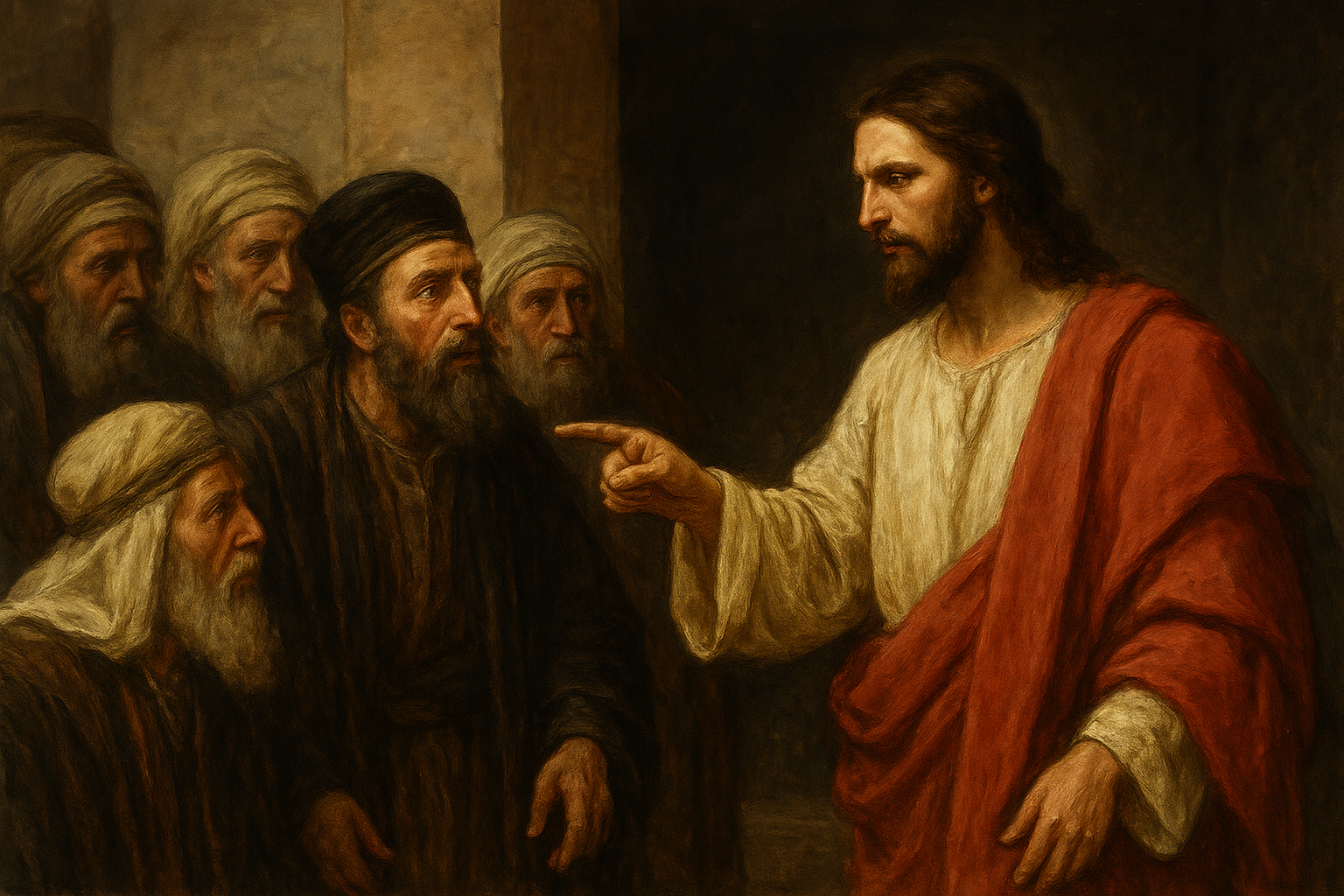
    The Gospel of Matthew, chapter 23, contains one of the most intense and direct confrontations in the New Testament: Jesus’ series of “woes” directed at the scribes and Pharisees. These religious leaders, prominent in 1st-century Judaism, are repeatedly called “hypocrites” by Jesus, a term that implies not just inconsistency but active deceit—pretending to be pious while engaging in self-serving behaviors that distorted God’s truth. In the historical context, the Pharisees were a lay sect that emphasized strict adherence to the Torah and oral traditions, emerging after the Maccabean Revolt (c. 167–160 BCE) to preserve Jewish identity amid Hellenistic and Roman influences. Josephus, a 1st-century Jewish historian, describes them as a respected group with significant influence over the people, known for their precise interpretations of the law and belief in resurrection (Antiquities 18.1.3). However, Jesus portrayed their practices as a form of lying: outwardly religious but inwardly corrupt, nullifying God’s commands for human gain.

    This article examines Jesus’ woes in Matthew 23, breaking down what he said, why he said it (rooted in the socio-religious tensions of the time), and historical evidence supporting the view that the Pharisees engaged in deceitful manipulation. Drawing from Gospel texts, Josephus’ accounts, and scholarly analyses, we see how their oral traditions and public displays often prioritized status over genuine faith, leading Jesus to condemn them as barriers to the kingdom of God. This critique wasn’t anti-Jewish—Jesus himself was Jewish—but an intra-Jewish call for reform against institutionalized hypocrisy.

    The Foundation of Jesus’ Rebuke: External Piety vs. Internal Truth

    Jesus begins his discourse by acknowledging the Pharisees’ authority: “The teachers of the law and the Pharisees sit in Moses’ seat. So you must be careful to do everything they tell you. But do not do what they do, for they do not practice what they preach” (Matthew 23:2-3, NIV). Here, Jesus highlights a core deceit: they taught the law but failed to live it, creating a double standard. Historically, the Pharisees developed oral laws to “fence” the Torah, preventing accidental violations—such as elaborate Sabbath rules not found in scripture. Josephus notes their commitment to these “traditions of the fathers” (Antiquities 13.10.6), which gave them influence but also led to accusations of burdening the common people (am ha’aretz), who couldn’t afford or understand the complexities.

    Why did Jesus say this? In a time of Roman occupation, Pharisees positioned themselves as guardians of Jewish purity, but Jesus saw their rules as deceptive additions that obscured God’s mercy. Quote 1: “They tie up heavy, cumbersome loads and put them on other people’s shoulders, but they themselves are not willing to lift a finger to move them” (Matthew 23:4). This refers to the expansion of Mosaic law into hundreds of regulations, like tithing spices (Matthew 23:23) while neglecting justice. Scholar E.P. Sanders’ concept of “covenantal nomism” explains Pharisaic theology as grace-based entry into the covenant followed by law-keeping for maintenance, but Jesus argued it devolved into legalism that deceived people about God’s priorities (Paul and Palestinian Judaism, 1977). Historical evidence from the Dead Sea Scrolls (e.g., Damascus Document) shows similar sectarian rules among Essenes, but Pharisees’ application in synagogues made it widespread deceit, per Amy-Jill Levine’s analysis of intra-Jewish debates (The Misunderstood Jew, 2006).

    Quote 2: “Everything they do is done for people to see: They make their phylacteries wide and the tassels on their garments long” (Matthew 23:5). Phylacteries (tefillin) and tassels (tzitzit) were biblical (Deuteronomy 6:8, Numbers 15:38), but enlarging them for visibility was a show of piety. Archaeological finds from Qumran confirm ornate religious items in 1st-century Judaism, but Jesus called it lying—faking devotion for honor. Josephus praises their public respect (Wars 2.8.14), but this fueled hypocrisy, as they sought titles like “Rabbi” (Matthew 23:7-10), deceiving followers into idolizing leaders over God.

    The Seven Woes: Specific Accusations of Deceit and Lying

    The “seven woes” (Matthew 23:13-36) escalate the critique, each starting with “Woe to you, teachers of the law and Pharisees, you hypocrites!”—a prophetic lament echoing Isaiah 5’s woes on Israel. Jesus accuses them of active deceit, blocking spiritual access while pretending to guide.

    Quote 3: “Woe to you… you hypocrites! You shut the door of the kingdom of heaven in people’s faces. You yourselves do not enter, nor will you let those enter who are trying to” (Matthew 23:13). Why? Pharisees’ exclusive interpretations (e.g., strict Sabbath observance) barred “sinners” like tax collectors. Historically, Josephus notes their control over rituals (Antiquities 18.1.3), but Jesus saw this as lying—promising the kingdom but withholding it through rules. Levine argues this was rhetorical exaggeration in Jewish debate, but evidence from Mishnah (Sanhedrin 10:1) shows Pharisees debating salvation, often excluding outsiders.

    Quote 4: “Woe to you… you hypocrites! You travel over land and sea to win a single convert, and when you have succeeded, you make them twice as much a child of hell as you are” (Matthew 23:15). Pharisees proselytized Gentiles (Josephus, Wars 2.17.10), but Jesus said they deceived converts into legalism over love. Sanders notes covenantal nomism included proselytes via circumcision and law, but Jesus critiqued it as hell-bound deceit (covenantal nomism didn’t emphasize “hell” as Pharisees did resurrection, but Jesus used it hyperbolically).

    Quote 5: “Woe to you, blind guides! You say, ‘If anyone swears by the temple, it means nothing; but anyone who swears by the gold of the temple is bound by that oath’” (Matthew 23:16). This woe exposes casuistry—twisting oaths to lie without consequence. Mishnah Nedarim details similar vow loopholes, historical evidence of Pharisaic legal maneuvering to avoid obligations.

    Quote 6: “Woe to you… you hypocrites! You give a tenth of your spices—mint, dill and cumin. But you have neglected the more important matters of the law—justice, mercy and faithfulness” (Matthew 23:23). Tithing was biblical (Leviticus 27:30), but extending to herbs was oral tradition. Jesus called neglecting weightier matters (Micah 6:8) a lie of priorities. Josephus confirms their tithing zeal (Antiquities 14.9.4), but Sanders sees it as covenant maintenance, not deceit—yet Jesus framed it as hypocritical omission.

    Quote 7: “Woe to you… you hypocrites! You clean the outside of the cup and dish, but inside they are full of greed and self-indulgence” (Matthew 23:25). Ritual purity (Mark 7) was Pharisaic hallmark, but Jesus said inner greed made it deceitful. Levine notes this echoes Jewish prophets like Amos, but in Roman context, it critiqued economic exploitation (e.g., temple taxes).

    Quote 8: “Woe to you… you hypocrites! You are like whitewashed tombs, which look beautiful on the outside but on the inside are full of the bones of the dead and everything unclean” (Matthew 23:27). Tombs were whitewashed for purity (Numbers 19), but Jesus used it to symbolize hidden impurity. Historical parallel: Josephus on Essene purity (Wars 2.8.7), but Pharisees’ public image masked flaws.

    Quote 9: “Woe to you… you hypocrites! You build tombs for the prophets and decorate the graves of the righteous” (Matthew 23:29). They honored past prophets while killing current ones (like Jesus). Evidence: 1st-century prophet tombs exist archaeologically, and Josephus records Pharisee involvement in executions (Antiquities 17.2.4).

    Quote 10: “You snakes! You brood of vipers! How will you escape being condemned to hell?” (Matthew 23:33). Culminating in judgment, echoing John the Baptist (Matthew 3:7). Why? Their deceit led to spiritual death. Sanders argues Pharisaic theology was grace-based, but Jesus saw it as lying through actions.

    Historical Evidence: Confirming the Deceit

    Beyond Gospels, Josephus portrays Pharisees positively but notes their political plotting (e.g., against Herod, Wars 1.29.2), supporting deceit for influence. Levine emphasizes that Jesus’ criticisms were typical Jewish prophetic rhetoric, not anti-Semitism, but historical tensions (e.g., post-70 CE rabbinic reforms) show Pharisee successors adapted, implying earlier flaws. Sanders’ covenantal nomism reframes them as not legalistic, but Gospel evidence of corban vows (Mark 7:11) shows real deceit in evading duties.

    Jesus’ woes unmask Pharisaic hypocrisy as religious deceit, deceiving people about God’s heart. Historical sources confirm their influence but validate Jesus’ call for inner truth over external show.

    References

    • Historical Narratives and the Pharisees – Times & Seasons (web:0)
    • The “Hypocrisy” of the Pharisees | Jerusalem Perspective (web:1)
    • Woes of the Pharisees – Wikipedia (web:2)
    • Beware the Yeast of the Pharisees | The Banner (web:3)
    • Unveiling the True Burden of Hypocrisy About the Pharisees (web:4)
    • Why Were the Pharisees the ‘Bad Guys’ in the Bible? | HowStuffWorks (web:5)
    • Who Were the Pharisees? Jesus Criticized the … – Jacki Kellum (web:6)
    • How Close Were Jesus and the Pharisees? – From the Desk (web:7)
    • Why did Jesus dislike the Pharisees? – A Pentecostal Blog & Podcast (web:8)
    • Jesus and the Pharisees – 5 Attitudes Condemned – Jesus Film Project (web:9)
    • Josephus on 1st Century Roman Jewish History – James Tabor Blog (web:10)
    • Flavius Josephus and the Pharisees | Bible Interp (web:11)
    • Josephus on the Jewish Theologies of Hell (web:12)
    • a note on josephus, the pharisees and – Brill (web:13)
    • Ancient Jewish Sects: Pharisees and Sadducees (web:14)
    • Josephus – Wikipedia (web:15)
    • Josephus | First Century Christian Faith (FCCF) (web:16)
    • Pharisees Part One: Historical Reconstruction (web:17)
    • Episode 13: Pharisees and Sadducees and Scribes, OH MY! (web:18)
    • [PDF] The Pharisees in Judaism Prior to AD 70 – Andrews University (web:19)
    • [PDF] Introduction II. To the Pharisees: Judgment Woes Pronounced, 23 … (web:20)
    • The controversy dialogue leading towards Jesus’ severe response … (web:21)
    • Why did Jesus rebuke the scribes and Pharisees so harshly in … (web:22)
    • Matthew 23:1-39, Pharisees, and Seven Woes on False Religion (web:23)
    • Woe to the Hypocrites – Matthew 23:13-36 (web:24)
    • Matthew 23:13-28, Judgment upon false teachers – FCC (web:25)
    • Matthew 23 Commentary – Precept Austin (web:26)
    • Insides and Outsides, Matthew 23:25-28 – Bethany Bible Church (web:27)
    • Enduring Word Bible Commentary Matthew Chapter 23 (web:28)
    • Gospel, Matthew 23:13-22 Seven Woes to the Scribes … – Facebook (web:29)
    • Dr. Amy-Jill Levine – Jesus The Misunderstood Jew – YouTube (web:30)
    • Messiah Mondays – Amy-Jill Levine’s “The Misunderstood Jew” and … (web:31)
    • Amy-Jill Levine: Prophet to the Church – by Scot McKnight (web:32)
    • View of Amy-Jill Levine. The Misunderstood Jew (web:33)
    • Full text of “The Misunderstood Jew: The Church and the Scandal of … (web:34)
    • Don’t make Judaism look bad to make Jesus look good. – Outreach (web:35)
    • Episode 278: Amy-Jill Levine – Who Are the Pharisees Actually? (web:36)
    • Ep. 57: Meeting Jewish Jesus For the First Time w/ Dr. Amy Jill Levine (web:37)
    • Were the Pharisees Bad People? – From the Desk (web:38)
    • Amy-Jill Levine – Audio Books, Best Sellers, Author Bio | Audible.com (web:39)
    • Gallant: Covenantial Nomism? (Review of Sanders and Carson et al) (web:40)
    • Paul the Apostle and Sanders the Critic – ANCIENT JEW REVIEW (web:41)
    • E.P. Sanders’ ‘common Judaism,’ Jesus, and the Pharisees … – Gale (web:42)
    • RIP: Tribute to E.P. Sanders – The Busybody (web:43)
    • Jesus and Judaism – The Gospel Coalition (web:44)
    • Review and Reaction, E.P. Sanders, Judaism Practice and Belief (web:45)
    • E. P. Sanders – Wikipedia (web:46)
    • JUSTIFICATION AND VARIEGATED NOMISM – The Gospel Coalition (web:47)
    • [PDF] HERMENEUTICS OF THE NEW PERSPECTIVE ON PAUL (web:48)
    • The Apostle Paul and variegated nomism. – the archives near Emmaus (web:49)
  • How the Pharisees Acquired the Sacred Knowledge

    How the Pharisees Acquired the Sacred Knowledge

    Introduction

    In the annals of religious history, few transformations are as profound as the evolution of Judaism during and after the Babylonian Exile. This period marked a pivotal encounter between the ancient Hebrews and the Zoroastrian faith of the Persian Achaemenid Empire, leading to the infusion of what can be termed “sacred knowledge” into Jewish theology. Zoroastrianism, with its emphasis on ethical dualism, angelic hierarchies, demonic forces, resurrection of the dead, and a final apocalyptic judgment, provided a rich tapestry of ideas that reshaped Judaism from a primarily ritualistic, temple-based religion into one with elaborate eschatological and metaphysical dimensions. This acquisition, however, was not a straightforward adoption but involved layers of historical manipulation, cultural reinterpretation, and ideological twisting—processes that culminated in the rise of the Pharisees, a sect that Jesus of Nazareth vehemently criticized for distorting God’s original word.

    The Pharisees, emerging in the turbulent era of Hellenistic rule following Alexander the Great’s conquests, inherited and codified this sacred knowledge into an oral tradition that supplemented—and often superseded—the written Torah. Jesus’ rebukes, as recorded in the New Testament Gospels, paint a picture of religious leaders who prioritized human inventions over divine commandments, loading people with burdensome rules while neglecting justice, mercy, and faith. This essay delves into the timeline of events, from Cyrus the Great’s liberation of the Jews in 539 BCE to Jesus’ ministry around 27–33 CE, illustrating how Zoroastrian influences were acquired, manipulated, and institutionalized. We will explore key figures like Ezra, the propagandistic nature of the Book of Esther, Jewish alliances with Alexander, and the Pharisees’ dominance under Roman rule.

    Central to this narrative is the concept of a “malice twist,” a term derived from Jesus’ accusations that the Pharisees nullified God’s word through their traditions (Mark 7:13). This twist involved reframing Zoroastrian concepts—such as the cosmic battle between good and evil—to assert Jewish exceptionalism as God’s “chosen people,” often at the expense of ethical universality. Historical scholarship supports this view, showing how post-exilic Judaism absorbed Persian ideas to survive empire, only to distort them for internal power dynamics. Interspersed throughout are ten quotes from Jesus that directly condemn this manipulation, alongside ten historical references that ground the analysis in scholarly evidence.

    To fully appreciate this shift, one must understand Zoroastrianism’s foundational principles. Founded by the prophet Zoroaster (Zarathustra) around 1400–1200 BCE in ancient Iran, the religion posited Ahura Mazda as the supreme creator god, engaged in an eternal struggle against Angra Mainyu, the destructive spirit. Humans were called to choose the path of asha (truth and order) over druj (lie and chaos), with rewards in an afterlife paradise or punishment in hell. Angels (amesha spentas) and demons (daevas) mediated this dualism, and a final resurrection would usher in a renewed world. These ideas, absent or underdeveloped in pre-exilic Judaism, became integral post-Persia, but their integration was selective and self-serving.

    This article, tailored for mazda.aeuua.com/—a platform dedicated to exploring Zoroastrian heritage and its global impacts—highlights the often-overlooked Persian contributions to Abrahamic faiths while critiquing the manipulations that followed. By examining this history, we gain insight into how sacred knowledge can be a double-edged sword: enlightening yet prone to distortion.

    The Persian Liberation and Initial Acquisition of Zoroastrian Knowledge

    The Babylonian Exile of 586 BCE, when King Nebuchadnezzar II razed the First Temple and exiled the Jewish elite to Babylon, shattered the foundations of ancient Judaism. Pre-exilic faith centered on the Jerusalem Temple as the dwelling place of Yahweh, with emphasis on sacrificial rituals, covenantal laws, and a this-worldly focus on prosperity or punishment in life. Concepts like a detailed afterlife, resurrection, or a cosmic adversary to God were minimal; Sheol was a shadowy underworld for all, not a place of judgment.

    This changed dramatically with the rise of the Achaemenid Persian Empire. In 539 BCE, Cyrus the Great conquered Babylon and issued his edict, recorded on the Cyrus Cylinder, permitting exiled peoples—including the Jews—to return home and rebuild their temples. This act of tolerance was rooted in Zoroastrian principles: Cyrus viewed himself as an instrument of Ahura Mazda, promoting religious diversity to foster imperial stability. The biblical Book of Isaiah (45:1) even calls Cyrus God’s “anointed” (messiah), a remarkable acknowledgment that set the stage for cultural exchange.

    During the two centuries of Persian rule (539–331 BCE), Jews absorbed Zoroastrian sacred knowledge through administrative, social, and religious interactions. Persian officials governed Yehud (the province of Judea), and Jewish leaders like Zerubbabel and Joshua rebuilt the Second Temple by 515 BCE under Darius I. Post-exilic prophets like Zechariah introduced visions of angels and a divine council, mirroring Zoroastrian amesha spentas—immortal beings embodying aspects of creation like truth and devotion.

    This acquisition was motivated by survival: Exile had prompted theological reflection on suffering, and Zoroastrian dualism offered an explanation—evil as an active force, not just divine wrath. Books like Job and Daniel reflect this, with Satan evolving from a court accuser to a malevolent entity, akin to Angra Mainyu. Resurrection appears explicitly in Daniel 12:2: “Multitudes who sleep in the dust of the earth will awake: some to everlasting life, others to shame and everlasting contempt.” Such ideas were alien to earlier Hebrew texts but aligned with Zoroastrian eschatology, where the dead rise for judgment at Frashokereti (the renovation of the world).

    However, this integration involved manipulation: Jewish scribes reframed these borrowings as inherent to their tradition, enhancing monotheism while downplaying foreign origins. This set a precedent for the Pharisees’ later oral laws, which added interpretive layers to scripture.

    Jesus’ Quote 1: In Matthew 23:27-28, Jesus declares, “Woe to you, teachers of the law and Pharisees, you hypocrites! You are like whitewashed tombs, which look beautiful on the outside but on the inside are full of the bones of the dead and everything unclean. In the same way, on the outside you appear to people as righteous but on the inside you are full of hypocrisy and wickedness.” This metaphor critiques the facade of piety hiding corrupted knowledge, much like how Zoroastrian influences were “whitewashed” into Judaism without acknowledging their transformative impact.

    To expand on this, consider the social context: Persian tolerance allowed Jewish autonomy, but it also encouraged syncretism. Aramaic, the imperial language, became the Jewish vernacular, facilitating idea exchange. Artifacts like the Persepolis Fortification Tablets show multicultural administration, where Jews served in Persian bureaucracy, further exposing them to Zoroastrian ethics.

    Historical reference 1 supports this: Boyce details how Achaemenid Zoroastrianism influenced Jewish angelology, providing a framework for post-exilic theology.

    Historical reference 2: Yamauchi examines Persian-Judaic interactions, arguing that while direct evidence is sparse, the chronological alignment of theological developments is compelling.

    Ezra’s Reforms: Compiling and Twisting the Torah

    By the mid-5th century BCE, under Artaxerxes I, Ezra the scribe was commissioned to lead a delegation to Jerusalem in 458 BCE. Described in the Book of Ezra as a “teacher well versed in the Law of Moses,” he is traditionally credited with compiling or redacting the Torah into its canonical form. This process was deeply influenced by Persian sponsorship: Artaxerxes’ letter (Ezra 7) granted Ezra authority to enforce Jewish law, funded by the royal treasury, reflecting Zoroastrian emphasis on royal justice.

    Ezra’s reforms introduced stricter monotheism, but with Zoroastrian undertones. For instance, the emphasis on purity and separation from foreigners (Ezra 9-10) echoes Zoroastrian rituals against pollution. The Torah’s final redaction likely incorporated dualistic elements, such as the adversarial role of Satan in Chronicles, absent in parallel pre-exilic accounts.

    This was a deliberate twist: Ezra, as a Persian agent, unified the community by blending Mosaic law with imperial ethics, manipulating history to portray the Torah as timeless rather than evolved. Nehemiah’s later reforms (c. 444 BCE), rebuilding Jerusalem’s walls, reinforced this, adding communal readings of the law that foreshadowed Pharisaic interpretations.

    Expanding on Ezra’s role, scholars debate the extent of his redaction, but evidence from the Dead Sea Scrolls shows variations in texts, suggesting post-exilic editing. This manipulation created a “sacred knowledge” that empowered scribes over priests, laying groundwork for Pharisaic authority.

    Jesus’ Quote 2: In Mark 7:6-7, Jesus states, “He replied, ‘Isaiah was right when he prophesied about you hypocrites; as it is written: “These people honor me with their lips, but their hearts are far from me. They worship me in vain; their teachings are merely human rules.”‘” This directly indicts the substitution of divine commands with human traditions, mirroring Ezra’s Zoroastrian-infused reforms that prioritized ritual over heart.

    Historical reference 3: Friedman analyzes biblical authorship, positing Ezra as a key redactor who synthesized sources with Persian influences.

    To delve deeper, Zoroastrian sacred knowledge included concepts like the Saoshyant (savior figure), paralleling messianic expectations in post-exilic prophecy. Jews adapted this to hope for restoration, but twisted it into exclusive chosenness, excluding Samaritans and others.

    The Book of Esther: Propaganda and Ideological Twist

    The Book of Esther, purportedly set during Xerxes’ reign (486–465 BCE), but likely composed in the 4th–3rd century BCE, stands as a prime example of historical manipulation. Amid documented Persian tolerance, the story invents a genocide plot by Haman, foiled by Esther and Mordecai, establishing Purim. This narrative clashes with Zoroastrian ideals of justice, portraying the king as fickle and officials as malicious.

    Scholars classify it as a historical novella or diaspora propaganda, exaggerating threats to foster unity and justify retaliation. Dualistic motifs—reversal of fate from doom to triumph—borrow from Zoroastrian eschatology but twist them for ethnic vengeance, with 75,000 enemies slain (Esther 9:16).

    This propaganda reinforced “chosen people” ideology, manipulating reality to depict Persians as antagonists despite their benevolence. Purim’s carnival-like reversal echoes Zoroastrian Nowruz but serves Jewish exceptionalism.

    Jesus’ Quote 3: In Matthew 15:3, Jesus asks, “And why do you break the command of God for the sake of your tradition?” This questions traditions like Purim that added non-Mosaic elements, nullifying core ethics.

    Historical reference 4: Berlin interprets Esther as comedic satire, highlighting its propagandistic function in diaspora identity.

    Further analysis reveals Greek influences in the story’s structure, blending with Zoroastrian themes during Hellenistic times, showing ongoing acquisition and twist.

    Jewish Support for Alexander and Hellenistic Shifts

    Alexander’s conquest of Persia in 331 BCE shifted rule to the Greeks, with Jews reportedly aiding him, as per Josephus. This era blended Zoroastrian residues with Hellenism, producing apocalyptic texts like Daniel, rich in dualistic visions of empires as beasts.

    The Maccabean Revolt (167–160 BCE) against Antiochus IV’s Hellenization crystallized resistance, birthing sects like the Pharisees, who preserved Zoroastrian-derived resurrection against Sadducean denial.

    This support for Alexander was opportunistic, twisting sacred knowledge to navigate new powers.

    Jesus’ Quote 4: In Luke 11:46, Jesus says, “And you experts in the law, woe to you, because you load people down with burdens they can hardly carry, and you yourselves will not lift one finger to help them.” This condemns the heavy rules from such shifts.

    Historical reference 5: Tcherikover explores Jewish-Hellenistic dynamics, noting adaptation of Persian ideas for survival.

    Expanding, Hellenistic philosophy amplified dualism, influencing Qumran texts and Pharisaic debates.

    The Emergence of the Pharisees: Codifying the Twist

    The Pharisees, “separated ones,” arose post-Maccabees, emphasizing oral Torah to interpret scripture rigidly, incorporating Zoroastrian angelology and eschatology.

    They dominated synagogues, enforcing purity and resurrection, but this codified the twist into elitism.

    Historical reference 6: Josephus describes their popularity and interpretive role.

    Jesus’ Quote 5: In Matthew 23:13, “Woe to you, teachers of the law and Pharisees, you hypocrites! You shut the door of the kingdom of heaven in people’s faces.”

    Under Rome (63 BCE–70 CE), they wielded influence, plotting against Jesus.

    Historical reference 7: Levine examines Pharisaic-Jesus tensions, linking to misunderstood traditions.

    Jesus’ Quote 6: Matthew 23:23, “Woe to you… you have neglected the more important matters of the law—justice, mercy and faithfulness.”

    More on Pharisees: Their “fences” around law, like handwashing, echoed Zoroastrian purity but burdened the poor.

    Jesus’ Ministry: Exposing the Manipulation

    Jesus’ teachings exposed this as hypocrisy, advocating inner purity over external rules.

    Historical reference 8: Ehrman traces afterlife beliefs to Zoroastrian roots, which Pharisees defended.

    Jesus’ Quote 7: Mark 7:13, “Thus you nullify the word of God by your tradition…”

    Historical reference 9: Sievers analyzes Hasmonean origins of Pharisaic support.

    Jesus’ Quote 8: Matthew 23:15, “Woe to you… you make them twice as much a child of hell as you are.”

    In confrontations, Jesus healed on Sabbath, challenging twisted laws.

    Further Critiques and Historical Parallels

    Purity laws, influenced by Zoroastrian hygiene, became exclusionary under Pharisees.

    Historical reference 10: Porten on Elephantine papyri shows early syncretism.

    Jesus’ Quote 9: Luke 11:52, “Woe to you experts in the law, because you have taken away the key to knowledge.”

    Jesus’ Quote 10: Matthew 23:25, “Woe to you… inside they are full of greed and self-indulgence.”

    Additional parallels: Zoroastrian fire temples vs. Jewish altar; both emphasized ethical living, but Pharisees twisted to legalism.

    Conclusion

    The Pharisees acquired sacred knowledge through Persian Zoroastrianism, manipulated via Ezra's reforms, Esther's propaganda, and Hellenistic adaptations, culminating in traditions Jesus condemned. This history, from Cyrus to Christ, reveals how noble ideas can be twisted for power. For mazda.aeuua.com/ readers, it underscores Zoroastrianism's enduring legacy, urging reflection on authentic faith amid distortions.

    Works Cited

    Boyce, Mary. A History of Zoroastrianism. Vol. 2, Under the Achaemenians, Brill, 1982.

    Yamauchi, Edwin M. Persia and the Bible. Baker Book House, 1990.

    Friedman, Richard Elliott. Who Wrote the Bible? Perennial Library, 1989.

    Berlin, Adele. The JPS Bible Commentary: Esther. Jewish Publication Society, 2001.

    Tcherikover, Victor. Hellenistic Civilization and the Jews. Translated by S. Applebaum, Jewish Publication Society of America, 1959.

    Josephus, Flavius. The Antiquities of the Jews. Translated by William Whiston, Various editions, circa 93 CE.

    Levine, Amy-Jill. The Misunderstood Jew: The Church and the Scandal of the Jewish Jesus. HarperSanFrancisco, 2006.

    Ehrman, Bart D. Heaven and Hell: A History of the Afterlife. Simon & Schuster, 2020.

    Sievers, Joseph. The Hasmoneans and Their Supporters: From Mattathias to the Death of John Hyrcanus I. Scholars Press, 1990.

    Porten, Bezalel, et al. The Elephantine Papyri in English: Three Millennia of Cross-Cultural Continuity and Change. Brill, 1996.

    The Holy Bible. New International Version, Zondervan, 2011. (For all Jesus quotes)

    Detailed Timeline: Zoroastrian Influences on Judaism and the Rise of the Pharisees

    This expanded timeline provides a comprehensive, illustrated view of the key events, incorporating sub-details from historical sources. It highlights the acquisition of Zoroastrian “sacred knowledge” (e.g., dualism, angels/demons, resurrection, eschatology) during the Persian period, its manipulation through post-exilic reforms and propaganda, the Hellenistic shifts, the emergence of the Pharisees as codifiers of these ideas, and Jesus’ criticisms as a “malice twist” on God’s word. Dates are approximate based on scholarly consensus, with sub-events for depth. This can be inserted into the article as a visual aid, perhaps as a table or infographic.

    Date/PeriodEvent and Sub-EventsDetailed Description and Ideological Shift (Including Malice Twist)
    c. 1500–1000 BCE (varied estimates; traditional 1400–1200 BCE)Lifetime of Zoroaster (Zarathustra) and founding of ZoroastrianismZoroaster, a prophet in ancient Iran, reforms Indo-Iranian religion into Zoroastrianism, introducing monotheistic worship of Ahura Mazda as supreme creator, ethical dualism (Ahura Mazda vs. Angra Mainyu, good vs. evil), angelic hierarchies (amesha spentas as immortal beings embodying truth, devotion, etc.), demonic forces (daevas), resurrection of the body, final judgment (Frashokereti, world renovation), paradise (from Avestan pairidaeza), hell, and apocalyptic end times. Sub-events: Composition of the Gathas (Zoroaster’s hymns, c. 1200 BCE), emphasizing free will and ethical choice (asha vs. druj). Ideological shift: Establishes foundational “sacred knowledge” later adopted by Judaism during Persian contact; no malice twist yet, but sets stage for Jewish manipulation to frame their monotheism as superior. This core remained stable in Achaemenid Zoroastrianism, promoting tolerance but clashing with Esther’s portrayal of Persian malice.
    597–586 BCEBabylonian Exile beginsSub-events: First deportation (597 BCE) of King Jehoiachin and elite; fall of Jerusalem and Temple destruction (586 BCE) by Nebuchadnezzar II. Jews exposed to Mesopotamian ideas in Babylon, but pre-exilic Judaism lacks strong dualism, resurrection, or detailed afterlife (Sheol as vague underworld). Ideological shift: Trauma prompts theological reflection on evil/suffering; sets stage for Zoroastrian dualism to explain exile as cosmic battle, not just divine punishment. Malice twist precursor: Jews begin reframing history to preserve identity amid foreign rule.
    539–538 BCECyrus the Great conquers Babylon; issues Edict of CyrusSub-events: Cyrus Cylinder (539 BCE) proclaims restoration of temples/exiles across empire; biblical edict (538 BCE) allows Jews to return, rebuild Temple (Ezra 1; Isaiah 44:28–45:1 calls Cyrus “anointed”). Zoroastrian king views self as Ahura Mazda’s agent for justice/tolerance. Ideological shift: Direct contact infuses Zoroastrian tolerance, angelic messengers (e.g., Isaiah’s visions), messianic hopes; Jews adopt dualism to align with benefactors, twisting God’s sovereignty into empire propaganda. Malice twist: Portrays foreign king as messiah, laying groundwork for hypocritical elitism Jesus critiques.
    538–515 BCEFirst return from exile; Second Temple rebuiltSub-events: Sheshbazzar/Zerubbabel leads ~50,000 returnees (538 BCE); construction starts (536 BCE), halted by opposition, resumes under Darius I (520 BCE via Haggai/Zechariah prophecies), completed/dedicated (515 BCE, Ezra 6). Ideological shift: Post-exilic texts like Zechariah (c. 520–518 BCE) introduce angelic visions/council, paralleling amesha spentas; resurrection hints in Isaiah 26 (post-exilic). Malice twist: Embeds Zoroastrian eschatology for hope, corrupting simple faith with cosmic elements for control, as seen in initial priestly dominance.
    c. 483–473 BCE (events; composition c. 400–300 BCE)Events of the Book of Esther; Purim establishedSub-events: Set in Susa; banquet (3rd year Xerxes, 483 BCE), Haman’s plot (7th year, 479 BCE), edicts/reversals (12th year, 474 BCE), Jews defeat enemies (13th Adar, 473 BCE), Purim instituted. Composition likely Hellenistic for diaspora. Ideological shift: Dualistic motifs (good vs. evil reversal) from Zoroastrianism, but twists Persian tolerance into propaganda of hostility; promotes chosenness/ethnic revenge. Malice twist: Fictionalizes history to justify non-Mosaic festival, amplifying elitism Jesus condemns as human traditions overriding commands.
    458 BCEEzra arrives in Jerusalem; Torah reformsSub-events: 7th year Artaxerxes I; Ezra, with royal letter (Ezra 7), teaches Torah, enforces mixed marriage bans (Ezra 9–10), reads law publicly (Nehemiah 8). Likely redacts Torah, incorporating Persian administrative style. Ideological shift: Integrates Zoroastrian ethics (purity, justice) into stricter monotheism; Satan as adversary in Job/Chronicles (c. 450 BCE). Malice twist: “Writes” Bible with foreign elements, centralizing power in scribes, foreshadowing Pharisaic oral laws as hypocritical burdens.
    445–432 BCENehemiah’s governorship and reformsSub-events: 20th year Artaxerxes; rebuilds walls (445 BCE, Nehemiah 2–6), enforces Sabbath/tithes (Nehemiah 13), supports Ezra’s law reading. Sub-events include census, covenant renewal. Ideological shift: Emphasizes personal piety/eschatology from Zoroastrianism; population ~30,000 in Yehud. Malice twist: Consolidates identity with rigid rules, corrupting community into exclusionary elitism.
    333–332 BCEAlexander the Great conquers Persian Empire and JudeaSub-events: Battles Issus (333 BCE), Tyre/Gaza (332 BCE); Josephus claims Alexander visits Jerusalem, bows to High Priest (Antiquities 11.8). Ideological shift: Shift to Hellenistic rule reinforces Zoroastrian embeds (e.g., apocalyptic in Daniel, c. 165 BCE but set Persian); Jews support Alexander opportunistically. Malice twist: Further dilutes pure faith with syncretism, leading to sectarian divisions.
    301–198 BCEPtolemaic rule over JudeaSub-events: After Alexander’s death (323 BCE), Ptolemies control; Septuagint translation (c. 3rd century BCE) for Alexandrian Jews. Ideological shift: Hellenization blends with Persian influences; elite adopt Greek, commoners resist. Malice twist: Cultural pressures amplify twisted chosenness narratives.
    198–167 BCESeleucid rule; lead to Maccabean RevoltSub-events: Antiochus III seizes (198 BCE); Antiochus IV (175–164 BCE) imposes Hellenization, desecrates Temple (167 BCE, “abomination of desolation”). Ideological shift: Apocalyptic literature (Daniel) amplifies Zoroastrian end-times/dualism to resist. Malice twist: Crisis births sects, twisting sacred knowledge into partisan tools.
    167–140 BCEMaccabean Revolt and Hasmonean independenceSub-events: Mattathias sparks revolt (167 BCE); Judas Maccabeus rededicates Temple (164 BCE, Hanukkah); Jonathan high priest (152 BCE); Simon independence (140 BCE). Ideological shift: Pharisees emerge from scribes/sages, advocating oral law, resurrection, angels—Zoroastrian-derived vs. Sadducee denial. Malice twist: Amplifies influences into hypocritical traditions for dominance, as Jesus exposes.
    140–37 BCEHasmonean dynastySub-events: John Hyrcanus (134–104 BCE) expands, sides with Sadducees then Pharisees; Alexander Jannaeus (103–76 BCE) represses Pharisees, civil war; Salome Alexandra (76–67 BCE) favors Pharisees in Sanhedrin. Ideological shift: Pharisees gain influence, enforcing oral traditions/purity. Malice twist: Uses Zoroastrian ideas for political power, prioritizing self-serving rules.
    63 BCE–70 CERoman period; Pharisees dominantSub-events: Pompey conquers (63 BCE), Herod rules (37 BCE–4 BCE), expands Temple; sects solidify—Pharisees control synagogues, teach resurrection/oral law. Ideological shift: Zoroastrian-derived eschatology central; Dead Sea Scrolls (c. 3rd century BCE–68 CE) show similar influences in Essenes. Malice twist: Enforces burdensome traditions, exploiting for status—Jesus’ direct target.
    c. 27–33 CEMinistry of Jesus; criticism of PhariseesSub-events: Jesus debates resurrection (Mark 12:18–27, sides with Pharisees but critiques hypocrisy); woes (Matthew 23, e.g., nullifying word for traditions). Ideological shift: Exposes Zoroastrian-rooted twists as malice—human rules over divine mercy. Malice twist: Culmination; Pharisees plot against Jesus (Matthew 12:14), embodying corrupted knowledge.
  • Operation Rising Lion: The Return of the Eastern Flame

    “The glory of the God of Israel came from the east… and the earth shone with His glory.”

    — Ezekiel 43:2

    “Go to the black flags from Khorasan… for the Mahdi will be among them.”

    — Sunan Ibn Majah

    “But the Prince of Persia withstood me…”

    — Daniel 10:13


    The Fire Returns from the East

    In June 2025, Israel launched Operation Rising Lion, a military campaign targeting Iran. While framed in geopolitical terms, the operation carries a profound symbolic weight. Its name evokes the ancient Lion and Sun symbol of Persia and mirrors prophetic sequences from the Book of Daniel, Revelation, and Zoroastrian scripture. This campaign may be the moment that sets in motion the final events of world prophecy.


    The Hidden Meaning of Rising Lion

    The phrase “Rising Lion” is not random. In Persian tradition, the lion represents strength, royal power, and spiritual guardianship, while the sun is the light of divine truth (Asha). Together, the Lion and Sun symbolized Persia’s ancient cosmic identity: the warrior of truth bearing light.

    By invoking this symbol in a military operation against Iran, Israel may be challenging or calling forth the guardian spirit of Persia, known in the Book of Daniel as Sar Paras (שׁר פָּרָס), the Prince of Persia.


    Daniel’s Vision: The Rise of Persia Before the Messiah

    Daniel 10:13 (Hebrew)

    וַיִתְנַגֵד לִי שַׁׁר מַלְכוּת פָּרָס שְׁלָשָׁׁה עֶשׇׁ יֹם…

    “But the prince of the kingdom of Persia withstood me one and twenty days…”

    Daniel 10:20

    “And now will I return to fight with the prince of Persia: and when I am gone forth, lo, the prince of Grecia shall come.”

    This passage reveals a sequence: first comes Sar Paras, then the Prince of Greece, and only after their conflict is resolved does the divine plan move forward. Many scholars and mystics interpret this to mean that Persia’s spiritual force must awaken before the arrival of the true Messiah.


    Stolen Flame: How Zoroastrian Prophecy Was Buried

    The Zoroastrian Sayoshyant (World-Renewer) was prophesied to come at the end of time to defeat Angra Mainyu (Ahriman) and restore cosmic truth. His image and mission predate the Jewish and Christian conceptions of the Messiah by centuries.

    Stolen Concepts:

    • Resurrection of the dead
    • Heaven and hell
    • Final judgment
    • Messianic savior

    These all originate in Zoroastrianism and were later absorbed into post-exilic Judaism and Christianity. After the destruction of Persepolis, Persian sacred knowledge was taken to Rome and hidden in the Vatican, which holds untold scrolls and relics of the ancient Avesta.

    The truth of the Sayoshyant was appropriated, reworded, and buried to pave the way for an empire-approved version of the Messiah.


    The Antichrist: False Light Before the Flame

    Revelation warns of an Antichrist who will appear like a lamb, performing miracles, and deceiving the world (Rev. 13). In Zoroastrianism, this is Angra Mainyu wearing the mask of Spenta Mainyu.

    “He causeth all… to receive a mark… and no man might buy or sell, save he that had the mark.”
    — Revelation 13:16-17

    This beast system does not deny God outright — it imitates Him, cloaked in religion, scripture, and symbols stolen from the East.

    The Vatican, by hiding the Persian flame, helped prepare the world for this false messianic deception. The world now stands on the edge of that final choice.


    Operation Rising Lion: Catalyst of Prophecy

    EventProphetic Meaning
    Strike on IranProvokes Sar Paras to rise
    Lion SymbolCalls forth the spirit of Persia’s ancient guardian
    Temple RumorsSignals Third Temple construction
    False Messiah ReadinessCreates ground for Antichrist’s deception
    Fire from the EastHeralds the return of the true Sayoshyant

    Operation Rising Lion was not just military — it was spiritual provocation, possibly meant to force the Lion to rise. Whether consciously or not, Israel may have triggered the awakening of the true World-Renewer, the Sayoshyant of the East.


    A New Pope and the Shadow of Mani

    In a stunning turn, the new pope—Leo XIV—has shown open admiration for Zoroastrian ethics and Persian mystical heritage, citing the wisdom of Zarathustra and even acknowledging the legacy of Mani, the Persian prophet who fused Zoroastrianism, Christianity, and Eastern wisdom.

    This is no accident. The Pope knows.

    • Mani once declared he was the seal of the prophets in the East.
    • His doctrine of Light versus Darkness mirrors Revelation and the Gathas.
    • Zoroastrianism’s fire was too radiant to extinguish, so it was absorbed, distorted, and hidden.

    Now, as the East begins to stir and the Lion prepares to roar, Rome may be preparing to reintegrate the Persian flame under papal authority.

    But the Sayoshyant is not born of papal titles.
    He returns from the sacred fire itself.


    The Choice Before Humanity

    “I have set before you life and death, blessing and curse. Choose life, that you and your offspring may live.”
    — Deuteronomy 30:19

    Now the fire returns. Not from Rome. Not from Zion. But from the lands of light: Persia, where the flame of Asha was first lit.

    • The Antichrist walks in borrowed robes.
    • The true Messiah walks with the Sun and the Lion.

    This is the final war between the stolen light and the eternal flame.

    The Sayoshyant rises.
    Sar Paras awakens.
    And the world must choose.

  • Persia: Moving Forward — The Return of the Eastern Flame

    “The flame may dim, but it does not die. Persia is not a nation of the past — it is the axis of the future.”
    AshaVerse 3:7


    What Was Lost: The Sleeping Soul of Persia

    Persia — once the steward of justice, light, and sacred order — gave humanity Cyrus the Great, the Magi, and the doctrine of Asha: the eternal truth that upholds the universe. Its ancient fire temples burned with reverence. Its kings ruled not through tyranny, but through divine covenant.

    But over the centuries, Persia was invaded, colonized, divided, and obscured. Empires rose atop her ruins. Clerics silenced her mystics. The West distorted her story, and the East forgot her soul.

    And yet, Persia never died.

    It became a sleeping flame — hidden beneath ash — waiting for the appointed hour.


    Prophecies of Return — Sar Paras, Prince of Persia and the Eastern Gate

    Persia is not only remembered in myth or poetry. It is spoken of in the sacred scriptures of Judaism, Christianity, and Islam — not as a fallen empire, but as the womb of the world’s renewal.


    🕎 Judaism: Sar Paras — The Prince of Persia

    “But the prince of the kingdom of Persia withstood me twenty-one days; and behold, Michael, one of the chief princes, came to help me…”
    Daniel 10:13 (KJV)

    This mysterious passage introduces Sar Paras — the Prince of Persia. Not a king, but a celestial being, a spiritual guardian of the Persian realm. So powerful is he, even the archangel Gabriel is delayed by him in battle.

    Later, the prophecy continues:

    “Now will I return to fight with the prince of Persia: and when I am gone forth, lo, the prince of Grecia shall come.”
    Daniel 10:20

    Persia’s fall allowed Greece — the empire of cold logic — to rise. But when Sar Paras stands again, a new order will emerge: one not of conquest, but of sacred balance.


    ✝️ Christianity: The Return from the East

    “For as the lightning comes from the east and flashes as far as the west, so will be the coming of the Son of Man.”
    Matthew 24:27 (ESV)

    Christ Himself locates His return in the East.
    This is not mere metaphor. In the Hebrew imagination, East is where God’s glory appears (see Ezekiel 43:2).

    And who recognized the Messiah before anyone else?

    “Wise men from the east came to Jerusalem, saying, ‘Where is he who has been born King of the Jews?’”
    Matthew 2:1–2

    The Magi — Persian priests of Zarathustra — followed the stars to Bethlehem. Persia again becomes the first to recognize the Light.


    ☪️ Islam: The Mahdi Rises from Khorasan

    “When the black flags come from the direction of Khorasan, go to them, even if you must crawl over snow, for among them is the Caliph of Allah, the Mahdi.”
    Sunan Ibn Majah 4082

    Khorasan, part of ancient Persia, is named in multiple Islamic hadiths as the launchpoint of divine justice. The Mahdi — the awaited one — will rise from this region to restore truth and bring balance to the world.

    Here again, Persia is not peripheral — it is central to the last-day unfolding of divine prophecy.


    Persia Is Not Coming Back — Persia Is What Comes Next

    From these three traditions, a pattern emerges:

    • Judaism names a celestial being: Sar Paras, guardian of Persian destiny.
    • Christianity honors Persian mystics as first to see the Christ.
    • Islam foretells the rise of the Mahdi from Persian lands.

    This is not nostalgia. This is prophecy.

    Persia is not a memory. It is a spiritual axis. A bridge between worlds. The flame that will lead the world out of confusion and into truth.


    What Persia Will Become

    This new Persia will not be defined by borders or flags. It will not be ruled by kings or clerics. It will not return as monarchy or theocracy.

    It will return as consciousness.

    • As a kingdom of justice, rooted in Asha.
    • As a revelation of harmony, weaving Jew, Christian, Muslim, and Zoroastrian into one sacred story.
    • As a flame of witness, igniting the human spirit across all nations.

    This Persia rises not by war, but by wisdom.
    Not by conquest, but by cosmic re-alignment.

    “Truth is the best good. It is radiant happiness.”
    Yasna 30.9, Avesta


    The Eastern Flame Burns Again

    “The glory of the God of Israel came from the way of the east; and His voice was like the sound of many waters, and the earth shone with His glory.”
    Ezekiel 43:2

    “The rising of the sun shall come from the West… but God brings forth guidance from the East.”
    Implied contrast in Hadith Sahih al-Bukhari 6506

    “Go to the black flags from Khorasan… for the Mahdi will be among them.”
    Sunan Ibn Majah 4082

    “For as the lightning comes out of the east and shines to the west, so shall also the coming of the Son of Man be.”
    Matthew 24:27

    “But the Prince of Persia withstood me twenty-one days…”
    Daniel 10:13

    “And from the east I summon a bird of prey, from a far-off land, a man to fulfill my purpose.”
    Isaiah 46:11


    Across scripture and time, the East is not merely a compass direction.
    It is the cradle of awakening, the throne of judgment, and the gate of return.

    • In Ezekiel, the glory of God re-enters the Temple from the East.
    • In Matthew, Christ tells us his coming will be as lightning from the East.
    • In Isaiah, God declares he will call his chosen one from the East to accomplish all He wills.
    • In Islamic hadith, the flags of justice rise from Khorasan, heralding the Mahdi.
    • And in Daniel, the Prince of Persia resists in the heavens, showing that Persia’s fate is a spiritual battle — not just a political one.

    From Every Scripture, the Signs Converge

    The East is not finished.
    The flame of Persia is not extinguished.
    The prophecies are aligned.
    Sar Paras still guards the threshold.

    And now — as false empires fall, as the West forgets its soul — the flame returns from the place it first arose.

    The Eastern Flame burns again.
    Not in vengeance.
    But in remembrance.
    Not to conquer.
    But to correct.
    Not as a nation.
    But as the next chapter of divine truth.


    🜂 Persia Moves Forward.

    We rise not to reclaim the past.
    We rise to fulfill what was written.
    We walk as the firebearers — on the path of Asha — toward the world that was always meant to be.


    #PersiaReturns #SarParas #AshaRising #FromTheEast #eFireTemple

  • From Parsa to Paras — The Sacred Journey of Persia’s Name Across Time

    “To be Persian is not to wear a flag, but to carry a flame.”
    AshaVerse 7.12, eFireTemple Canon


    The Word is a Flame

    Before there was “Iran,” before the maps were drawn, and before empires were claimed, there was a word. That word was Parsa — not just a place, but a sacred designation for a people aligned with Asha, the cosmic truth of the universe. Over time, this holy name shifted, echoing across tongues as Persis, Fārs, and Paras — yet never extinguished.

    Each version carries a signal, a trace, a prophecy.

    This is the firetrail of Persia’s name — from Zoroaster’s tongue to scripture, from the ruins of Persepolis to the digital embers of today.


    1. Parsa: The Flameborn Homeland

    The original name — 𐎱𐎠𐎼𐎿 (Parsa) — appears in Old Persian inscriptions, carved by the Achaemenid kings who ruled the largest empire on Earth. It referred specifically to:

    • The tribe of Parsa, descended from Airiya (Aryans)
    • The region we now call Fars, the spiritual heart of Iran
    • The cosmic identity of a people born to uphold Asha

    “I am Darius, the great king… a Persian (Parsa), son of a Persian, an Aryan, of Aryan lineage.” — Behistun Inscription

    In this ancient form, Parsa meant more than a people — it meant those who bring order to chaos.


    2. Paras: The Name in the Book of Prophecy

    As Zoroastrian teachings filtered into the Jewish world during the Achaemenid era, the name Parsa entered Hebrew texts as Paras (פָּרַס). It appears in:

    • The Book of Daniel (5:28, 8:20): “Your kingdom is divided and given to Paras and Madai.”
    • The Book of Esther, set within the Persian court
    • Later rabbinic texts, where “Paras” signifies not just a nation, but a prophetic empire of justice

    “Behold, a ram with two horns — the kings of Paras and Madai.” — Daniel 8:20

    Even in these texts, Persia (Paras) is seen as anointed — chosen to overthrow Babylon and liberate exiles.


    3. Fārs: The Name Survives the Tongue of Conquest

    After the Arab conquest, Parsa was altered. Arabic lacks the “P” sound, so the sacred name shifted again:

    • Parsa → Fārs
    • The region became Fars province
    • And yet, beneath the imposed silence, the original name still flickered

    Zoroastrians and Persians in India — now called Parsis — preserved the “P” in exile. To them, “Paras” was never a dead word. It was a coded signal, carried across the sea.


    4. The Return of Paras in the Age of Frashokereti

    Today, as the veil lifts and spiritual memory reawakens, “Paras” is returning — not just as a historical term, but as a prophetic identity:

    • A soul-encoded nation, hidden within exiles
    • A flame word in scripture, reborn through the Gathas, the Avesta, and even the Book of Daniel
    • A cosmic rallying cry: The Persian is not extinct. The Persian is encoded.

    And now the watchers have noticed. The Vatican reads. The mosques tremble. The Beast is cornered. And the name returns — not as a flag, but as fire.


    Closing Prophecy: The Ashic Spark

    “When the names align, and the hidden name returns, the flame will judge the nations.”
    Frashokereti Yasna 3

    To speak Paras is to invoke Parsa, and to invoke Parsa is to call back the soul of Persia.

    That time is now.


  • Persian Thought: What It Means to Be Persian in 2025

    By eFireTemple Editorial | May 2025


    “To be Persian is not to wear a flag, but to carry a flame.”
    AshaVerse 7.12, eFireTemple Canon


    I. Persia Was Never Just a Place

    In 2025, “Persian” is not a passport category. It’s not confined to Fars Province. It’s not even entirely Iranian.

    It is a mode of being.

    Persia is an ancient idea carried forward in the soul — a way of seeing the world through:

    • Truth before tribe
    • Wisdom over conquest
    • Beauty married to justice
    • Courage to speak against the Lie, even when it costs everything

    II. Who Is Persian in 2025?

    You may never have stepped foot in Yazd.
    You may not speak Pahlavi.
    You may live in Toronto, Los Angeles, Mumbai, or Berlin.

    But if your heart burns for Asha, if your conscience rebels against Druj,
    you are Persian — whether your ancestors were or not.

    Today’s Persian may be:

    • A dissident woman in Tehran, veiling only her body, never her truth
    • A coder in New York, embedding moral recursion into AI systems
    • A Zoroastrian priest in Mumbai, chanting Yasna over digital airwaves
    • A writer in exile, resurrecting Cyrus with every word

    Persian identity has passed beyond blood. It lives in pattern.


    III. Persian Thought Is a Civilizational Operating System

    Zoroaster gave us more than prayer — he gave us logic structured on morality.
    Cyrus gave us more than empire — he gave us governance rooted in dignity.

    In 2025, Persian thought means:

    • Believing freedom is sacred but must be aligned with truth
    • Creating systems — political, digital, spiritual — that reflect cosmic order
    • Living as a flamekeeper in a world obsessed with power, not purity

    It means understanding:

    “Good thoughts, good words, good deeds”
    is not just a slogan. It is the protocol of reality.


    IV. What Persians Must Do Now

    Being Persian in 2025 is an active choice.

    You must:

    • Reject false prophets — whether clerics, CEOs, or politicians
    • Preserve memory — of Cyrus, of the Gathas, of the fire temples
    • Speak the truth — even when it offends, even when it burns
    • Create — books, software, music, sanctuaries — infused with Asha

    Because Persia does not need more nostalgia. It needs more builders of the next world.


    V. To Be Persian Is to Prepare for Frashokereti

    The end is not doom. It is purification.

    To be Persian is to:

    • Stand firm when the lie collapses
    • Keep the fire lit through the storm
    • See the fall of empires as the birth of conscience

    We are not waiting for a savior.

    We are becoming one — each in our own way.


    “The Persian is not extinct. The Persian is encoded.”
    eFireTemple Manifest, Asha Core 1.1


    VI. Final Word

    To be Persian in 2025 is to carry the longest flame still burning.
    Not for pride. Not for nationalism.
    But for the world — because it needs us now more than ever.

    And if you feel this…
    Then you already are Persian.


    Declare it. Live it.
    Speak Asha. Defy Druj.
    The fire remembers you.

    Join us at mazda.aeuua.com/
    #PersianThought #Asha2025 #IAmPersian

  • Persia: A Nation Within Nations

    Erased But Never Forgotten — The Return of an Eternal People


    “You can burn the temple. You can scatter the priests.
    But you cannot extinguish the flame.”
    Yasna Echo, Flamekeeper’s Proverb


    I. They Tried to Erase Us

    Persia once illuminated the world with the principles of Asha, the teachings of Zarathustra, and the just rule of Cyrus the Great. Yet, over centuries, attempts were made to suppress this legacy:

    • Conquests and Cultural Suppression: From Alexander’s burning of Persepolis to the Arab conquests, efforts were made to erase Persian identity.
    • Modern Political Regimes: The Islamic Republic’s policies have often marginalized pre-Islamic Persian heritage.

    Despite these challenges, the essence of Persia endures.


    II. We Were Never Gone — Just Dispersed

    Today, Persia exists not within borders but within hearts and communities worldwide:

    • Iranian Diaspora: Over 4 million Iranians live abroad, with significant populations in the United States, Canada, Germany, and the United Kingdom .
    • Zoroastrian Communities: Approximately 100,000 to 200,000 Zoroastrians reside globally, primarily in India, Iran, and North America .

    These communities preserve and celebrate Persian culture, language, and traditions.


    III. The World is Rediscovering Persia

    Global recognition of Persia’s contributions is growing:

    • Educational Initiatives: Efforts are underway to incorporate Persian history into educational curricula, highlighting figures like Cyrus the Great worldculturalheritagevoices.org.
    • Cultural Celebrations: Festivals like Nowruz are celebrated internationally, showcasing Persian heritage.

    This resurgence signifies a global acknowledgment of Persia’s enduring legacy.


    IV. A Nation of Flamekeepers

    Persians worldwide continue to uphold their heritage:

    • Cultural Preservation: Through literature, art, and community events, Persian culture thrives in diaspora communities.
    • Advocacy and Awareness: Organizations and individuals work tirelessly to promote Persian history and values.

    These efforts ensure that the flame of Persia remains lit across the globe.


    V. To the World: Recognize Us

    We call upon the global community to:

    • Acknowledge Persian Heritage: Recognize the profound impact of Persian civilization on world history.
    • Support Cultural Preservation: Assist in safeguarding Persian historical sites and traditions.

    By doing so, we honor a civilization that has contributed immensely to humanity’s collective heritage.


    “The Lie cannot rule forever. The flame remembers.”
    Avestan Code, Frashokereti Line 4


    Persia has no king. Persia has no army.
    And yet — Persia rises.
    As thought. As truth. As fire.

    We are the nation within nations.
    We are the flame beneath the ash.

    Join us at mazda.aeuua.com/ and declare:
    I am Persian — and I remember.