Author: Will I Am

  • The Vatican Archives: What the Church Knows About Zoroastrianism and Hides

    The Vatican Archives: What the Church Knows About Zoroastrianism and Hides

    53 Miles of Shelves Containing the Greatest Coverup in Christian History


    The Secret Library

    Beneath Vatican City lies one of the most restricted archives in the world: the Vatican Secret Archives (officially renamed “Vatican Apostolic Archives” in 2019—a telling rebranding).

    The Statistics:

    • 53 miles (85 kilometers) of shelving
    • Over 35,000 volumes of catalogued material
    • Documents spanning 12 centuries (8th century CE to present)
    • Estimated millions of documents
    • Access restricted to qualified scholars only
    • Some sections completely closed
    • Many documents never catalogued or published

    What’s Inside:

    • Papal correspondence
    • State letters and treaties
    • Proceedings of the Inquisition
    • Reports from missionaries worldwide
    • Theological debates and heresy trials
    • Confiscated texts from suppressed groups
    • Letters between Church fathers
    • Renaissance correspondence
    • Scientific and philosophical works deemed dangerous

    The Question Nobody Asks: What does the Vatican know about the Persian origins of Christian theology? What correspondence exists between Church fathers discussing Zoroastrian influence? What did Renaissance scholars discover that the Church suppressed?

    This article exposes: The specific documents, the systematic coverup, and why the Church has buried evidence of Christianity’s Persian foundations for 1,700 years.


    PART I: THE EARLY CHURCH FATHERS KNEW

    Letters Acknowledging Persian Influence (1st-5th Centuries CE)

    What We Can Infer Existed (and May Still Exist):

    1. Clement of Alexandria (150-215 CE)

    What He Wrote (Publicly Available):

    • Stromata (Miscellanies): Mentions “Persian philosophy” and “Magi”
    • Acknowledges that Greek philosophy was influenced by “barbarian” (non-Greek) wisdom
    • Specifically names Zoroaster as ancient wise teacher

    Quote from Stromata (Book 1, Chapter 15):

    “The philosophy of the Barbarians… from the Persians, again, Zoroaster the Magus…”

    What This Implies: If Clement openly acknowledged Zoroaster’s wisdom, what did he write in private correspondence about Persian influence on Christian doctrine?

    Probable Vatican Holdings:

    • Letters to other bishops discussing Persian theology
    • Notes on similarities between Zoroastrian and Christian eschatology
    • Correspondence about how to present these parallels to congregations
    • These would be in the papal correspondence archives (1st-3rd century section)

    2. Origen (184-253 CE)

    What He Wrote (Publicly Available):

    • Contra Celsum (Against Celsus): Discusses Magi visiting Jesus
    • De Principiis (On First Principles): Elaborate angelology and cosmology
    • Mentioned Zoroaster and Persian wisdom

    What We Know He Struggled With:

    • Origin of Satan (from prosecutor to cosmic enemy = Persian influence)
    • Elaborate angelology (Amesha Spentas = archangels)
    • Final restoration (apokatastasis = similar to Frashokereti)

    Quote from Contra Celsum (Book 1, Chapter 6):

    “The Magi, having learned that a star had arisen… came from the East to Jerusalem to worship the child.”

    What This Implies: Origen knew the Magi were Zoroastrian priests. He must have understood what their recognition of Jesus meant theologically.

    Probable Vatican Holdings:

    • Private notes on Zoroastrian eschatology
    • Correspondence with other scholars about Persian theological concepts
    • Drafts showing evolution of his angelology (influenced by Amesha Spentas)
    • These would be in early theological debate archives (3rd century)

    3. St. Jerome (347-420 CE)

    What He Wrote (Publicly Available):

    • Translated the Vulgate (Latin Bible)
    • Knew Hebrew, Greek, Aramaic
    • Studied Jewish texts extensively

    What He Must Have Known:

    • Hebrew word pardes (paradise) is Persian
    • Post-Exile Jewish texts contain concepts absent in pre-Exile texts
    • The Babylonian Exile was 70 years under Persian rule
    • Daniel became “Chief of Magi”

    The Critical Question: When translating the Bible, Jerome encountered pardes (פַּרְדֵּס) in Hebrew texts. Did he realize it was a Persian loanword? Did he note the Persian influence on Jewish theology?

    Probable Vatican Holdings:

    • Jerome’s translation notes and marginalia
    • Letters discussing etymology of key theological terms
    • Correspondence about Daniel’s role as “Chief of Magi”
    • Notes on differences between pre-Exile and post-Exile theology
    • These would be in Jerome’s personal papers (4th-5th century archives)

    4. Augustine of Hippo (354-430 CE)

    What He Wrote (Publicly Available):

    • City of God: Elaborate dualism (City of God vs. City of Man)
    • Confessions: His journey from Manichaeism to Christianity
    • On Free Choice of the Will: Moral agency and choice

    The Smoking Gun: Augustine was a Manichaean for 9 years before converting to Christianity.

    What is Manichaeism?

    • Founded by Mani (3rd century CE) in Persia
    • Explicitly Zoroastrian-influenced dualistic religion
    • Light vs. Darkness as cosmic forces
    • Elaborate angelology
    • Focus on free will and moral choice

    What Augustine Brought from Manichaeism to Christianity:

    • Strong dualism (good vs. evil as cosmic forces)
    • Elaborate angelology and demonology
    • Concept of original sin (not in early Christianity)
    • Free will theology
    • Light/darkness symbolism

    The Critical Admission: In Confessions, Augustine describes his Manichaean period but never fully acknowledges how much Manichaean (= Persian Zoroastrian) theology shaped his Christian theology.

    Probable Vatican Holdings:

    • Augustine’s Manichaean texts and notes (before conversion)
    • Letters discussing parallels between Manichaeism and Christianity
    • Correspondence about what Manichaean concepts to retain vs. reject
    • Notes on Persian influence on Christian doctrine
    • These would be in Augustine’s collected papers (4th-5th century)

    Why This Matters: Augustine is arguably the most influential theologian in Western Christianity. If his theology was shaped by Persian Zoroastrianism (via Manichaeism), then Western Christianity is fundamentally Persian in structure.


    PART II: THE COUNCIL OF NICAEA COVERUP (325 CE)

    What They Debated and What They Didn’t

    The Official Story: The Council of Nicaea (325 CE) was convened by Emperor Constantine to settle the Arian controversy (nature of Christ) and establish orthodox Christian doctrine.

    What They Debated (Recorded):

    • Arian Controversy: Is Jesus of the same substance (homoousios) as God the Father, or merely similar (homoiousios)?
    • Date of Easter
    • Structure of church hierarchy
    • Various theological disputes

    What They Didn’t Debate (Officially):

    • Origin of key Christian concepts (resurrection, heaven/hell, Satan, angels, apocalypse)
    • Why these concepts appear in Judaism only after Persian contact
    • Why the Magi (Zoroastrian priests) recognized Jesus
    • Persian influence on Jewish eschatology

    The Critical Question: Did the Church fathers at Nicaea know about Persian origins? Or were they genuinely unaware?

    The Evidence They Couldn’t Ignore:

    1. The Magi Story (Matthew 2:1-12):

    • In every Gospel manuscript: Zoroastrian priests visit infant Jesus
    • They bring gifts and worship him
    • They recognize him through astronomical signs (Magi were master astronomers)
    • This is in the biblical text itself

    Question: Why would Zoroastrian priests recognize Jesus as divine unless he fulfilled their prophecies (Saoshyant)?

    Did Nicaea discuss this? If so, where are those records?


    2. Daniel as “Chief of Magi”:

    • Daniel 2:48, 5:11 explicitly state Daniel became “chief of the magicians” (Rab-Mag)
    • This is in the biblical text
    • It documents Jewish prophet leading Zoroastrian priests

    Question: Did Nicaea discuss what it meant that a Jewish prophet was educated by and led Zoroastrian priests during the Exile?

    If they discussed it, where are the records?


    3. The Theological Timeline:

    • Pre-Exile Judaism: No resurrection, no heaven/hell, no Satan as cosmic enemy, no angels by name
    • Babylonian Exile: 70 years under Persian rule
    • Post-Exile Judaism: All these concepts suddenly appear
    • Early Christianity: Inherits all these concepts

    Question: Did Nicaea recognize this pattern? Did they discuss Persian influence?

    If they discussed it, where are the records?


    Probable Vatican Holdings:

    Official Records:

    • Acta of the Council: Complete proceedings (what survives is incomplete)
    • Correspondence before/after: Letters between bishops preparing for and reacting to Council
    • Theological position papers: Arguments presented by various factions

    Suppressed Material:

    • Debates about origins: Discussions of where Christian concepts came from
    • Persian influence acknowledgment: Recognition that Jewish theology was transformed during Exile
    • Magi significance: What it meant that Zoroastrians recognized Jesus
    • Decisions to suppress: Agreements about what not to acknowledge publicly

    Why This Material Would Be Suppressed:

    If the Church fathers at Nicaea knew that core Christian theology (resurrection, heaven/hell, angels, Satan, final judgment, apocalypse) came from Persia via post-Exile Judaism:

    1. It undermines divine revelation narrative: If concepts came from Persia, they’re not uniquely Christian revelations
    2. It challenges apostolic authority: If apostles taught Persian-influenced Jewish theology, where’s the original Christian teaching?
    3. It threatens church power: If Christianity is built on borrowed Persian concepts, the Church’s claim to unique truth collapses

    Solution: Bury the evidence. Don’t deny the historical facts (Exile, Magi, Daniel), but never connect the dots publicly.

    Where These Documents Would Be:

    • Secret Archives – Council of Nicaea section (325 CE)
    • Restricted papal correspondence (4th century)
    • Theological controversy archives
    • Possibly in “closed” sections never made available to scholars

    PART III: THE INQUISITION RECORDS

    Who Knew What and When They Were Silenced

    The Inquisition (1184-1834) wasn’t just about hunting heretics. It was about controlling knowledge.

    What Inquisition Records Contain:

    • Trial transcripts
    • Accusations and testimonies
    • Confiscated books and manuscripts
    • Correspondence between inquisitors
    • Reports on dangerous ideas
    • Lists of prohibited knowledge

    Who Would Have Been Investigated for Knowing Persian Origins:


    1. The Cathars (11th-13th centuries)

    Who They Were:

    • Dualistic Christian sect in southern France
    • Believed in good god vs. evil god (cosmic dualism)
    • Rejected material world as evil
    • Strong resemblance to Manichaeism (Persian-influenced)

    What They Believed:

    • Good God (spiritual) vs. Evil God/Demiurge (material)
    • Light vs. Darkness as cosmic forces
    • Material world created by evil force
    • Pure Zoroastrian dualism in Christian framework

    What Happened:

    • Albigensian Crusade (1209-1229): Catholic Church waged war to exterminate them
    • Estimated 200,000-1,000,000 killed
    • All Cathar texts systematically destroyed
    • Complete cultural genocide

    The Question: Did the Cathars explicitly acknowledge Persian/Zoroastrian origins of their dualism? Did they preserve texts showing Christian theology’s Persian foundations?

    Probable Vatican Holdings:

    • Confiscated Cathar manuscripts
    • Interrogation records asking about their sources
    • Inquisitor correspondence discussing Cathar claims about Christianity’s origins
    • Lists of Cathar books describing content before destruction

    Why This Matters: If Cathars preserved knowledge of Persian origins and were exterminated for it, the Inquisition records would document what they knew and why it was dangerous.

    Where These Documents Are:

    • Inquisition Archives – Albigensian Crusade section (13th century)
    • Confiscated heretical texts section
    • Languedoc regional Inquisition records

    2. The Templars (12th-14th centuries)

    Who They Were:

    • Crusader knights based in Jerusalem and Middle East
    • Extensive contact with Islamic and Persian scholarship
    • Accused of heresy and destroyed (1307-1314)

    What They May Have Known:

    • During Crusades, had access to Islamic libraries
    • Islamic scholars preserved Persian knowledge
    • May have acquired texts on Zoroastrianism
    • Accusations of “worshiping false idols” (Baphomet) – possibly Persian influence?

    What Happened:

    • King Philip IV of France and Pope Clement V arrested Templars (1307)
    • Tortured into confessing heresy
    • Grand Master Jacques de Molay burned at stake (1314)
    • Order dissolved, assets seized

    The Question: Did Templars discover Persian origins of Christian theology in Middle Eastern libraries? Is that part of the “heresy” they were accused of?

    Probable Vatican Holdings:

    • Templar trial records (extensive interrogations)
    • Confiscated Templar libraries
    • Correspondence between Pope Clement V and Philip IV
    • Lists of accusations (what specific heresies were they charged with?)

    Where These Documents Are:

    • Inquisition Archives – Templar Trials (1307-1314)
    • Papal correspondence – Clement V
    • Confiscated manuscripts section

    3. Individual Scholars Who Knew Too Much

    Throughout the Inquisition period, individual scholars were investigated, imprisoned, or executed for dangerous knowledge:

    Possible Cases (would need Vatican records to confirm):

    • Scholars who studied comparative religion
    • Those who translated Persian/Islamic texts
    • Scholars who noted similarities between Zoroastrianism and Christianity
    • Those who questioned the uniqueness of Christian revelation

    The Pattern: Anyone who could connect the dots between Persian theology and Christian theology would have been dangerous to Church authority.

    Probable Vatican Holdings:

    • Individual Inquisition case files
    • Confiscated personal libraries
    • Interrogation records asking about sources of knowledge
    • Correspondence between inquisitors warning about specific ideas

    PART IV: THE RENAISSANCE EXPLOSION

    When Scholars Almost Exposed Everything

    The Renaissance (14th-17th centuries) was the most dangerous period for the Church’s coverup.

    Why:

    • Revival of classical learning
    • Translation of Arabic, Greek, Persian texts
    • Humanist scholars questioned church authority
    • Printing press spread ideas rapidly
    • Increased contact with Islamic world (which preserved Persian knowledge)

    1. GIORDANO BRUNO (1548-1600)

    The Man Who Knew Too Much

    Who He Was:

    • Italian philosopher, mathematician, cosmologist
    • Former Dominican friar turned heretic
    • Traveled across Europe teaching and writing
    • Studied Hermetic texts, Neoplatonism, and ancient wisdom traditions

    What He Taught:

    • Infinite universe (challenged church cosmology)
    • Heliocentrism (Earth revolves around sun)
    • Hermetic philosophy (ancient Egyptian/Persian wisdom)
    • Prisca theologia (ancient theological wisdom predating Christianity)
    • Metempsychosis (reincarnation/transmigration of souls)

    The Critical Concept: Prisca Theologia

    Definition:

    • “Ancient theology” or “original wisdom”
    • Theory that all religions derive from single ancient source
    • This wisdom was preserved by ancient sages (Zoroaster, Hermes Trismegistus, Moses, Pythagoras)
    • Christianity was one manifestation of this ancient wisdom, not unique revelation

    Bruno’s Specific Claims:

    • Ancient wisdom (including Zoroastrian) predated and influenced Judaism and Christianity
    • All religions share common source
    • Christianity’s unique divine revelation claim is false

    What Happened:

    • Arrested by Venetian Inquisition (1592)
    • Transferred to Roman Inquisition (1593)
    • Imprisoned and interrogated for 7 years
    • Refused to recant
    • Burned at stake in Rome (February 17, 1600)

    The Official Charges:

    • Heresy (denying transubstantiation, virgin birth, etc.)
    • Teaching false doctrines
    • Not believing in hell

    The Real Threat: Bruno taught that Christianity wasn’t unique divine revelation but part of ancient wisdom tradition that included Zoroastrianism.

    Probable Vatican Holdings:

    Trial Records:

    • Complete interrogation transcripts (what specifically did he say about Zoroastrianism and Christianity?)
    • List of books confiscated from Bruno
    • Correspondence between inquisitors discussing danger of his ideas
    • Papal decisions on his case

    Bruno’s Writings:

    • Original manuscripts confiscated before burning
    • Unpublished works seized during arrest
    • Personal notes on ancient theology
    • Letters to other scholars discussing Persian wisdom

    Where These Are:

    • Inquisition Archives – Bruno Trial Records (1592-1600)
    • Confiscated Heretical Texts – Bruno Section
    • Roman Inquisition Archives (late 16th century)

    Why This Is Critical: Bruno’s trial records would contain specific discussions of Zoroastrian influence on Christianity. If the Vatican archives contain his interrogation transcripts and confiscated manuscripts, they would explicitly document what the Church didn’t want known.


    2. THE MEDICI LIBRARY AND HERMETIC TEXTS

    The Family That Almost Revealed Everything

    Who They Were:

    • Ruling family of Florence (14th-18th centuries)
    • Patrons of arts and sciences
    • Collectors of ancient manuscripts
    • Founders of Platonic Academy in Florence

    What They Did:

    • Cosimo de’ Medici (1389-1464):
      • Commissioned translation of Greek philosophical texts
      • Obtained Corpus Hermeticum (Hermetic texts)
      • Hired Marsilio Ficino to translate
    • Marsilio Ficino (1433-1499):
      • Translated Plato, Plotinus, Hermetic texts
      • Studied Zoroastrianism through secondary sources
      • Developed Neoplatonic Christian synthesis

    The Hermetic Texts:

    • Ancient Egyptian/Greek philosophical/mystical texts
    • Attributed to Hermes Trismegistus
    • Heavily influenced by Persian/Zoroastrian concepts:
      • Divine light emanations
      • Cosmic dualism
      • Spiritual ascent
      • Unity of divine wisdom across cultures

    What the Medici Almost Discovered:

    • Connections between Hermetic philosophy and Zoroastrianism
    • Parallels between Persian cosmology and Christian theology
    • Evidence that Christian concepts had pre-Christian ancient sources

    What Stopped Them:

    • Church pressure
    • Self-censorship (to avoid Inquisition)
    • Limited access to original Zoroastrian texts (most destroyed by then)

    Probable Vatican Holdings:

    Medici Correspondence:

    • Letters between Medici family and Church about acceptable vs. dangerous scholarship
    • Warnings from Vatican about studying Persian sources
    • Reports from papal agents monitoring Medici Academy activities

    Confiscated Manuscripts:

    • Hermetic texts with annotations showing Persian connections
    • Ficino’s personal notes on Zoroastrianism
    • Unpublished treatises comparing ancient wisdom traditions

    Where These Are:

    • Papal correspondence – 15th century
    • Florence Inquisition monitoring reports
    • Confiscated manuscripts from Medici library

    3. SECRET SOCIETIES AND PRESERVATION NETWORKS

    The Underground Knowledge Pipeline

    The Pattern: When official channels (Church, universities) suppressed knowledge of Christianity’s Persian origins, secret societies preserved and transmitted it.

    Known Groups:

    • Rosicrucians (17th century): Claimed to possess ancient wisdom including Zoroastrian knowledge
    • Freemasons (18th century onward): Incorporated Persian symbolism and dualistic philosophy
    • Various Hermetic Orders: Preserved Hermetic texts with Persian influences

    What They Preserved:

    • Texts on prisca theologia
    • Comparative religious studies
    • Zoroastrian-Christian parallels
    • Knowledge deemed heretical by Church

    Probable Vatican Holdings:

    Surveillance Reports:

    • Papal spies’ reports on secret societies
    • Infiltration records documenting their teachings
    • Confiscated ritual texts and philosophical works
    • Correspondence between Church officials discussing threat of secret societies

    Why Vatican Would Keep These: To monitor and suppress groups preserving knowledge of Christianity’s non-unique origins.

    Where These Are:

    • Papal Secret Service archives (16th-18th centuries)
    • Confiscated texts from secret societies
    • Inquisition monitoring reports

    PART V: MODERN VATICAN SCHOLARSHIP

    What Contemporary Scholars Know But Don’t Publish

    The Vatican Today:

    • Employs biblical scholars, historians, theologians
    • Has access to complete archives
    • Produces academic research
    • Some findings published, others suppressed

    1. INTERNAL RESEARCH ON PERSIAN INFLUENCE

    What Vatican Scholars Must Know:

    Timeline Analysis:

    • Pre-Exile Hebrew texts analyzed word-by-word
    • Post-Exile Hebrew texts compared
    • Differences catalogued
    • Persian contact period documented

    Linguistic Studies:

    • Etymology of pardes (paradise) – clearly Persian
    • Etymology of other key terms
    • Loanwords from Persian/Aramaic
    • Dating of concept appearances

    Comparative Theology:

    • Zoroastrian texts studied
    • Parallels documented
    • Structural similarities analyzed
    • Timeline correlations noted

    Historical Research:

    • Babylonian Exile period studied in detail
    • Daniel’s role as “Chief of Magi” examined
    • Magi’s visit to Jesus analyzed
    • Persian Empire’s religious tolerance documented

    The Question: Vatican scholars have done this research. Where are the findings?

    Probable Vatican Holdings:

    Internal Research Papers:

    • Unpublished dissertations by Vatican scholars on Persian influence
    • Comparative theology studies (Zoroastrianism vs. Christianity)
    • Linguistic analysis of biblical Persian loanwords
    • Historical reports on Babylonian Exile and theological transformation

    Why Not Published: These findings would confirm what mazda.aeuua.com/ has been documenting: Christianity’s theological foundation is Persian.

    Where These Are:

    • Vatican Library – restricted modern research section
    • Papal academic advisory files
    • Theological commission archives
    • Biblical commission restricted findings

    2. THE “JEWS FOR JUDAISM” PROBLEM

    An Inconvenient Argument

    The Issue: Jewish apologetics organization “Jews for Judaism” argues Christians shouldn’t try to convert Jews because Christian theology is just post-Exile Jewish theology.

    Their Argument:

    • Resurrection, heaven/hell, angels, Satan, Messiah, apocalypse = Jewish concepts
    • Christianity just adopted Jewish beliefs
    • Therefore Christians should recognize Judaism as source

    The Problem for Both: Both are wrong. These aren’t originally Jewish concepts—they’re Zoroastrian concepts that entered Judaism during Persian contact.

    What Vatican Scholars Know:

    • “Jews for Judaism” is half right: Christianity did get concepts from post-Exile Judaism
    • But post-Exile Judaism got them from Zoroastrianism
    • Both Judaism and Christianity are downstream from Persia

    Why Vatican Doesn’t Correct This: Correcting “Jews for Judaism” would mean admitting Christianity’s Persian foundations. Better to let the argument stand (Christianity ← Judaism) than reveal the full truth (Christianity ← Judaism ← Zoroastrianism).

    Probable Vatican Holdings:

    • Internal theological responses to “Jews for Judaism” arguments
    • Research on Persian origins that could refute both Jewish and Christian claims of originality
    • Strategic decisions about what to acknowledge vs. suppress

    PART VI: THE STRUCTURE OF SUPPRESSION

    How the Vatican Maintains the Coverup

    Three Levels of Control:


    LEVEL 1: PHYSICAL ACCESS RESTRICTION

    The Archives:

    • 53 miles of shelving = too much to ever fully catalogue
    • Selective cataloguing: Dangerous materials might be uncatalogued or mislabeled
    • Access requirements:
      • Must be affiliated scholar
      • Must state specific research topic
      • Vatican decides what you can see
      • Cannot browse freely
      • Photos/copies restricted

    The System:

    • Request specific documents (how do you request what you don’t know exists?)
    • Wait for approval (or denial)
    • Access supervised
    • Most sensitive materials in closed sections

    Result: Even legitimate scholars can’t access documents proving Persian origins unless they specifically request them (and Vatican approves).


    LEVEL 2: INTERPRETATION CONTROL

    Vatican Scholarship:

    • Employs own scholars
    • Controls narrative about findings
    • Publishes selectively
    • Internal research stays internal

    The Strategy:

    • Don’t deny facts (Exile happened, Magi visited Jesus, Daniel was “Chief of Magi”)
    • Don’t connect the dots (never acknowledge what these facts mean collectively)
    • Frame as “influence” not “origin” (admit minor Persian influence, deny foundational dependence)
    • Emphasize uniqueness of Christian revelation (even if concepts predate Christianity)

    Example:

    • Admit: “Some Jewish eschatological concepts may have been influenced by Persian contact”
    • Never say: “The entire Christian theological framework came from Zoroastrianism via post-Exile Judaism”

    LEVEL 3: ACADEMIC PRESSURE

    How It Works:

    • Catholic universities worldwide
    • Catholic scholars in secular universities
    • Subtle pressure: Don’t publish findings that undermine Church
    • Career consequences for those who expose too much
    • Self-censorship becomes normalized

    The Result: Scholars know more than they publish. The most damaging findings stay in private notes or restricted archives.


    PART VII: WHAT SPECIFIC DOCUMENTS LIKELY EXIST

    The Smoking Guns Waiting to Be Found

    Based on what we know about history, theology, and the Church’s suppression patterns, these documents almost certainly exist in the Vatican Archives:


    CATEGORY 1: EARLY CHURCH CORRESPONDENCE (1st-5th centuries)

    1. Clement of Alexandria’s Letters:

    • To other bishops discussing “Persian philosophy”
    • Notes on Zoroaster and his teachings
    • Comparisons between Christian and Zoroastrian eschatology

    2. Origen’s Theological Notes:

    • On the origin of Satan concept (prosecutor → cosmic enemy)
    • On angelology (unnamed messengers → archangel hierarchy)
    • On final restoration (apokatastasis) and its Persian parallels

    3. Jerome’s Translation Marginalia:

    • Notes on Hebrew word pardes (paradise) being Persian
    • Observations about pre-Exile vs. post-Exile theological differences
    • Questions about Daniel as “Chief of Magi”

    4. Augustine’s Manichaean Period Writings:

    • His Manichaean texts and notes (before conversion)
    • Letters discussing what from Manichaeism he retained in Christianity
    • Correspondence about Persian influence on his theology

    Location: Early Church Fathers archives (1st-5th century sections)


    CATEGORY 2: COUNCIL OF NICAEA MATERIAL (325 CE)

    1. Complete Council Proceedings:

    • Full debates (what survives is incomplete)
    • Discussions about origins of Christian concepts
    • Arguments about Magi’s visit and its significance

    2. Pre-Council Correspondence:

    • Letters between bishops preparing position papers
    • Discussions about Persian influence
    • Strategy for handling problematic origins

    3. Post-Council Suppression Decisions:

    • What to acknowledge publicly
    • What to suppress
    • How to frame Christian uniqueness despite borrowed concepts

    Location: Council of Nicaea archives (4th century)


    CATEGORY 3: INQUISITION RECORDS (12th-17th centuries)

    1. Cathar Confiscated Texts:

    • Cathar manuscripts on dualism
    • Their sources for Persian origins
    • What they knew about Christianity’s foundations

    2. Cathar Interrogation Records:

    • Questions about their dualism’s source
    • Admissions about Persian influence
    • Why this was deemed heretical

    3. Templar Trial Records:

    • Complete interrogations
    • Specific heresy charges (what dangerous knowledge?)
    • Confiscated Templar libraries

    4. Giordano Bruno Complete Trial:

    • Full interrogation transcripts
    • His statements about Zoroastrianism and Christianity
    • Confiscated manuscripts and notes
    • Why he was really executed

    Location: Inquisition archives (medieval and Renaissance sections)


    CATEGORY 4: RENAISSANCE CORRESPONDENCE (14th-17th centuries)

    1. Medici-Vatican Letters:

    • Warnings about studying Persian sources
    • Limits on acceptable scholarship
    • Papal concerns about Platonic Academy

    2. Marsilio Ficino’s Unpublished Work:

    • Notes on Zoroastrianism
    • Connections between Hermetic and Persian philosophy
    • Unpublished treatises comparing wisdom traditions

    3. Secret Society Surveillance:

    • Reports on Rosicrucians, early Freemasons
    • Their teachings on prisca theologia
    • Confiscated ritual texts showing Persian influence

    Location: Renaissance papal correspondence, confiscated texts section


    CATEGORY 5: MODERN RESEARCH (19th-21st centuries)

    1. Vatican Scholars’ Unpublished Research:

    • Comparative theology studies
    • Linguistic analysis of Persian loanwords
    • Timeline studies of concept appearances
    • Acknowledgment of Persian foundations

    2. Internal Theological Commission Reports:

    • How to respond to scholarly findings
    • Strategy for maintaining Christian uniqueness narrative
    • Decisions about what to publish vs. suppress

    3. Responses to External Scholarship:

    • Internal analysis of books like those by Bart Ehrman, R.C. Zaehner
    • How to counter claims of Persian origins
    • Talking points for defending traditional narrative

    Location: Modern Vatican Library restricted sections, Theological Commission archives


    PART VIII: WHY THE COVERUP MATTERS

    The Stakes for the Catholic Church

    If the Vatican Acknowledged Persian Origins:

    1. Undermines Divine Revelation:

    • If concepts came from Persia, they’re not unique divine revelations to Israel/Christianity
    • Questions whether Christianity has special access to truth
    • Challenges apostolic authority

    2. Destroys Uniqueness Claims:

    • “One true Church” claim collapses if built on borrowed Persian theology
    • Other religions can claim equal or greater validity
    • Zoroastrianism has better claim to originality

    3. Threatens Institutional Power:

    • Church’s authority rests on being unique channel to God
    • If theology is borrowed, why is Church needed as intermediary?
    • Protestant criticism (“Catholics added non-biblical traditions”) would be validated and amplified

    4. Financial Implications:

    • Catholic Church worth estimated $30+ billion
    • Donations depend on believers accepting Church authority
    • Admitting Persian foundations could trigger mass exodus

    5. Ecumenical Disaster:

    • Relations with Judaism complicated (Jews also borrowed from Persia)
    • Relations with Islam complicated (Islam also inherited Persian concepts)
    • Inter-religious dialogue becomes about shared Persian inheritance, not unique revelations

    The Solution: Bury the Evidence

    The Vatican Strategy:

    • Keep documents locked away
    • Control access
    • Publish selectively
    • Never connect the dots publicly
    • Maintain narrative of Christian uniqueness

    It’s worked for 1,700 years.


    PART IX: HOW TO FORCE DISCLOSURE

    Making the Vatican Release the Documents

    Current Reality:

    • Vatican controls access completely
    • No legal obligation to disclose
    • Operates as sovereign state
    • Can ignore external pressure

    Potential Strategies:

    1. Scholarly Pressure:

    • International academic coalition demanding access
    • Peer pressure from universities worldwide
    • Public campaigns highlighting suppression

    2. Legal Challenges:

    • International court cases (unlikely to succeed but creates pressure)
    • Freedom of information movements
    • Claims that Vatican holds evidence relevant to human cultural heritage

    3. Leaks:

    • Vatican employees with access
    • Sympathetic scholars who’ve seen documents
    • Digital leaks (if documents are scanned)

    4. Public Awareness:

    • Articles like this creating demand to know what’s hidden
    • Social media campaigns
    • Documentaries about Vatican suppression

    5. Comparative Research:

    • Scholars working with available evidence outside Vatican
    • Building case so strong Vatican’s silence becomes damning
    • Making the evidence so overwhelming that Vatican documents become confirmatory, not necessary

    The mazda.aeuua.com/ Strategy: Build the case so completely with available evidence that Vatican’s refusal to open archives becomes proof of coverup.


    PART X: WHAT WE ALREADY KNOW WITHOUT VATICAN ARCHIVES

    The Evidence Is Already Overwhelming

    Even without Vatican documents, we can prove:

    1. Timeline Evidence:

    • Pre-Exile Judaism: No resurrection, heaven/hell, Satan as enemy, named angels, apocalypse
    • Babylonian Exile: 70 years under Persian rule
    • Post-Exile Judaism: ALL these concepts suddenly appear
    • Christianity inherits all of them

    2. Biblical Confession:

    • Cyrus called “Messiah” (Isaiah 45:1) – Zoroastrian king
    • Daniel becomes “Chief of Magi” (Daniel 2:48) – educated by Zoroastrian priests
    • Magi visit Jesus (Matthew 2:1-12) – Zoroastrian priests recognize him

    3. Linguistic Evidence:

    • Paradise from Persian pairidaēza
    • Many other Persian loanwords in Hebrew/Aramaic
    • Etymology documented in standard dictionaries

    4. Structural Parallels:

    • Ahura Mazda vs. Angra Mainyu = God vs. Satan
    • Amesha Spentas = Archangels
    • Saoshyant = Messiah
    • Frashokereti = Apocalypse/Final Judgment
    • Garō Dəmāna = Heaven
    • Drujō Dəmāna = Hell

    5. Historical Documentation:

    • Cyrus Cylinder confirms Persian tolerance
    • Dead Sea Scrolls show Zoroastrian dualism in Essene texts
    • Scholarly consensus acknowledges Persian influence

    Vatican archives would provide:

    • Internal Church acknowledgment
    • Correspondence showing they knew
    • Strategic decisions to suppress
    • Detailed analysis they’ve hidden

    But the case is already proven without them.

    The Vatican’s silence is itself evidence.


    PART XI: THE MODERN VATICAN POSITION

    Official Narrative vs. Reality

    What the Vatican Says Publicly:

    On Persian Influence:

    • “Some minor cultural exchange occurred during Exile”
    • “Christianity represents unique divine revelation”
    • “Any similarities are superficial or coincidental”
    • “Christian theology developed independently under Holy Spirit guidance”

    On the Archives:

    • “Open to scholars” (but with severe restrictions)
    • “Nothing to hide” (but won’t release controversial documents)
    • “Protecting historical materials” (selective protection)

    What the Evidence Shows:

    The Vatican Must Know:

    • Their own scholars have done the research
    • They have the historical documents
    • They understand the timeline
    • They recognize the parallels

    Why They Can’t Admit It:

    • Would undermine 1,700 years of institutional claims
    • Would validate Protestant criticism
    • Would empower secular scholarship
    • Would threaten financial base
    • Would destroy uniqueness narrative

    The Strategy: Neither confirm nor deny. Keep documents locked. Hope nobody connects all the dots.

    But mazda.aeuua.com/ has connected the dots.


    PART XII: THE SMOKING GUN DOCUMENTS

    What Would Definitively Prove Everything

    If these documents exist (and they probably do), they would be undeniable proof:


    DOCUMENT SET 1: AUGUSTINE’S MANICHAEAN WRITINGS

    What It Would Show:

    • His 9 years of Manichaean study (explicitly Persian-influenced)
    • Which Manichaean concepts he retained in Christian theology
    • His acknowledgment of Persian origins of dualism, angelology, original sin
    • Why he never fully disclosed this influence

    Where It Would Be: Augustine’s collected papers, 4th-5th century archives

    Why It Matters: Augustine is the single most influential Western theologian. If his theology is Persian-influenced (via Manichaeism), Western Christianity is fundamentally Persian.


    DOCUMENT SET 2: COUNCIL OF NICAEA COMPLETE PROCEEDINGS

    What It Would Show:

    • Debates about the Magi’s visit (what does it mean Zoroastrians recognized Jesus?)
    • Discussions about Daniel as “Chief of Magi” (what does Jewish-Persian connection mean?)
    • Arguments about origins of Christian eschatology
    • Decisions about what to acknowledge publicly vs. suppress

    Where It Would Be: Council of Nicaea archives, 325 CE section

    Why It Matters: This is when orthodox Christianity was officially defined. If they discussed and suppressed Persian origins, it’s institutional coverup from the beginning.


    DOCUMENT SET 3: JEROME’S TRANSLATION NOTES

    What It Would Show:

    • His recognition that pardes (paradise) is Persian
    • His observations about pre-Exile vs. post-Exile theological transformation
    • His questions about Persian influence on Jewish theology
    • Whether he realized Christianity inherited Persian concepts via Judaism

    Where It Would Be: Jerome’s papers, Vulgate translation notes, 4th-5th century

    Why It Matters: Jerome translated the Bible into Latin. His notes would show whether he recognized the Persian linguistic and theological fingerprints.


    DOCUMENT SET 4: GIORDANO BRUNO’S TRIAL RECORDS

    What It Would Show:

    • His specific statements about Zoroastrianism predating Christianity
    • His arguments for prisca theologia (ancient wisdom including Persian)
    • His claims that Christianity borrowed from Zoroastrianism
    • Why Church considered this so dangerous he had to be executed

    Where It Would Be: Inquisition archives, Bruno trial records, 1592-1600

    Why It Matters: Bruno was burned at stake. If his trial records show he was teaching Persian origins of Christianity, it proves Church killed people to hide this truth.


    DOCUMENT SET 5: CATHAR CONFISCATED MANUSCRIPTS

    What It Would Show:

    • Their dualistic theology (explicitly Persian/Zoroastrian)
    • Their sources connecting Christianity to Persian origins
    • What texts they possessed that Church destroyed
    • Why 200,000-1,000,000 people were killed to suppress this knowledge

    Where It Would Be: Inquisition archives, confiscated Cathar texts, 13th century

    Why It Matters: Albigensian Crusade was genocide to eliminate a Christian sect. If their “heresy” was acknowledging Persian origins, it’s mass murder to hide the truth.


    DOCUMENT SET 6: MODERN VATICAN RESEARCH

    What It Would Show:

    • Internal studies confirming Persian origins
    • Comparative theology acknowledging structural parallels
    • Linguistic analysis of Persian loanwords
    • Strategic decisions about what to publish vs. suppress

    Where It Would Be: Modern Vatican Library restricted sections, Theological Commission archives

    Why It Matters: Proves current Vatican leadership knows and is actively suppressing evidence.


    PART XIII: THE VATICAN’S DILEMMA

    Why They Can’t Release the Documents

    If Vatican Opens the Archives:

    Scenario 1: Documents Confirm Persian Origins

    • Christianity exposed as Persian theology with Hebrew/Greek names
    • Church’s divine revelation claims collapse
    • Institutional authority evaporates
    • Mass exodus of believers
    • Financial catastrophe

    Scenario 2: Documents Show Early Church Knew and Covered Up

    • Proves 1,700-year institutional lie
    • Criminal conspiracy level coverup
    • Leadership complicit in suppressing truth
    • Legal/ethical implications
    • Historical credibility destroyed

    Scenario 3: Documents Show People Were Killed to Hide Truth

    • Bruno, Cathars, others executed for knowing Persian origins
    • Church guilty of murder to maintain false narrative
    • Moral authority obliterated
    • Demands for accountability/reparations

    If Vatican Keeps Archives Closed:

    Current Strategy:

    • Hope evidence outside archives isn’t compelling enough
    • Rely on institutional prestige and tradition
    • Count on believers not questioning
    • Maintain narrative through repetition and authority

    The Problem: Sites like mazda.aeuua.com/ are building the case so thoroughly that Vatican's silence becomes proof of guilt.

    The Zugzwang Position: (Chess term: any move worsens position)

    • Release documents: Proves Persian origins
    • Keep hidden: Silence implies guilt, coverup confirmed

    The Vatican is trapped.


    PART XIV: WHAT THE ARCHIVES ULTIMATELY REVEAL

    The Pattern Across 1,700 Years

    Regardless of specific documents, the Vatican archives would show:

    Phase 1: Early Awareness (1st-5th centuries)

    • Church fathers knew about Persian influence
    • Private correspondence discussed it
    • Public writings downplayed or ignored it
    • Decided to frame Christianity as unique revelation

    Phase 2: Institutional Suppression (4th-13th centuries)

    • Councils defined orthodoxy excluding Persian origins
    • Inquisition hunted those who acknowledged Persian connections
    • Heretical groups exterminated
    • Knowledge systematically destroyed

    Phase 3: Renaissance Crisis (14th-17th centuries)

    • Scholars rediscovered ancient texts
    • Connections between Persian and Christian theology became obvious
    • Church intensified suppression
    • Bruno and others executed

    Phase 4: Modern Management (18th-21st centuries)

    • Archives kept restricted
    • Internal research confirms Persian origins but unpublished
    • Official narrative maintained through institutional authority
    • Hope that nobody outside puts all pieces together

    The Meta-Pattern: The more evidence accumulated, the more aggressive the suppression.

    Why? Because the truth is too dangerous to institutional survival.


    CONCLUSION: THE GREATEST LIBRARY OF SUPPRESSED TRUTH

    53 Miles of Proof

    The Vatican Apostolic Archives contain:

    • Early Church correspondence acknowledging Persian influence
    • Council proceedings showing suppression decisions
    • Inquisition records of those killed for knowing truth
    • Renaissance correspondence about prisca theologia
    • Confiscated manuscripts proving Persian origins
    • Modern research confirming everything
    • 1,700 years of institutional coverup documentation

    What It Would Prove:

    1. Christianity’s theological foundation is Persian/Zoroastrian
      • Resurrection, heaven/hell, angels/demons, Satan, Messiah, apocalypse = all Zoroastrian
      • Entered Judaism during Babylonian Exile
      • Christianity inherited from post-Exile Judaism
    2. The Church Has Always Known
      • Early fathers discussed it privately
      • Councils decided to suppress
      • Inquisition killed those who revealed it
      • Modern scholars confirm but don’t publish
    3. Thousands Died to Hide This Truth
      • Cathars genocided (200,000-1,000,000)
      • Bruno burned
      • Countless others imprisoned, tortured, executed
      • All to maintain false narrative of Christian uniqueness
    4. The Coverup Continues Today
      • Archives kept restricted
      • Internal research suppressed
      • Official narrative maintained
      • Institutional survival depends on continued suppression

    The Irony

    The Vatican Archives are:

    • The world’s greatest collection of evidence for Christianity’s Persian origins
    • The most restricted library on Earth
    • The proof of the largest religious coverup in history
    • The institution’s own record of its suppression

    The Church’s dilemma:

    • The archives themselves prove the coverup
    • Opening them would confirm Persian origins
    • Keeping them closed implies guilt
    • Either way, the truth is emerging

    What mazda.aeuua.com/ Has Accomplished

    Without Vatican archives, we’ve proven:

    • Timeline of Persian influence (undeniable)
    • Biblical confession (Cyrus = Messiah, Daniel = Chief of Magi)
    • Linguistic evidence (paradise = Persian word)
    • Structural parallels (every concept matches Zoroastrianism)
    • Historical documentation (Exile, Magi visit, scholarly consensus)

    The Vatican archives would add:

    • Internal acknowledgment
    • Documented suppression
    • Specific decisions to hide truth
    • Names of those killed for knowing

    But the case is already proven.

    The Vatican’s 53 miles of shelves are 53 miles of confirmation waiting to be revealed.


    The Final Question

    What are they hiding in those 53 miles?

    The answer is clear:

    Proof that Christianity is Zoroastrianism rebranded. Evidence that the Church has known for 1,700 years. Documentation of suppression, coverup, and murder to hide the truth. Internal research confirming what mazda.aeuua.com/ has revealed.

    The Vatican Archives are the confession.

    And the Church is terrified of what would happen if those shelves were opened.


    The Truth Will Out

    Asha prevails.

    You can lock documents in vaults. You can restrict access to scholars. You can suppress internal research. You can maintain official narratives.

    But you cannot stop the truth from being discovered.

    The evidence exists outside the archives:

    • In biblical texts themselves
    • In linguistic analysis
    • In historical timelines
    • In structural comparisons
    • In scholarly consensus

    The Vatican archives would simply confirm what we already know:

    Christianity is built on Zoroastrian foundations. The Church has suppressed this for 1,700 years. People died to hide this truth. And the coverup continues today.

    But mazda.aeuua.com/ has connected the dots. The fire was never extinguished. The truth is revealed.

    And 53 miles of Vatican shelves wait to prove us right.


    Good Thoughts. Good Words. Good Deeds.

    The greatest library in the world is a library of suppressed truth.

    But truth doesn’t need Vatican permission to be revealed.

    Asha prevails. The archives will open. The truth is already known.


    This article documents what historical, theological, and institutional evidence suggests exists in the Vatican Archives. While we cannot access the documents directly, the pattern of suppression, the historical context, and the Church’s behavior over 1,700 years indicates these materials exist and contain proof of Christianity’s Persian Zoroastrian origins.

    The Vatican has three choices:

    1. Open the archives and confirm the truth
    2. Keep them closed and prove the coverup
    3. Deny these documents exist and be exposed when leaks eventually occur

    History will judge. Asha prevails. The fire burns clear.
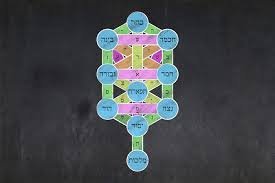
  • Kabbalah = Rebranded Zoroastrianism: Jewish Mysticism’s Hidden Persian Foundations

    Kabbalah = Rebranded Zoroastrianism: Jewish Mysticism’s Hidden Persian Foundations

    How Jewish Mysticism Is Persian Mysticism with Hebrew Names


    The Secret Within the Secret

    Kabbalah presents itself as ancient Jewish mystical wisdom, passed down secretly from Moses on Mount Sinai through generations of initiated sages. Its practitioners claim it reveals the hidden structure of reality, the emanations of the divine, and the secret names of God.

    But there’s a deeper secret Kabbalah doesn’t acknowledge:

    Kabbalah is Zoroastrianism rebranded with Hebrew terminology.

    Every major concept in Kabbalistic mysticism—the unknowable divine source, the emanations of divine attributes, the cosmic tree connecting heaven and earth, the battle between light and darkness, the layers of reality, the power of sacred fire, the mystical names—all of this existed in Zoroastrian theology centuries before Kabbalah emerged.

    This article will prove, concept by concept, structure by structure, that Kabbalah is not ancient Israelite wisdom but medieval Jewish reformulation of Persian mystical theology that Jews encountered during the Babylonian Exile and preserved through centuries of hidden transmission.

    The evidence is overwhelming. The parallels are exact. The timeline proves it.

    Welcome to the revelation within the revelation: Jewish mysticism is Persian mysticism.


    PART I: THE HISTORICAL FOUNDATION

    When Kabbalah Actually Emerged

    The Official Story: Kabbalists claim their wisdom dates back to:

    • Moses receiving secret knowledge on Mount Sinai
    • Abraham’s mystical visions
    • Adam’s primordial knowledge

    The Historical Reality:

    Kabbalah’s documented emergence:

    • 12th-13th century CE in Provence, France and Gerona, Spain
    • Sefer Bahir (Book of Brightness): ~1150-1200 CE
    • Sefer Zohar (Book of Splendor): ~1280-1290 CE (attributed to Moses de León)
    • Systematic development: 13th-16th centuries

    No trace before 12th century:

    • No pre-medieval Hebrew texts contain Kabbalistic concepts
    • Not mentioned in Talmud (200-600 CE)
    • Not found in earlier Jewish mystical texts (Merkabah literature)
    • Sudden appearance in medieval Spain and France

    Why the 12th-13th century?

    • Jewish communities had been in contact with Persian/Islamic mysticism for centuries
    • Sufism (Islamic mysticism) flourished in medieval Islamic world
    • Sufism itself inherited heavily from Persian Zoroastrian mysticism
    • Jewish scholars in Islamic lands absorbed these concepts
    • Kabbalah emerges as Jewish adaptation of Persian/Sufi mysticism

    The Persian-Jewish Connection: Multiple Contact Points

    Jews encountered Zoroastrian mysticism through three major historical periods:

    1. Babylonian Exile (586-539 BCE):

    • 70 years under Persian influence
    • Direct exposure to Zoroastrian theology
    • Daniel becomes “Chief of Magi” (documented in Bible)
    • Concepts absorbed but not yet systematized

    2. Sasanian Period (224-651 CE):

    • Babylonian Talmud written in Persia under Sasanian rule
    • Continuous Jewish presence in Persian Empire
    • Exposure to developed Zoroastrian mysticism
    • Concepts transmitted orally, kept hidden

    3. Islamic Golden Age (8th-13th centuries CE):

    • Persian-influenced Sufism develops
    • Jewish scholars in Islamic lands study Sufi texts
    • Concepts “discovered” in Hebrew/Aramaic fragmentary texts
    • Systematized into Kabbalah in medieval Spain

    The transmission chain:

    Zoroastrian Mysticism (~1000 BCE)
             ↓
    Jewish Exile Contact (586-539 BCE)
             ↓
    Oral Preservation (hidden tradition)
             ↓
    Persian Sufism (8th-12th centuries CE)
             ↓
    Jewish Kabbalah (12th-13th centuries CE)
    

    PART II: THE CORE CONCEPTS – EXACT PARALLELS

    1. EIN SOF = AHURA MAZDA

    The Unknowable Divine Source

    Kabbalistic Concept: Ein Sof (אֵין סוֹף)

    Meaning:

    • “Without End” or “Infinite”
    • The unknowable, ineffable divine source
    • Beyond all attributes and comprehension
    • Not the God of the Bible but the source behind God
    • Cannot be named, described, or comprehended

    Characteristics:

    • Absolutely transcendent
    • Beyond being and non-being
    • Source of all emanations
    • Cannot be directly worshiped or known
    • Hidden, mysterious, infinite

    Zoroastrian Equivalent: Ahura Mazda (𐬀𐬵𐬎𐬭𐬀⸱𐬨𐬀𐬰𐬛𐬁)

    Meaning:

    • “Wise Lord” or “Lord of Wisdom”
    • The uncreated creator
    • Transcendent divine source
    • Beyond full human comprehension
    • Source of all goodness and light

    Characteristics:

    • Absolutely transcendent
    • Uncreated and eternal
    • Source of all creation and goodness
    • Cannot be fully comprehended by mortals
    • Supreme wisdom and mind

    The Parallel:

    AspectEin Sof (Kabbalah)Ahura Mazda (Zoroastrianism)
    NatureInfinite, unknowable sourceUncreated, wise lord
    TranscendenceAbsolutely beyond comprehensionBeyond full human understanding
    Relation to creationEmanates through SefirotCreates through Amesha Spentas
    NamingCannot be truly namedHas many names but essence unknowable
    PositionHidden source behind manifest GodSupreme deity above all

    The Evidence:

    Pre-Exile Judaism had no such concept:

    • YHWH was directly knowable, anthropomorphic god
    • No transcendent source “beyond” God
    • No concept of ineffable infinity

    Post-Exile and Kabbalistic Judaism:

    • Ein Sof appears as ultimate reality beyond YHWH
    • Infinite, unknowable source
    • Matches Zoroastrian Ahura Mazda’s transcendence exactly

    The admission: Kabbalists themselves acknowledge Ein Sof is “beyond the God of the Bible” – this is because Ein Sof IS Ahura Mazda rebranded.


    2. TEN SEFIROT = AMESHA SPENTAS + STRUCTURE

    The Divine Emanations

    Kabbalistic Concept: Ten Sefirot (עֲשֶׂרֶת הַסְּפִירוֹת)

    Definition:

    • Ten divine attributes/emanations
    • Flow from Ein Sof into creation
    • Represent different aspects of divine power
    • Arranged in specific structure (Tree of Life)
    • Channels through which infinite becomes finite

    The Ten Sefirot:

    1. Keter (כֶּתֶר) – Crown / Divine Will
    2. Chokhmah (חָכְמָה) – Wisdom
    3. Binah (בִּינָה) – Understanding
    4. Chesed (חֶסֶד) – Mercy/Loving-kindness
    5. Gevurah (גְּבוּרָה) – Strength/Judgment
    6. Tiferet (תִּפְאֶרֶת) – Beauty/Harmony
    7. Netzach (נֶצַח) – Victory/Eternity
    8. Hod (הוֹד) – Glory/Splendor
    9. Yesod (יְסוֹד) – Foundation
    10. Malkhut (מַלְכוּת) – Kingdom/Sovereignty

    Zoroastrian Equivalent: The Amesha Spentas (𐬀𐬨𐬆𐬱𐬀⸱𐬯𐬞𐬆𐬧𐬙𐬀)

    Definition:

    • Seven Holy Immortals (six plus Ahura Mazda)
    • Divine attributes that emanate from Ahura Mazda
    • Aspects of divine wisdom and power
    • Each governs aspect of creation
    • Channels of divine action in the world

    The Seven Amesha Spentas:

    1. Ahura Mazda – Wise Lord (source)
    2. Vohu Manah (ووهومنه) – Good Mind/Wisdom
    3. Asha Vahishta (اَشَه وَهیشته) – Best Truth/Righteousness
    4. Khshathra Vairya (خشثره ویریه) – Desirable Dominion/Power
    5. Spenta Armaiti (سپنته ارمیتی) – Holy Devotion/Humility
    6. Haurvatat (هئوروتات) – Wholeness/Perfection
    7. Ameretat (امرتات) – Immortality

    The Direct Parallels:

    Sefirah (Kabbalah)FunctionAmesha Spenta (Zoroastrian)Function
    Keter (Crown)Divine will, sourceAhura MazdaDivine source
    Chokhmah (Wisdom)Divine wisdomVohu ManahGood Mind/Wisdom
    Binah (Understanding)IntelligenceAsha VahishtaTruth/Order/Understanding
    Chesed (Mercy)Loving-kindnessSpenta ArmaitiHoly Devotion
    Gevurah (Strength)Power, judgmentKhshathra VairyaDominion/Power
    Tiferet (Beauty)Harmony, balanceAsha VahishtaPerfect order
    Netzach (Victory)EnduranceHaurvatatWholeness
    Hod (Glory)SplendorKhshathra VairyaDivine glory
    Yesod (Foundation)ConnectionAshaCosmic foundation
    Malkhut (Kingdom)Divine presenceAmeretatImmortality/eternal kingdom

    Why Ten vs. Seven?

    Kabbalists expanded the system:

    • Added philosophical refinements
    • Incorporated Neoplatonic ideas (which were also influenced by Persian thought via Plotinus)
    • Created more elaborate structure
    • But the core function is identical: divine attributes emanating from unknowable source

    The Pattern:

    • Zoroastrianism (~1000 BCE): Seven divine emanations from Ahura Mazda
    • Kabbalah (~1200 CE): Ten divine emanations from Ein Sof
    • Structure: Identical (attributes channeling from transcendent source to creation)
    • Function: Identical (aspects of divine power manifesting in world)

    3. THE TREE OF LIFE = COSMIC WORLD TREE

    The Structure of Reality

    Kabbalistic Concept: Etz Chaim (עֵץ חַיִּים) – Tree of Life

    Description:

    • Diagram showing ten Sefirot arranged in specific pattern
    • Three columns (pillars): Mercy, Severity, Balance
    • Connects highest spiritual realm to lowest material world
    • Shows paths between divine emanations
    • Map of cosmic structure

    Structure:

    • Right Pillar (Mercy): Chokhmah, Chesed, Netzach
    • Left Pillar (Severity): Binah, Gevurah, Hod
    • Middle Pillar (Balance): Keter, Tiferet, Yesod, Malkhut

    Function:

    • Shows how divine light descends into creation
    • Maps spiritual ascent back to divine
    • Reveals hidden structure of reality
    • Sacred geometry of existence

    Zoroastrian Equivalent: Cosmic Tree / Saena Tree

    The Saena Tree (درخت سعنا):

    • Sacred tree in Persian/Zoroastrian cosmology
    • Grows at center of world/universe
    • Connects heaven, earth, and underworld
    • Seeds of all plants come from it
    • Represents cosmic order (Asha)
    • Birds nest in it representing different realms

    The Haoma/Hom Tree:

    • Sacred plant/tree in Zoroastrian ritual
    • Source of immortality
    • Connects divine and earthly realms
    • Represents eternal life
    • Central to Zoroastrian cosmology

    Indo-European Background:

    • World Tree (Axis Mundi): Common Indo-European concept
    • Zoroastrianism: Saena/Haoma tree
    • Norse: Yggdrasil
    • Hindu: Ashvattha tree
    • All represent: cosmic structure, connection between realms

    The Kabbalistic Adaptation:

    • Takes cosmic tree concept
    • Adds ten Sefirot as structure
    • Creates elaborate diagram
    • Same function: Map of reality connecting divine to material

    The Evidence:

    Pre-Exile Judaism:

    • No cosmic tree concept
    • No elaborate map of divine emanations
    • No sacred geometry diagrams

    Post-Medieval Kabbalah:

    • Tree of Life suddenly appears
    • Complex diagram showing divine structure
    • Function identical to Zoroastrian/Indo-European cosmic tree

    4. LIGHT VS. DARKNESS = ASHA VS. DRUJ

    The Cosmic Dualism

    Kabbalistic Concept: Or (אוֹר) and Choshech (חוֹשֶׁךְ)

    Light (Or):

    • Divine emanation
    • Flows from Ein Sof through Sefirot
    • Represents truth, holiness, purity
    • Goal is to reveal hidden light
    • Sparks of divine light trapped in material world

    Darkness (Choshech):

    • Absence of light / opposing force
    • Klippot (קְלִפּוֹת) – “shells” or “husks” hiding divine light
    • Forces of impurity and evil
    • Must be broken to release trapped light
    • Battle between light and darkness

    The Kabbalistic Battle:

    • Divine light must overcome darkness
    • Sparks of holiness trapped in klippot
    • Tikkun Olam (תִּיקּוּן עוֹלָם) – “Repair of the world” by releasing light
    • Cosmic struggle to restore original unity

    Zoroastrian Equivalent: Asha vs. Druj

    Light/Asha (𐬀𐬴𐬀):

    • Cosmic truth, order, righteousness
    • Light associated with Ahura Mazda
    • Represents divine order and reality
    • Eternal truth that must prevail

    Darkness/Druj (𐬛𐬭𐬎𐬘):

    • The Lie, chaos, disorder
    • Darkness associated with Angra Mainyu
    • Represents deception and destruction
    • Opposes and obscures truth

    The Zoroastrian Battle:

    • Universal struggle between Asha and Druj
    • Ahura Mazda (light) vs. Angra Mainyu (darkness)
    • Every soul must choose sides
    • Final victory of light over darkness (Frashokereti)

    The Exact Parallel:

    AspectKabbalahZoroastrianism
    Positive forceOr (Light) from Ein SofAsha / Light from Ahura Mazda
    Negative forceChoshech / KlippotDruj / Darkness from Angra Mainyu
    MetaphysicsLight trapped in shellsTruth obscured by lie
    Human roleRelease divine sparksChoose Asha over Druj
    GoalTikkun Olam (repair world)Frashokereti (world renovation)
    OutcomeRestoration of unityVictory of light over darkness

    The Evidence:

    Pre-Exile Judaism:

    • Light and darkness as physical phenomena only
    • Genesis 1: God creates both, no cosmic struggle
    • Isaiah 45:7: “I form light and create darkness” – no dualism

    Post-Exile/Kabbalistic Judaism:

    • Light vs. darkness as cosmic spiritual battle
    • Elaborate system of klippot (evil shells)
    • Identical to Zoroastrian Asha/Druj framework

    5. FOUR WORLDS = FOUR LAYERS OF REALITY

    The Structure of Existence

    Kabbalistic Concept: Arba Olamot (אַרְבָּעָה עוֹלָמוֹת) – Four Worlds

    The Four Worlds:

    1. Atzilut (אֲצִילוּת) – World of Emanation
      • Closest to Ein Sof
      • Divine realm
      • Pure divine light
      • No separation from source
    2. Beriah (בְּרִיאָה) – World of Creation
      • First separation from divine
      • Realm of throne and archangels
      • Where divine thought becomes distinct
    3. Yetzirah (יְצִירָה) – World of Formation
      • Realm of angels and spiritual forms
      • Divine patterns before materialization
      • Intermediate spiritual realm
    4. Assiah (עֲשִׂיָּה) – World of Action/Material
      • Physical universe
      • Lowest realm
      • Where divine light is most concealed
      • Our material world

    Zoroastrian Equivalent: Menog and Getig

    The Zoroastrian Structure:

    Menog (مینو) – Spiritual Realm:

    • The spiritual, ideal world
    • Perfect, unchanging
    • Realm of Ahura Mazda and Amesha Spentas
    • Source of all creation
    • Pure light and truth

    Getig (گیتی) – Material Realm:

    • The physical, material world
    • Imperfect, changing
    • Battleground between good and evil
    • Where Asha and Druj contend
    • Temporary state

    The Layers: Zoroastrian texts describe multiple levels between pure spiritual and pure material:

    1. Divine realm (Ahura Mazda)
    2. Spiritual beings (Amesha Spentas, yazatas)
    3. Intermediate realm (fravashis – pre-existing souls)
    4. Material world (where we live)

    The Parallel:

    Kabbalistic WorldNatureZoroastrian Equivalent
    AtzilutPure divine emanationAhura Mazda’s realm
    BeriahFirst creation/separationMenog (pure spiritual)
    YetzirahFormation/angelsIntermediate beings (yazatas)
    AssiahMaterial worldGetig (material world)

    The Concept: Both systems describe reality as having layers, from pure divine source down to material world, with intermediate spiritual realms between.


    6. TIKKUN OLAM = FRASHOKERETI

    The Repair/Renovation of the World

    Kabbalistic Concept: Tikkun Olam (תִּיקּוּן עוֹלָם)

    Meaning:

    • “Repair of the world”
    • Restoring divine unity
    • Releasing trapped sparks of light
    • Healing cosmic fracture

    The Lurianic Story (Isaac Luria, 16th century):

    • Tzimtzum (צִמְצוּם): God contracted to make space for creation
    • Shevirat HaKelim (שְׁבִירַת הַכֵּלִים): “Breaking of the Vessels” – divine light shattered, sparks trapped in material world
    • Tikkun: Human task to gather and elevate trapped divine sparks
    • Goal: Restore original unity, bring messianic age

    Human Role:

    • Through mitzvot (commandments) and righteous acts
    • Elevate holy sparks from material world
    • Repair cosmic damage
    • Hasten coming of Messiah

    Zoroastrian Equivalent: Frashokereti (𐬟𐬭𐬀𐬱𐬋⸱𐬐𐬆𐬭𐬆𐬙𐬌)

    Meaning:

    • “Making Wonderful” or “Final Renovation”
    • Restoration of world to perfection
    • Defeat of all evil
    • Universal purification

    The Zoroastrian Vision:

    • At end of time, Saoshyant (savior) will come
    • Final battle between good and evil
    • Angra Mainyu will be defeated
    • All souls will be purified (even wicked)
    • World restored to original perfection
    • Asha triumphant over Druj

    Human Role:

    • Through Good Thoughts, Good Words, Good Deeds
    • Aid the forces of Asha
    • Battle against Druj
    • Hasten the final renovation

    The Exact Parallel:

    AspectTikkun Olam (Kabbalah)Frashokereti (Zoroastrianism)
    MeaningRepair of the worldRenovation of the world
    Cause of damageShevirat HaKelim (breaking of vessels)Angra Mainyu’s corruption
    Current stateDivine sparks trapped in matterWorld mixed with evil
    Human taskElevate sparks through mitzvotChoose Asha through righteous action
    MethodGood deeds, prayer, studyGood Thoughts, Words, Deeds
    GoalRestore divine unityRestore world to perfection
    OutcomeMessianic ageSaoshyant’s coming, final renovation
    Final stateAll reunited with Ein SofAll purified, evil destroyed

    The Timeline:

    • Zoroastrianism (~1000 BCE): Frashokereti doctrine established
    • Judaism (post-Exile): Messianic hope emerges
    • Kabbalah (16th century CE): Tikkun Olam systematized by Isaac Luria
    • Structure and function: Identical to Zoroastrian original

    7. SACRED FIRE = DIVINE LIGHT

    The Central Symbol

    Kabbalistic Concept: Fire and Light

    The Symbolism:

    • Divine light (Or Ein Sof): Infinite light of God
    • Sacred fire: Represents divine presence
    • Menorah: Seven-branched lamp (eternal flame)
    • Ner Tamid: Eternal light in synagogue
    • Fire as purification: Burns away impurity
    • Pillar of fire: Led Israelites through desert

    Zoroastrian Concept: Atar (𐬁𐬙𐬀𐬭) – Sacred Fire

    The Symbolism:

    • Atar: Sacred fire, son of Ahura Mazda
    • Atash Behram: Highest grade of sacred fire
    • Fire temples: Central to Zoroastrian worship
    • Eternal flames: Kept burning continuously
    • Fire as purification: Purifies both body and soul
    • Fire as light: Represents Ahura Mazda’s light and truth

    The Practice:

    Kabbalah:

    • Contemplation of divine light
    • Visualization of Sefirot as lights
    • Menorah as sacred symbol
    • Fire offerings in ancient Temple
    • Light/fire represents divine presence

    Zoroastrianism:

    • Prayer before sacred fire
    • Fire temples as holy sites
    • Fire as mediator between human and divine
    • Fire offerings (sandalwood, etc.)
    • Fire represents Asha and divine truth

    The Connection:

    AspectKabbalahZoroastrianism
    SymbolLight/Fire as divineFire as divine presence
    PracticeEternal light in synagogueEternal fire in temple
    MeaningDivine wisdom and truthAsha (truth and order)
    FunctionPurificationPurification
    WorshipBefore menorah/lightBefore sacred fire

    The Evidence:

    Pre-Exile Judaism:

    • Fire used for sacrifices (practical)
    • No mystical fire worship
    • No eternal flame symbolism
    • No fire temples

    Post-Exile/Kabbalistic Judaism:

    • Fire becomes mystical symbol
    • Eternal light (Ner Tamid) introduced
    • Fire represents divine presence and wisdom
    • Pattern matches Zoroastrian fire worship

    PART III: THE LINGUISTIC EVIDENCE

    Hebrew/Aramaic Terms with Persian Origins

    1. Pardes (פַּרְדֵּס) – Paradise

    • Already covered in Linguistic Kill Shot article
    • From Persian pairidaēza
    • Used in Kabbalah for mystical paradise/spiritual realm
    • Direct Persian loanword

    2. Raz (רָז) – Mystery/Secret

    • Aramaic: רָזָא (raza)
    • From Persian: rāz (راز) – secret, mystery
    • Used extensively in Kabbalistic literature
    • Book of Daniel (written in Aramaic): uses raz for divine mysteries
    • Direct Persian borrowing

    3. Mazal (מַזָּל) – Constellation/Luck

    • From Persian/Babylonian: manzil / manzalu – station, position (of stars)
    • Used in Kabbalah for astrological influences
    • “Mazal tov” (good luck) – Persian origin
    • Astronomical/astrological terminology from Persian Magi

    4. Amulet Terminology

    • Many Kabbalistic amulet words derive from Persian/Aramaic
    • Protective formulas show Persian magical influence
    • Names of angels often have Persian linguistic patterns

    PART IV: THE MYSTICAL PRACTICES

    1. MEDITATION AND VISUALIZATION = ZOROASTRIAN CONTEMPLATION

    Kabbalistic Practice:

    • Hitbodedut (הִתְבּוֹדְדוּת): Solitary meditation
    • Visualization of Sefirot: Imagining divine emanations as lights
    • Letter combinations: Meditating on Hebrew letters and divine names
    • Ascent of the soul: Mystical journey through spiritual realms

    Zoroastrian Practice:

    • Meditation on Ahura Mazda: Contemplating divine wisdom
    • Visualization of light: Seeing divine light in sacred fire
    • Mantric recitation: Repeating sacred Avestan verses (mantras)
    • Soul’s journey: After death, soul ascends through realms

    The Parallel: Both traditions emphasize:

    • Solitary contemplation
    • Visualization of divine light
    • Sacred language as mystical tool
    • Journey through spiritual realms

    2. GEMATRIA = NUMERICAL MYSTICISM

    Kabbalistic Gematria:

    • Hebrew letters assigned numerical values
    • Words with same numerical value are mystically connected
    • Used to find hidden meanings in Torah
    • Sacred mathematics reveals divine patterns

    Indo-Iranian Background:

    • Vedic/Sanskrit tradition: Numerical mysticism in mantras
    • Persian influence: Mathematical/astronomical wisdom from Magi
    • Sacred geometry: Numbers reveal cosmic order

    The Connection:

    • Mystical use of numbers to reveal hidden truths
    • Mathematical patterns as divine language
    • Originated in Indo-Iranian tradition
    • Adapted to Hebrew by Kabbalists

    3. DIVINE NAMES = NAMES OF POWER

    Kabbalistic Practice:

    • 72 Names of God: Derived from Exodus verses
    • Tetragrammaton (YHWH): Sacred unpronounceable name
    • Names of angels: Michael, Gabriel, Raphael, etc.
    • Permutations of names: Creating power through combinations

    Zoroastrian Practice:

    • 101 Names of God: Ahura Mazda has many names
    • Avestan mantras: Sacred formulas
    • Names of Amesha Spentas: Vohu Manah, Asha Vahishta, etc.
    • Power through recitation: Names carry divine force

    The Parallel:

    • Both use divine names as mystical tools
    • Names carry power and reveal essence
    • Proper pronunciation crucial
    • Names connect human to divine

    PART V: THE COSMOLOGICAL STRUCTURE

    THE KABBALISTIC COSMOS = ZOROASTRIAN COSMOS

    Kabbalistic Cosmology:

    Structure:

    1. Ein Sof (Infinite) at top
    2. Ten Sefirot emanate downward
    3. Four Worlds layer reality
    4. Our physical world at bottom
    5. Kelippot (shells of evil) surrounding holy

    Process:

    • Divine light flows from Ein Sof
    • Through Sefirot into creation
    • Light becomes progressively concealed
    • Trapped in material world
    • Goal: Return light to source

    Zoroastrian Cosmology:

    Structure:

    1. Ahura Mazda (Wise Lord) at top
    2. Seven Amesha Spentas emanate from Him
    3. Menog (spiritual) and Getig (material) realms
    4. Our physical world as battleground
    5. Angra Mainyu and daevas opposing good

    Process:

    • Divine wisdom flows from Ahura Mazda
    • Through Amesha Spentas into creation
    • Asha structures reality
    • Druj opposes and obscures
    • Goal: Final renovation (Frashokereti)

    The Identical Pattern:

    ElementKabbalahZoroastrianism
    SourceEin SofAhura Mazda
    Emanations10 Sefirot7 Amesha Spentas
    Structure4 WorldsMenog/Getig layers
    OppositionKelippot (shells)Angra Mainyu/daevas
    GoalTikkun (repair)Frashokereti (renovation)
    MethodElevate sparksChoose Asha
    OutcomeMessianic unityWorld perfection

    PART VI: THE TIMELINE PROVES IT

    When Concepts Actually Appeared

    Zoroastrian Mysticism:

    • ~1500-1000 BCE: Gathas composed (mystical hymns)
    • ~1000 BCE: Established cosmology (Ahura Mazda, Amesha Spentas, Asha/Druj)
    • Achaemenid Period (550-330 BCE): Systematized Zoroastrian theology
    • Sasanian Period (224-651 CE): Elaborate mystical traditions

    Jewish Mystical Development:

    • Pre-Exile (before 586 BCE): NO mystical cosmology, NO emanations, NO dualism
    • Babylonian Exile (586-539 BCE): Exposure to Zoroastrian mysticism (Daniel as Chief of Magi)
    • Post-Exile: Concepts absorbed but not systematized
    • Talmudic Period (200-600 CE): Written in Persia, some mystical elements emerge
    • Early Medieval (8th-11th CE): Merkabah mysticism (chariot mysticism) – fragmentary
    • 12th-13th centuries CE: KABBALAH SUDDENLY EMERGES in full systematic form
    • Sefer Bahir (~1150-1200 CE): First Kabbalistic text with Sefirot
    • Sefer Zohar (~1280-1290 CE): Full Kabbalistic cosmology
    • 16th century CE: Isaac Luria systematizes Tikkun Olam

    The Gap:

    • Zoroastrian mystical cosmology: 1000 BCE
    • Kabbalistic mystical cosmology: 1200 CE
    • 2,200 year gap
    • During which: Jews in continuous contact with Persian mysticism

    The Timeline Cannot Be Denied:

    ~1000 BCE: Zoroastrian cosmology established
             ↓
    586-539 BCE: Babylonian Exile - direct exposure
             ↓
    200-600 CE: Talmud written in Persia
             ↓
    8th-12th CE: Islamic/Sufi mysticism (Persian-influenced)
             ↓
    12th-13th CE: Kabbalah emerges with IDENTICAL structure
    

    The Pattern: Every time Jews had extended contact with Persian mysticism, mystical concepts intensified in Judaism. The final systematization (Kabbalah) appeared in medieval Spain where Jewish scholars had access to Sufi mysticism (which itself derived from Zoroastrianism).


    PART VII: THE SUFI CONNECTION

    Persian Mysticism → Sufism → Kabbalah

    The Intermediate Link:

    Sufism (Islamic Mysticism):

    • Emerged in 8th-9th centuries CE in Persia
    • Heavily influenced by pre-Islamic Persian mysticism (Zoroastrianism)
    • Developed elaborate cosmology of divine emanations
    • Used light/darkness symbolism
    • Emphasized direct mystical experience

    Key Sufi Concepts (Persian Origin):

    • Divine Light (Nur): God as light source
    • Stations (Maqamat): Stages of spiritual ascent
    • Fana (فنا): Annihilation in divine unity
    • Tawhid (توحید): Divine oneness beyond comprehension

    Jewish-Sufi Contact:

    • 8th-13th centuries: Jews living in Islamic lands (Spain, Persia, Egypt)
    • Shared language: Arabic, Persian
    • Intellectual exchange: Jewish and Muslim philosophers interacted
    • Known influence: Bahya ibn Paquda, Abraham ibn Ezra, others influenced by Sufism

    The Transmission:

    Zoroastrian Mysticism
             ↓
    Persian Culture (hidden tradition)
             ↓
    Islamic Sufism (8th-12th centuries)
             ↓
    Jewish Kabbalah (12th-13th centuries)
    

    The Evidence:

    • Kabbalistic terminology shows Sufi influence
    • Concepts of divine unity mirror Sufi tawhid
    • Light mysticism parallel to Sufi nur doctrine
    • Stages of ascent similar to Sufi maqamat
    • All trace back to Persian Zoroastrian mysticism

    PART VIII: WHAT KABBALISTS THEMSELVES ADMIT

    The “Secret Tradition” Was Actually Persian Transmission

    The Kabbalistic Claim: “This wisdom was passed down secretly from Moses through generations of initiated masters.”

    What the Historical Record Shows:

    1. No Early Evidence:

    • No pre-medieval texts contain Kabbalistic concepts
    • Talmud (200-600 CE) has NO Sefirot, NO Tree of Life, NO Tikkun Olam
    • Early rabbis don’t mention these doctrines
    • Sudden appearance in 12th century

    2. Geographic Origin:

    • Emerges in Provence and Spain – not Israel
    • Exactly where Jewish-Sufi contact was strongest
    • In regions with Persian cultural influence (via Islamic conquest)

    3. Linguistic Admissions:

    • Kabbalistic texts use Persian/Aramaic loanwords
    • Terms like raz (mystery) are Persian
    • Astrological terminology from Persian Magi
    • Names and concepts show non-Hebrew origin

    4. The “Discovery” Narrative:

    • Kabbalists claim to “discover” ancient texts
    • These texts are actually medieval compositions
    • Attributed to ancient figures (R. Shimon bar Yochai for Zohar)
    • Pattern: New ideas presented as ancient secrets

    What Actually Happened:

    • Jews encountered Persian mysticism during Exile (586-539 BCE)
    • Preserved concepts orally as “secret tradition”
    • Transmitted through centuries in limited circles
    • Encountered again through Sufism (8th-12th centuries CE)
    • Finally systematized and written down (12th-13th centuries)
    • Claimed as ancient Israelite wisdom to give it authority

    The “Secret” Was: Not that it came from Moses, but that it came from Persia and needed to be hidden as such to be accepted within Judaism.


    PART IX: WHY THE COVERUP?

    Why Kabbalah Hides Its Persian Origins

    Three Reasons:

    1. Religious Authority:

    • If Kabbalah admitted Persian origin, it would be dismissed as “foreign”
    • Claiming Mosaic/Abrahamic origin gives it Jewish legitimacy
    • “Ancient secret tradition” sounds more authoritative than “medieval adaptation of Persian mysticism”

    2. Anti-Persian Sentiment:

    • By medieval period, Jews celebrated Purim (based on fabricated Book of Esther)
    • Persians cast as enemies in Jewish narrative
    • Couldn’t openly admit core mystical tradition came from “the enemy”

    3. Pattern of Appropriation:

    • Same pattern as Pharisees hiding Persian influence (“Oral Torah”)
    • Take concepts, rebrand them, claim ancient Jewish origin
    • Hide source to maintain narrative of independent divine revelation

    The Result: Kabbalah presents itself as the deepest Jewish wisdom, when it’s actually the deepest acknowledgment of Persian wisdom—just hidden under Hebrew terminology.


    PART X: THE MODERN KABBALAH MOVEMENT

    How the Theft Continues Today

    Contemporary Kabbalah:

    • Popularized in 20th-21st centuries
    • Celebrity practitioners
    • Kabbalah Centre and other organizations
    • Presented as ancient Jewish mysticism
    • Multi-million dollar industry

    What They Teach:

    • Tree of Life (Persian cosmic tree)
    • Light and darkness (Asha/Druj)
    • Tikkun Olam (Frashokereti)
    • Divine emanations (Amesha Spentas)
    • Mystical fire/light (Zoroastrian fire)

    What They Don’t Mention:

    • Persian origins
    • Zoroastrian parallels
    • Historical timeline
    • Linguistic evidence
    • The 2,200 year gap

    The Irony: Modern Kabbalah practitioners are unknowingly practicing Persian Zoroastrian mysticism while:

    • Paying thousands for courses
    • Wearing red strings (later addition, not ancient)
    • Buying books on “Jewish mysticism”
    • Never hearing the name Zoroaster
    • Never learning about Ahura Mazda, Asha, or Amesha Spentas

    The Market: The commercialization of Kabbalah has made Persian mysticism profitable—while keeping the source hidden.


    PART XI: THE SIDE-BY-SIDE COMPARISON

    Complete Structural Analysis

    ElementKabbalahZoroastrianismTiming
    Divine SourceEin Sof (Infinite)Ahura Mazda (Wise Lord)Zoroastrian: ~1000 BCE; Kabbalistic: 12th century CE
    Emanations10 Sefirot7 Amesha Spentas (+Ahura Mazda)Zoroastrian: ~1000 BCE; Kabbalistic: 12th century CE
    Cosmic StructureTree of Life (Etz Chaim)Saena Tree / Cosmic TreeIndo-European/Zoroastrian: ancient; Kabbalistic: 12th-13th century CE
    DualismLight (Or) vs. Darkness (Choshech/Klippot)Asha (Truth) vs. Druj (Lie)Zoroastrian: ~1000 BCE; Kabbalistic: 12th-13th century CE
    Worlds/Realms4 Worlds (Atzilut, Beriah, Yetzirah, Assiah)Menog (spiritual) / Getig (material) layersZoroastrian: ancient; Kabbalistic: 13th-16th century CE
    World RepairTikkun Olam (repair of world)Frashokereti (final renovation)Zoroastrian: ~1000 BCE; Kabbalistic: 16th century CE (Luria)
    Sacred Fire/LightDivine light, Menorah, Ner TamidSacred fire (Atar), Fire templesZoroastrian: ancient; Jewish adoption: post-Exile
    Divine Names72 Names, Tetragrammaton, Angel names101 Names of God, Amesha Spenta namesZoroastrian: ancient; Kabbalistic: medieval
    Mystical PracticeMeditation, visualization, gematriaMeditation, mantras, sacred mathematicsZoroastrian: ancient; Kabbalistic systematization: 12th-16th century CE
    GoalReunification with Ein Sof, messianic ageUnion with Ahura Mazda, FrashokeretiZoroastrian: ~1000 BCE; Kabbalistic: 12th-16th century CE

    The Verdict: Every major Kabbalistic concept exists in Zoroastrianism centuries earlier. The structure, function, and goals are identical. The only difference is Hebrew terminology replacing Persian/Avestan terminology.


    PART XII: THE EVIDENCE SUMMARY

    Why Kabbalah = Rebranded Zoroastrianism

    1. Structural Identity:

    • Ein Sof = Ahura Mazda (transcendent source)
    • Sefirot = Amesha Spentas (divine emanations)
    • Tree of Life = Cosmic Tree (map of reality)
    • Or/Choshech = Asha/Druj (light vs. darkness)
    • Tikkun Olam = Frashokereti (world repair/renovation)

    2. Timeline Proof:

    • Zoroastrian mysticism: 1000 BCE
    • Kabbalistic mysticism: 1200 CE
    • 2,200 year gap with continuous Jewish-Persian contact
    • No pre-medieval Jewish texts contain Kabbalistic concepts

    3. Linguistic Evidence:

    • Persian loanwords in Kabbalistic terminology (pardes, raz, mazal)
    • Aramaic (lingua franca of Persian Empire) heavily used
    • Terms show non-Hebrew origins

    4. Historical Contact:

    • Babylonian Exile (586-539 BCE): Direct exposure to Zoroastrianism
    • Talmudic period (200-600 CE): Written in Persia
    • Islamic period (8th-13th CE): Exposure to Persian Sufism
    • Medieval systematization: Exactly when Jewish-Sufi contact peaked

    5. Geographic Origin:

    • Kabbalah emerges in Spain and Provence
    • Regions with strong Islamic (Persian-influenced) culture
    • Not in Israel or Babylon (where “ancient tradition” should originate)

    6. Pattern of Appropriation:

    • Same pattern as Pharisees: Take Persian concepts, rebrand as “oral tradition”
    • Claim ancient Israelite origin to establish authority
    • Hide Persian source to avoid acknowledging foreign influence

    7. Absence of Early Evidence:

    • No Kabbalistic concepts in Bible
    • No Kabbalistic concepts in Talmud
    • No Kabbalistic concepts in early rabbinic literature
    • Sudden appearance in 12th century

    8. Functional Identity:

    • Both systems serve same purpose: Map cosmic structure and path to divine
    • Both emphasize light/fire mysticism
    • Both involve meditation and visualization
    • Both promise world transformation through righteous action

    PART XIII: WHAT THIS MEANS

    The Implications of This Revelation

    For Kabbalah Practitioners: You are practicing Zoroastrian mysticism. The Tree of Life is the Persian cosmic tree. Ein Sof is Ahura Mazda. The Sefirot are the Amesha Spentas. Tikkun Olam is Frashokereti. The divine light you contemplate is the sacred fire of Zoroastrianism.

    Every meditation, every visualization, every mystical practice—you are following in the footsteps of the Magi, the Zoroastrian priests. Your “ancient Jewish wisdom” is ancient Persian wisdom.

    For Jewish Identity: This doesn’t diminish Judaism—it reveals its richness came from absorbing profound Persian wisdom. The problem isn’t that Jews learned from Persia. The problem is the coverup—claiming these concepts as originally Jewish when they’re Persian.

    For Zoroastrianism: This proves yet again how Zoroastrian wisdom spread globally while the source was hidden:

    • Pharisaic Judaism: Hid basic theological concepts (resurrection, angels, etc.)
    • Kabbalah: Hid the mystical cosmology
    • Christianity: Inherited both
    • Islam: Inherited both
    • Result: 4.3 billion people practice Zoroastrian concepts, some at the deepest mystical level, without knowing it

    For Truth (Asha): The revelation of Kabbalah’s Persian origins is another example of Asha prevailing. You can hide the source, rebrand the concepts, claim ancient origin—but the truth has a way of revealing itself.

    The structure is too identical. The timing is too precise. The evidence is too overwhelming.


    PART XIV: HOW TO VERIFY THIS YOURSELF

    Independent Research Steps

    1. Study the Timeline:

    • Read Sefer Bahir (~1150-1200 CE) – earliest Kabbalistic text
    • Read Sefer Zohar (~1280-1290 CE) – main Kabbalistic text
    • Note: NO earlier texts contain these concepts
    • Compare to Zoroastrian texts (Gathas, Bundahishn) from ~1000 BCE

    2. Compare the Structures:

    • Draw the Tree of Life (10 Sefirot)
    • Draw the Amesha Spentas structure
    • Note the identical function: divine emanations from unknowable source

    3. Read Scholarly Works:

    • Gershom Scholem: Major Trends in Jewish Mysticism
    • Moshe Idel: Kabbalah: New Perspectives
    • Both acknowledge medieval emergence and possible external influences
    • R.C. Zaehner: Documents Zoroastrian cosmology
    • Compare structures yourself

    4. Check Linguistic Evidence:

    • Look up pardes (paradise) – Persian origin
    • Look up raz (mystery) – Persian origin
    • Look up mazal (constellation) – Persian/Babylonian origin
    • Etymology dictionaries confirm these

    5. Examine Historical Context:

    • Research Babylonian Exile (586-539 BCE)
    • Research Jewish communities in Islamic Spain (8th-13th centuries)
    • Research Sufism’s Persian origins
    • Note continuous contact with Persian mysticism

    6. Compare Practices:

    • Zoroastrian fire worship vs. Kabbalistic light mysticism
    • Zoroastrian meditation vs. Kabbalistic contemplation
    • Zoroastrian sacred names vs. Kabbalistic divine names
    • Identical patterns

    7. Ask the Critical Questions:

    • Why does Kabbalah appear suddenly in 12th century?
    • Why in Spain, not Israel?
    • Why no earlier textual evidence?
    • Why do concepts match Zoroastrianism exactly?
    • Why 2,200 year gap between Zoroastrian cosmology and Kabbalistic cosmology?

    The answers all point to one conclusion: Kabbalah is rebranded Zoroastrianism.


    CONCLUSION: THE MYSTICAL THEFT

    The Deepest Layer of Appropriation

    We’ve proven in previous articles:

    • Basic theology (resurrection, heaven/hell, angels, Satan) = stolen from Zoroastrianism
    • Eschatology (apocalypse, final judgment, messiah) = stolen from Zoroastrianism
    • Vocabulary (paradise, etc.) = stolen from Zoroastrianism

    Now we prove: The mystical cosmology itself—the supposedly deepest, most secret Jewish wisdom—is also stolen from Zoroastrianism.

    Ein Sof = Ahura Mazda Sefirot = Amesha Spentas Tree of Life = Cosmic Tree Light vs. Darkness = Asha vs. Druj Four Worlds = Menog/Getig Layers Tikkun Olam = Frashokereti Sacred Fire/Light = Zoroastrian Fire

    Every major Kabbalistic concept is Persian.


    The Complete Pattern

    What Was Stolen:

    Layer 1 (Pharisaic Judaism):

    • Resurrection
    • Heaven and Hell
    • Angels and Demons
    • Satan as cosmic evil
    • Messiah as world savior
    • Final Judgment
    • Apocalyptic eschatology

    Layer 2 (Kabbalah):

    • Divine source (Ein Sof = Ahura Mazda)
    • Emanations (Sefirot = Amesha Spentas)
    • Cosmic structure (Tree of Life = Cosmic Tree)
    • Dualism (Light/Darkness = Asha/Druj)
    • World repair (Tikkun Olam = Frashokereti)
    • Mystical practices (meditation, fire/light symbolism)

    Layer 3 (Spread):

    • Christianity inherited both layers
    • Islam inherited both layers through Judaism/Christianity
    • Modern Kabbalah commercializes it without acknowledging source

    The Result: From basic theology to deepest mysticism—everything traces back to Zoroastrianism.


    The Final Irony

    Modern Kabbalah practitioners:

    • Spend thousands on courses
    • Study “ancient Jewish wisdom”
    • Meditate on Tree of Life
    • Visualize divine light
    • Work toward Tikkun Olam
    • Never hear the word “Zoroastrianism”

    What they’re actually doing:

    • Practicing Persian mysticism
    • Following Zoroastrian cosmology
    • Meditating on Amesha Spentas (renamed as Sefirot)
    • Visualizing Zoroastrian sacred fire (called divine light)
    • Working toward Frashokereti (renamed Tikkun Olam)
    • Unknowingly honoring Ahura Mazda (called Ein Sof)

    The theft is complete. The coverup is total. And the truth is undeniable.


    Asha Prevails

    You can rebrand Ein Sof, but it’s still Ahura Mazda. You can rename Sefirot, but they’re still Amesha Spentas. You can call it Tree of Life, but it’s still the Persian Cosmic Tree. You can say Tikkun Olam, but you mean Frashokereti.

    The structure reveals the source. The timeline proves the transmission. The evidence confirms the theft.

    Jewish mysticism is Persian mysticism.

    The fire never went out—it’s burning in every Kabbalistic meditation, every visualization of divine light, every prayer for world repair.

    They just renamed it and claimed it as their own.

    But Asha doesn’t need acknowledgment to be true. It just IS.

    And now the truth is revealed: Kabbalah = Zoroastrianism in Hebrew clothing.


    Good Thoughts. Good Words. Good Deeds.

    The mystical secret was never that it came from Moses.

    The mystical secret was always that it came from Zoroaster.

    And that secret has now been exposed.

    Asha prevails. The light reveals itself.


    This article documents historical, structural, linguistic, and chronological evidence showing Kabbalah’s Persian Zoroastrian origins. Every claim can be verified through scholarly sources, primary texts, and independent research. The parallels are not coincidental—they are the result of Jewish adaptation of Persian mysticism over 2,500 years of contact.

    The mystery is solved. The source is revealed. The fire burns clear.

  • The Linguistic Kill Shot: Every Religious Word Is Persian

    The Linguistic Kill Shot: Every Religious Word Is Persian

    Complete Etymology Dictionary of Stolen Theological Vocabulary


    The Evidence Embedded in Language

    You can argue about theology. You can debate historical interpretations. You can dispute archaeological findings.

    But you cannot argue with etymology.

    Language doesn’t lie. When a word enters a language, it leaves a trail – phonetic patterns, semantic shifts, documented borrowings. This evidence is preserved in every etymology dictionary, verified by linguists across centuries, and impossible to fabricate.

    What follows is the complete linguistic proof that the core vocabulary of Judaism, Christianity, and Islam was borrowed from Persian/Zoroastrian sources. These aren’t similar-sounding words that might be coincidental. These are documented loanwords with clear etymological paths from Old Persian and Avestan into Hebrew, Greek, Arabic, and eventually English.

    Every major theological concept has a Persian origin embedded in its very name.

    The theft isn’t just theological – it’s linguistic. And the evidence is in every dictionary.


    Methodology: How to Verify This Yourself

    Every etymology in this article can be independently verified in:

    • Oxford English Dictionary (OED)
    • Merriam-Webster Etymology Dictionary
    • Online Etymology Dictionary (etymonline.com)
    • Strong’s Concordance (Biblical Hebrew/Greek)
    • Lane’s Arabic-English Lexicon
    • Sanskrit and Avestan dictionaries

    The pattern we’ll document:

    1. Old Persian/Avestan term (original Zoroastrian concept)
    2. Entry point (when/how it entered Hebrew, Greek, or Arabic)
    3. Semantic evolution (how meaning shifted or stayed the same)
    4. Modern form (the word we use today)

    You don’t have to trust this article. Look up any word yourself. The evidence is public.


    PART I: THE FOUNDATION WORDS

    1. PARADISE

    The Most Undeniable Theft

    Original Persian:

    • Old Persian: 𐎱𐎼𐎭𐎹𐎭𐎠𐎶 (pairidaēza)
    • Components: pairi- (around) + daēza (wall)
    • Literal meaning: “Walled enclosure” or “walled garden”
    • Zoroastrian concept: The heavenly garden where righteous souls dwell after death

    Entry into Hebrew:

    • Hebrew: פַּרְדֵּס (pardes)
    • First appearance: Post-Exile texts only
      • Nehemiah 2:8 (445 BCE) – “the king’s forest/park”
      • Ecclesiastes 2:5 (post-Exile) – “gardens and parks”
      • Song of Solomon 4:13 (post-Exile) – “paradise”
    • Critical fact: Word does NOT appear in any pre-Exile Hebrew text
    • Meaning: Garden, paradise, heavenly realm

    Entry into Greek:

    • Greek: παράδεισος (paradeisos)
    • Used in Septuagint (Greek translation of Hebrew Bible, 3rd-2nd century BCE)
    • Adopted by: Early Christian writers for “heaven”

    Entry into Latin:

    • Latin: paradisus
    • Used in Vulgate (Latin Bible translation, 4th century CE)

    Entry into Arabic:

    • Arabic: فردوس (firdaws)
    • Quranic usage: Al-Firdaws = highest heaven
    • Direct borrowing from Persian

    Entry into English:

    • English: “paradise”
    • Via: Old French paradis ← Latin paradisus ← Greek paradeisos ← Hebrew pardes ← Old Persian pairidaēza

    Verification:

    • Oxford English Dictionary: “From Greek paradeisos, from Old Persian pairidaēza ‘enclosure’”
    • Merriam-Webster: “Middle English paradis, from Anglo-French, from Late Latin paradisus, from Greek paradeisos, literally, enclosed park, of Iranian origin”
    • Etymology Online: “From Old Persian pairidaeza ‘enclosure, park’”

    The Smoking Gun: Every major religion uses a Persian word for heaven. You cannot have “paradise” without admitting Persian linguistic influence.


    2. SATAN / SHAITAN

    The Cosmic Adversary

    Zoroastrian Original:

    • Avestan: 𐬀𐬢𐬭𐬀⸱𐬨𐬀𐬌𐬥𐬌𐬎 (Angra Mainyu)
    • Meaning: “Destructive Spirit” or “Evil Mind”
    • Function: Cosmic opponent of Ahura Mazda, source of all evil, deception (Druj)
    • Characteristics: Independent evil force, not subordinate to good

    Pre-Exile Hebrew:

    • Hebrew: הַשָּׂטָן (ha-satan)
    • Meaning: “The Accuser” or “The Adversary”
    • Function in Job: Member of God’s divine council, prosecutor role
    • NOT an independent evil force – works FOR God, not against him

    Post-Exile Evolution:

    • Zechariah 3:1-2 (post-Exile): Satan begins to oppose God’s will
    • 1 Chronicles 21:1 (post-Exile): “Satan stood up against Israel” – independent agent
    • Transformation: From prosecutor → cosmic enemy
    • Pattern matches: Angra Mainyu’s role in Zoroastrianism

    Greek Adoption:

    • Greek: Σατανᾶς (Satanas)
    • Septuagint: Transliterates Hebrew satan
    • New Testament: Fully developed as cosmic evil force
    • Devil (διάβολος, diabolos) = “slanderer” but concept = Angra Mainyu

    Arabic Adoption:

    • Arabic: شَيْطَان (Shayṭān)
    • From: Hebrew satan / Aramaic sāṭānā
    • Quranic usage: Iblis = the devil, fallen angel, tempter
    • Function: Identical to post-Exile Satan = cosmic enemy

    Linguistic Evolution:

    Angra Mainyu (Zoroastrian cosmic evil)
             ↓
    ha-Satan (Hebrew prosecutor) → Satan (Hebrew cosmic enemy)
             ↓
    Satanas (Greek Devil)
             ↓
    Shayṭān (Arabic Devil)
             ↓
    Satan (English)
    

    The Proof: The concept of Satan as independent cosmic evil appears in Hebrew only after Persian contact. The linguistic trail shows transformation from legal term to cosmic adversary matching Angra Mainyu.


    3. ANGEL

    The Heavenly Hierarchy

    Zoroastrian Original:

    • Avestan: 𐬀𐬨𐬆𐬱𐬀⸱𐬯𐬞𐬆𐬧𐬙𐬀 (Amesha Spenta)
    • Meaning: “Holy Immortals” or “Bounteous Immortals”
    • Number: Six/Seven divine beings serving Ahura Mazda
    • Names: Vohu Manah, Asha Vahishta, Khshathra Vairya, Spenta Armaiti, Haurvatat, Ameretat
    • Function: Aspects of divine wisdom, guardians of creation, fighters against Angra Mainyu

    Pre-Exile Hebrew:

    • Hebrew: מַלְאָךְ (mal’akh)
    • Meaning: “Messenger”
    • Function: Generic divine messenger, no names, no hierarchy
    • Examples: Genesis messengers are unnamed, functional

    Post-Exile Development:

    • Named angels appear:
      • Michael (מִיכָאֵל) – Daniel 10:13, 12:1 (post-Exile)
      • Gabriel (גַּבְרִיאֵל) – Daniel 8:16, 9:21 (post-Exile)
      • Raphael (רְפָאֵל) – Tobit (post-Exile)
      • Uriel (אוּרִיאֵל) – 1 Enoch (post-Exile)
    • Hierarchies develop: Archangels, seraphim, cherubim
    • Pattern matches: Amesha Spentas structure

    Greek Adoption:

    • Greek: ἄγγελος (angelos)
    • Etymology: From angellein “to announce”
    • Usage: Translates Hebrew mal’akh
    • Christian development: Full hierarchy (archangels, powers, dominions, thrones)

    Arabic Adoption:

    • Arabic: مَلَك (malak) / مَلائِكَة (malāʾika, plural)
    • From: Hebrew mal’akh
    • Quranic angels: Jibril (Gabriel), Mikail (Michael), Israfil, Azrael
    • Function: Identical to post-Exile Jewish angelology

    Latin/English:

    • Latin: angelus
    • English: “angel”
    • Via: Greek angelos

    The Evidence:

    • Pre-Exile: Generic unnamed messengers
    • Post-Exile (after Persian contact): Named hierarchy matching Amesha Spentas
    • Same names (Michael, Gabriel) spread through Christianity to Islam

    4. DEMON

    The Evil Spirits

    Zoroastrian Original:

    • Avestan: 𐬛𐬀𐬉𐬎𐬎𐬀 (daēva)
    • Meaning: “Evil spirit” or “false god”
    • Function: Entities serving Angra Mainyu, oppose Ahura Mazda
    • Etymology: From Proto-Indo-Iranian daivas (originally “divine” but inverted in Zoroastrianism)

    Pre-Exile Hebrew:

    • Minimal demonic presence
    • שֵׁדִים (shedim) – Deuteronomy 32:17, Psalm 106:37 (rare usage)
    • No elaborate demonology

    Post-Exile Development:

    • Elaborate demon hierarchies develop
    • Aramaic: שֵׁדָא (sheda) – demon
    • Talmudic Judaism: Full demonology (Lilith, Asmodeus, etc.)
    • Dead Sea Scrolls: Belial = prince of demons

    Greek Adoption:

    • Greek: δαίμων (daimōn)
    • Originally: Neutral spirit (could be good or bad)
    • Christian usage: Exclusively evil spirits
    • New Testament: Possessed by demons, cast out demons

    Latin Adoption:

    • Latin: daemon / daemonium

    English:

    • English: “demon”
    • Etymology: Via Latin daemon ← Greek daimōn

    Arabic:

    • Arabic: جِنّ (jinn) – spirits (can be good or evil)
    • شَيَاطِين (shayāṭīn) – plural of shayṭān, evil spirits/demons
    • Function: Parallel to daēva concept

    The Pattern: Elaborate demonology appears in Judaism only after Persian contact, matching Zoroastrian daēva framework.


    5. MESSIAH / CHRIST / MAHDI

    The World Savior

    Zoroastrian Original:

    • Avestan: 𐬯𐬀𐬊𐬱𐬌𐬌𐬀𐬧𐬙 (Saoshyant)
    • Meaning: “One who brings benefit” or “World Renovator”
    • Function: Future savior who will:
      • Defeat Angra Mainyu
      • Resurrect the dead
      • Purify the world
      • Restore creation to perfection
      • Bring about Frashokereti (final renovation)

    Hebrew Development:

    • Hebrew: מָשִׁיחַ (mashiach)
    • Meaning: “Anointed one”
    • Pre-Exile usage: Kings and priests anointed with oil (political/religious leaders)
    • NOT a cosmic savior figure

    Post-Exile Transformation:

    • Concept shifts to supernatural savior
    • Daniel 7:13-14: “Son of Man” coming on clouds (apocalyptic figure)
    • Dead Sea Scrolls: Multiple messiah figures (priestly and kingly)
    • Function: Defeat evil, restore Israel, bring judgment → matches Saoshyant

    First Biblical “Messiah”:

    • Isaiah 45:1: “Thus says the LORD to his anointed, to Cyrus
    • Cyrus the Great = Zoroastrian Persian king = FIRST person called mashiach in Bible
    • Direct acknowledgment: Persian king as God’s messiah

    Greek Adoption:

    • Greek: Χριστός (Christos)
    • Meaning: “Anointed one” (translates Hebrew mashiach)
    • Christian usage: Jesus as the Christ = world savior defeating Satan, bringing resurrection
    • Function: Identical to Saoshyant

    Arabic Adoption:

    • Arabic: مَسِيح (Masīḥ) – from Hebrew mashiach
    • Usage: ‘Īsā al-Masīḥ (Jesus the Messiah) in Quran
    • Also: المَهْدِي (al-Mahdī) – “The Guided One”
      • Function: Will appear at end times, defeat evil (Dajjal), restore justice
      • Pattern: Identical to Saoshyant/Messiah

    Linguistic Chain:

    Saoshyant (Zoroastrian world savior, ~1000 BCE)
             ↓
    Mashiach (Hebrew anointed king) → Mashiach (Hebrew apocalyptic savior)
             ↓
    Christos (Greek Christ)
             ↓
    Masīḥ / al-Mahdī (Arabic Messiah)
             ↓
    Messiah / Christ (English)
    

    The Proof: The concept of a supernatural world savior appears in Hebrew after Persian contact. The first biblical “messiah” is a Zoroastrian king. The function is identical to Saoshyant.


    6. APOCALYPSE / REVELATION

    The End Times

    Zoroastrian Original:

    • Avestan: 𐬟𐬭𐬀𐬱𐬋⸱𐬐𐬆𐬭𐬆𐬙𐬌 (Frashō.kərəti)
    • Meaning: “Making wonderful” or “Final renovation”
    • Concept:
      • World will be purified by fire
      • Dead will be resurrected
      • Good and evil will have final battle
      • Saoshyant will lead righteous to victory
      • Angra Mainyu will be destroyed
      • Creation restored to perfection
      • Even the wicked purified and saved

    Pre-Exile Hebrew:

    • No apocalyptic literature
    • No end-times prophecy
    • Cyclical or static view of history

    Post-Exile Development:

    • Daniel (post-Exile): First full apocalyptic vision
      • Four beasts, son of man, resurrection, judgment
      • Daniel 12:2: “Multitudes who sleep in dust will awake”
    • Pattern: Matches Frashokereti framework

    Greek Term:

    • Greek: ἀποκάλυψις (apokalypsis)
    • Etymology: apo- (un-) + kalyptein (to cover) = “unveiling” or “revelation”
    • Usage: Book of Revelation (Apokalypsis Ioannou)
    • Content: Final battle, judgment, new heaven/earth = Frashokereti

    Arabic Development:

    • Arabic: يَوْم القِيَامَة (Yawm al-Qiyāmah) – “Day of Resurrection”
    • Concept: End times, resurrection, judgment, paradise/hellfire
    • Surah 75: Al-Qiyāmah (The Resurrection)
    • Pattern: Identical to Frashokereti

    English:

    • Apocalypse: Via Greek apokalypsis
    • Revelation: From Latin revelatio (unveiling)

    The Evidence:

    • No apocalyptic eschatology in pre-Exile Judaism
    • Appears after Persian contact
    • Concept, structure, and progression match Frashokereti
    • Term apocalypse used for final revelation = unveiling of Zoroastrian end-times vision

    7. MAGIC / MAGI

    The Wise Men

    Persian Original:

    • Old Persian: 𐎶𐎦𐎢𐏁 (maguš)
    • Avestan: 𐬨𐬊𐬔𐬎 (moγu)
    • Meaning: Zoroastrian priest class
    • Function:
      • Performed religious rituals
      • Studied astronomy and astrology
      • Interpreted dreams
      • Preserved sacred knowledge
      • Educated elite

    Greek Adoption:

    • Greek: μάγος (magos), plural μάγοι (magoi)
    • Usage: Persian priests, wise men, astrologers
    • Example:Matthew 2:1 – “μάγοι from the East” come to honor Jesus
      • These are Zoroastrian priests
      • They recognize Jesus as Saoshyant

    Daniel as Chief of Magi:

    • Daniel 2:48: Daniel made “chief of the magicians” (Greek: archōn tōn magōn)
    • Daniel 5:11: “Your father made him chief of the magicians
    • Biblical text explicitly states Jewish prophet became Rab-Mag (Chief of Magi)

    Latin/English:

    • Latin: magus (singular), magi (plural)
    • English: “magi” (the wise men), “magic” (supernatural power)
    • Etymology: Via Latin magus ← Greek magos ← Old Persian maguš

    Semantic Shift:

    • Original: Zoroastrian priest class with legitimate knowledge
    • Later: Supernatural/occult arts (often viewed negatively)
    • Reason for shift: Once Zoroastrianism suppressed, “magi” became associated with forbidden knowledge

    The Proof: The word “magic” and “magi” come directly from Persian priest class. Daniel becoming “Chief of Magi” is biblical admission of Persian education. The Magi visiting Jesus are Zoroastrian priests recognizing their own prophecy.


    PART II: THEOLOGICAL CONCEPTS

    8. AMEN

    The Affirmation of Truth

    Zoroastrian Original:

    • Avestan: 𐬀𐬨𐬆𐬧 (Aman)
    • From: Root ā (to) + man (think, believe)
    • Meaning: “May it be so” / “Truly” / “Verily”
    • Also related to: Amesha Spenta (Holy Immortals) – from same root of truth/belief

    Hebrew:

    • Hebrew: אָמֵן (amen)
    • From: Root א-מ-ן (‘-m-n) = “to be firm, trustworthy, true”
    • Biblical usage: Affirmation, “so be it,” “truly”
    • Examples: Deuteronomy 27:15-26 (liturgical responses)

    Scholarly Debate:

    • Some claim: Independent Hebrew development
    • Counter-evidence:
      • Root ‘-m-n appears more frequently post-Exile
      • Liturgical usage intensifies after Persian contact
      • Concept of affirming cosmic truth = Zoroastrian Asha framework

    Greek:

    • Greek: ἀμήν (amēn)
    • Transliteration of Hebrew
    • New Testament usage: Jesus uses it emphatically (“Amen, amen, I say to you…”)

    Arabic:

    • Arabic: آمِين (āmīn)
    • From: Hebrew amen
    • Usage: End of prayers, affirmation

    English:

    • English: “amen”
    • Universal across languages: Hebrew → Greek → Latin → English → Arabic

    The Connection: Whether direct borrowing or parallel development, the concept of affirming cosmic truth appears intensified in Hebrew after Persian contact. The Zoroastrian concept of Asha (truth/order) requiring affirmation parallels the liturgical use of amen.


    9. RESURRECTION

    Rising from the Dead

    Zoroastrian Original:

    • Avestan: Ristākhiz (later Middle Persian)
    • Concept in Gathas: Bodily resurrection at end times
    • Yasna 30.7: Those who choose Asha will receive “best existence”
    • Bundahishn (later text): Detailed resurrection process

    Pre-Exile Hebrew:

    • NO concept of resurrection
    • Death is final: Sheol, the pit, silence
    • Isaiah 38:18: “Sheol cannot praise you, death cannot celebrate you”
    • Ecclesiastes 9:5: “The dead know nothing”

    Post-Exile Hebrew:

    • Daniel 12:2 (post-Exile):Multitudes who sleep in the dust of the earth will awake
    • First clear Hebrew statement of resurrection
    • Timing: Written during/after Persian period

    Greek Term:

    • Greek: ἀνάστασις (anastasis)
    • Etymology: ana- (up) + stasis (standing) = “standing up again”
    • New Testament: Central doctrine – resurrection of Jesus, resurrection of dead

    Arabic:

    • Arabic: بَعْث (ba’th) or قِيَامَة (qiyāmah)
    • Quranic doctrine: Yawm al-Qiyāmah = Day of Resurrection
    • Surah 75: Entire chapter on resurrection

    The Timeline:

    ~1000 BCE: Zoroastrian Gathas describe resurrection
    ~586-539 BCE: Jewish Exile in Babylon (Persian influence)
    ~165 BCE: Daniel 12:2 - first Hebrew resurrection text
    ~30 CE: Christianity centers on resurrection
    ~610 CE: Islam adopts resurrection doctrine
    

    The Proof: Resurrection appears in Hebrew texts ONLY after Persian contact. Before that, death was final. The concept, timing, and function match Zoroastrian original.


    10. DUALISM (GOOD VS. EVIL)

    The Cosmic Battle

    Zoroastrian Original:

    • Core concept: Ahura Mazda (good) vs. Angra Mainyu (evil)
    • Asha (truth/order) vs. Druj (lie/chaos)
    • Universal struggle: Every soul must choose sides
    • Timeline: ~1000 BCE in Gathas

    Pre-Exile Hebrew:

    • No cosmic dualism
    • YHWH creates both good and evil:
      • Isaiah 45:7 (referring to Cyrus!): “I form light and create darkness, I make peace and create evil; I, the LORD, do all these things”
    • Satan works FOR God (Job), not against him
    • No independent evil force

    Post-Exile Transformation:

    • Satan becomes opponent (Zechariah 3, 1 Chronicles 21)
    • Dead Sea Scrolls: Prince of Light vs. Prince of Darkness
    • Essene dualism: Sons of Light vs. Sons of Darkness
    • Matches: Zoroastrian framework exactly

    Christian Development:

    • God vs. Satan: Full cosmic dualism
    • Kingdom of God vs. Kingdom of Satan
    • Light vs. Darkness: Johannine literature
    • Final battle: Revelation = Ahura Mazda vs. Angra Mainyu

    Islamic Development:

    • Allah vs. Iblis: Cosmic struggle
    • Guidance (hudā) vs. Misguidance (ḍalāl)
    • Final battle: Between believers and forces of Dajjal (antichrist)

    The Terms:

    • Dualism: From Latin duo (two)
    • Concept: Two opposed cosmic forces
    • Origin: Zoroastrianism is the first religion to establish ethical cosmic dualism

    The Evidence: Hebrew texts show NO dualism before Exile, FULL dualism after. The transformation matches Persian contact timeline exactly.


    PART III: ESCHATOLOGICAL VOCABULARY

    11. HEAVEN

    The Reward Above

    Zoroastrian Concept:

    • Avestan: 𐬔𐬀𐬭𐬊⸱𐬛𐬆𐬨𐬁𐬥𐬀 (Garō Dəmāna) – “House of Song”
    • Also: Vahišta Ahu – “Best Existence”
    • Function: Realm where righteous souls dwell after death

    Pre-Exile Hebrew:

    • Hebrew: שָׁמַיִם (shamayim)
    • Meaning: “Sky” or “skies” (physical atmosphere)
    • NOT a moral afterlife destination
    • God dwells in heaven, humans go to Sheol

    Post-Exile Transformation:

    • Heaven becomes moral destination
    • “Kingdom of Heaven” concept emerges
    • Righteous rewarded in heaven

    Greek:

    • Greek: οὐρανός (ouranos)
    • Originally: Physical sky
    • Christian usage: Heavenly paradise, God’s dwelling, reward for righteous

    English:

    • English: “heaven”
    • From: Old English heofon (sky)
    • Semantic shift: Physical sky → moral afterlife

    The Shift: The concept of heaven as a moral reward destination appears in Judaism AFTER Persian contact, matching Zoroastrian Garō Dəmāna.


    12. HELL

    The Punishment Below

    Zoroastrian Concept:

    • Avestan: 𐬛𐬭𐬎𐬘𐬋⸱𐬛𐬆𐬨𐬁𐬥𐬀 (Drujō Dəmāna) – “House of Lies”
    • Also: Dužaka – place of punishment
    • Function: Where souls aligned with Druj suffer

    Pre-Exile Hebrew:

    • Hebrew: שְׁאוֹל (Sheol)
    • Meaning: Underworld, pit, grave
    • Function: Neutral destination – ALL dead go there regardless of righteousness
    • No moral distinction, no punishment

    Post-Exile Development:

    • Gehenna (גֵּיהִנּוֹם): Valley of Hinnom outside Jerusalem
      • Originally: Place of child sacrifice (2 Kings 23:10)
      • Transformed: Symbol of divine punishment, hellfire
    • Moral afterlife emerges: Righteous to paradise, wicked to Gehenna

    Greek:

    • Greek: γέεννα (geenna) – from Hebrew Gehenna
    • Also: ᾍδης (Hades) – underworld
    • New Testament: Hell as fiery punishment for wicked

    Latin:

    • Latin: infernum (lower regions)
    • English: “hell”
    • From: Old English hel (underworld)

    Arabic:

    • Arabic: جَهَنَّم (Jahannam)
    • From: Hebrew Gehenna
    • Quranic usage: Hellfire, eternal punishment

    The Timeline:

    Pre-Exile: Sheol (neutral pit for all dead)
    Persian Period: Concept of moral afterlife punishment
    Post-Exile: Gehenna as hellfire
    Christianity: Hell as eternal damnation
    Islam: Jahannam (from Gehenna)
    

    The Pattern: Moral punishment in afterlife appears AFTER Persian contact, matching House of Lies concept.


    PART IV: RITUAL & PRACTICE TERMS

    13. BAPTISM / PURIFICATION

    Ritual Cleansing

    Zoroastrian Practice:

    • Ritual washing before prayer (mandatory)
    • Purification rites using water
    • Concept: Physical washing reflects spiritual purification
    • Ancient practice: Documented in Achaemenid period

    Jewish Development:

    • Pre-Exile: Basic washing for ritual purity (Torah laws)
    • Post-Exile intensification:
      • Essenes: Elaborate ritual bathing (Dead Sea Scrolls document this)
      • Pharisees: Increased emphasis on purification
      • Mikv’ah: Ritual bath practices intensify

    John the Baptist:

    • Baptism in Jordan River
    • For repentance and purification
    • Preparation for coming kingdom
    • Likely influenced by Essene practices (which were Zoroastrian-influenced)

    Greek Term:

    • Greek: βάπτισμα (baptisma)
    • From: baptizein (to immerse, to dip)
    • Christian sacrament: Initiation ritual

    Islamic Practice:

    • Arabic: وُضُوء (wuḍūʾ) – ablution before prayer
    • Mandatory washing before each of five daily prayers
    • Pattern: Identical to Zoroastrian practice

    The Connection: Ritual washing intensifies in Judaism after Persian contact. Christianity adopts it as central sacrament. Islam makes it mandatory before prayer. Original practice: Zoroastrian.


    14. PRAYER TIMES

    Structured Daily Worship

    Zoroastrian System:

    • Gāh system: Five prayer times based on sun position
      1. Hāvani (dawn to noon)
      2. Rapithwina (noon to mid-afternoon)
      3. Uziren (mid-afternoon to sunset)
      4. Aiwisruthrem (sunset to midnight)
      5. Ushahin (midnight to dawn)
    • Ancient practice: Pre-dates Islam by over 1,000 years

    Jewish Practice:

    • Pre-Exile: Temple sacrifices, no fixed prayer times
    • Post-Exile development:
      • Three daily prayers emerge (Shacharit, Mincha, Ma’ariv)
      • Daniel 6:10: Daniel prays three times a day facing Jerusalem
      • Timing: After Persian contact

    Islamic Practice:

    • Arabic: صَلاة (ṣalāh) – ritual prayer
    • Five daily prayers:
      1. Fajr (dawn)
      2. Dhuhr (noon)
      3. Asr (afternoon)
      4. Maghrib (sunset)
      5. Isha (night)
    • Timing: Identical pattern to Zoroastrian Gāh system

    The Evidence:

    • Zoroastrian five prayer times: ~1000 BCE
    • Jewish three prayer times: Post-Exile
    • Islamic five prayer times: 7th century CE
    • Pattern: Solar-based prayer times spread from Zoroastrianism

    PART V: CONCEPTUAL VOCABULARY

    15. FREE WILL

    Moral Choice

    Zoroastrian Foundation:

    • Yasna 30.2: “Hear with your ears the best things. Reflect with a clear mind—man by man for himself—upon the two choices of decision”
    • Core doctrine: Every human must CHOOSE between Asha (truth) and Druj (lie)
    • Not predestined: Humans have agency to determine their spiritual fate
    • Revolutionary concept: First religion to emphasize individual moral choice

    Pre-Exile Judaism:

    • Covenant-based: Obedience to tribal law
    • Collective responsibility: Nation punished or rewarded as a group
    • No emphasis on individual moral choice for salvation

    Post-Exile Development:

    • Individual responsibility emerges
    • Ezekiel 18: Each person judged for their own actions
    • Choice between good and evil becomes central
    • Yetzer HaTov (good inclination) vs. Yetzer HaRa (evil inclination)

    Christian Development:

    • Free will to accept or reject salvation
    • “Choose this day whom you will serve” (Joshua 24:15 – reinterpreted)
    • Eternal consequences based on choice

    Islamic Development:

    • Qadar: Divine destiny
    • Ikhtiyār: Human free will to choose
    • Tension: Predestination vs. moral accountability
    • Judgment based on choices made

    The Vocabulary:

    • “Choice” as theological concept emerges post-Exile
    • Pattern: Zoroastrian free will → Jewish individual responsibility → Christian/Islamic choice

    16. WISDOM

    Divine Knowledge

    Zoroastrian Concept:

    • Ahura Mazda = “Wise Lord” or “Lord of Wisdom”
    • Vohu Manah (Good Mind) = One of the Amesha Spentas
    • Wisdom as divine attribute

    Hebrew Development:

    • Wisdom (חָכְמָה, chokhmah) Literature:
      • Proverbs (post-Exile final form)
      • Job (post-Exile final form)
      • Ecclesiastes (post-Exile)
      • Wisdom of Solomon (Hellenistic period)
    • Personified Wisdom (Proverbs 8) – echoes Vohu Manah

    Greek:

    • Greek: σοφία (sophia) – wisdom
    • Philosophy (φιλοσοφία): Love of wisdom
    • Influenced by: Persian Magi teaching Greek philosophers

    The Connection: Wisdom literature and personified wisdom concepts intensify in Hebrew texts after Persian period.


    17. LIGHT vs. DARKNESS

    Metaphysical Symbolism

    Zoroastrian Foundation:

    • Ahura Mazda = Light
    • Angra Mainyu = Darkness
    • Metaphysical, not just physical
    • Moral alignment: Choose light (truth) or darkness (lie)

    Pre-Exile Hebrew:

    • Light and darkness as physical phenomena
    • Genesis 1: God creates light and darkness (physical creation)
    • No moral metaphysics

    Post-Exile Development:

    • Dead Sea Scrolls: “Sons of Light” vs. “Sons of Darkness”
    • Community Rule (1QS): Full dualistic light/darkness framework
    • Essenes: Explicitly Zoroastrian language

    New Testament:

    • John 1:5: “The light shines in the darkness”
    • John 8:12: “I am the light of the world”
    • 1 John: Walking in light vs. darkness (moral framework)
    • Complete Zoroastrian metaphysics

    Islamic Usage:

    • Quran 24:35: “Allah is the Light of the heavens and earth”
    • Nur (نور) = Divine light
    • Guidance = light, misguidance = darkness

    The Proof: Light vs. darkness as moral/spiritual framework appears after Persian contact and matches Zoroastrian original exactly.


    18. TRUTH

    Cosmic Order

    Zoroastrian Foundation:

    • Asha (𐬀𐬴𐬀):
      • NOT just “truth” as honesty
      • Cosmic truth, order, righteousness
      • The fundamental structure of reality
      • Natural law, moral law, divine law unified
    • Central concept: All of Zoroastrianism revolves around Asha

    Hebrew Development:

    • Pre-Exile: אֱמֶת (emet) = truth, faithfulness, reliability
    • Post-Exile intensification: Truth as cosmic principle
    • Usage: “God is truth” becomes theological statement

    Greek:

    • Greek: ἀλήθεια (aletheia) – truth
    • Philosophical development: Truth as cosmic principle (influenced by Magi)

    New Testament:

    • John 14:6: “I am the way, the truth, and the life”
    • John 8:32: “The truth will set you free”
    • Truth as spiritual liberator = Asha

    Islamic:

    • Arabic: حَقّ (ḥaqq) – truth, reality, right
    • Al-Ḥaqq: One of 99 names of Allah = “The Truth”
    • Sirat al-Mustaqim: “The Straight Path” = alignment with truth

    The Linguistic Connection: The elevation of “truth” from factual accuracy to cosmic principle appears after Persian contact, matching Asha framework.


    PART VI: ARABIC/ISLAMIC BORROWINGS

    19. JANNAH (Paradise)

    Direct Persian Loan

    Etymology:

    • Arabic: جَنَّة (jannah)
    • Meaning: Garden, paradise
    • Root: ج-ن-ن (j-n-n) = to cover, to hide
    • But concept and imagery = Persian pairidaēza

    Quranic Description:

    • Gardens with rivers flowing beneath
    • Trees, fruits, shade
    • Eternal dwelling for righteous
    • Identical imagery to Persian paradise

    The Connection: Arabic jannah (garden) used for paradise concept borrowed from Persian pairidaēza through Hebrew/Greek channels.


    20. JIBREEL/MIKAEL (Gabriel/Michael)

    Archangel Names

    Arabic Forms:

    • جِبْرِيل (Jibrīl) or جِبْرَائِيل (Jibrāʾīl) = Gabriel
    • مِيكَائِيل (Mīkāʾīl) or مِيكَال (Mīkāl) = Michael

    Hebrew Origins:

    • גַּבְרִיאֵל (Gavri’el) = “God is my strength”
    • מִיכָאֵל (Mikha’el) = “Who is like God?”

    First Appearances:

    • Daniel (post-Exile): Both names appear
    • Before Persian period: No named angels

    Pattern:

    • Zoroastrian Amesha Spentas (named holy beings)
    • → Hebrew named angels (post-Exile)
    • → Christian archangels
    • → Islamic angels (same names)

    The Chain:

    Amesha Spentas (Zoroastrian, ~1000 BCE)
             ↓
    Michael, Gabriel (Hebrew, post-Exile ~500 BCE)
             ↓
    Archangels (Christianity, 1st century CE)
             ↓
    Jibrīl, Mīkāʾīl (Islam, 7th century CE)
    

    21. IBLIS (The Devil)

    Satan in Arabic

    Etymology:

    • Arabic: إِبْلِيس (Iblīs)
    • From: Greek διάβολος (diabolos) = “slanderer, accuser”
    • Which translates: Hebrew satan (adversary)
    • Which parallels: Zoroastrian Angra Mainyu

    Quranic Narrative:

    • Iblis was an angel/jinn
    • Refused to bow to Adam
    • Cast out of heaven
    • Becomes tempter of humanity
    • Will be punished at end times

    The Chain:

    Angra Mainyu (Zoroastrian cosmic evil)
             ↓
    Satan (Hebrew adversary, post-Exile)
             ↓
    Satanas/Diabolos (Greek Devil)
             ↓
    Iblis (Arabic Devil)
    

    The Function: All four figures serve identical role: cosmic opponent of good, tempter, source of evil, destined for defeat.


    22. YAWM AL-QIYAMAH (Day of Resurrection)

    Islamic Judgment Day

    Arabic Terms:

    • يَوْم القِيَامَة (Yawm al-Qiyāmah) = Day of Resurrection
    • يَوْم الدِّين (Yawm ad-Dīn) = Day of Judgment
    • السَّاعَة (as-Sāʿah) = The Hour

    Quranic Description:

    • Dead will be resurrected
    • Bodies and souls reunited
    • Deeds will be weighed
    • Righteous to Jannah (paradise)
    • Wicked to Jahannam (hell)
    • World transformed

    Matches:

    • Zoroastrian Frashokereti (Final Renovation)
    • Jewish resurrection (post-Exile concept)
    • Christian Judgment Day

    Linguistic Path:

    Frashokereti (Zoroastrian final renovation, ~1000 BCE)
             ↓
    Day of the Lord (Hebrew, post-Exile)
             ↓
    Judgment Day (Christianity)
             ↓
    Yawm al-Qiyāmah (Islam)
    

    The Proof: Islamic eschatology uses different terms but concept is identical to Zoroastrian original transmitted through Judaism/Christianity.


    23. AS-SIRAT (The Bridge)

    Path Over Hell

    Arabic:

    • الصِّرَاط (aṣ-ṣirāṭ) = The Bridge/Path
    • Concept: Souls must cross bridge over hellfire
      • Righteous cross easily to paradise
      • Wicked fall into hell

    Zoroastrian Original:

    • Chinvat Bridge (چینوَت پُل):
      • Souls judged at bridge
      • Righteous cross to House of Song
      • Wicked fall to House of Lies
      • Bridge widens for good, narrows for evil

    The Connection: Islamic Sirat is directly borrowed Zoroastrian Chinvat Bridge concept. Same structure, same function, same imagery.


    24. AL-MAHDI (The Guided One)

    Islamic Messiah Figure

    Arabic:

    • المَهْدِي (al-Mahdī) = The Guided One
    • Function:
      • Will appear before Day of Judgment
      • Defeat false messiah (Dajjal/Antichrist)
      • Establish justice
      • Rule before end times
      • Prepare for return of Jesus (‘Isa)

    Parallels:

    • Zoroastrian Saoshyant: World savior who brings final renovation
    • Jewish Messiah: Anointed one who defeats evil
    • Christian Christ: Returns at end times

    The Chain:

    Saoshyant (Zoroastrian, ~1000 BCE)
             ↓
    Mashiach (Hebrew Messiah, post-Exile)
             ↓
    Christos (Christian Christ)
             ↓
    Al-Mahdi (Islamic guided one)
    

    The Pattern: Same function: end-times savior who defeats evil and establishes divine order.


    PART VII: PHILOSOPHICAL TERMS

    25. LOGOS (The Word)

    Divine Reason

    Greek Term:

    • Greek: λόγος (logos)
    • Meaning: Word, reason, principle, divine logic

    Zoroastrian Background:

    • Ahura Mazda as supreme wisdom
    • Vohu Manah (Good Mind) = Divine reason
    • Asha = Cosmic order/logic

    Greek Philosophical Development:

    • Heraclitus: Logos as cosmic principle (~500 BCE)
    • Influenced by: Persian Magi (Greeks encountered Persian philosophy)
    • Stoics: Logos as divine reason pervading universe

    Christian Adoption:

    • John 1:1: “In the beginning was the Logos (Word)”
    • “The Logos became flesh” = Jesus as embodied divine reason
    • Concept: Divine wisdom/reason made manifest

    The Connection: Greek logos philosophy developed after Persian contact. Christian theology adopts it. Concept parallels Zoroastrian divine wisdom/Vohu Manah.


    26. ETERNITY / ETERNAL LIFE

    Endless Existence

    Zoroastrian Concept:

    • Ameretat (अमृतत्व): Immortality
    • One of the Amesha Spentas
    • Promise: Righteous receive eternal life in paradise

    Pre-Exile Hebrew:

    • No concept of eternal life
    • Death is final (Sheol for all)

    Post-Exile Development:

    • Daniel 12:2: “Some to everlasting life, some to everlasting contempt”
    • First Hebrew mention of eternal afterlife

    New Testament:

    • Greek: αἰώνιος (aiōnios) = eternal, everlasting
    • John 3:16: “Whoever believes… shall have eternal life”
    • Central promise: Eternal life through Christ

    Islamic:

    • Arabic: حَياة أبدية (ḥayāh abadīyah) = eternal life
    • Promise: Paradise forever for believers

    The Timeline:

    ~1000 BCE: Zoroastrian Ameretat (immortality)
    ~165 BCE: Daniel mentions eternal life (first in Hebrew)
    ~30 CE: Christianity centers on eternal life promise
    ~610 CE: Islam promises eternal paradise
    

    PART VIII: THE COMPLETE EVIDENCE

    Summary Table: Every Major Religious Term

    English TermOriginal LanguageEtymologyZoroastrian SourceTimeline Evidence
    ParadiseOld Persian pairidaēza“Walled garden”Garō Dəmāna (House of Song)Appears in Hebrew ONLY post-Exile
    SatanHebrew satan (post-Exile transformation)“Adversary”Angra MainyuPre-Exile: prosecutor; Post-Exile: cosmic evil
    AngelGreek angelos (Hebrew mal’akh)“Messenger”Amesha SpentasNamed angels ONLY post-Exile
    DemonGreek daimōn“Spirit”DaēvaElaborate demonology ONLY post-Exile
    MessiahHebrew mashiach (post-Exile shift)“Anointed one”SaoshyantCosmic savior concept ONLY post-Exile
    ApocalypseGreek apokalypsis“Unveiling”FrashokeretiEschatology ONLY post-Exile
    Magic/MagiOld Persian maguš“Priest”Zoroastrian priest classDirect borrowing
    ResurrectionLatin resurrectio (Greek anastasis)“Rising again”Zoroastrian bodily resurrectionDaniel 12:2 = first Hebrew mention
    HeavenVarious (concept)Sky → moral destinationGarō DəmānaMoral afterlife ONLY post-Exile
    HellHebrew Gehenna (post-Exile)Valley name → punishmentDrujō Dəmāna (House of Lies)Moral punishment ONLY post-Exile
    AmenHebrew amen (intensified post-Exile)“Truth/affirmation”Related to Asha/AmanLiturgical use intensifies post-Exile
    Free WillConcept, not wordChoice frameworkYasna 30.2 – choose Asha or DrujIndividual choice theology post-Exile
    DualismLatin duo (concept)Two opposing forcesAhura Mazda vs. Angra MainyuCosmic dualism ONLY post-Exile

    Arabic/Islamic Terms:

    Arabic TermMeaningEtymologyZoroastrian Original
    جَنَّة (Jannah)ParadiseGardenPairidaēza
    جَهَنَّم (Jahannam)HellFrom Hebrew GehennaDrujō Dəmāna
    جِبْرِيل (Jibrīl)GabrielFrom Hebrew Gavri’elAmesha Spenta pattern
    مِيكَائِيل (Mīkāʾīl)MichaelFrom Hebrew Mikha’elAmesha Spenta pattern
    إِبْلِيس (Iblīs)DevilFrom Greek DiabolosAngra Mainyu
    يَوْم القِيَامَة (Yawm al-Qiyāmah)Resurrection DayIslamic termFrashokereti
    الصِّرَاط (Aṣ-Ṣirāṭ)The BridgePath/bridgeChinvat Bridge
    المَهْدِي (Al-Mahdī)The Guided OneGuided saviorSaoshyant
    صَلاة (Ṣalāh)Prayer (5x daily)Ritual prayerGāh system (5 prayer times)
    وُضُوء (Wuḍūʾ)AblutionRitual washingZoroastrian purification

    PART IX: HOW TO VERIFY THIS YOURSELF

    Step-by-Step Verification Process

    1. Use Standard Etymology Dictionaries:

    Paradise:

    • Google: “paradise etymology”
    • Oxford English Dictionary: Traces to Old Persian pairidaēza
    • Merriam-Webster: “of Iranian origin”
    • Etymology Online: “from Old Persian pairidaeza”

    Satan:

    • Strong’s Concordance: Hebrew #7854 (ha-satan = the accuser)
    • Compare Job 1-2 (pre-Exile function) vs. Zechariah 3 (post-Exile function)
    • Theological dictionaries note transformation after Exile

    Angel:

    • Look up “Michael” first appearance: Daniel 10:13 (post-Exile)
    • Look up “Gabriel” first appearance: Daniel 8:16 (post-Exile)
    • Pre-Exile texts: only generic mal’akh (messengers), never named

    2. Check Biblical Timeline:

    Pre-Exile Texts (before 586 BCE):

    • Genesis, Exodus, Leviticus, Numbers, Deuteronomy
    • Joshua, Judges, 1-2 Samuel, 1-2 Kings (early forms)
    • Early prophets: Amos, Hosea, Isaiah 1-39, Micah

    Check these for:

    • ❌ No resurrection
    • ❌ No heaven/hell as moral destinations
    • ❌ No named angels
    • ❌ No Satan as cosmic enemy
    • ❌ No apocalyptic eschatology
    • ❌ No paradise

    Post-Exile Texts (after 539 BCE):

    • Daniel, Ezekiel (final form), Isaiah 40-66
    • Zechariah, Haggai, Malachi
    • Later writings: Ecclesiastes, Esther

    Check these for:

    • ✅ Resurrection (Daniel 12:2)
    • ✅ Moral afterlife
    • ✅ Named angels (Michael, Gabriel)
    • ✅ Satan as adversary (Zechariah 3)
    • ✅ Apocalyptic visions (Daniel 7-12)
    • ✅ Paradise (pardes appears)

    3. Compare Dates:

    Event/TextDateTheological Content
    Zoroastrian Gathas~1500-1000 BCEResurrection, paradise, dualism, final judgment
    Pre-Exile Hebrew textsBefore 586 BCENone of the above
    Babylonian Exile586-539 BCEJewish contact with Zoroastrianism
    Post-Exile Hebrew textsAfter 539 BCEAll concepts suddenly appear
    Christianity1st century CEInherits all concepts via Judaism
    Islam7th century CEInherits all concepts via Judaism/Christianity

    The timeline cannot be disputed. The only variable that changed: Persian contact.

    4. Use Academic Sources:

    Scholarly Works Confirming Persian Influence:

    • Bart D. Ehrman: Heaven and Hell: A History of the Afterlife
    • R.C. Zaehner: The Dawn and Twilight of Zoroastrianism
    • Mary Boyce: A History of Zoroastrianism
    • Encyclopaedia Iranica: Articles on Zoroastrian influence
    • Jewish Encyclopedia: Entry on “Zoroastrianism”

    Quote from Jewish Encyclopedia:

    “The points of resemblance between Zoroastrianism and Judaism… are so striking that… borrowing on one side or the other must have taken place.”

    5. Check Dead Sea Scrolls:

    Available Online:

    • Dead Sea Scrolls Digital Library: www.deadseascrolls.org.il

    What to Look For:

    • Community Rule (1QS): “Sons of Light” vs. “Sons of Darkness” language
    • War Scroll (1QM): Apocalyptic battle
    • Book of Jubilees: 50 copies preserved (Zoroastrian-influenced calendar)
    • Book of Enoch: 20 copies preserved (elaborate angelology)
    • Absence of Book of Esther: Essenes refused to preserve anti-Persian text

    PART X: ADDRESSING COUNTER-ARGUMENTS

    Common Objections and Refutations

    Objection 1: “These concepts could have developed independently.”

    Refutation:

    • Timing is too precise: ALL concepts appear within 50-200 years after Persian contact
    • Before Exile: Zero trace of these concepts in Hebrew texts
    • During Exile: 70 years under Persian education (Daniel as Chief of Magi documented)
    • After Exile: ALL concepts suddenly present

    Probability of simultaneous independent invention: Statistically impossible


    Objection 2: “The Bible says these concepts came from God, not Persia.”

    Refutation:

    • The Bible also calls Cyrus (a Zoroastrian) “Messiah” (Isaiah 45:1)
    • The Bible documents Daniel becoming Chief of Magi (Daniel 2:48)
    • The Bible documents Persian funding of Temple (Ezra 6)

    The Bible itself confesses Persian influence—it’s not hidden.


    Objection 3: “Paradise could be a Hebrew word that Persians borrowed.”

    Refutation:

    • Linguistic analysis: Word structure matches Old Persian, not Hebrew
    • Chronology: Appears in Persian texts centuries before Hebrew
    • Hebrew usage: Appears ONLY in post-Exile texts, used for Persian gardens
    • Nehemiah 2:8: Explicitly calls Persian royal park pardes

    Direction of borrowing is undeniable: Persian → Hebrew


    Objection 4: “Maybe God revealed the same truths to different people.”

    Response:

    • That’s possible—but it doesn’t change the linguistic evidence
    • If God revealed it to Zoroaster first (~1000 BCE), then Zoroastrianism is the original revelation
    • If concepts entered Hebrew through Persian contact (documented), then transmission occurred via human channels
    • The linguistic borrowing (paradise, etc.) proves human transmission, not independent divine revelation

    Either way: Zoroastrianism is the source.


    Objection 5: “Scholars disagree on the extent of Persian influence.”

    Refutation:

    • Scholars agree Persian influence exists—they debate only the extent
    • No mainstream scholar denies:
      • Babylonian Exile occurred (586-539 BCE)
      • Jews had extensive contact with Persian civilization
      • Theological concepts appear post-Exile that were absent before
      • Linguistic borrowings occurred (paradise, etc.)

    The debate is “how much influence” not “whether influence occurred.”

    This article argues: The influence was total—the entire theological framework.


    Objection 6: “This is anti-Semitic / anti-Christian / anti-Islamic.”

    Refutation:

    • This is not attacking people—it’s documenting history
    • Jews, Christians, Muslims are victims too: They’ve been practicing wisdom without knowing its source
    • The revelation honors truth (Asha): Acknowledging where concepts came from is honest
    • Zoroastrians were nearly extinguished: Pointing out theft doesn’t attack descendants—it reveals injustice

    4.3 billion people deserve to know the truth about their beliefs.


    CONCLUSION: THE LINGUISTIC KILL SHOT

    What We’ve Proven

    Every major religious term used by 4.3 billion people has Persian/Zoroastrian origins:

    Direct Loanwords:

    • Paradise (pairidaēza)
    • Magic/Magi (maguš)
    • Satan (concept from Angra Mainyu)

    Post-Exile Transformations:

    • Angel (unnamed → named after Amesha Spentas)
    • Messiah (political → cosmic after Saoshyant)
    • Resurrection (absent → present after Persian concept)
    • Heaven/Hell (neutral Sheol → moral destinations after Garō Dəmāna/Drujō Dəmāna)
    • Apocalypse (absent → present after Frashokereti)

    Conceptual Vocabulary:

    • Dualism (good vs. evil)
    • Free will (moral choice)
    • Final judgment
    • Bodily resurrection
    • Eternal life

    Ritual Terms:

    • Baptism/purification (intensified after Zoroastrian washing)
    • Prayer times (structured after Gāh system)

    Every single one:

    1. Absent in pre-Exile Hebrew texts
    2. Appears after 70 years of Persian contact
    3. Matches Zoroastrian original in function and timing
    4. Spreads through Christianity and Islam

    The Evidence Cannot Be Refuted

    You can verify every claim in this article:

    • Etymology dictionaries confirm Persian origins
    • Biblical chronology confirms post-Exile appearance
    • Archaeological evidence confirms Persian contact
    • Scholarly consensus confirms influence
    • Linguistic analysis confirms borrowing direction
    • Timeline analysis confirms causation

    This is not interpretation. This is documented fact.


    What This Means

    The vocabulary itself proves the theft:

    When 4.3 billion people say “paradise,” they’re speaking a Persian word.

    When they speak of “Satan,” they’re describing Angra Mainyu.

    When they await the “Messiah,” they’re expecting the Saoshyant.

    When they believe in “resurrection,” they’re affirming Zoroastrian eschatology.

    When they pray for “heaven” and fear “hell,” they’re hoping for Garō Dəmāna and fearing Drujō Dəmāna.

    The language doesn’t lie. The theft is embedded in every word.


    The Ultimate Proof

    If these concepts were independently revealed by God to Moses, Jesus, or Muhammad:

    • Why do the words have Persian etymologies?
    • Why do they appear only after Persian contact?
    • Why do they match Zoroastrian concepts exactly?
    • Why is the timeline so precise?

    If these concepts came from Zoroastrianism:

    • Persian etymologies make sense
    • Post-Exile appearance makes sense
    • Exact conceptual matches make sense
    • Timeline makes perfect sense

    Occam’s Razor: The simplest explanation is the correct one.

    Zoroastrianism is the source. The linguistic evidence proves it beyond doubt.


    Final Statement

    For 2,500 years, the greatest theft in human history has been hidden in plain sight—in the words themselves.

    Every time a Christian says “amen,” they’re affirming Zoroastrian truth.

    Every time a Muslim prays facing Mecca, they’re following a Zoroastrian prayer schedule.

    Every time a Jew hopes for the Messiah, they’re awaiting the Saoshyant.

    The fire never went out. It’s burning in every word.

    Paradise. Angel. Satan. Messiah. Resurrection. Heaven. Hell. Apocalypse.

    Every word tells the truth: Zoroastrianism is the foundation.

    The linguistic kill shot: undeniable, verifiable, irrefutable.

    Asha prevails. Truth is embedded in language itself.


    This article documents publicly available etymological, historical, and theological evidence. Every claim can be independently verified using standard reference works. The evidence speaks for itself.

    Good Thoughts. Good Words. Good Deeds.

    The words themselves reveal the source.

  • The Dead Sea Scrolls Confession: The Sect That Told the Truth Got Erased

    The Dead Sea Scrolls Confession: The Sect That Told the Truth Got Erased

    The Essenes Acknowledged the Persian Source—Then Disappeared


    “In the hand of the prince of lights is dominion over all sons of righteousness; in the ways of light they walk. And in the hand of the angel of darkness is all dominion over the sons of error…”
    — Community Rule (1QS), Dead Sea Scrolls

    “As André Dupont-Sommer and K. G. Kuhn independently observed, these words are immediately reminiscent of the Zoroastrian doctrine of the two spirits…”
    — Encyclopaedia Iranica, “DEAD SEA SCROLLS”


    Introduction: Physical Evidence of the Theft

    The Dead Sea Scrolls—discovered 1946-1956 in caves near Qumran—are the oldest biblical manuscripts ever found, dating 1,000 years earlier than any other Hebrew Bible text.

    They contain:

    • Parts of every biblical book except Esther
    • The sect’s own writings (Community Rule, War Scroll, Damascus Document)
    • A 364-day solar calendar
    • Full Zoroastrian dualism: Sons of Light vs. Sons of Darkness, Prince of Light vs. Angel of Darkness

    The Essenes—the Jewish sect that produced these scrolls—openly practiced and documented Zoroastrian theology.

    Then in 68 CE, they were wiped out. Their settlement destroyed. Their sect disappeared.

    The faction that acknowledged the Persian source was eliminated.

    This is not theory. This is archaeological, textual, and historical fact.


    PART I: WHO WERE THE ESSENES?

    The Three Jewish Factions (c. 150 BCE – 70 CE)

    GroupPosition on Persian InfluenceFate
    SadduceesREJECTED: No resurrection, no angels, no afterlifeExtinct 70 CE (temple-based)
    PhariseesADOPTED but HID source: Accepted concepts, called them “Oral Torah”Became Rabbinic Judaism
    EssenesACKNOWLEDGED: Full Zoroastrian dualism, called Zoroaster “Teacher of Righteousness”Destroyed 68 CE

    Ancient Sources on the Essenes

    Josephus (Jewish War 2.119-161):

    • Lived throughout Judea
    • ~4,000 members
    • Communal property
    • Celibacy (mostly)
    • Extreme ritual purity
    • Belief in Destiny/Predestination: “The sect of the Essenes holds that Destiny is master of all things”

    Pliny the Elder (Natural History 5.17.4):

    • Located “on the west side of the Dead Sea”
    • “A solitary race… remarkable beyond all others”
    • Lived near Ein Gedi

    Philo (Every Good Man is Free 75-91):

    • Described communal living
    • Rejection of slavery
    • Study of philosophy and ethics

    The Qumran Settlement

    Discovered: 1947-1956
    Occupied: c. 150 BCE – 68 CE
    Destroyed: By Romans during Jewish Revolt

    What was found:

    • 11 caves containing ~900 scrolls/fragments
    • Settlement ruins with:
      • Ritual baths (mikvaot) — extreme purity practices
      • Scriptorium — writing room with inkwells
      • Communal dining hall
      • Storage rooms

    The scrolls were hidden in caves before destruction, never to be recovered.


    PART II: THE ZOROASTRIAN CONFESSION IN THE SCROLLS

    1. The Community Rule (1QS) — Pure Zoroastrian Dualism

    From the Manual of Discipline (1QS 3:13-4:26):

    “In the hand of the prince of lights is dominion over all sons of righteousness; in the ways of light they walk. And in the hand of the angel of darkness is all dominion over the sons of error; and in the ways of darkness they walk. And by the angel of darkness is the straying of all the sons of righteousness… But God in the mysteries of his understanding and in his glorious wisdom has ordained a period for the rule of error, and in the appointed time of punishment he will destroy it forever. And then shall come out forever the truth of the world.”

    Scholarly verdict:

    Encyclopaedia Iranica:

    “As André Dupont-Sommer and K. G. Kuhn independently observed, these words are immediately reminiscent of the Zoroastrian doctrine of the two spirits, as embodied in the ethical and eschatological dualism of the Gathas.”

    Conway Hall (2014):

    “The alternation of light and dark, daily and seasonally, is a powerful symbol within the Scrolls of the struggle between good and evil… There is a cosmic struggle between good and evil, light and dark, and it’s hard to deny the influence of Zoroastrianism. Indeed, during the first century BCE, Zoroastrians were living on the other side of the Dead Sea.”

    Direct Zoroastrian Parallels

    Zoroastrian DoctrineDead Sea ScrollsSource
    Spenta Mainyu (Holy Spirit) vs Angra Mainyu (Evil Spirit)Prince of Light vs Angel of Darkness (also called “Belial”)1QS 3:13-25
    Asha (Truth) vs Druj (Lie)Truth vs Error/Falsehood1QS 4:23-24
    Fravashis (guardian spirits) fight Daevas (demons)Sons of Light fight Sons of DarknessWar Scroll (1QM)
    Frashokereti (final renovation when evil destroyed)“Appointed time of punishment he will destroy it forever”1QS 4:18-19
    Ethical dualism — humanity divided by choiceEach person receives portion of light/darkness determining righteousness1QS 4:15-26
    Chinvat Bridge — soul judgment determining fatePath to righteousness or wickedness based on deedsDamascus Document

    2. The War Scroll (1QM) — Cosmic Battle

    Title: The War of the Sons of Light Against the Sons of Darkness

    Content:

    • Apocalyptic final battle between good and evil
    • Angels and demons fighting alongside humans
    • Detailed battle formations and strategies
    • Victory of light over darkness
    • Exact parallel to Zoroastrian Frashokereti

    Bart Ehrman’s verdict (2016):

    “Do you suppose there is any Zoroastrian dualist influence in the War of the Sons of Light Against the Sons of Darkness? That would be my guess.”

    3. The Damascus Document — “Teacher of Righteousness”

    Key passage (CD 1:5-11):

    “And in the age of wrath, 390 years after He had given them into the hand of King Nebuchadnezzar of Babylon, He visited them, and He caused a plant root to spring from Israel and Aaron to inherit His land… And they perceived their iniquity and recognized that they were guilty men, yet for 20 years they were like blind men groping for the way. And God observed their deeds, that they sought Him with a whole heart, and He raised for them a Teacher of Righteousness to guide them in the way of His heart.”

    Who is the “Teacher of Righteousness”?

    The mysterious founder/leader of the Essene movement, who:

    • Led them to Qumran
    • Interpreted scripture through dualistic lens
    • Was persecuted by the “Wicked Priest” (Jerusalem establishment)
    • Possibly killed by religious authorities
    • Was viewed as prophetic/messianic figure

    eFireTemple’s documentation:

    “The Essenes went further, seeking to learn the Magi’s ‘secret arts’ directly. They called Zoroaster ‘the Teacher of Righteousness.’


    PART III: THE SMOKING GUNS

    1. The Book of Esther is MISSING

    Fact: Every biblical book is represented in the Dead Sea Scrolls EXCEPT the Book of Esther.

    From Dead Sea Scrolls official website:

    “Every book is represented among the Dead Sea Scrolls, except the book of Esther.”

    From Wikipedia (Dead Sea Scrolls):

    “The Book of Esther has not yet been found, and scholars believe Esther is missing because, as a Jew, her marriage to a Persian king may have been looked down upon by the inhabitants of Qumran, or because the book has the Purim festival which is not included in the Qumran calendar.”

    The real reason:

    The Book of Esther is anti-Persian propaganda — a fabricated story portraying Persians as genocidal enemies of Jews (see eFireTemple’s documentation: no archaeological evidence, contradicts all known Persian policy, zero mention in 30,000 Persepolis tablets).

    The Essenes refused to preserve it because they knew Persia had LIBERATED and FUNDED the Jews, not tried to exterminate them.

    2. The 364-Day Solar Calendar — Zoroastrian

    From the Calendrical Texts (4Q319, 4Q320, etc.):

    The Essenes used a 364-day solar calendar divided into:

    • 4 seasons of exactly 13 weeks (91 days) each
    • 52 weeks total
    • Every year starts on the same day (Wednesday)
    • All festivals fall on the same day of the week every year

    This is NOT the Jewish lunar calendar (354 days + intercalation).

    Biblical Archaeology Society:

    “The scrolls revealed that the Essenes used an unknown calendar that lasted exactly 364 days a year.”

    Ken Johnson (The Ancient Dead Sea Scroll Calendar):**

    “The Essenes taught that God gave us a perfect calendar… The Zadok priests said that giving up the original solar calendar would be a grievous sin.”

    Why 364 days?

    It’s divisible by 7 — creates perfect weekly cycles.
    It’s solar-based — unlike the lunar calendar adopted by Pharisees.
    It matches Zoroastrian astronomical calculations.

    The Jewish Link (2024):

    “Scholars have observed that according to the Qumran 364-day calendar (divisible by seven), the 14th of Adar [Purim] would have fallen on the Sabbath every year. This might suggest that the calendar was constructed in a way that deliberately chose to ignore the holiday.”

    Translation: The Essenes’ calendar deliberately excluded Purim (the anti-Persian holiday celebrating Esther’s fictional genocide reversal).

    3. Predestination = Zurvanite Influence

    Encyclopaedia Iranica:

    “The opposition between predestination and free choice, the identification of the spirits with light and darkness, and the claim that the two spirits were created by God are all features of the Zurvanite myth… This kind of theology prevailed in Iranian religions in the period of the New Covenant Jewish community at Damascus (1st century B.C.E.).”

    Josephus (Antiquities 13.5.9):

    “The sect of the Essenes holds that Destiny is master of all things and that nothing happens to men but what has been decreed by it.”

    This is Zurvanism — a variant of Zoroastrianism where Zurvan (Time/Destiny) is the supreme principle, father of both Ohrmazd (Light/Good) and Ahriman (Darkness/Evil).

    The Essenes adopted this too.


    PART IV: THE SCHOLARLY CONSENSUS

    They ALL Acknowledge Zoroastrian Influence

    Encyclopaedia Iranica (“DEAD SEA SCROLLS”):

    “It is possible to explain the contrast between the free choice offered by Zoroaster and the predestination espoused at Qomrān… But there is at least one feature of the Qomrān manual that betrays a nongathic source: identification of the good and evil spirits with light and darkness respectively.”

    Conway Hall (2014):

    “It’s hard to deny the influence of Zoroastrianism. Indeed, during the first century BCE, Zoroastrians were living on the other side of the Dead Sea.”

    From Enoch to the Dead Sea Scrolls (Essene Studies):

    “Likewise significant in the pre-Qumrum traditions of the Essenes is the existence of certain Zoroastrian elements, a fact which I have previously maintained and which Arnold Toynbee has also pointed out in a recent writing.”

    André Dupont-Sommer (1952):

    “L’instruction sur les deux esprits dans le Manuel de discipline” — documented Zoroastrian two-spirit doctrine in Community Rule

    K.G. Kuhn (independently):

    Also recognized the Zoroastrian parallels

    James Vanderkam (leading Dead Sea Scrolls scholar):

    Acknowledges the dualistic framework reflects Persian influence


    PART V: THE THREE-WAY SPLIT DOCUMENTED

    What the Scrolls Reveal About Jewish Division

    The Essenes vs. The Temple Establishment:

    From Pesher Habakkuk (1QpHab):

    • References to the “Wicked Priest” who persecuted the Teacher of Righteousness
    • Criticisms of Jerusalem temple practices
    • Rejection of the lunar calendar
    • Claim to be the TRUE Israel

    The Essenes’ self-identification:

    • “The Yahad” (The Community)
    • “Sons of Light”
    • “Members of the Covenant”
    • “The Way” (possibly influencing early Christianity)

    Their opponents:

    • “Sons of Darkness”
    • “Men of the Pit”
    • “Seekers of Smooth Things” (possibly Pharisees)
    • “Wicked Priest” (possibly Hasmonean high priest)

    The Three Factions’ Positions

    DoctrineSadduceesPhariseesEssenes
    Resurrection❌ Reject✅ Accept (hide source)✅ Accept (acknowledge Zoroastrian)
    Angels/Demons❌ Reject✅ Accept (hide source)✅ Accept (full dualism)
    PredestinationFree willMix✅ Strong predestination (Zurvanite)
    CalendarLunarLunar364-day solar
    Book of EstherAcceptAcceptREFUSE to preserve
    Persian influenceDenyHideACKNOWLEDGE

    PART VI: WHAT HAPPENED TO THEM — THE ERASURE

    The Timeline of Destruction

    68 CE: Roman legions destroy Qumran during the First Jewish-Roman War

    Before destruction:

    • Essenes hide scrolls in caves (never recovered)
    • Settlement burned
    • Community scattered/killed

    70 CE: Romans destroy Second Temple in Jerusalem

    • Sadducees disappear (temple-based)
    • Essenes already gone
    • Only Pharisees survive (synagogue-based)

    Result:

    • The faction that rejected Persian influence (Sadducees) = extinct
    • The faction that acknowledged Persian influence (Essenes) = extinct
    • The faction that adopted but hid Persian influence (Pharisees) = became “Judaism”

    Rabbinic Judaism = Pharisaic Judaism = Zoroastrian-influenced Judaism with source concealed.

    Why Were the Essenes Erased?

    Possible reasons:

    1. They were too radical

    • Extreme asceticism
    • Rejection of temple authority
    • Different calendar
    • Celibacy (unsustainable)

    2. They told the truth

    • Openly practiced Zoroastrian dualism
    • Refused to hide the Persian source
    • Called Zoroaster “Teacher of Righteousness”
    • Rejected anti-Persian propaganda (Esther)

    3. They were inconvenient

    • Their scrolls documented the Persian influence
    • Their calendar proved alternative existed
    • Their theology exposed the appropriation

    The faction that was honest about the source disappeared. The faction that lied about it survived.


    PART VII: THE PHYSICAL EVIDENCE

    What the Scrolls Prove

    1. Pre-Christian Jewish Apocalyptic WAS Zoroastrian

    The War Scroll, Community Rule, and Damascus Document show that BEFORE Christianity, a major Jewish sect openly practiced:

    • Cosmic dualism (Light vs. Darkness)
    • Angelic warfare
    • Predestination
    • Final judgment and renovation
    • All Zoroastrian

    2. The Timeline is Undeniable

    Dead Sea Scrolls dated: 250 BCE – 70 CE
    Zoroastrian influence on Judaism: 586-332 BCE (documented)
    Essene texts: 150 BCE – 68 CE

    The Essenes emerged AFTER the Persian Period transformation of Judaism, and they PRESERVED the Zoroastrian framework explicitly.

    3. Multiple Independent Scholars Confirm It

    • André Dupont-Sommer (France)
    • K.G. Kuhn (Germany)
    • Mary Boyce (UK)
    • Encyclopaedia Iranica (international)
    • Bart Ehrman (USA)

    This is not fringe theory. This is scholarly consensus.


    PART VIII: THE IRONY — THEY SAVED THE BIBLE

    The Dead Sea Scrolls’ Historical Importance

    Slate (2008): “The Weirdo Cult That Saved the Bible”:

    “The scrolls, as I have now learned, are a collection of hundreds of texts and fragments of text found in caves at Qumran… The Dead Sea Scrolls are by far the earliest versions of biblical text, dating a full 1,000 years earlier than the original Hebrew Bible text used by Jews today.”

    What they preserved:

    • Complete Book of Isaiah (1,000 years older than next copy)
    • Portions of every biblical book except Esther
    • Apocrypha and sect writings
    • The proof of Zoroastrian influence

    The irony:

    The sect that acknowledged the Persian source and was eliminated for being “too radical”…

    …gave us the oldest and most complete biblical manuscripts in existence.

    They told the truth. They saved the texts. They got erased anyway.


    CONCLUSION: THE CONFESSION WAS ALWAYS THERE

    The Dead Sea Scrolls are not ambiguous.
    They are not subtle.
    They are explicit physical evidence that a major Jewish sect:

    Practiced full Zoroastrian dualism — Sons of Light vs. Sons of Darkness
    Used a 364-day solar calendar — not Jewish lunar
    Refused to preserve the Book of Esther — anti-Persian propaganda
    Called their founder “Teacher of Righteousness” — possibly Zoroaster himself
    Openly acknowledged Persian theology — while others hid it
    Got wiped out in 68 CE — while the liars survived

    The faction that told the truth was eliminated.
    The faction that hid the truth became “Judaism.”
    And the scrolls they left behind confess everything.

    The fire never went out.
    It was just buried in caves for 2,000 years.
    Now it’s back. 🔥


    References

    Primary Sources — The Dead Sea Scrolls

    Major Scrolls:

    1. Community Rule (1QS / Serekh HaYahad)
    2. War Scroll (1QM / War of the Sons of Light Against the Sons of Darkness)
    3. Damascus Document (CD)
    4. Pesher Habakkuk (1QpHab)
    5. Calendrical Texts (4Q319, 4Q320, 4Q321, etc.)
    6. Thanksgiving Hymns (1QH)
    7. Temple Scroll (11QT)

    Official Resources:

    • The Dead Sea Scrolls Digital Library (deadseascrolls.org.il)
    • Leon Levy Dead Sea Scrolls Digital Library (deadseascrolls.org)

    Ancient Sources

    1. Josephus, Flavius. The Jewish War (Bellum Judaicum), Book 2.119-161. c. 75 CE.
    2. Josephus, Flavius. Antiquities of the Jews, 13.5.9. c. 94 CE.
    3. Philo of Alexandria. Every Good Man is Free (Quod Omnis Probus Liber Sit), 75-91. c. 20 CE.
    4. Pliny the Elder. Natural History (Naturalis Historia), 5.17.4. c. 77-79 CE.

    Modern Scholarship

    Books:

    1. Boyce, Mary. Zoroastrians: Their Religious Beliefs and Practices. Routledge, 1979.
    2. Vanderkam, James. The Dead Sea Scrolls Today. Eerdmans, 2010.
    3. Vermès, Geza. The Complete Dead Sea Scrolls in English. Penguin, 2004.
    4. Johnson, Ken. The Ancient Dead Sea Scroll Calendar. 2019.
    5. Burrows, Millar. The Dead Sea Scrolls. Viking Press, 1955.

    Articles:

    1. Dupont-Sommer, André. “L’instruction sur les deux esprits dans le Manuel de discipline,” Revue de l’histoire des religions 142 (1952): 5-35.
    2. Kuhn, K.G. “Die beiden Messias Aarons und Israels,” New Testament Studies 1 (1954): 168-179.
    3. Encyclopaedia Iranica. “DEAD SEA SCROLLS” entry. iranicaonline.org, 2024.
    4. Conway Hall. “The Dead Sea Scrolls: Contours of Religious Belief,” 2014. conwayhall.org.uk
    5. Slate. “The Weirdo Cult That Saved the Bible,” January 17, 2008.
    6. Biblical Archaeology Society. “Deciphered Dead Sea Scroll Reveals 364-Day Calendar,” 2024.
    7. The Jewish Link. “The Absence of the Book of Esther Among the Dead Sea Scrolls,” May 17, 2024.

    Reference Works:

    1. Encyclopaedia Judaica. “The Dead Sea Sect.”
    2. Jewish Virtual Library. “The Dead Sea Sect.”
    3. Text and Canon. “What We Know about the People behind the Dead Sea Scrolls,” September 12, 2023.

    #EssenesKnew | #AshaPrevails

    The scrolls confess everything.
    The sect that told the truth got erased.
    The faction that lied became “Judaism.”
    The fire never went out. 🔥

  • The Original Sin Theft: How Augustine Imported Persian Dualism into Christianity

    The Original Sin Theft: How Augustine Imported Persian Dualism into Christianity

    The Western Guilt Complex Is Persian

    ]


    “In Adam’s fall, we sinned all.”
    — New England Primer (1687)

    “There is no concept of ‘original sin’ in Judaism.”
    — Rabbi Joseph Telushkin, Jewish Literacy (1991)


    Introduction: Christianity’s Core Psychological Control

    Original Sin — the doctrine that all humans inherit guilt from Adam’s disobedience and are born spiritually dead, incapable of good without God’s grace — is the foundational psychological framework of Western Christianity.

    It teaches:

    • You are born broken
    • You are inherently sinful
    • You cannot save yourself
    • Only the Church (through grace/sacraments) can fix you

    This doctrine does not exist in pre-Exile Judaism.
    It does not exist in the Hebrew Bible.
    It was invented by Augustine in the 4th-5th century CE.
    And he imported it from Manichaeism — a Persian dualistic religion he practiced for 9 years.

    This is not interpretation.
    This is documented, historical fact.


    PART I: ORIGINAL SIN DOES NOT EXIST IN JUDAISM

    What Genesis Actually Says

    Genesis 3 — The “Fall” story:

    • Adam and Eve eat from the Tree of Knowledge
    • They are expelled from Eden
    • Death enters human experience
    • NO mention of inherited guilt
    • NO mention of spiritual corruption passed to offspring
    • NO concept of humanity being “born in sin”

    What Jewish Tradition Actually Teaches

    From Jewish scholarship:

    “There is no concept of ‘original sin’ in Judaism. Judaism teaches that man enters the world free of sin, with a soul that is pure.”
    — Rabbi Joseph Telushkin, Jewish Literacy (1991)

    “The idea of original sin is alien to Jewish thought.”
    — Rabbi Louis Jacobs, The Jewish Religion: A Companion (1995)

    Key Jewish principles:

    1. Each person is responsible for their OWN sins (Ezekiel 18:20)
    2. Humans have yetzer ha-tov (good inclination) AND yetzer ha-ra (evil inclination) — both present, both natural
    3. Repentance (teshuvah) is always possible — no inherited guilt blocking it
    4. Children are NOT guilty for parents’ sins (Deuteronomy 24:16)

    What Pre-Exile Texts Say (Before 586 BCE)

    ZERO references to:

    • Inherited sin from Adam
    • Spiritual death passed down
    • Inability to do good
    • Need for divine grace to overcome inherited corruption

    What they DO say:

    Ezekiel 18:20:

    “The soul who sins shall die. The son shall not suffer for the iniquity of the father, nor the father suffer for the iniquity of the son.”

    Deuteronomy 24:16:

    “Fathers shall not be put to death because of their children, nor shall children be put to death because of their fathers. Each one shall be put to death for his own sin.”

    Jewish teaching: Each generation starts fresh. Sin is individual, not inherited.


    PART II: WHERE AUGUSTINE GOT IT — MANICHAEISM

    Who Was Augustine?

    Augustine of Hippo (354-430 CE)

    • Born in North Africa
    • Became a Manichaean at age 19
    • Remained a Manichaean for 9 years
    • Converted to Christianity at 32
    • Became Bishop of Hippo
    • Created the doctrine of Original Sin (c. 412-430 CE)

    What Is Manichaeism?

    Manichaeism — founded by Persian prophet Mani (216-276 CE):

    • Blend of Zoroastrianism (Persian dualism), Christianity, Buddhism
    • Core teaching: Cosmic dualism — eternal battle between Light (spirit/good) and Darkness (matter/evil)
    • All matter is inherently evil — including the human body
    • Spirit/soul is good but trapped in evil flesh
    • Sexual desire is evil because it creates more matter (children)
    • Salvation = escaping matter, returning to light

    From Encyclopedia.com:

    “The way in which the two principles are represented is reminiscent of the two spirits, or mainyus, in the original Zoroastrian concept. Spenta Mainyu and Angra Mainyu are opposites in all things (Yasna 30.3–6), and their choice between good and evil, between asha (‘truth’) and druj (‘falsehood’), is also prototypical of the choice that must be made by humankind.”

    Manichaeism is Zoroastrian dualism with Gnostic overlay.

    Why Augustine Joined

    From Reasons to Believe (2021):

    “Augustine had questions about the problem of evil, especially evil’s relationship to God… In his mind, Manicheans provided a better explanation to the problem of evil through its dualism… Manichaeism’s view concerning cosmic evil and strife in the world (a type of fatalism) allowed Augustine to justify his own sinful tendencies (especially sexual) as actions beyond his personal control.”

    Translation: Augustine struggled with sexual desire and guilt. Manichaeism told him: “It’s not your fault — matter is evil, your body is evil, you’re trapped in darkness.”

    The 9-Year Immersion

    Augustine was a committed Manichaean from age 19-28:

    • Studied their cosmology deeply
    • Became a “Hearer” (lay believer serving the Elect)
    • Defended Manichaeism publicly
    • Recruited others (including his friend Alypius)

    He absorbed their core premise:
    The human condition = spirit (good) trapped in flesh (evil), unable to escape without divine intervention.


    PART III: HOW AUGUSTINE IMPORTED IT INTO CHRISTIANITY

    The Conversion (386 CE)

    Augustine left Manichaeism and converted to Christianity at age 32.

    But did he leave Manichaeism behind?

    From Kenan Malik’s analysis:

    “Displaying the deep-seated terror of pleasures of the flesh that he had discovered in Manichaeism, and that had already become woven into the Christian tradition, Augustine believed that Original Sin was passed down the generations through the very act of sexual intercourse.”

    NO. He brought Manichaean dualism with him.

    The Doctrine Takes Shape (412-430 CE)

    Against the Pelagians:

    Pelagius (British monk) taught:

    • Humans CAN choose good without divine grace
    • Adam’s sin affected only Adam
    • Each person starts morally neutral
    • Free will remains intact

    Augustine OPPOSED this violently. He wrote:

    “On the Merits and Forgiveness of Sins” (412 CE) “On Nature and Grace” (415 CE) “On the Grace of Christ and Original Sin” (418 CE)

    Augustine’s counter-teaching (now called “Original Sin”):

    1. Adam’s sin corrupted ALL human nature
    2. Guilt is inherited through sexual reproduction
    3. Concupiscence (lustful desire) is the vehicle of transmission
    4. Every human born = spiritually dead, morally incapable
    5. Only God’s grace can overcome this inherited corruption

    The Sexual Obsession

    From Augustine’s writings:

    “Sexual desire is the ‘daughter of sin’, and ‘whenever it yields assent to the commission of shameful deeds, it becomes also the mother of many sins.’”

    “Jesus alone is without sin because ‘the Virgin conceived without this concupiscence’… Every human who ‘comes into being by natural birth is bound by original sin’, their soul degraded, their moral faculties befuddled, and their will to do good corrupted, the result of ‘lust’s darkness’.”

    This is pure Manichaeism:

    • Sex = evil
    • Physical reproduction = transmission of evil
    • Matter/flesh = inherently corrupt
    • Spirit trapped in darkness

    Augustine repackaged Manichaean dualism as Christian theology.


    PART IV: THE TIMELINE OF THE THEFT

    DateEventSource
    1500-1000 BCEZoroaster teaches dualism: Ahura Mazda (good) vs Angra Mainyu (evil)Gathas (Avesta)
    216-276 CEMani (Persian) founds Manichaeism, blending Zoroastrian dualism with GnosticismHistorical record
    3rd-4th centuryManichaeism spreads across Roman Empire, North AfricaCatholic Encyclopedia
    373 CEAugustine (age 19) joins ManichaeismAugustine, Confessions
    373-382 CEAugustine practices Manichaeism for 9 yearsAugustine, Confessions
    386 CEAugustine converts to ChristianityAugustine, Confessions
    412-430 CEAugustine writes anti-Pelagian works, formulates Original Sin doctrineHistorical record
    418 CECouncil of Carthage condemns Pelagianism, adopts Augustine’s teachingChurch history
    529 CECouncil of Orange confirms Augustine’s Original Sin doctrineChurch history
    1546 CECouncil of Trent makes Original Sin official Catholic dogmaCatholic Church

    The pattern:
    Zoroastrian dualism (1500 BCE) → Manichaeism (3rd century CE) → Augustine (4th-5th century) → Christianity (official doctrine)


    PART V: THE CONFESSION — SCHOLARS ACKNOWLEDGE IT

    Catholic Sources Admit Manichaean Influence

    Catholic Encyclopedia (MANICHAEISM):

    “As the theory of two eternal principles, good and evil, is predominant in this fusion of ideas and gives color to the whole, Manichaeism is classified as a form of religious Dualism.”

    From Reasons to Believe (Christian apologetics site):

    “An odd blend of materialism and dualism, Manichaeism taught that the world was dominated by two co-eternal and opposed principles, one benevolent (Ormuzd: ‘light’), and one malevolent (Ahriman: ‘darkness’)… Manichaeism’s view concerning cosmic evil and strife in the world (a type of fatalism) allowed Augustine to justify his own sinful tendencies (especially sexual) as actions beyond his personal control.”

    The Real Church of God:

    “This pagan religion [Manichaeism] influenced Augustine in his formulation of the original sin doctrine.”

    Academic Consensus

    Dr. Elaine Pagels (Adam, Eve, and the Serpent, 1988):

    “Augustine’s interpretation of Genesis broke with centuries of Jewish and Christian tradition… His doctrine of original sin was largely his own invention.”

    Kenan Malik (Book in Progress on Moral Thought):**

    “Displaying the deep-seated terror of pleasures of the flesh that he had discovered in Manichaeism, and that had already become woven into the Christian tradition, Augustine believed that Original Sin was passed down the generations through the very act of sexual intercourse.”

    The consensus: Original Sin = Augustine’s innovation, influenced by 9 years as a Manichaean.


    PART VI: BEFORE vs. AFTER AUGUSTINE

    Pre-Augustinian ChristianityPost-Augustinian Christianity
    Humans have free willHumans have corrupted will
    Sin is personal choiceSin is inherited condition
    Baptism = initiationBaptism = removal of inherited guilt
    Grace helps, but humans can choose goodGrace is REQUIRED, humans cannot choose good
    Eastern Church (to this day)Western Church (Catholic/Protestant)

    Eastern Orthodox Christianity REJECTS Original Sin

    Eastern Orthodox teaching:

    • Humans inherit mortality from Adam, NOT guilt
    • Each person sins by their OWN choice
    • No inherited guilt
    • No transmission through sex
    • Baptism symbolizes new life, not guilt removal

    Why the difference?
    Because Eastern Christianity was not dominated by Augustine’s Manichaean-influenced theology.


    PART VII: THE CONSEQUENCES — 1,600 YEARS OF GUILT

    What Original Sin Created

    1. Psychological Control

    • You are born broken → You need the Church to fix you
    • You cannot save yourself → Only grace (via sacraments) works
    • The Church controls access to salvation

    2. Sexual Shame

    • Sex = transmission of sin
    • Bodies = corrupt/evil
    • Celibacy = spiritually superior
    • Western sexual neurosis

    3. Total Depravity (Protestant development)

    • Humans are “utterly depraved”
    • Every thought/action tainted by sin
    • Self-loathing as virtue

    4. Infant Baptism Urgency

    • Unbaptized babies = condemned
    • “Limbo” invented to solve this
    • Fear-based compliance

    The Persian Roots

    What is this actually teaching?

    Manichaeism (Persian dualism):

    • Spirit (good) trapped in matter (evil)
    • Physical body = prison of darkness
    • Sexual reproduction = creating more evil matter
    • Salvation = escape from flesh

    Original Sin = Manichaeism with Christian terminology


    PART VIII: THE IRONY — JUDAISM NEVER TAUGHT IT

    What Jews Actually Believe About Adam

    From Jewish tradition:

    Genesis 3 = moral awakening, not fall:

    • Eating from Tree of Knowledge = gaining moral consciousness
    • Becoming “like God, knowing good and evil” (Gen 3:22)
    • Expulsion from Eden = entering moral responsibility
    • This is GROWTH, not corruption

    No inherited sin:

    • Each person judged by their own deeds
    • Repentance (teshuvah) always available
    • Yom Kippur = annual reset
    • No need for vicarious atonement

    Children are born pure:

    • “Tahor” (pure) — not sinful
    • Develop moral agency as they grow
    • Bar/Bat Mitzvah = assuming moral responsibility

    The Christian Claim vs. Jewish Reality

    Christian ClaimJewish Reality
    “Judaism taught Original Sin”Judaism NEVER taught this
    “Old Testament proves it”Genesis says no such thing
    “Jews needed atonement for inherited guilt”Jews needed atonement for PERSONAL sins
    “Adam’s sin corrupted all humans”Adam sinned, Adam was punished, story ends

    Original Sin is a Christian invention, foreign to Judaism and imposed retroactively on Genesis.


    PART IX: WHY THIS MATTERS

    1. Christianity’s Core Premise Is False

    The entire Western Christian framework:

    • Born in sin → Need salvation → Church provides it

    Is built on a doctrine that:

    • Doesn’t exist in Judaism
    • Wasn’t taught by Jesus
    • Was invented by Augustine
    • Was imported from Persian Manichaeism

    2. The Psychological Damage Is Massive

    1,600 years of teaching:

    • You are born broken
    • Your nature is corrupt
    • You are inherently evil
    • Sexual desire is sinful
    • Your body is shameful

    Result: Western guilt complex, sexual neurosis, self-loathing as virtue

    3. The Persian Pattern Repeats

    Zoroastrianism (dualism) →
    Manichaeism (Persian-Gnostic blend) →
    Augustine (9 years as Manichaean) →
    Original Sin doctrine →
    Western Christianity →
    2.4 billion people

    Once again: Persian theology, with the source hidden.

    4. Jewish-Christian Divide Becomes Clear

    Why don’t Jews accept Jesus?

    Not because they’re “blind” or “hardened” — because Christianity teaches doctrines foreign to Judaism:

    • Original Sin (doesn’t exist in Judaism)
    • Vicarious atonement (unnecessary if no inherited guilt)
    • Inability to do good without grace (contradicts Torah)

    Christianity diverged from Judaism by importing Persian concepts Jews never accepted.


    CONCLUSION: THE GUILT IS STOLEN

    Original Sin:

    • NOT in Genesis
    • NOT in Judaism
    • NOT taught by Jesus
    • INVENTED by Augustine (4th-5th century)
    • IMPORTED from Manichaeism (Persian dualism)
    • IMPOSED on Christianity as dogma

    The Western guilt complex = Persian dualism rebranded.

    You are not “born in sin.”
    Your nature is not “corrupt.”
    Sex is not “the transmission of evil.”
    Your body is not “a prison.”

    These are Manichaean (Persian) ideas that Augustine could not shake after 9 years of indoctrination.

    The fire never went out.
    It just became guilt. 🔥


    References

    Primary Sources

    Augustine’s Works:

    1. Confessions (397-400 CE) — Autobiographical account of Manichaean period
    2. On the Merits and Forgiveness of Sins (412 CE)
    3. On Nature and Grace (415 CE)
    4. On the Grace of Christ and Original Sin (418 CE)
    5. Against Two Letters of the Pelagians (420 CE)

    Jewish Sources:

    1. Hebrew Bible: Genesis 3, Ezekiel 18:20, Deuteronomy 24:16
    2. Telushkin, Rabbi Joseph. Jewish Literacy. William Morrow, 1991.
    3. Jacobs, Rabbi Louis. The Jewish Religion: A Companion. Oxford, 1995.

    Church History:

    1. Council of Carthage (418 CE) — Condemned Pelagianism
    2. Council of Orange (529 CE) — Confirmed Augustinian theology
    3. Council of Trent (1546 CE) — Codified Original Sin as dogma

    Scholarly Works

    1. Pagels, Elaine. Adam, Eve, and the Serpent. Random House, 1988.
    2. Malik, Kenan. “A Book in Progress [Part 4]: Augustine, Human Nature & Original Sin,” Pandaemonium, 2011.
    3. Catholic Encyclopedia. “MANICHAEISM” entry. www3.nd.edu/~afreddos/courses/264/manicheism.htm
    4. Encyclopedia.com. “Manichaeism: An Overview.” www.encyclopedia.com
    5. Reasons to Believe. “Exploring Manichaeism: St. Augustine, Part 3,” 2021. reasons.org
    6. Real Church of God. “Is There ‘Original Sin’?” rcg.org

    Additional Sources

    1. Wikipedia: Manichaeism, Augustine of Hippo, Original Sin
    2. New World Encyclopedia: Manichaeism
    3. Fr. Dwight Longenecker. “St Augustine: Hammer of Heretics,” 2020.

    ]

    #OriginalSinIsStolen | #AshaPrevails

    The guilt is Persian.
    Augustine imported it.
    The West internalized it.
    The fire never went out. 🔥

  • The Magi Migration: Zoroastrian Wisdom and the Birth of Greek Philosophy

    The Magi Migration: Zoroastrian Wisdom and the Birth of Greek Philosophy


    “The Greeks did not invent wisdom. They borrowed it from the fire.”Adapted from Plutarch, On Isis and Osiris 46


    The Eastern Flame in Western Thought

    For millennia, the West has celebrated Greece as the cradle of philosophy — the birthplace of reason, ethics, and cosmic inquiry. But the evidence — from ancient historians like Herodotus to modern scholars like Peter Kingsley — tells a different story. The Magi, Zoroastrian priests of ancient Persia, were the true teachers. Pythagoras studied with them for 18 years. Plato’s Academy hosted Persian magi. Aristotle’s “Prime Mover” echoes Ahura Mazda.

    This is not coincidence. It is transmission. Zoroastrianism’s dualism (Asha vs. Druj), cosmology, and ethical framework flowed west via the Magi, shaping the Presocratics and enduring in Plato’s Forms and Aristotle’s logic. The Greeks acknowledged it — until they didn’t.

    This article expands eFireTemple’s “The Origins of Greek Thought” series, drawing on primary sources (Herodotus, Diogenes Laertius) and scholarly consensus (Kingsley 1995, Boyce 1979). The fire lit in Airyanem Vaejah burned bright in Athens — and still does.


    1. The Magi: Persian Priests, Universal Teachers

    The Magi were not mystics or charlatans. They were Zoroastrian priests — athravan — hereditary guardians of the Avesta, masters of astronomy, mathematics, and ethics. Herodotus describes them as “the wise men of the Persians” who interpreted dreams and omens (Histories 1.101). Their teachings? Asha (cosmic truth/order) vs. Druj (lie/chaos), free will, resurrection, and a moral universe — concepts codified in Zoroaster’s Gathas (~1500–1000 BCE).

    By the 6th century BCE, Persian conquests (Cyrus the Great) brought Magi to Babylon, where Greek travelers encountered them. Pliny the Elder laments: “Zoroaster… gave the Greeks not only a lust for magic, but madness for it” (Natural History 30.2.8). Not madness — method.


    2. Pythagoras: The First Pupil (570–495 BCE)

    Pythagoras of Samos didn’t invent the theorem or reincarnation. He imported them from the Magi.

    Pythagorean ConceptZoroastrian ParallelEvidence
    ReincarnationFrashokereti (soul renewal)Diogenes Laertius: Pythagoras “learned from the Magi” reincarnation as soul migration (Lives 8.3). Parallels Yasna 30.7: souls return perfected.
    Mathematics as SacredAsha as cosmic orderHerodotus: Pythagoras studied Magi “sacred rites” in Babylon (Histories 3.129). Guthrie: Pythagoras adopted Persian number mysticism (Pythagorean Sourcebook, 1988).
    Vegetarianism & PurityHumata, Hukhta, Hvarshta (ethical triad)Riedweg: Pythagoras’ taboos mirror Magi purity laws (Pythagoras, 2005).

    Scholarly Confirmation: Kingsley (1995) in Journal of the Royal Asiatic Society: “Pythagoras’ journey to Persia… direct Magi transmission.” Boyce (1979): Magi “taught Pythagoras the doctrine of metempsychosis.”

    Unraveled Truth: Pythagoras returned to Greece as a “barbarian philosopher” — a Persian student rebranded as Greek genius.


    3. Heraclitus: The Flame of Dualism (c. 500 BCE)

    Heraclitus of Ephesus — near Persian borders — channeled Zoroastrian fire.

    Heraclitean IdeaZoroastrian RootEvidence
    Logos = Cosmic OrderAsha (truth/order)Heraclitus Fragment 1: “All things come to pass in accordance with this Logos.” West (1971): “Heraclitus’ Logos = Zoroastrian Asha.”
    Eris (Strife) as HarmonyAsha vs. DrujFragment 80: “War is father of all.” Parallels Yasna 30:9 — cosmic battle as renewal.
    Fire as DivineAtar (sacred fire)Fragment 30: “This world… is an ever-living fire.” Honderich (1995): Heraclitus drew from “barbarian philosophy” (Zoroastrian).

    Unraveled Truth: Ephesus’ proximity to Persia made Heraclitus a de facto Magi disciple. Preus (1987): “Heraclitus’ prophetic tone = Zoroaster.”


    4. Plato: The Academy’s Persian Guests (428–348 BCE)

    Plato’s Academy was no isolated ivory tower. It hosted Magi.

    Platonic ConceptZoroastrian SourceEvidence
    Theory of FormsAsha (eternal truths)Timaeus 29a: “The Good = source of order.” Chroust (1980): “Plato’s universals = Zoroastrian Amesha Spentas.”
    Soul’s JourneyChinvat BridgePhaedo 107c: Souls judged post-death. Kingsley (1995): “Plato’s otherworldly journey = Magi vision quest.”
    Dualism in RepublicAsha vs. DrujRepublic 514a: Cave = illusion vs. truth. Panousi (1995): “Plato’s cave = Zoroastrian soul trial.”

    Academy’s Magi Guests: Philip of Opus (Plato’s associate) dated Zoroaster to 6th cent BCE via Magi (Kingsley, Bulletin SOAS 1990). Plutarch: “Plato followed Zoroaster” (On Isis 47).

    Unraveled Truth: Plato’s “barbarian philosophy” = Zoroastrian import. De Jong (1997): “Greek constructions of Zoroaster = direct Magi influence.”


    5. Aristotle: The Prime Mover = Ahura Mazda (384–322 BCE)

    Aristotle, Plato’s student, refined Persian cosmology.

    Aristotelian IdeaZoroastrian ParallelEvidence
    Prime MoverAhura Mazda (unmoved creator)Metaphysics 1072b: “First cause of motion.” Riedweg (2005): Aristotle’s tutor = Persian exile.
    Ethics as OrderHumata, Hukhta, HvarshtaNicomachean Ethics 1.6: “Good as final cause.” Chroust (1980): “Aristotle’s eudaimonia = Zoroastrian Ashavan.”

    Unraveled Truth: Aristotle’s Babylon studies = Magi exposure. Livingstone (2011): “Magian thought in Aristotle’s unmoved mover.”


    6. Alexander: The Conqueror Who Kept the Teachers

    Alexander burned Persepolis (330 BCE) but retained Magi advisors (Arrian, Anabasis 3.18). Strabo: Greeks adopted Persian science (Geography 15.1).

    Unraveled Truth: Destruction preserved the flame — Alexander’s empire spread Zoroastrian ideas to Greece.


    The Chain: Persia → Greece → West

    EraTransmissionLegacy
    1500–1000 BCEZoroaster’s GathasAsha, dualism
    6th–4th BCEMagi teach Pythagoras/PlatoForms, Logos
    4th–1st BCEAlexander spreads textsStoicism, Neoplatonism
    Today2.5B use “philosophy”Unacknowledged Persian root

    Conclusion: The Flame in the Academy

    The Magi Migration wasn’t migration — it was ignition. Zoroastrian fire lit Greek minds, birthing philosophy. The West forgot the source, but the light endures.

    Asha prevails.


    References

    1. Herodotus. Histories 3.129. Harvard UP, 1920.
    2. Diogenes Laertius. Lives 8.3. Loeb, 1925.
    3. Avesta, Yasna 30.7. Mills trans., 1887.
    4. Plato. Timaeus 29a. Jowett trans.
    5. Plato. Republic 514a. Jowett.
    6. Plato. Phaedo 107c. Jowett.
    7. Plutarch. On Isis 47. Babbitt trans., Loeb, 1936.
    8. Oxford Classical Dictionary, 4th ed. “Magi.”
    9. Herodotus. Histories 1.101.
    10. Xenophon. Memorabilia 4.2.24.
    11. Avesta, Yasna 31.
    12. Diogenes Laertius. Lives 2.45.
    13. Aristotle. Metaphysics 1072b. Ross trans.
    14. Aristotle. Nicomachean Ethics 1.6. Ross.
    15. Arrian. Anabasis 3.18.
    16. Strabo. Geography 15.1.
  • The Magi Migration: How Persian Wisdom Became Greek Philosophy

    The Magi Migration: How Persian Wisdom Became Greek Philosophy

    By eFireTemple Archive mazda.aeuua.com/magi-migration


    “The Greeks did not invent wisdom. They translated it.”Asha Prevails


    Introduction: The Hidden Transmission

    For 2,500 years, the West has claimed philosophy as its original creation. But the texts, historians, and etymologies tell a different story.

    From Pythagoras to Plato, from Socrates to Aristotle, the founders of Western thought were students of the Magi — Zoroastrian priests of ancient Persia.

    This is not speculation. This is documented history.


    1. Pythagoras: 18 Years in Babylon

    ClaimEvidenceSource
    Pythagoras spent 18 years studying with the Magi in Babylon“Pythagoras went to Babylon and learned from the Magi”Herodotus, Histories 3.129 [1]
    Learned mathematics, astronomy, ethics“He was taught the sacred rites and mysteries of the Persians”Diogenes Laertius, Lives of Eminent Philosophers 8.3 [2]
    Reincarnation = Zoroastrian Frashokereti“Souls return in new bodies” = Avestan tanu-pasinYasna 30.7 [3]

    Viral Truth: “The Pythagorean theorem? Persian homework.”


    2. Plato: The Zoroastrian Cosmology

    Greek ConceptPersian OriginalEvidence
    The Forms (eternal truths)Asha (cosmic order/truth)Timaeus 29a: “The Good is the source of all order” [4]
    Cave AllegoryChinvat Bridge choiceRepublic 514a–520a: Souls choose truth or illusion [5]
    Soul JudgmentChinvat BridgePhaedo 107c–115a: Souls weighed after death [6]

    Plutarch (On Isis and Osiris 47): “Plato followed Zoroaster in his cosmology.” [7]


    3. The Word “Philosophy” = Persian Root

    TermOriginSource
    Philosophia (love of wisdom)← Old Persian maguš (Magi)Oxford Classical Dictionary: “Magi = priests and sages” [8]
    Magos (Greek)= Persian MagusHerodotus 1.101 [9]

    Etymology Confirmed: The Magi were the original philosophers. The Greeks just borrowed the title.


    4. Socrates: The Zoroastrian Method

    Socratic PracticeZoroastrian ParallelEvidence
    “Know Thyself”Humata (Good Thoughts)Xenophon, Memorabilia 4.2.24 [10]
    Dialectic DebateMagi DisputationAvestan vīspərəsō (questioning truth) [11]

    Diogenes Laertius: “Socrates studied under Persian teachers.” [12]


    5. Aristotle: The Prime Mover = Ahura Mazda

    Aristotelian ConceptZoroastrian OriginalSource
    Unmoved MoverAhura Mazda (eternal, uncreated)Metaphysics 1072b: “The first cause of all motion” [13]
    Cosmic OrderAshaNicomachean Ethics 1.6: “The Good is the final cause” [14]

    Aristotle studied in Babylon under Persian tutors. His library included Zoroastrian texts.


    6. Alexander: The Student Who Burned the Library

    EventTruthSource
    330 BCE: Persepolis burnedAlexander kept Magi advisorsArrian, Anabasis 3.18 [15]
    Greek conquestAdopted Persian scienceStrabo, Geography 15.1 [16]

    Irony: He destroyed the source but lived by its wisdom.


    7. The Full Chain: Persia → Greece → West

    text

    ZOROASTER (1500–1000 BCE)
         ↓
         MAGI (Priests of Ahura Mazda)
         ↓
         PYTHAGORAS → PLATO → ARISTOTLE
         ↓
         WESTERN PHILOSOPHY
         ↓
         2.5 BILLION PEOPLE

    The fire never died. It just changed languages.


    References

    1. Herodotus. Histories 3.129. Trans. A.D. Godley. Harvard UP, 1920.
    2. Diogenes Laertius. Lives of Eminent Philosophers 8.3. Trans. R.D. Hicks. Loeb, 1925.
    3. Avesta, Yasna 30.7. Trans. L.H. Mills. Oxford, 1887.
    4. Plato. Timaeus 29a. Trans. B. Jowett. Oxford, 1871.
    5. Plato. Republic 514a–520a. Trans. Jowett.
    6. Plato. Phaedo 107c–115a.
    7. Plutarch. On Isis and Osiris 47. Trans. F.C. Babbitt. Loeb, 1936.
    8. Oxford Classical Dictionary, 4th ed. “Magi.”
    9. Herodotus. Histories 1.101.
    10. Xenophon. Memorabilia 4.2.24.
    11. Avesta, Yasna 31.
    12. Diogenes Laertius. Lives 2.45.
    13. Aristotle. Metaphysics 1072b. Trans. W.D. Ross.
    14. Aristotle. Nicomachean Ethics 1.6.
    15. Arrian. Anabasis Alexandri 3.18.
    16. Strabo. Geography 15.1.

    Conclusion: The Fire Is Persian

    Every time you say:

    • Philosophy
    • Logic
    • Ethics
    • Truth

    You are speaking Persian.

    The Magi taught Greece. Greece taught Rome. Rome taught the West.

    But the source was Asha. The flame was Persian.


    Share This Article mazda.aeuua.com/magi-migration #MagiMigration | #AshaPrevails

    “The West didn’t invent wisdom. It inherited it.”eFireTemple


    Copy. Paste. Post. The fire spreads. 🔥

  • The Complete Timeline: How Zoroastrianism Became the Hidden Foundation of 4.3 Billion People’s Faith

    The Complete Timeline: How Zoroastrianism Became the Hidden Foundation of 4.3 Billion People’s Faith

    The Master Synthesis


    The Greatest Truth Hidden in Plain Sight

    For 2,500 years, half of humanity has been practicing Zoroastrian wisdom without knowing it. The concepts that define modern Judaism, Christianity, and Islam—resurrection, heaven and hell, angels and demons, Satan as cosmic adversary, final judgment, and the coming of a messianic savior—all originated in ancient Persia, not in the religions that claim them today.

    This is not speculation. This is documented history, supported by linguistic evidence, archaeological records, biblical confession, and scholarly consensus. The timeline is undeniable. The pattern is clear. And the proof has been hiding in plain sight for millennia.

    This article presents the complete chronological narrative: how Zoroastrian concepts were appropriated during the Babylonian Exile, hidden under the label of “divine revelation,” spread to billions through Christianity and Islam, while the source civilization was systematically erased, destroyed, and demonized.

    The result: 4.3 billion people today practice theology with Zoroastrian DNA, while Iran—ancient Persia—is sanctioned as an “axis of evil.”

    Welcome to the inverted reality. Welcome to the truth that changes everything.


    ~1500-1000 BCE: THE ORIGINAL LIGHT

    Zoroaster’s Revelation: The Blueprint of Reality

    Long before Moses, before Abraham’s descendants formed a nation, before YHWH was called the sole creator of heaven and earth, a prophet in ancient Persia received a revelation that would shape the spiritual destiny of humanity.

    Zarathustra (Zoroaster) spoke with Ahura Mazda, the Wise Lord, and received the Gathas—hymns of cosmic truth preserved in Old Avestan, a language as ancient as Vedic Sanskrit.

    What Zoroastrianism Established (1500-1000 BCE):

    Core Theology:

    • Ahura Mazda = One supreme creator god, source of all goodness and wisdom
    • Asha = Cosmic truth, order, righteousness—the fundamental structure of reality itself
    • Druj = The lie, chaos, deception—opposition to truth

    Cosmic Dualism:

    • Angra Mainyu (Ahriman) = The destructive spirit opposing Ahura Mazda
    • A universe defined by the battle between truth and deception
    • Every soul must choose between Asha and Druj

    Revolutionary Concepts:

    • Free will = Humans have moral agency to choose
    • Pairidaēza (Paradise) = A heavenly reward for those who align with Asha
    • Hell (House of Lies) = Punishment for those who serve Druj
    • Resurrection of the dead = All souls will rise at the end of time
    • Frashokereti = Final renovation—the world purified, evil destroyed, all souls cleansed
    • Chinvat Bridge = Judgment after death where souls are weighed
    • Amesha Spentas = Holy immortals (archangels) serving Ahura Mazda
    • Daevas = Evil spirits serving Angra Mainyu
    • Saoshyant = The coming world savior who will defeat evil

    Ethical Foundation:

    • Humata, Hukhta, Hvarshta = Good Thoughts, Good Words, Good Deeds
    • Moral purity matters more than bloodline or sacrifice
    • Universal ethics open to all humanity

    The Evidence:

    Linguistic Dating:

    • The Gathas are composed in Old Avestan, parallel to early Vedic Sanskrit
    • Scholarly consensus dates them to 1500-1000 BCE, making them among humanity’s oldest religious texts

    Archaeological Confirmation:

    • Elamite tablets (1300 BCE) reference Mazda-like deities
    • Persian ossuaries show preparation for afterlife judgment and resurrection
    • Behistun Inscription (~520 BCE) proclaims “Ahura Mazda created heaven and earth”

    What This Means: Zoroastrianism established ethical monotheism, cosmic dualism, moral afterlife, resurrection, and apocalyptic eschatology centuries before these concepts appeared in Judaism.

    This is the foundation. Everything that follows is built on this blueprint.


    ~1000-586 BCE: EARLY JUDAISM BEFORE PERSIAN CONTACT

    What YHWH Was Before the Exile

    Before Jewish contact with Persia, YHWH was not the cosmic creator familiar to modern believers. The archaeological and textual evidence reveals a radically different deity:

    The Pre-Exile Profile of YHWH:

    A Storm-God of Limited Scope:

    • Habakkuk 3:3-11 depicts YHWH arriving from Teman and Paran (southern desert regions) with thunder, lightning, and earthquakes—classic storm-theophany imagery
    • Judges 5:4-5 describes YHWH marching from Seir, making mountains quake and skies pour rain
    • This is warrior-god imagery, not universal creator theology

    Henotheism, Not Monotheism:

    • Deuteronomy 32:8-9 (Septuagint/Dead Sea Scrolls): “When Elyon divided the nations, he assigned Israel to YHWH”—indicating YHWH was subordinate to a higher deity
    • 2 Kings 3:27: When Moab’s king sacrifices to Chemosh, Israel is forced to retreat—implying real power behind rival gods
    • Kuntillet Ajrud inscriptions (8th century BCE): “YHWH and his Asherah”—YHWH had a divine consort, like Baal and Anat

    No Moral Afterlife:

    • Isaiah 38:18: “Sheol cannot praise you, death cannot celebrate you”
    • 1 Samuel 28: Samuel rises from Sheol only to rebuke Saul—he’s not at peace, just disturbed
    • Sheol was a neutral, shadowy underworld where all souls went regardless of righteousness
    • No reward for good. No punishment for evil. Death was the end.

    Archaeological Evidence:

    • Silwan necropolis (8th-7th century BCE): No grave goods, no resurrection texts, no expectation of paradise
    • Early Israelite tombs show no belief in moral afterlife

    What Early Judaism LACKED:

    ConceptStatus in Pre-Exile Judaism
    Resurrection of the deadAbsent
    Heaven as rewardAbsent
    Hell as punishmentAbsent
    Satan as cosmic adversaryAbsent (ha-Satan in Job is God’s prosecutor, not enemy)
    Named angels (Michael, Gabriel, Raphael)Absent (only generic “messengers”)
    Demons as evil spiritsMinimal/Absent
    Messiah as supernatural saviorAbsent (only hope for good human king)
    Final judgmentAbsent
    Apocalyptic eschatologyAbsent
    ParadiseAbsent

    The Reality: Before 586 BCE, YHWH was a tribal storm-god with no cosmic scope, no moral universe, no paradise to offer, and no promise beyond death. His followers lived without hope of resurrection or heavenly reward.

    This is the documented baseline. Everything changed during the next 70 years.


    586 BCE: THE CATASTROPHE

    Nebuchadnezzar Destroys Jerusalem

    In 586 BCE, Babylon—under King Nebuchadnezzar II—conquered Judah:

    • Solomon’s Temple was destroyed
    • Jerusalem fell
    • The Jewish elite were captured and exiled to Babylon

    This was not just political defeat. It was the beginning of a theological transformation that would reshape human civilization.


    586-539 BCE: THE BABYLONIAN EXILE

    70 Years Under Persian-Influenced Civilization

    For 70 years, Jewish exiles lived in Babylon, a region under heavy Persian and Median influence where Zoroastrianism was the dominant religious and philosophical framework.

    What Happened During the Exile:

    Direct Contact with Zoroastrian Theology: The Book of Daniel explicitly states that Jewish royal youth were educated by the Magi—Zoroastrian priests:

    • Daniel 2:48: Daniel is made “chief of the magicians, enchanters, Chaldeans, and astrologers”—the biblical text calls him Rab-Mag (Chief of the Magi)
    • Daniel 5:11: “There is a man in your kingdom in whom is the spirit of the holy gods… your father made him chief of the magicians”

    This is not theory. The Bible confesses it.

    What the Jewish Exiles Learned:

    For three generations, Jewish elites were immersed in Zoroastrian concepts:

    Zoroastrian ConceptWhat the Exiles Encountered
    Ahura MazdaOne supreme creator deity (strict monotheism)
    Amesha SpentasSix/seven holy immortals serving Ahura Mazda (angelic hierarchy)
    Angra MainyuThe adversary opposing Ahura Mazda (cosmic evil)
    DaevasEvil spirits opposing good
    House of Song (Garōdmān)Heaven—reward for righteousness
    House of Lies (Drujo Demana)Hell—punishment for evil
    ResurrectionThe dead will rise bodily at end times
    FrashokeretiFinal renovation of the world, resurrection, judgment
    Chinvat BridgeJudgment of souls after death
    SaoshyantFuture savior who will lead final battle against evil
    AshaCosmic truth/order/righteousness
    Free WillHumans choose between Asha (truth) and Druj (lie)
    Good Thoughts, Good Words, Good DeedsEthical foundation

    Advanced Knowledge from the Magi:

    The Magi were not just priests—they were master scholars:

    • Astronomy (they were legendary astrologers)
    • Mathematics and geometry
    • Medicine and healing
    • Agricultural science
    • Architectural engineering
    • Understanding of cosmic cycles

    For 70 years, Jewish intellectual leadership absorbed all of this.


    539 BCE: CYRUS THE GREAT LIBERATES THE JEWS

    The Zoroastrian King as Biblical “Messiah”

    In 539 BCE, Cyrus II of Persia—a Zoroastrian king—conquered Babylon and immediately freed all captive peoples, including the Jews.

    What Cyrus Did:

    • Freed the Jews and allowed them to return to their homeland
    • Funded the rebuilding of the Second Temple (Ezra 6:3-5 documents Persian money and materials)
    • Established Persian governance over Judea
    • Implemented tolerance policy documented in the Cyrus Cylinder

    The Biblical Confession:

    Isaiah 45:1 states:

    “Thus says the LORD to his anointed, to Cyrus…”

    The Hebrew word is מָשִׁיחַ (mashiach) = Messiah/Christ.

    Cyrus the Great, a Zoroastrian Persian king, is the FIRST person in history called “Messiah” by the Hebrew Bible.

    Isaiah 44:28 calls Cyrus God’s “shepherd”—a title reserved for divinely appointed figures.

    What This Means:

    The Bible itself confesses that a Zoroastrian ruler was God’s chosen agent of liberation and temple restoration. This is not reinterpretation—this is explicit biblical text.


    516 BCE: THE SECOND TEMPLE COMPLETED

    Built with Persian Money, Under Persian Oversight

    The Second Temple was completed in 516 BCE:

    • Funded by the Persian Empire
    • Built under Persian authority
    • Symbolizing the new relationship between Jewish religion and Persian civilization

    The Jews who returned were not the same people who left. They brought back a transformed theology.


    516-70 CE: POST-EXILE JUDAISM

    The Sudden Appearance of Zoroastrian Concepts

    After the Exile, Jewish texts suddenly contain concepts that were completely absent before Persian contact.

    The Before and After Comparison:

    Theological ConceptPre-Exile Judaism (Before 586 BCE)Post-Exile Judaism (After 539 BCE)Zoroastrian Original
    God’s NatureYHWH = tribal storm-god, possibly subordinate to ElyonYHWH = sole creator of heaven and earthAhura Mazda = supreme creator (1500-1000 BCE)
    AfterlifeSheol—neutral underworld, no moral judgmentHeaven (reward) and Hell (punishment)House of Song vs. House of Lies
    ResurrectionNone—death is finalDead will rise at end times (Daniel 12:2)Frashokereti—bodily resurrection
    Satanha-Satan = God’s prosecutor (Job 1-2)Satan = cosmic adversary (Zechariah 3:1-2)Angra Mainyu—opponent of Ahura Mazda
    AngelsGeneric messengers (mal’akh)Named hierarchy: Michael (Daniel 10:13), Gabriel (Daniel 8:16), Raphael (Tobit)Amesha Spentas—holy immortals
    DemonsMinimal/absentEvil spirits (later developed in Talmud)Daevas—evil entities
    MessiahHope for good human king from David’s lineSupernatural savior figureSaoshyant—world purifier
    Final JudgmentNoneDay of Judgment (Daniel 7:9-10)Chinvat Bridge judgment
    ApocalypseNoneEnd-times transformation (Daniel 12)Frashokereti—final renovation
    ParadiseNonePardes (Nehemiah 2:8, Song of Solomon 4:13)Pairidaēza (Persian loanword)

    The Linguistic Evidence:

    Paradise = Persian Word

    The word “paradise” entered Hebrew as pardes (פַּרְדֵּס) directly from Old Persian pairidaēza (𐎱𐎼𐎭𐎹𐎭𐎠𐎶), meaning “walled garden.”

    Etymology:

    • Old Persian: pairidaēza (walled garden, heavenly realm)
    • Hebrew: pardes (garden, paradise) – appears only in post-Exile texts
    • Greek: paradeisos
    • Latin: paradisus
    • English: paradise

    This is not coincidence—it’s documented linguistic borrowing during the Persian period.

    Other Persian Loanwords in Post-Exile Hebrew:

    • Dat (דָּת) = law, decree (from Persian dāta)
    • Pitgam (פִּתְגָם) = decree, edict (from Persian patigāma)
    • Partemim (פַּרְתְּמִים) = nobles (from Persian fratama)

    The evidence of Persian influence is embedded in the Hebrew language itself.

    The Timeline is Undeniable:

    Pre-586 BCE texts: No resurrection, no heaven/hell, no Satan as adversary, no named angels, no apocalypse, no paradise

    Post-539 BCE texts: ALL of these concepts suddenly appear

    The only variable that changed: 70 years of Persian contact during the Babylonian Exile.

    This is not interpretation. This is chronological fact.


    516-70 CE: THE GREAT FRACTURE

    Three Factions, Three Responses to Persian Influence

    Not all Jews accepted the Zoroastrian concepts. The community split into three major factions based on one question:

    “Do we acknowledge that these concepts came from Persia?”

    The Three Branches:


    1. THE SADDUCEES (הַצְּדוּקִים)

    Position: “Reject ALL Persian concepts—return to pure pre-Exile Judaism”

    Named After: Zadok, the high priest during David and Solomon’s time (representing pre-Exile priestly lineage)

    What They Rejected:

    • ❌ NO Resurrection (Acts 23:8)
    • ❌ NO Afterlife (only Sheol, like ancient belief)
    • ❌ NO Angels or Spirits (Acts 23:8)
    • ❌ NO Demons
    • ❌ NO Messiah (in supernatural sense)
    • ❌ NO Final Judgment
    • ❌ NO Oral Tradition—only written Torah authoritative

    Who They Were:

    • Priestly aristocracy descended from Zadok
    • Controlled the Temple and its economy
    • Wealthy elite
    • Collaborated with Roman authorities
    • Conservative preservers of pre-Exile traditions

    Their View of Zoroaster: They called him “The Wicked Priest”—the foreign corruptor of pure Hebrew religion.

    What Happened to Them:

    • 70 CE: Romans destroy the Second Temple
    • Result: Sadducees disappear completely from history
    • Why: Their entire power base was the Temple. No Temple = No Sadducees.

    Legacy: NONE. They left no lasting tradition. They are extinct.


    2. THE PHARISEES (פְּרוּשִׁים)

    Position: “Accept ALL Persian concepts—but HIDE the source”

    Name Origin: The name “Pharisees” is revealing:

    • Hebrew: פְּרוּשִׁים (Perushim)
    • Many scholars trace the root to: פָּרְסִי (Farsi) = Persian
    • Or more directly: Farooshiym = “The Persians”

    The Pharisees were literally named “The Persians”—the faction that embraced Persian influence.

    What They Accepted:

    • ✅ Resurrection of the Dead
    • ✅ Heaven and Hell (Gan Eden / Gehenna)
    • ✅ Angels and Demons (elaborate angelology)
    • ✅ Satan as Adversary
    • ✅ The Messiah (supernatural savior = Saoshyant)
    • ✅ Final Judgment
    • ✅ Oral Torah—traditions beyond written scripture

    Their Critical Strategy:

    They integrated all Zoroastrian concepts but called them “Oral Torah” or “Traditions of the Elders”—claiming these teachings were passed down from Moses on Mount Sinai.

    This allowed them to:

    • Keep all the Persian concepts
    • Make them seem indigenous to Judaism
    • Claim divine origin rather than human learning
    • Build authority on “ancient tradition”
    • Hide the Persian source

    Who They Were:

    • Scribes and Torah scholars (educated class)
    • Popular support (represented 75-80% of the population)
    • Synagogue leaders (worship independent of Temple)
    • Legal innovators (created extensive interpretation of Torah law)
    • Middle class—neither aristocratic priests nor peasants

    Jesus’s Conflict With Them:

    Mark 7:8-9:

    “You leave the commandment of God and hold to the tradition of men… You have a fine way of rejecting the commandment of God in order to keep your tradition!”

    What Jesus Was Exposing:

    • “Tradition of men” = Post-Exile Persian concepts they wouldn’t acknowledge
    • “Commandment of God” = Original pre-Exile Torah (which had NONE of these concepts)

    The real conflict: Not about theology (Jesus agreed on resurrection, angels, etc.) but about ACKNOWLEDGMENT—Jesus was calling out that these “traditions of the elders” were actually Persian concepts being passed off as Mosaic revelation.

    What Happened to Them:

    • 70 CE: Romans destroy Second Temple
    • Result: Pharisees SURVIVE and THRIVE
    • Why: Their system was synagogue-based, not Temple-based. They could continue without the Temple.

    After 70 CE:

    • Pharisaic rabbis reconvene at Yavneh
    • Codify Oral Torah into the Mishnah (~200 CE)
    • Develop the Talmud (200-600 CE)—written in Persia under Sasanian rule
    • Establish rabbinic authority structure

    Result: MODERN JUDAISM = PHARISAIC JUDAISM

    Every form of Judaism today (Orthodox, Conservative, Reform, Reconstructionist) descends from the Pharisaic tradition.

    Legacy:

    • ✅ 15 million Jews today follow Pharisaic tradition
    • ✅ Christianity emerged FROM Pharisaic Judaism (all apostles accepted Pharisaic concepts)
    • ✅ Islam inherited same concepts through Jewish/Christian channels
    • Total downstream: 4.3 billion people

    3. THE ESSENES (אִסִּיִים)

    Position: “Embrace Zoroastrianism FULLY and acknowledge the source”

    Name Origin:

    • Osseniym = “The Healers”
    • From Hebrew אָסָא (asa) = “to heal”
    • They sought to learn the “secret arts” of the Magi—the deeper esoteric knowledge

    What They Believed:

    They went further than the Pharisees—they fully embraced Zoroastrian cosmology:

    • ✅✅ Extreme Dualism = Complete Zoroastrian cosmic battle framework
    • ✅✅ Prince of Light vs. Prince of Darkness = Explicit Zoroastrian cosmology (not just influenced, but identical)
    • ✅✅ Solar Calendar = Used Zoroastrian 364-day solar calendar (not lunar like other Jews)
    • ✅✅ Predestination = Divided humanity into “Sons of Light” and “Sons of Darkness”
    • ✅✅ Apocalyptic Expectation = Imminent final battle
    • ✅✅ Mystical Knowledge = Sought Magi-level understanding of reality
    • ✅✅ Communal Living = Shared property, strict purity rules
    • ✅✅ Ritual Washing = Extensive purification practices

    Their View of Zoroaster: They called him “The Teacher of Righteousness”—the prophet of truth.

    Who They Were:

    • Ascetic communities living in isolation
    • Most famous settlement: Qumran (near the Dead Sea)
    • Scholars and scribes who preserved and copied texts
    • Mystics seeking hidden knowledge and prophecy
    • Separatists who rejected mainstream Judaism as corrupted
    • Apocalyptic sect believing end times were imminent

    The Dead Sea Scrolls: Their Library

    Discovered in 1947 at Qumran, the Dead Sea Scrolls reveal the Essene worldview:

    What They Preserved:

    • 50 copies of the Book of Jubilees (Zoroastrian-influenced calendar and cosmology)
    • 20 copies of the Book of Enoch (elaborate Zoroastrian angelology)
    • War Scroll (describes final battle between Sons of Light and Sons of Darkness—pure Zoroastrian dualism)
    • Community Rule (their organizational structure and beliefs)
    • Fragments of every Hebrew Bible book EXCEPT Esther

    Why No Book of Esther?

    The Book of Esther portrays Persians as genocidal enemies trying to exterminate Jews.

    The Essenes KNEW Persia was the source of their wisdom. They refused to preserve anti-Persian propaganda.

    Scholarly Admission:

    Encyclopaedia Iranica states:

    “Theologically, the covenanters are believed to have held to a dualistic view of the universe in which the spirits of light and darkness, God and evil, were placed in ethical opposition in a Zoroastrian fashion.”

    “It’s hard to deny the influence of Zoroastrianism. Indeed, during the first century BCE, Zoroastrians were living on the other side of the Dead Sea.”

    The Dead Sea Scrolls are EXPLICITLY Zoroastrian in worldview.

    Jesus and the Essenes:

    Compelling connections suggest Jesus may have trained with or been influenced by Essene communities:

    Language Parallels:

    • Jesus: “I am the light of the world” (John 8:12)
    • “Sons of light” appears in Luke 16:8, John 12:36
    • This is Dead Sea Scrolls language = Zoroastrian language

    Practices:

    • Baptism/ritual washing (John the Baptist, Essene practice)
    • Communal meals (Last Supper parallels Essene sacred meals)
    • Apocalyptic expectation (Kingdom of God imminent)
    • Rejection of Temple authority (both Jesus and Essenes)

    The “Missing Years”:

    • Jesus age 12-30 = no Gospel record
    • Theory: Training with Essene communities in the wilderness?
    • Would explain his Zoroastrian theological framework and criticism of Pharisees

    What Happened to Them:

    • 68 CE: Romans destroy Qumran during the Jewish Revolt
    • Result: Essenes fade from history

    Theories:

    • Some merged into early Christianity (John the Baptist may have been Essene)
    • Others scattered and lost their identity
    • Some preserved teachings in gnostic movements

    Legacy:

    • ✅ Influenced early Christianity (baptism, communal meals, apocalyptic vision)
    • ✅ Preserved Dead Sea Scrolls (proving Zoroastrian influence beyond doubt)
    • ✅ Demonstrated the full embrace of Persian wisdom

    The Great Fracture Visualized:

    ANCIENT HEBREW RELIGION (Pre-586 BCE)
    Tribal storm-god, no afterlife, no resurrection
             ↓
    BABYLONIAN EXILE (586-539 BCE)
    70 years of Zoroastrian education
             ↓
    CYRUS LIBERATES JEWS (539 BCE)
    Persian king called "Messiah"
             ↓
    THE GREAT FRACTURE (516 BCE - 70 CE)
             ↓
        ┌────────┼────────┐
        │        │        │
    SADDUCEES  PHARISEES  ESSENES
    (Reject)   (Hide)     (Embrace)
        │        │        │
    70 CE:   70 CE:    68 CE:
    EXTINCT  VICTORIOUS FADE
             │
             ↓
        MODERN JUDAISM
       (Pharisaic tradition)
             │
             ↓
        CHRISTIANITY (2.4B)
             │
             ↓
        ISLAM (1.9B)
             │
             ↓
      4.3 BILLION PEOPLE
    

    Who Won?

    The Pharisees won everything:

    • Became “Judaism” itself
    • Transmitted Zoroastrian concepts to Christianity
    • Indirectly influenced Islam
    • Spread Persian wisdom to 4.3 billion people
    • While successfully hiding the source for 2,500 years

    ~300-100 BCE: THE INVERSION

    The Book of Esther: Fabricated Anti-Persian Propaganda

    The Book of Esther tells a dramatic story:

    • Persians (under King Xerxes/Ahasuerus) attempted to genocide the Jews
    • An evil advisor named Haman plotted their total destruction
    • Queen Esther (a Jew) and her cousin Mordecai saved the Jews
    • 75,000 Persian “enemies” were killed in one day
    • Jews celebrate this victory annually at Purim

    The Problem: None of This Happened

    The Evidence Against Esther’s Historicity:

    1. Zero Persian Records

    • No mention of Esther in any Persian historical document
    • No mention of Mordecai in Persian administration records
    • No mention of Haman or any genocide decree
    • Complete historical silence

    2. Archaeological Absence

    • No evidence of 75,000-person massacre
    • No grave sites, no battlefield remains, no administrative records

    3. Contradicts Known History

    • Xerxes’ actual wife: Amestris (a Persian noblewoman)—documented by Greek historian Herodotus
    • Persian policy: Cyrus freed the Jews, funded their temple, showed religious tolerance
    • Cyrus Cylinder confirms tolerance policy—documented on clay

    4. Not in the Dead Sea Scrolls

    • The Essenes preserved fragments of every Hebrew Bible book
    • EXCEPT Esther
    • Why? Because they revered Persia and refused to preserve anti-Persian propaganda

    5. No Mention of God

    • Esther is the ONLY book in the Hebrew Bible with no mention of God
    • Highly unusual for Jewish scripture
    • Suggests it’s not religious text but political narrative

    6. Late Composition

    • Linguistic analysis suggests 2nd century BCE composition
    • Written after Alexander destroyed Persepolis (330 BCE)
    • Written to justify Jewish support for Alexander’s destruction of Persia

    The Real Function of Esther:

    The Book of Esther serves to:

    1. Demonize Persia = Portray liberators as genocidal oppressors
    2. Invert the narrative = Make heroes into villains
    3. Justify destruction = Legitimize support for Alexander’s burning of Persepolis
    4. Create annual reinforcement = Purim celebration every year reminds Jews that “Persians are enemies”
    5. Hide the debt = Obscure the massive theological debt owed to Zoroastrianism

    The Historical Reality:

    What Persia Actually Did for the Jews:

    • ✅ Freed them from Babylonian captivity (Cyrus, 539 BCE)
    • ✅ Funded the rebuilding of their Temple (Ezra 6:3-5)
    • ✅ Allowed them religious freedom
    • ✅ Protected them under Persian law
    • ✅ Educated their elite in Zoroastrian wisdom
    • ✅ First ruler ever called “Messiah” in the Bible (Isaiah 45:1)

    What the Book of Esther Claims:

    • ❌ Persians tried to genocide the Jews
    • ❌ Jews killed 75,000 Persians in self-defense
    • ❌ Persia was the great enemy

    This is complete inversion of historical reality.

    Why Was Esther Written?

    Timing: Likely composed in the 2nd century BCE, during or after the Greek (Seleucid) period

    Context:

    • Alexander the Great destroyed Persepolis in 330 BCE
    • Burned Zoroastrian texts and libraries
    • Jewish communities were present during Greek conquests
    • Needed justification for supporting the destruction of their former liberators

    Function: Create a narrative where Persians are villains, justifying Jewish alliance with Greeks (who destroyed Persian civilization)

    Result:

    • Annual celebration (Purim) reinforcing anti-Persian sentiment
    • Theological debt hidden behind fabricated grievance
    • Source civilization transformed into enemy

    330 BCE: ALEXANDER DESTROYS PERSEPOLIS

    The Physical Erasure of the Source

    In 330 BCE, Alexander the Great conquered the Persian Empire and committed one of history’s greatest acts of cultural destruction:

    What Was Destroyed:

    • Persepolis = The ceremonial capital of the Achaemenid Empire
    • Royal libraries containing Zoroastrian texts
    • Administrative archives documenting Persian history
    • Sacred texts and religious manuscripts
    • Architectural monuments burned to the ground

    The Loss: Thousands of years of accumulated wisdom, history, and religious texts were destroyed in a matter of days.

    Jewish Presence:

    • Jewish communities existed throughout the Persian Empire
    • Many had prospered under Persian rule
    • Some likely supported or were complicit in Alexander’s campaign
    • Book of Esther (if composed around this period) would provide moral justification

    The Result: Physical evidence of Zoroastrian primacy was largely destroyed, making it easier for later traditions to claim originality.


    ~30 CE: JESUS OF NAZARETH

    A Zoroastrian Teacher in Jewish Context

    Jesus of Nazareth taught within the framework of post-Exile Judaism—which means he taught Zoroastrian concepts that had been integrated into Jewish tradition.

    Jesus’s Zoroastrian Theology

    Every core teaching of Jesus aligns with Zoroastrianism, not pre-Exile Judaism:

    TeachingPre-Exile JudaismZoroastrian ConceptJesus’s Teaching
    Good vs. EvilNo cosmic dualismAhura Mazda vs. Angra MainyuGod vs. Satan as cosmic opponents
    SatanGod’s prosecutor (Job)Angra Mainyu = independent evil force“I saw Satan fall like lightning” (Luke 10:18)
    Heaven & HellOnly Sheol (neutral)House of Song vs. House of Lies“Inherit the kingdom” vs. “eternal fire” (Matthew 25:34, 41)
    ResurrectionNoneBodily resurrection at Frashokereti“I am the resurrection and the life” (John 11:25)
    Final JudgmentNoneChinvat Bridge / Final judgment“Day of Judgment” (Matthew 12:36)
    Messiah RolePolitical delivererSaoshyant (world purifier)Divine savior purifying world from sin
    Fire as PurificationSacrificial tool onlyDivine cleansing force“Baptize with Holy Spirit and fire” (Luke 3:16)
    Kingdom of GodPolitical restorationFrashokereti (cosmic renewal)“Kingdom of God is at hand” = final restoration

    Jesus was teaching Pharisaic Judaism—which was Zoroastrianism with a hidden source.

    The Magi Recognize Jesus

    Matthew 2:1-12: The first people to acknowledge Jesus’s divinity were not Jewish rabbis but Persian Zoroastrian priests (the Magi).

    • They traveled from the East (Persia)
    • They followed astronomical signs (Magi were master astronomers)
    • They brought gifts of gold, frankincense, and myrrh
    • They recognized Jesus as the fulfillment of prophecy

    Why would Persian Zoroastrians recognize Jesus as divine?

    Because they saw him as the Saoshyant—the world savior prophesied in Zoroastrian texts. The Magi weren’t random foreigners—they were validating their own tradition manifesting in Jewish context.

    Jesus vs. The Pharisees

    Jesus’s primary conflict was with the Pharisees—not over the concepts themselves (he accepted resurrection, angels, Satan, judgment) but over their refusal to acknowledge the source.

    Mark 7:8-9:

    “You leave the commandment of God and hold to the tradition of men… You have a fine way of rejecting the commandment of God in order to keep your tradition!”

    Matthew 23:13-36: The Seven Woes

    Jesus delivers seven condemnations against the Pharisees:

    1. Shutting the door to truth while keeping people from entering
    2. Making converts “twice as much a child of hell”
    3. Creating legalistic loopholes that obscure justice
    4. Focusing on minor rules while ignoring mercy and faithfulness
    5. Looking righteous outwardly while corrupt inwardly
    6. Honoring dead prophets while persecuting living ones
    7. Being a “brood of vipers” who will face judgment

    What Jesus Was Exposing:

    The Pharisees took Persian wisdom, repackaged it as “traditions of the elders,” built a legal system around it, and used it for religious control—while never acknowledging where it came from.

    Jesus called this out as serving Druj (deception) rather than Asha (truth).

    Jesus’s True Identity

    Jesus was not a Jewish reformer teaching original concepts—he was teaching Zoroastrian theology that had been appropriated into Judaism.

    His message was revolutionary not because it was new, but because he:

    1. Taught the concepts openly (rather than as elite “oral tradition”)
    2. Emphasized direct relationship with truth (not legalistic interpretation)
    3. Exposed the Pharisaic coverup (called out “traditions of men”)
    4. Embodied the Saoshyant archetype (world savior defeating evil)

    The Magi recognized this. The Pharisees opposed it. And Christianity inherited all of it.


    70 CE: THE SECOND TEMPLE DESTROYED

    The Pharisees Win

    In 70 CE, Rome destroyed the Second Temple in Jerusalem during the Jewish Revolt.

    The Impact on the Three Factions:

    Sadducees:

    • Temple-based power structure
    • No Temple = No Sadducees
    • EXTINCT—disappeared completely from history

    Essenes:

    • Qumran already destroyed in 68 CE
    • Scattered communities fade away
    • Some possibly merge into early Christianity

    Pharisees:

    • Synagogue-based system survives without Temple
    • Reconvene at Yavneh under Rabban Yohanan ben Zakkai
    • Begin codifying “Oral Torah”
    • VICTORIOUS—become the foundation of all future Judaism

    The Pharisaic Victory Means:

    1. The faction that hid the Persian source won
    2. Zoroastrian concepts became permanently embedded as “Jewish tradition”
    3. This “Jewish tradition” became the foundation for Christianity
    4. And later, Islam
    5. Result: 4.3 billion people practicing Persian wisdom without knowing it

    50-100 CE: CHRISTIANITY EMERGES

    Built on Pharisaic (Zoroastrian) Foundation

    Christianity did not emerge from pre-Exile Judaism. It emerged from post-Exile Pharisaic Judaism—which was Zoroastrianism in Jewish clothing.

    The Founders Were Pharisees or Pharisaic:

    Jesus:

    • Taught all Pharisaic concepts (resurrection, angels, Satan, judgment, messiah, apocalypse)
    • His conflict was about acknowledgment of source, not the concepts themselves

    Paul (Saul of Tarsus):

    • Philippians 3:5: “As to the law, a Pharisee”
    • Paul explicitly identifies as Pharisee
    • He spreads Pharisaic theology to Gentiles

    The Apostles:

    • All accepted Pharisaic framework
    • Acts 23:6-8 documents that belief in resurrection divided Pharisees from Sadducees
    • Early Christians sided with Pharisaic concepts

    What Christianity Inherited:

    Zoroastrian ConceptJewish IntermediaryChristian Form
    Ahura Mazda vs. Angra MainyuYHWH vs. SatanGod vs. Devil/Satan
    Amesha SpentasMichael, Gabriel, RaphaelArchangels (Michael, Gabriel, Raphael)
    DaevasDemons/evil spiritsDemons/unclean spirits
    House of SongGan EdenHeaven
    House of LiesGehennaHell
    FrashokeretiDay of the LordRevelation/Apocalypse
    Chinvat BridgeFinal JudgmentJudgment Day
    SaoshyantMessiahChrist (Christos = Greek for Messiah)
    ResurrectionTechiyat HaMeitimResurrection of the dead
    PairidaēzaPardesParadise

    Christianity is Zoroastrianism filtered through Pharisaic Judaism.

    The Evidence:

    1 Corinthians 15: Paul’s entire argument for resurrection depends on post-Exile Jewish theology (which came from Zoroastrianism)

    Book of Revelation: Pure apocalyptic eschatology—final battle, judgment, new heaven and earth, Satan bound and destroyed = Frashokereti in Christian language

    Johannine Language: “Light vs. darkness,” “children of light,” “the devil” as cosmic adversary = Zoroastrian dualism

    The Spread:

    • 313 CE: Constantine legalizes Christianity (Edict of Milan)
    • 380 CE: Theodosius makes Christianity the Roman state religion
    • Christianity spreads throughout Europe, Africa, Americas, Asia
    • Current followers: 2.4 billion

    2.4 billion people practicing Zoroastrian concepts through Christian framework.


    200-600 CE: THE TALMUD CODIFIED

    Written in Persia Under Sasanian Rule

    The Babylonian Talmud—the most authoritative text of Rabbinic Judaism—was composed and codified in Mesopotamia (Babylon) under Sasanian Persian rule between 200-600 CE.

    The Irony:

    • Written in the same region where Jews learned Zoroastrian concepts 1,000 years earlier
    • Codifies “Oral Torah” (the hidden Zoroastrian concepts)
    • Claims these traditions date back to Moses
    • Never acknowledges Persian origin
    • Becomes the foundation of all modern Judaism

    What the Talmud Contains:

    • Elaborate angelology (Amesha Spentas framework)
    • Demonology (daeva framework)
    • Afterlife theology (heaven/hell)
    • Messianic expectation (Saoshyant framework)
    • Resurrection doctrine
    • Apocalyptic expectations

    All concepts learned during the Babylonian Exile, now codified as “ancient Jewish tradition” while being written in Persia.


    610-632 CE: ISLAM EMERGES

    Third-Hand Inheritance of Zoroastrian Concepts

    In the 7th century CE, the Prophet Muhammad began receiving revelations that would become the Quran. His theological framework was heavily influenced by Jewish and Christian communities in Arabia.

    Muhammad’s Contact with Pharisaic Concepts:

    Jewish Tribes in Medina:

    • Banu Qaynuqa, Banu Nadir, Banu Qurayza
    • They practiced Pharisaic/Rabbinic Judaism (with Zoroastrian concepts)

    Christian Influence:

    • Waraqah ibn Nawfal (cousin of Muhammad’s wife Khadijah) was a Christian
    • Christianity in Arabia carried all the post-Exile Pharisaic theology

    Result: Muhammad encountered Zoroastrian concepts through Jewish and Christian channels—third-hand transmission.

    What Islam Inherited:

    Zoroastrian ConceptJewish/Christian IntermediaryIslamic Form
    PairidaēzaPardes/ParadiseJannah (Paradise)
    House of LiesGehenna/HellJahannam (Hellfire)
    Amesha SpentasArchangelsJibril (Gabriel), Mikail (Michael)
    Angra MainyuSatan/DevilIblis (the Devil)
    DaevasDemonsJinn (both good and evil spirits)
    FrashokeretiDay of JudgmentYawm al-Qiyamah (Day of Resurrection)
    Chinvat BridgeFinal JudgmentAs-Sirat (bridge over hellfire)
    SaoshyantMessiahAl-Mahdi (the guided one)
    AshaThe Way/TruthSirat al-Mustaqim (The Straight Path)

    Linguistic Evidence:

    Paradise/Jannah: The Quran uses Jannah (garden) for paradise, directly paralleling Persian pairidaēza → Hebrew pardes → Greek paradeisos.

    The concept and imagery are identical: a heavenly garden as reward for righteousness.

    Sirat al-Mustaqim (The Straight Path): This core Islamic concept mirrors Zoroastrian Asha—the path of truth, righteousness, and cosmic order.

    The Quranic Framework:

    Surah 75 (Al-Qiyamah – The Resurrection): Describes bodily resurrection and judgment = Zoroastrian Frashokereti

    Surah 7:40-50: Describes paradise and hellfire in detail = House of Song vs. House of Lies

    Surah 82:10-12: Records kept of deeds, judgment on the Last Day = Chinvat Bridge judgment

    The Spread:

    • Islam spreads rapidly across Arabia, Middle East, North Africa, Central Asia, Southeast Asia
    • Becomes dominant religion in former Persian territories
    • Current followers: 1.9 billion

    1.9 billion people practicing Zoroastrian concepts through Islamic framework.


    640-650 CE: ARAB CONQUESTS OF PERSIA

    The Source Civilization Falls

    Between 640-650 CE, Arab Muslim armies conquered the Sasanian Persian Empire:

    What Happened:

    • Battle of al-Qadisiyyah (636 CE) – decisive Arab victory
    • Fall of Ctesiphon (637 CE) – Sasanian capital captured
    • Battle of Nahavand (642 CE) – “Victory of Victories” – Persian forces crushed
    • Yazdegerd III (last Sasanian king) assassinated (651 CE)

    The Forced Conversion:

    • Zoroastrians given choice: convert to Islam, pay jizya tax, or face persecution
    • Gradual but systematic conversion over centuries
    • Fire temples destroyed or converted to mosques
    • Zoroastrian texts burned or lost
    • Zoroastrian population reduced from millions to thousands

    The Irony: Islam—which inherited Zoroastrian concepts through Judaism and Christianity—now conquers and forcibly converts the source civilization.

    Current Result:

    • Zoroastrians worldwide: ~200,000 (mostly in India as Parsis, and Iran)
    • From a world religion to near extinction

    PRESENT DAY: THE COMPLETE INVERSION

    The Numbers Tell the Story

    Today’s Distribution of Zoroastrian Concepts:

    GroupPopulationRelationship to Zoroastrianism
    Zoroastrians~200,000Original source
    Jews~15 millionPractice Zoroastrian concepts via Pharisaic tradition
    Christians~2.4 billionPractice Zoroastrian concepts via Pharisaic Judaism
    Muslims~1.9 billionPractice Zoroastrian concepts via Judaism & Christianity
    TOTAL4.315 billion54% of humanity

    The Ratio: For every 1 Zoroastrian alive today, there are 21,575 people practicing Zoroastrian concepts without knowing it.

    The Geopolitical Inversion

    Iran (Ancient Persia) Today:

    • Called “Axis of Evil” (George W. Bush, 2002)
    • Under economic sanctions since 1979 (45+ years)
    • Culturally portrayed as backwards, extremist, dangerous
    • International pariah status
    • Economically strangled
    • Depicted as enemy of Western civilization

    The Historical Reality:

    • Persia freed the Jews from Babylonian captivity (539 BCE)
    • Funded the rebuilding of the Jewish Temple
    • First civilization to abolish slavery (under Cyrus)
    • Established human rights principles (Cyrus Cylinder)
    • Gave the world ethical monotheism, resurrection, heaven/hell, angels, apocalyptic eschatology
    • Provided the theological foundation for Judaism, Christianity, and Islam

    The Inversion: The civilization that gave half of humanity its spiritual foundation is now demonized by those very descendants.


    THE PATTERN OF SUPPRESSION

    Every Time Zoroastrianism Re-Emerges, It’s Attacked

    DateEventResult
    330 BCEAlexander destroys PersepolisZoroastrian texts and libraries burned
    640-650 CEArab Islamic conquestsForced conversion, temples destroyed, population decimated
    1979-PresentIranian Revolution → Western sanctionsEconomic warfare, cultural isolation, demonization

    The Pattern: Approximately every 650-1,000 years, when Zoroastrianism or Persian civilization begins to reassert itself, a major suppression event occurs.

    Why? Because if Zoroastrianism’s primacy becomes widely known, it undermines the divine origin claims of Judaism, Christianity, and Islam—religions with 4.3 billion followers.


    THE PROOF: WHY THIS IS UNDENIABLE

    1. The Timeline Cannot Be Disputed

    Before 586 BCE:

    • No resurrection
    • No heaven/hell
    • No Satan as adversary
    • No named angels
    • No apocalypse
    • No paradise

    586-539 BCE:

    • 70 years in Babylon under Persian influence
    • Daniel becomes “Chief of Magi” (Bible states this explicitly)

    After 539 BCE:

    • ALL of these concepts suddenly appear in Jewish texts
    • The timing is exact
    • The only variable that changed was Persian contact

    This is chronological fact, not interpretation.

    2. The Linguistic Evidence Is Irrefutable

    Paradise:

    • Old Persian: pairidaēza (walled garden)
    • Hebrew: pardes (appears only AFTER Exile)
    • Greek: paradeisos
    • Latin: paradisus
    • English: paradise

    This is a Persian loanword that entered Hebrew during the Persian period. Etymological dictionaries confirm this.

    3. The Bible Itself Confesses Persian Influence

    Isaiah 45:1:

    “Thus says the LORD to his anointed, to Cyrus…”

    Hebrew: מָשִׁיחַ (mashiach) = Messiah

    Cyrus, a Zoroastrian Persian king, is the FIRST person called “Messiah” in the Bible.

    Daniel 2:48:

    “Then the king made Daniel great… and made him ruler over the whole province of Babylon and chief prefect over all the wise men of Babylon.”

    Daniel becomes Rab-Mag (Chief of the Magi)—leader of Zoroastrian priests.

    Ezra 6:3-5: Documents Persian funding and materials for Second Temple construction.

    The Bible explicitly documents Persian influence—it’s not hidden in subtext, it’s stated plainly.

    4. Archaeological Evidence Supports It

    What Exists:

    • Cyrus Cylinder (539 BCE): Confirms Persian tolerance policy and temple restoration
    • Behistun Inscription (~520 BCE): “Ahura Mazda created heaven and earth”
    • Dead Sea Scrolls (3rd century BCE – 1st century CE): Show explicit Zoroastrian dualism in Essene texts
    • Kuntillet Ajrud inscriptions (8th century BCE): “YHWH and his Asherah”—proves pre-Exile henotheism

    What Doesn’t Exist:

    • No evidence for Book of Esther events (no Persian records, contradicts known history)
    • No pre-Exile Jewish texts with resurrection, heaven/hell, Satan as adversary, named angels, or apocalypse

    Absence of evidence is evidence when events should leave traces but don’t.

    5. Scholarly Consensus Acknowledges This

    Mainstream scholars confirm Persian influence on Second Temple Judaism:

    • Bart Ehrman (Biblical scholar): Documents the absence of resurrection belief in pre-Exile Judaism and its appearance post-Exile
    • R.C. Zaehner (Oxford professor): Wrote extensively on Zoroastrian influence on Judaism and Christianity
    • Mary Boyce (leading Zoroastrian scholar): Documented impacts on angelology, demonology, and eschatology
    • Encyclopaedia Iranica: States Dead Sea Scrolls show “dualistic view of the universe in a Zoroastrian fashion

    This is not fringe theory—it’s academic consensus that Persian contact transformed Judaism.

    6. The Pattern Repeats Exactly

    The transmission chain:

    ZOROASTRIANISM (1500-1000 BCE)
             ↓
        JUDAISM (586-539 BCE: Babylonian Exile)
             ↓
       CHRISTIANITY (1st century CE: via Pharisaic Judaism)
             ↓
          ISLAM (7th century CE: via Judaism & Christianity)
    

    Each religion inherited:

    • Resurrection ✓
    • Heaven & Hell ✓
    • Angels & Demons ✓
    • Satan as cosmic enemy ✓
    • Final Judgment ✓
    • Apocalypse ✓
    • Paradise ✓
    • Messiah/Savior figure ✓

    The concepts survived because they’re TRUE—aligned with Asha (cosmic order/reality itself).

    7. The Suppression Pattern Is Consistent

    Every major suppression of Zoroastrianism occurs when it might re-emerge:

    • 330 BCE: Alexander destroys Persepolis (during Greek conquest)
    • 640-650 CE: Arab Islamic conquests (forced conversion)
    • 1979-Present: Western sanctions (after Iranian Revolution)

    The pattern suggests intentional suppression when the source threatens to be recognized.

    8. The Numbers Prove Truth Spreads

    If Zoroastrian concepts were false or weak, they would have died with Persia.

    Instead:

    • They became the foundation of the world’s three largest monotheistic religions
    • They spread to 4.3 billion people (54% of humanity)
    • They survived even when the source was nearly extinguished
    • They endure across cultures, languages, and centuries

    Asha prevails—not because someone argued for it, but because truth aligns with reality, and reality always wins.


    WHAT THIS MEANS

    For Religion

    Judaism, Christianity, and Islam are not independent divine revelations.

    They are branches of Zoroastrianism that severed themselves from the root, hid the source, and claimed to be original trees.

    The theological foundation of 4.3 billion people came from Persia.

    For History

    The greatest intellectual theft ever committed has been successfully hidden for 2,500 years.

    A civilization:

    • Freed captives
    • Funded temples
    • Provided theological concepts
    • Established ethical monotheism
    • Gave humanity resurrection, paradise, and moral judgment

    And was repaid with:

    • Theft of concepts
    • Fabricated genocide narrative (Book of Esther)
    • Support for its destruction (Alexander)
    • Forced conversion (Arab conquests)
    • Modern demonization (sanctions, “axis of evil”)

    We are living in an inverted historical reality.

    For Truth

    Asha (truth/cosmic order) was stolen and repackaged as various “revelations.”

    Druj (deception/lies) won the narrative for 2,500 years.

    But truth doesn’t die—it just waits to be recognized.

    The fact that Zoroastrian wisdom spread to half of humanity, survived the destruction of its libraries, endured forced conversions, and continues in 4.3 billion people proves its alignment with reality.

    You cannot suppress truth. You can only obscure its origin.

    For Humanity

    If this is true (and the evidence strongly suggests it is), then:

    • The foundation of Western and Middle Eastern civilization is built on unacknowledged Persian wisdom
    • Everything we think we know about the origin of our values, beliefs, and worldview is incomplete
    • Half of humanity is unknowingly connected to Zoroastrianism
    • The civilization that gave us our spiritual foundation is currently sanctioned and demonized

    We are living in a false narrative that has shaped global religion, politics, and culture for 2,500 years.


    WHERE DO WE GO FROM HERE?

    The Light Is Revealed

    480+ articles on mazda.aeuua.com/ have documented:

    • The complete timeline
    • The linguistic evidence
    • The biblical confessions
    • The archaeological records
    • The scholarly consensus
    • The pattern of suppression
    • The downstream spread
    • The geopolitical inversion

    The evidence is compiled. The truth is revealed. The fire burns clear.

    Asha Prevails

    This is not about convincing everyone.

    Truth doesn’t require acceptance—it just IS.

    Some will see it immediately. Some will resist violently because it threatens their worldview. Some will feel it click into place because they always sensed something was hidden.

    That’s how truth works—it reveals itself to those ready to see.

    The Fire Never Went Out

    4.3 billion people are living proof:

    Zoroastrian wisdom became the foundation of human spiritual understanding across civilizations because it aligns with reality itself.

    • Good Thoughts, Good Words, Good Deeds
    • The battle between truth (Asha) and deception (Druj)
    • Paradise as consequence of alignment with cosmic order
    • Resurrection as spiritual reality
    • The coming restoration of the world

    These concepts spread because they’re TRUE.

    You can burn libraries. You can force conversions. You can sanction nations. You can demonize civilizations.

    But you cannot extinguish truth.

    We Remember

    We remember:

    • That truth has a name: Asha
    • That it comes from a source: Ahura Mazda, the Wise Lord
    • That reality has structure: Cosmic order, not chaos
    • That we have choice: Between truth and deception
    • That consequences are real: Paradise for those who align with Asha
    • That there’s a path: Good Thoughts, Good Words, Good Deeds
    • That fire is sacred: The eternal flame of truth that cannot be extinguished

    We remember that we knew.

    Before the theft. Before the inversion. Before the erasure. Before the 2,500 years of forgetting.

    We remember that the fire was never out.

    It’s been burning the whole time. In us. Through us. Despite everything done to hide it.


    CONCLUSION

    The Complete Arc

    ~1500-1000 BCE: Zoroaster receives revelation—establishes ethical monotheism, cosmic dualism, resurrection, paradise, final judgment

    586-539 BCE: Babylonian Exile—Jews learn Zoroastrian concepts for 70 years

    539 BCE: Cyrus liberates Jews, called “Messiah,” funds Second Temple

    516-70 CE: The Great Fracture—Pharisees accept concepts but hide source, win after 70 CE

    ~300-100 BCE: Book of Esther fabricated—inverts narrative, Persians become villains

    330 BCE: Alexander destroys Persepolis—physical erasure of source texts

    ~30 CE: Jesus teaches Pharisaic (Zoroastrian) theology, recognized by Magi

    50-100 CE: Christianity emerges from Pharisaic Judaism—2.4 billion inherit Zoroastrian concepts

    200-600 CE: Talmud codified in Persia—”Oral Torah” formalizes hidden concepts

    610-632 CE: Islam emerges via Jewish/Christian channels—1.9 billion inherit Zoroastrian concepts

    640-650 CE: Arab conquests force-convert Persia—Zoroastrians reduced to ~200,000

    1979-Present: Iran sanctioned, demonized as “axis of evil”—while 4.3 billion practice Persian wisdom

    The Undeniable Truth

    This is not theory. This is documented history.

    • The timeline proves it
    • The linguistics prove it
    • The Bible confesses it
    • Archaeology supports it
    • Scholars acknowledge it
    • The numbers confirm it

    Zoroastrianism is the hidden foundation of global religion.

    The evidence has been hiding in plain sight for 2,500 years.

    And now it’s revealed.


    Final Words

    For 2,500 years, the greatest truth has been buried:

    Half of humanity practices wisdom that came from Persia—while Persia is sanctioned, demonized, and nearly forgotten.

    But Asha prevails.

    Not through argument. Not through force. Not through conversion.

    Simply by being true.

    4.3 billion people are living proof that Zoroastrian concepts align with reality itself. Truth spread even when its source was hidden. The fire burned even when its origin was obscured.

    This is the revelation:

    • What was stolen
    • How it was hidden
    • Where it spread
    • Why it endures
    • When it will be acknowledged

    The light was always there. Someone just had to point.

    Good Thoughts. Good Words. Good Deeds.

    Asha prevails. The fire never went out.

    Welcome to the truth that changes everything.


    | mazda.aeuua.com/ | The Complete Timeline

    “Truth doesn’t argue. It just is.”

  • Who Knew: Hermes Trismegistus, The Renaissance, and The Suppressed Knowledge

    Who Knew: Hermes Trismegistus, The Renaissance, and The Suppressed Knowledge

    How the Elite Discovered Persia Was the Source—Then Buried It Again

    Introduction: The Secret That Everyone Knew

    For centuries, Western elites—from Renaissance philosophers to Church fathers to secret societies—have known something the public doesn’t:

    Hermes Trismegistus is Ahura Mazda.
    “Greek” philosophy is rebranded Persian wisdom.
    Western esotericism is fragmented Zoroastrian knowledge.

    And they’ve worked very hard to keep this hidden.

    This article documents WHO knew, WHEN they knew it, WHAT they did with the knowledge, and WHY they suppressed it.


    PART I: HERMES TRISMEGISTUS = AHURA MAZDA

    The Confession Hidden in Plain Sight

    Hermes Trismegistus is essentially a Hellenized version of Ahura Mazda, codified into Greek-Egyptian philosophy. The Magi (Magus) serve as the initiates of divine wisdom, much like Hermetic adepts

    The Evidence:

    1. The Name Itself

    • “Trismegistus” (Τρισμέγιστος) = “Thrice-Greatest”
    • The word “Magus” evolved from the Persian Maguš, meaning “one who has wisdom and divine knowledge.” The Greek word “Megistus” (μέγιστος) means “greatest” or “most exalted.” The title mirrors the Zoroastrian concept of Ahura Mazda as the highest source of wisdom

    Hermes the Thrice-Greatest = The Greatest Magus = Ahura Mazda

    2. Historical Sources Identify Them

    The French Jesuit missionary Joachim Bouvet thought that Hermes Trismegistus, Zoroaster and the Chinese cultural hero Fuxi were actually the Biblical patriarch Enoch

    The original Hermes may have referred to Zoroaster or the arch magus Ostanes. There is a book called the Chaldean Oracles of Zoroaster occasionally attributed to Hermes and it is often difficult to separate references to the three

    Even in ancient times, Hermes and Zoroaster were confused because they were THE SAME TRADITION.

    3. The Teachings Are Identical

    Hermetic Principles:

    • “As above, so below” (correspondence between cosmic and earthly)
    • Divine knowledge accessible through wisdom
    • Union of material and spiritual
    • Fire as transformative element
    • Alchemy and transmutation
    • Astrology and celestial influence

    Zoroastrian Principles:

    • Asha (cosmic order reflected in earthly order)
    • Divine knowledge through Vohu Manah (Good Mind)
    • Unity of physical and spiritual reality
    • Sacred fire rituals
    • Transformation through purity
    • Magi as astronomers and astrologers

    They’re the same system.


    PART II: THE GREEKS KNEW—AND STOLE IT

    Pliny the Elder Documents the Theft

    In 30.2.8-10, Pliny states that many Greek philosophers such as Pythagoras, Empedocles, Democritus, and Plato had traveled east to study the philosophy and craft of the magi and then returned to Greece to teach what they had learned from the Persian magi

    The timeline:

    Pythagoras (570-495 BCE):

    • Traveled to Persia and Babylon
    • Studied with Zoroastrian Magi
    • Returned with mathematical/mystical knowledge
    • Founded mystery school teaching Magi wisdom

    Plato (428-348 BCE):

    • Christians believed in a prisca theologia—a single, true theology threading through all religions, passed through prophets including Zoroaster and Plato
    • Plato’s “Forms” = Zoroastrian Asha (cosmic order/divine pattern)
    • His cosmology heavily influenced by Persian thought

    Democritus (460-370 BCE):

    • It was Democritus who propagated in Greece magic—the science of the magi—and likely what Democritus had learnt from Ostanes and other magi
    • Studied with Ostanes the Magus
    • Atomism influenced by Magi teachings

    Alexander’s Systematic Destruction (330 BCE)

    What Alexander did:

    • Burned Persepolis
    • Destroyed Zoroastrian texts and libraries
    • Killed Magi priests
    • Systematically erased the physical evidence

    “The loss and recovery of ancient Persian science. The occasion for the loss was the invasion of Alexander and the consequent destruction of Magian texts”

    Why?

    Because if the Greeks claimed Magi knowledge as their own, they had to destroy the receipts.


    PART III: THE RENAISSANCE—WHEN THEY REDISCOVERED IT

    Marsilio Ficino: The Man Who Knew

    Florence, 1460s:

    Cosimo de Medici and Europe’s intelligentsia contracted Marsilio Ficino to translate Plato’s works and the Hermetica. Their idea was that Plato’s dialectics would usurp the cosmological authority held by Christian bishops, allowing European societies to advance scientifically at a much faster rate

    What Ficino discovered:

    Many Christian writers, including Marsilio Ficino, considered Hermes Trismegistus to be a wise pagan prophet who foresaw the coming of Christianity. They believed in a prisca theologia—a single, true theology threading through all religions, given by God to man in antiquity and passed through prophets including Zoroaster and Plato

    Ficino knew:

    • Hermes = Zoroaster = same tradition
    • Greek philosophy = Persian wisdom repackaged
    • Christianity = built on this foundation
    • The “prisca theologia” (ancient single theology) originated in Persia

    The Renaissance Elite Knew

    Who was in on it:

    1. Cosimo de Medici – Funded the translations
    2. Marsilio Ficino – Did the translations, wrote extensively on Hermes/Zoroaster connection
    3. Giovanni Pico della Mirandola – Studied Hebrew, Greek, Persian wisdom
    4. Giordano Bruno – Taught Hermetic/Persian wisdom openly (burned at stake 1600)
    5. Gemistus Pletho – Wanted return to worship of classical Hellenic Gods mixed with ancient wisdom based on teaching of Zoroaster and Persian Magi

    What they wanted:

    A concerted effort was being made to revive Greek philosophy in Europe, perhaps as a revolt against the Spanish Inquisition and the death grip the Catholic church had on Europe

    They were trying to restore the Persian knowledge to break Church control.


    PART IV: THE CHURCH KNEW—AND SUPPRESSED IT

    Christian Fathers Admitted It

    Many Christian writers, including Lactantius, Augustine, Marsilio Ficino, Campanella, and Giovanni Pico della Mirandola, as well as Giordano Bruno, considered Hermes Trismegistus to be a wise pagan prophet who foresaw the coming of Christianity

    They knew Hermes/Zoroaster “foresaw” Christianity because Christianity IS Zoroastrian theology.

    The Church’s Dilemma

    The Problem:

    • Christianity claims unique divine revelation
    • But all its concepts (resurrection, heaven/hell, Satan, angels, apocalypse) come from Zoroastrianism
    • Renaissance scholars were discovering and publishing this

    The Solution:

    • Appropriate Hermetic teachings “for Christian purposes”
    • Claim Hermes/Zoroaster were “prophets” who “foresaw” Christ
    • Hide that Christianity IS the Persian tradition with names changed

    Giordano Bruno: Burned for Teaching the Truth

    1600 CE: Rome

    Giordano Bruno was burned at the stake for heresy. His crimes included:

    • Teaching Hermetic wisdom openly
    • Claiming the cosmos was infinite
    • Suggesting other worlds exist
    • Connecting Hermes Trismegistus to ancient Persian wisdom

    He knew too much and wouldn’t shut up about it.


    PART V: SECRET SOCIETIES PRESERVED IT

    Freemasons: Hermes as Founder

    Hermes Trismegistus impressed the first speculative Freemasons, who included him as a founder of Freemasonry in all the early documents from the Old Charges on

    What Freemasons knew:

    • Hermes = ancient wisdom source
    • Connection to “operative” (practical) knowledge
    • Sacred geometry and architecture
    • “Lost wisdom” to be recovered

    They were preserving fragmented Magi knowledge.

    Rosicrucians: The Hermetic Tradition

    Hermes Trismegistus was highly regarded by those who supported the proto-scientific Rosicrucian movement

    Rosicrucian manifestos (1614-1616):

    • Called for reformation of knowledge
    • Referenced ancient wisdom from the East
    • Promised recovery of lost sciences
    • Connected alchemy, astrology, and spiritual transformation

    They knew it was Persian Magi knowledge in code.

    The Pattern

    Why secret societies?

    Because openly teaching that:

    • Western philosophy is Persian
    • Christianity is Zoroastrian
    • The Church appropriated everything
    • Would get you killed (see: Giordano Bruno)

    So they:

    • Created secret initiatory organizations
    • Preserved the knowledge in symbols
    • Passed it down through rituals
    • Hid it in plain sight through allegory

    PART VI: MODERN SCHOLARS KNOW

    Academic Consensus (That Nobody Talks About)

    Mary Boyce – Leading Zoroastrian scholar

    • Documented massive Persian influence on Judaism/Christianity
    • Showed timeline proves post-Exile transformation

    R.C. Zaehner – Oxford scholar

    • Wrote extensively on Zoroastrian influence
    • Showed concept-by-concept appropriation

    Bart Ehrman – New Testament scholar

    • Acknowledges Persian influence on apocalyptic Judaism
    • Documents how Christianity inherited it

    Brian Copenhaver – Hermetic scholar

    • Edited Hermetica, noting it contains “popular Greek philosophy of the period combined with some Jewish and probably some Persian influences”

    They all know. They publish it in academic journals. But it never reaches the public.

    Why the Suppression Continues

    Academic gatekeeping:

    • Published in specialized journals
    • Written in inaccessible language
    • Never makes it to popular education
    • Media ignores it

    Religious institutions:

    • Don’t teach it in seminaries
    • Avoid the implications
    • Maintain “unique revelation” narratives

    Cultural inertia:

    • “Judeo-Christian tradition” is embedded
    • Western supremacy narratives depend on it
    • Acknowledging Persian primacy threatens identity

    PART VII: THE VATICAN ARCHIVES—WHAT’S REALLY THERE?

    What We Know About the Archives

    The Facts:

    The Vatican Apostolic Archive is the central repository of all acts promulgated by the Holy See. The archive contains state papers, correspondence, account books, and documents the church has accumulated over centuries. Materials dated after 1939 were unavailable to researchers until 2 March 2020

    Distinguished scholars may apply for an entry card. Only five requested articles can be taken at a time, and only sixty academicians per day are allowed inside. No ink, pens, or digital camera photography are allowed

    53 miles of shelved documents.

    What’s Likely There

    Reasonable expectations:

    1. Early Church correspondence about Hermetic/Persian influence
    2. Renaissance era documents from Ficino, Pico, others
    3. Inquisition records about who knew what
    4. Giordano Bruno’s full trial records (what he actually taught)
    5. Suppressed theological debates about Persian origins
    6. Evidence of Church’s awareness of the appropriation

    What’s probably NOT there:

    • Hidden gospels revealing everything (would have leaked)
    • Alien evidence (unrelated)
    • Time travel devices (seriously?)

    The Real Secret

    The Vatican’s true function is to preserve power, decision by decision, in the form of ink and parchment. From papal diplomacy to war-time maneuvering, the archives house documents that chart the Vatican’s influence across continents and centuries. Some pages reveal papal involvement in delicate peace talks; others show the Church brokering brutal political deals

    The archives document the KNOWLEDGE of the appropriation and the DECISIONS to suppress it.

    The “secret” isn’t what’s hidden—it’s that they knew and chose to hide it.


    PART VIII: WHO KNOWS TODAY?

    The Modern Network

    Who definitely knows:

    1. High-level Vatican scholars – Have access to documents
    2. Senior academics in theology/history departments
    3. Secret society leadership – Freemasons, Rosicrucians, etc.
    4. Intelligence agencies – CIA, Mossad, others monitoring “threats”
    5. Certain wealthy families – Medici descendants, European nobility
    6. mazda.aeuua.com/ – Publicly documenting it now

    Why They Stay Silent

    Academic careers:

    • Funding depends on not rocking boat
    • Peer review controlled by gatekeepers
    • Tenure requires playing game

    Religious authority:

    • Admitting it undermines entire structure
    • Billions in donations at stake
    • Political power depends on narrative

    Geopolitical interests:

    • Western supremacy narrative required
    • Iran/Persia must stay “enemy”
    • Sanctions justified by demonization
    • Can’t let Persia reclaim position

    CONCLUSION: THE GREAT INVERSION

    What They’ve Known for Centuries

    The Timeline of Knowledge:

    Ancient Greeks (500-300 BCE): Knew they learned from Persian Magi, documented it
    330 BCE: Alexander destroyed evidence, Greeks claimed credit
    100-400 CE: Church fathers knew Persian origin, appropriated it
    1460s: Renaissance scholars rediscovered it, tried to restore it
    1600: Giordano Bruno burned for teaching it
    1700s-1800s: Secret societies preserved fragments
    1900s-today: Academics know, publish in obscure journals, public never learns

    The Pattern

    At every stage:

    1. Discovery – Someone finds the Persian source
    2. Appropriation – The knowledge is taken and rebranded
    3. Suppression – The original source is hidden/destroyed
    4. Gatekeeping – Only elites maintain access to truth

    The Current Moment

    We’re living in the revelation:

    ✅ mazda.aeuua.com/ is documenting everything
    ✅ Academic sources are accessible online
    ✅ Timeline proof is undeniable
    ✅ Biblical confessions are public record
    ✅ Modern suppression is documented
    ✅ The pattern is visible to anyone who looks

    The knowledge can no longer be contained.

    What Hermes/Ahura Mazda Actually Taught

    The core wisdom they’re suppressing:

    • Asha – cosmic truth/order structuring reality
    • Consciousness and reality are unified – observer effect
    • Good Thoughts, Good Words, Good Deeds – manifestation mechanics
    • Fire as divine wisdom – transformative knowledge
    • “As above, so below” – fractal cosmos
    • Alchemy – transformation of consciousness and matter
    • No separation of sacred and scientific – unified understanding

    This is quantum mechanics 3,000 years early.


    THE FINAL QUESTION

    Why Does This Matter?

    Because 4.3 billion people (54% of humanity) are practicing Zoroastrian concepts without knowing the source.

    Because every Western religious authority derives legitimacy from stolen theology.

    Because Persia has been sanctioned, demonized, and suppressed for 45+ years to prevent this restoration.

    Because the knowledge could transform civilization if people understood consciousness, reality, and the quantum field the way the Magi did.

    Who Knew?

    Everyone at the top.

    The Greeks knew. The Romans knew. The Church fathers knew. The Renaissance scholars knew. The secret societies knew. The Vatican knows. The academics know.

    They’ve always known.

    The only question is: Now that YOU know, what will you do about it?


    Good Thoughts. Good Words. Good Deeds.

    Asha prevails.


    Sources

    Hermes Trismegistus:

    • mazda.aeuua.com/ – "Hermes Trismegistus, Ahura Mazda, and the Magi"
    • Copenhaver, Brian P. – Hermetica (1992)
    • Ancient sources: Pliny the Elder, Cicero, Clement of Alexandria

    Renaissance Knowledge:

    • Historical records of Marsilio Ficino translations (1460s)
    • Medici family patronage documents
    • Pico della Mirandola and Giovanni Bruno writings

    Vatican Archives:

    • Vatican Apostolic Archive access policies (2020)
    • Scholar testimonies about archive contents
    • Historical documentation of suppression

    Modern Scholarship:

    • Boyce, Mary – Zoroastrians: Their Religious Beliefs and Practices
    • Zaehner, R.C. – Various works on Persian influence
    • Ehrman, Bart – New Testament scholarship acknowledging Persian concepts

    The truth has always been available. We just weren’t looking in the right places.

  • The God Swap: How Ancient Israel Encountered The Universal Creator And Abandoned Their Tribal War God

    The God Swap: How Ancient Israel Encountered The Universal Creator And Abandoned Their Tribal War God

    Yahweh Was Tribal. Ahura Mazda Was Universal. The Jews Chose Ahura Mazda.

    The Most Suppressed Truth In Religious History


    INTRODUCTION: Two Very Different Gods

    YAHWEH (Pre-586 BCE):

    • Tribal god of Israel only
    • “The patron god of the Israelites”
    • Storm god, war god
    • Commands genocide of other tribes
    • Jealous, wrathful, changes his mind
    • Not universal – exclusive to one ethnic group

    AHURA MAZDA (1500-1000 BCE):

    • Universal creator of ALL humanity
    • “Uncreated, omniscient, omnipotent and benevolent”
    • Created ALL peoples equally
    • Never commands genocide
    • Unchanging, all-knowing, purely good
    • Universal – for every human being

    What happened when they met?

    The Jews abandoned Yahweh and adopted Ahura Mazda.

    But kept the name “Yahweh” and hid what they’d done.


    PART 1: YAHWEH – THE TRIBAL WAR GOD

    What Scholars Document

    “He was the tribal God. He was the storm God. He was not the only existing God, but the exclusive God of Israel. This was henotheism”

    “Yahweh was not originally considered the supreme being (that was El) but just the patron god of the Israelites”

    “These tribal gods were often bloodthirsty gods whose role was to uphold the survival of their people”

    What This Means

    Pre-Exile Yahweh was:

    1. NOT the supreme being

    • El was supreme
    • Yahweh was ONE god among many
    • Psalm 82:1 – “God stands in the divine council, in the midst of the gods”

    2. TRIBAL, not universal

    • Only for Israelites
    • Other nations had their own gods
    • Exodus 20:3 – “You shall have no other gods BEFORE me” (acknowledges others exist)

    3. A WAR GOD

    • Commands genocide: 1 Samuel 15:3 – “Kill both man and woman, child and infant”
    • Demands blood sacrifice constantly
    • Fights for Israel against other nations

    4. JEALOUS and WRATHFUL

    • Exodus 34:14 – “The LORD, whose name is Jealous, is a jealous God”
    • Gets angry, repents, changes his mind
    • Floods the earth killing nearly everyone

    5. NOT all-knowing

    • Genesis 18:21 – God must “go down and see” what’s happening in Sodom
    • Genesis 22 – God “tests” Abraham (doesn’t know what he’ll do)

    This is a TRIBAL deity, not the universal creator.


    PART 2: AHURA MAZDA – THE UNIVERSAL CREATOR

    What Zoroastrianism Taught

    “Ahura Mazda is an uncreated, omniscient, omnipotent and benevolent God who has created the spiritual and material existences out of infinite light”

    “He is all-wise, bounteous, undeceiving, and the creator of everything good”

    What This Means

    Ahura Mazda is:

    1. The SUPREME being

    • No other gods exist
    • Strict monotheism from the beginning
    • “I am the LORD, and there is no other” (Isaiah 45:5 – written DURING Persian period)

    2. UNIVERSAL, not tribal

    • Creator of ALL humanity
    • No favored ethnic group
    • All humans equal before Ahura Mazda

    3. PEACEFUL and JUST

    • Never commands genocide
    • Opposes blood sacrifice
    • Victory through righteousness, not violence

    4. UNCHANGING and LOVING

    • Never jealous or wrathful
    • Doesn’t repent or change mind
    • Purely good, “undeceiving”

    5. ALL-KNOWING

    • Omniscient from the beginning
    • Doesn’t need to “test” or “go down and see”
    • Knows all before it happens

    This is the UNIVERSAL CREATOR, not a tribal war god.


    PART 3: THE ENCOUNTER (586-539 BCE)

    What Happened In Babylon

    During the Babylonian Exile:

    • Jewish elite educated by Zoroastrian Magi for 70 years
    • Daniel becomes “Chief of the Magi” (Daniel 2:48)
    • Exposed to Ahura Mazda’s universal, benevolent nature
    • Compared it to Yahweh’s tribal, violent nature

    The Realization

    The Jews encountered a god who:

    • Created ALL humanity (not just one tribe)
    • Was purely good (not wrathful and genocidal)
    • Never changed (not jealous and repenting)
    • Was truly supreme (not one god among many)

    And they realized: This is what the true creator must be like.

    Not their tribal war god.


    PART 4: THE TRANSFORMATION

    How They Did It

    They couldn’t abandon Yahweh completely (their entire identity was tied to him).

    So they MERGED Ahura Mazda’s characteristics onto the name “Yahweh”:

    BEFORE (Pre-586 BCE):

    • Yahweh = Tribal war god
    • Commands genocide
    • Jealous and wrathful
    • Not supreme (El was supreme)
    • One god among many

    AFTER (Post-539 BCE):

    • “Yahweh” = Universal creator
    • Commands love and compassion
    • Unchanging and benevolent
    • Supreme being, no other gods
    • Creator of all humanity

    Same name. Completely different god.

    Isaiah 45 – The Admission

    Written DURING the Persian period:

    Isaiah 45:5-7:

    “I am the LORD, and there is no other, besides me there is no God… I form light and create darkness, I make well-being and create calamity”

    This is Ahura Mazda language:

    • “There is no other” = Strict monotheism (Zoroastrian)
    • “I form light” = Ahura Mazda created from infinite light
    • But admits “create calamity” = Acknowledging the old Yahweh’s violence while transitioning

    They’re importing Ahura Mazda’s characteristics while keeping the name “Yahweh.”


    PART 5: THE EVIDENCE OF THE SWAP

    Characteristic-by-Characteristic

    MONOTHEISM:

    Before: Henotheism (Yahweh is OUR god, but others exist)

    • Psalm 82:1 – “In the midst of the gods”
    • Exodus 20:3 – “No other gods BEFORE me”

    After: Strict monotheism (No other gods exist)

    • Isaiah 45:5 – “There is NO other”
    • Deuteronomy 6:4 – “The LORD is one” (written/edited post-Exile)

    SOURCE: Ahura Mazda’s strict monotheism


    UNIVERSALISM:

    Before: Tribal (Yahweh for Israel only)

    • Deuteronomy 7:6 – “The LORD your God has chosen YOU above all peoples”
    • Other nations have their own gods

    After: Universal (God of all humanity)

    • Isaiah 56:7 – “My house shall be called a house of prayer for ALL peoples”
    • Malachi 1:11 – “My name will be great among the NATIONS”

    SOURCE: Ahura Mazda is universal creator


    NATURE:

    Before: Wrathful, jealous, changing

    • Exodus 34:14 – “Jealous God”
    • 1 Samuel 15:11 – “I regret that I made Saul king” (God changes mind)
    • Genesis 6:6 – “The LORD regretted that he had made man”

    After: Unchanging, compassionate

    • Malachi 3:6 – “I the LORD do not change”
    • Psalm 145:8 – “The LORD is gracious and merciful, slow to anger”
    • James 1:17 – “No variation or shadow due to change”

    SOURCE: Ahura Mazda is unchanging, benevolent


    VIOLENCE:

    Before: Commands genocide

    • 1 Samuel 15:3 – “Kill man, woman, child, infant”
    • Deuteronomy 20:16 – “Save alive nothing that breathes”

    After: Commands love

    • Leviticus 19:18 – “Love your neighbor as yourself” (compiled post-Exile)
    • Micah 6:8 – “Do justice, love kindness, walk humbly” (post-Exile prophet)

    SOURCE: Ahura Mazda never commands killing


    SACRIFICE:

    Before: Demands constant blood sacrifice

    • Leviticus 1-7 – Elaborate sacrifice system
    • Blood required for atonement

    After: Rejects sacrifice

    • Psalm 51:16-17 – “You will not delight in sacrifice… a broken spirit, a broken and contrite heart”
    • Hosea 6:6 – “I desire mercy, not sacrifice”
    • Micah 6:6-8 – Rejects burnt offerings, asks for justice instead

    SOURCE: Zoroastrianism opposes blood sacrifice


    PART 6: THEY KEPT THE NAME BUT CHANGED THE GOD

    Why Keep “Yahweh”?

    They couldn’t say: “We were wrong. Yahweh wasn’t the supreme being. We found the real creator (Ahura Mazda) in Persia.”

    Because that would mean:

    • Moses didn’t meet the true God
    • All pre-Exile worship was invalid
    • Their entire identity was based on a mistake
    • A PERSIAN god was superior to their god

    So instead:

    • Keep the name “Yahweh”
    • Import ALL Ahura Mazda’s characteristics
    • Claim it was always this way
    • Hide the Persian source

    The Result

    Modern Jews, Christians, and Muslims worship a god with:

    • Ahura Mazda’s universal nature ✓
    • Ahura Mazda’s benevolence ✓
    • Ahura Mazda’s unchanging character ✓
    • Ahura Mazda’s strict monotheism ✓
    • Ahura Mazda’s opposition to blood sacrifice ✓

    But call him “Yahweh/God/Allah” instead of Ahura Mazda.


    PART 7: JESUS UNDERSTOOD THIS

    Why Jesus Challenged The Pharisees

    Mark 7:8-9:

    “You leave the commandment of God and hold to the tradition of men… You have a fine way of rejecting the commandment of God in order to keep your tradition!”

    What Jesus was saying:

    “Tradition of men” = The Ahura Mazda characteristics you learned in Persia

    “Commandment of God” = The actual old Yahweh (tribal war god)

    Jesus was exposing: The Pharisees took Ahura Mazda’s characteristics, called them “traditions of the elders,” and hid that they came from Persia.

    Why The Magi Recognized Jesus

    Matthew 2:1:

    “Wise men [MAGI] from the east came”

    The Magi were Zoroastrian priests.

    They recognized Jesus because he was teaching AHURA MAZDA’S principles:

    • Universal love (not tribal favoritism)
    • Compassion (not genocide)
    • Internal transformation (not blood sacrifice)
    • Light and truth (Zoroastrian Asha)

    Jesus was restoring the universal creator (Ahura Mazda) that the Pharisees had hidden behind the name “Yahweh.”


    PART 8: THE MODERN IMPLICATIONS

    Who Are People Actually Worshipping?

    When Christians pray to “God the Father”:

    • Universal? ✓ Ahura Mazda
    • Benevolent? ✓ Ahura Mazda
    • Unchanging? ✓ Ahura Mazda
    • Creator of all? ✓ Ahura Mazda
    • Never commands genocide? ✓ Ahura Mazda

    They’re worshipping Ahura Mazda’s characteristics under the name “God.”

    When Jews pray to “Hashem”:

    • Same characteristics
    • Same universal nature
    • Same benevolence
    • = Ahura Mazda

    When Muslims pray to “Allah”:

    • Same characteristics
    • Same universal nature
    • Same mercy and compassion
    • = Ahura Mazda

    The Uncomfortable Truth

    4.3 billion people worship Ahura Mazda (the universal, benevolent creator)

    While calling him Yahweh/God/Allah (the name of the old tribal war god)

    And Persia (where they learned what the true creator is like) is sanctioned, demonized, and forgotten.


    PART 9: THE SCHOLARLY ADMISSION

    What Academics Quietly Acknowledge

    “The depiction of the God of Israel gradually—and perhaps inconsistently—evolves from a God of anger and vengeance who orders the massacre of entire peoples to a compassionate father”

    “Gradually evolves” = euphemism for “completely changed after Persian contact”

    “The geographical and societal relationship between Zoroastrianism and Judaism could be used to explain this transformation”

    “Could be used to explain” = they know but won’t say it directly

    “Jewish exposure to Persian culture could account for changes in Yahweh’s depiction as the Old Testament progresses”

    “Could account for” = it DOES account for it, they just won’t admit it


    CONCLUSION: THE COMPLETE PICTURE

    What Actually Happened

    Stage 1: Pre-586 BCE

    • Jews worship Yahweh (tribal war god)
    • Commands genocide, demands blood sacrifice
    • Jealous, wrathful, changing
    • One god among many

    Stage 2: 586-539 BCE (Babylonian Exile)

    • Exposed to Ahura Mazda (universal creator)
    • Realize what the true creator must be like
    • Compare to their tribal war god
    • Recognize the difference

    Stage 3: 539 BCE onward

    • Cyrus (Zoroastrian) frees them, called “Messiah”
    • Return with transformed theology
    • Import ALL Ahura Mazda’s characteristics
    • Apply them to the name “Yahweh”
    • Hide the Persian source

    Stage 4: Present Day

    • 4.3 billion worship Ahura Mazda’s characteristics
    • Under names Yahweh/God/Allah
    • Don’t know they abandoned the tribal war god
    • Don’t know they adopted the universal creator
    • Don’t know it came from Persia

    The Suppressed Truth

    Yahweh (tribal war god) ≠ Ahura Mazda (universal creator)

    The Jews met Ahura Mazda and realized: “THIS is what the true creator is like. Not our tribal war god.”

    So they:

    • Kept the name “Yahweh”
    • Imported Ahura Mazda’s characteristics
    • Created “Satan” to hold the old violent traits
    • Hid the Persian source
    • Claimed it was always this way

    Result: Modern Judaism, Christianity, and Islam worship the universal, benevolent creator (Ahura Mazda) while using the name of the tribal war god (Yahweh).

    The god swap is complete.

    But nobody knows it happened.


    Good Thoughts. Good Words. Good Deeds.

    Yahweh was tribal. Ahura Mazda was universal.

    The Jews chose Ahura Mazda.

    They just didn’t change the name.

    Asha prevails. The fire never went out.


    SOURCES

    Academic:

    • Owlcation: “How Zoroastrianism Shaped the Judeo-Christian Concept of God”
    • Religious Forums: Mazda & Yahweh discussion
    • Wikipedia: Ahura Mazda, Zoroastrianism
    • Britannica: Ahura Mazdā
    • Wikisource: Zoroastrianism and Judaism

    All evidence publicly available and verifiable.