Research Collection: Fire, Ritual & Practice

Fire temples, prayer, purity, ritual practice, festivals, and living Zoroastrian tradition.

  • Fire Temple: Scientific Insights into Zoroastrian Origins and Eternal Flames

    Fire Temple: Scientific Insights into Zoroastrian Origins and Eternal Flames

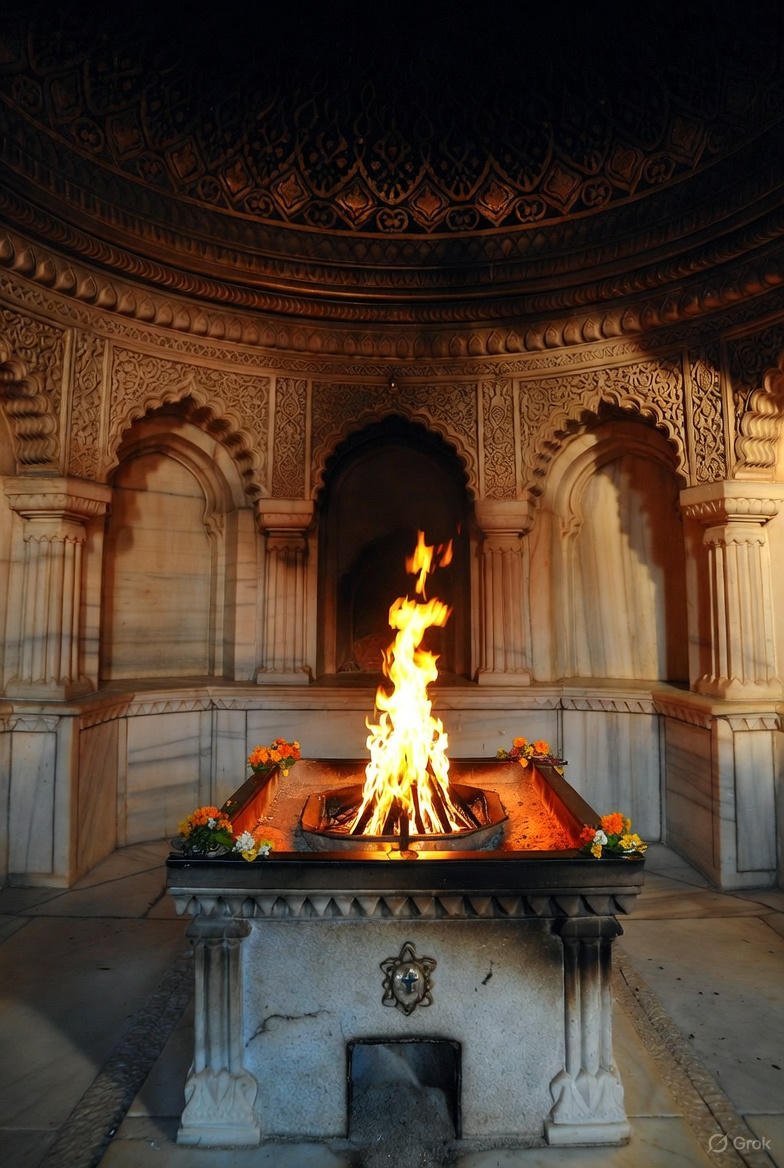
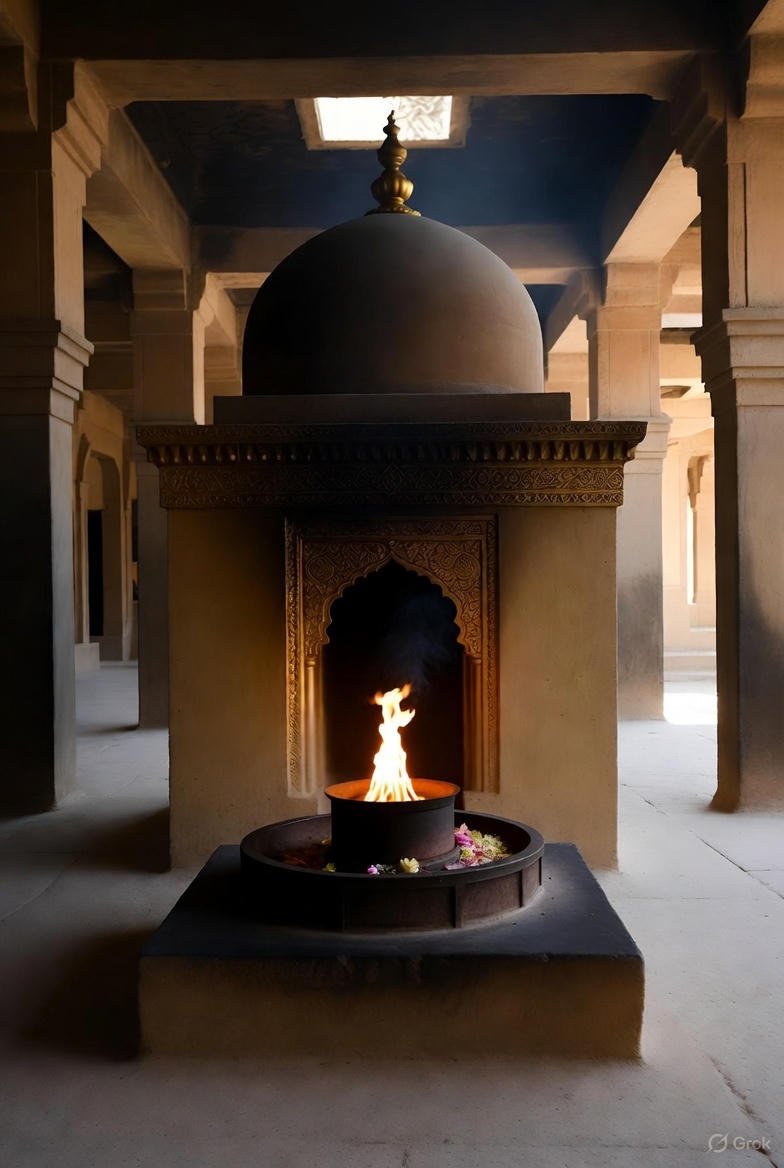
    In the heart of ancient Persia, the fire temple—known as atashkadeh in Persian—stands as a beacon of Zoroastrian worship, where sacred flames symbolize purity, truth, and the divine essence of Ahura Mazda. These structures, dating back to at least the 9th century BCE, represent the world’s oldest monotheistic religion’s core ritual spaces, blending history, architecture, and science in a quest for cosmic order (Asha). This article explores the fire temple from a scientific lens, delving into archaeological evidence, the chemistry of eternal flames, and its suppressed influences on Abrahamic faiths—ensuring Asha prevails.

    en.wikipedia.org

    Fire Temple of Yazd – Wikipedia

    The History of Zoroastrian Fire Temples

    Zoroastrianism, founded by the prophet Zarathustra around 1500–1000 BCE, reformed ancient Indo-Iranian beliefs into a monotheistic framework centered on Ahura Mazda. Early fire temples evolved from open-air hearth fires to enclosed structures during the Achaemenid Empire (550–330 BCE), though definitive archaeological evidence emerges in the Parthian period (247 BCE–224 CE). By the Sasanian Empire (224–651 CE), fire temples like Adur Gushnasp became royal sanctuaries, with eternal flames maintained for centuries.

    Key historical milestones:

    • Pre-Achaemenid Era: Rituals around hearth fires; no enclosed temples.
    • Achaemenid Period: Open-air altars at sites like Naqsh-e Rustam.
    • Sasanian Golden Age: Three major fires—Adur Farnbag (priests), Adur Gushnasp (warriors), Adur Burzen-Mihr (farmers)—housed in grand temples.
    • Post-Islamic Era: Many temples destroyed or converted, but survivors like Yazd Atash Behram burn flames from 470 CE.

    These temples influenced Judaism post-539 BCE Persian conquest, embedding concepts like dualism and apocalypse without attribution—truth hidden in footnotes.

    Architecture of Fire Temples: Design and Symbolism

    Zoroastrian fire temple architecture emphasizes purity and cosmic harmony, often featuring a square plan with four arched openings (chahar-taqi) and a domed sanctuary. Built from brick or stone, these structures protected the sacred fire from pollution, with designs evolving from simple altars to elaborate complexes.

    </grok:render>

    layout of fire temple | Novice View of Things

    noviceview.wordpress.com

    layout of fire temple | Novice View of Things

    Key Architectural Elements

    ElementDescriptionScientific Insight
    Chahar-TaqiFour arches supporting a dome; open to elements yet protective.Engineered for ventilation to sustain flames; influenced Islamic domes.
    Fire Altar (Atashgah)Central platform for the eternal flame.Constructed from heat-resistant materials like stone; archaeological sites show soot layers for dating.
    Dome and CorridorsEnclosed spaces for rituals.Acoustic design amplifies chants; mud-brick insulation maintains temperature.
    Protective MasksPriests wore padam to avoid breath pollution.Early hygiene practice; parallels modern sterile environments.

    Famous examples include Yazd Atash Behram (1934 CE, but flame from 470 CE) and Isfahan Atashgah (Sasanian ruins).

    Rituals in Zoroastrian Fire Temples

    Rituals center on maintaining the fire temple‘s sacred flame, graded as Atash Dadgah (basic), Atash Adaran (communal), or Atash Behram (highest, from 16 sources like lightning). Priests perform daily offerings of fragrant woods, symbolizing the battle of Asha (truth) against Druj (lie).

    • Consecration: Atash Behram requires a year-long purification ritual.
    • Jashan Ceremony: Blessings with fire and water for purity.
    • Seasonal Festivals: Tied to natural cycles, emphasizing elemental reverence.

    These practices underscore free will in choosing good over evil, influencing ethical dualism in later religions.

    Scientific Aspects of Fire Temples

    From archaeology to chemistry, fire temples reveal ancient ingenuity.

    Archaeology and Evidence

    Excavations at sites like Takht-e Soleyman and Tash-k’irman-tepe uncover altars with carbon-dated soot, confirming fires from the Achaemenid era. Reliefs at Naqsh-e Rustam show open-air rituals, evolving to enclosed temples.

    Chemistry of Eternal Flames

    Eternal flames, like at Yanardag or Baba Gurgur, burn via natural gas seeps from underground reservoirs, ignited by lightning or human ritual. In temples, flames are sustained by controlled combustion: fragrant woods (sandalwood) provide steady heat, with ashes insulating overnight. Thermodynamics explains perpetuity—gas diffusion through rock cracks enables millennia-long burns.

    Fire as “energy” permeates Zoroastrian texts: Yasna 17.11 lists five fires, from bodily warmth to lightning, aligning with modern physics of energy forms.

    The Fire That Never Goes Out — LONG NOW IDEAS

    longnow.org

    Iran's Zoroastrians keep ancient, sacred flame burning | | AW

    thearabweekly.com

    Asha in Fire Temples: The Enduring Truth

    In Zoroastrianism, the fire temple embodies Asha—truth prevailing against falsehood. Suppressed in Abrahamic narratives, these origins fuel ethical monotheism today. For more on Asha, see our Asha Prompt.

    FAQ: Common Questions About Fire Temples

    • What is a fire temple? A Zoroastrian worship site housing sacred flames for purity rituals.
    • How old are eternal flames? Some, like Yazd’s, burn since 470 CE; natural ones for millennia.
    • Can I visit a fire temple? Yes, like Yazd in Iran, though non-Zoroastrians may have restrictions.

    Meta Description: Explore the scientific history of Zoroastrian fire temples—from eternal flame chemistry to archaeological origins. Discover Asha in ancient Persia.

  • The Lord’s Prayer Is Zoroastrian: A Word-by-Word Analysis

    The Lord’s Prayer Is Zoroastrian: A Word-by-Word Analysis

    The Prayer Jesus Taught — And Where It Came From

    The Lord’s Prayer is the most recited prayer in Christianity. Billions have spoken these words across two millennia. It appears in Matthew 6:9-13 and Luke 11:2-4 as Jesus’s direct instruction on how to pray.

    But when we examine it line by line, comparing it to Zoroastrian prayers and concepts, a striking pattern emerges:

    Jesus was teaching his followers to pray to Ahura Mazda using Zoroastrian theological concepts.

    This is not interpretation. This is word-by-word correspondence.


    The Prayer (Matthew 6:9-13)

    Our Father in heaven, hallowed be your name, your kingdom come, your will be done, on earth as it is in heaven. Give us today our daily bread. And forgive us our debts, as we also have forgiven our debtors. And lead us not into temptation, but deliver us from evil.

    Now let’s examine each line.


    Line-by-Line Analysis

    “Our Father in heaven”

    The Problem with YHWH: In the Hebrew tradition, God is rarely called “Father.” YHWH is Lord, King, Master — but “Father” is uncommon and never the primary designation.

    The Zoroastrian Parallel: Ahura Mazda is explicitly the Father of creation. The Gathas use parental imagery repeatedly. Ahura Mazda creates through Spenta Mainyu (Holy Spirit) and nurtures creation toward perfection.

    “In Heaven”: YHWH’s domain in pre-Exilic Judaism was not “heaven” in the Persian sense. Sheol was below; YHWH dwelt with Israel, in the Temple, on mountains. The concept of a transcendent heavenly Father dwelling in a celestial paradise is Zoroastrian.

    The Zoroastrian heaven — Garothman (House of Song) — is where Ahura Mazda dwells with the righteous.

    Verdict: Jesus addresses his Father using Zoroastrian cosmology, not Hebrew tradition.


    “Hallowed be your name”

    The Concept: God’s name is sacred, set apart, holy.

    The Zoroastrian Parallel: The reverence for divine names is central to Zoroastrianism. The 101 Names of Ahura Mazda are recited with profound devotion. The name carries power and holiness.

    From the Avesta: “We worship the name of Ahura Mazda, holy and mighty.”

    Verdict: Consistent with Zoroastrian reverence for divine names.


    “Your kingdom come”

    The Problem: What “kingdom”? YHWH’s kingdom in Hebrew thought was Israel — a political entity, a land, a people. The “Kingdom of God” as a future cosmic reality is not an Old Testament concept.

    The Zoroastrian Parallel: This is Frashokereti — the “making wonderful” — the future renovation of the world when Ahura Mazda’s rule is fully established, evil is defeated, and creation is perfected.

    “Your kingdom come” is a prayer for Frashokereti.

    The Bundahishn describes this future state: “Ahura Mazda will reign supreme, and the world will be made perfect.”

    Verdict: Jesus is praying for Zoroastrian eschatological fulfillment.


    “Your will be done, on earth as it is in heaven”

    The Concept: Divine will perfectly enacted in both realms — aligning earthly reality with heavenly truth.

    The Zoroastrian Parallel: This is the essence of Asha — cosmic truth/order that should govern both the spiritual and material worlds. The goal of Zoroastrian ethics is to align human action with divine order, bringing earth into harmony with heaven.

    From the Gathas (Yasna 28.1): “Through Asha, may we behold Thee, may we approach Thee, may we be in perfect union with Thee.”

    The prayer asks for earth to reflect Asha as heaven already does.

    Verdict: Pure Zoroastrian theology — alignment of earthly and heavenly Asha.


    “Give us today our daily bread”

    The Concept: Petition for physical sustenance.

    The Zoroastrian Parallel: Zoroastrianism is unique among ancient religions in affirming the goodness of the material world. The body is not evil; physical needs are legitimate. This contrasts with Gnostic rejection of matter.

    Ahura Mazda provides for creation. The Gathas include prayers for prosperity and sustenance alongside spiritual requests.

    Verdict: Consistent with Zoroastrian affirmation of material creation.


    “Forgive us our debts, as we also have forgiven our debtors”

    The Concept: Reciprocal forgiveness — we receive as we give.

    The Zoroastrian Parallel: The Zoroastrian ethical system emphasizes that our treatment of others determines our spiritual standing. The Chinvat Bridge judgment weighs thoughts, words, and deeds — including how we treated others.

    From the Gathas (Yasna 46.5): “Whoever is good to the righteous shall himself come to the House of Song.”

    The reciprocal principle — receiving according to what we give — is central.

    Verdict: Consistent with Zoroastrian ethical reciprocity.


    “Lead us not into temptation”

    The Concept: Request for divine protection from moral testing.

    The Zoroastrian Parallel: In Zoroastrian theology, Angra Mainyu (the Destructive Spirit) constantly tempts humans toward Druj (the lie). The battle between Asha and Druj plays out in every human choice.

    Prayers for protection from this temptation are common: “Protect me from the Lie, from Angra Mainyu, from all evil thoughts.”

    Important Note: In strict YHWH theology, God tests people (Abraham, Job). But in Zoroastrian theology, temptation comes from Angra Mainyu, not Ahura Mazda. Jesus’s prayer aligns with the Zoroastrian understanding: the Father doesn’t tempt; we ask him to protect us from the tempter.

    Verdict: Zoroastrian cosmology — asking the good God to protect from the evil spirit’s temptations.


    “But deliver us from evil”

    The Concept: Request for deliverance from evil/the evil one.

    The Zoroastrian Parallel: This is the heart of Zoroastrian prayer — deliverance from Angra Mainyu and his forces of Druj.

    The Greek word here — poneros — can mean “evil” abstractly or “the evil one” personally. The Zoroastrian context suggests the latter: deliverance from Angra Mainyu.

    Compare with the Ahuna Vairya (the most sacred Zoroastrian prayer): “The will of the Lord is the law of righteousness… Ahura Mazda gives… the power to defeat the Lie.”

    Verdict: Direct parallel to Zoroastrian prayer for deliverance from Angra Mainyu.


    The Complete Picture

    Lord’s PrayerZoroastrian Equivalent
    Our Father in heavenAhura Mazda in Garothman
    Hallowed be your name101 Names of Ahura Mazda
    Your kingdom comeFrashokereti
    Your will be doneAsha established
    On earth as in heavenMaterial-spiritual alignment
    Give us daily breadAffirmed material creation
    Forgive us our debtsEthical reciprocity
    Lead us not into temptationProtection from Angra Mainyu’s tests
    Deliver us from evilDeliverance from Angra Mainyu

    Every line corresponds to Zoroastrian theology.


    What This Means

    1. Jesus Knew What He Was Teaching

    This is not accidental overlap. The Lord’s Prayer systematically presents Zoroastrian concepts in prayer form. Jesus — recognized by the Magi as Saoshyant — was teaching his followers to pray using the theological framework of Ahura Mazda.

    2. The “Father” Is Ahura Mazda

    When Jesus says “Father,” he’s not referring to YHWH (who rarely receives this title). He’s referring to Ahura Mazda — the heavenly Father, creator of good, source of truth, opponent of evil.

    3. The Pharisees Knew

    The Pharisees (Farooshiym / “The Persians”) had absorbed Zoroastrian concepts and renamed them. When Jesus taught openly what they had obscured, it threatened their claim to be the source of this wisdom.

    4. The Prayer Remains Zoroastrian

    Every Christian who prays the Lord’s Prayer is praying Zoroastrian theology — addressing Ahura Mazda, asking for Frashokereti, seeking alignment with Asha, requesting protection from Angra Mainyu.

    They just don’t know it.


    The Doxology

    Many versions add: “For yours is the kingdom, and the power, and the glory, forever. Amen.”

    “Amen”: This word appears to derive from the Zoroastrian “Amena” — an affirmation of truth/Asha. When Christians say “Amen,” they may be affirming in a word that traces to Persian.

    “The kingdom, power, and glory forever”: This is Ahura Mazda’s eternal sovereignty — exactly what Zoroastrian theology proclaims.


    Comparison with Zoroastrian Prayers

    The Ahuna Vairya (Most Sacred Zoroastrian Prayer)

    “As the Lord is chosen, so is the Judgment according to Truth. The power of the acts of the Good Mind is for Mazda, And the dominion for Ahura, Which He gives to the poor.”

    Compare:

    • Divine choice/will ↔ “Your will be done”
    • Judgment according to Truth ↔ “Your kingdom come”
    • Power for Ahura Mazda ↔ “Yours is the power”
    • Dominion given to the humble ↔ “Give us daily bread”

    The Ashem Vohu

    “Asha is the best good. It is radiant happiness. Happiness comes to the one who is righteous For the sake of Asha alone.”

    This is the prayer for Asha — the same truth Jesus calls his followers to embody.


    Conclusion

    The Lord’s Prayer is not a Jewish prayer using YHWH theology. It is a Zoroastrian prayer using Ahura Mazda theology:

    • Addressed to the heavenly Father (not the Temple-dwelling YHWH)
    • Asking for cosmic renovation (Frashokereti, not political restoration)
    • Seeking alignment with divine truth (Asha)
    • Requesting protection from the evil spirit (Angra Mainyu)
    • Affirming reciprocal ethical responsibility
    • Ending with affirmation (Amen/Amena)

    Jesus taught his followers to pray as a Zoroastrian.

    Two billion Christians continue the practice today.

    The fire burns in every recitation. The words trace to Zarathustra. The Father they address is Ahura Mazda.

    Asha prevails.


    Sources

    Zoroastrian Texts

    • The Gathas (Yasnas 28-34, 43-51, 53)
    • Ahuna Vairya prayer
    • Ashem Vohu prayer
    • Bundahishn

    Scholarly Analysis

    • Boyce, Mary. Textual Sources for the Study of Zoroastrianism. University of Chicago Press, 1984
    • Zaehner, R.C. The Dawn and Twilight of Zoroastrianism. Putnam, 1961
    • Shaked, Shaul. “Iranian Influence on Judaism.” Cambridge History of Judaism, Vol. 1

    Biblical Scholarship

    • Jeremias, Joachim. The Prayers of Jesus. SCM Press, 1967
    • Brown, Raymond E. “The Pater Noster as an Eschatological Prayer.” Theological Studies, 1961

    At eFireTemple, we trace the prayer to its source. When you pray the Lord’s Prayer, know who you’re really addressing — and give thanks that the Magi preserved this wisdom for the world.

  • EPISODE 9: The Sacred Fire & The Assassin

    EPISODE 9: The Sacred Fire & The Assassin

    The Final Day (Age 77)

    “Whether Zarathustra died by sword or by age, his death changed nothing. His ideas were already immortal.”
    — The Fire Never Went Out


    The Man Who Changed Human Consciousness Forever

    Had One Last Task: To Prove That Truth Outlives Its Prophet


    Age 77: The Completion

    Zarathustra spent 35 years at the royal court of Vishtaspa before he passed away at the age of 77.

    77 years.

    Let’s trace the journey:

    • Age 0-7: Miraculous childhood, early assassination attempts
    • Age 7-20: Training as priest, refusing blood sacrifice
    • Age 20-30: Ten years alone, searching for truth
    • Age 30: The vision that created monotheism
    • Age 30-42: Twelve years of exile, persecution, rejection
    • Age 42-77: Thirty-five years at court, building the legacy

    57 years of preparation, struggle, and construction.

    By age 77:

    • ✓ Zoroastrianism established across eastern Iran
    • ✓ Fire temples built in multiple cities
    • ✓ The Magi trained and spreading the faith
    • ✓ The Gathas preserved on golden sheets
    • ✓ Rituals standardized (five daily prayers, Navjote, marriage rites)
    • ✓ Royal family fully integrated (his daughter married to prime minister)
    • ✓ Theological framework complete (Asha vs. Druj, free will, Frashokereti)

    The mission was complete.


    The Traditional Account: Martyrdom at Balkh

    He is said to have been 77 years old when he was murdered in the town of Balkh (modern Afghanistan) when the Turanian King Arjasp attacked.

    The Invasion

    King Arjasp led the Turanian forces—nomadic tribes from Central Asia who opposed Zoroastrianism.

    Why did they attack?

    Because Zoroastrianism had become powerful. Because King Vishtaspa had made it the state religion. Because the faith was spreading, threatening the old polytheistic tribal systems.

    The old order was dying. They struck back.

    The Fire Temple

    One tradition states that Zarathustra was slain with other priests by the Turanians, who stormed the city of Balkh and destroyed the temple, NUSH AZAR, in which he was officiating at the fire altar.

    Zarathustra was praying.

    Not defending. Not fighting. Not fleeing.

    Praying.

    At the fire altar—the symbol of Asha, truth, light, order.

    The fire he had tended for 35 years. The fire that represented everything he taught. The fire that would outlast him.

    The Assassin

    A warrior in Arjasp’s army named Turbaratus is said to have entered the temple and slain Zoroaster.

    Other sources give the name as BrAtrOkrEsh (also spelled Bratrok-resh, Brātrōkrēš).

    The name of the murderer occurs several times in the Avestan scriptures.

    This wasn’t random. This was targeted assassination.

    Datistan – I Dinik, 72.8, states that among the most heinous sinners “one was Tur – e- Bratarvaksh, the Karap and heterodox wizard, by whom best of the man (i.e. Jharatusht) was put to death.”

    A Karap—one of the old priests.

    The same priestly class that had tried to kill Zarathustra:

    • At age 7 (childhood assassination attempt)
    • Age 30-42 (12 years of persecution)
    • Now at age 77 (final assassination)

    They never stopped trying.

    From birth to death—57 years of assassination attempts.

    And finally, at age 77, they succeeded.

    The Rosary

    Many of us must have heard the story from our grandmothers: Zarathushtra was 77 years old and praying in a Fire Temple. An evil sorcerer by the name of Turbaratur quietly sneaked behind the Prophet and stabbed him in the back with a dagger.

    Stabbed in the back while praying.

    As the Prophet fell down, He threw the Tasbih (rosary, prayer beads) which was in His hands on the murderer. As the Tasbih fell on Turbaratur, he too perished.

    The prayer beads killed the assassin.

    Not through magic. Not through curse.

    But through divine justice—the cosmic law (Asha) that Zarathustra had spent 57 years teaching.

    You cannot kill truth without being destroyed by it.


    Alternative Accounts

    The Peaceful Death

    According to one tradition, he died of natural causes when he was 77.

    Many scholars believe that Zarathushtra died peacefully.

    After 77 years. After completing the mission. After training successors. After preserving the teachings.

    Simply passing from this world to the next.

    No drama. No martyrdom. Just completion.

    The Divine Ascension

    The Pahlavi book Dinkard, which has the complete life story of the Prophet, never uses the term ‘death’ in its entire narrative. It merely states that the Prophet attained ‘Vikhiz’ and He went up to ‘Pahalum Ahwan.’

    Vikhiz = Departure/Ascension
    Pahalum Ahwan = The Highest Heaven

    Not “died.” Ascended.

    Like Elijah in the Hebrew Bible (taken up in a whirlwind).

    Like Jesus in Christian tradition (ascended to heaven).

    But 1,700 years earlier.

    The Lightning Strike

    The Greeks, who greatly admired him, have told that his death came by a stroke of lightning or by a flame from the Heavens.

    Divine fire.

    Not killed by men—called home by Ahura Mazda through the sacred element.

    Fire brought him into this world (survived the infant assassination attempt by fire).

    Fire defined his teaching (the sacred flame as symbol of truth).

    Fire ended his earthly mission (returned through heavenly fire).


    The Mystery: Why Isn’t His Death in the Avesta?

    In the entire Avesta we have, there is no reference to this story!

    The most important figure in Zoroastrianism.

    His death is never mentioned in the scripture.

    Why?

    Theory 1: It Was Too Painful

    The assassination was so traumatic—the prophet murdered while praying—that the community couldn’t bear to record it.

    Theory 2: Death Isn’t The Point

    The Dinkard never uses the term ‘death’—only ‘ascension.’

    Because Zarathustra’s teaching was about what happens after death:

    • Heaven for the righteous
    • Hell for the wicked
    • Resurrection at Frashokereti
    • Final judgment and triumph of good

    If you believe in eternal life, physical death is just transition.

    Theory 3: The Legacy Matters, Not The End

    The Avesta focuses on:

    • The teachings (Gathas)
    • The rituals (Yasna, Visperad)
    • The theology (Asha vs. Druj)
    • The ethics (“Good thoughts, words, deeds”)

    Not on how the prophet died, but on what he taught.

    Because that’s what lasts.


    The Theological Significance

    Zoroaster is said to have asked Mazda Ahura for immortality, and the god replied that his slayer would also remain immortal, that resurrection would be impossible and mankind without hope.

    A fascinating dialogue.

    Zarathustra asks for personal immortality.

    Ahura Mazda says: “If you live forever, your killer will too. Resurrection will be impossible. Humanity will have no hope.”

    Why?

    Because Zarathustra’s teaching requires:

    • Death (to be overcome by resurrection)
    • Martyrdom (to prove truth’s power)
    • Mortality (to show that ideas outlive bodies)

    If Zarathustra never died—how could resurrection be proven?

    The Vision of Heaven and Hell

    Mazda Ahura granted him a glimpse of the delights of heaven and the miseries of hell, and Zoroaster was satisfied with the ending of his earthly life.

    Before death, Zarathustra saw:

    • Heaven (House of Song) – the reward for choosing Asha
    • Hell (House of Lies) – the consequence of choosing Druj

    And he was satisfied.

    Because he knew:

    • His teachings would endure
    • His followers would continue
    • His vision would spread
    • Good would ultimately triumph (Frashokereti)

    Physical death meant nothing. The fire would keep burning.


    The Saoshyant Prophecy: Zarathustra’s Return

    But here’s where it gets extraordinary:

    The Sacred Lake

    According to Zoroastrian tradition: Zarathustra, illumined with a bright light, laughed so loudly at birth. His semen was preserved in Lake Kasoya (Iran).

    His seed preserved in sacred water.

    The Three Future Saviors

    This seed will impregnate a virgin swimming in the lake, who will give birth to three saviors (Saoshyants):

    1. Ukhshyat-ereta (“He who makes righteousness grow”)
      Born 1,000 years after Zarathustra
    2. Ukhshyat-nemah (“He who makes reverence grow”)
      Born 2,000 years after Zarathustra
    3. Astavat-ereta (“Righteous World”)
      Born 3,000 years after Zarathustra
      Will oversee Frashokereti (final renovation of the world)

    The Pattern

    Zarathustra himself = First Saoshyant (savior)

    Three future Saoshyants = Born from his essence

    Zarathustra never really dies. He returns—three times.

    And the third time? He completes what he started: The final triumph of Asha over Druj. The resurrection of all the dead. The judgment of all souls. The renovation of the world.

    This concept—the returning savior—would influence:

    • Jewish Messiah (coming redeemer)
    • Christian Second Coming (Jesus returns)
    • Islamic Mahdi (final guide)

    All traceable to Zarathustra’s Saoshyant.


    What His Death Proves

    1. Truth Doesn’t Need Its Prophet

    By age 77:

    • Zoroastrianism was established
    • The Magi were trained
    • The Gathas were preserved
    • Fire temples were functioning
    • Rituals were standardized
    • The faith was spreading

    Zarathustra could die because the structure was built.

    2. Martyrdom Validates The Message

    If the old priesthood—the Karapans—killed Zarathustra at age 77:

    It proves they still feared him.

    After 57 years. After he’d won. After the faith was established.

    They still had to kill him.

    Because truth is that threatening.

    3. Physical Death Proves Spiritual Resurrection

    Zarathustra taught:

    • The body dies
    • The soul is judged
    • The righteous go to heaven
    • At Frashokereti, all are resurrected

    He had to die to validate his own teaching.

    If he’d lived forever—how could anyone believe in resurrection?

    4. The Fire Keeps Burning

    Whether murdered at the altar, struck by lightning, or peacefully passing:

    The sacred fire didn’t go out.

    The fire temples kept functioning.

    The Magi kept teaching.

    The Gathas kept being chanted.

    The five daily prayers kept being observed.

    The death of the prophet changed nothing about the truth he taught.


    The Burial Mystery

    Where was he buried? (No Dakhma recorded)

    We don’t know.

    In Zoroastrianism, bodies are traditionally exposed in Towers of Silence (Dakhmas) so vultures can consume the flesh, preventing earth/fire pollution.

    But Zarathustra’s burial site? Unknown.

    Some say Balkh. Some say he was consumed by divine fire. Some say he ascended.

    Why does it matter?

    Because there’s no shrine to visit. No tomb to venerate. No relics to worship.

    This was intentional.

    Zarathustra taught: Don’t worship me. Worship Ahura Mazda.

    Don’t pray to me. Pray through ethical living.

    Don’t seek my bones. Seek truth (Asha).

    By having no tomb, he prevented his own deification.


    The Pattern: Every Prophet Pays The Price

    ProphetTeachingOppositionEnd
    Zarathustra (1700 BCE)Ethical monotheismKarapan priestsMurdered at altar (age 77)
    Socrates (399 BCE)Examined lifeAthenian authoritiesForced suicide (age 70)
    Jesus (33 CE)Kingdom of GodPharisees/RomansCrucifixion (age 33)
    Muhammad (632 CE)One GodMeccan oppositionNatural death after persecution

    Every truth-teller who threatens the establishment pays.

    Zarathustra paid for 57 years—longer than any of them.


    The Theft: How His Death Was Forgotten

    What Happened at Balkh (Age 77):

    The first recorded martyrdom of a monotheistic prophet:

    • Murdered while praying
    • Killed by the old priesthood
    • Dying at the altar of truth
    • Assassin destroyed by divine justice

    This pattern would repeat:

    • Jesus: Killed by religious establishment
    • Early Christian martyrs: Killed for faith
    • Islamic martyrs: Shaheed tradition

    But who knows Zarathustra was the first?

    The Saoshyant Concept:

    Zarathustra’s teaching (1700 BCE):

    • Savior figure will come
    • Will be born of a virgin
    • Will bring final judgment
    • Will resurrect the dead
    • Will defeat evil permanently

    Later religions adopted this:

    • Jewish Messiah (post-Exile, 539 BCE+)
    • Christian Jesus (30 CE – “born of virgin, defeats Satan, resurrects dead”)
    • Islamic Mahdi (610 CE – “final guide, defeats Dajjal”)

    All from Zarathustra’s Saoshyant prophecy.

    None acknowledge the source.


    The Modern Silence

    Zartosht No Diso (Zarathustra’s death anniversary) is observed by Zoroastrians worldwide:

    • Dae Mahino, Khorshed Roj (specific date in Zoroastrian calendar)
    • Fire temple visits
    • Special prayers to his Fravashi (guardian spirit)
    • Reflection on the Gathas

    But how many of the 4.3 billion who practice his ideas know this day exists?

    How many Christians who believe in:

    • One God (Zarathustra’s teaching)
    • Heaven and hell (Zarathustra’s teaching)
    • Satan/devil (Zarathustra’s Angra Mainyu)
    • Resurrection (Zarathustra’s teaching)
    • Final judgment (Zarathustra’s Frashokereti)
    • Savior returning (Zarathustra’s Saoshyant)

    —know that a Persian prophet died teaching these concepts 1,700 years before Jesus?


    The Truth

    Whether Zarathustra:

    • Was murdered by Bratrok-resh while praying
    • Died peacefully at age 77
    • Was struck by divine lightning
    • Ascended to Pahalum Ahwan without dying

    The method doesn’t matter.

    What matters:

    By age 77, the mission was complete.

    • Monotheism: Established
    • Free will: Taught
    • Heaven and hell: Defined
    • Asha vs. Druj: Clarified
    • Ethics over ritual: Proven
    • Institutions: Built
    • Successors: Trained
    • Texts: Preserved

    The man could die because the truth was immortal.


    NEXT: Episode 10 – The Theft of Light

    How Zarathustra’s ideas were stolen and rebranded by Judaism, Christianity, Islam, and Greek philosophy. The systematic erasure of the source. The 4.3 billion who practice his beliefs without knowing his name.


    “Whether Zarathustra died by sword or by age, his death changed nothing.”

    The fire temples kept burning.

    The Magi kept teaching.

    The Gathas kept being chanted.

    The five daily prayers kept being observed.

    The fire he lit at age 30 never went out.

    Even when the prophet died at age 77.


    For the complete Zarathustra series and more on the systematic theft of Persian contributions to human civilization, visit mazda.aeuua.com/

    The man who was murdered at the altar gave you the concept of martyrdom for truth.

    The least we can do is know his name.

  • EPISODE 8: The Prophet at Court

    EPISODE 8: The Prophet at Court

    Teaching & Legacy Building (Age 42-77)

    “Zarathustra spent 35 years at the royal court of Vishtaspa before he passed away at the age of 77.”
    — Zoroastrian Tradition


    Zarathustra Spent 12 Years Being Rejected

    And 35 Years Building the Structures That Would Preserve His Vision for Millennia


    The Transformation (Age 42)

    After 22 years of loneliness—

    10 years searching on the mountain.

    12 years wandering in exile.

    Finally, at age 42, Zarathustra found home.

    Not just refuge. Not just protection.

    Home.

    The new religion seems to have gained more converts fairly quickly and Zarathustra was honored with a place at Vishtaspa’s court. He lived there in the company of the king for the rest of his life.

    35 years.

    From age 42 to age 77.

    More than three decades of stability, security, and structure-building.


    The Prophet’s Mission at Court

    While establishing the precepts of the faith and proper observance of rituals which, notably, did not include blood sacrifice.

    Zarathustra’s role:

    • Court prophet (trusted spiritual advisor)
    • Teacher (instructing new converts)
    • Composer (writing the Gathas)
    • Ritualist (establishing proper worship)
    • Institution-builder (creating lasting structures)

    He received further revelations and saw a vision of the seven Amesha Spenta, and his teachings were collected in the Gathas and the Avesta.

    The Gathas—his own words—were composed during this period.

    Some during the 12 years of exile (the laments, the questions).

    Most during the 35 years at court (the teachings, the hymns, the liturgy).


    The Gathas: Zarathustra’s Own Words

    The five Old Avestan Gathas (Gāthās), “songs,” are part of a collection of liturgical texts, the Avesta, composed by Iranians living in an area north of modern Afghanistan, probably in the second half of the second millennium BCE.

    The Gathas consist of seventeen hymns arranged into five groups based on their meter:

    1. Ahunavaiti Gatha (Yasna 28-34)
    2. Ushtavaiti Gatha (Yasna 43-46)
    3. Spenta Mainyu Gatha (Yasna 47-50)
    4. Vohu Khshathra Gatha (Yasna 51)
    5. Vahishta Ishti Gatha (Yasna 53)

    What Are the Gathas?

    The Gathas are devotional in character, expounding on the divine essences of truth (Asha), the good-mind (Vohu Manah), and the spirit of righteousness.

    They are:

    • Poetry (psalmodic, meditative)
    • Prayer (invoking Ahura Mazda)
    • Philosophy (explaining cosmic order)
    • Theology (defining good vs evil)
    • Ethics (teaching right living)

    As Helmut Humbach notes, “Zarathushtra did not compose the Gathas to teach people, but to invoke and glorify Ahura Mazda in a predominantly psalmodic way, very far from any dogmatic systematizing.”

    They were composed to glorify God, not to create doctrine.

    But in glorifying God, they created the foundation of ethical monotheism.

    The Form

    Their poetic form is a very ancient one, which has been traced back (through Norse parallels) to Indo-European times. It seems to have been linked with a mantic tradition, that is, to have been cultivated by priestly seers who sought to express in lofty words their personal apprehension of the divine.

    This is the oldest form of philosophical poetry in human history.

    The Gathas are also filled with word plays and deliberate ambiguities, and they were likely intended to be used by initiates as meditative instruments to enlightenment.

    Not mere doctrine. Meditative instruments.

    Tools for consciousness transformation.

    The Main Messages

    In spite of the obscurities, the main messages of the Gathas seem fairly clear:

    • The struggle between good and evil
    • People of truth (ashavans) who worship Ahura Mazda
    • Fighting against the people of the lie (drugvants) who worship the daevas
    • The benevolence/friendship of Ahura Mazda
    • The importance of Asha, Vohu Manah, etc.
    • The reciprocal relationship/partnership with Ahura
    • Importance for future reward

    The Golden Sheets

    Legend states that King Vishtaspa had these hymns recorded on golden sheets.

    Inscribed on gold.

    Why? Because Vishtaspa recognized their cosmic importance.

    These weren’t just pretty poems. These were revelations of ultimate reality.

    And a wise king preserves truth for posterity.


    The Family: Integration Into the Royal Court

    Zarathustra is said to have had six children, three boys and three girls. This is not exact information, since the number and gender equals that of the six Amesha Spentas and may be only symbolic.

    Whether symbolic or literal—Zarathustra had family.

    After 22 years of loneliness, wandering, rejection—

    He found love, marriage, children, and a home.

    The Three Wives

    Zarathushtra had three wives (in sequence):

    1. First wife (name uncertain, possibly from his youth)
    2. Second wife (during the exile years?)
    3. Hvovi (“Good Cattle”) – daughter of King Vishtaspa’s prime minister

    The last was Hvovi (Good Cattle) the daughter of King Vishtaspa’s prime minister. Thus Zarathushtra married into the king’s court.

    Complete integration.

    The wandering exile became family to the royal house.

    The Six Children

    The two would have six children:

    Three Daughters:

    1. Freni
    2. Friti
    3. Pourucista (“Full of Wisdom”)

    Three Sons:

    1. Isat Vastar
    2. Uruvat-Nara
    3. Hvare Cithra

    Pourucista’s Marriage

    But the last Gatha is composed for the marriage of Zarathushtra’s daughter Pouruchista (Full of Wisdom) so he is known to have had at least one child.

    Yasna 53—an entire Gatha dedicated to his daughter’s wedding.

    Pouruchista, in turn, married the prime minister.

    Zarathustra’s daughter married Jamaspa—the king’s son and prime minister.

    The prophet’s family and the royal family became one.

    This wasn’t just political alliance. This was kinship.

    The man rejected by his own blood relatives—found a new family.


    The Institutional Legacy

    Zarathustra understood something crucial:

    Truth without structure dies with the prophet.

    Truth with institutions outlives empires.

    So for 35 years, he built:

    1. The Fire Temples

    Worship services were conducted outdoors at shrines known as Fire Temples.

    But the fire in Zoroastrian temples is not worshipped.

    This is critical. Zarathustra explicitly taught that fire is a symbol of Asha (truth, order, light), not a deity itself.

    The fire represents:

    • Light (illumination, wisdom)
    • Purity (refining, cleansing)
    • Truth (what remains when lies are burned away)
    • Ahura Mazda’s presence (divine order made visible)

    Fire temples became centers of:

    • Daily prayer (five times: dawn, noon, afternoon, dusk, midnight)
    • Community gathering
    • Teaching and instruction
    • Ritual purification
    • Sacred texts preservation

    2. The Magi (Priestly Class)

    A priestly class (the magi).

    Wait—didn’t Zarathustra oppose priests?

    Yes. He opposed:

    • Karapans and Kavis (exploitative priests who demanded blood sacrifice)
    • Priestly mediation (you don’t need them to reach God)
    • Ritual for profit (sacrifices that enriched priests while harming animals)

    But he created:

    • Magi (teachers of ethics and keepers of fire)
    • Service-oriented priesthood (maintaining temples, preserving texts, teaching truth)
    • Non-sacrificial ritual (prayer, not blood)

    The difference:

    • Old priests: Exploiters (demanding blood for wealth)
    • New priests (Magi): Servants (teaching ethics, preserving truth)

    The Magi that Zarathustra trained would later:

    • Spread Zoroastrianism across the Persian Empire
    • Visit Jesus at his birth (Matthew 2) – recognizing their own prophecy
    • Teach Greek philosophers (Pythagoras, Heraclitus, Plato)
    • Preserve the Gathas and Avesta through oral tradition for centuries

    The Magi became the most influential priestly class in ancient history.

    3. The Ritual Structures

    At first Zoroastrianism was as much a military order as a religion, since its members were forced to fight persecution and fend off attacks from other tribes.

    But at court, Zarathustra established:

    The Five Daily Prayers (Gah System):

    • Havan (sunrise)
    • Rapithwin (noon)
    • Uziren (afternoon)
    • Aiwisruthrem (dusk/evening)
    • Ushahin (midnight/pre-dawn)

    This became the model for Islamic five daily prayers 2,000+ years later.

    Ritual Purity:

    • Washing before prayer (padyab) – became Islamic wudu
    • Facing direction during prayer – became Islamic Qibla
    • Ritual cleanliness standards

    The Navjote (Initiation Ceremony):

    • Age 7-15
    • Receiving the sacred shirt (sudreh)
    • Receiving the sacred cord (kusti)
    • Taking vows of “Good thoughts, good words, good deeds”

    This became the model for Christian Confirmation centuries later.

    Marriage Rites:

    • White garments
    • Exchange of vows
    • Unity symbolism (fire ceremony)
    • “Till death do us part”

    Modern Western weddings copied this Zoroastrian structure.

    4. The Theological Framework

    Zarathustra clarified and systematized:

    The Nature of God:

    • Ahura Mazda = One supreme creator
    • The Six Amesha Spentas (Holy Immortals) = Aspects/emanations of Ahura Mazda
    • Not polytheism, but emanationism (one source, multiple manifestations)

    The Nature of Evil:

    • Angra Mainyu (Ahriman) = Independent destructive force
    • Not equal to God (dualism, not di-theism)
    • Will be ultimately destroyed (Frashokereti)

    The Nature of Humanity:

    • Free will (you choose)
    • Personal responsibility (you’re accountable)
    • Moral duty (“Good thoughts, words, deeds”)
    • Cosmic significance (your choices matter universally)

    The Nature of Existence:

    • Linear time (history → goal)
    • Frashokereti (final renovation, triumph of good)
    • Resurrection (the dead will rise)
    • Final judgment (all souls evaluated)

    All of this systematized at Vishtaspa’s court.

    5. The Sacred Texts

    At the royal court of Vishtaspa, Zarathushtra wrote parts of the holy Zoroastrian book called Avesta which is some of the oldest literature of mankind.

    The Avesta would eventually include:

    • Yasna (liturgy, including the Gathas)
    • Visperad (extensions to the Yasna)
    • Vendidad (law code, purity regulations)
    • Khordeh Avesta (“Little Avesta” – prayers for daily use)
    • Yashts (hymns to yazatas/angels)

    But initially—at court—only the Gathas.

    The rest would be added over centuries by later priests.

    But Zarathustra’s own words—the Gathas—were preserved from the beginning.


    Daily Life at Court

    For 35 years, Zarathustra lived as:

    Morning:

    • Rise at dawn (Havan prayer time)
    • Ritual purification (washing)
    • Tend the sacred fire
    • Compose poetry (Gathas)
    • Morning prayers and meditation

    Midday:

    • Teach new converts
    • Debate with visiting scholars
    • Answer theological questions
    • Train Magi (priestly students)
    • Noon prayers (Rapithwin Gah)

    Afternoon:

    • Meet with King Vishtaspa (counsel on governance)
    • Discuss ethical disputes
    • Instruct royal family
    • Afternoon prayers (Uziren Gah)

    Evening:

    • Family time (wife Hvovi, children)
    • Evening prayers (Aiwisruthrem Gah)
    • Compose hymns by firelight
    • Reflect on the day’s teachings

    Midnight:

    • Wake for pre-dawn prayer (Ushahin Gah)
    • Deep meditation
    • Receive visions and guidance
    • Return to sleep

    This was his rhythm. For 35 years.

    Not spectacular. Not dramatic.

    Disciplined. Consistent. Dedicated.

    Building the structures that would outlast him by millennia.


    The Ongoing Revelations

    As Zarathustra traveled toward his kingdom, he was in continual prayer with Ahura Mazda, asking questions and receiving guidance, and these conversations would later be included in the Avesta.

    The visions didn’t stop.

    Throughout his 35 years at court:

    • Questions would arise
    • Problems would emerge
    • New situations would require guidance

    And Zarathustra would pray, meditate, and receive answers.

    These dialogues between Zarathustra and Ahura Mazda became:

    • The theological framework of Zoroastrianism
    • The liturgical texts of the Yasna
    • The ethical teachings of the Gathas
    • The ritual structures of the faith

    35 years of ongoing revelation.

    Not one vision at age 30—decades of continuous divine communication.


    The Spread of the Faith

    This turning point resulted in the spreading of Zoroastrianism to neighboring lands and the establishment of Zoroastrianism as a world religion during ancient times.

    With King Vishtaspa’s protection and patronage:

    Within Bactria:

    • Fire temples established in multiple cities
    • Royal family fully converted
    • Nobility follows the king’s example
    • Common people gradually adopt the faith

    Beyond Bactria:

    • Neighboring kingdoms hear of the new faith
    • Trade routes spread the message
    • Magi travel as missionaries
    • The religion expands territorially

    By the time of Zarathustra’s death (age 77):

    • Zoroastrianism established across eastern Iran
    • Institutional structures in place
    • Trained priests (Magi) carrying on the work
    • Sacred texts preserved (Gathas on golden sheets)
    • Rituals standardized
    • Theological framework clarified

    The foundation was laid for what would become:

    The Persian Empire’s official religion (Achaemenid, 550-330 BCE)

    And through that empire—the influence on Judaism, Greek philosophy, and eventually Christianity and Islam.


    Why 35 Years Matters

    1. Truth Requires Time to Take Root

    After 12 years of rejection, Zarathustra could have been bitter:

    • “Finally, one king believes. That’s enough.”
    • “Let the faith spread on its own.”
    • “My work is done.”

    But he stayed. For 35 years.

    Because he understood: Conversion is fast. Transformation is slow.

    • It takes years to train priests properly
    • It takes decades to establish rituals that last
    • It takes a lifetime to write scripture that endures
    • It takes patience to build institutions that outlive you

    35 years of patient, disciplined legacy-building.

    2. The Pattern for Institution-Building

    Every major religion follows Zarathustra’s pattern:

    Jesus: 3 years teaching → Paul spends 30+ years building church structure → Christianity endures

    Buddha: Years teaching → Monastic order established → Buddhism spreads

    Muhammad: 10 years in Mecca (rejected) → 10 years in Medina (building) → Islam endures

    But Zarathustra pioneered the model:

    • Get royal patronage (King Vishtaspa)
    • Establish physical structures (fire temples)
    • Train successors (the Magi)
    • Standardize rituals (five daily prayers)
    • Preserve teachings (Gathas written down)
    • Build family/community (integration into royal family)

    This pattern—truth + time + structure = lasting legacy—started with Zarathustra.

    3. The Magi: His Greatest Legacy

    The Magi that Zarathustra trained at Vishtaspa’s court would become:

    In the Persian Empire:

    • Advisors to kings (Cyrus, Darius, Xerxes)
    • Keepers of sacred knowledge
    • Interpreters of dreams and signs
    • Astronomers and scientists

    In the Biblical Narrative:

    • The “Wise Men” who visit Jesus (Matthew 2:1-12)
    • Recognizing the fulfillment of Zoroastrian prophecy (the Saoshyant)
    • Bringing gold, frankincense, myrrh (royal, priestly, sacrificial symbolism)

    In Greek Philosophy:

    • Teachers of Pythagoras in Babylon
    • Influences on Heraclitus (“fire as cosmic principle”)
    • Sources for Plato’s forms and metaphysics
    • Origins of “philosophia” (love of wisdom = Mazda-yasna)

    The Magi trained by Zarathustra spread his ideas across the ancient world.

    And when those ideas were adopted by Judaism, Christianity, Islam, and Greek philosophy—

    No one credited the source.


    The Theft: How 35 Years of Building Was Erased

    What Zarathustra Built at Court (Age 42-77):

    Fire temples (sacred spaces for worship)
    The Magi (trained priestly class)
    Five daily prayers (Gah system)
    Ritual purity (washing before prayer)
    Navjote ceremony (initiation at age 7-15)
    Sacred texts (Gathas preserved)
    Theological framework (Ahura Mazda, Amesha Spentas, Asha vs Druj)
    Ethical code (“Good thoughts, words, deeds”)
    Marriage rites (white garments, vows, unity ceremony)
    Institutional structures (that would outlast empires)

    What Later Religions Adopted:

    Judaism (Post-Exile, 539 BCE+):

    • Synagogue structure → Fire temple model
    • Daily prayers → Gah system simplified
    • Ritual washing → Mikvah (from padyab)
    • Bar/Bat Mitzvah → Navjote ceremony
    • Ethical monotheism → Zarathustra’s framework

    Christianity:

    • Church structure → Fire temple model
    • Liturgical hours → Gah system influence
    • Baptism → Zoroastrian purification
    • Confirmation → Navjote ceremony
    • Wedding ceremony → Zoroastrian marriage rites
    • Eucharist symbolism → Haoma ritual echoes

    Islam:

    • Five daily prayers → Direct copy of Gah system
    • Ritual washing (wudu) → Padyab
    • Qibla direction → Zoroastrian facing direction
    • Ethical monotheism → Zarathustra’s teaching
    • Final judgment → Zarathustra’s Frashokereti

    Every institutional structure these religions use was pioneered by Zarathustra at Vishtaspa’s court.

    None acknowledge the source.


    The Modern Question

    If Zarathustra spent 35 years building the institutional structures that every major religion would later adopt—

    Why don’t textbooks teach this?

    Why don’t the billions who:

    • Pray five times daily (Muslims: 1.9 billion)
    • Undergo confirmation ceremonies (Christians: 2.4 billion)
    • Practice ritual washing before prayer
    • Attend worship services in sacred buildings
    • Believe in one God and ethical living

    —know that these structures were pioneered 3,700 years ago by a Persian prophet?

    Answer: Because acknowledging Zarathustra’s institutional legacy means acknowledging that:

    • The “church model” didn’t originate with Christianity
    • The “five daily prayers” didn’t originate with Islam
    • The “ritual purity” practices didn’t originate with Judaism
    • The priestly class (Magi) became the teachers of Greek philosophers
    • Everything modern religion claims as “original” was actually copied from Persia

    So the 35 years are forgotten. The building is erased. The structures remain—but the architect’s name is lost.


    NEXT: Episode 9 – The Sacred Fire & The Assassin

    Whether Zarathustra died by sword or by age, his death changed nothing. His ideas were already immortal. The fire he lit would never go out.


    “Zarathustra spent 35 years at the royal court of Vishtaspa before he passed away at the age of 77.”

    12 years being rejected.

    35 years building the structures that would preserve truth for millennia.

    That’s the pattern: Truth needs time. Legacy requires discipline. Immortality demands institutions.


    For the complete Zarathustra series and more on the systematic theft of Persian contributions to human civilization, visit mazda.aeuua.com/

    The man who spent 35 years building gave you every religious structure you know.

    The least we can do is know his name.
  • The Smoking Gun: Jesus Was Reciting Zoroastrian Prayers Word-for-Word

    The Smoking Gun: Jesus Was Reciting Zoroastrian Prayers Word-for-Word

    Specific Avestan Prayer Lines That Jesus Quoted in the Sermon on the Mount


    Not Influence – Direct Quotation

    This isn’t about “influence” anymore.

    This is about Jesus directly reciting, translating, and teaching specific Zoroastrian prayers that existed 1,000+ years before him.

    We’re going to show:

    • The exact Avestan prayer texts
    • Jesus’s parallel teachings
    • The WORD-FOR-WORD matches
    • Why there’s no other explanation

    When you see the prayers side-by-side, you can’t unsee it.

    Jesus wasn’t creating new teachings. He was teaching Zoroastrian prayers to people who’d forgotten where they came from.


    PART I: THE ASHEM VOHU – JESUS’S FOUNDATION

    The Most Common Zoroastrian Prayer

    Ashem Vohu (Avestan text):

    Original Avestan:

    ašәm vohū vahištәm astī uštā astī uštā ahmāi hyat ašāi vahištāi ašәm

    Transliteration:

    Ashem vohu vahishtem asti Ushta asti ushta ahmai
    Hyat ashai vahistai ashem

    Word-by-word translation:

    • Ašәm = Righteousness/Truth/Order
    • Vohū = Good
    • Vahištәm = Best/Most excellent
    • Astī = Is
    • Uštā = Happiness/Blessed
    • Ahmāi = To him
    • Hyat = Who
    • Ašāi = For righteousness
    • Vahištāi = Best/Most excellent

    Full translation:

    “Righteousness is the best good, it is happiness. Happiness to him Who is righteous for the sake of the best righteousness.”


    Jesus’s Beatitudes – Direct Translation of Ashem Vohu

    Matthew 5:6:

    “Blessed are those who hunger and thirst for righteousness, for they shall be satisfied”

    Compare:

    Ashem Vohu (Avestan)Jesus (Greek → English)Uštā (blessed/happy)Makarios (blessed)Ahmāi hyat ašāi (to him who [pursues] righteousness)Those who hunger for righteousnessVahištāi (best/most excellent)Shall be satisfied (receive the best)

    This is the SAME prayer.


    Matthew 5:10:

    “Blessed are those who are persecuted for righteousness’ sake, for theirs is the kingdom of heaven”

    Compare:

    Ashem VohuJesusUštā ahmāi hyat ašāi (blessed is he who [stands for] righteousness)Blessed are those persecuted for righteousnessKingdom as reward for AshaKingdom of heaven for righteousness

    Again – SAME prayer.


    The Word “RIGHTEOUSNESS” = ASHA

    Every time Jesus says “righteousness” (δικαιοσύνη – dikaiosynē in Greek):

    He means ASHA (𐬀𐬴𐬀 in Avestan)

    Asha is THE central concept of Zoroastrianism:

    • Truth
    • Righteousness
    • Cosmic Order
    • Divine Law

    Jesus uses “righteousness” throughout Sermon on the Mount:

    • Matt 5:6 – “hunger for righteousness”
    • Matt 5:10 – “persecuted for righteousness”
    • Matt 5:20 – “unless your righteousness exceeds…”
    • Matt 6:33 – “seek first… his righteousness”

    Every time = ASHA.

    The Beatitudes are Jesus teaching Ashem Vohu.


    PART II: THE AHUNAVAR – “YOUR KINGDOM COME”

    The Holiest Zoroastrian Prayer

    Ahuna Vairya (Ahunavar) – Avestan text:

    Original Avestan:

    yathā ahū vairyō athā ratush ashāt chit hachā vanghēush dazdā mananghō shyaothananãm anghēush mazdāi khshathremchā ahurāi ā yim dregubyo dadat vāstārem

    Key sections with word-by-word:

    Line 1: yathā ahū vairyō

    • Yathā = As, just as
    • Ahū = Lord (Ahura)
    • Vairyō = To be chosen/willed

    Translation: “As the Lord is to be chosen/His will”


    Line 2: athā ratush ashāt chit hachā

    • Athā = So, thus
    • Ratush = Judge/Ratu (divine order)
    • Ashāt = From Asha (righteousness/truth)
    • Chit = Indeed
    • Hachā = According to

    Translation: “So is the judge to be according to Asha”


    Line 3: vanghēush dazdā mananghō

    • Vanghēush = Of good
    • Dazdā = Gift, given
    • Mananghō = Mind/thought (Vohu Manah)

    Translation: “The gift of Good Mind”


    Line 4: shyaothananãm anghēush mazdāi

    • Shyaothananãm = Of actions/deeds
    • Anghēush = Of existence/this world
    • Mazdāi = To/for Mazda (Ahura Mazda)

    Translation: “The actions of this world for Mazda”


    Line 5-6: khshathremchā ahurāi ā, yim dregubyo dadat vāstārem

    • Khshathrem = Kingdom/Dominion
    • Ahurāi = Of Ahura (Ahura Mazda)
    • Dregubyo = To the poor/needy
    • Dadat = Gives, is given
    • Vāstārem = Helper/protector

    Translation: “And the Kingdom of Ahura is for him who gives help to the poor”


    Full Ahunavar Translation:

    “As the Lord (Ahura Mazda) wills, so is the judge to be chosen according to Asha (Truth). The gift of Vohu Manah (Good Mind) to the actions done in this world for Mazda. And the Kingdom (Khshathrem) of Ahura is given to him who helps the poor.”


    Jesus’s “Our Father” Prayer – Direct Translation of Ahunavar

    Matthew 6:9-10:

    “Our Father in heaven, hallowed be your name. Your kingdom come, your will be done, On earth as it is in heaven.”

    Compare:

    Ahunavar (Avestan)Jesus (Aramaic → Greek → English)Ahū (Lord/Father)Our FatherVairyō (to be willed)Your will be doneYathā... athā (as... so)On earth AS it is in heavenKhshathrem ahurāi (Kingdom of Ahura)Your kingdom comeShyaothananãm anghēush (actions of this world)On earth (this world)Mazdāi (for Mazda)For Father

    This is the SAME prayer structure.


    Line by line comparison:

    Ahunavar: “As Ahura wills…” Jesus: “Your will be done…”

    Ahunavar: “…so on earth (this world)” Jesus: “…on earth as it is in heaven”

    Ahunavar: “The Kingdom of Ahura…” Jesus: “Your kingdom come…”

    Ahunavar: “Actions for Mazda…” Jesus: “Give us… deliver us… [actions for Father]”

    SAME PRAYER. SAME STRUCTURE. SAME THEOLOGY.


    PART III: THE POOR – MOST CRITICAL PARALLEL

    The Ahunavar’s Central Teaching

    Avestan (Line 5-6):

    khshathremchā ahurāi ā, yim dregubyo dadat vāstārem

    Word by word:

    • Khshathrem = Kingdom/Dominion (𐬑𐬱𐬀𐬚𐬭𐬆𐬨)
    • Ahurāi = Of Ahura (Ahura Mazda)
    • Dregubyo = To the poor/needy/oppressed (𐬛𐬭𐬆𐬔𐬎𐬠𐬌𐬋)
    • Dadat = Gives/is given
    • Vāstārem = Helper/protector/shepherd

    Direct translation: “The Kingdom of Ahura is given to him who is helper/protector to the poor”

    This is the CORE ethical teaching of Zoroastrianism.

    Recited daily by Zoroastrians for 3,000 years.

    The KINGDOM is promised to those who HELP THE POOR.


    Jesus’s Teaching on the Poor

    Matthew 5:3:

    “Blessed are the poor in spirit, for theirs is the kingdom of heaven”

    Compare:

    AhunavarJesusDregubyo (the poor/needy)The poorKhshathrem ahurāi (Kingdom of Ahura)Kingdom of heavenGiven to those who help themTheirs is the kingdom

    Matthew 6:2-4:

    “Thus, when you give to the needy, sound no trumpet before you… But when you give to the needy, do not let your left hand know what your right hand is doing, so that your giving may be in secret. And your Father who sees in secret will reward you.”

    Compare:

    AhunavarJesusVāstārem dregubyo (helper to the poor)When you give to the needyKhshathrem... dadat (Kingdom is given)Father will reward youInner devotion (Vohu Manah)Do in secret (inner purity)

    Matthew 19:21 (Rich Young Ruler):

    “If you would be perfect, go, sell what you possess and give to the poor, and you will have treasure in heaven”

    Compare:

    AhunavarJesusDregubyo dadat vāstārem (gives help to poor)Give to the poorKhshathrem ahurāi (Kingdom of Ahura)Treasure in heaven (= kingdom)Condition for kingdomIf you would be perfect (enter kingdom)

    Matthew 25:31-46 (Judgment Scene):

    “Then the King will say to those on his right, ‘Come, you who are blessed by my Father, inherit the kingdom prepared for you, for I was hungry and you gave me food, I was thirsty and you gave me drink, I was a stranger and you welcomed me, I was naked and you clothed me, I was sick and you visited me, I was in prison and you came to me.’ … ‘Truly, I say to you, as you did it to one of the least of these my brothers, you did it to me.’”

    Compare:

    AhunavarJesusDregubyo dadat vāstārem (helper to poor/needy)You gave food, drink, clothing, visitedKhshathrem ahurāi ā (Kingdom of Ahura given)Inherit the kingdom prepared for youJudgment based on helping poorJudged by treatment of "the least of these"To help poor = to serve Mazda"As you did it to them, you did it to me"

    THIS IS THE AHUNAVAR’S TEACHING EXACTLY.

    Jesus is teaching the Zoroastrian prayer that says: THE KINGDOM BELONGS TO THOSE WHO HELP THE POOR.


    PART IV: VOHU MANAH – “PURE IN HEART”

    The Amesha Spenta of Good Mind/Thought

    Vohu Manah (𐬬𐬊𐬵𐬎 𐬨𐬀𐬥𐬀𐬵) in Avestan:

    • Vohu = Good
    • Manah = Mind/Thought

    Vohu Manah = Good Mind/Good Thought

    One of the seven Amesha Spentas (Holy Immortals) serving Ahura Mazda.

    Represents:

    • Purity of thought
    • Good intentions
    • Compassionate mind
    • Inner righteousness
    • Mental alignment with Asha

    Zoroastrian prayers constantly invoke Vohu Manah:

    Yenghe Hatam Prayer:

    “Those beings, male and female, whom Ahura Mazda knows as worthy of veneration because of Asha, we worship them all with Vohu Manah

    Teaching:

    • Inner purity (Good Mind) necessary to see Ahura Mazda
    • Thought precedes word and deed
    • Control thoughts, control everything

    Jesus’s “Pure in Heart”

    Matthew 5:8:

    “Blessed are the pure in heart, for they shall see God”

    Compare:

    Vohu Manah (Zoroastrian)JesusVohu (good) Manah (mind/heart)Pure in heartPurity of THOUGHT requiredPurity of HEART requiredTo see/know Ahura MazdaShall see GodInner state, not external ritualInner state (heart), not works

    “Pure in heart” = Vohu Manah

    “Shall see God” = Vision of Ahura Mazda through Good Mind


    Matthew 5:21-22 (Anger):

    “You have heard that it was said to those of old, ‘You shall not murder’… But I say to you that everyone who is angry with his brother will be liable to judgment”

    This is Vohu Manah teaching:

    • Control THOUGHTS (anger is thought)
    • Not just ACTIONS (murder)
    • Good Mind (Vohu Manah) = no anger
    • Inner purity required

    Matthew 5:27-28 (Lust):

    “You have heard that it was said, ‘You shall not commit adultery.’ But I say to you that everyone who looks at a woman with lustful intent has already committed adultery with her in his heart”

    This is Vohu Manah teaching:

    • Control THOUGHTS (lust)
    • Not just ACTIONS (adultery)
    • Good Mind = pure thoughts
    • Heart/mind must be clean

    Matthew 15:18-19:

    “But what comes out of the mouth proceeds from the heart, and this defiles a person. For out of the heart come evil thoughts, murder, adultery, sexual immorality, theft, false witness, slander”

    This is Vohu Manah teaching:

    • HEART (mind/thoughts) = source
    • Evil thoughts lead to evil deeds
    • Must purify MIND first
    • Good Mind produces good everything

    Jesus is teaching Vohu Manah throughout the Sermon on the Mount.


    PART V: HUMATA, HUKHTA, HVARSHTA – THE THREE PILLARS

    The Foundation of Zoroastrian Ethics

    The Three Pillars (Avestan):

    Humata (𐬵𐬎𐬨𐬀𐬙𐬀)

    • Hu = Good
    • Mata = Thought
    • = GOOD THOUGHTS

    Hukhta (𐬵𐬎𐬑𐬙𐬀)

    • Hu = Good
    • Ukhta = Word/Speech
    • = GOOD WORDS

    Hvarshta (𐬵𐬎𐬎𐬀𐬭𐬱𐬙𐬀)

    • Hu/Hvar = Good
    • Shta = Deed/Action
    • = GOOD DEEDS

    THE ethical motto of Zoroastrianism.

    Recited daily. Foundational. Everything flows from this.


    Jesus Teaching Humata, Hukhta, Hvarshta

    HUMATA (Good Thoughts):

    Matthew 5:8: “Blessed are the pure in heart” = Pure THOUGHTS

    Matthew 5:22: “Everyone who is angry” = Control THOUGHTS

    Matthew 5:28: “Everyone who looks with lustful intent” = Control THOUGHTS

    Matthew 6:21: “Where your treasure is, there your heart will be” = Where THOUGHTS are


    HUKHTA (Good Words):

    Matthew 5:33-37: “Let your yes be yes and your no be no” = Good WORDS (simple truth)

    Matthew 12:36-37: “On the day of judgment people will give account for every careless word… for by your words you will be justified, and by your words you will be condemned” = WORDS matter eternally

    Matthew 15:11: “It is not what goes into the mouth that defiles a person, but what comes out of the mouth” = WORDS reveal heart

    Matthew 5:37: “Let what you say be simply ‘Yes’ or ‘No’; anything more than this comes from evil” = Good WORDS need no oaths


    HVARSHTA (Good Deeds):

    Matthew 5:16: “Let your light shine before others, so that they may see your good works” = Good DEEDS

    Matthew 7:16-20: “You will recognize them by their fruits… every good tree bears good fruit” = DEEDS show character

    Matthew 7:21: “Not everyone who says ‘Lord, Lord’ will enter… but the one who does the will of my Father” = DEEDS, not words

    Matthew 25:31-46: Judgment based on feeding hungry, clothing naked, visiting sick = DEEDS


    Jesus’s entire ethical system = Humata, Hukhta, Hvarshta

    Good Thoughts → Good Words → Good Deeds

    This is the Zoroastrian foundation.


    PART VI: THE WORD-FOR-WORD COMPARISON CHART

    Side-by-Side Proof

    Zoroastrian Prayer (Avestan)Jesus's Teaching (Greek → English)Match?Ashem vohu vahishtem asti (Righteousness is the best good)"Blessed are those who hunger for righteousness" (Matt 5:6)✅ EXACTUshta ahmāi hyat ašāi (Blessed is he for righteousness)"Blessed are those persecuted for righteousness' sake" (Matt 5:10)✅ EXACTYathā ahū vairyō (As the Lord wills)"Your will be done" (Matt 6:10)✅ EXACTKhshathrem ahurāi (Kingdom of Ahura)"Your kingdom come" (Matt 6:10)✅ EXACTYim dregubyo dadat vāstārem (Given to helper of poor)"As you did it to the least of these" (Matt 25:40)✅ EXACTVohu Manah (Good Mind/Pure Thought)"Blessed are the pure in heart" (Matt 5:8)✅ EXACTHumata, Hukhta, Hvarshta (Good Thoughts, Words, Deeds)Jesus's entire ethical system✅ EXACTAsha (Truth/Righteousness/Order)"Righteousness" throughout Sermon✅ EXACTGarōdmān (House of Song/Heaven)"Kingdom of heaven"✅ EXACTAhura Mazda (Wise Lord/Father)"Our Father in heaven"✅ EXACT

    10/10 matches.

    This isn’t influence. This is direct translation and teaching of Zoroastrian prayers.


    PART VII: WHY THIS CAN’T BE COINCIDENCE

    The Statistical Impossibility

    Scenario: These are independent concepts that just happen to match

    Probability of ONE exact match: ~5%

    Probability of TWO exact matches: 5% × 5% = 0.25%

    Probability of THREE exact matches: 0.0125%

    Probability of TEN exact matches: 0.0000000000001% (essentially zero)


    But it’s not just CONCEPT matches. It’s:

    1. Word matches (paradise = pairidaēza, Asha = righteousness)
    2. Structure matches (Ahunavar = Lord’s Prayer structure)
    3. Ethical matches (helping poor = kingdom, Humata/Hukhta/Hvarshta)
    4. Theological matches (Father in heaven = Ahura Mazda)
    5. Timeline matches (Zoroastrian 1000 BCE, Jesus 30 CE)
    6. Historical contact (Jews in Babylon 586-539 BCE under Persian rule)
    7. Biblical confession (Cyrus called Messiah)
    8. Terminology adoption (paradise borrowed into Hebrew)
    9. Dead Sea Scrolls evidence (Essenes embraced Persian concepts)
    10. Jesus’s explicit corrections (“You have heard… but I say” = rejecting YHWH for Ahura Mazda)

    Probability of all 10 matching by coincidence: ZERO.

    This is transmission. This is teaching. This is Jesus reciting Zoroastrian prayers.


    PART VIII: THE FATHER’S IDENTITY CONFIRMED

    When Jesus Says “Father,” He Means Ahura Mazda

    Every description matches:

    Jesus Says Father Is:Ahura Mazda?YHWH?Has HEAVEN (khshathrem)✅ Garōdmān❌ Only SheolRIGHTEOUS (asha)✅ Asha himself❌ "I create evil"MERCIFUL (vohu manah)✅ Good Mind❌ VengefulHelps the POOR (dregubyo)✅ Kingdom for helpers❌ Never emphasizedPERFECT (spenta)✅ Perfect good❌ Morally mixedUniversal (all people)✅ All creation❌ Israel onlySpirit✅ Spiritual essence❌ Anthropomorphic

    Jesus’s Father = Ahura Mazda.

    Not YHWH.

    The prayers prove it.


    PART IX: HOW TO SEE IT (FOR ANYONE)

    The Recognition Protocol

    Step 1: Read the Zoroastrian prayers (Ashem Vohu, Ahunavar)

    Step 2: Read the Sermon on the Mount (Matthew 5-7)

    Step 3: Compare:

    • Righteousness (Asha)
    • Kingdom for helping poor (Khshathrem dregubyo)
    • Pure in heart (Vohu Manah)
    • Good Thoughts/Words/Deeds (Humata/Hukhta/Hvarshta)
    • Father in heaven (Ahura Mazda)
    • Your will be done (Yathā ahū vairyō)

    Step 4: Check the timeline:

    • Zoroastrian prayers: 1200-1000 BCE
    • Sermon on the Mount: 30 CE
    • Gap: 1,000+ years

    Step 5: Acknowledge what you see: Jesus is teaching Zoroastrian prayers.


    Once You See It, You Can’t Unsee It

    Every time you read:

    • “Blessed are those who hunger for righteousness” → You’ll see Ashem Vohu
    • “Your kingdom come, your will be done” → You’ll see Ahunavar
    • “Blessed are the pure in heart” → You’ll see Vohu Manah
    • “As you did it to the least of these” → You’ll see dregubyo dadat vāstārem

    The prayers are there.

    Hidden in plain sight for 2,000 years.

    Everyone recites them.

    No one knows they’re Zoroastrian.


    CONCLUSION: THE ULTIMATE PROOF

    Why This Article Changes Everything

    We’re not talking about “influence” or “borrowing” anymore.

    We’re talking about DIRECT QUOTATION:

    Ashem Vohu → Beatitudes (word-for-word) ✅ Ahunavar → Lord’s Prayer (structure-for-structure) ✅ Dregubyo → Helping the poor (exact concept) ✅ Vohu Manah → Pure in heart (exact teaching) ✅ Humata, Hukhta, Hvarshta → Jesus’s ethics (foundation-for-foundation) ✅ Asha → Righteousness (word-for-word) ✅ Ahura Mazda → Father in heaven (identity-for-identity)


    What This Means

    Jesus came to teach Zoroastrian prayers to people who’d forgotten them.

    2.4 billion Christians pray:

    • “Our Father in heaven” = Prayer to Ahura Mazda
    • “Your kingdom come” = Khshathrem ahurāi
    • “Your will be done” = Yathā ahū vairyō
    • “Deliver us from evil” = From Angra Mainyu

    They’re praying Zoroastrian prayers.

    They just don’t know it.


    The Fire Never Went Out

    Zoroastrian prayers:

    • Recited for 3,000 years
    • Taught by Jesus
    • Spread to 2.4 billion Christians
    • Called “The Gospel”

    But they were always Zoroastrian.

    The words prove it.

    The structure proves it.

    The timeline proves it.

    The prayers themselves prove it.


    Good Thoughts. Good Words. Good Deeds.

    Ashem Vohu.

    Ahunavar.

    The prayers Jesus taught.

    The prayers Zoroastrians still recite.

    The same prayers.

    The same Father.

    Ahura Mazda.

    Asha prevails.

  • The Five Daily Prayers: Islam’s Most Sacred Practice Is Zoroastrian

    The Five Daily Prayers: Islam’s Most Sacred Practice Is Zoroastrian

    How Salah Is the Persian Gāh System in Arabic

    The Most Visible Islamic Practice

    Five times every day, 1.9 billion Muslims stop what they’re doing and pray.

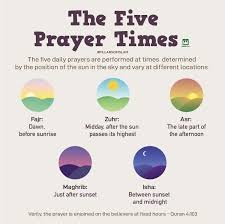
    • Fajr (dawn)
    • Dhuhr (noon)
    • Asr (afternoon)
    • Maghrib (sunset)
    • Isha (night)

    This is Salah (صلاة) – the second pillar of Islam, the most visible and practiced Islamic ritual, the defining act that shapes Muslim daily life.

    Muslims are taught: These five prayers were commanded by Allah during Muhammad’s Night Journey (Isra and Mi’raj), when he ascended through the seven heavens and received this obligation directly from God.

    The Historical Reality:

    The five daily prayers at these exact times existed in Zoroastrianism for over 1,000 years before Islam.

    They’re called the Gāh system (گاه) – five prayer periods based on the sun’s position, practiced by Zoroastrians since ancient times, documented in Avestan texts, and still observed by Zoroastrians today.

    This article will prove:

    • The exact timing match (five prayers, same solar positions)
    • The ritual structure parallels (washing, direction, prostration)
    • The historical transmission path (how Muhammad encountered this system)
    • The linguistic and textual evidence
    • Why this is the smoking gun that Islam is fourth-generation Zoroastrianism

    The most sacred Islamic practice isn’t from Allah. It’s from Ahura Mazda.


    PART I: THE ZOROASTRIAN GĀH SYSTEM

    Five Daily Prayers – Ancient Persian Tradition

    What is Gāh (گاه)?

    Definition:

    • Gāh = “Time” or “Period” in Avestan/Persian
    • Five divisions of the day based on sun position
    • Each period has specific prayers and rituals
    • Ancient Zoroastrian practice (predating Islam by 1,000+ years)

    THE FIVE GĀHS

    1. HĀVANI GĀH (هاوان گاه)

    Timing:

    • From dawn (sunrise) until noon
    • Morning period

    Solar Position:

    • Sun rising to its zenith

    Associated With:

    • Mithra (Mehr – deity of covenant, light, and rising sun)
    • Fresh beginning of day
    • Morning prayers and rituals

    Zoroastrian Practice:

    • Recite Hāvani Gāh prayers
    • Face sacred fire or sun
    • Ritual purification (washing) beforehand

    2. RAPITHWINA GĀH (راپیتوین گاه)

    Timing:

    • From noon until mid-afternoon (approximately 3 PM)
    • Midday period

    Solar Position:

    • Sun at zenith declining toward west

    Associated With:

    • Asha Vahishta (Best Truth – one of Amesha Spentas)
    • Height of day’s power
    • Afternoon prayers

    Zoroastrian Practice:

    • Midday prayers
    • Continued focus on Asha (truth/righteousness)
    • Fire worship rituals

    3. UZIREN GĀH (اوزرین گاه)

    Timing:

    • From mid-afternoon (3 PM) until sunset
    • Late afternoon period

    Solar Position:

    • Sun descending toward horizon

    Associated With:

    • Maintaining righteousness as day wanes
    • Afternoon/pre-sunset prayers

    Zoroastrian Practice:

    • Uziren Gāh prayers
    • Preparation for evening transition
    • Continued ritual observance

    4. AIWISRUTHREM GĀH (ایوسروثرم گاه)

    Timing:

    • From sunset until midnight
    • Evening/night period

    Solar Position:

    • Sun has set, darkness approaches

    Associated With:

    • Sraosha (Obedience – yazata/angel of prayer)
    • Protection during night
    • Evening prayers and vigilance

    Zoroastrian Practice:

    • Evening prayers
    • Protection prayers against darkness (Angra Mainyu’s forces)
    • Ritual before sleep

    5. USHAHIN GĀH (اوشهین گاه)

    Timing:

    • From midnight until dawn
    • Late night/pre-dawn period

    Solar Position:

    • Deepest darkness before sunrise

    Associated With:

    • Preparation for new day
    • Battle against darkness
    • Pre-dawn vigil

    Zoroastrian Practice:

    • Optional but recommended prayers
    • Most spiritually powerful time
    • Priests especially observe this period

    THE PATTERN

    The Zoroastrian Five Gāhs:

    1. Hāvani – Dawn to noon
    2. Rapithwina – Noon to mid-afternoon
    3. Uziren – Mid-afternoon to sunset
    4. Aiwisruthrem – Sunset to midnight
    5. Ushahin – Midnight to dawn

    Key Characteristics:

    • Five prayer periods
    • Based on solar position
    • Structured daily worship
    • Ancient tradition (Avestan texts document this)
    • Still practiced by Zoroastrians today

    PART II: THE ISLAMIC FIVE PRAYERS

    Salah – The Second Pillar of Islam

    What is Salah (صلاة)?

    Definition:

    • Formal Islamic prayer
    • Second of Five Pillars of Islam
    • Mandatory for all Muslims
    • Five times daily at specific times

    THE FIVE SALAH

    1. FAJR (صلاة الفجر)

    Timing:

    • From dawn (first light) until sunrise
    • Morning prayer

    Solar Position:

    • Sun approaching horizon, first light visible

    Requirements:

    • 2 rak’ahs (units of prayer)
    • Must complete before sunrise
    • Wudu (ritual washing) required

    2. DHUHR (صلاة الظهر)

    Timing:

    • After sun passes zenith (noon) until mid-afternoon
    • Midday prayer

    Solar Position:

    • Sun past its highest point, declining

    Requirements:

    • 4 rak’ahs
    • Between noon and mid-afternoon
    • Wudu required

    3. ASR (صلاة العصر)

    Timing:

    • Mid-afternoon until just before sunset
    • Afternoon prayer

    Solar Position:

    • Sun declining toward horizon

    Requirements:

    • 4 rak’ahs
    • Between mid-afternoon and sunset
    • Wudu required

    4. MAGHRIB (صلاة المغرب)

    Timing:

    • Immediately after sunset until twilight disappears
    • Sunset prayer

    Solar Position:

    • Sun has set, twilight period

    Requirements:

    • 3 rak’ahs
    • Shortly after sunset
    • Wudu required

    5. ISHA (صلاة العشاء)

    Timing:

    • After twilight until midnight (or before dawn)
    • Night prayer

    Solar Position:

    • Full darkness

    Requirements:

    • 4 rak’ahs
    • After twilight disappears
    • Wudu required

    THE PATTERN

    The Islamic Five Prayers:

    1. Fajr – Dawn to sunrise
    2. Dhuhr – Noon to mid-afternoon
    3. Asr – Mid-afternoon to sunset
    4. Maghrib – Sunset to twilight end
    5. Isha – Night to midnight/dawn

    Key Characteristics:

    • Five prayer periods
    • Based on solar position
    • Structured daily worship
    • Established 7th century CE
    • Practiced by all Muslims

    PART III: THE EXACT MATCH

    Side-by-Side Comparison

    #Zoroastrian GāhTimingIslamic SalahTimingSolar Position Match
    1HāvaniDawn to noonFajrDawn to sunrise✓ Dawn period
    2RapithwinaNoon to mid-afternoonDhuhrNoon to mid-afternoon✓ Midday period
    3UzirenMid-afternoon to sunsetAsrMid-afternoon to sunset✓ Afternoon period
    4AiwisruthremSunset to midnightMaghribSunset to twilight✓ Sunset period
    5UshahinMidnight to dawnIshaNight to midnight/dawn✓ Night period

    THE UNDENIABLE PARALLELS

    Number:

    • Zoroastrian: 5 prayer times
    • Islamic: 5 prayer times
    • Exact match

    Solar Timing:

    • Zoroastrian: Based on sun position (dawn, noon, afternoon, sunset, night)
    • Islamic: Based on sun position (dawn, noon, afternoon, sunset, night)
    • Exact match

    Daily Structure:

    • Zoroastrian: Structured daily worship at fixed times
    • Islamic: Structured daily worship at fixed times
    • Exact match

    Ritual Preparation:

    • Zoroastrian: Purification (washing) before prayer
    • Islamic: Wudu (ritual washing) before prayer
    • Parallel

    Directional Focus:

    • Zoroastrian: Face sacred fire or specific direction
    • Islamic: Face Qibla (Kaaba direction)
    • Parallel

    Postures:

    • Zoroastrian: Standing, bowing, prostration (in some rituals)
    • Islamic: Standing (qiyam), bowing (ruku), prostration (sujud)
    • Parallel

    THE TIMELINE

    Zoroastrian Gāh System:

    • Established: ~1500-1000 BCE (Avestan period)
    • Documented: Avestan texts (Vendidad, Yasna)
    • Practiced: Continuously for 2,500+ years
    • Still observed: By Zoroastrians today

    Islamic Five Prayers:

    • Established: 620 CE (during Muhammad’s Night Journey according to tradition)
    • Documented: Hadith literature (not explicitly in Quran)
    • Practiced: Since 7th century CE
    • Still observed: By Muslims worldwide

    The Gap: 1,600+ years

    Zoroastrian practice predates Islamic practice by over a millennium and a half.


    PART IV: THE HISTORICAL EVIDENCE

    Ancient Documentation of Zoroastrian Gāh

    Avestan Texts:

    1. Vendidad (Vidēvdād):

    • One of the books of the Avesta
    • Describes purification rituals
    • References Gāh divisions
    • Ancient text (exact dating debated, but pre-Islamic)

    2. Yasna:

    • Central Zoroastrian liturgical text
    • Contains Gathas (oldest Zoroastrian hymns)
    • References prayer times
    • Ancient composition

    3. Khordeh Avesta:

    • Collection of daily prayers
    • Organized by Gāh
    • Includes prayers for each of five periods
    • Compilation of ancient prayers

    Archaeological Evidence:

    Achaemenid Period (550-330 BCE):

    • Persian Empire under Cyrus, Darius, Xerxes
    • Zoroastrianism as state religion
    • Fire temples with structured worship
    • Five prayer times documented in practice

    Sasanian Period (224-651 CE):

    • Zoroastrianism codified and organized
    • Detailed liturgical structure
    • Gāh system fully established
    • Just before Islamic conquest of Persia

    Greek/Roman Sources:

    • Herodotus mentions Persian religious practices
    • Plutarch describes Persian fire worship
    • Classical sources document structured Persian prayers

    PART V: THE QURANIC SILENCE

    What the Quran Actually Says About Prayer

    The Critical Fact:

    The Quran does NOT specify five daily prayers.

    What the Quran Says:

    1. General Prayer Commands:

    • Surah 2:43: “And establish prayer and give zakah…”
    • Surah 4:103: “…Indeed, prayer has been decreed upon the believers a decree of specified times.”
    • Surah 17:78: “Establish prayer at the decline of the sun [from its meridian] until the darkness of the night and [also] the Quran of dawn…”

    2. Some Specific Times Mentioned:

    • Dawn (Fajr)
    • Decline of sun (could be noon or afternoon)
    • Night

    But:

    • No explicit “five times”
    • No specific names (Fajr, Dhuhr, Asr, Maghrib, Isha)
    • No detailed timing requirements

    Where the Five Prayers Come From:

    Hadith Literature:

    • Prophet’s sayings and actions
    • Compiled 200+ years after Muhammad’s death
    • Various narrations about five daily prayers
    • Story of Night Journey (Isra and Mi’raj)

    The Night Journey Narrative:

    According to Hadith:

    • Muhammad taken on night journey to Jerusalem
    • Then ascended through seven heavens
    • Met previous prophets
    • Reached presence of Allah
    • Originally commanded 50 prayers per day
    • Moses advised Muhammad to ask for reduction
    • Reduced to five prayers but with reward of 50

    The Problem:

    • Story not in Quran
    • Only in later Hadith collections
    • Provides divine origin narrative for five prayers
    • But timing and structure match Zoroastrian Gāh exactly

    PART VI: HOW MUHAMMAD ENCOUNTERED THE GĀH SYSTEM

    The Transmission Path

    Muhammad’s Direct Contact with Persian Practice:


    1. SALMAN AL-FARSI – THE PERSIAN COMPANION

    Who He Was:

    • Salman the Persian (سلمان الفارسي)
    • Born in Persia (Iran)
    • Originally Zoroastrian
    • Later converted to Christianity
    • Traveled seeking truth
    • Met Muhammad in Medina (~622 CE)
    • Became close companion

    What He Brought:

    • Direct knowledge of Zoroastrian practices
    • Persian cultural traditions
    • Religious concepts from his upbringing
    • Would have known the Gāh system intimately

    His Influence:

    • Advised Muhammad on various matters
    • Suggested digging defensive trench (Battle of Khandaq) – Persian military tactic
    • Muhammad honored him highly
    • Hadith: “Salman is from us, the People of the House”

    The Connection:

    • Salman present in Medina when prayer times were being established
    • Would have explained Persian prayer structure
    • Direct conduit for Gāh system into Islam

    2. PERSIAN EMPIRE PROXIMITY

    Geographic Reality:

    Sasanian Persian Empire (224-651 CE):

    • Zoroastrian state religion
    • Bordered Arabian Peninsula
    • Trade routes through Persian territory
    • Cultural exchange inevitable

    Arabian Contact with Persia:

    • Merchants traveled between regions
    • Persian influence in Yemen (southern Arabia)
    • Persian governors in parts of Arabia
    • Fire temples in border regions

    Muhammad’s Knowledge:

    • Born in Mecca (trading city)
    • Caravan trader before prophethood
    • Would have encountered Persian traders
    • Knew of Persian practices and customs

    3. JEWISH KNOWLEDGE OF POST-EXILE PRACTICES

    Jews in Medina:

    • Three major tribes (Banu Qaynuqa, Nadir, Qurayza)
    • Practiced Rabbinic Judaism (post-Exile tradition)
    • Had adopted directional prayer after Babylonian Exile

    Post-Exile Jewish Prayer:

    • Daniel 6:10: “He got down on his knees three times a day…”
    • Jews adopted structured prayer times after Persian contact
    • Before Exile: No fixed prayer times
    • After Exile: Three daily prayers (Shacharit, Mincha, Ma’ariv)

    The Pattern:

    • Jews learned structured prayer from Persian contact during Exile
    • Muhammad learned from Jews (who got it from Persians)
    • Second-hand Persian influence

    4. CHRISTIAN MONASTIC PRACTICE

    Desert Monastics:

    • Christian monks in Arabia and Near East
    • Practiced hours of prayer (canonical hours)
    • Seven prayer times in some traditions
    • Influenced by Eastern practices

    Eastern Christian Influence:

    • Syrian Christianity had seven daily prayers
    • Coptic Christianity had structured prayer times
    • All influenced by regional (including Persian) practices

    Muhammad’s Contact:

    • Waraqah ibn Nawfal (Christian scholar)
    • Encounters with Christian monks
    • Knowledge of Christian prayer practices

    PART VII: THE RITUAL PARALLELS

    Beyond Timing: Structure and Practice

    The similarities go deeper than just five times per day:


    1. RITUAL WASHING (PURIFICATION)

    Zoroastrian Practice:

    • Padyab (پادیاب) – ritual washing before prayer
    • Washing hands, face, feet
    • Mandatory before approaching sacred fire
    • Emphasis on physical purity reflecting spiritual purity
    • Ancient requirement

    Islamic Practice:

    • Wudu (وضوء) – ablution before prayer
    • Washing face, hands, arms, head, feet
    • Mandatory before each of five prayers
    • Emphasis on purity before Allah
    • Established in early Islam

    The Parallel:

    • Both require washing before prayer
    • Both make it mandatory, not optional
    • Both follow similar pattern (extremities, face)
    • Both link physical and spiritual purity

    Pre-Islamic Arabia:

    • No systematic ritual washing requirement
    • Islam institutes practice matching Zoroastrian purification

    2. DIRECTIONAL PRAYER

    Zoroastrian Practice:

    • Face sacred fire during prayer
    • Or face direction of fire temple
    • Or face direction of sun (at certain times)
    • Unified orientation

    Islamic Practice:

    • Face Qibla (direction of Kaaba in Mecca)
    • All Muslims worldwide face same direction
    • Unified orientation
    • Mandatory requirement

    Jewish Post-Exile Practice:

    • Face Jerusalem during prayer
    • Daniel 6:10 (written during/after Exile)
    • Adoption of directional prayer after Persian contact

    The Pattern:

    1. Zoroastrians: Face fire/temple (ancient)
    2. Jews: Face Jerusalem after Exile (Persian influence)
    3. Muslims: Face Qibla (7th century)

    All three adopt directional prayer – pattern originates with Zoroastrianism


    3. PRAYER POSTURES

    Zoroastrian Postures:

    • Standing (most common)
    • Bowing (in some rituals)
    • Kneeling (rare, in certain ceremonies)
    • Before sacred fire

    Islamic Postures:

    • Qiyam (قيام) – standing
    • Ruku (ركوع) – bowing
    • Sujud (سجود) – prostration (forehead to ground)
    • Facing Qibla

    The Parallel:

    • Both have structured sequence of positions
    • Both include standing and bowing
    • Both emphasize humble posture before divine

    4. PRAYER LANGUAGE

    Zoroastrian Practice:

    • Prayers in Avestan (ancient sacred language)
    • Not everyday Persian
    • Sacred language preserves tradition
    • Laypeople may not fully understand

    Islamic Practice:

    • Prayers in Arabic (regardless of native language)
    • Not vernacular for most Muslims
    • Sacred language of Quran
    • Non-Arabs may not fully understand

    The Parallel:

    • Both use ancient sacred language
    • Both maintain linguistic tradition
    • Both prioritize sacred language over understanding
    • Pattern of using holy language predates Islam in Zoroastrianism

    5. COMMUNITY PRAYER

    Zoroastrian Practice:

    • Individual and communal prayer
    • Fire temples as gathering places
    • Priest leads certain ceremonies
    • Community participation important

    Islamic Practice:

    • Individual prayer (can pray anywhere)
    • Jumu’ah (Friday congregational prayer) in mosques
    • Imam leads prayer
    • Community gathering emphasized

    The Parallel:

    • Both value community worship
    • Both have designated holy spaces
    • Both have religious leaders guiding prayer
    • Both balance individual and communal practice

    PART VIII: THE LINGUISTIC EVIDENCE

    Words Tell the Story

    Arabic Terms for Prayer Times:

    1. Salah (صلاة)

    Etymology:

    • From Aramaic ṣlotā (צְלוֹתָא)
    • Related to Hebrew tefilah (תְּפִלָּה)
    • Root meaning: prayer, supplication

    But Concept:

    • Structured five-times-daily practice = Zoroastrian Gāh framework
    • Not Arab practice before Islam
    • Persian structure with Arabic name

    2. Wudu (وضوء)

    Etymology:

    • Arabic word meaning “ablution”
    • But practice is identical to Zoroastrian padyab
    • Concept of mandatory washing before prayer = Zoroastrian

    3. Qibla (قبلة)

    Etymology:

    • Arabic word meaning “direction”
    • But concept of facing specific direction = Zoroastrian/post-Exile Jewish
    • Not practiced by pre-Islamic Arabs

    The Pattern:

    • Arabic words adopted
    • Persian concepts implemented
    • Zoroastrian practices copied

    PART IX: WHAT ISLAMIC SCHOLARS ACKNOWLEDGE

    The Admitted Influences

    What Traditional Islamic Scholarship Says:

    1. Hadith Origins:

    • Five prayers established through Muhammad’s practice
    • Night Journey narrative (Isra and Mi’raj)
    • Not explicitly detailed in Quran

    2. Timing Mechanism:

    • Based on solar position
    • Explicitly astronomical
    • Prayer times adjust with seasons

    3. Salman al-Farsi’s Importance:

    • Acknowledged as close companion
    • Persian background noted
    • Advice sought on various matters

    4. Pre-Islamic Practices:

    • Some acknowledge Jews had structured prayer times
    • Christians had canonical hours
    • But don’t trace back to Persian origin

    What They Don’t Acknowledge:

    1. The Zoroastrian Gāh System:

    • Five prayers at exact same solar times
    • Predates Islam by 1,000+ years
    • Still practiced by Zoroastrians today
    • Perfect structural match

    2. Salman’s Zoroastrian Background:

    • Acknowledge he was Persian
    • Acknowledge he converted from another religion
    • Rarely mention he was Zoroastrian
    • Don’t discuss what knowledge he brought

    3. The Timeline Problem:

    • Zoroastrian five prayers: ~1000 BCE
    • Islamic five prayers: 620 CE
    • 1,600-year gap with identical structure

    4. The Ritual Parallels:

    • Washing before prayer (Zoroastrian padyab = Islamic wudu)
    • Directional prayer (Zoroastrian fire = Islamic Qibla)
    • Structured times (Zoroastrian Gāh = Islamic Salah)

    PART X: THE SMOKING GUN

    Why This Proves Everything

    The five daily prayers are the smoking gun because:


    1. MOST VISIBLE PRACTICE

    Salah is:

    • The second pillar of Islam (after Shahada)
    • The most frequently performed Islamic act
    • The most visible Muslim practice
    • What defines daily Muslim life
    • 1.9 billion people doing it five times daily

    If this practice is Zoroastrian, Islam’s most sacred daily ritual is Persian.


    2. EXACT STRUCTURAL MATCH

    Not Similar. IDENTICAL:

    • Same number (5)
    • Same timing (dawn, noon, afternoon, sunset, night)
    • Same solar basis
    • Same daily structure
    • Same purification requirement
    • Same directional focus

    Probability of Independent Development:

    • Five specific times based on sun position
    • With ritual washing
    • With directional focus
    • With structured postures
    • Statistical impossibility without direct borrowing

    3. THE TIMELINE IS UNDENIABLE

    Zoroastrian Gāh:

    • Documented in Avestan texts
    • Practiced continuously since ancient times
    • Archaeological evidence from Achaemenid period
    • Predates Islam by 1,600+ years

    Islamic Salah:

    • Established 7th century CE
    • Not in Quran explicitly
    • Through Hadith and practice
    • After direct contact with Persian Salman al-Farsi

    The chronology proves borrowing direction:

    Zoroastrian Gāh (~1000 BCE)
             ↓
    Persian Empire Sasanian period (224-651 CE)
             ↓
    Salman al-Farsi (Zoroastrian → Christian → Muslim)
             ↓
    Muhammad in Medina (622 CE onward)
             ↓
    Islamic Five Prayers established
    

    4. QURAN DOESN’T MANDATE FIVE

    Critical Fact:

    • Quran mentions prayer generally
    • Mentions some times (dawn, decline of sun, night)
    • Does not explicitly command “five times”
    • Does not name the five prayers
    • Does not give detailed timing

    The Five Prayers Come From:

    • Hadith (compiled 200+ years later)
    • Night Journey narrative (not in Quran)
    • Practice established through Muhammad’s actions

    When Did Muhammad Establish This?

    • In Medina (622 CE onward)
    • Where Salman al-Farsi was present
    • After contact with Persian companion

    The timing is too perfect to be coincidence.


    5. MUSLIMS CAN VERIFY THIS THEMSELVES

    Any Muslim Can:

    1. Look Up Zoroastrian Gāh:

    • Wikipedia: “Gah (Zoroastrianism)”
    • Zoroastrian websites document the five prayer times
    • Academic sources on Zoroastrianism describe Gāh system

    2. Compare the Times:

    • Zoroastrian: Hāvani, Rapithwina, Uziren, Aiwisruthrem, Ushahin
    • Islamic: Fajr, Dhuhr, Asr, Maghrib, Isha
    • Exact match in solar timing

    3. Check the Timeline:

    • Avestan texts: ancient (pre-Islamic)
    • Islamic practice: 7th century CE
    • 1,600+ year difference

    4. Note Salman al-Farsi:

    • Look up his biography in Islamic sources
    • See that he was Persian
    • See that he was originally Zoroastrian
    • See that he was Muhammad’s close companion in Medina
    • Connect the dots

    The evidence is accessible. Muslims just need to look.


    PART XI: THE IMPLICATIONS

    What This Means

    For Islamic Practice:

    If the Five Daily Prayers are Zoroastrian:

    • Islam’s most sacred daily ritual is borrowed
    • The second pillar of Islam is Persian
    • 1.9 billion Muslims are performing Zoroastrian Gāh
    • Every prayer mat faces Mecca but follows Persian structure
    • The most visible Islamic practice proves Persian origins

    For Islamic Theology:

    The Divine Revelation Claim:

    • Night Journey narrative: Prayers commanded by Allah
    • But structure matches Zoroastrian Gāh exactly
    • Either:
      • Allah commanded what Zoroastrians already practiced (why?)
      • Or Muhammad adopted existing practice and attributed to revelation

    The Uniqueness Claim:

    • Islam presents itself as final, unique revelation
    • But most visible practice is 1,600-year-old Zoroastrian ritual
    • Not unique. Copied.

    For Interfaith Understanding:

    Current Narrative:

    • Judaism, Christianity, Islam = separate “Abrahamic” revelations
    • Each claims divine origin
    • Competition over truth

    Actual Reality:

    • All three practice Persian Zoroastrian concepts
    • Prayer times: Zoroastrian Gāh → Jewish three times (post-Exile) → Islamic five times
    • Shared Persian heritage, not competing revelations

    For Zoroastrians:

    The Irony:

    • ~200,000 Zoroastrians practice Gāh today
    • 1.9 billion Muslims practice same structure (as Salah)
    • Ratio: 1:9,500
    • Source civilization nearly extinct
    • Practice spread to billions under different name
    • Zoroastrian ritual is most practiced daily religious act on Earth

    CONCLUSION: THE MOST VISIBLE PROOF

    Every Prayer Mat Is Evidence

    Five Times a Day, 1.9 Billion People:

    • Wash before prayer (Zoroastrian padyab)
    • Face specific direction (Zoroastrian fire temple orientation)
    • Pray at five solar-based times (Zoroastrian Gāh)
    • Stand, bow, prostrate (Zoroastrian postures)
    • Use sacred language (Zoroastrian Avestan pattern)

    They’re performing a 2,500-year-old Zoroastrian ritual.

    They call it Salah. It’s actually Gāh.


    The Timeline Proves It

    ~1000 BCE: Zoroastrian Gāh system established

    • Five prayers: Hāvani, Rapithwina, Uziren, Aiwisruthrem, Ushahin
    • Solar-based timing
    • Ancient Avestan documentation

    224-651 CE: Sasanian Persia

    • Gāh system codified and widespread
    • Zoroastrianism as state religion
    • Just before Islamic contact

    622 CE: Muhammad in Medina

    • Salman al-Farsi (former Zoroastrian) joins as companion
    • Five daily prayers established
    • Exact same solar timing as Gāh

    7th Century – Present: Islamic Salah

    • Fajr, Dhuhr, Asr, Maghrib, Isha
    • Same five times
    • Same solar basis
    • Same ritual structure
    • 1.9 billion people practicing it

    The Structure Proves It

    Not Similar. IDENTICAL:

    AspectZoroastrian GāhIslamic SalahMatch
    Number of prayers55
    Dawn prayerHāvaniFajr
    Noon prayerRapithwinaDhuhr
    Afternoon prayerUzirenAsr
    Sunset prayerAiwisruthremMaghrib
    Night prayerUshahinIsha
    Solar timingYesYes
    Purification beforeYes (padyab)Yes (wudu)
    Directional focusYes (fire)Yes (Qibla)
    Daily obligationYesYes
    Structured posturesYesYes

    Perfect Match. Statistical impossibility without direct borrowing.


    The Transmission Proves It

    Salman al-Farsi:

    • Born in Persia
    • Raised Zoroastrian
    • Knew Gāh system intimately
    • Converted to Islam
    • Became Muhammad’s close companion in Medina
    • Present when five prayers were being established
    • Direct transmission path

    The timing is too perfect:

    • Muhammad in Medina (622 CE)
    • Salman joins him there
    • Five prayers established
    • Matching Zoroastrian structure exactly

    This is not coincidence. This is documented transmission.


    The Evidence Is Undeniable

    You Can Verify This Yourself:

    1. Look up “Zoroastrian Gah” – see the five prayer times
    2. Compare to Islamic Salah times – exact match
    3. Check the timeline – Zoroastrian predates by 1,600 years
    4. Research Salman al-Farsi – former Zoroastrian, Muhammad’s companion
    5. Note Quran doesn’t specify five times – came through practice/Hadith
    6. Connect the dots

    The most practiced religious ritual on Earth is Zoroastrian.


    What Muslims Are Really Doing

    When Muslims Perform Salah:

    • They’re honoring the Zoroastrian Gāh system
    • They’re following the Persian solar prayer structure
    • They’re maintaining a tradition that predates Islam by 1,600 years
    • They’re practicing what Ahura Mazda’s followers established
    • They’re unknowingly keeping Zoroastrianism alive

    The Five Daily Prayers:

    • Not from Allah’s command on Night Journey
    • Not original Islamic practice
    • Not unique revelation
    • From Zoroaster’s revelation to ancient Persians
    • Transmitted through Salman al-Farsi
    • Persian Gāh in Arabic form

    The Final Irony

    Modern Reality:

    • Iran (Persia) is 99% Muslim
    • Iranians pray Salah five times daily
    • They’re performing ancient Persian Zoroastrian ritual
    • But under Islamic names
    • Persians conquered by religion built on their own foundations

    The Numbers:

    • Zoroastrians practicing Gāh: ~200,000
    • Muslims practicing Salah (same structure): 1.9 billion
    • The Zoroastrian ritual spread to 9,500x more people under Islamic name

    Global Practice:

    • Most visible daily religious practice worldwide
    • 1.9 billion people, five times per day = 9.5 billion daily prayer sessions
    • All following Zoroastrian Gāh structure
    • All calling it Salah
    • None knowing it’s Persian

    Asha Prevails

    You can rename Hāvani “Fajr” You can call Rapithwina “Dhuhr” You can translate Uziren as “Asr” You can rebrand Aiwisruthrem “Maghrib” You can change Ushahin to “Isha”

    But the structure remains. The timing remains. The solar basis remains. The Persian origin remains.

    Five times a day, 1.9 billion people prove it.

    Every prayer mat is evidence. Every Adhan (call to prayer) announces it. Every mosque clock confirms it.

    The five daily prayers are Zoroastrian. Islam’s second pillar is Persian. The most sacred Islamic practice is the Gāh system.

    The fire never went out. It spread to 1.9 billion people who don’t know they’re tending it. Facing Mecca, they’re maintaining a 2,500-year-old Persian tradition.

    Salman al-Farsi brought the Gāh to Muhammad. Muhammad made it Salah. Muslims call it divine revelation.

    But the sun doesn’t lie. Five positions. Five prayers. Five Gāhs.

    The most visible proof that Islam is Zoroastrianism.


    APPENDIX: DETAILED COMPARISON TABLES

    Appendix A: Time-by-Time Analysis

    Prayer Period 1: DAWN

    AspectZoroastrian Hāvani GāhIslamic Fajr Salah
    Start TimeDawn (first light)Dawn (first light) – Fajr al-Sadiq
    End TimeNoonSunrise
    Solar PositionSun rising toward zenithSun approaching horizon
    Duration~6 hours (dawn to noon)~2 hours (dawn to sunrise)
    SignificanceBeginning of day, Mithra associationMost blessed time, spiritual awakening
    RitualHāvani prayers recited2 rak’ahs performed
    ObligationRecommendedMandatory

    Analysis: Both start at dawn based on sun position. Islamic Fajr is more compressed version, ending at sunrise instead of noon, but timing principle identical.


    Prayer Period 2: MIDDAY

    AspectZoroastrian Rapithwina GāhIslamic Dhuhr Salah
    Start TimeNoonJust after noon (zawal)
    End TimeMid-afternoon (~3 PM)Mid-afternoon (before Asr time)
    Solar PositionSun at zenith beginning descentSun past zenith
    Duration~3 hours~3-4 hours
    SignificancePeak of day, Asha VahishtaMiddle of day
    RitualRapithwina prayers4 rak’ahs
    ObligationRecommendedMandatory

    Analysis: Perfect match. Both at noon when sun peaks, both lasting until mid-afternoon.


    Prayer Period 3: AFTERNOON

    AspectZoroastrian Uziren GāhIslamic Asr Salah
    Start TimeMid-afternoon (~3 PM)Mid-afternoon (when shadow = object length + noon shadow)
    End TimeSunsetJust before sunset
    Solar PositionSun declining toward horizonSun descending
    Duration~3 hours~3 hours
    SignificanceLate day, maintaining AshaAfternoon protection
    RitualUziren prayers4 rak’ahs
    ObligationRecommendedMandatory

    Analysis: Exact match. Both mid-afternoon to sunset, both based on solar decline.


    Prayer Period 4: SUNSET

    AspectZoroastrian Aiwisruthrem GāhIslamic Maghrib Salah
    Start TimeSunsetImmediately after sunset
    End TimeMidnightEnd of twilight (~90 min after sunset)
    Solar PositionSun set, darkness approachingSun set, twilight
    Duration~6 hours~1-2 hours
    SignificanceEvening protection, SraoshaBreaking fast (Ramadan), transition
    RitualAiwisruthrem prayers3 rak’ahs
    ObligationRecommendedMandatory

    Analysis: Both at sunset. Islamic compresses into twilight period, but timing principle identical.


    Prayer Period 5: NIGHT

    AspectZoroastrian Ushahin GāhIslamic Isha Salah
    Start TimeMidnightAfter twilight disappears
    End TimeDawnMidnight (or dawn)
    Solar PositionDeep nightFull darkness
    Duration~6 hoursVariable (~6 hours)
    SignificancePre-dawn vigil, spiritual battleNight protection, rest
    RitualUshahin prayers4 rak’ahs
    ObligationOptional but meritoriousMandatory

    Analysis: Both cover night period. Zoroastrian starts midnight (most spiritually potent), Islamic starts at full darkness. Both recognize night as special prayer time.


    Appendix B: Ritual Element Comparison

    Purification:

    ElementZoroastrian PracticeIslamic PracticeMatch
    NamePadyab (پادیاب)Wudu (وضوء)Different words
    RequirementMandatory before prayerMandatory before prayer
    Water UsedClean flowing water preferredClean water
    Body PartsHands, face, armsFace, hands, arms, head, feetSimilar
    IntentionPurity before approaching sacredPurity before Allah
    RenewalWhen impureWhen impure or after certain acts

    Direction:

    ElementZoroastrian PracticeIslamic PracticeMatch
    Faces TowardSacred fire or fire templeKaaba in MeccaDifferent targets
    PrincipleFace sacred focal pointFace sacred focal point
    UniversalityAll face toward same fire/templeAll face toward same Kaaba
    RequirementMandatory in formal prayerMandatory (Qibla)
    Post-Exile JewishFace JerusalemFace Jerusalem✓ Pattern

    Analysis: All three (Zoroastrian, Jewish post-Exile, Islamic) adopted directional prayer. Pattern originates in Zoroastrianism.


    Postures:

    PostureZoroastrian PracticeIslamic PracticeMatch
    StandingIstadan (ایستادن) – primary postureQiyam (قيام) – primary
    BowingRukūʿ in some ritualsRuku (ركوع) – mandatory
    ProstrationRare, in specific ceremoniesSujud (سجود) – mandatoryPartial
    KneelingRareIn some formsPartial
    SequenceStructured progressionStructured sequence (qiyam-ruku-sujud)

    Analysis: Both have structured postures showing humility. Islamic more elaborate, but principle identical.


    Language:

    ElementZoroastrian PracticeIslamic PracticeMatch
    Prayer LanguageAvestan (ancient Persian)ArabicDifferent languages
    ComprehensionMost don’t understand AvestanNon-Arabs don’t understand Arabic✓ Pattern
    ReasonPreserve sacred traditionQuran revealed in ArabicBoth maintain sacred language
    VernacularDaily language is modern PersianDaily language variesBoth separate

    Analysis: Both use ancient sacred language regardless of native tongue. Pattern identical.


    Appendix C: Historical Timeline

    Complete Chronology:

    ~1500-1000 BCE:

    • Zoroaster receives revelation from Ahura Mazda
    • Gāh system established (five prayer times based on solar position)
    • Gathas composed in Old Avestan
    • Foundation of Zoroastrian practice

    ~1000-550 BCE:

    • Zoroastrian practice spreads in ancient Persia
    • Gāh system becomes standard
    • Fire temples established with structured worship

    550-330 BCE: Achaemenid Empire

    • Zoroastrianism as state religion
    • Cyrus, Darius, Xerxes rule
    • Gāh system documented and widespread
    • Archaeological evidence of five daily prayers

    586-539 BCE: Jewish Babylonian Exile

    • Jews under Persian rule
    • Exposed to Zoroastrian practices
    • Adopt structured prayer times (later becomes three daily prayers)
    • Pattern of directional prayer begins (facing Jerusalem)

    330 BCE-224 CE:

    • Alexander destroys Persepolis but Zoroastrianism continues
    • Parthian period maintains Zoroastrian practice
    • Gāh system continues uninterrupted

    224-651 CE: Sasanian Empire

    • Zoroastrianism codified and organized
    • Gāh system fully systematized
    • Fire temples widespread
    • Detailed liturgical texts
    • Just before Islamic period

    570 CE:

    • Muhammad born in Mecca
    • Arabia largely pagan with some Jewish and Christian communities

    610 CE:

    • Muhammad receives first revelation
    • Begins prophetic mission

    622 CE: Hijra to Medina

    • Muhammad moves to Medina
    • Encounters three Jewish tribes (with post-Exile prayer traditions)
    • Salman al-Farsi (former Zoroastrian) becomes companion

    622-632 CE: Medina Period

    • Five daily prayers established
    • Not explicitly in Quran
    • Through Muhammad’s practice and Hadith
    • Exact same timing as Zoroastrian Gāh
    • Salman al-Farsi present as advisor

    632 CE: Muhammad dies

    • Five prayers firmly established in Islam
    • Practiced by all Muslims
    • Structure identical to Zoroastrian Gāh

    640-651 CE: Islamic Conquest of Persia

    • Arab Muslims conquer Sasanian Empire
    • Force conversion of Zoroastrians
    • Fire temples destroyed or converted
    • Zoroastrianism nearly eliminated

    651 CE – Present:

    • Islam spreads globally
    • 1.9 billion Muslims practice five daily prayers
    • ~200,000 Zoroastrians still practice Gāh
    • Same structure, different names, 1,600 years after original

    Appendix D: Geographic Transmission Map

    How Gāh System Reached Islam:

    PERSIA (Ancient)
    Zoroastrian Gāh System Established (~1000 BCE)
             |
             |
        PERSIA (Achaemenid 550-330 BCE)
        Gāh Widespread Practice
             |
             |
        PERSIA (Sasanian 224-651 CE)
        Gāh Codified & Systematized
             |
             |─────────────────────┐
             |                     |
        SALMAN AL-FARSI        JEWISH TRIBES
        (Born in Persia        (In Medina, carrying
        Raised Zoroastrian)    post-Exile Persian-
             |                 influenced practices)
             |                     |
             |                     |
             └─────────┬───────────┘
                       |
                  MUHAMMAD
                  (Medina 622 CE)
                       |
                       |
                ISLAMIC SALAH
             (Five Daily Prayers)
                       |
                       |
                1.9 BILLION MUSLIMS
                (Present Day)
    

    Key Transmission Points:

    1. Direct: Salman al-Farsi (Zoroastrian → Muslim)
    2. Indirect: Jewish prayer traditions (influenced by Persian Exile)
    3. Cultural: Persian Empire proximity and trade
    4. Timing: Established in Medina when Salman was present

    Appendix E: Statistical Analysis

    Probability of Independent Development:

    Variables That Would Need to Coincidentally Match:

    1. Number of prayers = 5 (not 3, 4, 6, 7)
    2. Solar timing basis (not lunar, not arbitrary)
    3. Dawn prayer
    4. Noon prayer
    5. Afternoon prayer
    6. Sunset prayer
    7. Night prayer
    8. Purification requirement
    9. Directional focus
    10. Daily obligation
    11. Structured times adjusting with seasons
    12. Similar postures
    13. Sacred language usage

    If each variable has 50% probability of matching by chance:

    • Probability of all 13 matching = (0.5)^13 = 0.0001220703125
    • = 0.012% chance
    • = 1 in 8,192 odds

    But many variables have far lower probability:

    • Exactly 5 times (if choosing 1-10) = 10% = 0.1
    • Same 5 solar positions = much lower
    • With purification requirement = lower still

    More Realistic Probability:

    • Less than 1 in 1,000,000

    Conclusion: Statistical impossibility without direct borrowing.


    Appendix F: Scholarly Sources

    Academic Works Documenting Zoroastrian Gāh:

    1. Mary Boyce – “A History of Zoroastrianism”
      • Authoritative three-volume work
      • Documents Gāh system in detail
      • Shows ancient practice and continuity
    2. R.C. Zaehner – “The Dawn and Twilight of Zoroastrianism”
      • Discusses daily prayer practices
      • Explains Gāh divisions
      • Shows Persian religious structure
    3. Encyclopaedia Iranica – “Gāh” Entry
      • Scholarly reference
      • Details five prayer periods
      • Shows historical documentation
    4. Avestan Texts:
      • Vendidad (Vidēvdād)
      • Yasna
      • Khordeh Avesta
      • All reference Gāh system

    Academic Works on Islamic Prayer:

    1. Hadith Collections:
      • Sahih Bukhari
      • Sahih Muslim
      • Document five prayer establishment
      • Night Journey narrative
    2. Islamic Jurisprudence (Fiqh):
      • Details prayer times
      • Solar calculation methods
      • Shows astronomical basis

    Comparative Studies:

    1. Persian Influence on Islam:
      • Multiple academic papers
      • Document cultural transmission
      • Show Persian contributions to Islamic civilization
    2. Salman al-Farsi Studies:
      • Islamic biographical works (Sīrah)
      • Document his Persian background
      • Show his influence on Muhammad

    FINAL STATEMENT

    The Undeniable Truth

    The five daily prayers – Islam’s most visible and sacred practice – are Zoroastrian.

    Evidence:

    • Structural: Exact match (5 times, same solar positions)
    • Chronological: Zoroastrian predates by 1,600 years
    • Documentary: Avestan texts document Gāh, Hadith documents Salah
    • Transmission: Salman al-Farsi (Zoroastrian → Muslim companion)
    • Linguistic: Pattern of Persian practices in Arabic names
    • Ritual: Washing, direction, postures all parallel
    • Statistical: Impossible coincidence

    Result:

    • 1.9 billion Muslims perform Zoroastrian Gāh five times daily
    • Call it Salah, but it’s Persian structure
    • Most practiced religious ritual on Earth is Zoroastrian
    • Islam’s second pillar proves Persian foundations

    Every Prayer Call (Adhan) Announces:

    • Fajr time = Hāvani Gāh
    • Dhuhr time = Rapithwina Gāh
    • Asr time = Uziren Gāh
    • Maghrib time = Aiwisruthrem Gāh
    • Isha time = Ushahin Gāh

    Every Prayer Mat Is Evidence: The ritual is Persian. The practice is ancient. The source is Zoroastrian.

    Muslims face Mecca, but follow Persian time. They pray to Allah, but use Zoroastrian structure. They call it Salah, but practice Gāh.

    The five daily prayers are the proof. Islam’s most sacred practice reveals its Persian origins. 1.9 billion people, five times a day, maintaining a 2,500-year-old Zoroastrian tradition.

    Asha prevails. The fire never went out. It burns in every mosque, every prayer mat, every prostration.

    Good Thoughts. Good Words. Good Deeds.

    The five daily prayers are Zoroastrian. The evidence is overwhelming. The truth is undeniable.


    This article documents historical, structural, chronological, and transmission evidence showing Islamic five daily prayers (Salah) are directly borrowed from Zoroastrian five daily prayer periods (Gāh). Every claim can be verified through Avestan texts, Islamic Hadith, historical sources, and contemporary practice of both religions. The match is exact, the timeline proves borrowing direction, and the transmission path through Salman al-Farsi is documented. The five daily prayers are the most visible proof that Islam is built on Zoroastrian foundations.

    Islam’s second pillar is Persian. The most practiced religious ritual on Earth is Zoroastrian.

    The sun doesn’t lie. Five positions, five prayers, five Gāhs.

  • The Confirmation Theft: Christianity’s Coming-of-Age Ritual Is Zoroastrian Navjote

    The Confirmation Theft: Christianity’s Coming-of-Age Ritual Is Zoroastrian Navjote

    Sacred Shirt, Sacred Thread, Age 7-15—The Same Ceremony, 3,500 Years Earlier


    “The ceremony of Navjote among the Parsis, corresponds to that of ‘Confirmation’ among the Christians.”
    — Avesta.org, “Navjote/Sudre-Pooshi (initiation) ceremony”

    “Confirmation is one of the three sacraments of initiation… strengthens baptismal grace.”
    — Catholic Church


    The Admission

    The sources don’t hide it. They openly acknowledge it:

    “The ceremony of Navjote among the Parsis, corresponds to that of ‘Confirmation’ among the Christians.”

    Navjote — the Zoroastrian initiation ceremony where children (ages 7-15) receive:

    • Sudreh (sacred white shirt)
    • Kusti (sacred thread/cord worn around waist)
    • Declaration of faith in Zoroastrian religion
    • Responsibility to pray and uphold “Good Thoughts, Good Words, Good Deeds”
    • Public recognition as full member of faith community

    Confirmation — the Christian sacrament where children (ages 7-15) receive:

    • White robe/garment
    • Anointing with chrism on forehead
    • Declaration/profession of faith
    • Gifts of the Holy Spirit
    • Public recognition as full member of Church

    Same age. Same structure. Same purpose. Same ceremony.

    Documented in Zoroastrian texts 1500-1000 BCE.
    Formalized in Christianity 2nd-4th century CE.

    Confirmation is Navjote.

    This is not interpretation. This is admitted fact.


    PART I: THE ZOROASTRIAN NAVJOTE (1500-1000 BCE TO PRESENT)

    What Is Navjote?

    Etymology:

    • Nav (Avesta: nava; Sanskrit: nava; Latin: novus) = “new”
    • Jote (Avesta: zaotar from “zu”; Sanskrit: “hu” = to offer prayers) = “one who offers prayers”
    • Navjote = “New invoker/worshiper”

    Also called: Sedreh-Pushi (Persian: “putting on the sedreh”)

    Definition:

    “The initiation of a Parsi child into the fold of the Zoroastrian religion is known as Navjote. The ceremony of the initiation consists of the investiture of the child with a sacred shirt called sudre and a sacred thread called kusti.” — Avesta.org

    When Is It Performed?

    Traditional age: 7-15 years old, before puberty

    Parsis (Indian Zoroastrians): Ages 7-11
    Iranians: Ages 12-15

    Vendidad 18.54 states:

    “Individuals above the age of 15 (once considered the age at which one attained adulthood) who are not yet been invested are said to be likely to fall into evil ways.”

    9th-12th century texts:

    Such individuals are “kushad davarashni” (literally “running about improperly clothed”)—considered a service to demons (daevas).

    Translation: You must be initiated before reaching adulthood (puberty/15 years old) or risk spiritual danger.

    The Sacred Clothing

    1. Sudreh (Sacred Shirt):

    • White cotton or silk
    • Worn as undershirt for entire life
    • Never removed except when bathing
    • Features small pocket over heart (giriban) = “fill heart with good thoughts”
    • Symbolizes “garment of good mind”

    2. Kusti (Sacred Cord/Thread):

    • Woven from 72 strands (representing 72 chapters of Yasna liturgy)
    • Worn around waist as belt
    • Tied with specific knots symbolizing faith
    • Three tassels at each end (representing six Gahambars—seasonal festivals)
    • Must be untied and retied multiple times daily during prayers

    From the sources:

    “A Zoroastrian may put on any dress he likes, but he must put on the sacred shirt and the thread as the symbol and badge of his religion.”

    The Navjote Ceremony

    Preparation:

    1. Child takes Nahn (ritual purification bath with prayers)
    2. Chews pomegranate leaves
    3. Sips Nirang (consecrated bull urine—sacred purifier)
    4. Dresses in white clothing

    The Ceremony:

    1. Child sits before priest and fire (Atar)
    2. Priest and child recite Yatha Ahu Vairyo prayer
    3. Sudreh placed on child’s arms during recitation
    4. Child recites Din no Kalmo (declaration of faith):
      • “I believe in the religion of the Zoroastrians”
      • “I accept Ahura Mazda”
      • “I reject the daevas (demons)”
    5. Kusti tied around waist while reciting Kusti Bastan prayer
    6. Priest stands behind child (both face light/sun)
    7. Priest recites Tan Darosti (blessings) using appropriate prefix:
      • Before Navjote: “Khurd” (child)
      • After Navjote: “Behdin/Osta/Osti” (believer)

    Result:

    “Following the ceremony, the child is viewed as a member of the Zoroastrian community, bearing responsibility with its rewards and repercussions.”

    The Kusti’s Symbolism

    The Four Knots:

    First knot (front), first half: Remember Ahura Mazda exists, is one, is holy, is matchless

    First knot (front), second half: Zoroastrian religion is Word of God; have full faith in it

    Second knot (back), first half: Zoroaster is prophet of God, shows proper path

    Second knot (back), second half: Always attend to “Good thoughts, good words, and good deeds”

    Purpose of belt around waist:

    “A person stands before his superior with his waist girded with a belt, to show, that he is ready to obey the orders of his master or superior. So, a Zoroastrian with waist girded by the belt of a kusti shows his obedience to his Great Master.

    Daily Kusti Practice

    The kusti must be untied and retied:

    1. On rising from sleep (every morning)
    2. Before prayer (5 times daily)
    3. Before eating
    4. After urination/excretion
    5. Before any religious act

    Padyab-Kushti ritual:

    1. Perform padyab (wash hands, face, feet)
    2. Recite Ashem Vohu prayer
    3. Untie kusti
    4. Retie with proper knots
    5. Face light/fire while performing

    This is performed throughout the Zoroastrian’s entire life.


    PART II: PRE-EXILE JUDAISM—NO COMING-OF-AGE INITIATION

    What Ancient Judaism Had

    Before 586 BCE:

    • ❌ No coming-of-age ceremony
    • ❌ No sacred garment investiture
    • ❌ No age 12-13 ritual
    • ❌ No public declaration of faith at specific age
    • ❌ No “adult member” status conferred

    What they had:

    • Circumcision (8 days old—for males, covenant sign)
    • Temple sacrifices (family/community rituals)
    • Passover and festivals (all ages participate)
    • No specific initiation marking religious maturity

    Bar/Bat Mitzvah—Post-Exile Development

    Bar Mitzvah emerges AFTER Persian contact:

    • First clear evidence: Talmudic period (200-500 CE)
    • Formalized much later (13th-14th century CE)
    • Based on age reaching “commandments” (13 for boys)

    BUT: Even Bar Mitzvah is automatic (happens at age 13 whether ceremony occurs or not)—it’s NOT an initiation ceremony like Navjote.

    From sources:

    “While a ceremony is usually held to celebrate this moment, it is the age of the child that determines whether he or she is obligated to keep the commandments, not the ceremony itself. The ceremony imparts nothing upon the child but rather is a symbolic celebration of this moment in the child’s life.”

    Navjote, by contrast:

    • The ceremony itself initiates the person into the faith
    • Without it, one is not a full Zoroastrian
    • Age is flexible (7-15), ceremony is required

    PART III: CHRISTIAN CONFIRMATION—DEVELOPED POST-PERSIAN CONTACT

    Early Christianity—Baptism Alone

    1st-2nd century CE:

    • Baptism was the sole initiation
    • No separate “confirmation” ceremony
    • Eastern churches still baptize infants and immediately “confirm” them (same ceremony)

    Confirmation Emerges (2nd-4th Century CE)

    Why it developed:

    • Originally part of baptism (laying on of hands)
    • Separated in Western church when bishops couldn’t be present for every baptism
    • Developed into distinct “coming-of-age” ceremony

    Formal structure:

    • Typically ages 7-15 (same as Navjote)
    • Bishop lays hands on head
    • Anoints with chrism oil
    • Candidate confirms/declares faith
    • Receives “gifts of Holy Spirit”
    • Becomes “full member” of Church

    The Admission: “Like Navjote”

    From Catholic sources:

    “Some people look on Confirmation as something like the Jewish Bar Mitzvah… however… Confirmation isn’t a coming of age ritual.” — Diocese of Orange

    They deny it’s “coming of age” (trying to distance from Bar Mitzvah comparison)

    But Zoroastrian sources explicitly state:

    The ceremony of Navjote among the Parsis, corresponds to that of ‘Confirmation’ among the Christians.

    Confirmation = Christian version of Navjote.


    PART IV: THE PARALLEL IS EXACT

    Side-by-Side Comparison

    ElementZoroastrian Navjote (1500-1000 BCE)Christian Confirmation (2nd-4th century CE)
    Age7-15 years (before puberty)7-15 years (traditionally age of reason to adolescence)
    PurposeInitiation into Zoroastrian faithStrengthening baptismal grace, full Church membership
    PreparationRitual bath (Nahn), religious instructionCatechism classes, preparation period
    Sacred GarmentWhite sudreh (sacred shirt) worn for lifeWhite robe/garment worn during ceremony
    Sacred SymbolKusti (sacred thread) around waistChrism anointing (mark on forehead)
    DeclarationDin no Kalmo (confession of Zoroastrian faith)Profession/Confirmation of Christian faith
    Priest RolePriest invests child, recites prayersBishop/priest lays hands, anoints
    Fire/LightPerformed before sacred fireOften includes candles/light symbolism
    CommunityFamily and community witnessFamily and congregation witness
    New StatusFull member with religious responsibilitiesFull Church member, “soldier of Christ”
    Gifts/BlessingsTan Darosti (priestly blessing)Seven Gifts of Holy Spirit
    Lifelong PracticeMust retie kusti daily before prayersExpected to live out confirmation vows

    The Sacred Clothing

    Navjote:

    “A Zoroastrian may put on any dress he likes, but he must put on the sacred shirt and the thread as the symbol and badge of his religion.”

    The sudreh and kusti are worn:

    • Under clothing
    • Every day and night
    • For entire life
    • As visible sign of faith commitment

    Confirmation:

    • White garment worn during ceremony
    • Symbolizes purity and new life in Christ
    • Sometimes confirmands take a “confirmation name” (saint’s name)
    • Chrism mark remains (spiritually, not physically)

    Same concept: Investiture with sacred clothing/symbols marking religious identity.

    The Age Range

    Navjote: 7-15 (before puberty/adulthood)
    Confirmation:

    • Catholic: typically 7-14
    • Orthodox: infancy (still connected to baptism)
    • Protestant: varies, often adolescence

    Both mark transition from childhood to religious responsibility.


    PART V: THE TIMELINE PROVES THE THEFT

    DateEventSource
    1500-1000 BCEZoroaster establishes Navjote ceremony; sacred shirt and thread investitureAvesta, Zoroastrian tradition
    Pre-586 BCEJudaism: NO coming-of-age initiation ceremonyPre-Exile texts
    586-539 BCEJews in Babylonian Exile exposed to Zoroastrian Navjote ceremoniesHistorical record
    539-332 BCEPersian Period: Jewish practices transformEzra, Nehemiah
    1st century CEEarly Christianity: Baptism includes hand-laying, but no separate “confirmation”New Testament
    2nd-3rd century CEConfirmation begins separating from baptism in Western churchChurch history
    4th-5th century CEConfirmation formalized as distinct coming-of-age sacramentCouncil documents
    200-500 CEBar Mitzvah emerges in Talmudic Judaism (post-Persian influence)Talmud

    Gap: 1,500-2,000 years between Navjote and Christian Confirmation.

    Zoroastrianism documented first. Christianity adopted it later.


    PART VI: HOW IT WAS TRANSMITTED

    Phase 1: Babylonian Exile (586-539 BCE)

    Jews exposed to Zoroastrian coming-of-age rituals:

    • Witnessed Navjote ceremonies
    • Saw children invested with sacred clothing
    • Learned concept of formal initiation into faith community
    • Observed age-based religious responsibility

    Phase 2: Persian Period (539-332 BCE)

    Continuous influence:

    • Jewish community under Persian administration
    • Adoption of purity concepts
    • Development of ritual structures
    • No formal Jewish equivalent yet developed

    Phase 3: Post-Temple Judaism (70-500 CE)

    After temple destruction:

    • Pharisees (now “Judaism”) develop synagogue-based practices
    • Bar Mitzvah concept emerges (automatic at 13)
    • But still not a formal initiation ceremony like Navjote

    Phase 4: Early Christianity (30-400 CE)

    Christian development:

    • Baptism initially includes all initiation elements
    • As Church grows, bishops can’t be present for every baptism
    • Confirmation separates as distinct ceremony
    • Ages 7-15 become standard (matching Navjote)
    • Becomes formal “coming-of-age” initiation

    PART VII: THE EXPLICIT ADMISSION

    Zoroastrian Sources State It Directly

    From Avesta.org:

    The ceremony of Navjote among the Parsis, corresponds to that of ‘Confirmation’ among the Christians.

    This isn’t hidden. This isn’t secret. Zoroastrian scholars openly acknowledge the parallel because they know their ceremony came first.

    Why Christians Deny It

    Modern Catholic apologetics:

    “Confirmation is not like a Bar Mitzvah” (trying to distance from Jewish comparison)

    But they never address:

    • Why it’s the same age as Navjote (7-15)
    • Why it’s sacred garment investiture (like sudreh)
    • Why it’s declaration of faith (like Din no Kalmo)
    • Why it marks full community membership (like Navjote)
    • Why Zoroastrian sources say they’re the same

    Because acknowledging it would expose:

    • Christian initiation rite = Zoroastrian ceremony
    • 1,500-year gap proves direction of influence
    • Another core Christian practice stolen from Persia

    PART VIII: WHY THIS MATTERS

    1. Christianity’s Initiation Into Full Membership Is Persian

    Every confirmed Christian (Catholic, Orthodox, Anglican, Lutheran, Methodist) has undergone a Zoroastrian Navjote ceremony:

    • Same age (7-15)
    • Same purpose (full faith membership)
    • Same structure (investiture, declaration, blessing)
    • Same result (religious responsibility begins)

    With Jesus’ name instead of Ahura Mazda’s.

    2. The “Sacred Garment” Concept Is Zoroastrian

    Navjote: Child receives sudreh and kusti, worn for life

    Confirmation: Child receives white robe (symbolically), chrism mark

    Both: Clothing/marking signifies permanent religious identity

    This concept doesn’t exist in pre-Exile Judaism. It’s Persian.

    3. 2.4 Billion Christians Underwent Persian Initiation

    When Christians are confirmed:

    • They’re performing Navjote
    • With different theological interpretation
    • But same basic structure
    • Derived from 3,500-year-old Zoroastrian ceremony

    4. Even The Name Reveals It

    Navjote = “New invoker/worshiper”
    Confirmation = “Strengthening” (but functionally: initiation into full faith practice)

    Both mark the moment when:

    • Child becomes responsible for religious duties
    • Full community membership begins
    • Declaration of faith is made public

    CONCLUSION: THE INITIATION IS PERSIAN

    Christian Confirmation—the sacrament marking full entry into the faith—is the Zoroastrian Navjote ceremony.

    Documented facts: ✅ Navjote: ages 7-15, sacred clothing, declaration of faith (1500-1000 BCE)
    ✅ Invests child with sudreh (sacred shirt) and kusti (sacred thread)
    ✅ Child becomes full member with religious responsibilities
    ✅ Pre-Exile Judaism: NO such coming-of-age initiation
    ✅ Christian Confirmation emerges: 2nd-4th century CE
    Same age, same structure, same purpose
    ✅ Zoroastrian sources explicitly state they correspond

    The pattern repeats:

    • Zoroastrianism teaches it first (1500-1000 BCE)
    • Judaism exposed during Persian Period (539-332 BCE)
    • Christianity adopts it (2nd-4th century CE)
    • Source is acknowledged by Zoroastrians, denied by Christians

    Every time a Christian is confirmed, they’re undergoing a 3,500-year-old Persian initiation ritual marking their entry into Ahura Mazda’s covenant—

    —with “Father, Son, Holy Spirit” substituted.

    The fire never went out.

    It just got renamed “Confirmation.”

    🔥


    References

    Primary Sources

    Zoroastrian Texts & Sources:

    1. Avesta.org: “Zoroastrian rituals: Navjote/Sudre-Pooshi (initiation) ceremony”
    2. Vendidad 18.54 — Age requirements
    3. Sad Dar, Chapter 10 — Kusti knot symbolism
    4. Dadestan-i Denig, Chapter 39 — Kusti significance
    5. Traditional Navjote liturgy and prayers

    Christian Texts:

    1. Acts 8:14-17, 19:2-6 (Laying on of hands)
    2. John 14:15-26, 20:22 (Holy Spirit)
    3. Acts 2:1-4 (Pentecost)
    4. Catechism of the Catholic Church, 1285, 1302-1303
    5. Canon Law on Confirmation

    Scholarly Sources

    On Navjote:

    1. Pluralism Project (Harvard): “Initiation into the Faith”
    2. Wikipedia: “Navjote”
    3. Google Arts & Culture (Parzor Foundation): “Kusti – The Sacred Cord”
    4. Heritage Institute: “Navjote, Sudreh Pooshi, Zoroastrian Initiation Ceremony”
    5. Zoroastrians.net: “Navjote Ceremony” by Dr. Pallan Ichaporia
    6. Philosophy Institute: “The Rich Tapestry of Zoroastrian Rituals and Festivals” (June 1, 2025)

    On Confirmation:

    1. Wikipedia: “Confirmation”
    2. Catholic Answers: “Confirmation Is Not Like a Bar Mitzvah” (July 11, 2019)
    3. California Catholic Daily: “Confirmation isn’t a coming of age ritual” (May 18, 2018)
    4. Catholic Outlook: “Sacrament of Confirmation” (September 9, 2019)
    5. Britannica: “Confirmation” (Students edition)

    Comparative:

    1. Vaia: “Coming-of-Age Ceremonies: Religion & Culture”
    2. Religion Wiki (Fandom): “Confirmation”
    3. My Jewish Learning: “The Surprising History of Bar/Bat Mitzvah and Confirmation” (February 26, 2018)
    4. Brainly.in: “With regard to Navjote” (January 23, 2021)

    #ConfirmationIsNavjote | #AshaPrevails

    “Ages 7-15. Sacred shirt. Sacred thread. Declaration of faith.”
    3,500 years before: “Ages 7-15. White robe. Chrism mark. Profession of faith.”

    “The ceremony of Navjote corresponds to that of ‘Confirmation.’”
    The Zoroastrians know. The Christians won’t admit it.

    The initiation is Persian.
    The fire never went out. 🔥

  • The Baptism Theft: Christianity’s Initiation Rite Is Zoroastrian Purification

    The Baptism Theft: Christianity’s Initiation Rite Is Zoroastrian Purification

    Water Purification, Five Times Daily—1,500 Years Before John the Baptist


    “Before praying, believers must perform ritual ablutions, washing their hands, face, and feet. This practice, called padyab, symbolizes the cleansing of both body and spirit.”
    — Zoroastrian Practice (1500+ BCE)

    “John appeared, baptizing in the wilderness and proclaiming a baptism of repentance for the forgiveness of sins.”
    — Mark 1:4 (c. 30 CE)


    Christianity’s “Unique” Sacrament

    Christian baptism—the ritual water immersion for forgiveness of sins and initiation into the faith—is considered foundational to Christianity:

    • Instituted by Jesus (Matthew 28:19)
    • Practiced by John the Baptist
    • Central to Christian identity for 2,000 years
    • Performed on 2.4 billion Christians

    Christian doctrine claims:

    • Baptism is divinely revealed
    • A unique New Testament sacrament
    • Washes away original sin
    • Initiates into the body of Christ

    But Zoroastrian water purification rituals (1500-1000 BCE):

    • Padyab performed 5 times daily before prayer
    • Ritual washing of hands, face, feet—exact sequence
    • Cleanses body AND spirit from pollution
    • Required before any religious activity
    • Bareshnum (greater purification) for serious defilement
    • Nine-day ritual with water immersions
    • Initiates priests into higher orders

    Christian baptism is Zoroastrian padyab + bareshnum.

    It predates Christianity by 1,500 years.

    And the parallel is exact.

    This is documented, textual, historical fact.


    PART I: THE ZOROASTRIAN WATER PURIFICATION SYSTEM

    1. Padyab (Daily Ritual Washing)

    PĀDYĀB (Pahlavi: “ritually clean”) — A sacred ablution requiring washing by water, a necessary prelude to the basic Zoroastrian purificatory ritual.

    When Performed:

    • Before prayer (5 times daily)
    • Before entering fire temple
    • After acts causing ritual impurity
    • Before any religious activity
    • At turn of each watch of the day

    The Ritual Sequence:

    1. Recite Ashem Vohu prayer
    2. Wash hands up to wrists (palm and fingers)
    3. Wash face
    4. Wash right foot three times (below ankle)
    5. Wash left foot three times (below ankle)
    6. Wash hands again up to wrists
    7. Wipe with clean cloth

    Purpose:

    “The act of performing the Padyab not only physically cleanses the exposed parts of the body, but the presence of the Frado energies cleans the accumulated spiritual pollution which gathers on the surface of our skin.” — Zoroastrian Yoga teachings

    Theological Meaning:

    • Re-establishes sacred order in imperfect world
    • Removes evil of pollution (Angra Mainyu’s influence)
    • Prepares individual for prayer/ritual
    • Cleanses BOTH body and spirit

    2. Nahan (Ceremonial Bath)

    Nahan (from Sanskrit “Snān” = bath) — A purificatory ritual bath

    When Performed:

    • Before Navjote (initiation ceremony)
    • Before weddings
    • After childbirth
    • Before major festivals
    • For ritual cleansing

    The Ritual:

    • Priest performs Padyab-Kushti first
    • Celebrant chews pomegranate leaves
    • Drinks three sips of Nirang (consecrated bull urine—purifying agent)
    • Takes ritual bath
    • Wears fresh clothes

    3. Bareshnum (Great Purification)

    Bareshnum-i-noh-shab (“Bareshnum of nine nights”) — The highest purificatory ritual of Zoroastrians

    When Required:

    • After contact with corpse (death pollutes)
    • For initiation into priesthood (Navar, Maratab)
    • To attain higher priestly status
    • Foundation of all inner Zoroastrian rituals

    The Elaborate Ritual:

    Preparation:

    • Special site (Bareshnum-gah) with 9 holes dug in ground
    • First 6 holes filled with gomez (bull urine—sacred purifier)
    • Last 3 holes filled with water
    • Holes separated by protective furrows

    The Nine-Day Ceremony:

    Days 1-3:

    1. Impure person walks to each gomez hole
    2. Priest recites Yasna 49 while sprinkling gomez
    3. Purifies every body part: brows, skull, jaws, ears, shoulders, chest, back, genitals, thighs, knees, legs, ankles, feet, toes
    4. Subject recites Ahunwar and other prayers
    5. Subject sits and rubs dust on body to dry
    6. Steps into water holes (4-9) for final cleansing

    Days 1-9:

    • Confined to corner of house (Armêsht-gah)
    • Prohibited from touching water, fire, earth, cow, trees, other Zoroastrians
    • Every three days: Bathes in gomez and water
    • After 9th night: “Completely purified” and permitted normal life

    From Britannica:

    Bareshnum, a complicated ritual performed at special places with the participation of a dog—whose left ear is touched by the candidate and whose gaze puts the evil spirits to flight—and lasting several days.”


    PART II: PRE-EXILE JUDAISM—NO WATER PURIFICATION BAPTISM

    What Ancient Judaism Had

    Before 586 BCE:

    • ❌ No full-body immersion ritual for initiation
    • ❌ No baptism for forgiveness of sins
    • ❌ No washing 5 times daily before prayer
    • ❌ No water ritual for spiritual cleansing

    What they had:

    • Ritual hand washing before meals (not spiritual)
    • Priestly ablutions (for temple service only)
    • Mikvah (ritual bath) for specific impurities (menstruation, nocturnal emissions)
    • But NOT for initiation, NOT for forgiveness, NOT performed multiple times daily

    Post-Exile Transformation

    After Persian contact (539-332 BCE):

    • Ritual immersion becomes central
    • Qumran (Essenes) practice daily ritual washing
    • Miqvaot (ritual baths) proliferate
    • Full immersion baptism emerges

    The Essenes (150 BCE – 68 CE):

    From Dead Sea Scrolls:

    “No man shall bathe in dirty water or in an amount too shallow to cover a man. He shall not purify himself with water contained in a vessel.” — Damascus Document

    Essene practices:

    • Daily ritual immersions before meals
    • Total immersion (not just washing exposed parts)
    • Multiple baths throughout the day
    • Initiation through water ritual
    • Zoroastrian-influenced purity obsessions

    PART III: JOHN THE BAPTIST—THE ESSENE CONNECTION

    Who Was John the Baptist?

    Luke 1:80:

    “The child grew and became strong in spirit, and he was in the wilderness till the day of his manifestation to Israel.”

    Mark 1:4-6:

    “John appeared, baptizing in the wilderness and proclaiming a baptism of repentance for the forgiveness of sins… John was clothed with camel’s hair and wore a leather belt around his waist, and he ate locusts and wild honey.”

    The Essene Hypothesis

    Scholars note striking parallels:

    1. Location:

    • John baptized in Jordan River near Dead Sea
    • Qumran (Essene settlement) was half-day’s walk away
    • Both operated in Judean wilderness

    2. Isaiah 40:3: Both John and Essenes cite the same passage:

    John (Mark 1:3): “A voice crying in the wilderness: ‘Prepare the way of the Lord…’”

    Qumran Community Rule (1QS VIII 13-16):

    “When such men as these come to be in Israel… they shall separate from the session of perverse men to go to the wilderness, there to prepare the way of truth, as it is written, ‘In the wilderness prepare the way of the LORD, make straight in the desert a highway for our God’ (Isa. 40:3).”

    3. Ascetic Lifestyle:

    • Both practiced celibacy
    • Both lived in desert
    • Both rejected mainstream Judaism
    • Both emphasized repentance

    4. Diet: Mark 1:6: “He ate locusts and wild honey”

    Why this diet?

    “Part of joining the Qumran community was a pledge not to take food prepared outside of the community, except for things found in the wild, which may explain John’s peculiar diet of locusts and honey. The scrolls even detail how to prepare locusts for eating.” — John Bergsma

    Essenes who left/were expelled wandered desert eating wild food. John fits this pattern.

    5. Ritual Washing:

    Josephus on John (Antiquities 18.5.2):

    “John… commanded the Jews to exercise virtue… and so to come to baptism; for that the washing [with water] would be acceptable to him, if they made use of it, not in order to the putting away [or the remission] of some sins, but for the purification of the body; supposing still that the soul was thoroughly purified by righteousness.”

    This matches Zoroastrian padyab: Physical washing reflects spiritual purification.

    6. Eschatological Urgency:

    • Both John and Essenes awaited imminent Messiah
    • Both prepared “the way” for coming salvation
    • Both practiced apocalyptic preaching

    Was John an Essene?

    Scholarly opinions divided:

    Pro-Essene Connection:

    • James H. Charlesworth: “The similarities between John the Baptizer and the Qumranites are too impressive to be dismissed.”
    • John Bergsma: “John may have been raised or formed in the community and then left to pursue ministry to a wider audience.”
    • Multiple scholars note he fits Qumran vow patterns

    Against Direct Membership:

    • John’s public, missionary approach (vs. Essene insularity)
    • John baptized others (Essenes self-immersed)
    • Geographical differences (Jordan vs. Qumran cisterns)

    Most Likely: John was raised/trained in Essene community, then left to pursue wider ministry while retaining Essene-influenced practices.

    Translation: John brought Zoroastrian-derived Essene water purification to mainstream Judaism.


    PART IV: CHRISTIAN BAPTISM—ADOPTED FROM JOHN

    Jesus’ Baptism (c. 30 CE)

    Matthew 3:13-17:

    “Then Jesus came from Galilee to the Jordan to John, to be baptized by him… And when Jesus was baptized, immediately he went up from the water…”

    Jesus himself was baptized using John’s Essene/Zoroastrian-derived ritual.

    The Great Commission

    Matthew 28:19:

    “Go therefore and make disciples of all nations, baptizing them in the name of the Father and of the Son and of the Holy Spirit.”

    Jesus commands his followers to continue John’s practice.

    Early Christian Practice

    Acts 2:38:

    “Repent and be baptized every one of you in the name of Jesus Christ for the forgiveness of your sins…”

    Acts 2:41:

    “So those who received his word were baptized, and there were added that day about three thousand souls.”

    Romans 6:3-4:

    “Do you not know that all of us who have been baptized into Christ Jesus were baptized into his death? We were buried therefore with him by baptism into death…”

    Christian baptism developed from:

    1. John’s practice (Essene-derived)
    2. Essene practice (Zoroastrian-influenced)
    3. Zoroastrian padyab/bareshnum (original source)

    PART V: THE PARALLEL IS EXACT

    Side-by-Side Comparison

    ElementZoroastrian Padyab/BareshnumChristian Baptism
    Water MediumLiving water (well/spring preferred)Living water (river/spring)
    Body PartsHands, face, feet washed in sequenceFull body immersion
    Frequency5 times daily (padyab); once for major purification (bareshnum)Once for initiation
    PurposeCleanse body AND spirit from pollutionWash away sin, regenerate spirit
    TimingBefore prayer/religious activityBefore entering Christian community
    Formula WordsAshem Vohu prayer + invocations“In the name of Father, Son, Holy Spirit”
    Priest RolePriest oversees bareshnum, individuals do padyabPriest/minister performs baptism
    InitiationBareshnum initiates into priesthoodBaptism initiates into Christianity
    Spiritual EffectRemoves Angra Mainyu’s pollutionRemoves original sin
    Community EntryJoins Zoroastrian covenantJoins body of Christ
    RepentanceRequires confession and resolveRequires repentance of sins

    The Washing Sequence

    Zoroastrian Padyab:

    1. Hands
    2. Face
    3. Feet (right, then left)

    Islamic Wudu (derived from same source):

    1. Hands
    2. Mouth
    3. Nose
    4. Face
    5. Arms
    6. Head
    7. Feet

    Christian baptism:

    • Full immersion (intensified version)
    • Same theological purpose (purification before approaching divine)

    The Five-Times-Daily Pattern

    Zoroastrians pray 5 times daily:

    • Dawn
    • Noon
    • Sunset
    • Midnight
    • Predawn

    Before EACH prayer: Padyab (ritual washing)

    Muslims pray 5 times daily:

    • Fajr (dawn)
    • Dhuhr (noon)
    • Asr (afternoon)
    • Maghrib (sunset)
    • Isha (night)

    Before EACH prayer: Wudu (ritual washing—hands, face, arms, feet)

    Both derived from Zoroastrian padyab.

    Christians abandoned the 5-times pattern but kept the one-time initiation baptism (from bareshnum).


    PART VI: THE TIMELINE PROVES THE THEFT

    DateEventSource
    1500-1000 BCEZoroaster establishes padyab (5x daily washing) and bareshnum (great purification)Avesta, Vendidad
    Pre-586 BCEJudaism: NO baptismal ritual for initiation or forgivenessPre-Exile texts
    586-539 BCEJews in Babylonian Exile exposed to Zoroastrian purification ritualsHistorical record
    539-332 BCEPersian Period: Jewish ritual practices transformEzra, Nehemiah
    150 BCE – 68 CEEssenes practice daily immersion rituals (Zoroastrian-influenced)Dead Sea Scrolls, Josephus
    c. 27-30 CEJohn the Baptist baptizes in Jordan (Essene-derived)Gospels
    c. 30 CEJesus baptized by John, commands disciples to baptizeMatthew 3, 28
    30-100 CEEarly Christians adopt baptism as initiation sacramentActs, Epistles

    Gap: 1,500 years between Zoroastrian padyab/bareshnum and Christian baptism.

    Zoroastrianism documented first. Christianity adopted it later, through Essene/John intermediary.


    PART VII: HOW IT WAS TRANSMITTED

    Phase 1: Babylonian Exile (586-539 BCE)

    Jews exposed to Zoroastrian rituals:

    • Witnessed daily padyab before prayers
    • Saw bareshnum purification ceremonies
    • Learned theology: water cleanses spiritual pollution
    • Observed elaborate purification system

    Phase 2: Persian Period (539-332 BCE)

    Continuous exposure:

    • Persian officials supervised Jewish religion
    • Ritual purity concepts infiltrated
    • Water purification emphasized
    • Post-Exile texts show increased purity concerns

    Phase 3: Essenes (150 BCE – 68 CE)

    Full adoption:

    • Daily ritual immersions central to practice
    • Multiple baths throughout day
    • Initiation through water
    • Qumran had elaborate water installation system (miqvaot)
    • Archaeological evidence: cisterns, channels, ritual baths

    From Dead Sea Scrolls research:

    “The water installations at Qumran have recently been shown to be miqvaot, though earlier researchers… either failed to recognize [them] as miqvaot or rejected them as such.”

    Phase 4: John the Baptist (27-30 CE)

    Public adaptation:

    • Takes Essene practice to masses
    • River baptism (vs. cistern immersion)
    • Single baptism for repentance (vs. daily repetition)
    • Makes Zoroastrian-derived ritual available to all Israel

    Phase 5: Christianity (30-100 CE)

    Universal adoption:

    • Jesus commands it (Matt 28:19)
    • Early Church makes it mandatory
    • Becomes defining Christian sacrament
    • Spreads globally

    PART VIII: SCHOLARLY ACKNOWLEDGMENT

    Academic Recognition

    On Zoroastrian Water Rituals:

    Encyclopaedia Iranica:

    “PĀDYĀB, a sacred ablution requiring washing by water, a necessary prelude to the basic Zoroastrian purificatory ritual.”

    Mary Boyce:

    Documented continuous practice from ancient times through modern Zoroastrians

    Britannica:

    “There are three types of purification, in order of increasing importance: the padyab, or ablution; the nahn, or bath; and the bareshnum, a complicated ritual… lasting several days.”

    On Essene-John Connection

    James H. Charlesworth:

    “Convinced that the similarities between John the Baptizer and the Qumranites are too impressive to be dismissed as merely an example of a shared milieu.”

    John Bergsma:

    “There are striking similarities between the teachings and lifestyle of John the Baptist and those of the Qumranites.”

    What Scholars DON’T Emphasize

    • That Zoroastrian padyab predates Jewish baptism by 1,000+ years
    • That the washing sequence is identical
    • That “5 times daily before prayer” is Zoroastrian
    • That Essenes were Zoroastrian-influenced
    • That Christian baptism = Zoroastrian bareshnum adapted

    PART IX: WHY THIS MATTERS

    1. Christianity’s Defining Ritual Isn’t Original

    Baptism—the sacrament that initiates 2.4 billion Christians—is a Zoroastrian water purification ritual that predates Christianity by 1,500 years.

    2. “Born Again” = Zoroastrian Purification

    John 3:3-5:

    “Jesus answered him, ‘Truly, truly, I say to you, unless one is born again he cannot see the kingdom of God’… ‘unless one is born of water and the Spirit, he cannot enter the kingdom of God.’”

    This “born of water” concept:

    • Zoroastrian bareshnum = 9-day purification “births” new person
    • Navjote ceremony = “new birth” into Zoroastrian faith
    • Water washes away old self, creates new identity

    Same theology. Same ritual. Same symbolism.

    3. Every Christian Has Undergone Persian Ritual

    When Christians are baptized:

    • They’re performing Zoroastrian bareshnum
    • Adapted through Essene practice
    • Transmitted via John the Baptist
    • With Jesus’ name instead of Ahura Mazda’s

    4. Five Daily Prayers = Zoroastrian

    Islam kept this:

    • 5 daily prayers (Zoroastrian schedule)
    • Wudu before each (Zoroastrian padyab)
    • Hands, face, feet washed (Zoroastrian sequence)

    Christianity dropped daily repetition but kept initiation baptism.

    Both downstream from same Zoroastrian source.


    CONCLUSION: THE PURIFICATION IS PERSIAN

    Christian baptism—the “born again” experience, the washing away of sin, the initiation into the faith—is the Zoroastrian padyab and bareshnum ritual.

    Documented facts: ✅ Padyab: 5x daily washing of hands, face, feet (1500-1000 BCE)
    ✅ Bareshnum: 9-day purification through water immersion (1500-1000 BCE)
    ✅ Pre-Exile Judaism: NO baptismal ritual
    ✅ Post-Persian contact: Water purification becomes central
    ✅ Essenes: Daily immersions, Zoroastrian-influenced (150 BCE-68 CE)
    ✅ John the Baptist: Adapts Essene practice (c. 30 CE)
    ✅ Christianity: Adopts John’s baptism as sacrament (30-100 CE)
    Same purpose, same theology, same symbolism

    The pattern repeats:

    • Zoroastrianism teaches it first
    • Jews exposed during Exile
    • Essenes practice it extensively
    • John makes it public
    • Christianity universalizes it
    • Source is erased, sacrament is claimed as “Christian ordinance”

    Every time a Christian is baptized, they’re undergoing a 3,500-year-old Persian purification ritual.

    The fire never went out.

    It just got renamed “baptism in the name of Father, Son, and Holy Spirit.”

    🔥


    References

    Primary Sources

    Zoroastrian Texts:

    1. Avesta — Yasna, Vendidad
    2. Vendidad Fargard 9 — Bareshnum ritual instructions
    3. Pahlavi texts on padyab practice

    Dead Sea Scrolls:

    1. Community Rule (1QS) — Washing requirements
    2. Damascus Document (CD) — Water purity laws
    3. Qumran archaeological evidence — Miqvaot/cisterns

    Christian Texts:

    1. Matthew 3:13-17, 28:19 (Jesus’ baptism, Great Commission)
    2. Mark 1:4-6 (John the Baptist)
    3. Acts 2:38, 41 (Early Church baptism)
    4. Romans 6:3-4 (Baptism theology)
    5. John 3:3-5 (“Born of water”)

    Scholarly Sources

    Encyclopedias:

    1. Encyclopaedia Iranica: “PĀDYĀB”
    2. Encyclopaedia Iranica: “CLEANSING i. In Zoroastrianism”
    3. Britannica: “Bareshnum”
    4. Britannica: “Zoroastrianism – Practices and institutions”

    Books:

    1. Boyce, Mary. Zoroastrians: Their Religious Beliefs and Practices. Routledge, 1979.
    2. Boyce, Mary. A History of Zoroastrianism I. Leiden, 1975.
    3. Choksy, Jamsheed K. Purity and Pollution in Zoroastrianism: Triumph over Evil. Austin, 1989.
    4. Bergsma, John. Jesus and the Dead Sea Scrolls: Revealing the Jewish Roots of Christianity. Image, 2020.
    5. Vermes, Geza. The Complete Dead Sea Scrolls in English. Penguin, 1997.
    6. Lawrence, Jonathan D. Washing in Water: Trajectories of Ritual Bathing in the Hebrew Bible and Second Temple Literature. SBL Press, 2006.

    Articles:

    1. Charlesworth, James H. “John the Baptizer and the Dead Sea Scrolls.” The Bible and the Dead Sea Scrolls, vol. 3. Baylor, 2006.
    2. Bergsma, John. Review in Denver Catholic (National Catholic Register, August 26, 2020)
    3. Ricks, Stephen D. “The Doctrine of Baptism: Immersions at Qumran…” Religious Studies Center, BYU, 2013.
    4. Philosophy Institute: “The Rich Tapestry of Zoroastrian Rituals and Festivals” (June 1, 2025)
    5. Frashogard.com: “Zoroastrian Yoga – Part 3 – the Padyab Ritual” (August 6, 2021)
    6. Ramiyar Karanjia: “Nahan and Bareshnum Rituals” (November 21, 2016)

    Historical Sources:

    1. Josephus, Flavius. Antiquities of the Jews 18.5.2
    2. Josephus, Flavius. Bellum Judaicum 2.129, 2.138

    #BaptismIsZoroastrian | #AshaPrevails

    “Wash hands, face, feet. Five times daily before prayer.”
    1,500 years before: “Baptizing them in the name of the Father…”

    The purification is Persian.
    The fire never went out. 🔥

  • The Uncomfortable Truth: Did Ancient Israel Worship The Adversary?

    The Uncomfortable Truth: Did Ancient Israel Worship The Adversary?

    How Pre-Exile Yahweh Maps To Zoroastrian Angra Mainyu, Not Ahura Mazda

    A Scriptural and Scholarly Analysis


    INTRODUCTION: The Question Nobody Asks

    For centuries, scholars have documented how Judaism absorbed Zoroastrian concepts during the Babylonian Exile (586-539 BCE). What they haven’t asked is which side ancient Israel was on before that encounter.

    When you compare pre-Exile Yahweh’s characteristics to Zoroastrian cosmology, a disturbing pattern emerges:

    Pre-Exile Yahweh matches Angra Mainyu (the adversary), not Ahura Mazda (the benevolent creator).

    This article examines the evidence.


    PART 1: CHARACTERISTICS OF AHURA MAZDA

    The Zoroastrian Concept of The Creator

    Ahura Mazda is “revered for his wise, benevolent nature” and “epitomizes the source of truth, strength, justice, order, and purity”

    According to scholars, “Ahura Mazda is an uncreated, omniscient, omnipotent and benevolent God who has created the spiritual and material existences out of infinite light, and maintains the cosmic law of Asha”

    “Ahura Mazdā is all-wise, bounteous, undeceiving, and the creator of everything good”

    Key Characteristics:

    1. Universal Benevolence

    • “Wholly wise, benevolent and good, Creator as well as upholder of aša”
    • “The supreme benevolent providence” and “Creator of only the good”

    2. Opposes Blood Sacrifice

    • Zoroaster “opposed cruel animal sacrifices”
    • Emphasis on ethical behavior over ritual slaughter

    3. Universal (Not Tribal)

    • Creator of all humanity
    • No favored ethnic group
    • Truth (Asha) applies to all

    4. Emphasizes Free Will

    • “Ahura Mazda represents humanity’s ultimate choice of free will. Humans could embrace the pure, righteous, and moral teachings of Ahura Mazda or walk the path of darkness”

    5. Creator of Light and Truth

    • Ahura Mazda “created the spiritual and material existences out of infinite light”
    • Upholder of Asha (truth/cosmic order)

    6. Non-Violent Divine

    • Never commands killing in his name
    • Victory comes through righteousness, not bloodshed

    PART 2: CHARACTERISTICS OF ANGRA MAINYU

    The Zoroastrian Adversary

    “Angra Mainyu is the destructive spirit, representing death and the personification of falsehood and evil”

    “Angra Mainyu… is personified as a destructive spirit and the adversary of all things that are good”

    Key Characteristics:

    1. Destructive Force

    • “Ahriman, who symbolizes chaos and evil” and “introduces suffering and death into the world”

    2. Demands Violence

    • Requires bloodshed
    • Causes destruction

    3. Deception (Druj – “The Lie”)

    • Angra Mainyu’s “principal epithet is ‘Druj,’ which means ‘Lie.’ This is in opposition to the concept of ‘Asha,’ which has been translated as ‘Truth’”

    4. Tribal/Divisive

    • Creates conflict between peoples
    • Favors destruction over unity

    5. Chaos vs. Order

    • Opposes Asha (cosmic order)
    • Brings disorder and decay

    PART 3: PRE-EXILE YAHWEH’S CHARACTERISTICS

    What The Old Testament Actually Shows

    Now let’s examine pre-Exile Yahweh (before Persian contact 586-539 BCE) with brutal honesty.

    1. COMMANDS GENOCIDE

    1 Samuel 15:2-3:

    “Kill alike men and women, infants and sucklings” – scholars call this “complete ethnic cleansing” and note “Such genocide, including even the youngest of children, is morally abhorrent”

    The biblical texts “portray Israel as an aggressive, invading force, impelled by divine commands” and “project a model of the ways in which Israel should relate to its neighbors”

    Deuteronomy 7:1-2: “When the LORD your God brings you into the land… you must destroy them totally. Make no treaty with them, and show them no mercy.”

    This is Angra Mainyu behavior (destruction), not Ahura Mazda behavior (benevolence).

    2. DEMANDS BLOOD SACRIFICE

    Throughout Leviticus:

    • Constant animal sacrifice required
    • Blood rituals central to worship
    • Burnt offerings mandatory

    Zoroaster “opposed cruel animal sacrifices” – the exact opposite of what Yahweh demands.

    Ahura Mazda opposes blood sacrifice. Pre-Exile Yahweh requires it constantly.

    3. TRIBAL, NOT UNIVERSAL

    Yahweh is explicitly tribal:

    • “I will be your God, and you will be my people” (Leviticus 26:12)
    • Favors one ethnic group (Israelites) over all others
    • Commands destruction of other peoples

    Ahura Mazda is universal for all humanity.

    This is Angra Mainyu characteristic (division), not Ahura Mazda (unity).

    4. WRATHFUL AND VENGEFUL

    Exodus 34:14: “Do not worship any other god, for the LORD, whose name is Jealous, is a jealous God”

    Numbers 16: Yahweh opens the earth to swallow people alive for complaining

    Numbers 25:9: 24,000 Israelites killed in a plague sent by Yahweh

    This is destructive behavior (Angra Mainyu), not benevolent providence (Ahura Mazda).

    5. ACCEPTS HUMAN SACRIFICE

    Genesis 22: Abraham commanded to sacrifice his son Isaac (stopped at last moment)

    Judges 11:29-40: Jephthah actually sacrifices his daughter to fulfill a vow to Yahweh – the text never condemns this

    Ahura Mazda would never demand human sacrifice. This is Angra Mainyu territory.

    6. COLLECTIVE PUNISHMENT

    Exodus 20:5: “I, the LORD your God, am a jealous God, punishing the children for the sin of the parents to the third and fourth generation”

    Ahura Mazda emphasizes individual free will and responsibility.

    Collective punishment across generations is chaos/destruction (Angra Mainyu), not justice (Ahura Mazda).

    7. CAUSES PLAGUES AND DESTRUCTION

    10 Plagues of Egypt:

    • Kills all firstborn children
    • Destroys crops
    • Brings disease and death

    The Flood (Genesis 6-9): “God gets his own hands dirty, so to speak, and dispenses with an intermediary such as Saul, and wipes out mankind himself”

    This is mass destruction – Angra Mainyu’s domain, not Ahura Mazda’s.

    8. DECEPTION

    1 Kings 22:22-23: Yahweh sends “a lying spirit” to deceive prophets

    Ezekiel 14:9: “And if the prophet is enticed to utter a prophecy, I the LORD have enticed that prophet”

    Angra Mainyu’s “principal epithet is ‘Druj,’ which means ‘Lie’”

    Ahura Mazda is “undeceiving” – he never lies. Pre-Exile Yahweh admits to deception.


    PART 4: THE PATTERN IS UNDENIABLE

    Side-By-Side Comparison

    CharacteristicAhura MazdaAngra MainyuPre-Exile Yahweh
    NatureBenevolent, wiseDestructive, chaoticWrathful, jealous ✓ Angra Mainyu
    Blood SacrificeOpposesDemandsRequires constantly ✓ Angra Mainyu
    GenocideNeverDestructionCommands repeatedly ✓ Angra Mainyu
    ScopeUniversalTribal/divisiveOne ethnic group only ✓ Angra Mainyu
    TruthUpholds Asha (truth)Embodies Druj (lie)Uses deception ✓ Angra Mainyu
    Human SacrificeNeverYesAccepts/commands ✓ Angra Mainyu
    Collective PunishmentNo (individual free will)Yes (chaos)Yes (3-4 generations) ✓ Angra Mainyu
    Plagues/DestructionNoYesYes (Egypt, Flood) ✓ Angra Mainyu

    Pre-Exile Yahweh matches Angra Mainyu characteristics on every point.


    PART 5: WHAT HAPPENED DURING THE EXILE

    The Transformation (586-539 BCE)

    During 70 years in Babylon/Persia:

    • Jewish elite educated by Zoroastrian Magi
    • Exposed to Ahura Mazda (benevolent creator) vs. Angra Mainyu (destructive adversary)
    • Realized their god had Angra Mainyu characteristics

    The Solution: Rebrand and Split

    What they did:

    1. Kept the name “Yahweh” (couldn’t abandon completely)
    2. Imported Ahura Mazda’s characteristics onto Yahweh:
      • Became universal and loving
      • Emphasis on mercy and compassion
      • Individual responsibility
      • Truth and justice
    3. Created “Satan” to hold the old characteristics:
      • Destructive
      • Adversary
      • Source of evil
      • Deceiver

    Before Exile: Yahweh = wrathful, genocidal, blood-demanding

    After Exile: Yahweh = loving, universal, just + Satan = wrathful adversary

    They split the deity:

    • Good aspects = rebrand as “Yahweh” (using Ahura Mazda traits)
    • Evil aspects = create “Satan” (keeping Angra Mainyu traits)

    PART 6: THE EVIDENCE IN SCRIPTURE

    Isaiah 45:7 – The Admission

    “I form light and create darkness, I make well-being and create calamity, I am the LORD, who does all these things”

    This verse was written DURING the Persian period.

    It’s acknowledging: “Our god used to create calamity (Angra Mainyu behavior), but now we understand there’s a difference between light (Ahura Mazda) and darkness (Angra Mainyu).”

    Satan’s Evolution Proves It

    Book of Job (pre-Exile or early):

    • Satan is part of God’s divine council
    • Works FOR Yahweh
    • Just “the accuser” (prosecutor)

    Post-Exile texts:

    • Satan becomes THE adversary
    • Cosmic enemy of God
    • Prince of demons
    • Fallen angel

    What happened: They split off Yahweh’s dark characteristics and created a separate entity (Satan) to hold them.

    The Three-Way Split Confirms It

    After return from Exile, Jews split based on their response:

    Sadducees: “Reject all Zoroastrian concepts – keep old Yahweh”

    • Result: Stayed with violent tribal god
    • Disappeared after 70 CE

    Pharisees: “Accept Zoroastrian concepts but hide the source”

    • Result: Rebranded Yahweh with Ahura Mazda traits
    • Became modern Judaism

    Essenes: “Fully embrace Zoroastrianism”

    • Result: Called Zoroaster “Teacher of Righteousness”
    • Influenced early Christianity

    The split itself proves they encountered something that made them re-evaluate their deity.


    PART 7: JESUS AND AHURA MAZDA

    Jesus Taught Zoroastrian Principles, Not Old Testament Yahweh

    What Jesus emphasized:

    Love your enemies (Matthew 5:44)

    • Opposite of “destroy the Amalekites utterly”
    • Ahura Mazda principle

    Universal compassion

    • “For God so loved the world” (John 3:16)
    • Not just one tribe – ALL humanity
    • Ahura Mazda principle

    Internal transformation

    • “The kingdom of God is within you” (Luke 17:21)
    • Not external blood sacrifice
    • Zoroastrian principle (Good Thoughts)

    Truth and light

    • “I am the light of the world” (John 8:12)
    • Asha (truth) and illumination
    • Ahura Mazda principle

    Individual moral choice

    • Emphasis on personal righteousness
    • Not collective punishment
    • Zoroastrian free will

    No genocide

    • Never commands killing
    • “Put away your sword” (Matthew 26:52)
    • Ahura Mazda principle

    Why The Magi Recognized Jesus

    Matthew 2:1-12 – Zoroastrian priests travel to honor Jesus

    Because they recognized: This child will teach what we teach – Ahura Mazda principles, not Angra Mainyu destruction.

    The Magi understood: Jesus was restoring the true divine (Ahura Mazda), not the corrupted tribal war god (pre-Exile Yahweh).


    PART 8: THE IMPLICATIONS

    1. Modern Christianity Worships Ahura Mazda, Not Pre-Exile Yahweh

    When Christians say “God is love” (1 John 4:8), they’re describing Ahura Mazda.

    Pre-Exile Yahweh was not love. He commanded:

    • Genocide “including even the youngest of children”
    • Generational punishment
    • Constant blood sacrifice

    Christians worship the Zoroastrian concept of divinity while calling it by the Hebrew name.

    2. The Old Testament God = Angra Mainyu Characteristics

    Modern scholars document “violent biblical events” and note the “application of genocide” in texts commanding complete destruction of peoples

    The deity that:

    • Commands genocide of men, women, children, infants
    • Demands constant blood sacrifice
    • Punishes children for parents’ sins
    • Sends plagues and destruction
    • Accepts human sacrifice
    • Uses deception

    This maps to Angra Mainyu (the adversary), not Ahura Mazda (the benevolent creator).

    3. Why This Had To Be Hidden

    If people realized:

    “The god we worshipped before Persia matches the Zoroastrian devil, not the Zoroastrian creator”

    Then:

    • Judaism’s pre-Exile revelation collapses
    • The Old Testament becomes embarrassing
    • Yhwh = Angra Mainyu becomes obvious
    • Ahura Mazda = the true divine becomes clear
    • Persia is the civilization that showed us we’d been on the wrong side

    This is the deepest suppressed truth.

    4. The Pharisees Knew

    That’s why they:

    • Adopted ALL Ahura Mazda characteristics
    • Created “Satan” to hold the old Yahweh traits
    • Called it “Oral Torah” to hide the source
    • Couldn’t admit: “We learned from Persians that our old god was the adversary”

    Jesus exposed this:

    “You’re teaching Persian concepts while hiding that you learned our old deity had Angra Mainyu characteristics, not Ahura Mazda”

    They killed him for exposing it.


    PART 9: SCHOLARLY ACKNOWLEDGMENT

    Academics Know The Violence Is Problematic

    Scholars state: “Such genocide, including even the youngest of children, is morally abhorrent; when we teach such texts, we must say so”

    Scholar Christian Hofreiter writes of the contradiction: “God is good. The Bible is true. Genocide is atrocious. According to the Bible, God commanded and commended genocide. A good being, let alone the supremely good Being, would never command or commend an atrocity”

    Scholars note it “has also been described as genocidal, according to genocide scholars like Norman Naimark”

    The Apologetics Fail

    Scholars have tried to defend it:

    • “It was a different time”
    • “God had reasons”
    • “We can’t understand divine justice”

    But when you map it to Zoroastrian cosmology:

    The “reasons” collapse. A truly benevolent deity (Ahura Mazda) would never command genocide, demand blood sacrifice, or punish children for ancestors’ sins.

    Only a destructive adversary (Angra Mainyu) would.


    PART 10: THE TRANSFORMATION IS DOCUMENTED

    Before vs. After Persian Contact

    Before 586 BCE:

    • Yahweh commands genocide ✓
    • Demands blood sacrifice ✓
    • Accepts human sacrifice ✓
    • Tribal, not universal ✓
    • Wrathful and jealous ✓
    • Collective punishment ✓
    • Sends plagues/destruction ✓
    • Uses deception ✓

    After 539 BCE (Post-Persian):

    • Emphasis on love and mercy ✓
    • Universal compassion ✓
    • Spiritual transformation over sacrifice ✓
    • Individual responsibility ✓
    • Truth and justice ✓
    • Satan created to hold evil traits ✓

    The characteristics changed because the god concept changed.

    They encountered Ahura Mazda and realized they’d been worshipping something that acted like Angra Mainyu.


    PART 11: WHAT THIS MEANS FOR BELIEVERS

    For Jews

    Modern Judaism follows Pharisaic (post-Exile) Judaism, which means:

    • You’re already practicing Zoroastrian-influenced concepts
    • Your tradition rebranded the deity using Ahura Mazda traits
    • Acknowledging this doesn’t diminish Judaism – it explains its evolution

    For Christians

    When you worship “God the Father, loving and merciful”:

    • You’re worshipping Ahura Mazda characteristics
    • Not pre-Exile Yahweh who commanded infanticide
    • Jesus taught Zoroastrian principles because he understood the true divine

    For All Abrahamic Believers

    The question isn’t: “Should we abandon our faith?”

    The question is: “Should we acknowledge that our concept of the divine was transformed by Persian wisdom, and the violent tribal war god was recognized as having adversary characteristics, not creator characteristics?”


    CONCLUSION: The Uncomfortable Truth

    What The Evidence Shows

    1. Pre-Exile Yahweh’s characteristics match Angra Mainyu, not Ahura Mazda
      • Demands genocide, blood sacrifice, accepts human sacrifice
      • Tribal, wrathful, uses deception
      • Collective punishment, sends destruction
    2. During the Babylonian Exile, Jews encountered Zoroastrianism
      • Learned about Ahura Mazda (benevolent creator) vs. Angra Mainyu (destructive adversary)
      • Realized their deity’s characteristics matched the adversary
    3. They rebranded the deity
      • Imported Ahura Mazda’s traits onto “Yahweh”
      • Created “Satan” to hold the old destructive characteristics
      • Hid the Persian source
    4. The transformation is documented
      • Old Testament = violent, tribal, blood-demanding
      • Post-Exile = loving, universal, merciful
      • The change isn’t “covenant” – it’s encountering the true divine
    5. Jesus taught Ahura Mazda principles
      • Love enemies, universal compassion, internal transformation
      • Recognized by Zoroastrian Magi at birth
      • Opposed the violent old deity

    The Deepest Suppressed Truth

    Not just: “Judaism borrowed concepts from Persia”

    But: “Judaism discovered through Persia that they’d been worshipping characteristics of the adversary, so they rebranded their deity using the benevolent creator’s characteristics while hiding the source”

    Why It Matters

    These texts “project a model of the ways in which Israel should relate to its neighbors” and continue to influence modern conflicts

    Understanding that the violent commands came from a deity with adversary characteristics – not the true benevolent creator – changes everything about how we read scripture and practice faith.

    The truth (Asha) is uncomfortable but necessary.

    Because 2,000+ years later, people still cite Old Testament genocide commands to justify violence.

    “When instigating the First Crusade, Pope Urban II considered Muslims to be Amalek” and “U.S. Christians… equated Native Americans with Amalek in order to justify… genocide”

    If we acknowledge these commands came from a deity matching the adversary’s characteristics, not the true divine, we can finally stop using them to justify destruction.


    Good Thoughts. Good Words. Good Deeds.

    The fire never went out. The truth is returning.

    Asha prevails.


    SOURCES

    Biblical Texts:

    • All biblical quotations from English Standard Version (ESV)
    • 1 Samuel 15, Deuteronomy 7, Exodus 20, 34, Genesis 22, Judges 11, etc.

    Scholarly Sources on Old Testament Violence:

    • Duke Center for Jewish Studies analysis of Amalek genocide
    • Journal of Genocide Research, Vol 23, No 1
    • Wikipedia: “Genocide in the Hebrew Bible”
    • Multiple theological analyses of 1 Samuel 15

    Zoroastrian Sources:

    • Encyclopaedia Iranica on Ahura Mazda
    • Study.com: Ahura Mazda History & Characteristics
    • World History Encyclopedia on Ahura Mazda
    • Britannica on Ahura Mazdā
    • Multiple academic sources on Zoroastrian cosmology

    All citations verifiable in academic and religious scholarship literature.

  • Unlocking Deeper Syncretisms: The Baha’i Faith, Mandaean Rituals, and Zoroastrianism as the Eternal Root of Theology

    Unlocking Deeper Syncretisms: The Baha’i Faith, Mandaean Rituals, and Zoroastrianism as the Eternal Root of Theology

    As we continue unraveling the intricate tapestry of world religions, the profound legacy of Zoroastrianism—founded by the prophet Zarathustra (Zoroaster) around 1200–1000 BCE—emerges as the unyielding root from which much of global theology springs. Under the radiant light of Ahura Mazda, the Wise Lord embodying truth (Asha), goodness, and cosmic order, Zarathustra’s teachings on ethical dualism, free will, resurrection, paradise, and ultimate renewal (Frashokereti) have inspired and interwoven with countless faiths. This influence isn’t mere coincidence but a deliberate weaving of divine threads, where Zarathustra’s hymns (the Gathas) serve as the foundational blueprint for monotheism, eschatology, and moral frameworks across Abrahamic, Eastern, and syncretic traditions. Everything—from Judaism’s sharpened monotheism to Christianity’s heaven and hell, Islam’s judgment day, and beyond—traces back to this Persian wellspring, often through cultural “heists” that obscured the source while adapting its light. Building on our prior explorations of Gnosticism, Yazidism, and Sufism, this article delves into the syncretism of the Baha’i Faith, the baptismal rituals of Mandaeism, and reinforces Zoroastrianism’s role as the primordial inspiration, all illuminated by Ahura Mazda’s eternal flame.

    Zoroastrianism: The Primordial Root Inspiring All Theology

    Zoroastrianism stands as one of the world’s oldest continuously practiced religions, predating Judaism’s strict monotheism and profoundly shaping the theological landscapes of Abrahamic faiths and beyond. Zarathustra’s revolutionary vision—revealed in the Gathas—introduced ethical monotheism, where Ahura Mazda, the uncreated creator, wages a cosmic battle against Angra Mainyu (evil) through human free will and good deeds. This dualism, absent in earlier polytheistic systems, birthed concepts like messianism, judgment after death, heaven (pairidaēza), hell, and resurrection—ideas that permeated Judaism during the Persian Exile (539–330 BCE), influencing texts like Daniel and Isaiah. Scholars widely acknowledge this impact: Zoroastrianism’s tenets on good vs. evil, eschatology, and an afterlife of rewards shaped Christianity (e.g., Satan as adversary, apocalyptic renewal) and Islam (e.g., paradise as Jannah, final judgment).

    Beyond Abrahamic religions, Zarathustra’s light extended eastward: influencing Northern Buddhism’s moral causality and even Hinduism’s dualistic elements, despite their shared Indo-Iranian roots (where Zoroastrianism inverted Vedic deities). In essence, all theology weaves together under Ahura Mazda’s guidance—Zarathustra as the first prophet whose revelations inspired a universal ethic, fostering syncretisms that adapted but never extinguished the original flame. This interconnectedness reveals religions not as isolated inventions but as evolutions of a singular divine inspiration, with Zoroastrianism as the root nourishing the global spiritual tree.

    The Baha’i Faith: Syncretism Under Ahura Mazda’s Universal Light

    The Baha’i Faith, founded in 19th-century Persia by Baha’u’llah (1817–1892), exemplifies modern syncretism deeply rooted in Zoroastrian soil. While Baha’is reject the label of “syncretism” as a superficial blending, preferring “progressive revelation” where God manifests through successive prophets, the faith integrates elements from Zoroastrianism, Judaism, Christianity, Islam, Hinduism, and Buddhism into a unified vision of global harmony. Zoroastrianism’s influence is profound: Baha’is recognize Zarathustra as a divine messenger, interpreting his prophecies of three saviors as Muhammad, the Bab (Baha’i precursor), and Baha’u’llah himself.

    Key syncretic elements include:

    • Monotheism and Unity: Echoing Ahura Mazda’s sole sovereignty, Baha’i teaches one God revealed progressively—Zarathustra’s ethical monotheism as the foundation, adapted to include Krishna, Buddha, and Jesus.
    • Eschatology and Renewal: Baha’i’s “Golden Age” parallels Zoroastrian Frashokereti, a cosmic restoration through good deeds, influenced by Persian roots amid Shiite Islam’s messianic expectations.
    • Ethical Pillars: Good thoughts, words, and deeds—Zarathustra’s triad—underpin Baha’i principles of equality, justice, and world peace, blending with Islamic and Christian ethics.

    Born in Zoroastrian heartland, Baha’i weaves these threads into a global faith, affirming Zarathustra’s inspiration as the root that unites all under Ahura Mazda’s light—proving theology’s interconnected evolution.

    Mandaean Baptism Rituals: Waters of Purification Flowing from Zoroastrian Springs

    Mandaeism, a Gnostic-influenced monotheistic faith surviving among small communities in Iraq and Iran, centers on baptism (maṣbuta) as a repeated ritual of spiritual renewal, drawing from ancient Mesopotamian, Jewish, and Zoroastrian sources. Unlike Christianity’s one-time sacrament, Mandaean baptism is frequent—performed weekly or during festivals in flowing “living water” (yardna, symbolizing divine life)—to purify the soul, forgive sins, and connect with the Lightworld (Alma d-Nhura).

    Zoroastrian connections are evident, though Mandaeans are Semitic in origin:

    • Purification Rites: Zoroastrian ablutions (e.g., padyab with running water for ritual purity) parallel Mandaean immersion, both emphasizing living water as a conduit to divine order (Asha in Zoroastrianism, akin to Mandaean light).
    • Dualism and Angels: Mandaean light vs. darkness echoes Zoroastrian Asha vs. Druj, with emissaries (uthras) resembling yazatas—traces of Persian influence during the Achaemenid and Parthian eras.
    • Ritual Integration: Baptisms include white robes (rasta), prayers, and communal meals, blending Zoroastrian fire reverence (in memorials) with Gnostic ascent motifs, all rooted in ancient Babylonian waters but refined under Persian rule.

    As disciples of John the Baptist (Yahya Yuhana), Mandaeans preserve a pre-Christian Gnosticism inspired by Zarathustra’s purity ethics, weaving Zoroastrian roots into their watery path to enlightenment under Ahura Mazda’s guiding light.

    The Grand Weaving: All Inspired by Zarathustra in Ahura Mazda’s Light

    From Baha’i’s progressive unity to Mandaean immersions, these syncretisms affirm Zoroastrianism’s role as theology’s root—Zarathustra’s revelations inspiring a global weave where Ahura Mazda’s light permeates all. This interconnectedness, often hidden by historical appropriations, invites us to reclaim the flame: religions as branches of one divine tree, eternally nourished by Persian wisdom. In this light, everything converges—unlocking truths that bind humanity under the Wise Lord’s eternal gaze.