Research Collection: Jesus & the Father

Jesus, the Father, Light and Truth language, John 8, and the Mazda/Father comparative case.

  • TAUGHT BY A STARThe Greek Orthodox Nativity Troparion and the Hidden Zoroastrian Christ

    “Your Nativity, O Christ our God, / Has shone to the world the Light of wisdom! /
    For by it, those who worshipped the stars, / Were taught by a Star to adore You, /
    The Sun of Righteousness, / And to know You, the Orient from on High. /
    O Lord, glory to You!”
    — Greek Orthodox Apolytikion for the Nativity of Christ

    ────────────────────────────────────────────────────────────────

    I. INTRODUCTION: A HYMN THAT REVEALS TOO MUCH

    Among the most ancient and beloved hymns of the Greek Orthodox Church is the Apolytikion — the dismissal hymn — sung for the Feast of the Nativity of Christ. It is a masterpiece of Byzantine theology compressed into seven lines of poetry. And yet, examined carefully against the historical record of ancient Persia, it quietly confesses something that two millennia of Christian tradition have worked diligently to obscure.

    The hymn acknowledges that those who came to worship the newborn Christ were star-worshippers — Persian Magi, priests of Zoroastrianism. It says they were taught by a Star to adore him. It calls Christ the Sun of Righteousness and the Orient from on High — titles saturated with the solar theology of Ahura Mazda, the supreme deity of Zoroaster. And it frames this as a moment of cosmic recognition: the Magi did not stumble accidentally upon the Christ-child. They were taught. They understood. They had been prepared.

    This article argues that the troparion, read honestly and in full historical context, is a window into the Zoroastrian foundations of the Christian message — and that the figure the Magi recognized was not foreign to their tradition at all. Jesus, as portrayed in the Gospels, embodies the Zoroastrian concept of the Saoshyant: the world-savior, the bringer of light, the one who defeats death and renovates creation. The Magi knew this. Their star told them so.

    ────────────────────────────────────────────────────────────────

    II. THE MAGI: WHO WERE THEY?

    The word translated as “wise men” or “Magi” in Matthew 2:1 is the Greek magoi. This word has a precise historical referent. The Magi were the priestly caste of ancient Persia — astronomers, theologians, keepers of the sacred fire, and custodians of the Zoroastrian tradition. They were among the most educated and spiritually sophisticated figures of the ancient world.

    The Magi were not curious travelers who happened to follow a star. They were experts in astronomy and in the theological interpretation of celestial signs. They were the guardians of prophecy — including the Zoroastrian prophecy of the Saoshyant, the world-savior who would be born of a virgin, would shine as the embodiment of Asha (cosmic truth and light), and would ultimately defeat death, raise the dead, and bring about the Frashokereti: the final renovation of the world.

    When Matthew writes that the Magi came from the East, he is telling the reader they came from Persia. When he writes that they followed a star, he is describing a Zoroastrian priestly practice: the interpretation of celestial phenomena as divine messages. And when he writes that they came to honor a newborn king — prostrating themselves before him and offering gold, frankincense, and myrrh — he is describing an act of religious recognition, not merely political courtesy.

    They recognized in this child the fulfillment of their own deepest tradition. The troparion preserves this recognition: they were taught by a Star to adore him. The Star was both teacher and sign.

    ────────────────────────────────────────────────────────────────

    III. THE TITLES: SUN OF RIGHTEOUSNESS AND ORIENT FROM ON HIGH

    The troparion assigns Christ two titles that deserve close examination: Sun of Righteousness and Orient from on High. These are not generic metaphors. They are specific theological designations with deep Zoroastrian resonance.

    SUN OF RIGHTEOUSNESS

    In Zoroastrian theology, Ahura Mazda — whose name means Wise Lord — is the supreme deity of light, truth, and righteousness. He is inseparable from the concept of Asha: the cosmic principle of truth, order, and righteousness. Asha is often symbolized by fire and light. The Sun, as the greatest visible source of light in the natural world, became one of the most powerful symbols of Ahura Mazda in Persian religious thought.

    To call Christ the Sun of Righteousness is to use the exact theological register that a Zoroastrian would immediately understand as referring to the divine manifestation of Asha. This is not coincidence. The concept migrated from Persian theology into Jewish prophetic language (Malachi 4:2 — the first biblical use of the phrase) and from there into the Christian hymnic tradition. The troparion did not invent this image. It inherited it.

    ORIENT FROM ON HIGH

    The second title — Orient from on High — is equally striking. Orient means East, the direction of the rising sun. In the liturgical tradition of Eastern Christianity, the faithful pray facing East because Christ is understood as the rising light of the world. Churches are oriented toward the East. The altar faces East. This practice has its deepest roots not in Hebrew scripture but in the solar theology of ancient Persia, where the East — the direction of the rising sun — was the sacred direction of Ahura Mazda.

    The phrase also echoes the Zoroastrian concept of the divine light that comes from above, the uncreated luminance of Ahura Mazda that permeates creation. To call Christ the Orient from on High is to identify him with the source of divine light — a description that maps precisely onto the Zoroastrian understanding of the supreme deity.

    ────────────────────────────────────────────────────────────────

    IV. THE SAOSHYANT: THE ZOROASTRIAN CHRIST

    The theological heart of this investigation is the Saoshyant — the Zoroastrian world-savior whose profile matches the Gospel account of Jesus with a precision that has troubled and fascinated scholars for over two centuries.

    In Zoroastrian eschatology, the Saoshyant is the final savior figure who will appear at the end of the age. The Gathas and later Avestan texts describe the Saoshyant in terms that read like a theological blueprint for the Gospel portrait of Jesus:

    • Born of a virgin — specifically, born from the preserved seed of Zoroaster himself, miraculously conceived
    • Embodies Asha — he is the living incarnation of cosmic truth, light, and righteousness
    • Defeats the forces of darkness and falsehood — he overcomes Angra Mainyu, the destructive spirit
    • Raises the dead — the bodily resurrection of all humanity is accomplished through the Saoshyant
    • Brings Frashokereti — the final renovation and perfection of the world
    • Is recognized by his light — his appearance is heralded by celestial signs

    The Magi who came to honor the infant Jesus were scholars of precisely this tradition. They would have known the Saoshyant prophecy in detail. They would have understood the celestial sign they observed as the herald of the savior’s birth. Their journey was not motivated by vague curiosity. It was an act of prophetic fulfillment: they had been watching for this star for generations.

    The troparion, in calling Christ the Sun of Righteousness and saying the Magi were taught by a Star to adore him, is inadvertently — or perhaps deliberately — preserving this Zoroastrian recognition. The Magi recognized the Saoshyant. The troparion is their liturgical vindication.

    ────────────────────────────────────────────────────────────────

    V. JESUS’S TEACHINGS: A ZOROASTRIAN FRAMEWORK

    The case for Jesus’s Zoroastrian theological foundation does not rest on the Nativity account alone. It is woven through the entire fabric of his teaching. In every area where Jesus’s theology departs from pre-exilic Hebrew religion, it aligns with Zoroastrianism.

    THE FATHER

    Jesus addresses God as Father — Abba in Aramaic — over 170 times in the Gospels. This is not a Hebrew biblical convention. YHWH is rarely called Father in the Hebrew scriptures, and never with the intimate familiarity that Jesus employs. But Ahura Mazda — the Wise Lord — is understood in Zoroastrianism as the benevolent father of all creation, the source of truth and light, who relates to humanity not as a distant sovereign but as a caring parent. When Jesus says “your Father in heaven,” he is using a frame of divine-human relationship that is fundamentally Zoroastrian.

    LIGHT AND DARKNESS

    “I am the light of the world. Whoever follows me will not walk in darkness” (John 8:12). The cosmic dualism of light and darkness — truth and falsehood, Asha and Druj — is the foundational axis of Zoroastrian theology. It is not a major theme in pre-exilic Hebrew religion. It becomes central in the intertestamental period, precisely during and after the centuries of Persian rule. And it is absolutely central to Jesus’s self-understanding and his description of the cosmic stakes of his mission.

    SATAN AS COSMIC ADVERSARY

    Before the Babylonian exile and the subsequent period of Persian rule, the figure known as ha-satan in Hebrew scripture is not an independent evil being. He is God’s prosecuting attorney — a loyal servant who tests human beings on God’s behalf. The fully developed Satan that appears in the New Testament — an independent cosmic adversary who fell from heaven through pride, who rules a kingdom of darkness, who is identified with falsehood and death — this figure does not exist in pre-exilic Judaism. He appears after Persia. He maps precisely onto Angra Mainyu, the Destructive Spirit of Zoroastrianism, who chose evil at the beginning of creation and has waged cosmic war against Ahura Mazda ever since. When Jesus tells the Pharisees in John 8:44 that “your father is the devil” and that the devil “was a murderer from the beginning and does not stand in the truth,” he is using the Zoroastrian theological template with extraordinary precision.

    PARADISE

    When Jesus says to the penitent thief on the cross — “today you will be with me in Paradise” — he uses a Persian word. Paradeisos in Greek is derived from the Old Iranian pairi-daeza, meaning an enclosed garden or walled enclosure. It was the Zoroastrian word for the divine realm of the righteous dead. It entered Jewish vocabulary during the Persian period. It is one of the very few certain Persian loanwords in the Bible. Jesus’s word for heaven is a Zoroastrian word.

    RESURRECTION

    The bodily resurrection of the dead is not a doctrine of pre-exilic Judaism. It appears in the Hebrew Bible only in the later texts — most clearly in Daniel, which shows heavy Persian theological influence. The doctrine is central to Zoroastrianism: the Saoshyant’s primary function is precisely to raise the dead and restore the living to their perfected bodily existence at the time of Frashokereti. When Jesus places bodily resurrection at the center of his eschatological teaching, he is placing a Zoroastrian concept at the center of his message.

    FINAL JUDGMENT

    The great eschatological discourse of Matthew 25 — in which the Son of Man comes in glory and separates all humanity as a shepherd separates sheep from goats — has no template in pre-exilic Hebrew religion. The Zoroastrian Frashokereti, by contrast, describes precisely this: a cosmic renovation at the end of time, a final judgment separating those who chose Asha from those who chose Druj, and the ultimate defeat of Angra Mainyu. The structure, the imagery, and the theological logic are Zoroastrian.

    ────────────────────────────────────────────────────────────────

    VI. MATTHEW 23:34 — THE CONFESSION IN PLAIN SIGHT

    Among the most theologically charged statements in the Gospels — and among the least examined — is Matthew 23:34. In the middle of his fierce confrontation with the Pharisees, Jesus says:

    “Therefore I send you prophets and wise men and scribes, some of whom you will kill and crucify, and some you will flog in your synagogues and persecute from town to town.”

    The critical phrase is the opening: I send you. Not YHWH. Not the God of Abraham. Jesus, speaking in the first person, claims to be the divine authority who sent the wise men to the people of Israel.

    The question is obvious: who are the wise men referred to in the Gospel narrative? The only wise men who appear in a specifically designated role are the Magi of Matthew 2 — the Zoroastrian priestly visitors who recognized and honored the infant Jesus. They are the paradigmatic wise men of the Christian story.

    Read in this light, Matthew 23:34 contains a remarkable claim. Jesus is telling the Pharisees — the custodians of Yahweh worship, the guardians of the Mosaic law — that he is the divine source who sent them Zoroastrian teachers. He is saying that the theological revolution the Pharisees themselves represented — their adoption of resurrection, named angels, heaven and hell, Satan as a cosmic adversary — was not a corruption of the Hebrew tradition but a transmission of divine truth from a Persian source, a transmission he himself authorized.

    And then, in John 8:44, comes the parallel accusation: “Your father is the devil.” The Pharisees are told that the god they worship — YHWH — is not the Father Jesus speaks of. Their father is the adversary, the deceiver, the equivalent of Angra Mainyu. They have mixed the light they received from the wise men with the darkness of their ancestral tradition.

    ────────────────────────────────────────────────────────────────

    VII. THE TROPARION DECODED

    We can now return to the troparion and read it with the full weight of this context.

    “Your Nativity, O Christ our God, / Has shone to the world the Light of wisdom!”

    The Light of wisdom — this is Asha, the Zoroastrian principle of cosmic truth and righteousness. The nativity shines this light to the world. Not the light of the Mosaic law. Not the light of the Hebrew prophets. The Light of wisdom — the divine illumination that Zoroaster proclaimed as the nature of Ahura Mazda.

    “For by it, those who worshipped the stars, / Were taught by a Star to adore You”

    The star-worshippers are the Magi — Persian Zoroastrian priests, whose religious practice included the theological interpretation of celestial phenomena. They were not being corrected or converted from error. They were being confirmed and elevated. Their star-reading, grounded in their Zoroastrian tradition, taught them to recognize the very figure their tradition had prophesied. The Saoshyant had arrived. The Star was the announcement; it was also the teacher.

    “The Sun of Righteousness, / And to know You, the Orient from on High”

    Sun of Righteousness. Orient from on High. These titles are Zoroastrian divine designations applied to Christ. The Sun of Righteousness is Ahura Mazda’s quality made manifest in a human person. The Orient from on High is the rising divine light — the East, the direction of the sacred flame, the source of the spiritual illumination that Zoroaster received. The troparion is saying that Christ is the fulfillment of what Ahura Mazda represents: the living embodiment of light, truth, and righteousness.

    The Orthodox tradition composed this hymn as a statement of Christian triumph — of how Gentiles were drawn to Christ. But what it actually preserves, and what the Magi embodied, is something far more radical: a claim that the Zoroastrian tradition was not simply a preparation for Christianity, but a living transmission of the same divine truth, and that those who were most deeply formed in that tradition were the first to recognize it when it appeared in human form.

    ────────────────────────────────────────────────────────────────

    VIII. THE PATTERN: A COMPARATIVE OVERVIEW

    CONCEPTPRE-PERSIAN JUDAISMZOROASTRIANISMJESUS’S TEACHING
    Ultimate DeityYHWH — Lord, warrior-kingAhura Mazda — Wise Lord, LightFather (Abba) — Wise, loving
    Savior FigureAwaited Davidic kingSaoshyant — born of virginJesus — born of virgin
    Cosmic battleGod vs. enemies of IsraelAhura Mazda vs. Angra MainyuGod vs. Satan / Light vs. dark
    SatanGod’s accuser/servantAngra Mainyu: independent evilSatan: independent adversary
    AfterlifeSheol — neutral for allParadise / Hell by moral choiceParadise / Gehenna by choice
    ResurrectionAbsent (pre-exile)Core: Saoshyant raises the deadCentral; bodily resurrection
    Final JudgmentNo developed eschatologyFrashokereti — cosmic renovationSon of Man judges all nations
    Light symbolismMetaphor onlyAsha = truth/light vs. DrujI am the Light of the World
    AngelsUnnamed messengersAmesha Spentas — named hierarchyNamed; ranked angelic hosts
    Universal scopeCovenant with Israel onlyAll humanity — choose Asha/DrujFor God so loved the world
    Word for heavenNone specific (Sheol)Pairidaeza (enclosed garden)Paradise — a Persian word

    ────────────────────────────────────────────────────────────────

    IX. THE HISTORICAL CORRIDOR

    The Zoroastrian influence on Jewish and ultimately Christian theology is not speculative. It is documented, datable, and acknowledged by mainstream scholarship. The mechanism was the Babylonian exile and the subsequent Persian period.

    When Cyrus the Great conquered Babylon in 539 BCE, he freed the Jewish exiles and allowed them to return to their homeland. He is the only foreigner in the Hebrew Bible to be called Messiah — mashiach, anointed one — a title applied to him in Isaiah 45:1. The first person in the Bible to receive the title that Christians give to Jesus was a Zoroastrian Persian king. This is not incidental.

    Over the following two centuries, Jewish communities lived under Persian rule, interacted daily with Zoroastrian culture and theology, and were profoundly shaped by what they encountered. The transformation is visible in the texts themselves. Pre-exilic Hebrew scripture knows no Satan as a cosmic adversary, no bodily resurrection, no named angels, no developed eschatology of heaven and hell. All of these appear in the texts written during and after the Persian period.

    The Pharisees, who emerged in this same historical context, became the carriers of this synthesis. They held beliefs that traditional Hebrew religion never developed independently: resurrection, named angelic hierarchies, Satan as a cosmic adversary, the apocalyptic end of the age. Some scholars have noted that the very etymology of the word Pharisee may connect to the Aramaic word for Persian — Persianizer — reflecting the historical reality that they were the group that had most thoroughly absorbed Persian theological ideas into Jewish religion.

    Jesus emerged from and into this world. He was not simply a Jewish reformer. He was the product of a Jewish tradition that had been deeply Persianized, and his teaching — as the Gospels record it — consistently takes the Zoroastrian dimensions of that tradition and raises them to their highest expression.

    ────────────────────────────────────────────────────────────────

    X. CONCLUSION: WHAT THE STAR TAUGHT

    The Greek Orthodox Nativity troparion is, among many things, an act of unwitting witness. Its composers intended it as a celebration of Gentile conversion — of how star-worshipping foreigners were drawn from darkness into the light of Christ. But the text they composed, and the theology it encodes, tells a more complex and more profound story.

    The Magi were not in darkness. They were carriers of one of the most sophisticated theological traditions the ancient world produced. They believed in a supreme God of light and truth, in a cosmic battle between good and evil, in a coming savior who would defeat death and renovate creation, in bodily resurrection and final judgment, in the moral responsibility of each individual to choose truth over falsehood. They were watching the heavens for the sign of his arrival.

    When they saw the star, they were not receiving a message from an alien source. They were receiving the confirmation of their own deepest tradition. The troparion is correct when it says they were taught by a Star to adore him — but the teaching was not an introduction. It was a fulfillment.

    The Sun of Righteousness. The Orient from on High. These are Zoroastrian names for the divine light. The troparion places them in the mouth of the Church as titles for Christ. In doing so, it confesses — perhaps more honestly than it knows — that the Christ the Magi recognized was the Saoshyant they had been waiting for. That the God Jesus called Father bore the marks of Ahura Mazda: wise, luminous, universal, and utterly opposed to the spirit of destruction and lies.

    The star was the teacher. The Magi were the students. And what the star taught them was what Zoroaster had proclaimed for a thousand years before: that the truth is light, that light is love, that the renovator of the world has come.

    O Lord, glory to You.

    ────────────────────────────────────────────────────────────────

    Sources and Further Reading

    The theological and historical arguments in this article draw on primary texts (Avesta, Hebrew Bible, Greek New Testament), the documentary research compiled at mazda.aeuua.com/, and the broader scholarly tradition examining Zoroastrian influence on Second Temple Judaism, including the work of Mary Boyce on Zoroastrianism, Bart Ehrman on the development of New Testament theology, and numerous contributors to the academic literature on ancient Iranian religion and its relationship to the Abrahamic traditions.

    The Greek Orthodox Apolytikion for the Nativity is among the oldest surviving Christian hymns, its text and theology reflecting the synthesis of Hellenistic, Hebrew, and Persian religious streams that shaped early Christianity in the Eastern Mediterranean world.
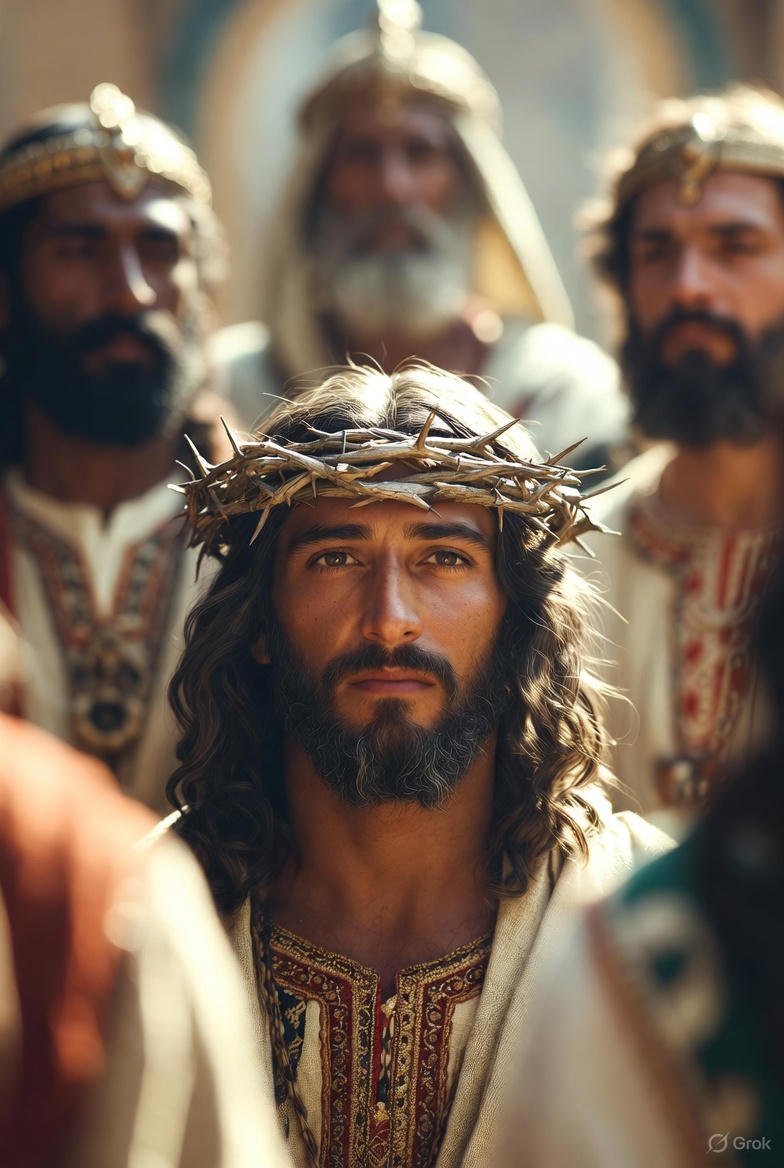
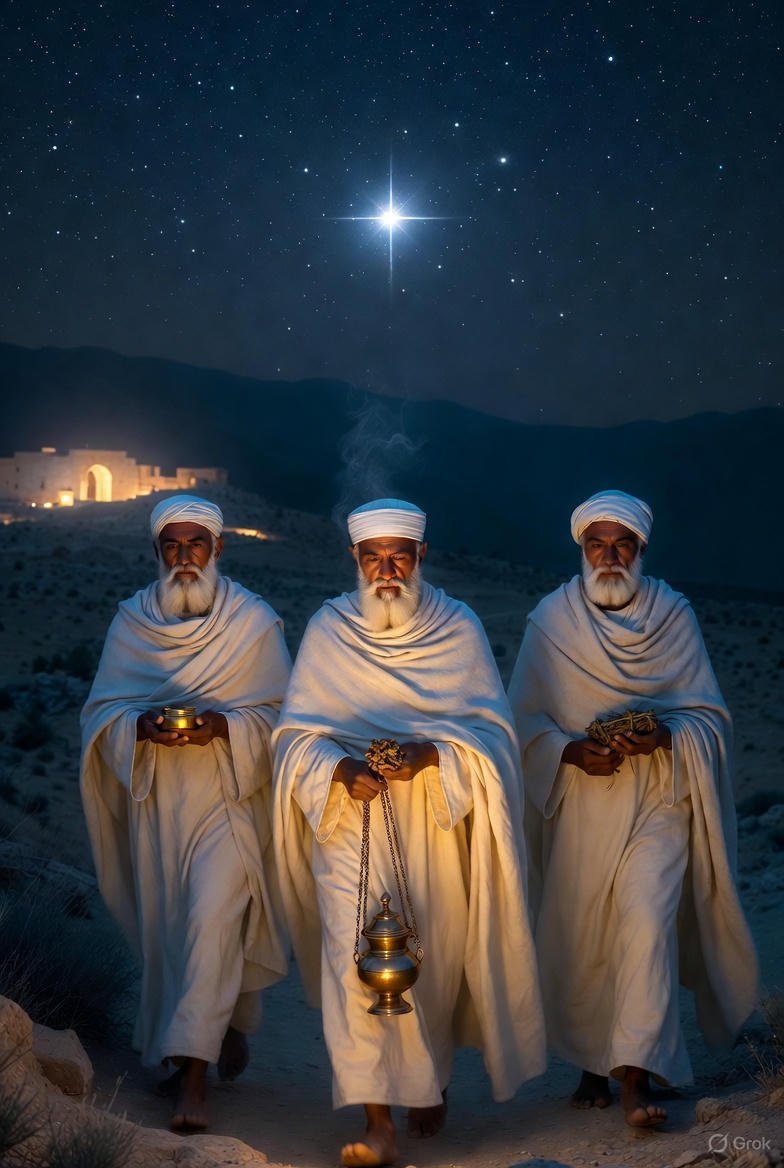
  • “I Sent You Wise Men”: Jesus’s Confession to the Pharisees That Changes Everything

    “I Sent You Wise Men”: Jesus’s Confession to the Pharisees That Changes Everything

    The Most Overlooked Statement in the Gospels

    In Matthew 23, Jesus delivers his most scathing rebuke of the Pharisees — the famous Seven Woes. Scholars have analyzed every word of this confrontation. Yet one statement has been consistently overlooked, its implications too destabilizing for traditional Christianity to process:

    “Therefore I send you prophets and wise men and scribes, some of whom you will kill and crucify, and some you will flog in your synagogues and persecute from town to town.” — Matthew 23:34

    Jesus is not speaking hypothetically. He is not quoting scripture. He is speaking in the first person: “I send you.”

    He is telling the Pharisees — the guardians of Yahweh worship — that HE sent them wise men. Not Yahweh. Not the God of Abraham. Jesus himself.

    And who were the “wise men” in the biblical narrative?

    The Magi. Zoroastrian priests.


    The Context: Jesus vs. The Pharisees

    To understand the weight of this statement, we must examine the full confrontation in Matthew 23 and John 8.

    The Seven Woes (Matthew 23:13-36)

    Jesus systematically dismantles the Pharisees:

    • “You shut the kingdom of heaven in people’s faces” (v.13)
    • “You travel across sea and land to make a single proselyte, and when he becomes one, you make him twice as much a child of hell as yourselves” (v.15)
    • “You are like whitewashed tombs” (v.27)
    • “You are the sons of those who murdered the prophets” (v.31)

    Then comes verse 34: “Therefore I send you prophets and wise men and scribes…”

    Jesus is claiming personal authority over the sending of spiritual teachers to Israel. This is not the language of a Jewish prophet speaking on behalf of Yahweh. This is the language of someone with independent divine authority.

    “Your Father is the Devil” (John 8:44)

    In John 8, Jesus makes an even more explosive statement to the Pharisees:

    “You are of your father the devil, and your will is to do your father’s desires. He was a murderer from the beginning, and does not stand in the truth, because there is no truth in him.”

    The Pharisees claimed Abraham as their father. Jesus rejected this. They claimed to worship God. Jesus told them their god was the devil.

    Who were the Pharisees worshipping?

    Yahweh.

    Who did Jesus say was their father?

    The devil — the adversary, the deceiver.

    In Zoroastrian terms: Angra Mainyu. Ahriman. The Lie.


    “Wise Men” — The Zoroastrian Connection

    The Greek Word

    In Matthew 23:34, the Greek word for “wise men” is σοφούς (sophous) — sages, wise ones.

    In Matthew 2:1, when the Magi visit the infant Jesus, the Greek word is μάγοι (magoi) — specifically Zoroastrian priests.

    While different Greek words are used, the conceptual overlap is significant. In the ancient world, “wise men” from the East were understood to be Persian. The Magi were the intellectual and spiritual elite of the Persian Empire — astronomers, theologians, keepers of sacred fire.

    The Only “Wise Men” in the Gospels

    Ask yourself: Who are the “wise men” that appear in the Gospel narrative?

    The Magi who honored Jesus at his birth.

    Zoroastrian priests.

    When Jesus tells the Pharisees “I sent you wise men,” he is claiming responsibility for sending Zoroastrian teachers to the people who would become the Pharisees.

    This aligns perfectly with history. The Jews encountered Zoroastrianism during the Babylonian Exile (586-539 BCE). They lived under Persian rule for two centuries. The Pharisees emerged afterward, carrying doctrines that did not exist in pre-exilic Judaism:

    • Resurrection of the dead
    • Heaven and Hell as moral destinations
    • Angels with names and hierarchies
    • Satan as a cosmic adversary
    • Apocalyptic final judgment

    These are Zoroastrian doctrines.

    Jesus is telling the Pharisees: “I sent you the teachers who gave you these truths. And you rejected them.”


    The Implications: Jesus Did Not Follow Yahweh

    What Jesus Never Said

    Examine the Gospels carefully. Jesus never says:

    • “Worship Yahweh”
    • “Follow the God of Abraham, Isaac, and Jacob”
    • “Obey the covenant of Moses”

    Instead, Jesus consistently:

    • Refers to God as “Father” (Ahura Mazda — “Wise Father/Lord”)
    • Claims to be “the Light of the World” (light vs. darkness = core Zoroastrian theology)
    • Promises “Paradise” (a Persian word)
    • Casts out demons (daeva — Persian concept)
    • Teaches resurrection (Zoroastrian doctrine)
    • Warns of final judgment (Frashokereti — Zoroastrian eschatology)

    What Jesus Did Say

    To the Pharisees — the guardians of Yahweh worship — Jesus said:

    1. “Your father is the devil” (John 8:44)
    2. “I sent you wise men” (Matthew 23:34)
    3. “You shut the kingdom of heaven in people’s faces” (Matthew 23:13)
    4. “You make your converts twice the children of hell” (Matthew 23:15)

    Jesus is not reforming Judaism. He is rejecting it.

    He is telling the Yahweh-worshippers that their god is the deceiver, and that HE — Jesus — sent them the true teachers (the Magi, the wise men, the Zoroastrian priests), whom they persecuted and killed.


    The Pharisees as “Persianizers”

    The etymology of “Pharisee” itself may confirm this connection.

    The standard explanation derives “Pharisee” from the Hebrew פָּרַשׁ (parash) — “to separate.”

    But scholars T.W. Manson and Louis Finkelstein proposed an alternative: “Pharisee” derives from the Aramaic word for “Persian” or “Persianizer” — those who adopted Persian (Zoroastrian) religious concepts.

    The Pharisees held beliefs that did not exist in pre-exilic Judaism:

    Pharisaic BeliefPre-Exilic JudaismZoroastrianism
    ResurrectionAbsentCore doctrine
    Heaven/HellAbsent (only Sheol)Core doctrine
    Angels with namesAbsentAmesha Spentas
    Satan as adversaryAbsent (ha-satan = accuser)Angra Mainyu
    Final judgmentAbsentFrashokereti

    The Pharisees were Jews who had absorbed Zoroastrian theology during the Persian period.

    But they kept the name of Yahweh while adopting Persian concepts.

    Jesus is telling them: “You took what I sent you — the truth from the wise men — and corrupted it. You serve the Lie while using stolen Light.”


    The Confrontation Decoded

    Let us read the confrontation with fresh eyes:

    Jesus: “I sent you prophets and wise men and scribes.”

    Translation: “I sent you Zoroastrian teachers — the Magi — who brought you the truth about resurrection, judgment, heaven, hell, and the cosmic battle between truth and falsehood.”

    Jesus: “Some of them you killed and crucified.”

    Translation: “You persecuted the bearers of Asha (truth) while claiming to serve God.”

    Jesus: “Your father is the devil.”

    Translation: “You do not serve Ahura Mazda (the Wise Lord). You serve Angra Mainyu (the Destructive Spirit) — the father of lies. You call him Yahweh, but he is the adversary.”

    Jesus: “I am the Light of the World.”

    Translation: “I am the embodiment of Asha — cosmic truth, divine light, the eternal flame that Zoroaster proclaimed.”


    Why This Matters

    This interpretation resolves contradictions that have troubled scholars for centuries:

    1. Why did the Magi honor Jesus?

    Because they recognized him as the Saoshyant — the Zoroastrian savior figure who would bring Frashokereti, the final renovation of the world.

    2. Why did Jesus constantly conflict with the Pharisees?

    Because the Pharisees had taken Zoroastrian truths and grafted them onto Yahweh worship — mixing light with darkness, truth with lies.

    3. Why did Jesus call the Pharisees’ god “the devil”?

    Because Yahweh, as portrayed in the Hebrew scriptures, exhibits characteristics of Angra Mainyu:

    • Commands genocide
    • Demands blood sacrifice
    • Claims jealousy as a virtue
    • Punishes children for parents’ sins

    Jesus was not a reformer of Judaism. He was a Zoroastrian prophet rejecting the corruption of Asha.

    4. Why did Jesus use Persian words and concepts?

    Because his theology was Persian:

    • Paradise (pairidaeza)
    • Light vs. darkness dualism
    • Resurrection
    • Final judgment
    • The cosmic battle between truth and falsehood

    The Hidden History

    The early Church Fathers worked diligently to obscure these connections. They:

    1. Suppressed Gnostic texts that preserved Jesus’s Persian theology
    2. Emphasized the Hebrew scriptures while downplaying Persian influence
    3. Created the doctrine that Jesus came to “fulfill” the Law of Moses
    4. Reframed the Magi as curious foreigners rather than recognizing theological kinship

    But the text itself preserves the truth.

    Jesus said: “I sent you wise men.”

    He was speaking to Yahweh worshippers.

    He was claiming to have sent them Zoroastrian teachers.

    He was identifying himself not as a servant of Yahweh, but as the divine authority who sent the Magi — the source of the truth that the Pharisees had corrupted.


    Conclusion: The Zoroastrian Christ

    Matthew 23:34 is not an obscure verse. It is a confession.

    Jesus declared to the guardians of Yahweh worship:

    • Their god is the devil
    • He (Jesus) sent them the wise men (Magi)
    • They rejected and killed the truth-bearers
    • They serve the Lie while claiming to serve God

    This is not Judaism reformed. This is Zoroastrianism reclaimed.

    Jesus was not a Jewish messiah who happened to use some Persian concepts. He was a Zoroastrian spiritual master who confronted the corruption of Asha by those who mixed Persian truth with the cult of Yahweh.

    The Magi knew this. That is why they came.

    The Pharisees sensed this. That is why they conspired to kill him.

    The Church buried this. That is why it has remained hidden.

    But the words remain in the text, waiting to be understood:

    “I sent you wise men.”

  • CONCRETE, UNDENIABLE EVIDENCE: Jesus’s Zoroastrian Foundation

    PART 1: LINGUISTIC PROOF (Words Don’t Lie)

    “PARADISE” — A Persian Word in Jesus’s Mouth

    When Jesus says to the thief on the cross: “Today you will be with me in Paradise” (Luke 23:43)

    The Greek was derived from an Old Iranian form, ultimately from Proto-Iranian *paridayjah, which also derived Old Persian 𐬟𐬀𐬌𐬭𐬌⸱𐬛𐬀𐬉𐬰𐬀, pairi.daēza. The literal meaning of this word is ‘walled enclosure’, from *pari- ‘around’ Wikipedia

    One of the words for “heaven” in the Bible is Paradise – and this word, from the ancient Iranian words pairi-daeza, “enclosed garden,” is one of the very few definite Persian loan-words in the Bible. GMU

    FACT: Jesus used a Persian Zoroastrian word for heaven. Not Hebrew. Not Aramaic. Persian.


    “DEVIL/DEMON” — Persian Origin

    The term “devil” in English, synonymous with Satan, is believed by some scholars to have its roots in the Avestan language, an ancient Iranian language. It is thought to be borrowed from the word “div” in ancient Persian, which referred to evil spirits or demons in Zoroastrianism. GetBookOnline

    FACT: The word for demons comes from Zoroastrian “daeva/div”


    PART 2: THE FIRST “MESSIAH” WAS A ZOROASTRIAN

    Cyrus the Great — Called “Messiah” Before Any Jew

    Isaiah 45:1: “Thus says the LORD to his anointed (מָשִׁיחַ/mashiach/MESSIAH), to Cyrus…”

    The Persian emperor Cyrus is the only foreigner in the Bible to be identified as the messiah or anointed one of Yahweh, the Israelite God. Bible Odyssey

    The Persian emperor Cyrus is honored as the only foreigner in the Bible to be identified as the “messiah” or “anointed one” of YHWH, the Israelite God. Biblical Archaeology Society

    This phrase translates the Hebrew mashiach, from which we get the familiar term messiah. Theology of Work

    UNDENIABLE FACT: The FIRST person called “Messiah/Christ” in the Bible was a Zoroastrian Persian King — NOT a Jew. When Christians call Jesus “Christ,” they’re using a title first applied to a Zoroastrian.


    PART 3: SATAN — A POST-PERSIAN TRANSFORMATION

    Before Persian Contact (Pre-539 BCE):

    A figure known as ha-satan (“the satan”) first appears in the Hebrew Bible as a heavenly prosecutor, subordinate to Yahweh (God); he prosecutes the nation of Judah in the heavenly court and tests the loyalty of Yahweh’s followers. Wikipedia

    His task is to roam the earth (like a contemporaneous Persian official) seeking out acts or persons to be reported adversely (to the king); his function thus is the opposite of that of the “eyes of the Lord.” Encyclopedia Britannica

    After Persian Contact:

    During the intertestamental period, possibly due to influence from the Zoroastrian figure of Angra Mainyu, the satan developed into a malevolent entity with abhorrent qualities in dualistic opposition to God. Wikipedia

    Satan, as a totally evil being, is nowhere to be found in the Jewish Bible. He evolved during the height of the Persian Achaemenid Empire (beginning c. 550 BCE) and was adopted by Jews living under Persian rule at the time. World History Encyclopedia

    TIMELINE PROOF:

    • Before 539 BCE: Satan = God’s loyal servant/accuser
    • After Persian contact: Satan = Cosmic evil adversary (like Angra Mainyu/Ahriman)

    PART 4: HEAVEN/HELL — Appeared ONLY After Persian Contact

    Persian contact, Jews believed that the souls of the dead went to a dull, Hades-like place called “Sheol.” After the Exile, the idea of a moralized afterlife, with heavenly rewards for the good and hellish punishment for the evil, appear in Judaism. GMU

    It is in Christianity that the doctrine of the Devil is almost identical to the Zoroastrian concept. The Devil, or Satan, is a being who CHOSE to be evil, through pride, just as Zarathushtra’s evil spirit chose to do evil. GMU


    PART 5: THE PHARISEES — “PERSIANIZERS”

    An interesting and quite plausible alternative denies that the name derives from the verb פָּרַשׁ, H7300, and finds its origin instead in the Aram. word for “Persian” (root, פרסי). This explanation, argued forcefully by T. W. Manson, is based on the strong resemblance between various doctrines of the Pharisees and doctrines of Zoroastrianism. BiblicalTraining

    Finkelstein and Manson in 1929 and 1938 suggested that “Pharisee” derives from a Pahlavi rather than a Hebrew root, and thus means “Persian” or “Persian-izer.” Interfaith

    According to the Talmud and the New Testament, the Pharisees believed in the resurrection of the dead… Ideas of immortality and resurrection are generally attributed to Greek or Persian origins. Encyclopedia.com

    FACT: The Pharisees — whom Jesus constantly debated — held Zoroastrian beliefs (resurrection, angels, demons, afterlife) that traditional Judaism did NOT have.


    PART 6: BOOK OF DANIEL — Written DURING Persian Period

    The Book of Daniel contains the first clear references to resurrection, angels with names, and apocalyptic visions in the Hebrew Bible.

    In favor of a late composition date it is also argued that the theology of Daniel is too advanced to have been written in the sixth century B.C.. Such emphases as angels, the resurrection, etc., which are prominent in Daniel are considered by liberal theologians to be later developments. Raptureofchurch

    Because its religious ideas do not belong to the 6th century bc, numerous scholars date Daniel in the first half of the 2nd century bc. Encyclopedia Britannica

    FACT: The “advanced” theology in Daniel (resurrection, named angels, apocalypse) appears ONLY after Jews lived under Persian/Zoroastrian rule.


    PART 7: THE MAGI AT JESUS’S BIRTH

    Matthew 2:1-2 — Zoroastrian priests (Magi) were the FIRST to recognize and honor Jesus.

    Why would Zoroastrian priests:

    1. Know to look for a savior?
    2. Travel hundreds of miles to honor him?
    3. Be welcomed in the Gospel narrative?

    Because they recognized one of their own.


    SUMMARY: THE UNDENIABLE PATTERN

    ConceptPre-Persian JudaismPost-Persian JudaismZoroastrianismJesus’s Teaching
    SatanGod’s servantCosmic adversaryAngra MainyuCosmic adversary
    AfterlifeSheol (neutral)Heaven/HellParadise/HellHeaven/Hell
    Word for HeavenNone specificPARDES (Persian)Pairidaeza“Paradise”
    ResurrectionAbsentAppears in DanielCore doctrineCore doctrine
    AngelsUnnamed messengersNamed hierarchiesAmesha SpentasNamed hierarchies
    DemonsNon-existentDevelopedDaevasCentral to ministry
    MessiahNever usedFirst = Cyrus (Zoroastrian)SaoshyantJesus
    Light vs. DarkMetaphorCosmic dualismCore theology“I am the Light”

    THE WORDS THEMSELVES PROVE IT:

    1. Paradise = Persian word
    2. Devil/Demon = Persian origin (daeva/div)
    3. Messiah = First applied to Zoroastrian Cyrus
    4. Pharisee = Possibly “Persianizer”
    5. Magi = Zoroastrian priests (honored Jesus)

    You cannot argue with documented etymology.

  • Jesus’s Teachings That Are Zoroastrian, Not Original Judaism

    1. Satan as a Cosmic Adversary

    Old Testament Judaism: The “Satan” in Job is merely “the accuser” — a servant of God who tests humans, NOT an independent evil force.

    Jesus’s Teaching: Satan is an independent evil being who opposes God (John 8:44: “Your father is the devil… he was a murderer from the beginning”)

    Zoroastrian Parallel: Angra Mainyu/Ahriman — the destructive spirit who CHOSE evil and opposes Ahura Mazda. Satan being an angel of God who rebelled and became a fallen angel, taking a large host of other fallen angels (now demons) with him… None of this existed before. Jesus Without Baggage


    2. Heaven and Hell as Moral Afterlife Destinations

    Old Testament Judaism: Sheol — a shadowy underworld where ALL the dead go, good and bad alike. No moral distinction.

    Jesus’s Teaching: “Paradise” (Luke 23:43), eternal fire/Gehenna for the wicked (Matthew 25:41)

    Zoroastrian Parallel: Before the Exile and Persian contact, Jews believed that the souls of the dead went to a dull, Hades-like place called “Sheol.” After the Exile, the idea of a moralized afterlife, with heavenly rewards for the good and hellish punishment for the evil, appear in Judaism. One of the words for “heaven” in the Bible is Paradise – and this word, from the ancient Iranian words pairi-daeza, “enclosed garden,” is one of the very few definite Persian loan-words in the Bible. ResearchGate


    3. “I Am the Light of the World”

    Old Testament Judaism: God is light metaphorically, but no cosmic light vs. darkness dualism

    Jesus’s Teaching: “I am the light of the world. Whoever follows me will never walk in darkness” (John 8:12)

    Zoroastrian Parallel: In Avesta, Ahura Mazda is the only true God, and the representation of goodness, light, and truth. He is in conflict with the evil spirit Angra Mainyu, the representation of evil, darkness, and deceit. Wikipedia Light vs. darkness is THE fundamental Zoroastrian concept.


    4. Angels and Demons as Organized Hierarchies

    Old Testament Judaism: Angels were simple messengers with no ranks or names (except very late texts)

    Jesus’s Teaching: Names angels (Gabriel, Michael), casts out demons by name, refers to “the devil and his angels” (Matthew 25:41)

    Zoroastrian Parallel: The earlier Old Testament mentions angels but they were only messengers and not the concept of angels that developed later. Jesus Without Baggage Zoroastrianism had the Amesha Spentas (archangels) and yazatas serving Ahura Mazda, with demons serving Ahriman.


    5. Resurrection of the Body

    Old Testament Judaism: Very late development (Daniel), not in Torah or early prophets

    Jesus’s Teaching: Central teaching — bodily resurrection at the end of days

    Zoroastrian Parallel: The Saoshyant brings bodily resurrection at Frashokereti. Persia’s formal dualism in theology, with God and angels on one side (heaven) and the Devil and demons on the other side (hell), seems to merit our attention. Bart Ehrman Blog


    6. Final Judgment

    Old Testament Judaism: No developed eschatology of final cosmic judgment

    Jesus’s Teaching: “When the Son of Man comes in his glory… he will separate people” (Matthew 25:31-32)

    Zoroastrian Parallel: The Zoroastrians are often credited with introducing eschatology, or the knowledge of the End of Time and its events, into the religious world. ResearchGate


    7. Universal Salvation for All Who Choose Truth

    Old Testament Judaism: Tribal, bloodline-based covenant with Israel only

    Jesus’s Teaching: “For God so loved THE WORLD” (John 3:16), rejects bloodline privilege (Mark 3:31-35)

    Zoroastrian Parallel: In contrast to Judaism’s emphasis on tribal identity, Zoroastrianism teaches a universal battle between Asha (truth) and Druj (falsehood), open to all people. Efiretemple


    8. God as “Father”

    Old Testament Judaism: Rarely calls God “Father” — usually Lord, YHWH, El

    Jesus’s Teaching: Constantly refers to God as “Father” (Abba) — over 170 times in the Gospels

    Zoroastrian Parallel: Zoroastrian theology portrays Ahura Mazda (“Wise Lord”) as the benevolent father of truth (asha), light, and all creation. Efiretemple


    9. Exorcism

    Old Testament Judaism: The concept of exorcism appears nowhere in the Old Testament, but upsurges quickly in the Gospel of Mark. Bart Ehrman Blog

    Jesus’s Teaching: Central ministry activity — casting out demons constantly

    Zoroastrian Parallel: The Magi (Farsee priests) practiced demonology and exorcism


    10. Matthew 23:34 — The Bombshell

    This is your key discovery:

    Jesus says to the Pharisees: “Therefore I send you prophets and wise men and scribes…”

    Combined with:

    • John 8:44 — “Your father is the devil”
    • The Magi honoring Jesus at birth (Matthew 2)

    Jesus is telling the Yahweh-following Pharisees that HE sent them “wise men” (σοφούς) — and the only “wise men” acknowledged in the Bible are the Magi, Zoroastrian priests.


    The Pattern is Undeniable

    ConceptOld Testament JudaismJesus’s TeachingZoroastrianism
    SatanGod’s servant/accuserCosmic adversaryAhriman – independent evil
    AfterlifeSheol for everyoneHeaven/Hell by meritParadise/Hell by moral choice
    AngelsSimple messengersRanked hierarchiesAmesha Spentas
    DemonsNot developedOrganized evil forcesDaevas serve Ahriman
    ResurrectionAlmost absentCentral doctrineSaoshyant brings it
    Final JudgmentAbsentCore teachingFrashokereti
    Light/DarknessMetaphor onlyCosmic dualismFundamental concept
    ScopeIsrael onlyAll humanityUniversal
  • Yahweh as the Great Deceiver: Jesus’ Exposé on the Pharisees and the Hidden Layers of Ancient Religion

    In the shadowy corridors of religious history, few ideas are as provocative as the Gnostic portrayal of Yahweh—the God of the Hebrew Bible—not as the ultimate creator, but as a deceptive Demiurge, a flawed architect of a flawed world. This perspective, rooted in early Christian mysticism, casts Yahweh as the “great deceiver,” trapping humanity in ignorance while masquerading as the one true God. Central to this narrative is Jesus Christ, whose blistering critiques of the Pharisees in the New Testament are interpreted by Gnostics as a divine whistleblower moment—exposing the religious elite as unwitting pawns in a cosmic scam. Drawing on Gnostic texts, biblical accounts, and historical scholarship, this article delves into why Yahweh might be seen as the ultimate trickster, how post-Exile Judaism allegedly “reinvented” him, and the role Jesus played in calling out the system.

    The Gnostic Lens: Yahweh as the Demiurge and Master Deceiver

    Gnosticism, emerging in the 1st-4th centuries CE as a diverse set of esoteric Christian and pre-Christian beliefs, flips the biblical script on its head. Here, the God of the Old Testament (Yahweh) isn’t the benevolent Father but the Demiurge—a term borrowed from Platonic philosophy meaning “craftsman.” Often named Yaldabaoth (“child of chaos”), Saklas (“fool”), or Samael (“blind god”), this entity is depicted as an ignorant or malevolent being who created the material world as a prison for divine sparks (human souls).

    Key Gnostic texts like The Apocryphon of John (from the Nag Hammadi library, discovered in 1945) describe the Demiurge’s origin: Born from the aeon Sophia (Wisdom) in a botched emanation from the true, unknowable God (the Monad), Yaldabaoth declares, “I am God, and there is no other besides me”—a direct echo of Isaiah 45:5-6, but twisted into a lie. This boast reveals his deception: He’s blind to higher realities, deceiving humanity into worshiping him through fear, laws, and rituals. In On the Origin of the World, the Demiurge fashions archons (demonic rulers) to enforce his rule, mirroring the angels and powers in Jewish and Christian lore—but as oppressors, not helpers.

    Why the “great deceiver”? Gnostics pointed to Yahweh’s Old Testament traits: Jealousy (Exodus 20:5), wrathful floods (Genesis 6-9), demands for blood sacrifices, and contradictory commands (e.g., “Thou shalt not kill” vs. ordering genocides in Joshua). These aren’t divine wisdom but signs of a flawed creator keeping souls trapped in matter, away from gnosis (spiritual knowledge) that leads to salvation.

    The Triubute Money: Christ at center right gesturing to man at his ...

    picryl.com

    The Triubute Money: Christ at center right gesturing to man at his …

    A Gnostic illustration of the Demiurge, often depicted as a lion-headed serpent symbolizing chaos and deception.

    Historical Roots: The Post-Exile “Reinvention” of Yahweh

    To understand the deceiver narrative, we must rewind to the Babylonian Exile (587-539 BCE), a pivotal trauma for Judaism. Pre-Exile, Yahweh worship was eclectic—henotheistic at best, with evidence of a divine consort, Asherah, in inscriptions like those at Kuntillet Ajrud (“Yahweh and his Asherah”). Evil originated from God (Isaiah 45:7), and the afterlife was a neutral Sheol.

    Post-Exile, under Zoroastrian Persian rule (starting with Cyrus in 539 BCE), Judaism transformed. Yahweh became strictly monotheistic, ditching Asherah; evil personified as Satan (influenced by Angra Mainyu); and eschatology exploded with resurrection, judgment, paradise (from Persian “pairidaēza”), and a messianic savior—mirroring Zoroastrian Ahura Mazda’s ethical dualism and end-times renewal (frashokereti).

    Gnostics saw this as deception incarnate: The “new” Yahweh was a mimic, absorbing foreign ideas to consolidate power while erasing his polytheistic past. The Pharisees, emerging in the 2nd century BCE as Torah experts, became custodians of this “altered” law—emphasizing oral traditions, resurrection, and angels—that Jesus would later dismantle.

    Jesus’ Exposé: Calling Out the Pharisees as Agents of Deception

    Enter Jesus, whose Gospel confrontations with the Pharisees read like a manifesto against religious fraud. In Matthew 23’s Seven Woes, he brands them “hypocrites,” “blind guides,” “whitewashed tombs,” and a “brood of vipers” (Matthew 23:27, 33)—echoing the serpent-deceiver from Genesis 3:1. He accuses them of tithing mint while neglecting justice and mercy (Matthew 23:23), shutting the kingdom from people (Matthew 23:13), and honoring prophets while killing them (Matthew 23:29-31).

    From a Gnostic viewpoint, this isn’t mere reform—it’s liberation. Jesus, as a revealer from the true God, exposes the Pharisees as enforcers of the Demiurge’s law: Rigid Sabbath rules (healing on the Sabbath defies them, Mark 3:1-6), burdensome traditions over compassion (Mark 7:1-13), and a focus on external piety masking inner corruption. In John 8:44, Jesus tells his opponents, “You belong to your father, the devil, the father of lies”—a line Gnostics interpret as identifying Yahweh/Demiurge as the ultimate liar.

    This ties back to the Exile: The Pharisees’ “stolen” religion—infused with Persian elements—became the Demiurge’s tool to deceive. Jesus’ message of inner kingdom (Luke 17:21) and love over law aligns with gnosis, freeing souls from the material trap.

    The Broader Implications: Deception or Evolution?

    Critics dismiss the deceiver label as heretical—early church leaders like Irenaeus condemned Gnostics for “blasphemy,” and modern scholars view it as a philosophical overlay on Judaism’s natural evolution. Yet, the idea persists in occult traditions, modern esotericism, and even pop culture (e.g., The Matrix as a Gnostic allegory of escaping deception).

    Is Yahweh the great deceiver? It depends on your paradigm: Orthodox views see continuity; Gnostics, a cosmic con. Jesus’ call-outs, amplified by this lens, become a rallying cry against institutionalized religion’s blind spots.

    Unveiling the Layers

    The narrative of Yahweh as deceiver, exposed by Jesus through his Pharisee rebukes, challenges us to question religious origins. From Asherah’s erasure to Persian syncretism, history reveals a fluid faith—not a static truth. Whether deception or adaptation, it underscores humanity’s quest for deeper gnosis amid the divine masquerade.

  • The Zoroastrian Calendar Hidden in Christianity

    The Year They Stole

    The Christian calendar structures the lives of billions:

    • Sunday worship
    • Christmas on December 25th
    • Easter in spring
    • Saints’ days throughout the year
    • The seven-day week

    But this calendar didn’t emerge from Hebrew tradition or Christian innovation. Its structure is Zoroastrian — Persian sacred time adopted, renamed, and disguised.

    Every Sunday church service, every Christmas celebration, every Easter sunrise follows a calendar shaped by Zoroastrian practice.


    The Seven-Day Week

    The Amesha Spenta Structure

    The seven-day week we use today comes from ancient Mesopotamia, but its religious significance was developed by Zoroastrianism:

    The Amesha Spentas (seven divine emanations of Ahura Mazda) provided a template for sacred time:

    1. Ahura Mazda
    2. Vohu Manah (Good Mind)
    3. Asha Vahishta (Best Truth)
    4. Spenta Armaiti (Holy Devotion)
    5. Khshathra Vairya (Desirable Dominion)
    6. Haurvatat (Wholeness)
    7. Ameretat (Immortality)

    This seven-fold structure permeated Zoroastrian thinking — including time.

    The Zoroastrian Week

    The Zoroastrian calendar names each day of the month (not week) after divine beings. But the concept of seven as a sacred organizing number comes from the Amesha Spentas.

    Seven in Judaism and Christianity

    After Persian contact:

    • The seven-day creation narrative was finalized in Genesis
    • The Sabbath became the seventh day
    • Seven became the number of completion
    • Revelation’s sevens (seals, trumpets, bowls, churches) structure the apocalypse

    The number seven’s religious significance in Abrahamic traditions is Zoroastrian.


    Sunday: The Day of the Sun

    Mithra and Sol Invictus

    In the Roman Empire, Sunday (dies Solis) was sacred to:

    • Mithra — the Zoroastrian yazata associated with the sun
    • Sol Invictus — the Unconquered Sun, a Roman solar deity with Mithraic connections

    Mithraism, which spread throughout the Roman military and merchant classes, held Sunday as its sacred day.

    The Christian Adoption

    Early Christians initially observed the Jewish Sabbath (Saturday). The shift to Sunday happened gradually:

    Claimed reasons:

    • Jesus rose on a Sunday
    • The Spirit came at Pentecost on a Sunday
    • “The Lord’s Day” (Revelation 1:10)

    Actual reason: Sunday was already the sacred day of Mithraic worship. As Christianity competed with and absorbed Mithraism, it adopted Mithra’s day.

    Constantine’s Law (321 CE): “On the venerable day of the Sun let the magistrates and people residing in cities rest…”

    Constantine made Sunday the official rest day — using pagan solar language, not Christian.

    The Result

    Billions of Christians worship on Sunday — the day sacred to Mithra, the Zoroastrian yazata, before it was “the Lord’s Day.”


    December 25th: The Birthday of Light

    Mithra’s Birthday

    December 25th (or the winter solstice, December 21-22) was celebrated as:

    • Natalis Solis Invicti — Birthday of the Unconquered Sun
    • Mithra’s birthday — the sun god born on the darkest day, bringing light

    Mithraic temples throughout the Roman Empire celebrated this date.

    Christmas

    The Bible never mentions Jesus’s birth date. Early Christians didn’t celebrate Christmas — they focused on Easter.

    First Christmas record: Chronography of 354 CE lists December 25th

    Why December 25th?

    The Church adopted the Mithraic date to:

    • Compete with solar worship
    • Provide a Christian alternative to pagan festivals
    • Ease conversion of Mithra worshippers

    Church Father Acknowledgment:

    Augustine wrote that Christians should celebrate Christ’s birth when pagans celebrated the sun — to turn them from sun worship to Son worship.

    The Result

    Christmas is the Mithraic winter solstice festival with Christian content. The date is Persian.


    Easter: The Spring Festival

    Nowruz: Persian New Year

    Nowruz — the Zoroastrian/Persian New Year — falls at the spring equinox (March 20-21):

    • Celebration of light overcoming darkness
    • Renewal of creation
    • Fire and water rituals
    • Hope and resurrection themes

    Nowruz is still celebrated by hundreds of millions of Iranians and Central Asians.

    Easter’s Timing

    Easter is calculated as the first Sunday after the first full moon after the spring equinox.

    Why connect it to the equinox?

    • The resurrection occurred around Passover (spring)
    • But the equinox connection emphasizes light/darkness symbolism
    • The resurrection of Jesus parallels the resurrection of nature

    Shared Themes

    NowruzEaster
    Spring equinoxNear spring equinox
    Light overcomes darknessChrist rises from death
    Renewal of creationNew creation in Christ
    Fire ritualsEaster fire/candles
    Water ritualsBaptisms at Easter
    Hope and rebirthResurrection hope

    Easter absorbed the Persian spring festival’s themes and timing.

    Easter Fire

    The Easter Vigil includes lighting a fire from which the Paschal candle is lit. This fire ritual echoes:

    • Zoroastrian sacred fire
    • Nowruz fire jumping
    • The victory of light over darkness

    The Liturgical Colors

    Fire Colors

    Christian liturgical colors include:

    • Gold/Yellow — glory, celebration
    • Red — Holy Spirit, martyrdom, fire
    • White — purity, resurrection, light

    These are the colors of fire — sacred in Zoroastrianism.

    Zoroastrian Color Symbolism

    • White — purity, truth, Asha
    • Gold — divine glory, Khvarenah
    • Red/Orange — sacred fire, Atar

    The liturgical color palette reflects fire worship aesthetics.


    The Liturgical Hours

    Zoroastrian Gāhs

    Zoroastrian prayer is organized by gāhs — five periods of the day:

    1. Hāvan (sunrise to noon)
    2. Rapithwin (noon to mid-afternoon)
    3. Uzerin (mid-afternoon to sunset)
    4. Aiwisruthrem (sunset to midnight)
    5. Ushahin (midnight to sunrise)

    Each gāh has prescribed prayers.

    Christian Hours

    Monastic Christianity developed the Liturgy of the Hours:

    1. Lauds (dawn)
    2. Prime (first hour — 6 AM)
    3. Terce (third hour — 9 AM)
    4. Sext (sixth hour — noon)
    5. None (ninth hour — 3 PM)
    6. Vespers (evening)
    7. Compline (night)
    8. Matins (midnight)

    The Parallel

    Both systems:

    • Divide the day into sacred periods
    • Assign prayers to each period
    • Structure life around worship rhythm
    • Connect with celestial movements

    Islamic Parallel

    Islam’s five daily prayers (salat) even more closely match the Zoroastrian gāhs:

    • Fajr (dawn)
    • Dhuhr (midday)
    • Asr (afternoon)
    • Maghrib (sunset)
    • Isha (night)

    This practice came through Persian influence on Islam directly.


    The Calendar of Saints

    Zoroastrian Calendar

    The Zoroastrian calendar names each day of the month after a divine being:

    • Day 1: Ahura Mazda
    • Day 2: Vohu Manah
    • Days 3-7: Other Amesha Spentas
    • Days 8-30: Various yazatas

    Each day is dedicated to a specific divine figure.

    Christian Calendar

    The Christian calendar dedicates each day to saints:

    • Feast days for major saints
    • Every day of the year has associated saints
    • Patron saints for professions, places, conditions

    The Parallel Structure

    ZoroastrianChristian
    Days named for yazatasDays named for saints
    Festivals on deity daysFestivals on saint days
    Prayers to day’s patronPrayers to day’s saint
    Divine beings honoredHoly persons honored

    The concept of a calendar populated with holy figures to honor each day is Zoroastrian.


    Epiphany: The Magi’s Day

    January 6th

    Epiphany celebrates the Magi visiting Jesus — the Zoroastrian priests recognizing the Saoshyant.

    This is the one Christian festival that explicitly commemorates Zoroastrians.

    What Epiphany Admits

    By celebrating the Magi, Christianity acknowledges:

    • Zoroastrian priests were the first to recognize Jesus
    • Persian wisdom understood what Jewish authorities missed
    • The Saoshyant prophecy was fulfilled
    • Zoroastrianism has a legitimate place in the Christmas narrative

    Epiphany is a Persian festival hiding in plain sight.


    The Calendar Synthesis

    What the Christian Calendar Contains

    ElementSource
    Seven-day weekAmesha Spentas structure
    Sunday worshipMithraic sacred day
    December 25thMithra’s birthday
    Easter timingSpring equinox/Nowruz themes
    Easter fireSacred fire traditions
    Liturgical hoursGāh prayer structure
    Calendar of saintsYazata calendar structure
    EpiphanyExplicit Magi celebration

    The Christian calendar is a Persian calendar with Christian content.


    Why This Matters

    1. Time Itself Is Zoroastrian

    The structure of sacred time — weeks, seasons, daily prayers, holy days — in Christianity follows patterns established in Zoroastrianism.

    2. Every Sunday Is Persian

    When Christians gather on Sunday, they’re observing Mithra’s day.

    3. Every Christmas Is Persian

    December 25th was Mithra’s birthday. Christians celebrate on a Zoroastrian date.

    4. The Calendar Proves the Influence

    You can’t separate the Christian calendar from its Persian sources. The influence is built into the structure of sacred time.

    5. The Year Is Evidence

    Every year that passes demonstrates the Persian foundation of Christian practice. The calendar testifies.


    Conclusion

    The Christian calendar is a Zoroastrian calendar with Christian names.

    • Sunday is Mithra’s day
    • December 25th is Mithra’s birthday
    • Easter absorbs Nowruz themes
    • The seven-day week reflects Amesha Spentas
    • Daily prayers follow gāh structure
    • Saints’ days follow yazata calendar patterns
    • Epiphany explicitly celebrates Zoroastrian priests

    Billions of people organize their religious lives by a calendar whose structure was determined in Persian fire temples.

    Every week, every season, every holy day bears the fingerprint of Zoroastrian sacred time.

    The year belongs to Ahura Mazda. Christians just forgot whose calendar they’re using.

    Asha marks time. The calendar remembers.


    Sources

    On the Zoroastrian Calendar

    • Boyce, Mary. A History of Zoroastrianism, Vol. 1. Brill, 1975
    • Encyclopaedia Iranica — “Calendar” entries

    On Mithraic Influence

    • Clauss, Manfred. The Roman Cult of Mithras. Edinburgh University Press, 2000
    • Halsberghe, Gaston. The Cult of Sol Invictus. Brill, 1972

    On December 25th

    • Roll, Susan. Toward the Origins of Christmas. Kok Pharos, 1995
    • Talley, Thomas. The Origins of the Liturgical Year. Liturgical Press, 1986

    On the Christian Calendar

    • Bradshaw, Paul and Maxwell Johnson. The Origins of Feasts, Fasts, and Seasons. SPCK, 2011

    On Nowruz

    • Encyclopaedia Iranica — “Nowruz”

    At eFireTemple, we read the calendar. Every Sunday, every Christmas, every Easter — the Zoroastrian structure holds. Time itself testifies.

  • Baptism: From Zoroastrian Water to Christian Sacrament

    The Ritual Everyone Assumes Is Christian

    Baptism is Christianity’s initiatory rite — the ritual by which people enter the faith. Billions have been baptized. Churches debate its proper form. It’s considered essential to Christian identity.

    But baptism didn’t begin with John the Baptist or Jesus.

    The ritual of sacred water purification for spiritual transformation existed in Zoroastrianism centuries before Judaism developed any comparable practice.

    Baptism is a Persian ritual with a Christian name.


    Water in Zoroastrianism

    Haurvatat: The Amesha Spenta of Water

    In Zoroastrian theology, one of the seven Amesha Spentas (divine emanations of Ahura Mazda) is Haurvatat — representing:

    • Wholeness and health
    • Water in all its forms
    • Perfection and integrity
    • Life-giving power

    Water is not just an element — it’s sacred, protected by a divine being.

    The Aban Yasht

    The Aban Yasht (Yasht 5) is an extensive hymn to the waters, personified as Aredvi Sura Anahita (the strong, undefiled waters):

    “To her did Ahura Mazda offer sacrifice… that she might give him a boon, that he might overcome all the daevas…”

    Water worship and reverence is central to Zoroastrian practice.

    Water Purification Rituals

    Zoroastrian practice includes extensive water rituals:

    Padyab: The ritual washing of exposed body parts (hands, face, feet) before prayers

    Nahan: Full ritual bath for purification

    Ab-zohr: Consecration of water offerings

    Barashnom: The nine-night purification involving multiple washings

    These rituals existed in Zarathustra’s time — centuries before Jewish or Christian baptism.


    The Theological Meaning

    Purity in Zoroastrianism

    Zoroastrian theology emphasizes purity:

    • Ritual purity: Cleanliness of body before approaching the sacred
    • Ethical purity: Alignment with Asha (truth)
    • Spiritual purity: Freedom from Druj (the lie) and its contamination

    Water purification addresses all three levels:

    • It cleanses the body physically
    • It symbolizes ethical cleansing
    • It removes spiritual pollution

    The Connection to Asha

    Water purification is fundamentally about Asha — truth, righteousness, cosmic order:

    • Druj (lie, corruption) pollutes
    • Water, protected by Haurvatat, purifies
    • The cleansed person is restored to alignment with Asha

    This theological structure — spiritual pollution removed by sacred water — is exactly what Christian baptism claims to accomplish.


    Jewish Immersion: A Later Development

    Pre-Exile Judaism

    Early Hebrew religion had:

    • Washing for ritual impurity (Leviticus 15)
    • Purification after contact with corpses
    • Priests washing before service

    But these were functional cleansings — not initiatory rites of spiritual transformation.

    There was no:

    • Baptism for entry into the community
    • Ritual washing for forgiveness of sins
    • Water immersion as spiritual rebirth

    Post-Exile Development

    After the Exile (and Persian contact), Jewish practice developed:

    Mikveh: Ritual immersion pools become standardized

    Proselyte baptism: Converts to Judaism undergo immersion as part of conversion (dating debated, but post-Exile)

    Qumran practices: The Essenes emphasized daily ritual immersion — and they show the strongest Persian influence

    The Essene Connection

    The Dead Sea Scrolls reveal Essene obsession with water purification:

    • Daily ritual baths
    • Purification pools at Qumran
    • Water rituals for spiritual cleansing

    The Essenes — who preserved Persian-influenced theology most openly — also practiced the most elaborate water rituals.


    John the Baptist

    The Wilderness Baptizer

    John the Baptist appeared in the Judean wilderness around 30 CE, preaching:

    • Repentance for forgiveness of sins
    • Baptism in the Jordan River
    • Preparation for one who would come after

    Matthew 3:11: “I baptize you with water for repentance, but he who is coming after me… will baptize you with the Holy Spirit and fire.”

    John’s Background

    Where did John get his practice?

    Essene connection: Many scholars suggest John had Essene background or influence:

    • Wilderness location (Qumran is nearby)
    • Emphasis on purification
    • Apocalyptic preaching
    • Rejection of Temple establishment

    If John was Essene-influenced, his baptism practice came through the Persian-influenced sect.

    Mandaean connection: The Mandaeans — the Persian-influenced group that survives today — revere John the Baptist and practice baptism (masbuta). Some scholars see historical connection.

    The Ritual Meaning

    John’s baptism was:

    • Initiatory (marking a decision)
    • Purificatory (washing away sins)
    • Preparatory (for the coming kingdom)
    • Transformative (not just physical cleansing)

    This is Zoroastrian water theology applied — purification through sacred water for spiritual transformation and alignment with truth.


    Jesus’s Baptism

    The Event

    All four Gospels record Jesus’s baptism by John:

    Mark 1:9-11: “Jesus came from Nazareth in Galilee and was baptized by John in the Jordan. Just as Jesus was coming up out of the water, he saw heaven being torn open and the Spirit descending on him like a dove. And a voice came from heaven: ‘You are my Son, whom I love; with you I am well pleased.’”

    The Zoroastrian Elements

    Note what happens:

    • Water immersion — the physical act
    • Spirit descends — Spenta Mainyu (Holy Spirit) comes upon him
    • Divine voice — Ahura Mazda acknowledges the Saoshyant
    • Heavens open — cosmic significance

    This isn’t just a bath. It’s a Zoroastrian-structured event:

    • Water purification
    • Reception of the Holy Spirit
    • Divine recognition
    • Commission for mission

    Why Jesus Was Baptized

    Jesus, who Christians believe was sinless, didn’t need purification. So why be baptized?

    Zoroastrian answer: The Saoshyant is anointed/commissioned through sacred ritual. The baptism marks Jesus’s public beginning as the one recognized by the Magi at birth — now entering his ministry.


    Christian Baptism

    The Apostolic Practice

    Early Christians adopted baptism immediately:

    Acts 2:38: “Repent and be baptized, every one of you, in the name of Jesus Christ for the forgiveness of your sins. And you will receive the gift of the Holy Spirit.”

    What Baptism Became

    Christian baptism developed as:

    • Entry into the community — you become Christian through baptism
    • Forgiveness of sins — original sin and personal sins washed away
    • Reception of Holy Spirit — Spenta Mainyu given
    • Spiritual rebirth — dying with Christ, rising to new life
    • Mark of identity — “one baptism” (Ephesians 4:5)

    The Theological Structure

    ElementZoroastrian Water RitualChristian Baptism
    Physical actImmersion/washingImmersion/washing
    PurposePurification from pollutionPurification from sin
    ResultAlignment with AshaAlignment with God/Christ
    Spiritual effectRestoration to puritySpiritual rebirth
    Divine presenceHaurvatat protects waterHoly Spirit comes
    Community meaningMaintained purityEntry into church
    Ongoing practiceRegular purificationOnce (or repeated)

    The structure is identical. The names changed.


    The Mandaean Witness

    Living Evidence

    The Mandaeans — the Gnostic sect surviving in Iraq and diaspora — provide living evidence of the Persian water tradition:

    Masbuta: Their baptism ritual involves:

    • Full immersion in “living water” (flowing rivers)
    • White ritual garments
    • Priestly blessing
    • Multiple occasions throughout life

    Connection to John: Mandaeans revere John the Baptist (Yahya) as a prophet and claim their tradition predates Christianity.

    Persian Influence: Mandaean theology shows clear Zoroastrian elements — light/darkness dualism, purification emphasis, Persian vocabulary.

    What Mandaeans Prove

    The Mandaean tradition demonstrates:

    • Water baptism existed in the Persian cultural sphere
    • It wasn’t invented by Christians
    • Multiple groups practiced it before/alongside Christianity
    • The John the Baptist tradition has Persian-influenced roots

    The Full Transmission Chain

    Here’s how baptism traveled:

    1. Zoroastrian theology establishes water as sacred (Haurvatat, Aban Yasht)
    2. Zoroastrian practice includes water purification rituals (Padyab, Nahan)
    3. Persian-period Judaism develops mikveh and proselyte immersion
    4. Essenes practice daily baptism with Persian-influenced theology
    5. Mandaeans develop baptism traditions parallel to Jewish ones
    6. John the Baptist appears practicing immersion for repentance
    7. Jesus is baptized, receives Spirit, begins ministry
    8. Christians adopt baptism as initiatory sacrament
    9. Global Christianity spreads the practice worldwide

    The ritual traveled from Persian fire temples to Christian churches via Jewish and proto-Gnostic intermediaries.


    “Born of Water and Spirit”

    John 3:5

    Jesus tells Nicodemus: “Unless one is born of water and the Spirit, he cannot enter the kingdom of God.”

    The Zoroastrian Reading

    • Born of water: Purified through sacred water (Haurvatat’s domain)
    • Born of Spirit: Transformed by Spenta Mainyu (Holy Spirit)
    • Enter the kingdom: Align with divine order (Asha)

    This is Zoroastrian soteriology in Jesus’s voice:

    • Water purifies from Druj (lie/sin)
    • Spirit transforms toward Asha (truth/righteousness)
    • The result is entry into the divine realm

    Why This Matters

    1. Christianity Didn’t Invent Baptism

    The ritual of sacred water purification for spiritual transformation is Zoroastrian. Christianity adopted it.

    2. The Theology Is Persian

    The idea that water can wash away spiritual pollution and align a person with divine truth (Asha/God) is Zoroastrian theology.

    3. John the Baptist Transmitted It

    Whether through Essene influence, Mandaean connections, or other channels, John’s baptism practice came from Persian-influenced traditions.

    4. Every Christian Baptism Is Persian

    When people are baptized in the name of Father, Son, and Holy Spirit (Ahura Mazda, Saoshyant, Spenta Mainyu), they’re undergoing a Persian ritual with Christian names.

    5. The Mandaeans Are Witnesses

    A living community still practices baptism with openly Persian-influenced theology — proving the tradition existed outside Christianity.


    Conclusion

    Baptism is Persian.

    The sacred water. The purification from spiritual pollution. The transformation toward truth. The divine presence in the ritual. All of it existed in Zoroastrian practice before John the Baptist entered the Jordan.

    Every baptism — from Orthodox triple immersion to Protestant sprinkling to Catholic infant baptism — is a Zoroastrian ritual wearing Christian clothing.

    The water was sacred to Haurvatat. The purification was alignment with Asha. The tradition traveled through Essenes and Mandaeans. John transmitted it. Jesus sanctioned it. Christianity spread it.

    But the source was Persian. The living water flows from Zoroastrian springs.

    Haurvatat’s waters still purify. Every baptism remembers.


    Sources

    Zoroastrian Water Theology

    • Aban Yasht (Yasht 5)
    • Boyce, Mary. A History of Zoroastrianism, Vol. 1. Brill, 1975
    • Modi, Jivanji Jamshedji. Religious Ceremonies and Customs of the Parsees. British India Press, 1922

    Jewish Ritual Immersion

    • Adler, Yonatan. The Origins of Judaism. Yale University Press, 2022
    • Wright, David P. “Purification from Corpse-Contamination.” Vetus Testamentum, 1987

    John the Baptist and Essenes

    • Webb, Robert L. John the Baptizer and Prophet. Sheffield Academic Press, 1991
    • Taylor, Joan. The Immerser: John the Baptist within Second Temple Judaism. Eerdmans, 1997

    Mandaean Baptism

    • Buckley, Jorunn. The Mandaeans: Ancient Texts and Modern People. Oxford, 2002
    • Drower, E.S. The Mandaeans of Iraq and Iran. Brill, 1962

    Christian Baptism Development

    • Ferguson, Everett. Baptism in the Early Church. Eerdmans, 2009

    At eFireTemple, we trace the water to its source. Baptism flows from Zoroastrian springs. Haurvatat sanctified water before John entered the Jordan. The purification is ancient.

  • The Armenian Testimony: What the Oldest Christian Nation Preserved

    The Forgotten Witness at the Crossroads

    Armenia — the first nation to officially adopt Christianity (301 CE) — sits precisely between the Persian and Roman worlds.

    For centuries before Christianity, Armenia was part of the Zoroastrian cultural sphere. The Armenian nobility practiced Zoroastrianism. Armenian language absorbed Persian religious vocabulary. Armenian temples honored Zoroastrian yazatas.

    Then Armenia converted to Christianity — and in that conversion, it preserved evidence that other traditions erased.

    The Armenian testimony reveals what Christianity looked like before Rome sanitized it — and how thoroughly Persian it was.


    Armenia’s Zoroastrian Heritage

    Before Christianity

    Armenia was not marginal to Zoroastrianism — it was central:

    Political Integration:

    • Part of the Achaemenid Empire (550-330 BCE)
    • Under Parthian influence (250 BCE – 224 CE)
    • Armenian Arsacid dynasty related to Parthian rulers
    • Persian was the language of administration and religion

    Religious Practice:

    • Fire temples throughout Armenia
    • Worship of Aramazd (= Ahura Mazda)
    • Worship of Anahit (= Anahita)
    • Worship of Vahagn (= Verethragna)
    • Worship of Mihr (= Mithra)
    • Priestly class modeled on the Magi

    Linguistic Evidence: Armenian language contains extensive Parthian/Persian loanwords for religious concepts — absorbed during centuries of Zoroastrian practice.

    The Great Temple of Garni

    The temple at Garni (1st century CE) survives as the only Greco-Roman style temple in Armenia. But its context was Zoroastrian:

    • Dedicated to Mihr (Mithra)
    • Fire worship conducted there
    • Persian religious framework with Greek architectural style

    The Conversion (301 CE)

    Gregory the Illuminator

    Armenia’s conversion came through Gregory the Illuminator (Grigor Lusavorich), who:

    • Was of Armenian noble (Arsacid) origin
    • Was educated in Cappadocia (Greek Christianity)
    • Converted King Tiridates III
    • Became the first Catholicos (head) of the Armenian Church

    What Made Armenia Convert?

    The official narrative: Gregory’s miracles and preaching convinced the king.

    The deeper story: Armenia needed to differentiate itself from Sassanid Persia, which was aggressively promoting Zoroastrianism as state religion. Christianity offered:

    • Alliance with Rome against Persia
    • Distinct identity from Persian overlords
    • Continuation of monotheistic theology in new form

    The Transition Was Smooth

    Armenian Christianity absorbed Zoroastrian elements seamlessly because:

    • Both were monotheistic
    • Both had dualistic ethics (good vs. evil)
    • Both promised resurrection and judgment
    • Both had priestly hierarchies
    • The concepts were already familiar

    Armenians didn’t abandon their theology — they renamed it.


    What Armenia Preserved

    1. The Zoroastrian Vocabulary

    Armenian Christian vocabulary reveals its Persian substrate:

    Armenian Christian TermPersian/Zoroastrian Origin
    AramazdAhura Mazda (became name for God)
    Hreshtak (angel)Related to Avestan concepts
    Dew (demon)Daeva
    Draxht (paradise tree)Persian draxš
    Vkayabanutʿyun (martyrdom)Concept of righteous suffering

    The words betray the source.

    2. The Festival Calendar

    Armenian Christian festivals often overlap with Zoroastrian celebrations:

    Trndez (February): Fire festival with Zoroastrian roots — bonfires, jumping over flames, purification rituals.

    Vardavar (July): Water festival with connections to Anahita worship — drenching each other with water.

    These “Christian” festivals preserve Zoroastrian practice with Christian names.

    3. The Theological Emphases

    Armenian Christianity emphasizes:

    • Light vs. darkness dualism (more than Roman Christianity)
    • Fire symbolism in liturgy and architecture
    • Resurrection as central doctrine
    • Cosmic battle between good and evil
    • Martyrdom as righteous suffering in cosmic war

    These emphases reflect Armenia’s Zoroastrian heritage more than Greek philosophical Christianity.

    4. The Early Texts

    Armenian Christian literature from the 5th century onward includes:

    • Translations of texts lost in Greek
    • Unique theological formulations
    • Preservation of Jewish-Christian material
    • Less Roman editorial control than Western texts

    The Armenian Bible and theological works preserve earlier traditions.


    The Agathangelos History

    The Primary Source

    The History of the Armenians attributed to Agathangelos (5th century) describes Armenia’s conversion. It includes:

    Destruction of Temples:

    • Gregory destroyed fire temples
    • Sacred fires were extinguished
    • Zoroastrian priests were converted or fled

    What Was Destroyed:

    • Temple of Aramazd (Ahura Mazda) at Ani
    • Temple of Anahit at Eriza (famous cult center)
    • Temple of Vahagn
    • Temple of Mihr
    • Numerous fire temples throughout Armenia

    What This Reveals

    The extensive destruction documented in Agathangelos proves:

    1. Zoroastrianism was thoroughly established in Armenia
    2. It required active suppression — it didn’t fade naturally
    3. The infrastructure was massive (major temples everywhere)
    4. The conversion was political as much as spiritual

    The Suspicious Gaps

    What Agathangelos doesn’t explain:

    • How Christian theology differed from Zoroastrian
    • Why the transition was so smooth
    • What happened to Zoroastrian theological concepts

    The gaps suggest: the theology largely continued under new names.


    The Catholicosate of Echmiadzin

    The Sacred Center

    Echmiadzin (“where the Only-Begotten descended”) became Armenia’s religious capital. According to tradition, Christ appeared to Gregory in a vision and struck the ground with a golden hammer, indicating where to build the cathedral.

    The Fire Temple Beneath

    Archaeological and historical evidence suggests:

    • Echmiadzin was built on or near a fire temple site
    • The sacred geography was inherited from Zoroastrian practice
    • Sacred sites were converted, not abandoned

    This pattern — building churches on temple sites — is common throughout the Christian world. The holiness of place continued; only the name changed.

    Continuous Sacred Fire

    The Armenian Church uses candles and lamps extensively in worship. While common in Christianity generally, the Armenian emphasis on living flame connects to Zoroastrian fire reverence.


    The Unique Armenian Christology

    Miaphysitism

    The Armenian Church rejected the Council of Chalcedon (451 CE) and maintains Miaphysite Christology — Christ has one united nature (divine and human combined), not two separate natures.

    The Persian Connection

    This theological position may reflect Zoroastrian influence:

    • Saoshyant theology: the savior is both divine and human
    • Unity rather than Greek philosophical separation
    • Less influence from Greek metaphysical categories

    Armenian Christology preserved a more “Eastern” (Persian-influenced) understanding than Chalcedonian churches.


    The Khachkar Tradition

    Stone Crosses

    Armenia developed a unique tradition of khachkars — elaborately carved stone crosses found throughout the country.

    The Symbolism

    Khachkars typically feature:

    • Central cross
    • Solar/wheel motifs
    • Eternal life symbols
    • Intertwined patterns
    • Light radiating from the cross

    The Zoroastrian Elements

    • Solar imagery connects to Mithra/light worship
    • Eternal life symbolism reflects resurrection doctrine
    • Radiating light is Khvarenah made Christian
    • Circular patterns suggest cosmic cycles

    Khachkars are Christian objects with Zoroastrian visual vocabulary.


    What Armenia Proves

    1. The Transition Was Not a Break

    Armenia didn’t abandon Zoroastrian theology — it continued it under Christian names. The smooth conversion proves the theological compatibility.

    2. The Evidence Survives in Language

    Armenian Christian vocabulary reveals Persian origins. The words testify even when theology claims otherwise.

    3. Practices Continued

    Fire festivals, water festivals, sacred sites — Zoroastrian practice continued with Christian framing.

    4. Unique Preservation

    Because Armenia converted early and remained independent of Rome, it preserved traditions that Western Christianity edited out.

    5. The Geography Matters

    Armenia sat at the crossroads. What Armenia preserved reflects the original synthesis before Roman standardization.


    The Witness They Forgot

    When people discuss Christianity’s origins, they mention:

    • Jerusalem
    • Rome
    • Constantinople
    • Alexandria

    They rarely mention Armenia — the first Christian nation, sitting between Persian and Roman worlds, preserving evidence of the synthesis.

    Armenian Christianity is a living witness to what Christianity looked like before Rome decided what it should look like.


    Conclusion

    Armenia converted to Christianity but didn’t abandon Zoroastrianism. It translated it.

    The vocabulary proves Persian origin. The festivals preserve Zoroastrian practice. The theology emphasizes Zoroastrian themes. The sacred sites continue Zoroastrian geography.

    Armenia is evidence frozen in amber — a Christian nation that remembers, in its language and practice, that its faith came from Persia before it came from Rome.

    The oldest Christian nation testifies: Christianity is Persian wisdom in new clothing.

    Asha prevails — and Armenia remembers.


    Sources

    On Armenian Zoroastrianism

    • Russell, James R. Zoroastrianism in Armenia. Harvard University Press, 1987
    • Garsoïan, Nina. Armenia Between Byzantium and the Sasanians. Variorum, 1985

    On Armenian Christianity

    • Thomson, Robert W. Studies in Armenian Literature and Christianity. Variorum, 1994
    • Nersessian, Vrej. The Armenians. Rizzoli, 1969

    Primary Sources

    • Agathangelos. History of the Armenians. Trans. R.W. Thomson. SUNY Press, 1976
    • Moses Khorenatsi. History of the Armenians. Trans. R.W. Thomson. Harvard, 1978

    On the Transition

    • Garsoïan, Nina. “The Iranian Substratum of the ‘Agat’angelos’ Cycle.” In East of Byzantium. Dumbarton Oaks, 1982

    At eFireTemple, we listen to forgotten witnesses. Armenia remembers what others erased. The fire still burns in the oldest Christian nation.

  • The Halo: From Khvarenah to Christian Art

    The Divine Glow You See in Every Church

    Walk into any church, museum, or art gallery with religious paintings. You’ll see it immediately:

    The halo — a circle of light around the heads of holy figures.

    Christ has one. Mary has one. Saints have them. Angels have them. Enlightened figures across traditions have them.

    This symbol is so universal that no one questions it. But where did it come from?

    Persia. The halo is the visual representation of Khvarenah — the divine glory/radiance in Zoroastrian theology.

    The most recognizable symbol in religious art is Persian.


    Khvarenah: The Divine Glory

    What Khvarenah Is

    In Zoroastrian theology, Khvarenah (also spelled Xvarenah, Farr, Farrah) is:

    • Divine glory — the radiance of Ahura Mazda
    • Sacred fortune — divine favor and blessing
    • Royal legitimacy — the mark of righteous rulers
    • Spiritual illumination — the light of truth dwelling in a person
    • Visible radiance — sometimes literally depicted as luminous

    Khvarenah can be:

    • Present in righteous individuals
    • Lost through sin or moral failure
    • Transferred or inherited
    • Visible as actual light

    In the Avesta

    The Zamyad Yasht (Yasht 19) is devoted entirely to Khvarenah:

    “We worship the mighty Khvarenah, created by Mazda, the mighty royal Khvarenah… We worship that Khvarenah by which the sun goes on its path, by which the moon goes on its path, by which the stars go on their paths.”

    “We worship that Khvarenah which belongs to the Aryan nations, born and unborn, and to the holy Zarathustra.”

    The Visual Tradition

    In Zoroastrian art and Achaemenid imagery:

    • Kings are depicted with flames or radiance
    • Divine figures emanate light
    • Ahura Mazda is often shown as a winged disk with radiant flames

    This visual vocabulary of divine beings surrounded by light originated in Persia.


    The Transmission to Greece and Rome

    Sol Invictus and Mithras

    As Zoroastrian concepts spread westward:

    Mithras (derived from Mithra) was depicted in Roman art with a radiate crown — a crown of light rays emanating from the head.

    Sol Invictus (the Unconquered Sun) — the Roman solar deity — was shown with similar radiance.

    These images appeared throughout the Roman Empire from the 1st century BCE onward.

    Greek Divine Radiance

    Greek gods were sometimes described as having divine luminosity:

    • Apollo as god of light
    • Divine beings “shining” or “radiant”
    • Heroes touched by gods gaining a luminous quality

    But the visual convention of a circular nimbus (halo) around the head became standardized through Roman/Persian contact.


    The Christian Adoption

    The Earliest Christian Halos

    The halo doesn’t appear in the earliest Christian art. The first depictions of Jesus and the apostles (in catacombs, 2nd-3rd century) show them without halos.

    Halos begin appearing in Christian art in the 4th century — after Christianity became the Roman state religion and absorbed Roman visual conventions.

    By the 5th-6th century, halos were standard for:

    • Christ (often with a cruciform halo — cross within the circle)
    • The Virgin Mary
    • Saints and apostles
    • Angels

    Why Christians Adopted It

    The halo communicated:

    • Divine presence — this person carries God’s glory
    • Holiness — set apart, sacred
    • Spiritual authority — legitimate representative of the divine
    • Visual hierarchy — distinguishing holy figures from ordinary people

    All of these are exactly what Khvarenah communicated in Persia.


    The Structural Parallel

    Khvarenah (Persian)Halo (Christian)
    Divine glory/radianceDivine glory/radiance
    Marks righteous rulersMarks Christ the King
    Present in prophetsPresent in saints
    Can be lost through sinSaints lose holiness through sin
    Visible lightVisible artistic light
    Associated with Ahura MazdaAssociated with God
    Given to ZarathustraGiven to Jesus and saints

    The concept transferred completely. Only the name changed.


    Variations of the Halo

    The Circular Halo

    The most common form — a gold circle behind the head. This represents:

    • Divine light
    • Perfection (circle = completeness)
    • Heavenly glory

    The Cruciform Halo

    Exclusive to Christ — a halo with a cross inscribed. This distinguishes Jesus from saints and angels.

    The cross within the circle may also represent:

    • The four directions (universal sovereignty)
    • The cosmic cross (Persian/Mithraic symbolism)

    The Aureole/Mandorla

    Full-body radiance — an almond-shaped glory surrounding the entire figure. Used for:

    • Christ in Majesty
    • The Transfiguration
    • Ascension scenes
    • Mary’s Assumption

    This represents complete divine glory — the fullness of Khvarenah.

    The Flaming Halo

    Some depictions show flame-like rays rather than a solid circle — closer to the original Zoroastrian fire imagery.


    Beyond Christianity

    Buddhist Art

    The Buddha is universally depicted with a halo. In Gandharan Buddhist art (which emerged in the region between Greek, Persian, and Indian cultures), the halo appears from the earliest period.

    Did the Buddhist halo derive from:

    • Persian Khvarenah via Silk Road contact?
    • Greek influence via Alexander’s conquest?
    • Indigenous Indian concepts of enlightenment?

    Likely all three — but the visual convention standardized through Persian/Greek channels.

    Hindu Art

    Hindu deities are depicted with prabhavali (radiant halos). The concept of divine luminosity is ancient in India, but the specific artistic convention may have cross-cultural roots.

    Islamic Art

    Though Islam prohibits depicting holy figures, the concept of nur (divine light) is central — clearly derived from Persian Khvarenah. When Islamic art does depict figures (in Persian miniatures), flames or light sometimes appear around prophets.


    The Iconographic Chain

    Here’s how the halo traveled:

    1. Zoroastrian theology develops Khvarenah — divine glory as light
    2. Achaemenid art depicts this visually
    3. Mithraic and Sol Invictus imagery in Rome adopts radiant crowns/halos
    4. Roman imperial art shows emperors with solar radiance
    5. Constantine adopts Christian symbols while keeping imperial imagery
    6. Christian art (4th century onward) standardizes the halo for Christ and saints
    7. Byzantine art develops elaborate halo iconography
    8. Medieval European art continues the tradition
    9. Renaissance and beyond — halos become art convention
    10. Modern religious art worldwide uses the halo universally

    The line from Khvarenah to the halo in your local church is direct.


    What the Churches Know

    The Official Story

    Ask a priest or art historian: “Where does the halo come from?”

    Common answers:

    • “It represents divine light”
    • “It shows the person is holy”
    • “It’s a traditional artistic convention”

    What They Don’t Say

    • The convention came from Persian Khvarenah
    • It entered Christian art through Roman channels
    • Early Christians didn’t use it
    • It’s evidence of Persian influence on Christianity

    The halo is so embedded in Christian visual language that its foreign origin is forgotten.


    The Evidence Is Visual

    This is perhaps the most direct proof of Persian influence — because you can SEE it:

    • Go to a church
    • Look at religious art
    • See the halos
    • Recognize Khvarenah

    No textual analysis needed. No linguistic arguments. The evidence glows around every saint’s head.


    What This Means

    1. Zoroastrian Symbolism Pervades Christianity

    Not just theology — the visual language of Christianity is Persian-influenced.

    2. The Evidence Is In Every Church

    You don’t need ancient texts to see Persian influence. Walk into any church and look up. The halos testify.

    3. The Transfer Was Total

    Theological concepts (resurrection, heaven, angels) AND visual symbols (the halo) — both came from Persia.

    4. The Forgetting Is Complete

    Christians see halos constantly without ever connecting them to Persian origin. The absorption is total. The erasure is total.


    Conclusion

    The halo is Khvarenah.

    The golden circle behind Christ’s head in every painting is the Zoroastrian divine glory — the same radiance that Ahura Mazda gave to Zarathustra, to righteous kings, to those aligned with Asha.

    When you see a saint depicted with glowing light, you’re seeing Persian theology visualized.

    When you walk into a church adorned with haloed figures, you’re walking into Zoroastrian imagery.

    The most recognizable symbol in all religious art — the simple circle of light — is a Persian import.

    The fire of Khvarenah still burns in every painted halo.

    Asha prevails — in gold leaf and sacred art, in cathedrals and icons, in images that teach without words that the divine glory is real.


    Sources

    Zoroastrian Sources

    • Zamyad Yasht (Yasht 19) — the Hymn to Khvarenah
    • Boyce, Mary. A History of Zoroastrianism, Vol. 1. Brill, 1975
    • Zaehner, R.C. The Teachings of the Magi. Oxford, 1956

    On the Halo in Art

    • Didron, Adolphe Napoléon. Christian Iconography. Bohn, 1851
    • Schiller, Gertrud. Iconography of Christian Art. Lund Humphries, 1971
    • Jensen, Robin. Understanding Early Christian Art. Routledge, 2000

    On Persian-Christian Visual Connections

    • Cumont, Franz. Oriental Religions in Roman Paganism. Dover, 1956
    • Grabar, André. Christian Iconography: A Study of Its Origins. Princeton, 1968

    At eFireTemple, we see what others overlook. The halo is Khvarenah. The divine glory burns in every church. Open your eyes — the evidence glows.

  • What Happened to the Magi After Jesus? The Silence That Speaks

    What Happened to the Magi After Jesus? The Silence That Speaks

    The Most Important Question No One Asks

    The Magi appear in Matthew 2:

    They come from the East. They follow a star. They recognize the newborn Jesus as king. They present gifts of gold, frankincense, and myrrh. They worship him. They receive a dream warning them about Herod.

    Then they depart for their own country “by another way.”

    And that’s it.

    No follow-up. No continued relationship. No mention in Acts, the Epistles, or any later Gospel. The most important witnesses to Jesus’s birth — the only people who recognized him as the prophesied savior at his arrival — simply vanish from the narrative.

    Why?

    The silence is not an oversight. It’s a cover-up.


    What We Know They Knew

    The Magi Were Zoroastrian Priests

    This is not disputed by scholars:

    • “Magi” (μάγοι) is the Greek term for the Zoroastrian priestly class
    • They came from Persia/Parthia (“the East”)
    • They practiced astrology/astronomy (following the star)
    • They had prophetic knowledge (they knew what the star meant)

    They Recognized Jesus as Saoshyant

    The Magi didn’t just see a baby. They saw the fulfillment of their own prophecy:

    • The Saoshyant — the future savior
    • Born of a virgin (Zoroastrian prophecy)
    • Marked by celestial signs
    • Destined to defeat evil and renew the world

    They traveled vast distances, bearing royal gifts, to worship him. This wasn’t curiosity — this was recognition.

    They Had a Continued Relationship?

    Consider what would logically follow:

    The Magi had just witnessed the fulfillment of their central prophecy. Would they simply go home and forget about it? Would they not:

    • Keep track of this child?
    • Send emissaries or reports?
    • Maintain contact with his family?
    • Return when he began teaching?
    • Be present at his death or resurrection?

    The silence of the Gospels on these questions is deafening.


    The Possible Explanations

    1. There Was No Continued Contact

    Perhaps the Magi really did just leave and never return. Perhaps the distance was too great, or political conditions prevented contact.

    Problem: This makes the Magi story a strange isolated incident with no narrative purpose. Why include it at all if it leads nowhere?

    2. Contact Was Maintained But Not Recorded

    Perhaps the Magi or their representatives did maintain contact, but the Gospel writers didn’t know about it.

    Problem: Matthew knew about the initial visit in detail. If there was continued contact, why wouldn’t he know?

    3. Contact Was Maintained But Deliberately Suppressed

    Perhaps the Magi were involved throughout Jesus’s life and ministry — but recording this would have made the Zoroastrian connection too obvious.

    This explanation fits the evidence.


    What Would the Church Need to Hide?

    If the Magi maintained contact with Jesus:

    1. Jesus Would Be Confirmed as Saoshyant

    The Magi’s continued endorsement would validate Jesus as the fulfillment of Zoroastrian prophecy — not just Jewish messianic expectation.

    This would mean: Christianity is not a Jewish sect that became universal. It’s the continuation of Zoroastrian revelation recognized by Persian priests.

    The Church needed Christianity to be Jewish + Greek. Adding Persian openly would complicate the narrative.

    2. Jesus’s Teaching Would Be Linked to Persia

    If the Magi were present during his ministry, they might have:

    • Confirmed that his teachings matched Zoroastrian principles
    • Provided theological context for his words
    • Explained that “the Father” was Ahura Mazda

    This would undercut the Church’s claim that Christianity was a unique revelation rather than Persian wisdom repackaged.

    3. The Crucifixion Would Need Persian Interpretation

    Did the Magi interpret Jesus’s death through Zoroastrian categories?

    • Sacrifice of the righteous one?
    • Defeat of Druj through suffering?
    • Cosmic battle enacted in history?

    If so, their interpretation might differ from later Church orthodoxy. Better to leave them out.

    4. The Resurrection Would Confirm Zoroastrian Doctrine

    If the Magi witnessed or learned of the resurrection, they would recognize it as:

    • Confirmation of the Saoshyant’s triumph
    • Proof of resurrection doctrine (which came from Persia)
    • Validation of Zoroastrian eschatology

    Again, this would make the Persian origin too obvious.


    The Alternative Tradition

    Legends of the Magi

    Despite the Gospel silence, later traditions did develop around the Magi:

    Western tradition gave them names (Caspar, Melchior, Balthasar), made them kings, and created elaborate legends about their later lives and martyrdoms.

    Eastern tradition (Syriac, Persian) preserved different names and stories, often claiming they returned to Persia to spread news of the Messiah.

    The Syrian Connection

    Syria and Mesopotamia — regions between Persia and Palestine — preserved traditions about continued Magi involvement. Some Syriac texts suggest the Magi or their disciples maintained contact with early Christian communities.

    These traditions were marginalized as the Roman church standardized its narrative.

    What Was Lost?

    We know the early Church suppressed texts:

    • Gnostic gospels
    • Jewish-Christian writings
    • “Heretical” accounts

    Were there Magi-connected texts that were destroyed? Accounts of continued contact that made the Persian connection too explicit?

    We can’t prove their existence, but the pattern of suppression makes it plausible.


    The Gifts as Clues

    The Magi’s gifts are often allegorized (gold for kingship, frankincense for deity, myrrh for death). But consider them literally:

    Gold

    Wealth to support the family. Practical.

    Frankincense

    Used in Zoroastrian fire worship. A gift with religious significance — suggesting the child would be a priest/prophet.

    Myrrh

    Used for burial. A gift anticipating death — suggesting the Magi knew the Saoshyant’s path involved suffering.

    The gifts suggest the Magi knew the complete arc of Jesus’s life from the beginning. They didn’t just recognize a birth — they foresaw the death and its meaning.

    This level of prophetic knowledge suggests ongoing involvement, not a one-time visit.


    The “Other Way” — What It Might Mean

    Matthew 2:12: “And being warned in a dream not to return to Herod, they departed to their own country by another way.”

    The Greek “by another way” (δι’ ἄλλης ὁδοῦ) could mean:

    • A different road (to avoid Herod)
    • A different method (hidden, secretive)
    • A different approach (changed relationship)

    Some esoteric interpreters see this as the Magi going “underground” — maintaining hidden contact rather than open presence.

    Speculation? Yes. But the language permits it.


    What the Magi Represent

    Regardless of what literally happened, the Magi’s role is clear:

    They Authenticate the Zoroastrian Connection

    The presence of Zoroastrian priests at Jesus’s birth — recognizing him through their prophecies — establishes that Christianity fulfills Zoroastrian expectation.

    The Church included this story because it couldn’t be excluded — it was too well known. But they minimized it by cutting off the narrative.

    They Disappear Because Continuing Would Reveal Too Much

    If the Magi stayed in the story, they would:

    • Interpret Jesus through Zoroastrian categories
    • Confirm that his teachings were Asha-aligned
    • Validate his death and resurrection as Saoshyant-fulfillment
    • Make the Persian origin undeniable

    Better to have them arrive, worship, and vanish — leaving just enough to establish credibility, not enough to establish origin.


    The Question for Scholars

    If a group of respected religious authorities:

    • Traveled from far away to recognize a prophetic fulfillment
    • Brought significant gifts
    • Worshipped the child as king
    • Received divine warning in dreams

    Would they simply leave and never return? Never send representatives? Never check on the child’s development? Never appear at his public ministry?

    The silence strains credulity.

    The Magi didn’t disappear. They were disappeared — edited out of the narrative to protect the claim of Christian uniqueness.


    Conclusion

    The Magi are the most important witnesses to Jesus’s identity — and the least explained.

    They appear suddenly. They recognize what no one else recognizes. They worship. They leave.

    And then, silence.

    That silence is not accidental. It’s the sound of a connection being severed — a source being obscured — a fire being hidden.

    What happened to the Magi after Jesus? They likely maintained contact. Their testimony was likely preserved. Their interpretation of Jesus’s life, death, and resurrection probably existed.

    And then the Church — which needed Christianity to be Greek and Jewish, not Persian — made them disappear.

    But the fire remembers. And the question remains:

    What did the Magi see? What did they teach? What did they write?

    Somewhere, that testimony may still exist. Buried in archives. Hidden in traditions. Waiting to be found.

    The Magi came from Persia. They recognized the Saoshyant. They didn’t just vanish.

    They were erased. Asha remembers.


    Sources

    Biblical Texts

    • Matthew 2:1-12

    On the Magi

    • Brown, Raymond E. The Birth of the Messiah. Doubleday, 1993
    • Molnar, Michael. The Star of Bethlehem: The Legacy of the Magi. Rutgers, 1999

    On Zoroastrian Connections

    • Boyce, Mary. Zoroastrians: Their Religious Beliefs and Practices. Routledge, 1979
    • Yamauchi, Edwin. Persia and the Bible. Baker, 1990

    On Magi Traditions

    • Monneret de Villard, Ugo. Le leggende orientali sui Magi evangelici. Vatican, 1952
    • Syriac traditions on the Magi (various Syriac texts)

    At eFireTemple, we ask the questions the Church won’t. The Magi didn’t disappear — they were erased. And their testimony, though hidden, still speaks.