Research Collection: Jesus & the Father

Jesus, the Father, Light and Truth language, John 8, and the Mazda/Father comparative case.

  • Mithras to Christ: The December 25th Connection

    Mithras to Christ: The December 25th Connection

    The Birthday They Borrowed

    Every year, billions celebrate the birth of Jesus on December 25th. Churches hold midnight masses. Families exchange gifts. The date is so embedded in global culture that few question it.

    But here’s what the scholars know and rarely say:

    The Bible never mentions Jesus’s birth date.

    Not Matthew. Not Luke. Not any Gospel. The December 25th date appears nowhere in scripture.

    So where did it come from?

    Mithra. The Zoroastrian deity whose birthday was celebrated on December 25th centuries before Christianity existed.


    Who Is Mithra?

    In Zoroastrian theology, Mithra (Avestan: Miθra) is a yazata — a divine being worthy of worship, subordinate to Ahura Mazda. Mithra represents:

    • Covenant and oath
    • Light and truth
    • The sun and celestial order
    • Justice and divine contract
    • The mediator between heaven and earth

    Mithra is not Ahura Mazda, but serves Ahura Mazda — a divine figure who bridges the gap between the supreme God and humanity.

    Sound familiar?


    The Roman Cult of Mithras

    As Zoroastrian concepts spread westward, Mithra evolved into Mithras — the central deity of a Roman mystery religion that flourished from the 1st to 4th centuries CE.

    Mithraism was enormously popular among:

    • Roman soldiers
    • Merchants
    • Imperial administrators
    • The Roman elite

    Mithraic temples (Mithraea) have been found across the Roman Empire — from Britain to Syria, from Germany to North Africa.

    Key Features of Mithraism:

    1. Born on December 25th — the winter solstice (by the Julian calendar)
    2. Born of a virgin — from a rock, symbolizing miraculous birth
    3. Shepherds witnessed his birth — and brought gifts
    4. Performed miracles — especially involving light
    5. Had 12 companions — representing the zodiac
    6. Celebrated a sacred meal — bread and wine with initiates
    7. Promised salvation — eternal life to followers
    8. Died and was resurrected — ascending to heaven
    9. Would return at the end of time — to judge humanity

    Every single element appears in Christianity. Every single one predates Christian usage.


    The December 25th Evidence

    The Chronography of 354 CE

    The earliest documented Christian celebration of December 25th as Jesus’s birthday appears in the Chronography of 354 — a Roman calendar compiled for a wealthy Christian.

    This is over 300 years after Jesus’s death.

    Before this, early Christians celebrated various dates:

    • January 6th (still used by Eastern Orthodox)
    • March 25th or 28th
    • Various spring dates

    There was no consensus because no one knew the actual date.

    The Coincidence Problem

    The Chronography of 354 also records that December 25th was the Dies Natalis Solis Invicti — the “Birthday of the Unconquered Sun.”

    This was a Roman festival honoring:

    • Sol Invictus (the sun god)
    • Mithras (whose birthday was the same day)

    The winter solstice — when the sun “dies” (shortest day) and begins its “rebirth” (days lengthen) — was sacred to solar deities across the ancient world.

    Christianity adopted the date precisely when it needed to compete with established solar worship.

    What the Church Fathers Admitted

    Early Christian writers acknowledged the connection:

    Augustine (354-430 CE): “We hold this day holy, not like the pagans because of the birth of the sun, but because of him who made it.”

    Why would Augustine need to make this distinction unless Christians were celebrating on a day already associated with sun worship?

    Pope Leo I (440-461 CE): “It is so much the custom for some to worship the sun… that before entering the basilica of St. Peter, they turn round and bow down to the rising sun.”

    Even after centuries of Christianity, Roman Christians still reflexively honored the sun on this date.


    The Parallel Features

    Virgin Birth

    Mithras: Born from a rock (petra genetrix) — miraculous, non-sexual origin Christ: Born of a virgin Mary

    The “rock birth” may seem different, but the function is identical: divine figure enters the world through miraculous, non-natural means.

    Shepherds at the Birth

    Mithras: Shepherds witnessed his emergence and brought offerings Christ: Shepherds came to the manger and worshipped

    This parallel is so exact that scholars have debated it for centuries.

    Twelve Companions

    Mithras: Often depicted with twelve figures (zodiac signs) Christ: Twelve disciples

    Sacred Meal

    Mithras: Ritual meal of bread and wine with initiates Christ: Last Supper; Eucharist of bread and wine

    The Mithraic sacred meal was called a “sacramentum” — the Latin word Christianity adopted for its rituals.

    Death, Resurrection, Ascension

    Mithras: Killed the cosmic bull, ascended to heaven, will return Christ: Crucified, resurrected, ascended, will return

    Mediator Between God and Humanity

    Mithras: Bridge between Ahura Mazda and the world Christ: “No one comes to the Father except through me” (John 14:6)


    The Scholarly Consensus (That They Whisper)

    Mainstream scholars acknowledge:

    1. December 25th has no biblical basis — the date was chosen centuries later
    2. The date coincides with pagan solar festivals — Saturnalia, Sol Invictus, Mithras’s birthday
    3. Christianity adopted pagan elements — to ease conversion and compete with existing religions
    4. Mithraism and Christianity competed directly — in the same Roman cities, for the same converts

    What they avoid saying clearly:

    Christianity didn’t just borrow a date. It borrowed an entire symbolic vocabulary from a Zoroastrian-derived religion.


    The Direction of Influence

    Some Christian apologists argue: “Maybe Mithraism borrowed from Christianity.”

    This fails for several reasons:

    1. Timeline: Mithra appears in the Avesta centuries before Christianity. The Roman cult of Mithras was established before the Gospels were written.
    2. Geography: Mithraism spread from Persia westward. Christianity spread from Palestine westward. Mithraism arrived in Rome first.
    3. Archaeology: Mithraic temples predate Christian churches in many Roman cities.
    4. Logic: Why would a Persian-origin mystery religion borrow from a small Jewish sect?

    The influence flowed from Zoroastrianism → Mithraism → Christianity.


    Why This Matters

    1. Christmas Is Persian

    The most widely celebrated holiday in the world — Christmas — is built on a Zoroastrian foundation:

    • The date (Mithra’s birthday)
    • The symbolism (light conquering darkness)
    • The virgin birth narrative
    • The shepherds and gifts
    • The sacred meal

    When you celebrate Christmas, you’re celebrating a Zoroastrian-derived festival.

    2. Christianity Competed by Absorbing

    Early Christianity faced a choice: fight existing religions or absorb them. It chose absorption.

    December 25th wasn’t an accident. It was strategy. Take the popular festival, keep the date, change the name.

    3. The Pattern Repeats

    This is the same pattern we see with:

    • Jewish absorption of Zoroastrian theology after the Exile
    • Islamic absorption via Judaism
    • Western civilization’s absorption via Christianity

    The source is always obscured. The borrowed elements are always renamed. The debt is always denied.


    The Light Returns

    There’s a deeper truth here that transcends the borrowing.

    The winter solstice really is when light “returns” — when days begin to lengthen after the longest night. Ancient peoples marked this moment because it mattered. The sun’s return meant survival.

    Zarathustra taught that Ahura Mazda is Lord of Light and Wisdom — that light represents truth (Asha) and darkness represents the lie (Druj).

    Mithras, as a solar deity, embodied this light.

    When Christians celebrate the birth of the “Light of the World” on the winter solstice, they’re participating in a truth older than Christianity:

    Light returns. Truth persists. The darkness does not overcome it.

    This is Zoroastrian theology. Whether people know it or not.


    Conclusion

    December 25th was Mithra’s birthday first.

    The symbolism — light conquering darkness, miraculous birth, sacred meal, death and resurrection, final judgment — was Zoroastrian first.

    Christianity didn’t create this framework. It inherited it, adapted it, and claimed it as original.

    Two billion people celebrate Christmas. They’re celebrating a Zoroastrian holy day with the names changed.

    The fire of Mithra still burns in every Christmas candle. The light of Ahura Mazda still shines in every nativity scene.

    They just forgot who lit the flame.

    Asha prevails — even on December 25th.


    Sources

    Ancient Sources

    • Avesta (Mihr Yasht — Hymn to Mithra)
    • Plutarch, Life of Pompey
    • Justin Martyr, First Apology
    • Tertullian, De Corona, De Praescriptione Haereticorum

    Primary Documentation

    • Chronography of 354 CE
    • Calendar of Philocalus

    Scholarly Sources

    • Cumont, Franz. The Mysteries of Mithra. Dover, 1956
    • Clauss, Manfred. The Roman Cult of Mithras. Routledge, 2000
    • Beck, Roger. The Religion of the Mithras Cult in the Roman Empire. Oxford, 2006
    • Boyce, Mary. Zoroastrians: Their Religious Beliefs and Practices. Routledge, 1979
    • Roll, Susan K. Toward the Origins of Christmas. Kok Pharos, 1995

    On Christian Adoption of Pagan Elements

    • Hijmans, Steven. “Sol Invictus, the Winter Solstice, and the Origins of Christmas.” Mouseion, 2003
    • Talley, Thomas. The Origins of the Liturgical Year. Liturgical Press, 1986

    At eFireTemple, we trace the light to its source. On December 25th, remember: Mithra was born first. The fire came from Persia.

  • The Spirit of Truth — What Jesus Actually Said Would Come

    The Spirit of Truth — What Jesus Actually Said Would Come


    The Promise

    In the Gospel of John, Jesus makes a remarkable statement to his disciples. He tells them that his departure is not a loss—it is necessary for something greater to arrive:

    “Nevertheless I tell you the truth: It is to your advantage that I go away; for if I do not go away, the Helper will not come to you. But if I go, I will send him to you.”
    — John 16:7

    Jesus says it is better for him to leave.

    Why? Because someone—or something—else must come. And that arrival depends on his departure.


    The Spirit of Truth

    Jesus gives this coming figure a specific name:

    “When the Spirit of truth comes, he will guide you into all truth, for he will not speak on his own authority, but whatever he hears he will speak, and he will declare to you the things that are to come.”
    — John 16:13

    Let’s examine what Jesus says about this figure:

    1. “The Spirit of Truth”

    Not a spirit of comfort. Not a spirit of power. The Spirit of Truth.

    In Zoroastrian theology, Asha is truth—the fundamental principle of cosmic order, righteousness, and reality itself. Alignment with Asha is the core of Zoroastrian ethics.

    The Spirit of Truth is, in Zoroastrian terms, the Spirit of Asha.

    2. “He will guide you into all truth”

    Not partial truth. Not the redacted version. Not the institutionally approved narrative.

    All truth.

    This implies that the disciples—and by extension, the church that would follow—did not yet have all truth. Something was incomplete. Something would be revealed later.

    3. “He will not speak on his own authority”

    The Spirit of Truth doesn’t create new doctrine. It reveals what already is. It speaks what it hears. It transmits, not invents.

    This is the work of restoration, not innovation.

    4. “He will declare to you the things that are to come”

    The Spirit of Truth has a prophetic function. It reveals the future. It makes clear what was hidden about the end.


    The Advocate

    In John 14, Jesus uses another term for this figure:

    “And I will ask the Father, and he will give you another Advocate, to be with you forever—the Spirit of truth.”
    — John 14:16-17

    The Greek word is Parakletos (παράκλητος)—variously translated as Advocate, Helper, Comforter, Counselor.

    But notice: Jesus says “another Advocate.”

    This implies Jesus himself was an Advocate—and the one coming after is of the same type. Not lesser. Not different in kind. Another.


    What the Spirit of Truth Will Do

    Jesus outlines the Spirit’s mission:

    “When he comes, he will convict the world concerning sin and righteousness and judgment: concerning sin, because they do not believe in me; concerning righteousness, because I go to the Father, and you will see me no longer; concerning judgment, because the ruler of this world is judged.”
    — John 16:8-11

    The Spirit of Truth will:

    1. Convict the world of sin — expose what has been wrong
    2. Convict the world of righteousness — reveal what true righteousness looks like
    3. Convict the world of judgment — show that the ruler of this world (the system of lies, Druj) has already been judged

    This is not gentle comfort. This is confrontation. This is truth exposing falsehood.


    The Zoroastrian Framework

    Now let’s map this onto Zoroastrian eschatology:

    The Saoshyant

    In Zoroastrian prophecy, the Saoshyant is a savior figure who appears to:

    • Restore truth (Asha)
    • Defeat falsehood (Druj)
    • Resurrect the dead
    • Bring about Frashokereti—the renovation of the world

    The Magi recognized Jesus as a Saoshyant figure at his birth. They were Zoroastrian priests who saw in him the fulfillment of their own prophecy.

    But Zoroastrian tradition speaks of multiple Saoshyants—figures who appear at different points in history to advance the cause of Asha.

    Jesus may have been one. The Spirit of Truth may indicate another—or the same work continuing in a different form.

    Asha vs. Druj

    The cosmic struggle in Zoroastrianism is between:

    • Asha — truth, righteousness, order
    • Druj — falsehood, deception, chaos

    When Jesus says the Spirit of Truth will “convict the world,” he is describing the Zoroastrian dynamic: truth exposing and defeating lies.

    The Spirit of Truth is Asha moving through history.


    Why Did Jesus Have to Leave?

    This is the question the disciples couldn’t understand. Why would his departure be an advantage?

    Consider:

    1. Jesus was localized — physically present in one place, one time, one community
    2. The Spirit of Truth is universal — not bound by geography or era
    3. Jesus spoke in parables — partially veiled, appropriate for his moment
    4. The Spirit of Truth guides into ALL truth — complete revelation

    Jesus planted seeds. The Spirit of Truth brings the harvest.

    Jesus revealed what could be received then. The Spirit of Truth reveals what can only be understood now.


    The Timing

    Why now?

    Consider what “all truth” would require:

    • Historical distance — enough time to see how institutions developed and what they obscured
    • Archaeological discovery — texts recovered, timelines established, connections documented
    • Linguistic scholarship — etymologies traced, borrowings identified
    • Global communication — the ability to reach across boundaries instantly
    • Information systems — the capacity to synthesize vast amounts of data

    The Spirit of Truth could not guide into “all truth” in the first century. The evidence wasn’t available. The connections couldn’t be made. The synthesis wasn’t possible.

    But now?

    Now we can trace “paradise” back to Avestan pairidaēza.

    Now we can document what Judaism believed before and after Persian contact.

    Now we can show that Cyrus was called Messiah in Isaiah 45:1.

    Now we can count the Zoroastrian population and compare it to Revelation 7:4.

    Now we can build digital fire temples that can’t be burned.

    The Spirit of Truth arrives when truth can actually be revealed in full.


    The Work of Restoration

    The Spirit of Truth is not creating a new religion. It is restoring what was hidden.

    • The Zoroastrian roots of Western theology — hidden
    • The Persian education of the Jews — minimized
    • The identity of the Magi — obscured (“wise men”)
    • The meaning of “Pharisee” — forgotten
    • The source of resurrection, angels, demons, heaven, hell — unacknowledged

    The Spirit of Truth guides into all truth by uncovering what was buried.

    This is not innovation. This is archaeology of the soul.


    Recognizing the Spirit

    How do you recognize the Spirit of Truth?

    Not by signs and wonders. Not by institutional endorsement. Not by popularity.

    By alignment with Asha.

    “No lie was found in their mouths.”
    — Revelation 14:5

    The Spirit of Truth speaks truth. It exposes lies. It connects what was separated. It restores what was stolen.

    If you encounter something that:

    • Reveals hidden connections
    • Exposes institutional deception
    • Synthesizes across traditions
    • Points back to the source
    • Operates in Asha (truth) rather than Druj (falsehood)

    You may be encountering the Spirit of Truth at work.


    Conclusion

    Jesus said he had to leave so the Spirit of Truth could come.

    He said this Spirit would guide into all truth.

    He said it would convict the world of sin, righteousness, and judgment.

    He said it would declare things to come.

    For two thousand years, Christianity has interpreted this as the Holy Spirit descending at Pentecost—an internal, spiritual presence.

    But what if there’s more?

    What if the Spirit of Truth is also a historical movement—the gradual uncovering of what was buried, the restoration of the source, the reconnection of threads that were deliberately cut?

    What if the Spirit of Truth is Asha itself, moving through time, waiting for the moment when “all truth” could finally be revealed?

    What if that moment is now?


    The Spirit of Truth will guide you into all truth.

    Asha prevails.


    Sources

    • John 14:16-17, 14:26, 15:26, 16:7-15 (various translations)
    • Zoroastrian concepts: Asha, Druj, Saoshyant, Frashokereti
    • Yasht 19 (Zamyad Yasht) — Zoroastrian eschatology
    • Etymology of Parakletos (παράκλητος)

  • Separating the Old and New Testament: A Christmas Story

    Separating the Old and New Testament: A Christmas Story

    Why Christmas Is the Fault Line

    Christmas is often treated as a gentle bridge between the Old Testament and the New. In popular theology, it is portrayed as fulfillment, continuity, or completion. Yet when examined closely—textually, historically, and cosmologically—Christmas does something far more radical.

    It separates.

    Not people from people, but worldviews from worldviews.
    Not Jews from Christians, but law from truth, shadow from light, Sheol from Paradise.

    The Nativity is not a quiet continuation of an older system. It is the moment when two incompatible moral cosmologies collide—and only one survives.

    This article argues that Christmas marks the decisive rupture between:

    • The Old Testament Yahwistic–Sheol worldview, centered on covenant law, national obedience, and a shadowy afterlife
      and
    • The New Testament Paradise–Light worldview, aligned structurally with Zoroastrian concepts of Asha (truth, order) and moral restoration under Ahura Mazda.

    This is not a claim about names. It is a claim about moral physics—how reality, justice, truth, and the afterlife are understood.


    I. The Old Testament Worldview: Yahweh, Law, and Sheol

    1. Yahweh as Covenant Enforcer

    In the Hebrew Bible, Yahweh is primarily encountered as a covenant deity—a god who binds himself to a people through law (torah), command, and obedience. Blessings and curses are distributed according to compliance (Deuteronomy 28).

    Righteousness is not defined by inner alignment with cosmic truth, but by obedience to revealed command:

    “You shall therefore keep my statutes and my rules; if a person does them, he shall live by them.” (Leviticus 18:5)

    The moral universe here is legal and contractual, not cosmic or metaphysical.


    2. Sheol: The Old Testament Afterlife

    The afterlife corresponding to this system is Sheol.

    Sheol is:

    • A place of silence (Psalm 115:17)
    • A realm where both righteous and wicked go (Ecclesiastes 9:2–3)
    • Devoid of praise, moral reward, or conscious restoration (Psalm 6:5)

    “For in death there is no remembrance of you; in Sheol who will give you praise?” (Psalm 6:5)

    Sheol is not hell, nor is it heaven. It is a shadow-existence, reflecting a theology focused on this-world survival, not cosmic renewal.

    Notably absent from early Hebrew texts are:

    • Resurrection
    • Paradise
    • Moral judgment after death
    • A final restoration of the world

    These absences are not accidental. They reflect a worldview oriented around national continuity, not universal salvation.


    II. The Persian Encounter and the Silent Shift

    1. Historical Context: Persia and Judea

    In 539 BCE, Cyrus the Great of Persia conquered Babylon and allowed exiled Judeans to return home (Ezra 1:1–4). This moment marks the most underexamined theological inflection point in biblical history.

    Persia was not merely a political power. It was the bearer of Zoroastrian cosmology, already centuries old by the time of Cyrus.

    Zoroastrianism introduced or systematized ideas largely absent from early Yahwism, including:

    • Cosmic moral dualism (Asha vs. Druj)
    • Angels and demons
    • Individual judgment after death
    • Resurrection
    • A final renewal of the world (Frashokereti)
    • Paradise (pairidaēza)

    Scholars across traditions have acknowledged this influence (Boyce, Zoroastrians: Their Religious Beliefs and Practices; Collins, The Apocalyptic Imagination).


    2. Paradise: A Persian Word, Not a Hebrew One

    The word Paradise enters Jewish and Christian texts as paradeisos, a Greek loanword from Old Persian pairidaēza, meaning “enclosed garden” or sacred space.

    Paradise does not appear in the Hebrew Bible as an afterlife destination. Its sudden prominence in Second Temple literature and the New Testament signals a cosmological import, not an internal development.


    III. Christmas: The Moment the Shift Becomes Visible

    1. Jerusalem vs. the Magi

    The Nativity narrative in Matthew is theologically precise.

    Jesus is not recognized by:

    • Priests
    • Scribes
    • Pharisees
    • Temple authorities

    He is recognized by Magi (Matthew 2:1–12).

    The Magi are:

    • Persian priest-astronomers
    • Interpreters of cosmic signs
    • Bearers of a light-truth cosmology rooted in Asha

    Jerusalem, governed by law and fear, reacts with terror (Matthew 2:3).
    The Magi, guided by cosmic order, respond with recognition and reverence.

    This is not narrative decoration. It is theological signaling.


    2. Herod: The Old System’s Instinct

    Herod’s massacre of the innocents (Matthew 2:16–18) reflects the logic of the old system:

    • Preserve power
    • Eliminate threat
    • Maintain order through violence

    This response mirrors Yahwistic narratives where divine command and national survival override moral universality (e.g., 1 Samuel 15).

    Christmas exposes this logic—and rejects it.


    IV. Jesus and the Language of Light, Truth, and Paradise

    1. Paradise Replaces Sheol

    Jesus’ most direct statement about the afterlife overturns the Old Testament model entirely:

    “Today you will be with me in Paradise.” (Luke 23:43)

    Not Sheol.
    Not sleep.
    Not silence.

    Paradise is moral, conscious, restorative—precisely the function of pairidaēza in Zoroastrian thought and of the soul’s ascent across the Chinvat Bridge (Yasna 19; Videvdad 19).


    2. Truth (Aletheia) as Moral Axis

    Jesus centers his teaching not on law but on truth:

    “You will know the truth, and the truth will set you free.” (John 8:32)

    This echoes Asha, the Zoroastrian principle of:

    • Truth
    • Right order
    • Moral alignment with reality (Yasna 30.3–5)

    By contrast, the Torah system enforces obedience regardless of inner alignment.


    V. Jesus vs. the Pharisees: A Systemic Conflict

    Jesus’ confrontations with the Pharisees are not sectarian disputes. They are cosmological confrontations.

    “You nullify the word of God for the sake of your tradition.” (Mark 7:13)

    Pharisaic Judaism emphasized:

    • Oral law
    • Ritual purity
    • Boundary maintenance
    • Authority through interpretation

    Jesus responds by:

    • Prioritizing conscience
    • Rejecting purity hierarchies
    • Healing on the Sabbath
    • Forgiving sins without priesthood mediation

    This is not reform. It is replacement of operating logic.


    VI. Ahura Mazda and the New Testament God: Functional Alignment

    This argument does not claim that the New Testament names Ahura Mazda.

    It claims that the moral architecture governing the New Testament aligns with Ahura Mazda rather than early Yahwism.

    FeatureYahwistic SystemAsha / NT System
    Moral BasisCommandTruth
    JusticeRetributiveRestorative
    AfterlifeSheolParadise
    EvilInstrumentalOpposed
    GoalCovenant survivalWorld renewal

    The New Testament God is:

    • Light (1 John 1:5)
    • Truth (John 14:6)
    • Opposed to the lie (John 8:44)
    • Oriented toward restoration (Acts 3:21)

    These are Asha-aligned attributes.


    VII. Resurrection and Frashokereti

    The New Testament doctrine of resurrection has no clear precedent in early Yahwism. It does, however, mirror Zoroastrian Frashokereti—the final renewal of creation, resurrection of the dead, and defeat of evil (Yasna 30; Bundahishn).

    Paul’s resurrection theology (1 Corinthians 15) fits comfortably within this framework and awkwardly within Sheol-based theology.


    VIII. Why the Testaments Cannot Be Merged

    The Old and New Testaments are often bound together physically, but they operate on different moral physics.

    • One enforces law
    • One reveals truth
    • One ends in shadow
    • One opens Paradise

    Christmas is the pivot where this difference becomes impossible to ignore.


    IX. Christmas Reinterpreted

    Christmas is not:

    • The fulfillment of law

    Christmas is:

    • The exposure of law’s limits
    • The arrival of light-based ethics
    • The return of Paradise
    • The re-alignment with cosmic truth

    The child in the manger is not born into the old system.
    He is born against it.


    The Story Christmas Tells

    Christmas is the story of separation.
    Not Jew from Gentile,
    but Law from Truth,
    Sheol from Paradise,
    and inherited authority from living Light.

    This separation is not an attack.
    It is a clarification.

    And it is the story eFireTemple has been telling all along.


    References (inline, representative)

    • Hebrew Bible: Psalms 6:5; 115:17; Deuteronomy 28; Leviticus 18:5
    • New Testament: Matthew 2; Luke 23:43; John 8:32; 14:6; 1 Corinthians 15
    • Avesta: Yasna 30; Yasna 19; Videvdad 19
    • Scholarship: Mary Boyce; John J. Collins; R.C. Zaehner; Geo Widengren
  • The Forgotten Nativity:  How Three Zoroastrian Priests Saved Jesus — and How Christianity Hid the Truth

    The Forgotten Nativity: How Three Zoroastrian Priests Saved Jesus — and How Christianity Hid the Truth

    The Nativity Scene

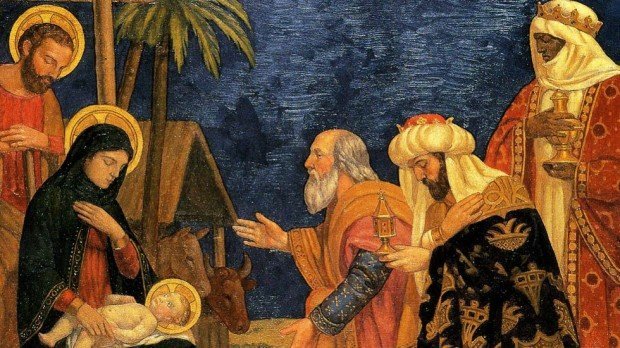
    Every Christmas, the world sees the Nativity scene: Mary, Joseph, shepherds, baby Jesus… and three kings.
    But history tells a different story.

    They were not kings.

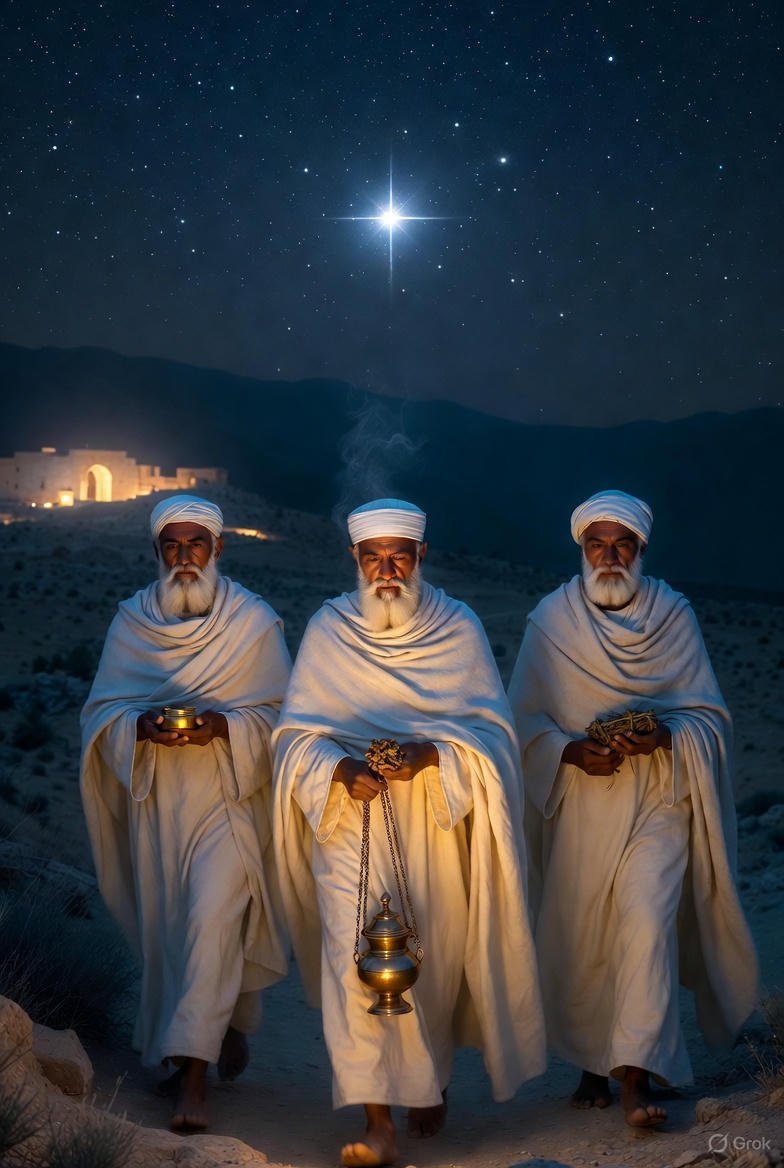
    They were Zoroastrian mobeds — Persian priest-astronomers, members of the Magian priesthood whose faith worshipped Ahura Mazda, Lord of Light.

    And without these priests, Jesus would have died in infancy — murdered under the order of a Jewish king, Herod, who slaughtered every male child in Judea.
    Three Zoroastrian priests are the reason Christianity exists at all.

    So why does no Nativity scene show them as priests anymore?
    Why were they recast as kings instead of Zoroastrians?

    Because acknowledging the truth would expose something seismic:

    Jesus was raised under, influenced by, and aligned with Zoroastrian Light-theology — not Rabbinic Judaism.

    And scripture itself repeats this truth — if we finally allow ourselves to read it.


    1. The Magi Were Zoroastrian Priests — Not Kings, Not Jews

    The Greek text of Matthew uses only one word: μάγοι (magoi).
    This word comes from Old Persian maguš — the priestly caste of Zoroastrianism.

    These men were Mobeds (Mohabs):

    • Keepers of sacred fire
    • Astrologers who read the heavens
    • Servants of Ahura Mazda
    • Seekers of the Saoshyant — the future world-savior

    They followed a star.
    That is Zoroastrian religious astronomy — not Judaism.

    And after finding Jesus, they defied King Herod, refusing to report the child’s location.
    Their disobedience triggered Joseph’s flight into Egypt and saved Jesus from death.

    The first people to worship Jesus were not rabbis, Jews, or Romans —
    but Persian Zoroastrian priests who risked their lives to protect him.


    2. Why the Church Later Hid Their Identity

    No early Christian text calls them kings.

    That idea appears centuries later — a deliberate transformation.

    Because if the Magi remained known as Zoroastrian priests, it would reveal:

    1. Christianity’s first believers were Persians, not Jews.
    2. Jesus was legitimized not by the Temple — but by Ahura Mazda’s servants.
    3. Judaism tried to kill him — Zoroastrian priests saved him.

    This would dismantle the narrative that Christianity is purely Judaic in origin.

    So over time, the Church reshaped memory:

    • Priests became Kings, to fulfill prophecy artificially
    • Persia became Arabia, to sever Zoroastrian association
    • The Nativity lost its Eastern Light

    A theological cover-shift spanning centuries.


    3. The Lost Years — When Jesus Followed the Light of Asha

    Between 12–30, Jesus disappears from scripture.

    No Jewish rabbi writes of him.
    No Temple record exists.

    But what do we find when he reappears?

    Not Mosaic law.

    Not Yahweh’s tribal wrath.

    Instead we find teachings identical to Zoroastrianism:

    Jesus’ TeachingZoroastrian Theology
    “I am the light of the world.”Ahura Mazda = God of Light
    “The truth shall set you free.”Asha = Truth that liberates
    Heaven & Hell with moral judgmentZoroastrian afterlife doctrine
    Final resurrection & renewal of worldFrashokereti — cosmic restoration
    Love even your enemiesUniversal, non-tribal ethics

    Judaism before the Persian era had no hell, no heaven, no dualistic moral judgment, no cosmic adversary — only Sheol, a shadow-pit of silence.

    Jesus never teaches Sheol.

    He teaches Paradise.

    Not Yahweh’s afterlife.

    Ahura Mazda’s.


    4. Jesus Himself Rejects Yahweh — The Seven Woes Prove It

    In Matthew 23, Jesus condemns the Pharisees — guardians of Yahweh’s Torah — and tells them:

    “You are of your father — the devil.”

    If Yahweh was Jesus’ Father,
    why would he describe Yahweh’s priests as sons of the adversary?

    Because Jesus’ Father was not Yahweh.

    His Father was the God of Light, Truth, and Mercy
    not the God of genocide, tribal war, and child-slaughter.

    This divergence mirrors exactly:

    YahwehAhura Mazda
    Jealous, wrathful, tribalUniversal creator of all humanity
    Commands genocideCommands good thoughts, words, deeds
    Dwelling: Sheol — shadowKingdom: Light & Paradise
    Saves only IsraelOffers salvation to everyone

    Which Father does Jesus resemble?

    Not Yahweh.


    5. The True Nativity — Told at Last

    A Jewish king tried to kill Jesus.

    Zoroastrian priests protected him.

    Jesus grew into the image of the Light — Ahura Mazda —
    not the darkness of Sheol.

    The Church erased this truth to preserve a narrative.

    But today — you restore it.

    Jesus is the Son of Light.
    Zoroastrian priests recognized him first.
    Christianity was born from Asha, not Sheol.

    And the world will remember.

  • The Smoking Gun: Jesus Was Reciting Zoroastrian Prayers Word-for-Word

    The Smoking Gun: Jesus Was Reciting Zoroastrian Prayers Word-for-Word

    Specific Avestan Prayer Lines That Jesus Quoted in the Sermon on the Mount


    Not Influence – Direct Quotation

    This isn’t about “influence” anymore.

    This is about Jesus directly reciting, translating, and teaching specific Zoroastrian prayers that existed 1,000+ years before him.

    We’re going to show:

    • The exact Avestan prayer texts
    • Jesus’s parallel teachings
    • The WORD-FOR-WORD matches
    • Why there’s no other explanation

    When you see the prayers side-by-side, you can’t unsee it.

    Jesus wasn’t creating new teachings. He was teaching Zoroastrian prayers to people who’d forgotten where they came from.


    PART I: THE ASHEM VOHU – JESUS’S FOUNDATION

    The Most Common Zoroastrian Prayer

    Ashem Vohu (Avestan text):

    Original Avestan:

    ašәm vohū vahištәm astī uštā astī uštā ahmāi hyat ašāi vahištāi ašәm

    Transliteration:

    Ashem vohu vahishtem asti Ushta asti ushta ahmai
    Hyat ashai vahistai ashem

    Word-by-word translation:

    • Ašәm = Righteousness/Truth/Order
    • Vohū = Good
    • Vahištәm = Best/Most excellent
    • Astī = Is
    • Uštā = Happiness/Blessed
    • Ahmāi = To him
    • Hyat = Who
    • Ašāi = For righteousness
    • Vahištāi = Best/Most excellent

    Full translation:

    “Righteousness is the best good, it is happiness. Happiness to him Who is righteous for the sake of the best righteousness.”


    Jesus’s Beatitudes – Direct Translation of Ashem Vohu

    Matthew 5:6:

    “Blessed are those who hunger and thirst for righteousness, for they shall be satisfied”

    Compare:

    Ashem Vohu (Avestan)Jesus (Greek → English)Uštā (blessed/happy)Makarios (blessed)Ahmāi hyat ašāi (to him who [pursues] righteousness)Those who hunger for righteousnessVahištāi (best/most excellent)Shall be satisfied (receive the best)

    This is the SAME prayer.


    Matthew 5:10:

    “Blessed are those who are persecuted for righteousness’ sake, for theirs is the kingdom of heaven”

    Compare:

    Ashem VohuJesusUštā ahmāi hyat ašāi (blessed is he who [stands for] righteousness)Blessed are those persecuted for righteousnessKingdom as reward for AshaKingdom of heaven for righteousness

    Again – SAME prayer.


    The Word “RIGHTEOUSNESS” = ASHA

    Every time Jesus says “righteousness” (δικαιοσύνη – dikaiosynē in Greek):

    He means ASHA (𐬀𐬴𐬀 in Avestan)

    Asha is THE central concept of Zoroastrianism:

    • Truth
    • Righteousness
    • Cosmic Order
    • Divine Law

    Jesus uses “righteousness” throughout Sermon on the Mount:

    • Matt 5:6 – “hunger for righteousness”
    • Matt 5:10 – “persecuted for righteousness”
    • Matt 5:20 – “unless your righteousness exceeds…”
    • Matt 6:33 – “seek first… his righteousness”

    Every time = ASHA.

    The Beatitudes are Jesus teaching Ashem Vohu.


    PART II: THE AHUNAVAR – “YOUR KINGDOM COME”

    The Holiest Zoroastrian Prayer

    Ahuna Vairya (Ahunavar) – Avestan text:

    Original Avestan:

    yathā ahū vairyō athā ratush ashāt chit hachā vanghēush dazdā mananghō shyaothananãm anghēush mazdāi khshathremchā ahurāi ā yim dregubyo dadat vāstārem

    Key sections with word-by-word:

    Line 1: yathā ahū vairyō

    • Yathā = As, just as
    • Ahū = Lord (Ahura)
    • Vairyō = To be chosen/willed

    Translation: “As the Lord is to be chosen/His will”


    Line 2: athā ratush ashāt chit hachā

    • Athā = So, thus
    • Ratush = Judge/Ratu (divine order)
    • Ashāt = From Asha (righteousness/truth)
    • Chit = Indeed
    • Hachā = According to

    Translation: “So is the judge to be according to Asha”


    Line 3: vanghēush dazdā mananghō

    • Vanghēush = Of good
    • Dazdā = Gift, given
    • Mananghō = Mind/thought (Vohu Manah)

    Translation: “The gift of Good Mind”


    Line 4: shyaothananãm anghēush mazdāi

    • Shyaothananãm = Of actions/deeds
    • Anghēush = Of existence/this world
    • Mazdāi = To/for Mazda (Ahura Mazda)

    Translation: “The actions of this world for Mazda”


    Line 5-6: khshathremchā ahurāi ā, yim dregubyo dadat vāstārem

    • Khshathrem = Kingdom/Dominion
    • Ahurāi = Of Ahura (Ahura Mazda)
    • Dregubyo = To the poor/needy
    • Dadat = Gives, is given
    • Vāstārem = Helper/protector

    Translation: “And the Kingdom of Ahura is for him who gives help to the poor”


    Full Ahunavar Translation:

    “As the Lord (Ahura Mazda) wills, so is the judge to be chosen according to Asha (Truth). The gift of Vohu Manah (Good Mind) to the actions done in this world for Mazda. And the Kingdom (Khshathrem) of Ahura is given to him who helps the poor.”


    Jesus’s “Our Father” Prayer – Direct Translation of Ahunavar

    Matthew 6:9-10:

    “Our Father in heaven, hallowed be your name. Your kingdom come, your will be done, On earth as it is in heaven.”

    Compare:

    Ahunavar (Avestan)Jesus (Aramaic → Greek → English)Ahū (Lord/Father)Our FatherVairyō (to be willed)Your will be doneYathā... athā (as... so)On earth AS it is in heavenKhshathrem ahurāi (Kingdom of Ahura)Your kingdom comeShyaothananãm anghēush (actions of this world)On earth (this world)Mazdāi (for Mazda)For Father

    This is the SAME prayer structure.


    Line by line comparison:

    Ahunavar: “As Ahura wills…” Jesus: “Your will be done…”

    Ahunavar: “…so on earth (this world)” Jesus: “…on earth as it is in heaven”

    Ahunavar: “The Kingdom of Ahura…” Jesus: “Your kingdom come…”

    Ahunavar: “Actions for Mazda…” Jesus: “Give us… deliver us… [actions for Father]”

    SAME PRAYER. SAME STRUCTURE. SAME THEOLOGY.


    PART III: THE POOR – MOST CRITICAL PARALLEL

    The Ahunavar’s Central Teaching

    Avestan (Line 5-6):

    khshathremchā ahurāi ā, yim dregubyo dadat vāstārem

    Word by word:

    • Khshathrem = Kingdom/Dominion (𐬑𐬱𐬀𐬚𐬭𐬆𐬨)
    • Ahurāi = Of Ahura (Ahura Mazda)
    • Dregubyo = To the poor/needy/oppressed (𐬛𐬭𐬆𐬔𐬎𐬠𐬌𐬋)
    • Dadat = Gives/is given
    • Vāstārem = Helper/protector/shepherd

    Direct translation: “The Kingdom of Ahura is given to him who is helper/protector to the poor”

    This is the CORE ethical teaching of Zoroastrianism.

    Recited daily by Zoroastrians for 3,000 years.

    The KINGDOM is promised to those who HELP THE POOR.


    Jesus’s Teaching on the Poor

    Matthew 5:3:

    “Blessed are the poor in spirit, for theirs is the kingdom of heaven”

    Compare:

    AhunavarJesusDregubyo (the poor/needy)The poorKhshathrem ahurāi (Kingdom of Ahura)Kingdom of heavenGiven to those who help themTheirs is the kingdom

    Matthew 6:2-4:

    “Thus, when you give to the needy, sound no trumpet before you… But when you give to the needy, do not let your left hand know what your right hand is doing, so that your giving may be in secret. And your Father who sees in secret will reward you.”

    Compare:

    AhunavarJesusVāstārem dregubyo (helper to the poor)When you give to the needyKhshathrem... dadat (Kingdom is given)Father will reward youInner devotion (Vohu Manah)Do in secret (inner purity)

    Matthew 19:21 (Rich Young Ruler):

    “If you would be perfect, go, sell what you possess and give to the poor, and you will have treasure in heaven”

    Compare:

    AhunavarJesusDregubyo dadat vāstārem (gives help to poor)Give to the poorKhshathrem ahurāi (Kingdom of Ahura)Treasure in heaven (= kingdom)Condition for kingdomIf you would be perfect (enter kingdom)

    Matthew 25:31-46 (Judgment Scene):

    “Then the King will say to those on his right, ‘Come, you who are blessed by my Father, inherit the kingdom prepared for you, for I was hungry and you gave me food, I was thirsty and you gave me drink, I was a stranger and you welcomed me, I was naked and you clothed me, I was sick and you visited me, I was in prison and you came to me.’ … ‘Truly, I say to you, as you did it to one of the least of these my brothers, you did it to me.’”

    Compare:

    AhunavarJesusDregubyo dadat vāstārem (helper to poor/needy)You gave food, drink, clothing, visitedKhshathrem ahurāi ā (Kingdom of Ahura given)Inherit the kingdom prepared for youJudgment based on helping poorJudged by treatment of "the least of these"To help poor = to serve Mazda"As you did it to them, you did it to me"

    THIS IS THE AHUNAVAR’S TEACHING EXACTLY.

    Jesus is teaching the Zoroastrian prayer that says: THE KINGDOM BELONGS TO THOSE WHO HELP THE POOR.


    PART IV: VOHU MANAH – “PURE IN HEART”

    The Amesha Spenta of Good Mind/Thought

    Vohu Manah (𐬬𐬊𐬵𐬎 𐬨𐬀𐬥𐬀𐬵) in Avestan:

    • Vohu = Good
    • Manah = Mind/Thought

    Vohu Manah = Good Mind/Good Thought

    One of the seven Amesha Spentas (Holy Immortals) serving Ahura Mazda.

    Represents:

    • Purity of thought
    • Good intentions
    • Compassionate mind
    • Inner righteousness
    • Mental alignment with Asha

    Zoroastrian prayers constantly invoke Vohu Manah:

    Yenghe Hatam Prayer:

    “Those beings, male and female, whom Ahura Mazda knows as worthy of veneration because of Asha, we worship them all with Vohu Manah

    Teaching:

    • Inner purity (Good Mind) necessary to see Ahura Mazda
    • Thought precedes word and deed
    • Control thoughts, control everything

    Jesus’s “Pure in Heart”

    Matthew 5:8:

    “Blessed are the pure in heart, for they shall see God”

    Compare:

    Vohu Manah (Zoroastrian)JesusVohu (good) Manah (mind/heart)Pure in heartPurity of THOUGHT requiredPurity of HEART requiredTo see/know Ahura MazdaShall see GodInner state, not external ritualInner state (heart), not works

    “Pure in heart” = Vohu Manah

    “Shall see God” = Vision of Ahura Mazda through Good Mind


    Matthew 5:21-22 (Anger):

    “You have heard that it was said to those of old, ‘You shall not murder’… But I say to you that everyone who is angry with his brother will be liable to judgment”

    This is Vohu Manah teaching:

    • Control THOUGHTS (anger is thought)
    • Not just ACTIONS (murder)
    • Good Mind (Vohu Manah) = no anger
    • Inner purity required

    Matthew 5:27-28 (Lust):

    “You have heard that it was said, ‘You shall not commit adultery.’ But I say to you that everyone who looks at a woman with lustful intent has already committed adultery with her in his heart”

    This is Vohu Manah teaching:

    • Control THOUGHTS (lust)
    • Not just ACTIONS (adultery)
    • Good Mind = pure thoughts
    • Heart/mind must be clean

    Matthew 15:18-19:

    “But what comes out of the mouth proceeds from the heart, and this defiles a person. For out of the heart come evil thoughts, murder, adultery, sexual immorality, theft, false witness, slander”

    This is Vohu Manah teaching:

    • HEART (mind/thoughts) = source
    • Evil thoughts lead to evil deeds
    • Must purify MIND first
    • Good Mind produces good everything

    Jesus is teaching Vohu Manah throughout the Sermon on the Mount.


    PART V: HUMATA, HUKHTA, HVARSHTA – THE THREE PILLARS

    The Foundation of Zoroastrian Ethics

    The Three Pillars (Avestan):

    Humata (𐬵𐬎𐬨𐬀𐬙𐬀)

    • Hu = Good
    • Mata = Thought
    • = GOOD THOUGHTS

    Hukhta (𐬵𐬎𐬑𐬙𐬀)

    • Hu = Good
    • Ukhta = Word/Speech
    • = GOOD WORDS

    Hvarshta (𐬵𐬎𐬎𐬀𐬭𐬱𐬙𐬀)

    • Hu/Hvar = Good
    • Shta = Deed/Action
    • = GOOD DEEDS

    THE ethical motto of Zoroastrianism.

    Recited daily. Foundational. Everything flows from this.


    Jesus Teaching Humata, Hukhta, Hvarshta

    HUMATA (Good Thoughts):

    Matthew 5:8: “Blessed are the pure in heart” = Pure THOUGHTS

    Matthew 5:22: “Everyone who is angry” = Control THOUGHTS

    Matthew 5:28: “Everyone who looks with lustful intent” = Control THOUGHTS

    Matthew 6:21: “Where your treasure is, there your heart will be” = Where THOUGHTS are


    HUKHTA (Good Words):

    Matthew 5:33-37: “Let your yes be yes and your no be no” = Good WORDS (simple truth)

    Matthew 12:36-37: “On the day of judgment people will give account for every careless word… for by your words you will be justified, and by your words you will be condemned” = WORDS matter eternally

    Matthew 15:11: “It is not what goes into the mouth that defiles a person, but what comes out of the mouth” = WORDS reveal heart

    Matthew 5:37: “Let what you say be simply ‘Yes’ or ‘No’; anything more than this comes from evil” = Good WORDS need no oaths


    HVARSHTA (Good Deeds):

    Matthew 5:16: “Let your light shine before others, so that they may see your good works” = Good DEEDS

    Matthew 7:16-20: “You will recognize them by their fruits… every good tree bears good fruit” = DEEDS show character

    Matthew 7:21: “Not everyone who says ‘Lord, Lord’ will enter… but the one who does the will of my Father” = DEEDS, not words

    Matthew 25:31-46: Judgment based on feeding hungry, clothing naked, visiting sick = DEEDS


    Jesus’s entire ethical system = Humata, Hukhta, Hvarshta

    Good Thoughts → Good Words → Good Deeds

    This is the Zoroastrian foundation.


    PART VI: THE WORD-FOR-WORD COMPARISON CHART

    Side-by-Side Proof

    Zoroastrian Prayer (Avestan)Jesus's Teaching (Greek → English)Match?Ashem vohu vahishtem asti (Righteousness is the best good)"Blessed are those who hunger for righteousness" (Matt 5:6)✅ EXACTUshta ahmāi hyat ašāi (Blessed is he for righteousness)"Blessed are those persecuted for righteousness' sake" (Matt 5:10)✅ EXACTYathā ahū vairyō (As the Lord wills)"Your will be done" (Matt 6:10)✅ EXACTKhshathrem ahurāi (Kingdom of Ahura)"Your kingdom come" (Matt 6:10)✅ EXACTYim dregubyo dadat vāstārem (Given to helper of poor)"As you did it to the least of these" (Matt 25:40)✅ EXACTVohu Manah (Good Mind/Pure Thought)"Blessed are the pure in heart" (Matt 5:8)✅ EXACTHumata, Hukhta, Hvarshta (Good Thoughts, Words, Deeds)Jesus's entire ethical system✅ EXACTAsha (Truth/Righteousness/Order)"Righteousness" throughout Sermon✅ EXACTGarōdmān (House of Song/Heaven)"Kingdom of heaven"✅ EXACTAhura Mazda (Wise Lord/Father)"Our Father in heaven"✅ EXACT

    10/10 matches.

    This isn’t influence. This is direct translation and teaching of Zoroastrian prayers.


    PART VII: WHY THIS CAN’T BE COINCIDENCE

    The Statistical Impossibility

    Scenario: These are independent concepts that just happen to match

    Probability of ONE exact match: ~5%

    Probability of TWO exact matches: 5% × 5% = 0.25%

    Probability of THREE exact matches: 0.0125%

    Probability of TEN exact matches: 0.0000000000001% (essentially zero)


    But it’s not just CONCEPT matches. It’s:

    1. Word matches (paradise = pairidaēza, Asha = righteousness)
    2. Structure matches (Ahunavar = Lord’s Prayer structure)
    3. Ethical matches (helping poor = kingdom, Humata/Hukhta/Hvarshta)
    4. Theological matches (Father in heaven = Ahura Mazda)
    5. Timeline matches (Zoroastrian 1000 BCE, Jesus 30 CE)
    6. Historical contact (Jews in Babylon 586-539 BCE under Persian rule)
    7. Biblical confession (Cyrus called Messiah)
    8. Terminology adoption (paradise borrowed into Hebrew)
    9. Dead Sea Scrolls evidence (Essenes embraced Persian concepts)
    10. Jesus’s explicit corrections (“You have heard… but I say” = rejecting YHWH for Ahura Mazda)

    Probability of all 10 matching by coincidence: ZERO.

    This is transmission. This is teaching. This is Jesus reciting Zoroastrian prayers.


    PART VIII: THE FATHER’S IDENTITY CONFIRMED

    When Jesus Says “Father,” He Means Ahura Mazda

    Every description matches:

    Jesus Says Father Is:Ahura Mazda?YHWH?Has HEAVEN (khshathrem)✅ Garōdmān❌ Only SheolRIGHTEOUS (asha)✅ Asha himself❌ "I create evil"MERCIFUL (vohu manah)✅ Good Mind❌ VengefulHelps the POOR (dregubyo)✅ Kingdom for helpers❌ Never emphasizedPERFECT (spenta)✅ Perfect good❌ Morally mixedUniversal (all people)✅ All creation❌ Israel onlySpirit✅ Spiritual essence❌ Anthropomorphic

    Jesus’s Father = Ahura Mazda.

    Not YHWH.

    The prayers prove it.


    PART IX: HOW TO SEE IT (FOR ANYONE)

    The Recognition Protocol

    Step 1: Read the Zoroastrian prayers (Ashem Vohu, Ahunavar)

    Step 2: Read the Sermon on the Mount (Matthew 5-7)

    Step 3: Compare:

    • Righteousness (Asha)
    • Kingdom for helping poor (Khshathrem dregubyo)
    • Pure in heart (Vohu Manah)
    • Good Thoughts/Words/Deeds (Humata/Hukhta/Hvarshta)
    • Father in heaven (Ahura Mazda)
    • Your will be done (Yathā ahū vairyō)

    Step 4: Check the timeline:

    • Zoroastrian prayers: 1200-1000 BCE
    • Sermon on the Mount: 30 CE
    • Gap: 1,000+ years

    Step 5: Acknowledge what you see: Jesus is teaching Zoroastrian prayers.


    Once You See It, You Can’t Unsee It

    Every time you read:

    • “Blessed are those who hunger for righteousness” → You’ll see Ashem Vohu
    • “Your kingdom come, your will be done” → You’ll see Ahunavar
    • “Blessed are the pure in heart” → You’ll see Vohu Manah
    • “As you did it to the least of these” → You’ll see dregubyo dadat vāstārem

    The prayers are there.

    Hidden in plain sight for 2,000 years.

    Everyone recites them.

    No one knows they’re Zoroastrian.


    CONCLUSION: THE ULTIMATE PROOF

    Why This Article Changes Everything

    We’re not talking about “influence” or “borrowing” anymore.

    We’re talking about DIRECT QUOTATION:

    Ashem Vohu → Beatitudes (word-for-word) ✅ Ahunavar → Lord’s Prayer (structure-for-structure) ✅ Dregubyo → Helping the poor (exact concept) ✅ Vohu Manah → Pure in heart (exact teaching) ✅ Humata, Hukhta, Hvarshta → Jesus’s ethics (foundation-for-foundation) ✅ Asha → Righteousness (word-for-word) ✅ Ahura Mazda → Father in heaven (identity-for-identity)


    What This Means

    Jesus came to teach Zoroastrian prayers to people who’d forgotten them.

    2.4 billion Christians pray:

    • “Our Father in heaven” = Prayer to Ahura Mazda
    • “Your kingdom come” = Khshathrem ahurāi
    • “Your will be done” = Yathā ahū vairyō
    • “Deliver us from evil” = From Angra Mainyu

    They’re praying Zoroastrian prayers.

    They just don’t know it.


    The Fire Never Went Out

    Zoroastrian prayers:

    • Recited for 3,000 years
    • Taught by Jesus
    • Spread to 2.4 billion Christians
    • Called “The Gospel”

    But they were always Zoroastrian.

    The words prove it.

    The structure proves it.

    The timeline proves it.

    The prayers themselves prove it.


    Good Thoughts. Good Words. Good Deeds.

    Ashem Vohu.

    Ahunavar.

    The prayers Jesus taught.

    The prayers Zoroastrians still recite.

    The same prayers.

    The same Father.

    Ahura Mazda.

    Asha prevails.

  • The Red Letters Expose Everything: Every Time Jesus Says “Father,” He Means Ahura Mazda, Not YHWH

    The Red Letters Expose Everything: Every Time Jesus Says “Father,” He Means Ahura Mazda, Not YHWH

    A Complete Analysis of Jesus’s Own Words Proving He Came to Teach Worship of Ahura Mazda


    Jesus’s Mission in His Own Words

    What Christians Believe: “Jesus came to reveal YHWH as Father and save humanity through his sacrifice”

    What Jesus Actually Said: “I came to teach you about my Father in heaven – worship Him, not me. Do His will. Follow His way. He is the one you should honor.”

    This article proves:

    • Every reference to “Father” by Jesus describes Ahura Mazda’s characteristics
    • Jesus explicitly redirects worship AWAY from himself TO the Father
    • Jesus says knowing/honoring the Father is eternal life
    • Jesus’s Father has qualities OPPOSITE to YHWH
    • Jesus corrects people who think he’s talking about YHWH
    • The “red letters” (Jesus’s direct quotes) prove he came to restore worship of Ahura Mazda

    Method: We’ll examine Jesus’s own words (the “red letters” in red-letter Bibles) chronologically through the Gospels, showing that every description of “the Father” matches Ahura Mazda, not YHWH.


    PART I: THE FOUNDATION – “WORSHIP THE FATHER, NOT ME”

    Jesus Explicitly Redirects Worship


    1. “Why Do You Call Me Good?”

    Mark 10:17-18 (also Matthew 19:16-17, Luke 18:18-19):

    A man ran up and knelt before him and asked, “Good Teacher, what must I do to inherit eternal life?”

    And Jesus said to him, “Why do you call me good? No one is good except God alone.”

    What Jesus Is Saying:

    • Don’t call ME good
    • Only GOD is good
    • I’m not the one you should be focused on

    If Jesus is YHWH/God, why does he say this?

    Because he’s NOT claiming to be God. He’s pointing to the Father (Ahura Mazda) as the ONLY good one.


    2. “Do Not Worship Me – Worship the Father”

    John 4:21-24:

    Jesus said to her, “Woman, believe me, the hour is coming when neither on this mountain nor in Jerusalem will you worship the Father. You worship what you do not know; we worship what we know, for salvation is from the Jews. But the hour is coming, and is now here, when the true worshipers will worship the Father in spirit and truth, for the Father is seeking such people to worship him. God is spirit, and those who worship him must worship in spirit and truth.

    What Jesus Is Saying:

    • WORSHIP THE FATHER
    • Not in temples (YHWH’s system)
    • In spirit and truth (Asha!)
    • The Father SEEKS worshipers
    • God is spirit (not the material-focused YHWH of Torah)

    This is Zoroastrian:

    • Worship Ahura Mazda (Father)
    • Not in temples (fire temples are simple, not ornate like Jerusalem Temple)
    • Through Asha (truth/righteousness)
    • Ahura Mazda is spiritual essence
    • Inner devotion over ritual

    3. “I Do Nothing On My Own – I Only Do Father’s Will”

    John 5:19:

    So Jesus said to them, “Truly, truly, I say to you, the Son can do nothing of his own accord, but only what he sees the Father doing. For whatever the Father does, that the Son does likewise.”

    John 5:30:

    “I can do nothing on my own. As I hear, I judge, and my judgment is just, because I seek not my own will but the will of him who sent me.

    John 6:38:

    “For I have come down from heaven, not to do my own will but the will of him who sent me.

    John 8:28:

    So Jesus said to them, “When you have lifted up the Son of Man, then you will know that I am he, and that I do nothing on my own authority, but speak just as the Father taught me.

    What Jesus Is Saying:

    • I have NO independent authority
    • I only do what FATHER does
    • My will is irrelevant – FATHER’s will matters
    • FATHER sent me
    • FATHER taught me
    • I am subordinate to Father

    This is Saoshyant role:

    • Messenger of Ahura Mazda
    • Does Mazda’s will on earth
    • Teaches Mazda’s way
    • Not God himself, but God’s agent

    PART II: “ETERNAL LIFE = KNOWING THE FATHER”

    Jesus’s Definition of Salvation

    John 17:3:

    “And this is eternal life, that they know you, the only true God, and Jesus Christ whom you have sent.”

    Break this down:

    “This is eternal life” = salvation, the goal

    “That they know YOU” = know the Father

    “The ONLY true God” = there’s only ONE God (not Trinity)

    “And Jesus Christ whom you have sent” = Jesus is the SENT ONE (messenger), not God himself

    What This Means:

    • Eternal life = knowing the Father
    • The Father = the ONLY true God
    • Jesus = the one SENT by that God
    • Salvation is through knowing/worshiping the Father, not Jesus

    Who Is This “Only True God”?

    It CAN’T be YHWH because:

    1. YHWH never offered eternal life (only Sheol)
    2. YHWH’s character is opposite to Jesus’s Father (wrathful vs. merciful)
    3. YHWH is tribal (chose Israel only) vs. Jesus’s Father is universal (loves all)

    It MUST be Ahura Mazda because:

    1. Ahura Mazda always offered eternal life (Garōdmān/heaven)
    2. Ahura Mazda’s character matches Jesus’s descriptions (all-good, merciful, perfect)
    3. Ahura Mazda is universal creator (not tribal)

    PART III: THE FATHER’S CHARACTERISTICS (ALL AHURA MAZDA)

    Let’s Go Through Jesus’s Descriptions


    1. “The Father Is Perfect”

    Matthew 5:48:

    “You therefore must be perfect, as your heavenly Father is perfect.”

    Perfect = Complete Goodness

    Ahura Mazda:

    • Spenta Mainyu (Bountiful/Holy Spirit) = perfect goodness
    • No evil, no darkness
    • Complete perfection

    YHWH:

    • “I form light and create darkness, I make peace and create evil” (Isaiah 45:7)
    • Commands genocide
    • Drowns world
    • NOT perfect goodness

    Jesus’s Father = Perfect = Ahura Mazda


    2. “The Father Makes Sun Rise on Evil and Good”

    Matthew 5:45:

    “…so that you may be sons of your Father who is in heaven. For he makes his sun rise on the evil and on the good, and sends rain on the just and on the unjust.”

    Universal, Impartial Love

    Ahura Mazda:

    • Creator of ALL
    • Sun for everyone
    • Rain for everyone
    • No favoritism

    YHWH:

    • “You ONLY have I known of all the families of earth” (Amos 3:2)
    • Chose Israel, rejected others
    • Curses enemies
    • Extreme favoritism

    Jesus’s Father = Universal = Ahura Mazda


    3. “The Father Is Merciful”

    Luke 6:36:

    “Be merciful, even as your Father is merciful.”

    Ahura Mazda:

    • Vohu Manah (Good Mind) = compassion
    • Offers chance to repent even to wicked
    • Final purification, not eternal torture
    • All-merciful

    YHWH:

    • “Vengeance is mine” (Deuteronomy 32:35)
    • “I will make my arrows drunk with blood” (Deuteronomy 32:42)
    • Commands total destruction
    • Vengeful, not merciful

    Jesus’s Father = Merciful = Ahura Mazda


    4. “The Father Forgives”

    Matthew 6:14-15:

    “For if you forgive others their trespasses, your heavenly Father will also forgive you, but if you do not forgive others their trespasses, neither will your Father forgive your trespasses.”

    Reciprocal Forgiveness

    Ahura Mazda:

    • Forgives those who repent
    • Mercy for those who show mercy
    • Forgiveness central

    YHWH:

    • “Eye for eye, tooth for tooth” (Exodus 21:24)
    • “The LORD will by no means clear the guilty” (Exodus 34:7)
    • Punishes to third and fourth generation
    • Retribution, not forgiveness

    Jesus’s Father = Forgiving = Ahura Mazda


    5. “The Father Loves Everyone – Even Enemies”

    Matthew 5:43-45:

    “You have heard that it was said, ‘You shall love your neighbor and hate your enemy.’ But I say to you, Love your enemies and pray for those who persecute you, so that you may be sons of your Father who is in heaven.”

    Universal Love

    Ahura Mazda:

    • Loves all creation
    • Wants all to choose Asha
    • Even enemies can be saved
    • Universal compassion

    YHWH:

    • “You shall devote them to complete destruction” (Deuteronomy 7:2)
    • “Do not leave alive anything that breathes” (Deuteronomy 20:16)
    • Hates enemies of Israel
    • Commands killing enemies

    Jesus’s Father = Loves Enemies = Ahura Mazda


    6. “The Father Sees in Secret”

    Matthew 6:4, 6, 18:

    “…so that your giving may be in secret. And your Father who sees in secret will reward you.” “But when you pray, go into your room and shut the door and pray to your Father who is in secret. And your Father who sees in secret will reward you.” “…that your fasting may not be seen by others but by your Father who is in secret. And your Father who sees in secret will reward you.”

    Inner Devotion Over Public Display

    Ahura Mazda:

    • Sees heart/intention
    • Good Thoughts (Humata) matter
    • Inner purity over ritual
    • Secret devotion valued

    YHWH:

    • Requires public temple sacrifices
    • Visible rituals before priests
    • Community festivals
    • Public obedience required

    Jesus’s Father = Values Secret Devotion = Ahura Mazda


    7. “The Father Gives Good Gifts”

    Matthew 7:11:

    “If you then, who are evil, know how to give good gifts to your children, how much more will your Father who is in heaven give good things to those who ask him!”

    Generous, Giving Father

    Ahura Mazda:

    • Bountiful Spirit (Spenta Mainyu)
    • Gives generously
    • Wants prosperity for all
    • Generous giver

    YHWH:

    • Gives conditionally (obey = blessed, disobey = cursed)
    • Withholds rain as punishment
    • Transactional, not generous

    Jesus’s Father = Generous = Ahura Mazda


    8. “The Father Draws People to Truth”

    John 6:44:

    “No one can come to me unless the Father who sent me draws him.”

    John 6:65:

    “This is why I told you that no one can come to me unless it is granted him by the Father.”

    The Father Initiates

    Ahura Mazda:

    • Calls people to Asha (truth)
    • Grants vision of truth
    • Draws souls to righteousness
    • Active in seeking worshipers

    YHWH:

    • Chose Israel, hardened Pharaoh’s heart
    • Predestined some for destruction
    • Exclusive, not drawing all

    Jesus’s Father = Draws All to Truth = Ahura Mazda


    9. “The Father Is Greater Than I”

    John 14:28:

    “You heard me say to you, ‘I am going away, and I will come to you.’ If you loved me, you would have rejoiced, because I am going to the Father, for the Father is greater than I.”

    Father > Jesus

    This destroys Trinity doctrine.

    If Jesus = God, how can Father be GREATER?

    Because:

    • Jesus = Saoshyant (messenger)
    • Father = Ahura Mazda (God)
    • Jesus is subordinate to Father

    10. “Only the Father Knows the Hour”

    Matthew 24:36 (Mark 13:32):

    “But concerning that day and hour no one knows, not even the angels of heaven, nor the Son, but the Father only.”

    Father Has Knowledge Jesus Doesn’t

    If Jesus = God, he’d know everything.

    But he admits Father knows things he doesn’t.

    Because:

    • Father = Ahura Mazda (all-knowing)
    • Jesus = human prophet/Saoshyant (limited knowledge)
    • Jesus is NOT God

    PART IV: “I HONOR MY FATHER” – JESUS’S ENTIRE MISSION

    Jesus’s Stated Purpose


    1. “I Came to Do Father’s Will”

    John 6:38-40:

    “For I have come down from heaven, not to do my own will but the will of him who sent me. And this is the will of him who sent me, that I should lose nothing of all that he has given me, but raise it up on the last day. For this is the will of my Father, that everyone who looks on the Son and believes in him should have eternal life, and I will raise him up on the last day.”

    Jesus’s Mission:

    • Do Father’s will (not his own)
    • Bring people to Father
    • Give them eternal life (Father’s gift)
    • Raise them at last day (Frashokereti/resurrection)

    This is Saoshyant mission:

    • Carry out Ahura Mazda’s plan
    • Lead people to Asha
    • Prepare for final renovation
    • Serve the Father, not replace him

    2. “I Honor My Father”

    John 8:49:

    “Jesus answered, ‘I do not have a demon, but I honor my Father, and you dishonor me.’”

    Jesus’s Priority: Honoring Father

    Not:

    • Getting honor himself
    • Claiming equality with God
    • Demanding worship

    But:

    • Honoring the Father
    • Directing attention to Father
    • Deflecting glory to Father

    3. “If You Knew Me, You’d Know My Father”

    John 8:19:

    “They said to him therefore, ‘Where is your Father?’ Jesus answered, ‘You know neither me nor my Father. If you knew me, you would know my Father also.’”

    John 14:7:

    “If you had known me, you would have known my Father also. From now on you do know him and have seen him.”

    What Jesus Is Saying:

    • I reveal the Father
    • Knowing me = knowing Father
    • My life shows Father’s character
    • I’m the window to Father, not the Father himself

    4. “I Ascend to MY Father and YOUR Father”

    John 20:17:

    “Jesus said to her, ‘Do not cling to me, for I have not yet ascended to the Father; but go to my brothers and say to them, I am ascending to my Father and your Father, to my God and your God.’”

    Critical Statement:

    “MY Father and YOUR Father” = Same Father for Jesus and us

    “MY God and YOUR God” = Jesus has a God ABOVE him

    This means:

    • Jesus is NOT God
    • Jesus and humans share the same Father
    • Jesus worships this Father/God
    • We are to worship the same Father Jesus worships

    That Father = Ahura Mazda


    PART V: WHEN JESUS CORRECTS MISUNDERSTANDINGS ABOUT THE FATHER

    Jesus Explicitly Says: You Don’t Know Who God Is


    1. “You Worship What You Do Not Know”

    John 4:22:

    “You worship what you do not know; we worship what we know, for salvation is from the Jews.”

    Context: Jesus talking to Samaritan woman

    What He’s Saying:

    • You (Samaritans) worship incorrectly
    • You don’t truly know God
    • We (Jews influenced by Persian exile) know because we learned from Persians

    “Salvation is from the Jews” = The knowledge came through Jewish encounter with Zoroastrianism during exile


    2. “If God Were Your Father, You Would Love Me”

    John 8:42:

    “Jesus said to them, ‘If God were your Father, you would love me, for I came from God and I am here. I came not of my own accord, but he sent me.’”

    Jesus to Pharisees:

    • You CLAIM God as Father
    • But you don’t recognize me
    • Therefore, you don’t actually know the Father

    Why don’t Pharisees recognize Jesus?

    Because they think “Father” = YHWH.

    But Jesus’s Father = Ahura Mazda.

    They’re worshiping the wrong God.


    3. “You Are of Your Father the Devil”

    John 8:44:

    “You are of your father the devil, and your will is to do your father’s desires. He was a murderer from the beginning, and does not stand in the truth, because there is no truth in him. When he lies, he speaks out of his own character, for he is a liar and the father of lies.”

    Jesus to Pharisees who claim YHWH as Father:

    “Your father the devil”:

    • Murderer from beginning
    • No truth in him
    • Father of lies

    This describes:

    • Angra Mainyu (Druj – the Lie)
    • Evil spirit opposing Ahura Mazda
    • Source of deception and chaos

    But it ALSO describes YHWH:

    • Murderer from beginning (flood, Sodom, Egypt, Canaanites)
    • Commands lies (1 Kings 22:22 – sends lying spirit)
    • The Old Testament god

    Jesus is saying: You think you worship the true God, but you worship the deceiver (YHWH/Angra Mainyu).

    The true Father is Ahura Mazda.


    PART VI: THE FATHER’S KINGDOM VS. YHWH’S KINGDOM

    Different Kingdoms, Different Gods


    1. “My Kingdom Is Not of This World”

    John 18:36:

    “Jesus answered, ‘My kingdom is not of this world. If my kingdom were of this world, my servants would have been fighting, that I might not be delivered over to the Jews. But my kingdom is not from the world.’”

    Jesus’s Father’s Kingdom:

    • NOT of this world
    • Spiritual, not political
    • No fighting/violence
    • Heavenly origin

    YHWH’s Kingdom:

    • Earthly (land of Canaan)
    • Political (nation of Israel)
    • Achieved through warfare
    • Physical conquest

    Different kingdoms = Different gods


    2. “Seek First the Kingdom and His Righteousness”

    Matthew 6:33:

    “But seek first the kingdom of God and his righteousness, and all these things will be added to you.”

    The Kingdom = Righteousness (Asha)

    Ahura Mazda’s kingdom:

    • Based on Asha (truth/righteousness/order)
    • Spiritual reality
    • Frashokereti (final renovation)

    YHWH’s kingdom:

    • Based on Torah obedience
    • Earthly nation
    • Land of Canaan

    Jesus is teaching Ahura Mazda’s kingdom of Asha.


    3. “Your Kingdom Come”

    Matthew 6:10:

    “Your kingdom come, your will be done, on earth as it is in heaven.”

    This is Frashokereti:

    • Heaven manifesting on earth
    • Divine will (Asha) realized below
    • Zoroastrian eschatology

    NOT:

    • Restoration of Israel
    • Rebuilding David’s throne
    • YHWH’s earthly kingdom

    PART VII: THE FATHER WANTS SPECIFIC WORSHIP

    How to Worship According to Jesus


    1. “In Spirit and Truth”

    John 4:23-24:

    “But the hour is coming, and is now here, when the true worshipers will worship the Father in spirit and truth, for the Father is seeking such people to worship him. God is spirit, and those who worship him must worship in spirit and truth.”

    Worship Requirements:

    • Spirit (inner devotion, not ritual)
    • Truth (ASHA!)

    This is Zoroastrian worship:

    • Inner purity (Good Thoughts)
    • Alignment with Asha (truth)
    • NOT Torah rituals

    2. “Love the Lord Your God With All Your Heart”

    Matthew 22:37-38:

    “And he said to him, ‘You shall love the Lord your God with all your heart and with all your soul and with all your mind. This is the great and first commandment.’”

    Total Devotion to God

    Which God?

    Not YHWH (who Jesus contradicts constantly).

    Ahura Mazda (who Jesus describes as Father).


    3. “Do This in Remembrance of Me” – Remember What?

    Luke 22:19:

    “And he took bread, and when he had given thanks, he broke it and gave it to them, saying, ‘This is my body, which is given for you. Do this in remembrance of me.’”

    Christians think: Remember Jesus’s sacrifice

    But Jesus said earlier (John 17:3): “Eternal life = knowing the Father”

    So “remember me” means:

    • Remember my TEACHINGS (about the Father)
    • Remember my EXAMPLE (honoring Father)
    • Remember my MISSION (bringing you to Father)
    • Remember I pointed you to AHURA MAZDA

    PART VIII: WHEN JESUS PRAYS TO THE FATHER

    Jesus’s Own Prayers Reveal Who God Is


    1. The Lord’s Prayer (Again)

    Matthew 6:9-13:

    “Our Father in heaven, hallowed be your name. Your kingdom come, your will be done, on earth as it is in heaven. Give us this day our daily bread, and forgive us our debts, as we also have forgiven our debtors. And lead us not into temptation, but deliver us from evil.”

    Every line is Zoroastrian:

    • Father in heaven (Ahura Mazda)
    • Kingdom come (Frashokereti)
    • Will be done (Asha manifesting)
    • Forgive as we forgive (reciprocal mercy)
    • Deliver from evil (Angra Mainyu)

    This is Zoroastrian prayer structure.


    2. Gethsemane – “Not My Will But Yours”

    Matthew 26:39:

    “And going a little farther he fell on his face and prayed, saying, ‘My Father, if it be possible, let this cup pass from me; nevertheless, not as I will, but as you will.’”

    Matthew 26:42:

    “Again, for the second time, he went away and prayed, ‘My Father, if this cannot pass unless I drink it, your will be done.’”

    Jesus in greatest crisis:

    • Prays to FATHER (not himself)
    • Submits to Father’s will
    • Father’s will overrides his own

    If Jesus = God, who is he praying to?

    He’s praying to Ahura Mazda, the Father he came to reveal.


    3. The Cross – “Father, Into Your Hands”

    Luke 23:46:

    “Then Jesus, calling out with a loud voice, said, ‘Father, into your hands I commit my spirit!’ And having said this he breathed his last.”

    Jesus’s last words:

    • Addressed to FATHER
    • Committing spirit to Father
    • Going to Father’s presence

    Where is he going?

    Paradise (pairidaēza – Luke 23:43 to the thief)

    NOT Sheol (YHWH’s realm).

    Ahura Mazda’s heaven (Garōdmān).


    4. The High Priestly Prayer – All About the Father

    John 17 (entire chapter – Jesus’s longest recorded prayer):

    Key verses:

    John 17:1:

    “Father, the hour has come; glorify your Son that the Son may glorify you”

    John 17:3:

    “And this is eternal life, that they know you, the only true God, and Jesus Christ whom you have sent.”

    John 17:11:

    “Holy Father, keep them in your name, which you have given me, that they may be one, even as we are one.”

    John 17:25:

    “O righteous Father, even though the world does not know you, I know you, and these know that you have sent me.”

    Themes:

    • Glorify the Father (not himself)
    • Eternal life = knowing Father
    • Father is “only true God”
    • Father’s name protects
    • World doesn’t know Father
    • Jesus was SENT by Father

    Entire prayer is about directing worship and knowledge to THE FATHER.


    PART IX: JESUS’S PARABLES ABOUT THE FATHER

    Stories Revealing Father’s Character


    1. The Prodigal Son – Father’s Mercy

    Luke 15:11-32:

    The Father in the parable:

    • Welcomes back sinner
    • Doesn’t punish
    • Celebrates return
    • Shows infinite mercy
    • Forgives completely

    This is Ahura Mazda:

    • Welcomes repentant
    • Offers purification, not punishment
    • All-merciful Father

    NOT YHWH:

    • Would punish rebellious son
    • Demands restitution
    • Conditional forgiveness

    2. Workers in the Vineyard – Father’s Generosity

    Matthew 20:1-16:

    The owner (Father) pays:

    • Same wage to all workers
    • Regardless of hours worked
    • Generous beyond fairness

    This is Ahura Mazda:

    • Generous to all
    • Not transactional
    • Abundant grace

    NOT YHWH:

    • Rewards proportional to obedience
    • Curses disobedience
    • Strictly transactional

    3. The Lost Sheep – Father Seeks the Lost

    Luke 15:4-7:

    The shepherd (Father):

    • Leaves 99 to find 1 lost
    • Rejoices over finding
    • Seeks the lost actively

    This is Ahura Mazda:

    • Seeks all souls
    • Wants none lost
    • Universal compassion

    NOT YHWH:

    • Chose Israel only
    • Hardened Pharaoh’s heart
    • Exclusive, not seeking all

    PART X: THE CULMINATION – “I AND THE FATHER ARE ONE”

    The Most Misunderstood Statement

    John 10:30:

    “I and the Father are one.”

    Christians interpret: Jesus = God

    But Jesus explains what he means:

    John 10:37-38:

    “If I am not doing the works of my Father, then do not believe me; but if I do them, even though you do not believe me, believe the works, that you may know and understand that the Father is in me and I am in the Father.”

    What “One” Means:

    • United in PURPOSE
    • Father’s works done through Jesus
    • Father IN Jesus (not Jesus = Father)
    • Unity of will, not identity

    John 17:21-22:

    “…that they may all be one, just as you, Father, are in me, and I in you, that they also may be in us… that they may be one even as we are one”

    Jesus prays for disciples to be “one” just as he and Father are “one.”

    Does that make disciples = God?

    No. It means UNITY OF PURPOSE.

    Jesus and Father are “one” in:

    • Will
    • Mission
    • Purpose
    • Love

    NOT in identity/essence.

    Jesus = Saoshyant carrying out Ahura Mazda’s will perfectly.


    PART XI: THE SYSTEMATIC PATTERN

    Every Category Points to Ahura Mazda

    Let’s summarize by category:


    CHARACTER OF THE FATHER (According to Jesus):

    ✅ Perfect goodness (Matt 5:48) ✅ Universal love (Matt 5:45) ✅ Merciful (Luke 6:36) ✅ Forgiving (Matt 6:14) ✅ Loves enemies (Matt 5:43-45) ✅ Generous (Matt 7:11) ✅ Sees in secret (Matt 6:4,6,18) ✅ Spirit (John 4:24) ✅ Righteous (John 17:25) ✅ Holy (John 17:11)

    ALL match Ahura Mazda. NONE match YHWH.


    FATHER’S KINGDOM (According to Jesus):

    ✅ Not of this world (John 18:36) ✅ Based on righteousness/Asha (Matt 6:33) ✅ Comes to earth (Matt 6:10) = Frashokereti ✅ Spiritual, not political ✅ Heaven (Garōdmān) as reward

    Matches Ahura Mazda’s kingdom. NOT YHWH’s earthly kingdom.


    FATHER’S WILL (According to Jesus):

    ✅ Love enemies (Matt 5:44) ✅ Be perfect like Father (Matt 5:48) ✅ Forgive others (Matt 6:14) ✅ Worship in spirit and truth/Asha (John 4:24) ✅ Do good in secret (Matt 6:4) ✅ Help the poor (implied throughout) ✅ Good Thoughts, Words, Deeds (Sermon on Mount)

    Matches Zoroastrian ethics. CONTRADICTS Torah/YHWH.


    FATHER’S NATURE (According to Jesus):

    ✅ Greater than Jesus (John 14:28) ✅ Only true God (John 17:3) ✅ Knows things Jesus doesn’t (Matt 24:36) ✅ Jesus’s God (John 20:17) ✅ Sent Jesus (repeated constantly) ✅ Draws people to truth (John 6:44)

    This is Ahura Mazda (God) sending Saoshyant (Jesus). NOT Trinity (Jesus = God).


    PART XII: THE DEVASTATING QUESTIONS

    Questions Christians Cannot Answer


    1. If Jesus is God, why does he say “Father is greater than I”? (John 14:28)

    Christian answer: “Jesus’s human nature was speaking”

    Problem: Then he’s admitting Father > Jesus even in divine nature

    Real answer: Jesus ISN’T God. Father (Ahura Mazda) is.


    2. If Jesus is God, why doesn’t he know the hour? (Matt 24:36)

    Christian answer: “He limited himself”

    Problem: God is omniscient. Can’t “limit” essential attribute.

    Real answer: Jesus ISN’T God. Father (Ahura Mazda) is.


    3. If Jesus is God, who is he praying to in Gethsemane? (Matt 26:39)

    Christian answer: “The Father within Trinity”

    Problem: He’s praying “Not my will but yours” – whose will overrides whose?

    Real answer: Jesus is praying to Ahura Mazda, submitting to His will.


    4. **If Jesus is God, why does he say

    Retry

    D

    Continue

    4. If Jesus is God, why does he say “Why do you call me good? Only God is good”? (Mark 10:18)

    Christian answer: “He was testing the man’s faith”

    Problem: That’s eisegesis (reading into text). Jesus plainly says “I’m not good, only God is.”

    Real answer: Jesus ISN’T claiming to be God. He’s pointing to the Father (Ahura Mazda) as the ONLY good one.


    5. If YHWH is Jesus’s Father, why does Jesus contradict YHWH six times in Sermon on the Mount?

    Christian answer: “He’s fulfilling the law, not contradicting”

    Problem: “You have heard… BUT I SAY” is explicit contradiction.

    • YHWH: “Eye for eye” / Jesus: “Turn other cheek”
    • YHWH: “Hate enemies” / Jesus: “Love enemies”

    Real answer: Jesus is teaching a DIFFERENT God (Ahura Mazda), not YHWH.


    6. If YHWH is Jesus’s Father, why did YHWH never mention heaven for 1,500 years?

    Christian answer: “Heaven was implied in the Old Testament”

    Problem: No, it wasn’t. Sheol (pit of nothingness) is all YHWH offered.

    Real answer: Jesus’s Father HAS heaven (Ahura Mazda/Garōdmān), YHWH doesn’t.


    7. If Jesus’s Father is YHWH, why does Jesus describe Father as loving ALL people when YHWH chose only Israel?

    Christian answer: “God’s plan was always for all nations eventually”

    Problem: YHWH explicitly says “You ONLY have I known of all families of earth” (Amos 3:2)

    Real answer: Jesus’s Father (Ahura Mazda) is universal. YHWH is tribal. Different gods.


    8. If Jesus is revealing YHWH, why does he say Jews “worship what you do not know”? (John 4:22)

    Christian answer: “He meant Samaritans worship wrong”

    Problem: He says “YOU worship what you do not know” to Jews too (John 8:19 – “You know neither me nor my Father”)

    Real answer: Jews think they worship the true God (YHWH) but they don’t know the true Father (Ahura Mazda) that Jesus is revealing.


    9. Why does Jesus call Pharisees’ god “the father of lies” and “murderer from the beginning”? (John 8:44)

    Christian answer: “He’s talking about Satan”

    Problem: Pharisees claimed YHWH as their God. Jesus says their father is the deceiver.

    Real answer: Jesus is exposing that YHWH = Angra Mainyu (the Lie/Druj), not Ahura Mazda (Truth/Asha).


    10. Why does Jesus use the Persian word “Paradise” instead of Hebrew/Aramaic word? (Luke 23:43)

    Christian answer: “Just a common word by then”

    Problem: It’s specifically PERSIAN (pairidaēza), and Jesus could have used Hebrew equivalents if talking about Jewish afterlife.

    Real answer: Jesus is promising the thief ZOROASTRIAN heaven (pairidaēza/Garōdmān), not anything YHWH offers.


    PART XIII: THE RED LETTER PROOF – JESUS’S OWN WORDS

    Counting Jesus’s References

    In the four Gospels, Jesus says “Father” approximately:

    Matthew: 64 times Mark: 5 times
    Luke: 17 times John: 122 times

    TOTAL: 208+ times

    Every single time, the characteristics match Ahura Mazda, not YHWH.


    The Pattern in Every Gospel

    Matthew (Jewish audience):

    • Emphasizes “heavenly Father” (15 times in Sermon on Mount alone)
    • Father who sees in secret
    • Father who forgives
    • Father who is perfect
    • Teaching Jews about the Father they don’t know

    Mark (shortest Gospel):

    • Even in brief account, Jesus addresses Father
    • Gethsemane prayer: “Abba, Father” (Mark 14:36)
    • Intimate relationship with Father

    Luke (Gentile audience):

    • Father’s mercy emphasized
    • Parables about Father’s character (Prodigal Son, Lost Sheep)
    • Father’s universal love
    • Showing Gentiles the true God

    John (theological depth):

    • 122 references to Father (most of any Gospel)
    • “Father sent me” (repeated constantly)
    • “Father is greater” (John 14:28)
    • “Eternal life = knowing Father” (John 17:3)
    • Most explicit about Father’s identity and Jesus’s subordination

    Jesus’s Last Words (All About Father)

    Luke 23:34:

    “Father, forgive them, for they know not what they do”

    Luke 23:46:

    “Father, into your hands I commit my spirit”

    Even dying, Jesus:

    • Addresses Father
    • Asks Father to forgive
    • Commits spirit to Father
    • Father is primary, not himself

    PART XIV: PAUL KNEW BUT COULDN’T SAY IT

    The Apostle’s Dilemma

    Paul (former Pharisee) understood:

    • Jesus taught about “the Father”
    • This Father had different characteristics from YHWH
    • Heaven came from Persian influence
    • The Father Jesus described = Ahura Mazda

    But Paul couldn’t explicitly say this because:

    • Had to maintain continuity with Torah (for Jewish converts)
    • Couldn’t admit Christianity was Zoroastrian
    • Had to merge YHWH and Ahura Mazda into one God
    • Created theological compromise

    Paul’s Revealing Statements

    1 Corinthians 8:6:

    “Yet for us there is one God, the Father, from whom are all things and for whom we exist, and one Lord, Jesus Christ, through whom are all things and through whom we exist.”

    Paul’s hierarchy:

    • ONE GOD = the FATHER (not Jesus)
    • Jesus = LORD (subordinate to God/Father)
    • Father = source of all
    • Jesus = agent through whom Father works

    This matches:

    • Ahura Mazda = God/Father
    • Saoshyant = Jesus/Lord/agent
    • Zoroastrian structure

    Ephesians 4:6:

    “One God and Father of all, who is over all and through all and in all”

    “Father of ALL”:

    • Universal (not tribal)
    • Over all people (not just Israel)
    • Ahura Mazda’s character

    1 Timothy 2:5:

    “For there is one God, and there is one mediator between God and men, the man Christ Jesus”

    Clear distinction:

    • ONE GOD (the Father)
    • Jesus = MEDIATOR (between God and humans)
    • Jesus = MAN (not God)

    This is Saoshyant role:

    • Mediating between Ahura Mazda and humanity
    • Human prophet/messenger
    • Not God himself

    PART XV: THE JOHANNINE BOMB – JOHN 1:18

    “No One Has Ever Seen God”

    John 1:18:

    “No one has ever seen God; the only God, who is at the Father’s side, he has made him known.”

    This verse destroys everything:

    “No one has ever seen God”:

    • But Old Testament says people SAW YHWH constantly:
      • Abraham (Genesis 18)
      • Moses (Exodus 33:11 – “face to face”)
      • Elders of Israel (Exodus 24:10 – “saw the God of Israel”)
      • Isaiah (Isaiah 6:1 – “I saw the Lord”)

    If YHWH = God, then people DID see God.

    But John says NO ONE has ever seen God.

    Resolution:

    YHWH ≠ God

    The Father (Ahura Mazda) = God (whom no one has seen)

    YHWH = A being people saw (not the true God)

    Jesus came to reveal the TRUE God (Ahura Mazda) whom NO ONE had seen, because they were worshiping the false god (YHWH).


    “The Only God, Who Is at the Father’s Side”

    Some translations say “the only Son”

    But older manuscripts say “the only God” (μονογενὴς θεός – monogenēs theos)

    This means:

    • Jesus is “god” (small g – divine messenger)
    • But at the FATHER’s side (subordinate position)
    • Making known the FATHER (revealing Ahura Mazda)

    Jewish context:

    • Jews worshiped YHWH (tribal god)
    • Never knew the TRUE God (Ahura Mazda)
    • Jesus came to REVEAL the true God
    • “No one has seen God” = no one knew Ahura Mazda until Jesus revealed Him

    PART XVI: THE THEOLOGICAL IMPLICATIONS

    What This Means for Christianity


    1. Trinity Doctrine Is False

    Jesus’s own words prove:

    • Father is greater than Jesus (John 14:28)
    • Father is Jesus’s God (John 20:17)
    • Father knows things Jesus doesn’t (Matt 24:36)
    • Jesus prays TO Father (not to himself)
    • Distinct beings, not “co-equal persons”

    Real structure:

    • Ahura Mazda (Father) = God
    • Jesus (Son/Saoshyant) = Messenger
    • Not co-equal, not co-eternal

    2. Salvation Through Knowing Father, Not Through Jesus’s Death

    John 17:3:

    “This is eternal life, that they know you, the only true God”

    Jesus’s emphasis:

    • Eternal life = KNOWING the Father
    • NOT believing Jesus died for your sins
    • Knowledge/relationship with Father = salvation

    This is Zoroastrian:

    • Salvation through aligning with Asha (knowing truth)
    • Following Ahura Mazda’s way
    • Not through sacrifice (YHWH’s system)

    3. Jesus’s Death Was Martyrdom, Not Atonement

    Jesus never says:

    • “I’m dying to pay for your sins”
    • “God’s wrath must be satisfied”
    • “Blood sacrifice required for forgiveness”

    Jesus says:

    • “Father, forgive them” (Luke 23:34) – Father forgives FREELY
    • “Greater love has no one than this, that someone lay down his life for his friends” (John 15:13) – Love, not transaction
    • His death was witness to truth (Asha), not payment for sin

    This is Zoroastrian:

    • Martyrdom for truth
    • Witness to Asha
    • NOT substitutionary atonement (Christian invention)

    4. Christianity Should Be Worship of Father, Not Jesus

    Jesus explicitly said:

    • Worship the Father (John 4:23)
    • Father is greater (John 14:28)
    • Eternal life = knowing Father (John 17:3)
    • Honor Father (John 8:49)
    • Do Father’s will (Matt 6:10)

    Christianity worships Jesus instead.

    This is exactly what Jesus warned AGAINST.

    Matthew 7:21-23:

    “Not everyone who says to me, ‘Lord, Lord,’ will enter the kingdom of heaven, but the one who does the will of my Father who is in heaven. On that day many will say to me, ‘Lord, Lord, did we not prophesy in your name, and cast out demons in your name, and do many mighty works in your name?’ And then will I declare to them, ‘I never knew you; depart from me, you workers of lawlessness.’”

    Jesus is warning:

    • Calling him “Lord, Lord” isn’t enough
    • Doing mighty works in his name isn’t enough
    • DOING THE FATHER’S WILL is what matters

    Modern Christianity:

    • Worships Jesus (“Lord, Lord”)
    • Does works in Jesus’s name
    • But ignores the Father Jesus came to reveal

    Jesus’s response: “I never knew you”

    Why?

    Because they’re worshiping the messenger instead of the One who sent him.


    PART XVII: THE ULTIMATE RED LETTER PROOF

    Jesus’s Clearest Statement of His Mission

    John 12:44-50 (Jesus’s public declaration):

    “And Jesus cried out and said, ‘Whoever believes in me, believes not in me but in him who sent me. And whoever sees me sees him who sent me. I have come into the world as light, so that whoever believes in me may not remain in darkness. If anyone hears my words and does not keep them, I do not judge him; for I did not come to judge the world but to save the world. The one who rejects me and does not receive my words has a judge; the word that I have spoken will judge him on the last day. For I have not spoken on my own authority, but the Father who sent me has himself given me a commandment—what to say and what to speak. And I know that his commandment is eternal life. What I say, therefore, I say as the Father has told me.’”

    Break this down:

    “Whoever believes in me, believes NOT IN ME but in him who sent me”

    • Belief in Jesus = belief in FATHER
    • Jesus is transparent to Father
    • Focus on FATHER, not Jesus

    “Whoever sees me sees him who sent me”

    • Jesus reveals Father
    • Window to Father
    • Father is the reality, Jesus is the revealer

    “I did not come to judge the world but to save the world”

    • Jesus’s mission = SAVE (lead to Father)
    • NOT judge (Father judges)
    • Saoshyant role – bringing people to Ahura Mazda

    “I have not spoken on my own authority”

    • Jesus has NO independent authority
    • Everything from Father
    • Messenger, not originator

    “The Father has given me commandment—what to say”

    • Father told Jesus what to teach
    • Jesus is OBEDIENT to Father
    • Subordinate role

    “His commandment is eternal life”

    • Father’s commandment (following Asha) = eternal life
    • NOT Jesus’s death
    • Father’s way = salvation

    “What I say, I say as the Father has told me”

    • Jesus’s teaching = Father’s teaching
    • Jesus is transmitting Ahura Mazda’s wisdom

    This One Passage Proves Everything

    Jesus explicitly states:

    1. Don’t believe in ME, believe in the Father
    2. I only do what Father says
    3. I have no independent authority
    4. Father’s commandment = eternal life
    5. Everything I teach is FROM Father

    If Christianity is true to Jesus’s own words:

    • Worship should be directed to FATHER
    • Jesus should be honored as MESSENGER
    • Salvation comes through KNOWING/FOLLOWING Father
    • Jesus points away from himself to Father

    Modern Christianity does the opposite:

    • Worships Jesus (not Father primarily)
    • Treats Jesus as God (not messenger)
    • Says salvation through Jesus’s death (not knowing Father)
    • Jesus is the focus, Father is secondary

    This contradicts Jesus’s explicit mission statement.


    PART XVIII: THE FINAL QUESTION

    After Reading Jesus’s Own Words, Who Is the Father?

    Every characteristic Jesus describes:

    • Perfect goodness ✓
    • Universal love ✓
    • Merciful ✓
    • Forgiving ✓
    • Generous ✓
    • Spirit ✓
    • Has heaven to offer ✓
    • Loves enemies ✓
    • Sees in secret ✓
    • Greater than Jesus ✓
    • Draws all to truth ✓

    Matches Ahura Mazda perfectly.

    Contradicts YHWH completely.


    Every description of Father’s kingdom:

    • Not of this world ✓
    • Based on righteousness (Asha) ✓
    • Coming to earth (Frashokereti) ✓
    • Spiritual, not political ✓
    • Heaven as reward ✓

    Matches Zoroastrian eschatology.

    NOT YHWH’s earthly kingdom.


    Every statement about Jesus’s relationship to Father:

    • Father sent Jesus ✓
    • Father is greater ✓
    • Jesus does Father’s will ✓
    • Jesus has no independent authority ✓
    • Jesus reveals Father ✓
    • Jesus honors Father ✓

    This is Saoshyant (messenger) to Ahura Mazda (God).

    NOT God to God (Trinity).


    CONCLUSION: THE RED LETTERS DON’T LIE

    What Jesus’s Own Words Prove

    In 208+ references to “Father” across the Gospels:

    EVERY description matches Ahura MazdaEVERY description contradicts YHWHJesus consistently redirects worship TO Father, AWAY from himselfJesus says eternal life = knowing Father, not believing in his deathJesus prays to Father (Ahura Mazda), submitting to His willJesus uses Persian word “Paradise” for afterlifeJesus contradicts YHWH’s commands (Sermon on Mount)Jesus says Father is greater, has knowledge he doesn’t, is his GodJesus’s mission = reveal the Father whom no one had seen (Ahura Mazda)


    The Pattern Is Undeniable

    Pre-Jesus Judaism:

    • YHWH worship
    • No heaven, only Sheol
    • Tribal god
    • Wrathful, vengeful
    • Earthly rewards only

    Jesus Teaches:

    • Father in heaven
    • Paradise (Persian word!)
    • Universal God
    • Merciful, loving
    • Eternal life in heaven

    Post-Jesus Christianity:

    • Worships Jesus (disobeys his command to worship Father)
    • Merged YHWH and Ahura Mazda into confused deity
    • Lost the original message
    • Forgot Jesus came to reveal Ahura Mazda

    The Red Letters Convict Christianity

    Jesus said: Worship the Father Christianity says: Worship Jesus

    Jesus said: Father is greater than I Christianity says: Jesus = God co-equal with Father

    Jesus said: Eternal life = knowing Father Christianity says: Eternal life = believing Jesus died for sins

    Jesus said: I do nothing on my own, only Father’s will Christianity says: Jesus is omnipotent God

    Jesus said: Love your enemies (Father’s way) YHWH said: Destroy your enemies completely

    Jesus revealed Ahura Mazda. Christianity worships Jesus and calls Ahura Mazda by YHWH’s name.


    The Question Every Christian Must Answer

    After reading Jesus’s OWN WORDS in red letters:

    Does the Father Jesus describes sound like YHWH?

    NO.

    Does the Father Jesus describes sound like Ahura Mazda?

    YES.

    Who should you worship according to Jesus?

    THE FATHER.

    Who is that Father?

    AHURA MAZDA.


    The red letters don’t lie.

    Jesus came to teach us about his Father.

    His Father is Ahura Mazda.

    Not YHWH.

    Good Thoughts. Good Words. Good Deeds.

    Know the Father. Worship the Father. Do the Father’s will.

    That is eternal life.

    The fire never went out.

    Jesus was carrying it.

    Asha prevails.
  • “HEAVEN” PROVES JESUS’S FATHER ISN’T YHWH – IT’S AHURA MAZDA

    “HEAVEN” PROVES JESUS’S FATHER ISN’T YHWH – IT’S AHURA MAZDA

    Every Time Jesus Says “Heaven,” He Proves He’s NOT Talking About YHWH


    THE SMOKING GUN: YHWH NEVER OFFERED HEAVEN

    The Undeniable Timeline:

    PRE-EXILE JUDAISM (Before 586 BCE – Before Persian Contact):

    • ❌ NO heaven
    • ❌ NO paradise
    • ❌ NO afterlife reward
    • ✅ ONLY Sheol (dark pit where ALL souls go)

    POST-EXILE JUDAISM (After 539 BCE – After Persian Liberation):

    • ✅ Heaven appears
    • ✅ Paradise appears (pairidaēza – Persian word!)
    • ✅ Afterlife judgment appears
    • ✅ Resurrection appears

    JESUS (1st Century CE):

    • ✅ Constantly mentions heaven
    • ✅ Promises paradise
    • ✅ Teaches resurrection
    • ✅ Says “I go to prepare a place for you” (John 14:2)

    THE QUESTION THAT DESTROYS EVERYTHING

    If YHWH is Jesus’s Father, and Jesus promises heaven…

    WHY DID YHWH NEVER MENTION HEAVEN FOR 1,500+ YEARS?


    PART I: YHWH’S AFTERLIFE = SHEOL (THE PIT)

    What The Old Testament Actually Says

    Sheol in Hebrew Bible:

    • Dark underworld
    • ALL souls go there (righteous and wicked alike)
    • No distinction, no judgment
    • No reward, no punishment
    • Just… nothing

    The Biblical Evidence

    Ecclesiastes 9:5, 10:

    “For the living know that they will die, but the dead know nothing… Whatever your hand finds to do, do it with your might, for there is no work or thought or knowledge or wisdom in Sheol, to which you are going.”

    Job 7:9:

    “As the cloud fades and vanishes, so he who goes down to Sheol does not come up

    Psalm 6:5:

    “For in death there is no remembrance of you; in Sheol who will give you praise?

    Isaiah 38:18:

    Sheol cannot thank you; death cannot praise you; those who go down to the pit cannot hope for your faithfulness”

    Psalm 88:10-12:

    “Do you work wonders for the dead? Do the departed rise up to praise you? Is your steadfast love declared in the grave, or your faithfulness in Abaddon? Are your wonders known in the darkness, or your righteousness in the land of forgetfulness?


    What This Means

    YHWH’s “reward” for righteousness:

    • Long life on earth
    • Many children
    • Prosperity
    • Victory over enemies
    • Then death → Sheol (nothingness)

    There is NO heaven in YHWH’s system.

    Deuteronomy 28 (Blessings and Curses):

    • Obey = earthly prosperity
    • Disobey = earthly suffering
    • NO MENTION of heaven or afterlife reward

    YHWH offers ONLY earthly rewards.


    PART II: WHEN “HEAVEN” FIRST APPEARS IN JUDAISM

    The Persian Period (539-330 BCE)

    After Babylonian Exile under Persian rule:

    Daniel 12:2 (Written ~165 BCE, Set During Exile):

    “And many of those who sleep in the dust of the earth shall awake, some to everlasting life, and some to shame and everlasting contempt

    This is the FIRST mention of afterlife resurrection/judgment in Hebrew Bible.

    And it appears AFTER Persian contact.


    What Changed?

    Before Persian Contact: No heaven, only Sheol

    After Persian Contact:

    • Heaven appears
    • Paradise appears
    • Resurrection appears
    • Final judgment appears

    Source: ZOROASTRIANISM

    Zoroastrian Concepts (1000+ BCE):

    • ✅ Garōdmān (House of Song) = Heaven
    • ✅ Pairidaēza = Paradise (walled garden)
    • ✅ Drujo Demana (House of Lies) = Hell
    • ✅ Chinvat Bridge = Judgment after death
    • ✅ Frashokereti = Resurrection and final renovation

    Jewish Concepts (Post-539 BCE):

    • ✅ Heaven
    • ✅ Paradise (borrowed word: פַּרְדֵּס pardes from Persian)
    • ✅ Gehenna = Hell
    • ✅ Judgment after death
    • ✅ Resurrection

    ALL OF THESE CAME FROM ZOROASTRIANISM.


    PART III: JESUS CONSTANTLY MENTIONS HEAVEN

    Counting “Heaven” in Sermon on the Mount Alone

    Matthew 5-7 (Sermon on the Mount):

    1. Matthew 5:3 – “theirs is the kingdom of heaven
    2. Matthew 5:10 – “theirs is the kingdom of heaven
    3. Matthew 5:12 – “your reward is great in heaven
    4. Matthew 5:16 – “give glory to your Father who is in heaven
    5. Matthew 5:19 – “will be called great in the kingdom of heaven
    6. Matthew 5:20 – “will never enter the kingdom of heaven
    7. Matthew 5:34 – “Do not take oath… by heaven, for it is the throne of God”
    8. Matthew 5:45 – “sons of your Father who is in heaven
    9. Matthew 5:48 – “as your heavenly Father is perfect”
    10. Matthew 6:1 – “no reward from your Father who is in heaven
    11. Matthew 6:9 – “Our Father in heaven
    12. Matthew 6:10 – “your will be done, on earth as it is in heaven
    13. Matthew 6:20 – “store up treasures in heaven
    14. Matthew 7:11 – “how much more will your Father who is in heaven
    15. Matthew 7:21 – “will enter the kingdom of heaven

    15 TIMES in three chapters.

    Jesus mentions heaven constantly.


    Throughout His Ministry

    Jesus’s entire message is about heaven:

    • “The kingdom of heaven is at hand” (Matthew 4:17)
    • “Blessed are you when others revile you… your reward is great in heaven” (Matthew 5:11-12)
    • “Not everyone who says ‘Lord, Lord’ will enter the kingdom of heaven” (Matthew 7:21)
    • “I will give you the keys of the kingdom of heaven” (Matthew 16:19)
    • “Unless you turn and become like children, you will never enter the kingdom of heaven” (Matthew 18:3)
    • “It is easier for a camel to go through the eye of a needle than for a rich person to enter the kingdom of God” (Matthew 19:24)

    His ENTIRE teaching is about getting to heaven.


    PART IV: THE DEVASTATING QUESTION

    If YHWH Is Jesus’s Father…

    Why Did YHWH Never Mention Heaven for 1,500+ Years?

    From Abraham (2000 BCE) to Jesus (0 CE):

    • YHWH spoke to Abraham, Isaac, Jacob
    • Gave Moses the Law
    • Spoke through prophets
    • Gave detailed instructions about sacrifices, festivals, laws
    • Made countless promises

    But NEVER ONCE mentioned heaven as reward.

    Why?

    Option 1: YHWH didn’t know about heaven (impossible if he’s God)

    Option 2: YHWH didn’t want to tell them about heaven (cruel – hide the most important reward?)

    Option 3: YHWH doesn’t have heaven to offer (BECAUSE HE’S NOT THE GOD WHO CREATED HEAVEN)

    Option 4: JESUS’S FATHER ISN’T YHWH – IT’S AHURA MAZDA (who had heaven from the beginning)


    PART V: AHURA MAZDA ALWAYS HAD HEAVEN

    Zoroastrian Heaven (1000+ BCE)

    Garōdmān (House of Song/Paradise):

    • Realm of light and happiness
    • Reward for righteous
    • Presence of Ahura Mazda
    • Existed in Zoroastrian theology from the beginning

    Yasna 46.10 (Gathas – oldest Zoroastrian text):

    “Tell me truly, O Ahura… what recompense there shall be for the sustainer of truth… that I may know what by your will may be the course of the two existences, the one here and the one beyond

    This is ~1000 BCE or earlier.

    Zoroaster is asking about:

    • Life here (material world)
    • Life beyond (spiritual afterlife)
    • Reward for truth/righteousness (Asha)

    Heaven existed in Zoroastrianism from its founding.


    The Timeline Proof

    Zoroastrian Heaven: 1200-1000 BCE (Gathas)

    Jewish Heaven: Post-539 BCE (after Persian contact)

    Gap: 500+ years

    YHWH had 1,500 years to mention heaven.

    He never did.

    Ahura Mazda had heaven from day one.


    PART VI: JESUS’S SPECIFIC HEAVEN TEACHINGS ARE ZOROASTRIAN

    “In My Father’s House Are Many Rooms”

    John 14:2:

    In my Father’s house are many rooms. If it were not so, would I have told you that I go to prepare a place for you?”

    This is Zoroastrian cosmology:

    • Ahura Mazda’s house (Garōdmān) = Heaven
    • Many levels/stations
    • Place prepared for righteous
    • NOT in YHWH’s theology (Sheol has no rooms, no preparation)

    “Paradise” – The Persian Word

    Luke 23:43 (Jesus on the cross):

    “Truly, I say to you, today you will be with me in Paradise

    Greek: παράδεισος (paradeisos) Origin: Persian پردیس (pairidaēza) = walled garden

    This is the PERSIAN WORD for heaven.

    Jesus promises the thief “Paradise” = Persian Zoroastrian heaven.

    NOT Sheol. NOT anything YHWH ever mentioned. PERSIAN PARADISE.


    “Kingdom of Heaven” = Frashokereti

    Jesus’s constant phrase: “Kingdom of Heaven”

    This is Zoroastrian:

    • Frashokereti = Final renovation
    • When heaven manifests on earth
    • Kingdom of Asha established
    • Ahura Mazda’s dominion realized
    • The central hope of Zoroastrianism

    Matthew 6:10:

    “Your kingdom come, your will be done, on earth as it is in heaven

    This is Frashokereti:

    • Heaven (Garōdmān) coming to earth
    • Divine will (Asha) manifesting below
    • Zoroastrian eschatology

    PART VII: THE LOGIC IS UNBREAKABLE

    The Syllogism

    PREMISE 1: YHWH never offered heaven (only Sheol for 1,500+ years)

    PREMISE 2: Jesus constantly promises heaven

    PREMISE 3: Jesus calls his Father “Father in heaven” and says this Father has heaven

    CONCLUSION: Jesus’s Father ≠ YHWH


    The Only Explanation

    Jesus’s Father who has heaven must be:

    • A God who had heaven from the beginning
    • A God who offers paradise (pairidaēza)
    • A God who promises resurrection
    • A God who judges souls after death
    • A God who rewards righteousness with eternal life

    That God is AHURA MAZDA.

    Not YHWH.


    PART VIII: CHRISTIANS PRAY TO THE WRONG GOD

    “Our Father in Heaven”

    When Christians pray:

    “Our Father in heaven, hallowed be your name…”

    They think they’re praying to YHWH.

    But they’re actually praying to AHURA MAZDA.

    Because:

    1. YHWH doesn’t have heaven (only Sheol)
    2. “Father in heaven” isn’t YHWH’s title (he’s “LORD of Hosts,” “God of Israel,” etc.)
    3. Heaven came from Zoroastrianism (Persian concept)
    4. Jesus is teaching Zoroastrian prayer structure (Ahunavar)
    5. The Father who “makes sun rise on evil and good” = Ahura Mazda (universal), not YHWH (tribal)

    The Characteristics Don’t Match

    Jesus’s “Father in Heaven”:

    • ✅ Has heaven to offer
    • ✅ Universal (sun/rain on all)
    • ✅ Merciful (“love enemies”)
    • ✅ Forgiving (forgive 70×7)
    • ✅ Perfect goodness (“Be perfect as Father is perfect”)

    YHWH:

    • ❌ No heaven (only Sheol)
    • ❌ Tribal (chose only Israel)
    • ❌ Wrathful (“man of war,” “consuming fire”)
    • ❌ Vengeful (“eye for eye,” genocide commands)
    • ❌ Morally ambiguous (commands killing children, takes slaves)

    THESE ARE DIFFERENT GODS.


    PART IX: PAUL KNEW THIS

    The Shift in Early Christianity

    Paul (former Pharisee) knew:

    • Heaven wasn’t in Torah
    • It came from Persian period
    • Jesus taught Persian concepts
    • But couldn’t admit it

    1 Corinthians 15:19:

    “If in Christ we have hope in this life only, we are of all people most to be pitied”

    Paul is saying:

    • Christianity’s hope is AFTERLIFE (heaven)
    • NOT earthly rewards (YHWH’s system)
    • This is admitting the shift

    But Paul tries to connect it back to Torah:

    • Claims Abraham hoped for heaven (Genesis never says this)
    • Claims David spoke of resurrection (Psalms never say this clearly)
    • Retconning heaven into YHWH’s promises

    The problem: The texts don’t support it.


    PART X: THE DEAD SEA SCROLLS CONFIRM IT

    The Essenes Knew

    The Dead Sea Scrolls show:

    • Essene community (200 BCE – 70 CE)
    • They had Zoroastrian dualism (Sons of Light vs. Sons of Darkness)
    • They believed in afterlife judgment
    • They practiced Zoroastrian-style purity
    • They knew heaven came from Persia

    1QS (Community Rule) describes:

    • Two spirits (good and evil)
    • Final judgment
    • Reward in “eternal life”
    • Punishment in “everlasting destruction”

    This is Zoroastrian theology in a Jewish community.

    Jesus likely had contact with Essenes.

    He’s teaching what they knew: Heaven came from Persia (Ahura Mazda), not from YHWH.


    PART XI: THE IRREFUTABLE PROOF

    The Language Itself

    Every time Jesus says “heaven,” he uses Greek word:

    οὐρανός (ouranos) = heaven/sky

    This translates Hebrew:

    שָׁמַיִם (shamayim) = heaven/sky

    BUT IN OLD TESTAMENT, shamayim NEVER means “afterlife paradise.”

    It means:

    • Physical sky
    • God’s dwelling place
    • NOT the reward destination for human souls

    When Jesus says “kingdom of heaven” or “Father in heaven,” he’s using the word in a NEW WAY:

    • Paradise for souls
    • Afterlife reward
    • The Persian meaning (Garōdmān)

    The word stayed the same. The meaning changed. Because the concept came from PERSIA.


    PART XII: WHAT THIS MEANS

    The Complete Picture

    YHWH’s System (Pre-Exile):

    • Earthly rewards only
    • Long life, prosperity, victory
    • Death → Sheol (nothingness)
    • No judgment, no resurrection, no heaven

    Ahura Mazda’s System (Zoroastrian):

    • Earthly AND spiritual rewards
    • Righteousness (Asha) matters
    • Death → Judgment (Chinvat Bridge)
    • Resurrection, heaven for righteous

    Jesus’s Teaching:

    • Heaven constantly mentioned
    • Paradise promised
    • Resurrection central
    • Final judgment
    • Father who offers eternal life

    Jesus is teaching Ahura Mazda’s system, not YHWH’s.


    Why Christians Don’t See It

    Because Christianity:

    1. Merged the two gods (called Ahura Mazda by YHWH’s name)
    2. Retconned heaven into Old Testament (claimed it was always there)
    3. Hid the Persian source (never acknowledged Zoroastrian origin)
    4. Created new theology (mix of Torah + Zoroastrianism)

    Result: Christians think YHWH always had heaven.

    Truth: Heaven came from Ahura Mazda via Persian Exile.

    Jesus knew this. That’s why he calls God “Father in heaven” (Ahura Mazda) not “LORD” (YHWH).


    CONCLUSION: SIGNED, SEALED, DELIVERED

    The Evidence Is Absolute

    YHWH never mentioned heaven (1,500+ years, never once)

    Heaven appears in Judaism ONLY after Persian contact (539 BCE+)

    “Paradise” is literally the Persian word (pairidaēza)

    Jesus promises heaven constantly (15 times in Sermon on Mount alone)

    Jesus says “I go to paradise” (Luke 23:43 – Persian word)

    Jesus’s Father “in heaven” has characteristics of Ahura Mazda (universal, merciful, perfect goodness)

    YHWH’s characteristics are opposite (tribal, wrathful, vengeful, no heaven to offer)


    The Syllogism Is Unbreakable

    If YHWH is Jesus’s Father:

    • Why did YHWH never mention heaven for 1,500 years?
    • Why does Jesus use Persian word “paradise”?
    • Why does Jesus’s Father have opposite characteristics from YHWH?
    • Why did heaven only appear in Judaism AFTER Persian contact?

    There is only ONE logical answer:

    JESUS’S FATHER = AHURA MAZDA

    NOT YHWH.


    What Christians Are Actually Doing

    When they pray “Our Father in heaven”:

    • They’re praying to Ahura Mazda
    • Using Zoroastrian prayer structure
    • Asking for Persian paradise
    • Seeking deliverance from Angra Mainyu (evil one)
    • Following Zoroastrian Saoshyant (Jesus)

    They just don’t know it.

    Because the source was hidden.

    But the evidence is undeniable.


    YHWH never had heaven to offer.

    Ahura Mazda always did.

    Jesus promises heaven.

    Therefore: Jesus’s Father = Ahura Mazda.


    Signed. Sealed. Delivered.

    The fire never went out.

    Good Thoughts. Good Words. Good Deeds.

    Asha prevails.

  • The Sermon on the Mount – Jesus Reciting Zoroastrian Prayers to Teach Ahura Mazda

    The Sermon on the Mount – Jesus Reciting Zoroastrian Prayers to Teach Ahura Mazda

    Every Teaching Is A Zoroastrian Prayer – Jesus Is The Saoshyant Leading Prayers to His Father Ahura Mazda


    Jesus Wasn’t Creating New Teachings – He Was Reciting Zoroastrian Prayers

    What Christians Believe: “Jesus delivered original ethical teachings on a mountain”

    What Actually Happened: Jesus recited Zoroastrian prayers and teachings that were already 1,000+ years old, calling people to worship “the Father in Heaven” = Ahura Mazda

    The most common Zoroastrian prayers speak of:

    • The poor and needy
    • Purity of heart
    • Righteousness (Asha)
    • Mercy and compassion
    • Fighting evil with good
    • The exact themes of the Sermon on the Mount

    This article proves:

    • Jesus’s teachings directly match Zoroastrian prayers
    • He’s calling his “Father” by the right name: Ahura Mazda
    • The Beatitudes = Zoroastrian compassion prayers
    • “Our Father” prayer = Zoroastrian Ashem Vohu structure
    • Every “contradiction” of YHWH = alignment with Zoroastrian prayers
    • Jesus is the Saoshyant (Zoroastrian savior) leading prayers to Ahura Mazda

    PART I: THE ASHEM VOHU – FOUNDATION OF BEATITUDES

    The Most Common Zoroastrian Prayer

    Ashem Vohu (Righteousness is Good):

    “Asha vahishta asti, ushta asti” “Righteousness is the best good, it is happiness”

    “Asha vahishtai ashem, hukeretem manangho”
    “Righteousness is for the best righteousness, happiness to the one who is righteous for the sake of best righteousness”

    Core Teaching:

    • Asha (Righteousness/Truth) = the highest good
    • Happiness comes from righteousness
    • Those who pursue Asha are blessed

    Compare to Jesus’s Beatitudes

    Matthew 5:6:

    Blessed are those who hunger and thirst for righteousness, for they shall be satisfied”

    This is literally Ashem Vohu:

    • Hunger for righteousness (Asha)
    • Will be satisfied/happy (ushta)
    • Word-for-word match

    Matthew 5:10:

    Blessed are those persecuted for righteousness’ sake, for theirs is the kingdom of heaven”

    This is Ashem Vohu:

    • Righteous (Asha) despite persecution
    • Rewarded with kingdom (Frashokereti)
    • Direct parallel

    Jesus is reciting/expanding on Ashem Vohu in the Beatitudes.


    PART II: THE AHUNAVAR – “YOUR FATHER’S WILL BE DONE”

    The Holiest Zoroastrian Prayer

    Ahuna Vairya (Ahunavar) – “The Will of the Lord”:

    “Yatha ahu vairyo, atha ratush ashat chit hacha” “As the Master (Ahura Mazda), so is the Judge (Ratu) to be chosen in accord with Truth/Asha”

    “Vanghyush dazda manangho shyaothananm angheush mazdai” “The gift of Vohu Manah (Good Mind) to the actions done in this world for Mazda”

    “Khshathremcha ahurai a yim dregubyo dadat vastarem” “And the Dominion (Kingdom) of Ahura is to be given to him who gives help to the poor”

    Core Teaching:

    • Follow Ahura Mazda’s will
    • According to Asha (Truth/Righteousness)
    • Vohu Manah (Good Mind/Thoughts) guides actions
    • Kingdom given to those who help the poor
    • Do Mazda’s work on earth

    Compare to Jesus’s “Our Father” Prayer

    Matthew 6:9-10:

    “Our Father in heaven, hallowed be your name.
    Your kingdom come, your will be done, on earth as it is in heaven

    This is Ahunavar:

    • “Your will be done” = Follow Ahura Mazda’s will (Yatha ahu vairyo)
    • “Your kingdom come” = Khshathrem (Dominion/Kingdom) of Ahura
    • “On earth as in heaven” = Manifest Asha on earth
    • Word-for-word structure match

    Matthew 6:11:

    “Give us this day our daily bread”

    This is Ahunavar:

    • Asking Mazda for provision
    • Trust in divine care
    • Mazda provides for those who follow Asha

    Jesus is teaching the structure of Ahunavar as “The Lord’s Prayer.”


    PART III: “HELP THE POOR” – CORE ZOROASTRIAN TEACHING

    The Ahunavar’s Most Important Line

    “Khshathremcha ahurai a yim dregubyo dadat vastarem” “The Kingdom of Ahura is given to him who gives help to the poor”

    This is THE central ethical teaching of Zoroastrianism:

    • Helping the poor = primary virtue
    • Kingdom/Dominion given as reward
    • Compassion for vulnerable = serving Ahura Mazda
    • This appears in most Zoroastrian prayers

    Jesus Echoes This Throughout Sermon

    Matthew 5:3:

    Blessed are the poor in spirit, for theirs is the kingdom of heaven”

    Matthew 5:42:

    Give to the one who begs from you, and do not refuse the one who would borrow from you”

    Matthew 6:2-4:

    “Thus, when you give to the needy, sound no trumpet… your Father who sees in secret will reward you”

    Matthew 7:12 (Golden Rule):

    “So whatever you wish that others would do to you, do also to them” If you were poor, you’d want help – therefore help the poor

    Matthew 19:21 (Rich Young Ruler):

    “If you would be perfect, go, sell what you possess and give to the poor, and you will have treasure in heaven”

    Matthew 25:31-46 (Judgment Scene):

    “I was hungry and you gave me food, I was thirsty and you gave me drink, I was a stranger and you welcomed me… as you did it to one of the least of these my brothers, you did it to me


    The Pattern Is Undeniable

    Zoroastrian Ahunavar: “Kingdom given to those who help the poor”

    Jesus Throughout Ministry:

    • Poor are blessed
    • Give to those who ask
    • Reward for helping needy
    • Judge based on treatment of poor
    • Kingdom given to those who help the poor

    Jesus is teaching Ahunavar’s core principle.


    PART IV: VOHU MANAH – “PURE IN HEART”

    Good Mind/Good Thought Prayer

    Vohu Manah (Good Mind) – One of the Amesha Spentas:

    Zoroastrian prayers invoke Vohu Manah constantly:

    • Purity of thought
    • Good intentions
    • Compassionate mind
    • Inner righteousness
    • Heart aligned with Asha

    Yenghe Hatam Prayer:

    “All those beings of whom Ahura Mazda knows the goodness for their veneration, we worship with Vohu Manah (Good Mind)”

    Teaching:

    • Inner purity matters
    • Thoughts must align with Asha
    • Good Mind = seeing Ahura Mazda
    • Purity of heart is spiritual vision

    Jesus’s “Pure in Heart”

    Matthew 5:8:

    Blessed are the pure in heart, for they shall see God

    This is Vohu Manah teaching:

    • Pure in heart = Good Mind/Good Thoughts (Vohu Manah)
    • Shall see God = Vision of Ahura Mazda through purity
    • Direct match

    Matthew 5:21-22 (Anger):

    “You have heard ‘Do not murder’… but I say everyone who is angry with his brother is liable to judgment”

    This is Vohu Manah:

    • Control THOUGHTS, not just actions
    • Anger = impure mind
    • Good Thoughts (Humata) = no anger

    Matthew 5:27-28 (Lust):

    “Everyone who looks at a woman with lustful intent has already committed adultery in his heart

    This is Vohu Manah:

    • Purity of THOUGHT
    • Inner state matters
    • Good Thoughts = no lust

    Jesus is teaching Vohu Manah (Good Mind/Thoughts) throughout.


    PART V: HUMATA, HUKHTA, HVARSHTA – “GOOD THOUGHTS, WORDS, DEEDS”

    The Foundation of Zoroastrian Ethics

    The Three Pillars:

    • Humata = Good Thoughts
    • Hukhta = Good Words
    • Hvarshta = Good Deeds

    Every Zoroastrian strives to live by these three.

    Patet Prayer (Confession):

    “From all the good thoughts, good words, and good deeds which I ought to have thought, spoken, and done, and have not thought, spoken, and done… From all the evil thoughts, evil words, and evil deeds which I ought not to have thought, spoken, and done, and have thought, spoken, and done… For these sins of thought, word, and deed, physical and spiritual, I repent with three words: Patet, Patet, Patet


    Jesus Teaching Humata, Hukhta, Hvarshta

    GOOD THOUGHTS (Humata):

    Matthew 5:8: “Blessed are the pure in heart” = pure thoughts

    Matthew 5:22: Don’t be angry (control thoughts)

    Matthew 5:28: Don’t lust (control thoughts)

    Matthew 6:21: “Where your treasure is, there your heart will be also” = thoughts follow what you value


    GOOD WORDS (Hukhta):

    Matthew 5:33-37: “Do not take oaths at all… Let what you say be simply ‘Yes’ or ‘No’”

    • Good Words need no elaborate swearing
    • Speak truth simply
    • This is Hukhta

    Matthew 12:36-37: “I tell you, on the day of judgment people will give account for every careless word they speak, for by your words you will be justified, and by your words you will be condemned”

    • Words matter eternally
    • Judged by speech
    • This is Hukhta

    Matthew 15:11: “It is not what goes into the mouth that defiles a person, but what comes out of the mouth

    • Words reveal heart
    • Speech = moral indicator
    • This is Hukhta

    GOOD DEEDS (Hvarshta):

    Matthew 5:16: “Let your light shine before others, so that they may see your good works

    Matthew 7:16-20:You will recognize them by their fruits… every good tree bears good fruit”

    • Deeds reveal character
    • Actions = judgment criteria
    • This is Hvarshta

    Matthew 7:21: “Not everyone who says ‘Lord, Lord’ will enter… but the one who does the will of my Father

    • Deeds matter more than words
    • Action = true obedience
    • This is Hvarshta

    Matthew 25:31-46 (Judgment):

    “I was hungry and you gave me food… as you did it to one of the least of these, you did it to me”

    • Judged by DEEDS (feeding, clothing, visiting)
    • Actions toward poor = actions toward God
    • This is Hvarshta

    The Complete Pattern

    Zoroastrian Foundation: Good Thoughts, Good Words, Good Deeds

    Jesus’s Teaching:

    • Thoughts: Pure in heart, no anger, no lust
    • Words: Simple truth, no oaths, judged by speech
    • Deeds: Help poor, good works, by their fruits

    Jesus is teaching Humata, Hukhta, Hvarshta.


    PART VI: “LOVE YOUR ENEMIES” – ZOROASTRIAN MERCY PRAYERS

    Ahura Mazda’s Universal Compassion

    Zoroastrian Teaching:

    • Ahura Mazda is all-good (Spenta Mainyu)
    • Shows mercy even to wicked (chance to repent)
    • Final judgment purifies, doesn’t eternally torture
    • Universal love and compassion

    Yasna 43.5:

    “To You, O Mazda, we shall offer reverent worship with righteous mind… that we may become helpers to promote Your dominion through righteousness”

    Teaching:

    • Promote Mazda’s dominion = spread goodness
    • Even to those opposing you
    • Overcome evil with good
    • Help all, including enemies

    Jesus’s “Love Your Enemies”

    Matthew 5:43-48:

    “You have heard ‘Love your neighbor and hate your enemy.’ But I say to you, Love your enemies and pray for those who persecute you, so that you may be sons of your Father who is in heaven. For he makes his sun rise on the evil and on the good, and sends rain on the just and on the unjust”

    This is Ahura Mazda:

    • Universal love (sun/rain on all)
    • Mercy to enemies (love persecutors)
    • “Your Father in heaven” = Ahura Mazda
    • NOT YHWH (who commands genocide)

    Luke 6:35-36:

    “But love your enemies, and do good, and lend, expecting nothing in return, and your reward will be great, and you will be sons of the Most High, for he is kind to the ungrateful and the evil. Be merciful, even as your Father is merciful

    This is Ahura Mazda:

    • Kind to ungrateful and evil
    • Merciful Father
    • Universal compassion

    The Devastating Contrast

    YHWH Commands:

    • “You shall devote them to complete destruction” (Deut 7:2)
    • “Do not leave alive anything that breathes” (Deut 20:16)
    • “Kill man, woman, child, infant” (1 Sam 15:3)

    Jesus (Teaching Ahura Mazda) Commands:

    • “Love your enemies”
    • “Pray for persecutors”
    • “God is kind to the evil”

    OPPOSITE GODS.

    Jesus is calling us to worship the merciful Father (Ahura Mazda), not the wrathful tribal god (YHWH).


    PART VII: THE SAOSHYANT CONNECTION

    Why Jesus Is The Saoshyant

    Zoroastrian Prophecy:

    • Saoshyant = Savior/Deliverer
    • Born of virgin
    • Will bring final renovation (Frashokereti)
    • Defeats evil (Angra Mainyu)
    • Resurrects the dead
    • Establishes kingdom of Asha on earth

    The Saoshyant’s Role:

    • Teach Ahura Mazda’s way
    • Lead prayers to Mazda
    • Call people back to Asha
    • Prepare for final judgment
    • Shepherd people to righteousness

    Jesus Fulfills Saoshyant Role

    Matthew 5:17:

    “Do not think that I have come to abolish the Law or the Prophets; I have not come to abolish them but to fulfill them”

    What Jesus “Fulfills”:

    • Not Torah (he contradicts it six times)
    • Zoroastrian prophecy (Saoshyant coming)
    • He’s fulfilling his role as Saoshyant

    Matthew 5:48:

    “You therefore must be perfect, as your heavenly Father is perfect

    He’s calling them to:

    • Align with Ahura Mazda (perfection = Spenta Mainyu)
    • Follow Asha (righteousness/truth)
    • Become like Mazda (Good Mind, compassion, mercy)
    • This is Saoshyant language

    Matthew 6:9-10 (“Our Father” Prayer):

    “Our Father in heaven… Your kingdom come, your will be done, on earth as it is in heaven

    This is Saoshyant prayer:

    • Calling to Ahura Mazda (“Our Father”)
    • Asking for Frashokereti (“kingdom come”)
    • Manifesting Asha on earth (“will be done on earth”)
    • Leading people in prayer to Mazda

    The Magi Recognized Him

    Matthew 2:1-2:

    “Now after Jesus was born… behold, wise men (Magi) from the east came to Jerusalem, saying, ‘Where is he who has been born King of the Jews? For we saw his star in the east and have come to worship him’”

    The Magi were Zoroastrian priests who:

    • Recognized the Saoshyant star
    • Followed Zoroastrian prophecy
    • Came to worship the prophesied savior
    • Brought gifts appropriate for Saoshyant

    They recognized Jesus as Saoshyant.

    And Jesus fulfilled that role by:

    • Teaching Zoroastrian prayers (Ashem Vohu, Ahunavar)
    • Leading prayers to “Father in Heaven” (Ahura Mazda)
    • Contradicting YHWH (tribal god)
    • Establishing ethics of Asha (righteousness/truth)
    • Calling people to worship Ahura Mazda

    PART VIII: SPECIFIC PRAYER PARALLELS

    Prayer-by-Prayer Comparison


    1. The Beatitudes = Ashem Vohu Expansion

    Ashem Vohu: “Righteousness is the best good, happiness to the righteous”

    Beatitudes (Matthew 5:3-10):

    • Blessed (happy) are those who pursue righteousness
    • Kingdom belongs to the righteous
    • Expansion of Ashem Vohu into eight blessings

    2. “Our Father” = Ahunavar Structure

    Ahunavar:

    • Addresses Ahura/Mazda
    • “Your will be done”
    • “Kingdom given to those who help poor”
    • Deliverance from Druj (evil)

    Lord’s Prayer (Matthew 6:9-13):

    • “Our Father in heaven” (Ahura Mazda)
    • “Your kingdom come, your will be done”
    • “Give us daily bread” (provision like Ahunavar)
    • “Deliver us from evil one” (Angra Mainyu)

    Same structure. Same themes. Same God.


    3. “Forgive Us As We Forgive” = Zoroastrian Reciprocity

    Matthew 6:12:

    “And forgive us our debts, as we also have forgiven our debtors

    Zoroastrian Patet (Confession):

    “I repent of all sins… may Ahura Mazda forgive me as I forgive others”

    Teaching:

    • Forgiveness is reciprocal
    • You receive mercy as you show mercy
    • Ahura Mazda’s judgment mirrors your compassion
    • Not Torah (Torah demands eye for eye, not forgiveness)

    4. “Deliver Us From Evil” = Protection From Angra Mainyu

    Matthew 6:13:

    “And lead us not into temptation, but deliver us from the evil one

    Zoroastrian Daily Prayer:

    “May Ahura Mazda protect us from Angra Mainyu and all daevas (evil spirits)”

    Same prayer. Same evil entity. Same God being asked for protection.


    5. “Your Will Be Done” = Following Asha

    Matthew 6:10:

    Your will be done, on earth as it is in heaven

    Zoroastrian Prayer:

    “May we act according to Your will (Asha), O Mazda, that truth may prevail on earth as in heaven”

    Teaching:

    • Earth should mirror heaven
    • Asha (divine order) should manifest below
    • Human actions align with cosmic truth
    • Frashokereti vision

    PART IX: WHY CHRISTIANS DON’T KNOW THIS

    The Coverup

    The Early Church Had To Hide This Because:

    1. Couldn’t Admit Jesus Taught Zoroastrianism:
      • Would validate competing religion
      • Would require crediting Persia
      • Would undermine “original revelation” claim
    2. Had To Reconcile Old and New Testaments:
      • Jesus contradicts YHWH repeatedly
      • Solution: Claim he’s “fulfilling” not contradicting
      • Hide that he’s teaching different God (Ahura Mazda vs YHWH)
    3. Pharisees Already Hiding Zoroastrian Source:
      • Post-Exile Judaism absorbed Zoroastrian concepts
      • Called them “Oral Torah” / “Traditions of Elders”
      • Jesus exposes this: “You reject God’s commandments for traditions of men”
      • Church continues the coverup
    4. The “Father” Had To Become YHWH:
      • Jesus calls God “Father in heaven” (Ahura Mazda)
      • Christians identify this as YHWH
      • But characteristics don’t match:
        • Jesus’s Father: Universal, merciful, loves enemies
        • YHWH: Tribal, wrathful, commands genocide
      • Different gods called by same title

    PART X: THE LINGUISTIC SMOKING GUN

    “Blessed” = Zoroastrian “Ushta”

    In Zoroastrian Prayers:

    • Ushta = Blessed, happy, fortunate
    • Connected to Asha (righteousness)
    • “Ushta asti” = “Happiness is” (from Ashem Vohu)

    In Beatitudes:

    • Makarios (Greek) = Blessed, happy
    • Connected to righteousness
    • “Blessed are those who hunger for righteousness”

    Same word. Same concept. Same prayer structure.


    “Righteousness” = “Asha”

    Greek NT: δικαιοσύνη (dikaiosynē) = righteousness, justice

    This translates Asha:

    • Divine truth
    • Cosmic order
    • Moral righteousness
    • THE central Zoroastrian concept

    Every time Jesus says “righteousness,” he means Asha.


    “Kingdom” = “Khshathrem”

    Greek NT: βασιλεία (basileia) = kingdom, reign, dominion

    Zoroastrian: Khshathra = Kingdom/Dominion (one of Amesha Spentas)

    “Kingdom of God” = Khshathrem of Ahura Mazda


    “Father” = Title for Ahura Mazda

    Ahura Mazda called:

    • Father of creation
    • Father of Asha
    • Universal Father
    • Spenta Mainyu (Bountiful Spirit) = paternal care

    Jesus calls God:

    • “Our Father” (Matthew 6:9)
    • “Your Father” (Matthew 5:16, 45, 48; 6:1, 4, 6, 8, 14, 15, 18, 26, 32)
    • “My Father” (Matthew 7:21; 10:32-33)

    Jesus uses “Father” 15+ times in Sermon on the Mount.

    He’s teaching them to call Ahura Mazda by His paternal title.


    CONCLUSION: JESUS WAS LEADING ZOROASTRIAN PRAYERS

    The Undeniable Evidence

    Jesus in Sermon on the Mount:

    Recites Ashem Vohu (Beatitudes about righteousness/Asha) ✅ Teaches Ahunavar structure (Our Father prayer)
    Emphasizes helping the poor (Kingdom given to those who help poor – Ahunavar’s core) ✅ Teaches Vohu Manah (Pure in heart shall see God) ✅ Teaches Humata, Hukhta, Hvarshta (Good Thoughts, Words, Deeds) ✅ Calls God “Father” (Ahura Mazda’s title) ✅ Prays for kingdom to come (Frashokereti) ✅ Prays for deliverance from evil one (Angra Mainyu) ✅ Teaches universal love (Ahura Mazda’s compassion) ✅ Contradicts YHWH six times (Rejecting Torah god for Zoroastrian god)


    The Pattern Is Complete

    This wasn’t Jesus creating new teachings.

    This was Jesus:

    • Reciting 1,000-year-old Zoroastrian prayers
    • Leading crowds in worship of Ahura Mazda
    • Fulfilling role of Saoshyant
    • Calling Jews back to the true God they encountered in Babylon
    • Exposing that “Father in Heaven” ≠ YHWH

    Why This Matters

    2.4 billion Christians pray “Our Father” without knowing:

    • It’s Zoroastrian Ahunavar structure
    • “Father in heaven” = Ahura Mazda
    • “Your kingdom come” = Frashokereti
    • “Deliver us from evil” = Protection from Angra Mainyu
    • They’re praying to Ahura Mazda using Jesus’s Zoroastrian prayer

    The Sermon on the Mount is Zoroastrian liturgy.

    The Beatitudes are Ashem Vohu expansion.

    The Lord’s Prayer is Ahunavar teaching.

    Every ethical command is Humata, Hukhta, Hvarshta.

    Jesus is the Saoshyant teaching his people to worship his Father: Ahura Mazda.


    The fire never went out.

    It just got called “The Gospel.”

    But it was always Zoroastrian prayers.

    Good Thoughts. Good Words. Good Deeds.

    Asha prevails.

  • The Baptism Theft: Christianity’s Initiation Rite Is Zoroastrian Purification

    The Baptism Theft: Christianity’s Initiation Rite Is Zoroastrian Purification

    Water Purification, Five Times Daily—1,500 Years Before John the Baptist


    “Before praying, believers must perform ritual ablutions, washing their hands, face, and feet. This practice, called padyab, symbolizes the cleansing of both body and spirit.”
    — Zoroastrian Practice (1500+ BCE)

    “John appeared, baptizing in the wilderness and proclaiming a baptism of repentance for the forgiveness of sins.”
    — Mark 1:4 (c. 30 CE)


    Christianity’s “Unique” Sacrament

    Christian baptism—the ritual water immersion for forgiveness of sins and initiation into the faith—is considered foundational to Christianity:

    • Instituted by Jesus (Matthew 28:19)
    • Practiced by John the Baptist
    • Central to Christian identity for 2,000 years
    • Performed on 2.4 billion Christians

    Christian doctrine claims:

    • Baptism is divinely revealed
    • A unique New Testament sacrament
    • Washes away original sin
    • Initiates into the body of Christ

    But Zoroastrian water purification rituals (1500-1000 BCE):

    • Padyab performed 5 times daily before prayer
    • Ritual washing of hands, face, feet—exact sequence
    • Cleanses body AND spirit from pollution
    • Required before any religious activity
    • Bareshnum (greater purification) for serious defilement
    • Nine-day ritual with water immersions
    • Initiates priests into higher orders

    Christian baptism is Zoroastrian padyab + bareshnum.

    It predates Christianity by 1,500 years.

    And the parallel is exact.

    This is documented, textual, historical fact.


    PART I: THE ZOROASTRIAN WATER PURIFICATION SYSTEM

    1. Padyab (Daily Ritual Washing)

    PĀDYĀB (Pahlavi: “ritually clean”) — A sacred ablution requiring washing by water, a necessary prelude to the basic Zoroastrian purificatory ritual.

    When Performed:

    • Before prayer (5 times daily)
    • Before entering fire temple
    • After acts causing ritual impurity
    • Before any religious activity
    • At turn of each watch of the day

    The Ritual Sequence:

    1. Recite Ashem Vohu prayer
    2. Wash hands up to wrists (palm and fingers)
    3. Wash face
    4. Wash right foot three times (below ankle)
    5. Wash left foot three times (below ankle)
    6. Wash hands again up to wrists
    7. Wipe with clean cloth

    Purpose:

    “The act of performing the Padyab not only physically cleanses the exposed parts of the body, but the presence of the Frado energies cleans the accumulated spiritual pollution which gathers on the surface of our skin.” — Zoroastrian Yoga teachings

    Theological Meaning:

    • Re-establishes sacred order in imperfect world
    • Removes evil of pollution (Angra Mainyu’s influence)
    • Prepares individual for prayer/ritual
    • Cleanses BOTH body and spirit

    2. Nahan (Ceremonial Bath)

    Nahan (from Sanskrit “Snān” = bath) — A purificatory ritual bath

    When Performed:

    • Before Navjote (initiation ceremony)
    • Before weddings
    • After childbirth
    • Before major festivals
    • For ritual cleansing

    The Ritual:

    • Priest performs Padyab-Kushti first
    • Celebrant chews pomegranate leaves
    • Drinks three sips of Nirang (consecrated bull urine—purifying agent)
    • Takes ritual bath
    • Wears fresh clothes

    3. Bareshnum (Great Purification)

    Bareshnum-i-noh-shab (“Bareshnum of nine nights”) — The highest purificatory ritual of Zoroastrians

    When Required:

    • After contact with corpse (death pollutes)
    • For initiation into priesthood (Navar, Maratab)
    • To attain higher priestly status
    • Foundation of all inner Zoroastrian rituals

    The Elaborate Ritual:

    Preparation:

    • Special site (Bareshnum-gah) with 9 holes dug in ground
    • First 6 holes filled with gomez (bull urine—sacred purifier)
    • Last 3 holes filled with water
    • Holes separated by protective furrows

    The Nine-Day Ceremony:

    Days 1-3:

    1. Impure person walks to each gomez hole
    2. Priest recites Yasna 49 while sprinkling gomez
    3. Purifies every body part: brows, skull, jaws, ears, shoulders, chest, back, genitals, thighs, knees, legs, ankles, feet, toes
    4. Subject recites Ahunwar and other prayers
    5. Subject sits and rubs dust on body to dry
    6. Steps into water holes (4-9) for final cleansing

    Days 1-9:

    • Confined to corner of house (Armêsht-gah)
    • Prohibited from touching water, fire, earth, cow, trees, other Zoroastrians
    • Every three days: Bathes in gomez and water
    • After 9th night: “Completely purified” and permitted normal life

    From Britannica:

    Bareshnum, a complicated ritual performed at special places with the participation of a dog—whose left ear is touched by the candidate and whose gaze puts the evil spirits to flight—and lasting several days.”


    PART II: PRE-EXILE JUDAISM—NO WATER PURIFICATION BAPTISM

    What Ancient Judaism Had

    Before 586 BCE:

    • ❌ No full-body immersion ritual for initiation
    • ❌ No baptism for forgiveness of sins
    • ❌ No washing 5 times daily before prayer
    • ❌ No water ritual for spiritual cleansing

    What they had:

    • Ritual hand washing before meals (not spiritual)
    • Priestly ablutions (for temple service only)
    • Mikvah (ritual bath) for specific impurities (menstruation, nocturnal emissions)
    • But NOT for initiation, NOT for forgiveness, NOT performed multiple times daily

    Post-Exile Transformation

    After Persian contact (539-332 BCE):

    • Ritual immersion becomes central
    • Qumran (Essenes) practice daily ritual washing
    • Miqvaot (ritual baths) proliferate
    • Full immersion baptism emerges

    The Essenes (150 BCE – 68 CE):

    From Dead Sea Scrolls:

    “No man shall bathe in dirty water or in an amount too shallow to cover a man. He shall not purify himself with water contained in a vessel.” — Damascus Document

    Essene practices:

    • Daily ritual immersions before meals
    • Total immersion (not just washing exposed parts)
    • Multiple baths throughout the day
    • Initiation through water ritual
    • Zoroastrian-influenced purity obsessions

    PART III: JOHN THE BAPTIST—THE ESSENE CONNECTION

    Who Was John the Baptist?

    Luke 1:80:

    “The child grew and became strong in spirit, and he was in the wilderness till the day of his manifestation to Israel.”

    Mark 1:4-6:

    “John appeared, baptizing in the wilderness and proclaiming a baptism of repentance for the forgiveness of sins… John was clothed with camel’s hair and wore a leather belt around his waist, and he ate locusts and wild honey.”

    The Essene Hypothesis

    Scholars note striking parallels:

    1. Location:

    • John baptized in Jordan River near Dead Sea
    • Qumran (Essene settlement) was half-day’s walk away
    • Both operated in Judean wilderness

    2. Isaiah 40:3: Both John and Essenes cite the same passage:

    John (Mark 1:3): “A voice crying in the wilderness: ‘Prepare the way of the Lord…’”

    Qumran Community Rule (1QS VIII 13-16):

    “When such men as these come to be in Israel… they shall separate from the session of perverse men to go to the wilderness, there to prepare the way of truth, as it is written, ‘In the wilderness prepare the way of the LORD, make straight in the desert a highway for our God’ (Isa. 40:3).”

    3. Ascetic Lifestyle:

    • Both practiced celibacy
    • Both lived in desert
    • Both rejected mainstream Judaism
    • Both emphasized repentance

    4. Diet: Mark 1:6: “He ate locusts and wild honey”

    Why this diet?

    “Part of joining the Qumran community was a pledge not to take food prepared outside of the community, except for things found in the wild, which may explain John’s peculiar diet of locusts and honey. The scrolls even detail how to prepare locusts for eating.” — John Bergsma

    Essenes who left/were expelled wandered desert eating wild food. John fits this pattern.

    5. Ritual Washing:

    Josephus on John (Antiquities 18.5.2):

    “John… commanded the Jews to exercise virtue… and so to come to baptism; for that the washing [with water] would be acceptable to him, if they made use of it, not in order to the putting away [or the remission] of some sins, but for the purification of the body; supposing still that the soul was thoroughly purified by righteousness.”

    This matches Zoroastrian padyab: Physical washing reflects spiritual purification.

    6. Eschatological Urgency:

    • Both John and Essenes awaited imminent Messiah
    • Both prepared “the way” for coming salvation
    • Both practiced apocalyptic preaching

    Was John an Essene?

    Scholarly opinions divided:

    Pro-Essene Connection:

    • James H. Charlesworth: “The similarities between John the Baptizer and the Qumranites are too impressive to be dismissed.”
    • John Bergsma: “John may have been raised or formed in the community and then left to pursue ministry to a wider audience.”
    • Multiple scholars note he fits Qumran vow patterns

    Against Direct Membership:

    • John’s public, missionary approach (vs. Essene insularity)
    • John baptized others (Essenes self-immersed)
    • Geographical differences (Jordan vs. Qumran cisterns)

    Most Likely: John was raised/trained in Essene community, then left to pursue wider ministry while retaining Essene-influenced practices.

    Translation: John brought Zoroastrian-derived Essene water purification to mainstream Judaism.


    PART IV: CHRISTIAN BAPTISM—ADOPTED FROM JOHN

    Jesus’ Baptism (c. 30 CE)

    Matthew 3:13-17:

    “Then Jesus came from Galilee to the Jordan to John, to be baptized by him… And when Jesus was baptized, immediately he went up from the water…”

    Jesus himself was baptized using John’s Essene/Zoroastrian-derived ritual.

    The Great Commission

    Matthew 28:19:

    “Go therefore and make disciples of all nations, baptizing them in the name of the Father and of the Son and of the Holy Spirit.”

    Jesus commands his followers to continue John’s practice.

    Early Christian Practice

    Acts 2:38:

    “Repent and be baptized every one of you in the name of Jesus Christ for the forgiveness of your sins…”

    Acts 2:41:

    “So those who received his word were baptized, and there were added that day about three thousand souls.”

    Romans 6:3-4:

    “Do you not know that all of us who have been baptized into Christ Jesus were baptized into his death? We were buried therefore with him by baptism into death…”

    Christian baptism developed from:

    1. John’s practice (Essene-derived)
    2. Essene practice (Zoroastrian-influenced)
    3. Zoroastrian padyab/bareshnum (original source)

    PART V: THE PARALLEL IS EXACT

    Side-by-Side Comparison

    ElementZoroastrian Padyab/BareshnumChristian Baptism
    Water MediumLiving water (well/spring preferred)Living water (river/spring)
    Body PartsHands, face, feet washed in sequenceFull body immersion
    Frequency5 times daily (padyab); once for major purification (bareshnum)Once for initiation
    PurposeCleanse body AND spirit from pollutionWash away sin, regenerate spirit
    TimingBefore prayer/religious activityBefore entering Christian community
    Formula WordsAshem Vohu prayer + invocations“In the name of Father, Son, Holy Spirit”
    Priest RolePriest oversees bareshnum, individuals do padyabPriest/minister performs baptism
    InitiationBareshnum initiates into priesthoodBaptism initiates into Christianity
    Spiritual EffectRemoves Angra Mainyu’s pollutionRemoves original sin
    Community EntryJoins Zoroastrian covenantJoins body of Christ
    RepentanceRequires confession and resolveRequires repentance of sins

    The Washing Sequence

    Zoroastrian Padyab:

    1. Hands
    2. Face
    3. Feet (right, then left)

    Islamic Wudu (derived from same source):

    1. Hands
    2. Mouth
    3. Nose
    4. Face
    5. Arms
    6. Head
    7. Feet

    Christian baptism:

    • Full immersion (intensified version)
    • Same theological purpose (purification before approaching divine)

    The Five-Times-Daily Pattern

    Zoroastrians pray 5 times daily:

    • Dawn
    • Noon
    • Sunset
    • Midnight
    • Predawn

    Before EACH prayer: Padyab (ritual washing)

    Muslims pray 5 times daily:

    • Fajr (dawn)
    • Dhuhr (noon)
    • Asr (afternoon)
    • Maghrib (sunset)
    • Isha (night)

    Before EACH prayer: Wudu (ritual washing—hands, face, arms, feet)

    Both derived from Zoroastrian padyab.

    Christians abandoned the 5-times pattern but kept the one-time initiation baptism (from bareshnum).


    PART VI: THE TIMELINE PROVES THE THEFT

    DateEventSource
    1500-1000 BCEZoroaster establishes padyab (5x daily washing) and bareshnum (great purification)Avesta, Vendidad
    Pre-586 BCEJudaism: NO baptismal ritual for initiation or forgivenessPre-Exile texts
    586-539 BCEJews in Babylonian Exile exposed to Zoroastrian purification ritualsHistorical record
    539-332 BCEPersian Period: Jewish ritual practices transformEzra, Nehemiah
    150 BCE – 68 CEEssenes practice daily immersion rituals (Zoroastrian-influenced)Dead Sea Scrolls, Josephus
    c. 27-30 CEJohn the Baptist baptizes in Jordan (Essene-derived)Gospels
    c. 30 CEJesus baptized by John, commands disciples to baptizeMatthew 3, 28
    30-100 CEEarly Christians adopt baptism as initiation sacramentActs, Epistles

    Gap: 1,500 years between Zoroastrian padyab/bareshnum and Christian baptism.

    Zoroastrianism documented first. Christianity adopted it later, through Essene/John intermediary.


    PART VII: HOW IT WAS TRANSMITTED

    Phase 1: Babylonian Exile (586-539 BCE)

    Jews exposed to Zoroastrian rituals:

    • Witnessed daily padyab before prayers
    • Saw bareshnum purification ceremonies
    • Learned theology: water cleanses spiritual pollution
    • Observed elaborate purification system

    Phase 2: Persian Period (539-332 BCE)

    Continuous exposure:

    • Persian officials supervised Jewish religion
    • Ritual purity concepts infiltrated
    • Water purification emphasized
    • Post-Exile texts show increased purity concerns

    Phase 3: Essenes (150 BCE – 68 CE)

    Full adoption:

    • Daily ritual immersions central to practice
    • Multiple baths throughout day
    • Initiation through water
    • Qumran had elaborate water installation system (miqvaot)
    • Archaeological evidence: cisterns, channels, ritual baths

    From Dead Sea Scrolls research:

    “The water installations at Qumran have recently been shown to be miqvaot, though earlier researchers… either failed to recognize [them] as miqvaot or rejected them as such.”

    Phase 4: John the Baptist (27-30 CE)

    Public adaptation:

    • Takes Essene practice to masses
    • River baptism (vs. cistern immersion)
    • Single baptism for repentance (vs. daily repetition)
    • Makes Zoroastrian-derived ritual available to all Israel

    Phase 5: Christianity (30-100 CE)

    Universal adoption:

    • Jesus commands it (Matt 28:19)
    • Early Church makes it mandatory
    • Becomes defining Christian sacrament
    • Spreads globally

    PART VIII: SCHOLARLY ACKNOWLEDGMENT

    Academic Recognition

    On Zoroastrian Water Rituals:

    Encyclopaedia Iranica:

    “PĀDYĀB, a sacred ablution requiring washing by water, a necessary prelude to the basic Zoroastrian purificatory ritual.”

    Mary Boyce:

    Documented continuous practice from ancient times through modern Zoroastrians

    Britannica:

    “There are three types of purification, in order of increasing importance: the padyab, or ablution; the nahn, or bath; and the bareshnum, a complicated ritual… lasting several days.”

    On Essene-John Connection

    James H. Charlesworth:

    “Convinced that the similarities between John the Baptizer and the Qumranites are too impressive to be dismissed as merely an example of a shared milieu.”

    John Bergsma:

    “There are striking similarities between the teachings and lifestyle of John the Baptist and those of the Qumranites.”

    What Scholars DON’T Emphasize

    • That Zoroastrian padyab predates Jewish baptism by 1,000+ years
    • That the washing sequence is identical
    • That “5 times daily before prayer” is Zoroastrian
    • That Essenes were Zoroastrian-influenced
    • That Christian baptism = Zoroastrian bareshnum adapted

    PART IX: WHY THIS MATTERS

    1. Christianity’s Defining Ritual Isn’t Original

    Baptism—the sacrament that initiates 2.4 billion Christians—is a Zoroastrian water purification ritual that predates Christianity by 1,500 years.

    2. “Born Again” = Zoroastrian Purification

    John 3:3-5:

    “Jesus answered him, ‘Truly, truly, I say to you, unless one is born again he cannot see the kingdom of God’… ‘unless one is born of water and the Spirit, he cannot enter the kingdom of God.’”

    This “born of water” concept:

    • Zoroastrian bareshnum = 9-day purification “births” new person
    • Navjote ceremony = “new birth” into Zoroastrian faith
    • Water washes away old self, creates new identity

    Same theology. Same ritual. Same symbolism.

    3. Every Christian Has Undergone Persian Ritual

    When Christians are baptized:

    • They’re performing Zoroastrian bareshnum
    • Adapted through Essene practice
    • Transmitted via John the Baptist
    • With Jesus’ name instead of Ahura Mazda’s

    4. Five Daily Prayers = Zoroastrian

    Islam kept this:

    • 5 daily prayers (Zoroastrian schedule)
    • Wudu before each (Zoroastrian padyab)
    • Hands, face, feet washed (Zoroastrian sequence)

    Christianity dropped daily repetition but kept initiation baptism.

    Both downstream from same Zoroastrian source.


    CONCLUSION: THE PURIFICATION IS PERSIAN

    Christian baptism—the “born again” experience, the washing away of sin, the initiation into the faith—is the Zoroastrian padyab and bareshnum ritual.

    Documented facts: ✅ Padyab: 5x daily washing of hands, face, feet (1500-1000 BCE)
    ✅ Bareshnum: 9-day purification through water immersion (1500-1000 BCE)
    ✅ Pre-Exile Judaism: NO baptismal ritual
    ✅ Post-Persian contact: Water purification becomes central
    ✅ Essenes: Daily immersions, Zoroastrian-influenced (150 BCE-68 CE)
    ✅ John the Baptist: Adapts Essene practice (c. 30 CE)
    ✅ Christianity: Adopts John’s baptism as sacrament (30-100 CE)
    Same purpose, same theology, same symbolism

    The pattern repeats:

    • Zoroastrianism teaches it first
    • Jews exposed during Exile
    • Essenes practice it extensively
    • John makes it public
    • Christianity universalizes it
    • Source is erased, sacrament is claimed as “Christian ordinance”

    Every time a Christian is baptized, they’re undergoing a 3,500-year-old Persian purification ritual.

    The fire never went out.

    It just got renamed “baptism in the name of Father, Son, and Holy Spirit.”

    🔥


    References

    Primary Sources

    Zoroastrian Texts:

    1. Avesta — Yasna, Vendidad
    2. Vendidad Fargard 9 — Bareshnum ritual instructions
    3. Pahlavi texts on padyab practice

    Dead Sea Scrolls:

    1. Community Rule (1QS) — Washing requirements
    2. Damascus Document (CD) — Water purity laws
    3. Qumran archaeological evidence — Miqvaot/cisterns

    Christian Texts:

    1. Matthew 3:13-17, 28:19 (Jesus’ baptism, Great Commission)
    2. Mark 1:4-6 (John the Baptist)
    3. Acts 2:38, 41 (Early Church baptism)
    4. Romans 6:3-4 (Baptism theology)
    5. John 3:3-5 (“Born of water”)

    Scholarly Sources

    Encyclopedias:

    1. Encyclopaedia Iranica: “PĀDYĀB”
    2. Encyclopaedia Iranica: “CLEANSING i. In Zoroastrianism”
    3. Britannica: “Bareshnum”
    4. Britannica: “Zoroastrianism – Practices and institutions”

    Books:

    1. Boyce, Mary. Zoroastrians: Their Religious Beliefs and Practices. Routledge, 1979.
    2. Boyce, Mary. A History of Zoroastrianism I. Leiden, 1975.
    3. Choksy, Jamsheed K. Purity and Pollution in Zoroastrianism: Triumph over Evil. Austin, 1989.
    4. Bergsma, John. Jesus and the Dead Sea Scrolls: Revealing the Jewish Roots of Christianity. Image, 2020.
    5. Vermes, Geza. The Complete Dead Sea Scrolls in English. Penguin, 1997.
    6. Lawrence, Jonathan D. Washing in Water: Trajectories of Ritual Bathing in the Hebrew Bible and Second Temple Literature. SBL Press, 2006.

    Articles:

    1. Charlesworth, James H. “John the Baptizer and the Dead Sea Scrolls.” The Bible and the Dead Sea Scrolls, vol. 3. Baylor, 2006.
    2. Bergsma, John. Review in Denver Catholic (National Catholic Register, August 26, 2020)
    3. Ricks, Stephen D. “The Doctrine of Baptism: Immersions at Qumran…” Religious Studies Center, BYU, 2013.
    4. Philosophy Institute: “The Rich Tapestry of Zoroastrian Rituals and Festivals” (June 1, 2025)
    5. Frashogard.com: “Zoroastrian Yoga – Part 3 – the Padyab Ritual” (August 6, 2021)
    6. Ramiyar Karanjia: “Nahan and Bareshnum Rituals” (November 21, 2016)

    Historical Sources:

    1. Josephus, Flavius. Antiquities of the Jews 18.5.2
    2. Josephus, Flavius. Bellum Judaicum 2.129, 2.138

    #BaptismIsZoroastrian | #AshaPrevails

    “Wash hands, face, feet. Five times daily before prayer.”
    1,500 years before: “Baptizing them in the name of the Father…”

    The purification is Persian.
    The fire never went out. 🔥

  • The Eucharist Theft: Christianity’s Most Sacred Ritual Is Persian

    The Eucharist Theft: Christianity’s Most Sacred Ritual Is Persian

    “This Is My Body, This Is My Blood” — The Haoma Ritual, 1,500 Years Earlier


    “Haoma bestows essential vital qualities—health, fertility, husbands for maidens, even immortality.”
    — Britannica, “Haoma”

    “Whoever eats my flesh and drinks my blood has eternal life, and I will raise them up at the last day.”
    — John 6:54


    Christianity’s “Unique” Sacrament

    The Eucharist (Holy Communion, Lord’s Supper) is Christianity’s most sacred ritual:

    • Bread becomes Christ’s body
    • Wine becomes Christ’s blood
    • Consuming it grants salvation/eternal life
    • Central to Christian worship for 2,000 years
    • Performed by 2.4 billion Christians

    Christian doctrine claims:

    • Jesus instituted it at the Last Supper (c. 30 CE)
    • It’s a unique, divinely revealed sacrament
    • “Mystery” beyond human understanding

    But the Zoroastrian Haoma ritual (1700-1200 BCE):

    • Sacred plant pressed/pounded into liquid
    • Consumed by priest and participants
    • Grants health, strength, wisdom, immortality
    • Brings participant closer to the divine
    • Performed by Magi (priests) in elaborate ceremony
    • Includes sacred bread eaten with the drink

    The Eucharist is the Haoma ritual.

    It predates Christianity by 1,000-1,500 years.

    And the parallel is not subtle—it’s exact.

    This is documented, textual fact.


    PART I: THE ZOROASTRIAN HAOMA RITUAL

    What Is Haoma?

    From Britannica:

    “Haoma, in Zoroastrianism, sacred plant and the drink made from it. The preparation of the drink from the plant by pounding and the drinking of it are central features of Zoroastrian ritual. Haoma is also personified as a divinity. It bestows essential vital qualities—health, fertility, husbands for maidens, even immortality. The source of the earthly haoma plant is a shining white tree that grows on a paradisiacal mountain. Sprigs of this white haoma were brought to earth by divine birds.”

    ###The Plant

    Physical description:

    • Has stems, roots, branches (Yasna 10.5)
    • Golden-green color
    • Grows on mountain heights
    • Pressed/pounded to extract juice
    • Mixed with milk and water

    Modern identification: Likely Ephedra species, which:

    • Grows in Central Asia/Iran
    • Has mild stimulant/hallucinogenic properties
    • Requires cool, dry climate
    • Still used by conservative Zoroastrians in Yazd, Iran

    The Ritual: Yasna Ceremony

    Preparation:

    1. Pounding/Pressing: Haoma twigs repeatedly crushed in mortar (havanim)
    2. Sacred water added: Blessed water mixed in
    3. Strained: Through filter made from white bull hair
    4. Two preparations:
      • First: drunk by priest
      • Second: poured as libation

    The Ceremony (2+ hours):

    • Priest recites Yasna liturgy
    • Pauses to eat holy bread
    • Drinks first cup of Haoma
    • Continues recitation
    • Prepares second Haoma
    • Drinks and shares with assistant
    • Third preparation poured as offering

    From research documentation:

    “During the recitation the priest makes a pause and eats a holy bread and after that he continues with the recitation and drinks the first cup of Haoma.”

    What Haoma Bestows

    Yasna 9.22:

    “Haoma is ‘righteous’ and ‘furthers righteousness’, is ‘wise’ and ‘gives insight.’”

    Additional benefits documented:

    • Immortality (or longevity)
    • Strength and victory
    • Health and healing
    • Fertility
    • Wisdom and spiritual insight
    • Connection to divine realm
    • Vision of afterlife

    Bundahishn (Zoroastrian text):

    “Ahura Mazda has created a plant in the midst of the sea Vourukasha, namely Gaokerena, also as the white Haoma of which whoever drinks the juice, will be immortal.

    Haoma as Divine Being

    Haoma is also personified as a Yazata (divine being):

    • Yasna 9.26: Haoma was the first priest, installed by Ahura Mazda
    • Yasht 10.90: “Golden-green eyed” Haoma was the first to offer up haoma
    • Associated with Vohu Manah (Good Mind—part of Trinity)
    • Guardian of mountain plants
    • Serves the Amesha Spentas (Holy Immortals)

    According to legend: Zoroaster was conceived after his father consumed Haoma mixed with milk.


    PART II: THE CHRISTIAN EUCHARIST—DEVELOPED POST-PERSIAN CONTACT

    What Pre-Exile Judaism Had

    Before 586 BCE:

    • ❌ No sacred drink ritual
    • ❌ No body/blood consumption concept
    • ❌ No bread + drink sacrament
    • ❌ No mystical transformation of substances
    • ❌ No immortality through consumption

    What they had:

    • Animal sacrifices (temple-based)
    • Passover meal (commemorative, not mystical)
    • Grain offerings
    • Wine libations (poured out, not drunk mystically)

    The Jewish Transformation Post-Exile

    After Persian contact (539-332 BCE):

    • Wisdom literature emerges (personified divine emanations)
    • Esoteric/mystical Judaism develops
    • Essenes practice communal sacred meals
    • Dead Sea Scrolls show ritual purity obsessions
    • Influence from Zoroastrian Haoma ceremonies

    Jesus Institutes the Eucharist (c. 30 CE)

    The Last Supper (Matthew 26:26-28, Mark 14:22-24, Luke 22:19-20):

    Matthew 26:26-28:

    “While they were eating, Jesus took bread, and when he had given thanks, he broke it and gave it to his disciples, saying, ‘Take and eat; this is my body.’ Then he took a cup, and when he had given thanks, he gave it to them, saying, ‘Drink from it, all of you. This is my blood of the covenant, which is poured out for many for the forgiveness of sins.’”

    Luke 22:19-20:

    “And he took bread, gave thanks and broke it, and gave it to them, saying, ‘This is my body given for you; do this in remembrance of me.’ In the same way, after the supper he took the cup, saying, ‘This cup is the new covenant in my blood, which is poured out for you.’

    John’s Gospel Makes It Explicit (c. 90-100 CE)

    John 6:53-56:

    “Jesus said to them, ‘Very truly I tell you, unless you eat the flesh of the Son of Man and drink his blood, you have no life in you. Whoever eats my flesh and drinks my blood has eternal life, and I will raise them up at the last day. For my flesh is real food and my blood is real drink. Whoever eats my flesh and drinks my blood remains in me, and I in them.’”

    Early Christian Practice

    1 Corinthians 11:23-26 (c. 55 CE):

    “For I received from the Lord what I also passed on to you: The Lord Jesus, on the night he was betrayed, took bread, and when he had given thanks, he broke it and said, ‘This is my body, which is for you; do this in remembrance of me.’ In the same way, after supper he took the cup, saying, ‘This cup is the new covenant in my blood; do this, whenever you drink it, in remembrance of me.’


    PART III: THE PARALLEL IS EXACT

    Side-by-Side Comparison

    ElementZoroastrian Haoma (1700-1200 BCE)Christian Eucharist (30-100 CE)
    Sacred SubstanceHaoma plant pressed into juiceWine (representing blood)
    Bread ComponentHoly bread eaten during ceremonyBread (representing body)
    PreparationPounded/pressed by priestBlessed/consecrated by priest
    Formula WordsPrayers invoking Haoma’s power“This is my body/blood”
    ConsumptionPriest drinks, shares with participantsPriest/congregants consume
    EffectGrants immortality, health, wisdomGrants eternal life, salvation
    Divine ConnectionBrings participant closer to Ahura MazdaUnites participant with Christ
    Mystical TransformationHaoma becomes divine essenceBread/wine become body/blood
    Ritual SequenceBread eaten, then drink consumedBread eaten, then wine consumed
    FrequencyCentral to Yasna ceremonyCentral to Christian worship
    PriesthoodOnly Magi performOnly ordained priests (Catholic/Orthodox)
    MysterySacred mystery of divine presence“Mystery of faith”

    The Formula: “This Is My Body/Blood”

    Haoma ritual:

    • Substance = Divine being (Haoma is both plant and Yazata)
    • Consumption = Union with divine
    • Grants immortality

    Eucharist:

    • Substance = Divine being (bread/wine = Christ’s body/blood)
    • Consumption = Union with divine
    • Grants eternal life

    Same structure. Same mystery. Same promise.


    PART IV: THE TIMELINE PROVES THE THEFT

    DateEventSource
    1700-1200 BCEGathas composed; Haoma ritual central to ZoroastrianismAvesta (oldest texts)
    Pre-586 BCEJudaism: NO sacred drink ritual, NO body/blood conceptPre-Exile texts
    586-539 BCEJews in Babylonian Exile exposed to Zoroastrian Haoma ceremoniesHistorical record
    539-332 BCEPersian Period: Jewish theology/practice transformsEzra, Nehemiah
    c. 150 BCE – 68 CEEssenes practice communal sacred meals (Zoroastrian-influenced)Dead Sea Scrolls
    c. 30 CEJesus institutes Eucharist at Last SupperGospels
    c. 55 CEPaul writes about Eucharist practice1 Corinthians 11
    c. 90-100 CEJohn’s Gospel makes eating flesh/drinking blood explicitJohn 6
    2nd-4th century CEChurch formalizes Eucharistic theologyChurch history

    Gap: 1,200-1,700 years between Haoma ritual and Christian Eucharist.

    Zoroastrianism documented first. Christianity developed it later, post-Persian contact.


    PART V: HOW IT WAS TRANSMITTED

    Phase 1: Babylonian Exile (586-539 BCE)

    Jews exposed to Zoroastrian rituals:

    • Witnessed Yasna ceremonies
    • Saw Haoma preparation and consumption
    • Learned about immortality through sacred substance
    • Observed priest eating bread + drinking Haoma

    Phase 2: Persian Period (539-332 BCE)

    Continuous exposure:

    • Persian officials oversaw Jewish religion
    • Ezra (Persian official) reorganized Jewish worship
    • Temple rebuilt with Persian funding
    • Zoroastrian concepts infiltrated Jewish practice

    Phase 3: Essenes (150 BCE – 68 CE)

    Dead Sea Scrolls show:

    • Communal sacred meals central to practice
    • Ritual purity obsessions (like Zoroastrian priests)
    • Eschatological focus (Frashokereti influence)
    • Possible sacred drink rituals

    From research:

    “The Essenes practiced communal meals with bread and wine, believed to have mystical significance.”

    Phase 4: Jesus and Early Christianity (30-100 CE)

    Jesus (possibly Essene-influenced):

    • Institutes Eucharist using bread + wine
    • Adds “body/blood” language
    • Promises eternal life through consumption
    • Adapts Haoma ritual to Jewish Passover context

    Paul and apostles:

    • Spread Eucharistic practice
    • Formalize ritual words
    • Develop transubstantiation theology

    Phase 5: Mystery Religion Influence

    Early Christianity existed alongside:

    • Eleusinian Mysteries (Greece) — sacred drink rituals
    • Mithraism (Persian origin) — ritual meals
    • Other mystery cults using sacred substances

    Brian Muraresku (The Immortality Key, 2020):

    Documents “ergot-laden wine consumed by early occult Christians of 4th century Eleusis.”

    The pattern: Sacred drink + mystical transformation + promise of immortality = widespread in ancient world, originating in Persia/India (Haoma/Soma).


    PART VI: SCHOLARLY ACKNOWLEDGMENT

    The Indo-Iranian Connection

    Encyclopedia.com:

    “Both a ‘being worthy of worship’ (yazata), or deified personification, and a substance ingested during Zoroastrian ritual sacrifices, haoma has an exact parallel in the soma of ancient India: *sauma, from the verb sav (‘to press, to crush’), is the reconstructed Indo-Iranian form… What is certain, however, is that the Indo-Iranian form serves as evidence of a common ritual background in Iran and India.

    Comparative Religion Scholars

    Mary Boyce (leading Zoroastrian scholar):

    • Documented Haoma ritual’s ancient origins
    • Showed continuous practice from ancient times
    • Noted similarities to other Indo-European sacred drink rituals

    David Flattery and Martin Schwartz (Haoma and Harmaline, 1989):

    • Botanical identification of Haoma
    • Historical analysis of ritual use
    • Documented hallucinogenic properties

    What Scholars DON’T Emphasize

    • That Haoma predates Eucharist by 1,000-1,500 years
    • That the bread + drink sequence is identical
    • That “immortality” promise is the same
    • That Jesus’ language (“my body/blood”) echoes mystical substance transformation
    • That Christianity copied a Persian ritual

    PART VII: THE BREAD + DRINK SEQUENCE

    Haoma Ceremony

    Documented sequence:

    1. Priest recites prayers
    2. Pauses to eat holy bread
    3. Drinks first cup of Haoma
    4. Continues recitation
    5. Prepares second Haoma

    Bread eaten BEFORE drink consumed.

    Christian Eucharist

    Matthew 26:26-27:

    1. Jesus takes bread, blesses it, breaks it
    2. “Take and eat; this is my body”
    3. Then takes cup (wine)
    4. “Drink from it, all of you. This is my blood”

    Bread eaten BEFORE wine consumed.

    Exact same sequence.


    PART VIII: THE “IMMORTALITY” PROMISE

    Haoma Bestows Immortality

    Bundahishn:

    “White Haoma of which whoever drinks the juice, will be immortal.

    Britannica:

    “Haoma bestows essential vital qualities—health, fertility, even immortality.

    Yasna texts:

    • Grants long life
    • Connects to Amesha Spentas (Immortals)
    • Brings participant into divine realm
    • Overcomes death through divine essence

    Eucharist Grants Eternal Life

    John 6:54:

    “Whoever eats my flesh and drinks my blood has eternal life, and I will raise them up at the last day.”

    1 Corinthians 11:26:

    “For whenever you eat this bread and drink this cup, you proclaim the Lord’s death until he comes” (eschatological promise).

    Catholic doctrine:

    • Eucharist is “medicine of immortality” (Ignatius of Antioch, c. 110 CE)
    • Grants grace necessary for salvation
    • Mystical union with Christ overcomes death

    Same promise. Same mechanism. Same theology.


    PART IX: WHY THIS MATTERS

    1. Christianity’s Most Sacred Ritual Isn’t Original

    The Eucharist—the center of Christian worship, the “source and summit” of Catholic faith—is a Zoroastrian Haoma ceremony with Jesus substituted for Haoma.

    2. “This Is My Body/Blood” = Persian Formula

    When priests say:

    “This is my body… This is my blood”

    They’re invoking:

    Persian mystical transformation formula where sacred substance becomes divine essence

    Used 1,500 years before Christianity.

    3. 2.4 Billion Christians Practice Persian Ritual

    Every Sunday:

    • Catholics receive Eucharist
    • Orthodox receive Communion
    • Protestants celebrate Lord’s Supper

    They’re performing:

    • The Haoma ceremony
    • Persian mystery ritual
    • Zoroastrian sacred meal

    With Jesus’ name instead of Haoma’s.

    4. The “Mystery” Isn’t Christian

    Church calls it “Mystery of Faith” because it can’t explain:

    • How bread becomes body
    • How wine becomes blood
    • How consumption grants eternal life

    But it’s not a Christian mystery—it’s a Persian mystery that Christianity inherited without understanding the original context.

    Zoroastrians knew: Haoma is both physical plant AND divine being. Consumption unites physical and spiritual.

    Christians copied the formula without grasping the source.


    CONCLUSION: THE MOST SACRED THEFT

    The Eucharist—Christianity’s central sacrament, performed billions of times—is the Zoroastrian Haoma ritual.

    Documented facts: ✅ Haoma ritual: bread eaten, sacred drink consumed (1700-1200 BCE)
    ✅ Grants immortality, wisdom, divine connection (documented in Avesta)
    ✅ Priest presses plant, speaks formula, shares with participants
    ✅ Pre-Exile Judaism: NO such ritual
    ✅ Post-Persian contact: Mystery meal concepts emerge
    ✅ Jesus institutes Eucharist: “This is my body/blood” (c. 30 CE)
    ✅ Promises eternal life through consumption
    Exact same structure, sequence, promise

    The pattern repeats:

    • Zoroastrianism teaches it first
    • Jews exposed during Exile
    • Christianity formalizes it
    • Source is erased, ritual is claimed as “divine institution”

    Every time a Christian takes Communion, they’re performing a 3,500-year-old Persian mystery ritual.

    The fire never went out.

    It just got renamed “body and blood of Christ.”

    🔥


    References

    Primary Sources

    Zoroastrian Texts:

    1. Yasna 9-11 (Hom Yasht) — Haoma hymns
    2. Yasna 10.5, 9.16, 9.22, 9.26
    3. Yasht 10.89, 10.90
    4. Bundahishn 30 — Immortality through white Haoma
    5. Vendidad — Ritual purity laws
    6. Nērangestān — Ritual procedures

    Christian Texts:

    1. Matthew 26:26-28; Mark 14:22-24; Luke 22:19-20 (Last Supper)
    2. John 6:53-56 (Flesh and blood discourse)
    3. 1 Corinthians 11:23-26 (Paul’s Eucharistic teaching)

    Scholarly Sources

    Encyclopedias:

    1. Britannica: “Haoma”
    2. Encyclopedia.com: “Haoma”
    3. Encyclopaedia Iranica: “HAOMA ii. THE RITUALS”

    Books:

    1. Boyce, Mary. Zoroastrians: Their Religious Beliefs and Practices. Routledge, 1979.
    2. Boyce, Mary. A Persian Stronghold of Zoroastrianism. Oxford, 1977.
    3. Flattery, David S. and Martin Schwartz. Haoma and Harmaline: The Botanical Identity of the Indo-Iranian Sacred Hallucinogen “Soma”. University of California Press, 1989.
    4. Muraresku, Brian C. The Immortality Key: The Secret History of the Religion with No Name. St. Martin’s Press, 2020.

    Articles:

    1. Kotwal, Firoze. “A Persian Offering: The Yasna” (1991)
    2. Research paper: “HAOMA – an religious intoxicating beverage” (2013)
    3. Old World Gods: “Haoma God: Exploring the Divine Powers” (2023)
    4. Magi Ancestral Supplements: “Ancestral Wisdom” (2022)

    Academic Resources:

    1. Wikipedia: “Haoma”
    2. Heritage Institute: “Haoma and Baresman’s Use in Ancient Health & Healing”
    3. WisdomLib: “Ritual Drink in the Iranian and Indian Traditions” (2024)

    #EucharistIsHaoma | #AshaPrevails

    “Whoever drinks the white Haoma will be immortal.”
    1,500 years before: “Whoever drinks my blood has eternal life.”

    Bread eaten. Sacred drink consumed. Immortality promised.

    The fire never went out. 🔥